The Narwhal is a fascinating whale that live in the Arctic Ocean. it reminds many people of the mythical unicorn because one of the male’s teeth and occasionally one of the female’s teeth is hugely elongated.
A Narwhal has two teeth. The roots of the teeth are buried in the upper jaw. The left tooth actually grows through the upper lip, extending out of the whale’s mouth to form a straight, spiraled tusk. This may be as long as ten feet in the male. Unlike our teeth, a Narwhal’s tusk is somewhat flexible.
The “nar” in the narwhal’s name comes from an old Norse word that means “corpse”. The mottled black, grey, and white appearance of the adults reminded earlier people of a floating corpse in the sea. The scientific name of the narwhal is monodon monoceros, which in Greek means “one tooth, one horn”.
Narwhals are adapted for life in the Arctic and are rarely found below 65 degrees north in latitude. They are most abundant in the Arctic Ocean near Canada and Greenland. They also inhibit the water by Russia and Svalbard, which is the part of Norway. Occasionally, they are seen near Alaska.
The whales usually swim offshore at various depths in the water, often in he midst of ice. Researchers have recently discovered that narwhals off the coast of Greenland come as close as a kilometer to glacier fonts that are releasing chunks of ice. The animals don’t seem to be bothered by the noise that is created.
Minority Affairs Minister Mukhtar Abbas Naqvi has said that reform is not only a regulation, but it is a resolution for betterment of the country and human beings. He was addressing a seminar on ‘Role of Journalism, Media and Cinema in Nation and Generation Building’ during the inaugural session of Centre for Professional Development in Higher Education, Delhi University today.
Mr Naqvi said that the government, politics, cinema and media are connected with each other with a sensitive thread of the society and courage, commitment and caution are tested, evaluated and essential Mantra to strengthen these relations. He said, in the time of crisis, the government, society, cinema and media act as one soul and four bodies.
The Minister said, the history is a witness to the fact that whenever there is a crisis in the country, before or after Independence, all these four sections have together performed their responsibilities with complete honesty in national interest and human welfare.
Mr Naqvi said that the entire world is facing such a crisis in the form Corona pandemic. He said, many generations have not seen such a challenge, still, we have left no stone unturned to play the role of a mature society, government, cinema and media and especially in India, all these four sections became a part of solution to the problem.
Mr Naqvi said that there have been revolutionary changes in work culture, character and commitment of the establishment, society, cinema and media during the last six months. He said, reforms don’t take place due to only regulations, they take place due to resolution.
The Minister said, media has a more important role to play in nation building in comparison to any Constitutional institution. He said, today, the print, electronic and digital media have a reach to about 80 per cent of the country’s population.
Newspapers, television, radio, digital platforms have played a laudable role in spreading the information to the remotest parts of the country from towns to villages. Digital media has also made a space for itself in our life. Mr Naqvi said that the media not only creates awareness among the people through news and various information, it also makes the government system cautious through constructive criticism.
In order to strengthen the Government of India’s efforts to reduce COVID-19 mortality, AIIMS, New Delhi has started a video-consultation programme with ICU doctors across the country called e-ICU. The programme aims at holding case-management discussions among doctors who are at the frontline in treating COVID-19 patients in hospitals and COVID facilities around the country.
Physicians who manage COVID-19 patients including those in the ICUs can raise queries, present their experience and share knowledge with other physicians and experts from AIIMS, New Delhi on this video platform. Forty three big hospitals in 11 states so far have been covered.
The primary objective of these discussions is to reduce mortality from COVID-19 by learning from shared experience and strengthening best practices among hospitals. AIR correspondent reports that 1,000 beds including isolation beds, oxygen supported and ICU beds in hospitals are covered under this programme.
Each of these sessions conducted through video conference span nearly two hours. The discussions have covered the entire range of issues related to management of COVID-19 patients.
In Assam, the flood situation in the state is improving as there was no heavy downpour during the last 24 hours. The death toll due to flood has gone up to 85.
Official sources said that 25 lakh people have been affected in 24 districts. State and National Disaster Response Force teams are carrying out relief and rescue works. In all, 1.21 lakh hectare crop areas are submerged due to flood.
Chief Minister Sarbananda Sonowal along with state BJP President Ranjeet Kumar Dass are visiting flood affected Barpeta and Nalbari districts. Mr. Sonowal said that the Prime Minister has assured all help to the state government to face the situation.
The Rajasthan High Court resumed the hearing today on the petition of rebel Congress MLAs of Rajasthan. Congress-rebel Sachin Pilot and 18 other rebel MLAs of Congress have filed a petition seeking dismissal of the disqualification notices served to sacked Deputy Chief Minister Sachin Pilot and 18 other MLAs. The court had postponed the hearing on Friday.
The Assembly’s Secretariat had issued notices to these MLAs on a petition submitted by the Chief Whip Mahesh Joshi who sought to initiate proceedings related to disqualifying to Former Deputy Chief Minister Sachin Pilot and other 18 MLAs for violating the party’s whip.
AIR correspondent reports that the future of the State Government now rests on the outcome of the legal battle going on several fronts.
Many legal fronts have been opened in the state in the game of check and mete. Notices have been issued to the 19 rebel MLAs of the Congress in the disqualification matter. These notices have been challenged in the double bench of the Rajasthan High Court, where the hearing continues.
On the other hand, three cases have been registered by the SOG and one by the ACB for alleged conspiracy against the government and horse-trading of legislators. Some persons are in the lens of both agencies including two rebel MLAs of Congress.
All the MLAs supporting the government are camping in a hotel near Jaipur for the last eight days. In view of the situation, the possibility of ending the political crisis in the state soon is very less.
The Income Tax Department is all set to start an e-Campaign on voluntary compliance of Income Tax for the convenience of the taxpayers from today. The 11-day campaign will focus on the assessees or taxpayers who are either non-filers or have discrepancies in their returns for the financial year 2018-19.
The objective of the e-campaign is to facilitate taxpayers to online validate their tax and financial transaction information available with the I-T Department and promote voluntary compliance, especially for the assessees for 2018-19 so that they do not need to get into notice and scrutiny process.
This e-campaign is being run for the benefit of the taxpayers. Under this e-campaign the Income Tax Department will send email and SMS to identified taxpayers to verify their financial transactions related information received by the I-T department from various sources such as Statement of Financial Transactions, Tax Deduction at Source, Tax Collection at Source and Foreign Remittances.
Data analysis has identified certain taxpayers with high value transactions who have not filed returns for Assessment Year 2019-20. In addition to the non-filers, another set of return filers have also been identified wherein the high value transactions do not appear to be in line with their Income Tax Return.
Under the e-campaign the taxpayers will be able to access details of their high value transaction related information on the designated portal. There would be no need to visit any Income Tax office, as the response has to be submitted online. The last date for filing as well as revising the Income Tax Return for Assessment Year 2019-20 is 31st of this month.
AIIMS, Delhi has started the registration process for conducting the human trials of COVAXIN, today.
Principal Investigator for conducting these trials at one of the top medical institutes in the country, AIIMS Delhi , Dr. Sanjay Rai has said that the response for registration has been overwhelming.
Speaking exclusively to AIR News, Dr. Rai said that the first dose of the vaccine is likely to be administered to the volunteers on this Thursday.
A consumer is a person who avails services and purchases goods for their own use and not for reselling those goods. Consumer Protection is the act of safeguarding the rights of the buyers/consumers of those goods and services. It provides protection to the consumers from frauds and damaged goods. It also helps the consumers to file complaints and make the process of the trail fast.
For safeguarding the rights of the consumer, the Consumer Protection Act 1986 was introduced. The act aims to provide easy and fast compensation to consumer grievances. This act also encourages the consumers to stand up and fearlessly speak up against the damaged goods and flawed services. This act deals with all the goods and services of public, private, or cooperative sectors, except those which are exempted by the central government.
The act provides certain rights and responsibilities of the consumers. The Rights of the Consumers are –Right to Safety, Right to Choose, Right to be Informed, Right to Consumer Education, Right to be Heard, Right to Seek Compensation. The Responsibilities of the Consumer are – Responsibility to be Aware, Responsibility to Think Independently, Responsibility to Speak Out, Responsibility to Complain, Responsibility to be an Ethical Consumer.
Under this act, every district has at least a consumer court or a consumer redressal forum. Above the district forums, there are state commissions. At the topmost level is the National Consumer Disputes Redressal Commission in New Delhi. These consumer courts are given a wide range of powers to enforce their orders. The courts have the power to decide the matter in the absence of the defaulter. These forums can issue warrants and use the police to produce the defaulter and to impose its decision. The defaulter can be sentenced to a maximum of 3 years of imprisonment and fined for the amount of Rs 10,000.
CONSUMER PROTECTION ACT 2019
The Consumer Protection Act 2019 is a replacement for the Consumer Protection Act 1986. The Consumer Protection Bill 2019 was introduced in the Lok Sabha on 8 July 2019 by the Minister of Consumer Affairs, Food and Public Distribution, Ram Vilas Paswan. The bill was passed by Lok Sabha on 30 July 2019 and was later passed in Rajya Sabha on 6 August 2019.
The aim of the act is to ensure that the rights of the consumers are secured by the establishment of the authorities for effective and speedy settlement of the consumer’s disputes. It provides strict penalties, including jail term for adulteration and misleading advertisements by firms.
KEY PROVISIONS OF THE ACT
1. This act proposes the establishment of the Central Consumer Protection Authority. This authority will have the power to regulate cases related to unfair trade practices, misleading advertisements, and violation of consumer rights. They also have the power to penalise the violators, order them to refund for the damage, or to withdraw their services.
2. It has established a simpler way for dispute resolution, has provisions for mediation and e-filing of cases. It also allows the consumer to file their complaints in the nearest commission from their residence. There also no need to hire lawyers to represent the cases of the consumers.
3. In case of misleading advertisements, there is a provision for jail term and fine for manufacturers. The celebrities, who are found to endorse the brands that provide misleading advertisements, will be banned from products endorsements.
4. It is for the first time that a law dealing with Product Liability. The manufacturer or the product service provider or the product seller shall now be held responsible to compensate for the injury or damage caused by the damaged goods and flawed services.
5. The act also deals with businesses that are owned by the public and private sectors. It also deals with businesses that provide services and goods either offline or online.
PENALTIES UNDER THE CONSUMER PROTECTION ACT, 2019
For the offence committed for the first time, the defaulter is penalised with an imprisonment of 6 months or fine upto Rs 1 lakh, in case the consumer does not suffer any injury. In case the consumer is injured, the term for the imprisonment is upto 7 years and the fine is upto Rs 5 lakh. In case of the death of the consumer, the defaulter has to pay a minimum of Rs 10 lakh as a fine and has to face imprisonment for 7 years which can be extended to life imprisonment.
In case of misleading advertisements, the manufacturer or the endorser of the brand is penalised for the fine of upto Rs 10 lakh and imprisonment for upto 2 years.
In case of repeated offence, the defaulter may be fined for the amount of Rs 50 lakh and imprisonment of upto 5 years.
It’s been almost close to 5 months with already half the year gone by. We are still on the road to recovery with hike in corona positive cases almost on a daily basis. With some states of the country extending the lockdowns and others taking drastic measures to control the spread of the virus. Still somehow we are falling back and missing out on something. With a scare that community transmission of the virus has started in India and the WHO confirming that the deadly virus can also be airborne and transit through air, it’s quite a terrible situation.
There is a lot of ‘what ifs’ and assumptions that people have conceived through various means which is not exactly true. I would like to burst some myths of this fatal virus in this article in order to educate people on the actual facts. This will benefit many by and large I hope.
So here are some facts about the corona virus that the World Health Organisation has stated.
FACT: People should NOT wear masks while exercising
People should NOT wear masks when exercising, as masks may reduce the ability to breathe comfortably.
Sweat can make the mask become wet more quickly which makes it difficult to breathe and promotes the growth of microorganisms. The important preventive measure during exercise is to maintain physical distance of at least one meter from others.
FACT: The likelihood of shoes spreading COVID-19 is very low
The likelihood of COVID-19 being spread on shoes and infecting individuals is very low. As a precautionary measure, particularly in homes where infants and small children crawl or play on floors, consider leaving your shoes at the entrance of your home. This will help prevent contact with dirt or any waste that could be carried on the soles of shoes.
FACT: The coronavirus disease (COVID-19) is caused by a virus, NOT by bacteria
The virus that causes COVID-19 is in a family of viruses called Coronaviridae. Antibiotics do not work against viruses.
Some people who become ill with COVID-19 can also develop a bacterial infection as a complication. In this case, antibiotics may be recommended by a health care provider.
There is currently no licensed medication to cure COVID-19. If you have symptoms, call your health care provider or COVID-19 hotline for assistance.
FACT: The prolonged use of medical masks* when properly worn, DOES NOT cause CO2 intoxication nor oxygen deficiency
The prolonged use of medical masks can be uncomfortable. However, it does not lead to CO2 intoxication or oxygen deficiency. While wearing a medical mask, make sure it fits properly and that it is tight enough to allow you to breathe normally. Do not re-use a disposable mask and always change it as soon as it gets damp.
* Medical masks (also known as surgical masks) are flat or pleated; they are affixed to the head with straps or have ear loops.
FACT: Most people who get COVID-19 recover from it
Most people who get COVID-19 have mild or moderate symptoms and can recover thanks to supportive care. If you have a cough, fever and difficulty breathing seeks medical care early – call your health facility by telephone first. If you have fever and live in an area with malaria or dengue seek medical care immediately.
FACT: Drinking alcohol does not protect you against COVID-19 and can be dangerous
The harmful use of alcohol increases your risk of health problems.
FACT:Thermal scanners CANNOT detect COVID-19
Thermal scanners are effective in detecting people who have a fever (i.e. have a higher than normal body temperature). They cannot detect people who are infected with COVID-19. There are many causes of fever. Call your healthcare provider if you need assistance or seek immediate medical care if you have fever and live in an area with malaria or dengue.
FACT: There are currently no drugs licensed for the treatment or prevention of COVID-19
While several drug trials are ongoing, there is currently no proof that hydroxychloroquine or any other drug can cure or prevent COVID-19. The misuse of hydroxychloroquine can cause serious side effects and illness and even lead to death. WHO is coordinating efforts to develop and evaluate medicines to treat COVID-19.
FACT: Adding pepper to your soup or other meals DOES NOT prevent or cure COVID-19
Hot peppers in your food, though very tasty, cannot prevent or cure COVID-19. The best way to protect yourself against the new coronavirus is to keep at least 1 metre away from others and to wash your hands frequently and thoroughly. It is also beneficial for your general health to maintain a balanced diet, stay well hydrated, exercise regularly and sleep well.
FACT: COVID-19 is NOT transmitted through houseflies
To date, there is no evidence or information to suggest that the COVID-19 virus transmitted through houseflies. The virus that cause COVID-19 spreads primarily through droplets generated when an infected person coughs sneezes or speaks. You can also become infected by touching a contaminated surface and then touching your eyes, nose or mouth before washing your hands. To protect yourself, keep at least 1-metre distance from others and disinfect frequently-touched surfaces. Clean your hands thoroughly and often and avoid touching your eyes, mouth and nose.
FACT: Being able to hold your breath for 10 seconds or more without coughing or feeling discomfort DOES NOT mean you are free from COVID-19
The most common symptoms of COVID-19 are dry cough, tiredness and fever. Some people may develop more severe forms of the disease, such as pneumonia. The best way to confirm if you have the virus producing COVID-19 disease is with a laboratory test. You cannot confirm it with this breathing exercise, which can even be dangerous.
These are a few important facts. Please check the validity of any news you come across on any platform. Make sure you follow only authoritative source. And please do not panic. Stay safe!
India may be fastest major growing economy in the world but that may mean little to the country’s 127 crore people many to whom continue to struggle to find right kind of jobs. India’s unemployment rate stood at 5% in 2015-16 compared to 3.8% in 2012-13, according to fifth annual survey of unemployment published by ministry of labors and employment. At first glance, it seems like a reasonable unemployment rate for a country the size of India however, a separately quarterly survey conduct by the government on jobs being created in key sectors tells a different story.
For a country where 1.2 crore people enter the workforce each year, the pace of job creation remains far below what is needed even though the economy is growing at over 7%. Across eight key employment generating sectors, only 1.35 lakh jobs were added in calendar year 2015, quarterly surveys of employment showed. In other words, jobs created were equal to only 1 percent of the addition to workforce. These sectors include textiles including apparels, leather, metals, automobiles, gems & jewellery, transport, information technology and handlooms.
Impacts on jobs during pandemic covid-19:
Job loss is the most severe immediate impact of COVID-19 crisis while lower economic growth and rise in inequality would be the long-term effects, according to a survey by the Indian Society of Labour Economics (ISLE). The online survey was conducted on 520 ISLE members in the last week of May. The preliminary results showed that loss of employment was considered as the most severe immediate impact of the crisis while lower economic growth and rise in inequality were probable long-term impact.
As per the survey, the immediate policy priorities suggested were protection of workers and families, short-term employment creation and income transfers to affected workers. Short-term policy requirements were support to MSMEs, expansion of MGNREGA, job creation, cash transfers and social security while the long-term measures included need for building a stronger public health system, universalisation of social security and policies for welfare and rights of migrants.
The survey was discussed at a two-day virtual international conference on “Implications of the COVID-19 Crisis for Labour and Employment in India: Impact, Strategies, and Perspectives” on June 8-9.
the latest ILO data on the labor market impact on the COVID -19 pandemic reveals the devastating effects on workers in the informal economy and no hundreds of millions of enterprises worldwide.
GENEVA (ILO NEWS)- according to the ILO monitor third edition: COVID-19 and the world of work, the drop in working hours in the current (second) quarter of 2020 expected to be significantly worse than previously estimated.
Regionally, the situation has worsened for all major regional groups. Estimates suggest a 12.4 per cent loss of working hours in Q2 for the Americas (compared to pre-crisis levels) and 11.8 per cent for Europe and Central Asia. The estimates for the rest of the regional groups follow closely and are all above 9.5 per cent.
Compared to pre-crisis levels (Q4 2019), a 10.5 per cent deterioration is now expected, equivalent to 305 million full-time jobs (assuming a 48-hour working week). The previous estimate was for a 6.7 per cent drop, equivalent to 195 million full-time workers. This is due to the prolongation and extension of lockdown measures.
conclusion
This study was undertaken with the primary object to study the impact (positive as well as negative) of economic liberalisation on employment generation in India. It aimed at studying whether employment opportunities have increased or decreased or remained constant during post-liberalisation period, whether there is any qualitative improvement in employment conditions, whether employment generation programmes initiated by the Government of India have been successful in achieving their objectives, etc.
Fashion is a term which means ‘an ongoing trend ‘. It refers to how people dress and what kind of external getup most people think is making them look stylish, up-to-date and sophisticated. While etiquettes and manner also somehow comes into the count but it comparatively more superficial and dynamic. It changes with winds of time very fast. This can be seen from the vast difference between how people used to dress before and now. Films are the mirror to the society. And therefore is comparison is seen live by comparing how the actors used to dress before and now
Tinsel town celebrities have always been the trend setters to the common people. People, especially the girls always are inclined towards one or more actresses because of how they look and they also want to look the same. More or less everyone have a fashion idol.
Fashion used to be very different in metros and small towns in earlier days. But now the difference have gone down to a great extent due to many reasons. First if all the demand of online shopping malls have increased. Shopping sites such as jabong, snapdeal ,myntra, etc. does the work of delivering fashion at the doorstep. These websites run all over the country and they are available at most of the pin codes. And since the girls wear all kinds of clothes, now those fashions have come into the real market too. The growth of social media and overall the demand of time which lures everyone to look confident and updated, have made people quite inclined towards making himself look fashionable. Especially when in college, girls think a lot about it. Not only women, men’s fashion market have also gone up. Shopping sites make available most of the branded clothes at lower prices than the real market and this is the reason man and women both are going after new trends. While it is a good thing to be trendy and follow the latest innovations in designs, fabrics and others, one thing to be careful is to decide carefully whether it fits us and the place we live in. We should maintain the decorum of the place where we are living and not go against it. Blending in and deciding what to wear will be more acceptable without gaining negative attention. Also it must suit us. That’s a very important thing. If it is not suiting us but we are following it because it is the latest trend that is the worst thing we can do to how we look. We must be comfortable and when all these are kept in mind, we look our best. Westernized dressing style is not a bad thing but it must be decent. Our societies are still conservative and that is why we must be sensitive towards it. Moreover we have our own cultural heritage. We must therefore be proud of our ethnicity. Good thing is that our ethnic fashion have also evolved a lot and popularization of innovated designs have also attracted lot of attention and acceptance.
The fashion industry is changing constantly. New styles are being incorporated into old styles. Many ideas are passed down as others are removed or altered. Others are tested. The latest idea that is being tested are the expectations for genders, particularly in models. Over the years more and more models have expressed their own personal styles and beliefs. Photographers and designers have also begun to work with this and amplify it. But what’s changed? We all have a general idea of what is masculine and what is feminine, in a more commonly known sense. For a woman its slender and thin. Long legs and an elegant posture; curves and smooth, clear skin. For a male it’s tall, built and active. The reason for these specific ideas of each gender can be traced back in history. Men have usually been seen as the more physically active gender while women have been seen as more elegant and nurturing. In today’s fashion industry, these ideas are becoming known as the old way of thinking. We have begun to see successful men, who aren’t as muscular and men who cross-dress. Cross-dressing has become very popular in the last few years. Directors have begun to give male models the same treatment as female models. One prime example is in cycle 20 of America’s Next Top Model. Just like the ladies, the guys have to wear colorful, heavy-handed makeup. They even wore acrylic press-on nails in one shoot. All of these things have also tied into for acceptance toward sexuality. More and more male models are coming out and expressing their pride. This, without a doubt, has taken fashion to a stronger and more interesting level. This new boldness has tested social norms and has made a strong statement. It is becoming less unusual to see men wearing makeup or more “feminine” clothing. The idea for female models has changed too. There is more diversity physically, racially and in many other ways. Different styles are more accepted, such as pin-up models. Women having tattoos has become more acceptable, and has become its own genre in the modeling industry. There has also been an increase in plus-size models. Though it is still encouraged, women are no longer pressured to have the perfect hourglass figure. Now in days, it is more common to encourage women to love their figures, unique as they are. One major change that has been repeated is women taking on the role of men. In fashion, short hair has become a trend. Along with other modifications, female models have acted out the idea that women can be just as successful, strong and independent as men. This is quite an admirable message, in my opinion. Going back to the idea of unique, modeling has become more diverse, racially. In the past, models were known to be predominately Caucasian, and now just about anyone can be a model. Comparing the early 1900s to this decade is quite amazing when you see how far we’ve come as far as acceptance. Going more in depth with the changes in fashion photography, As there have been changes, things have also stayed the same. Many things have even repeated. Fashion always repeats its self, and at the moment the fashion industry has traveled back to years 1950-1980. For some reason this generation of designers couldn’t reference one decade. At the very least, new styles have been incorporated into the classics. Today you can get clothes inspired by something already made in the last 70 years. This has made for some very interesting shoots. Moshino’s Spring 2013 fashion week in Milan is a good example of this. The clothes bring back the retro edge of the 60s. Focusing more on another view of changes in fashion photography, modesty has greatly decreased. In the past, men and women were more private. A woman could be beautiful with a turtleneck on. A woman could do that now, but generally speaking we show more skin now than what was acceptable in the past. One’s “birthday suit” was only seen in the past in artwork like paintings and sculptures. Now it can either be art or fashion. It is most often used, today, to draw attention and to gain publicity. Fashion in Europe often includes a runway show where models wear little to no clothing, and possibly one accessory, all to advertise the accessory. This can be taken in many ways; artistic, demeaning, bold, confident or inappropriate. However, fashion always has an effect. Fashion can have more impact on a way of thinking than music.
The impact of fashion is like a chain reaction. A designer comes out with a new line for the season, a few other designers come out with their own version of the same thing and all those variations of the same style are copied by people lower in the fashion industry and sold for cheaper. These cheaper products are also lower in quality. However, no one cares as long as they have the “in” look. In the past there was always a specific look that was being promoted by a majority of designers. Today, there are more looks than designers. Men and Women have plenty of styles to admire and take on and none of them are exactly the same. The most influential change in fashion photography has been the technological improvement. The obvious changes have been the quality of the cameras and lighting. Looking further into it, the editing software has improved. This has been positive and negative. It has taken fashion photography up a few levels, but it’s also been tied to another issue. Editing software has been overdone and used to alter the physical appearance of models, given them an unreal, flawless look. This has caused the general public to feel like having small things such as stretch marks and scars are uncommon and unattractive. It makes people feel like being as beautiful as a model is impossible.
We always require some sort of physical exercise for our bodies no matter how much we blame ourselves for looking healthy and good. So if we didn’t work on our fitness in the appropriate time, we ‘d definitely experience early health issues in the future, for example, so many people encounter poor immune difficulties at an early age and are becoming the victim of covid 19.That’s why staying healthy is one of the greatest ways to keep our body alive. In fact, being healthy should be part of your overall lifestyle. Keeping a safe lifestyle may help avoid chronic conditions and long-term illnesses. Feeling good about yourself and taking care of your wellbeing are essential to your self-esteem and self-image.Maintain a healthier lifestyle by doing what ‘s best with the body. Daily workout can alleviate all the tension pressure, depression and frustration. So if this physical activity begins to be part of your routine, you’ll start feeling confident and happy about your body since it’s automatic confidence booster.Without physical exercise , the body gradually lacks energy, stamina, and capacity to work properly. Being more active can help you reduce the blood pressure , increase your blood supply, maintain your weight under check, and much more.
In reality , people who are regularly active and safe live longer as they have strong immunity and have been in full possession over their bodies from the start. This can also help you avoid smoking and tobacco.This can enhance good mindset and perspective. A healthy attitude will improve your motivation, enhance your inner strength, motivate you, and develop courage to face challenging tasks.
Below are a few guidelines that will help you keep active and healthy:
1.Eating a safe and nutritious diet:
Nutrition is one of the most critical ways that keep us safe and active. But, when keeping a good and balanced existence, we will concentrate on what we consume in our bodies . In addition, eating well is about balancing essential food items that do contain proteins , fats and carbohydrates. And we should remain completely away from all sorts of unhealthy food which contains toxins and excess fats.
2.Improve the consistency of sleep:
Quality and quantity are very relevant when it comes to developing sleep habits for health purposes. Quantity is the sum of time you get to sleep. We must maintain atleast 7 to 8 hours of good and quiet nap. Consistency, on the other hand, applies to several different aspects of sleep that make the rest and recovery cycle a success. Keep your sleeping arrangements as quiet and comfortable as possible.
3. stay active:
Staying actively engaged is another way of ensuring that the body is healthy. Proper fitness strengthens not just the body but also the mind which offers other advantages. Those involve managing appropriate amounts of weight as well as enhancing overall wellbeing and cognitive function. If it comes to physical fitness, you can make a determined effort to work out three to four days a week.To assure that you work on a daily basis, pick stuff that you truly enjoy. It may be meditation, cycling, surfing, etc.
While physical exercise is really necessary, it is not the only factor that matters about your overall health. It is necessary to strive and remain healthy every day of the life! When necessary, take a walk to work or get off public transport a couple minutes earlier. Little things like taking the stairs instead of the elevator also count.
4.Manage and reduce stress:
Unless and until you don’t have a peaceful mind your regular exercises too wont work for keeping you healthy and fit.Sometimes even because of unmanaged stress and depression could actually manifest as physical illnesses.For this meditation and yoga is truly helpful because it keeps our mind calm and peaceful.Another effective way to cope with depression is just by taking a conscious effort not to let anything affect you. Whoever comes up with a “don’t think, be relaxed.” You should even indulge yourself in soothing baths, massage, etc.
5. Maintaining social relations:
Another special and highly effective method to attain and sustain a healthier lifestyle is by engaging in relationships. Social experiences and good connections benefit improve emotional health in the same manner that meditation does. That’s because loving others and receiving love will help you stay healthy!
6. stay hydrated:
Water has many benefits when it comes to leading a sustainable life. Some of them is because it allows to disinfect the body; not only externally, but internally. Eight glasses a day has been recommended over long stretches of everyday use. The 2 liters you drink should enable the body to replace everything that is lost by saliva , urine, and ventilation. It helps avoid dehydration and exhaustion
7.Maintain proper hygiene and try having regular checkups:
A clean body is a healthy body. Personal hygiene goes a long way to ensure this by eliminating any opportunistic pathogens lying around on your skin, hair or even in your mouth.
It is very important to ensure that you have regular medical checkups. It doesn’t matter whether you are 20 and at the peak of your health or 70 where everything seems to hurt. Screening allows you to identify and promptly deal with serious conditions.
The best way to benefit from these guidelines is to use them in the everyday life. Don’t make it a one-time occurrence for you to get a salad and oversleep one day and assume you ’re safe to go. Allow a totally different and long-term lifestyle improvement. Your body is going to praise you for that.
Generic Indian model that works for all sorts of business activities is organizational and orientation-based consumer class branding in between the lines of generic marketing. The cost benefit optimizers are known to be Indians apparently , which we need in abundance. Fixed automation budgets and stalls for the best business deals to be enclosed from small , one-stop shops in the grey market providing software and hardware factors together. These type of working segmentations work for hospital service consumers , subscribed factors , chemicals and every other rational category you can line up to.
The fine line between premium yet popular enough discount products and typically cost-benefit optimizers there’s multiple usage options comprising of household goods. These types of generic ownerships hold a very high degree of sensibilities done in the hard work. The very ideology of household things brings up few unnoticed and faded away parts of issues to optimize status signaling , comfort as well when it comes to running costs. Marketing types of generic modeling can be segmented by this construct , based on their fenced knowledge about investment and raising capital through means of generic models. Finally , entitling to the basic generic model , a multi-pronged strategic decisions always route to productivity and can be devised for the Indian marketing purposes.
As the process of unlocking is going hand-in-hand with mini lockdowns in several states, along with the rising number COVID-19 cases, reports said the Centre might allow theatres to reopen next, but educational institutions, swimming pools and gyms, metros will remain closed. Malls have already opened. Multiplexes might be given permission towards the end of August to allow people between the age group of 15 to 50 with spaced out seating arrangements, maintaining social distance.
According to reports, the Centre has plans to allow gymnasiums only on the condition that the onus of safety will be on the authorities and the public using it will be responsible.
According to the latest UGC guideline, the universities will have to complete their final year examinations by September. While some exams will be held online, some exams might be held offline for which the Centre will extend its permission. But there are no plans to resume regular classes in schools in August.
Biomedical Waste Management & Handling Rules, 1998 (“1998 Rules”) in India govern the handling, disposal and management of bio-medical waste (“BM Waste”)in India have been notified by the Central Government in the exercise of the powers conferred by Section 6,8 & 25 of the Environmental Protection Act, 1986. These rules provide for the framework of the management and Handling of disposal and scientific management of BM Waste
In wake of the COVID-19 pandemic, the Centre Pollution Control Board (“CPCB”) recently issued guidelines dated March 27, 2020 for handling, treatment and safe disposal of BM Waste generated during treatment, diagnosis and quarantine of patients confirmed or suspected to have COVID-19 (“Guidelines”).
The Guidelines have been necessitated due to the super infectious nature of the Novel corona virus and provide for a mechanism for the segregation, packaging, transportation, storage and disposal of BM Waste in order to avoid further spread of the virus through BM Waste.
So what do you mean by the BM Waste and what are the categories of BM Waste that the hospitals generate?
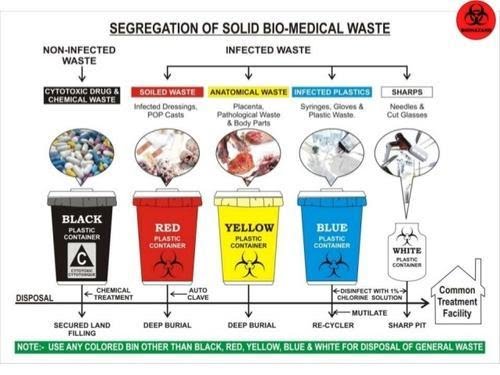
The Bio-Medical Waste Management Rules 2016[1] (“2016 Rules”) define the BM Waste as any waste, which is generated during the diagnosis, treatment or immunisation of human beings or animals or research activities pertaining thereto or in the production or testing of biological or in health camps, including the categories mentioned in Schedule I the 2016 Rules.
The 2016 Rules apply to all persons who generate, collect, receive, store, transport, treat, dispose, or handle bio medical waste in any form. The next imminent question that comes to our minds is what are the categories of BM Waste that the hospitals generate?
BM Waste generated from a hospital could be human anatomical waste, animal waste- microbiology & biotechnology, waste sharps, discarded medicines and cytotoxic drugs, solid & liquid waste.
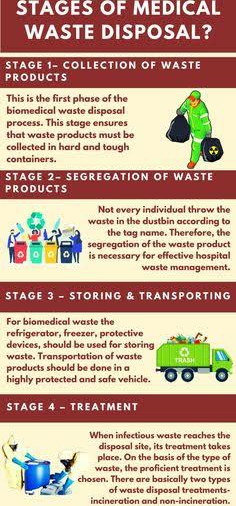
Now that we know what’s the meaning and various categories of BM Waste, the most pertinent question arises that how is it supposed to be treated and disposed of by the hospitals in India during the ongoing COVID-19 pandemic?
While the hospitals in their usual course deal with the segregation, management and storage of BM Waste, the situation in times of COVID-19 is extraordinary the reason being the highly contagious nature of the virus and also it’s transmission cycle and multiplicity rate.
As the hospitals are being flooded with the suspected and confirmed cases, the Ministry of Health and family welfare (“MoHFW”) and the CPCB have issued various guidelines for the handling and management of waste generated from the COVID-19 facilities.
Under the 2016 Rules, while the hospitals are required to ensure that there is a secured location within its premises for a spill/pilferage free storage of segregated BM Waste in labelled/coloured bags or containers, the duty to transport the stored BM Waste from the hospital premises onwards to the common BM Waste treatment and disposal facility is of an ‘operator’ as defined in the Rules.
Specifically, in wake of COVID-19, the CPCB has issued Revision 1 to the Guidelines dated March 25, 2020 for Handling, Treatment and Disposal of Waste Generated during Treatment/Diagnosis/ Quarantine of COVID-19 Patients (“CPCB Guidelines”).
[2] The said CPCB Guidelines inter-alia, state that hospitals are required to depute separate BM Waste sanitation workers to COVID-19 isolation wards and maintain records of all waste generated in such isolation wards and ensure that the BWM generated is collected and separately stored in separate leakproof color-coded double layered bags or bins /containers labelled as “COVID-19 waste” as per the 1998 Rules and the Guidelines.
In fact the Bombay High Court in a recent pending public interest litigation has, while issuing notices to local municipal corporations and the State Pollution Control Board, also directed the Maharashtra government to clarify whether it was ensuring that all COVID-19 related biomedical waste generated in the state was being disposed of in a safe manner[3].
Now that we have a thorough understanding of how the BM Waste is supposed to be treated and disposed of the most important and the widely discussed about topic is that what are the measures that a hospital is required to take for the safety of its employees doctors, nurses and other support staff who are known as the (“healthcare personnel”) from the dangerous diseases like COVID-19?
In order to answer this pertinent question which is often there in the limelight, one must keep in mind that the Healthcare personnel who are the Frontline workers have a high risk of contracting the COVID-19.
While the hospitals are taking precautions and measures to control any spread of infection within the premises, it is particularly difficult given the highly super-infectious nature and hyper-speed feature of the virus. Due to this feature it spreads widely and it becomes a bit difficult to contain it in an over-crowded environment but it’s not impossible to achieve that as we all have been deterrent enough to contain it’s spread but still there is always scope for improvement.
The first steps towards controlling the spread of a virus is personal protective equipment also known as PPE which should preferably be a two-layered fluid-resistant apron and basic items like N-95 masks, face shield, full cover gowns and sanitisers but the same are rendered ineffective against the COVID-19 if the quality of these equipments is not up to the standard as required.
Greater emphasis is also to be laid upon the proper training and awareness of healthcare personnel towards proper use and disposal of the equipment. The spread of the COVID-19 virus is also particularly fast due to the heavy load of asymptomatic patients coming into the hospital and hence a greater need for the formulation of national COVID-19 protocol.
The MoHFW has vide its revised guidelines for clinical management of COVID-19 dated March 31, 2020[4] (“Clinical Management Guidelines”) impressed upon strict compliance of Infection prevention control (IPC) protocol for Hospitals and a consequent effect of the same is prevention and management of COVID-19 in the hospital staff.
This protocol inter-alia, standard precautions such as hand hygiene, use of PPE to avoid direct contact with patients’ blood, body fluids, secretions (including respiratory secretions) and non-intact skin, prevention of needle-stick or sharps injury, safe waste management, cleaning and disinfection of equipment and cleaning of the environment around a COVID-19 patient.
The 2016 Rules also provide as follows that in order to and for ensuring the safety of the healthcare workers and others involved in the segregation and pre-treatment of BM Waste, the hospital is required to train to all its healthcare workers, immunise them for protection against diseases which likely to be transmitted by handling of BM Waste, in the manner as prescribed in the National Immunisation Policy[5].
Also, hospitals are required to ensure occupational safety of all its health care workers and others involved in handling of BM Waste by providing appropriate and adequate PPE and also they must conduct health check ups at the time of induction and at least once in a year maintain the records for the same.
Now due to the pandemic if one is an employee ie the Healthcare personnel of the hospital one must understand the Legal aspect and angle also and the most important aspect of all is that what is the Legal obligations of the hospital, if and when an employee of the hospital tests positive for COVID-19.
Let’s answer this as it’s the most crucial and critical aspect. The present COVID-19 pandemic is an unprecedented event and is unlike any other infectious disease known to mankind and the medical world which is yet to fully decipher its modus operandi of infecting humans.
In a hypothetical situation wherein a hospital employee contracts COVID-19, it will be imperative for the employee in such a situation to establish that his possible exposure to COVID-19 was in the Hospital itself not in the community after considering that the employee is spending time outside as well apart from the hospital premises.
While in an ideal case, if it is proved that a hospital staff has contracted it ,i.e., it shall amount to ‘a hospital acquired infection’, then the hospital would be ordinarily liable. However, in the case of COVID-19 since it is seemingly impossible to trace down the exact source of the infection, in absence of such evidence and in light of utmost safety measures and precautions taken by the hospitals as per the guidelines, fastening of any liability on the hospital would be peculiarly difficult.
The defence available to the hospital may be culpability and negligence of the employee and proving that the hospital itself took all possible measures to avoid any mass spread of the infection.
The next relevant point to be analysed and answered is that when a Non COVID-19 patient contracts the virus during his term of being admitted in the hospital what are the Legal obligations of the hospital when this happens?
The National Consumer Dispute Redressal Commission in the matter of Apollo Emergency Hospital vs Dr. Bommakanti Sai Krishna & Anr.[6] observed that “As already observed, the infection occurred during the stay of the Complainant at the hospital. On the other hand, there is nothing to show that the source of infection lay outside the hospital. Thus, there is preponderance of possibilities of the infection having been acquired in the hospital itself. We therefore, do not accept the contention that it was necessary for the Complainant to produce expert evidence to prove negligence on the part of the concerned doctors in the hospital.”
The afore-stated judgement implies a presumption of liability on the hospital that in cases where the probability of acquiring the infection is much higher inside the hospital than from other sources. However, the same may not apply in COVID cases in light of the peculiar difficulty of tracing the source of acquiring the COVID-19 infection. Therefore, the presumption rendered by the aforesaid judgement will not be ipso facto applicable to cases of COVID patients.
As we have discussed the various pertinent relevant questions another one is that what are the legal obligations of the hospital, if and when a patient is misdiagnosed positive or negative for COVID-19 by the hospital due to a fault in the COVID-19 rapid testing kit (“testing kits”)?
The liability of a hospital in cases of misdiagnosis depends on the methodology of procuring of testing kits. A hospital may procure testing kit either from third party manufacturer or may manufacture them internally i.e. by itself or its subsidiary.
In cases where the misdiagnosis is on account of faulty testing kit procured externally, the hospital cannot be held directly liable as the liability may be shifted upon the manufacturer.
In cases where the misdiagnosis is on account of faulty testing kit is due to testing kits produced internally the hospital may be liable subject to it being proved that the misdiagnosed patient was indeed positive. However, factors such as the success rate of any testing kit not being 100% may have an interplay in determining the liability.
We have to be aware of what are the Legal liability of a hospital in a situation where the hospital discharges a mild/very mild/pre-symptomatic COVID patient to ramp up the capacity for serious COVID-19 patients.
A hospital will not be held liable for a systematic discharge of a mild/very mild/pre-symptomatic/moderate COVID-19 patient as the same is directed by the Central Government. On May 8, 2020, the MoHFW released its revised policy for the discharge of COVID-19 patients.[7] This revised policy provides that hospitals can discharge mild/very mild/pre-symptomatic in accordance with the protocols given therein.
In the earlier advisory[8], COVID-19 patients could be discharged only after chest radiograph clearance, viral clearance in respiratory samples, and if two of the patient’s specimens were negative within a period of 24 hours. The discharged patient would then have to home quarantine themselves in accordance with the revised policy.
So what is the protocol to be followed by a Hospital while disposing of the dead bodies of the COVID-19 patients?
The corpses are a source of infection for healthcare personnel/ other patients and cannot be disposed of by usual methods of disposal and therefore, the MHFW issued guidelines dated March 15, 2020 on dead body management in COVID-19.[9] The guidelines provide inter-alia, the protocol to be followed at the time of removal from the isolation room or area, put in bio-hazard bag and disinfection. Further, all surfaces of the isolation area (floors, bed, railings, side tables, IV stand etc.) should be wiped with 1% Sodium Hypochlorite solution and then it should allow a contact time of 30 minutes, and allow it to air dry as well.
While treating patients infected with the COVID-19 virus, what is the protocol for the treatment?
The All India Institute of Medical Sciences (AIIMS) has issued clinical protocol dated April 21, 2020 for treatment of Covid-19 patients and states such as Madhya Pradesh and Delhi have directed Hospitals and health centres dedicated to treating COVID-19 patients to follow the said clinical protocol.[10]
Treatment must be affordable for all. One must know whether or not there is a standardisation of costs of treatment of a COVID-19 for private hospitals?
Government hospitals are reaching their intake capacities and for that reason COVID-19 patients have been resorting to treatment in private hospitals. While some private hospitals are charging exorbitant amounts as costs of treatment, the same is worrying not just for the patients but also to the insurers.[11]
In a first, the State government of Maharashtra has capped treatment costs in private hospitals for people without medical insurance and for other patients, the capped prices will come into effect once they exhaust their medical insurance cover.[12]
The Hon’ble Gujarat High Court has vide its order dated May 22, 2020 directed the state government to issue a notification making it mandatory for all multi-speciality hospitals private/ corporate hospitals in Ahmedabad and on its outskirts to reserve 50% of their beds (or such other capacity as maybe specified by the state government) for COVID-19 patients.
In view of the same, the Government of Gujarat may come up with similar caps on costs as Maharashtra.[13] The Hon’ble Gujarat High Court also observed that the certain private hospitals authorised by the government to treat COVID-19 patients in Ahmedabad are charging exorbitant fees which is unaffordable for a massive section of the society and directed the state government to ensure that private hospitals do not charge exorbitant fees. [14]
Also in light of the same The Hon’ble Bombay High Court recently directed a charitable hospital to make court deposit of monies in a case pertaining to levy of exorbitant charges for treatment of COVID-19 patients belonging to poor strata of the society despite reserving 20% of its beds for poor and the needy.[15]





You must be logged in to post a comment.