Sustainability workshop

Model based on The Natural Step idea. Curriculum DNA model – disciplines, needs, actions.
what is the concept of sustainable education – sustainable education – thesis by ?
looks at core values, transformative education. There is a specific language.

Discussion about how material will be presented e.g. via Internet or Intranet, and what should be open or private.
Four issues around education – knowledge, student-centred learning and action capability, ?

OP wants sustainability embedded in curriculum rather than starting with specialist options at most basic level of operation as sustainable graduates.

Staff development ideas
workshops: 1. what’s best? Decision-making for a sustainable future. From June 28 EDC and Steve.
2. Curriculum development for a sustainable future.
Should these be done in order or in parallell. Do we use inquiry, authentic-based, experiential?

Do we work within discipline or across discipline? There is a place for both.

How to Use a Planner Effectively

Some planners have additional features in the front or back sections, such as “dates to remember,” goal trackers and password logs. Use these sections!

Keeping a to-do list can help you feel organized, but without proper planning, it’s easy for that list to get out of control. Using a personal planner can help you prioritize your tasks, improve your time management skills, and allow you to be more successful both in and out of the classroom.

Today, there are many time management apps that make planning a breeze, and there are also traditional planners for those who like to keep a hard copy with them at all times. Whatever your preference, using a planner can help you tackle your growing to-do list.

Here’s how to choose the right type of planner for your lifestyle and make it work for you.

Choosing the right type of planner

There are several different formats of planners, some of which are geared toward managing your short-term to-dos and others that are better for long-term projects and planning. Your lifestyle, schedule and your personal preferences will help you determine the best option for you.

Here are three of the most common styles of planners:

  • Weekly/Monthly: This version uses a one-week-per-two-page spread, with planning space for each day of the week. It also includes a small monthly planning page at the start of each new month for more important reminders. This planner is useful for keeping track of weekly meetings and appointments. It can also be an effective method for college students to keep track of weekly due dates and homework assignments.
  • Monthly: These are ideal if you like to see your commitments for the month at a glance. This type of planner comes in a desk-size version for extra writing space, or a pocket-size version that fits perfectly in a backpack for on-the-go use.
  • Daily: The daily planner uses a one-day-per-page spread, which gives you ample space to plan out all of your daily tasks and reminders. This layout is ideal for college students or anyone who has a packed schedule or a long list of to-dos every day.

Each of these styles is also available in a digital format. Most smartphones come with a built-in calendar application that pulls in events and reminders from your connected email account. In addition to managing your daily schedule, you can set alerts and configure your calendar to pull in information from other apps, such as Notes or Reminders.

Google Calendar is one of the most popular digital planners, and it includes daily, weekly, and monthly spread options to meet your needs. Another digital planner that is specific to students is My Study Life. The app includes a homework tracker for due dates and assignments, as well as a calendar and a class schedule manager. Check out this blog post for more info on the best time management apps for students.

How to use your planner effectively

While choosing the right type of planner is important, learning how to use it effectively is the only way it will have a positive impact on your life.

Here are five tips to make the most of your planner:

1. Consistency is key

Studies have shown it takes up to two months to develop a new habit. Using a planner takes consistency and if you don’t use it every day, it will not be an effective tool. Keep your planner right by your bedside so that it’s the first thing see when you get up in the morning. Not only will this help you get into the habit of looking at your planner, it will also help you prepare for the day ahead.

2. Fill in important dates and deadlines right away

Get into the habit of writing down all important dates and deadlines as soon as you find out about them. This makes it easier for you to keep track of all of your responsibilities and ensures that all of your notes are in one place.

3.) Use color-coding to keep track of different items

Some students find it helpful to color-code their assignments, or use a bright color for important tasks or reminders. You might have up to five different classes as well as other commitments in a day, and it can be overwhelming if all of that information is crowded together in the same box in the same color pen. Using a different color for each class makes it easy to see what you have on your to-do list. This method can also be useful for remembering birthdays and other special events on a monthly basis.

4.) Implement time-blocking

Time blocking is the practice of planning out your day in advance and dedicating specific time blocks for certain tasks and responsibilities. This helps you predict what you can realistically accomplish each day and allows you to make better use of your free time. Setting aside a specific time for schoolwork can also help you improve your focus and your productivity.

5.) Use the extra features that the planner offers

Some planners have additional features in the front or back sections, such as “dates to remember,” goal trackers and password logs. Check to see if your planner offers any of these resources, and take advantage of them if so.

Personal planners are an effective way to organize your life and can positively improve your time management skills. It might take some trial and error to find what works best for you, but once you get into the routine of using a planner, it will most definitely make a difference in your life!

3 Steps to an Effective Interview

Job interviews can be overwhelming, but with adequate preparation, they don’t have to be! Here are three steps to help you plan for a successful interview.

Job interviews can be overwhelming, but with adequate preparation, they don’t have to be! The interview process can be your opportunity to impress potential employers and convince them of why you’re the best candidate for the role.

Having worked in higher education for over 10 years, I’ve had countless conversations with students, graduates and employers regarding their interview experiences, and they shared with me these three valuable steps you can take to prepare for and execute a successful interview:

1. Do your research

Research is an important part of interview preparation because employers are most interested in candidates who demonstrate a clear understanding of the organization and its reasons for success. Based on your answers and questions, interviewers can quickly figure out if you’ve done any research. Make sure you review the website to become familiar with the company’s mission, values and recent accomplishments, and how your role helps the company meet its goals.

2. Establish a rapport

Building connections with the people who interview you can go a long way in helping you leave a lasting impression. Establishing a rapport also affects the dynamics of the interview and can help create a more comfortable atmosphere. While you should always maintain a professional demeanor, some candidates have found success in sharing aspects of their personal lives such as hobbies. Showing your personality can create a connection with your potential employer, which can improve your chances of getting hired! Plus, putting your personality on display can help your interviewer determine how well you fit in with the company culture.

3. Speak and act with confidence

You know you’re the right fit for the job, but is it coming off that way during the interview? Answering interview questions with confidence is important. Body language is a key part of exuding confidence – make sure you’re maintaining eye contact and proper posture, and speaking with a strong voice to leave a positive, lasting impression. While you’ll be doing most of the talking, it’s a good idea to ask employers questions about what your day-to-day responsibilities would look like, what opportunities are available for professional growth, what characteristics they look for in employees and more. Asking these questions can help indicate your genuine interest, help you learn more and show that you’ve put significant thought into the role and the company.

Although there are many aspects that contribute to a successful interview, conducting the proper research beforehand, establishing connections with your interviewer and speaking with confidence can help you stand out among other candidates. If you need help preparing for an upcoming interview, Herzing University’s Career Services team is happy to assist with interview prep, resume development, company research and more to help you grow your career.

Sustainability workshop

Model based on The Natural Step idea. Curriculum DNA model – disciplines, needs, actions.
what is the concept of sustainable education – sustainable education – thesis by ?
looks at core values, transformative education. There is a specific language.

Discussion about how material will be presented e.g. via Internet or Intranet, and what should be open or private.
Four issues around education – knowledge, student-centred learning and action capability, ?

OP wants sustainability embedded in curriculum rather than starting with specialist options at most basic level of operation as sustainable graduates.

Staff development ideas
workshops: 1. what\’s best? Decision-making for a sustainable future. From June 28 EDC and Steve.
2. Curriculum development for a sustainable future.
Should these be done in order or in parallell. Do we use inquiry, authentic-based, experiential?

Do we work within discipline or across discipline? There is a place for both.

Creating online learning with Riddle

On the surface Riddle is a great free tool for creating a variety of quizzes and polls that can have rich media embedded into them, but when you look below the surface it\’s actually a pretty sophisticated tool for quickly authoring engaging elearning.


Creating a Riddle is easy
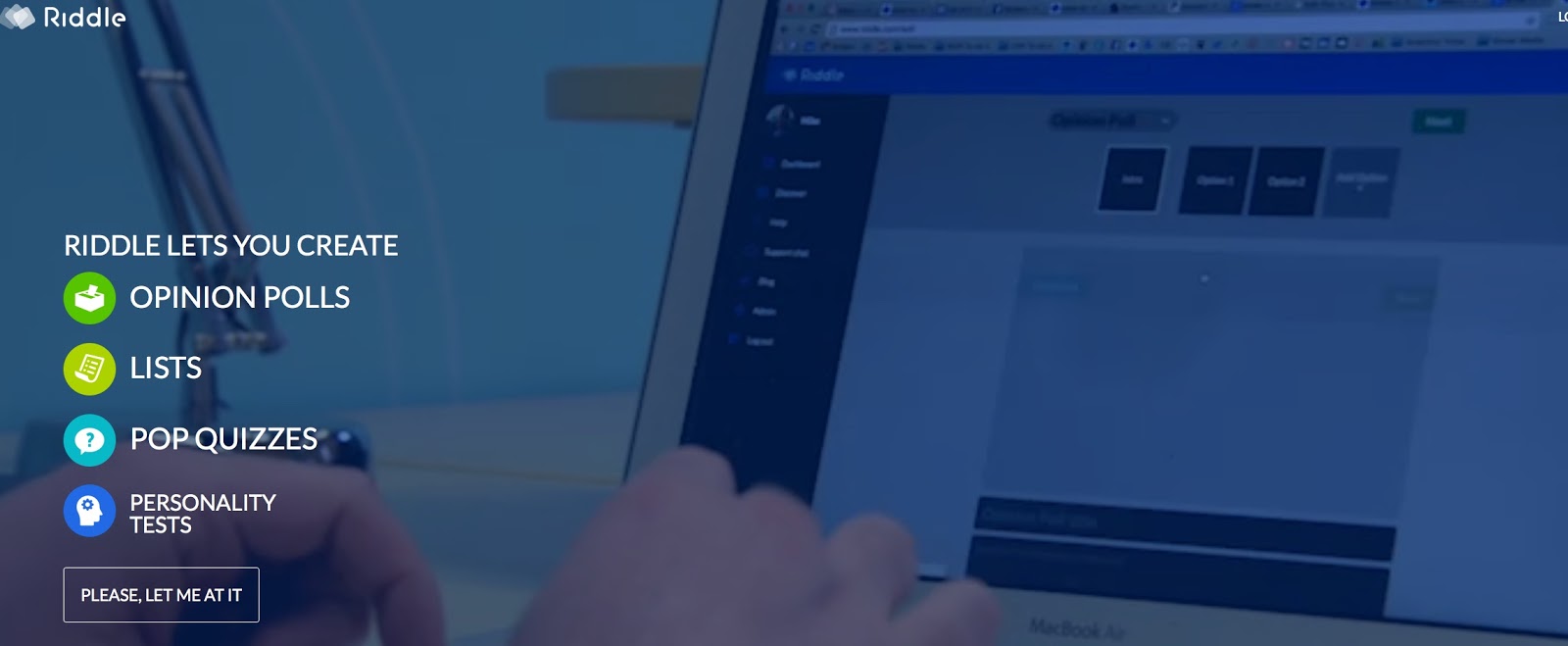
Go to: http://www.riddle.com and sign up. Then you will see the different quiz types. The main types of interactions you can create are:


  • Opinion polls – These are simple single question polls which can contain a number of fixed response for the recipient to choose from.
  • Lists – Lists aren’t questions as such, they are more like a nice way of presenting information in a series of chunks. Each chunk of information can also have media or text embedded into it. This would make a great way of presenting infographic type information in a more mobile friendly way.
  • Pop quiz – A pop quiz can contain a number of multiple choice questions. Pop quizzes can be scored across percentage of correct answers. Students can also get feedback on each answer within the quiz and you can attach specific messages to scores to tell students what they need to do in response to their score.
  • Personality tests – With this kind of test you can create a number of questions for participants to answer and link the answers to specific personality types. So for example if the participant answer a to all questions they are shown their a personality type. You can actually create the different personality types yourself.
  • Surveys – Surveys are the most flexible poll type. You can have a choice of different question types from text fields for written input to single choice or multiple select questions.

You can either click on ‘New’ to start from a blank template or click on ‘Template\’ and you’ll see an example of that type of quiz which should give you an idea of how to create one yourself.
Most quiz types start with some kind of introduction screen where you outline the theme and purpose of the quiz. With Riddle it’s easy to add media to this part of the quiz just by clicking on the media type and searching for it or uploading your own file.

Then add the questions and potential answers. You can also add a score the answer in the pop quiz type questions and some explanatory feedback.
Once you have added the questions you can customise the look of the quiz by changing colours or fonts.

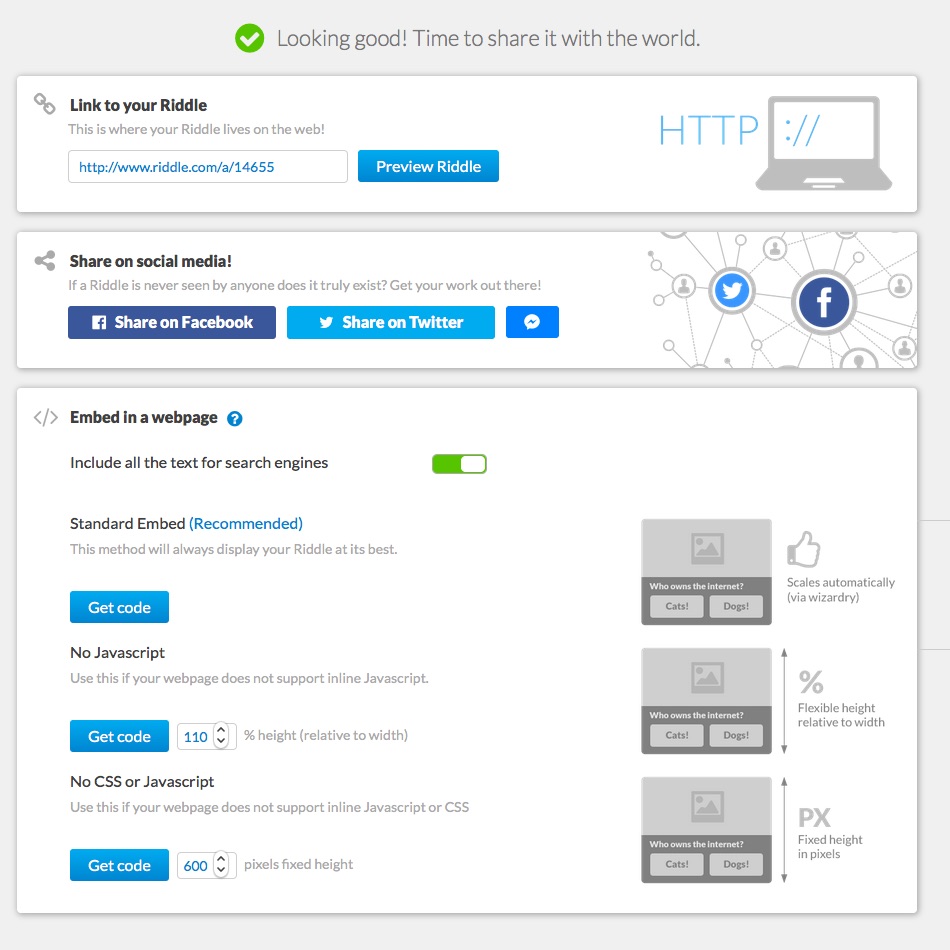
Then once the quiz is complete you can share either a URL or embed code or post it directly to your social network accounts.


The responses to all the questions are collected within the platform and you can view and download these by clicking on ‘Statistics’ (to download a csv file you need a pro account) so this provides a form of LMS though it doesn’t enable you to identify specific students (again you would need a pro version to do that).


How to use Riddle with learners

  • Riddle is pretty simple and quick to learn so you can get students to create their own research questionnaires. These could be for classroom research or they could share them through social media networks. You could use infographics to base the research on and get students to do parallel research and create their own infographic.
  • You could get students using the List option as tasks to report on films or reading assignments. They could create a ten point list to include the ten most important features of the book or film.
  • You can create opinion polls to lead into classroom discussion. This would give students the opportunity to think about the issues before they come into class. You could then follow this up with a second poll to see how many people had changed their mind about the issue.
  • You could use the list option to have mock elections. Students could use the list to create a ten point election manifesto. The students could then look through them and decide who they would like to vote for.
  • You can use lists to present different aspects of verb tenses with a section each on meaning, form, pronunciation, time lines and usage. You could also include links to videos or songs where the verb tense is being used.
  • You can use personality tests to identify learning styles and make students more aware of them. You just need to define the different learning styles and then add answers to the multiple choice questions that identify each style.
  • You can create a pre test to get students thinking around topic you want to teach and to find out what they already know about it.
  • You can use Riddle as part of flipped learning approach with video embedded into quizzes or polls. Then you can collect students’ answers and go into class with a clear understanding of what they have understood from the material.
  • You can embed articles, short stories or video clips in the pop quiz or surveys and then build them into  complete online course.

What I like about Riddle

  • The free option still gives lots of scope for creativity.
  • There is a great range of quiz types.
  • The simplicity of creating the quizzes makes this easy for students to learn quickly
  • I love the choice of media and how easy it is to embed media into the quizzes.
  • I like the way the personality type quiz answers can be set up with sliders to refine the way the answers apply to the different personality types.
  • The list type quizzes are a great way to segment the presentation of new materials

I hope you enjoy using Riddle and create some useful interactive learning materials.

Related links:

Charts, Graphs, And Visual STEAM – Teaching The Super Bowl By The Numbers

Source: Asbury Park Press


Aside from the physical drama and the halftime theatrics, the Super Bowl provides prime fodder for data analytics. The enormous volume of communication and marketing around this shared cultural moment offers a case study for exploring numbers and significance.

These days, graphs are no longer the sole purview of math class. This fall, for example, we spent a “math week” in social studies talking about how historians incorporate statistics and charts in probing the details behind pivotal events. Similarly, the Super Bowl bridges academic disciplines as an appealing touchstone for students to get excited about analytical reasoning and data design. That’s how right-brained and left-brained mindsets can merge perfectly in a contemporary STEAM study.

Some examples of lessons and visual aids that use graphs and charts include:


Source: Yellowfin

On Super Bowl Sunday, 1.25 billion chicken wings are expected to be consumed. The number of tweets is predicted to top 25 million, up significantly from the 13.4 million last year. And the average American is projected to consume 2,400 calories of Super Bowl chow.

The emphasis here is on the visual presentation of numerical sets. Graphic literacy (or “graphicacy”) means that learners can “read” the grammar of lines and bars. Understanding trends and anomalies are key skills in interpreting mathematical and scientific figures.

As every educational institution searches for ways to blend STEAM proficiencies into the curriculum, the pop draw of the Super Bowl can be just the ticket to grab kids’ attentions in discovering the day’s dynamic details. Any of the tables or diagrams below would be terrific examples to show on Monday in kicking off a week of visual STEAM activities. The logical reasoning of numbers meets the illustrative narrative of the liberal arts:

Source: The New York Times


Super Bowl ads often get the most attention from both football diehards and passing revelers alike. This interactive tool from the New York Times allows students to compare a timeline of percentages as they parse the media blitz across the years.

Source: Yellowfin


The media literacy component of Super Bowl mayhem cannot be overlooked. Many avenues exist for teachers to guide students in realizing the emotional tug of advertising during this high profile event. Yellowfin has designed an easily understood graph of Super Bowl ad prices to engage any student.

Source: Yellowfin


For aficionados of the sport itself, Yellowfin has assembled a horizontal bar chart of MVP winners by position. The results are familiar enough to let the content drive the comprehension. In other words, even the youngest mathematicians can expect QBs to win awards, and thus the extended blue bar becomes a visual signifier for their predictions. 

Source: Yellowfin


For strategists of team offenses, bubble graphs can blend with traditional tables to illuminate the choices of quarterbacks in certain situations.

For other Super Bowl educational resources, we recommend these posts:

cognitive, social and teacher presence and PLEs

This posting is in response to Derek Wenmouth’s diagram – OLE a school perspective – illustrating a school-based PLE. This is currently being discussed in a very interesting online discussion seminar run by Derek Wenmouth and Derek Chirnside on SCOPE.

It strikes me in all this talk about personal learning ecologies and personal learning environments (PLEs) that we are paying a lot of attention to the structure of the system. I am currently exploring how Derek’s proposed system can help with learning. At the moment the diagram represents a mish mash of ways to collect together content – very important but not enough to stimulate engagement and reflection and deep learning.

Inherent in the use of some of the tools e.g. blogs, is a belief that communication will happen but I think we need to look carefully at this. Just because we keep a blog does not mean that someone will give us feedback on the content. We could also have a collection of tools in a system such as that proposed by D and have no interaction at all with another human being. At least in a classroom, there is a teacher to guide or control the learning.

My question is how can a PLE incorporate teacher presence and scaffolded learning and still enable the learners to have autonomy in their choices?

Is a PLE only really any good for the development of a cognitive presence online? i.e. information processing and can this truly happen without discourse and input from another human? Does a PLE automatically stimulate social interaction? I have found that there is no guarantee of a social presence i.e. interaction with other students, and even if this occurs and is unguided and unstructured, how much learning actually occurs? I believe that if any system such as a PLE is to succeed, teacher presence is very important. There is more about the ideas of cognitive, social and teacher presence in an article called:

Farmer, J. (2004). Communication dynamics: Discussion boards, weblogs and the development of communities of inquiry in online learning environments. In R. Atkinson, C. McBeath, D. Jonas-Dwyer & R. Phillips (Eds), Beyond the comfort zone: Proceedings of the 21st ASCILITE Conference (pp. 274-283). Perth, 5-8 December. http://www.ascilite.org.au/conferences/perth04/procs/farmer.html

Actual example of the use of social networking tools and strategies in a course.In a course where I co-teach design for flexible learning, we have encouraged participants to set up their own PLEs using a blog, del.icio.us account, mailing list and wiki as the backbone. They also have access to a LMS discussion and content on a course wiki,and are encouraged to use a range of open source software e.g. audacity for audio, gimpshop and gimp for image manipulation, CMap and Gliffy for mindmapping, and web-based tools e.g. Flickr (images), Bubbleshare, slideshare, Youtube, bliptv. There is variable take-up. Some really explore and try out lots of things to design and create resources and a learning space for themselves, others sit on the fringes.

The blogs which each student is required to keep and the course wiki and mailing list, and del.ici.ous accounts depend very much on an active teacher presence to keep the participants linked and motivated. It also depends on these items being connected to the course assessment. The tools are there, but without facilitation by the “teachers” the participants tend to learn in isolation apart from when they come together for f2f workshops.

We have found that unless guidance is provided by the “teachers” very few of them provide feedback to each others’ blogs, contribute to the wiki or del.ici.ous account or contribute meaningful discussion to the mailing list.

cognitive, social and teacher presence and PLEs

This posting is in response to Derek Wenmouth\’s diagram – OLE a school perspective – illustrating a school-based PLE. This is currently being discussed in a very interesting online discussion seminar run by Derek Wenmouth and Derek Chirnside on SCOPE.

It strikes me in all this talk about personal learning ecologies and personal learning environments (PLEs) that we are paying a lot of attention to the structure of the system. I am currently exploring how Derek\’s proposed system can help with learning. At the moment the diagram represents a mish mash of ways to collect together content – very important but not enough to stimulate engagement and reflection and deep learning.

Inherent in the use of some of the tools e.g. blogs, is a belief that communication will happen but I think we need to look carefully at this. Just because we keep a blog does not mean that someone will give us feedback on the content. We could also have a collection of tools in a system such as that proposed by D and have no interaction at all with another human being. At least in a classroom, there is a teacher to guide or control the learning.

My question is how can a PLE incorporate teacher presence and scaffolded learning and still enable the learners to have autonomy in their choices?

Is a PLE only really any good for the development of a cognitive presence online? i.e. information processing and can this truly happen without discourse and input from another human? Does a PLE automatically stimulate social interaction? I have found that there is no guarantee of a social presence i.e. interaction with other students, and even if this occurs and is unguided and unstructured, how much learning actually occurs? I believe that if any system such as a PLE is to succeed, teacher presence is very important. There is more about the ideas of cognitive, social and teacher presence in an article called:

Farmer, J. (2004). Communication dynamics: Discussion boards, weblogs and the development of communities of inquiry in online learning environments. In R. Atkinson, C. McBeath, D. Jonas-Dwyer & R. Phillips (Eds), Beyond the comfort zone: Proceedings of the 21st ASCILITE Conference (pp. 274-283). Perth, 5-8 December. http://www.ascilite.org.au/conferences/perth04/procs/farmer.html

Actual example of the use of social networking tools and strategies in a course.In a course where I co-teach design for flexible learning, we have encouraged participants to set up their own PLEs using a blog, del.icio.us account, mailing list and wiki as the backbone. They also have access to a LMS discussion and content on a course wiki,and are encouraged to use a range of open source software e.g. audacity for audio, gimpshop and gimp for image manipulation, CMap and Gliffy for mindmapping, and web-based tools e.g. Flickr (images), Bubbleshare, slideshare, Youtube, bliptv. There is variable take-up. Some really explore and try out lots of things to design and create resources and a learning space for themselves, others sit on the fringes.

The blogs which each student is required to keep and the course wiki and mailing list, and del.ici.ous accounts depend very much on an active teacher presence to keep the participants linked and motivated. It also depends on these items being connected to the course assessment. The tools are there, but without facilitation by the \”teachers\” the participants tend to learn in isolation apart from when they come together for f2f workshops.

We have found that unless guidance is provided by the \”teachers\” very few of them provide feedback to each others\’ blogs, contribute to the wiki or del.ici.ous account or contribute meaningful discussion to the mailing list.

9 Generic activities for exploiting infographics

Infographics are a great source of information and make reading information from the computer screen much easier, but just showing students an infographic and telling them to study it isn’t the most effective way to exploit the medium.


Creating your own infographic tasks can be time consuming though, so in this posting I’m presenting a number of generic ideas that should work with a number of types of infographic. You can use these ideas with students to help focus their comprehension of the information and give them clear goals for engaging with the information in the graphics.


Peer created questions
Give your students an infographic and get them to create a quiz based around it. Once the students have created their quiz they can use it to check the comprehension or knowledge of other students in their class. You can make this competitive and have teams to quiz each other. You could also have different infographics for each group and they can exchange questions and infographics.

  • This activity has a duel role in that students need to read through the infographic and understand it in order to create the questions, but they also practise formulating questions. The activity also adds an element of competition which some students find motivating and of course it saves you a lot of time creating questions yourself.

Fact finding
Ask your students to find x-number of what they believe are the most important or significant facts in the infographic. Get them to justify their choice and explain why these points are the most significant.

  • This activity encourages students to evaluate and make value judgements about the information they are being exposed to. It also reveals elements of their own value system and exposes them for discussion which can be very enlightening.


Checking sources / corroborating information
Get students to check the sources of any statistics mentioned in an infographic to make sure they are correct and that the sources are valid. You could also get them to find supporting sources on other sites that either authenticate or contradict the statistics stated in the infographic.

  • There’s a common joke that 83% of all statistics are made up. Often students tend to believe any information that they find online. This activity encourages students to be more critical and to check the validity of information they find. It also helps them to develop the necessary research skills to validate online information.

Comparing to yourself
You can get students to find out where they fit within any infographics that contain personal information. You can also use this as a mingle task by asking students to try to find someone in the classroom who fits into any of the same statistics that they do.

  • This encourages the students to apply the information to themselves and by personalising it can make it seem more real, memorable and tangible. This can make data a little less dehumanising. The mingle activity can also help to improve classroom dynamics and help students to get to know each other.

Checking bias and motivation
Ask the students to find out who created the infographic and why they think it was created. This involves them researching the source and thinking about the relationship between the company that created the graphic and the information in it.

  • This encourages students to think more deeply about information and to question the goals and motivation behind it. Students often think of information as neutral, but the way information is displayed and what information is chosen can influence readers. Pushing students to look more deeply at the motivations behind the information can make them more critical readers.

Personal response
You can ask students for a range of personal responses to any infographic. Here are some possible example questions.
What did you find interesting?
What information do you doubt?
What information would you like to share? Who with? Why?

  • This encourages students to think about applying information and making it purposeful for their own lives. Encouraging a personal response from students can also make the lessons more meaningful and memorable for them.

Summary / Writing
Ask your students to take notes about the most important information in the infographic and then use the notes to write a summary. The summary could have some form of publication as a motivation, such as a newspaper report website publication. Once they have finished a first draft they can exchange with another student and compare to see if they chose the same main points. You could also ask them to peer edit the text and then return it before writing a final draft.

  • This can help to develop students process writing skills and academic study skills. It encourages students to evaluate information and make and articulate the connections between different nuggets of information.

Presentation summary
You can ask your students to prepare an oral presentation based on the information they took from the infographic. They can also prepare a presentation deck with images and text to help support their presentation.

  • This can help to develop students speaking and presentation skills. The ability to present and talk about information is also a valuable workplace skill.

Create your own research
Get students to create their own research questionnaire based around the same topic. They can use this either in class or share it through social media and collect the information for their own infographic.

  • This develops students research skills and encourages them to think about the framing of questions to extract information. It also encourages them to think about how they present data once it has been collected.


 I hope you find these tasks useful. You can find more tasks, examples and ideas for using and creating infographics in my ebook – Exploiting Infographics for Digital Literacy and Critical Thinking


Related links:

Best

Collaborative Hearts And Minds Help Kids Cope

Source: ASIDE 2015

With the increasing questions we received from our sixth graders about the abhorrent news this past week, we realized they needed to do something to make them feel they were sending a positive message to help the world be a more peaceful place. Eleven- and twelve-year-olds hear the news, and most have far more access to content than their parents realize. Their questions abound and need an outlet. As middle school educators, we know this.

Source: ASIDE 2015

So with our friend and colleague, Francine Wisnewski (@fwisnewski), we decided to bring hearts and minds together to let the kids create a message to share on social media and with the school community. We asked them that each finished design somehow include a heart, map, and peace sign. That’s it. How they incorporated the criteria and with whom they worked, or not, was up to them.

We cherish the flexibility in our curricula that allows us to stop everything to promote mindfulness with our learners. It does not matter that the schedule listed math and history; we pulled the kids together to address their concerns about world conflict and violence.

Source: ASIDE 2015

We continually try to build the hearts and minds of our young learners to be peace builders, peacemakers, and peacekeepers. As adults, we understand the turmoil in the world, and sometimes we just have to stop to help them cope. It’s worth every minute. If we don’t, we lose the power of positive thinking that the world so much needs.

For other resources, please see:

eFest Day One

Here we all are at the first day of eFest. The feeling is relaxed and friendly and it looks like the emphasis is going to be on round table conversations – well the set up of the room has set the scene. Lots of familiar faces and it is good to have time to catch up with old friends and eLearning colleagues.

Presentation from NorthTec introduced by the CEO and several staff – They have six campuses and lots of Learning Centres scattered around Northland. They use Moodle and have set up wireless and computing and video conferencing in all the LC. Also have a staff portal to provide information management, ICT access which is the same for all staff – RSS, document sharing, web space. They have Mobile programmes – f2f courses delivered in communities including on marae – horticulture, forestry, environmental studies, construction, sport and recreation.

Case studies
1. Bachelor of Nursing – five semester development, e-capability eCDF funding, team approach. Supported by senior management and evaluated by action research – Dr Nancy George. Video interview with a nursing student illustrated how important it is for a woman with children and a part-time job to be able to study flexibly.

2. Certificate in eLearning Design and Development (eCDF) – video clips of students talking about what they got out of the programme.

3. Mobile programmes teach skills as part of a community project. For example, gardening in schools.

4. Learning support – eTech support, online counselling, online learning objects. also reconfiguring technologies and buildings around the flexible approach.

Nursing communication scenarios using actors – example in palliative care – appropriate and non-appropriate.

Also have a student portal – blogs, portfolios. also have virtual classrooms.
Staff development in staff and student portals.

Polytechnics and universites are going to be connecting to KAREN (advanced research network) – ultra fast Internet connection.

Presentation by Murray Brown from Ministry of Educationjoined the dots about what has been happening – funding, eLearning advisory etc.

Barry Ogilvie from Tertiary Education Commission speaking about eLearning project updateThey have four projects under discussion. Looking for a vision for network capability. Also flexible and distance learning options. Looking for a range of methodologies for assessing capabilities across ITP sector – e.g. maturity model.

District Health Boards – Wintec and Northgate – nursing education – use mentoring, reflection, innovation. Staff want to have fun when learning. Mandatory training – national online campus, generic material with local contexts. Liked Moodle.

NorthTec nursing programmeDevelopment and action research of Bachelor of Nursing programme. using a blended model as they do not want to lose face-to-face component. Have students who can study even though they live in isolated areas in Northland. Gave away online discussion as not popular with students.

Contextualisation of multimedia resourcesDeveloped communication modules. Read information and choose correct answers. simple to change text. Originally created by WELTEC – not available in a repository and not sure abut IP issues. Have Grammar online. have a lesson and go through and choose options. Read information and do a test – so they changed it. Flash object with xml file at the back – replace text here and leave the codes. Could be easy to delete code if staff are unaware. Design perspective given and then pedagogical perspective given. How does it affect the learner?

Why No Death Penalty For Gang Rape In India?

“Brother, please save me, I don’t want to die. I want to live. Those who have done this to me, I want to see them getting a death sentence.”

These were the most emotional last words of Unnao gang rape victim who was brutally gang raped in March and when police allowed those gang rapists to be released on bail then they decided to burn her while she was on her way to attend the court hearing pertaining to this gang rape case as they were hundred percent convinced that the judiciary of India does not hang gang rapists and it is only once in 15 years that a poor Dhananjoy Chatterjee who could not afford fees to hire lawyers and whose petition was drafted by Tihar jail prisoners is hanged and so the chances of very easily escaping from strict punishment are quite bright! Every Indian will get moved to read what this Unnao rape victim said before dying! What was her fault? That she was a women?

Why are rapists released on bail for some time as we saw in case of Unnao gang rape case? Why no security is provided to the victim who was raped? Why the life and safety of victim is not cared for by police as we saw most unfortunately in Unnao which resulted in accused burning her 90% which led to her death later? Why should the strictest action not be taken against all those police cops who ensured that the accused were out on bail and who ensured that gang rape victim got no security?

Should we be proud of our legal justice system which operates at an excruciatingly glacial pace and makes sure that those who commit rape and gangrape coupled with murdering the rape victim by either setting them ablaze as has nowadays become the latest fashion or in some other manner in some cases? All the Judges of Supreme Court, ex Judges, ex-CJIs, legal giants like K Parasaran, Soli J Sorabjee, Kapil Sibal, Harish Salve, Mukul Rohatgi, etc must ponder over it and think of ways by which the waning public faith in our judicial system is restored! If the public faith is destroyed then people will start taking law in their own hands to deliver “instant justice” which can never be good for our country!

It is most shocking that the incidents of not just rape but even gang rape followed by setting ablaze the victim is increasing very rapidly in our country as we saw most recently in Unnao, Hyderabad and many other cities but still we don’t get to read gang hanging! Are gang rapists immune from death penalty? Why is it that under our penal laws there is no mandatory death penalty for gang rape?

Why is it that under our penal laws there is no mandatory life imprisonment also for gang rape as stipulated in Section 376D of the IPC? Why the punishment for gang rape as stipulated in Section 376D of the IPC is “shall not be less than twenty years but which may extend to life”? Why this “discretion bomb” in form of “may” is inserted in Section 376D dealing with gang rape?

Should this “discretion bomb” not be defused promptly by removing it and providing for “mandatory death penalty” considering the irrefutable fact that gang rape incidents are increasing alarmingly in our country followed by even gang burning of gang rape victims as we saw most recently in Unnao and earlier in Hyderabad with a 26-year-old veterinary doctor? Can gang rape be justified under any circumstances? Why then do we see that there is no mandatory death penalty for such offences?

Why different punishment prescribed for gang rape on woman under 16 years of age as prescribed in Section 376DA and that on woman under 12 years of age as prescribed under Section 376DB of IPC? Why only life imprisonment under Section 376DA and not death? Why option of life and death in Section 376DB of IPC? Why not mandatory death penalty?

Why even for repeated offenders there is no mandatory death penalty and why the option of life term is added simultaneously in Section 376E of IPC?  All these escape routes must be closed now forever so that rapists are never able to take advantage of the loopholes in our legal system anymore now! But are our politicians, lawmakers and Centre ready to do this or will they be happy with just face saving exercise and lip service? Only time will tell!

Why is it that about 15 to 16 years ago a poor rapist named Dhananjoy Chatterjee was hanged for rape-cum-murder of a Class XI girl in 2004 and that too on circumstantial evidence alone but no gang rapists are hanged ever? How many times have gang rapists been hanged in our country? Why are they not hanged?

Why gang rapists who even murder their victim as we saw in Nirbhaya case are not hanged till now? Should we keep feeling proud that just one poor Dhananjoy Chatterjee whose petition was drafted by prisoners of Tihar jail as was pointed out by senior Supreme Court advocate Colin Gonsalves was hanged about 15 years back in 2004? Should we not feel ashamed that many thousands of rapists cum killers escape death penalty by exploiting the legal loopholes in their favour?

Should we feel proud that since then not a single rapist has been hanged? Should we feel proud that even though thousands and thousands of rape incidents keep happening all across our country but yet we don’t see any hanging since 2004 when Dhananjoy was last hanged? Should our judiciary, lawmakers, Parliament and Centre feel very proud on this?

Why just recently we saw how people threw flowers on those policemen in Hyderabad who killed those 4 gang rapists when they attacked them as is being alleged and people started celebrating and many politicians started hailing it? Why is it that people are losing faith in the ability of our judiciary to deliver justice in time? Is it not a matter of utmost concern for all of us that encounter killings is being glorified as people believe that the legal system has been designed in such a manner that it ensures that rapists and gang rapists are not hanged for many decades?

Why is it that Arvind Kejriwal who is Chief Minister of Delhi while expressing concern over people’s loss of faith in the criminal justice system  openly says that, “People across the country are agitated over reports of horrible rape and murder incidents happening across the country that have come to light of late – whether it is Hyderabad or Unnao [where a rape victim was burnt earlier this week]. That’s a reason why people are expressing happiness and satisfaction over the police encounter in Hyderabad?” Why Kejriwal further says that, “It is also something to be worried about, the way people have lost their faith in the criminal justice system. This demands introspection and all governments must come forward and work together strengthening the criminal justice system and investigating agencies?” We all must seriously introspect on this!

Why is it that even after the killers of Nirbhaya who had been convicted by the Supreme Court and even after five years of death penalty being convicted by the Delhi High Court have not been hanged top death till now? Why their mercy petition keeps hanging? Is this the real beauty of our judicial system for which we should feel proud?

Why even Supreme Court does not say anything on it? Why even in terror cases like the killing of former PM late Rajiv Gandhi, killing of former Punjab Chief Minister Beant Singh, mercy petition keeps pending for decades? Should we be proud of this and justify it in the name of “due process”?

The Vice President M Venkaiah Naidu very rightly said that,  “What happens even after punishment is given to convicts. We all are witness… appeal, mercy (petition)… can anybody think of having mercy on such people? This kind of violation of dignity of women cannot go on unchallenged. What is required is not a new bill; what is required is political will, administrative skill and then change of mindset and then go for the kill of the social evil.” He also rightly said that minors who know how to rape should not be given any benefit and must be punished just like others! Rightly so!

Why should a definite time not be set for completing rape cases? Why should a definite time not be set for deciding rape cases in lower courts, High Court as well as the Supreme Court also? Why should review petition not be abolished or at least time limit set for deciding it?

Why should mercy petition for heinous crimes like gang rapes and terror cases not be abolished or at least a time limit be set up for deciding it? Why Centre repeatedly ignores such demand made by prominent persons in this regard? Whose interest is served in doing so? Should we be proud of it? Why is it that it takes decades or many years to decide a mercy petition? Why can’t it be decided within few days as pointed out by former Attorney General Soli J Sorabjee?

It is good to note that even our President Ram Nath Kovind rightly pointed out that incidents of demonic attacks on women have shaken the conscience of the country. He rightly said that women safety is a very serious issue and a lot of work has been done on this but much remains to be done. He also advocated that those convicted under the POCSO Act should be deprived of their right to mercy petition as they do not need any such right. Here I would beg to differ with the President most humbly and add that there should be no discrimination of POCSO and others and all the rapists and all the terrorists deserve no mercy petition under any circumstances and even if it is still not abolished it must be decided within a short span of time say a few days or weeks and not in many decades which only gives a potential tool to our adversaries to take potshots at the manner in which anyone can get away even after killing the former PM of India as we saw in case of late Rajiv Gandhi where mercy petition was not decided even after decades!

Why can’t strict and speedy justice be provided to people? Why should the 45% of lawmakers who have been elected to Parliament and who are facing themselves serious charges of rape and murder not be debarred permanently from entering politics until their name is cleared of all charges by the top court itself? Why no law has been enacted in this regard?

Why do we expect that such lawmakers who are themselves facing rape charges will support laws that mandates compulsory death penalty for all rape and terror cases? Are we not foolish? What they will favour is that just a single rapist like the poor Dhananjoy Chatterjee is hanged on the basis of circumstantial evidence alone once in 15 years and no rapists or gang rapists are hanged all these years even after they set the victim ablaze!

They will advise us that law will take its own course! They will advise us to be patient and have faith in India’s judicial system! It is high time and now the Supreme Court too must speak out most strongly against all the inadequacies in our criminal justice system due to which people’s faith in it is getting steadily dwindled as is being pointed out repeatedly in different newschannels, different newspapers and different magazines which is certainly not a healthy sign for a democratic country like India! Parliament too must seriously debate on it and should give this most sensitive issue of woman’s safety and of according nothing but death penalty to those perpetrate the most horrifying crime against women  the topmost priority instead of just debating trivial issues like that of onion or tomato or radish! Let’s hope so!

Sanjeev Sirohi, Advocate,

s/o Col BPS Sirohi,

A 82, Defence Enclave,

Sardhana Road, Kankerkhera,

Meerut – 250001, Uttar Pradesh.

Creating engagement through interactive infographics

I’ve been a long term advocate of the use of infographics in education and especially enjoy thinking of ways that students can be encouraged to engage with and question the content as well as create their own graphics, so when I rediscovered Visme.co I was really delighted to find the tool that I once thought was a PowerPoint substitute for creating online presentations had turned into an awesome interactive infographic creator.


What’s so impressive about Visme?
I’ve used quite a few infographic creation tools and most are either template based or they have a library of assets which you can drag and drop to construct your own layouts.

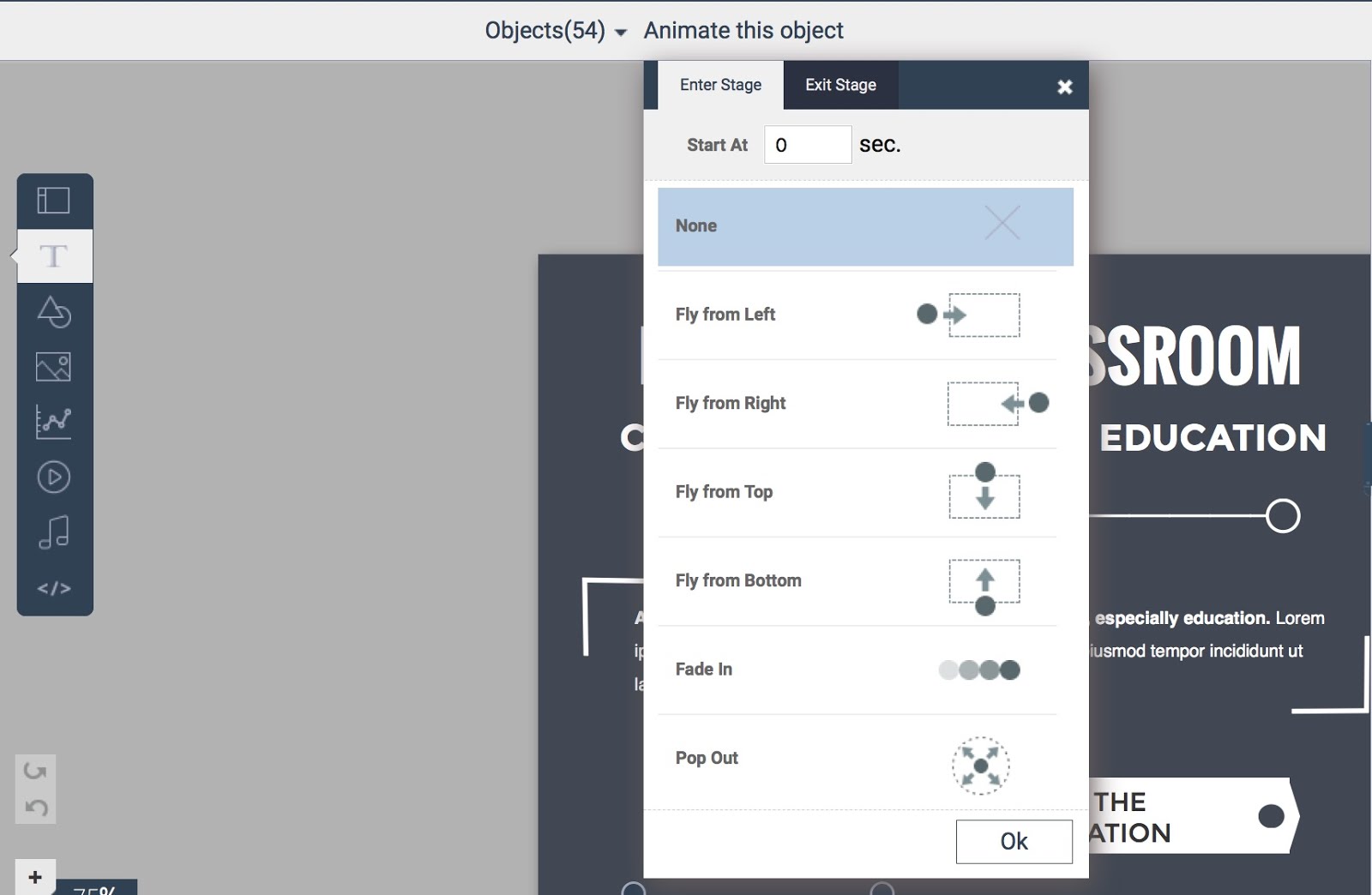
Visme.co offers a combination of both these options along with the possibility to animate the elements within the graphic, drop in your own images or online videos and also embed html elements such as polls and quizzes into the graphic.

This enables your infographic to be more than just data display, they can act as multimedia tools to encourage user responses and build learning and research and it\’s built on html 5 so it works across mobile platforms too.

How to use Visme
When you go to the Visme.co dashboard you get three main options. You can create a presentation, an infographic or use a blank space to create any kind of hybrid of the two.


If you choose presentation you get a number attractive templates which you can flick through and select. Once you have selected one you can edit the design and images and add your own content.


If you choose infographic you can search through a wide range of completed infographic designs and choose one with a structure similar to what you want to display and edit and customise it for you own data.


 Every element within the graphic can be edited, moved around and animated.


If you choose a blank canvas, then you can search through the images and icons library and create your own design from scratch. You can choose the size of your canvas so that it can be presentation size or more of a poster format.


You simply drag on any elements that you want to include from the graphics library and then click on then to edit them to suit your design. It’s easy to resize them, change the colour or even animate them. You can also search through and add images.


You can find some really nice examples of what’s possible on the Visme blog.


What I like about it

  • Visme.co is a really flexible tool which offers the choice between using templates to develop your content and an open canvas.
  • There is a huge range of professionally designed icons and graphics you can simply drag and drop into your creations to make them look professional.
  • The potentials for dropping in html objects such as quizzes that enable interaction can make static data much more dynamic.
  • The ability to drop in multimedia and particularly video can lend more significance and impact to the information in the graphic.
  • You can hyperlink elements within the page to pages on the internet so you can use this to show sources of information or link to other images or background information.
  •  Visme.co is built on html 5 so runs across platforms and devices.


How use it with students

  • Create multimedia posters – You can get students to research a famous person and create a poster about them. This could be a fan poster about someone they like, a historical character or even someone in the news. They can add short video clips about the person as well as a range of facts. 
  • Combine lectures with visual notes – You can combine a short lecture video with some notes about the lecture to teach students visual note taking skills or to make the content of the video more meaningful and memorable.


  • Create interactive animated work sheets – You can create colourful worksheets with images or text that links to various resources around the internet and embed them into online courses or blog posts. 
  • Poems or songs with visuals – You can have videos or audios of songs dropped into graphics and add images and icons that help students to understand the words. This is an example of a poem reading with a visual gap fill activity. The images below illustrate the words of the poem, but there are some clouds with question marks and students have to listen and hear the missing word. The cloud is also hyperlinked to the answer (an image of coral), so they can check their answers. They can then  use the images to help them remember the words of the poem.
  • Publish student research – You can ask your students to do research and find data and information about various topics and then create their own infographic display of the information.
  • Transforming text to visual – You can get your students to create a visual representation of a text as a means of checking comprehension. This could be based around literature, such as a play or story they are reading or it could be a representation of the information in an article or essay.

Tools like Visme.co are great to lift the level of engagement in your classroom whether you use them to create tasks, present information or put them in the hands of your students to do the creating. There is a learning curve with these tools, but Visme.co provides some great tutorials and support to get you and your students started.

Visme.co is a commercial product with premium lisences but there is also a free lisence you can use with your students.

I hope you enjoy using this amazing tool.

Related links:

FLLinNZ facilitation sessions – day two

Sean McDougall – speaking via videoconferencing classrooms of the futurenot a lot has changed – still sitting in classrooms altogether slumped over desks which are unsuitable for learning and sitting at all day. All studying at same time in groups. Sean has been working in designing learning spaces for the future.

No point in designing new buildings and doing the same sort of teaching there will be no additional benefits for the teachers and students. “It is about how you do it not where you do it.” Example of a design where the teacher could get around the students (children) better which improved the activitiy. Design of saddle seats which could swivel in any direction – take up less of a footprint – tables fit around the room – four-way data projector. Cheaper option than billions spent on school rebuilding. Room designed to encourage conversation and collaboration and teacher tried to teach by standing up the front. Learned from mistakes – need to educate teachers in new approaches.

Design my school – tool where students could be involved in designing school. http://designmyschool.net used wikipedia design – Co-Design

Provided some statistics about education in UK – 80% black children leave school at 16yrs and over half jobs advertised in UK in 2012 will require a degree. need to get back to the idea of a creative school rather than an “exam factory”. The system is not working – community minority groups illustrate this.

Singapore exampleeight years old problem-solving re bomb in an oil facility – building robots to clean up oil, building website to keep parents informed, writing business plan – a year long project. need to invent and create and solve future for themselves.

Xchurch School called Unlimited
Barriers removed – students direct their own learning Involved in projects in which they are interested e.g. designing logos, music distribution, own record label. Studying alongside 18 yr olds to get qualifications like Business.

Design done by people and with people. How can we work with excluded communities?
Example from Ireland – Sean is working with nuns in Cork. How can they work with people who are falling through groups. Responsive servicing. Immigrants, travellers, prisoners working together to find solutions to help stop people dropping out. They told their stories –
1. need place to come to meet with friends

children had different perspectives about how the building looked like – teachers forget what the rooms of the school look like.
Introduce opposites e.g. if you want technology look at what the organisation would look like without technology.

Another example-what could we do to make a fountain better? Designing a programmable, interactive fountain e.g. speed camera – measure how fast children are running around. could measure height and jets could respond to different heights. Give fountain three wishes – to see, hear, feel. Children helped design a mural with pictures and ideas of what they liked or did not like about the school. invites configuration and brings people together to work on a common problem to prepare them for the rapidly changing 21 century. create your own models and not wait for someone to “design a catalogue and you order from it”.

Allow people to skill up – learn and make mistakes. Video showing chidren with robots they constructed – watching them work and showing the great excitement. learning what they need for the knowledge economy. Need to redesign the service to meet the needs of the children e.g. reading construction manuals as that is where the interest lies for one of the children who likes building things.
Have moved from where things are done to them to one where people create their world. can you hand over what is seen to be important information to be displayed e.g. Cardiff streets.

1.What will it mean if we get it right?

increased success. Teachers who get it. learners who get what they want.

2.What happens if we carry on as we are?

no change as technology etc. changes around us.

3.Why haven’t we done anything about it?

too hard, no money.

4. What could we do about it?

let people know what skills people will need in the future

Mark Nichols – institutional change for eLearning
Statement: 
now know how eLearning works – do we? We know how to facilitate online discussion – do we?
Beeby 1992 wrote about lessons learned in 1930s. Mark is an educational evolutionist. Focus is on formal education. He has failed spectacularly. Failures are far more interesting and you can learn from it. In his FLLinNZ year he read a lot about institutional change and talked to lots of people about it. Reckons it is commonsense. Has been ignored and now feels like he is prophetic.
What do we know about change
Peter Senge – 
see institution as a whole “see the wood for the trees”. Large scale change is complex. Example: had a CDROm of video, looked after website, used discussion – looked after it himself and it worked well. what would happen if it was systemised? Need to train people and learners. need to copy multiple CDs. What about looking after discussions – technical support, archiving.

Who maintains resources? How do we support subject matter experts with elearning. can they use pre-prepared materials. how are new technologies incorporated? How do we enrol students? Innovation in one course is very different to what is needed in a whole programme. Good systems solve problems before they happen.

Best to work with late majority – sustainability through transformationwork on changing core ideas – workshops Core and custom – complement standardisation with innovation. How do you get buy in. Use systems that organisation has in place – systems for internal review. Meet with programme leaders and work with them. Division of labour – how to best support those who are not tech literate. Engage at level of the core with tech support at that level.
FL strategy or teacing and learning strategy – use them.

How do you go about internalising elearning?
strategic ownership – VLE a thermometer – some staff flocked to it – others ignored it. If few staff got excited good prognosis – otherwise more difficult to change ideas about eLearning.

John P. Kotter – leading organisational change, very good book.
useful orientation to major changes that are involved.

Examples from Bible College
1. establishing a sense of urgency –
 better resourcing of students, costing
Developing a strategy and PD. College eLearning audit and prepare national exemplar.
Sense of urgency varies – depends on hierarchy and priorities e.g. pbrf. When there is a crisis – lack of students for programmes. Responding to market.

2. Creating the guiding coalition
put ideas in front of managers with evidence

3.Developing a vision and strategy
what evidence is there that it improves learning? works well where there is no choice or it supports lifestyle. Don’t change what is working and change what and when you need to.

4. Communicating the change vision

5. Empowering broad-based action

6. Generating short term wins

7. Consolidating gains and producing more change

8. Anchoring new approaches in the culture

Some discussion on the above questions but not enough time and no summarising of them at the end.

Maret Staron – TAFEOverview of some research projects. “Designing Professional development for the Knowledge era”.
Big emphasis in Australia with workforce development. Mentioned learning environmnet managers – work done in the workplace with learners there. Moving more to learner directed ideas. Open standards
Now in the Knowledge era – environment, learning ecology, business,
focus for all four areas on learners, context, technologies

Suggestion that the knowledge era will only last a decade – has progressed from information era. Next era proposed to be the concept era. Is this true?

Need to be knowledge workers – need to find, use information. Now need to generate our own information. One of our greatest challenges – how to work in groups to generate new knowledge?

Work is becoming more unbounded in time and space now with practitioners increasingly needing to work and engage in their own learning at work and at home” (ANTA 2004).

Used an ecology metaphor – broader than networks – what is your learning ecology? relationship between entitities and their environment. Dynamic, adaptive and diverse – there is no one way. Maron promised a model to help but no one way.

Stuck in the mechanistic metaphor – want to think, feel, use intuition, be creative – a contradiction.

Strength-based Philosophy – moves us from deficit-based modelWhat is wrong and we will fix it. Hard to shift to strength-based model. Constrained by bureaucracies who follow the deficit-based model. A lot of organisations try and solve problems by looking at what they need to fix. Martin Seligman – how to look at what helps people thrive. How to help organisations be the best they can. Mihaly Csikszentmihalyi – psychology of optimal experience – “in the flow” when things work well and you are in the optimal skill level. When in the flow anxiety, boredom and apathy reduces.

Business wisdom
How to bring leadership on board. What is the glue that connects the elements of a learning organisation? (Wise thinking and actions.)

Key findings of research
Strength-based orientation more effective.
capability – moves beyond professional development – confident, capable, competence – ability to work in unknown areas.
Values is the bedrock
Disruptive model

  • action learning, mentoring is strength-based, communities of practice

Some places run events on a cafe conversation model for PD. Look at what is working and why.
Who is practising deviance in a positive way for the benefit of the organisation.
What gifts does each person bring to the organisation?
How to reshape the description of your work so it is more flexible – job sculpting.
Appreciative inquiry.
Disruptive technology – policy, research, processes
Life-based learning, expert-centred model, work-based learning
In reality learning crosses work, leisure, family etc.
What is the source of learning not the continuum? “Learning for work is not restricted to learning at work.”
Life-based learning is integrated and holistic. What are the enablers to create this type of learning?
“A business approach to capability development “- companion document to research report.

http://www.icvet.edu.au

Discussion of four questions: Modifying what could we build? – Listening, sharing stories and conversations. previous knowledge and recording.
Exploring – what assumptions should we challenge?
Visioning – what would be your ideal, your dream?
Experimenting – what can we combine and test?

What is your personal stance in relation to work-based and life-based learning? What does it it mean to design this ideal for approaches to learning?

Stanley Frielick – Real change institutional challenges and opportunitiesThreshold concepts and troublesome knowledge – a new way of understanding, interpreting or viewing something may emerge a transformed internal view of subject matter, subject landscape or world view.
What is a threshold moment? – when someone starts contributing and/or facilitating to an online discussion. When people take charge of something – self-directed learning.

The real university is a state of mind. Zen and the art of motorocycle maintenance : an inquiry. Are there two universities? The first real university is the concrete one – state of mind sits within there. What are the mental models which underly our university structures?

Teachers and learners are inextricably linked and there is not just a one-way flow of information. Reactive (teacher-centred) versus constructive (learner-centred). Both demonstrate a dualist model – autonomous model where learner is separated from the world. Ecological model – capillaries of power – an energy which circulates through an institution. (Foucalt). Need to focus on capillaries when look at change. what are the technologies of power?

threshold concept 3 – Can teaching and learning function like an ecosystem? Is it similar to indigenous models of learning? Example, dialogical model where relationships occur between teachers and learners.

Mention of DNA and genetics as shaping learning – evolution, mutants, survival of the fittest – social dynamism – who supports the weak and do we just leave them in the wilderness?

Threshold concept 4 – ecological sensibility – disruptive technologies. who decides what is knowledge? Who decided what is needed for promotion?

Real change
Form (media) and content – most disruption happening here – disruptive technologies and disruptive pedagogies.
Assessment examination and accreditation
Appraisal (teacher) and evaluation (courses)

Immune system – assessment and appraisal areas. what is needed to make this disruptive – quality, prescriptive and normative, secretive – policies and processes, rewards. Suggests real change needs to be focussed on immune system (resistance). Make them more open, networked and ecological.

The disruptive technologies and pedagogies will act as an external stimulus which will upset the balance of the ecosystem and stimulate internal systems in assessment and appraisal i.e. disrupt them – they will have to change so they can revert to a balanced model. Change cannot occur in an ecosystem without an external stimulus. An internal stimulus can change an individual’s system but not when an individual is part of a bigger system. Negative and positive feedback. Negative feedback in a closed system will return it to the status quo. Positive feedback will stimulate either rebirth or bleeding to death or system wide shock and collapse.

In complexity or chaos theory where there is a complex system – competency alone is not enough – it is very linear and serves only part of the purpose. Capability occurs when there is a branching out and multiple layers of action and direction.


FLLinNZ facilitation sessions – day two

Sean McDougall – speaking via videoconferencing classrooms of the futurenot a lot has changed – still sitting in classrooms altogether slumped over desks which are unsuitable for learning and sitting at all day. All studying at same time in groups. Sean has been working in designing learning spaces for the future.

No point in designing new buildings and doing the same sort of teaching there will be no additional benefits for the teachers and students. “It is about how you do it not where you do it.” Example of a design where the teacher could get around the students (children) better which improved the activitiy. Design of saddle seats which could swivel in any direction – take up less of a footprint – tables fit around the room – four-way data projector. Cheaper option than billions spent on school rebuilding. Room designed to encourage conversation and collaboration and teacher tried to teach by standing up the front. Learned from mistakes – need to educate teachers in new approaches.

Design my school – tool where students could be involved in designing school. http://designmyschool.net used wikipedia design – Co-Design

Provided some statistics about education in UK – 80% black children leave school at 16yrs and over half jobs advertised in UK in 2012 will require a degree. need to get back to the idea of a creative school rather than an “exam factory”. The system is not working – community minority groups illustrate this.

Singapore exampleeight years old problem-solving re bomb in an oil facility – building robots to clean up oil, building website to keep parents informed, writing business plan – a year long project. need to invent and create and solve future for themselves.

Xchurch School called Unlimited
Barriers removed – students direct their own learning Involved in projects in which they are interested e.g. designing logos, music distribution, own record label. Studying alongside 18 yr olds to get qualifications like Business.

Design done by people and with people. How can we work with excluded communities?
Example from Ireland – Sean is working with nuns in Cork. How can they work with people who are falling through groups. Responsive servicing. Immigrants, travellers, prisoners working together to find solutions to help stop people dropping out. They told their stories –
1. need place to come to meet with friends

children had different perspectives about how the building looked like – teachers forget what the rooms of the school look like.
Introduce opposites e.g. if you want technology look at what the organisation would look like without technology.

Another example-what could we do to make a fountain better? Designing a programmable, interactive fountain e.g. speed camera – measure how fast children are running around. could measure height and jets could respond to different heights. Give fountain three wishes – to see, hear, feel. Children helped design a mural with pictures and ideas of what they liked or did not like about the school. invites configuration and brings people together to work on a common problem to prepare them for the rapidly changing 21 century. create your own models and not wait for someone to “design a catalogue and you order from it”.

Allow people to skill up – learn and make mistakes. Video showing chidren with robots they constructed – watching them work and showing the great excitement. learning what they need for the knowledge economy. Need to redesign the service to meet the needs of the children e.g. reading construction manuals as that is where the interest lies for one of the children who likes building things.
Have moved from where things are done to them to one where people create their world. can you hand over what is seen to be important information to be displayed e.g. Cardiff streets.

1.What will it mean if we get it right?

increased success. Teachers who get it. learners who get what they want.

2.What happens if we carry on as we are?

no change as technology etc. changes around us.

3.Why haven’t we done anything about it?

too hard, no money.

4. What could we do about it?

let people know what skills people will need in the future

Mark Nichols – institutional change for eLearning
Statement: 
now know how eLearning works – do we? We know how to facilitate online discussion – do we?
Beeby 1992 wrote about lessons learned in 1930s. Mark is an educational evolutionist. Focus is on formal education. He has failed spectacularly. Failures are far more interesting and you can learn from it. In his FLLinNZ year he read a lot about institutional change and talked to lots of people about it. Reckons it is commonsense. Has been ignored and now feels like he is prophetic.
What do we know about change
Peter Senge – 
see institution as a whole “see the wood for the trees”. Large scale change is complex. Example: had a CDROm of video, looked after website, used discussion – looked after it himself and it worked well. what would happen if it was systemised? Need to train people and learners. need to copy multiple CDs. What about looking after discussions – technical support, archiving.

Who maintains resources? How do we support subject matter experts with elearning. can they use pre-prepared materials. how are new technologies incorporated? How do we enrol students? Innovation in one course is very different to what is needed in a whole programme. Good systems solve problems before they happen.

Best to work with late majority – sustainability through transformationwork on changing core ideas – workshops Core and custom – complement standardisation with innovation. How do you get buy in. Use systems that organisation has in place – systems for internal review. Meet with programme leaders and work with them. Division of labour – how to best support those who are not tech literate. Engage at level of the core with tech support at that level.
FL strategy or teacing and learning strategy – use them.

How do you go about internalising elearning?
strategic ownership – VLE a thermometer – some staff flocked to it – others ignored it. If few staff got excited good prognosis – otherwise more difficult to change ideas about eLearning.

John P. Kotter – leading organisational change, very good book.
useful orientation to major changes that are involved.

Examples from Bible College
1. establishing a sense of urgency –
 better resourcing of students, costing
Developing a strategy and PD. College eLearning audit and prepare national exemplar.
Sense of urgency varies – depends on hierarchy and priorities e.g. pbrf. When there is a crisis – lack of students for programmes. Responding to market.

2. Creating the guiding coalition
put ideas in front of managers with evidence

3.Developing a vision and strategy
what evidence is there that it improves learning? works well where there is no choice or it supports lifestyle. Don’t change what is working and change what and when you need to.

4. Communicating the change vision

5. Empowering broad-based action

6. Generating short term wins

7. Consolidating gains and producing more change

8. Anchoring new approaches in the culture

Some discussion on the above questions but not enough time and no summarising of them at the end.

Maret Staron – TAFEOverview of some research projects. “Designing Professional development for the Knowledge era”.
Big emphasis in Australia with workforce development. Mentioned learning environmnet managers – work done in the workplace with learners there. Moving more to learner directed ideas. Open standards
Now in the Knowledge era – environment, learning ecology, business,
focus for all four areas on learners, context, technologies

Suggestion that the knowledge era will only last a decade – has progressed from information era. Next era proposed to be the concept era. Is this true?

Need to be knowledge workers – need to find, use information. Now need to generate our own information. One of our greatest challenges – how to work in groups to generate new knowledge?

Work is becoming more unbounded in time and space now with practitioners increasingly needing to work and engage in their own learning at work and at home” (ANTA 2004).

Used an ecology metaphor – broader than networks – what is your learning ecology? relationship between entitities and their environment. Dynamic, adaptive and diverse – there is no one way. Maron promised a model to help but no one way.

Stuck in the mechanistic metaphor – want to think, feel, use intuition, be creative – a contradiction.

Strength-based Philosophy – moves us from deficit-based modelWhat is wrong and we will fix it. Hard to shift to strength-based model. Constrained by bureaucracies who follow the deficit-based model. A lot of organisations try and solve problems by looking at what they need to fix. Martin Seligman – how to look at what helps people thrive. How to help organisations be the best they can. Mihaly Csikszentmihalyi – psychology of optimal experience – “in the flow” when things work well and you are in the optimal skill level. When in the flow anxiety, boredom and apathy reduces.

Business wisdom
How to bring leadership on board. What is the glue that connects the elements of a learning organisation? (Wise thinking and actions.)

Key findings of research
Strength-based orientation more effective.
capability – moves beyond professional development – confident, capable, competence – ability to work in unknown areas.
Values is the bedrock
Disruptive model

  • action learning, mentoring is strength-based, communities of practice

Some places run events on a cafe conversation model for PD. Look at what is working and why.
Who is practising deviance in a positive way for the benefit of the organisation.
What gifts does each person bring to the organisation?
How to reshape the description of your work so it is more flexible – job sculpting.
Appreciative inquiry.
Disruptive technology – policy, research, processes
Life-based learning, expert-centred model, work-based learning
In reality learning crosses work, leisure, family etc.
What is the source of learning not the continuum? “Learning for work is not restricted to learning at work.”
Life-based learning is integrated and holistic. What are the enablers to create this type of learning?
“A business approach to capability development “- companion document to research report.

http://www.icvet.edu.au

Discussion of four questions: Modifying what could we build? – Listening, sharing stories and conversations. previous knowledge and recording.
Exploring – what assumptions should we challenge?
Visioning – what would be your ideal, your dream?
Experimenting – what can we combine and test?

What is your personal stance in relation to work-based and life-based learning? What does it it mean to design this ideal for approaches to learning?

Stanley Frielick – Real change institutional challenges and opportunitiesThreshold concepts and troublesome knowledge – a new way of understanding, interpreting or viewing something may emerge a transformed internal view of subject matter, subject landscape or world view.
What is a threshold moment? – when someone starts contributing and/or facilitating to an online discussion. When people take charge of something – self-directed learning.

The real university is a state of mind. Zen and the art of motorocycle maintenance : an inquiry. Are there two universities? The first real university is the concrete one – state of mind sits within there. What are the mental models which underly our university structures?

Teachers and learners are inextricably linked and there is not just a one-way flow of information. Reactive (teacher-centred) versus constructive (learner-centred). Both demonstrate a dualist model – autonomous model where learner is separated from the world. Ecological model – capillaries of power – an energy which circulates through an institution. (Foucalt). Need to focus on capillaries when look at change. what are the technologies of power?

threshold concept 3 – Can teaching and learning function like an ecosystem? Is it similar to indigenous models of learning? Example, dialogical model where relationships occur between teachers and learners.

Mention of DNA and genetics as shaping learning – evolution, mutants, survival of the fittest – social dynamism – who supports the weak and do we just leave them in the wilderness?

Threshold concept 4 – ecological sensibility – disruptive technologies. who decides what is knowledge? Who decided what is needed for promotion?

Real change
Form (media) and content – most disruption happening here – disruptive technologies and disruptive pedagogies.
Assessment examination and accreditation
Appraisal (teacher) and evaluation (courses)

Immune system – assessment and appraisal areas. what is needed to make this disruptive – quality, prescriptive and normative, secretive – policies and processes, rewards. Suggests real change needs to be focussed on immune system (resistance). Make them more open, networked and ecological.

The disruptive technologies and pedagogies will act as an external stimulus which will upset the balance of the ecosystem and stimulate internal systems in assessment and appraisal i.e. disrupt them – they will have to change so they can revert to a balanced model. Change cannot occur in an ecosystem without an external stimulus. An internal stimulus can change an individual’s system but not when an individual is part of a bigger system. Negative and positive feedback. Negative feedback in a closed system will return it to the status quo. Positive feedback will stimulate either rebirth or bleeding to death or system wide shock and collapse.

In complexity or chaos theory where there is a complex system – competency alone is not enough – it is very linear and serves only part of the purpose. Capability occurs when there is a branching out and multiple layers of action and direction.