Glimpse of New Education Policy

Glimpse of New Education Policy

The National Education Policy (NEP) 2022 is a policy document released by the Government of India on 29th July 2020. It outlines the government’s vision for the education sector in India over the next ten years. The policy has been developed after extensive consultations with various stakeholders, including teachers, students, parents, education experts, and civil society organizations. It covers all aspects of education, from early childhood education to higher education and vocational training. 


NIP aims to transform the education system of India by providing world-class education. The policy also aims at creating a “Global Knowledge Superpower” in the field of education. It focuses on the individual need of every student. The policy also seeks to create a more flexible and adaptive education system that can meet the needs of students and the economy.

Vocational Education is part of the New Education Policy. It includes teaching the mother tongue and regional languages up to the 5th year of schooling. The policy also makes it mandatory for schools and colleges to make their curriculum flexible and holistic.

Major Highlights of New education policy

  • It focuses on providing quality and affordable education to all children in the age group of 3-18 years.
  • Students will now be tested on their abilities to apply concepts to solving real problems rather than on how well they remember things from books.
  • The school curriculum in India has been updated to incorporate more core concepts and vocational education.
  • It focuses on using technology in education to make it more effective.
  • It focuses on a system where there is no distinction between rural and urban areas, and all children have access to quality education.
  • The policy wants to set up a National Higher Education Regulatory Council to oversee the regulation of higher education institutions.
  • It introduces a new 5+3+3+4 education structure, which moves away from the current 10+2 system.
  • The master’s degree (MPhil) course will no longer be required.
  • It says all higher education institutes (HEIs) will be governed by a single regulator, except the Medical and Law Colleges.
  • School board examinations will continue in 10th and 12th classes and redesigned to be more holistic and developmental.
  • Higher education will receive flexibility in subjects. There will be multiple entry points and exit points for all students.
  • UG programmed courses can range in duration from three to four years. The minimum duration required to get a certificate is one year. However, students can opt for a different route if they want to, such as obtaining a two-year Advanced Diploma or getting a B. Tech degree.
  • An academic bank of credit (ABC) will be created as a digital recognition awarded for a student’s academic performance.

Reinsurance

 Reinsurance 

Reinsurance is a process by which an insurance company insures an asset with another insurance company after it has collected premium and assumed the risk of the asset from the first party who had applied for the insurance cover of the asset. It can be called second level insurance. The insurance company (Insurer) want to insure and protect itself from liabilities. So, it approaches another insurance company and shares the risk of underlying asset with insurance company through a process called Reinsurance.

Reinsurance helps an insurance company to assume more risks than what it’s capital base and the accrued surpluses would normally allow it. If the Reinsurance contract involves more than one reinsurer, one company assumes the role of a Lead Reinsurer with other companies subscribing to the contract with the lead insurer.

The Reinsurance contract is a contract of indemnity, it means the amount will become payable only after the original insurer has paid the claim to the insured. An insurer can reinsure the underlying asset with more than one reinsurer. The premium of the reinsurance asset will be smaller than the original insurance premium. The original policy holder does not have any contractual agreement with the reinsurer.

The two types of Reinsurance products are Quota share and Excess of loss. They can vary in the manner, in which risk is shared between the Insurer and the Reinsurer. Retrocession it is the process by which the company that has accepted the reinsurance from different companies want to spread their risk with other companies. There are certain rules followed with reinsurance contracts. The important ones are: the Law of Utmost Good Faith deals with the disclosure of all material facts while entering into a contract. The Law of Follow the Fortunes directs the Reinsurer to discharge its responsibilities in terms of payment to the Insurer once the insurer has paid a particular claim to the original policy holder.

The ultimate guide of SEO

 The ultimate guide to SEO 

What is SEO? it is the practice of getting traffic to your website from organic efforts. common work includes SEO high-quality traffic, optimizing the content on targeted keywords, and building backlinks through different techniques.


On a short note, SEO is basically to get organic rankings of a website in SERP. The main advantage of organic rankings is to you get free traffic which remains for a long time duration.

main tasks involve in SEO:

  • Develop and design a website that can easily be ranked on google.
  • enhance the traffic and the quality of the website from google.
  • promote your website by understanding the google algorithm and user visiting process into a website.

How to a Search Engine function?

  • Crawling: 

It means when google bots read all webpages that are linked to a website and understand what kind of content involves in a website and when a user searches the same kind of query then if google finds the content relevant as per the user query then google shows that website in its search result page.

  • Indexing:

After crawling all the webpages of a website, the google bots make a database and store the relevant webpages there for retrieving the data when needed in a particular format. it will keep the same type of keywords searches query in a particular file so if any users type in a search engine they can easily retrieve it from there.

  • Processing:

when a user searches a query then google bots process and compare it with indexed pages then if it finds the relevant pages it shows it on the search engine page.

what is onpage and offpage SEO:

Onpage SEO means website inside changes that contain high-quality content, meta title, meta description, and heading, alt tag, keywords selection, and putting keywords in the right place.

off page SEO on the contrary includes backlinks building, increasing link popularity through different techniques like Profile building, social bookmarking, article or blog posting many more.

what are SEO strategies :

  • white hat SEO
  • black hat SEO

The white hat strategy includes organic efforts or practices to get traffic and rankings for a website. For instance, a white hat strategy may include tactics like producing user helpful content and having a fast loading speed and putting keywords naturally.

The black hat strategy includes spamming activities for generating traffic that contains plagiarism content and purchasing backlinks and all those tactics which are against google rules & regulations.

Do and don’t of SEO:

DO:   

  • Always opt for white hat techniques which we mentioned above as it will give long-term benefits and traffic to your website.

  • always try to bring backlink which has high DA and PA but a low spam score in short spam means bringing quality backlink from a relevant website.
  • use title tag on your website which should be unique and diverse for all webpages and relevant as per your website content.
  • write engaging content on your website which makes the user experience better.
  • search for keywords which is relevant as per your niche and keep in mind its searches and volume of it.
  • make your website user-friendly and mobile friendly as user searches more through phones .

Don’t:

  • do not use the black hat technique as it can bring rank for your website but for short spam of life so don’t opt it ever for just getting fast rankings.
  • don’t opt for backlinks from spammy sites and have a low DA & PA than your website.
  • don’t opt for the same title for every page as it is not a good idea.
  • do not use keyword stuffing as google can easily pick it up.
  • do not use copied content on your website.

Some important factors of on-page SEO:

1: Title tag and meta tag:

  • the title tag should be unique for all web pages.
  • the character length of the title tag should be between 50-65.
  • meta description character should be within the limit of 160.
  • it should contain keywords naturally.

2: Image optimization:

  • the images should use an alt tag bcoz the google bot doesn’t read the images as it understands the alt tag.
  • don’t use large-sized pics as it will increase the loading speed of the website.

3: Internal linkings:

  • create internal links by anchor text.
  • links all important pages to the home page.
  • include 3 -5 internal links.

Rural Development for Better Nation

 Rural Development for Better Nation

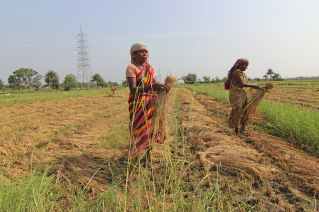
Rural development means improving the quality of life of people living in rural areas. Its main concern is to secure natural resources like agriculture and forest, from exploitation. But the change in the global production network and urbanization have changed the rural areas. A lot of things like manufacturers, tourism, recreation, etc., have affected agriculture as the domain of economic drives. Education, entrepreneurship, physical infrastructure, and social infrastructure all play an important role in developing rural regions. Rural development remains the core of the overall development of the country. More than two-thirds of the country’s people are dependent on agriculture for their livelihood, and one-third of rural India is still below the poverty line.


Rural development focus on Education, Public health and Sanitation, Women empowerment, Infrastructure development (electricity, irrigation, etc.), Facilities for agriculture extension and research, Availability of credit, Employment opportunities, sufficient and healthy food, etc.


Importance of Rural Development

Rural development is important for the population to live in rural areas and overall economic expansion of the nation. It is very important to be concerned about rural development because it is very important for the evaluation of our nation. It will help to increase productivity, stability in socio and economic development, and social-economic equality.


The main objective of Rural Development

The main objective of the government for rural development is to improve the productivity and wages of rural people, increase the standard of living of the underprivilege population, increase employment opportunities, and provide the basic needs like education, healthcare, rural roads, clean drinking water, sanitation, etc.


Ministry of Rural Development

The Ministry of Rural Development has two departments, the Department of Rural Development and the Department of Land Resources. The Department of Rural Development came into existence as a part of the Ministry of Food and Agriculture in October 1974. On 23 January 1982, this ministry was renamed the Ministry of Rural Development. as the Ministry of Agriculture in September 1985. On July 5, 1991, this department was again given the status of Ministry of Rural Development. After that, the name of the department was changed many times. In the year 1999. The department gets it to rename as Ministry of Rural Development. 

The ministry aims to bring change in rural development with various programs. The main objective of this ministry is to remove rural poverty and provide a better quality of life to the rural population, especially the people living below the poverty line. To further enhance the efforts being made in these areas, the government launched the Pradhan Mantri Gramin Yojana (PMGY), and the Ministry of Rural Development was entrusted with the responsibility of implementing the following parts of the Pradhan Mantri Yojana (PMGY), namely – drinking water supply, Housing construction and construction of rural roads. Many other policies were started by the government for the welfare of the rural population.


Keeping in view the needs and aspirations of the local people, the cooperation of Panchayati Raj Institutions was taken in the implementation of this program. These institutions are a form of decentralized development of planning and its implementation. The Ministry is urging the State Governments to give requisite administrative and financial powers to the Panchayati Raj Institutions at the earliest as stipulated in the 73rd Constitutional Amendment of India. The empowerment of rural women is important for the development of rural India. Therefore, provision has also been made for the contribution of women in poverty alleviation programs so that adequate funds can be arranged for this section of society. The Constitution (73rd) Amendment Act, 1992 provides for reservation of selected posts for women.


The following major programs are being operated in rural areas by the Ministry of Rural Development,

  • Mahatma Gandhi National Rural Employment Guarantee Act (MGNREGA) provides employment,
  • National Rural Livelihoods Mission (NRLM) for self-employment and skill development,
  • Pradhan Mantri Awas Yojana Gramin (PMAYG) to provide housing to BPL families,
  • Pradhan Mantri Gram Sadak Yojana (PMGSY) for the construction of quality roads,
  • National Social Assistance Program (NSAP) for Social Pension,
  • Integrated Watershed Management Program (IWMP) to improve the productivity of the land.

The annual budget of Rs. 1 35944.29 crores have been allocated to the department of Rural Development for the Financial Year 2022-23.

Rural Development.

The majority of population in India (about 73 per cent) is living in rural areas. Living conditions of the rural people are very poor. Under such a situation, development of rural areas must receive adequate attention in various schemes designed for the development of Indian economy.

The rural part of the country is still underdeveloped, and the government is doing what all they can to make sure that the rural part also has all the resources like the urban of the country has. But if survey gets conducted at various parts of the country, one will find out that still there are a lot of city and villages in the country whose development is still under process. Various kinds of roads and bridges are being made in various rural parts of the country so that they get connected to an urban part of the country, and thus people from rural part can travel to urban part easily to do various kinds of jobs.

Many industrialists have stepped out to develop rural part of the country, and that is why a lot of malls, call centers, and other industries are getting set up in various rural parts of the country. These industries will not only make job opportunities for the rural people, but it will also enhance their knowledge about certain things.

The following measures can he taken to attain rural development in the country.

  • Improvement of sanitation and for the improvement of sanitation, arrangements for supply of pure drinking water should be made. Tube-wells and ponds should be dug.
  • Education of the masses, Mass education should be introduced to remove the ignorance of the villagers. Education should be made free and compulsory.
  • Establishment of schools for poor people. Night schools should be set up for poor to teach elementary Hygiene and scientific methods of cultivation.
  • Establishment of cheap medical aid for people in rural areas. Hospitals should be established to give cheap medical aid to the people living in rural areas.
  • Construction of good roads and other means of communication is must.
  • Co-operative Credit Societies should be set up to provide loans to the peasants.

The Ministry of Rural Development is engaged in implementing a number of schemes which aim at enabling rural people to improve their living standards. Education, removal of poverty and speedy socio-economic progress is the goal with which the development programmes are being implemented through a multi pronged strategy, reaching out to the most disadvantaged sectors of society Huge priority is being accorded to provide clean drinking water, rural housing and road. The social security programmes are being implemented for providing assistance to the destitute and downtrodden. Assistance and encouragement to voluntary agencies and training of functionaries forms part of the emphasis on accelerated rural development. The ministry is constantly endeavouring to empower the Panchayt Raj institutions in terms of functions, power and finance. In the new initiative the Gram sabha has become the most significant institutions. Non-Government Organisations self help group and Panchayati Raj institutions have been accorded adequate role to make participating democracy meaningful and effective. Development of waste lands desert and drought prone areas has also been undertaken along with land reforms.

Salient Features of NEP, 2020

Salient Features of NEP, 2020

The National Education Policy 2020 was unveiled on July 29, 2020. The National Education Policy 2020 makes a number of changes to both higher education and secondary education, including technical education. The National Education Policy 2020 lists a number of action items/activities that should be implemented in both higher education and schooling.

The following are specifics of NEP 2020’s key features:

• Ensuring universal access at all educational levels, from preschool to grade 12;

• Ensuring that all children between the ages of 0 and 3 receive high-quality early care and education;

• New Pedagogical and Curricular Framework (5+3+3+4);

• There are no clear distinctions between the humanities and sciences, academic and extracurricular pursuits, or career paths;

• Launching a national initiative on basic literacy and numeracy;

• Promoting multilingualism and Indian languages as a priority; The home language, mother tongue, local language, or regional language will be used as the primary medium of teaching until at least Grade 5, but ideally until Grade 8 and beyond.

• Assessment reforms, including up to two Board Exams per school year, one for the main exam and one for improvement, if requested;

• The establishment of the PARAKH (Performance Assessment, Review, and Analysis of Knowledge for Holistic Development) National Assessment Center;

• Educational equity and inclusion, with a focus on Socially and Economically Disadvantaged Groups (SEDGs);

• Special Education Zones and a specific gender inclusion fund for underprivileged areas and groups;

• Effective and open procedures for hiring teachers and performance evaluations based on merit;

• Ensuring that all resources are accessible via school complexes and clusters;

State School Standards Authority (SSSA) establishment (xiii);

(xiv) Promotion of vocational education throughout the K–12 and tertiary systems of instruction;

• raising GER to 50% in higher education;

(xvi) Multidisciplinary, all-encompassing education with numerous points of access and departure;

• NTA will conduct a Common Entrance Exam for HEI Admission;

• The founding of an academic bank of credit

Multidisciplinary Education and Research Universities (MERUs) establishment (xix);

The National Research Foundation (NRF) was established.

“Light yet Tight” regulation (xxi);

• The Higher Education Commission of India (HECI), a single overarching umbrella organisation, with independent bodies for standard setting (the General Education Council), funding (the Higher Education Grants Council), accreditation (the National Accreditation Council [NAC]), and regulation (the National Higher Education Regulatory Council [NHERC]), is responsible for promoting the higher education sector, including teacher education but excluding medical and legal education;

• Growing open and distant education to boost the gross enrollment ratio (GER).

• Globalization in Education

• The higher education system will include professional education as a core component. The goal of institutions in these and other sectors, including independent technical universities, law schools, medical schools, and agricultural colleges, is to become multidisciplinary institutions.

• 4-year integrated stage- and subject-specific teacher education degree in education

• Creating a National Mentoring Mission.

the establishment of the National Educational Technology Forum (NETF), an independent organisation that would serve as a forum for the unrestricted discussion of ways to use technology to improve instruction, evaluation, planning, and administration.

The appropriate use of technology in all educational levels.

Objectives Reaching 100% adult and juvenile literacy.

• The commercialization of higher education will be fought and stopped by a number of methods with checks and balances.

• As a “not for profit” company, all educational institutions will be held to the same standards of audit and disclosure.

• The Center and the States will collaborate to boost public spending on education so that it reaches 6% of GDP as soon as possible.

• The Central Advisory Board of Education should be strengthened to maintain coordination and to put more of an emphasis on quality education overall.

By 2030, the NEP, 2020 aims to raise the GER in preschool through secondary education to 100%, while it will rise from 26.3% in 2018 to 50% in higher education, including vocational education.

The Pandit Madan Mohan Malaviya National Mission on Teachers and Teaching (PMMMNMTT), a central sector scheme, was established in 2014 to address all concerns pertaining to teacher preparation, capacity building, and professional development of teachers. The country’s 95 centres, through which faculties and teachers were taught, were founded under the components. The Scheme has been evaluated by the Standing Finance Committee, which has recommended that it be continued through 2025–2026 with a total outlay of Rs. 493.68 crore. The establishment of PMMMNMTT Scheme Centers is based on the proposals that are received from educational institutions, are reviewed by the Screening Committee, and are approved by the Project Approval Board.

In a written response submitted to the Lok Sabha, Dr. Subhas Sarkar, Minister of State for Education, provided the information.

Salient Features of NEP, 2020

Salient Features of NEP, 2020

The National Education Policy 2020 was unveiled on July 29, 2020. The National Education Policy 2020 makes a number of changes to both higher education and secondary education, including technical education. The National Education Policy 2020 lists a number of action items/activities that should be implemented in both higher education and schooling.

The following are specifics of NEP 2020’s key features:

• Ensuring universal access at all educational levels, from preschool to grade 12;

• Ensuring that all children between the ages of 0 and 3 receive high-quality early care and education;

• New Pedagogical and Curricular Framework (5+3+3+4);

• There are no clear distinctions between the humanities and sciences, academic and extracurricular pursuits, or career paths;

• Launching a national initiative on basic literacy and numeracy;

• Promoting multilingualism and Indian languages as a priority; The home language, mother tongue, local language, or regional language will be used as the primary medium of teaching until at least Grade 5, but ideally until Grade 8 and beyond.

• Assessment reforms, including up to two Board Exams per school year, one for the main exam and one for improvement, if requested;

• The establishment of the PARAKH (Performance Assessment, Review, and Analysis of Knowledge for Holistic Development) National Assessment Center;

• Educational equity and inclusion, with a focus on Socially and Economically Disadvantaged Groups (SEDGs);

• Special Education Zones and a specific gender inclusion fund for underprivileged areas and groups;

• Effective and open procedures for hiring teachers and performance evaluations based on merit;

• Ensuring that all resources are accessible via school complexes and clusters;

State School Standards Authority (SSSA) establishment (xiii);

(xiv) Promotion of vocational education throughout the K–12 and tertiary systems of instruction;

• raising GER to 50% in higher education;

(xvi) Multidisciplinary, all-encompassing education with numerous points of access and departure;

• NTA will conduct a Common Entrance Exam for HEI Admission;

• The founding of an academic bank of credit

Multidisciplinary Education and Research Universities (MERUs) establishment (xix);

The National Research Foundation (NRF) was established.

“Light yet Tight” regulation (xxi);

• The Higher Education Commission of India (HECI), a single overarching umbrella organisation, with independent bodies for standard setting (the General Education Council), funding (the Higher Education Grants Council), accreditation (the National Accreditation Council [NAC]), and regulation (the National Higher Education Regulatory Council [NHERC]), is responsible for promoting the higher education sector, including teacher education but excluding medical and legal education;

• Growing open and distant education to boost the gross enrollment ratio (GER).

• Globalization in Education

• The higher education system will include professional education as a core component. The goal of institutions in these and other sectors, including independent technical universities, law schools, medical schools, and agricultural colleges, is to become multidisciplinary institutions.

• 4-year integrated stage- and subject-specific teacher education degree in education

• Creating a National Mentoring Mission.

The establishment of the National Educational Technology Forum (NETF), an independent organisation that would serve as a forum for the unrestricted discussion of ways to use technology to improve instruction, evaluation, planning, and administration.

The appropriate use of technology in all educational levels.

Objectives Reaching 100% adult and juvenile literacy.

• The commercialization of higher education will be fought and stopped by a number of methods with checks and balances.

• As a “not for profit” company, all educational institutions will be held to the same standards of audit and disclosure.

• The Center and the States will collaborate to boost public spending on education so that it reaches 6% of GDP as soon as possible.

• The Central Advisory Board of Education should be strengthened to maintain coordination and to put more of an emphasis on quality education overall.

By 2030, the NEP, 2020 aims to raise the GER in preschool through secondary education to 100%, while it will rise from 26.3% in 2018 to 50% in higher education, including vocational education.

The Pandit Madan Mohan Malaviya National Mission on Teachers and Teaching (PMMMNMTT), a central sector scheme, was established in 2014 to address all concerns pertaining to teacher preparation, capacity building, and professional development of teachers. The country’s 95 centres, through which faculties and teachers were taught, were founded under the components. The Scheme has been evaluated by the Standing Finance Committee, which has recommended that it be continued through 2025–2026 with a total outlay of Rs. 493.68 crore. The establishment of PMMMNMTT Scheme Centers is based on the proposals that are received from educational institutions, are reviewed by the Screening Committee, and are approved by the Project Approval Board.

In a written response submitted to the Lok Sabha, Dr. Subhas Sarkar, Minister of State for Education, provided the information.

Inclusive growth and issues arising from it

Inclusive growth is defined as economic growth that generates job opportunities and aids in poverty reduction.
It entails poor people having access to basic health and education services. It entails ensuring equal opportunity for all, as well as empowering people through education and skill development.
To reduce poverty quickly and sustainably, people must be able to both contribute to and benefit from economic progress.
Rapid growth is required to eliminate poverty, but it must be broad-based across sectors and inclusive of a large portion of the country’s labor force to be long-term sustainable.According to the UNDP, inclusive growth is “the process and result of all groups of people participating in growth and benefiting equally from it.”
According to the OECD (Organisation for Economic Co-operation and Development), inclusive growth is defined as economic growth that is evenly dispersed across society and generates opportunity for everyone.

•Unemployment

Because of illiteracy and over-dependence on agriculture, India’s employment quality and quantity are low.The lack of quality employment is a concern because more than 80% of individuals work in the informal sector and are not covered by social security.According to the NSSO’s Periodic Labour Force Survey (PLFS), the unemployment rate for the urban workforce was 7.8%, while the rural workforce had a rate of 5.3 percent, bringing the total unemployment rate to 6.1 percent.The following factors contribute to sluggish job growth:
°The industry has a low capital utilization °Low initial budget
°Agriculture’s expansion has been slow.
°According to economists, what is being referred to as a “demographic dividend” could turn out to be a moment of crisis defined by high unemployment and social unrest.

•Backwardness in Agriculture

Agriculture employs 60% of the Indian population, either directly or indirectly. Agriculture, on the other hand, has a dismal growth rate of only 2%.
Agriculture production must be improved by policymakers and government officials in order to be more inclusive.Lack of access to capital for agriculture and small and medium enterprises, as well as a lack of social protection, have all contributed to underprivileged communities being left out of the growth picture.The following are some of the issues in agriculture:
°A gradual decrease in the employment share
°Land availability per capita is dwindling.
°Labor productivity is low.
°Agriculture yields are declining as a result of climate change, soil degradation, and water scarcity.
°Growth differences between regions and crops.

•Social Development Problems:

One of the most important concerns for inclusive growth is social development. However, it has some issues, such as:
Regional, societal, and gender differences are all significant.Public spending, notably in health and education, is at a low level and growing slowly.Children’s malnutrition – India is ranked 102nd in the Global Hunger Index.

•Disparities by Region

India’s regional differences are a key source of concern. Factors such as the caste system, the wealth gap, and others contribute to regional inequities, resulting in a society in which certain groups enjoy greater privileges than others.Kerala is the most literate state in the country, with a literacy rate of 93.1 percent; nevertheless, Bihar’s literacy rate is only 63.82 percent.


India is a vibrant nation whose strength lies in its commitment to equal rights and to speech, religious and economic freedoms that enrich the lives of all citizens. India is not only the world’s largest democracy; it is also a secular, pluralistic society committed to inclusive growth.

The rising burden of E- waste

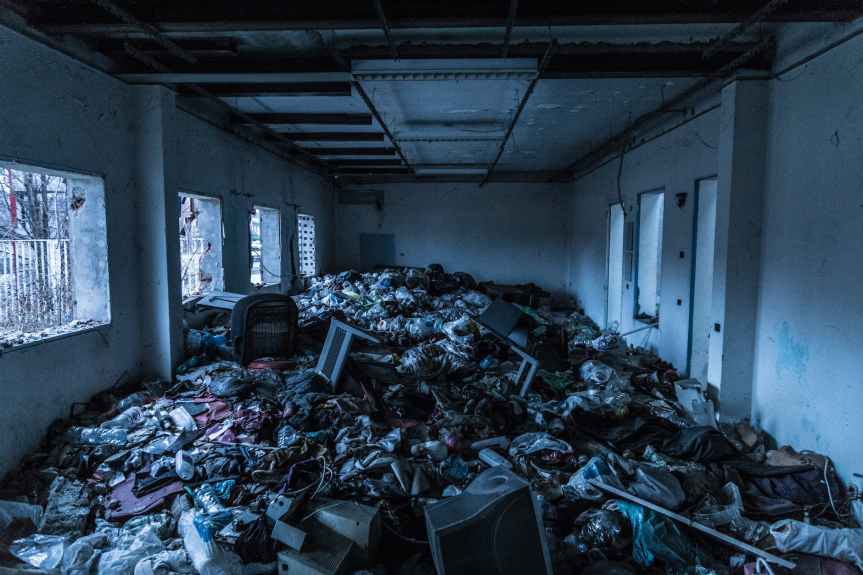
E- waste or electronic waste refers to the waste created by discarding the electronic devices which is rather caused due to its end of useful life, high repair cost , outdated technologies etc. which makes it underrated for further use. These waste includes TV, mobile phones, computer/ desktop, electronic items, wires, machineries etc. This is one of the fastest waste generated.

Everyday lakhs and lakhs of e-waste is generated. The country’s e-waste output is growing at over 30 per cent year on year, and stood at over 10 lakh tonnes in 2019-20, according to government data, comparable to about one lakh six-wheeled truckloads of waste.

It is the third largest in volume globally and growing at a rate ten times faster than its plastic waste output.

Mountains of e-waste pile up, which are as much a threat to the environment as they are to the health of their handlers .It proves vulnerable as people are sifting and processing the waste of the privileged without knowing that it could cause them cancer, reproductive disorders, endocrine disruption and other health complications.

Problems:

The most alarming aspect of e-waste is that less than a quarter of it is being processed.It possess hazardous metals and can contaminate soil, air, water, posing significant risk to human health by entering the food chain.

Unsafe disposal of e waste: About 95% of e waste is recycled by informal sectors and scrap developers without knowing the hazardous effect and use of safe handling practice.

Concern : Majority of e waste are imported to developing countries like India, China, Ghana etc from developed countries for recycling purpose.

With advancement in technologies, standard of living people are more inclined towards use of more gadgets, phones and tend to change them more frequently.

Way forward

E waste clinics for proper segregation, processing and disposal of e waste. Effective ways to implement proper and safe handling of waste.

Initiative taken by government includes: Prime Minister Narendra Modi launched the LiFE or Lifestyle for Environment movement in June—a concept that he said is borrowed from the past and focuses on the future.

The right to repair is introduced to reduce the e waste and it’s proper management as it is environmental friendly too. But this also concerns the major industries involved in sector as it could lead to their loss and some technologies can’t be added to existing devices .

What are Sustainable Development Goals explain?

The Sustainable Development Goals (SDGs), also known as the Global Goals, were adopted by the United Nations in 2015 as a universal call to action to end poverty, protect the planet, and ensure that by 2030 all people enjoy peace and prosperity.

The 17 SDGs are integrated—they recognize that action in one area will affect outcomes in others, and that development must balance social, economic and environmental sustainability.

Countries have committed to prioritize progress for those who’re furthest behind. The SDGs are designed to end poverty, hunger, AIDS, and discrimination against women and girls.

The creativity, knowhow, technology and financial resources from all of society is necessary to achieve the SDGs in every context.

1

NO POVERTY

2

ZERO HUNGER

3

GOOD HEALTH AND WELL-BEING

4

QUALITY EDUCATION

5

GENDER EQUALITY

6

CLEAN WATER AND SANITATION

7

AFFORDABLE AND CLEAN ENERGY

8

DECENT WORK AND ECONOMIC GROWTH

9

INDUSTRY, INNOVATION AND INFRASTRUCTURE

10

REDUCED INEQUALITIES

11

SUSTAINABLE CITIES AND COMMUNITIES

12

RESPONSIBLE CONSUMPTION AND PRODUCTION

13

CLIMATE ACTION

14

LIFE BELOW WATER

15

LIFE ON LAND

16

PEACE, JUSTICE AND STRONG INSTITUTIONS

17

PARTNERSHIPS FOR THE GOALS

New Education Policy 2022

 New Education Policy 2022

the central committee of the central government has approved a new education policy some months ago. there are a lot of changes that have been done to the old policy which we were following for the past few years.

What is NEP? NEP is a new education policy that has replaced the old one from 1986. In the new policy, the government has highly focused on primary and vocational education in rural & urban areas. the motive of introducing the new policy is to enhance the quality of education from 2022 onwards.

  • The policy states that now the education will be taught in more regional and mother tongues languages  prefeerd by different states.
  • in place of 10+2 now the 5+3+3+4 system will be applied which includes foundation, preparatory, middle, and secondary.
  • if someone wants to make a teacher then they should possess a four-year bachelor’s degree. 

major changes in NEP 2022:

  • for 3.5.8 grade students are mandatory to attempt the school exam conducted by the appropriate authority.
  •  for admission to higher education institutions, the students need to qualify common entrance exam named NTA.

  • the policy ensures 100 % literacy for youth and adults by 2030.
  • more focus is given to e-learning than textbook reading
  • regulation is expecting light but sticks for higher education.
  • the policy replaced 10+2 with 5+3+3+4.

  • students have an option of choosing the option of higher education.

features of NEP :

  • It has been enacted by the minister of education.
  • from now onwards education will be universal, except for law and medical discipline.
  • the science, commerce, and arts stream will be discontinued.
  • now the student will learn coding from 6 the standard
  • digital learning will be part of all schools.
  • 6% of GDP will spend on executing NEP.

  • Students now can learn Sanskrit if they wish.
  • A special focus will be given to child education.


New Education Policy : Key Highlights.

The Union Cabinet chaired by the Prime Minister have approved the new National Education Policy 2020, making way for large scale, transformational reforms in both school and higher education sectors. This is the first education policy of the 21st century and replaces the 34-year-old National Policy on Education (NPE), 1986.

The New Education Policy 2020 has come up as a in the education sector as it aims at creating an equitable and vibrant knowledge for the society by providing high-quality education to all. Also it encourages to develop a deep sense of respect towards the fundamental rights, duties and Constitutional values, bonding with one’s country, and a conscious awareness of one’s role and responsibilities in a changing world. The New Education Policy believes in instilling skills, values, and dispositions that support responsible commitment to human rights, sustainable development and living, and global well-being, thereby reflecting a truly global citizen.

The key highlights of NEP are.

Early Childhood Care Education

The policy focuses on the importance of providing education to children between the age group of 3-6 years at an early age. The kids in the age group 3-5 years will be provided education through the current set-up of pre-schools and anganwadis, and those between the ages of 5-6 years will be included in the schooling system by 2025.

School Education for All

Aiming to make education from pre-primary level till the 12th grade universally accessible, NEP 2020 is looking to achieve 100% Gross Enrollment Ratio in providing the school education by 2030.
New Curriculum & Pedagogical Structure.

The new policy has eliminated the 10+2 education system and replaced it with a more organized 5+3+3+4 structure, that is, 5 years of primary education (for the age group 3-8 years), 3 years of preparatory stage (for the age group 8-11 years), 3 years of middle stage (for the age group 11-14 years), and 4 years of secondary stage (for the age group 14-18 years).

The Flexibility of Choosing Courses

There will be no rigid demarcations between vocational and non-vocational, science and arts, curricular and extra-curricular activities, thus providing equal emphasis on all the subjects and courses. Also, the students will have more choices and flexibility while picking up the subjects they want to study so that their educational path is more focused on their skills and interests.

Emphasis on Mother Tongue & Multilingualism

The policy emphasizes on the inclusion of local language in the curriculum with the medium of instructions in all the schools till at least class 5 (but preferably till 8th standard and beyond) to be either in mother tongue or regional language. Subsequently, foreign languages will be offered as options for students in secondary schools. It also states that Indian Sign Language (ISL) will be standardized across the country.

Assessment System

As per the new policy, though the board examination for 10th and 12th grades will continue to be in place, the structure of the exams will be reformed to make them easier by focusing on core competencies of the students, thus eliminating the need of coaching classes at these stages. Also, the school examinations will be conducted by proper authorities only in grades 3, 5, and 8.

Multidisciplinary Education

The students will be provided with multi-disciplinary holistic education at the undergraduate level to ensure an integrated exposure with multiple entry and exit options. The 3 or 4-year duration undergraduate degree will have exit options (with certifications) during the entire course – a certificate after 1 year, diploma after 2 years and/or a bachelor’s degree after 3 years.