MANAGING EMOTIONS

“Emotions can get in the way or get you on the way”. -Mavis Mazhura

A. EMOTIONS

As we move forward with our daily lives, we experience a variety of emotions. Thus, emotions are feelings. Emotions are a fundamental character of what our identity and yet they can be chaotic, complicated and difficult to understand. Realization to how to name them and talk about them — with both yourself and other people — is a vital part of the creation of developing wellbeing. Emotions can be characterized as mental states, that include thoughts and sentiments, physiological changes, expressive practices, and tendencies to act.

There are different types of emotion:

B. WHAT DOES MANAGING EMOTIONS MEAN?

Managing emotional reactions means choosing how and when to express the emotions we feel. Individuals who work effectively to manage their emotions realizes the beneficiality to communicate their sentiments — yet it’s important to how (and when) they express them. Also, they’re ready to respond to circumstances in a fruitful manner, such as:

  • They have knowledge of when it is appropriate to speak and when it’s better to wait before reacting or responding to what they feel.
  • They can decide that whether they want to react instead of allowing emotions to influence them to do or say something which they regret later.
  • The realization of the reaction to what’s to impact and its consequences -including how others react to them and the manner in which they feel about themselves.

You’ve most likely been in a circumstance where somebody responded in a way that was excessively emotional that made you feel humiliated, or bad for the individual, or you might have been in a circumstance where your own feelings were so strong that it took all your self-control to not go down to that path by yourself.

Possibly you can think about the time where you didn’t deal with your reactions. It happens, and when it does, forgive yourself and focus on what you can do to manage these emotions.

C. HOW TO IDENTIFY EMOTIONAL STATE?

You can start this process by asking yourself questions that will lead you in understanding the approach in which that particular feeling has influenced you. You need to ask yourself questions such as:

  • What am I feeling now?
  • What are my senses telling me?
  • What is it that I want?
  • What judgments or conclusions have I made (and are they accurate)?

The responses to these questions are important to utilize your feelings in the assistance of your life objectives, instead of permitting your feelings to utilize you.

Often, our body reactions are an important source or clues to understand the nature of emotions. Such as if your head pounds, your heart races, and you feel progressively tense and hot, you are most likely to be angry. On the other hand, a person can identify his/her emotions by the way they make you think, act and feel.

D. IMPORTANCE OF MANAGING EMOTIONS

1.  Comprehend the purpose of your feeling

The need to recognize an emotion to comprehend what it is and to understand what it’s indicating to advise us.  For instance, if a youngster is spending time in a gathering of individuals who makes him feel miserable, restless and under tension – it is significant that the adolescent can perceive this and understand that his feelings are designated him to follow the right circumstances.

2.NEGATIVE EMOTIONS CAN RESULT IN NEGATIVE THOUGHTS

The struggle to understand one’s feelings can result in negative thoughts. It’s very important to realize as an individual to know we are responsible of our own thoughts and that it can affect our mindset. Thus,

3. To help you feel more in control

The management of our emotions can influence one’s behaviour and mood. Facing a lot of negative emotions can result in disconnected from various daily activities. Thus, it is important to recognize these emotions and try to find a    solution to help a person be in control.

For example: if a person is feeling anxious, sad, angry or worried it can have a huge impact on their relationship with friends, partner, family or overall feeling of happiness.

E. REGULATING EMOTIONS

There are number of ways through which a person can regulate their emotions even though it is important to understand and differentiate between the way of being harmful and helpful in managing negative emotions. Below is a list of some helpful and harmful ways of regulating emotions:

HELPFUL WAYSHARMFUL WAYS
ExerciseDenial
Be good and kind to othersWithdrawal
  Distract yourselfSubstance use
Practise gratitudeSelf-Harm
Talk to someoneBullying
Practice mindfulness 

Let’s understand some helpful ways in detail.

1.Exercise: It’ a fact that doing exercise for atleast 45 minutes each day can make you feel better as it releases the chemicals such as endorphins that improves the mood and enhances self-esteem.

2. Be good to others as it will help you to stressing about yourself.

3. Distract yourself: It can be done by engaging yourself in certain activities such as watching T.V, reading books, gardening, cooking etc. (anything that a person adores do the most)

4. Practice gratitude: Gratitude refers to the quality of being thankful and it can be practiced by keeping a journal of gratitude or sharing your gratitude with your loved ones.

5. Talk to someone: Invest time on other people and appreciate each part of the conversation.

6. Spend time outside: Being in fresh air, particularly around nature, is useful for calming the feelings.

ENVIRONMENTAL EDUCATION

ENVIRONMENT

The environment can be defined as a sum total of all the living and non-living elements and their effects which influence human life. While all living or biotic elements are animals, plants, forests, fisheries, and birds, etc. The non-living or abiotic elements include water, land, sunlight, rocks, and air, etc or it is the complex of physical, chemical, and biotic factors (such as climate, soil, and living things) that act upon an organism or an ecological community and ultimately determine its form and survival.

ENVIRONMENTAL EDUCATION

Environmental education is a process that permits people to investigate environmental issues, take part in critical thinking, and make a move to work on the environment.

Accordingly, people foster a more profound understanding of environmental issues and have what it takes to settle on educated and dependable choices.

The point of environmental education is to develop a world population that knows about, and worried about, the environmental and its related issues, and which has the information, abilities, attitudes, inspirations and obligation to work separately and collectively towards arrangements of current issues and the avoidance of new ones.  

OBJECTIVES OF ENVIRONMENTAL EDUCATION

Given below are the objectives of environmental education:

•Mindfulness: This is one of the fundamental objectives that any subject of study offers. Through concentrating on environmental education, mindfulness about the environment, the issues of the environment and the answers for the issues are created. There is a legitimate understanding with respect to why there are different capacities present in the environment.

•Information: Environmental education assists an individual with acquiring information and data about the current happenings in the environment. There in-depth and proper education that is given with regards to the environment and the elements of the environment.  

•Obligation: It is just when we comprehend the purposes for the interruptions in the environment; we can find appropriate ways to prevent it. People comprehend which activities hurt the environment, be it in a little or a major manner, and avoid potential risk to confront the misfortunes. It likewise helps in making any future moves and choices mindfully.

•Participation: When we study in detail about a specific subject, we will quite often get more engaged with it. The environment is something that concerns every one of us, so it is our obligation to take an interest in saving the environment and keep it from being harmed. Though environmental education, individuals are encouraged to partition in saving and taking care of the environment as they become aware of the harm that it can cause to their lives.

•Making New Patterns: With expanded consciousness of the harm that man’s activities are causing to the environment, environmental education plans to make new pattern of behaviour and attitude that humans have towards the environment. This outcomes in less damage as the new pattern is pointed toward being environmentally friendly.

•Understanding the Complexity of Environment: The environment that we people live in is complex and includes different activities that occur inside it. Environmental education satisfies the intend to cause individuals to comprehend the complexity of working in the environment and the interaction that happens in it. By getting this, individuals become more indulged in saving and securing the environment.

Thus, environmental education is necessary because it teaches us about ourselves. It advises us that nature and individuals are not independent, we are nature and nature are us. EE is essential since we should be in every way educated and mindful of the effects of our choices. Education shapes the premise of everything in today’s world including environment. Environmental Education imparts information about the current circumstance and future possibilities of nature. It encourages individuals to investigate all the issues connected with environment, and take part in ways of safeguarding it.

IMPORTANCE OF ENVIRONMENTAL EDUCATION

Every individual has to be aware about the functions in an environment. Only at that time we will become responsible for our environment. The information given below will help in understanding the significance of environmental education.

  • Environmental education is one of the subjects in the educational program in schools. At a point when children study about the environment and its capacities, they develop a feeling of understanding towards the environment in the beginning phase of their life.
  • It is essential to build the attention of people towards the environment. With the assistance of environmental education, individuals’ information about the environment is instilled into the citizens of a state or a country.
  • There are numerous environmental issues that the world is confronting. To stay away from them later on, individuals need to study the environment and take appropriate consideration of it. It can be done with the assistance of environmental education.
  • Environmental education polishes various other skills of an individual. The ability to make decisions is strengthened with the study of environmental education as people become more responsible and aware.
  • People can manage any sort of environmental issue through environmental education. This, thus, brings about an expansion in critical thinking abilities.
  • One creates sensitivity towards the environment as a result of the multitude of environmental issues that have been occurring for quite a while. Thusly, every individual makes any move by remembering the damage it can cause to the environment.
  • Simply nobody can address the issues that emerge in the environment. Environmental education makes individual rich in the information about the environment with the goal that the most ideal arrangements can be accommodated even the smallest of circumstances the environment faces.

MINDFUL EATING

Mindful eating refers to the act of being present while eating or drinking.

You are likely to eat while working, sitting in front of the TV, chatting on the telephone, or doing various task throughout your day. You may not see when you’ve eaten a couple of sweets, presented yourself with one more mug of espresso, or finished the crust from your child’s breakfast, because eating is second nature to you.

Thus, mindful eating permits you to stop, slow down, and truly focus while eating.

There are countless examinations recommending the effect of food on psychological wellness. Uma Naidoo, MD refers to the association among diet and mental and neurological wellbeing as the “gut-brain romance.” Similarly, early-stage cells which founded our brain and nervous system additionally founded the gastrointestinal framework, Dr. Naidoo clarifies, and these frameworks remain inextricably connected through the vagus nerve which controls our “rest and digest” system. The relationship between food and psychological well-being goes a lot further than many figure it out. Investigations have discovered that diet, along with exercise can really balance neurological and mental problems, like epilepsy and dementia. It is also closely tied to anxiety, depression, and sleep.

PRACTICING MINDFUL EATING

Life can move rapidly, and stopping to eat without interruption and interference can feel impossible now and again, however mindful eating doesn’t need to be time- consuming. You should simply slow down and focus. Here are a few methods for practicing mindful eating consistently:

Be aware of the activity: Follow a single bite from beginning to end, Dr. Naidoo suggests, and focus on the sounds of cutting the food, the smell as it floats up to your noses, the surface of the food as it arrives in your mouth, the flavors that change as you bite, and the feeling as you swallow your food.

Perceive your body’s signs: We’ve all experienced that profound, snarling feeling in our stomach when we’re hungry. This is a sign. Cravings are also a sign; however, they don’t really mean you want food. Once in a while we experience desires when we’re feeling worried or restless. As you start mindfully eating, journal what you’re eating and the way you feel before, during, and later.

Slow down your eating so your body and mind can communicate: At a point when you eat rapidly, you don’t typically experience fullness as fast, and this can prompt overeating. During the time slow down, to permit your body and brain to convey.

Socialize over food: “The demonstration of getting ready and offering dinners to others is a social movement that has withstood the turbulent test of time, and we realize that social commitment is a critical element in our well-being,” says Dr. Naidoo. Joining a companion for dinner or preparing with a friend or family member can assist you with rehearsing more mindful eating, all while supporting your mental health.

Focus on the sensory details: With each new food, Dr. Naidoo proposes focusing on one sensory aspect, for example, the smell of an orange as you unpeel it, your lunch pack unzipping, or seeing the bright carrots and beet hummus.

Practice mindfulness throughout your day: In order to work on mindful eating, it will assist with joining mindfulness into different parts of your life. Dr. Naidoo recommends adding affirmations to your morning schedule, rehearsing yoga, working out, or attempting guided meditation. Mindfulness, in any structure, can assist you with remaining grounded and present.

CONCLUSION

Thus, Mindful eating isn’t a diet. The motivation behind mindful eating isn’t to get thinner or cut back calories; the object is to work on your relationship with food and overall eating experience.

“Dieting or restricting, in any form, doesn’t work,” says RanDee Anshutz. “The pursuit of weight loss or controlling the size of our body causes more harm than good.”

Knowing the adverse consequence of specific food varieties on your body doesn’t mean you need to eliminate those food varieties from your eating routine. With mindful eating, you can learn to enjoy the taste and feel of a single chocolate chip cookie, for example, as opposed to eating half a dozen without realizing it.

FOREST BATHING

Forest bathing is based on the Japanese practice, shinrin-yoku, which can be interpreted as “taking in the medication or air of the forest.” While forest bathing started in Japan during the 1980s, it has developed well known around the world.

Brought into the world because of significant degrees of work pressure and a spike in paces of immune system illness, forest bathing was likewise adjusted to work on the economy of country regions that lost individuals moving to urban communities. Forest bathing has turned into an eco-friendly, health remedy to our tech-immersed world.

It turns out that walking and relaxing in this type of immersive experience amongst the trees may offer various health benefits. That’s the reason forest bathing is additionally called forest therapy.

ADVANTAGES

1. The advantages of going for a walk-in nature is moving away from screens. Simultaneously, when we spend time in nature, we are additionally switching off rumination, stress, and obsessive thinking. All things considered, we are enjoying some time off and permit ourselves an opportunity to re-energize and appreciate.

2. Breathing in forest air increase the degree of normal killer (NK) cells in our blood. Our body utilizes these NK cells to battle infection and cancer.

3. The constructive outcomes of forest bathing are turning out to be well known. In one study, members who constantly walk-through forests showed proof of lower blood pressure. Openness to the tree oil and walks around the forest may likewise add to decreased nervousness. Past scientific research observed that forest bathers showed proof of decreased pressure chemicals like adrenaline and noradrenaline in their bodies. Forest bathing has been demonstrated to help those encountering a brief upsetting circumstance as well as persistent pressure. Forest bathing is turning into an increasingly well-known stress decrease strategy. Analysts are prescribing forest treatment to diminish the danger of psychosocial stress-related sicknesses.

THINGS TO KEEP IN MIND

This is what you should focus on as you stroll through the forest:

What do you see?

Are there various types of trees here?

Do you hear birds close by singing?

Would you be able to hear the smash of the leaves and twigs on the ground as you walk?

Would you be able to hear the quiet?

Did a creature hurry some place close by?

Do you feel the stirring breeze?

Do you feel your body as you walk?

Would you be able to take in the aroma of the trees?

Would you be able to breathe in and breathe out profoundly?

Did you see the sky above you and its shade of blue?

Would you be able to feel your association with the forest?

Would you be able to connect and feel the delicate quality of the leaves or the sharpness of the pine needles?

Do you detect quietness?

Would you be able to relish the time you have here?

CONCLUSION

Forest bathing is a strong wellness tool. It’s a nature-based mediation so you don’t need to stress over side effects. It can likewise be a corresponding treatment to enhance standard treatment, particularly for emotional wellness hardships.

Simply make sure to forest bath consistently, regardless of whether you need to plan the time on your schedule.

This course of getting back to nature can carry you to an increased condition of tangible mindfulness and a feeling of serenity. Not long after entering a green space, your body unwinds, pulse balances out, stress chemicals decline, muscle strain diminishes, and medical advantages kick in.

POWER OF CREATIVE THINKING

WHAT IS CREATIVITY THINKING?

Creative thinking is the capacity to think about something in an another or new manner. It might be a new approach to a problem, a resolution to a conflict between employees, or a new result from a data set. Managers in all enterprises need representatives who can think creatively and carry new points of view to the work environment. Creative thinking implies thinking out of the box. Frequently, creativity includes lateral thinking, which is the capacity to see patterns that are not self-evident.

Creative thinking may mean devising better approaches to do task, take care of issues, and address difficulties. It implies bringing a new, and once in a while strange, point of view to your work. This perspective can assist department and associations with being more useful. Creative thinking isn’t restricted to artistic types. Creative thinking is an ability that anybody can sustain and create.

HOW TO IMPROVE YOUR CREATIVE THINKING?

1. Step outside of your comfort zone- Research has demonstrated that perhaps the greatest obstruction for creativity is working or thinking about thoughts we’re now acquainted with. At a point when you’re confronting a creative challenge, attempt to oblige your work to a specific level (for example, when making a presentation, drive yourself to start each slide with a verb in dynamic voice). This way, you’ll urge your brain to come up with more creative answers for your work, around the restrictions you’ve set for yourself.

2. Brainstorm-Brainstorming is an ideal blend of creative thinking abilities and cooperation. It depends on thinking about an answer for an issue or a creative task, and writing down all thoughts any member recommends paying little attention to how unbelievable or awkward these might appear. Out of all the thoughts, some will be likely to be both conceivable and imaginative.

3.  Force yourself to work when you’re feeling uninspired-. In any event, when you feel like creative work is the last thing you’re equipped for, on a given day, focus on doing it in any case, yet work in restricted, brief timeframes (for instance, 20 minutes). During these periods, let nothing divert you, don’t attempt to do anything expect work that you’ve resolved to do. Assuming you compose just 5 words, define only two boundaries, or note down a solitary thought that doesn’t appear to be legit, it’s fine. When the 20 minutes are finished, enjoy some time off. At whatever point you feel prepared, start an additional 20 minutes. After a couple of iterations, you’ll notice that you get more and more done within the set chunk of time and you’ll no longer feel relieved when it’s time for a break. Soon, you’ll be back to your creative best.

4. Work, daydream, work– Many studies have recommended that detaching mentally, fantasizing, moving, or even basically snoozing helps upgrade creative thinking abilities. It is discovered that daydreaming features a vital part of fantasizing: it only works once you’ve already invested a considerable amount of time in a given project. The deeper you are in the creative process, the more unplugging for a while or daydreaming can help you further.

6 WAYS TO APPLY CREATIVE THINKING IN YOUR EVERYDAY LIFE

The following are 6 ways to apply creative thinking in your life:

1)Risk Taking: Being bold and prepared for life’s difficulties pushes you a step forward to creativity.

2)Playing: Trying to play and be funny at times allows you the opportunity to control the given issue appropriately according to what you want.

3)Regularly inquiring as to Why: Being interested and nosy, needing to pose inquiries all the time opens unlimited opportunities and possibilities.

4)Generating huge number of thoughts: By creating a major number of potential arrangements, a brilliant, special, surprising response may be found.

5)Day Dreaming:  Wondering about things related to your project frees your mind to expand its horizons and explore new ways out there.

6)Reading: Going to the library and reading for hours can support your creative mind and develop further creative mastermind.

Major boost to education sector

 Union Education Minister Shri Ramesh Pokhriyal ‘Nishank’ lauded the Union Budget 2021-22 and expressed his gratitude to Finance Minister Smt Nirmala Sitharaman for giving a major boost to education.

ShriPokhriyal highlighted that the Budget allocation for the National Apprenticeship Training Scheme (NATS), has been substantially increased from Rs. 175 Cr to Rs. 500 Cr in next FY 2021-22 for providing post-education apprenticeship, training of graduates and diploma holders in Engineering.He also said that an outlay of Rs. 50,000 Cr over next 5 years for National Research Foundation (NRF) will give a major boost to Innovation and R&D.

The Minister said in a big boost to education sector allocation of KVS has increased by Rs 362.32 crore and allocation of NVS increased to Rs. 320 crore w.r.t. RE 2020-21. The budget allocation of NCERT increased to Rs.110.08 crore from RE 2020-21.

I202102011110.jpg


Highlights of Budget 2021-22 –Department of Higher Education


1.   In this FY 2020-21, the BE was Rs. 39466.52 Cr, which has been rationalised to  Rs. 32900 Cr, due to Covid-19. BE for the next year 2021-22 has been kept at  Rs.  38350.65 Cr, which is more than 5450.65 Cr more than the current year RE.


2.   Out of the Total BE of Rs. 38350.65 Cr, Provisions for Establishment, Autonomous Bodies(ABs), and Schemes are as below:

(i)Establishment: Rs. 247.44 Cr

(ii)Autonomous Bodies(ABs): 29023.78 Cr

(iii)       Schemes Total: Rs. 9069.43 Cr

(a)Centrally Sponsored Schemes: Rs. 3000 Cr [RUSA]

(b)Central Sector Schemes: Rs. 6069.43 Cr


3.   In our flagship scheme RashtriyaUchchatarShikshaAbhiyan (RUSA), a budget provision of Rs. 3000 Cr has been kept for the next FY 2021-22, in comparison to   Rs. 300 Cr in current year.


4.   Budget allocation for the National Apprenticeship Training Scheme (NATS), has been substantially increased from Rs. 175 Cr to Rs. 500 Cr in next FY 2021-22 for providing post-education apprenticeship, training of graduates and diploma holders in Engineering.


5.   Some New Initiatives like- Opening of BhartiyaBhasa University & Institute of Translation, Indian Knowledge System, Academic Bank of Credit, PM e-Vidya, Multidisciplinary Education and Research Improvement in Technical Education (MERITE) shall be implemented in line with the NEP recommendations, after approval of the competent authority. At present a Token Provision has been kept in the BE of FY 2021-22 for all the above initiatives.


Budget Announcements:


1.   Higher Education Commission of India (HECI) -an Umbrella Body, which will have 4 verticals- Accreditation, Standard Setting, Regulation, and Funding. Legislation for HECI will be introduced this year.


2.   In 9 cities where there are number of institutions supported by the GoI (like- Hyderabad etc.) we will create a formal umbrella structure– for better synergy, while retaining their internal autonomy.


3.   A new Central University(CU) will be set up in Leh.


4.   We will realign the existing scheme of National Apprenticeship Training Scheme (NATS) for providing post-education apprenticeship, training of graduates and diploma holders in Engineering. Over Rs. 3,000 crores will be provided for this in next 5 years.


5.   For promotion of Innovation and R&D, an outlay of Rs. 50,000 Cr over next 5 years has been kept for National Research Foundation (NRF). Its major beneficiaries will be Higher Education Institutions including CFTIs like- IITs/IISc/IISERs/NITs etc.

Highlights of Budget 2021-22 – Department of School Education & Literacy

 1.        Budget allocation for BE 2020-21 was Rs 59845 crore which was rationalized to Rs 52189.07 crore in RE 2020-21 post covid-19 situation. This has now increased to Rs 54873 crore in BE2021-22.

 2.        There has been an overall increase of Rs. 2684.59 crore (5.14%) in Budget allocation of Department of School Education & Literacy in BE 2021-22 from RE 2020-21.

 3.        The overall Budget allocation in BE 2021-22 is Rs. 54873.66 crore out of which scheme allocation is 43648.66 crore and non-scheme allocation is Rs. 11225.00 crore. The scheme allocation has been increased by Rs 1895.08 crore and non-scheme allocation by Rs. 789.51 crore as compared to RE 2020-21.

 4.        Budget allocation in the Flagship scheme of SamagraShikhsa has been increased to Rs. 31050.16 crore in BE 2021-22 from Rs. 27957.32 crore in RE 2020-21 by Rs. 3092.84 crore i.e. increased by 11.06% in comparison to RE 2020-21).

 5.        The budget allocation in PadhnaLikhnaAbhiyan (PLA) is also increased from Rs. 95.25 crore (RE 2020-21) to Rs. 250 crore in BE 2021-22 (an increase of Rs. 154.75 crore) i.e. by 162.47%.

 6.        Rs. 485 crore is also provisioned in the new created Centrally Sponsored Scheme of STARS.

 7.        Allocation of KVS is increased by Rs 362.32 crore and allocation of NVS increased to Rs. 320 crore w.r.t. RE 2020-21. Budget allocation of NCERT was also increase to Rs. 110.08 crore from RE 2020-21.

Initiatives on Education as part of NEP

·     Standards will be developed for all school teachers in the form of National Professional Standards for Teachers- NPST.  This will enhance the capabilities of teachers and will be followed by all 92 lakh teachers of public and private school system in the country.

·     Toys are both an expression of entertainment and learning.  A unique indigenous toy-based learning – pedagogy for all levels of school education will be developed.  This will transform classroom transactions from mundane and rote learning to an engaging and joyful experience.

·     A National Digital Educational Architecture (NDEAR) will be set up within the context of a Digital First Mindset where the Digital Architecture will not only support teaching and learning activities but also educational planning, governance and administrative activities of the Centre and the States/ Union Territories.  It will provide a diverse education eco-system architecture for development of digital infrastructure, a federated but inter operable system that will ensure autonomy of all stakeholders, specially States and UTs.

·     For children with hearing impairments, the Government will work on standardization of Indian Sign language across the country, and develop National and State Curriculum materials for use by them.

·     There are a number of senior and retired teachers.  They will be used for individual mentoring of school teachers and educators through constant online/offline support on subjects, themes and pedagogy.

·     Students have so far been evaluated on uni-dimensional parameters.  There will be a complete shift from using assessments to not only judge the cognitive levels of the learner but also using it as an opportunity to identify the unique strengths and the potential of the child. To this effect, a holistic progress card is envisaged to provide students with valuable information on their strengths, areas of interest, needed areas of focus and thereby helping them in making optimal career choices. 

·     To enable increased access of resources, online modules covering the entire gamut of adult education will be introduced.

·     During the year, despite the COVID-19 pandemic, we have trained more than 30 lakh elementary school teachers digitally, covering the whole gamut of education.   Taking this further, in 2021-22, we will enable the training of 56 lakh school teachers through the National Initiative for School Heads and Teachers for Holistic Advancement (NISTHA).

·     For the past few years our Prime Minister has been engaging with students every year before their Board Exams to help them overcome anxiety and stress.  In this direction, we will introduce CBSE Board Exam reforms in a phased manner to be effective from the 2022-23 academic session.  Exams will move away from rote-learning and students shall be tested on their conceptual clarity, analytical skills and application of knowledge to real life situations.

·     To promote enhanced academic collaboration with foreign higher educational institutions, it is proposed to put in place a regulatory mechanism to permit dual degrees, joint degrees, twinning arrangements and other such mechanisms.

*****

Procrastination

It often happens that whenever we are told by our mother to bring something from the store or wash the dishes or clean the bed, we delay it. Not only this, it happens in almost all the situations where we are asked to do something but we delay it. It does not mean that work is not done or left behind. The same person does it to whom the work is assigned but after some time. This is called Procrastination. The literal meaning of procrastination is the action of delaying or postponing something.


It is not a disease or a virus which happens to be in the person’s body but a thinking. Also, it can be termed as a mentality. The mentality where we think that we’ll do it later, after some time. Nothing is going away and we have some time. Not everything has to be done right away. And with this thought we keep on delaying and postponing work.


It seems very normal but from a practical aspect it is not good. With delaying and postponing, we tend to become like a person who does not concern himself or herself with the activity going on. According to us, there is no significance of the present moment because delaying things and doing it in the future is our habit. We are like this. We take it as a an assignment which can be performed or submitted wherever we want forgetting the fact that the result changes with the time of the submission. The medical drug is required when the person is ill. It is not like that it can be given at any time. The time holds importance and its own significance. It does not only depends on our own discretion.


According to the recent research report, it is observed that this habit of procrastination emerges from a very early age in the individual like when he or she is around 7-8 years. At that time, it is only an action but slowly it transforms into a habit when there is no one around to correct it. The act of correcting is the work of the parents and when they fail to perform their responsibility, their child develops a habit like this which cause him to compensate in the future.


With the procrastination, an individual misses out on a lot of opportunities. When we assign and engage ourselves with the tasks in the future, we’ll never be able to grab the opportunites that will come in the future then and there. Since we are already occupied with so many things, another assignment will cause stress and will further make us avoid the another one.


Not only missing on the opportunities given, sometimes it so happen that it becomes very hectic and stressful. We tend to delay and postpone and what finally happens is the last time comes. Some people are strong to come out from that situation but some people get really stuck there. Then it becomes very difficult from them to cope up with that. At that time, regret follows. We start thinking that Alas! We should have done it before hand only. If done before, this all wouldn’t have happened.


Lastly, I would like to conclude with my opinion that the individuals who have the habit of procrastinating things, should change that else they will miss out on a lot of things. Further, it can even cost them something very valuable. It’s not like that it can’t be changed. It’s just that efforts should be put into the place and the will to change and come out from that place.

Life without Technology

Ever imagined that what the life will look if a person gets up in the morning and does not find his phone beside him? Or a laptop? Or a geyser in the bathroom while bathing? It would be very weird to imagine a situation like this.


The case would have been very different if a situation like this was presented 20 years ago. But now the entire scenario is changed in this respect. The individual needs his phone now every minute. It cannot be kept aside. For the work to be done, phone is necessary. Not only phone but every digital object and technology we use now have a reason and it will definitely create some kind of havoc in our life if taken away from us. It will pose problem for us because we are used to that daily and to the level that its absence will make us restless. We will be forced to come out from our comfort zone which definitely no one wants.


The reason behind this development in our lives was the development in the field of technology and the stressful and hectic daily schedule of people which made them yearn for the comfort. Now, people has to work a lot to make their livelihood and social representation and it is even more difficult in a metropolitan city where there is so much competition. Everything happens at such a fast pace that if a person takes rest of even a moment, he is left behind and it can further lead to frustration. There are so many things involved. So, it becomes very necessary that a person be relaxed at the end of the day and uses all the amenities which can further make his life easier. In this respect, it is very important.


It is also seen as a symbol of luxury for the rich people. The latest digital object is obviously very expensive because of all the latest technology involved which is said to involve a billion dollar money, the precious time and a lot of resources. This expensive nature of the latest technological object urge the people of elite class to take it and use it as their symbol of their richness. It gives them recognition and also enhances their social representation in the society which benefits in them in many ways.


Apart from luxury and comfort factor, people also want to engage themselves with the latest technology because of the trend. The use of latest smart phone or TV or laptop or any other object has started a trend which almost everyone wants to follow. They want to keep up with the people of the society. Almost everyone now uses it and if they will not follow they will be left behind.


Lastly, I want to conclude with my opinion that 20 years ago the scenario was different. Not everyone was keep up with the latest technology but now the times have been changed. Keeping up with the latest technology is the need of the hour. If an individual will not follow the trend he will be left behind and all his competition will supersede him which can further create anxiousness and stress in him. Therefore, apart from the symbol of luxury, technology is seen as something useful and necessary thing.

ANGER MANAGEMENT

Failing to control your anger can lead to many things which you could regret later like yelling at your kids, saying things you regret, threatening your co-workers, developing health problems or even resorting to physical violence. Your anger might also involve things like wasting time overthinking about upsetting events or getting frustrated in the traffic or venting about work.

Anger management doesn’t necessarily mean never getting angry. It just means that we learn to cope with your anger and express our anger in healthy and productive ways. Even when we think that we have our anger in control we should know that there’s always room for improvement. Anger management is a skill that everyone can learn.

WHY MANAGE ANGER?

Anger is an emotion that can range from mild irritation to intense rage. While most of the people label anger as a “negative emotion” it can be positive. Anger may stir feelings which may make you stand for somebody or they may lead you to create social change. When left unchecked the feeling of anger can lead to aggression in ways like yelling at someone or damaging property.It may also lead to you withdrawing from the world and turn your anger inward which can impact your health and well being.

Anger becomes problematic when it’s felt too often or too intensely or when its felt too often or too intensely or when it’s expressed in unhealthy ways, which can take a toll physically, mentally and socially. For this reason, anger management strategies can be beneficial and can help you discover healthy ways to express your feelings.

ANGER MANAGEMENT STRATEGIES:

Research consistently shows that cognitive behavioural interventions are effective for improving anger management. These interventions involve changing the way you think and behave. They are based on the notion that your thoughts, feelings and behaviours are all connected. Your thoughts and behaviours can either fuel your emotions or they can reduce them.so if you want to shift your emotional state away from anger, you can change what you’re thinking and what you’re doing. Without fuel, the fire inside you will begin to dwindle and you’ll feel calmer.

The following are the strategies that you may include in your management plan.

  • IDENTIFY TRIGGERS: If you’ve gotten into the habit of losing your temper, take stock of things that trigger your anger. Long lines, traffic jams, snarky comments or excessive tiredness are just a few things that might shorten your fuse. While you shouldn’t blame people or external circumstances for your inability to keep you cool, understanding the things that trigger your anger can help you plan accordingly. You might decide to structure your day differently to help you manage your stress better.
  • EVALUATE YOUR ANGER: Before you spring into action to calm yourself down, ask yourself if your anger is a friend or an enemy. If you’re witnessing someones rights being violated or you are in an unhealthy situation, your anger might be helpful. In these cases, you might proceed by changing the situation rather than changing your emotional state. Sometimes, your anger is a warning sign that something else needs to change like an emotionally abusive relationship or a toxic friendship.
  • TALK TO A FRIEND: If there’s someone who as a calming effect on you, talking through an issue or expressing your feelings to that person may be helpful. It’s important to note, however, that venting can backfire. A common misconception is that you have to vent your anger to feel better.If you’re going to talk to a friend make sure you’re working on developing a solution or reducing your anger, not just venting. It’s unfair to use them as your go to sounding board.Instead, you might find that the best way to use this strategy is to talk about something other than the situation causing you to feel angry.
  • MANAGE YOUR THOUGHTS: When you find yourself thinking about things that fuel your anger, reframe your thoughts. You also might develop a mantra that you can repeat to drown out the thoughts that fuel your anger. Say things like,”I’m OK. Stay calm” or “Not helping”.
  • FOCUS ON RELAXATION: There are many different relaxation exercises you can utilise to reduce anger.The key is finding the one that works best for you. Breathing exercises and progressive muscle relaxation are two common strategies for reducing tension.The best part is, both exercises can be performed quickly and discreetly.
  • EXPLORE YOUR FEELINGS: Sometimes it helps to take a moment and think about what emotions might be lurking beneath your anger. Anger often serves a a protective mask to help you avoid feeling more painful emotions, like embarrassment, sadness and disappointment.

CONCLUSION:

For many people anger outburst serve a purpose. Yelling at someone may get them to comply with your demands.But while aggressive behaviour may get your needs met in the short term, there are long-term consequences. Your words might cause lasting damage to the relationship or even lead to its demise. If you’ve been using your anger as a tool, you may benefit from learning healthier strategies such as asking for helping or speaking up in an assertive, but not aggressive, manner. Talk to your doctor about your anger management issues if you need more assistance.

Social Media has helped in better communication

Gone are the times when people used to sit together with their family and friends and share the anecdotes which turns all the faces into smiles and laughter. From children to mid-age couples to older couples, they all enjoyed together and feel happy but now it is very rare to find where everone is present together. It rarely happens and the reason for that can be said as our fast moving lives.


In the era of globalization, everything has been changed from the chemistry of the country to the chemistry of the relationships. They are no more the same ones. The emotional aspect in the relationships which were present before and strongly connectd each other is now lost somewhere. The threads has become loose and scientifically speaking, whenever something becomes loose, it strangles. Strangles up to a extent that it is broken into the pieces. It changes the overall chemistry.


But whatever is happening cannot be said termed as intentional. It is not a choice but the need of the hour. The person is required to do work day and night if he wants to survive. Survival does not only means food, shelter and clothes but also mean the social standing in the society. Now, the need is to earn more than the bare minimum for the representation and in all these chaos and the race, family and friends are left behind.


So, the invention of social media is a big thank you from the side of busy people. They can connect with their friends and family while sitting in the bedroom of their house.


For the people who are not able to make time for their family and friends because of their busy and tight schedule, they can connect to them through social media platform. There they can chat, talk and see what what all is going on that person’s life. It gives an insight into the person’s life from a very far distance and that helps in the better communication.


Sometimes, it so happen that even if we have time we are not able to visit people because the time which we have is limited. It is not abundant but our family and friends are huge in number. They consist a lot of people and it is not possible to to go to each and every place in that limited time. It is really not possible. Then we resort to social media for communication.


Even in these pandemic times, social media platform helped us to stay in connect with our loved and dear ones. It was not possible for everyone to live together as that would increase the chances to contract the deadly virus. So, everyone had to stay at their own places. But living alone did not left the person to stay in solitude. Even though he could not meet his loved and dear ones but he can communicate to all of them through social media. He was able to know everything.


Lastly, I would conclude with my opinion that in the era of globalization and also in this tough times, social media was the only platform through which we were able to communicate to all family and friends. We were able to live with them in all the aspects of their life though virtually. Still, living is important and it was done.

Harming the Harmless

Don’t be bitter, save the critters’


From the above slogan, it is not very difficult to understand that what it is trying to say. It is putting forth an idea which says that don’t be harsh, rude, cruel and bitter against the animal. Save them.


In the world of modernisation and globalisation, development and invention are taking place at a very fast pace. People are so absorbed in moving forward that they doesn’t care that who all are affected or harmed in the said process. They simply want the progress to take place no matter what. One such group who faces the cruelty in the so called invention and the development of the mankind, are animals.


Talking about the animals and the cruelty faced by them in these times, they become the replacement of humans when it comes to testing for anything. Whenever any new science, technology , medicine or whatever the case may be requires the human testing in order to test and establish that it is safe and correct to be used by the masses, animals are tested in place of humans because their biological properties and attributes are in some or the other way similar to the human properties and attributes. Also, there will be no one who will raise objection regarding that.


But times are changing. It has not been that same old cruel world who will freely allow the cruelty in the name of development of science and technology. Now, it will raise objection and urge the people who are doing this to stop right away.


To be specific, animal cruelty happen in different ways like poisoning, shocking, burning and killing them for various outcomes. They are tested in the laboratory to see what will be the outcome of the particular drug or chemical when it will be given to the poisonous person and for that purpose animal are poisoned for the result. They face severe cruelty in the name of the development of the mankind which is definetly immoral.


The principle and the foremost reason that the animal cruelty should be stopped is that it is unethical. It does not hold any ethical importance in the right minded people. Using animal’s and their body for our own purpose is a very selfish act. It cannot be termed as the right thing to do in the name of the development of the mankind. Considering the word mankind, ‘kind’ is present but with the act of cruelty and selfishness, we leave behind kindness.


Also, it is not a good science. According to the report of the National Institutes of Health, 95 out of every 100 tests of the drugs which pass the animal tests fails in the humans. With this figure, it will not be wrong to interpret that testiing in animals is a bad science. In this process, the precious money, invaluable time and all other resources not to forget the precious lives of the animals are wasted. The outcome which comes out is not even an effective. The are so worthless that 50% of reports are not even published. Therefore, it is should be banned because it is unnecessary to take it further.

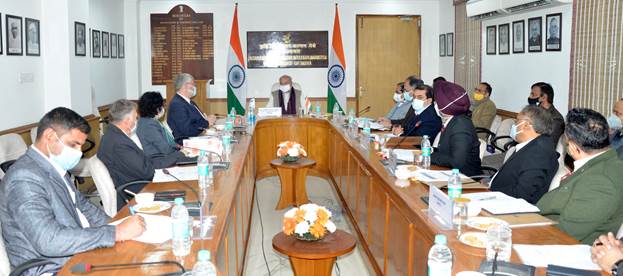
A Webinar organized to create awareness on newly notified CCS (Pension) Rules, 2021

 A webinar was organized for all the Pensioners’ Associations under the chairmanship of Shri V. Srinivas,   Secretary (P&PW) with the objective to create awareness on newly notified CCS (Pension) Rules, 2021 and generation of Digital Life Certificates using Face Authentication Technology.  Central Government Pensioners Associations from all parts of the country participated in the meeting. Presentations were given on CCS Pension Rules 2021 and on DLC generation through Face Authentication followed by a Question Answer session after each presentation.

Secretary (P&PW) expressed his happiness to meet such a large group of 52 participants from the various Associations and to have a constructive interaction. He appreciated the intensity of the discussion and the various queries raised, given the release of CCS Pension Rules 2021 on 25th December 2021 and the recent launch of DLC generation through face authentication. The curiosity among pensioners was very understandable and such interactions would continue with a view to stay in touch and ensure that every association reached out to.  He also requested each Association to have regular interactions with their membership.

He reiterated that the objective of the meeting was to enhance interaction between the department and the pensioners’ associations, especially at his level so that he could know each one personally and the associations could be assured that the Secretary would be in a position to understand and listen to areas where concern exists. He informed that since the pension department is a very legalistic and policy based department, it is important to understand where reforms are necessary and constant updations and amendments in law may be required to ensure greater benefits given to pensioners and that will be the objective of the entire exercise. He expressed hope that membership of each association is more than 300 and they are interacting regularly with the members.

Self reliance in Energy sector is must for achieving the goal

 Union Education Minister rode the Energy Swaraj Yatra Bus from his residence to his office today. The bus is fitted with solar energy and equipped to be a complete work cum residential unit. The Minister accompanied by Dr. Chetan Singh Solanki, a professor from IIT Bombay, who has conceptualised and built the Bus.


https://static.pib.gov.in/WriteReadData/userfiles/image/image0015THV.jpg

https://static.pib.gov.in/WriteReadData/userfiles/image/image002VN15.jpg

 Speaking on the occasion Shri Pokhriyal said that the New Education Policy has in-built framework under which life skills to use solar energy can be given at schools and colleges. Shri Pokhriyal said that climate change awareness is essential to attain sustainability. He further said that self reliance in Energy sector is integral in achieving the goal of Atmanirbhar Bharat. The Minister was happy to learn that in the wake of serious and catastrophic climate change, the Energy Swaraj Yatra is designed with purpose to create public movement towards adoption of 100% solar energy. The Minister appreciated Professor Solanki for this unique initiative.

Deeply committed to the mission of creating public movement towards adoption solar energy, Dr. Chetan Singh Solanki has pledged not to go home until 2030 and live & travel in the solar bus. The bus has facilities to go through all daily activities including sleeping, working, cooking, bathing, meeting, training, etc. The bus is fitted with 3.2 kW solar panels and 6 kWh of battery storage.

The Energy Swaraj Yatra began in year 2020 and will continue till 2030. Professor Solanki has been recently conferred with the Brand Ambassador of Solar Energy of Madhya Pradesh by Chief Minister, Madhya Pradesh, Shri. Shivraj Singh Chouhan.

*****

Basic charts for Data Analysis – Data Visualization in R

Data visualization helps to understand large chunks of data with pictorial representation. R is an amazing tool for data visualization. R provides a wide range of charts for data visualizing data. R is a language that is designed for computing statistical problems, graphical data analysis, and scientific research.

Basic charts for visualization we shall discuss :

  • Bar Plot
  • Histogram
  • Scatter Plot
  • Box Plot
  • Line Chart

Bar plot

Barplot is used to visualize the relative or absolute frequencies of observed values of a variable. The frequency of the observation is the count of that observation in the data. They are used for continuous and categorical variable plotting.

#Lets suppose we have a monthly sales data
sales <- c(120,123,117,130,110,80,130,112,120,111,125,140)
barplot(sales,main = "Monthly sales",xlab = "Month",ylab="sales",
  names.arg = c("Jan","Feb","Mar","Apr","May","Jun","July",
                "Aug","Sept","Oct","Nov","Dec"),col="green")
barplot(sales,main = "Monthly sales",xlab = "Month",ylab="sales",
  names.arg = c("Jan","Feb","Mar","Apr","May","Jun","July",
                "Aug","Sept","Oct","Nov","Dec"),col="green",horiz = TRUE)

Histogram

The histogram is used for data that is classified into different groups. The histogram has a similar appearance to the vertical bar chart but there are no gaps between the bars.

Generally, it is used to display the distribution of numerical variables.

salary <- c(120,123,117,130,110,98,80,130,112,120,89,111,130,125,140)
hist(salary,col="light blue",border = "blue",main ="Histogram of Salary")

Scatter Plot

A scatter plot is used to identify relationships between two numerical variables. Each dot represents a pair of observations (x,y). They are commonly used to find correlational relationships between variables.

x = c(6,13,9,17,12,8,11,18,5,12,7,9,7,17,14,9,8,10,3,12)
y = c(15,8,11,12,10,15,11,10,8,14,11,13,10,9,10,12,13,12,10,10)
plot(x,y,main = "Scatter plot",col="blue",pch=19,frame=F)

Another way of making a scatterplot using the “‘car” package:

library(car)
x = c(6,13,9,17,12,8,11,18,5,12,7,9,7,17,14,9,8,10,3,12)
y = c(15,8,11,12,10,15,11,10,8,14,11,13,10,9,10,12,13,12,10,10)
scatterplot(x~y)
The graph shows marginal box plots, a regression line (solid blue line), the smoothed conditional spread (blue region), the non-parametric regression smooth (blue dashed line)

Boxplot

Boxplot is very useful in finding outliers in the data. Boxplot gives you a good representation of quartiles, mean, median, skewness, and spread of the data. Underlying distribution can be identified using a boxplot.

Different parts of a boxplot.
# boxplot() to create a boxplot for ozone in airquality dataframe.
# Ozone  : int  41 36 12 18 NA 28 23 19 8 NA ...
df = airquality
boxplot(df$Ozone)
Points at the extreme are outliers.
# Notch can be added by setting the notch parameter "notch = TRUE"
# Alignment can be change by setting horizantal parameter
boxplot(df$Ozone,main="Mean ozone",xlab="Parts per billion",ylab="ozone",col="yellow",
        border="brown",notch = TRUE,horizontal = TRUE)

Line Chart

A line chart is a type of chart that represents information in a series of data points connected by a straight line segment. It is used to show a change in continuous variables over a time span. It is widely used for sales, share price analysis, weather recordings, etc.

#Simple Line chart
a = c(119,119,110,112,114,113,118,109,130,136)
plot(a,col="red",type="l",main = "Simple Line chart")
# Multiple Lines Chart
a = c(119,119,110,112,114,113,118,109,130,136)
b = c(132,126,113,115,120,111,136,121,122,116)
plot(a,col="red",type="l",main = "Multiple Line chart")
lines(b,col="blue")
legend(2,135,legend=c("a","b"),col=c("red","blue"),lty = 1,cex=0.8)

These are few of the many charts used in data analysis. R provides more than 400 different charts for data visualization.To explore more such blogs about data visualization follow us at EDUINDEX.

ADDICTION OF SOCIAL MEDIA

Social media is network based on computer that allows people to communicate, interact or associate with friends and family via an internet connection. One can chat, share videos, pictures, views and many other activities are also accessible through social media. If compared the social media sites are most visited other than any websites. At present, around three billion people globally have a social networking account. Social networking sites such as Facebook, Whatsapp, Snapchat, Instagram, Twitter, Pinterest and LinkedIn enables us to stay connected to our closed ones and also keep us updated by the day to day happenings worldwide.

Social media sites are often visited with about more than one billion users active on daily basis in order to count the number of likes on their post and update their status. As per various surveys conducted, it can be inferred that an individual spends about an hour minimum on these networking sites. The line between addiction and habit is very thin. The situation of addiction arises when an individual desires for something more than their actual need. It becomes addiction when people start to spend more and more time on social networking sites. Therefore, it is observed that in the present generation social media is becoming addicting and it is a matter to contemplate seriously. The increased dependency of an individual over a particular thing be it, food or drink or activity makes the person to feel helpless and eventually the person starts to loose control over themselves. The condition gradually turns worse leading to complex diseases related to brain.

“Social media is a wonderful medium, problem starts with its addiction.”

-Anonymous

The addiction of social media is severe that the person every now and then logs in their account meaninglessly and checks in at every place they go in order to update their status. The purpose behind to do so is sometimes just to kill or pass time. Such individuals begin to consider that posting pictures and informing about the day to day activities or chores on the social media is their moral duty. They begin to obsess over their activities on the networking sites.

The post effects of social media is not worth the while. The mental and emotional health of an individual is greatly disturbed. The often seem frustrated and an ease of escalating peer pressure is seen in them while comparing oneself with the other. They are surrounded by the sense of dissatisfaction and hopelessness. The individuals found suffering from social media addiction are desperate, stressed and fatigued. There is a constant rise in their level of anxiety and consequent fall in productivity. The frequent pop up notifications prevent them from focusing on essentials things in their lives.

Thus, it can be concluded that it is important to recognize the addiction of social media at an early stage prior the situation becomes worse. People must remember that it is not their social duty to be in social media throughout the day rather they must give themselves time to self- reflect and divert their attention to more essential things in life.

” One day you will look back and recall all the time you spent on social media and wonder why you didn’t invest that time someplace else.”

– Germany Kent