
By – Supriya


THANKYOU !

Comprehensive, up-to-date news coverage, aggregated from sources all over the world by EduindexNews.
By – Supriya
THANKYOU !
At COP 21, as part of its Nationally Determined Contributions (NDCs), India had committed to achieving 40% of its installed electricity capacity from non-fossil energy sources by 2030. The country has achieved this target in November 2021 itself. The country’s installed Renewable Energy (RE) capacity stands at 150.54 GW (solar: 48.55 GW, wind: 40.03 GW, Small hydro Power: 4.83, Bio-power: 10.62, Large Hydro: 46.51 GW) as on 30.11.2021 while its nuclear energy based installed electricity capacity stands at 6.78 GW. This brings the total non-fossil based installed energy capacity to 157.32 GW which is 40.1% of the total installed electricity capacity of 392.01 GW. In line with the Hon’ble Prime Minister’s announcement at the recently concluded CoP26, the Government is committed to achieving 500 GW of installed electricity capacity from non-fossil fuel sources by the year 2030.
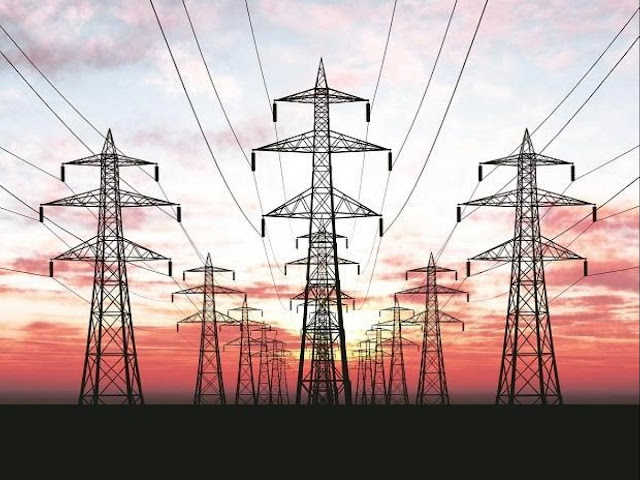
During the last 7.5 years, India has witnessed the fastest rate of growth in renewable energy capacity addition among all large economies, with renewable energy capacity (including large hydro) growing 1.97 times and solar energy expanding over 18 times.
The Scheme aims to add 30.8 GW of solar capacity with central financial support of over Rs. 34,000 Crore. Based on the learning during first year, business models for feeder level solarisation was included as new variant under Component-C. Convergence of Scheme with PM-KSY and Agriculture Infrastructure Fund also accomplished. For ease of availability of finance the Reserve Bank of India has included the three components of the Scheme under Priority Sector Lending Guidelines. Cumulatively, about 5000 MW capacity of small solar power plants under component-A, 3.6 lakh standalone solar pumps under component-B and solarisation of over 10 lakh grid connected pumps under the two variants of component-C have been allocated in various States. After restrictions on COVID-19 pandemic were relaxed, installation has picked up and as on 30.11.2021, over 75000 stand-alone solar pumps have been installed under the Component-B, total 20 MW capacity solar power plants installed under Component-A and over 1000 pumps reported solarised under individual pump solarisation variant of Component-C. Implementation of feeder level solarization variant under Component-C, which was introduced in December, 2020 has also started in a number of States.
India’s wind power potential at hub height of 120 meters is 695 GW. The wind power installed capacity has grown 1.9 times during past 7.5 years to about 40 GW and 9.67 GW of projects are at various stages of commissioning (as on 30.11 2021). India has the 4th largest wind power capacity in the world.
The wind energy sector is led by the indigenous wind power industry with a strong project ecosystem, operation capabilities and a manufacturing base of about 12 GW per annum. All the major global players of Wind Turbine Manufacturing field have their presence in the country and over 35 different models of wind turbines are being manufactured by more than 15 different companies, through joint ventures under licensed production, subsidiaries of foreign companies, and Indian companies with their own technology. The unit size of wind turbine in India has gone up to 3.6 MW.
Government of India has notified the offshore Wind Energy Policy to harness the potential of offshore wind energy along India’s coastline. Ministry is developing strategy and roadmap for installation of offshore wind projects off the coast of Gujarat and Tamil Nadu.
The Ministry has notified the wind solar hybrid policy, providing a framework for promotion of large grid connected wind-solar PV hybrid projects for optimal and efficient utilization of transmission infrastructure and land, reducing the variability in renewable power generation and achieving better grid stability. As on 30.11.2021, capacity of 3.75 GW of wind-solar hybrid projects have been awarded, out of which 0.2 GW capacity is already commissioned. In addition, capacity of 1.7 GW wind-solar hybrid projects are at various stages of bidding.
In order to facilitate renewable power evacuation and reshaping the grid for future requirements, the Green Energy Corridor (GEC) projects have been initiated. The first component of the scheme, Inter-state GEC with target capacity of 3200 circuit kilometer (ckm) transmission lines and 17,000 MVA capacity sub-stations, was completed in March 2020. The second component – Intra-state GEC with a target capacity of 9700 ckm transmission lines and 22,600 MVA capacity sub-stations is expected to be completed by June 2022. As on 30.11.2021, 8434 ckm of intra-state transmission lines have been constructed and 15268 MVA intra-state substations have been charged.
The following Bio-energy schemes were under implementation by the Ministry:
Ministry of New and Renewable Energy has been implementing above-mentioned schemes 2020-21. The programmes which were valid till 31.03.2021, has been recommended for continuation by EFC for the period FY 2021-22 to 2025-26 only for meeting the already created liabilities. Thus, no new projects after 31.03.2021 are to be sanctioned.
As on 31.11.2021, installed capacity of biomass power and cogeneration projects stood at about 9.4 GW(Bagasse) and 0.77 GWeq (Non-Bagasse) , waste to energy projects capacity was 199.14 MW(grid connected) and 234.97 MWeq (off grid), and about 4.83 GW small hydro power capacity from 1146 small hydro power projects which were operational.
In the Independence Day speech on 15.08.2021, Prime Minister announced the launch of National Hydrogen Mission and stated the goal to make India a global hub for Green Hydrogen production and export. The draft National Green Hydrogen Mission document is under inter-ministerial consultations.
The Mission proposes a framework for inter alia creating demand for Green Hydrogen in sectors such as petroleum refining and fertilizer production; support for indigenous manufacturing of critical technologies; Research & Development activities; and an enabling policy and regulatory framework. The proposed steps will lead to the development of additional renewable energy capacity for Green Hydrogen production.
A tripartite Memorandum of Understanding (MoU) was signed between the Ministry of New and Renewable Energy (MNRE), the International Solar Alliance (ISA) and the World Bank on 08.09.2020 for a study on the OSOWOG initiative. Currently, the implementation plan, road map and institutional framework is being developed by a consultant appointed for this purpose. The inception report has already been submitted by the consultant in September’2021. The complete study is expected to be completed by mid of 2022.
International Solar Alliance (ISA) was launched by Hon’ble Prime Minister of India, and the President of France on 30.11.2015 at Paris, France. With the signing and ratification of the ISA Framework Agreement by 15 countries, on 06.12.2017, ISA became the first international intergovernmental organization to be headquartered in India.
On 15.07.2020, this amendment came into force, which enables all member States of the UN, including those beyond the tropics, to join the ISA. As on 30.11.2021, 101 countries have signed the Framework Agreement of the ISA. Of these, 80 countries have also ratified the same.
MNRE had requested States/UTs for facilitating ensuring uninterrupted essential operation of Renewable Energy Generating Stations (REGS) (solar power plants, wind power plants, solar-wind hybrid power plants, small hydro power plants, biomass / biogas based power plants, etc.) and provide facilitation /permission for material movement needed by them during the nation-wide lockdown for COVID-19 outbreak.
MNRE had issued orders regarding treating lockdown due to COVID-19, as Force Majeure and granting of time-extension of around 7.5 months for renewable energy projects on account of lockdown and disruptions on account of COVID-19.
MNRE had issued directions regarding accepting invoices over email without insisting on submission of signed hard copy and in cases where Joint Meter Reading (JMR) cannot be signed due to lockdown, acceptance of Invoices generated by RE Developers on basis on photograph of meter reading/ downloaded meter data.
MNRE had issued clarifications that Renewable Energy (RE) Generating Stations have been granted ‘Must-Run’ status and this status of ‘Must-Run’ remains unchanged during the period of lockdown, and further directing DISCOMs that since RE Generating Stations comprise only a minor portion of the total electricity generation in the country, the payments to RE generators be done on regular basis as was being done prior to lockdown as per established procedure. MNRE further issued directions reiterating that Renewable Energy remains ‘Must-Run’ and any curtailment but for grid safety reason would amount to deemed generation.
A contented sigh. That’s it. That is what this beautifully woven book is. And so so much more at the same time. A warm, cozy, funny, bright, and snug tale, Let It Snow by Maureen Johnson, John Green, and Lauren Myracle will spread the Christmas magic whenever you’re reading it. And I am NOT kidding about the warmness, it’s extreme. I mean, I couldn’t hide a smile away from my face while reading this beautiful tale, or tales may I add (there are 3, each by one author)
Set in the frosty ground of Gracetown, This story is about not just one but many interesting persons. Though the fun begins when we discover that these stories are interrelated, deeply. After all, what is it but a small tiny town, lumped with snow, and ice streams?
The first story, The Jubilee Express by Maureen Johnson is impeccably warm and sets the tone for the book ahead. It is a story about a girl named Jubilee. Yeah. Let that sink in. So, Jubilee is, like her name, unique, quirky, and fun. For the most part at least. As Christmas approaches, she faces a series of chronicles and perils that completely change her life. Mind it, in just one day. It is super adventurous and crazy. You would love it as soon as you read it. Also, the thing about Johnson is that she writes with relativity to her readers, so that they feel connected to the character and grow more interested in the book as the story goes. I have to say, she has done a significant job at that. I could totally relate to her, the sarcasm, the unique interpretations of things we see in everyday life(like where you can read about wherever the cat sits, we’ll build a house(understood only when the book is read)).

The next story is A Cheertastic Christmas Miracle by John Green. It lets us in Tobin’s life. A simple guy with a clever mind and succint but explanatory way of speech. He has two friends, the duke(who is actually a girl) and a Korean mate who is obsessed with the word “asshat” , JP. There monotonous life watching james bond movies gets a turning point with a call, It’s Kuen, another of the only 2 Korean guys in Gracetown. Who also works at the nearby waffle house. There is some engrossing news which makes them scurry into a frenzy. And then, as any other mushy, happy and warm holiday book, there life changes. John Green, as always, puts his charm into the book, with his use of everyday lingo, he makes the story light, fun and merry, just like a Christmas should be.

The last one is The Patron Saint Of Pigs by Lauren Myracle. In this story, we witness the life of Addie, a girl with serious emotional problems, but still cheery and fun. A barista, Her aura is full of drama and chaos, but she gets through it sailing. Though we see her a lot on the verge of emotional and mental breakdowns, her friends, Tegan and Dorrie are always by her side. Not throwing any major spoilers, I can’t resist to say that this story is touching, hilarious and absolutely breathtaking. Lauren Myracle has moulded a marvellous creation by writing this.

Christmas is a state of mind.
-Mayzie
By – Supriya


THANKYOU !
By – Supriya


THANKYOU !
Human rights day celebrated in 10th December.The National Human Rights Commission of India defines human rights as provided under the Protection of Human Rights Act (PHRA), 1993, as Rights Relating To Life, liberty, equality and dignity of the individual guaranteed by the constitution or embodied in the international covenants and enforceable by courts in India.Human Rights Day is observed on December 10 every year, since it was on this very day in 1948 that the United Nations General Assembly (UNGA) adopted the Universal Declaration of Human Rights, a milestone document that enshrines the rights and freedoms of all human beings.The international document also commits nations to recognise all humans as being “born free and equal in dignity and rights” regardless of “nationality, place of residence, gender, national or ethnic origin, colour, religion, language, or any other status
7 human rights in India:-
* Origins.
* Significance and characteristics.
* Right to equality.
* Right to freedom.
* Right against exploitation.
* Right to freedom of religion.
* Right to life.
* Cultural and educational rights.
An Act to provide for the constitution of a National Human Rights Commission, State Human Rights Commissions in States and Human Rights Courts for better protection of human rights and for matters connected therewith or incidental thereto. Ministry: Ministry of Home Affairs. Department: Department of States.Protection of human rights is essential for the development of the people of the country, which ultimately leads to development of the national as a whole. The Constitution of India guarantees basic human rights to each and every citizen of the country.The Constitution of India guarantees to all Indian women equality (Article 14), no discrimination by the State (Article 15(1)), equality of opportunity (Article 16), equal pay for equal work (Article 39(d)) and Article 42.
Human rights are important because no one should be abused or discriminated against, and because everyone should have the chance to develop their talents. Unfortunately, many people around the world don’t have these basic rights and freedoms.It is constitutional mandate of judiciary to protect human rights of the citizens. Supreme Court and High Courts are empowered to take action to enforce these rights. Machinery for redress is provided under Articles 32 and 226 of the constitution.
The most significant human rights issues included police and security force abuses, such as extrajudicial killings, disappearances, torture, arbitrary arrest and detention, rape, harsh and life-threatening prison conditions, and lengthy pretrial detention.
In India, a child has the right to be protected from neglect, exploitation, and abuse at home and elsewhere. Children have the right to be protected from the incidence of abuse, exploitation, violence, neglect, commercial sexual exploitation, trafficking, child labour, and harmful traditional practices.

Introduction
The most keenly debated issue in international relations has been the pessimistic view of realism and the optimistic view of liberalism. Realism is regarded as the dominant theory of international relations, while liberalism has a strong claim to being the historic alternative. Comparing the two to the main political parties in a democracy, Timothy Dunne wrote, ‘Rather like political parties, realism is the natural party of the government, and the liberalism is the leader of the opposition.’
The liberal tradition in international relations in its is closely connected with the emergence of the modern liberal state. The focus of liberalism has been on freedom, cooperation, peace and progress. It has often been identified with individualism, as it insists on freedom of the individual, his rights and property. It is also closely associated, mainly by its critics, with capitalism. Liberalism is sometimes associated with the views of Mo Ti, who was a contemporary of realist Chinese scholar Sun Tzu. Both gave their opposing views more than 2,000 years ago.
Basic Assumptions Of Liberalism
Liberalism assumes instead portraying lust of power as the international conflict liberalism fights for the basic rights of the people. It insists on pursuing the political reforms establish democracies. It emphasizes on the value of the free trade on the basis that it will help in preventing the conflicts between nations as it reduces the national selfishness and enhances the communication.
Liberalism advocated the formation of the global institutions such as the United Nations which sees any threat to any individual nation as a threat to everyone. The institutions help in resolving the conflicts by mediating the conflicts in the event of any misunderstanding.
Basically liberals assume that states will act in a rational manner and they are a unitary actor.
The liberalists fell into three different groups as classified by the realists: The first group advocated league of the nations was formed with the objective to consider the attack on the nation as an attack on all. The second group formed the Permanent Court of International Justice that would lead to formation of judicial body capable of issuing justices to the disputes. The third group sort to avoid war by advocating “Disarmament“ in order to reduce the international tension.
Neoliberalism
Neoliberalism is a policy model that encompasses both politics and economics and seeks to transfer the control of economic factors from the public sector to the private sector. Many neoliberalism policies enhance the workings of free market capitalism and attempt to place limits on government spending, government regulation, and public ownership.https://a6c140989941be06481216af16f29a9b.safeframe.googlesyndication.com/safeframe/1-0-38/html/container.html
Neoliberalism is often associated with the leadership of Margaret Thatcher–the prime minister of the U.K. from 1979 to 1990 and leader of the Conservative Party from 1975 to 1990–and Ronald Reagan, the 40th president of the U.S. (from 1981 to 1989). More recently, neoliberalism has been associated with policies of austerity and attempts to cut government spending on social programs.
Liberalism VS Neoliberalism
At its core, liberalism is a broad political philosophy; it holds liberty to a high standard and defines all social, economic, and political aspects of society, including–but not limited to–the role of government. The policies of neoliberalism, on the other hand, are more narrowly focused. They are primarily concerned with markets and the policies and measures that influence the economy.
Since we all are dealing with the pandemic since 2020, it has been almost two years that most of us are not that social. There has not been much communication with most of the people that we used to before the pandemic. Follow these tips to spread happiness among those who put efforts to make your 2021 a year:




WHAT IS ONLINE EDUCATION:-
A classroom is method of using cell phones and computers to make teacher and student in connection.This method of education is popularized during the corona.
ONLINE EDUCATION IS EFFECTIVE:-
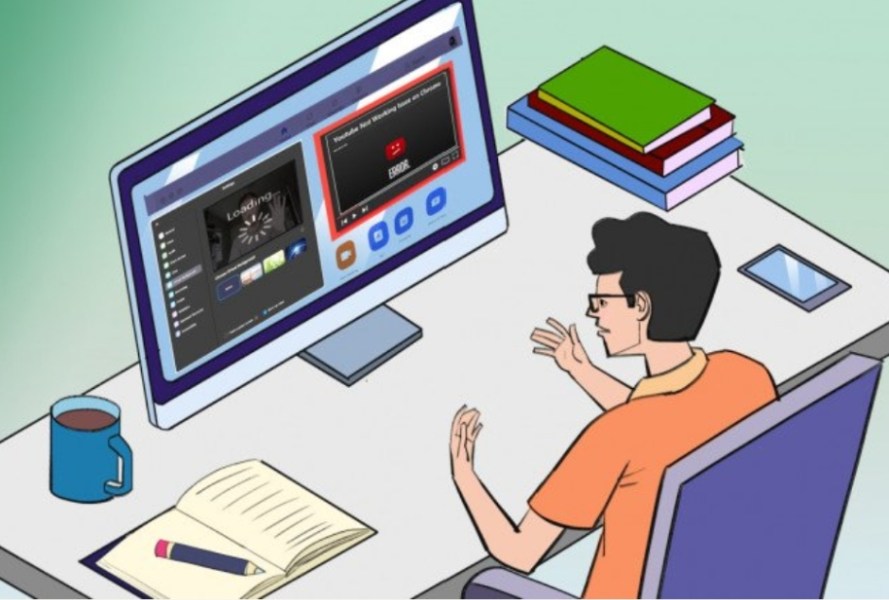
In my perception online education is not that much effective when compare to the offline classes.Because we started schooling in offline class,Immediate change in method is not acceptable.In offline class we can ask doubts.But in online classes some not get good network.
ADVANTAGES OF ONLINE EDUCATION:-
* It reduce financial costs for students in transportation,meals.
* we can feel more comfortable than offline class.
* Another advantage of online education is that it allows students to attend classes from any location of their choice.
* online lectures can be recorded, archived, and shared for future reference.
DISADVANTAGES OF ONLINE EDUCATION:-
* Little or no face-to-face interaction.
* In online education we have to see screen more time cause headache,damage eyes.
* Another disadvantage is some have network issues unable to ask questions.
* Online courses require more time than on-campus classes.
* Online courses may create a sense of isolation.
HOW WE CAN MAKE ONLINE EDUCATION EFFECTIVE:-
* By Creating shorter content.
* Assign group and pair work.
* Take care in setting up your home environment.
* By giving break or reducing time of class.
* By creating individual learning plans.


You must be logged in to post a comment.