Selfitis era!!

Yup, we exist in the technologically advanced Cenozoic era! This beginning of the knowledge age, is widely into the invent of making the human’s role, a passive one for the sake of making everything accessible. Now everybody have their access for smartphones. I hope a child could lecture it’s usage better than me. The term selfie was coined in the year 2013 when smartphones were made with front cameras. But this indeed lead to the formation of the term ‘Selfitis‘. The word just passed about as a spoof, but the word was coined in 2014 by American psychiatric association. Dr. Mark Griffiths, professor of behavioural addiction in Nottingham Trent University had approved it’s existence and had found out the first Selfitis behavioural scale.

Selfitis can simply be defined as the obsessive habit of taking more selfies and is regarded as a kind of mental illness. This disorder is prevalent on amidst the youths and millennials. The pathetic thing is many of us don’t recognise that we have such thing in us. When things exceeds the limits, it becomes dangerous. While the students were interviewed in certain surveys, their reply was that; they tend to take selfies, since they felt that they are beautiful, their urge to expose themself in social media, to seek certain attention, to feel their elevated self-esteem and so on. The six components responsible for taking selfies are listed below: Environmental enhancement: for the people to feel better and express themselves, more often to create some memories. Social competition: As social media serves as the platform to express themselves, people tend to post their pics and there are various hashtags and public pages present to post their pics. Seeking attention: Now a days teens tend to receive admiration of their self to feel their self-esteem. Mood modifier: when young people feel their stress, they tend to take selfies and this just proves to change the mood condition of certain people. Self-confidence: Many filters have been brought to modify the appearance in an artificial manner. The confidence level is increased, which leads to self love towards the condition such as narcissism. Social conformity: By posting one’s pics, they tend to go with the trend and as they accompany more people, it brings them out of their loneliness.

Thus the excessive addiction towards taking selfies had increased in recent times and it is evinced even by surveys. Especially women were found to be obsessed in taking selfies than men. The selfitis behavioural scale is formed with the survey taken from 3,700 Norwegian social media users. The borderline stage is defined as taking atleast 3 to 4 selfies per day, which is considered as a normal behaviour. The Acute stage is considered as the urge to post 2 or 3 pics in social media sites, everyday. The chronic stage is the severe one where people takes countless selfies everyday, without their realization. A survey was jointly conducted by Carnegie Mellon University from Pittsburgh and Indraprastha University from Delhi during the year 2014-2017. They have found that 213 people died while taking selfies and 128 people amidst them are Indians. The Pakistan and America stands in the consecutive places. This disorder affects physically and mentally in a way that it may lead a person towards anxiety, depression, lack of confidence and acceptance of oneself, feeling of fatness, physical attractiveness and lesser body satisfaction. Since the selfie apps are featured with the modification of one’s appearance according to their wish, it could channel one’s mental health in an unhealthy way.

Though there is no approved medications for treating this disorder, it can be cured by asking for advice from wellwishers, practicing relaxation techniques and setting realistic goals to achieve; so that these things can divert a person. Cognitive Behavioral Therapy (CBT) proves to be effective for such OCD; along with medications. Such therapies involve the exposure of the person to the object of obsession and making them to practice the coping skills; in order to avoid the instinct. Thus the obsession or addiction of any habit may lead someone to disaster.

Hormones That Makes Us Happy

Image result for hormones

Our body constitutes innumerous chemicals performing functions that makes us feel happy, sad, nervous. Most of them are released by the Hypothalamus and Pituitary glands. There are 4 major chemicals secreted by our body that makes us feel happy:

Dopamine

Dopamine is a neurotransmitter that helps in the transmission of signals in the brain and other areas. It is released by Hypothalamus and acts on receptors that are specific for it. It acts on sympathetic nervous system leading to increase heart rate and blood pressure. Therefore it is used in medication. It is is associated with pleasurable sensations, along with learning, memory, motor system function, and more.

Endorphin

Endorphins  are endogenous opioid neuropeptides and peptide hormones which are produced and stored in the pituitary gland. It consists of α-endorphin, β-endorphin, and γ-endorphin. Its main function is to compress pain signals. It can act in both the central nervous system  and the peripheral nervous system. It also produces a euphoric state in cases such as sex, listening to music, and eating chocolate. According to a research meditation triggers endorphin secretion.

Serotonin

Serotonin is a complex monoamine neurotransmitter. Approximately 90% of our body’s total serotonin is located in the enterochromaffin cells in the GI tract, where it regulates intestinal movements. About 8% is found in platelets and 1–2% in the CNS. It modulates mood, reward, learning, memory, and various physiological processes such as vomiting and vasoconstriction. Serotonin levels spike when we reflect on past achievements, practice gratitude, and celebrate victories.

Oxytocin

Oxytocin  is a peptide hormone and neuropeptide which is produced in the hypothalamus and released by the posterior pituitary. It functions during social bonding, reproduction, childbirth, and the period after childbirth which includes bonding with the baby and milk production. It can also be considered as an antidiuretic since it lowers the urine secretion. We need oxytocin to form strong bonds in our personal and professional relationships. 

Although these hormones are essential for our body but there are drugs such as heroine, nicotine etc. which alleviates the levels of these chemicals in excess and it may result in harmful repercussions.

MIRRORS- Spherical and parabolic mirrors

We use mirrors in our daily life for various purposes. Mainly, we use them for beautifying us. The mirror is an optical device with a polished surface that reflects the light falling on it. A typical mirror is a glass sheet coated with aluminum or silver on one of its sides to produce an image. Mirrors have a plane or curved surface. Curved mirrors have surface that are spherical, cylindrical, parabolic and ellipsoid. The shape of a mirror determines the type of image it forms. Plane mirrors form the perfect image of an object. Whereas, curved mirrors produce images that are either enlarged or diminished.


SPHERICAL MIRRORS
Spherical mirrors are one form of curved mirrors. If the curved mirror is a part of a sphere, then it is called a ‘spherical mirror’.

It resembles the shape of a piece cut out from a spherical surface. One side of this mirror is silvered and the reflection of light occurs at the other side.


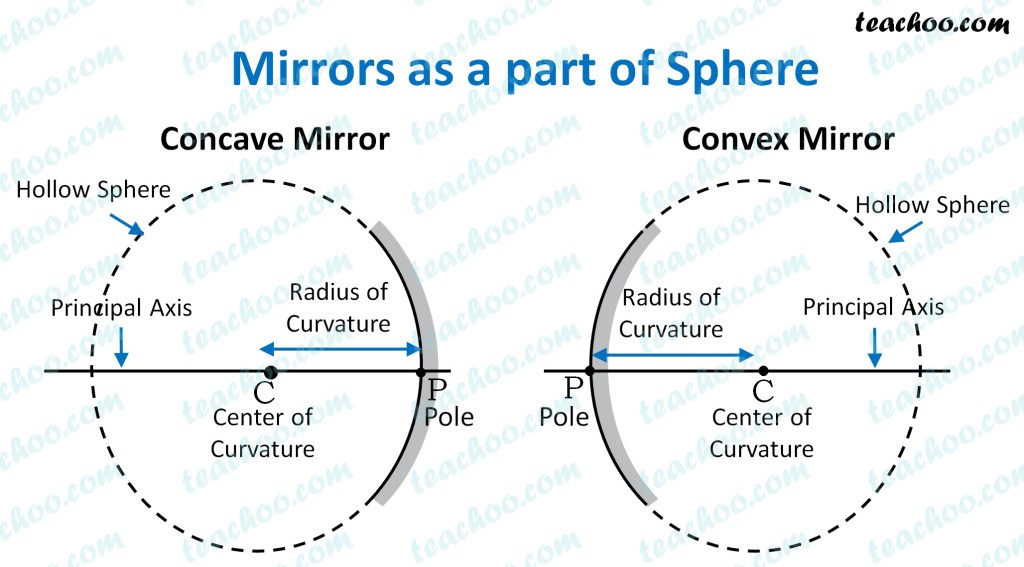
CONCAVE MIRROR
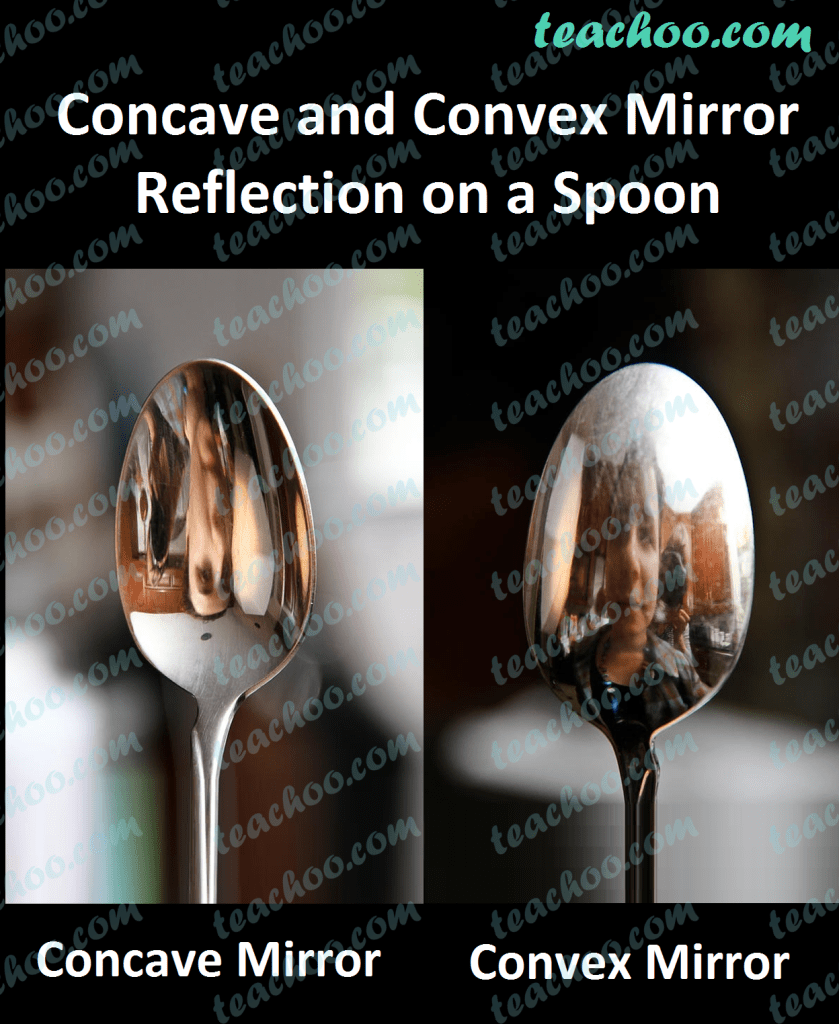
A spherical mirror, in which the reflection of light occurs at its concave surface, is called a concave mirror. These mirrors magnify the object placed close to them. The most common example of a concave mirror is the make-up mirror.


CONVEX MIRROR
A spherical mirror, in which the reflection of light occurs at its convex surface, is called a convex mirror. The image formed by these mirrors is smaller than the object. Most common convex mirrors are rear viewing mirrors used in vehicles.


PARABOLIC MIRRORS
A parabolic mirr, which is in the shape of a parabola, is one type of curved mirror. It has a concave reflecting surface and this surface directs the entire incident beam of light to converge at its focal point.


In the same way, light rays generated by the source placed at the focal point will fall on this surface and they will be diverged in a direction, which is parallel to the principal axis of the parabolic mirror. Hence, the light rays will be reflected to travel a long distance, without getting diminished.


Parabolic mirrors, also known as parabolic reflectors, are used to collect or project light energy, heat energy, sound energy and radio waves. They are used in reflecting telescopes, radio telescopes and parabolic microphones. They are also used in solar cookers and solar water heaters.

Daughters of the dragon by William Andrews – Book review


Daughters of the dragon by William Andrews –   Book review


This book is not one that you will come across easily cause it is not a popular book or even a classic but, I promise you that you feel find it to be an extremely rare gem. It will help you in terms of understanding history, war and humanity in a raw and real way. But, most important of all it does it while giving utmost importance and dignity to the individuals that are involved in these circumstances much bigger than them. 
Twenty year old Anna Carlson is one such individual in this story. She is a Korean American adoptee who decides to go back to South Korea from America to trace her biological parents. There she meets a poor yet elegant woman Hong Jae-hee who gives her a two headed ivory dragon tortoiseshell comb and tells Anna a story about herself, her war, her life and her country. She tells Anna an epic tale which starts with Japanese occupation of Korea and China during the 2nd World War and the forced sexual slavery of Korean women by the Japanese Army to be used as ‘Comfort Women’. As the story goes on Anna comes to terms with her own roots, which are intertwined with rich and ancient tree of her birth country’s history and culture with her adopted country’s role.
This book though based on Korea is still extremely relevant for a country like India given our colonial past. This story does not desire to blame or bash Japan for its past war atrocities but aims to hold accountability. This is extremely important for any nation not only for the sake of a sense of justice and fairness but also for the sake of forgiveness and healing. Apologizing does not make one any less than and the one who accepts it and forgives becomes even greater. But, the one who forgives also receives something extremely powerful. The permission and almost the audacity to grieve. Only with truly grieving can one truly heal. It is almost like cleaning and opening up an old, dirty and rusty lock that has been deliberately ignored and forgotten. The key to this lock is a small but clean key of apology. Nothing grand or embellished, nothing made out of Platinum or Silver or Gold but just a clean and strong piece of metal that is the right fit and the right size.  
If a nation is to be considered a tree then, the people from a past that we were not born into are also a part of that tree just like we are. If a part of that tree gets hurt or rotten then it becomes important to fix it. It becomes even more important to remember and understand it to understand our own selves. The Daughters of the Dragon will certainly help you understand it. It will make you hurt, cry, angry, happy, grateful and question everything but most of all it will help you understand more. Understand your country, your history but importantly your individuality. 

𝑀𝐸𝑀𝑂𝑅𝐼𝐸𝑆 𝑂𝐹 𝐷𝑅𝐴𝑊𝐼𝑁𝐺

” I SOME TIMES THINK THERE IS A NOTHING SO DELIGHTFUL AS DRAWING”

Drawing is a simplistic art whose concern is with making marks. Furthermore, drawing is a way of communicating or expressing a particular feeling of an artist. Let us focus on this unique form of art of drawing.

  • Drawing by itself is an art that gives peace and pleasure. Furthermore, learning the art of drawing can lead to efficiency in other mediums.  Also, having an accurate drawing is the basis of a realistic painting.
  • Drawing has the power to make people more expressive. It is well known that the expression of some people can’t always take place by the use of words and actions only. Therefore, drawing can serve as an important form of 𝐂𝐨𝐦𝐦𝐮𝐧𝐢𝐜𝐚𝐭𝐢𝐨𝐧 for people.
  • Drawing enhances the motor skills of people. In fact, when children get used to drawing, their motor skills can improve from a young age. Moreover, drawing improves the hand and eye coordination of people along with fine-tuning of the finger muscles.
  • It is possible to gain insight into the thoughts and feelings of people through their drawings. Moreover, this can happen by examining the colour pattern, design, style, and theme of the drawing. One good advantage of being able to express through drawing is the boosting of one’s Emotional Intelligence.
  • Drawing is a great way for people to let their imaginations run wild. This is because when people draw, they tend to access their imagination from the depths of their mind and put it on paper. With continuous drawing, people’s imagination would become more active as they create things on paper that they find in their surroundings.

𝐈𝐌𝐏𝐑𝐎𝐕𝐄 𝐒𝐊𝐈𝐋𝐋

One of the best ways to improve drawing skills is to draw something every day. Furthermore, one must not feel pressure to make this drawing a masterpiece. The main idea here is to draw whatever comes to mind.

𝐈𝐌𝐏𝐎𝐑𝐓𝐀𝐍𝐂𝐄 𝐎𝐅 𝐃𝐑𝐀𝐖𝐈𝐍𝐆

Drawing plays a big role in our cognitive development. Furthermore, it facilitates people in improving hand-eye coordination, analytic skills, creative thinking, and conceptualising ideas. As such, drawing must be used as a tool for learning in schools.

𝐌𝐄𝐌𝐎𝐑𝐈𝐄𝐒 𝐎𝐅 𝐃𝐑𝐀𝐖𝐈𝐍𝐆

Memory drawing is the regular practice of training your visual memory to retain what you see. That training involves doing numerous drawing exercises during short but consistent periods of time. The practice will help you make the most of every glance you take at your subject.

But remember, memory drawing is not a replacement for drawing directly from life. It should be done in addition to it.

The Pegasus Project – democracy and need for internet laws.

In a shocking revelation, the minister of Telecommunication, Government of India faced questions on the Project Pegasus report – a research on the pegasus spyware that has been developed by the Israeli NSO for “vetted government clients” only. It can breach all Windows, Mac, Android and iOS security checks upto iOS 14.6.

The Forbidden Stories group and the Amnesty International with the Wire and the Washington Post revealed that governments, politicians and journalists all over the world have been targeted with more than 300 people in India alone been tracked regularly using the spyware. Allegedly, only 10 out of these 300 people had mobiles with conclusive or clear presence of the software. These 300 people however include journalists, politicians, cabinet ministers and a sitting Supreme Court judge. These numbers and cases are similar in countries like Mexico, Morocco, Saudi Arabia, the UAE, Bahrain, Rwanda, Azerbaijan and Hungary.

Ultimate spyware' — How Pegasus is used for surveillance
The Pagasus is developed by Israeli NSO.

The first and foremost question ought to be raised against Israel and all governments that are using the spyware, for a spyware is not how a democracy should work in theory. After all, little is left of “democracy” in most nations in the last decade. The second question is why there is an absence of data protection laws in most countries including India, Pakistan and south Asian nations – that house a large part of humanity. The third question is to be raised against the government in India where an official allegedly replied to a question about the spyware by stating that all monitoring, interception and decryption is or shall be carried out as per a “due process of law” which is ironic because there are no such laws in India.

Now, back to the questions that Mr Ashwini Vaishnav, Minister of Telecommunication, India had to answer in the Parliament several hours ago. The minister out right refused any spyware quoting the Binoy Viswam vs RBI case in the supreme court where the WhatsApp Counsel refused any spyware involvement. However, this might actaully be true because the NSO has quite clearly used the term – “vetted governments”. So, speaking per se, no private contractor is involved. However, this conclusion is only one way of seeing things. The author recommends personal discretion and further research as the press conference against Pegasus took place only on the 18th of July 2021. The Minister also pointed out that the NSO uses data and using data should not be equated to surveillance. He also added that surveillance is not possible in a country like India with so many checks and balances.

The author has no opinion that supports or opposes the answers Mr Vaishnav presented today. However, just as a note – surveillance is always illegal in any democracy. It is illegal in the US and yet about 5 years ago, news of massive US surveillance across the globe was made public by leaked documents. Surveillance is almost always carried out by the Executive without intimating the legislature or the public. Many-a-times, even the ruling party is unaware of the realities of the state. What we as a democracy can do is to establish stronger laws against the process and establishing a more transparent mechanism to keep the executive in check.

Finally, this article is based only on the events that unfolded on the 18th of July 2021 and the immediate aftermath on the 19th of the same month. Let us await further investigations and reports to build any conclusive opinion about any institution. However, the need for stronger privacy laws is important anyways, irrespective of the type of state one lives in – especially in a democracy.

RECORDS OF ALL-ROUNDERS PERFORMED INDIVIDUALLY.

MATCHES PLAYED BY ALL ROUNDERS WHERE THEIR PERFORAMANCE HELPED THEIR TEAM TO HOLD TROPHIES

  • What is Cricket??

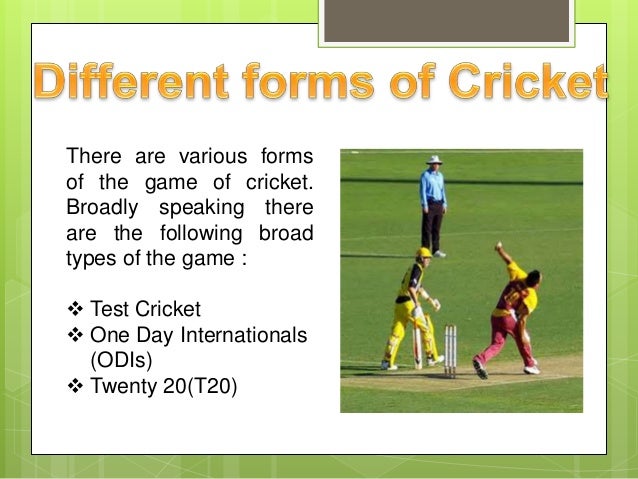
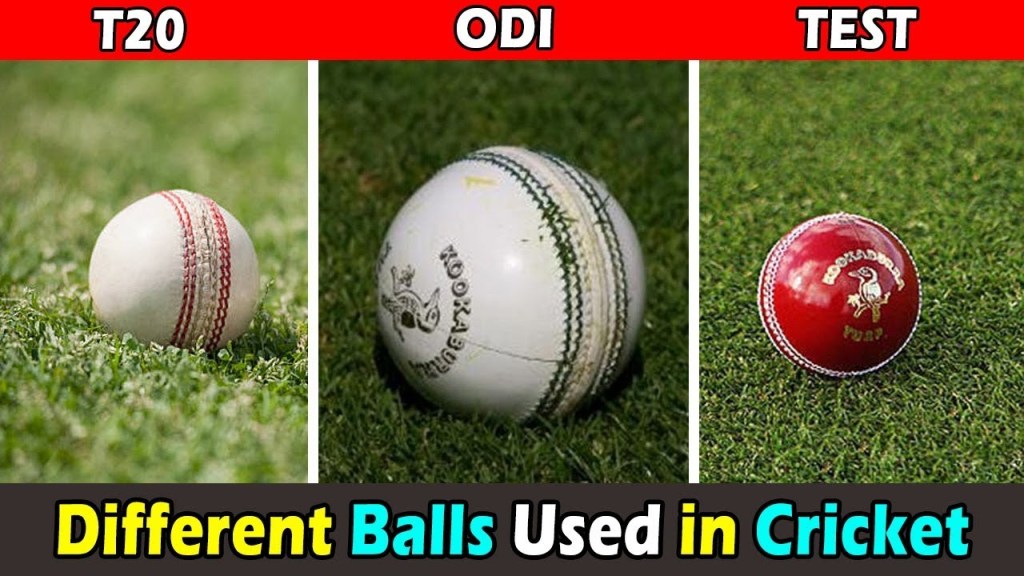
Cricket is a worldwide sport played by a team consisting of thirteen players where eleven alone will enter match and play with soul-hearted. There will be two opponent teams as they fight against each other as teams to win the game. There are different types in this sport itself: T20 series, one day match, World Tour, League matches and Test matches.

The basics of cricket, explained - Chicago Tribune

State matches and district wise are also conducted by private or government organization to pick valuable players to join teams. This sport requires a huge ground or vast area to practice. The center of play area is the pitch where stumps are placed in either ends. For batting there are ten wickets and swapping of roles in teams takes place if innings gets completed or all the wickets are gone.

There are four types of players to play a match (fielders, bowlers, batting and all-rounders) in every team as everyone is primary to assist or win the match along with teammates.

Cricket

This brief description helps you to figure out a sample idea of how will the cricket be and let me continue with all-rounders who perform dual roles to make them team fruitful in winning the game. Their responsibility in match is a bit higher than single tasking persons. So let me discuss a few players who showed out their rage to gain success. (all-rounders)

The 5 Most Common Cricket Injuries And How To Treat Them
  1. Kapil Dev
Kapil Dev (@therealkapildev) | Twitter

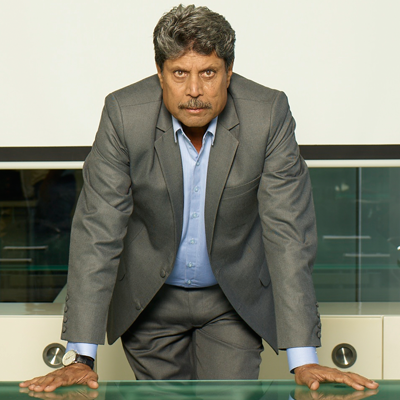
The master of cricket and the first person to win his most count of matches as an all-rounder. His performance of handling the match with the flow of bat and ball was enormous. He was the Captain of the Indian team when they won the WORLD CUP for the first time in 1983. He bowled the first while swapping roles in a similar where he as a low-ordered batsman gave only 6 runs in 4 overs. He is a faster bowler in a medium speed and also critical hitting batsman. Also, the coach for Indian team for consecutive two years. His talent of bowling and batting made the team to get the cup for the nation.  Holds the highest record in the world for taking wickets on all test series matches thus establishing a huge fame in Indian Cricket Organization.

2.Virender Sehwag

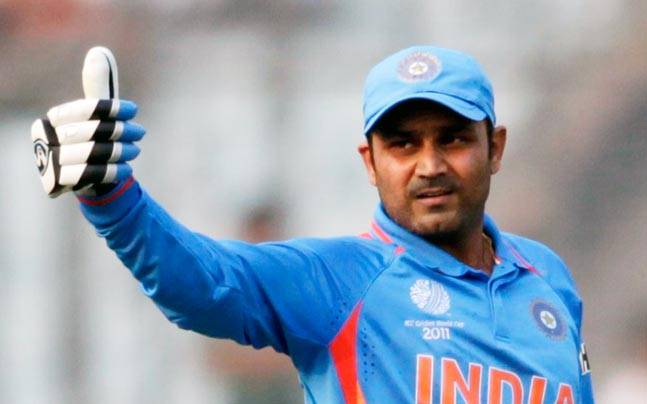
The First to bat in their team who is an extreme and ruthless batsman ever seen in matches. He is a well-respected all-rounder and a hard-hitting batsman for all types of bowling raising them to boundaries. He is a decent off-spinner and a good fielder over the critical times of innings by resisting ball to reach the lines of boundaries. An arrogant man hesitating to face failures, a game changer in certain matches where their team struggles over boundaries. Helped “Team India” score many wins over the decades against several countries and matches. “A trump card for the whole set that’s what we can call him”.

3.Garfield Sobers

Tony Cozier: Sean Abbott can learn from Sir Garfield Sobers

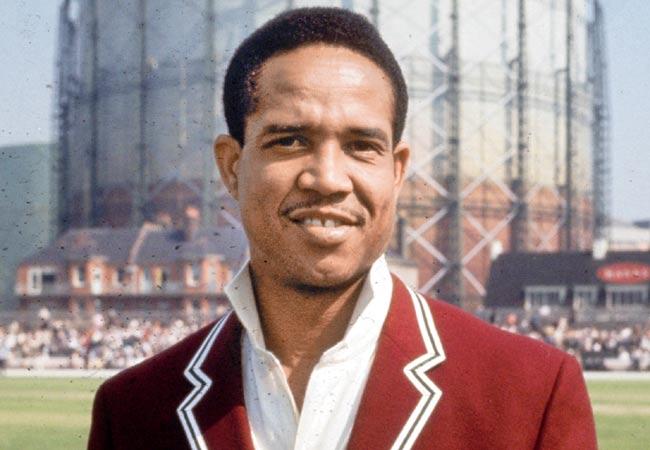
A unique key player recognized by all members in ICC (International Cricket Council) has been identified by other opponents as a threat in all the fields. Besides his retirement a rage of his energy is compensable as he can play the role of three cricketers in a match. He has taken a total of 235 wickets overall in his career. A multi-talented bowler and a low-medium batsman in the cricket history. Being appointed for West Indies for the first time his enormous performance covered a wide fame. He has a record of holding 26 times centuries and 30 half-centuries. Still 1994, His record of scoring runs was not broken against Pakistan. (365 not out) For his excellence he served as a Captain for West Indies and still his record is among the top 5 leading runs a greatest achievement of all.

4.Andrew Flintoff

Andrew Flintoff says bulimia may have cut short his cricket career |  Cricket News | Sky Sports

Always known as the hero of the Britain of early 2000 for his heroic acts in his first Ashes series where he was able to defeat Australia’s team known as the best in the world. A quick wicket gainer in both batting and bowling fields having a record of 226 wickets in his journey of cricket. His endless eye-catching performance made him an all-rounder with a huge fanbase and fame for his name remembered still now by teenagers.

15 Inspirational Cricket Quotes From The Legends Of The Game

I have given the best of all players whose performance have really gave their team to win an extra-ordinary innings against an enormous talented team thus establishing a history in records in International Cricket to be remembrance of.
 

50+ Inspirational Cricket Quotes by cricketers with Images

𝑴𝑬𝑨𝑵𝑰𝑵𝑮 𝑶𝑭 𝑴𝑰𝑺𝑼𝑵𝑫𝑬𝑹𝑺𝑻𝑨𝑵𝑫𝑰𝑵𝑮

“Misunderstanding are so powerful that they can break the most beautiful relationship just in a second”

Human beings have the basic need to be understood. Some of our closest relations are forged on the basis of mutual understanding, trust and respect. In our life sojourn, we tend to gravitate towards people with whom we feel understood and share a mental wave-length. Being emotionally in sync with another human being helps us thrive and keeps us happy.

So, it came as no surprise to me when found myself falling rapidly in love with ‘he’ walked into my life. Here was a person who didn’t need to be told/expressed what my heart’s deepest desires were. He was so invested that it came

The record straight our love was star-crossed right from the outset. Ours was an inter-community thing, which in the remotest by-lanes of a small town held a lot of significance. His parents who were dead opposed right from the start, made it amply clear that they would have nothing todo with us in case we went ahead.However, the man was steadfast in his decision and we set up to our own abode based on the love we had for each other, as the only as set.

Social conflicts often involve some misunderstanding. Parties in conflict communicate by what they say (or do not say) and how they behave toward each other. Even normal interaction may involve faulty communication, but conflict seems to worsen the problem. When two people are in conflict, they often make negative assumptions about “the other.” Consequently, a statement that might have seemed innocuous when two parties were friends might seem hostile or threatening when the same parties are in conflict.

SOURCES OF MISUNDERSTANDING :

All communication has two parts:

a sender and a receiver

The sender has a message he or she intends to transmit, and s/he puts it in words, which, to her/him, best reflect what s/he is thinking. But many things can intervene to prevent the intended message from being received accurately.

If the communication is verbal, tone of voice can influence interpretation. The boss’s words, “Hey, I noticed you were taking an especially long break this morning,” could be interpreted as an attack if she or he said that in a disapproving tone, while the comment might be seen as a minor reminder about office rules if it was said in a friendly way. If the employee has a health problem that sometimes requires long breaks, the comment might have even been a friendly inquiry about what was happening and whether the employee needed any help. Here, tone of voice as well as situational and relationship factors would influence the interpretation of the message.


WHAT TO DO WHEN WE FAIL?

We all fail at some point. It’s unavoidable and definitely not a pleasant experience. Our self-confidence and self-esteem might hit the ground. Constant questions of self-doubts arises. But any kind of failure can be an amazing opportunity for growth and development when we approach it the right way.

Here are few things to remember when something doesn’t go your way.

FAILURE IS NOT FATAL

It’s never too late to re-start and pursue your dreams and goals, in one way or another. If you look around there always be hidden opportunities waiting for you to showcase your abilities and skills. There will always be another chance, and this time you can approach with greater readiness and experience. Remember that everything happens for a reason, each opportunity has something to teach you.

LEARN YOUR LESSON

One of the greatest advantages of failures, is that it makes you wiser. It gives you a chance to question yourself about the faults in the process and gives you a chance to re-invent and re-discover yourself. Helps you consider your situations from multiple perspectives. This is also the time when you seek for help from trusted  friends and colleagues for their inputs and reviews.

BE PREPARED FOR THE WORSE

It is harder to accept failure when you did not consider it be one of the outcomes of your process. Confidence is a good trait but being fully prepared for any outcome is helpful since this mindset will help you avoid feeling devastated when something doesn’t turn out the way you envisioned it.

Always keep a plan B and act on it immediately. This doesn’t mean that you need to give up or have a defeatist attitude, just to be ready for any outcome. This might help you have a backup or consider your resources more carefully than if you go all in.

NOTHING IS PERSONAL

A problem with failure is that we see it as something that reflects on us and our personal failings. But just as often, our failure happens due to factors that have nothing to do with us. Maybe we offer something that is not wanted or maybe there are objective circumstances that  change the situation beyond our control. Learn from your mistakes but don’t pin each situation solely on yourself. By Acknowledging that we don’t have control over the world, we can become resilient and focused on what’s within out purview.

keep going, keep growing

BE KIND TO YOURSELF

Approaching the failure with compassion is an important thing to remember. Often, we are really harsh to ourselves and that discourages us from trying again or learning from the mistakes we made.

Failure is not pleasant but is significant, and looking at any story of success, we will always find the failures that built it. See it as a necessary step, a chance to learn, and you will bounce back better and faster.

Love

 Love has many meanings. It can mean being affectionate towards a person, and the affection reciprocated. Love is a set of emotions that we experience. Love could also mean beliefs or behaviors that show your affection towards someone. Love is a feeling that everybody yearns. It makes them feel happy and vital.

Love can be for many things, family, partners, pets, nature, and even for oneself. Honesty, care, and trust accompany love. As humans, we depend on one and other, and though we may be different, love binds us all together and making the world a much better place.

Adore is the numerous feelings that we experienced when warmth and care appeared to us. It isn’t fair sentiment. Cherish can cruel numerous things and can shift from individual to individual. Genuineness, care, and believe constitute cherish. Everybody needs to be adored. It gives them joy and makes them feel like they matter. We cherish for numerous things, and the adore we think shifts all through our lives.

Our to begin with encounter of adore is at birth. The bond that we frame with our guardians is one of the purest. Guardians adore us from the minute we are born, and this adore as it were develops more grounded. They care for us and offer assistance us move forward. A child continuously needs the warmth and adore of their guardians. As we develop more seasoned, we learn to gotten to be more autonomous and don’t require our guardians as much. In any case, they are continuously there when we require them, and they will ever cherish us. As they develop more seasoned, they require our offer assistance and consideration. Moving on with our lives and overlooking approximately them influences them, and they feel lonely. We ought to be there for them the same way they were with us.

Kin may not continuously get along and battle always, but the adore between them is the most grounded. In spite of all the insuperable and contentions, they will continuously protect us and keep us secure. The adore between them is implicit but still felt; the expression of cherish isn’t the way we think it to be. In spite of the fact that kin may not say, “I adore you,” we know that they do. Grandparents shower their cherish for their grandkids. They too need to spend time with them and make recollections, and they are there for us no matter what. They continuously need to see their grandchildren upbeat.

Love is the base for romantic relationships; two partners who care and love each other. They trust each other and try to work out their differences when they fight. Friendships also have the essence of love. Though it may not be romantic, friends still love us. They care for us, make us happy, and care about us. Friendships based on popularity and status does not last long.

Fellowships require believe and somebody who you’ll open to without considering twice. You make the leading memories and have the foremost fun. Most of all, a friend is somebody you’ll tally on; that’s cherish. Some of the time, these connections may not work out. Instead of feeling off-base and dishonorable, we must cherish the minutes we had and not despise anyone. Adore can be towards nature: increasing in value what Soil has given us and ensuring them with care.

Adoring yourself is the foremost vital. When somebody acts in an unexpected way from what others see as ordinary, they are regularly cleared out out. We must learn to acknowledge who we are and the way we see. Once we acknowledge ourselves, we will really cherish. Cherish isn’t almost about other individuals, but it is additionally almost adoring ourselves to begin with. Adore is additionally tolerating others for who they are, not what we anticipate them to be.

Afghanistan – A tragedy that has no saving

The President of the USA, Joe Biden chose to play the card that the presidents before him had put on the game – the complete withdrawal of armed personnel from Afghanistan. This would mean an end to about 20 years of war in the country that had pitched the NATO and the US against a radical Islamic militant group to a supposed war on terrorism.

The Taliban controlled about 90% of all Afghanistan before 2001. It even had embassies established in Pakistan and Saudi Arabia – the only two countries to give recognition to the government. It was after the 9-11 attacks that it suddenly became an enemy to every state on the planet that supported USA. The US and its NATO allies invaded the Afghanistan that was already torn between the Taliban led groups and the democratic rebels. 20 years have passed since then. From young adults born after 2001 to a now estranged prince of the British royal family, a lot of people fought in Afghanistan. The results were visible with the Taliban clearly on the loss. But, the results were never conclusive. And now, when the US and the NATO would finally withdraw from a war that never reached a conclusion, Taliban has all good reasons to take back what it owned for a brief period of time.

Afghan politics has become highly broken – factions that want peace but not the loss of a theologically driven Taliban government and many more of people wanting a democracy – the government promised in the first Afghan republic in the late 1960s. For the present state of a mujahideen within the once flourishing nation has always been there, but the present state of catastrophe is a result of the Soviet-American rivalry. It was due to the establishment of the Afghan Socialist state that the mujahideen and the Soviet-Afghan war erupted and it was because of obvious and many-a-times accepted training by the Pakistani(Parvez Musharaff, the Army general of Pakistan and later President of Pakistan accepted on a TV show that the Taliban and Lashkar were heroes to him and his people) and American forces (American newspapers have routinely praised not just Taliban but also the infamous Osama Bin Laden during the war) that the logistics, tactics and power of these mujahideen forces reached to a point where they could establish an emirate that spanned most of Afghanistan.

Afghanistan - Wikipedia
Is there any redemption for Afghanistan?

The return of Taliban will not only usher a new era of repression for the Afghans – especially women, children and the now diminished minorities, but also to the neighbouring nations of India, Iran and Central Asia – where the rise of Taliban may lead to new found difficulties in security and trade. The radical Islamists founded the Indian mujahideen as a cause to create a similar situation in India a couple of decades ago. The specific case of India is being raised here because it has strong cultural and economic interests in Afghanistan. The Chabahar port in Iran is India’s strongest option against China’s CPEC and the Gwadar port. Other than this, with an unfortunate history of militancy and extra state actors in North Western India, to have a neighbour ruled by groups of similar ideologies is dangerous for it. India should find ways to support Kabul militarily, for the statements made by Pakistan Prime Minister where he expressed his inadequacy in pressuring Taliban for a ceasefire leaves no neighbour but India to hold the hands of a now weaker government at Kabul. However, India has so far refused to be involved militarily, let alone be involved now, when it could end being the only player in the game.

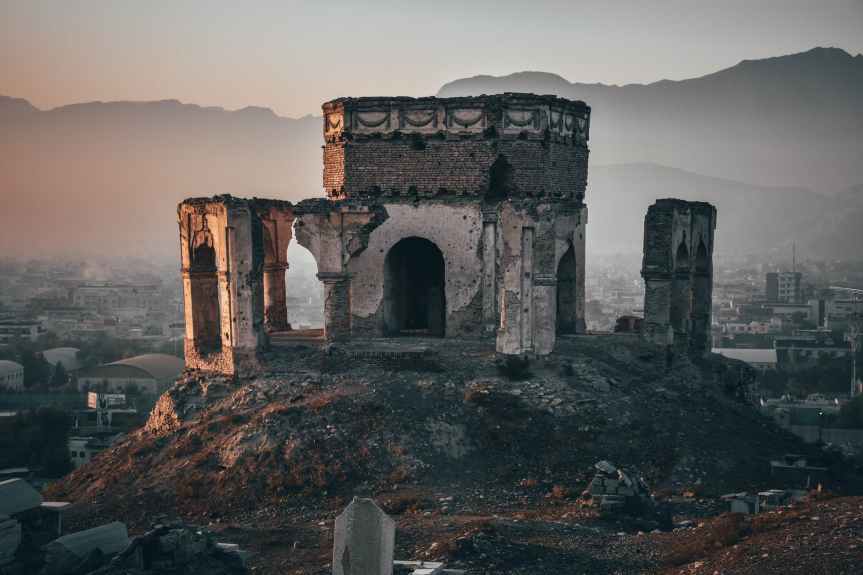
Afghanistan looks grim. So does its future. The case is unlike ISIS. Common people had supported the Taliban insurgency. And the opium rich state an fund the group for years once it comes to power. Afghanistan looks like a lost cause, with no friends to support it in the problem that should have the highest priority to be solved – the problem of insurgency.

Startups in the food industry

Apart from swiggy and Zomato, some startups are making a hit in the food industry like :

  1. Freshmenu

It was founded by Rashmi Daga in 2014 in Bangalore, her idea was to deliver from the new menu every day.

It operates on a full-stack business model they manage the complete operation from raw material to the final dish. They deliver around 4 to 5 km from their local kitchens and also provide takeaway options. In May 2020 their total funding was $ 30 Million.

2. Faasos

It’s a Pune based founded by Jaydeep Barman and Kallol Banerjee in 2011. It is an online food ordering operates in 16 cities. It raised a funding of $75 Million.

3. Box8

It’s a Mumbai-based quick-service restaurant chain founded by Anshul Gupta and Amit Raj in 2012, it currently operates in Pune, Mumbai, Bangalore, and Gurgaon.

4. Cure.fit

It’s a Bangalore-based Indian fitness and health venture started by Mukesh Bansal in 2016, providing digital offline facilities for fitness and mental health things, apart from that they provide fresh and tailor-made healthy foods. It raised almost $170 Million in funding.

5. MagicPin

It was founded by Anshoo Sharma and Brij Bhushan in 2015, it’s a coupon website, the users get caseback If they dine-in restaurant partnership with MagicPin by uploading a picture of the bill along with a selfie with the dish they ordered. It raised a total funding of $30 Million. they have their presence in 16 cities of India.

Feminism in India

Ideally, what should be said to every child, repeatedly, throughout his or her school life is something like this: ‘You are in the process of being indoctrinated. We have not yet evolved a system of education that is not a system of indoctrination. We are sorry, but it is the best we can do. What you are being taught here is an amalgam of current prejudice and the choices of this particular culture. The slightest look at history will show how impermanent these must be. You are being taught by people who have been able to accommodate themselves to a regime of thought laid down by their predecessors. It is a self-perpetuating system. Those of you who are more robust and individual than others will be encouraged to leave and find ways of educating yourself — educating your own judgements. Those that stay must remember, always, and all the time, that they are being moulded and patterned to fit into the narrow and particular needs of this particular society.

Doris Lessing, The Golden Notebook

Feminism in India is a set of movements aimed at defining, establishing, and defending equal political, economic, and social rights and opportunities for women in India. It is the pursuit of women’s rights within the society of India. Like their feminist counterparts all over the world, feminists in India seek gender equality: the right to work for equal wages, the right to equal access to health and education, and equal political rights.Indian feminists also have fought against culture-specific issues within India’s patriarchal society, such as inheritance laws.

The history of feminism in India can be divided into three phases: the first phase, beginning in the mid-19th century, initiated when reformists began to speak in favor of women rights by making reforms in education, customs involving women; the second phase, from 1915 to Indian independence, when Gandhi incorporated women’s movements into the Quit India movement and independent women’s organisations began to emerge; and finally, the third phase, post-independence, which has focused on fair treatment of women at home after marriage, in the work force, and right to political parity.

Despite the progress made by Indian feminist movements, women living in modern India still face many issues of discrimination. India’s patriarchal culture has made the process of gaining land-ownership rights and access to education challenging. In the past two decades, there has also emerged a trend of sex-selective abortion. To Indian feminists, these are seen as injustices worth struggling against and feminism is often misunderstood by Indians as female domination rather than equality.

As in the West, there has been some criticism of feminist movements in India. They have especially been criticized for focusing too much on privileged women, and neglecting the needs and representation of poorer or lower caste women. This has led to the creation of caste-specific feminist organizations and movements

According to Maitrayee Chaudhuri, unlike the Western feminist movement, India’s movement was initiated by men, and later joined by women. But feminism as an initiative by women started independently a little later in Maharashtra by pioneering advocates of women’s rights and education: Savitribai Phule, who started the first school for girls in India (1848); Tarabai Shinde, who wrote India’s first feminist text Stri Purush Tulana (A Comparison Between Women and Men) in 1882; and Pandita Ramabai, who criticized patriarchy and caste-system in Hinduism, married outside her caste and converted to Christianity (1880s). The efforts of Bengali reformers included abolishing sati, which was a widow’s death by burning on her husband’s funeral pyre, abolishing the custom of child marriage, abolishing the disfiguring of widows, introducing the marriage of upper caste Hindu widows, promoting women’s education, obtaining legal rights for women to own property, and requiring the law to acknowledge women’s status by granting them basic rights in matters such as adoption.

The 19th century was the period that saw a majority of women’s issues which came under the spotlight and reforms began to be made. Much of the early reforms for Indian women were conducted by men. However, by the late 19th century they were joined in their efforts by their wives, sisters, daughters, protegees and other individuals directly affected by campaigns such as those carried out for women’s education. By the late 20th century, women gained greater autonomy through the formation of independent women’s own organisations. By the late thirties and forties a new narrative began to be constructed regarding “women’s activism”. This was newly researched and expanded with the vision to create ‘logical’ and organic links between feminism and Marxism, as well as with anti-communalism and anti-casteism, etc. The Constitution of India did guarantee ‘equality between the sexes,’ which created a relative lull in women’s movements until the 1970s.

Link

𝑯𝑰𝑺𝑻𝑶𝑹𝒀 𝑨𝑩𝑶𝑼𝑻 𝑨𝑵𝑵𝑰𝑬 𝑩𝑬𝑺𝑨𝑵𝑻

“A woman with a voice is by definition a strong woman. But the search to find that voice can be remarkably difficult“

Annie Besant(1 October 1847 – 20 September 1933) was a British socialist, theosophist, women’s rights activist, writer, orator, educationist, and philanthropist. Regarded as a champion of human freedom, she was an ardent supporter of both Irish and Indian self-rule.She was a prolific author with over three hundred books and pamphlets to her credit. As an educationist, her contributions included being one of the founders of the BANARAS HINDU UNIVERSITY.

She also became involved in politics in India, joining the Indian National Congress. When World War I broke out in 1914, she helped launch the Home Rule League to campaign for democracy in India, and dominion status within the British Empire. This led to her election as president of the Indian National Congress, in late 1917. In the late 1920s, Besant travelled to the United States with her protégé and adopted son Jiddu Krishnamurti, who she claimed was the new Messiah and incarnation of Buddha. Krishnamurti rejected these claims in 1929.After the war, she continued to campaign for Indian independence and for the causes of theosophy, until her death in 1933.

HOME RULE MOVEMENT :

As early as 1902 Besant had written that “India is not ruled for the prospering of the people, but rather for the profit of her conquerors, and her sons are being treated as a conquered race.”. She encouraged Indian national consciousness, attacked caste and child marriage, and worked effectively for Indian education.Along with her theosophical activities, Besant continued to actively participate in political matters. She had joined the Indian National Congress. As the name suggested, this was originally a debating body, which met each year to consider resolutions on political issues. Mostly it demanded more of a say for middle-class Indians in British Indian government. It had not yet developed into a permanent mass movement with local organisation. About this time her co-worker Leadbeater moved to Sydney.

In 1914 World War I broke out, and Britain asked for the support of its Empire in the fight against Germany. Echoing an Irish nationalist slogan, Besant declared, “England’s need is India’s opportunity”. As editor of the New India newspaper, she attacked the colonial government of India and called for clear and decisive moves towards self-rule. As with Ireland, the government refused to discuss any changes while the war lasted.

EARLY LIFE :

Annie Wood was born in 1847 in London into an upper-middle-class family. She was the daughter of William Burton Persse Wood (1816–1852) and Emily Roche Morris (died 1874). The Woods originated from Devon and her great-uncle was the Whig politician Sir Matthew Wood, 1st Baronet from whom derives the Page Wood baronets. Her father was an Englishman who lived in Dublin and attained a medical degree, having attended Trinity College Dublin. Her mother was an Irish Catholic, from a family of more modest means. Besant would go on to make much of her Irish ancestry and supported the cause of Irish self-rule throughout her adult life. Her cousin Kitty O’Shea (born Katharine Wood) was noted for having an affair with Charles Stewart Parnell, leading to his downfall. Her father died when she was five years old, leaving the family almost penniless. Her mother supported the family by running a boarding house for boys at Harrow School. However, she was unable to support Annie and persuaded her friend Ellen Marryat to care for her. Marryat made sure that she had a good education. Annie was given a strong sense of duty to society and an equally strong sense of what independent women could achieve. As a young woman, she was also able to travel widely in Europe. There she acquired a taste for Roman Catholic colour and ceremony that never left her.

Reformer and secularist :

She fought for the causes she thought were right, starting with freedom of thought, women’s rights, secularism, birth control, Fabian socialism and workers’ rights. She was a leading member of the National Secular Society alongside Charles Bradlaugh and the South Place Ethical Society.

Later years and death :

Besant tried as a person, theosophist, and president of the Theosophical Society, to accommodate Krishnamurti’s views into her life, without success; she vowed to personally follow him in his new direction although she apparently had trouble understanding both his motives and his new message.The two remained friends until the end of her life.

In 1931 she became ill in India.

Besant died on 20 September 1933, at age 85, in Adyar, Madras Presidency, British India. Her body was cremated.

She was survived by her daughter, Mabel. After her death, colleagues Jiddu Krishnamurti, Aldous Huxley, Guido Ferrando, and Rosalind Rajagopal, built the Happy Valley School in California, now renamed the Besant Hill School of Happy Valley in her honour

ARE WE REALLY ENJOYING OUR WORK?

Work is worship for those who take work seriously and it should be so because your work reflects your personality to some extent and how we do it is also part and parcel of our identity. Here in, comes the real trouble because when you do the work you enjoy, you try to put in your heart and mind into it but, if you are unfortunate enough to be doing the kind of work that you are not proud of, then surely enough it shows in your outcome.

Money, being the prime factor in today’s world and so, when your sole priority is to mint money, then it hardly matters whether you are an engineer or an interior designer. You would try to impress upon the authorities in your field with the sole objective of prosperity in your field. For this, you may go to any extent of unethical attempts, without even thinking about its aftermath.

Mental tension and stress and the related health hazards are all part and parcel of today’ s changing world. Today’s young generation is the first generation of professionals who are earning, four times more than what their parents have earned and so they have a lot of money at their disposal, which is making them spend more All this was possible only because of India’s changing economic condition and the advent of multinational companies with huge capital investment and infrastructure.

In fact, the call centre culture has also changed our lives for the worst, since lifestyle patterns are changing drastically. Initially, youngsters seem to be enjoying the western influence of working like asses on five days and reserving the weekends for parties and celebrations. And to get those two days of relief, they are ready to slog whether they like their job or not. It henceforth, becomes a mechanical slogging where, you are not concerned, whether your mind is at work but it’s just about the finished product that they look forward to. On the whole, we cannot rule out the fact that there are people, who are fortunate enough to bag the job they desire or those who have ultimately landed in those fields, where they have wanted to be. Such people are really lucky in the sense that they do their work with the utmost dedication and they have a fulfilment in life, even if they are not taking home fat salaries like their counter-parts, but don’t have any satisfaction to boost of.

There is a third side to all this and that is trying to derive meaning in whatever meaningless things we are doing to make both ends meet. So even if, one is in a job that is detested by him, he can still work towards generating a positive attitude to one’s Work. Try and enjoy, what one is doing and thus try to attain a sense of satisfaction, that he supposes, he could have otherwise got.