𝑾𝑯𝑨𝑻’𝑺 𝑨𝑷𝑷

“GOD IS REALLY GREAT BECAUSE HE CREATE HUMAN BEING” because of you all only, when every i am sad god send people to give hope to me.

𝗪𝗛𝗔𝗧𝗦𝗔𝗣𝗣 is a free mobile messaging application, massively used for international messaging and voice calls.

WhatsApp was founded in 2009 by WhatsApp, Inc. The company name puns on the popular colloquial greeting What’s up? and app, short for application.

The app, one of the first of its kind to provide messaging over WiFi, allows people to `communicate´ on their smartphones across the world, making it a popular choice for people who live and travel abroad. It also works across major mobile device platforms, such as Android, iOS, and BlackBerry. As of 2018, notable WhatsApp features include voice calling, group chats, end-to-end encryption, and status updates similar to Snapchat and Instagram Stories. The app functions by using cellular data or WiFi and the user’s existing phone number.

𝗔𝗕𝗢𝗨𝗧 𝗪𝗛𝗔𝗧𝗦𝗔𝗣𝗣:

Because it works over WiFi and across different devices, WhatsApp, as an app and term, is popular among immigrants, families with relatives in different countries, travelers, and businesspersons. It is particularly popular in Latin America, India, and Europe, and in many cases is preferred over traditional SMS, or text, messaging. As a testament to its popularity, WhatsApp is the most popular messaging application in over 100 countries.

𝐖𝐇𝐀𝐓𝐀𝐏𝐏 is also widely used for its group messaging feature. With groups being able to have up to 256 participants, it has became a versatile feature used to communicate with classmates, relatives, and coworkers. The groups feature is also used for niche groups, including group chats for mothering or conversational groups interested in improving language skills, for example : Many entrepreneurs are increasingly conducting business over “WhatsApp“, advertising products and services on social media and providing their WhatsApp contact number.

WhatsApp uses the internet to send messages, the cost of using WhatsApp is significantly less than texting. You can also use Whatsapp on your desktop, simply go to the Whatsapp website and download it to Mac or Windows. It is popular with teenagers because of features like group chatting, voice messages and location sharing.

𝔽𝔼𝔸𝕋𝕌ℝ𝔼𝕊 𝕆𝔽 𝕎ℍ𝔸𝕋𝕊𝔸ℙℙ:

Users of 𝚠𝚑𝚊𝚝𝚊𝚙𝚙 can share their location in real time over messages. They can also organise lists of contacts so that they can “quickly send messages” to lots of people in group chats through WhatsApp. Probably the best feature of WhatsApp is that it allows users to keep in touch with people living abroad, without incurring the international charges associated with text messages. Whatsapp now lets its users share their location in real time. This feature allows you to share your exact location with a friend or loved one. This may be useful when you are meeting friends in a crowded area, or you want to let someone know you have arrived at your destination safely.It is important to know that you are allowing your movements to be tracked by another person. Only use this feature with people you know and trust. Parents should talk to their child about location sharing and advise them against it.

𝗦𝗧𝗔𝗧𝗨𝗦 :

The word status actually means weather you are available or busy or offline.

Since we don’t have green light like Facebook to find weather the user us online or not in whatsapp,whatsapp came with a idea if statuses like if person is online he can update as Available,if he is busy he might update busy or if he changes the number hw might update as ‘call me’
But as days passed people changes the meaning of status entirely like putting some proverbs, attitude quotes,wishing someone for anniversary or birthday and still the list goes on.Status is nothing but it helps you showing others in what situation you are in like online or available or busy or driving etc but these days we see status which is of no use.

Likewise people change their status as “In a meeting””At the gym””Urgent calls only” so on depending on which you could decide to text them or not. Apart from this, people now a days started writing their own feelings as a status letting others know what they feel/think about life/others. So its all depends on what the person needs his whatsapp friends to know/understand. 𝐈 𝐋𝐎𝐕𝐄 𝐖𝐇𝐀𝐓𝐒𝐀𝐏𝐏 because I can able to see another world in that. Happy to use that … We can easily connected to people in older days without what how they people there i dono but now a days whatsapp is everywhere … We can easily collect any contact in whatsapp .. such a beautiful app for all…
10 Years of ZNMD

ZNMD or Zindagi na milegi dobara has completed 10years in Indian cinema and according to whole lot of people, ZNMD is best movie seen so far well i also believe this because I love the cast, the storyline, the way its directed and most important sense of humor

ZNMD is one of those film which will surely make you happy when you are having a bad day because the way its directed shows a whole new point of traveling, friendship, lessons, love, marriage and so on its so relatable.

Zindagi Na milegi Dobara , directed by Zoya Akhtar has a very first hand insight to the life of humans . A man who feels money is the most important aspect gets to know that its just a part of it just like a relationship or just like a vacation which is as important as his 9 to 5 job . Another person who is into a commitment against his choice sets himself free after knowing it from his closest friends . And the last one who in search of his true identity not only finds his real father but his true self , friends and the real essence of life .

The movie has so many layers blended into one and add to it the picturesque Spain and all the fun activities be it the tomatina festival or the scuba diving or the bull running sequence in the climax.

The audience in general seeks a happy movie , one with a message , which can make the audience laugh , one which makes the audience think effortlessly ,one with great music, one which has a romantic side as well and one with a great story . ZNMD has all of it .

Star value does add to the higher viewership but even if it had lesser known but able actors it would have developed with the word of mouth.

  • ” Dilo mein apni Betabiyan Leke Chal rahe Ho Toh Zinda Ho Tum …… “

Harmony

When your thoughts and feelings are in harmony with your actions, then stress has no way of walking into your life. We are all living in a universe where everything is connected. We have to realise that whatever transpires in our life constantly gets affected by energy around us. Being aware of this connection is very important.

Self acceptance

Everything going on within us and around us starts with self. Establishing a balance in your thoughts will determine the amount of personal harmony. Equilibrium creating harmony comes from staying centred in two seemingly opposite intentions. You could be dealing with your most inconsequential thoughts or taking your most important decisions, to stay balanced makes huge difference.

Take responsibility

Being 100 per cent responsible for the quality of your life is essential. We ourselves are in charge of our emotions and their results. We are constantly creating scenarios due to our thoughts. Our actions are products of our own creation.

Choose right

We must train our minds to let go of our controlling habit. It is our ego that does not allow it. Honouring your personal thoughts is also very important. As time goes on our frequency rises if we have learnt the lessons of self acceptance and made our choices accordingly. Slowly our higher choices seem to become like an automatic process within. They are spontaneous. This in turn leads to greater peace and harmony.

OTT PLATFORM : NEW INDIA DIGITAL INDIA

OTT (over-the-top) is a means of providing television and film content over the internet at the request and to suit the requirements of the individual consumer. The term itself stands for “over-the-top”, which implies that a content provider is going over the top of existing internet services.

OTT means control over your content, brand, user experience, audience, monetization and, most of all, your data. YouTube just doesn’t give you that.

Consumers are now in the driver’s seat, due to OTT. More than ever, consumers are able to find exactly what they want to watch and only pay for the content and services that they want. OTT provides the flexibility to adjust your models to the market for maximum uptake.

OTT is the ultimate platform for reaching your targeted audience directly with your content and delivering a premium video experience that you control. With OTT, providers can get immediate user feedback through direct engagement and interaction. 

Anxiety

Anxiety is a normal and often healthy emotion. However, when a person regularly feels disproportionate levels of anxiety, it might become a medical disorder.

When an individual faces potentially harmful or worrying triggers, feelings of anxiety are not only normal but necessary for survival.

Since the earliest days of humanity, the approach of predators and incoming danger sets off alarms in the body and allows evasive action. These alarms become noticeable in the form of a raised heartbeat, sweating, and increased sensitivity to surroundings.

Anxiety disorders

The duration or severity of an anxious feeling can sometimes be out of proportion to the original trigger, or stressor. Physical symptoms, such as increased blood pressure and nausea, may also develop. These responses move beyond anxiety into an anxiety disorder.

The APA describes a person with anxiety disorder as “having recurring intrusive thoughts or concerns.” Once anxiety reaches the stage of a disorder, it can interfere with daily function.

Symptoms

  • restlessness, and a feeling of being “on-edge”
  • uncontrollable feelings of worry
  • increased irritability
  • concentration difficulties
  • sleep difficulties, such as problems in falling or staying asleep

Prevention

  • Taking care of your mental health.
  • Talking to people who can calm you.
  • Taking counselling from professionals
  • Seeking professional help.
  • Spending time with family.
  • Taking break from routine.
  • Do something you love that is therapeutic to you like painting, cooking even binge watching.

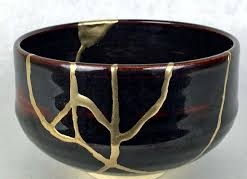
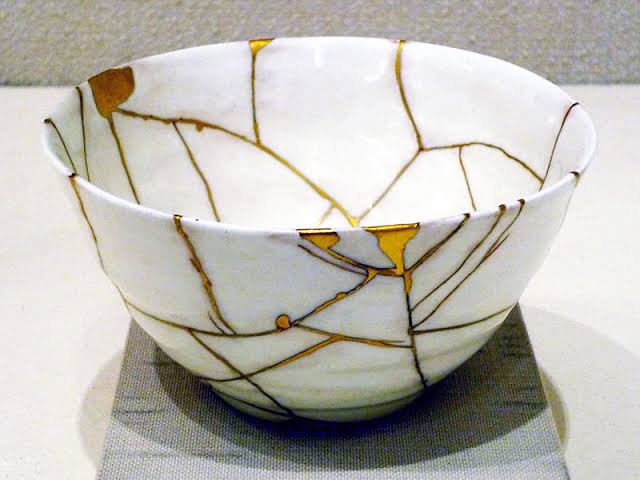
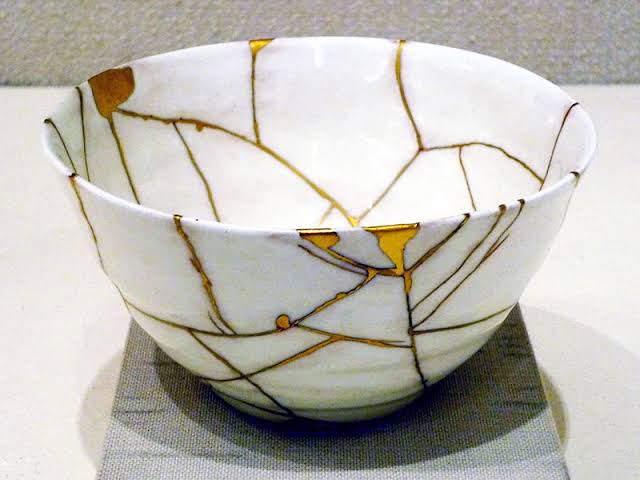
Kintsugi-THE ART OF BROKEN

Hello guys! Today’s topic is  about an how an art is made by mending broken pieces.

Yes you heard right when things break we throw them away but there is a Japanese art form called kintsugi or kintsukuroi.

From:unkown

As it’s name says golden joinery and golden repair respectively. In this art is made through repairing the broken pieces and again joining them.

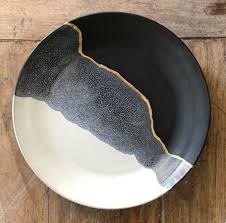
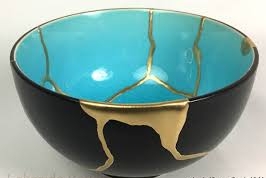
They say broken is beautiful, in this art form there is philosophy they follow that is those cracks that appear after mending the objects is considered to be the history of that object and those cracks are not to be hidden.
From: lakesidepottery
From:edtimes.in

I love how they don’t cover those cracks and instead display it proudly as if telling the whole world to look at it how it is rather than how it should appear .

It teaches us a very important life lesson that

Never to hide our scars rather than show them proudly as they are a part of your journey and they deserve to be shown rather than cover them.

We should respect our past that is depicted through these scars and be grateful that the present you is because of the past you had .
From pinterest
Imperfection is the real Perfection.

The perfection you seek is ideal but not the truth but the imperfection  you that is thriving to become the perfection is real.

From:lakesidepottery

In this art they seal the broken parts with lacquer dusted or mixed with powdered gold,silver or platinum.

There are different styles of kintsugi

Crack :-They use  gold dust and resin or lacquer to attach broken pieces with very less overlap or fill-in from missing pieces

Piece method :-In this  they add gold /lacquer in place of the missing fragments of the broken object

Joint call :- In this method a  fragment which not matching but is similarly shaped is used to replace a missing piece from the original broken object creating a patchwork effect.

Here mending  the pieces and making  an object  from it  gives them an unique aura,a special appearance and also gives the art form it's true meaning.
This art form is now an inspiration to modern artists ,this art form reduces the usage of things ,there is no wastage and infact it's as if the while mending a broken piece it's history ,the memories related to it everything is restored in the process.

Thankyou^^.

India’s RED LIGHT Areas

What is meant by a RED LIGHT AREA?

Red Light Area is a term that is used to denote the presence of the area which hosts prostitution places like brothels , strip clubs etc.in a district. The term “red light area” comes from the use of red lanterns in the olden times which were used to indicate the presence of a brothel house in a city. Gradually, the red lanterns were replaced by red lights which were used for identification of such houses. Also, there is another explanation to it which states that when the sailors in Europe would return by sea to the coasts of Amsterdam , the women who worked as prostitutes would be frail, weak as a result of living in poor hygenic places which would make their skin and hair camouflaged carrying red lanterns which would differentiate them from the other women.

The history of Prostitution in India

During the Mughal era, the tradition of “tawaifs” came into being, where there were separate women courtesans to entertain the upper nobility with their singing, dancing and Urdu reciting skills. With the end of Mughal Era and the coming of Britishers it turned into the business of prostitution where a woman was suppose to offer her body for pleasing the nobles and the powerful instead of her talents. When Goa was a Portuguese colony during the 16th and 17th century, they used to trade Japanese women and girls as slaves to pleasure their sailors from Portuguese. With the coming of Britishers, it turned more vast. Britishers established various colonies which used to house brothels housing prostitutes which were bought from rural India at a “price” thus commoditization of women to make them prostitutes started.

Every British camp had 12 to 15 Indian prostitutes for pleasuring British soldiers. When the historian says that the Britishers have exploitd us in more than one way it is utterly true. Kamathipura, Mumbai’s largest red light district was the first establishment by the Britishers in India in 1795. The sex trade today has gone all berserk with children being trapped and made to be prostitutes. The red light area is a different sort of world for these girls majority of them belonging to poor families from far way state, being pushed into sex trafficking on the pretext of getting jobs by the pimps from a very young age.

List of largest red light areas in India

  1. Sonagachi, Kolkata- It is Asia’s largest red light area housing over 10,000 females with multiple brothels situated in its winding narrow lanes.
  2. Kamathipura, Mumbai. – Darkness is the first word which comes to mind on hearing this name. The voices of innocent young girls who had just gained their womanhood being pushed into this gory trade where they have no idea what is happening with them except the feeling of pain and utter disgust. The area had around 45,000 women in 1992 which was reduced to 500 in 2016 as per the official numbers.
  3. Budhwar Peth, Pune
  4. Meergunj, Allahabad
  5. G.B. Road, Delhi
  6. Chaturbhujsthan, Muzaffarpur
  7. Itwari, Nagpur
  8. Shivdaspur, Varanasi

***The stories of horrors inside of these red light areas can not be summarised in one blog. There will be second blog containing the darkness hidden in the RED LIGHT areas . It is so ironical that despite the name of these areas containing the word “light”, there is just darkness in there.

Apart from the labelled Red light areas where majority of the women are traded by others there are more such areas in India where the entire village is involved in sex trade and prostitution is the main source of income there where a woman earns by selling her body to feed herself and the males of the family.

  • Natpura Village , Uttar Pradesh – Located in the eatsern UP’s Hardoi district, in a population of 5000 more than 70% of the women are involved in sex trade. The children here live only with their mothers, have no surnames and no clues of their fathers. This bizzare tradition is followed here since 4000 years now.
  • Bachara tribe, Madhya Pradesh – Bachara is a tribal matriarchal community in the western part of Madhya Pradesh and women here are said to be the descendants of royal courtesans. Here, girls are forced into prostitution by their own fathers and brothers. The responsibility of making both ends meet is in the hands of the eldest daughter of the family. Most of such families have a dedicated room in their houses to continue this dreaded profession.
  • Wadia Village, Gujarat– Known as the village of “sex workers” , males of the family search for potential customers for the females with the price ranging from 5000 to 10, 0000. The village is occupied by the “Saraniya tribe” which follows this custom since past 80 years. No matter how many educational drives regarding the wrongs of continuing this are done in the village there is no stop to it.

Is Prostitution legal in India?

Though Prostitution is legal, pimping, child trafficking and owning brothels is not. The power of money however succeeds in silencing the hands of the officials incharge to ensure that a woman gives her body by her choice not by force .

CRED : THE KING OF INDIAN STARTUP

CRED HAS BECOME ONE AMONGST THE MOST SYNONYMOUS
STARTUPS IN INDIA. IT IS A FINANCIAL TECHNOLOGY COMPANY,
STARTED IN 2018. IT HELPS IN CREDIT CARD PAYMENTS THROUGH
ITS APP FOR WHICH THE CUSTOMER GETS REWARDED. WITHIN LESS
THAN 4 YEARS IT HAS BECOME THE SECOND MOST-FASTESTGROWING STARTUP IN INDIA.
KUNAL SHAH, THE FOUNDER OF CRED, AN INDIAN ENTREPRENEUR
AND CAPITALIST WAS BORN IN A MIDDLE CLASS FAMILY AND HAD
TO GO THROUGH INNUMERABLE FINANCIAL ISSUES. INSPITE OF
NUMEROUS BARRIERS AND HURDLES IN THE PATH OF HIS SUCCESS,
HE CONTINUED TO WORK HARD AND TODAY, HE IS ONE OF THE

QUOTES HOLD A BUNDLE OF KNOWLEDGE AND EXPERIENCE. SO
HERE ARE FEW MORE FROM THE MASTER OF SECOND MOSTFASTEST-GROWING STARTUP IN INDIA:
“AS A PRODUCT, IF YOU TRY TO BECOME EVERYTHING TO EVERYONE
BEFORE YOU BECOME SOMETHING TO SOMEONE, YOU END UP
BECOMING NOTHING FOR NO ONE”
“ONLY GOOD USE OF MONEY IS TO BUY TIME. TIME TO INVEST IN
KNOWLEDGE, HEALTH AND RELATIONSHIP.”
“EXPERIENCE IS A CURSE IF NOT KEPT CURRENT”
“YOU ARE A SLAVE TO THOSE WHO REVOKE A REACTION OUT OF
YOU”

Smiling can trick your brain into happiness

Ever had someone tell you to cheer up and smile? It’s probably not the most welcomed advice, especially when you’re feeling sick, tired or just plain down in the dumps. But there’s actually good reason to turn that frown upside down, corny as it sounds. Science has shown that the mere act of smiling can lift your mood, lower stress, boost your immune system and possibly even prolong your life.
It’s a pretty backwards idea, isn’t it? Happiness is what makes us smile; how can the reverse also be true? The fact is, as Dr. Isha Gupta a neurologist from IGEA Brain and Spine explains, a smile spurs a chemical reaction in the brain, releasing certain hormones including dopamine and serotonin. “Dopamine increases our feelings of happiness. Serotonin release is associated with reduced stress. Low levels of serotonin are associated with depression and aggression,” says Dr. Gupta. “Low levels of dopamine are also associated with depression.”
Fake It Till You Make It
In other words, smiling can trick your brain into believing you’re happy which can then spur actual feelings of happiness. But it doesn’t end there. Dr. Murray Grossan, an ENT-otolaryngologist in Los Angeles points to the science of psychoneuroimmunology (the study of how the brain is connected to the immune system), asserting that it has been shown “over and over again” that depression weakens your immune system, while happiness on the other hand has been shown to boost our body’s resistance. “What’s crazy is that just the physical act of smiling can make a difference in building your immunity,” says Dr. Grossan. “When you smile, the brain sees the muscle [activity] and assumes that humor is happening.”
In a sense, the brain is a sucker for a grin. It doesn’t bother to sort out whether you’re smiling because you’re genuinely joyous, or because you’re just pretending.
“Even forcing a fake smile can legitimately reduce stress and lower your heart rate,” adds Dr. Sivan Finkel, a cosmetic dentist at NYC’s The Dental Parlour. “A study performed by a group at the University of Cardiff in Wales found that people who could not frown due to botox injections were happier on average than those who could frown.”
And there are plenty more studies out there to make you smile (or at least, serve as reference for why you should). Researchers at the University of Kansas published findings that smiling helps reduce the body’s response to stress and lower heart rate in tense situations; another study linked smiling to lower blood pressure, while yet another suggests that smiling leads to longevity. Studies aside, there are plenty of living, breathing, smiling humans who can testify to the fact that looking the part of happy helps them get through the day.

“Smiling absolutely changes the way I think and feel,” says Jaime Pfeffer, a success coach and meditation instructor based in Florida. “My husband and I purposely spend 60 seconds every morning smiling to supercharge our mood. It’s part of our morning routine. If something goes awry during the day, I usually use smiling to quickly shift my mood. It only take 10 to 15 seconds for it to make a difference for me now. It helps me to feel less stressed, transform my mood quickly and put things in a different perspective.”
Pfeffer adds that she recommends smiling to all her clients, particularly when they’re dealing with long days or tedious work. “One of my clients last week told me smiling for 30 seconds at a time a few times per day helps him stay upbeat when doing sales calls. He said the task can get old after a while, but the smiling helps him stay more energized and avoid burnout.” A smile’s contagion is so potent, that we may even be able to catch one from ourselves. Dr. Ritzo recommends smiling at yourself in the mirror, an act she says not only triggers our mirror neurons, but can also help us calm down and re-center if we’re feeling low or anxious.

It turns out there’s solid evidence that smiling can do us a world of good. Since researching this piece I’ve been conducting my own little smile experiments. I tried smiling when I tensed up in traffic yesterday, and again during a rigorous workout and then today when I woke up with a headache. I found that it feels completely incongruous to smile when I’m tense or tired, and there’s a strange sense of departing a comfort zone. But I have to admit, instantly I was calmer, less upset and, maybe just ever so slightly for a second, smiling made me feel happy.

FASHION TODAY VS 20 YEARS AGO


FASHION TODAY VS 20 YEARS AGO

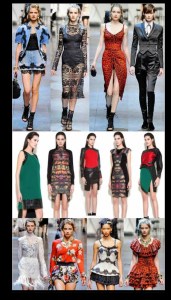
Fashion has changed a great deal over the past three centuries. As history changes it seems that fashion in some aspect changes with it to adapt to the era. Even today fashion continues to change as the years go on. Looking at fashion even 20 years ago we can see a difference from what we see in our everyday lives.


HISTORY OF FASHION

Fashion history is the history of people. People have loved clothing fashion for thousands of years. From the early days of Egypt to the day clothes have become the expression of who we are. Throughout history, drawings, documents and other archaeological finds have also revealed fashion worn by people in various ancient civilizations.

The Greeks were wearing clothes in different styles from their eastern neighbors. Both women and men were usually wearing thick woolen long dresses.

The ancient Egyptians were typically dressed in light cotton clothing; Women were wearing long, ready-made clothes. With the Romans becoming dominant over time, the Romans began to be known as the most important example of style and fashion at the same time.

 The sixties and seventies are great transitional periods in fashion. Women wearing trousers has seen more and more accepted. The clothes became shorter and looser. 80’s brought great fashion trends and different hairstyles for both men and women.

As time went by from the twentieth century to the twenty-first, fashion continued to change every year, and today still changing.


FASHION NOW

Fashions come into vogue and then go out because man loves change, variety and novelty. With the change in the mood of man, change in styles, manners, conduct and way of life also come about.Fashions are infectious as well and spread rapidly like wildfire, especially among young men and women in big towns and cities.

Youth is more fashion-conscious because they represent life in terms of energy, courage, expectations, potentialities, power, and vigour. They want to look smart, up- to-date, charming and fresh in their dress, etiquette, styles of shoes, and hair-do, etc. They want to enjoy every moment of life and are full of unlimited zeal and appetite for it.

Fashions can also be abused as well and become harmful when turned into an obsession. Then they mean waste of time, energy, and money. It is better to be a little out of fashion than to be in fashion at the cost of one’s conscience and discretion.

Fashions are also influenced by glossy, colourful and eye-catching textile advertisements, fashion shows, propaganda of fashion and dress designers, articles in the fashion magazines and foreign visitors.

Films and cable T.V. are a great source of fashions and quick changes in trends. Fashions are liquid and changeable like weather. Till recently, bell-bottoms, midis, minis and maxis were quite in fashion and now they are out of fashion. Again tight-bottoms, skirt-tops, salwar-kamiz and saris are in fashion.

Fashion designing and technology is now an established branch of human knowledge, science and practice. It provides employment and business to millions of people throughout the world and there has been a huge investment in the fashion industry. Expert fashion-designers, technologists, tailors and drapers are busy day and night to cater to the needs of the fashion-conscious in society. They not only cater to the tastes of the people but also create taste and fashion and thereby earn huge profits.

 Fashion-consciousness is a healthy sign as it appeals and pleases people, promotes togetherness, social interaction and enlivens the environment. It is misconceived to link fashion with immorality. But it would be certainly foolish to spend extravagantly on the latest fads and to run after them at the expense of valuable time, energy and resources.

Social influences are probably the strongest influences on the Fashion trend. Many music stars strongly influence Fashion choice. For example, wearing hoodies became famous due to rap musicians. Furthermore, movie and television actors create a big impact on Fashion. Many youngsters love to emulate the Fashion sense of their favourite celebrity.

It is good to be fashionable but it is better to be simple and dignified because simplicity with dignity is the best and evergreen fashion.


Paris Facts

Paris, the capital of France, is located in the north-central portion of the country. It constitutes one of the départements of the Île-de-France administrative region and is France’s most important centre of commerce and culture. The city is home to the Eiffel Tower, one of the world’s premier tourist attractions, which opened to the public on May 15, 1889. Paris, city and capital of France, situated in the north-central part of the country. People were living on the site of the present-day city, located along the Seine River some 233 miles (375 km) upstream from the river’s mouth on the English Channel (La Manche), by about 7600 BCE. The modern city has spread from the island (the Île de la Cité) and far beyond both banks of the Seine. Paris occupies a central position in the rich agricultural region known as the Paris Basin, and it constitutes one of eight départements of the Île-de-France administrative region. It is by far the country’s most important centre of commerce and culture. Area city, 41 square miles (105 square km); metropolitan area, 890 square miles (2,300 square km). Pop. (2012) city, 2,265,886; (2015 est.) urban agglomeration, 10,858,000.

Character of the city
For centuries Paris has been one of the world’s most important and attractive cities. It is appreciated for the opportunities it offers for business and commerce, for study, for culture, and for entertainment; its gastronomy, haute couture, painting, literature, and intellectual community especially enjoy an enviable reputation. Its sobriquet “the City of Light” (“la Ville Lumière”), earned during the Enlightenment, remains appropriate, for Paris has retained its importance as a centre for education and intellectual pursuits. Paris’s site at a crossroads of both water and land routes significant not only to France but also to Europe has had a continuing influence on its growth. Under Roman administration, in the 1st century BCE, the original site on the Île de la Cité was designated the capital of the Parisii tribe and territory. The Frankish king Clovis I had taken Paris from the Gauls by 494 CE and later made his capital there. Under Hugh Capet (ruled 987–996) and the Capetian dynasty the preeminence of Paris was firmly established, and Paris became the political and cultural hub as modern France took shape. France has long been a highly centralized country, and Paris has come to be identified with a powerful central state, drawing to itself much of the talent and vitality of the provinces.

Climate of Paris
In its location on the western side of Europe and in a plain relatively close to the sea, Paris benefits from the balmy influences of the Gulf Stream and has a fairly temperate climate. The weather can be very changeable, however, especially in winter and spring, when the wind can be sharp and cold. The annual average temperature is in the lower 50s F (roughly 12 °C); the July average is in the upper 60s F (about 19 °C), and the January average is in the upper 30s F (about 3 °C). The temperature drops below freezing for about a month each year, and snow falls on approximately half of those days. The city has taken measures to decrease air pollution, and a system of water purification has made tap water safe for drinking.
City layout
Over the centuries, as Paris expanded outward from the Île de la Cité, various walls were built to enclose parts of the city. After the Roman town on the Left Bank was sacked by barbarians in the 3rd century CE, the fire-blackened stones were freighted across to the Île de la Cité, where a defensive wall was constructed. Neglected in times of peace, it was rebuilt several times over the course of the centuries. The earliest of the bridges to the Left Bank, the Petit Pont (Little Bridge), which has been rebuilt several times, was guarded by a fortified gate, the Petit Châtelet (châtelet meaning a small castle or fortress). The bridge to the Right Bank, the Pont au Change (Exchange Bridge), was guarded by the Grand Châtelet, which served as a fort, prison, torture chamber, and morgue until it was demolished in 1801.

Around the Eiffel Tower
Back within the city limits, south of Place Charles de Gaulle, is the Chaillot Palace (Palais de Chaillot). Standing on a rise on the Right Bank of the Seine, where the river begins its southwestward curve, the palace is an impressive spot from which to view what is arguably the most recognized symbol of Paris, the Eiffel Tower. The palace, which dates from the International Exposition of 1937, replaced the Trocadéro Palace, a structure left over from the 1878 International Exposition. It is made up of two separate pavilions, from each of which extends a curved wing. Several museums, including the Museum of Mankind, the Naval Museum, the Museum of French Monuments, and the Cinema Museum, are located there. Under the terrace that separates the two sections are the National Theatre of Chaillot and a small hall that serves as a motion-picture house of the national film library.
The terrace, which is lined by statues, gives a splendid view across Paris. The slope descending to the river has been made into a terraced park, the centre of which is alive with fountains, cascades, and pools. The Trocadéro Aquarium (Cinéaqua) is a few steps away in the park. From the bottom of the slope the five-arched Jena Bridge (Pont d’Iéna) leads across the river. It was built for Napoleon I in 1813 to commemorate his victory at the Battle of Jena in 1806.
On the Left Bank rises the Eiffel Tower itself, an unclad metal truss tower designed by Gustave Eiffel. The tower was built for the International Exposition of 1889, against the strident opposition of national figures who thought it unsafe or ugly or both. When the exposition concession expired in 1909, the 984-foot (300-metre) tower was to have been demolished, but its value as an antenna for radio transmission saved it. Additions made for television transmission added about 79 feet (24 metres) to the height. From the topmost of the three platforms, the view extends for more than 40 miles (64 km). From the 2-acre (0.8-hectare) base of the tower, the Champ-de-Mars (Field of Mars), an immense field, stretches to the Military Academy (École Militaire), which was built from 1769 to 1772 and later became the site of the War College (École Supérieure de Guerre). The Champ-de-Mars, which originally served as the school’s parade ground, was the scene of two vast rallies during the French Revolution: the Festival of the Federation (1790) and the Festival of the Supreme Being (1794). From 1798 there were annual national expositions of crafts and manufactures, which were followed by world’s fairs between 1855 and 1900. Behind the Military Academy stands the headquarters of UNESCO (United Nations Educational, Scientific and Cultural Organization). The building, erected in 1958, was designed by an international trio of architects and decorated by artists of member nations.

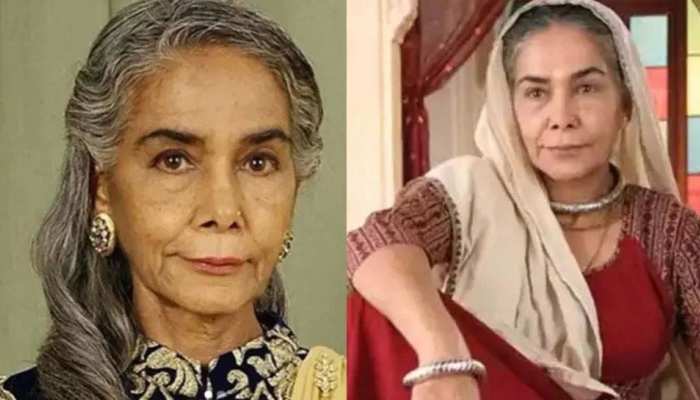
Surekha Sikri Passes Away

Veteran actor Surekha Sikri passed away today at the age of 75 due to cardiac arrest.

Surekha first appeared on the silver screen in the 1978 film Kissa Kursi Ka. From there on, she went on to gain acclaim for her roles in films like Govind Nihalani’s Tamas, Shyam Benegal’s Mammo and Sardari Begum. In the 90s, she prominently featured in television shows like Banegi Apni Baat and Just Mohabbat.

It was her time at TV show Balika Vadhu that made her a household name amongst the masses. She played the role named Kalyani Devi who rules with an iron fist but gradually softens up towards the protagonist Anandi.

The 2018 film Badhaai Ho, for which she also won a National Award, had fans applauding her time on the screen. The Amit Sharma film had her playing the role of a women who comes from an orthodox background but is ready to embrace the new world.

She was last seen in the Netflix anthology Ghost Stories where she starred alongside Janhvi Kapoor in the Zoya Akhtar directorial. Sikri played a bed-ridden patient who is lost in her world.

Many Bollywood celebrities paid tribute to the late actor. Many TV actor including Sidharth Shukla, Sushant Singh, Avika Gor, remembered Surekha on social media. Her manager said that “Three-time national award winning actress, Surekha Sikri has passed away following a cardiac arrest earlier this morning at the age of 75. She had been suffering from complications arising from a second brain stroke. She was surrounded by family and her caregivers. The family asks for privacy at this time. Om Sai Ram.”

Anxiety

Anxiety is a mental disorder characterized by feelings of worry, strong enough to interfere with one’s daily activities.

It is normal to be anxious for something new, but if it sees you have it every day interfering in your daily lifestyle, then there is a warning bell of you having anxiety disorders.

Types of anxiety disorders:

  • Panic disorder: Experiencing panic attacks at an unexpected time.
  • Phobia: Excessive fear for specific things.
  • Social anxiety disorder: Fear of being judging by others in a social situation.
  • Separation anxiety disorder : Fear of been away from loved ones.
  • Illness anxiety disorder: The anxiety of their health.
  • Post-traumatic stress disorder: Having anxiety after a traumatic situation. 
  • Obsessive-compulsive disorder: Having irrational thoughts that lead to repeat a behavior or actions.

Symptoms of anxiety :

  • Increased heart rate 
  • Difficulty falling asleep
  • Rapid breathing
  • Restlessness
  • Trouble concentrating 

An anxiety attack:

It’s a feeling of overwhelming apprehension, worry, distress, or fear.

Symptoms of an Anxiety attack:

  • Feeling dizzy or faint
  • Shortness of breath
  • Fear 
  • Numbness or tingling
  • Sweating
  • Distress

Causes of Anxiety :

The reason for anxiety is not specific, but it may be genetic and environmental factors or brain chemistry.

Treatment for anxiety:

  • Self Treatment : It contains stress management, exercise, relaxation techniques, etc.
  • Counselling : It mostly refers to psychotherapy or a combination of therapies.
  • Medications : Intake of medicines is preferred after doctor advice.

Most important task when preparing a research interview

Introduction

We take interviews to get the story behind a participant’s experiences. Before we decide to take up an interview, we must articulate to ourselves what problems or needs we should be addressing using the information to be gathered by the interviews. The interviewer can pursue in-depth information about a topic. The interview may be beneficial as a follow-up to respondents to questionnaires. e.g., to further investigate their responses. Usually, we ask open-ended questions during interviews which helps us keep a clear focus on the intent of each question.

The Role of the Interviewer

The interviewer is the “jack-of-all-trades” in survey research. The interviewer’s role is complex and multifaceted. It includes the following tasks:

  • Locate and enlist the cooperation of respondents – the interviewer has to look for the respondent. There are times when the interviewer has to work at the least desirable time because that is when the respondents are available immediately. 
  • Motivate respondents to do a good job – The interviewer should be motivated and transfer the same energy to the respondent. If the interviewer does not take the work seriously, why would the respondent? The interviewer has to convey the importance of the research.
  • Clarify any confusion/concerns – The interviewer must be patient with the interviewees when they have to clear a doubt. Interviewers have to be able to think on their feet. The respondents may raise objections or concerns that are not anticipated. The interviewer has to be able to respond candidly and informatively.
  • Observe the quality of responses – Only the interviewer can judge the quality of the information whether the interview is personal or over the phone. Even a verbatim transcript will not adequately convey how seriously the respondent took the assigned task, gestures, or other information.
  • Conduct a good interview – Last, and certainly not least, the interviewer has to conduct good decorum! Every interview has a life of its own. Some respondents are motivated and attentive whereas others are distracted or disinterested. The interviewer also has good or bad days. Assuring a consistently high-quality interview is a challenge that requires constant effort.

Preparation for Interview

  1. Choose a setting with little distraction – The interviewee is an asset for us. We have to make sure that they are comfortable. Avoid loud lights or noises, etc. Often, they may feel more comfortable at their places of work or homes.
  2. Explain the purpose of the interview – The interviewee should be familiar with the purpose of the interview.
  3. Address terms of confidentiality – Explain the terms of confidentiality to the interviewee beforehand. You have to be careful while doing this. You can rarely promise anything as the information might be accessible by certain officials or higher authorities. Explain who will get access to their answers and how they are analyzed. If you’re using their comments as quotes, get their permission beforehand.
  4. Explain the format of the interview – Be clear with the type of interview you will be conducting and explain its nature to the interviewee. If you want them to ask questions, specify if they’re to do so as they have them or wait until the end of the interview.
  5. Indicate how long the interview usually takes –  People do not want to waste their time. Give the interviewee an approx time that the interview might take.
  6. Ask them if they have any questions – Before you start the interview and after you end the interview, make sure that the interviewee has no questions or confusion.
  7. Don’t count on your memory to recall their answers – Ask their permission to record the interview or carry a notepad for pointers.

Types of Interviews

  1. Informal, conversational interview – There is no predetermined set of questions. We should remain as open and adaptable as possible to the interviewee’s nature and priorities. The interviewer should go with the flow.
  2. General interview guide approach – This approach intends to ensure that the interviewer collects the same information from each interviewee. This approach is more focused than the conversational approach but still allows freedom and adaptability in getting information from the interviewee.
  3. Standardized, open-ended interview – In this approach, the interviewee is free to answer the question in whatever way they want. (they don’t have to select yes or no or any numeric rating) This approach facilitates faster interviews that can be more easily analyzed and compared.
  4. Closed, fixed-response interview – This approach tends to fix a set of questions that the interviewer asks all the interviewees. They have to choose answers from among the same set of alternatives. 

Types of Topics in Questions

Patton notes six kinds of questions. One can ask questions about:

  1. Behaviors – Ask about what they are doing currently or what experience do they have from the past. 
  2. Opinions/values – A person’s opinion describes them. Ask what they think about a topic.
  3. Feelings – Look for the feelings of the interviewee. Make sure that the interviewee is giving their personal opinion and experience. 
  4. Knowledge – Try to get facts about the relevant topic.
  5. Sensory – Ask about their sensation towards the topic. About what people have seen, touched, heard, tasted, or smelled.
  6. Background/demographics – Ask basic questions to know about the interviewee. (age, height, occupation)

Sequence of Questions

  1. Involve the interviewee in the interview as soon as possible – Make the respondent comfortable quickly and cooperate during the interview.
  2. Before asking about controversial matters (such as feelings and conclusions), first, ask about some facts – With this approach, respondents can more easily engage in the interview before warming up to more personal matters.
  3. Intersperse fact-based questions throughout the interview – To avoid long lists of fact-based questions, which tends to leave respondents disengaged.
  4. Ask questions about the present before questions about the past or future – Respondents are comfortable answering about their present than answering about their future. In the beginning, ask about their present and then get into asking about their future.
  5. The last questions might allow respondents to provide any other information they prefer to add and their impressions of the interview – Give the respondent the liberty to add any extra information they want to.

Wording of Questions

  1. The wording should be open-ended – Respondents should be able to choose their terms when answering questions.
  2. Questions should be as neutral as possible – Avoid wording that might influence answers, e.g., evocative, judgmental.
  3. One question at a time – The interviewer should not confuse the interviewee by asking too many questions at once.
  4. Questions must be transparent – This includes knowing any terms particular to the program or the respondents’ culture. There must not be any two-faced questions in the set.
  5. Be careful asking “why” questions – This type of question infers a cause-effect relationship that may not truly exist. These questions may also cause respondents to feel defensive, e.g., that they have to justify their response, which may inhibit their response to this and future question.

Conducting Interview

  1. Occasionally verify the tape recorder (if used) is working – If you’re using a recorder make sure you check it beforehand because you can’t afford to lose the interview.
  2. Ask one question at a time – when you ask too many questions at once, it will confuse the interviewee that eventually will lead the interview to go wrong.
  3. Attempt to remain as neutral as possible – Try not to show emotions to the interviewee’s answers. Pretend that you have heard it all before.
  4. Encourage responses – Be attentive and give occasional nods of the head, “uh-huh”s, etc.
  5. Be careful about the appearance when note-taking –  That is, if you jump to take a note, it may appear as if you’re surprised or very pleased about an answer, which may influence the answer to the future question.
  6. Don’t lose control of the interview – This can occur when respondents stray to another topic, take so long to answer a question that times begin to run out.

Immediately After Interview

  1. Verify if the tape recorder, if used, worked throughout the interview.
  2. Make any notes on your written notes – Clarify any scratchings, ensure to number the pages, fill out any pointers that don’t make sense, etc.
  3. Write down any observations made during the interview – For example, where did the interview occur and when, was the respondent particularly nervous at any time? Were there any surprises during the interview? Did the tape recorder break?

UP Population policy

According to UP’s proposed policy, those who do not adhere to the two-child norm will be left out of government welfare schemes (Reuters Photo)
Get notifications on latest India News

NEW DELHI: Uttar Pradesh, the most populous state in the country, has announced that it wants to control population to promote sustainable development with more equitable distribution. The BJP government in the state has floated a proposal that focuses on disincentivising couples from having more than two children and rewards those who have only one child.READ ALSO

Chief minister Yogi Adityanath unveiled the draft Bill of the UP Population Policy

 2021-2030 on the World Population Day. The proposed legislation for population control has become a major political flashpoint in the state which is all set to go to polls next year.

Not just UP, several other states are also working to implement population control measures. However, some experts cite the decreasing total fertility rate to argue that India may not need such drastic measures to control population.

image (30)

What are the main provisions of the UP population control policy?

The UP CM has said the sole aim of the draft policy is to align the state’s reproductive rate to its development goals.

It also aims at bringing down the gross fertility rate among women to 2.1 by 2026 and to 1.9 by 2030.

In the draft of the Uttar Pradesh Population (Control, Stabilization, and Welfare

) Bill-2021 issued by the State Law Commission, ‘Bacche Do He Acche’ has been highlighted.

The proposed policy announces several incentives for parents who follow the two-child policy or have only one child.
Here’s a look at some of them:

image (31)

Similarly, for those who do not adhere to this norm, there will be several disincentives according to the proposed draft bill.

image (32)

Which other states have a two-child policy?

Two BJP-ruled states, Assam and Karnataka are moving towards implementing a two-child policy.

At least 12 states had at some point in time implemented the two-child policy for government employees. The states included Bihar, Himachal Pradesh, Madhya Pradesh, Rajasthan, Haryana, Andhra Pradesh, Odisha, Chhattisgarh, Gujarat, Maharashtra and Uttarakhand.

However, Madhya Pradesh, Chhattisgarh, Haryana, and Himachal Pradesh later revoked the policy.

The opposition in Uttar Pradesh has hit out at the Yogi government over the proposed population policy, terming it as “election propaganda” to divert people’s attention from failures on various fronts ahead of assembly elections next year.

Samajwadi Party (SP) MP from Sambhal, Shaqfiqur Rahman Barq said the state government should ban marriages if it wants to stabilise the rising population.

“A lot of births are taking place in China and you (India) are stopping people from having children. A time will come when we will be very few. If there is a war, then from where will you bring people to fight,” Barq said.

image (33)

VHP

 working president Alok Kumar sent a missive to the state law commission saying UP should avoid giving incentives to parents with a single child as this can affect the state’s demography. He cited the cases of Assam and Kerala, where Muslim population growth has surpassed that of Hindus.

Bihar chief minister Nitish Kumar, whose JD(U) is an ally of the BJP, opposed population control policy and said that merely framing a law would not serve any purpose as far as the issue of population control is concerned. He stressed the need for proper education and awareness among women to achieve the objective.

Work like you don't need the money. Love like you've never been hurt. Dance like nobody's watching. (14)

Why we may not need a population control law

Is there a merit in opposition claims against population control laws? While increasing population has been a bane for the country, data shows that the trend of population rise is reversing in many states including Uttar Pradesh. Two indicators, TFR, replacement TFR

 show that population in several states is already on the decline. At least 18 states have already attained below replacement total fertility rate (TFR).

While the fertility rate indicates the average number of children that each woman will give birth to during her reproductive years, replacement level fertility is the level of fertility at which a population exactly replaces itself from one generation to the next.

It is assumed that for a country’s population to remain stable, the total fertility rate should be 2.1.

In 1950-55, India’s total fertility rate was 5.9. The rate has declined steadily since 1975 to touch 2.2. Experts believe that the fertility rate in India is projected to fall to 1.93 by 2025.
https://toi-infographics.indiatimes.com/graphs/zn1Sc/3/#amp=1

As per the Fifth National Family Health Survey (NFHS) the total fertility rate has decreased across the majority of the states.

According to the data, only three states — Manipur (2.2), Meghalaya (2.9) and Bihar (3.0) — have TFR above replacement levels.
Uttar Pradesh fertility rate

Data from the National Family Healthy Survey done in 2019-20 (NFHS-5) has not yet been released for Uttar Pradesh. But going by National Family Health Survey-4 (NFHS-4) (2015-16), the fertility rate in Uttar Pradesh has declined from 4.1 to 2.7 during 1998 to 2016.
https://toi-infographics.indiatimes.com/graphs/V2DXJ/1/#amp=1
https://30f30eab428774dd4544c522e4c5bca3.safeframe.googlesyndication.com/safeframe/1-0-38/html/container.html?n=0

However, this decrease is not uniformly spread, the rural areas have marginally high TFR.

As per NFHS-4 data of 2015-16, the total fertility rate for urban areas in Uttar Pradesh was 2.1 while for rural areas it was 3.0. UP’s TFR was 3.8 in 2005-06 (NFHS-3). In 1998-99, UP’s total fertility rate was 4.01.

Religion-wise, the fertility of Hindus was 2.7 in 2015-16 and that of Muslims was 3.1.
Why the two-child policy law might be a problem

Given these statistics, some experts feel population control laws could lead to problems of imbalance in the future.

China had enforced a one-child norm in the 1980s. However, it was forced to abandon the policy because of the skyrocketing aged dependents, insufficient people of working age, and a huge excess of aged people needing costly medical care. China now urges couples to have more children.

The NFHS-4 data on birth order showed that the highest proportion of births was among women with no schooling.
https://toi-infographics.indiatimes.com/graphs/rvsZd/1/#amp=1

The lowest proportion of births of the third or fourth child or beyond was among women who had completed 12 years of schooling. According to the census, Muslims have the lowest literacy level (37%).

Experts have said the two-child policy could have worrying impacts including sex-selective and unsafe abortions, worsening sex ratio and will fuel economic disparity.

In December last year, in response to a PIL seeking a population control law based on the China model, the government told the Supreme Court that India was on the verge of achieving a replacement level of fertility rate of 2.1 through various voluntary birth control measures.

It further said that international experience like the China model showed that any coercion to have a certain number of children was counterproductive and would lead to demographic distortion.

The Centre had listed a dozen schemes being implemented to achieve a replacement fertility rate of 2.1 by 2025.

Either way, UP’s draft policy on population control has opened up the debate on the two-child policy once again. If enacted, the provisions of the proposed legislation titled ‘The Uttar Pradesh Population (Control, Stabilization and Welfare) Bill, 2021’ will come into force after one year from the date of publication in the Gazette.

The draft bill is open for public suggestions till July 19.