YOGA: FOR A HEALTHY BODY AND A CALM MIND

On this day seven years ago, the United Nations on 11th December 2014 announced 21st June as the international yoga day. The aim behind it was to “globally raise awareness regarding the benefits of practicing yoga”.

All About Yoga: Poses, Types, Benefits, and More | Everyday Health


Yoga, in the words of late practitioner B.K.S Iyengar is a way of maintaining a balanced attitude in day-to-day life and endows skill in the performance of one’s actions.

Since the onset of the pandemic followed by a nationwide lockdown, the amount of physical activity performed by an individual has declined at an alarming rate. The gyms shut down while the permission to leave the house only for essentials has made the human body quite lethargic and stiff. But yoga is one of the few ways where an individual can maintain their physical and mental health without the need of stepping out of the house.

So, on this yoga day, let’s talk about a couple of asanas that help one with weight loss.

Using yoga for weight loss is a pretty debatable topic. Many believe it alone can’t promote weight loss unless it’s combined with a healthy diet. By combining yoga with a healthy diet not only does it helps in losing weight but also keeps the mind and the body healthy. 

One of the reasons for weight gain is neither binge eating nor lack of physical activities but stress. Stress can have a disastrous effect on one’s mind and body. It often reveals itself in the form of insomnia, anxiety, lack of concentration and pain. Combining yoga with stress management techniques; not only helps in weight loss but also helps in maintaining good physical and mental health.

Talking about the asanas, they don’t immediately produce a result as the poses are simple but, they focus more on increasing body flexibility, improving concentration, and building one’s muscle tone. Once the body gets used to it, only then it starts to show the results. The asanas used for weight loss are as follows.

1. Chaturangadandasana (the plank pose)

How to Do Low Plank (Chaturanga Dandasana)

Chaturangadandasana or the plank pose mainly to strengthens the core muscles. The benefits of this asana are contradictory to the way it’s performed. To perform this, you have to hug your elbows to your side while making sure your upper arms are parallel to the floor. 

2. Virabhadrasana (the warrior pose)

Warrior Pose (Veerabhadrasana or Virabhadrasana) | The Art of Living

Virabhadrasana or the warrior pose helps in toning the thighs and shoulders while increasing one’s concentration. It also improves the balance of the body and tones the back end, arms and legs. While contracting abdominal muscles while holding the pose helps in attaining a flat belly. It works more effectively the longer one can hold this pose. 

3. Trikonasana (the triangle pose)

Triangle Pose (Trikonasana) | Yoga Garden San Francisco Bay Area

Trikonasana or the triangle pose helps in improving digestion and reducing fat accumulation in the belly and waist. This pose improves the blood circulation in the entire body and, its unique lateral motion helps to burn belly and waist fat while strengthening the thigh muscles and the hamstrings. 

4. Adho Mukha Svanasana (the downward dog pose)

How to Do Downward Facing Dog (Adho Mukha Svanasana)

Adho Mukha Svanasana or the downward dog pose benefits the body by toning it and strengthening the arms, thighs, back and hamstring. It also improves blood circulation, and the concentration when one holds the pose concentrates solely on breathing.

5. Sarvangasana (the shoulder stand)

How to do Sarvangasana | Shoulder Stand Step | Benefits Sarvangasana


Sarvangasana or the shoulder stand pose has multiple benefits. It increases strength, and improves digestion of the body and is also known for boosting the metabolism and balancing the thyroid levels. It also strengthens the upper body, legs and abdominal muscles while improving one’s sleeping pattern and respiratory system.

6. Sethu Bandha Sarvangasana (the bridge pose)

How to Do Supported Bridge (Setu Bandha Sarvangasana)


Sethu Bandha Sarvangasana or the bridge pose is excellent for weight loss, glutes and maintaining thyroid levels. This pose helps in toning and strengthen the back muscles, improve digestion and thyroid levels while regulating the hormones and reducing back pain.

7. Dhanurasana (the bow pose)

HOW TO BOW POSE/ DHANURASANA🎀⁠ ⁠ follow @yogarove⁠ follow @yogarove⁠ ⁠ Bow  pose is a DEEP chest opener a… | How to do yoga, Yoga for beginners, Yoga  poses pictures


Dhanurasana or the bow pose massages the abdominal muscles while strengthening the thighs, chest, and back muscles. This pose stretches the entire body while improving blood circulation.

Yoga, which originated in India, is a revival method for body and mind. It is a traditional form used by people of all age groups who yearn for a healthy body and mind. It benefits every single part of the body and also helps in relaxing the mind. This age-old tradition has been accepted and praised worldwide for its effectiveness and has helped maintain a healthy body and a relaxed mind.
Skin problems!

So before I write this article I want to say that doesn’t matter how you look how we look the most precious and beauteous thing in this world is the inner beauty!

Skin disorders vary greatly in symptoms and severity. They can be temporary or permanent, and may be painless or painful. Some have situational causes, while others may be genetic. Some skin conditions are minor, and others can be life-threatening.

While most skin disorders are minor, others can indicate a more serious issue. Contact your doctor if you think you might have one of these common skin problems

There are many different types of skin disorders. Here is a list of 25 with pictures

1.eczema.
2.psoriasis.
3.acne.
4.rosacea.
5.ichthyosis.
6.vitiligo.
7.hives.
8.seborrheic dermatitis.

And so on but all of these skin diseases can be cured. Don’t take a lot of time just sitting at the home and thinking about these diseases go to a dermatologist and make sure you have a Open conversation with him/her. You’ll definitely get the better results after that treatment.

And guys if you’re bullying someone due to these diseases then please this article is not for you! You need to be honest with yourselves that am I giving my best to everyone.

Novavax

The Novavax vaccine uses a traditional method to train the immune system to make antibodies to Covid’s spike proteins.It differs from mRNA vaccines like Pfizer and Moderna that use genetic code to create an immune response.Researchers began by modifying the spike gene, which was inserted into a virus called baculovirus and allowed to infect moth cells. The infected cells produced the spikes seen on the SARS-CoV-2 virus, which were then harvested and assembled into nanoparticles. These nanoparticles mimic Covid’s molecular structure but do not cause it.Immune cells, with the assistance of helper T cells, then take on the spike proteins and tear them apart.B cells can encounter the vaccine nanoparticles and if they are congruously shaped, will latch on to the spike protein and proliferate, producing antibodies of the same shape.The production of these correctly shaped antibodies is what stops coronavirus from entering the body’s cells.The same method is used to make vaccines for flu and HPV.
Novavax said on Monday that its two-shot Covid-19 vaccine was 90 per cent effective at preventing symptomatic cases and 100 per cent effective at preventing moderate and severe symptoms.The US-based biotech firm said it was also 93 per cent effective against variants of concern such as the Alpha strain that originated in the UK.Findings on its efficacy were based on trials involving nearly 30,000 people in the US and Mexico who were injected at random with either the Novavax vaccine or a placebo.The study produced 77 cases of the virus. Of these, 14 people had received the vaccine and 63 the placebo.The infections were all mild but with only one case of the highly infectious Delta strain among these 77 infections, the vaccine’s efficacy against the most concerning of all variants is not assured.

AMOZON FOREST


The Amazon is burning. Around 73,000 km2 of land was burnt in the Amazon rainforest of Brazil in 2019 – fires across the whole of Brazil were almost double the number in 2018. And they continue into 2020. Soaring deforestation is one of the main causes of these fires. We must fight the causes and protect this precious place.

WHY THE AMAZON IS SO IMPORTANT
South America’s Amazon contains nearly a third of all the tropical rainforests left on Earth. Despite covering only around 1% of the planet’s surface, the Amazon is home to 10% of all the wildlife species we know about – and probably a lot that we don’t know yet.

Our research shows that, on average, a ‘new’ species of animal or plant is being discovered in the Amazon every 3 days. However, tragically, because huge parts of the forest are being destroyed so fast, we may never know all the riches it holds.

People around the world, as well as locally, depend on the Amazon. Not just for food, water, wood and medicines, but to help stabilise the climate, playing a critical role in global and regional carbon and water cycles.

The Amazon is under siege like never before. Deforestation and fire are once again on the increase, and protected areas and indigenous lands face increasing threats. It needs our help more than ever. We cannot tackle the climate crisis without the Amazon’s vital life-sustaining role.

Just two quick facts to give you an idea of what’s at stake here. 1) The Amazon has more species of primate than anywhere else on Earth. 2) You can find more types of ant on one tree in the Amazon than you can in some whole countries.

We’re so determined to help protect the Amazon, for the benefit of its people and for the planet as a whole. Your help will be vital.

WORLD’S LARGEST NATIONAL PARK PROTECTING A TROPICAL RAINFOREST
We worked for decades with many other organisations to expand Chiribiquete National Park in the heart of the Colombian Amazon. We finally won in 2018, and in more good news the park was declared a UNESCO World Heritage site – recognition of its enormous value. Deforestation, climate change, the expansion of the agricultural frontier, illegal timber extraction, illicit crops and unplanned settlements, remain significant threats to Colombia’s forests: 66 per cent of the country’s deforestation occurs in the Amazon region. We’re now supporting the creation of a fund to increase the amount of land in Colombia’s protected area system and make sure that the land is properly managed and protected .

Living With A Star- The Sun

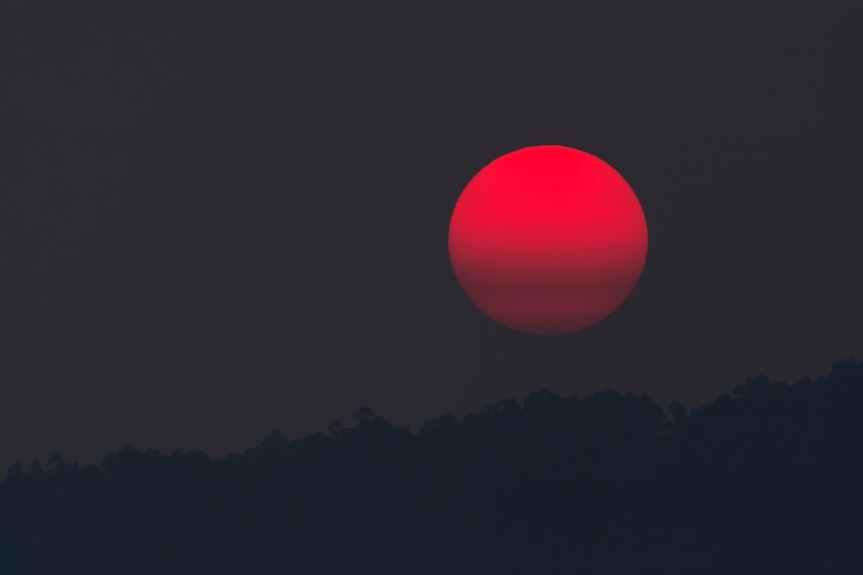
We have our own star- the mighty Sun. The Sun is the biggest source of heat and light in our solar system. It is one of the several trillion stars in the Milky Way Galaxy. Though it is massive, it is classified as a yellow dwarf star. Without it, life might not exist, and that makes it very important to us. 

To ancient people, the Sun was something to worship. Various religions around the world venerated the Sun as a god with various names. 

Image result for Sun. Size: 160 x 160. Source: www.physics.upenn.edu

Solar Physics

Our sun is very special to us and the solar system. So, we have a separate branch of physics specially for our dear Sun.Solar physicists seek to explain how the sun works and how it affects the rest of the solar system They take  measurements of the temperature and have assigned it a stellar ‘type’ based on their measurements. They figure out its structure. Their studies help us to know more about the other stars.

Structure of the sun

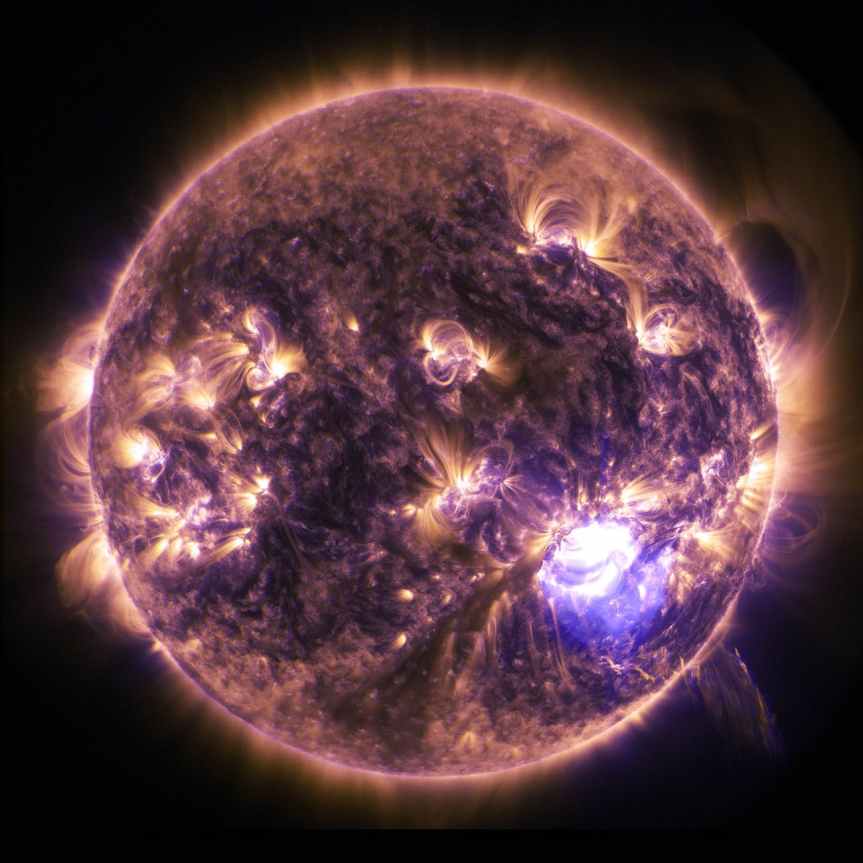
The Sun is basically a big sphere of superheated gas. It has an outer solar atmosphere, which is called the corona (not the virus of course).  It’s an incredibly thin layer of superheated gas having over a million degrees temperature. Below that lies the chromosphere. It’s a thin, reddish-hued layer of gases and its temperature changes from 3500℃ at the base to 35000℃  where it transitions up to the corona. Next is the photosphere, where temperatures range from 4000°C to 5700℃ . When you look at the sun, the photosphere is actually what you see. The sun is actually white(believe me), but it appears yellowish because its light travels through our atmosphere, which removes blue and red wavelengths from the incoming light. After the photosphere, we have the convective zone. It contains bubbles, which are currents moving through the Sun. The next layer is the radiative zone. This region truly does radiate heat from the center of the Sun up to the convective zone. The final layer is the solar core. This is a huge nuclear furnace where nuclear fusion happens. The temperature here is 15million degrees celsius. The rest of the Sun pressing down on it provides a pressure 340 billion times the earth’s atmospheric pressure at sea level (the poor core has a lot of pressure indeed!). The Sun fuses about 620 metric tons of hydrogen to helium each second, and that’s what gives out all that heat.

Heliopause

The solar wind from the sun extends out about 100 astronomical units, and creates a bubble that surrounds the solar system. The bubble’s inner edge is called the heliopause. 

Sun spots

The surface of the sun is dotted with dark regions called sun. Look who has acne problems! Well, these are not really acne. These are areas threaded with magnetic fields and look dark because they are cooler than the surrounding regions. Sunspots appear in eleven year cycles.  As the Sun reaches solar minimum and solar maximum through the solar cycle, the spots change darkness. These sunspots are related to solar activity.

https://en.wikipedia.org/wiki/Sun
https://solarsystem.nasa.gov/solar-system/sun/in-depth/

The Solar Family

The universe is a big place. We have been granted a family in this vast dark nothingness- our solar system. So, what is so cool about it? There are thousands of such systems, but how is ours special? It is special since we ‘live’ here. It is the only known place to have life so far. 

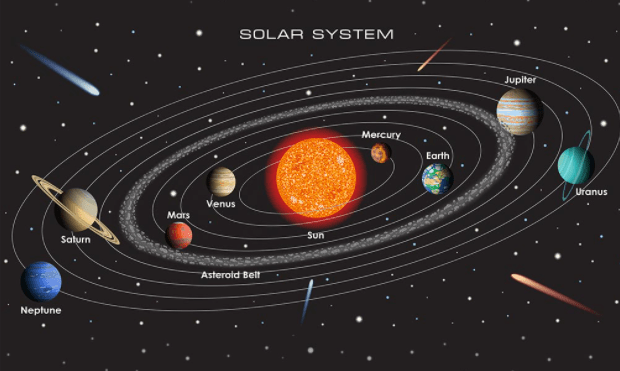
The solar system contains the sun, eight planets, many dwarf planets, comets, moons and asteroids. The Sun is our star. It is the source of energy and heat. It makes up 99.8 percent of the solar system’s entire mass, yet it is not that big of a star.

What is a planet?

The early sky gazers called planets as ‘planetes’ (wanderers). So, is a planet just a round object orbiting around the sun? Or perhaps is it an object having moons and  a large size? The definition of planets is a little more complex than that. A planet is defined by the International Astronomical Union (IAU) as a celestial body that has its primary orbit around the Sun, has sufficient mass for its own gravity to mold it into a round shape, and has cleared the neighborhood around its orbit by sweeping up all the planetesimals, which means that it’s the only body of its size in its orbit (got me breathless there).This complex definition excludes comets, asteroids, and smaller worlds that aren’t rounded by their own gravity. The IAU also defined another class called dwarf planets. These are objects that meet the first two criteria for planets but have not yet cleared their orbits. 

Inner solar system 

The area surrounding the sun, and bounded by the asteroid belt is the inner solar system. Here lie the first four planets of the solar system- Mercury, Venus, Earth and Mars. These planets are also referred to as “terrestrial” planets from the word ‘terra’ which is Latin for ‘earth’. It indicates that these planets have a similar rocky composition to Earth.

Asteroid belt

It is a collection of rocky objects (asteroids) of various sizes orbiting the Sun, located roughly between the orbits of the planets Jupiter and Mars.

Outer solar system

It lies beyond the asteroid belt. It consists of the gas giants- Jupiter, Saturn, Uranus and Neptune. These planets consist mostly of small rocky cores buried deep within massive spheres of liquid metallic hydrogen and some helium, covered by cloudy atmospheres. Neptune and Uranus are sometimes called as ‘ice giants’ as they contain significant amounts of super cold oxygen, carbon, nitrogen, sulphur and possibly some water. Each gas giant has a set of rings. Saturn’s is the most extensive and beautiful.

Kuiper belt

It extends from the orbit of Neptune out to a distance of well beyond 50AU from the sun. Think of it as a very distant and much more extensive version of the asteroid belt. It contains the dwarf planets- Pluto, Haumea, Makemake and Eris – as well as many other smaller icy worlds.

Oort cloud

The entire solar system is surrounded by a shell of frozen bits of ice and rock called the Oort cloud. It stretches out to about a quarter of the way to the nearest star. 

The solar system is about 4.6 billion years old and will continue to remain for another 1 or 2 billion years. Till then, this is our family, a huge one but is a family after all.

https://solarsystem.nasa.gov/
http://en.wikipedia.org/wiki/Solar_System

SOLID WASTE MANAGEMENT: A problem

Solid waste refers to unwanted materials generated as a result of human activities. It is basically everything that goes out in trash. It can be domestic, industrial or commercial based on its source of origin.
As the human population is increasing, so is the waste produced by them. Solid wastes have a lot of problems attached to them. Not only they result in pollution of varried forms but also cause many diseases by being the breeding grounds for vectors.
It is therefore very important to dispose solid wastes safely. Solid waste management deals with the process of treating solid wastes. Different methods are applied to treat different sorts of solid wastes.
Municipal solid wastes refers to the waste produced at offices, schools, homes etc. It usually comprises of paper, food waste, plastic, metal, glass etc. It is usually collected by the municipality and taken for their treatment.
One way of doing so is burning. This reduces the volume of the waste but this method causes air pollution of course. A substitute for this method is sanitary landfills wherein wastes are dumped in a trench and covered with dirt everyday. This method is less polluting than the former but has its own flaws. It is very effective for biodegradable wastes but when it comes to wastes like plastic, metals or glass, i.e.. non biodegradable wastes, this method can do more bad than good. So separation of wastes before putting them in a sanitary landfill is a must or else there will be soil pollution.
The disposal of biodegradable wastes is quite easy, so the actual problem is non biodegradable wastes. This can be further divided as wastes which can be recycled and the ones which cannot. The most effective solution can be reducing the use of non biodegradable products, as it is their disposal procedure which takes a lot of time and resources.

Another source of solid wastes is hospital. The use of chemicals and disinfectants make the solid wastes produced by hospitals more hazardous than others. It also contains pathogenic microbes. The disposal of such wastes has to be carried out very carefully. These wastes are usually incinerated. Incinerators are furnaces used for burning wastes. It involves combustion of solid, liquid and gaseous wastes. Incinerators, however produce harmful gases which possess a threat to health of workers and nearby community.
Electronic wastes are also difficult to dispose off. Irreparable parts of electronic gadgets are known as e-wastes. In its process of disposal, first metals like iron, copper, silicon etc are recovered and the rest of the junk is incinerated. This procedure usually involves manual participation and therefore possess a risk to human health. The works can be exposed to toxic substances present in the e- wastes or the harmful by-products of incinerators.
The most difficult waste to dispose is radioactive waste. The radiations emitted by nuclear wastes is very harmful for living organisms as it causes mutations which can lead to problems like cancer. Another problem is the fear of accidental leakage. Radioactive waste is usually pre-treated and then buried deep underground inside shielded containers.

As it can be seen that every solid waste disposal method has its own flaws. There is no perfect method for management of solid wastes. Reduction in waste generation should be our prime concern.

Astronomy- The Science of Space

When you look at the night sky, you admire the fascinating beauty of millions of stars and galaxies of the universe. Humans have looked in awe and wondered what those twinkling dots of light are, since ancient times. Due to their inborn curiosity, humans have found answers to their questions and ventured deeper into the unknown. 

Today, many spacecrafts have been sent beyond our little world -earth -and humans have even walked on the moon! All this has been possible only because of our thirst to know more. So, space has its own separate branch of science- Astronomy.

What is astronomy?

Astronomy is the branch of science dealing with the study of the universe. There are two major types of astronomy- observational and theoretical. In observational astronomy, many different types of electromagnetic waves like X-rays , gamma rays, microwaves, UV rays, infrared and visible light. Theoretical astronomy mainly deals with simulations and creating theoretical models to predict the observations.

Distance in astronomy

We know that the universe is a very very large place. So, to measure distance in the cosmos we need bigger units of length than kilometers: 

Astronomical unit(AU): It is used to define the distance between Earth and the Sun. 1AU is equivalent to 149 million kilometers (93 million miles). 

Light year(ly): It is defined as the distance travelled by light in one year. The speed of light is 300,000 kilometers per second. So 1ly is equal to 9.5 trillion kilometers(a lot right!).

Parsec: It is  defined as the distance at which the mean radius of the earth’s orbit subtends an angle of one second of arc. 1 parsec is equal to 3.26light years. 

Some fun facts:

  • The limit of the visible universe is about 46.5billion light years(radius) which equals to 4.4* 10^26metres (humongous!).
  • The universe is about 13.8billion light years old.
  • The universe formed as a result of the Big Bang-literally a single point expanded to form the universe!
  • The universe is expanding at the rate of 72 kilometers per second.
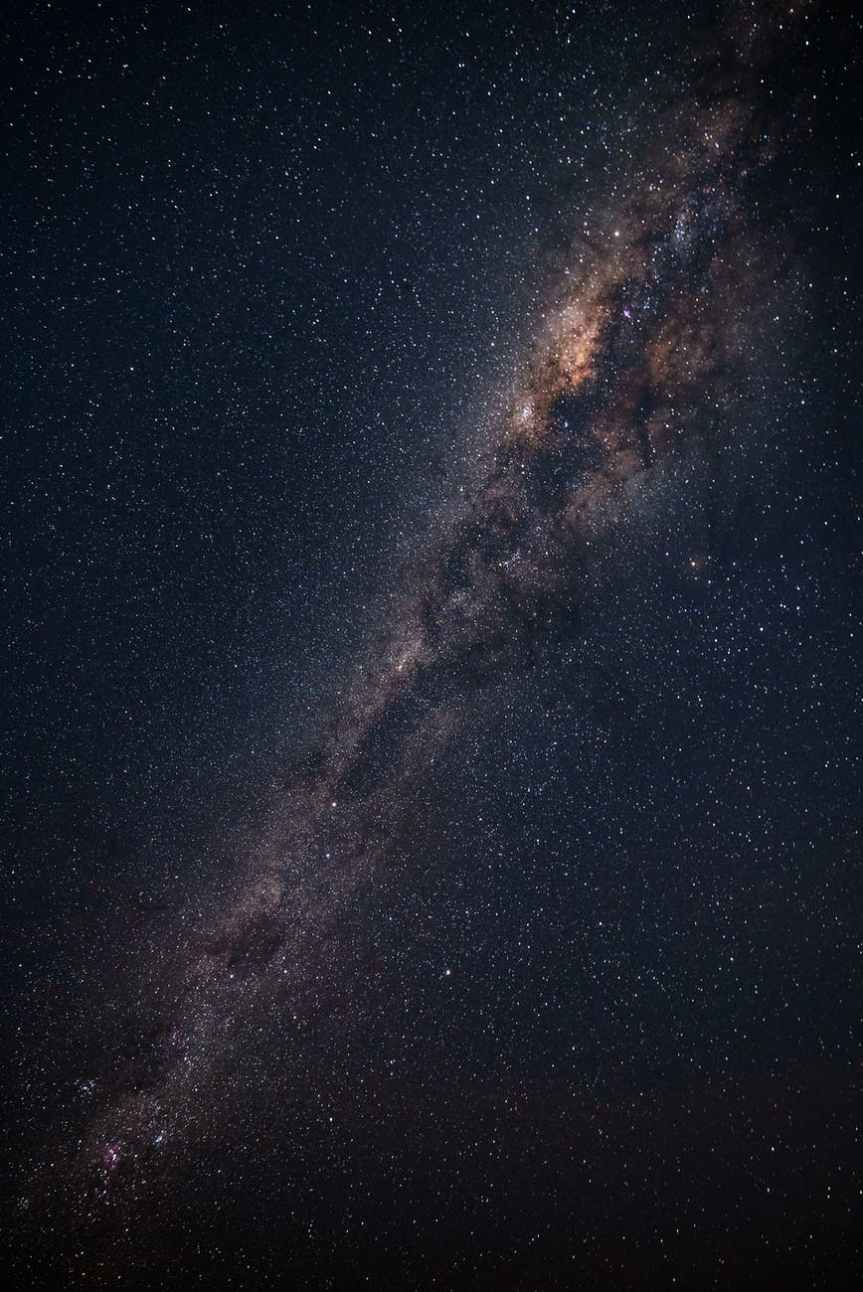
  • There are more than one hundred thousand million stars in our galaxy (the milky way). Imagine if there are trillions of galaxies like our own, how many stars would that be!
  • The death of the universe is not completely predicted yet. Some say that it will become a dark and cold place when all the stars die. Others say that the universe will end with “the Big Crunch”.
  • When you look at the sun, you look about 8 minutes into the past, since light has taken 8 minutes to reach us. 
  • The milky way has a supermassive black hole at its center- Sagittarius A*

Are we alone?

We haven’t found any other life in the universe but the search is on. Since there are billions of stars, the chances of them having earth like planets are high. So, there probably are “aliens” out there, we just haven’t found them yet or they haven’t found us yet. Sadly, the chances of having contact with a developed alien life like us are very low. However, that won’t stop us from looking. Hopefully, we will find them soon (and let them be friendly!).

Astronomy is a diversified branch with biology, geology, chemistry, mathematics and physics, all different types of fields coming together. There is a lot of scope for a great career in this discipline. Besides, who wouldn’t want to find out the secrets of the universe. 

http://en.wikipedia.org/wiki/Astronomy
https://www.sciencedaily.com/terms/astronomy.htm

IS TIME TRAVEL POSSIBLE?- Yes and No.

Avengers endgame, back to the future, and so many amazing sci-fi movies are based on time travel. Apparently, everyone loves them, but have you ever wondered if it could happen in real life? Most people would say no and answer that it is just some fantasy. However, physicists would say differently. 

See the source image

There is something called ‘time dilation’ in relativity according to which time can slow down or move faster depending upon velocity(special relativistic time dilation) or gravity(gravitational time dilation). 

Special relativistic time dilation

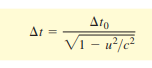
First, let’s talk about special relativistic time dilation. According to Einstein’s special theory of relativity, time in a moving frame appears to run slower. You may have heard this famous spaceship example. If you travel in a spaceship with speed closer to that of light, and return after 10 years of travel, on earth about 30 years would have passed! Talking in scientific terms, in a particular frame of reference, suppose that two events occur at the same point in space. The time interval between these events, as measured by an observer at rest in this same frame (which we call the rest frame of this observer), is  Δt0 . Then an observer in a second frame moving with constant speed relative to the rest frame will measure the time interval to be Δt where- 


The denominator is always smaller than 1( u<c), so  Δt   is always larger than  Δt0    .Thus we call this effect time dilation(time getting elongated).

Now, let’s come to the other type of time dilation- gravitational. Gravitational time dilation is a form of time dilation, where the difference in elapsed time is due to the gravitational potential. The lower the gravitational potential (the closer the clock is to the source of gravitation), the slower time passes, speeding up as the gravitational potential increases (the clock getting away from the source of gravitation). Albert Einstein originally predicted this effect in his general theory of relativity and it has since been confirmed by tests of general relativity. For example, imagine that you are approaching a black hole which has gravity due to its mass(the gravitational potential is decreasing as you are moving towards the source of gravity). If your friends observe your clock, it would be seen as running slower and slower as you move ahead. Since the gravity is so strong, for them it would appear that you are moving towards the event horizon forever!  In simple terms, the closer you are to some strong source of gravity, the slower time passes for you. 

Earlier, in our spaceship example, the spaceship is moving at very high velocity, and when it returns back, there is a 20 year gap. We can say that the spaceship traveled 20 years back in time. I get it, not quite fulfilling your expectations.

You see, time travelling has consequences. To further limit the possibility of time travel, we have Einstein’s equation- E=mc2 . To travel at high speeds we need a lot of energy to be synthesized within a fraction of a second, which is not possible currently. 

Conclusion

So, time travel is ‘possible’, we just haven’t figured it out yet. Don’t let down your childhood fantasies . Remember that once mobile phones were a fantasy but now they are a reality. I am sure that the future won’t let us down. 

https://en.wikipedia.org/wiki/Time_dilation
http://www.exactlywhatistime.com/physics-of-time/relativistic-time/#:~:text=In%20relativity%2C%20time%20is%20certainly%20an%20integral%20part,must%20be%20flexible%20and%20relative%20to%20accommodate%20this.

Special Relativity Made Easy

Does the word “special relativity” strike fear in your heart? It might seem tough at first glance but it is very easy to understand. 

Postulates

Special theory of relativity is a theory regarding space and time, given by Albert einstein. The main postulates of this theory are: 

1]The Principle of Relativity : The laws of physics are the same in every inertial frame of reference. 

2]The Principle of Invariant Light Speed :The speed of light in vacuum is the same in all inertial frames of reference and is independent of the motion of the light source.

Now, let us understand these two postulates. The first postulate basically means that physical laws, for example, Newton’s laws of motion and laws of electromagnetism, are independent from the choice of inertial systems.  If the laws differed, that difference could distinguish one inertial frame from the others or make one frame somehow more “correct” than another. However, all frames of reference are correct in their own way. Suppose you watch two children playing catch with a ball while the three of you are aboard a train moving with constant velocity. Your observations of the motion of the ball, no matter how carefully done, can’t tell you how fast (or whether) the train is moving. If seen from outside, all three appear to be moving with the train at constant velocity.  This is because Newton’s laws of motion are the same in every inertial frame.

Let’s think about what the second postulate means. Suppose two observers measure the speed of light in vacuum. One is at rest with respect to the light source, and the other is moving away from it. Both are in inertial frames of reference. According to the principle of relativity, the two observers must obtain the same result, despite the fact that one is moving with respect to the other. Now suppose a spacecraft moving with constant velocity turns on a searchlight. An observer on the spacecraft measures the speed of light emitted by the searchlight and obtains the value. According to Einstein’s second postulate, the motion of the light after it has left the source cannot depend on the motion of the source. So the observer on earth who measures the speed of this same light must also obtain the same value. This result contradicts our elementary notion of relative velocities, and it may not appear to agree with common sense. But “common sense” is intuition based on everyday experience, and this does not usually include measurements of the speed of light. 

Speed of light as a constant

Einstein’s second postulate immediately implies the following result: It is impossible for an inertial observer to travel at c, the speed of light in vacuum. We can prove this by showing that travel at c implies a logical contradiction. Suppose that the spacecraft is moving at the speed of light relative to an observer on the earth, so that If the spacecraft turns on a headlight, the second postulate now asserts that the earth observer measures the headlight beam to be also moving at c. Thus this observer measures that the headlight beam and the spacecraft move together and are always at the same point in space. But Einstein’s second postulate also asserts that the headlight beam moves at a speed relative to the spacecraft, so they cannot be at the same point in space. This contradictory result can be avoided only if it is impossible for an inertial observer, such as a passenger on the spacecraft, to move at.

Hopefully, now you can brag that you know the special theory of relativity.

https://cosmo.nyu.edu/hogg/sr/sr.pdf
https://en.wikipedia.org/wiki/Special_relativity

IS INDIA PREPARED FOR A POTENTIAL THIRD WAVE?

Things India needs to do to negate the possible effects of COVID-19 Third wave

India has recorded 26 million Covid-19 cases  which is second only to the US. The second wave of COVID-19  has overwhelmed the healthcare system with hospitals struggling to bear the pressure of oxygen shortage and treatment drugs. Experts believe the wave is getting diminished at the national level. However, people are more awry this time for a potential third wave of COVID-19 virus.

The most important factor that will play the role whether or not India is getting hit by a third wave, is the rate of vaccination. Apart from this, let us look at other factors which can be instrumental to curb the effects of a third wave.

1. Expansion of testing facilities

Timely testing and isolation of COVID-19 patients is the key. Now-a-days, people who are feeling symptomatic to COVID-19 are not testing themselves due to the distance of testing facilities. Free testing for COVID-19( especially for the poor) can be beneficial as well.

2.  Poor needs to be encouraged to seek medical advice

It is a tendency which has been observed that seeking medical advice from doctors is proportional to the economic background of the people. Most of the patients won’t go and seek any medical advice from doctors or pharmacists thinking that would incur charges as well. Lack of health facilities in proximity and affordability are much bigger reasons for not seeking medical advice among the poor than the rich.  The fact that COVID-19 starts with a common symptoms of fever, cough and cold they think it can be managed well by self-medication rather than visiting a doctor after travelling a lot.

3. Financial burden on the patients and their family

There are many patients whose families are unable to pay the debt or the fees of the hospital with regard to the bed, facilities and treatment. According to the survey done by NSO it is estimated that 81% of hospitalization cases (excluding childbirth cases), the expenditure was met by family income or savings. 11% of such cases were financed with borrowing, 3.5% of these were met with contributions from friends and relatives and 0.4% required sale of physical assets.

4. Cover of  Health Insurance

According to the survey conducted by NSO, it is estimated that over three-fourth of hospitalization cases in India involved individuals who were not covered by a health expenditure insurance or scheme . Access to health insurance is correlated to incomes, and the share of hospitalization cases not covered by any kind of insurance increases from 68% among the richest 20% to 85.5% among the poorest 20%. Even in cases where health insurance existed, it did not cover the cost of the entire treatment. NSO survey shows that on an average, health insurance paid for only 10.2% of the medical expenditure and 9.1% of total expenditure (which includes cost of transporting patient as well as the cost of food, lodging, transport, etc.for the household) in cases which required hospitalization.

Now Black Fungus can be diagnosed early with a newly launched “DUTCH KIT”

The efficacy of the Dutch Kit is quite similar like RTPCR for COVID-19, explains Dr. K Bhujang Shetty.

Black fungus or mucormycosis is a fatal condition which is seen recently in most of the patients who are recovered from COVID-19.  Due to increase in number of patients affected by the deadly fungus, there is a severe shortage of  Amphotericin B (the drug which is required for it’s treatement).

Due to it’s recent advent in the market, people are unaware of it’s symptoms and when they are diagnosed with Black fungus, most of the damage is being done. Hence, to prevent that to happen Narayana Nethralaya’s Chairman, Dr. K Bhujang Shetty and his team have come up with a rapid solution for mucormycosis which they call it as the ‘Dutch Kit’.

According to Dr. Shetty, the efficacy of the Dutch kit is quite similar with RTPCR test of COVID-19.  “We are seeing lot of patients who gets panic and rush to the hospital even if they have a slight nose block. As such there is no rapid tool which can diagnose mucormycosis. Presently what we have is, it takes minimum 10 days to confirm. Since the fungi needs to be cultured in  lab before knowing the exact group. So we brought in this Dutch kit. As the name indicates, it is imported from The Netherlands. The kit as a whole efficiently detects fungal infection in 24 to 48 hours. All we need is the patient’s blood sample and lesion if possible. There are 5 main varieties of mucormycosis and it can be detected and differentiated easily through this method. And the accuracy is 100%” explains Dr. K Bhujang Shetty.

Narayana Nethralaya has already tested the Dutch Kit in approximately 25 people who were doubtful of the fungal infection. Several hospitals are looking  for this kit, which can provide results quickly, with good efficacy and saves time as well. It has come as a big relief for people as they can check themselves whenever they are in doubt of the fungal infection after paying Rs- 7000 for the kit.

Mucormycosis if left untreated or diagnosied at a later stage can prove fatal. Some patients are also getting panicked by the mere thought of Black fungus and that stress is leading to further complications. Recently, a patient named Usha Rani  got a severe headache one week after she tested negative for COVID-19. Being diabetic, she stressed about her symptoms and a mere fact that has been infected by COVID-19 earlier, she feared for Black fungus disease.

“Black fungus was the first thought that crossed my mind. I panicked and rushed to the hospital. Even if it was not a black fungus, I wanted to hear it from the doctor. They mentioned about this imported kit and I immediately went for it. After waiting for 24 hours or so the hospital called and said I tested negative for fungal infection. I can’t explain the relief I felt at that moment. And surprisingly my headache vanished soon after. Looks like the thought of another infection pushed me into stress resulting in headache”, says a much relieved Usha Rani.

Why Bharat Biotech’s Covaxin is not getting approval in highly regulated countries

India made COVID-19 vaccine, Covaxin manufactured by Bharat Biotech in collaboration with Indian Council of Medical Research  is been used extensively in most of the countries. However, the regulatory body of USA, USFDA has still not given the approval of usage of Covaxin on their citizens. It is believed that their regulatory body wants further clarification on the clinical trials conducted for Covaxin by Bharat Biotech.

What is the reason behind USFDA’s unapproval?

USFDA has asked Bharat Biotech to submit the clinical trial data of Covaxin so as to get the vaccine approval in United States. But after the submission of partial data of clinical trials of Covaxin, the regulatory body of USA rejected the approval and has asked Ocugen( Hyderabad based pharma company which is also Bharat Biotech’s US partner) to submit the additional trial data. Covaxin is therefore rejected for emergency use due to lack of scientific data according to US regulators. However,  if they get the complete trial data from Bharat Biotech they can file a Biologics License Application(BLA) seeking a full approval instead.

Recently, USFDA has revised their guidelines for emergency use authorization and stated that they won’t be entertaining further requests. After all this, Occugen remains hopeful for a good news.

Bharat Biotech’s delay to share Phase- 3 clinical trial data

Bharat Biotech has not yet shared the clinical trial data of phase 3 trials and are expected to share it on next month. Following which, the company will start applying for a full licensure of Covaxin. “Once data from the final analysis of phase III studies are available, Bharat Biotech will apply for full licensure for Covaxin,” Bharat Biotech told the news channels.

Further they added, they have already taken the data of Phase-4 clinical trials which is the post- marketing surveillance to check the safety and effectiveness of the vaccine.

Hurdles of Bharat Biotech’s Covaxin

COVID-19 vaccine, Covaxin manufactured by Bharat Biotech has been facing enormous hurdles in front of them pertaining to it’s approval. The wait of Phase 3 clinical trial data is taking long and that is the reason it is still not being validated by World Health Organization(WHO). Without which they are unable to export their vaccine and make an entry into the Covid 19  passport.   

Different countries has different regulations and also some of the them have stingent  regulations. Due to which COVID- 19 vaccine manufactured by Bharat Biotech, Covaxin remains unapproved in all those countries without their Phase 3 clinical trial data.  This is the reason why, foreign universities are also not considering students who has been vaccinated with Covaxin. They are considering them as “un-vaccinated” in this regard.

Now it remains to be seen how soon they can procure the clinical trial data of phase 3 and then they can get the approval from foreign countries for emergency use. Also, the approval from WHO is required to get into the coveted COVID-19 vaccine passport. “We are aware that Bharat Biotech has sought the WHO emergency-use listing for Covaxin. We hope that the process of getting this approval is completed at an early date,” said Ministry of External Affairs spokesperson, Arindam Bagchi on this issue.

Oobleck: A non-Newtonian fluid revolutionizing speed bumps

Oobleck? Yes you read it right. Thinking you have never come across this term in all your life? Well, Oobleck is nothing but a mixture of cornstarch and water. What does corn starch and water have anything to do with speedbumps? The answer can make you marvel at the human mind with its simple, yet smart thinking capabilities.

Why traditional speedbumps are a problem?

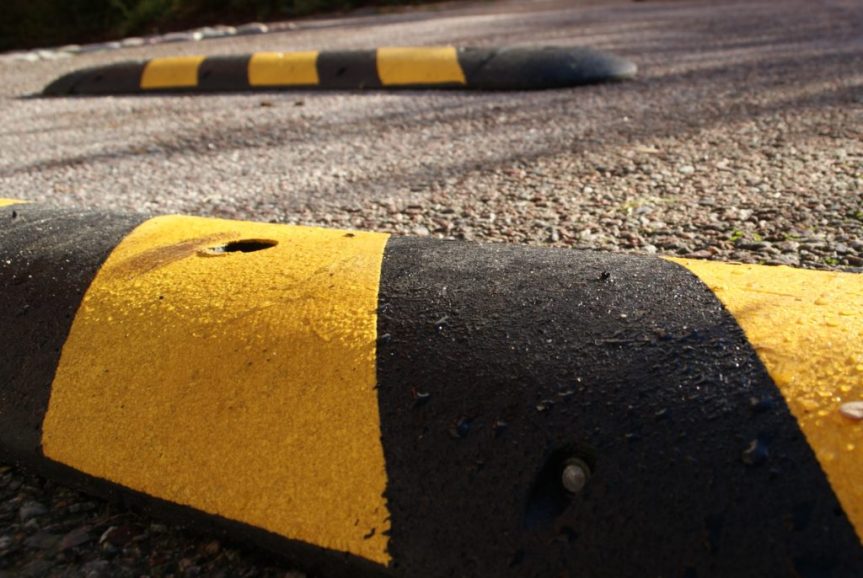
Speed bumps have been a part of the road culture for more than 5 decades now. The were introduced in the 1970s and have managed to exist till now. They are raised ‘bumps’ with 3-4 inches of thickness, used as speed reducing mechanisms for vehicles on road, specially in speed sensitive regions. While they do their purpose, there are some unwanted problems related with the usage of speed breaks, ranging from economical to health concerning issues.

Some of the problems are:

  • Inconsistent speed and abrupt slowing of vehicle due to speed bump and then picking up the speed leads to higher emission, leading to air pollution.
  • Often slow down emergency vehicles
  • May cause spinal damage to some people
  • Inconsistent speed can lead to rupture of vehicles
  • Extra cost (manpower and raw materials) involved in maintaining the road signs, painting and marking, indicating that speed bumps are ahead.
Oobleck

As I already mentioned, Oobleck is a corn starch slurry. This mixture is filled in long cylindrical shaped rubber reinforced tubes resembling a speed bump which is secured to the road. When vehicles pass this speed bump with a slow speed, the liquid parts and allows the vehicle to pass thorugh as if there was nothing present. But, when a vehicle with high speed tries to pass through, the liquid hardens, thus limiting the speed of the vehicle. How does that happen?

oobleck bump
An oobleck filled bump.
The speed bump deforms under the tire when vehicle approaches with a slower speed.

Non-Newtonian fluids and the science behind

Oobleck is a non-Newtonian fluid. A non-Newtonian fluid is one whose viscosity changes under stress. That is, when you apply force to such liquids, it hardens (viscosity increases) and on the release of the force, it gets back to its normal form. But other ‘normal’ Newtonian liquids do not exhibit such characteristics. On application of stress, they do not resist that stress and thus does not cause a strain. Stress is when you hit a metal with hammer and strain is the resulting dent occurred due to the stress.

Non-Newtonian fluids are not rare. We come across them in our daily life without even knowing them. For instance take tomato ketchup. Many times, you may struggle getting the ketchup out from the bottle, and you unconsciously tap the back of the bottle. And you will see that ketchup now falls into your plate. Ketchup is a non-Newtonian fluid whose viscosity decreases when stress is applied. By tapping the back of the bottle, a stress is applied and the ketchup becomes runnier, thus easily pouring out.

Some more examples are:

  • Viscosity decreases with stress over time – Honey ( on stirring honey, it becomes runny)
  • Viscosity increases with stress over time – Cream ( on whipping, it gets thicker)
  • Viscosity decreases with increased stress – Tomato ketchup
  • Viscosity increases with increased stress – Oobleck
Try it at home!

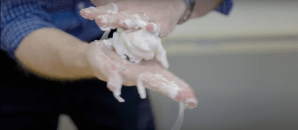
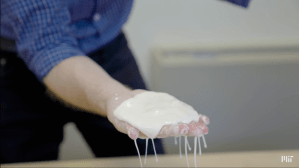
You can easily try this at home by adding 1/2 cup of water gradually to 1 cup of corn starch. After the powder is fully wet and feel like liquid, its time to get your hands messy. Dip you hands into the mixture and try making a ball. It will start to shape due to the stress you are applying with your hand. But once you stop shaping, like magic, the ball turns into liquid and oozes down. Try it and there is no going back. The inner child in you will want to play with it all day long. Visit here for more details on how to do it at home.


Shaping oobleck into a ball by applying stress.


Liquified oobleck
When we stop shaping it, it turns into liquid.

An environment friendly alternative

As the speed bump works as per the speed of the vehicle, there is no need for vehicles to slow down hence increasing fuel efficiency and decreasing emissions. The cost of installing and maintenance is low compared to traditional speed bumps. It does not do damage to the vehicle as the work of shock absorbers is reduced. Hence it is high time that countries start adopting this technology and try to reduce the damages we do to the environment one speed bump at a time!


Fugu: The forbidden fish

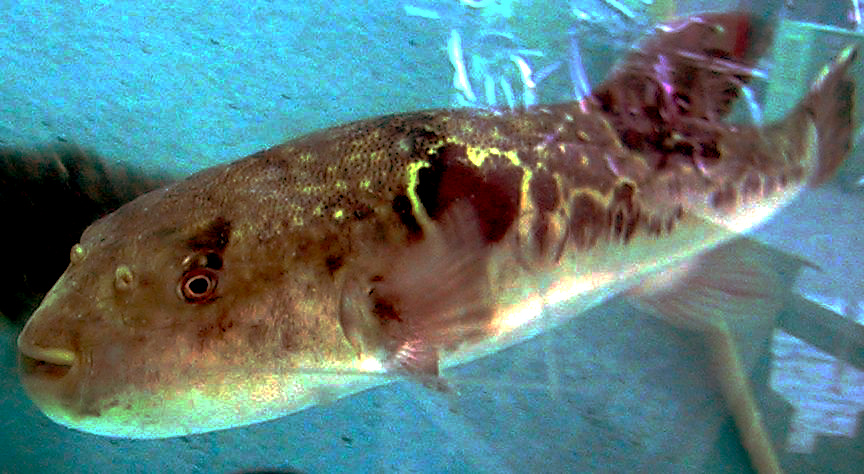
Everyone knows that its human nature to want a thing that is forbidden to them. This is what drives many people in Japan and even foreigners who visit Japan, to try the infamous fugu fish. Found in the Pacific Ocean, this fish is a pufferfish and looks rather innocuous, in terms of being poisonous. However, it’s the perfect example of the phase, “looks can be deceiving” as the fish is said to be 1,200 times more poisonous than cyanide. The fish is so poisonous that a slight error in its preparation can cause instant fatality. However, its still one of the most expensive and revered delicacies of Japan.

Described as a fish whose taste is “indescribable”, Fugu is only affordable to the high-end part of our society. The taste of this fish is said to be like no other food anyone would have ever tasted, so utterly delicious that people are willing to risk their lives for it. The liver is famously known as the tastiest part of the fish, but its also the most deadliest part, along with the ovaries, and the eyes. Fugu is deadly because of the poison tetrodotoxin. The poison, a blocker of sodium channels, paralyses the muscles while the victim is completely aware, then the poisoned person cannot respire and dies from suffocation. This takes roughly about 10 mins. Now, with so much advancement in science, there has got to be an antidote to this poison which has been killing people for more than 2,300 years, which is the time during which fugu consumption dates back to. Unfortunately and surprisingly, there is no cure once you ingest this toxin. The normal therapy is to help the respiration and circulation of the person until the toxin is digested and removed through the victim’s body. Researchers found that a fugu’s tetrodotoxin arises from eating other tetrodotoxin-loaded animals that the fish develop insensitivity to over time. So, an effort has been made to cultivate these fishes in toxin free environment.

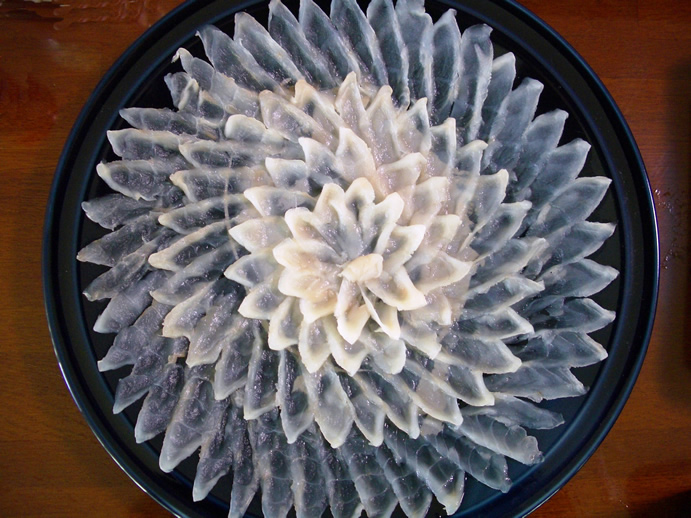
Now the question looms that if the fish is so poisonous, how are people consuming it? Well, no one is consuming it with a 100% surety that they wont die. However, due to its popularity, high demand and income, there are specialized chefs who prepare fugu. These chefs train in fugu preparation from anywhere between 4-10 years. A license is then assigned to them, specifically for the preparation of fugu. Only then, under controlled restaurant conditions, can they prepare fugu. The fugu is then served in an arrangement representing chrysanthemum petals.

A paradox has appeared in Japan where some activists are proposing a ban on the selling and consumption of fugu, while some are even requesting the government to legalise the consumption of the liver of fugu. Fugu has been the leading cause of food poisoning in Japan and most of the people who have died from it were fishermen who tried to cook fugu domestically. There is no doubt that fugu is highly lethal, however consumption of this delicious delicacy in restaurants with controlled environment and skilled chefs is reasonable. What do you think? Given a chance, would you ever try out this dangerous but indescribably tasty delicacy?