The Journalism and mass media

The Journalism and mass media is the  graduates work nationwide and worldwide at newspapers and magazines and in advertising, branding, broadcast news, social media, marketing, media research, photojournalism, publication design, public relations, radio, and other areas.

The Journalism is the activity of gathering, assessing, creating, and presenting news and information. It is also the product of these activities. Journalism can be distinguished from other activities and products by certain identifiable characteristics and practices.

There are five types,

  • investigative,
  • news,
  • reviews,
  • columns,
  • feature-writing.

The Rules Of Journalism

: Ask questions.

The  journalist’s greatest assets is their natural curiosity. Start with the famed five W’s (and one H), then ask some more. Asking “why?” is what gets you the good stuff.

: Dig for the story.

If you think you’ve got the whole story, dig around some more. The most fascinating parts of the story are often just under the surface.

: Master the language.

As a journalist, language is your main tool. Read as much as you can and as often as you can, research odd words and archaic sayings, look at what’s behind etymology. Learn the patterns behind language and how to use them.

: Spelling matters.

Double-check if you aren’t sure about spelling or style (especially in the case of names), and read through messages and articles thoroughly before sending either.

#5: Know thy publication.

Before you pitch, know a publication’s style, editorial staff and content. Publications are usually more than happy to provide back-issues. If you can’t find writer’s guidelines, send a short introductory email requesting them.

#6: Contacts are your career.

Contacts (and your reputation with said contacts) are your entire career. Editors, sources and interviewees are all vital parts of the journalistic process. Without them, you’d be screwed.

#7: Once it’s off the record, keep it that way.

Trusted sources will tell you all sorts of juicy, fascinating, scandalous and personal things in your career as a journalist, often off the record. Shut up about it.

#8: Three is a golden number.

Mind the rule of threes: Have at least three reliable, corroborating sources for every fact; three interviewees for every article; and read through a piece at least three times before you sit down to change a comma – that’s at least.

#9: Rejection is opportunity.

Getting a story rejected means you’ve just opened up a line of communication with a new editor – congratulations. Pitch again. Rejection also gives you a chance to sell the story elsewhere: Sometimes rejection just means it’s not right for them

#10: Editors are teachers.

You can learn a hell of a lot from the experience of your editors, and when given the chance you should. They braved the journalistic battlefield before you, so you can trust their edits and advice. Usually, they’re right.

: Mind the word count.

Yes, you can do that in the assigned word count, and the editor will either make you add or cut if you don’t. Here, they always know better. (Remember this piece of key-advice from The Elements of Style and repeat it as your daily editing mantra: Omit unnecessary words.)

: Deadlines are holy.

Deadlines exist for a reason: Never skip out on a deadline unless you are incapacitated or dead. If you have to, let your editor know beforehand and have a damn good reason. Then, don’t do it again. Compare deadlines to menstrual cycles: If you skip one, you might just be stressed. If you skip several, you’re in trouble.

#13: Know the law.

Journalism can take you to some strange places. Make sure you know the law and what side of it you’re standing on at all times.

#14: Always do your research.

Make sure that your research is flawless and that you can always match which source gave which fact. Cross-reference, find first-hand information and do your background research before requesting, planning or conducting an interview.

#15: Have it outlined.

Have the skeleton of your idea outlined and ready by the time you pitch the idea. That way you have all the information ready, and it makes your job – and theirs – easier. Your outline should include the article’s proposed headline, the article’s sub-headers and sections (you can write down facts as key-words here) and who you will interview.

#16: Keep and file everything.

Keep prior notes, interviews, sources, tapes, the lot: You never know when you’ll need it, and you probably will.

#17: Guard your vices.

Many great journalists have been crippled or completely destroyed by their vices – and it can be almost anything: Overworking, coffee, manic exercising, painkillers or heavier drugs. Whatever yours is, keep it in check or risk your job.

#18: Burnout is a rabid, fanged monkey.

Burnout is a myth, until you’re there. It’s a mental and physical size of your writing engine, and if you don’t find your way to unwind you’ll get there a lot quicker.

The Mass media refers to a diverse array of media technologies that reach a large audience via mass communication. … Broadcast media transmit information electronically via media such as films, radio, recorded music, or television.

The types of mass media include Newspapers, Radio, Television, Internet, Magazines and more,

  • What is Mass Media?
  • Journalism.
  • Social Media.
  • Films.
  • Television.
  • Radio.
  • Advertising.
  • Public Relations.
  • Books, Magazines, Newspapers and Journals.

RULES OF MASS MEDIA

  • The Privacy Act works to guarantee privacy to individuals and controls how personal information is used. Defamation in the written form (libel) or the spoken form (slander) is illegal in the United States.
  • Section 315 (Equal Time Rule) ensures that broadcast media cannot favor any one candidate over another by granting one more time than another. The Fairness Doctrine ensured that radio stations offered equal time to opposing viewpoints.
  • The Freedom of Information Act grants the public, including the news media, access to many government documents. The Digital Millennium Copyright Act, established in 1998, extended existing copyright laws to encompass and protect information online.

FUND TRANSFER: RTGS AND NEFT

RTGS

RTGS stands for Real Time Gross Settlement, which can be defined as the continuous (Real Time) settlement of funds individually or by order. Real Time means the processing of instructions at the time they are received rather than at some later time. “Gross Settlement” means the settlement of fund transfer instruction occurs individually.

RTGS system is generally meant for large value transactions as the minimum amount to be transfer through RTGS is Rs. 2,00,000. The maximum limit vary from bank to bank as there is no maximum limit specified by Reserve Bank Of India.

NEFT

NEFT stands for National Electronic Fund Transfer. NEFT is maintained by RBI and was started in November 2005. It is a national wide payment facility under which an individual can electronically transfer funds from any bank branch to any individual having an account with any other bank branch in the country. There is no minimum limit that can be transferred using NEFT. It is done through electronic means and can be availed through online banking or through ATM’s in some banks.

Advantages of NEFT

• The sender need not send the physical cheque or Demand Draft to the Beneficiary.

The Beneficiary need not visit his his/her bank for depositing the paper instrument.

Credit confirmation is send by message or E-mail

A customer can use this facility from his home place by using the internet.

Difference between RTGS and NEFT

Introduction about different Schools, Colleges, Universities

Every student wants to join a dream college or university.

After schooling, we desire to join a top college or university for the security of our feature

Is a college the same thing as a university? What does “liberal arts” mean? Why are some colleges called public and others private? Here are the basics of the types of colleges.

Let me know about NIT AGARTALA

Institute is committed to developing highly competent young Engineers, Scientists, and Management Professionals to cater to the ever-increasing techno-managerial needs of national and international standards fulfilling professional ethics and societal commitment.

MISSIONS

• To produce techno-managerial human resources in line with global needs, offering a state-of-the-art facility, research, and engineering and allied disciplines.

• To enhance the effectiveness of technical education with innovative systems and devising a mechanism to facilitate the application of research findings to solve real problems of industries/academics.

• To nurture and sustain an academic ambience conducive to the development of intellectually capable and committed professionals so that effective growth is obtained for the region’s economic development and the nation as a whole.

• To establish as the corridor of higher education for the South East Asian countries.

EDUCATION SYSTEM

Presently the Institute offers eight UG courses and PG courses in several fields along with Post Doctoral Fellowships. This Institute is autonomous under NIT being act passed by the parliament.

The Institute recently introduced a new curriculum in IITs where more elective subjects are being offered to make the system flexible. Previously, the Institute used to follow the mark based system of evaluation, but have been switching over to a credit-based system to keep track of the global evaluation methods. Industrial training, Undertaking projects are parts of the education system and students are also encouraged to take various activities for social development through NSS and NCC.

Initiatives

The Institute recently has been converted from State Engineering College to National Institute of Technology. The total seats have been increased from 250 to 420 for the academic session 2007-2008. Recently three Under Graduate courses has been introduced in Electrical & Electronics Engineering, Transportation Engineering and Production Engineering. The Civil Engineering Department will start a PG programme in Structural Engineering to fulfil the requirement of the State. The nonresidential campus is to be made residential with the reopening of two boys hostels and one girl’s hostel for the students admitted for the session 2007-2008. A master plan is under preparation for 335 acres of land where a new campus will be built with modern facilities for the overall requirement of the Institute. The Institute is getting a 33 VK dedicated power supply through Tripura State Electricity Corporation Limited for uninterrupted power supply in the campus. The R. D. Department of Govt. of Tripura took total renovation work of the existing buildings after conversion to NIT. The Institute has also obtained a grant of 12 crore rupees from DoNER for the development of infrastructures like the extension of the Library Building, an extension of the Academic Building, the Centralized Computer Centre, a new water treatment plant and boys and girls common room. The campus is now totally connected through Wi-Fi with WiMAX wireless backbone and all e-journal facilities are available in the digital library of NIT Agartala.

Cabinet Reshuffle

With number of changes taking place in the country in recent times, one of a major change is taken place in the union cabinet. The Modi government had introduced new members in the council giving rise to a whole new cabinet of ministers for different departments on July,7th 2021. The total members counted as 43 among which 36 are new faces and 12 had been dropped out from the cabinet which includes, Health Minister Harsh Vardhan, IT and Law Minister Ravi Shankar Prasad and I&B Minister Prakash Javadekar, and brought Sarbananda Sonowal, Narayan Rane, Jyotiraditya Scindia and others. Many prime ministers all over the world have been known to have sacrificed this or that ministerial pawn in order to cover up their own leadership failure. Harsh Vardhan’s departure is as close an admission of governmental floundering as prime ministerial hubris would allow.

The new department of cooperation is granted to our home minister Amit Shah. New list is as follows-

Rajnath Singh: Defence Minister, Nitin Gadkari: Road Transport and Highways Minister, Nirmala Sitharaman: Finance Minister, Corporate Affairs Minister, Narendra Singh Tomar: Agriculture and Farmers’ Welfare Minister, S Jaishankar: External Affairs Minister, Arjun Munda: Tribal Affairs Minister, Smriti Irani: Women and Child Welfare Minister, Piyush Goyal: Commerce & Industry Minister, Consumer Affairs Minister, Food & Public Distribution Minister, Textiles Minister, Dharmendra Pradhan: Education Minister, Skill Development and Entrepreneurship Minister, Pralhad Joshi: Parliamentary Affairs Minister, Coal Minister, Mines Minister, Narayan Rane: Micro, Small and Medium Enterprises Minister, Sarbananda Sonowal: Ports, Shipping and Waterways Minister, AYUSH Minister, Mukhtar Abbas Naqvi: Minority Affairs Minister, Dr Virendra Kumar: Social Justice and Empowerment Minister, Giriraj Singh: Rural Development Minister, Panchayati Raj Minister, Jyotiraditya Scindia: Civil Aviation Minister, Ramchandra Prasad Singh: Steel Minister, Ashwini Vaishnaw: Railways Minister, Communication Minister, Electronics & IT Minister, Pashu Pati Kumar Paras: Food Processing Industries Minister, Gajendra Singh Shekhawat: Jal Shakti Minister, Kiren Rijiju: Law & Justice Minister, Raj Kumar Singh: Power Minister, New & Renewable Energy Minister, Hardeep Singh Puri: Petroleum & Natural Gas Minister, Housing & Urban Affairs Minister, Mansukh Mandaviya: Health and Family Welfare Minister, Chemicals & Fertilisers Minister, Bhupender Yadav: Environment, Forest & Climate Change Minister, Labour & Employment Minister, Mahendra Nath Pandey: Heavy Industries Minister, Parshottam Rupala: Fisheries, Animal Husbandry and Dairying Minister, G Kishan Reddy: Culture Minister, Tourism Minister, Minister for Development of Northeast, Anurag Thakur: Information & Broadcasting Minister, Sports & Youth Affairs Minister. Other 28 will hold the charge as Ministers of State.

This new cabinet marked a starting of new journey not only in terms of development but also along with growth with social equality as the members itself are chosen from different social backgrounds including, 12 ministers from Scheduled Caste communities from states such as Tamil Nadu, Rajasthan, Karnataka, Uttar Pradesh, Madhya Pradesh, West Bengal. Two of them are likely to be Cabinet ministers. From the Scheduled Tribe communities, eight representatives from Arunachal Pradesh, Jharkhand, Chhattisgarh, Odisha, Assam, and Madhya Pradesh are inducted. Three of these are Cabinet ministers. Also, 19 members from Other Backward Class (OBC) communities. 11 women members had aslo been accomodated giving rise to women empowerment.

According to people aware of the details, the selection of ministers has also been done with the intent of bringing on-board people with administrative experience as the government has faced criticism including over the state of the economy, job crisis, rising prices, and the response to the second Covid-19 wave.

Wireshark – Packet Analyzer

Wireshark is a free and open-source packet analyzer. It is used for network troubleshooting, analysis, software and communications protocol development, and education. Originally named Ethereal, the project was renamed Wireshark in May 2006 due to trademark issues. Wireshark is cross-platform, using the Qt widget toolkit in current releases to implement its user interface, and using pcap to capture packets. It runs on Linux, macOS, BSD, Solaris, some other Unix-like operating systems, and Microsoft Windows. 

Features

  • Available for UNIX and Windows.
  • Capture live packet data from a network interface.
  • Open files containing packet data captured with tcpdump/WinDump, Wireshark, and many other packet capture programs.
  • Import packets from text files containing hex dumps of packet data.
  • Display packets with very detailed protocol information.
  • Save packet data captured.
  • Export some or all packets in a number of capture file formats.
  • Filter packets on many criteria.
  • Search for packets on many criteria.
  • Colorize packet display based on filters.
  • Create various statistics.

Requirements

The amount of resources Wireshark needs depends on your environment and on the size of the capture file you are analyzing.

Microsoft Windows

  • Wireshark should support any version of Windows that is still within its extended support lifetime. •
  • At the time of writing this includes Windows 10, 8.1, Server 2019, Server 2016, Server 2012 R2, and Server 2012.
  • The Universal C Runtime. This is included with Windows 10 and Windows Server 2019.
  • Any modern 64-bit AMD64/x86-64 or 32-bit x86 processor.
  • 500 MB available RAM. Larger capture files require more RAM.
  • 500 MB available disk space. Capture files require additional disk space.
  • Any modern display. 1280 × 1024 or higher resolution is recommended.
  • A supported network card for capturing.

macOS

  • Wireshark supports macOS 10.12 and later.
  • Similar to Windows, supported macOS versions depend on third party libraries and on Apple’s requirements.

UNIX, Linux, and BSD

  • Wireshark runs on most UNIX and UNIX-like platforms including Linux and most BSD variants.
  • The system requirements should be comparable to the specifications listed above for Windows.

security attacks considered in wireshark

  • LOCAL AREA NETWORK ATTACKS
  • ARP Poisoning Attack
  • MAC Flooding Attack
  • DOS Attacks
  • DHCP Spoofing Attack
  • VLAN Hopping
Working diagram of  Wireshark

Advantages of using Wireshark

  • Free software
  • Available for multiple platforms – Windows & UNIX
  • Can see detailed information about packets within a network
  • Not proprietary can be used on multiple vendors unlike Cisco Prime

Disadvantages of using Wireshark

  • Notifications will not make it evident if there is an intrusion in the network
  • Can only gather information from the network, cannot send

UNIX

UNIX Full Form - GeeksforGeeks

UNIX is a multi-user and multitasking operating system. in a multi-user environment. the computer can receive the commands from a number of end users programs, access files, and print documents simultaneously.

The host computer, which has a UNIX operating system, provides services to the terminal, such as file access services. four terminals are connected to one host computer and all the terminals are sharing resources from the host computer.

Features of UNIX

The general and additional features of UNIX operating system are :

  • File and Processes : file and process are two entities that are supported by UNIX. A file contains information, such as text, code or directory structure that you need to save in the computer, The file is stored in the hard disk of the computer at a particular location, which can be easily remember whereas a process is the name given to a file or a programs that is currently running . UNIX provides various tools that enable you to control a process, change the sequence of the process, and kill the process.
  • Multi-user system: UNIX supports multitasking system as the kernel is designed to handle multiple processes. A single user can run multiple process simultaneously. For example, an end user can print a file and edit another file simultaneously. The kernel handles the multiple processes as foreground and background process. The current process runs in the foreground and the other processes run in the background. This multitasking feature is an advantage for the programmers, as they do not have to close the editor and run the program; this can done simultaneously.
  • UNIX toolkit: The UNIX toolkit provides various tools that are enable you to perform different tasks in UNIX as kernel alone cannot perform every task. The tools that are included in the UNIX toolkit are:

1:- General purpose tools , such as vi editor

2:- Text manipulation utilizes filters that are used to retrieve the output from two or more commands simultaneously .

3:- Compiler and Interpreter .

4:- Network administration and system tools , such as mailx and pine.

  • Pattern Matching :- UNIX supports pattern matching feature that enables you to retrieve the output according to the required pattern . Pattern matching in UNIX can be implemented using a special characters , such as * known as metacharacter .
  • Programming Facility :- UNIX provides a programming facility known as shell that is developed specifically for programmers and not for the users .

Asset Bubble

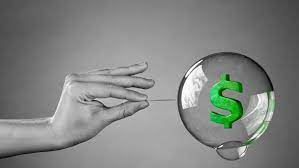
What Is a Bubble?

A bubble is an economic cycle that is characterized by the rapid escalation of market value, particularly in the price of assets. This fast inflation is followed by a quick decrease in value, or a contraction, that is sometimes referred to as a “crash” or a “bubble burst. Typically, a bubble is created by a surge in asset prices that is driven by exuberant market behavior. During a bubble, assets typically trade at a price, or within a price range, that greatly exceeds the asset’s intrinsic value (the price does not align with the fundamentals of the asset).The cause of bubbles is disputed by economists; some economists even disagree that bubbles occur at all (on the basis that asset prices frequently deviate from their intrinsic value). However, bubbles are usually only identified and studied in retrospect, after a massive drop in prices occurs.

How a Bubble Works

An economic bubble occurs any time that the price of a good rises far above the item’s real value. Bubbles are typically attributed to a change in investor behavior, although what causes this change in behavior is debated. Bubbles in equities markets and economies cause resources to be transferred to areas of rapid growth. At the end of a bubble, resources are moved again, causing prices to deflate.

The Japanese economy experienced a bubble in the 1980s after the country’s banks were partially deregulated. This caused a huge surge in the prices of real estate and stock prices. The dot-com boom, also called the dot-com bubble, was a stock market bubble in the late 1990s. It was characterized by excessive speculation in Internet-related companies. During the dot-com boom, people bought technology stocks at high prices—believing they could sell them at a higher price—until confidence was lost and a large market correction occurred.

The research of American economist Hyman P. Minsky helps to explain the development of financial instability and provides one explanation of the characteristics of financial crises. Through his research, Minsky identified five stages in a typical credit cycle. While his theories went largely under-the-radar for many decades, the subprime mortgage crisis of 2008 renewed interest in his formulations, which also help to explain some of the patterns of a bubble.

Displacement

This stage takes place when investors start to notice a new paradigm, like a new product or technology, or historically low interest rates. This can be basically anything that gets their attention. 

Boom

Prices start to rise. Then, they get even more momentum as more investors enter the market. This sets up the stage for the boom. There is an overall sense of failing to jump in, causing even more people to start buying assets. 

Euphoria

When euphoria hits and asset prices skyrocket, it could be said that caution on the part of investors is mostly thrown out the window. 

Profit-Taking

Figuring out when the bubble will burst isn’t easy; once a bubble has burst, it will not inflate again. But anyone who can identify the early warning signs will make money by selling off positions. 

Panic

Asset prices change course and drop (sometimes as rapidly as they rose). Investors want to liquidate them at any price. Asset prices decline as supply outshines demand. 

Global research on coronavirus disease (COVID-19)

WHO is bringing the world’s scientists and global health professionals together to accelerate the research and development process, and develop new norms and standards to contain the spread of the coronavirus pandemic and help care for those affected.

The R&D Blueprint has been activated to accelerate diagnostics, vaccines and therapeutics for this novel coronavirus.

The solidarity of all countries will be essential to ensure equitable access to COVID-19 health products.

Global research database

WHO is gathering the latest international multilingual scientific findings and knowledge on COVID-19. The global literature cited in the WHO COVID-19 database is updated daily (Monday through Friday) from searches of bibliographic databases, hand searching, and the addition of other expert-referred scientific articles. This database represents a comprehensive multilingual source of current literature on the topic. While it may not be exhaustive, new research is added regularly.

The WHO evidence retrieval sub-group has begun collaboration with key partners to enrich the citations and build a more comprehensive database with inclusion of other content. The database is built by BIREME, the Specialized Center of PAHO/AMRO and part of the Regional Office’s Department of Evidence and Intelligence for Action in Health.

For further information or questions, please contact the WHO Library via email.

Disclaimer: the designations employed and the presentation of the material in publications listed in this database does not imply the expression of any opinion whatsoever on the part of WHO concerning the legal status of any country, territory, city or area or of its authorities, or concerning the delimitation of its frontiers or boundaries. Dotted and dashed lines on maps represent approximate border lines for which there may not yet be full agreement.

The mention of specific companies or of certain manufacturers’ products in publications listed in the database does not imply that they are endorsed or recommended by WHO in preference to others of a similar nature that are not mentioned. Errors and omissions excepted, the names of proprietary products are distinguished by initial capital letters.

By listing publications in this database and providing links to external sites does not mean that WHO endorses or recommends those publications or sites, or has verified the content contained within them. The database has been compiled without warranty of any kind, either expressed or implied. The responsibility for the interpretation and use of publications included in this database lies with the reader. In no event shall WHO be liable for damages arising from its use.

66A IT ACT

News –Supreme Court found the enforcement of
Section 66A of the Information Technology
(IT) – six years after it was struck down.

Section 66 A of IT act

• Dealt with information related crimes

• Sending information – found to be offensive, disrespectful and threatening – are punishable offence
 Communication – sent by means of a computer resource or through any
communication device

THE INFORMATION TECHNOLOGY ACT, 2000
CHAPTER XI – OFFENCES
66A.

Punishment for sending offensive messages through
communication service, etc.–Any person who sends, by
means of a computer resource or a communication device,–
(a) any information that is grossly offensive or has
menacing character; or
(b) any information which he knows to be false, but for the
purpose of causing annoyance, inconvenience, danger, obstruction, insult, injury, criminal intimidation, enmity, hatred or ill will, persistently by making use of such computer resource or a communication device;
(c) any electronic mail or electronic mail message for the purpose of causing annoyance or inconvenience or to deceive or to mislead the addressee or recipient about the origin of such messages, shall be punishable with
imprisonment for a term which may extend to three
years and with fine.

Weakness of Section 66A

• Created an offence on the basis of undefined actions
 Sub section (b) – law can be enforced when the information is found to be
causing inconvenience, danger, obstruction – fails to define the terms
 Gives a scope for wider interpretation – may go against the purpose of this
law
• Such terms do not fall among the exceptions granted under Article 19 of the Constitution

• Section 66A did not have procedural safeguards like other sections of the law.

Done Class 12th , What Next?

After the class 10th and 12th people usually have a dilemma of what to do next. Most of the children opt for medical and non-medical lines eying to become a computer science engineer or a doctor. In most cases people chose these streams purely based on pay, some due to parental pressure – Well Sharma Ji’s son and daughter are engineer and doctor so how can their relative’s children chose arts or commerce. This is a common notion throughout the country. Other professions are not considered at par. But what exactly are other professions?

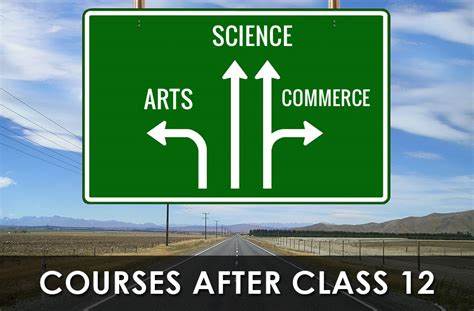
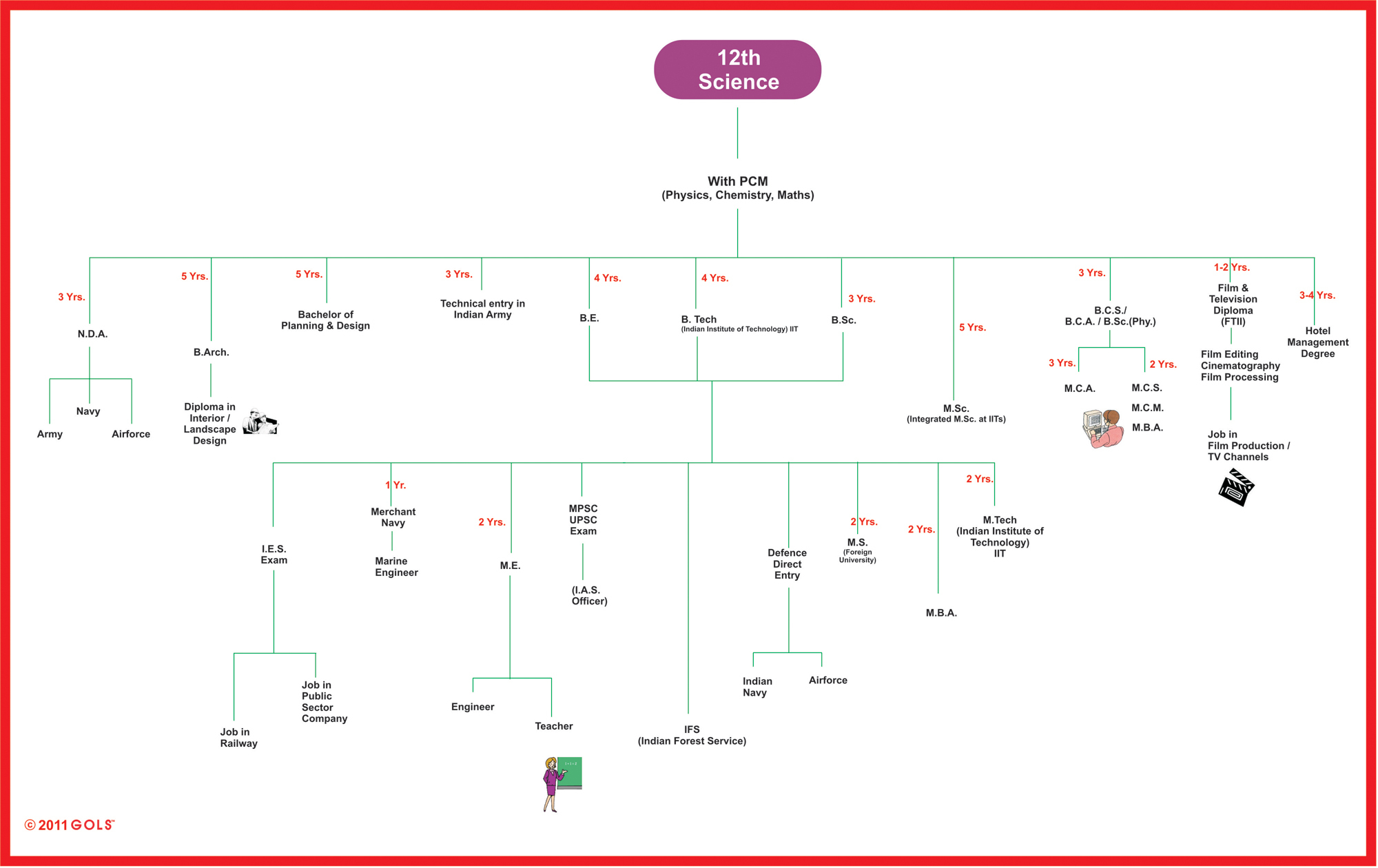
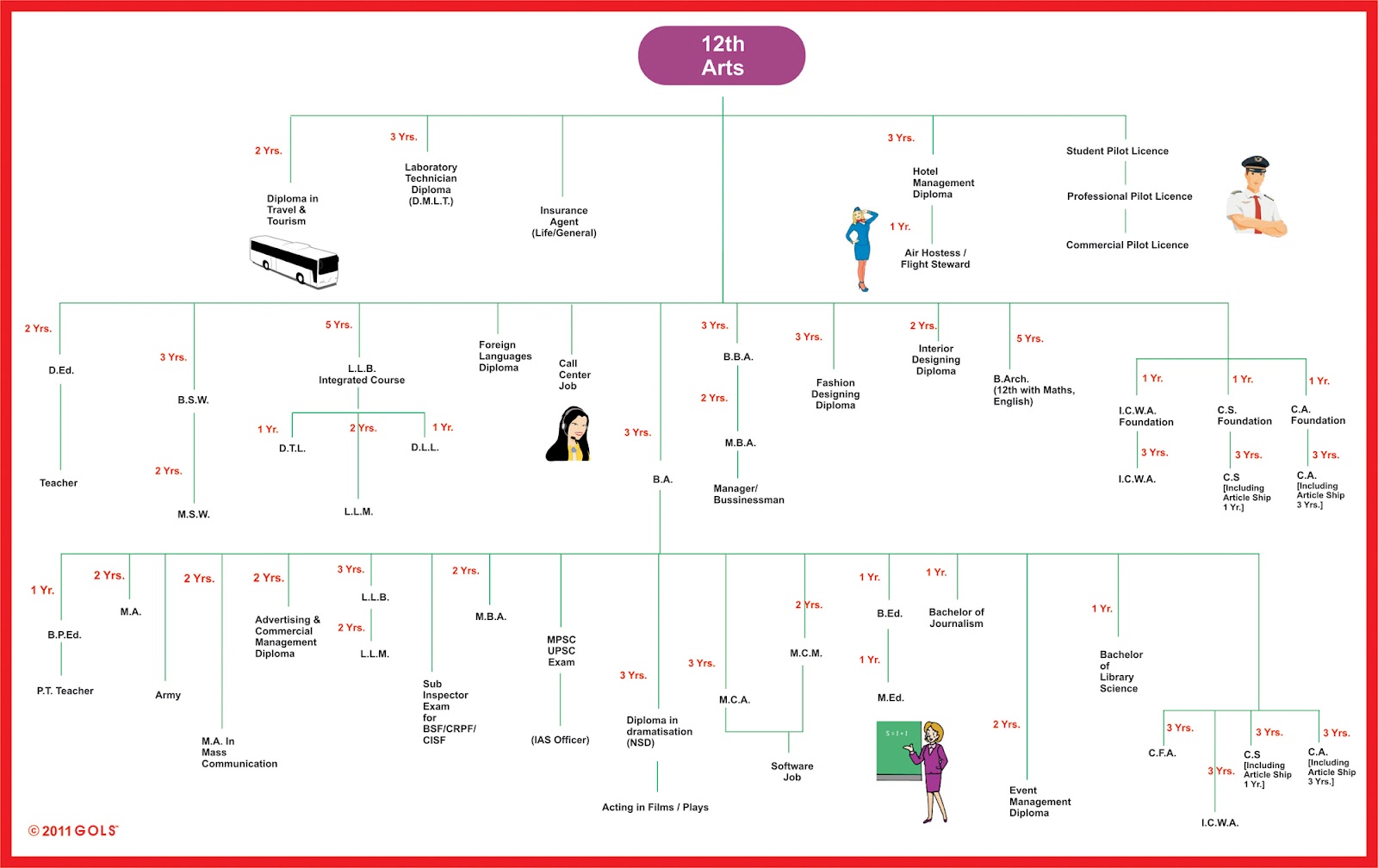
After class 10th streams are broadly divided into Medical, Non-medical, Commerce, and Arts. The detailed professions after class 12th are below:

See the source image

Non-Medical

It mainly comprises physics chemistry and math. Most of the people do BTech which is further branched into a plethora of fields like Computer science, Mechanical Engineering, Chemical and so on. People also do Bachelor of Architecture which comprises building construction. Besides this people can also opt for 3 year long BSc courses in the field of Mathematics, Chemistry, Physics, Computer Application.

Medical

After completing physics chemistry and biology students have options like MBBS, BDS which comprises of Dental Science, B Pharma. ( a 4 year long for becoming a chemist) , BSc Nursing, BHMS (Bachelor of Homoeopathic Medicine and Surgery), BAMS (Bachelor of Ayurvedic Medicine and Surgery). Just like Non, medical students can also opt for B.Sc. in Chemistry, Biology, Physics.

See the source image

Commerce

They have math, economics, accounts, business studies as their subjects. The most popular stream followed after class 12th is B.COM, a 3-year long course consisting of subjects related to finance and commerce. People who further want to do MBA usually opt for B.COM. There also other courses like BBA (Bachelor of Business Administration), CA, etc.

Arts

There are innumerous subjects like political science, history, English, economics, etc. Usually, people opt for BA after class 12th which can be done for various subjects like philosophy, political science, English, etc. People whose interest lies in drawing and painting chose BFA (Bachelor of Fine Arts). After that, they can take various professions like interior designing, etc.

Common courses

There are various courses which a student can opt after class 12th irrespective of their branch. People interested in law can opt for LLB (Bachelor of Law). People belonging to the agriculture domain opt for B.Sc. Agriculture. To become a fashion designer students do B.Sc. in Fashion Design. Students having a passion for teaching opt for B.Ed. in their particular domain. People who are intrigued by mass communication and journalism opt for BJMS(Bachelor of Journalism and Mass Communication. Likewise, there are various other fields.

Although there are various fields to explore students usually are restricted to particular fields like medical and non-medical. However, if someone has a passion in a particular domain, he/she will find success one day or another …

Health consciousness.

Consciousness, at its simplest, is sentience or awareness of internal and external existence. Despite millennia of analyses, definitions, explanations and debates by philosophers and scientists, consciousness remains puzzling and controversial, being “at once the most familiar and most mysterious aspect of our lives”. Perhaps the only widely agreed notion about the topic is the intuition that it exists. Opinions differ about what exactly needs to be studied and explained as consciousness. Sometimes, it is synonymous with the mind, and at other times, an aspect of it. In the past, it was one’s “inner life”, the world of introspection, of private thought, imagination and volition. Today, it often includes some kind of experience, cognition, feeling or perception. It may be awareness, awareness of awareness, or self-awareness. There might be different levels or orders of consciousness, or different kinds of consciousness, or just one kind with different features. Other questions include whether only humans are conscious, all animals, or even the whole universe. The disparate range of research, notions and speculations raises doubts about whether the right questions are being asked.

Examples of the range of descriptions, definitions or explanations are: simple wakefulness, one’s sense of selfhood or soul explored by “looking within”; being a metaphorical “stream” of contents, or being a mental state, mental event or mental process of the brain; having phanera or qualia and subjectivity; being the ‘something that it is like’ to ‘have’ or ‘be’ it; being the “inner theatre” or the executive control system of the mind.

And that’s why to be health conscious is better than being careless.

Courses and programs

Courses and programs for students are the main role to their education .

A program is your degree . A course is one building block (subject) of your program

Our featyre is depends on our Courses and programs

Some of courses

1 B.Com. This is the most popular choice among Commerce stream students. …

2 Chartered Accountancy.

3 Bachelor’s course in Economics.

4 Company Secretaryship course.

5 Law courses. …

6 Management courses. …

7 Technical courses. …

8 Designing courses.          

And some more

Administration Studies

Architecture Studies

Art Studies

Aviation

Business Studies

Construction

Cosmetology Studies

Design Studies

Economic Studies

Education

Educational and academic news and updates

Energy Studies

Engineering Studies

Environmental Studies

Fashion

Food and Beverage Studies

General Studies

Health Care

Humanities Studies

Journalism and Mass Communication

Languages

Law Studies

Life Sciences

Life Skills

Management Studies

Marketing Studies

Natural Sciences

Performing Arts

Professional Studies

Self-Improvement

Social Sciences

Sport

Sustainability Studies n

Technology Studies

Tourism and Hospitality

An Overview of the Stock Market

The stock market or the share market comprises of buyers and sellers of shares. The shares can be traded over private or public platforms. Investors who buy shares of any institution, are conferred ownership to a certain part of the institution. A company can build its market capitalization through its outstanding shares. There are various financial intermediaries that act as middlemen by overseeing the financial transactions made between two parties, such as banks, insurance, stock exchanges.

India has two stock exchanges -the NSE and the BSE. The stock market provides the pricing information resulting from the financial transactions, between the buyers and the sellers, of the market. The stock market is regulated by SEBI which is a regulatory body that issues guidelines to intermediaries and companies regarding the securities and capital, with the motive of ensuring the interests of the investors are protected. The BSE is one of the oldest stock exchanges in Asia and has a market capitalization of $3 trillion dollars. The BSE constitutes the indices of BSE SENSEX, S&P BSE Smallcap, Midcap and Largecap, BSE 500. The NSE is a government owned stock exchange also having a market capitalization rate of $3 trillion. The NSE considers the indices of NIFTY 50, NIFTY Next 50, NIFTY 500.

The stock market ensures liquidity by providing a mechanism for an investor to sell their financial assets. The comprisal of the stock market ranges from small companies to large companies. Small individual investors or large investing firms can invest in any stocks from any of the stock exchanges in the world. Today, stocks are traded over electronic platforms, making it convenient for investors to look up at stock prices, analyze their perceptions according to the price indices and invest. Back in the days, stocks were traded through brokers using physical mediums, like certificates or paper receipts, which involved more complexity in contrast to the advancing technology of today’s world.

The stock market exhibits both the primary market and the secondary market. The primary market offers new shares to the investors, the sale of securities to the public can be facilitated by underwriting institutions such as bank. In the secondary market the shares that are already in the public domain or with the investors, are traded with buyers and sellers. The investors in the secondary market trade stock with each other rather than with any issuing firm.

There are two types of offerings of shares to the public -IPO and FPO. IPO are initial offerings of shares to the public done via primary market. FPO are follow on public offerings wherein an issuance of additional shares is done by a company after IPO. The prices of the shares offered in IPO are fixed, while the price of shares in FPO is deemed based on their market value.

Some companies have dividend payments which is a sort of reward to the investors for investing in their business. Dividends are the distributions of a company’s earnings to its shareholders.

Today, investors have an option for a better portfolio management, as investors can manage their risk by diversifying their investments among various financial instruments. Building a proper portfolio requires proper analysis of stock, bond or any other commodity and can bring in profits to the investor. 

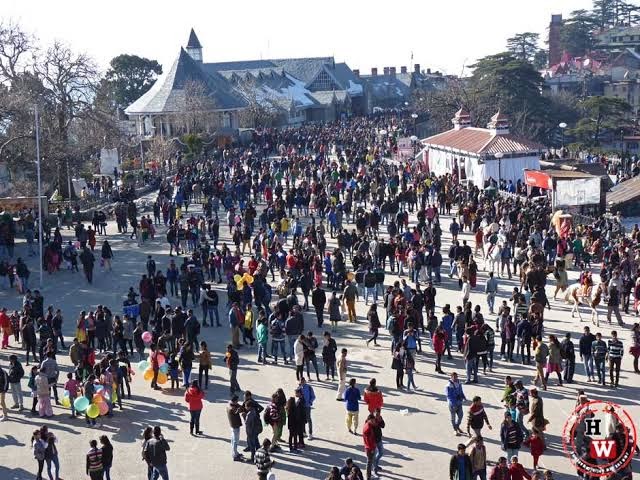
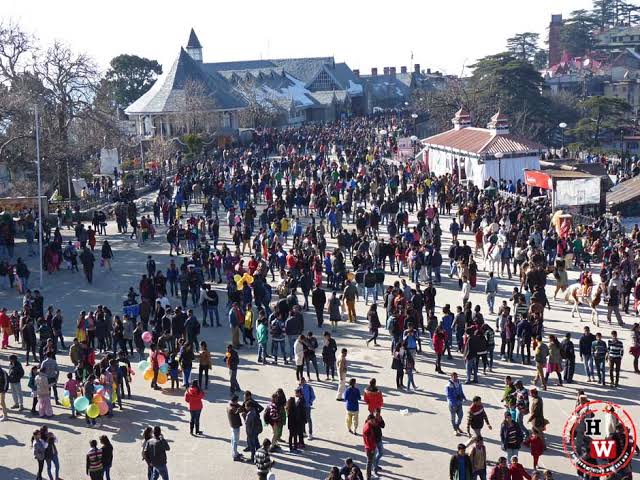
Manali flooded with tourist amid third wave warning; covid protocols getting ignored.

Inspite of third wave warning lakhs of tourists have thronged Himachal Pradesh in less than a month.Videos emerging from Manali and Shimla show that social distancing norms put in place to contain the coronavirus pandemic have gone for a toss.Highways choked, hotels fully booked after the Himachal Pradesh government relaxed Covid-19 related restrictions.Hotel occupancy in major tourist spots, including Shimla, Manali and Dharamshala, is almost full and tourists have been heading to less popular tourist spots in a bid to find accommodation and in guest houses.

Even though the governments, health experts have been warning against large crowds, a sea of tourists was seen in Manali town in Kullu district as the Himachal Pradesh government eased COVID restrictions.the increase in the number of tourists has posed a challenge for the authorities who are struggling to ensure implementation of Covid protocols amid fears of an impending third wave of coronavirus infections.

Reason behind this huge influx of tourist

  1. The prime reason is that the Himachal administration has withdrawn the mandatory need of a negative RTPCR report and e-Covid pass to enter the hill state.
  2. Another reason, behind the rush of tourists, is the ongoing heatwave in North India.
  3. while the third reason is that some people fear that lockdown-like restrictions may be imposed if the third wave of coronavirus strikes the nation. So many have decided to use this opportunity to visit some places

Twitterati reaction

Social media was abuzz with pictures of crowded Manali markets and tourist spots. While some were concerned over the violation of Covid protocols by the tourists, others shared memes and took taunt at the carelessness of the public.

for more news related to covid vist the link👇

https://www.timesnownews.com/india/article/tourism-with-a-vengeance-in-himachal-pradesh-shimla-manali-jampacked-covid-protocols-thrown-to-wind/780836

https://news.google.com/covid19/map

WINDOWS XP

Windows XP is still going strong

Windows XP is a line of proprietary operating system which was developed by Microsoft and is meant to be used for general purpose computers , such as home computers and business desktops , notebook computers and various types of media centres . Windows XP succeeds Windows 2000 and Windows ME , and is the first consumer – oriented operating system produced by Microsoft to be built on the Windows NT kernel and architecture . The most popular operating systems versions are Windows XP Home Edition , which is primarily meant for home users , and Windows XP Professional , which boasts additional features , such as support for Windows Server domains and dual processors , and is meant for professionals and other experts . Windows XP Media Centre Edition has additional multimedia features . Windows XP has an edge over the earlier versions of Microsoft Windows because of enhanced efficiency and better stability .

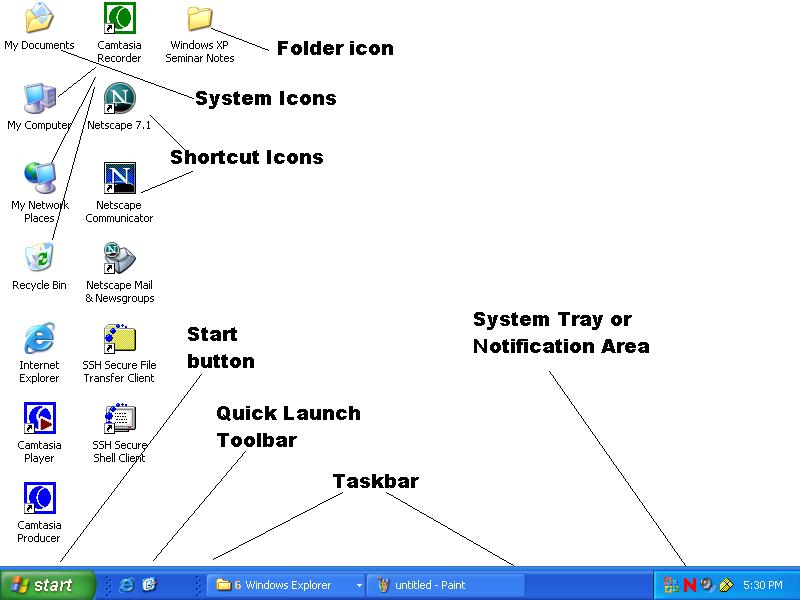
Windows XP helps you access and manage your files on the pc using a Graphical _User Interface GUI . All Programs and files stored on the PC are represented as pictures that are called icons . These icons are stored on the desktop .

Components of Windows XP

Windows XP

The Windows XP user interface consists of various components and concepts that help make Windows XP user friendly and intuitive . Some of the important components are :-

  1. Desktop
  2. Start Menu
  3. Taskbar
  4. Icons
  5. Recycle Bin
  6. Windows
  7. Applications
  8. Folders
  9. Files
  10. Control Panels