You must have hear this word used frequently by many Instagram influencers, celebrities, influential people saying self love is so important for your growth, for yourself now let’s see what’s the real meaning of ”Self-love” , well it means that you accept yourself fully, treat yourself with kindness and respect, and nurture your growth and wellbeing. Well in simple words loving yourself and accepting the way you are, it’s easier to say than it’s done, self love needs you to understand yourself fully, to make sure you are okay with yourself, to accepts your flaws, just to be ‘You’.
When you love yourself, you have an overall positive view of yourself. This doesn’t mean you feel positive about yourself all the time. That would be unrealistic! For example, I can temporarily feel upset, angry, or disappointed with myself and still love myself. If this is confusing, think about how this works in other relationships. A mother loves his son no matter how disappointed and angry she is with him, at the end of the day she cares because she loves him, she accepts him the way he is. This love allow her to forgive him, Well self love is very much the same which means if you know how to love others, you know how to love yourself.
There are some examples which shows what self love looks like-
Saying positive things to yourself
Forgiving yourself when you mess up
Meeting your own needs
Being assertive
Not letting others take advantage of or abuse you
Prioritizing your health and wellbeing
Spending time around people who support you and build you up (and avoiding people who don’t)
Asking for help
Letting go of grudges or anger that holds you back
Recognizing your strengths
Valuing your feelings
Self-love is the foundation that allows us to be assertive, set boundaries and create healthy relationships with others, practice self-care, pursue our interests and goals, and feel proud of who we are. so accept yourself, love yourself because you are one of a kind.
It was identified from ancient sources that yoga was found and originated from India. Its presence was found in the ancient books of India and was even mentioned in various religious books.
Humans have been performing yoga since ancient time. The evidence of which has been found by researchers.
It is one of the ancient practices, which is been practice till now. Yoga is a word which is derived from Sanskrit root (‘Yuj’). And the meaning of this word is union of body (शरीर) and soul (आत्मा). The brief explanation to this definition is:
Yoga is the basically the functionality of our body which results in the union of our body with our soul.
Yoga is basically doing postures in a comfortable position yet a little challenging position to yourselves while berating slowly inhaling and exhaling Thorley and properly even breathes.
Yoga has been in practice not only by mans but women too. Many people do and practice yoga on regular basis to get them to various benefits of yoga which and many. There are various benefits one can get by performing yoga on regular basis.
Some of the benefits of yoga of yoga are: –
It connectsour body to soul.
Yoga is just a form of meditation where you do not worry about the past neither future you live in the moment and that also with your inner piece (silence and concentration). Yoga does not bide you to or forces you it wants you to enjoy the moment which is now and be happy.
It helps in the functionality of various organs.
It has been known that yoga improves the organs functionality and now it has been scientifically, oxygen is essential for us humans and when we do yoga, we breathe slowly that helps in reaching the oxygen to all the organs of body and helps there functionality even better.
Yoga Vibe
It may help live longer (longevity).
When our organs work well, they do their respective roles for our body to function and with yoga we breathes and does some mobility which may help increase the life span.
It helps in the proper blood flow throughout our body.
While performing yoga we breathe slowly which results in pumping up of heath in a good or proper way, which helps in proper blood flow through out our body to each organ.
It helps reduce stress, anxiety, and prevention from various mental problems.
While performing yoga you do not worry about future not past you focus on the present (you are performing yoga) you will feel like it is happiest to be you (at a moment) which helps you reduce you stress and helps in various mantle health problems.
It may help loose some amount of weight and toning up of body.
There are various types of yoga some are to relaxes your health some your building up your body while getting the benefits of yoga which will help you toning up of your body and might loosen your weight.
Do not wait any more go try yoga and you will fell in love with it.
So let’s have a look that what does ecommerce mean~ E-commerce is the activity of electronically buying or selling of products on online services or over the Internet.
And if we talk about “Ecommerce in India” then, India has an Internet user base of about 696.77million as of May 2020, about 40% of the population. In 2017, the largest e-commerce companies in India were Flipkart, Snapdeal and Amazon. In 2018, Amazon beat Flipkart and was recorded the biggest ecommerce in India in terms of revenue. And it’s rapidly growing up day by day.
In India, cash on delivery is the most preferred payment method, accumulating 75% of the e-retail activities. Demand for international consumer products (including long-tail items) is growing faster than in-country supply from authorised distributors and e-commerce offerings. Long tail business strategy allows companies to realize significant profits by selling low volumes of hard-to-find items to many customers, instead of only selling large volumes of a reduced number of popular items. The term was first coined in 2004 by Chris Anderson.
In 2017, the largest e-commerce companies in India were Flipkart, Snapdeal and Amazon. In 2018, Amazon beat Flipkart and was recorded the biggest ecommerce in India in terms of revenue.
And some of the ecommerce sites are:
1. Amazon.in
2. Flipkart
3. Snapdeal
4. ebay India
5. IndiaMART
6. Shopclue
And so on…
But one should properly check the product and should take a clear look in the mind that this product is the only one which I want to purchase and they’ve can go on but inspection of the product must be the first priority of the customer.
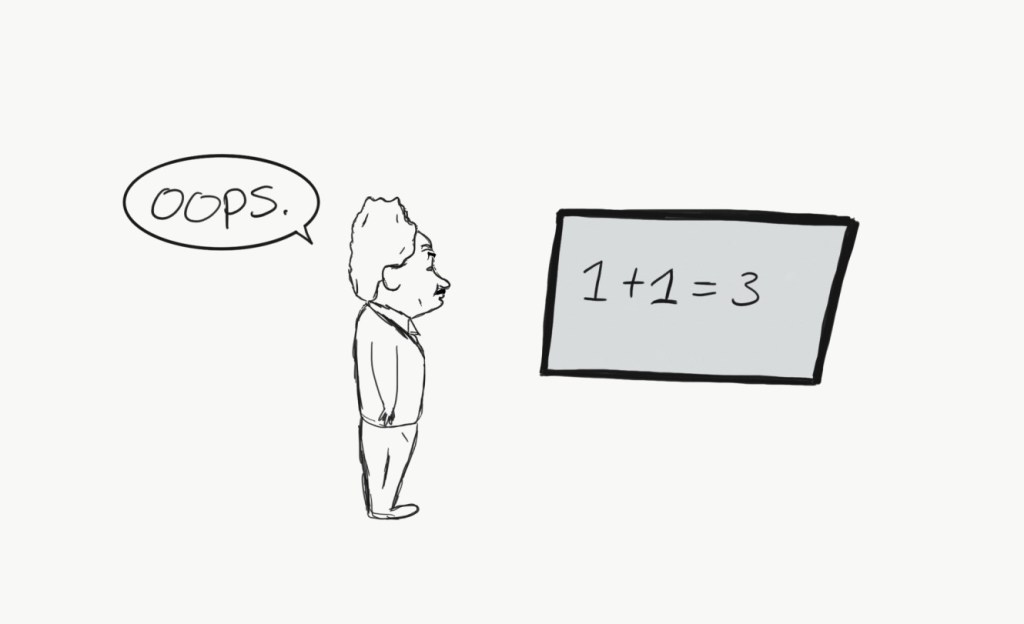
If you believe that only stupid people make these common mistakes, you’re as wrong as I was. The truth is that everyone makes mistakes. Smart people admit that. Stupid people do not.
What’s more, the smartest and most successful people in history have made the most mistakes. Are those two things connected? I think so. This Albert Einstein quote says it all:
“Anyone who has never made a mistake has never tried anything new.”
I used to blame myself for making mistakes in life. I think that’s how our society is. As a kid, you’re punished for making mistakes in school and life. And because of that, we think it’s normal to punish each other as adults.
But why would you punish yourself or another person for making silly mistakes? Most things in life are reversible and small (I’m not talking about committing crimes or adultery here). What matters is that we learn from our mistakes.
One of the best traits one can have in life is to be forgiving. You must go easy on yourself when you screw up. The same is true for the people in our lives. Alexander Pope put it best:
“To err is human, to forgive, divine.”
And when people really cross the line—just move on. No need to make things complicated.
Here are 5 of those mistakes that smart people make. Remember that you don’t have to make these mistakes yourself. It’s better to learn from other people’s mistakes. They have made them, so we don’t have to.
1. Chasing money
I recently read How To Get Rich by Felix Dennis, who owned one of the biggest magazine publishers in the UK. Contrary to the title, the book actually tries to discourage you to chase money.
Many rich people will tell you the same. The funny thing is that we all know there is more to life than money. And yet, we make it our sole purpose. Dennis writes:
“People who get trapped in the tunnel vision of making money think that is all there is to life.”
There’s nothing wrong with wanting to get rich. We just have to remind ourselves that making money beyond a certain amount has little impact on our happiness. But somehow, we get tunnel vision. Again, trying to get rich is not a mistake. However, it is a mistake if you expect that it’s the answer to all your problems.
2. Ignoring sleep
When you get excited about something, you want to spend all your time on it. That’s a great feeling.
But when your excitement prevents you from having quality sleep, you want to change that. It’s one of my biggest pitfalls. I can read and work all day long—well into the night.
But even when I go to bed at 2 AM and wake up 8 hours later, I still feel tired. Somehow, it’s different when I hit the sack at 11 and wake up at 7. I feel much more energized.
For the past year, I’ve been taking my sleep more seriously. I wake up at the same time every morning. And I turn off my devices exactly one hour before I want to sleep. That means no work or heavy mental activity before bedtime. Just some light reading or journaling.
3. Being connected too much
The past decade has been great for technology. Almost everyone has a smartphone with access to the internet. Within a few years, the whole world will be connected. Even the less developed countries.
Modern technology has changed the world. These developments are great. But remember that too much of a good thing becomes bad.
That also applies to your smartphone, tablet, and laptop. Recent research shows that Generation Z (born after 1995) is distressed and anxious. The American Psychological Association even says they have “the worst mental health of any generation.”
One of the biggest reasons for their mental state? All the signs point towards their smartphones and connectedness. For years, I’ve been limiting my smartphone usage.
And inspired by Cal Newport’s new book, Digital Minimalism, I’m only getting more strict with this.
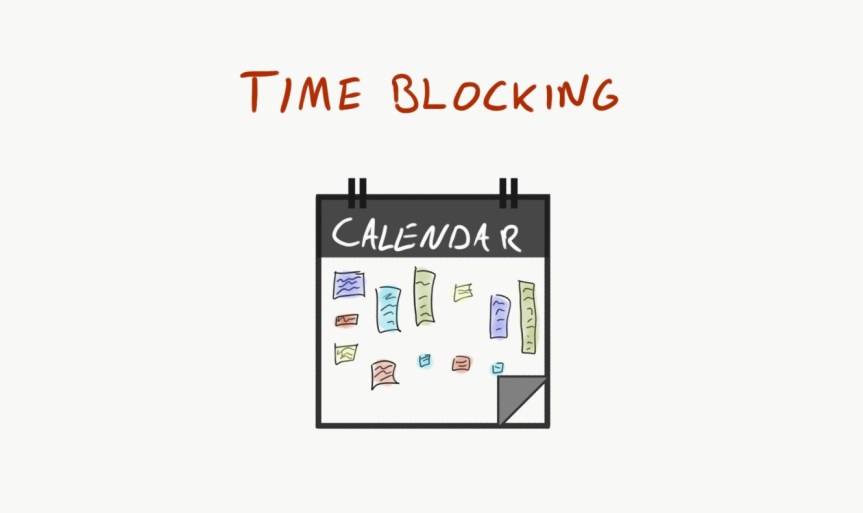
Do you have a list of priorities or goals that you want to achieve this year? And do you struggle with allocating time to them? Time blocking might be helpful.
It certainly helped me. Look, I’m not any different from you. Life can be messy. Most of us juggle a lot of different things at the same time. Even though the simple solution is to stop juggling, it’s not always realistic. Or even needed.
What if you could do more things without losing your time? It’s possible. But you must work in an organized way.
Time Blocking a simple productivity exercise that many people use. It’s not fancy or revolutionary. The only thing you need is a calendar, which is something everyone with a smartphone and computer has.
Time Blocking is simply using your calendar to block time for your most important priorities. During that time, you only work on that one thing. And, you let your calendar lead the way. That way, you don’t have to think, “What should I do next?”
But Time Blocking is more than just a productivity tool. It’s about self-awareness.
The road to high productivity starts with awareness.
For instance, one of my priorities this year is to write a book on pragmatic thinking. However, there’s a problem: I haven’t been writing.
How did I come to this conclusion? I simply looked at my list of priorities for 2017, and I then I looked at my calendar.
I hadn’t scheduled any time for writing in a while. Now, you might think, “do you really have to look at your calendar to realize that?”
Yes, I do. I’m not some kind of supercomputer that remembers everything. I’m a regular human being. I think of something to do, start working on it, life gets in the way, and then I FORGET about it.
It happens to all of us. We need self-awareness and tools that keep us in check. And that’s why I like Time Blocking.
Some people love Time Blocking. Some people hate it.
Computer science professor and author of Deep Work, Cal Newport, also uses time blocking. He says:
“I take time blocking seriously, dedicating ten to twenty minutes every evening to building my schedule for the next day. During this planning process I consult my task lists and calendars, as well as my weekly and quarterly planning notes. My goal is to make sure progress is being made on the right things at the right pace for the relevant deadlines.”
The last sentence is exactly why I schedule everything I want to do. Working is not the same thing as making progress. And Time Blocking helps me to improve my focus so I can get meaningful things done. Things that have an actual impact on my life.
I know there are a lot of successful people who work with empty calendars. I’ve read the articles. They simply work two, three or four hours per day.
And to be honest, that sounds very attractive to me too. However, one must look at his/her own life situation.
What are you trying to achieve?
And more importantly: What resources do you have?
Often, people who don’t have a lot of money, do have a lot of time. So why not use it wisely? Either way, I think that planning serves a purpose.
I plan my days and weeks in advance because I want to make sure I’m working on the RIGHT things. Too often, I get lost in completing daily tasks.
But there are many different areas of my life: My family business, my blog, podcast, online courses, relationship, friends, investments, etc.
It might sound like I’m doing many different things. But it depends on how you look at it. Everything I do leads to one thing: Living a meaningful and independent life.
But let’s not get philosophical here. If you’re lacking focus, not making progress, and want to work in a more organized way, give time blocking a try.
Here are some things I’ve learned that may help:
Take 10 minutes every evening and plan your next day. Rearrange blocks if you must create time for other important things.
Use recurring blocks for recurring tasks. For instance, I’ve scheduled two hours to write my new book every Tuesday and Thursday.
Don’t over-schedule. Realistically, you can’t be productive 10 hours straight. Give yourself some time between tasks.
And always schedule more time than you think you need.
“Wow, time blocking sounds like too much planning to me.”
No problem. Plan less. There’s always a counter-movement for everything. People who do the exact opposite and advocate an anti-productivity lifestyle. You know, folks who claim they have empty calendars and don’t care about anything.
People who pretend they are always “enjoying” themselves. They like to go with the flow and daydream.
You know what that reminds me of? Those kids in school always said, “Ah dude, I didn’t have time to study for this class,” but always ended up getting straight A’s.
People just want to make you believe they don’t work hard. It’s facade. And when they do well in life, it seems like it came easy.
As far as I know, achieving meaningful things is hard. I don’t think there’s anything cool about pretending it’s easy. Nor do I believe that it’s cool to work yourself to death.
I often think of this question: Are you an amateur or a pro?
It’s Steven Pressfield’s famous analogy, from his book The War Of Art, for getting work done.
The amateur-only works when inspiration strikes. The pro sits down every day and puts in steady work. The key is steady. Not irregular or extreme.
Pressfield says:
“The sure sign of an amateur is he has a million plans and they all start tomorrow.”
I know something about you without knowing you. I bet you spend A LOT of time in your head.
You know, thinking, worrying, stressing, freaking out — call it whatever you want. I call it a preoccupied mind. And with what?
99% of your thoughts are useless. William James put it best:
“A great many people think they are thinking when they are merely rearranging their prejudices.”
All my life I’ve been obsessed with practical things. Practical philosophy, practical knowledge, practical books, practical work, and practical advice.
That idea comes from Pragmatism, a philosophical tradition that started in the 19th century in America. Charles Sanders Peirce, who was a Harvard professor, is considered as the “father of Pragmatism.”
But it was William James, a trained physician turned philosopher, who really defined the philosophy.
About thoughts, worry, and stress, William James says:
“The greatest weapon against stress is our ability to choose one thought over another.”
Pragmatism believes that a mind is a tool. Your mind should work for you, not against you. People who don’t master their mind, don’t believe it’s possible.
They say: “I can’t help but thinking these things.”
Well, you can with enough practice. It’s a skill.
In other words: You have the ability to decide what you think. Or, you can choose NOT to think.
And that is one of the most important and most practical things you can learn in life. Before I learned that skill, I would spend hours and hours inside my head.
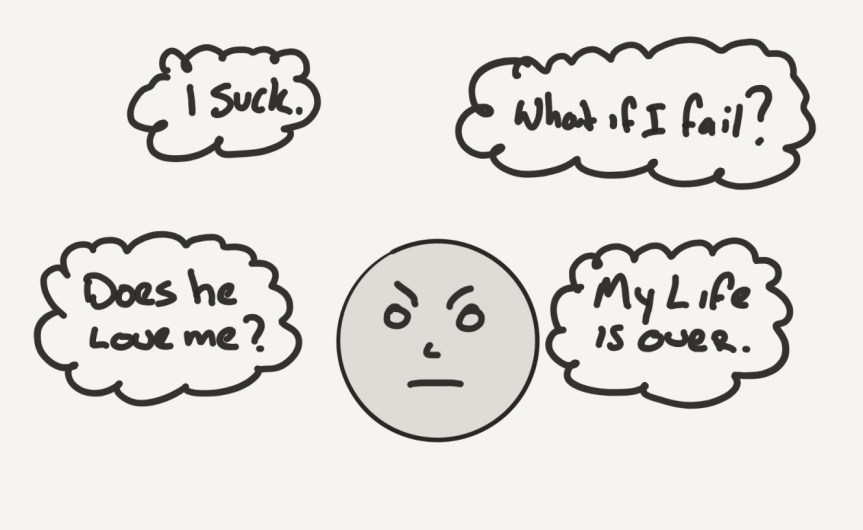
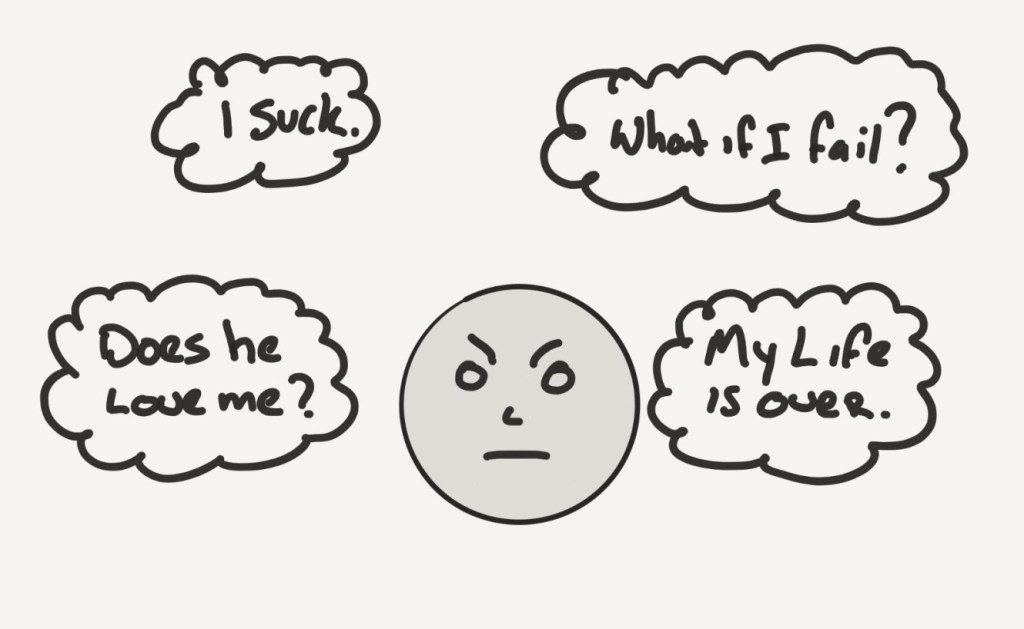
Just think about how much you think.
“I wonder what my boss thinks?”
“What happens if I screw up and lose my job?”
“Does she love me?”
“I think he doesn’t care about me.”
“I just keep failing.”
“Why does my life suck?”
“Why is my life awesome, and other people’s lives are not?”
“What if I get cancer?”
“I don’t care about my job. Is there something wrong with me?”
“I can’t finish anything. What’s wrong with me?”
And the list goes on. That is all REAL shit. That’s stuff people tell me when I ask them what they worry about.
Do you know what those thoughts do to you? Guilt, anger, suffering.
I just have one question for you: What’s the practical use of your thoughts?
Yes? I’m waiting. Still no answer? Exactly.
Thoughts have no use. 99% of them that is.
Which thoughts are useful?
Thinking about how you can solve problems. A problem is just an unanswered question. Put your brain to use and think about how you can solve problems. There are a lot of those on this earth.
Understanding knowledge. That means this: Try to internalize knowledge and think about how you can use that knowledge to improve your life, career, work, relationships, etc.
That’s it. You can ignore every other thought.
If you’re constantly thinking, it’s because you haven’t’ trained your mind yet. You HAVE to get out of your head.
If not, you go mental. Everyone will. No exception.
Also, you’re probably thinking so much that you’re missing out on life. Did you notice the sunshine this morning when you woke up? Or the raindrops? Did you notice the smell of your coffee? Did you feel the texture of your cereals?
If your answer is no, you definitely need to get out of your head. Stop thinking and start feeling.
Now, you might think: “How do I train myself to stop thinking useless thoughts?”
Awareness.
That’s where it starts. Every time you start drifting off, become aware of it. Just observe your brain. Step outside yourself and just observe the crazy shit you’re thinking about.
Don’t judge. Don’t think you’re stupid. If you do that, you’re thinking again.
No, what you want to do is say this to yourself: “Ah that’s a cute thought. Now, let’s get back to reality.”
“If you can change your mind, you can change your life.” ― William James
Are you back to reality? Do you feel your eyes reading the letters on your screen? Do you feel your phone in your hand? Are you thinking about how you’re going to apply this information to your life?
Great. You’re USING your mind, and it’s not the other way around. Now, keep using that brain of yours.
Because I’ll tell you this: It’s the most powerful tool on earth.
To improve your decisions, you want to look at your process for making a decision. Most people assume that good decision making is a matter of picking a course of action that leads to the desired outcome.
That’s a misconception. Decision making refers to your cognitive process. It’s about how you end up with your decision, not what the decision leads to.
Good decision making can lead to bad outcomes. The opposite is also true. Bad decision making doesn’t mean you always get bad results. For every decision, there are external factors that influence your outcomes.
So how can we improve our decisions? By focusing on the process, not the outcome. The best method for improving your decision making process is to ask yourself critical questions. It’s not enough to ask obvious questions like, “What are my alternatives? What has worked for others? What are the consequences?”
While it’s good to ask yourself those questions, it will not change your decision making process. Those questions only look at what you already know.
I found a list of six thought-provoking questions in Annie Duke’s book, Thinking In Bets. Notice what the theme is.
Why might my belief not be true?
What other evidence might be out there bearing on my belief?
Are there similar areas I can look toward to gauge whether similar beliefs to mine are true?
What sources of information could I have missed or minimized on the way to reaching my belief?
What are the reasons someone else could have a different belief, what’s their support, and why might they be right instead of me?
What other perspectives are there as to why things turned out the way they did?
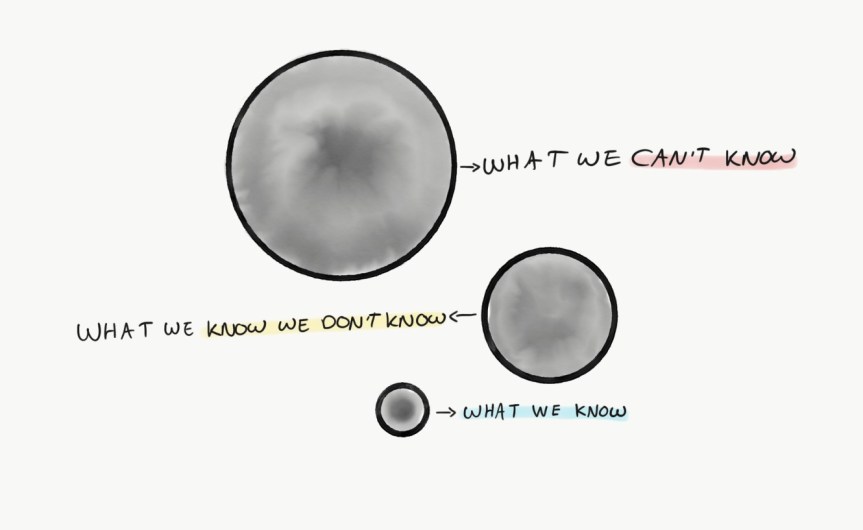
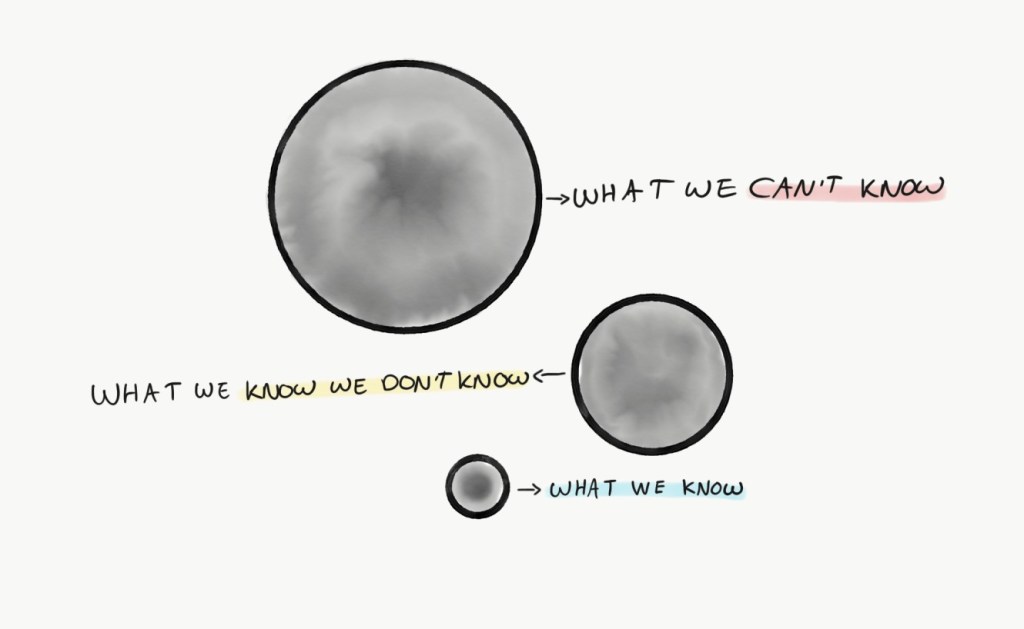
Think About What You Can’t Know
The reason I like these questions from Annie Duke is because they force you to think about what you can’t know. In my experience, that’s what drastically improves your decisions.
We all know the feeling of talking to an experienced person who shares some insights with us, and we go, “Aha! I didn’t realize that.” That’s what you want. Duke writes the following in Thinking In Bets:
”Just by asking ourselves these questions, we are taking a big step toward calibration. But there is only so much we can do to answer these questions on our own. We only get exposed to the information we have been exposed to, only live the experiences we have experienced, only think of the hypotheses that we can conceive of.”
This is the reason I often turn to my friends, mentors, communities, books, courses, and podcasts for insights that come outside of myself. I want to learn about things I can’t know.
It’s impossible to know and see everything. We haven’t had the experiences of other people. Most of us keep making the same decisions because we never get an outside point of view. We don’t make an effort to improve our decisions.
Open To Beliefs—Not Gullible
To improve your decisions, ask yourself questions that challenge your existing beliefs. I highly recommend saving those six questions in your note-taking app. I’ve done it and when I face a decision, I often go through these questions and my other notes on decision making.
As you become open to other beliefs and perspectives, keep in mind that other people also don’t have all the answers. Adopt the mindset of a skeptic. Be open to other beliefs, but don’t believe everything instantly.
Keep looking for evidence and other perspectives. When you have collected enough information, make your decisions. Sometimes people assume you have to listen to everything “experts” have to say. This will only make us gullible. If there’s one thing that harms our decisions, it’s that.
We should always make our own decisions after going through a process. We should avoid making rash decisions based on the opinions of others.
Common Decision Making Pitfalls
Here’s what you should watch for when you’re making decisions (no matter how big or small):
Analysis paralysis—This is very common. At some point you get stuck in the process and you can’t make a decision. You go over the process over and over again. This is a big risk. You can NEVER have 100% of the information you need. It also helps that your decisions are not about the outcomes. Don’t let your fear of making the “right” decision paralyze you. There’s no right or wrong outcome. Just outcomes. Deal with it later.
Extinction by instinct—The opposite of the above. It’s the belief that instincts are a useful tool in decision making. This leads to rash decisions.
Information overload—This is when you ask too many people for their opinion or insights. Stick to trustworthy sources and keep them at a minimum. More information is not better. Reliable information is.
I’m not a fan of complicated theoretical decision-making frameworks to improve your decisions. Those types of formal frameworks might work for large institutions, but for you and me, it’s just not useful. Who makes time to read an 800-page textbook on statistical decision theory? And if you do study it, you probably can’t remember all of that theory. Instead, work with what you have.
When you face a problem, simply look at your options, collect some information, think about what you can’t know (the six questions at the top), evaluate everything, and pull the trigger. Done. Then, move on to the next one.
Python is one of the most popular and fastest-growing programming language. Inherently, it is interpreted, high-level, general-purpose, and object-oriented scripting language, which means the following:
•Interpreted
An interpreter processes the source file at runtime, it reads the lines of code, one by one and performs what is said. Similarly to Perl and PHP, Python does not require that you compile your program before executing it. So, you do not have to invoke a compiler. Instead of running the compiler that helps turn source files into compiled class files, you simply run a .py file. Python byte code compilation is automatic and entirely implicit.
•High-level
Python relies on easy-to-read structures that are later translated into a low-level language, the original code that is run on a computer’s central processing unit (CPU). A high-level language is intended to be used by a programmer and the written code is further interpreted into a low-level language. Like C++ or Java, before running, Python has to be processed. This enables Python’s portability — it can run on different kinds of computers with nearly no modifications.
•General-purpose
Python can be used for nearly everything. It is applicable to almost every field for a variety of tasks. Be it the execution of such short-term tasks as software testing or long-term product development that involves roadmap planning, Python works well for them all, it is applicable all over the map. Its roles are unlimited. It is popular not only among software engineers, but also among specialists in other fields: mathematics, data analysis, science, accounting, and network engineering. Likewise, Python cliques with young people because it’s a very beginner-friendly scripting language.
•Object-oriented
This programming paradigm gives an overall orientation towards scripting and powerful code structuring. This object-oriented approach allows thinking of problems in terms of classes and objects. Then, objects are composed in such a way to make up complex computer programs. Beside the object-oriented programming, Python also supports a procedural paradigm. With OOP being only one of the options, you can make Python programming more advanced by going for an object-oriented programming approach. Developers can create reusable patterns of code thus curtailing redundancy in development projects.
3D printing, also called additive manufacturing, is often defined as the construction of a three-dimensional object from a CAD model or a digital 3D model. The term “3D printing” is often explained as a spread of processes during which materials are deposited, solidified with computer control to present a three-dimensional object, with more material being added together typically layer by layer.
Looking at current scenarios 3D printing or additive manufacturing has been used widely for manufacturing, medical, industry etc. which facilitate 3D printing to become successful economical technology. The earliest application of 3D printing was on the toolroom end of the manufacturing spectrum.
HOW IT WORKS:
3D printers are available and are a neighborhood of the additive manufacturing family and use familiar methods to a standard inkjet printer- albeit in 3D. It takes a mixture of top-of-the-line software, powder-like materials and precision tools to make a three-dimensional object from scratch.
The various steps include :
3D Modeling Software:Modeling helps printers to form the merchandise come right down to the tiniest detail. The 3D modeling software ensures precision designs is why 3D printing is being hailed as a real and important changer in many industries.
Slicing the Model: Engineers are required to slice the model into layers to assist the printer to make the ultimate product. Slicing software takes scans of every layer of a model and can tell the printer the way to move so as to recreate that layer.
The 3D Printing Process: The printer acts an equivalent as a standard inkjet printer within the 3D printing , where a nozzle moves back-and-forth while dispensing a wax or plastic-like polymer layer-by-layer, expecting that layer to dry, then adding a subsequent level.
There are various types of 3D printing depending on size, shape and also time consumed in making one depends on these factors.
ADVANTAGES :
Fast Design and Production, helps design and print faster also production rate saves time.
Minimises Waste, little wastage compared to traditional methods.
Cost Effective, requires lesser products, machine cost can be saved by outsourcing the project.
Easy To Use, easily accessible by everyone.
Environmental Friendly, Fuel efficient and less wastage.
Flexible Design, helps design and print complex designs.
SCOPE :
In the construction world , 3D printing is used to create construction components or to print even entire buildings. Construction is well-accustomed to 3D printing as much of the information necessary to create an product will exist as a result of the design process, and the industry is already experienced in computer aided manufacturing.3d printing is not a new technology, followed since the 1980s. Making a three-dimensional model, or prototype, from a computer made design by adding successive layers of material is now standard practice in many industries, ranging from aerospace and architecture to medicine and high-end manufacturing.
3D printing encompasses many sorts of technologies and materials as 3D printing is getting used in most industries you’ll consider . It’s important to ascertain it as a cluster of diverse industries with a myriad of various applications. A few examples: – consumer products (eyewear, footwear, design, furniture) – industrial products (manufacturing tools, prototypes, functional end-use parts) – dental products – prosthetics – architectural scale models & maquettes – reconstructing fossils – replicating ancient artefacts – reconstructing evidence in forensic pathology – movie props
Yeah! Its a season of joy, enjoyment, happiness, and we should enjoy it at the best.
A monsoon is traditionally a seasonal reversing wind accompanied by corresponding changes in precipitation, but is now used to describe seasonal changes in atmospheric circulation and precipitation associated with annual latitudinal oscillation of the Intertropical Convergence Zone between its limits to the north and south of the equator. Usually, the term monsoon is used to refer to the rainy phase of a seasonally changing pattern, although technically there is also a dry phase. The term is sometimes incorrectly[according to whom?] used for locally heavy but short-term rains.
The major monsoon systems of the world consist of the West African and Asia–Australian monsoons. The inclusion of the North American Monsoon and South American monsoon with incomplete wind reversal has been debated.
The term was first used in English in British India and neighbouring countries to refer to the big seasonal winds blowing from the Bay of Bengal and Arabian Sea in the southwest bringing heavy rainfall to the area.
“I think everybody in this country should learn how to program a computer, should learn a computer language, because it teaches you how to think.” – Steve Jobs
If you are a programmer, you may understand the deep meaning of these words quoted by Steve Jobs, and you may also have this experience even if you turn off the computer, you continue to think about the programming or code you use in it. The project has been written. In programming, you just don’t learn programming, you also learn the “art of thinking“, the method is to break the code into smaller parts, and then use creative, logic-based thinking to solve problems from different angles. Programming is very interesting and it is like brain training. Programming is an intellectual sport. When this sport is practiced by sports programmers on the Internet, it is called competitive programming.
Coding contests or competitions usually require the host to have a series of logical or mathematical questions for the contestants, also called puzzles (ranging from ten to one thousand) problems. Scoring is mainly based on the count of problems solved and the time required to write a successful solution, but other factors (quality of results obtained, execution time, program size, etc.) also do count.
The goal of competitive programming is to write source code for computer programs that can solve specific problems. Most of the problems encountered in the programming Olympics are essentially mathematical or logical problems. Typical problems fall into one of the following categories: combinatorics, number theory, graph theory, algorithm game theory, computational geometry, string analysis, and data structure. Challenges related to deadlines and artificial intelligence are also popular in certain competitions.
These coding contests provides young and talented coders with the opportunity to measure their skills and compare them with other programmers around the world. Some of them are listed as-
1) The ACM-ICPC International Collegiate Programming Contest
” I have no problem with starting from scratch” – Leif Garrett
The age 20-25 is quite confusing age of our lives. Everyone will have an inner voice which is constantly interrogating us a set of questions like , ” What are my interests?” , “Which is the field I can excel on?” , “How can I bring the best out of myself?”. Never be terrified by these questions. These are questions which will make you streamline your career path.
During the pre-final year and final times , we all will start to have a fear of future and will begin to recognize the practical aspects of life. The pressure could be due to college placements, peer discussions and expectations of our families. Never make any of these external factors influence your career choice.
The first step in order to identify the career path which best suits you is to know about your interests and skillsets. Write down three important interests of yours which may or may not relate to the stream of your study. Figure out what are the skill sets you have in those interests which could fetch you a job. In case if you have no skillsets in those fields refer to the career sites and find out what are the skill expectations for those roles.
The second step is to understand the industry. In the initial days of our college, we all would have had fun unaware of a world outside which is developing at a rapid phase . Start learning about what’s happening around you. Recognize the fields which are blooming and categorize those which attract you. List down the skills which are anticipated in those fields.
The third and most important step is to write down all the fields , interests and skillsets you have figured out in steps one and two. Write down your short term and long term goals which align with your interests. Narrow down to 2 fields which allure you and make you move forward towards your long term goals.
“We cannot become what we want to be , by remaining what we are” – Max DePree
Kick start your learning phase by acquiring skills and mastering them which attribute to revamp your profile. Make sure you update your profile regularly on career sites like LinkedIn which provides you the opportunity of networking. Never be petrified by the fear of perfection during the learning phases because,
“Continuous Improvement is better than Delayed Perfection” – Mark Twain.
Personality is a patterned body of habits, traits, attitudes, and ideas of an individual’s, as these are organized externally into roles and statues and as they relate internally to motivation, goals, and various aspects of selfhood.
The term personality is derived from the Latin word “Persona” which means to speak through. An individual’s personality is the combination of traits and patterns that influence their behavior, thought, motivation, and emotion. It derives individuals to consistently think, feel, and behave in specific ways; in essence, it is what makes each individual unique. Over the time, these patterns strongly influence personal expectations, perceptions, values, and attitudes. In addition to this, personality arises from within the individual and remains fairly consistent throughout life. It is a pattern of stable states and characteristics of a person that influence his or her behavior towards goal achievement. Each person has unique ways of projecting these states.
The study of personality focuses on two broad areas;
One is understanding individual differences in particular personality characteristics, such as sociability or irritability.
The other is understanding how the various parts of a person come together as a whole.
Characteristics of Personality
The term personality is used in various senses. Generally, it is used to indicate the external outlook of an individual. Personality is the sum of the ideas, attitudes and values of a person which determines his role in society and form an integral part of his character. Personality is acquired by the individual as a result of his participation in group life. It refers to something much more essential and enduring about a person.
Personality has other characteristics or features in common.
Personality refers particularly to the persistent qualities of an individual.
Personality is something which is unique in each individual.
Personality is greatly influence by social interactions.
It impacts behaviors and actions
Consistency
Multiple expressions.
Life skills to help you improve your Personality
Developing the personality can have a lot positive effect on your life and career. There was a belief that nature is permanent and it is not possible to change it. The personality is a typical pattern of behaviors, thinking, and they are unique. With outstanding effort, you can improve your habits and the pattern of thinking.
Here are some tips that will help you improve your personality:
Become a better Listener: If you are a good listener, you can learn a lot from your surroundings. Being an excellent listener is a very good skill. When you listen to other people, you give them importance. They also pay more attention to you and will become more engaging.
Meeting new people: Always make an effort to meet new people. Engaging with people provides you with a lot of experience, and you can learn so much from different people. Meeting new people can expose you to new cultures, ideas, opinions and it expands your mind.
Expanding your interests: It is always good for the mental health to develop your interests. It will keep the mind fresh, and it will help in cultivating the new interests. It will also make you more
attractive to others as you will always have new things to share and talk about. 4.Becoming a better conversationalist: When you know your interests, and are well versed in them, you will have more confidence to talk about them. Having more knowledge means that you can contribute more to the conversation. If you want people to listen to you, it is important that you are an impressive talker. 5.Polishing interpersonal skills: Interpersonal skills are the core competencies for a successful life. These skills are useful for communicating and interacting on a daily basis. These skills are needed not just for individual interactions, but also in groups. You can work on developing good interpersonal skills.
Database administration or data management is incomplete without the SQL. For comfortable use of SQL as part of your administration or development requires that you understand the basics of SQL, which will take you a long way in your career.
Before we start with the introduction to the SQL itself, and then, understand the important features of SQL Server. It will take you through a demonstration of the internal workings of SQL, starting from SQL standards, evolution, and progresses to creating tables, understanding and defining relationships, writing Transact‑SQL commands, and so on.
You will also understand that SQL is a special-purpose programming language; special-purpose, as in, it is different from the general-purpose programming languages such as C, C++, Java/JavaScript, etc., meaning, it has a very particular purpose: manipulation of datasets. And this manipulation happens using what is known as Relational Calculus.
But isn’t studying SQL alone, restrictive? Turns out, it isn’t. Of course, we can use SQL on any kind of database or data source, but even if we cannot directly use SQL, most query languages of today have some relationship to SQL. In general, once you know SQL, you can effortlessly pick up other query languages too.
Standards are vital because every relational database must build its framework around this framework in order to ensure compatibility. This means that the learning curve is greatly reduced. SQL is ANSI as well as ISO-compliant, along with other standards, which emphasizes the fact that you have to learn the concept only once.
Yoga Sanskrit: योग; Sanskrit for “yoking” or “union”, is a group of physical, mental, and spiritual practices or disciplines that originated in ancient India. Yoga is one of the six orthodox philosophical schools of Hinduism. There are a broad variety of yoga schools, practices, and goals in Hinduism, Buddhism, and Jainism and there are four paths or types of yoga: Karma yoga, Kriya yoga, Bhakti yoga, and Jnana yoga. Research studies have shown that traditional yoga systems that include breathing exercises and asanas or postures, chants, and meditation can reduce stress and improve immunity and lung functions. Traditional forms and modern methods of yoga are practiced worldwide.
The practice of yoga has been thought to date back to pre-vedic Indian traditions, possibly in the Indus valley civilization around 3000 BCE. Yoga is mentioned in the Rigveda, and also referenced in the Upanishads, though it most likely developed as a systematic study around the 5th and 6th centuries BCE, in ancient India’s ascetic and Śramaṇa movements.
The chronology of earliest texts describing yoga practices is unclear, varyingly credited to the Upanishads. The Yoga Sutras of Patanjali date from the 2nd century BCE, and gained prominence in the West in the 20th century after being first introduced by Swami Vivekananda. Hatha yoga texts began to emerge sometime between the 9th and 11th century with origins in tantra.
Yoga gurus from India introduced yoga to the West following the success of Vivekananda’s adaptation of yoga without asanas in the late 19th and early 20th centuries. The term “yoga” in the Western world often denotes a modern form of hatha yoga and yoga as exercise, consisting largely of the asanas. Outside India, it has developed into a posture-based physical fitness, stress-relief and relaxation technique. Traditional yoga, however, includes physical exercise, meditation, and spirituality. Yoga has its own epistemological method, which assumes the ontology and metaphysics of the closely correlated Samkhya darsana.
In this today’s world it’s so difficult to spend our time and go to gym and take a diet and etc etc. But yoga is formed to pe in a peace of mind where we are not just physically but we are mentally fit too.






 Eduindex
You must be logged in to post a comment.