COPING STRATEGIES ADOPTED DURING LOCKDOWN

GOOD SAY OR BAD ADOPTING COPING STRATEGIES OR HOBBIES ARE THE THING ON WHICH NOBODY HAS A CONTROL OVER DURING THE LOCKDOWN.

The COVID-19 pandemic and ensuing lockdown measures have created unprecedented circumstances that increase stress and anxiety, thus leading individuals experiencing home confinement to adopt various coping strategies that contribute to building resilience. Given the novelty and recency of the COVID-19 lockdown, factors of coping and resilience in this specific context of home confinement remain undefined. Some put this time in effective routine to get good result but there were some who waste their time with some bad coping strategies.

SOME COPING STRATEGIES WERE-

  • COOKING– people have learnt to cook for them-self. People who live alone and deprived from the food delivery option have taken up the ladle, some who have no choice and some who see this as a opportunity to learn or put their confined time to some effective work or activity.
  • DUSTING AND CLEANING- people have to take this activity without any choice as with this lockdown and without any house help their hands were tied or say only their hands were the one left to do the job. Some saw this as an opportunity to cover their missed fitness routine and some did because they didn’t have any choice but to keep their house clean.
  • READING- This is one of the good coping strategies people have taken up in this lockdown. Prior to this covid-19 lockdown, people with their busy and anxious schedule and working hours with no time left to give to literature or reading has taken this opportunity for an mind relaxing time with reading .
  • SCREEN TIME – This is the most adopted and with too much used time, it’s seen as and become a bad coping strategy and habit especially during this lockdown. Most people coped this confined and with too much time on digital screen with movies, shows and net etc, under these most people are kids and students with no school and colleges.
  • YOGA – Yoga during this lockdown has replaced the gym for fitness routine and mental health also. Some has adopted it to replace the gym but some ha adopted it to relax their mind from this anxious and confined situation. And surprisingly during lockdown it has become a big hit among all age of people from kids to adult and old people also.
Stress Busters

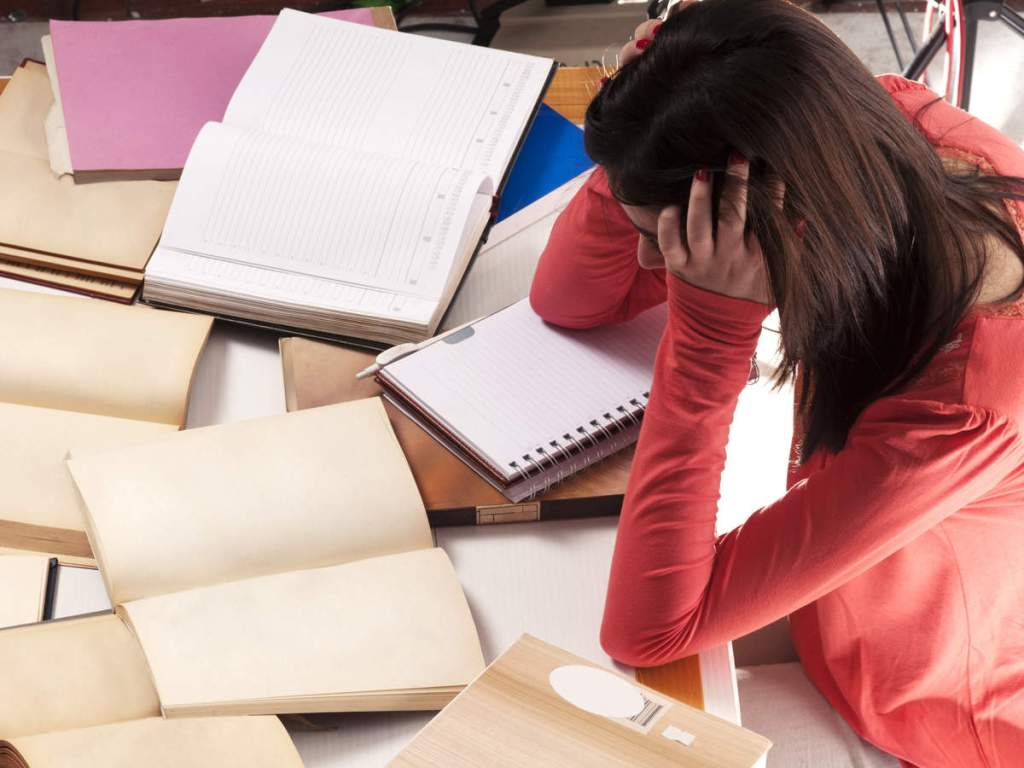
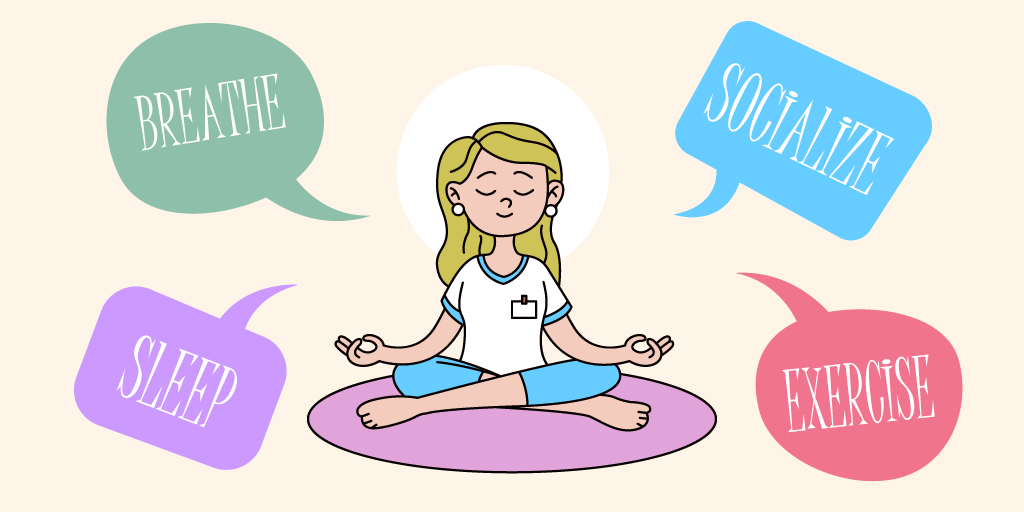
Our daily routine can have a toll on our mental health. Work pressures, exam related stress, house responsibilities, overtime with no rest can cause serious health problems and therefore needed to be taken care of. Our human bodies need rest to reset for further work, and when that is ignored we end up getting sick or stressed. As sickness could be treated with medications, we need stress bursting activities too. These activities not only reset our brains for a fresh start but also help us develop the capabilities we never actually cared enough about. These activities help us in getting relaxed after a hectic day or two. There are a number of these activities that can and are helpful in relieving stress.

Hobbies

Every person has at least one or two hobbies that can come as a savior while having a stressful day like, painting, writing, reading, cooking, watching movies, art and craft, singing, dancing etc. With heavy work or studies load people end up paying zero percent attention to their hobbies, but these might help in taking the head out of work for some time and just relaxing while exploring their lost hobbies further. Mostly a person’s hobbies relate to its right part of the brain, which is also responsible for creative development of a being, thus these hobbies can prove to be beneficial in many unexpected ways. Any sort of art form can relieve the stress from a heavy work day.

Music

“My heart, which is so full to overflowing, has often been solaced and refreshed by music when sick and weary.”

― Martin Luther

Music is to have a magic effect on us while trying to survive through a tiring day. The soft and slow music is to act as a meditation, keeping us at peace and relaxing us. The slow paced music helps us clear our mind and ease up while in a stressful situation. The fast paced music is proven to make us happy or excited while in a low mood. Our brain responds to the happy waves generated by music and helps us loosen up better.

Strolls

With most of the work being desk related or requiring hours of sitting in front of the screen, can be hectic and have unhealthy effects on our mental health. Such a situation calls for a stroll or a walk for at least an hour or so to breathe fresh in park and walk to stretch out our muscles. Walking reduces the strain caused by hours of sitting, thus freeing us from part of our undeserved stress.

Conversations

People sometimes forget the power of conversations. Having work related problems? Talk to your work best friend. Having relationship problem? Talk to your best friend. Having life problems? Talk to your mother. The conversations with right person have the healing power to take you away from a rough, awful day. It might seem like a waste of time to a lot of people but in reality, these conversations hold the power cut off the distress and calm us down.

Breaks

Just like we need an interval in between of a movie or a break in the middle of a show, we sometimes need a break from our daily routine. Little tea or coffee breaks while still going strong with work can be a short term solution but breaks such as- visiting parents, going back to hometown, taking on a vacation, meeting friends, celebrating without any particular reason, can all charge us up to the level that of a fighting war and holding up with pressures then a becomes the easiest task in the world.

One thousand ways to make $ 1000

HOW TO START YOUR OWN BUSINESS

W
HEN Gustavus Swift, a youngster in knee breeches, dressed and sold his first
calf to the fisherfolk of Cape Cod, he laid the foundation of the largest meatpacking business in the world. The desire to make money—to have a business of
his own—was a driving force in the make-up of young Swift. In Barnstable, he
was known as a chap with a lot of “get up and go” to him. So it was not
surprising that when he felt the desire to make money, he didn’t waste his time
wishing, but took his courage in his two hands and started in the dressed beef
business in his dad’s backyard.

No doubt there were other young men in Barnstable who wanted to make money
too. But while they were wondering how they could make it, Gus Swift cut the
Gordian knot. It meant work for him. It was not a pleasant way to make money.
There was the possibility of his not being able to sell his calf after he had dressed
it. He had to walk miles in order to market his veal, for Cape Cod in those days
was a “spread out” sort of place.

But Swift didn’t care.

He wanted money

The work, the walking and the adventure were fun. And because he regarded
making money as fun instead of work, he later was able to come to Chicago and
start the great Swift packing business. How different from the average young
men of today! They are usually more interested in having a good time than they
are establishing themselves in a business of their own. Being in business is so
confining! So they concentrate on enjoying themselves, serene in their
philosophy that tomorrow is another day. If these people, and they are not all
young people either, worked half as hard at making money as they do at having a
good time, they would be rich.

Then there are people who are willing to work and do work hard at making
money, but they are not successful because they lack a target. They are like the
chap who hunts big game with a shotgun. They do a lot of shooting, but they bag
very little game. Next to being willing to pay the price of success in hard work,
the most important thing is to have a definite, clear-cut objective. Since it is
necessary to crawl before you walk, it is suggested that you make that objective
$1,000.

What you about this story of hard work and dedication

What beauty means to you

  • Beauty is power; a smile is its sword. …
  • Life is full of beauty. …
  • There is no definition of beauty, but when you can see someone’s spirit coming through, something unexplainable, that’s beautiful to me. …
  • Let us live for the beauty of our own reality.

One difficulty for understanding beauty is due to the fact that it has both objective and subjective aspects: it is seen as a property of things but also as depending on the emotional response of observers. Because of its subjective side, beauty is said to be “in the eye of the beholder”.

It has been argued that the ability on the side of the subject needed to perceive and judge beauty, sometimes referred to as the “sense of taste”, can be trained and that the verdicts of experts coincide in the long run.

This would suggest that the standards of validity of judgments of beauty are intersubjective, i.e. dependent on a group of judges, rather than fully subjective or fully objective.

Conceptions of beauty aim to capture what is essential to all beautiful things. Classical conceptions define beauty in terms of the relation between the beautiful object as a whole and its parts: the parts should stand in the right proportion to each other and thus compose an integrated harmonious whole. Hedonist conceptions see a necessary connection between pleasure and beauty, e.g. that for an object to be beautiful is for it to cause disinterested pleasure. Other conceptions include defining beautiful objects in terms of their value, of a loving attitude towards them or of their function.

What comes to your mind when you think of beauty?

Comment below 😇

Body parts that you can trade for money

It’s will amuse you to know that you can sell your body parts and People will pay hundreds, and sometimes thousands, of dollars for certain body parts.

Note that “selling” a body part isn’t the same as putting your futon up for sale on Craigslist. Except for selling ad space on your skin, most forms of giving body parts are technically donations, but it’s common practice to be compensated in cash. 

Being compensated for all of the parts listed below is legal, but we don’t necessarily recommend it. There are other — more conventional — ways to supplement your income.

1. Hair up to $1,000

Like blood, hair is easy enough to donate to a good cause (like Locks of Love). But it’s also entirely possible to sell it at a pretty sweet price point.

The trick is to keep it as long and “virginal” as possible. That means no harmful hair dyes or other chemical treatments that could damage the quality. Buyers are likely looking to make wigs, and they’re not going to be interested in your split ends.

According to Wisebread, one woman made as much as $1,000 on her locks in just a week by posting an ad on TheHairTrader.org.

2. Sperm: $ 125 per sample

The going rate: $125 for each acceptable sperm sample — which can add up to about $600 per month — according to the Sperm Bank of California.

You’ll have to meet some very specific qualifications first. Here’s the list of requirements for potential donors at SBC:

• Between ages 20 and 39

• At least 5’7″

• Can make a six to 12 month commitment

• Live within 25 miles of the office

• Can provide a family medical history

• Are able to work legally in the US

• Have completed or are pursuing a college degree

Look for sperm banks near you.

Indicators of Women’s Status in India


There are different forms of violence on women, which act as threats to women’s independent identity and
dignity. Forms of violence are:
1) Female foeticide & infanticide- According to a survey by British medical journal, Lancet, nearly 10
million female abortions have taken place in India in the last 20 years, which is rampant amongst the
educated Indian middle class as well.
There are organizations like Swanchetan, which are working towards educating & bringing awareness in
people against the ghastly act.

Women at a rally in support of the Equal Rights Amendment in Detroit’s Kennedy Square, June 30, 1981.


2) Rape, sexual harassment & abuse- It acts as a deterrent to women’s freedom & perpetuates the notion
that women are the weaker sex. Every 2 hours, a rape occurs somewhere in India!
The recent Dec. 16 Delhi Gang rape case, shook the entire country and led to protests all across the
country, setting up of Justice Verma panel & helped in the fast track judgment of the case. However
rampant cases of rape of Dalit women, acid attacks, eve teasing go unnoticed.
3) Domestic violence and dowry deaths- Violence on women in the family were considered family
problems and were never acknowledged as “crimes against women” until recently. It is prevalent in all
classes of society.
4) Prostitution- A large number of women destitute or victims of rape who are disowned by family fall prey
to prostitution forcibly. There are no governmental programs to alleviate the problem of prostitution.
5) Objectification of women- Indecent Representation of Women(Prohibition) Act, 1986 prohibits indecent
representation of women through advertisements or in publications, writings, paintings etc. However a
whole lot of indecent representation of women is done through literature, media, paintings etc
upholding the “right to freedom of expression”.

As per World economic forum survey, India’s Global Gender Gap Index 2011 ranking is 113 out of 134 countries
with neighbors like Bangladesh at 69 & China at 60.
1) Sex Ratio –Sex ratio is used to describe the number of females per 1000 of males. As per census 2011
sex ratio for India is 940 females per 1000 of males, i.e. females form a meager 47% of the total
population. The State of Haryana has the lowest sex ratio in India and the figure shows a number of 877
of females to that of 1000 males while Kerala has the highest of 1084 females per 1000 males
2) Health – Studies on hospital admissions and records have shown that males get more medical care
compared to girls. 2% of the female population is absolute anaemic. 12% of the female population of the
country suffers from repeated pregnancy (80% of their productive life is spent in pregnancy) & lack of
nutrition.

3) Literacy – The female literacy levels according to the Literacy Rate 2011 census are 65.46% where the
male literacy rate is over 80%. While Kerala has the highest female literacy rate of 100% , Bihar is at the
lowest with only 46.40%
4) Employment – Of the total female population 21.9% are a part of Indian workforce.
Majority of women are employed in the rural areas and in agriculture. Amongst rural women workers
87% are employed in agriculture as laborers, cultivators, self employed like hawkers etc i.e in the
unorganized sector which almost always remains invisible.
Despite the equal remuneration Act 1976, women are paid lower wages, occupy lower skilled jobs, have
less access to skill training and promotion.
5) Political status – Though India had a women Prime Minister Late Ms Indira Gandhi, women are not fairly
represented in the Parliament & other State & Local bodies. With only around 9 per cent women in
upper house and around 11 per cent in the lower house of parliament, India ranks 99th in the world in
terms of female representation among MPs.
However 73rd & 74th amendments to the constitution have ensured the participation of women in
PRIs with a reservation of 1/3rd for women. Today more than 30 million women are actively participating
in the political decision making process at the grass root.

This contains an image of: {{ pinTitle }}

“Without economic freedom other aspects of women equality would not be realized”
-Jawaharlal Nehru
Women’s work participation rate in general has been declining over the decades. The decline has occurred due
to several factors:
1) Absence of comprehensive and rational policy for women’s emancipation through education, training
and access to resources such as land, credit and technology etc.
2) The perception of male as the breadwinner of the family despite the fact that in low income households
women’s income is crucial for sustenance. This perception adversely affects women’s education &
training. Employers also visualize women workers as supplementary workers & also cash in on this
perception to achieve their capitalistic motives by keeping the wage low for women.
3) Structural changes in the economy e.g decline in traditional rural industries or industrialization.
4) Lack of assets (land, house) in their own name in order to have access to credit and self employment
opportunities
5) Huge demand

This contains an image of: {{ pinTitle }}

of time and energy of women for various tasks at home like child bearing and rearing etc
in addition to participation in labour force leave them with little time for education, training and self
development
6) Division of labour based on the gender between men and women & technological advancements work
against women. They are the last to be hired and first to be sacked.
7) Govt. programs to increase employment and productivity are focused more on men & women are seen
as beneficiaries rather than active participants

Terrorism, Extremism, Radicalization

When a decision is made that fear, terror and violence are justified to achieve ideological, political
or social change, radicalization to violent extremism occurs’
Terrorism, radicalization and extremism are subjective concepts that have different meanings for
different people. Furthermore, their meanings are constantly evolving as they manifest
themselves in different ways in different parts of the world, exploiting new vulnerabilities,
technologies and approaches.
1.1. Terrorism
‘Terrorism is a complex and contested issue, as are the associated labels of extremism, violent
extremism and radicalization’
There is no single universally accepted definition for terrorism because the concept is invariably
political and cannot be framed in a manner that excludes the state. Most acceptable words to
understand terrorism are ‘acts committed with the objective of seriously intimidating a
population, destabilizing or destroying structures of a country or international organization or
making a government abstain from performing actions’.
1.2. Extremism
‘Violent extremist ideologies have found fertile ground in fragile communities characterized by
little access to development’
Extremism is generally understood as constituting views that are far from those of the majority
of the population. Accordingly, one definition describes extremism as ‘activities (beliefs,
attitudes, feelings, actions, strategies) of a character far removed from the ordinary’. Though this
is clearly a relative term which invites disagreement regarding benchmarks, it is broadly agreed
that extremist views are not necessarily illegal and do not automatically lead to violence or harm.
Indeed those with extremist views, who may also choose to observe extreme practices with no
impact on the civil liberties of fellow citizens, are rightly protected under fundamental freedoms
and human rights norms.
Extremism becomes a concern when those views threaten democratic and tolerant societal ideas,
or promote the use of violence to coerce their followers or to achieve their objectives. This form
of extremism is described as violent extremism, a term which remains contested, but which
generally refers to the creation of ideologically motivated or justified violence, as well as support
for such acts.
1.3. Radicalization
‘Radicalizer’s work by pointing to social, political and economic injustice around their followers.’
Like terrorism and violent extremism, radicalization is a contested term with various definitions.
It is commonly understood, however, as the social and psychological process of incrementally
experienced commitment to extremist political and religious ideologies. It does not necessarily
mean that those affected will become violent. However, when a decision is made that fear, terror
and violence are justified to achieve ideological, political or social change, radicalization to violent
extremism occurs.

ROLE OF MEDIA IN INTERNAL SECURITY CHALLENGES

This contains an image of: {{ pinTitle }}

Any communication channel through which any kind of information, news, entertainment,
education, data, promotional messages etc. can be disseminated is called media.
Mass media refers to communication devices, which can be used to communicate and interact
with a large number of audiences in different languages. Be it the pictorial messages of the
early ages, or the high-technology media that are available today, mass media has become an
inseparable part of our lives. Media can be broadly classified as:
• Print Media (newspapers, magazines, books and Brochures, Billboards, etc.)
• Electronic Media (news websites, social networking sites, mass SMS schemes, television,
internet, radio, cinema etc.)
• New Age Media (Mobile Phones, Computers, Internet, Electronic Books)

This contains an image of: {{ pinTitle }}

Where Media is Misleading? – Threat to Internal Security
• Indian media does not have a wider perspective of India’s national security issues.
• Indian media is in no mood to apply brakes or observe self-restraint on its wayward and
insensitive treatment of national security issues.
• Indian media’s (especially electronic media) analysis and over-analysis of national security
issues by groups of former diplomats, generals and academia’s arm chair strategists distort
national security perspectives. All these gentlemen can only draw on their outdated
experience and none of them are privy to latest inputs. Also in many cases, reticence is
their first casualty after retirement.
• Indian TV anchors discussing national security issues do not have the political and strategic
maturity to discuss national security issues as their Western counter-parts do.
• Indian TV debates on national security issues tend to cut out development of contrary
views and perspectives by imposing commercial breaks, or go hectoring themselves.

For a country like India, the backbone of its democracy and the propagator of its national
interests remains the access to information and expression. It helps citizens to make
responsible and objective choices, to promote accountability by its officials, to provide solutions
to conflict resolution, and also to encourage diverse views of its diverse people. This access of
information has allowed the Indian media to play the role of watchdog that holds the
Government accountable in all its activities, and also functions as the only mode of expression
for its people.

This contains an image of: {{ pinTitle }}


The role of media in a democracy like India, therefore, can be summed up as to:
• Inform and educate people objectively, impartially and in an unbiased manner about
security threats and challenges
• Unbiased reporting with the restraints of self regulations
• Promotion of the principles of healthy democracy
• Respect for the Constitutional Provisions
• To build a bridge between people and governments at the national level
• Uphold fairness, justice, national unity and international cooperation
• Inform, educate, entertain, publicize and most importantly correct the excesses in any
society.
• Highlight the trouble spots in the society and press the government and public to devise
suitable mechanisms to eliminate them
• Shape the perceptions of government, influence public opinion, promote democracy, good
governance as well as influence peoples’ behavior and support people- oriented policies
Following the globalization, the responsibilities of media have also widened. It has to play a role
for preserving and pursuing the national interests of the state and highlighting its perspective
along with the global issues. It has to examine the conduct of international relations and again
to highlight the trouble spot at global level in lieu of global security.

“The internet is the largest experiment involving anarchy in history. (…) It is a source for
tremendous good and potentially dreadful evil, and we are only just beginning to witness its
impact on the world stage.”

  • Eric Schmidt, Executive Chairman, Google and Jared Cohen,
    Director, Google Ideas

Covid impact on Children

‘The new normal’ a phrase you have offen listened to, and had became used to nowadays. Everything has changed the way we live, the way we interact, the way we meet, the way we chill. Our whole world has shrinking to just our electronic gadgets and our house. Even though everything is opening slowly but still, it is not the same as it was before covid.

Effect on children

One of the worst effected during this ‘new normal’ times are the children. They are not able to go out and play, not able to interact with their friends and teachers, not able to enjoy outdoor meals.As they used to before covid.

Now, their eyes are getting strained due to online class, they are becoming insocial, have become a night own. They have actually lost their whole routine. They have lost their speaking skills, have became addictive to social media. They have ultimately started losing the main essence of their childhood.

This is a really important issue, it should be treated with at most seriousness, as they number of children facing mental problems has increased drastically since, the out break of the covid.

It is the responsibility of the parents and teachers to observe their child’s behavior, if the are behavior has become rude or they are getting irritated or frustrated on small things or has stopped or reduced their interaction with you. Then it is certainly a matter of concern.

Ultimately this article is not to scare you, but to bring out the genuine problems of the children in this difficult time.

Big Fat Indian Weddings

The groom riding on the back of a horse, just being the prince charming, this beautiful bride had been waiting for, since she was nine, hundreds of people dancing, singing, celebrating, some other busy hosting more than a thousand people and the guests just rejecting every good thing. Rings a bell? Yes! That is what a Big Fat Indian Wedding Is! Will this showing off business take us anywhere? Why can’t we just have a wedding to satisfy ourselves rather than some strangers? The tradition of BIG FAT WEDDING has been in India for as long as humans have existed on earth and even a slightest change is considered crime in the eyes of the envoys of these traditions. With fair variety of food amounts taking space in the rented marriage halls as deemed necessary and appropriate measure of the respect they give to their guest has to be toxic at another level.

Hidden Ills

These high budgeted, well planned, stretching for over a week weddings could be fun for people who can afford it but for those who are to take loans just to satisfy the people (of half of whom doesn’t even matter to them), is something that definitely catches the eye. The issue with these weddings is that their sole purpose is not the happiness and contentedness of the bride and the groom but of the people who does not even knew the couple existed until before their wedding day. The show business is something that is worrisome to people who intend on getting married with lesser crowds and obviously lesser money. Because when these people do not follow the lead of burning millions in food, drinks, lodging, entertainment, for the people they hardly know, they are termed as misers, or even sometimes questioned if they are happy for their own wedding. The glorification of picture perfect wedding, the one where bride has at least one Sabyasachi or Manish Malhotra, groom gets a diamond ring for the engagement, there are as many as thousand shaguns given to all the guests, the hotels are no less than five stars, magnificent wedding sets inspired from dharma movies and only some 10-15 years worth savings going away with each step, is doing the harms it can in all the directions.

Picture Credits: WeddingWire.in
http://shorturl.at/noLQW

The amount to be spent on the wedding which was once one’s own choice today has become not only the status symbol but also a way of getting much craved respect from far away relatives. The amount that is spent has gone so high that people are compelled to give up all their savings along with loans burden on their heads. Everything becoming expensive day-by-day, the total cost can range anything from 20 lakhs to 5 crores, which also happens to be some family’s total savings or at least half of it. From decor to events to catering to photography with list adding on, the wealth drains with every event until it’s over. 80% people take loans for the wedding expenses. Reliance Money has stated that “An Indian wedding is generally a three-day affair with different ceremonies and rituals lined up. Each ceremony requires its own set of apparel, set-up, and materials. The average cost of a single ceremony may range between 6 to 10 lakhs.” Could we even think that these weddings are nothing more than wastage of money in its most prime way?

Refined Way

as the younger generation is getting married with their own money and not with their families taking loans, there has been a change in the way the weddings are being planned out. They marry on their own terms and more specifically in their own budgets. These new couples of 21st century aren’t the ones who spend money to impress some strangers but the ones who plan and spend as their own needs. The court marriages have emerged as a new trend with only the couple and parents saving the money and mostly donating it. With covid hitting the world and restricting the number of people in weddings in India, people have been inviting guests that are close to them. Now weddings are turning into more of a private affair than a public one, with only limited guests and less spending, there by moving forward in the right direction of curbing the ills of BIG FAT INDIAN WEDDING.

Reference: https://www.reliancemoney.co.in/getting-married-in-india-what-does-an-average-wedding-cost

The better you attract, The better you become

Have you ever felt attracted towards something or someone just by a glimpse of sight? Yeah, that’s what the attraction of energy is. Everything in the universe has its unique energy with different frequencies and vibrations.
There’s a famous quote by Nikola Tesla “If you want to find the secrets of the universe, think in terms of energy, frequency, and vibration.”

In childhood, we all have been taught to maintain a relationship with good people only. The reason being behind is if we attract the good people energy we will become good too but if we will be in a bad angry we will behave the same.

Each one of us desires to live in a calming and peaceful environment. It is important to understand the angry within us is affected by our surroundings, the better the energy the better you will feel, the better you will become

Everything starts with what kind of energy you are putting into the universe. And the energy you are attracting from the universe. If you think of something positive you will tend to attract that and if you think of negative vice-versa will happen. Here the law of attraction came into action. You will become what you will think. The more positive you are around the happier you become. The way to do this is by associating yourself with better energy.

Lastly, I would like to note that if you want to become better you will get rid of all negative energy aspects in your life. It could be negative people, negative things, bad habits. You will feel the benefit of all that bad energy lifted from your life. Then Your life will become better.

The Ultimate Productivity Hack is Saying No

The ultimate productivity hack is saying no.

Not doing something will always be faster than doing it. This statement reminds me of the old computer programming saying, “Remember that there is no code faster than no code.”

The same philosophy applies in other areas of life. For example, there is no meeting that goes faster than not having a meeting at all.

This is not to say you should never attend another meeting, but the truth is that we say yes to many things we don’t actually want to do. There are many meetings held that don’t need to be held. There is a lot of code written that could be deleted.

How often do people ask you to do something and you just reply, “Sure thing.” Three days later, you’re overwhelmed by how much is on your to-do list. We become frustrated by our obligations even though we were the ones who said yes to them in the first place.

It’s worth asking if things are necessary. Many of them are not, and a simple “no” will be more productive than whatever work the most efficient person can muster.

But if the benefits of saying no are so obvious, then why do we say yes so often?

Why We Say Yes

We agree to many requests not because we want to do them, but because we don’t want to be seen as rude, arrogant, or unhelpful. Often, you have to consider saying no to someone you will interact with again in the future—your co-worker, your spouse, your family and friends.

Saying no to these people can be particularly difficult because we like them and want to support them. (Not to mention, we often need their help too.) Collaborating with others is an important element of life. The thought of straining the relationship outweighs the commitment of our time and energy.

For this reason, it can be helpful to be gracious in your response. Do whatever favors you can, and be warm-hearted and direct when you have to say no.

But even after we have accounted for these social considerations, many of us still seem to do a poor job of managing the tradeoff between yes and no. We find ourselves over-committed to things that don’t meaningfully improve or support those around us, and certainly don’t improve our own lives.

Perhaps one issue is how we think about the meaning of yes and no.

The Difference Between Yes and No

The words “yes” and “no” get used in comparison to each other so often that it feels like they carry equal weight in conversation. In reality, they are not just opposite in meaning, but of entirely different magnitudes in commitment.

When you say no, you are only saying no to one option. When you say yes, you are saying no to every other option.

I like how the economist Tim Harford put it, “Every time we say yes to a request, we are also saying no to anything else we might accomplish with the time.” Once you have committed to something, you have already decided how that future block of time will be spent.

In other words, saying no saves you time in the future. Saying yes costs you time in the future. No is a form of time credit. You retain the ability to spend your future time however you want. Yes is a form of time debt. You have to pay back your commitment at some point.

No is a decision. Yes is a responsibility.

Child Marriage legalised on Rajsthan

Currently, Rajasthan govt released an amendment “Rajasthan compulsory Registration of Marriage Amendment Bill 2021” it allowed registration of child marriages, it’s 21 century and we all are aware of how heinous child marriage is, here are some of my views on this act

In my views law is not wrong
Those who commit or help in child marriage will still be punished, but those who already had marriage were not allowed to have registration and so they were not able to avail all govt schemes and benefits, those saying it will make it easier to do child marriage remember availing govt benefits are everyones fundamental rights.

Those saying it’s illegal look it like this rape is illegal but rape victim and culprit both have some rights that we can’t snatch, like culprit must be allowed to go court etc, ofcourse child marriage is as heinous as rape and here victims are both boy and girl but why they suffer whole life for it, they can’t get rashion, jobs, water, now as everything is more and more digitalizing and you can’t prove you’re married, it will become more hard to avail services like jacha bacha Suraksha and this are thee parents who most need it.

Also one negative point is it will make child marriage easier, but many people will not be able to avail fundamental rights isn’t it totally wrong also we can make child marriage hard by making strong rules. As we have data of child marriage we can ask govt employee who are posted there why they let it happen like police or magistrate, they will become more accountable this way.

If I’m missing some points or you want to share your views here’s my email soni362002@gmail.com

Test your ‘MYTHS VS FACTS’ knowledge

Isn’t it amazing when your friends are talking about something that is a myth but you know the real fact about it and you can actually brag about it. Everyone thinks you are a genius but you know that it is something you read somewhere. It’s hard sometimes to think about thousands of myth and facts which we just don’t know and continue to believe what we know about it. When I was small my mother once told me that if you see your face in the mirror at night your face will get wrinkles. Yeah… like that doesn’t even make sense but she told me anyway because she was getting ready and I was In the way. And I know you too have come across some bizarre myths that I believe are made up. But there are myths that people actually believe and are common to everyone like black cats are unlucky. They are not!! I have a black cat and I love her the most.

Photo by Helena Lopes on Pexels.com

It’s modern time and people want facts if you want them to believe something. Science has progressed and has answer to almost everything but there are things which even science is unable to answer for e.g., why are women always right? And how moms are able to find anything when we ask them and we can’t. How?? Okay, I will pull my hair out and still won’t get any answer so let’s move on to our myths vs facts quiz. I will give you some common beliefs and you will have to identify it as a myth or a fact and at the end I will answer them.

READY, SET, GO…

  1. You have to drink at least 8 glasses of water a day.
  2. Bulls get angry when they see red color
  3. Only animals that blush are humans
  4. Dogs only see black and white. Poor doggos. (Simple huh?? Real questions start now.)
  5. If you swallow gum it will sit for 7 years in your stomach.
  6. Pineapple is a natural meat tenderizer.
  7. To boil water faster add salt to it.

Answers

(Myth) No you don’t have to. There are many factors involved as of how much water you should consume. Drink when you feel like drinking. Not too less not too much. 3 to 4 litres work perfectly fine. According to The U.S. National Academies of Sciences, Engineering, and Medicine, the adequate intake of fluids for men is 3.7 L and for women it is 2.7L. about 50 to 70 % of our body is made up of water and it is important for:

  • Keeping temperature normal.
  • Getting rid of body waste

(Myth) I’ve spent my life getting scared and hiding my red clothes whenever I saw bulls. Whoever made this myth hated red color. Everyone believed this because of that red cloth used by matadors in bull fights but American science guide says that bulls are red green colorblind. The actual reason for bulls’ anger was the movement of the cape. Feeling stupid? Yeah me too. We are in this together.

(Fact) Isn’t it amazing how our cheeks turn red when someone compliments us or when we are embarrassed of saying something stupid. humans are the only animals who are capable of blushing, and as Darwin states “the most peculiar and the most human of all expressions.” It’s still unknown how it happens voluntarily but in terms of science it is caused by the dilation of blood vessels in the facial skin.

(Myth) Here is a good fact dogs don’t see in black and white. Our friend is actually capable of seeing colors not many but can distinguish between them. The can see blue, yellow and some shades of grey. They may not see the true color of an object but they definitely see the color of love. Dogs are pure souls.

Photo by Andrea Piacquadio on Pexels.com

(Myth) “Oh my god! I just swallowed a gum, it will get stuck to my intestines now. (screaming in fear).” You can understand this, right? From fruit seeds to chewing gums we have avoided gulping them. But you will laugh after knowing that neither plants were going to grow from your stomach nor the gum will hijack your guts because your gut can’t digest it. If you anyhow swallow it, it will pass through you in a couple of days. Although a large amount of gum can result in intestinal blockage.

(Fact) Bromelain enzyme in pineapple is digests protein and softens the tissues in meat, hence, goes well with beef, pork and some types of fish. This is the reason why it stings our tongue, it breaks down the surface tissues thankfully our body regenerates cells and repairs the tongue. If you want to soften it you can bake it or soak it in salty water.

(Myth) Adding salt to water will increase the temperature of water fast but it’s boiling point will remain same. Even if you add a spoonful of salt the boiling point will change from 100° to hardly 100.4°.

I hope you enjoyed the quiz, if you know some more myths and facts do tell in the comments below also tell me how much you scored today.