SMARTPHONE ADDICTION.

smartphone addiction is generally known as nomophobia and is often caused by an internet addiction disorder after all it realise the Phone or tablet itself that creates the comparision why you spend more time on social media for playing games then you do interacting with real people are you cannot stop yourself from repeatedly checking text email or applications.Cell phones have become search powerful and versatile toll that for many people they fear me indispensable literally. For many people social interaction stimulates the the release of dopamine. Because so many people use their phones as tool of social interactions they become accustomed to constantly checking them all social media for that of dopamine that’s released when they connect with others or some other applications. Some applications even with old and release social reinforcements such as likes and comments so we received them in an unpredictable pattern that cycle can lead to a tipping point when your phone seizes to be something you were virtually compressed to use.

Conscious use of phones in dangerous situations or in prohibited context like while driving or excussive phone use controntations as well as loss of interestIn Aadarsh and activities containing the behaviour. The negative effect aap smartphone addiction sar it causes excussive use urgency noticeable physical mental work social for family disturbance chronic impulsiveness to check your device frequent and constant checking of phone is very brief period of time crossing insomnia and sleep disturbance. Increase in use to achieve satisfaction or relaxation or to counteract a dysphoric mood excessive use urgency need to be connected need to respond immediately to messages anxiety irritability if cellphones is not accessible extravests reported using the phone more as a mean of stimulation extravests and disagreeable. Spend more time configuring their phones some of the negative impact on your life due to smartphone addiction can be ee your life can I have addiction of smartphone increasing loneliness and depression while it may seem that losing yourself online while temporally make feeling such as depression and boredom evaporate into thin air it can actually make you feel even worse feeling and city is one of the most negative impact created by the smartphone in which the presence of the phone in a workplace tend to make more and society e and perform poorly on given task increasing in stress using smartphone for work off and mains work blends into your home and personal life you feel the presence to always be on never out of touch from work exacerbating attention defect disorder the constant stream of messages and information from a smartphone can over whelm the brain and make it impossible to focus attention dimension your ability to concentrate and think deeply are creatively instead fo ever being alone Vidyarthi thoughts where now always online and connectivity disturbance your sleep it can impact your memory affect your ability to think clearly and reduce your cognitive and learning skill encouraging self absorption snapping endless selfies posting all your thoughts and details about your life can create an unhealthy self-centeredness disturbing you from real life relationships and making it are to cope with stress addiction like compulsive gambling which may include loss of control over the behaviour presistence arriving real difficulty limiting the behaviour tolerance the need to engage in the behaviour more often to get the same feeling.

Some of the negative impact of smartphone addiction consequences teaming from the behaviour withdrawal or feeling of irritability and anxiety depression being highly extroverted relationship stress eye strain neck pain social anxiety escapist behaviour. Dependence on digital violence the neurotic disagreeable unconscionable and extroverted personality e-type up spend more time texting and engaging in mobile .
Solar air conditioning and efficient, low-consumption cooling systems work together.

Researchers from the Universitat Politècnica de València (UPVCMT-Motores )’s Térmicos (Thermal Engines) group are developing new, more efficient cooling systems that use solar air conditioning, which will assist in addressing the summer increase in electricity bills Their study results made an appearance in the International Journal of Refrigeration.

“In the last month, the ‘perfect storm’ has occurred in all aspects of the electricity bill. On the one hand, there is the so-called rate change, which is divided into three segments, and on the other, there are consumption peaks in the summer during the hottest days of the year. In these days of high temperatures, air conditioning units and cooling systems consume more electricity, raising the cost of electricity significantly—without going any further, the price of electricity surpassed its annual record last Saturday. Solar air conditioning, while an oxymoron, has the potential to be a solution to this perfect storm, says “José Ramón Serrano”, a CMT researcher.

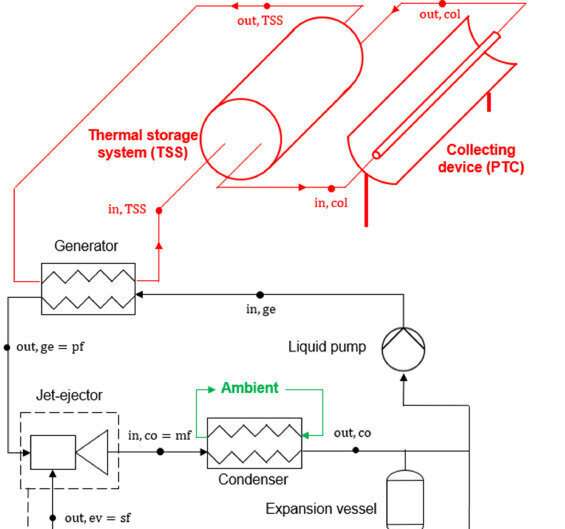
Solar-assisted thermal storage tank jet ejector cooling system.

Solar air conditioning equipment

Solar air conditioning is the equipment used to cool a space with solar energy. Two main groups are involved, as explained by Serrano: on the one hand, photovoltaic panels are used to produce traditional air conditioners. The problem with these solutions is their low efficiency: barely 10 percent, which means the nearly 1,000W per sqm that we get with the most solar radiation during the summertime, generates only 100W of electricity. “This represents about 300 W of cooling power in a traditional cold unit,” Serrano describes.

Solar thermal cooling systems, on the other hand, are more efficient and versatile. In this case, thermo-solar panels are used in place of photovoltaic panels that warm up a liquid by using surfaces that absorb or concentrate solar rays. These systems are used in the cold winter months in households to heat sanitary water and solar heating systems. The CMT-Motores Térmicos researchers concentrate their efforts on the latter to use them during the summer.

They propose coupling these panels to absorption or ejection cycles, which would allow them to cool the room using the sun’s heat as the source of energy. The 1,000 W per square meter received in these cases can be converted into 500 W of heating power using the thermal oil that flows through the thermo-solar panels. The 500 W can then be converted into 600 W of cooling power via high-efficiency absorption cycles.

“One advantage of using this equipment is that the cooling capability increases in tandem with the solar radiation, which coincides with periods of higher cooling demand,” says Vicente Dolz, UPV professor and CMT-Motores Térmicos researcher.

And how would this allow you to save money on electricity?

A typical household air conditioning unit in the living room has a cooling capacity of around 3,500 W. According to the UPV researchers, these values can be achieved with around 6 m2 of thermo-solar panels coupled to an absorption cycle during the hours of highest irradiation (midday in the summer) to completely replace the traditional air conditioning unit with the absorption cycle.

“A traditional air conditioning unit consumes approximately 1,170 W of electricity to achieve the 3,500 W of cooling power.” The technology that we propose would allow us to eliminate said consumption from our bills while enjoying the greatest level of comfort possible thanks to the combination of solar panels and absorption cycles.

CMT-Motores Térmicos proposed that solution can also be implemented as a hybrid system that provides part of the traditional system’s cooling capabilities or improves its efficiency while also reducing global electricity consumption by providing the solar air conditioning system.

What is Astrophysics?

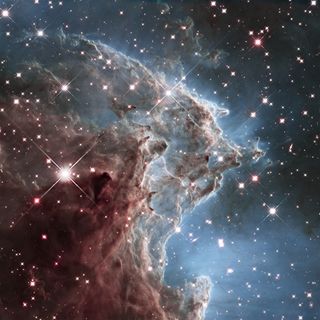
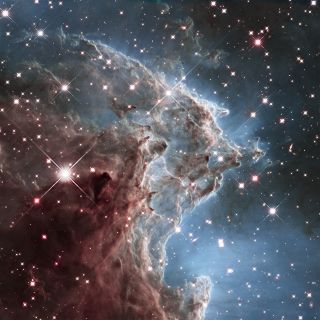
Hubble Snaps 'Monkey Head' Nebula
Astrophysics is a branch of space science that applies the laws of physics and chemistry to explain the birth, life and death of stars, planets, galaxies, nebulae and other objects in the universe. It has two sibling sciences, astronomy and cosmology, and the lines between them blur. 

In the most rigid sense:
Astronomy measures positions, luminosities, motions and other characteristics
Astrophysics creates physical theories of small to medium-size structures in the universe
Cosmology does this for the largest structures, and the universe as a whole. 

In practice, the three professions form a tight-knit family. Ask for the position of a nebula or what kind of light it emits, and the astronomer might answer first. Ask what the nebula is made of and how it formed and the astrophysicist will pipe up. Ask how the data fit with the formation of the universe, and the cosmologist would probably jump in. But watch out — for any of these questions, two or three may start talking at once!
Goals of astrophysics
Astrophysicists seek to understand the universe and our place in it. At NASA, the goals of astrophysics are “to discover how the universe works, explore how it began and evolved, and search for life on planets around other stars,” according NASA’s website.

NASA states that those goals produce three broad questions:

  • How does the universe work?
  • How did we get here?
  • Are we alone?

It began with Newton

While astronomy is one of the oldest sciences, theoretical astrophysics began with Isaac Newton. Prior to Newton, astronomers described the motions of heavenly bodies using complex mathematical models without a physical basis. Newton showed that a single theory simultaneously explains the orbits of moons and planets in space and the trajectory of a cannonball on Earth. This added to the body of evidence for the (then) startling conclusion that the heavens and Earth are subject to the same physical laws.

Perhaps what most completely separated Newton’s model from previous ones is that it is predictive as well as descriptive. Based on aberrations in the orbit of Uranus, astronomers predicted the position of a new planet, which was then observed and named Neptune. Being predictive as well as descriptive is the sign of a mature science, and astrophysics is in this category.

Milestones in astrophysics

Because the only way we interact with distant objects is by observing the radiation they emit, much of astrophysics has to do with deducing theories that explain the mechanisms that produce this radiation, and provide ideas for how to extract the most information from it. The first ideas about the nature of stars emerged in the mid-19th century from the blossoming science of spectral analysis, which means observing the specific frequencies of light that particular substances absorb and emit when heated. Spectral analysis remains essential to the triumvirate of space sciences, both guiding and testing new theories.

Early spectroscopy provided the first evidence that stars contain substances also present on Earth. Spectroscopy revealed that some nebulae are purely gaseous, while some contain stars. This later helped cement the idea that some nebulae were not nebulae at all — they were other galaxies! 

In the early 1920s, Cecilia Payne discovered, using spectroscopy, that stars are predominantly hydrogen (at least until their old age). The spectra of stars also allowed astrophysicists to determine the speed at which they move toward or away from Earth. Just like the sound a vehicle emits is different moving toward us or away from us, because of the Doppler shift, the spectra of stars will change in the same way. In the 1930s, by combining the Doppler shift and Einstein’s theory of general relativity, Edwin Hubble provided solid evidence that the universe is expanding. This is also predicted by Einstein’s theory, and together form the basis of the Big Bang Theory.

Also in the mid-19th century, the physicists Lord Kelvin (William Thomson) and Gustav Von Helmholtz speculated that gravitational collapse could power the sun, but eventually realized that energy produced this way would only last 100,000 years. Fifty years later, Einstein’s famous E=mc2 equation gave astrophysicists the first clue to what the true source of energy might be (although it turns out that gravitational collapse does play an important role). As nuclear physics, quantum mechanics and particle physics grew in the first half of the 20th century, it became possible to formulate theories for how nuclear fusion could power stars. These theories describe how stars form, live and die, and successfully explain the observed distribution of types of stars, their spectra, luminosities, ages and other features.

Astrophysics is the physics of stars and other distant bodies in the universe, but it also hits close to home. According to the Big Bang Theory, the first stars were almost entirely hydrogen. The nuclear fusion process that energizes them smashes together hydrogen atoms to form the heavier element helium. In 1957, the husband-and-wife astronomer team of Geoffrey and Margaret Burbidge, along with physicists William Alfred Fowler and Fred Hoyle, showed how, as stars age, they produce heavier and heavier elements, which they pass on to later generations of stars in ever-greater quantities. It is only in the final stages of the lives of more recent stars that the elements making up the Earth, such as iron (32.1 percent), oxygen (30.1 percent), silicon (15.1 percent), are produced. Another of these elements is carbon, which together with oxygen, make up the bulk of the mass of all living things, including us. Thus, astrophysics tells us that, while we are not all stars, we are all stardust.

Astrophysics as a career

Advertisement

Becoming an astrophysicist requires years of observation, training and work. But you can start becoming involved in a small way even in elementary and high school, by joining astronomy clubs, attending local astronomy events, taking free online courses in astronomy and astrophysics, and keeping up with news in the field on a website such as Space.com. 

In college, students should aim to (eventually) complete a doctorate in astrophysics, and then take on a post-doctoral position in astrophysics. Astrophysicists can work for the government, university labs and, occasionally, private organizations.

Study.com further recommends the following steps to put you on the path to being an astrophysicist:

Take math and science classes all through high school. Make sure to take a wide variety of science classes. Astronomy and astrophysics often blend elements of biology, chemistry and other sciences to better understand phenomena in the universe. Also keep an eye out for any summer jobs or internships in math or science. Even volunteer work can help bolster your resume.

Pursue a math- or science-related bachelor’s degree. While a bachelor in astrophysics is the ideal, there are many other paths to that field. You can do undergraduate study in computer science, for example, which is important to help you analyze data. It’s best to speak to your high school guidance counselor or local university to find out what degree programs will help you.

Take on research opportunities. Many universities have labs in which students participate in discoveries — and sometimes even get published. Agencies such as NASA also offer internships from time to time. 

Finish a doctorate in astrophysics. A Ph.D. is a long haul, but the U.S. Bureau of Labor Statistics points out that most astrophysicists do have a doctoral degree. Make sure to include courses in astronomy, computer science, mathematics, physics and statistics to have a wide base of knowledge.

Natalie Hinkel, a planetary astrophysicist who was then at Arizona State University, gave a lengthy interview with Lifehacker in 2015 that provided a glimpse into the rewards and challenges of being a junior astrophysics researcher. She described the long number of years she has put into doing her research, the frequent job switches, her work hours and what it’s like to be a woman in a competitive field. She also had an interesting insight about what she actually did day to day. Very little of her time is spent at the telescope.

“I spend the vast majority of my time programming. Most people assume that astronomers spend all of their time at telescopes, but that’s only a very small fraction of the job, if at all. I do some observations, but in the past few years I’ve only been observing twice for a total of about two weeks,” Hinkel told Lifehacker. 

“Once you get the data, you have to reduce it (i.e. take out the bad parts and process it for real information), usually combine it with other data in order to see the whole picture, and then write a paper about your findings. Since each observation run typically yields data from multiple stars, you don’t need to spend all of your time at the telescope to have enough work.”

Energy-harvesting design aims to turn high-frequency electromagnetic waves into usable power

Device for harnessing terahertz radiation might help power some portable electronics.

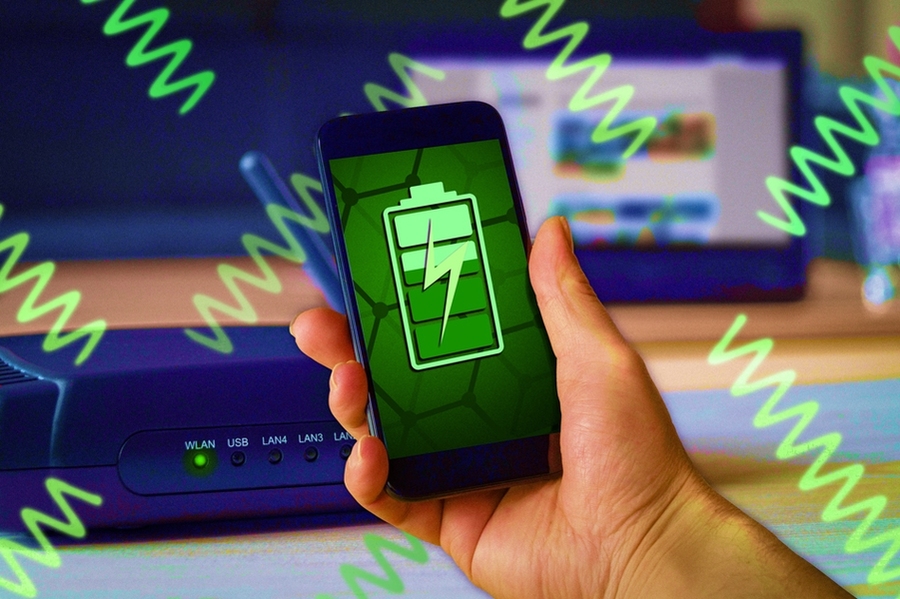
Terahertz waves are pervasive in our daily lives, and if harnessed, their concentrated power could potentially serve as an alternate energy source. Imagine, for instance, a cellphone add-on that passively soaks up ambient T-rays and uses their energy to charge your phone.

Terahertz waves are electromagnetic radiation with a frequency somewhere between microwaves and infrared light. Also known as “T-rays,” they are produced by almost anything that registers a temperature, including our own bodies and the inanimate objects around us.

Terahertz waves are pervasive in our daily lives, and if harnessed, their concentrated power could potentially serve as an alternate energy source. However, to date there has been no practical way to capture and convert them into any usable form.

Now physicists at MIT have come up with a blueprint for a device they believe would be able to convert terahertz waves into a direct current, a form of electricity that powers many household electronics.

Their design takes advantage of the quantum mechanical, or atomic behavior of the carbon material graphene. They found that by combining graphene with another material, in this case, boron nitride, the electrons in graphene should skew their motion toward a common direction. Any incoming terahertz waves should “shuttle” graphene’s electrons, like so many tiny air traffic controllers, to flow through the material in a single direction, as a direct current.

The researchers have published their results today in the journal Science Advances, and are working with experimentalists to turn their design into a physical device.

“We are surrounded by electromagnetic waves,” says lead author Hiroki Isobe, a postdoc in MIT’s Materials Research Laboratory. “If we can convert that energy into an energy source we can use for daily life, that would help to address the energy challenges we are facing right now.”

Isobe’s co-authors are Liang Fu, the Lawrence C. and Sarah W. Biedenharn Career Development Associate Professor of Physics at MIT; and Su-yang Xu, a former MIT postdoc who is now an assistant professor chemistry at Harvard University.

Breaking graphene’s symmetry

Over the last decade, scientists have looked for ways to harvest and convert ambient energy into usable electrical energy. They have done so mainly through rectifiers, devices that are designed to convert electromagnetic waves from their oscillating (alternating) current to direct current.

Most rectifiers are designed to convert low-frequency waves such as radio waves, using an electrical circuit with diodes to generate an electric field that can steer radio waves through the device as a DC current. These rectifiers only work up to a certain frequency, and have not been able to accommodate the terahertz range.

A few experimental technologies that have been able to convert terahertz waves into DC current do so only at ultracold temperatures — setups that would be difficult to implement in practical applications.

Instead of turning electromagnetic waves into a DC current by applying an external electric field in a device, Isobe wondered whether, at a quantum mechanical level, a material’s own electrons could be induced to flow in one direction, in order to steer incoming terahertz waves into a DC current.

Such a material would have to be very clean, or free of impurities, in order for the electrons in the material to flow through without scattering off irregularities in the material. Graphene, he found, was the ideal starting material.

To direct graphene’s electrons to flow in one direction, he would have to break the material’s inherent symmetry, or what physicists call “inversion.” Normally, graphene’s electrons feel an equal force between them, meaning that any incoming energy would scatter the electrons in all directions, symmetrically. Isobe looked for ways to break graphene’s inversion and induce an asymmetric flow of electrons in response to incoming energy.

Looking through the literature, he found that others had experimented with graphene by placing it atop a layer of boron nitride, a similar honeycomb lattice made of two types of atoms — boron and nitrogen. They found that in this arrangement, the forces between graphene’s electrons were knocked out of balance: Electrons closer to boron felt a certain force while electrons closer to nitrogen experienced a different pull. The overall effect was what physicists call “skew scattering,” in which clouds of electrons skew their motion in one direction.

Isobe developed a systematic theoretical study of all the ways electrons in graphene might scatter in combination with an underlying substrate such as boron nitride, and how this electron scattering would affect any incoming electromagnetic waves, particularly in the terahertz frequency range.

He found that electrons were driven by incoming terahertz waves to skew in one direction, and this skew motion generates a DC current, if graphene were relatively pure. If too many impurities did exist in graphene, they would act as obstacles in the path of electron clouds, causing these clouds to scatter in all directions, rather than moving as one.

“With many impurities, this skewed motion just ends up oscillating, and any incoming terahertz energy is lost through this oscillation,” Isobe explains. “So we want a clean sample to effectively get a skewed motion.”

One direction

They also found that the stronger the incoming terahertz energy, the more of that energy a device can convert to DC current. This means that any device that converts T-rays should also include a way to concentrate those waves before they enter the device.

With all this in mind, the researchers drew up a blueprint for a terahertz rectifier that consists of a small square of graphene that sits atop a layer of boron nitride and is sandwiched within an antenna that would collect and concentrate ambient terahertz radiation, boosting its signal enough to convert it into a DC current.

“This would work very much like a solar cell, except for a different frequency range, to passively collect and convert ambient energy,” Fu says.

The team has filed a patent for the new “high-frequency rectification” design, and the researchers are working with experimental physicists at MIT to develop a physical device based on their design, which should be able to work at room temperature, versus the ultracold temperatures required for previous terahertz rectifiers and detectors.

“If a device works at room temperature, we can use it for many portable applications,” Isobe says.

He envisions that, in the near future, terahertz rectifiers may be used, for instance, to wirelessly power implants in a patient’s body, without requiring surgery to change an implant’s batteries.

“We are taking a quantum material with some asymmetry at the atomic scale, that can now  be utilized, which opens up a lot of possibilities,” Fu says.

This research was funded in part by the U.S. Army Research Laboratory and the U.S. Army Research Office through the Institute for Soldier Nanotechnologies (ISN).

Water on Mars: Exploration & Evidence

Newton Crater

Liquid water may still flow on Mars, but that doesn’t mean it’s easy to spot. The search for water on the Red Planet has taken more than 15 years to turn up definitive signs that liquid flows on the surface today. In the past, however, rivers and oceans may have covered the land. Where did all of the liquid water go? Why? How much of it still remains?

Observations of the Red Planet indicate that rivers and oceans may have been prominent features in its early history. Billions of years ago, Mars was a warm and wet world that could have supported microbial life in some regions. But the planet is smaller than Earth, with less gravity and a thinner atmosphere. Over time, as liquid water evaporated, more and more of it escaped into space, allowing less to fall back to the surface of the planet.

Where is the water today?

Liquid water appears to flow from some steep, relatively warm slopes on the Martian surface. Features known as recurring slope lineae (RSL) were first identified in 2011in images taken by the High Resolution Imaging Science Experiment (HiRISE) camera aboard the Mars Reconnaissance Orbiter (MRO). The dark streaks, which appear seasonally, were confirmed to be signs of salty water running on the surface of the planet.

“If this is correct, then RSL on Mars may represent the surface expression of a far more significant ongoing drainage system on steep slopes in the mid-latitudes,” a research team member told Space.com in 2012.

In 2015, spectral analysis of RSL led scientists to conclude they are caused by salty liquid water. [Related: Salty Water Flows on Mars Today, Boosting Odds for Life]

“The detection of hydrated salts on these slopes means that water plays a vital role in the formation of these streaks,” the study’s lead author, Lujendra Ojha, of the Georgia Institute of Technology in Atlanta, said in a statement. Vast deposits of water appear to be trapped within the ice caps at the north and south poles of the planet. Each summer, as temperatures increase, the caps shrink slightly as their contents skip straight from solid to gas form, but in the winter, cooler temperatures cause them to grow to latitudes as low as 45 degrees, or halfway to the equator. The caps are an average of 2 miles (3 kilometers) thick and, if completely melted, could cover the Martian surface with about 18 feet (5.6 meters) of water. 

Frozen water also lies beneath the surface. Scientists discovered a slab of ice as large as California and Texas combined in the region between the equator and north pole of the Red Planet. The presence of subsurface water has long been suspected but required the appearance of strange layered craters to confirm. Other regions of the planet may contain frozen water, as well. Some high-latitude regions seem to boast patterned ground-shapes that may have formed as permafrost in the soil freezes and thaws over time. 

The European Space Agency’s Mars Express spacecraft captured images of sheets of ice in the cooler, shadowed bottoms of craters, which suggests that liquid water can pool under appropriate conditions. Other craters identified by NASA’s Mars Reconnaissance Orbiter show similar pooling.

Evidence for water on Mars first came to light in 2000, with the appearance of gullies that suggested a liquid origin. Their formation has been hotly debated over the ensuing years.

But not everyone thinks that Mars contains water today. New research reveals that RSL may actually have formed by granular flows formed by the movement of sand and dust.

“We’ve thought of RSL as possible liquid water flows, but the slopes are more like what we expect for dry sand,” lead author Colin Dundas said in a statement. “This new understanding of RLS supports other evidence that shows that Mars today is very dry.”

That idea may have been washed away by the recent discovery of a possible subsurface lake near the Martian South Pole.

An underground lake?

Researchers made a big splash when they announced that Mars might be hiding a lake beneath its southern pole. The European Mars Express spacecraft used its Mars Advanced Radar for Subsurface and Ionosphere Sounding (MARSIS) to detect the proposed water. Ground-penetrating radar sent radar pulses to the surface, then timed how long it took for them to be reflected. The properties of the subsurface layers affect how long it takes for the beams to return.

MARSIS’ investigation revealed that the Martian south pole is composed of multiple layers of ice and dust to a depth of about nearly 1 mile (1.5 kilometers) spread over a 124-mile-wide (200 km) region.  

“This subsurface anomaly on Mars has radar properties matching water or water-rich sediments,” Roberto Orosei, principal investigator of the MARSIS experiment and lead author of the new research, said in a statement. 

MARSIS also revealed the presence of a subsurface lake among the pockets. According to the radar echoes, the lake is no more than 12.5 miles (20 km) across, buried nearly a mile beneath the surface. The scientists aren’t certain of the lake’s depth, but they have confirmed that it is at least 3 feet (1 meter) deep. According to the researchers, the lake must have salt to keep from freezing.

“This is just one small study area; it is an exciting prospect to think there could be more of these underground pockets of water elsewhere, yet to be discovered,” Orosei said.

Not all researchers are as certain about the presence of liquid water.

“I think it’s a very, very persuasive argument, but it’s not a conclusive or definitive argument,” Steve Clifford, a Mars researcher at the Planetary Science Institute in Arizona, told Space.com. “There’s always the possibility that conditions that we haven’t foreseen exist at the base of the cap and are responsible for this bright reflection.”

More than three decades ago, Clifford proposed that Mars could harbor liquid water beneath its polar caps in the same way that Earth does. On Earth, lakes beneath the Antarctic and Greenland ice sheets are created when heat from within the planets melt the glaciers in patches. Clifford told Space.com that a similar scenario could happen beneath the Martian polar ice caps.

“The bright spot seen in the MARSIS data is an unusual feature and extremely intriguing,” Jim Green, NASA’s chief scientist, said in a statement. “It definitely warrants further study. Additional lines of evidence should be pursued to test the interpretation.”

“We hope to use other instruments to study it further in the future,” Green said.

Liquid gold

Water may seem like a very common element to those of us stuck on Earth, but it has great value. In addition to understanding how Mars may have changed and developed over time, scientists hope that finding water will help them to find something even more valuable — life, either past or present.

Only Earth is known to host life, and life on our planet requires water. Though life could conceivably evolve without relying on this precious liquid, scientists can only work with what they know. Thus they hope that locating water on celestial bodies such as Mars will lead to finding evidence for life.

With this in mind, NASA developed a strategy for exploring the Red Planet that takes as its mantra “follow the water.” Recent orbiters, landers, and rovers sent to Mars were designed to search for water, rather than life, in the hopes of finding environments where life could have thrived.

That has changed, however, with the flood of evidence these robots have returned. Curiosity determined that Mars could indeed have supported microbial life in the ancient past, and the next NASA rover — a car-size robot-based heavily on Curiosity’s basic design — will blast off in 2020 to look for evidence of past Red Planet life.

Basic Concepts of Object Oriented Programming

What is Object Oriented Programming?

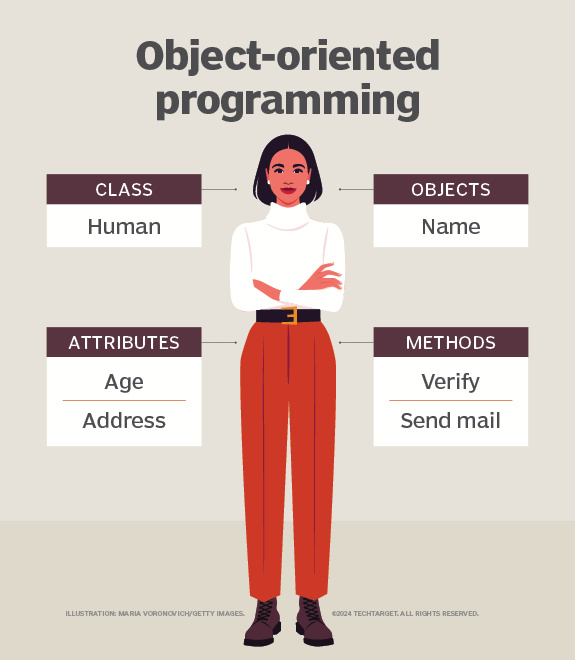
Object-oriented programming (OOP) is a fundamental programming paradigm used by nearly every developer at some point in their career. OOP is the most popular programming paradigm and is taught as the standard way to code for most of a programmers educational career. OOP focuses on the objects that developers want to manipulate rather than the logic required to manipulate them. This approach to programming is well-suited for programs that are large, complex and actively updated or maintained.

Example

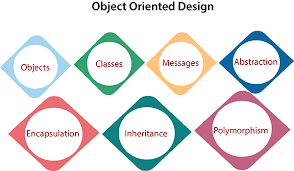
Following are the Basic Concepts Of OOP

  1. Objects
  2. Classes
  3. Data Encapsulation
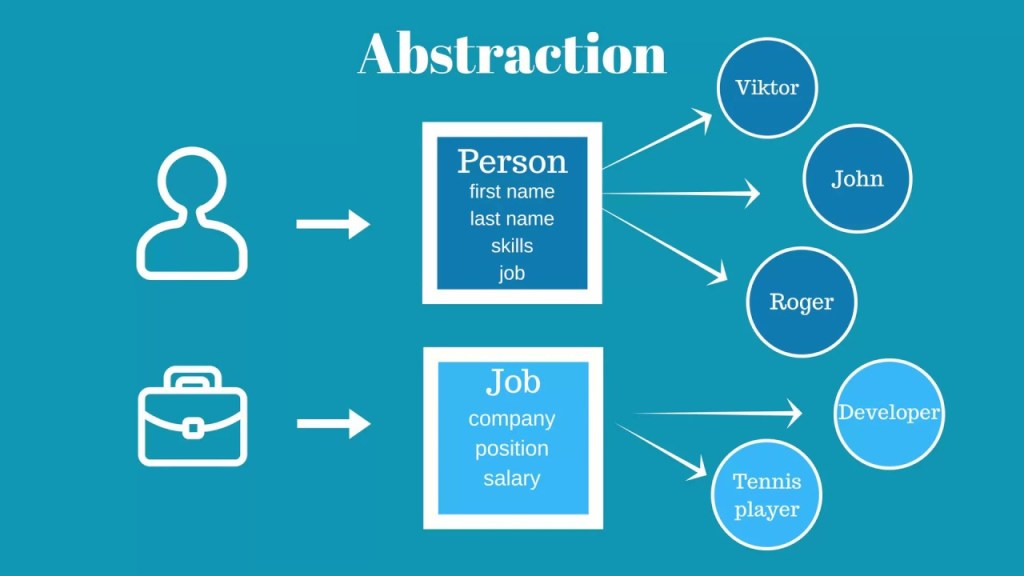
  4. Data Abstraction
  5. Inheritance
  6. Polymorphism
  7. Message Passing
  8. Dynamic Binding

1. Object

•Objects are the basic run-time entities in the object-oriented system.
•They may represent a person, a place, a bank account, a table of data etc.
•They may also represent user-defined data such as vectors, time and lists.
•Programming problem is analyzed in terms of objects and the nature of
communication between them.
•Objects take up space in the memory and have an associated address
•Each object contains data and code to manipulate the data

2. Class

•Class is defined as an abstract data type characterized by a set of properties
(attributes and functions) common to its objects
•Class is a user defined data type for object
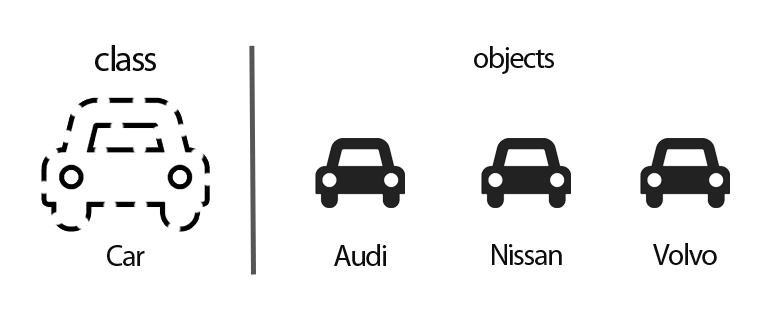
•Objects are the variables of the type class
•Thus class is a group of objects of similar type
•e.g. Mango, apple, pineapple, orange are objects of class Fruit
•Class is defined first and then objects are created of the type class

3. Data Encapsulation

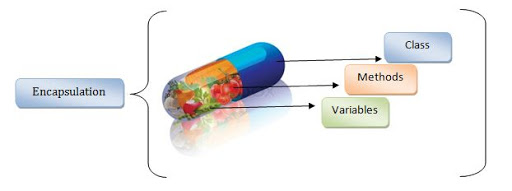
•The fundamental idea behind OOP approach is to combine the data and
functions operate on that data, into a single unit
•The wrapping up of data and functions into a single unit (called class) is
known as encapsulation
•The data is not accessible to the outside world
•The encapsulation (protection) of Data from direct access by outside
functions in a program is called Data hiding or Information hiding

4. Data Abstraction

•Abstraction refers to the act of representing essential features without
details
•Abstraction is also defined as hiding an implementation details from user
•Classes use the concept of data abstraction and hence they are also known
as Abstract Data Types (ADT)
•Classes are defined as a list of abstract attributes such as size, weight, cost,
and function to operate on these attributes

5. Inheritance

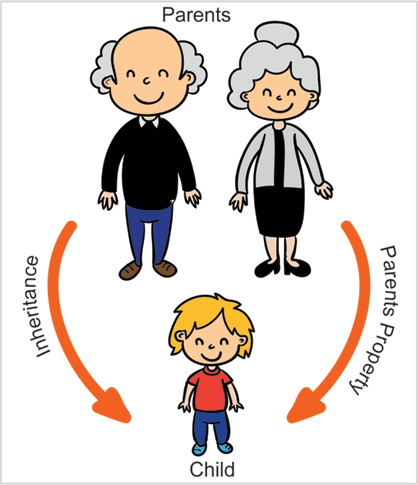
•Inheritance is the process by which objects of one class acquire the
properties of objects of another class
•In OOP, the concept of inheritance provides the idea of reusability
•Reusability allows to add additional features to an existing class without
modifying it
•It is possible by defining a new class from the existing class
•The new class will have combined features of both the classes
•The mechanism of deriving a new class from existing class is called as
Inheritance

6. Polymorphism

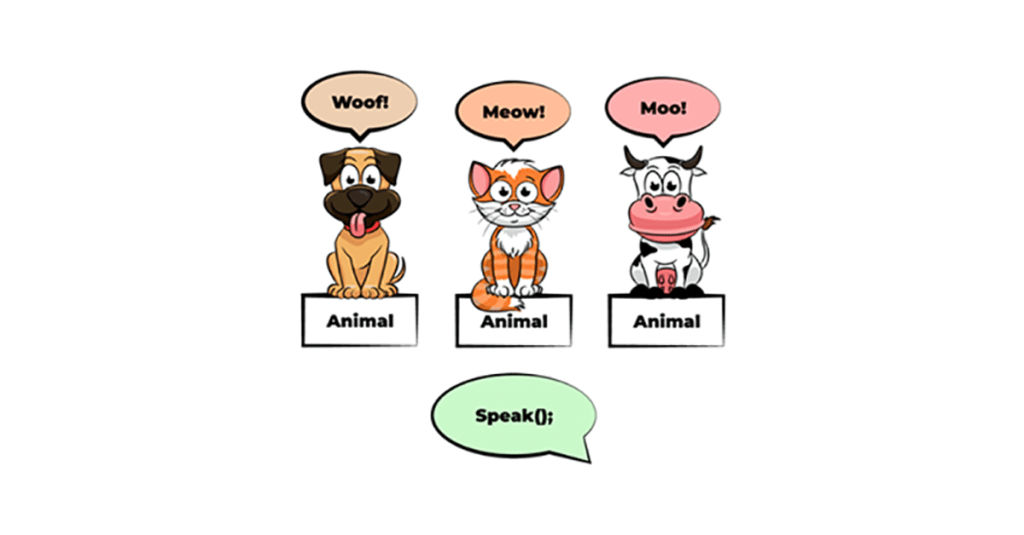
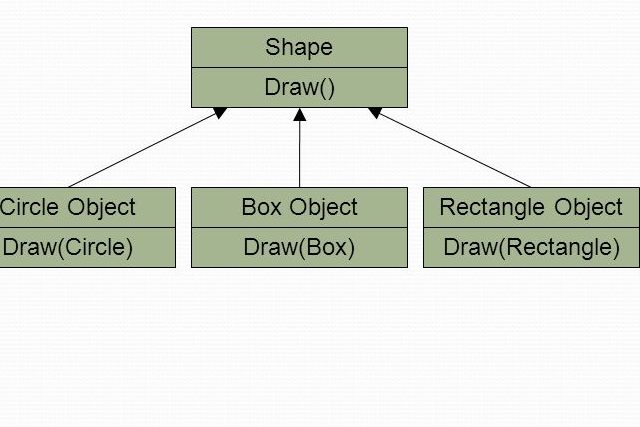
•Polymorphism means the ability to take more than one form
•An operation may exhibit different behavior in different instances and
this behavior depends upon the types of data used in the operation
•Polymorphism can be implemented using function overloading,
function overriding and operator overloading
•It allows the objects with different internal structures to share the
same external interface

In the above example all animals are performing the same task of speaking but it is different for every animal.

7. Message Passing

•The Objects communicate with one another by sending and receiving
information (Messages)
•A message for an object is a request for execution of a function
•Message passing involves specifying the name of the object, the name of
the function and the information to be sent

8. Dynamic Binding

•Dynamic binding means that the code associated with a given function
call is not known until run-time.
•The code to be executed is selected at the run-time
•The same function executes different code dynamically depending on
data entered at run-time
•It is associated with polymorphism and inheritance.
•A function call associated with a polymorphic reference depends on the
dynamic type of that reference.

Wireshark – Packet Analyzer

Wireshark is a free and open-source packet analyzer. It is used for network troubleshooting, analysis, software and communications protocol development, and education. Originally named Ethereal, the project was renamed Wireshark in May 2006 due to trademark issues. Wireshark is cross-platform, using the Qt widget toolkit in current releases to implement its user interface, and using pcap to capture packets. It runs on Linux, macOS, BSD, Solaris, some other Unix-like operating systems, and Microsoft Windows. 

Features

  • Available for UNIX and Windows.
  • Capture live packet data from a network interface.
  • Open files containing packet data captured with tcpdump/WinDump, Wireshark, and many other packet capture programs.
  • Import packets from text files containing hex dumps of packet data.
  • Display packets with very detailed protocol information.
  • Save packet data captured.
  • Export some or all packets in a number of capture file formats.
  • Filter packets on many criteria.
  • Search for packets on many criteria.
  • Colorize packet display based on filters.
  • Create various statistics.

Requirements

The amount of resources Wireshark needs depends on your environment and on the size of the capture file you are analyzing.

Microsoft Windows

  • Wireshark should support any version of Windows that is still within its extended support lifetime. •
  • At the time of writing this includes Windows 10, 8.1, Server 2019, Server 2016, Server 2012 R2, and Server 2012.
  • The Universal C Runtime. This is included with Windows 10 and Windows Server 2019.
  • Any modern 64-bit AMD64/x86-64 or 32-bit x86 processor.
  • 500 MB available RAM. Larger capture files require more RAM.
  • 500 MB available disk space. Capture files require additional disk space.
  • Any modern display. 1280 × 1024 or higher resolution is recommended.
  • A supported network card for capturing.

macOS

  • Wireshark supports macOS 10.12 and later.
  • Similar to Windows, supported macOS versions depend on third party libraries and on Apple’s requirements.

UNIX, Linux, and BSD

  • Wireshark runs on most UNIX and UNIX-like platforms including Linux and most BSD variants.
  • The system requirements should be comparable to the specifications listed above for Windows.

security attacks considered in wireshark

  • LOCAL AREA NETWORK ATTACKS
  • ARP Poisoning Attack
  • MAC Flooding Attack
  • DOS Attacks
  • DHCP Spoofing Attack
  • VLAN Hopping
Working diagram of  Wireshark

Advantages of using Wireshark

  • Free software
  • Available for multiple platforms – Windows & UNIX
  • Can see detailed information about packets within a network
  • Not proprietary can be used on multiple vendors unlike Cisco Prime

Disadvantages of using Wireshark

  • Notifications will not make it evident if there is an intrusion in the network
  • Can only gather information from the network, cannot send

ELON MUSK

ELON MUSK, the famous and most successful person in the tech world, who played many roles and faced many struggles to become what he is today. Elon Musk was born and raised in South Africa.

We all know him as an entrepreneur, businessman, CEO of Tesla and spacex, but he is also a skilled investor, software developer, designer, inventor, rocket scientist, actor, film producer, one of the richest man in the world.

During his school days, he was a victim of severe bullying. At the age of 12, he created a video game(blaster) and sold it to a computer magazine. Elon Musk is the founder of X.com (later it became paypal), spacex, Tesla motors.

Recently Elon Musk turned 50, over the past decades Musk managed to become CEO of Tesla and spacex, founder of the boring company, co-founder of OpenAI, Neuralink. He also played a vital role in space rockets, electric cars, solar batteries.

“”Failure is a option here, if things are not failing then you are not innovative enough.””.                 – Elon Musk

“” I think it’s possible for ordinary people to choose to be extraordinary.””                                                                   –Elon Musk

Digital marketing

Digital marketing the world become digitalizing day to day.

Every things we can do with digital, we are become digital life’s.

Marketing is main source for improve companies, on before digital life’s there was we have person to person and posters to expose their products and services  

Now , we are in surviving digital life’s . every things will get on internet so the bases of internet ,we  have recognised by Digital marketing .

The digital marketing  it is  high level, digital marketing refers to advertising delivered through digital channels such as search engines, websites, social media, email, and mobile apps.

by help of  these online media channels, digital marketing is the method by which companies endorse goods, brands and services.

On these digital marketing we have a wide range of digital marketing jobs out there meaning there are a huge variety of career options.

  • Video/audio production.
  • Interactive technology (such as AI)
  • Mobile marketing.
  • Search engine optimization (SEO)
  • Search engine marketing (SEM)
  • Social media.
  • E-commerce.
  • Email marketing.

Scopes for digital marketing

The scope of digital marketing is quite good. Anyone who is looking  to learning digital marketing  would surely get a good benefit from it. There are also huge of job opportunities available in the field .

How can you start

There we have many web sites and blogs, start learning digital marketing help of reading books or blogs, enrolling in courses, watching videos on YouTube, listening to podcasts, watching webinars, and more.

Best budget gaming laptop July 2021.

Here’s our top 5 picks of gaming laptops that are affordable and powerful.

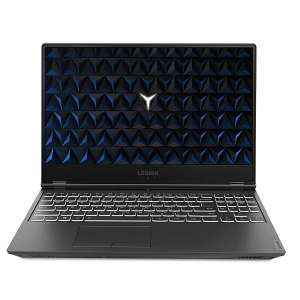
Lenovo Legion Y7000 81V4000LINAmazon₹64990
ASUS TUF Gaming FX505DD-AL185TAmazon₹57990
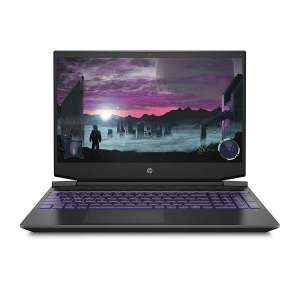
HP Pavilion Gaming 15-ec0026AXAmazon₹62479
ASUS TUF Gaming FX505DY-BQ024TAmazon₹54990
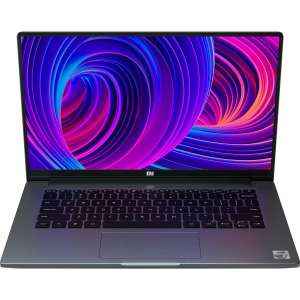
Mi Notebook Horizon Edition 14Amazon₹59999

  1. LENOVO LEGION Y7000 81V4000LIN
Lenovo Legion Y7000 81V4000LIN
  • OSOS: WINDOWS 10
  • DisplayDISPLAY: 15.6″ (1920 X 1080)
  • ProcessorPROCESSOR: 9TH GEN INTEL CORE I5 | 2.4 GHZ
  • MemoryMEMORY: 8 GBGB DDR4

Legion by Lenovo is a dedicated gaming emblem from Lenovo with aesthetics and specifications tailored to game enthusiasts. Even though the specifications are broadly speaking similar to the other laptops on this list, we’ve got the extra storage as you get a 256GB SSD in addition to a 1 TB hard disc drive. Summary of specifications: Intel i5-9300H, GTX 1050, 8 GB, 256 SSD + 1 TB HDD, 15.6-inch 1080p.

SPECIFICATION
OS:Windows 10 Home
Display:15.6-inch screen with (1920X1080) full HD display | Anti Glare technology | 60Hz refresh rate | 250 Nits Brightness | IPS Display
Processor:Intel I5-9300H, 2.4 Ghz base speed, 4.1 Ghz max speed, 4 Cores, 8Mb Smart Cache
Memory:8GB DDR4
Weight:2.3Kg
Storage:1 TB HDD (5400rpm) + 256 GB SSD
Graphics Processor:NVIDIA GTX 1050 3GB Graphics

2. ASUS TUF GAMING FX505DD-AL185T

ASUS TUF Gaming FX505DD-AL185T
  • OSOS: WINDOWS 10
  • DisplayDISPLAY: 15.6″ (1920 X 1080)
  • ProcessorPROCESSOR: AMD Ryzen 5-3550H
  • MemoryMEMORY: 8 GBGB DDR4

The ASUS TUF Gaming series is all about making their hardware more accessible, and the FX505DD does just that by combining the Ryzen 5-3550H with the GTX 1050 and even having a high-refresh-rate panel. A recent drop has increased the value of this one-of-a-kind aggregate even further. Ryzen 5-3550H, GTX 1050, 8 GB RAM, 1 TB HDD, 15.6-inch 120 Hz 1080p display.

SPECIFICATION
OS:Windows 10 Home
Display:Display: 15.6″ (16:9) LED-backlit FHD (1920×1080) 120Hz Anti-Glare IPS-level Panel with 45% NTSC
Processor: AMD Ryzen 5-3550H processor, 2.1GHz Base speed (6MB cache, up to 3.7GHz)
Memory: 8GB DDR4 2400MHz
Weight:2.20kg 
Storage:1 TB HDD (5400 RPM)
Graphics Processor:NVIDIA GeForce GTX 1050 GDDR5 3GB VRAM Graphics

3. HP PAVILION GAMING 15-EC0026AX

HP Pavilion Gaming 15-ec0026AX
  • OSOS WINDOWS 10
  • DisplayDISPLAY 15.6″ (1920 X 1080)
  • ProcessorPROCESSOR: AMD Ryzen 5-3550H
  • MemoryMEMORY: 8 GBGB DDR4

The HP Pavillion Gaming 15 series of laptops come in a wide range of configuration options. The only one we chose is powered by an AMD Ryzen 5-3550H processor and a GTX 1050 graphics card. This makes this one-of-a-kind SKU one of the best AMD-based configurations we could find. Summary specifications: Ryzen 5-3550H. GTX 1050, 8 GB RAM, 256 SSD + 1 TB HDD, 15.6-inch 1080p display.

SPECIFICATION
OS:Windows 10 Home
Display:15.6-inch Full HD (1920 x 1080) anti-glare IPS display | 60Hz refresh rate | 250 Nits Brightness
Processor:AMD Ryzen 5-3550H Quad-core processor (2.1 GHz base clock speed, up to 3.7 GHz max boost clock speed, 6 MB cache, 4 cores)
Memory:8 GB DDR4
Weight:1.98 kg
Storage:1 TB 7200 rpm SATA HDD + 256 GB PCIe NVMe M.2 SSD
Graphics Processor:NVIDIA GeForce GTX 1050 (3 GB GDDR5 dedicated) 

4. ASUS TUF GAMING FX505DY-BQ024T

ASUS TUF Gaming FX505DY-BQ024T
  • OSOS: WINDOWS 10
  • DisplayDISPLAY: 15.6″ (1920 X 1080)
  • ProcessorPROCESSOR: AMD RYZEN 5-3550H | 2.1GHZ
  • MemoryMEMORY: 8 GBGB DDR4

In terms of performance, the ASUS TUF Gaming FX505DY is quite close to the FX505DD. The Graphics card which is AMD RX 560X, and the display is a 60 Hz 1080p panel are the key differences between them. Specifications in summary: Ryzen 5-3550H, RX 560X, 8 GB RAM, 512 SSD, and a 15.6-inch 1080p display.

SPECIFICATION
OS:Windows 10 Home
Display:15.6″ (16:9) LED-backlit FHD (1920×1080) 60Hz Anti-Glare IPS-level Panel with 45% NTSC
Processor:AMD Ryzen 5-3550H processor 2.1GHz (6M cache, up to 3.7GHz, 4 Cores)
Memory:8GB DDR4 2400MHz
Weight:2.2 kg
Storage:PCIe NVMe 512GB M.2 SSD
Graphics Processor:Graphics: AMD Radeon RX 560X GDDR5 4GB VRAM

5. MI NOTEBOOK HORIZON EDITION 14

Mi Notebook Horizon Edition 14
  • OSOS: WINDOWS 10 HOME
  • DisplayDISPLAY: 14″ (1920 X 1080)
  • ProcessorPROCESSOR: 10TH GENERATION INTEL® CORE™ I7 | 1.8GHZ
  • MemoryMEMORY: 512 GB SSD/8GB DDR4

Xiaomi is the most latest company to release a laptop in India that is powered by an Intel Core i5-10210U processor and an NVIDIA MX350 GPU. As long as you keep the game settings to low or medium, you can play a few games on the MX350. Both the CPU and the GPU are designed for power efficiency rather than long gaming sessions. Summary configuration: Core i5-10210U, MX350, 8 GB RAM, 512 SSD.

SPECIFICATION
OS:Windows 10 Home
Display:Horizon Display|14-Inch (1920X 1080 )Full HD Anti-Glare Screen
Processor:Intel Core i7-10510U processor, 1.8 GHz base speed, 4.9 GHz max speed, 4 Cores, 8 threads
Memory:8GB DDR4-2666MHz
Weight:1.35 kg
Storage:512 GB PCIE Gen 3×4 NVMe SSD
Graphics Processor:Nvidia MX350 2GB GDDR5 Graphics

Translate dog barks with Raspberry Pi

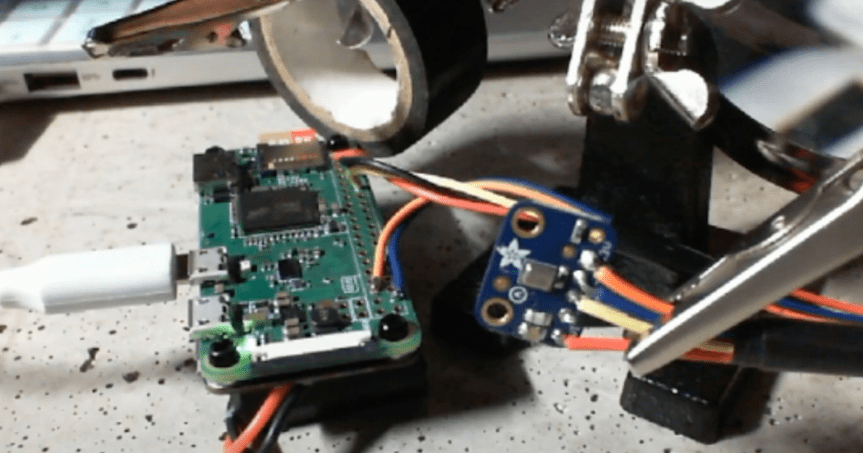
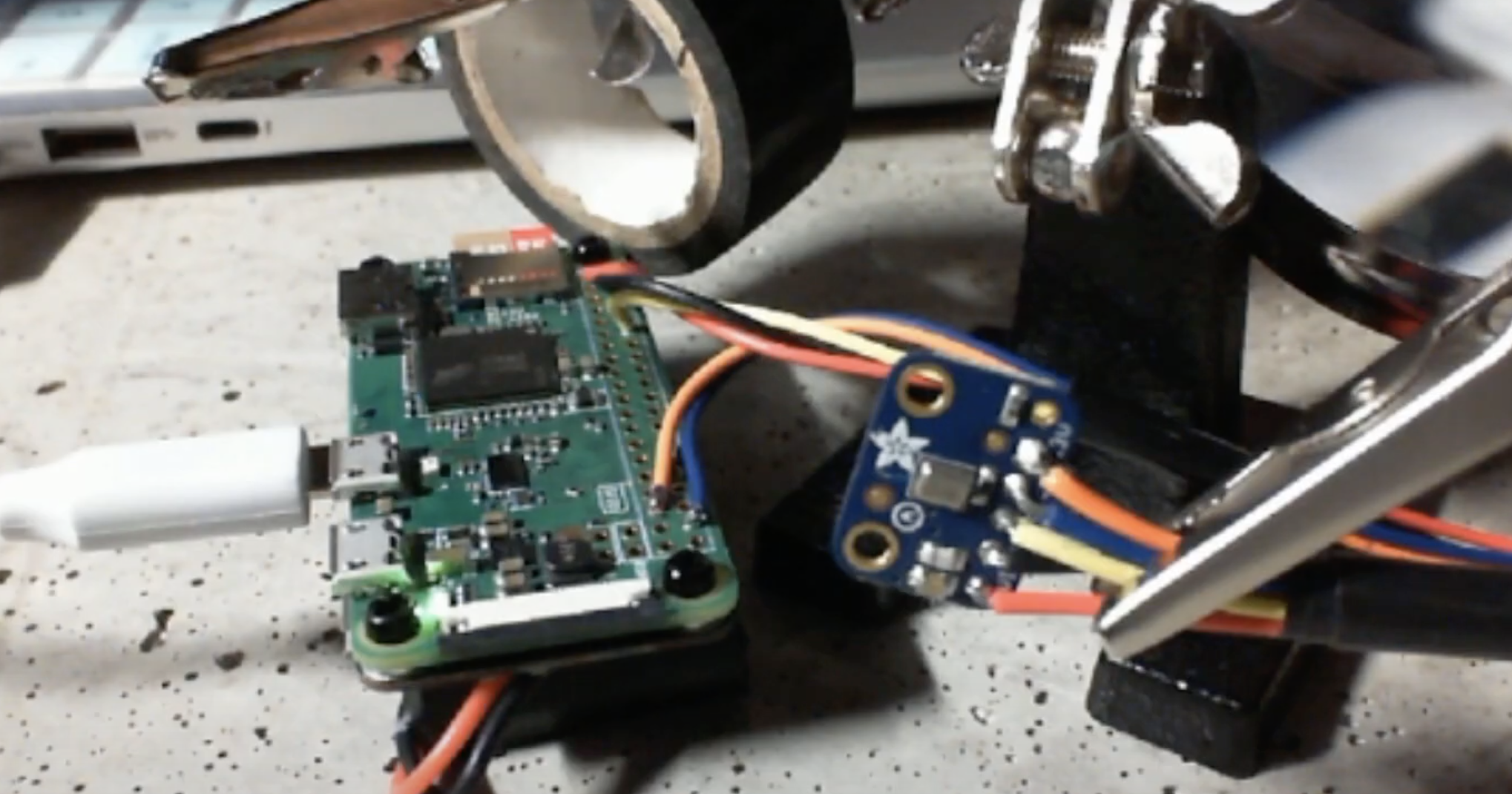
The dog wears a harness with a microphone that picks up its barks. The barks get processed through a device that determines what the dog is saying and then outputs it through speakers.

Raspberry Pi Zero is the affordable brain powering NerdStoke’s solution to this age-old human-and-pup problem. But writing code that could translate the multitude of frequencies coming out of a dog’s mouth when it barks was a trickier problem. NerdStoke tried to work it through on Twitch with fellow hobbyists, but alas, the original dream had to be modified.

dog bark translator hardware
The kit worked fine – it was the coding challenge that changed the course of this project

Spoiler alert: fast Fourier transforms did not work. You would need a clear, pure tone for that to work in a project like this, but as we said above, dogs bark in a rainbow of tones, pitches, and all the rest.

So what’s the solution?

Because of this, a time-based model was devised to predict what a dog is likely to be barking about at any given time of day. For example, if it’s early morning, they probably want to go out to pee. But if it’s mid-morning, they’re probably letting you know the postman has arrived and is trying to challenge your territory by pushing thin paper squares through the flap in your front door. It’s a dangerous world out there, and dogs just want to protect us.

Nerdstoke had his good friend record some appropriate soundbites to go with each bark, depending on what time of day it happened. And now, Nugget the dog can tell you “I want to cuddle” or “Why aren’t you feeding me?”Same, Nugget, same

While the final project couldn’t quite translate the actual thoughts of a dog, we love the humour behind this halfway solution. And we reckon the product name, Holler Collar, would definitely sell.

Most popular programming languages in 2021

There many programming languages in this world written in many languages. Different companies uses different programming languages. What is actually a programming language ? A programming language is a set of commands, instructions and other syntaxes to computer to perform a specific task. In this blog, I am going to tell you the most popular and top programming languages in this world.

  1. PYTHON

There is no doubt that python is the number one programming language. Python is powerful and easy language to learn. It is very easy to read and understand. Python is the trending programming language in the world. It is the favorite language for many beginners. Python is used in many trending subjects like Artificial Intelligence, Data Science and Machine Learning. It has great libraries like Numpy, PyTorch, Pandas which makes machine learning very easy. In python, you can easily find bug or error in your code. It is used for scientific and computational applications like FreeCad and Abacus. The popular websites like Google, Microsoft YouTube, Pinterest, and Instagram use it. The average salary of python developer is $100,000.

2. JAVASCRIPT

JavaScript is thought to be the most consistent programming language, because it demand never goes off. You can use JavaScript to build web applications, desktop apps, mobile apps and many more. Millions of the websites in the internet depend on JavaScript. Giant tech companies like Google, Facebook, Microsoft and Uber use JavaScript. JavaScript is best option for you along with HTML and CSS. The average salary of JavaScript developer is $84,000.

3. JAVA

Java is a popular programming language since 2000’s. Java is a independent platform runs on a virtual machine(JVM). Just like python, java is also easy to learn. Java is fundamentally object-oriented. Those who want to learn android development, then java is right option for you. Java language is continuing creating new jobs in tech field. Giant companies like Google, Amazon and YouTube use java. Around 40 percent of developers use java. The average salary of java developer is $80,000.

4. C / C++

C language is considered to be the mother of all other programming languages. C is a perfect language for a beginner to learn. Comparing to the other languages c just have 32 keywords. Being one of the oldest programming language it demand hasn’t down yet. Around 23 percent of the developers use C language. Giant tech companies like Google, Apple, intel use C / C++. The average salary of a C / C++ developer is $78,000.

5. KOTLIN

Kotlin is a open source and general purpose language. Within short period of time it gained full popularity. According to a survey Kotlin is one of the five most popular language. Kotlin is best language for android development. Kotlin is designed to interoperate fully with java and JVM version of Kotlin library. Around 60 percent of the android developers are using Kotlin. Some of the most popular apps that are built using Kotlin are Tinder, Square, Evernote. Giant tech companies that use Kotlin are Google, Amazon, Netflix and many more. The average salary of a Kotlin developer is $77,000.

All these are the most popular and top programming languages. If you like my work, please like it and rate it. Thank you.

internet of things (IoT)

The internet of things, or IoT, is a system of interrelated computing devices, mechanical and digital machines, objects, animals or people that are provided with unique identifiers (UIDs) and the ability to transfer data over a network without requiring human-to-human or human-to-computer interaction.

thing in the internet of things can be a person with a heart monitor implant, a farm animal with a biochip transponder, an automobile that has built-in sensors to alert the driver when tire pressure is low or any other natural or man-made object that can be assigned an Internet Protocol (IP) address and is able to transfer data over a network.

Increasingly, organizations in a variety of industries are using IoT to operate more efficiently, better understand customers to deliver enhanced customer service, improve decision-making and increase the value of the business.

How IoT works

An IoT ecosystem consists of web-enabled smart devices that use embedded systems, such as processors, sensors and communication hardware, to collect, send and act on data they acquire from their environments. IoT devices share the sensor data they collect by connecting to an IoT gateway or other edge device where data is either sent to the cloud to be analyzed or analyzed locally. Sometimes, these devices communicate with other related devices and act on the information they get from one another. The devices do most of the work without human intervention, although people can interact with the devices — for instance, to set them up, give them instructions or access the data.

Cyber attack

Cyber-attack

• Attack, via cyberspace – targets an enterprise’s use of cyberspace for the purpose
of disrupting, disabling, destroying, or maliciously controlling a computing
environment/infrastructure or destroying the integrity of the data or stealing controlled information.

• Leads to loss of money, theft of personal information, theft of financial and medical
information – damages reputation and safety.

• common types – Malware, Phishing, Man-in-the-
middle attack, Denial-of-service attack, SQL injection etc.

Malwares

• Malicious software.

• Software installed on a victim’s computer
without consent.

• Compromises the operation of a system by performing an unauthorized function or process.

• Breaches a network through a vulnerability –
typically when a user clicks a dangerous link or email attachment → installs risky software.

• Includes spyware, ransomware, viruses, and
worms.

Ransomware

• A type of malware – prevents from accessing someone’s computer or data on it.

• Encrypts files on a device and blocks access to key
components of the network.

• Result – computer becomes locked or the data is stolen,
deleted or encrypted.

• Extortion attack – payment demanded to unlock the
computer or access the data.
 Victim asked to contact the attacker via an anonymous email address or follow instructions on an anonymous web page.
 Payment demanded in a cryptocurrency such as
Bitcoin
Impact:
 Loss of money.
 devastating to an individual or organization.
 severely impacts business
processes.

• Infamous ransomware attacks
 WannaCry malware/ransomware – 2017
 Petya Ransomware – 2016
 Ryuk ransomware – 2018 etc.

UNIX

UNIX Full Form - GeeksforGeeks

UNIX is a multi-user and multitasking operating system. in a multi-user environment. the computer can receive the commands from a number of end users programs, access files, and print documents simultaneously.

The host computer, which has a UNIX operating system, provides services to the terminal, such as file access services. four terminals are connected to one host computer and all the terminals are sharing resources from the host computer.

Features of UNIX

The general and additional features of UNIX operating system are :

  • File and Processes : file and process are two entities that are supported by UNIX. A file contains information, such as text, code or directory structure that you need to save in the computer, The file is stored in the hard disk of the computer at a particular location, which can be easily remember whereas a process is the name given to a file or a programs that is currently running . UNIX provides various tools that enable you to control a process, change the sequence of the process, and kill the process.
  • Multi-user system: UNIX supports multitasking system as the kernel is designed to handle multiple processes. A single user can run multiple process simultaneously. For example, an end user can print a file and edit another file simultaneously. The kernel handles the multiple processes as foreground and background process. The current process runs in the foreground and the other processes run in the background. This multitasking feature is an advantage for the programmers, as they do not have to close the editor and run the program; this can done simultaneously.
  • UNIX toolkit: The UNIX toolkit provides various tools that are enable you to perform different tasks in UNIX as kernel alone cannot perform every task. The tools that are included in the UNIX toolkit are:

1:- General purpose tools , such as vi editor

2:- Text manipulation utilizes filters that are used to retrieve the output from two or more commands simultaneously .

3:- Compiler and Interpreter .

4:- Network administration and system tools , such as mailx and pine.

  • Pattern Matching :- UNIX supports pattern matching feature that enables you to retrieve the output according to the required pattern . Pattern matching in UNIX can be implemented using a special characters , such as * known as metacharacter .
  • Programming Facility :- UNIX provides a programming facility known as shell that is developed specifically for programmers and not for the users .