
Astronomers Detect a Lurking Cosmic Cloud, Bigger Than The Entire Milky Way.

In the yawning vacuum of intergalactic space, something large is lurking.

Not a galaxy, although it’s of a comparable size: A vast cloud of hot, faintly glowing gas, bigger than the Milky Way, in the space between galaxies congregating in a huge cluster.

Scientists believe this cloud may have been unceremoniously stripped from a galaxy in the cluster, the first gas cloud of this kind we’ve ever seen. Even more surprisingly, it hasn’t dissipated, but has remained clumped together for hundreds of millions of years.

This not only tells us something new about the environments inside galaxy clusters, it suggests a new way to explore and understand these colossal structures.

“This is an exciting and also a surprising discovery. It demonstrates that new surprises are always out there in astronomy, as the oldest of the natural sciences,” said physicist Ming Sun of the University of Alabama in Huntsville.

Galaxy clusters are, as the name suggests, groups of galaxies that are bound together gravitationally. The galaxy cluster where our ‘orphan’ gas cloud was found is called Abell 1367, or the Leo Cluster, around 300 million light-years away. It contains at least 72 major galaxies, and makes up part of a larger, supercluster complex.

Such environments often have a lot going on, and astronomers like to peer into them to try and figure out how our Universe is connected. In 2017, astronomers using Japan’s Subaru Telescope spotted what appeared to be a small, warm cloud in Abell 1367; since its origin was unclear, they went back with more instruments to take a closer look.

A team led by astronomer Chong Ge of the University of Alabama in Huntsville used the ESA’s XMM-Newton X-ray telescope and the Multi Unit Spectroscopic Explorer (MUSE) on the Very Large Telescope, in addition to Subaru – and, to their surprise, they found X-ray emission showing the cloud was larger than they first thought.

Much larger, in fact – bigger than the Milky Way galaxy, with a mass around 10 billion times that of the Sun. And it didn’t seem to be associated with any known galaxy in the cluster. It was just drifting there. But the wealth of data allowed the researchers to take the the temperature of the gas, in turn providing clues as to its provenance.

The cloud’s temperature ranges between 10,000 and 10,000,000 Kelvin – consistent with gas that can be found within galaxies, the interstellar medium. The much more tenuous hot gas of the intracluster medium (the space between galaxies in the cluster) is hotter still, at around 100 million Kelvin.

This suggests that the cloud of gas was stripped from a galaxy as it moved through space.

“The gas in the cloud is removed by ram pressure of the hot gas in the cluster, when the host galaxy is soaring in the hot gas with a velocity of 1,000 to 2,000 kilometers [620 to 1,240 miles] per second,” Sun said.

“It is like when your hair and clothes are flying backward when you are running forward against a strong headwind. Once removed from the host galaxy, the cloud is initially cold and is evaporating in the host intracluster medium, like ice melting in the summer.”

This is fascinating, but kind of weird – because the researchers couldn’t find any nearby galaxies that could account for this occurring recently. Yet, if the gas had been ripped from its galaxy hundreds of millions of years prior, as this lack of proximity suggested, how had it not been diffused into the intracluster medium?

To work this out, the team performed calculations, and found that a magnetic field could hold the gas cloud together against the instabilities that ought to otherwise tear it apart, for long periods of time.

Given the high mass of the cloud, the team has inferred that the parent galaxy from which it was torn was a large and massive one. This could help them track down which galaxy it was; another clue could be traces of gas that extend from the cloud, which might point in the right direction.

In addition, now that one lonely cloud has been identified, scientists have a set of data that will help to identify other such clouds in the future. This will provide valuable information about intracluster dynamics, and the distribution of matter in galaxy clusters.

Plus, we now have observational evidence that the intracluster medium can divest galaxies of their gas.

“As the first isolated cloud glowing in both the H-alpha spectral line and X-rays in a cluster of galaxies, it shows that the gas removed from galaxies can create clumps in the intracluster medium, and these clumps can be discovered with wide-field optical survey data in the future,” Sun said.
The Story of the Best Selling Video Game of all time: Tetris

Tetris has its origin in the Dorodnitsyn Computing Centre (Research Lab). It was one of the foremost research institutes of the Russian Academy of Sciences, located in St Petersburg, Soviet Union (Now Russia). Created by software researcher Alexey Pajitnov in 1984, Tetris is a simple tile-matching game that took the world by storm upon it’s release.

It was developed for Electronika 60, which was a computer, made in the Soviet Union. This period was the final stage of the Cold war Era and computers were becoming more popular as well.

The game wasn’t intended as a commercial product just like the creation of the music record. But it was to be distributed freely among academic institutions around the Soviet Union and the economic bloc of countries aligned with the USSR in Eurasia, Africa, and the Americas that demonstrated use cases for the software.

As USSR was a communist state, so Pajitnov did not technically own the program as the game was under the ownership of the state. Pajitnov along with the help of a colleague, Dmitry Pavlovsky, and a teen computer programmer, Vadim Gerasimov continued to work on the game project even though commercializing it would have been a risky move under the Soviet government. Gerasimov further ported the game from the old and bulky Elektronika 60 to the more widely used (IBM) compatible PCs.

As Elektronika 60 had no graphics output, the individual blocks in the game were made of different text, but with the port in PC, they were able to support color graphics. This brought the game to life.

Pajitnov and Gerasimov had started distributing Tetris for (PC) in 1985 among their friends and colleagues in various math or computer conventions. Soon the sharing spread and the game was smuggled outside USSR to Hungary. During mid-80s U.S and Japan had a more prevalent console market whereas, in Europe, gaming was primarily done on computers. There was a non-existent software market in Russia and most software was usually copied in floppy disks.

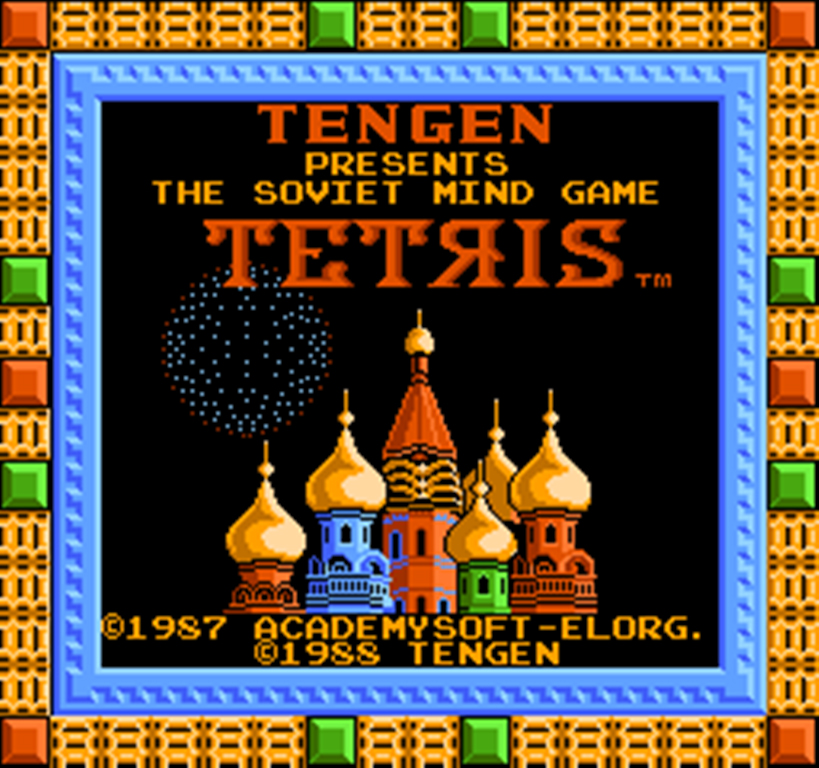
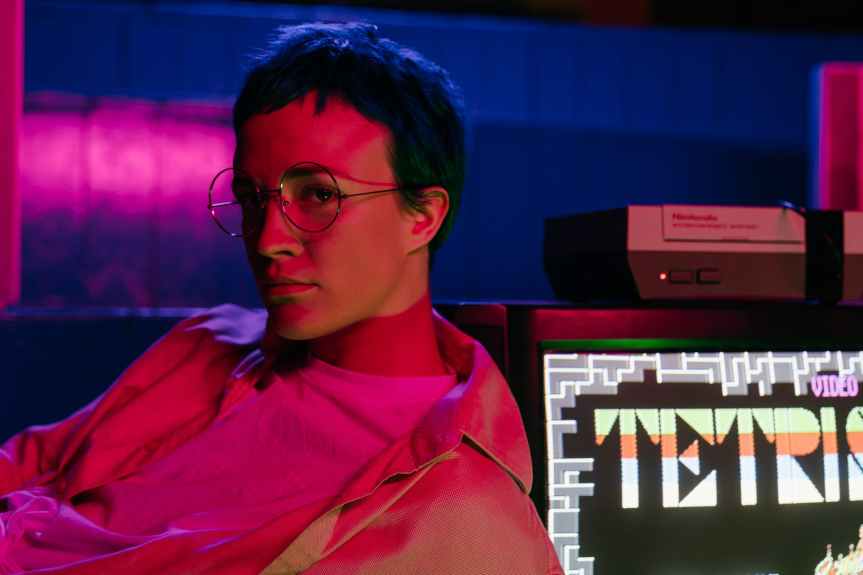
Welcome screen of 1987 version of Tetris

In 1986 Robert Stein, a salesman from the UK-based software company Andromeda spotted Tetris at Hungary’s Institute of Computer Science. He was convinced by the potential of the software and he struck an agreement with Pajitnov to sell the games internationally. But legally Tetris was still under the ownership of the Soviet government.  There was one problem, the agreement was only for the PC and not for any other platform and Stein has struck a deal with Sega to launch the game on their platform. Later Henk Rogers, another salesman from the Netherlands wanted to find a good launch game for the Nintendo’s new Game Boy handheld. The Soviet government was not happy with the Stein deal. But Rogers convinced the Soviet government and they agreed and he also formed a good relationship with Pajitnov. Later Andromeda’s license of Tetris was deemed illegal. Nintendo was given the right to launch the game on its console. The GameBoy was a platform to showcase one of the first video games exported from Russia. The game was a commercial hit and it has been ported to the most number platforms to date. The game also holds the record as the best-selling game of all time. In 1996, Pajitnov was able to reclaim the ownership of the rights and formed the Tetris Company, along with Henk Rogers. Even though he missed collecting the potential royalties for Tetris which were over hundreds of millions, he was still able to secure the future royalties.

References:

Mobile Phone Radiation Effects and Measures

Mobile Phone Radiation Effects on the Skin

  • Dermatitis: Dermatitis is a broad word that refers to any type of skin irritation. This condition causes your skin to become red and itchy, and it can manifest itself in a variety of ways owing to a variety of factors. Bloated rashes, blisters, oozes, or flake-offs are sometimes present, and the skin appears dry, swollen, and red. Antigens are accelerated considerably more by mobile phone radiation in allergy sufferers. When combined with radiation, the usage of nickel and cobalt in phone trims can cause skin dermatitis.
  • Crow’s feet: Crow’s feet are a type of branching wrinkle that appears near the outside corner of a person’s eye. The term comes from the fact that these lines typically deviate from a point in a bird footprint pattern. Because of small muscular contractions that occur every time you make a facial expression, crow’s feet develop over time. Long periods of gazing at a smartphone device or constant staring down might cause wrinkles around the eyes and neck. The issue is aggravated by the decreased text size and reduced brightness.
  • Wrinkled Neck: The continuous craning of your neck to stare down at your computer or phone screen has an effect on the structure of your spine and can lead to the formation of fine lines and wrinkles around the neck. Continuously staring down for an extended period of time can produce wrinkles on the neck, which are one of the first indications of aging. The collagen in the neck is eventually harmed by constant and regular staring. Neck wrinkles occur as a result of this.
  • Dark Circles: This is one of the most well-known and often noticed skin effects. The blue light emitted by mobile phones has an effect on sleeping habits. The less sleep a person gets, the more likely they are to develop eye bags and dark circles beneath their eyes. Staring at a television or computer screen for long periods of time may put a lot of pressure on your eyes. Blood vessels around your eyes may expand as a result of this stress. The skin around your eyes may darken as a result.
  • Skin allergies and acne: Mobile phones have been found to be important carriers of bacteria and pathogens, according to studies. Mobile phones, according to experts, are even more unhygienic than public restrooms. Throughout the day, the phones come into contact with a variety of surfaces, transferring germs. We continue to use our phones in the same manner, without understanding how many germs we are allowing into our bodies, resulting in allergies and pimples.

Measures to Protect Skin from Mobile Phone Radiation’s Harmful Effects

  • Do not stare at your phone screens for an extended time.
  • Before going to bed, avoid using your phone.
  • Using sanitizers/alcohol swabs, clean your cellphones throughout the day.
  • When the phone is hot, do not use it. Overexposure decreases the synthesis of melanin in the skin, resulting in uneven skin tone and even dark patches.
  • Keep an eye out for skin problems on the dominant side of your face that comes into touch with the phone.

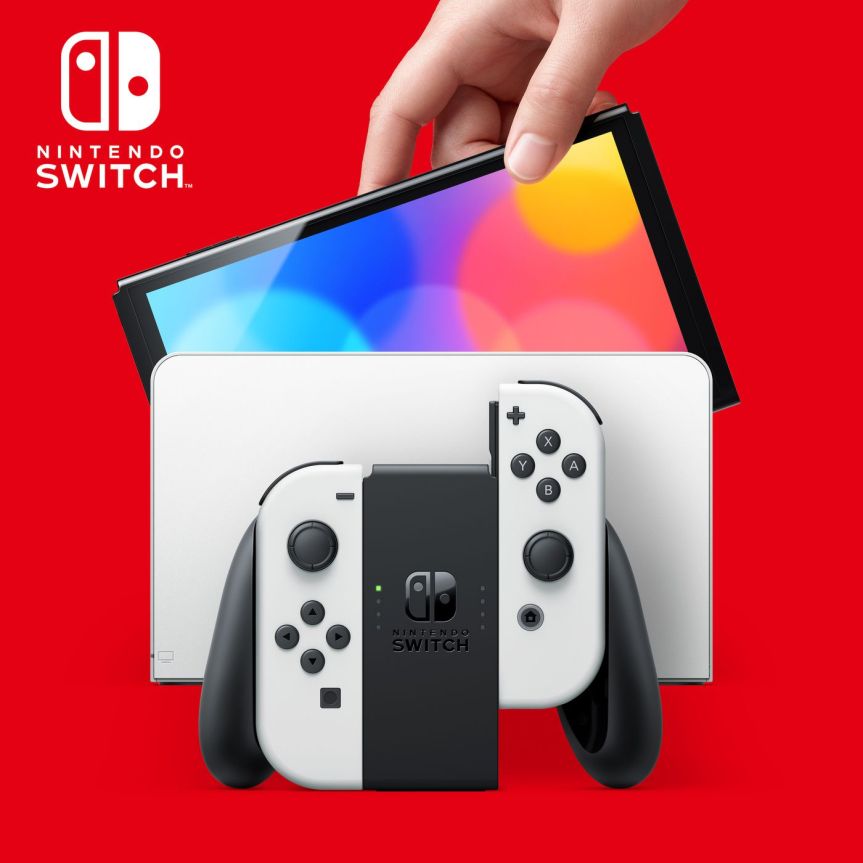
The all new Nintendo Switch OLED Model.

The Japanese gaming company Nintendo has launched its trendy version of the Switch gaming console, called the switch (OLED model). As for the key highlights, the tool comes with a bigger 7.0-inch OLED display in conjunction with an upgraded NVIDIA chipset and superior audio system. It carries a charge tag of $349.99 (around Rs. 26,000) and is to be had in two color options.

Nintendo Switch OLED 2021.

The Nintendo Switch OLED model — which was released on July 6, 2021 — is similar to the normal Nintendo switch that was released in March 2017. It is a hybrid console that swaps without problems from hand-held mode to television mode. There are pleasure-Con on both aspects of the console, which might be similar to those at the normal Switch. It plays all the same old switch video games, has the equal processor, battery, RAM, and most different specifications.

However, Nintendo upgraded and more advantageous a selection of capabilities of the console to make it higher (greater on that in the subsequent section). This makes the console advanced to the normal Switch and the hand-held-only switch Lite. It does now not make it a switch pro or switch 2, though, because it’s no longer modified that a lot.

New Nintendo Switch OLED specifications-

Switch OLEDOriginal Switch
Display7-inch OLED touchscreen6.2-inch LED touchscreen
Resolution720p handheld/1080p docked720p handheld/1080p docked
Storage64GB (expandable)32GB (expandable)
ChipsetCustom Nvidia Tegra X1Custom Nvidia Tegra X1
Battery LifeApprox. 4.5 – 9 hoursApprox. 4.5 – 9 hours
ConnectivityUSB-C, 3.5mm audio, microSD, wired LANUSB-C, 3.5mm audio, microSD
Size9.5 x 4 x 0.55 inches9.4 x 4 x 0.55 inches
WeightApprox. 0.93 poundsApprox. 0.88 pounds

lamentably, the Nintendo Switch OLED remains lacking some things we would hope a brand new Switch console could have. For a start, the joy-Cons are the same as the present-day Nintendo switch, which means they may (and we strain could) fall victim to Joy-Con drift that has blighted the controllers of the authentic Switch.

There may be also no aid for Bluetooth headphones, which with stellar headsets like the Sony WH-100XM4 available, appears to be a rather disappointing omission with the Switch OLED. simply bear in thoughts, the identical workarounds for wireless headphones used in the unique switch ought to paintings with the Switch OLED.

However, arguably the maximum disappointing thing is the Switch OLED does not provide a lift in overall performance over the authentic switch. It makes use of the same custom Nvidia Tegra X1 gadget-on-a-chip with reputedly no specs modifications, which means a shape of 4K output while docked or 1080p when treated isn’t always to be had.

All it is no longer to mention the Nintendo switch OLED is flawed, however, it cannot be a must-have for those who are already playing the present-day Switch.

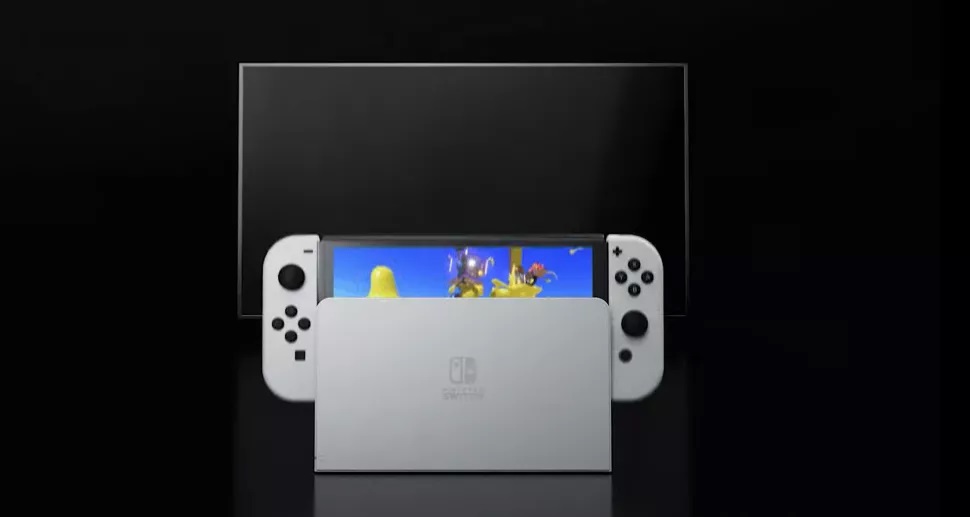
The new adjustable stand and LAN-

The bigger and adjustable stand is arguably the most compelling upgrade for the brand new Switch after the OLED show. The single-role stand on the original Switch changed into instead skimpy and flimsy and often toppled over on the merest wobble.

(Image Credit- Nintendo)

The broader stance at the switch OLED seems lots more stable and the larger display method it can make for a wi-fi new portable console that can be legitimately installation everywhere for a bit of Mario Kart or damage Bros local multiplayer.

(Image Credit- Nintendo)

And speaking of multiplayer, the Nintendo switch OLED also has a LAN port to guide a stressed-out internet connection for extra stable online gaming. that would be available for people in homes with patchy Wi-Fi.

Nintendo Switch OLED Pricing and availablity-

The Nintendo Switch (OLED model) is priced at $349.ninety-nine (around Rs. 26,000). it’ll be to be had for buy within the US from October 8 onwards. information concerning its availability in different markets is doubtful as of now.

Email marketing

Email marketing is the act of sending a commercial message, typically to a group of people, using email. In its broadest sense, every email sent to a potential or current customer could be considered email marketing. It involves using email to send advertisements, request business, or solicit sales or donations.

Benefits of email marketing: spread sheet use, customization draft, option of subscribe and unsubscribe, track links, provide list categories, personification feature, save time. Businesses and organizations who send a high volume of emails can use an ESP (email service provider) to gather information about the behavior of the recipients. The insights provided by consumer response to email marketing help businesses and organizations understand and make use of consumer behavior. Words that can help in increasing the chance of opening an email by your customer- free, discount, specials, reminder,customer name; link with such words can help.

A/B testing- test many things via email. It is a method of comparing two versions of a web page or app against each other to determine which one performs better. AB testing is essentially an experiment where two or more variants of a page are shown to users at random, and statistical analysis is used to determine which variation performs better for a given conversion goal.


Email analytics tools can help to manage the business via email and lessen the burden for checking and keeping track thousands of emails. Many email analytics platforms are geared toward email marketers, who have a more pressing need and a bigger budget, rather than office workers trying to improve their own productivity – or office managers trying to improve the productivity of their team members. The majority of apps focusing on improving productivity add some functionality that makes workers faster or more efficient, rather than getting to the heart of the problem with objective data analysis. Some tools which can help- sortd, email analytics powered by google, ActiveInbox, The Email Game, Todoist, and many more.

WORMHOLE-That helps you to teleport

Wormhole theory

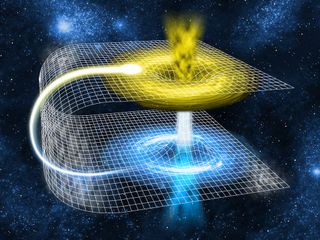
Wormholes were first theorized in 1916, though that wasn’t what they were called at the time. While reviewing another physicist’s solution to the equations in Albert Einstein’s theory of general relativity, Austrian physicist Ludwig Flamm realized another solution was possible. He described a “white hole,” a theoretical time reversal of a black hole. Entrances to both black and white holes could be connected by a space-time conduit.

In 1935, Einstein and physicist Nathan Rosen used the theory of general relativity to elaborate on the idea, proposing the existence of “bridges” through space-time. These bridges connect two different points in space-time, theoretically creating a shortcut that could reduce travel time and distance. The shortcuts came to be called Einstein-Rosen bridges, or wormholes.

“The whole thing is very hypothetical at this point,” said Stephen Hsu, a professor of theoretical physics at the University of Oregon, told our sister site, LiveScience. “No one thinks we’re going to find a wormhole anytime soon.”

Wormholes contain two mouths, with a throat connecting the two. The mouths would most likely be spheroidal. The throat might be a straight stretch, but it could also wind around, taking a longer path than a more conventional route might require.

Einstein’s theory of general relativity mathematically predicts the existence of wormholes, but none have been discovered to date. A negative mass wormhole might be spotted by the way its gravity affects light that passes by.

Certain solutions of general relativity allow for the existence of wormholes where the mouth of each is a black hole. However, a naturally occurring black hole, formed by the collapse of a dying star, does not by itself create a wormhole.

Wormhole

Through the wormhole

Science fiction is filled with tales of traveling through wormholes. But the reality of such travel is more complicated, and not just because we’ve yet to spot one.

The first problem is size. Primordial wormholes are predicted to exist on microscopic levels, about 10–33 centimeters. However, as the universe expands, it is possible that some may have been stretched to larger sizes.

Another problem comes from stability. The predicted Einstein-Rosen wormholes would be useless for travel because they collapse quickly. 

“You would need some very exotic type of matter in order to stabilize a wormhole,” said Hsu, “and it’s not clear whether such matter exists in the universe.”

But more recent research found that a wormhole containing “exotic” matter could stay open and unchanging for longer periods of time.

Exotic matter, which should not be confused with dark matter or antimatter, contains negative energy density and a large negative pressure. Such matter has only been seen in the behavior of certain vacuum states as part of quantum field theory.

If a wormhole contained sufficient exotic matter, whether naturally occurring or artificially added, it could theoretically be used as a method of sending information or travelers through space. Unfortunately, human journeys through the space tunnels may be challenging.

“The jury is not in, so we just don’t know,” physicist Kip Thorne, one of the world’s leading authorities on relativity, black holes and wormholes, told Space.com. “But there are very strong indications that wormholes that a human could travel through are forbidden by the laws of physics. That’s sad, that’s unfortunate, but that’s the direction in which things are pointing.”

Wormholes may not only connect two separate regions within the universe, they could also connect two different universes. Similarly, some scientists have conjectured that if one mouth of a wormhole is moved in a specific manner, it could allow for time travel

“You can go into the future or into the past using traversable wormholes,” astrophysicist Eric Davis told LiveScience. But it won’t be easy: “It would take a Herculean effort to turn a wormhole into a time machine. It’s going to be tough enough to pull off a wormhole.”

However, British cosmologist Stephen Hawking has argued that such use is not possible. [Weird Science: Wormholes Make the Best Time Machines]

“A wormhole is not really a means of going back in time, it’s a short cut, so that something that was far away is much closer,” NASA’s Eric Christian wrote.

Although adding exotic matter to a wormhole might stabilize it to the point that human passengers could travel safely through it, there is still the possibility that the addition of “regular” matter would be sufficient to destabilize the portal.

Today’s technology is insufficient to enlarge or stabilize wormholes, even if they could be found. However, scientists continue to explore the concept as a method of space travel with the hope that technology will eventually be able to utilize them.

“You would need some of super-super-advanced technology,” Hsu said. “Humans won’t be doing this any time in the near future.”

Additional resources:

TECHNOLOGY.

Technology refers to science or knowledge put into practical use to solve problems or invent useful tools that use scientific knowledge to solve practical problems in case of industry and commerce. Technology consists of construction transportation energy power manufacturing communication BIO- related. Technology is important because it enables to have access to suppliers and technology makes feel more secure with every area in life both personal and business technology is ever growing by understanding how people shape technology and how technology shape people interactions with each other. Technology concerns itself with understanding how knowledge is creatively applied to organise task involving people and machine that meet sustainable goals.

Technology is about taking action to meet it a human needs rather than understanding the works of natures world which is the ultimate goal of science. The invention of microscope was driven by a need to look over the world of the small beyond our unaided vision. It uses much more than scientific knowledge and values as much as facts practical craft knowledge as much as theoretical knowledge. iPod where the physics of making a small device carry so much music which is creative indesign to make all iconic must have accessory. Technology in involves organised way of designing things that covers the interaction between products and the people and system madam use them or are are affected by them through various processes. When we speak about the technology used in car which are a equippede with that technology that can read out text messages latest news voice commands and to make phone calls and also a locating attention to others talks. Increasing vehicles come pre installed with technology that provides to improve our life and more productivity out of a journey. Digital Substances such as Alexa parking assistance system where we talk.

When we talk about the importance of technology in education all students life that provide easy to access information accelerated learning enables students to explore new subjects deepen their understanding of difficult concepts and also helps to learn fixable learning and experience as some students use YouTube video tutorial material that can find solution to difficult problems and activities to supplement their knowledge. Technology offers motivation to students to learn and explore things through websites videos apps and much more. Gives more opportunities for project based learning work in groups are as individuals buy Google classroom and provide feedback in real time Google feedback and slides and simultaneously create presentations or group papers

Deccan used a research to find solution in real time problem and also complete an assignment like making a blog video websites apps and programming. It also save money as they worth the investment in chromebooks iPads and computers are effective than paper. Many school nowadays what the bye-book which can be more convenient for students and upload their assignments through online. Technology is a tool that can improve in many ways it is a powerful assert in any modern classroom.

when will look Into the technology in future the dominant workplace with artificial intelligence and smart assistance will be common workplace. Everything will be smart converter the most possible invention maybe e superhuman clothing, hyperloop, space vacations, drone ecosystem, virtual reality, entire dependence on renewable resources, human robots rebirth of people , self driving cars and medical advancement

Drinking Water Treatment with UV Irradiation

Ultraviolet (UV) rays are part of the light that comes from the sun. The UV spectrum is higher in frequency than visible light and lower in frequency compared to x-rays. This also means that the UV spectrum has a larger wavelength than x-rays and a smaller wavelength than visible light and the order of energy, from low to high, is visible light, UV, than x-rays. As a water treatment technique, UV is known to be an effective disinfectant due to its strong germicidal (inactivating) ability. UV disinfects water containing bacteria and viruses and can be effective against protozoans like, Giardia lamblia cysts or Cryptosporidium oocysts. UV has been used commercially for many years in the pharmaceutical, cosmetic, beverage, and electronics industries, especially in Europe. In the US, it was used for drinking water disinfection and treatment in the early 1900s but was abandoned due to high operating costs, unreliable equipment, and the expanding popularity of disinfection by chlorination.

Because of safety issues associated with the reliance of chlorination and improvement in the UV technology, UV has experienced increased acceptance in both municipal and household drinking water treatment systems. There are few large-scale UV water treatment plants in the United States although there are more than 2,000 such plants in Europe. There are two classes of disinfection systems certified and classified by the NSF under Standard 55 – Class A and Class B Units.

Class A — These ultraviolet water treatment systems must have an ‘intensity & saturation’ rating of at least 40,000 uwsec/cm2 and possess designs that will allow them to disinfect and/or remove microorganisms from contaminated water. Affected contaminants should include bacteria and viruses
“Class A point-of-entry and point-of-use systems covered by this Standard are designed to inactivate and/or remove microorganisms, including bacteria, viruses, Cryptosporidium oocyst and Giardia cysts, from contaminated water. Systems covered by this standard are not intended for the treatment of water that has obvious contamination or intentional source such as raw sewage, nor are systems intended to convert wastewater to drinking water. The systems are intended to be installed on visually clear water.”

Class B — These ultraviolet water treatment systems must have an ‘intensity & saturation’ rating of at least 16,000 uw-sec/cm2 and possess designs that will allow them to provide supplemental bactericidal treatment of water already deemed ‘safe’. i.e., no elevated levels of E. coli. or a standard plate count of less than 500 colonies per 1 ml. NSF Standard 55 “Class B” UV systems are designed to operate at a minimum dosage and are intended to “reduce normally occurring non-pathogenic or nuisance microorganisms only.” The “Class B” or similar non-rated UV systems are not intended for the disinfection of “microbiologically unsafe water.”

Therefore, the type of unit depends on your situation, source of water, and your drinking water quality. Transmitted UV light dosage is affected by water clarity. Drinking water treatment devices are dependent on the quality of the raw water. When turbidity is 5 NTU or greater and/or total suspended solids are greater than 10 ppm, pre-filtration of the water is highly recommended. Normally, it is advisable to install a 5 to 20 micron filter prior to a UV disinfection system.

66A IT ACT

News –Supreme Court found the enforcement of
Section 66A of the Information Technology
(IT) – six years after it was struck down.

Section 66 A of IT act

• Dealt with information related crimes

• Sending information – found to be offensive, disrespectful and threatening – are punishable offence
 Communication – sent by means of a computer resource or through any
communication device

THE INFORMATION TECHNOLOGY ACT, 2000
CHAPTER XI – OFFENCES
66A.

Punishment for sending offensive messages through
communication service, etc.–Any person who sends, by
means of a computer resource or a communication device,–
(a) any information that is grossly offensive or has
menacing character; or
(b) any information which he knows to be false, but for the
purpose of causing annoyance, inconvenience, danger, obstruction, insult, injury, criminal intimidation, enmity, hatred or ill will, persistently by making use of such computer resource or a communication device;
(c) any electronic mail or electronic mail message for the purpose of causing annoyance or inconvenience or to deceive or to mislead the addressee or recipient about the origin of such messages, shall be punishable with
imprisonment for a term which may extend to three
years and with fine.

Weakness of Section 66A

• Created an offence on the basis of undefined actions
 Sub section (b) – law can be enforced when the information is found to be
causing inconvenience, danger, obstruction – fails to define the terms
 Gives a scope for wider interpretation – may go against the purpose of this
law
• Such terms do not fall among the exceptions granted under Article 19 of the Constitution

• Section 66A did not have procedural safeguards like other sections of the law.

History of Java Programming Language

What is Java?

Java is a programming language and computing platform first released by Sun Micro systems in 1995. There are lots of applications and websites that will not work unless you have Java installed, and more are created every day. Java is fast, secure, and reliable. From laptops to data centers, game consoles to scientific supercomputers, cell phones to the Internet, Java is everywhere!

History of Java

The history of Java is very interesting. Java was originally designed for interactive television, but it was too advanced technology for the digital cable television industry at the time. The history of Java starts with the Green Team. Java team members (also known as Green Team), initiated this project to develop a language for digital devices such as set-top boxes, televisions, etc. However, it was best suited for internet programming. Later, Java technology was incorporated by Netscape.

1) James Gosling, Mike Sheridan, and Patrick Naughton initiated the Java language project in June 1991. The small team of sun engineers called Green Team.

2) Initially it was designed for small, embedded systems in electronic appliances like set-top boxes.

3) Firstly, it was called “Greentalk” by James Gosling, and the file extension was .gt.

4) After that, it was called Oak and was developed as a part of the Green project.

5) Why Oak? Oak is a symbol of strength and chosen as a national tree of many countries like the U.S.A., France, Germany, Romania, etc.

6) In 1995, Oak was renamed as “Java” because it was already a trademark by Oak Technologies.

7) In 1995, Time Magazine called Java One of the Best Product of year 1995.

Difference between Java and C++

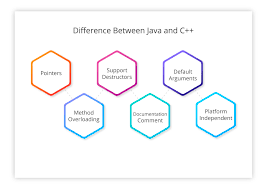
Global Variables are not present

Use of goto is not observed

Pointers are not included

Memory Allocation functions are not present

Unsafe Type Casting is not supported

Preprocessor Directives are not present

Separate Header Files are not included

Java Features

Compiled and Interpreted

Platform Independent and Portable

Object Oriented

Robust and Secure

Dynamic

Distributed

Small, Simple and Familiar

Multithreaded

Conclusion

Java offers the real possibility that most programs can be written in a type-safe language. However, for Java to be broadly useful, it needs to have more expressive power than it does at present. This paper addresses one of the areas where more power is needed.

MESSIER 87-The Galaxy that gives Hope

M87
The elliptical galaxy M87 is the home of several trillion stars, a supermassive black hole and a family of roughly 15,000 globular star clusters. For comparison, our Milky Way galaxy contains only a few hundred billion stars and about 150 globular clusters. The monstrous M87 is the dominant member of the neighboring Virgo cluster of galaxies, which contains some 2,000 galaxies. Discovered in 1781 by Charles Messier, this galaxy is located 54 million light-years away from Earth in the constellation Virgo. It has an apparent magnitude of 9.6 and can be observed using a small telescope most easily in May.
This Hubble image of M87 is a composite of individual observations in visible and infrared light. Its most striking features are the blue jet near the center and the myriad of star-like globular clusters scattered throughout the image.
The jet is a black-hole-powered stream of material that is being ejected from M87’s core. As gaseous material from the center of the galaxy accretes onto the black hole, the energy released produces a stream of subatomic particles that are accelerated to velocities near the speed of light.
At the center of the Virgo cluster, M87 may have accumulated some of its many globular clusters by gravitationally pulling them from nearby dwarf galaxies that seem to be devoid of such clusters today.
For more information about Hubble’s observations of M87, see:
http://hubblesite.org/news_release/news/2008-30
http://hubblesite.org/news_release/news/2000-20
http://hubblesite.org/news_release/news/2013-32
locator star chart for M87

Done Class 12th , What Next?

After the class 10th and 12th people usually have a dilemma of what to do next. Most of the children opt for medical and non-medical lines eying to become a computer science engineer or a doctor. In most cases people chose these streams purely based on pay, some due to parental pressure – Well Sharma Ji’s son and daughter are engineer and doctor so how can their relative’s children chose arts or commerce. This is a common notion throughout the country. Other professions are not considered at par. But what exactly are other professions?

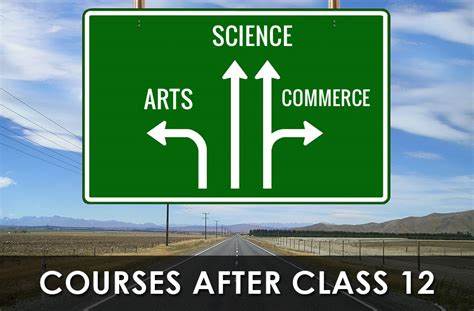
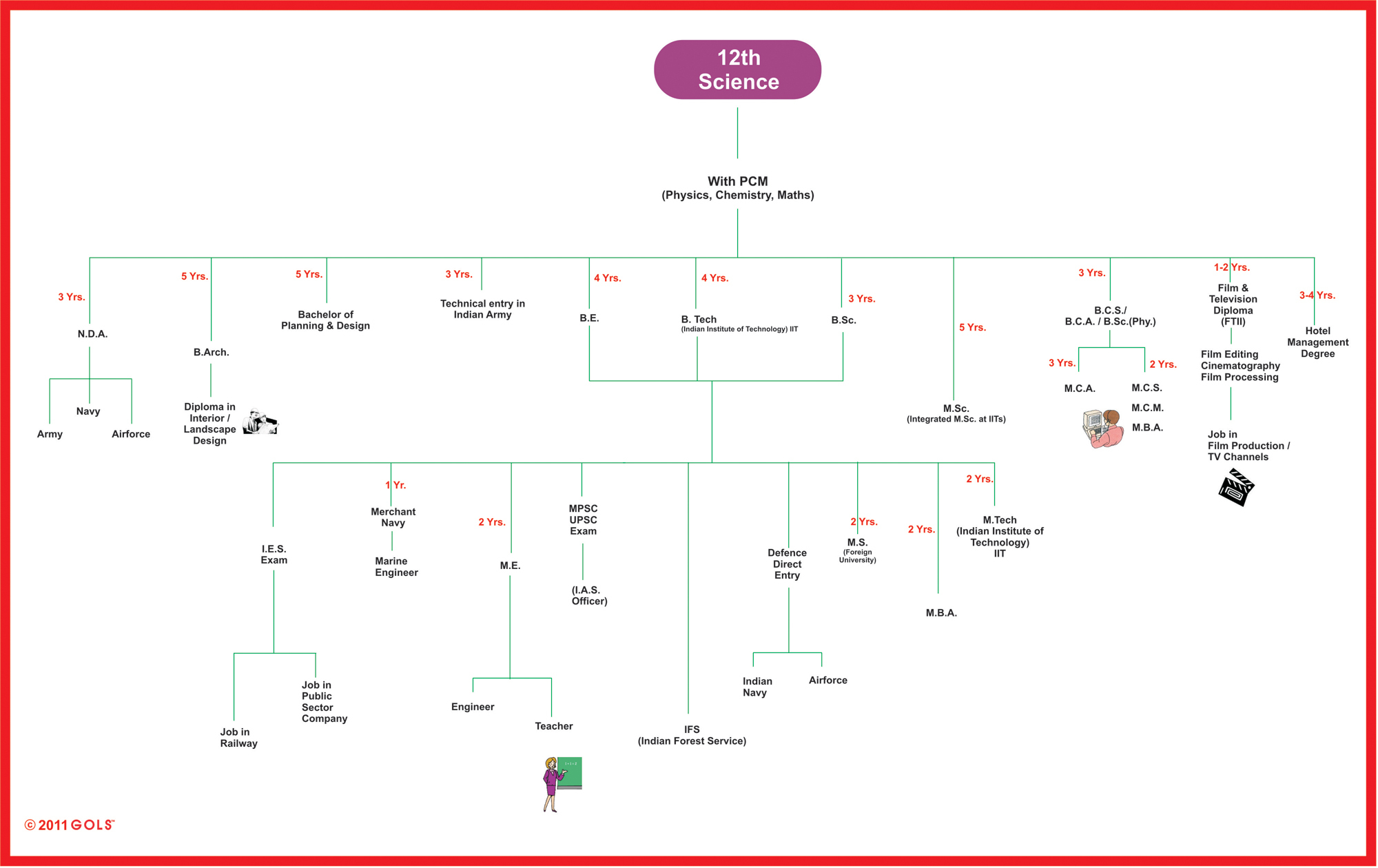
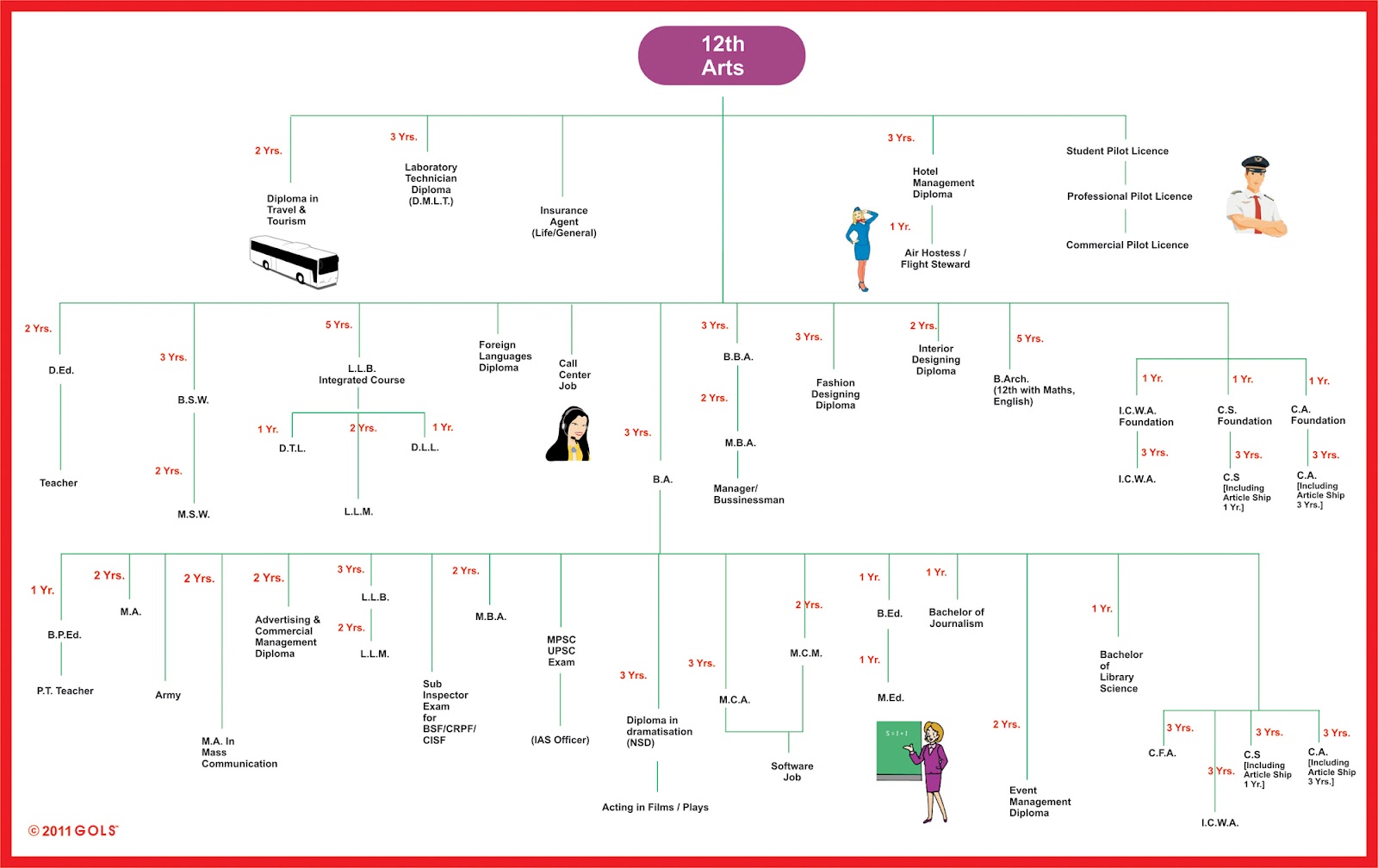
After class 10th streams are broadly divided into Medical, Non-medical, Commerce, and Arts. The detailed professions after class 12th are below:

See the source image

Non-Medical

It mainly comprises physics chemistry and math. Most of the people do BTech which is further branched into a plethora of fields like Computer science, Mechanical Engineering, Chemical and so on. People also do Bachelor of Architecture which comprises building construction. Besides this people can also opt for 3 year long BSc courses in the field of Mathematics, Chemistry, Physics, Computer Application.

Medical

After completing physics chemistry and biology students have options like MBBS, BDS which comprises of Dental Science, B Pharma. ( a 4 year long for becoming a chemist) , BSc Nursing, BHMS (Bachelor of Homoeopathic Medicine and Surgery), BAMS (Bachelor of Ayurvedic Medicine and Surgery). Just like Non, medical students can also opt for B.Sc. in Chemistry, Biology, Physics.

See the source image

Commerce

They have math, economics, accounts, business studies as their subjects. The most popular stream followed after class 12th is B.COM, a 3-year long course consisting of subjects related to finance and commerce. People who further want to do MBA usually opt for B.COM. There also other courses like BBA (Bachelor of Business Administration), CA, etc.

Arts

There are innumerous subjects like political science, history, English, economics, etc. Usually, people opt for BA after class 12th which can be done for various subjects like philosophy, political science, English, etc. People whose interest lies in drawing and painting chose BFA (Bachelor of Fine Arts). After that, they can take various professions like interior designing, etc.

Common courses

There are various courses which a student can opt after class 12th irrespective of their branch. People interested in law can opt for LLB (Bachelor of Law). People belonging to the agriculture domain opt for B.Sc. Agriculture. To become a fashion designer students do B.Sc. in Fashion Design. Students having a passion for teaching opt for B.Ed. in their particular domain. People who are intrigued by mass communication and journalism opt for BJMS(Bachelor of Journalism and Mass Communication. Likewise, there are various other fields.

Although there are various fields to explore students usually are restricted to particular fields like medical and non-medical. However, if someone has a passion in a particular domain, he/she will find success one day or another …

Health consciousness.

Consciousness, at its simplest, is sentience or awareness of internal and external existence. Despite millennia of analyses, definitions, explanations and debates by philosophers and scientists, consciousness remains puzzling and controversial, being “at once the most familiar and most mysterious aspect of our lives”. Perhaps the only widely agreed notion about the topic is the intuition that it exists. Opinions differ about what exactly needs to be studied and explained as consciousness. Sometimes, it is synonymous with the mind, and at other times, an aspect of it. In the past, it was one’s “inner life”, the world of introspection, of private thought, imagination and volition. Today, it often includes some kind of experience, cognition, feeling or perception. It may be awareness, awareness of awareness, or self-awareness. There might be different levels or orders of consciousness, or different kinds of consciousness, or just one kind with different features. Other questions include whether only humans are conscious, all animals, or even the whole universe. The disparate range of research, notions and speculations raises doubts about whether the right questions are being asked.

Examples of the range of descriptions, definitions or explanations are: simple wakefulness, one’s sense of selfhood or soul explored by “looking within”; being a metaphorical “stream” of contents, or being a mental state, mental event or mental process of the brain; having phanera or qualia and subjectivity; being the ‘something that it is like’ to ‘have’ or ‘be’ it; being the “inner theatre” or the executive control system of the mind.

And that’s why to be health conscious is better than being careless.

Audacity and controversy after its new privacy policy

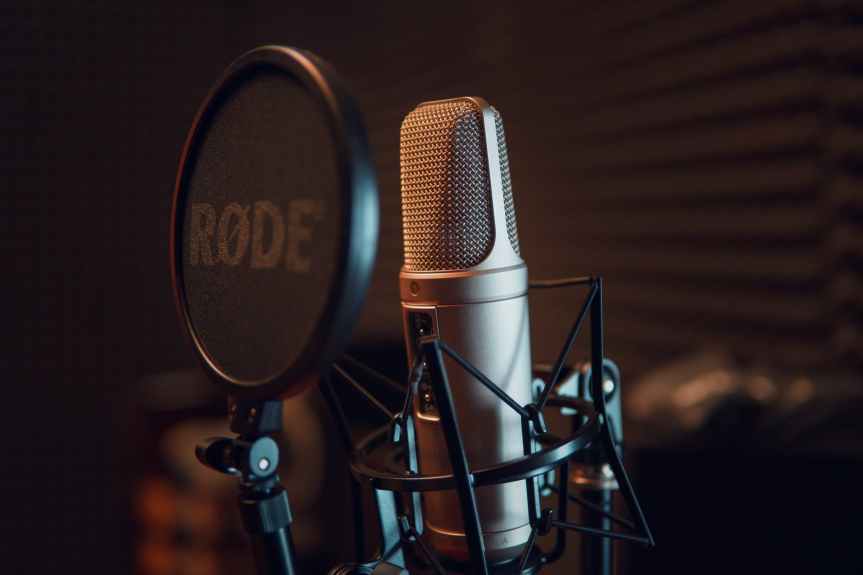
Audacity is free and open-source software that is available for Linux, Windows, macOS, and other UNIX operating systems. The project was started by Dominic Mazzoni and Roger Dannenberg in the fall of 1999 at Carnegie Mellon University, Pennsylvania. The software was officially released on May 28, 2000. It is a digital audio and recording application. It is one of the most popular free and open-source software with over 100 million downloads.

In July 2021, the software was acquired by the Muse Group. The acquisition has brought several changes in the privacy policy of the software. Audacity is very popular software in the audio editing space and is being used by beginner podcasters and musicians to professionals.  The recent changes in the privacy policy under the new ownership have led to accusations that it is spyware now. The new policy states that alongside collecting user data for “app analytics” and “improving our app”, which is not unusual. But further in the policy statement, it’s mentioned that the data collected will also be used for “Legal enforcement”.

The policy is a little unclear and it states:

“It may share personal data with “any competent law enforcement body, regulatory, the government agency, court, or other third parties where we believe disclosure is necessary.”

https://www.audacityteam.org/about/desktop-privacy-notice/

The language used quite vague but roughly it can be interpreted that Audacity will share data if requested by the law enforcement or court order. But they can also transfer more data if there is a potential buyer or merger in the future.

Another concerning change is the banning of under 13 years old users which was not a case earlier. This also violates the license under which the software is currently distributed.

It has been a concern for many users of the program. But this also raises a bigger question about data collection. This also hints at the intention of the purchase. The software already has a user base of millions and the potential of data collection is rather high. The policy to further distribute the data to third parties is a decision that is being bet with the most criticism. Another thing to understand is that Audacity is a small lightweight piece of open-source standalone software. But with this new policy, the software might no longer remain offline software. But these are still speculations.

Some years back similar instance occurred when Oracle Corporation had acquired a very popular office suite: Open Office. As users and contributors were not happy with the changes under the new ownership of Open Office, a new fork of Open Office was created. Contribution for this new Open Office alternative, Libre Office had increased in a very short period of time and it emerged as a viable successor of Open Office. Soon Libre Office also replaced Open Office in most of the future Linux distributions. There is already a new fork of Audacity and it is being actively worked on.

But we can also interpret it as a case of incorrectly drafted writing. There can be a possibility that the language used in the new policy changes was understood differently and things got overblown.

References:

MIMO Configuration

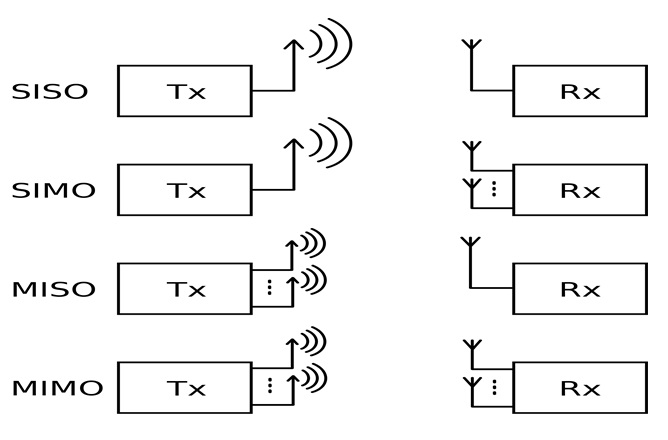
The various types of single/multiple antenna connections are defined as follows:

  • SISO – Single Input Single Output
  • SIMO – Single Input Multiple Output
  • MISO – Multiple Input Single Output
  • MIMO – Multiple Input Multiple Output

SISO – Single Input Single Output

SISO – Single Input Single Output – is the simplest version of the radio connection in MIMO terminology. This is essentially a normal radio channel, as both the transmitter and receiver use a single antenna. There is no need for extra processing because there is no variety.

A SISO system has the benefit of being simple. In terms of the different types of diversity that may be utilized, SISO does not require any processing. The SISO channel, on the other hand, has performance limitations. The system will be more affected by interference and fading than a MIMO system, and the channel bandwidth is restricted by Shannon’s law, with the throughput being determined by the channel bandwidth and signal-to-noise ratio.

SIMO – Single Input Multiple Output

The SIMO (Single Input Many Output) variant of MIMO uses a single antenna for the transmitter and multiple antennas for the reception. Receiving diversity is another name for this. It’s frequently employed to counter the effects of fading in a receiver system that receives signals from several independent sources. It has been used for many years to fight the effects of ionospheric fading and interference with short wave listening/receiving stations.

SIMO has the benefit of being very simple to implement, but it does have certain drawbacks, such as the need for processing in the receiver. In many applications, SIMO may be appropriate, however, if the receiver is situated in a mobile device, such as a cellular handset, processing levels may be constrained by size, cost, and battery drain.

MISO – Multiple Input Single Output

Transmit diversity is another name for MISO. The identical data is redundantly broadcast from the two transmitter antennas in this scenario. The receiver is thus able to receive the best signal, which it may subsequently utilize to retrieve the data it needs.

MISO has the advantage of transferring numerous antennas and redundancy coding/processing from the receiver to the transmitter. This may be a substantial benefit in situations like cellphone UEs, saving space for antennas, and lowering the amount of processing necessary in the reception for redundancy coding. Because the reduced degree of processing demands less energy use, this has a beneficial influence on size, cost, and battery life.

MIMO – Multiple Input Multiple Output

MIMO stands for Multiple Input Multiple Output, and it occurs when both ends of a radio link have more than one antenna. Both channel robustness and channel throughput may be improved using MIMO.

It is important to be able to use coding on the channels to segregate the data from the different routes in order to fully benefit from MIMO. This involves processing, but it adds to the channel’s robustness and data throughput capability. The underlying principle behind MIMO technology is that more antennas equal greater data transfer. MIMO is a potential technique for meeting greater demands in modern wireless networks.