Features you’ll lose when upgrading from Windows 10 to Windows 11.

When Windows 11 is released later this year, it will include a new design, new colours, and new functions. However, not everything in Windows 10 will be preserved after the upgrade.
Between now and the public release of Windows 11, expect a few feature additions and subtractions, but here’s all we know about what will be lost along the road.

Timeline

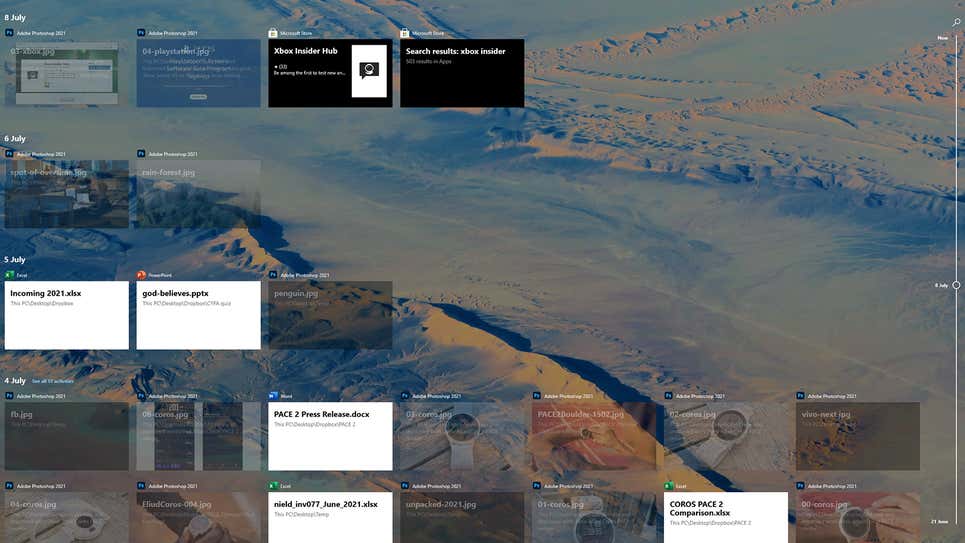
Perhaps you’ve never used Timeline, which is one of the reasons it’s being phased out in Windows 11. The function allows you to sync your activity over the previous 30 days across different Windows PCs (files you’ve opened, websites you’ve visited, and so on), making it quicker to switch between devices registered in with the same Microsoft account.

Timeline will not be available on Windows 11. Screenshot: Windows 10

Live Tiles

The Live Tiles feature on the Windows 10 Start menu, which allows different bits of information to be presented and updated in real time, was not well received by developers. You’d be correct if you thought that sounded a lot like widgets. However, with Windows 11, Microsoft will attempt to bring back desktop widgets, so let’s hope they perform better than Live Tiles.

Start Menu Groups 

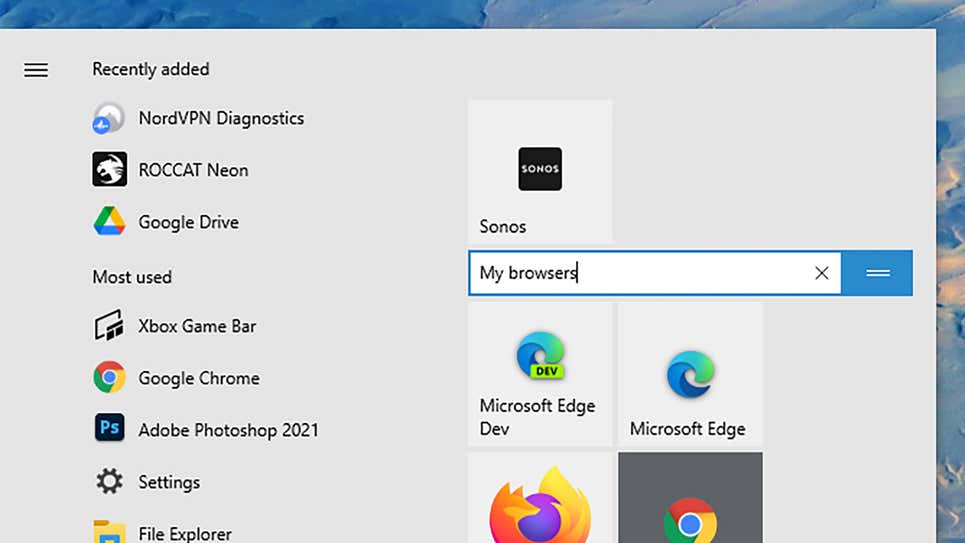
Another feature borrowed from the Start menu is the ability for users to organise and name tiles in categories like as productivity, writing, gaming, and so on. The Start menu’s layout will also not be resizable, implying that Microsoft intends to make the Start menu experience the same for everyone (as well as move it into the centre of the screen).

In Windows 11, tile grouping and naming are no longer available in the Start menu. Screenshot:Windows 10

Internet Explorer

What exactly is it? Didn’t you think it was already dead? It’s still available in Windows 10 if you look hard enough, but in Windows 11, all traces of Internet Explorer will be gone, and Microsoft Edge will take its place. Use the IE mode in Edge for those really, very ancient legacy programmes and sites you still require access to for whatever reason.

Cortana

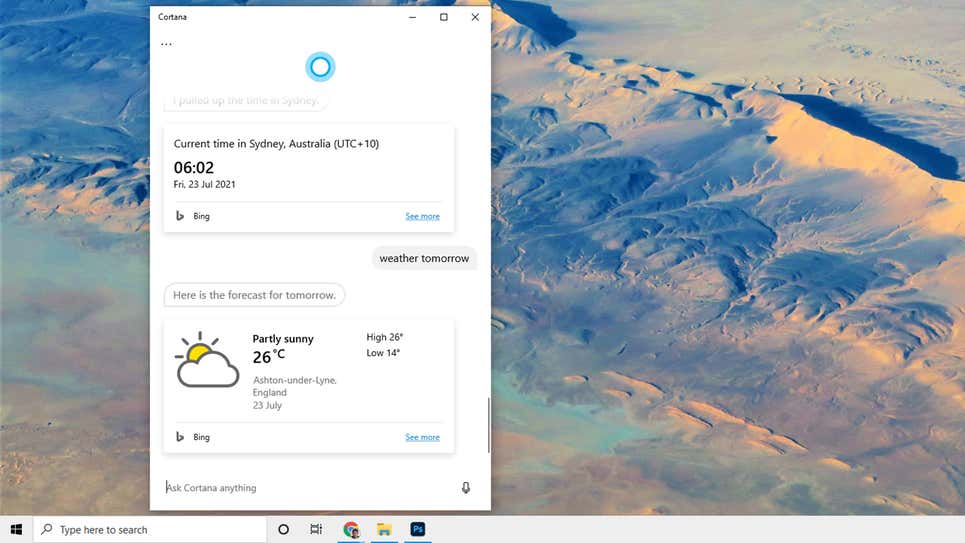
Although Microsoft’s digital assistant will not be completely removed from Windows 11, it will be removed from the setup process and will no longer be pinned to the taskbar. It’s unclear what Microsoft has planned for Cortana, but based on the capabilities introduced to it in the previous year or so, it may be recast as a business tool.

In Windows 11, Cortana will be less prominent. Screenshot: Windows 10

Skype

Skype will continue to be available in Windows 11, but it will not be included as an integral member as it is in Windows 10. That’s because Microsoft has shifted its attention to Teams as a solution for all of your communication requirements, including video, so expect a lot of tight Teams connections in the final Windows 11 experience.

Tablet Mode

Although Windows 10 works well on tablets like the Surface Pro as well as complete desktop and laptop computers, Windows 11 will not have a specific mode for tablet devices. Rather, this functionality will be redesigned, with part of it occurring automatically (like when you attach or detach a Bluetooth keyboard, for example).

Taskbar Location

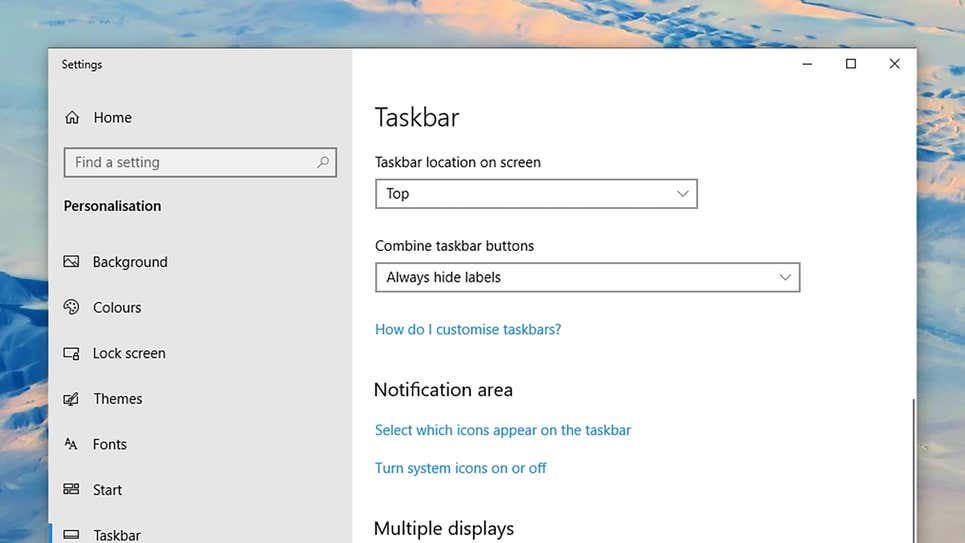
In terms of removing customizations, the taskbar in Windows 11 can only be found at the bottom of the screen. You may not have known it, but Windows 10 allows you to move the taskbar to the left, right, or even to the top of the screen. You’re out of luck if you enjoy tinkering with your operating system.

You may move the taskbar in Windows 10 if you haven’t noticed. Screenshot: Windows 10

Quick Status

Applications in Windows 10 can leave little blocks of information on the lock screen to remind you of incoming emails, impending calendar appointments, and so on. When Windows 11 ships, this feature, known as Quick Status, will be unavailable to applications, however widgets (see above) may be able to fill the void.

Windows S Mode

This is another feature that isn’t going away altogether, although you’ll see it less frequently: S Mode, which improves speed and security by only allowing programmes from the official Microsoft Store to be installed, will only be available in Windows 11 Home version. S Mode is now available for Windows 10 Home and Windows 10 Pro.

Difference between click wrap, shrink wrap and browse wrap contracts

Introduction:

Have you ever wondered how you could have signed a deal with a corporation as large as Amazon while sitting in your recliner? Have you ever agreed to the terms and conditions of an app before using it? Have you clicked “I accept” without understanding what the contract entails? During this time, the pandemic has spurred innovation and the development of new business models. Everything is now available with a single click, whether you want to purchase meals from Zomato, electronics from Amazon, or groceries from Grofers. Have you ever been curious about how they sign contracts with you? Contract signing is also a click away these days.

What are e-contracts?

Contracts that went overseas and returned with new electronics and a fancy name are referred to as e-contracts. Electronic contracts are contracts that exist in a digital format and are in high demand these days. E-contracts are quite similar to normal contracts; the only difference is that they take place through an online digital means of communication. E-contracts have eliminated the need for middlemen, and merchants may now reach out to buyers directly. The computer programmes that link the vendor with an electronic agent, i.e. the app, and the buyer with an electronic agent are now the middlemen. Essentially, it provides a venue for the buyer and vendor to meet.

Are e-contracts binding and valid?

In India, the Indian Contract Act, 1872, Section 10 states that “All agreements are contracts if they are made by the free consent of parties competent to contract, for a lawful consideration and with a lawful object, and are not hereby expressly declared to be void.” 

Also, Section 10(A) of The Information Technology Act 2000 states that “Where in a contract formation, the communication of proposals, the acceptance of proposals, the revocation of proposals and acceptances, as the case may be, are expressed in electronic form or by means of an electronic record, that such contract shall not be deemed to be unenforceable solely on the ground that such electronic form or means was used for that purpose.”

Electronic signatures are also considered as proof of signing under the Indian Evidence Act of 1882, and Digital Signature Certificates are created when a document is electronically signed, and this certificate is also legally valid and binding under the IT Act of 2000.

Contracts in India are governed by The Indian Contract Act, 1872, and electronic contracts must be legitimate within the law’s interpretation. The following are the fundamentals of electronic contracts:

  1. Offer,
  2. Acceptance,
  3. Lawful consideration,
  4. Lawful object,
  5. Competent parties to contract,
  6. Free consent,
  7. Certainty of terms.

E-contracts are favoured over time-consuming paper documents since they are less expensive and more efficient. Electronic contracts, on the other hand, are more efficient to utilize and have a lot faster response time than long paper works. In reality, e-signatures save a significant amount of time and work. As a result, even if they are digitally signed and executed, e-contracts are legally binding and enforceable. However, this is not the case with click-wrap contracts.

Types of e-contracts:

To mention a few, there are shrink-wrap contracts, click-wrap contracts, browse-wrap contracts, source-code escrow contracts, software development and licence agreements, and many more. The following are three distinct types of contracts:

1. Shrink wrap contracts:-

The name of this contract was inspired by the shrink wrap packaging of CD-ROMs, which were used to deliver software. The licence agreements for various software are known as shrink-wrap contracts. These contacts are the licencing agreements, boilerplate, or terms & conditions that come with the product. When a consumer utilises the goods, he has agreed to the terms of the contract. Shrink wrap is the plastic wrapping that is done on the product’s cover. IT businesses are the most likely to utilise shrink wrap. The most intriguing aspect of this contract is that acceptance may be revoked by returning the merchandise. Furthermore, these days, licencing agreements are not supplied with the product, but rather shown before installing the software.

2. Click wrap contracts:-

Have you ever seen the lengthy paragraphs with comprehensive terms and conditions for utilising an app or programme that no one reads? Those are the Click wrap contracts, to be sure. The party is only a click away from signing this contract, as the name implies. To accept the contract, they only need to click a button or check a box. Essentially, the user is compelled to sign the contract or else he would be unable to progress, and therefore they are not negotiable at all. There are certain legal problems that will be addressed later.

3. Browse wrap contract:-

Have you ever seen a sentence that says something like, “By continuing to use these services, you agree to the terms and conditions” or “By signing up, I agree to the terms of usage”?

Browse wrap contracts may be found at the bottom of the page, and acceptance is presumed if the client uses the application. These contracts are often seen on websites, as well as in various mobile apps and software programmes. They can also be accessed via a hyperlink.

Critical analysis:-

Click wrap contracts and shrink wrap contracts are unilateral and presented as fixed contracts, but browse wrap contracts are significantly different in that they do not compel the customer to accept the contract, but rather presume approval when browsing the website.

Contracts such as click wrap and browse wrap are commonly employed by websites that wish to force their customers to adhere to their terms and conditions. The only difference between the two is how they are mandated. While browse wrap does not need consent, click wrap requires customers to click the “I agree” button.

Contracts with customers can be entered into through browse wrap, click wrap, and shrink wrap. Because it was basic and included all of the necessary information, browse wrap is the earliest and typical form of agreement. Shrink wrap was only discovered in the software business, although in a different form.

The agreement is contained inside the packaging of the shrink wrap contract, and the consumer’s approval of the same is indicated by the opening of the package. The terms and conditions and privacy policy for browse wrap contracts are posted on the website and indicated with a link. By default, the customer has consented to this contract. And, in most cases, the phrase reads something like, “Your use of our site implies your acceptance of our Terms of Use and your commitment to be bound by them.” So, if you disagree with the terms and conditions, simply do not use the website.

A click wrap contract, on the other hand, has more criteria than a shrink wrap or browse wrap contract. The two main components that make a significant difference are that, first and foremost, click wrap contracts include a link, but they also include a notice that summarises all of the legal terms and conditions. Second, they request actionable consent via a pop-up window, such as a “I agree” button or a check box. If a website or app employs this contract, it implies that they demand the consumer’s affirmative consent before proceeding. The consumer can also reject the terms and conditions by clicking on a “Cancel” button.

Conclusion:

The Indian Contract Act, 1872 controls all contracts in India, whereas the Information Technology Act, 2000 governs all electronic transactions. The majority of electronic contracts are provided to customers in the form of click wrap and browse wrap. The term wrap is originated from shrink wrap contracts, in which the terms and conditions were shrunk and wrapped in the product packaging. However, click wrap and browse wrap are only employed in digital form. Shrink wrap may be utilized for both digital and physical applications.

Previously, the owner of a website could choose between click wrap and browse wrap, and both were regarded equally legally, such as privacy policies and terms and conditions, but things have changed.

Finally, I’d like to emphasise that while a browser wrap contract can be used for terms and conditions, legal documents such as privacy policies must be accompanied by a click wrap contract to ensure affirmative permission.


Jhunjhunwala plans to have 70 planes in four years of airline

Billionaire investor Rakesh Jhunjhunwala is planning on having 70 aircraft within four years for a new airline he wants to set up.

Photo by Pixabay on Pexels.com

Jhunjhunwala, who is considered to be investing 35 dollar million and would own 40% of the carrier, is expected to get a no-objection certificate from the aviation ministry in the next 15 days, he said in an interview on wednesday.

The ultra low cost airline will be called Akasa Air and the team, which includes a former senior executive of Delta Air Lines Inc is looking at planes that can carry 180 passengers, he said.

Its a bold bet by Jhunjhunwala, who’s known locally as India’s Warren Buffett, in a market that has seen some airlines collapse in the face of intense fare wars and high costs.

Still, what was once the world’s fastest -growing aviation market holds an allure and Jhunjhunwala is looking at opportunities to woo flyers with a brand new carrier offering low fares.

Photo by Alexander Mils on Pexels.com

All of these facts, however, do not prevent Jhunjhunwala from investing in the aviation industry, as he is well-versed in the reality of doing business in this area. “I believe some of the increment players will not recover,” he remarked, but he praised his partners, saying, “I have some of the best airline people in the world as my partners.”

Jhunjhunwala is investing $35 million in Akasa and expects the Aviation Ministry to provide a no-objection certificate (NOC) soon. A fleet of 70 planes is planned. The new arrival into India’s aviation sector comes at a time when the COVID-19 pandemic is having a significant influence on the industry.

Reference

http://www.moneycontrol.com

http://www.hindustantimes.com

http://www.timesofindia.com

3D PRINTING – AN OVERVIEW

3D printing, also called Digital fabrication technology or Additive manufacturing is the process of making 3-dimensional solid structures or models from the geometric representation by successive addition of materials. The layers of the printed object are a thinly sliced cross-section of the object. 3D printing is an emerging technology that enables us to produce objects with fewer materials than traditional manufacturing methods. 

The process of 3D printing involves 3 major steps.

  • MODELING AND SLICING

It is the first step in the process of 3D printing. Here, even the tiniest detail of the objects is given. The geometric representation of the object is created using software tools called slicing software. The process of building the structure using this software is called slicing as it slices the object to create many layers. The work of this software is to convert the geometry of the object into instructions for the 3D printer. It will tell the printer how to create the layers of the object. In addition, the instructions can also be provided through STL files. STL is a simple, portable object file that is used for designing computer-aided design CAD systems to model the solid geometry of the objects. These STL files are used as the input information for the 3D printers to produce the object. The object is produced by forming layers of the printing material as per the geometric measurements provided. The materials used differ for different technologies.

  • PRINTING

When the modeling and slicing get over, the 3D printer starts its work. Assuming that there is no error in the model, the printer begins to print. It dispenses the material layer-by-layer waiting for one layer to get dried so that it could add the next layers. The bottom-most layer is formed first followed by the next highest layers. The model is printed by adding hundreds and thousands of 2D prints on top of one another to make a 3D model. Although many materials are used for 3D printing, thermoplastic is the most widely used one. 

  • FINISHING

This is the final and post-printing step in manufacturing a 3D object or model. Once the object is printed and dried completely, a finishing touch is given to remove small damages that occur during the printing and refine the parts. It is done to give a smooth surface finish to the object. Solvents are added to remove the superficial imperfections in the model. There are various methods followed in finishing such as polishing, sanding, etc.

The time taken to complete printing may depend on the size, details, and quality of the object created as higher quality objects take more time comparatively. 3D printing can take some minutes or hours or weeks or even more. For example, it takes almost a few hours to create a simple model like boxes and balls and takes weeks to produce more large and complex structures with more details like buildings and houses. The larger the size and geometry of the object, the longer will be the time spent to create the object. So, 3D printing is useful at the same time, it is a time-consuming process.

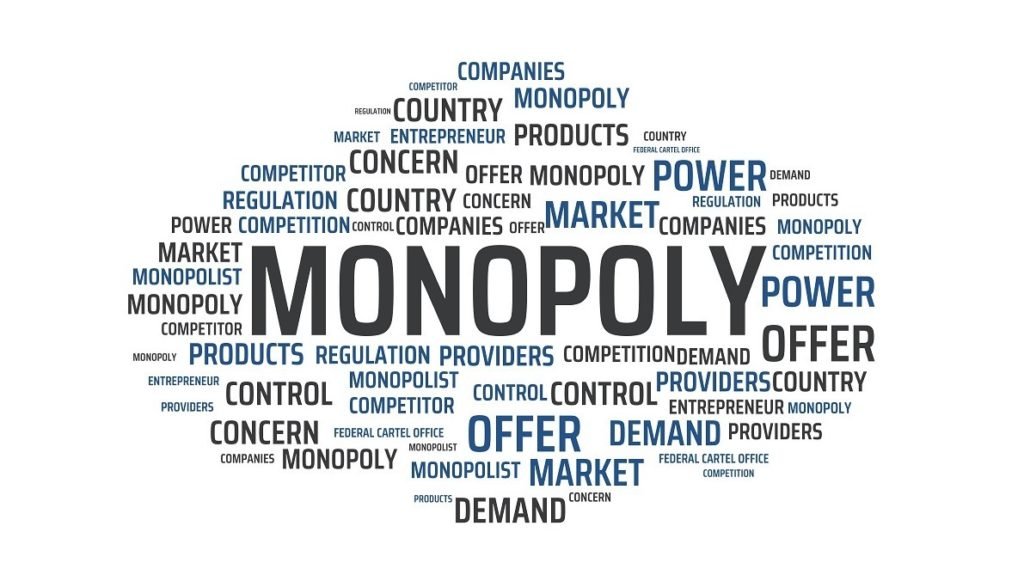
MONOPOLY

The Sherman Antitrust Act was the first federal act that outlawed monopolistic business practices. In the US Sec 2 of Sherman act, 1890 makes it unlawful for a company to achieve monopoly power, and Sec 7 of Clayton act 1914 prevents mergers of companies that will lessen competition or lead to a monopoly. The Federal Trade Commission protects consumers from any kind of unfair practices taking place in the market places. Similarly in India, the Competition Commission of India has the responsibility to ensure fair and healthy competition in economic activities, to eliminate practices adversely affecting competition. All over the world, similar government agencies are constantly developing regulations and laws to keep the marketplace clean and just.

Big tech companies are now under the intense scrutiny of competition watchdogs around the world. In the US antitrust charges are filed against Google and are accused of protecting the monopoly, bipartisan lawsuits filed against it say Google search engine and play store is anticompetitive. French completion watchdog fined google $268 million for abusing its dominant position and asked it to pay for news to the publishers. Australia too directed google to pay for news content.

In India, big techs are at loggerheads with the government over the new IT rules. Both have different perceptions regarding certain aspects. The new IT rules make it mandatory for companies having a users base of more than 50 lakhs(5 million) to appoint a chief compliance officer, nodal officer, and grievance officer in the country all residents of India. Also in India, data protection laws are at a very nascent stage and are underdeveloped and incapable of protecting its citizens’ data from any kind of misuse.

Developed nations are now recognizing the unquestionable power big companies enjoyed so long. Recently G7 countries agreed on a 15% global minimum corporate tax which they say aims to discourage large corporates from avoiding tax by shifting bases.

So basically nations arround the world are conserned about tax evasion, unfair business practices, and lack of rules and regulations to restrict powers of monopolistic companies.While it is legal for companies to adopt strategies for reducing taxable income, tax evasion tactics by using it dominance is unacceptable.There is difference between gainging monopoly and afterwards using it for sustaining monopoly. I am of the option that if companies are providing quality products and services and gaining monopoly it’s fine but sustained hold of monopoly for long period can make them all too powerful, and that is why we need dynamic regulations in place to check their power.

All about NASA

When it comes to space, the first name in our mind will be NASA. From kid to old age people all know about NASA, that much impact NASA have on us. All right coming to this article, in this article we are going counter the following topics – What is NASA and what they do? Creation of NASA, Some special projects of NASA, Future missions of NASA, NASA’s budget for the financial year. Here starts the article

What is NASA?

NASA stands for National Aeronautics and Space administration, it is an Independent US government agency, which is responsible science and technology which is related to space and aeronautics. NASA is the leading space agency in the world. Nearly, 17,000 thousand of people are working in NASA from diverse background.

Creation of NASA

On July 29, 1958 the US congress passes an legislation establishing National Aeronautics and Space administration(NASA), which is responsible for US’s space activities. It has been organized by National Advisory Committee for Aeronautics(NACA). NASA was created in the response of soviet launching Sputnik in 1957. Its headquarter is located at Washington DC.

Some special projects of NASA

  1. Project Apollo

The project Apollo is the biggest achievement for NASA, Also it is the most expensive program for the US. It costed more than $20 Billion in 1960, as of now 225 Billion. The Apollo 11 mission was on July 1969, which was the moon landing. The mission was successful and Neil Armstrong became the one first person to walk on moon, followed by Buzz Aldrin. This is a milestone for NASA.

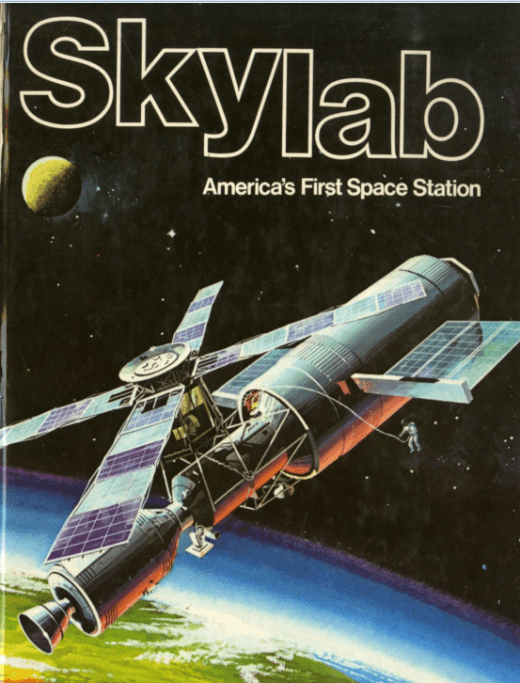
2. Skylab

photo credit – Pinterest

Sky is the first space station controlled and operated by the Us government. It spent six years orbiting the earth. Three successful crew mans lived there. The astronauts in the space station conducted 270 experiments in solar astronomy, biomedical and life sciences, etc.

NASA’s Budget

NASA receives its funding from annual federal budget passed by the US congress. Till now, US spent around $650 Billion for NASA. The annual budget of NASA for the financial year 2020 is $22.6 Billion. It represents 0.48% of the $4.7 Trillion of the US. The annual budget for NASA this year is $24.1 Billion, with an increase of 6% from the previous year.

Future Missions

There are many future missions for NASA, let us see some of them.

  1. 2021 August 8 SOLAR ORBITER ESA Solar mission makes second Venus flyby.
  2. 2021 October 16 – LUCY Launch of NASA flyby mission to multiple Trojan asteroids.
  3. 2021 Late – LUNAR FLASHLIGHT – Launch of NASA CubeSat mission to find lunar water ice.
  4. 2021 Late LUNAR ICE CUBE  Launch of NASA CubeSat mission to find lunar water and volatile.
  5. 2022 January – SMART LANDER FOR INVESTIGATING MOON – Launch of JAXA lunar lander mission.
  6. 2023 August 21 – PARKER SOLAR PROBE – NASA solar mission makes sixth Venus flyby.
  7. 2024 September – MARTIAN MOON EXPLORATION – Launch of JAXA mission to return sample from Phobos.

That’s all from my side. I hope you like it. Thank you.

THE JOURNEY OF PURI TOWARDS FIRST CITY TO PROVIDE 24 X 7 CLEAN WATER

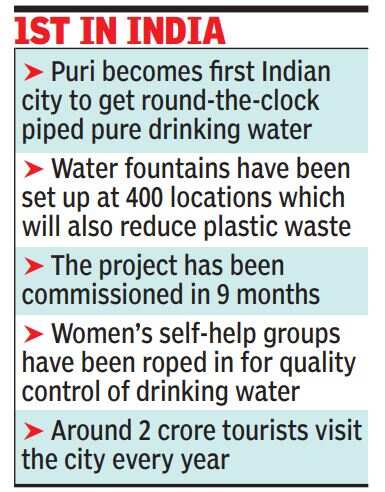
Puri is one of the major heritage cities of the country and every year more than 2 crore tourists visit every year. And this month the city earned an unique distinction of becoming the first Indian city to provide 24X7 pure drinking water. This is the landmark achievement for the city and state and is one of the major contributors for enhancing the status of sanitation and hygiene in Puri, Odisha. The city has become the first city to offer safe drinking water directly from taps to the residents and the tourists visiting the city every year and now has joined the group of global metropolitans like London and New York for providing safe drinking water.

The government launches “Sujal: Drink from Tap Mission” which has the goal of providing all time safe drinking water to all the residents and people visiting the cities directly through taps. The city has fulfilled and achieved the credentials of the ambitious mission and has achieved the goal of the mission. The 24 hour drink from tap facility provides water which can be used directly without filtration for different purposes such as drinking, cooking etc. This move is beneficial for the 2.5 lakh people residing in the city and the 2 crore tourists visiting the city every year. And the people don’t need to carry water bottles with them and can directly rely on the taps. This type of facility is present in very limited number of cities globally and Puri has established its place. Furthermore, the state government had installed 400 water fountains in different locations of the city with the aim of reducing the reliance and usage of plastic bottles in Puri. This will eventually reduce the amount of plastic wastes being can be reduced.

The government uses 5T initiative for increasing the efficiency and effectivity of the services being delivered across the city. The Chief Minister of the state emphasized on the linkage between safe drinking water with health, living standards and the economy, thereby, urging the people not to waste or pollute water. Transparency, teamwork, technology, time-frame and transformation form the 5Ts which has been adopted by the government for improving its governance. The budget for drinking water has been doubled in 5 years from Rs 200 crore to Rs 4000 crore thereby making the city the first heritage town in the country to get this facility. It is expected that the initiative will have great contribution in reducing the amount of plastic wastes generated. It is estimated that the amount of plastic waste being generated by the city will reduce by 400 tonne per annum. 1100 Stand posts were already present in the city and the state government has established additional 110 modern public stand posts along the Grand Road (Badadanda) and nine by the sea beach area have been installed. Old stand posts are being replaced with steel pipes and taps and at present 36 MLD clean water is being supplied everyday in the city. About 135 – 140 liters of drinking water per head per day is being provided to the residents everyday.

CONCEPT OF INTERNET

As the internet turns 50, experts weigh future advances and emerging issues  | Network World

The INTERNET is a ‘network of networks’ that links computer systems around the world . It allows communication across networks , i.e., communication can take place between one network and another . This allow people to have access to information from different Web sites , locations and machines . It virtually makes accessible a sea of information and a nearly worldwide audience at the click of a button.

It was the Sputnik’s launch and the subsequent cold war , space race and the development of ARPANET (Advance Research Projects Agency NETwork ) in 1950 , that led to the establishment of the internet. However , it actually gained momentum in the 1980s when ARPANET was used by the National Science Foundation to connect the five supercomputers at its regional centres . Thus emerged a high speed Internet service that enabled access to many universities , networks , bulletin board systems , commercial online services and institutions . The decade closed with the introduction of the World Wide Web or WWW , which proclaimed the emergence of an independent platform of communication that was further augmented by a relatively easy-to-use and pleasant graphical interface .

Important Features

Some of the facilities that are available on the Internet are as follows :

  • World Wide Web : The Internet application that is currently drawing maximum attention is the WWW . It has dramatically influenced the online world and continues to grow in popularity .
  • Direct Communication : Through e-mail , messages can be sent to or received from any part of the world within a few minutes.
  • Round-the-Clock Availability : Information on the Internet is available to users 24 hours a day .
  • Wide Area Networks : Using the Internet , organizations can collect and compile information from offices spread over large geographical areas .

IS PAPERLESS OFFICE A REALITY OR NOT?

While going completely paperless might not be a reality as of now, but the changes that comes with the modern office are encouraging companies to do so.

PAPERLESS OFFICE:

A paperless office is a work environment in which the use of paper is eliminated or greatly reduced. it is done by converting paper and other documents into digital form. It is a workplace that has minimal paper-based processes.

BENEFITS OF PAPERLESS OFFICE:

There are many perks of paperless office. Some include

  • Strengthened Document Security & Confidentiality
  • It has easy access to data.
  • Eliminating paper work helps you save money spent on printing and storing documents.
  • Less paper waste means decreased carbon footprint.
  • Adhere to Audit Guideliness.

DISADVANTAGES OF PAPERLESS OFFICE:

As the proverb goes “A coin has 2 sides” likewise paperless office also has its own disadvantages

  • Software Maintenance is a huge problem.
  • Legal and Compliance Issues arises.
  • Difficulties in Digitalizing Existing Documents.
  • Security Risks and Viruses.

WHICH IS BETTER?

In case of paper office, paper documentation simply looks more professional. Paper office is that it doesn’t cost a whole lot of money and its much cheaper. Ultimately, it’s much easier to conduct business with a paper-filled office. In paperless office the amount of clutter that can be reduced. Sending big documents and leaflets to business clients can be done at the click of a button. Documents that may have been misplaced or lost entirely can be found with a quick search of the hard drive. Therefore both has its own side of story. To conclude which one is better is still a debate and also a matter of choice.

PAPERLESS OFFICE A REALITY OR NOT?

In this pandemic, paperless seems more likely and imperative. However road to a fully paperless office seems like a long one as of now but it is definitely possible in near future.

Malware hiding in AI neural networks

A trio of Cornell University academics discovered that malware code may be hidden inside AI neural networks. On the arXiv preprint server, Zhi Wang, Chaoge Liu, and Xiang Cui have published a paper outlining their experiences with inserting code into neural networks.

Criminals’ attempts to get into devices running new technology for their objectives, such as deleting or encrypting data and demanding payment from customers for its recovery, are becoming more complicated as computer technology becomes more complex. The researchers discovered a new technique to infect specific types of computer systems running artificial intelligence applications in their new study.

AI systems function by processing data in the same manner that the human brain does. However, the study team discovered that such networks are vulnerable to foreign code intrusion.
Foreign actors can infiltrate neural networks by their very nature. All such agents have to do is imitate the network’s structure, similar to how memories are added to the human brain. The researchers were able to accomplish so by embedding malware into the neural network powering an AI system dubbed AlexNet, despite the virus is very large, taking up 36.9 MiB of RAM on the AI system’s hardware. The researchers picked what they thought would be the optimum layer for injection to inject the code into the neural network. They also added it to a model that had previously been taught, although they cautioned that hackers may choose to target an untrained network since it would have less impact on the entire network.

Not only did ordinary antivirus software fail to detect the malware, but the AI system’s functionality remained nearly unchanged after infection, according to the researchers. As a result, if carried out surreptitiously, the infection may have gone unnoticed.

The researchers point out that merely inserting malware into the neural network would not be harmful—whoever snuck the code into the system would still need to figure out how to run it. They also point out that now that hackers can insert code into AI neural networks, antivirus software may be upgraded to detect it.

Promise For The Future: ‘RENEWABLE ENERGY’.

SOLAR POWER:

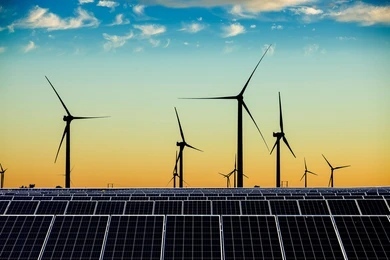
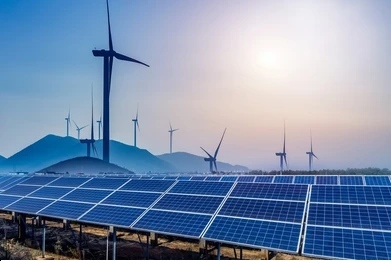
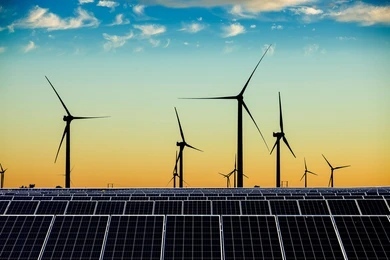
With energy consumption being the buzzword in developing economies around the world, fears of an energy crisis looming ahead are not totally unfounded. The non-renewable nature of fossil fuels makes complete dependence on these for future energy needs a very dicey affair. Renewable energy sources are the best bet in the scenario. And what can be a better renewable resource than the sun?

In a country like India, if the abundant amount of sunlight available is harnessed properly it could mean an end to the energy crisis. It is the most abundant source of energy. The average global solar radiation is around 5 kilowatt hours (KWH) per square meter per day with the sunshine hours ranging between 2300-4300 per year. India is in the sunny belt of the world. The country receives solar energy equivalent to more than 5000 trillion KWH per year, which is far more than its total annual energy consumption.

Besides, it is a renewable and clean energy source. Taking both environmental and economic cost, solar energy works cheaper than fossil fuel resources. Once we master techniques to harness solar energy, it can be a vital source of power on all planets. Solar energy could be a viable source of power generation for the next 1000 crore years. There are many technologies available for conversion of solar energy into solar power. For instance, solar photovoltaic (SPV) technology, photo galvanic cells, solar steam generators (solar concentrating power), solar tower or solar chimney, radio micrometers and thermopile are some of them.

ELECTRIC MOTORS:

Imagining a future where clean air is no longer a dream and our cities are not smog filled concrete jungles, could well become a reality in the coming years if the world begins to increasingly adopt the use of cleaner options like alternate-fuel vehicles . The rise in economic activity and the burgeoning population have led to a tremendous demand in the transport sector, especially in urban India. By 2025, India’s urban population is expected to grow five fold to a staggering 200 million while pollution is expected to grow seven times. With this tremendous growth has emerged a very critical issue of keeping air and noise pollution in urban areas under control.

If we can have three lakh electric vehicles (EVs) on the roads by 220 including three wheelers, cars and scooters, we would have reduced pollution by 16 lakh metric tones, saved ? 3700 crores in foreign exchange earnings and substantially reduced healthcare costs. Small electric buses, three wheelers and electric scooters are ideal for city mobility in India but it could take between 5-10 years before they become viable for commercial use.

Image Source – google.

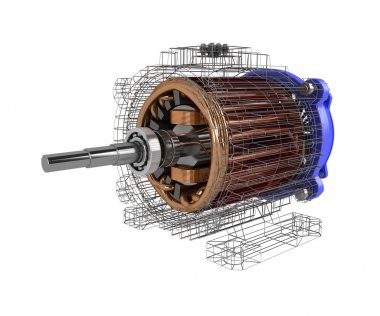
The electric vehicle uses electric energy which is stored in batteries that feed the electric motor. Driving an electric vehicle is easier and more relaxing than a traditional one because it has no speed-gear and functioning noise. It is enough to turn the key and press the acceleration pedal; you need only two driving pedals- accelerator and brake.

The need to reduce air pollution along with the availability of new advanced clean alternative to internal batteries have allowed EVs to reappear as a combustion vehicles. Electric drive systems are virtually non-polluting and extremely energy efficient. While internal combustion vehicles can convert about 20% of the chemical energy in gasoline into useful work, 75% or more of the energy from a battery has productive power in an electric vehicle.

Electric motors can also provide power at almost any engine speed. While internal combustion engines must be revved up to high rpm to achieve maximum power electric motors provide nearly peak power even at low speeds. this gives electric vehicles strong acceleration performance from a stop.

The emergence of newer batteries has driven the cost and performance EVs. There are several major types of automotive batteries available and under development, from advanced lead acid batteries like those that start our internal combustion engines to lithium polymer bateries. Although recharging could be a consideration, home recharging systems are available giving EVs an added advantage.

Apart from being environment-and -user friendly, there are several other reasons for alternate fuel cars to flourish in India. Firstly, electricity for EVs can be produced from various sources for which India has natural resources and does not need to depend on the import of oil. Although EVs will not replace LPG, CNG or petrol and diesel for intercity use, the infrastructure required for EVs in the form of electricity distribution infrastructure is already available in all our cities and minimum costs are required to install additional capacity.

EVs are zero polluting, easy to handle and have low maintenance costs. EVs will not degrade with time and they are always zero polluting unlike conventional vehicles where the pollution increases with engine degradation, poor maintenance and adulterated fuel.. India also has the maximum market potential for EVs owing to an established auto component infrastructure, low manufacturing and R&D cost, mechanical hardware availability, high urban congestion and the presence of domestic market. The industry could significantly gain from rising exports by 2010, and with appropriate government support, could transform the landscape of urban India by reducing pollution, improving public health, creating employment opportunities and impacting society.

In order to do that, a holistic approach involving the government, public and auto majors is needed to promote EVs in India. Appropriate government policies during the next five years and adequate support from business houses and institutions. for instance, purchasing a fixed percentage of vehicles for their fleets and offering subsidies and tax exemptions, will go a long in promoting the industry in India. Finally, people have to become more informed about these technologies. The media must play its role in educating the public about alternate fuel vehicles and their advantages.

11 Reasons Why Apple Wants Companies To Choose Mac Over Windows.


Like Android vs IOS, Mac vs Windows is also a ‘battle’ that has been going on for decades. Also, along with the companies rivalry, we all are aware of Steve Jobs and Bill Gates’s famous rivalry. Although the rivalry between these two tech giants is settled now, there is no end to the debate over which one is better. For proving that Apple is better, Apple also has created a special site labeled 11 reasons Mac means business. By the title, it is clear that Apple is targeting organizations to choose them instead of Windows. 

So, let’s see why Apple wants companies to choose them. Mentioned below are 11 reasons according to Apple, why:-

1) The all-mighty M1 chip

Apple says that the M1 chip changes everything. The silicon-based chip, according to Apple defines custom technologies, blazing-fast speed, and incredible power efficiency. In short; a breakthrough of breakthroughs. 

2) M1: the Flash of the processors

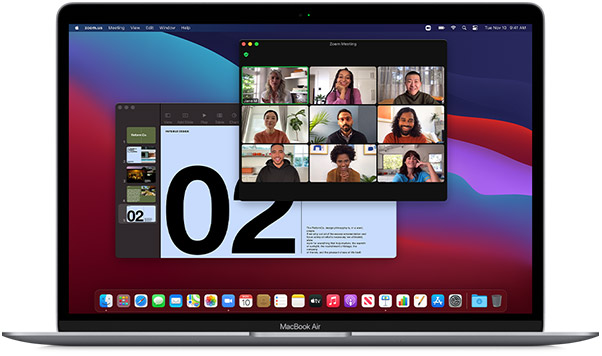
According to Apple, the MacBook Air with an M1 processor is now about 3.5X faster than the previous generation. Apple says that with the M1 chip one can multitask across the projects, analyze the spreadsheet while having a video conference, and can crush even the performance-heavy tasks with ease.

3) Longest battery life

Apple claims that now the devices which come with the M1 chip have jaw-dropping battery life. Apple says, “ up to 18 hours of battery life — MacBook Air delivers the power to work where, how, and for as long as you want.”

4) Mac is friendly with IT

Apple says that it is a lot facilitated with zero-touch deployment to set up devices. And to manage Mac at any scale with mobile device management.

5) Mac work for companies without IT

Mac is easy to use and the setup is also very simple. The assistant helps to get Mac up and running quickly. And with reliable hardware, it won’t let you down. So, it’s perfect for companies with or without IT support. 

6) Mac costs less in the long run

According to Apple, when compared with a PC, a single Mac can save you $843 over three years. How? Because of fewer support tickets, less software needed, and higher residual value, the savings add up, claims Apple.

7) The most innovative companies run on Mac

As per Apple, 84℅ of the world’s top originators like SAP, Salesforce, and Target deploy Mac at Scale. 

8) Business apps are better on Mac

Support of Google and Microsoft Apps are seamless on Mac. And now with the new processor, popular iPhone, and iPad business apps also can run on Mac.

9) Apple’s Security game is strong

Apple mentioned, “Mac is the most secure personal computer on the planet, thanks to built-in features like hardware-verified secure boot, on-the-fly encryption, Touch ID, and Gatekeeper.”

10) Benefits of Apple’s Ecosystem

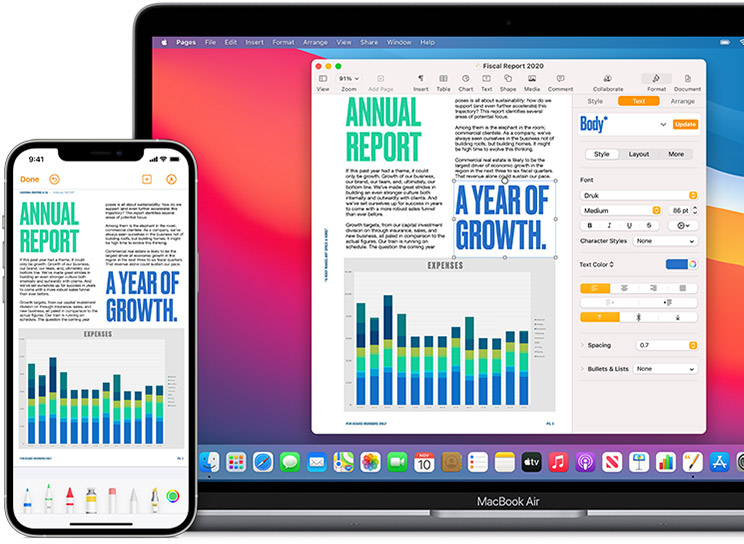
Thanks to the Apple ecosystem if employees use iPhone then the cross-device support is far better. It makes it easier to transfer files and calls can also be picked up anywhere.

11) Mac is a pleasure to work with

Apple explaining the point says, “When you give people the power to work the way they want, with the tools they love, they are inspired to do the best work of their lives. Apple makes it easy to give employees the power to choose their own devices while simplifying IT management and maintaining corporate standards.”

Whether it is Mac or Windows, in the end, it depends on what is your choice. And also there is no end to the debate over Mac vs Windows. 

Scuba diving academy to come up at Chintapalli in Visakhapatnam, Andhra Pradesh

Here is some good news for all the watersport lovers in Vizag. A scuba diving academy will be coming up soon in the district, at Chintapalli. The city of beaches has been into the watersports trend, with activities like kayaking, snorkeling, jet skiing and scuba diving. Among these four, scuba diving is the more popular watersport. This watersport is not available at places in India such as Goa, Pondicherry, and the Andaman and Nicobar Islands. But fortunately, Vizag has adopted this highly thrilling and mesmerising underwater activity. 

Taking a big step towards promoting tourism in Vizag, a scuba diving academy at Chintapalli village in Visakhapatnam District. The academy will be started by Livein Adventures, a Vizag-based adventure sports firm, which operates water sports activities in the city with the support of the Andhra Pradesh Tourism Development Corporation (APTDC). This will be a first-of-its-kind scuba diving academy in Andhra Pradesh and one among very few such academies in India. The academy will come up on four acres of land at chintapalli and will be built at an estimated budget of Rs 2 crore. 

Speaking to Yo! Vizag, Balaram Naidu, of Livein Adventures, revealed, “The academy will have courses on basic diving, kayaking, and boating from October 2021. The courses will range from two days to 6 months in duration. Interested individuals, swimmers and non-swimmers, will be able to take globally certified courses on open water diving, rescue diving and advanced diving.” 

Cyber Crimes and Privacy.

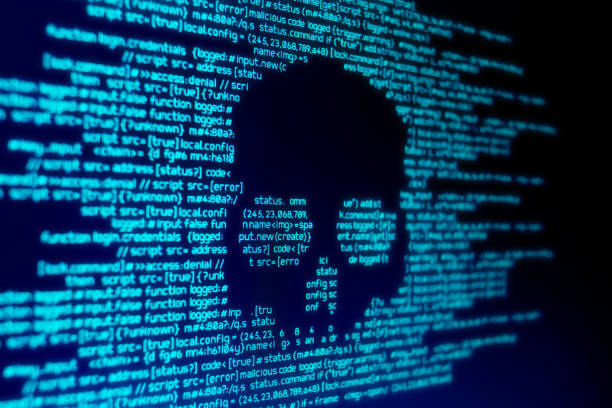
Words and expressions that barely existed 10 years prior are presently essential for our regular language, as hoodlums utilize new advancements to submit cyberattacks against governments, organizations and people. These violations know no boundaries, either physical or virtual, cause genuine mischief and posture genuine dangers to casualties around the world.

Cybercrime is advancing at an amazingly high speed, with recent fads continually arising. Cybercriminals are turning out to be more spry, abusing new advances with lightning speed, fitting their assaults utilizing new strategies, and helping out one another in manners we have not seen previously. Complex criminal organizations work across the world, planning multifaceted assaults surprisingly fast. Police should in this manner stay up with new advancements, to comprehend the conceivable outcomes they make for hoodlums and how they can be utilized as apparatuses for battling cybercrime.

There are numerous protection concerns encompassing Cybercrime when classified data is caught or revealed, legally or something else. Globally, both legislative and non-state entertainers take part in cybercrimes, including secret activities, monetary burglary, and other cross-line wrongdoings. Cybercrimes crossing worldwide boundaries and including the activities of no less than one country state are now and then alluded to as cyberwarfare. Warren Buffet portrays Cybercrime as the “number one issue with mankind.Computer extortion is any untrustworthy distortion of reality expected to let another to do or shun accomplishing something which causes misfortune. In this specific circumstance, the misrepresentation will bring about acquiring an advantage by:

Changing in an unapproved way. This requires minimal specialized ability and is a typical type of robbery by workers modifying the information before section or entering bogus information, or by entering unapproved directions or utilizing unapproved measures; Changing, obliterating, stifling, or taking yield, as a rule to hide unapproved exchanges. This is hard to distinguish , Changing or erasing put away information Government authorities and data innovation security experts have archived a huge expansion in Internet issues and worker examines since mid 2001. There is a developing worry among government offices like the Federal Bureau of Investigations (FBI) and the Central Intelligence Agency (CIA) that such interruptions are important for a coordinated exertion by cyberterrorist unfamiliar insight administrations, or different gatherings to plan potential security openings in basic frameworks. A cyberterrorist is somebody who threatens or forces an administration or an association to propel their political or social destinations by dispatching a PC based assault against computers, organizations, or the data put away on them.

Cyberterrorism, as a rule, can be characterized as a demonstration of psychological warfare submitted using the internet or PC assets (Parker 1983). Thusly, a basic publicity piece on the Internet that there will be bomb assaults during special times of year can be viewed as cyberterrorism. There are additionally hacking exercises coordinated towards people, families, coordinated by bunches inside networks, having a tendency to cause dread among individuals, exhibit power, gathering data important for demolishing people groups’ lives, burglaries, extorting, and so on.

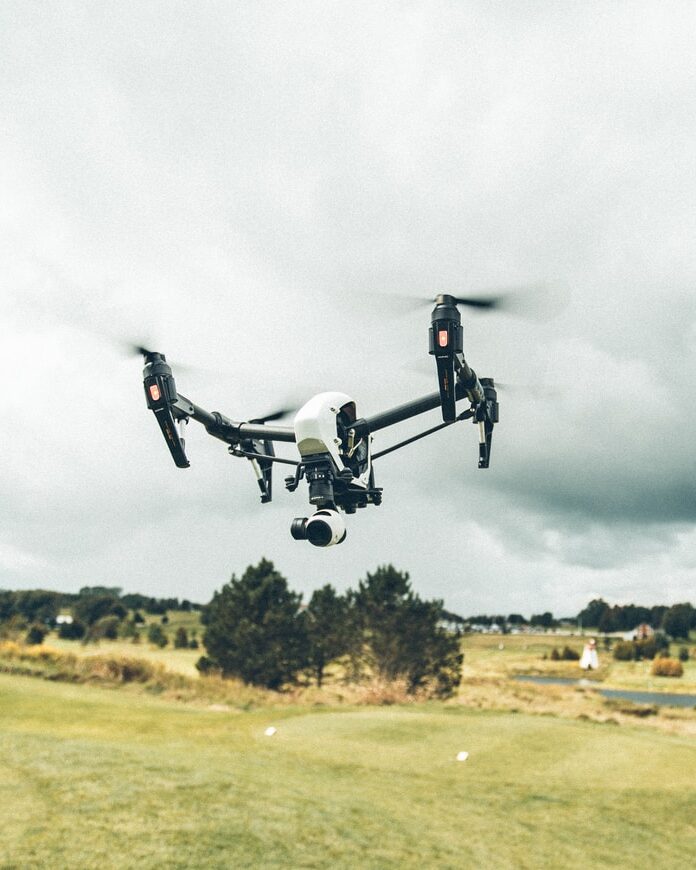
The latest autonomous drone technology and its capabilities

The scout drone 137

American Robotics’ autonomous drone has been certified by the Federal Aviation Administration, making it the first federally licensed drone on the market.

Drones that operate independently are a significant technical advancement. Not for domestic use because safety is still an issue, but this could boost productivity in a variety of industries because it’s nearly impossible to have someone operate multiple drones from day to night all of the time.

The autonomous drone is a fully integrated system that automates everything from landing to charging to data processing, making it an all-in-one solution.

Scout, the AI-powered autonomous drone, Soutbase, the weatherproof charging, and edge computing station, and Scoutview, the fleet management, and analytics software, are the solution’s three key components.

The Scout base is where the Scout is charged and data is processed. Scoutview allows businesses to monitor and communicate with drones without the need for a human operator.

The drone is equipped with visual, multispectral, and infrared cameras, making data collection quick and straightforward. The acquired data may be accessed instantaneously in real-time. The Scout systems will be able to perform missions independently after the installation is complete, collecting, processing, and analyzing data.

Demands for Autonomous Drones and the Market

Drones that can be used for commercial purposes have a huge market. Its TAM is expected to be worth 100 billion dollars (total addressable market). Drones might thus be utilized in a variety of areas, including industry, agriculture, and defense.

It might be used in industrial markets for asset inspection, tracking, security, and safety. It may be used for weed identification, disease detection, plant counting, research, harvest planning, and harvest timing in the agricultural market.

You’re in luck if you’re seeking surveillance and reconnaissance in the defense industry! As a consequence, these markets and sectors may use autonomous drones to perform work in broad fields that are difficult to analyze swiftly by people. It also makes data collection easier thanks to its integrated software and solutions.

Ondas has bought the Software Defined Radio platform for Mission Critical IoT applications. To manage thousands of connected devices over long distances,

Ondas provides a choice of trustworthy and secure broadband networks. With the help of Ondas’ high-bandwidth network, American Robotic’s autonomous drones will be able to send and receive long-range data, with thousands of drones continually gathering and processing high-resolution data.

This, we believe, is the way industrial data will be collected in the future. The combined company can provide the ultimate autonomous drone with unrivaled capabilities that can boost production in a variety of sectors.