Hobbies

Hobbies are very common. Everyone have their own priorities and likes regarding the hobbies. My hobby is listening to the music.

Listening to songs is such a nice thing. Every individual starts listening to the songs when he or she is addicted to them and really cannot come out of it. The music the songs will change the mood of the person. The songs in the musical interrelated with the human beings.

It is so important to prioritize the positive things in and around us in the life. One of the positive things is the music. Music makes Man convertible. Whatever the situation may be, it it helps the individual to come out of the situation and also to move one and into a new situation. The music you listen motivates life. The lyrics in this song will motivate the individual and help the individual at anytime.

It is very important for an individual to prioritize the music and the songs in the life. Because the songs or the music helps the individual to feel stress-free. It also helps the individual to relieve the tension and all the depression he or she had.

Music is described for every emotion. Every emotion is described in its own way in mmusic. Every emotion is clearly explained by the respected song.

Hobbies can often also be very expensive. Luckily, there are still lots of cheap and even free hobbies that are fun, educational and rewarding.


Here some of fun and low-cost hobbies


DIY :
Buy a book on DIY and start on anything that needs fixing around your house, make your own clothes or give your friends self-made presents.


WRITE A THEMED LIST, AND WORK THROUGH IT :
Make a list of things you want to do or see. It could be anything from films you want to watch to local places you want to visit. Try to work through your list in a month.

WATCH ONLINE DOCUMENTARIES :


You can find lots of free documentaries on the websites of Tv channels, or even on youtube covering hundreds of subjects, such a history or the ocean. You could also finally watch your favourite actor’s ,author’s or musician’s biography.

LEARN NEW THINGS :
Educating yourself doesn’t have to be boring. What are you passionate about? It could be science , the oceams or even horror films. Google your interests and become a knowledgeable as you can about your passions.

GO CAMPING :


Try going caming with your friends during the weekend. All you need is a tent, some snacks, and drinks. If you dont live near woods or a forest, you can even try camping in your back garden.

DISCOVER NEW MUSIC :


Look for new music on music websites or youtube or spotify by searching for your favouirte genre. You could find a band you love.

LEARN HOW TO COOK :


cooking is a useful life skill as well as a fun way to spebd your time. Invest in cheap ingredients and learn how to cook all of your favourite meals.

TRY DRAWING :


Drwaing is a really enjoyable way of expressing yourself. There are lots of different ways to draw, from painting to sketchibg to doodling, so choose one you are comfortable with and give it a go!


START INVESTING :


Investing is a great way to earn some extra money, just make sure you do your research properly when you first start.you don’t have to invest large sums, but small ones will be just as rewaeding if you have a plan.

WRITING :

Writing is one of the chepest ways to have fun. From blogging to trying your hand on a book, there are lots of different ways to enjoy writing. All you need is a pencil and paper to get started.PLAYING CARDS :
Invite some friends over , and get a pack of cards. There are hundreds of different games. You can play with cards and a pack is fairly cheap.

LEARN TO DANCE :


This hobby is great for your body and enjoyable pastime. Use youtube vidros and tutorials to teach yourself new dance moves.


READING :


Reading is a great way to exercise your mind.you can choose to lose yourself in a fictional world, learn more about your own world, or read the autobiography of someone you adimre. If you decide to pick reading up as a hobby, consider getting a library card for your local library.


Remember , the secret of life, happiness and fulfillment is simple: ” Find three hobbies you love: one to make you money, one to keep you in shape, abd one to be creative” .

Discipline

Discipline is very important in everyone’s life. It is so important to be disciplined in the life. Discipline is not acquired from a single day. It is a achieved by a continued process.parents are the important in every individual’s life. The are the main reason for the discipline of their children.

After the parents, teacher is the most important person in an individual’s life. Teacher is the one who moulds the individual from the initial stage of the life and makes the individual into and perfect one. Even though the teacher schools or beats sometimes it is all for the well-being of the student and for the bright future of the student.

The first teacher in everyone’s life is their mother. Beginning with the correct thing the first mistake of the child, mother plays a very important role in correcting many of the mistakes in an individual’s life. Also the father who corrects the mistakes and puts the children in a correct way. And the teacher, who is very important in our students life to achieve their desired goals.

Teachers play a very important role in making the student perfect and make them to understand the need of the situation. Teachers help the students to reach their desired goals and in any situation teacher motivates a student to get up and stand in all the ups and downs. Like that of the mother and the father, the teacher also feels equally happy when their student acheives high in their life and when they reach their desired goals.

IMPORTANCE OF DISCIPLINE IN LIFE :


TIME MANAGEMENT :


A disciplined person always has the time to complete all the tasks within given deadlines. This is because they are focused and they know how to schedule the time properly. They dont’t believe in wasting time on unnecessary things. They understand the value of time and they know that time once has gone never comes back.


LEADERSHIP :


All great leaders are not born. Most of them follow a very tight schedule and maintain discipline in their life to become good leaders. Good discipline generates a positive attitude towards society. It creates confidence and eagerness to do something great. It helps people to build an attitude that becomes the key to becoming successful. They are able to set a great examples for others in society.

DECISION MAKING :


It is because everything gets finished within the given deadlines, disciplined people always have time to revise their work and improve their decisions.
People who are disciplined are more focused both mentally and physically. They are better able to gain their body and mind with their ideas and goals. Finally, everything is regulated in order and increases their productivity in all the activites they undergo.


ACHIEVEMENTS :


Disciplined people are more motivated and concentrated. Therefore, they achieve more when compared to a person who is not disciplinef with the activites he/she undertakes. As per study, 92% of people are able to achieve their goals in life because of the reason of being disciplined.

STABILITY AND STRUCTURE :


With discipline, comes stability in all the tasks. It helps to schedule and organize the activites and tasks in a proper structure. If a person is focused and regularly follows this particular structure, he/she is sure to succeed in their life.

RESPONSIBILITY AND CONTROL :


With great discipline comes great responsibility. Only by making schedules and timetables a person cannot become successful. It is very important regularly follow and fulfill the responsibilites which are mentioned in the schedule. This will help them to develop self- control and also build good relations with others.

RESPECT :


A disciplined person always respected by society. He/she is lookef upon as role models and mentors. Through discipline, they worked hard and achieved their goals which made them a respectful figure in the eyes of others.

IMPROVES MENTAL HEALTH :


Modern society suffers alot from anxiety and depression. We cannot blame them for their condition. Just by maintaining a little discipline in their life, they can easily improve it. Discipline will help them to reduces stress and take control of their tasks. They would be able to overcome their fears and also control their emotions.

MAINTAIN PEACE IN SOCIETY :


Disciplined people are lie assets to society. If there is no law and order, there would bee too many activites. Discipline is required to prevent such things in society. By setting the requiref rules and regulationa, it becomes easier to live in a society that is full of peace and harmony.


STAY ACTIVE :


Disciplined people have time to do every activity in the schedule. They plan their schedule in such a way that improves both their academic/ instituational performance and also their physical health. They know what is good and bad for them and thereby have good eating habits, exercising habits, sleeping and waking up paterns, etc.


SELF DISCIPLINE self discipline means self control, the ability to avoid unhealthy excess of anything that could lead to negative consequenes.


• It is the ability to reject instant grafication and pleasure, in favor of some great grain, which requires spending effort and time to get it.
• It means perservetance and not giving up.
• It is the strength not to give in to negative feelings.
• It means overcoming one’s weakness.
• It is the ability to pursue one plan despite temptations to abandom them.
• Delayed gratification in favour of accomplishing long term goals.
Discipline is very important. It helps people to showcase their attitude and represent their character and thinking. Both the body and mind are honed by discipline. Descipline helps to address individual problems and develop a society that is both peaceful and respectful. Therefore, it would be right to say that without disciplinr there is no life at all.

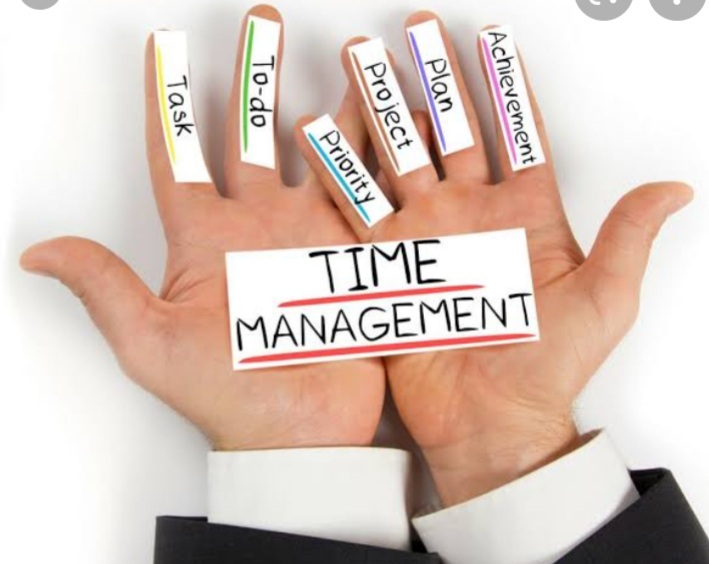
Time management

Time is nothing but the count of the life. It is measured in Hours, minutes and seconds. It is very important to manage the time as it is very precious and cannot come back once it is lost. It is also very important to utilize the time properly.

Managing the time is very important. Many of the people don’t know how to manage the time. Let us now know some of the time management techniques and how to use them.

•Make schedules:-

Making schedules is one of the best methods to manage the time. All you have to do is, think of the things what you have to do on a particular day and allot some particular time for each activity. Complete particular activity in the allotted time. When the work takes too much time, then leave it aside and go for another work. Whenever all the work is finished, go for the work which is unanswered in the beginning and complete it. This is how schedules helps for time management and makes the proper use of the time.

•Don’t spend much time on one thing:-

Spending much time on a particular thing disturbe the individual and disturbs the concentration. So, to focus on the work, an individual must go for some another work whenever they get bored on a particular work. So, it helps to focus on the work and for not wasting the time.

Time management is the process of planning and controlling how much time to spend on specific activities.
BENEFITS OF TIME MANAGEMENT :


The ability to manage your time effectively is important. Good time management leads to improved EFFICIENCY and productivity, less stress, and more success in life. Here are some benefits of managing time effectively:

  1. STRESS RELIEF :
    Making and following a task schedule reduces anxiety. As you check off items on your ” to- do” list, you can see that you are avoid feeling stressed out with worry about whether you’re getting things done.

  2. 2.MORE TIME :
    Good time management gives you extra time to spend in your daily life. People who can time- manage effectively enjoy having more time to spend on hobbies or other personal pursuits.
  3. MORE OPPORTUNITIES:
    Managing time well leads to more opportunities and less time wasted on trivial activities. Good time management skills are key qualities that employes look for. The ability to prioritize and schedule work is extremely desirable for any organisation.

  4. 4.ABILITY TO REALIZE GOALS :
    Individuals who practice good time management are able to better achieve goals and objectives, and do so in a shorter length of time.

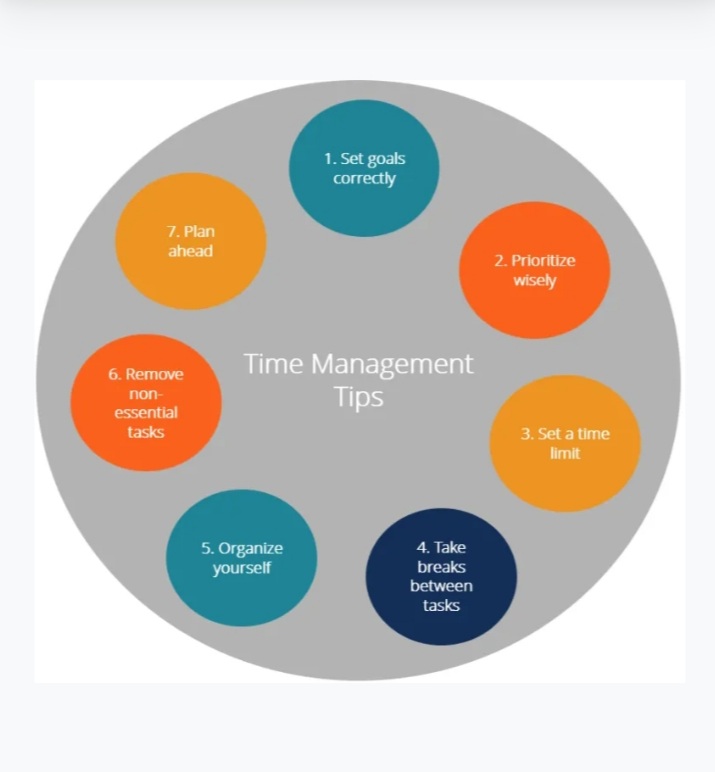
  5. LIST OF TIPS FOR EFFECTIVE TIME MANAGEMENT:


  1. 1.SET GOALS CORRECTLY:
    Set goals that are achievable and measurable. Use the SMART method when setting goals. In essence, make sure the goals you set are specific, Measurable, Attainable, Relevant, and Timely.

  2. 2.PRIORITIZE WISELY :
    Prioritize tasks based on importance and urgency. For example, look at your daily tasks and determine which are :
  • Important and urgent : Do these tasks right away.
  • Important but not urgent : Decide when to do these tasks.
  • Urgent but not important: Delegate these tasks if possible.
  • Not urgent and not important : set these aside to do later.

  • 3.SET A TIME LIMIT TO COMPLETE A TASK :
    Setting time constraints for completing tasks helps you be more focused and efficient. Making the small extra effort to decide on how much time you need to allot for each task can also help you recognise potential problems before theyv arise. That way you can make plans for dealing with them.

  • 4.TAKE A BREAK BETWEEN TASKS:
    When doing alot of tasks without a break, it is harder to stay focused and motivated. Allow some downtime between tasks to clear your head and refresh yourself. Consider grabbing a brief nap, going for a short walk, or meditating.

  • 5.ORGANISE YOURSELF :
    Utilise your calendar for more long term time management. Write down the deadlines for projects, or for tasks that are part of completing the overall project. Think about which days might be best to dedicate to specific tasks. For example, you might need to plan a meeting to discuss cash flow on a day when you know the company CFO is available.

  • 6.REMOVE NON- ESSENTIAL TASKS :
    It is important to remove excess activities or tasks. Determine what is significant and what deserves your time. Removing non- essential tasks frees up more of your time to be spent on genuinely important things
  • IMPLICATIONS OF POOR TIME MANAGEMENT :
  • Let us consider the consequences of poor time management ;
  1. PLAN AHEAD :
    Make sure you start everyday with a clear idea of what you need to do- what needs to get done THAT DAY. consider making it a habit to, at the end of each workday, go ahead and write out your ” to- do” list for the next workday. That way you can hit the ground running the next morning.
  2. POOR WORKFLOW :
    The inability to plan ahead and stick to goals means poor efficiency. For example, if there are several important tasks to complete, an effective plan would be to complete related tasks together or sequentially. That translates to reduced efficiency and lower productivity.
  3. WASTED TIME :
    Poor time management results in wasted time. For example, by talking to friends on social media while doing an assignment, you are distracting yourself and wasting time.

  4. 3.LOSS OF CONTROL :
    By not knowing what the next task is, you suffer from loss of control of your life. That can contribute to higher stress levels and anxiety.

  5. 4.POOR QUALITY OF WORK :
    Poor time management typically makes the quality of your work suffer. For example, having to rush to complete tasks at the last minute usually compromises quality

  6. 5.POOT REPUTATION :
    If clients or your employer cannot rely on you to complete tasks in a timely manner, their expectations and perceptions of you rely adversely affected. If a client cannot rely on you to get something done on time, they will likely take their business elsewhere.

Ways to Manage Stress

Stress is part of being human, and it can help motivate you to get things done. Even high stress from serious illness, job loss, a death in the family, or a painful life event can be a natural part of life. You may feel down or anxious, and that’s normal too for a while. Talk to your doctor if you feel down or anxious for more than several weeks or if it starts to interfere with your home or work life. Therapy, medication, and other stategies help. In the meantime, there are things you can learn to manage stress before it gets to be too much. Consider these suggestions:

Exercise

To start with, physical activity can help improve your sleep. And better sleep means better stress management. Doctors don’t yet know exactly why, but people who exercise more tend to get better deep “slow wave” sleep that helps renew the brain and body. Just take care not to exercise too close to bedtime, which disrupts sleep for some people. Exercise also seems to help mood. Part of the reason may be that it stimulates your body to release a number of hormones like endorphins and endocannabinoids that help block pain, improve sleep, and sedate you. Some of them (endocannabinoids) may be responsible for the euphoric feeling, or “runner’s high,” that some people report after long runs.

People who exercise also tend to feel less anxious and more positive about themselves. When your body feels good, your mind often follows. Get a dose of stress relief with these exercises:

Applications

Animals

Since the time Earth developed the quality of sustaining life, life has always gone under the process of evolution. Life started from single celled organisms and developed stage by stage. One organism extinct to develop into its better developed species or even at times it happens that some animals get erased from the surface of the earth due to extreme environmental condition.

EXTINCT ANIMALS: Species of animals which existed in the surface of the earth once upon a time but has no current existence, this may have been a result of extreme environmental condition or some other condition for existence. For example, we have dinosaurs, Dodo.

ENDANGERED ANIMALS: The species of animals which have only a few animals left on the surface of the earth and are in the mouth of being extinct are known as endangered, currently this is a result of poaching i.e., unethical killing of wild animals with purpose or change in the climate due to pollution and other factors. For example, we have the Royal Bengal Tiger.

We cannot do anything for the species which are extinct but we can definitely take steps and save our endangered species. Poaching laws should be made stricter and it should be taken care that people follow them.

Different types of animals :

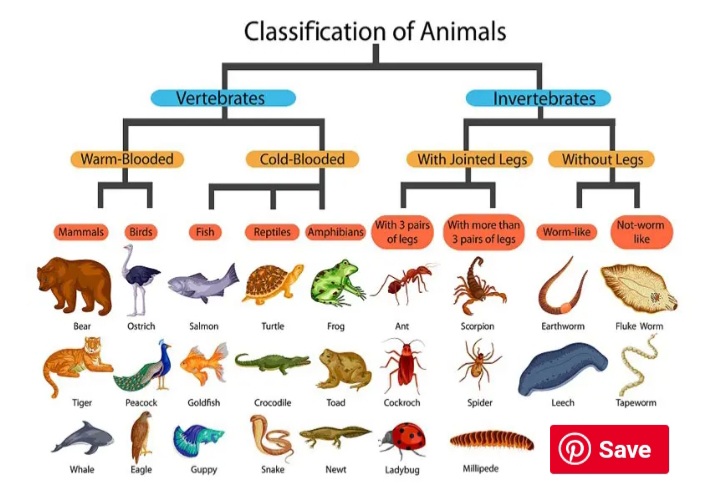
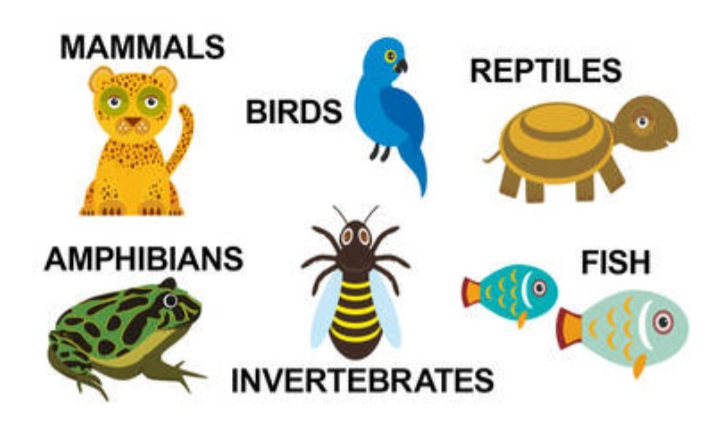
Scientists sort the different types of animals in the world into categories based on certain characteristics. Animals are generally grouped into six types of aninals. The system for animal classifications is called taxonomy.

The Animal Kingdom :

All animals belong to a biological kingdom called kingdom Animalia. This kingdom is then broken down into over 30 groups. About 75% of all species on earth are aninals. Animals are then broken down into two types : vertebrates and invertebrates.

* Animals with a backbone are vertebrates.

* vertebrates belong to the phylum called phylum chordata.

* vertebrates are classified into five classes. They are amphibians, birds, fish,mammals, and reptiles.

* Animals without a backbone are invertebrates.

* Most invertebrates are in the phylum Arthropoda.

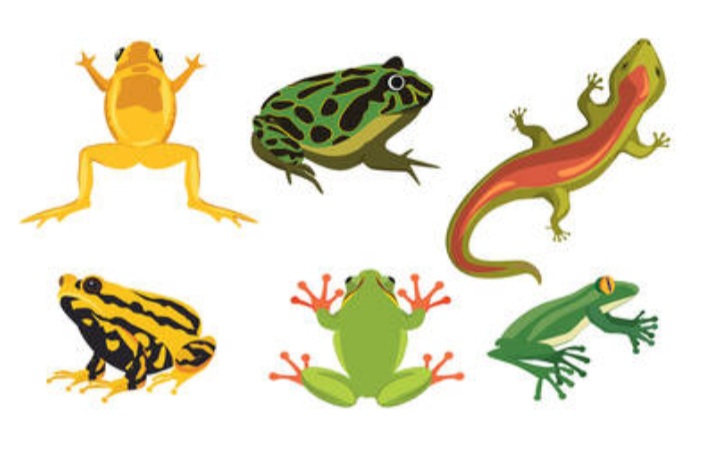
1. Amphibians :

All amphibians are vertebrates, and they need moist environment or water to survive.

* They are cold- blooded.

* They absorb water and breathe through their thin skin

* They have at least one special king gland used for defense.

* Most follow the life cycle of egg-larva- adult.

* examples : frog , newts, salamanders, toads.

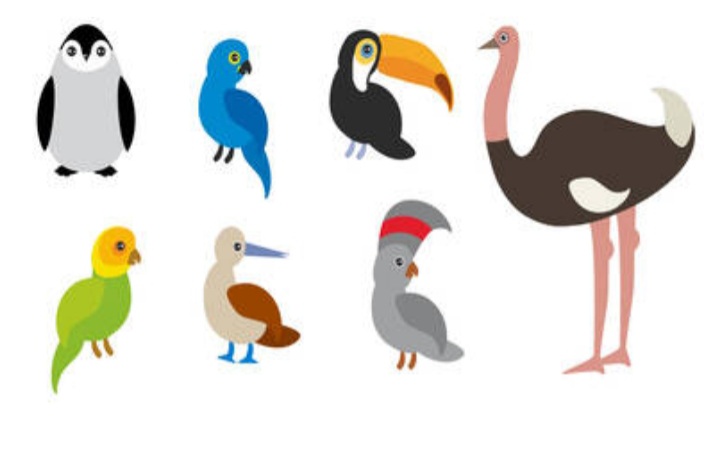
2. Birds

Birds are a type of warm- blooded vertebrate that are adapted to fly.

* Not all birds can fly, but they do all have wings.

* Birds have beaks that help them catch and swallow food.

* The digestive system of a bird allows it to eat whenever it can and digest that food later.

* Birds lay egg to reproduce.

* They are endothermic, mening they maintain their own constant body temperature.

* They are bipedal, which means they have two legs.

* They have hollow bones and their bodies are covered in feathers.

* Birds belong to the class called Aves.

* Examples : albatrosses, chickens, hummin birds, falcons, falmingoes, ostriches, owls, parrot, penguins, pigeons.

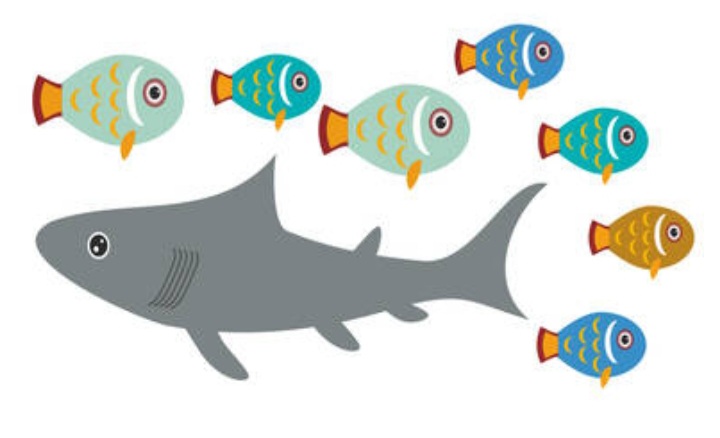
3. Fish :

Fish are also vertebrates, and they are considered the oldest-known vertebrates.

* They are ectothermic, or cold- blooded, which means they rely on their surroundings to regulate their body temperature.

* Fish have funs.

* Most, but not all, fish have bodies covered in scales and breathe through gills.

* Fish live under water.

* Examples : eels, hangfish, lampreys, minnows, rays, salmon, seahorses, sharks.

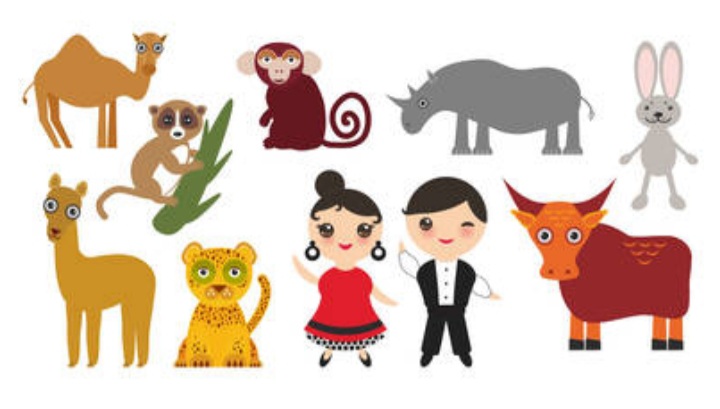
4. Mammals :

Mammals are another type of vertebrate that belongs to the class Mammalia.

* young mammals get nourishment from milk produced by their mothers.

* Most mammals have hair.

* Their jaw is hinged directly to their skull unlike all other vertebrates.

* Almost aĺl mammals give birth to live bsbies.

* They are endothermic, or warm- blooded.

* Examples : there are over 5500 living species of mammals all over the world. Aardvarks, bats, elephants, hamsters, human, rabbits, rhinoceroses, whales.

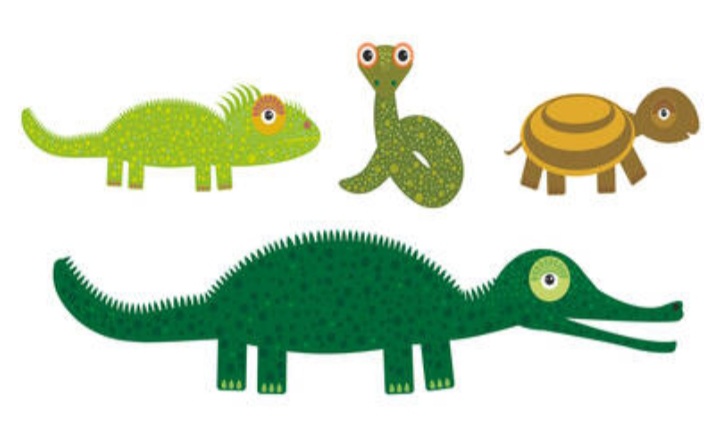
5. Reptiles :

Reptiles are thought to be the first vertebrates to live completely on land. But, not all reptiles live only on land today.

* They are cold- blodded, or ectothermic

* They lay eggs to reproduce.

* They have four legs or descended from animals with four legs.

* They breathe through lungs

* Their bodies are covered in scales or scutes.

* Examples : crocodiles, geckos, lizards, sea turtles, snakes, tortoises.

Invertebrates :

Approximately 95% of all animals are invertebrates. Invertebrates do not have a backbone. There are different types of invertebrates, but they all share a few characteristics.

• They are made up of many cells that work together, or multicellular.

• Most, but not all have tissues, cells that work together in a more complex way.

• Most, but not all, can move.

• There are over 35 phyla of invertebrates.

• They generally have soft babies.

Types of Invertebrates :

There are eight phyla of invertebrayes that are alive today.

* Annelida – have a segmented body and primitive brain

* Arthropoda – have jointed appendages and an exoskeleton.

* Cnidaria – have tissues and an incomplete digestive system

* echinodermata – have some type of spiny structure on their bodies

* Mollusca – generally have sofy bodies and a hard exoskeleton.

* Nematoda – unsegmented with worm- shaped bodies

* platyhelminthes – have soft, ribbon- like worms with no respiratory system.

* porifera – multicellular organisms living in water with no organs or tissues.

Examples : anemone( cnidaria) , clams ( mollusca), coral,

Property Rights

What Are Property Rights?

Property rights define the theoretical and legal ownership of resources and how they can be used. These resources can be both tangible or intangible and can be owned by individuals, businesses, and governments. In many countries, including the United States, individuals generally exercise private property rights or the rights of private persons to accumulate, hold, delegate, rent, or sell their property. In economics property rights form the basis for all market exchange, and the allocation of property rights in a society affects the efficiency of resource use.

Understanding Property Rights

Property is secured by laws that are clearly defined and enforced by the state. These laws define ownership and any associated benefits that come with holding the property. The term property is very expansive, though the legal protection for certain kinds of property varies between jurisdictions.Property is generally owned by individuals or a small group of people. The rights of property ownership can be extended by using patents and copyrights to protect:

  • Scarce physical resources such as houses, cars, books, and cellphones
  • Non-human creatures like dogs, cats, horses or birds
  • Intellectual property such as inventions, ideas, or words

Other types of property, such as communal or government property, are legally owned by well-defined groups. These are typically deemed public property. Ownership is enforced by individuals in positions of political or cultural power. Property rights give the owner or right holder the ability to do with the property what they choose. That includes holding on to it, selling or renting it out for profit, or transferring it to another party.

Acquiring Rights to a Property

Individuals in a private property rights regime acquire and transfer in mutually agreed-upon transfers, or else through homesteading. Mutual transfers include rents, sales, voluntary sharing, inheritances, gambling, and charity. Homesteading is the unique case; an individual may acquire a previously unowned resource by mixing his labor with the resource over a period of time. Examples of homesteading acts include plowing a field, carving stone, and domesticating a wild animal. In areas where property rights don’t exist, the ownership and use of resources are allocated by force, normally by the government. That means these resources are allocated by political ends rather than economic ones. Such governments determine who may interact with, can be excluded from, or may benefit from the use of the property.

Private Property Rights

Private property rights are one of the pillars of capitalist economies, as well as many legal systems, and moral philosophies. Within a private property rights regime, individuals need the ability to exclude others from the uses and benefits of their property. All privately owned resources are rivalrous, meaning only a single user may possess the title and legal claim to the property. Private property owners also have the exclusive right to use and benefit from the services or products. Private property owners may exchange the resource on a voluntary basis.

Private Property Rights and Market Prices

Every market price in a voluntary, capitalist society originates through transfers of private property. Each transaction takes place between one property owner and someone interested in acquiring the property. The value at which the property exchanges depends on how valuable it is to each party. Suppose an investor purchases $1,000 in shares of stock in Apple. In this case, Apple values owning the $1,000 more than the stock. The investor has the opposite preference, and values ownership of Apple stock more than $1,000.

Financial Literacy

What Is Financial Literacy?

Financial literacy is the ability to understand and effectively use various financial skills, including personal financial management, budgeting, and investing. Financial literacy is the foundation of your relationship with money, and it is a lifelong journey of learning. The earlier you start, the better off you will be, because education is the key to success when it comes to money.

Read on to discover how you can become financially literate and able to navigate the challenging but critical waters of personal finance. And when you have educated yourself, try to pass your knowledge on to your family and friends. Many people find money matters intimidating, but they don’t have to be, so spread the news by example.

Understanding Financial Literacy

In recent decades financial products and services have become increasingly widespread throughout society. Whereas earlier generations of Americans may have purchased goods primarily in cash, today various credit products are popular, such as credit and debit cards and electronic transfers. Indeed, a 2019 survey from the Federal Reserve Bank of San Francisco showed that consumers preferred cash payments in only 22% of transactions, favoring debit cards for 42% and credit cards for 29%.

Other products, such as mortgages, student loans, health insurance, and self-directed accounts, have also grown in importance. This has made it even more imperative for individuals to understand how to use them responsibly. Although there are many skills that might fall under the umbrella of financial literacy, popular examples include household budgeting, learning how to manage and pay off debts, and evaluating the tradeoffs between different credit and investment products. These skills often require at least a working knowledge of key financial concepts, such as compound interest and the time value of money. Given the importance of finance in modern society, lacking financial literacy can be very damaging to an individual’s long-term financial success.

Being financially illiterate can lead to a number of pitfalls, such as being more likely to accumulate unsustainable debt burdens, either through poor spending decisions or a lack of long-term preparation. This in turn can lead to poor credit, bankruptcy, housing foreclosure, and other negative consequences. Thankfully, there are now more resources than ever for those wishing to educate themselves about the world of finance. One such example is the government-sponsored Financial Literacy and Education Commission, which offers a range of free learning resources.

Strategies to Improve Your Financial Literacy Skills

Developing financial literacy to improve your personal finances involves learning and practicing a variety of skills related to budgeting, managing and paying off debts, and understanding credit and investment products. Here are several practical strategies to consider.

Create a Budget—Track how much money you receive each month against how much you spend in an Excel sheet, on paper, or with a budgeting app. Your budget should include income (paychecks, investments, alimony), fixed expenses (rent/mortgage payments, utilities, loan payments), discretionary spending (nonessentials such as eating out, shopping, and travel), and savings.

Pay Yourself First—To build savings, this reverse budgeting strategy involves choosing a savings goal (say, a down payment for a home), deciding how much you want to contribute toward it each month, and setting that amount aside before you divvy up the rest of your expenses.

Pay Bills Promptly—Stay on top of monthly bills, making sure that payments consistently arrive on time. Consider taking advantage of automatic debits from a checking account or bill-pay apps and sign up for payment reminders (by email, phone, or text).

What is communication skills

What is communication? What do you understand by communication skills? Why it is important to have a communication?

Imagine your life with being able to communicate your thoughts. You will feel frustrated because, in that situation you won’t be able to convey your thoughts, share your idea and express your emotions.

Just saying something is not enough. Unless what you have said has made an impact, there has been no successful communication.

Excellent communication skills are important and will take you far in life. From your professional ambitions, to your personal goals, communication skills play an important role in each. Therefore, its importance cannot be stressed enough. However, there are many people who struggle with communication. There could be many reasons behind it. But one need not worry as communication skills can be worked upon.

 Being able to communicate effectively is one of the most important life skills to learn. Communication is defined as transferring information to produce greater understanding. It can be done vocally, through written media, visually or non-verbally. All of these means of communication are essential Soft Skills that are vital for a successful Career.

Communication plays a vital role in human life. It helps facilitate the exchange of information and knowledge, and develop relationships with others. Therefore, the importance of communication skills in our day-to-day life cannot be underestimated.

Communication skills are the abilities you use when giving and receiving different types of information.

Communication skills can be defined as the skills used in practical life, whereby a person conveys ideas, concepts, or information to others. Another person, in turn, responds to that message according to his understanding of it.

Communication skills play a major role in promoting the individual, whether when applying for a job, qualifying for a specific program that depends on competition between him and others, entering one of the elections, proposing to a girl, or sending a meaningful message, etc.

Having strong communication skills aids in all aspects of life – from professional life to personal life and everything that falls in between. From a business standpoint, all transactions result from communication. Good communication skills are essential to allow others and yourself to understand information more accurately and quickly.

In contrast, poor communication skills lead to frequent misunderstanding and frustration. In a 2016 LinkedIn survey conducted in the United States, communication topped the list of the most sought-after soft skills among employers.

Communication skills have become one of the basic requirements for personal and institutional development.

Well-developed communication skills are essential for a child’s academic success and successful future career. At all levels of education, students should be able to communicate effectively.

Communication skills are an essential leadership function and a major characteristic of a good leader.

Communication skills and effective leadership styles are closely intertwined. Lack of communication skills can make team members uncomfortable and unenthusiastic about their work while good communication skills help a team work together to achieve the desired goals.

Communication skills are also very important in business. They can help foster a good working relationship between you and your employees, which in turn can improve morale and efficiency.

Communication skills help you develop meaningful relationships with subordinates, change their attitudes, raise their spirits, and seek their cooperation.

General knowledge

General knowledge is very important in everyone’s life. The person without the knowledge is like the bird without the wings. It is very important to know what is happening across the world. So, it is very important to attain the general knowledge. To grab general knowlede, an individual must follow some of the techniques like reading books, articles, magazines, newspapers etc.

The newspaper consists of all the important things like the business purposes, sports, entertainment, some interesting puzzles, Hindi habits, food recipes, Current affairs etc.

Reading newspaper is an important thing because whenever an individual comes across a motivational thing, he or she will be motivated and focuses on the particular aspect. The individual will get to know the current affairs. The person will get a good grip on the general knowledge. solving puzzles improves the skills of the person. Reading about the healthy habits in the newspaper makes the individual to go for good and healthier meals.

Reading newspaper is very important because gives the chance to know what is happening around us. Early in the morning or evening whatever the time maybe, sparing at least 10 to 15 minutes of time on newspaper is a very good habit that an individual can develop.

The newspaper consists of all the important things like the business purposes, sports, entertainment, some interesting puzzles, Hindi habits, food recipes, Current affairs etc.

In one of the other way the individual develops good habits and focuses more on what they are trying to do.

Individual Differences :

Intelligence :

High scores on tests of general knowledge tend to also score highly on intelligence tests. IQ has been found to robustly predict general knowledge scores even after accounting for difference in age, and five factor model personality tarits. However, many general knowledge tests are designed to create a normal distribution of answers, creating a bell shaped curve.

General knowledge is also moderately associated with verbal ability, though only weakly or not at all with numerical and spatial ability. As with crystallized intelligence, general knowledge has been found to increase with age.

Long term semantic memory :

General knowledge is stored as semantic memory. Most semantic memory is preserved through old age, though there are deficts in retrieval of certain specific words correlated with aging. In addition, stress or various emotional levels can negatively affect semantic nemory retrieval.

Personality :

People high in general knowledge tend to highly open to new experiences and in typical intellectual engagement. The relationship between openness to experieñce and general knowledge remains robust even when IQ is taken into account. People high in openness may be more motivated to engage in intellectual pursuits that increase their knowledge. Relationships between general knowledge and other five factor model traits tend to be weak and inconsistent. Though one study found that extraversion and neutroticism were negatively correlated with general knowledge, others found that they were unrelated.

Predictor of achievement :

A number of studies have assesses whether performance on a general knowledge test can predict achievement in particular areas, namely in academics, proofreading and creativity.

Academic achievement :

General knowledge has been found to predict exam results in a study of Britush schoolchildren. The study examined congnitive ability and personality predictors of exam performance and found that general knowledge was positively correlated with GCSE english, mathematics, and overall exam results. General knowledge test scores presicted exam results, even after controlling for IQ, five factor model personality traits, and learning styles.

Proofreading :

General knowledge has been found to robustly predict proofreading skills in univeristy students. A study found that proofreading had a larger correlation with general knowledge than with general intelligence, verbal reasoning, or openness to experience. In a multiple regression analysis using general knowledge, general intelligence, verbal reasoning, five factor personality traits, amd learning styles as predictors, only general knowledge was a significant predictor.

Creativity

General knowledge has been found to have weak associations with measures of creativity. In a study examining contributions of personality and intelligence to creativity, general knowledge was positively correlated with tests of divergent thinking, but was unrelated to a bigraphical measure of creative achievemnet, self- rated creativity, or a composite measure of creativity. The realtionship between general knowledge and divergent thinking became non- significant when controlling for fluid intelleigence.

Game shows and Quizzes :

Many game shows use general knowledge questions for entertainment purpose. Game shows such as who wants to be a Millionarie? and fiteen to one centre their questions on general knowledge, while other shows focus questions more on specific subjects. Some show ask questions both on specific subjects and on general knowledge .
Is the internet software or hardware ?

To come to some conclusion first we need to know about how the internet originally came into the existence, how it works, how we people are evolved with it, and then we are able to decide/answer the very question – is internet software hardware or what??

ARPANET ‘s initial logical map

The need…

Way Before the internet we know today there was a precursor ARPANET. ARPANET was funded by the US defence department to connect all research institutions and colleges through a big wire. by using this they can transfer or interact with each of these institutions very easily and fast. it was a really big breakthrough in computer or world history! later this tech was shared with many big companies later this network becomes so big that we now call it the internet! but in 1990 ARPANET stopped and the internet was unaffected by it ( tells how big internet became).
With time we have seen many advancements in tech too with lay down the path to normal users and made all this infrastructure so feasible that even a normal household can have a connection with the network, thanks to the introduction of WIFI and win98 in the 90s.

we and our peripherals all connected with internet today

Internet and us: today

When we entered the 21st-century internet started becoming a big deal started using in many sectors and helped professionals even students! with tech it impacted on our lifestyle too, from space exploration department to personal AI in our phones …all this developed with help of the internet! millions of developers/contributors around the world contributed to making it in reach of every human! In the 2000s nearly 6.5 % of earth’s population was using the internet ( which is HUGE ngl) but this number became 50.8%! in 2018 and still growing at a faster rate than before too! when we talk about the internet and its working we think of few things like phone or pc which connected with WIFI/broadband network then that WIFI connected with some wire (ex.- fibre wire) coming from ISP(in case of broadband, it connected with some tower initially then ISP) …yeah that’s it, until which we able to visualize .. let us see this and understand in more detail.

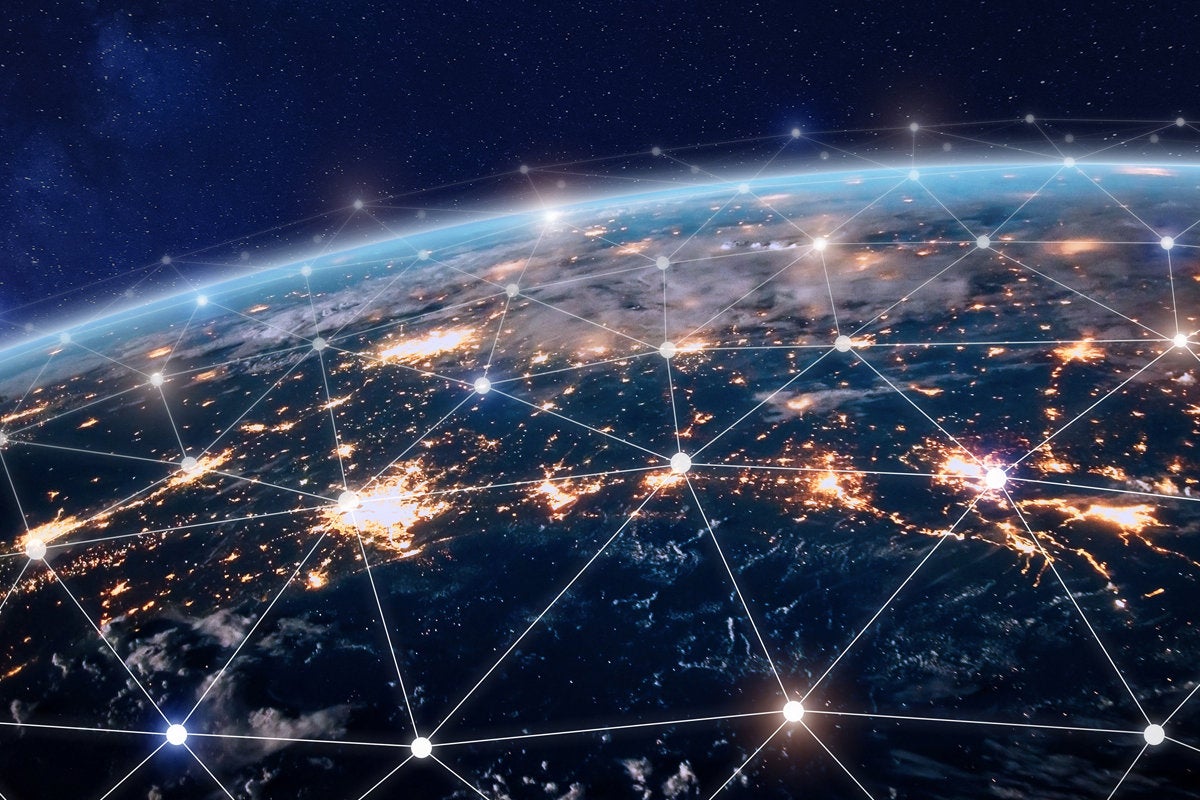
world shares one big network

It’s all connected …

Internet is very much the same as it was in ARPANET days. different system(ex- computer) connected with one common server which acts as a message counter aka help connect each other . back then all this connection used to happen only through wires but now we have wireless modems/routers which help us connect with the same network at on close range ( so no need to connect each of them with different wire !) . so communicate with others we need to identify each other by something unique name to all here comes IP addresses and make it happen some rules introduced called TCP. When ARPANET decommissioned and the internet growing rapidly to different nations connected through the big wire ( all way from oceans ) WorldWideWeb was introduced at the same time. through the browser, we can connect with all these IP addresses and request for things ( like this blog itself!) but as you noticed IP address look very different and numeric but what we use is are in more readable. this is because of DNS protocol all IP addresses have some word associated with them like http://www.facebook.com is associated with 69.63. 181.15 IP  address


From the user side( called client ) when we enter some URL / website our HTTP request for that website goes to ISP(Internet Service Provider) then DNS servers identify the IP address and where that website is stored, yes you heard it right! websites are files just like your word or excel ones and similarly, it stored somewhere someplace ( called data centers ) . so this HTTP request rhea there and all this info comes to you all the way from there in packets and tada! Each and every website works like these even video ones where the same packets come… in the case of live interaction it comes continuously. These data centres/web servers are a bit different they are not connected with the internet as your client one is through isp but they are connected with the internet network directly!

Photo by Pixabay on Pexels.com

SO… is it ?..

Now the big answer time! The answer is as you already figured out reading all this.. Internet is a mix of both!

The Internet consists of many interconnected networks. Those networks are composed of hardware and software. The systems connected to the network must have hardware network interfaces, which are either wired or wireless. Software is required to regulate those interfaces, to compose, send, receive, and decode packets of knowledge using several standard protocols. Routers, switches, firewalls, and other devices are required to attach systems and networks together. a number of these devices are purely hardware, but many perform some level of processing, which needs that they contain an embedded computer running software. The systems connected to the network also typically have some type of package running on them, and a software system is a software. Web servers, management systems, web browsers, web-enabled applications, etc. are all required likewise, and people are all samples of software.

So, the net consists of both hardware and software

Pls, comment down below tell me if you want me to cover something techy ! or have some suggestions! until then 🙂 sayonara!

Want to be a optimist?! That’s Easy!!

Are you a person lacking confidence and hope in everything? Trying hard to be an optimistic person? It’s very easy. Let’s see how to be optimistic in everything through this article.

WHO IS A PESSIMIST?

A pessimist is a person who thinks the worst side of anything or they have a thought that they can’t do it. These pessimistic thoughts came from fear to do something. They often focus on the negative side or an unfavorable situation rather than thinking about what is going right. A pessimistic person is more likely to notice problems or it may cause anxiety to them. These types of people may have depression because of this. If we want to know clearly, it is a personality trait. These pessimistic persons wouldn’t believe anyone because they don’t know whether those persons have good intentions. To put it simply, they don’t believe anyone firmly.

According to research, pessimism is associated with the right hemisphere of the brain and the lower self-esteem was also associated with the right side of the brain. Though pessimism is a perspective that affects the general worldview, it is not an unchangeable trait that can’t be changed throughout the lifetime. A pessimistic person can also be optimistic like others.

” A pessimist is an optimist in full possession of the facts “.

– Arthur Schopenhauer

COME ON; LET US BE OPTIMISTIC!

Till now, we saw about pessimism; Being optimistic is a wonderful thought that make us feel self-confident and self- aware. As we saw, pessimism is connected to the right side of the brain and optimism is connected to the left side of the brain. But we should know that both the right and left brains are necessary to maintain a healthy state. Yes, both optimism and pessimism are related to each other and necessary to maintain a healthy life. But sometimes, the pessimistic thoughts may come upon the optimistic thoughts. The only thing is we should control our pessimistic thoughts.

Why You Should Choose A Positive Response For Every Situation -  WhateverItTakesMotivation

Just follow few tips and automatically be an optimistic person. Yeah, that’s for sure.

  • First, learn to be grateful. Being grateful makes you both optimistic and have a great personality. Even if it is a small thing, be grateful to the one who helped you. For example, if one helped you during your difficult times, don’t forget their help when you reached some peaks in your career or life. So, grateful and optimistic feel makes you feel better than anything.
  • Always believe that you can do it even when no one can! In this case, being optimistic helps you to achieve it. Just believe and move towards your goal. Let me say myself as an example, I love photography and I participate in many inter-collegiate competitions. Till now, I didn’t win any prizes, but I continue to pursue my dream. And I hope one day I will be able to win the prize. Just trim yourself to be a better and confident individual.
  • Don’t think that it is impossible. When the word impossible reaches your mind or heart you can’t do anything, don’t allow it. Anything is possible if you are very optimistic and confident. Think about it, if anyone can do your work, why are you here? Just ask this yourself and find yourself in yourself.
  • If there is some problem, just look into a solution rather than blowing it into a big volcano. Be calm and shuttle, think optimistically, and seek solutions. It will be good for you and your loved ones.
  •  Then, focus on the things which are under your control. Don’t look into things that are out of your control. Because those things can disturb you and make you a pessimist sometimes.
  • Lastly, love fearlessly and no one can stop you in this. Yes, pursue your love optimistically. Your love can either be your career or dream or anything just pursue it optimistically. And learn to see beauty in small things. For example, none of us would say,’ I don’t like a child ‘ because we forget ourselves when we are with them. This is an optimistic feel. If there is a smile on that child’s face without any doubt we will be happy, Right? That’s it. This tells you how optimistic you are!!

Both optimism and pessimism are needed in our life but they should be kept at an equal level to maintain a healthy and a happy life.

The pessimist complains about the wind..." William A. Ward [800x598]:  QuotesPorn

Some reference links;

https://www.goodtherapy.org/blog/psychpedia/pessimism

https://www.123helpme.com/essay/The-Importance-Of-Optimism-774469

UNDERSTANDING LINKEDIN AS A BUSINESS MODEL

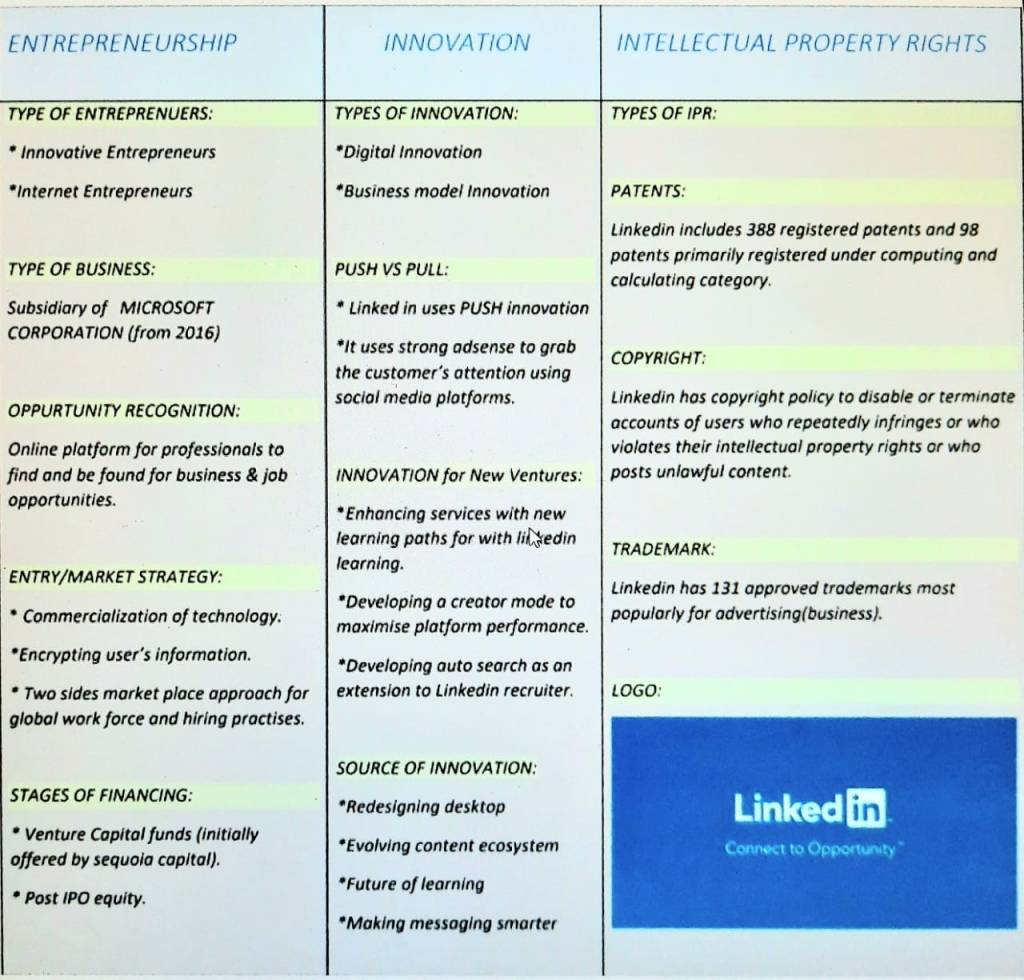
As we all know that ” Linked in ” corporation is one of the leading networking website which functions on describing user created profiles with their work experience, education and training, skills, and a personal photo so that users can find jobs, people and business opportunities recommended by someone in one’s contact network. Users can save jobs that they would like to apply for. Users also have the ability to follow different companies.

In the above para we discussed about the working of linked in corporation with user provided data but we can understand it’s business marketing strategies and it’s growth from initial stage in a clear manner when we see linked in as a business model.

Linked in was found on may 5, 2003 at mountain view, California, US by Reid Hoffman. Initially the company started getting it’s financing through the help of venture capitalist company and later it struggled to get investors in IPO but at the year of 2011 LinkedIn priced its IPO at $45 per share giving the company valuation of $4.5 billion but at the year of 2016 Microsoft announced the valuation of LinkedIn for $196 per share which in all cash transaction valued as $26.2 billion and acquired the company.

CHALLENGES THAT ARE ACCEPTED BY LINKEDIN :

As a networking site the first and foremost challenge faced by LinkedIn is data encryption of user along with the data encryption LinkedIn should also concentrate on following terms:

PRIORITISING LINKEDIN GROUPS: LinkedIn contains many community groups with managers to share/discuss ideas for improving their work/business. So, they have to arrange the groups with out arising any type of ambiguity.

CONSTANTLY CHANGING THE WAY OF ADVERTISING : We get too many irrelevant ads when we use LinkedIn. Sometimes, getting non-sink advertisements also creates a negative impact on the site. So, that it should constantly change the patterns of presenting adds with new algorithms to avoid negative footprints on site.

ARTICULATING THE DORMANT PROFILES: LinkedIn says it’s growing, but there are many inactive accounts that should be removed after a reasonable period of time by keeping the active users accounts effectively and let inactive users go by the wayside.

MAKING LINKEDIN FROM “HAVE TO” TO “WANT TO” FOR BUSINESS PROFESSIONALS: Many people are on LinkedIn because they feel that they “have to” be there for expanding their network but very few professionals LOVE logging in to their LinkedIn. So, to attract more people on internet then LinkedIn must use competitive content on it’s pulse.

MARKETING STRATEGIES APPLIED BY LINKEDIN:

LinkedIn used Traditional marketing strategy at its initial stage of growth. LinkedIn approached it’s users through branding it’s company with chocolates. Similarly, LinkedIn adopted several marketing strategies on internet for improving it’s sustainability.

Most of the business organisations put a great deal of effort into creating the perfect website, and invest a significant portion of the marketing budget on curating the ultimate customer experience. So for that purpose LinkedIn has created virtual circle of influence by combining LinkedIn marketing and remarketing on your website. In order to attract efficient business professionals LinkedIn promoted paid marketing system which can afford a wide variety of ad formats and business targeting opportunities.

LinkedIn provides sponsored content, sponsored messaging, Text adds and Dynamic adds which are considered as native ads that will appear in the viewer’s LinkedIn feed and it tends to be customer centric with helping it’s customers on getting control over their business marketing.

Overview of the company

One of the main reason for it’s sustainable marketing growth is, LinkedIn seamlessly fills in the fields and provides you with information it already knows about your prospect. The up side of this capability is that it reduces the user’s submission time, and also diminishes their friction to signing up for whatever you are offering to the opposite person .It also target the customised accounts for the profile that is provided by user and also allows you to run account based marketing campaigns, powered by LinkedIn data.

Finally, LinkedIn is particularly well-suited for personal branding and which actively manages one’s image and unique value to position oneself for career opportunities. LinkedIn has evolved from being a mere platform for job searchers into a social network which allows users a chance to create a personal brand. LinkedIn’s constant adoption and application of new technologies and new strategies in market has improved it’s standards and sustainability in the competitive corporate field.

Investing lesson of Peter Lynch


Peter Lynch is one of the most successful and top value investor of all time. He was a legendary fund manager who gave 29% returns to their investors for 13 years in a row. He wrote books on value investing , where he shared his investment lessons which he learned and used during his journey as an investor. He is one of the greatest value investor of all time. He is a firm believer that an average investor can also pick winning stocks as Wall Street professional with right research, patience , steady discipline and common sense.


Some of his investment principles are –

1. Invest in what you already know – “The worst thing you can do is invest in companies you know nothing about. Unfortunately buying stocks on ignorance is still a popular American pastime.” -Peter Lynch
People can perform well by investing in what they already know. For instance if a doctor wants to invest in banking sector (about which he know nothing) , he will not have that great return as compared to if he will invest in pharmaceutical companies ( as he already knew about drugs, healthcare sector and their companies)
“Invest in what you know. It leaves out the role of serious fundamental stock research. People buy a stock and they know nothing about it. That’s gambling and it’s not good.” -Peter Lynch
So, it’s better to choose the company whose products/services are either used by you or you are familier of the products/services of that company in some way or other. These knowledge will lead you to invest in better stocks .
2. Invest in companies not in stocks – “Look for small companies that are already profitable and have proven that their concept can be replicated. • Be suspicious of companies with growth rates of 50 to 100 percent a year”-Peter Lynch

Behind every stock there is a company. If companies will perform well, the stocks automatically will perform well. So, it’s important to know about the company, it’s business model. Choose a company whose fundamentals are strong. A company whose business model is so easy to understand that anyone can understand and run that company.

“Go for a business that any idiot can run – because sooner or later any idiot probably is going to be running it” -Peter Lynch

Know a companies management, it’s fundamentals and then ask yourself , “are you able to understand the mission and vision of the company? “ or “If you’ll be given the responsibility to run this company, will you be able to run the company? “
If the answers to the above questions are a YES then it’ll be great to invest in that company.
So always remember that you have to invest in a company and not in a single stock.


“Behind every stock is a company. Find out what it’s doing.” -Peter Lynch

“Never invest in a company without understanding its finances. The biggest losses in stocks come from companies with poor balance sheets.”

3. Don’t take unnecessary risks. Take calculated risks – You don’t have to take risks which you can’t bear. Only take calculated risks.
Let’s say, you have $10 dollar, maybe if you will lost this, you won’t regret. But what if you lost $100 or $1000! Always buy stocks of the amount if you lose won’t regret. You are not required to put all your money in market and risk all that money. Instead put only that amount which if you lose won’t make you regret of investing.
Also, invest only the amount you will not need ever back in your life
4. Peter Lynch said that the most important thing that keep in mind while investing is : know why you own it.

“ You have to know what you own ,and why are you own it .” -Petrr Lynch

It sounds simple but it is not . He said when I asked most people they just don’t know why they own a stock . 80% of investors have no answer to this question .

They maybe hear some tip from anywhere and put their money at risk and when they lose it they blame institutions .
First you have to know the reason . Why you should invest in this company ,research about that company . Check their balance sheets . Without proper research you are not investing you are just gambling . Read and know as much as you can about the company. And remember to buy the company and not just a stock.

“If you’re prepared to invest in a company, then you ought to be able to explain why in simple language that a fifth grader could understand, and quickly enough so the fifth grader won’t get bored.” – Peter Lynch

5. Invest for long time- Lynch used to hold stocks for long period of time. He used to sell the stocks when the fundamentals of any company gets changed. This is his advice for all investors out there to not go behind short term profits but invest for a long period of time.
He even conducted many studies to understand the power of compounding.

“People who succeed in the stock market also accept periodic losses, setbacks, and unexpected occurrences. Calamitous drops do not scare them out of the game.”


Some more investment lessons by Peter Lynch :

• “Never invest in any idea you can’t illustrate with a crayon .”

• “The trick is not to learn to trust your gut feelings, but rather to discipline yourself to ignore them. Stand by your stocks as long as the fundamental story of the company hasn’t changed”

• “Whenever you invest in any company, you’re looking for its market cap to rise. This can’t happen unless buyers are paying higher prices for the shares, making your investment more valuable.”


• “There’s no shame in losing money on a stock. Everybody does it. What is shameful is to hold on to a stock, or worse, to buy more of it when the fundamentals are deteriorating.”

• “Never invest in any company before you’ve done the homework on the company’s earnings prospects, financial condition, competitive position, etc”

• “Big companies have small moves, small companies have big moves.”

• “Good management, a strong balance sheet, and a sensible plan of action will overcome many obstacles, but when you’ve got weak management, a weak balance sheet, and a misguided plan of action, the greatest industry in the world won’t bail you out.”

• “In the long run, a portfolio of well chosen stocks and/or equity mutual funds will always outperform a portfolio of bonds or a money-market account. In the long run, a portfolio of poorly chosen stocks won’t outperform the money left under the mattress.”


This is how he succeed in the world of investment. You can learn from him and help yourself to reach the level you want in investment.


Thank you.

E- EDUCATION: AN EDUCATIONAL REVOLUTION

Eeducation or elearning is the delivery of education or training by electronic teaching methods like computers or laptops etc. E- Education means Schools on Web and it consolidates virtual classrooms, laboratories and integrates it with your other enterprise applications. These now supplement the face – 2 – face class room and commonly known as Blended Learning. It is the learning experiences from the online information sources. This E-Learning approach helps the students know, makes them understand how to research more and the students can preserve their online resources posterity. It helps the teacher to provide better materials for the students by doing research on various topics and subjects. It normally works over the internet and provides numerous tools such as for assessment, communications, collaborations, uploading of content etc.

Schools On Web help in connecting people with each other and provides new ways of communications and collaborations with the help of all kinds of information’s being provided by it. The aim is – Learning without Limits- anytime, in any place, and at any pace. It provides a platform where students and parents are connected, administrators are empowered and teachers are inspired.

E- Learning

The technologies of web collaborations helps in real time access to subjects or instructors or topic matters directly from the PC of users. The key communication/ participation tools are: e mail, chat rooms, whiteboards, journals etc.

Some of the key benefits are:

  1. Enable the teaching od new or existing courses wuthin virtual classrooms
  2. Interactive sessions which can be recorded
  3. Effective evaluation of virtual classes
  4. Provide instant accesS
  5. Generate academic reports
  6. Enables to track the progress of individual learner

Experiential Learning

Experiential Learning

Experiential Learning stimulates experiments and boosts the dimensions of interest, involvement, imagination and interaction by virtual laboratories, scenario – based learning activities and tests of different concepts. All these can be incorporated into various teaching approaches as pre-labs, as alternatives to textbooks home work and individual or group activities.

Some of the key benefits are :

  1. Highly Interactive Platform
  2. Provide Learning by Doing
  3. Ensures and promotes high level of cognition and retention
  4. Safety and Security is ensured
  5. Simulates real-life environments

Management System

E-Learning helps in managing fee structure, fee submission, generation of time table and management, library management and other reports. Web based Institute Management software is designed which enables better interaction among students, teachers, parents and managing body. Thus, it helps in customization of the system for respective needs at a reasonable cost.

COVID 19 and E – Education

Countries are at different points in their COVID 19 infection rates and worldwide there are nearly 1.2 billion children in 186 countries who are getting affected by school closures due to the pandemic. With such sudden transition and shift away from the classroom many problems and issues have emerged across the globe. In such situations, online learning and e-learning approaches have emerged as solutions and in response to significant demand, many online learning platforms have also moved forward for offering free access to their educational services. With the help of e-learning and online teaching initiatives many issues which were being faced in the field of education have been sorted out but still there are still lots of problems which are associated with the availability of proper infrastructures etc. at each and every corner of the globe which can enable each and everyone to access the facilities of e-learning.

Programming Language

Before learning the programming language, let’s understand what is language?

What is Language?

Language is a mode of communication that is used to share ideas, opinions with each other. For example, if we want to teach someone, we need a language that is understandable by both communicators.

What is a Programming Language?

A programming language is a computer language that is used by programmers (developers) to communicate with computers. It is a set of instructions written in any specific language ( C, C++, Java, Python) to perform a specific task.

A programming language is mainly used to develop desktop applications, websites, and mobile applications.

Types of programming language

1. Low-level programming language

Low-level language is machine-dependent (0s and 1s) programming language. The processor runs low- level programs directly without the need of a compiler or interpreter, so the programs written in low-level language can be run very fast.

Low-level language is further divided into two parts –

i. Machine Language

Machine language is a type of low-level programming language. It is also called as machine code or object code. Machine language is easier to read because it is normally displayed in binary or hexadecimal form (base 16) form. It does not require a translator to convert the programs because computers directly understand the machine language programs.

The advantage of machine language is that it helps the programmer to execute the programs faster than the high-level programming language.

ii. Assembly Language

Assembly language (ASM) is also a type of low-level programming language that is designed for specific processors. It represents the set of instructions in a symbolic and human-understandable form. It uses an assembler to convert the assembly language to machine language.

The advantage of assembly language is that it requires less memory and less execution time to execute a program.

2. High-level programming language

High-level programming language (HLL) is designed for developing user-friendly software programs and websites. This programming language requires a compiler or interpreter to translate the program into machine language (execute the program).

The main advantage of a high-level language is that it is easy to read, write, and maintain.

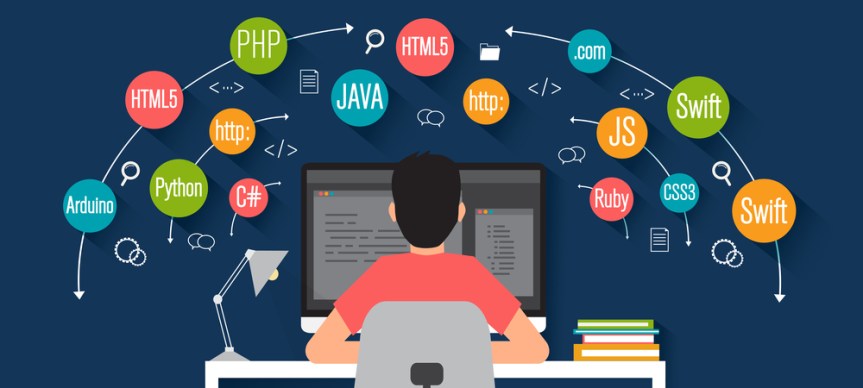
High-level programming language includes Python, Java, JavaScript, PHP, C#, C++, Objective C, Cobol, Perl, Pascal, LISP, FORTRAN, and Swift programming language.

A high-level language is further divided into three parts –

i. Procedural Oriented programming language

Procedural Oriented Programming (POP) language is derived from structured programming and based upon the procedure call concept. It divides a program into small procedures called routines or functions.

Procedural Oriented programming language is used by a software programmer to create a program that can be accomplished by using a programming editor like IDE, Adobe Dreamweaver, or Microsoft Visual Studio.

The advantage of POP language is that it helps programmers to easily track the program flow and code can be reused in different parts of the program.

The advantage of POP language is that it helps programmers to easily track the program flow and code can be reused in different parts of the program.

Example: C, FORTRAN, Basic, Pascal, etc.

ii. Object-Oriented Programming language

Object-Oriented Programming (OOP) language is based upon the objects. In this programming language, programs are divided into small parts called objects. It is used to implement real-world entities like inheritance, polymorphism, abstraction, etc in the program to makes the program resusable, efficient, and easy-to-use.

The main advantage of object-oriented programming is that OOP is faster and easier to execute, maintain, modify, as well as debug.

Note: Object-Oriented Programming language follows a bottom-up approach.

Example: C++, Java, Python, C#, etc.

iii. Natural language

Natural language is a part of human languages such as English, Russian, German, and Japanese. It is used by machines to understand, manipulate, and interpret human’s language. It is used by developers to perform tasks such as translation, automatic summarization, Named Entity Recognition (NER), relationship extraction, and topic segmentation.

The main advantage of natural language is that it helps users to ask questions in any subject and directly respond within seconds.

3. Middle-level programming language

Middle-level programming language lies between the low-level programming language and high-level programming language. It is also known as the intermediate programming language and pseudo-language.

A middle-level programming language’s advantages are that it supports the features of high-level programming, it is a user-friendly language, and closely related to machine language and human language.

Example: C, C++, language

Most commonly used Programming Language

As we all know, the programming language makes our life simpler. Currently, all sectors (like education, hospitals, banks, automobiles, and more ) completely depend upon the programming language.

There are dozens of programming languages used by the industries. Some most widely used programming languages are given below –