The cat families… part 2

this is the continuation article of part 1

26.Maine Coon cat:

undefined
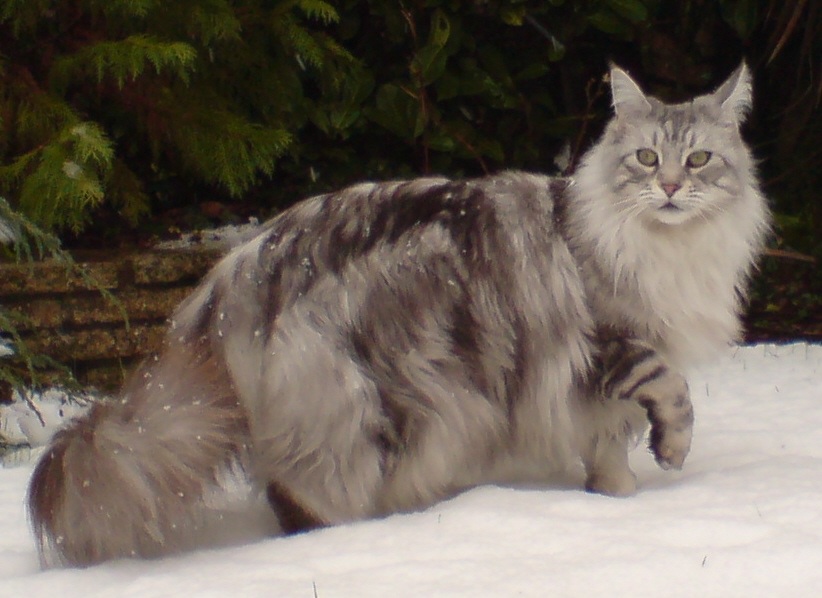
Maine coon cat, North America’s only native breed of the longhaired house cat . Though its origins are unknown, it had been first shown in Boston in 1878. Maines is large, muscular, and heavy-boned; they’ll are named for his or her raccoon-like tail. Excellent mousers, they’re known for his or her gentleness, intelligence, and type disposition, and are especially good with children and dogs. Most are brown tabbies.

27.Manx:

undefined
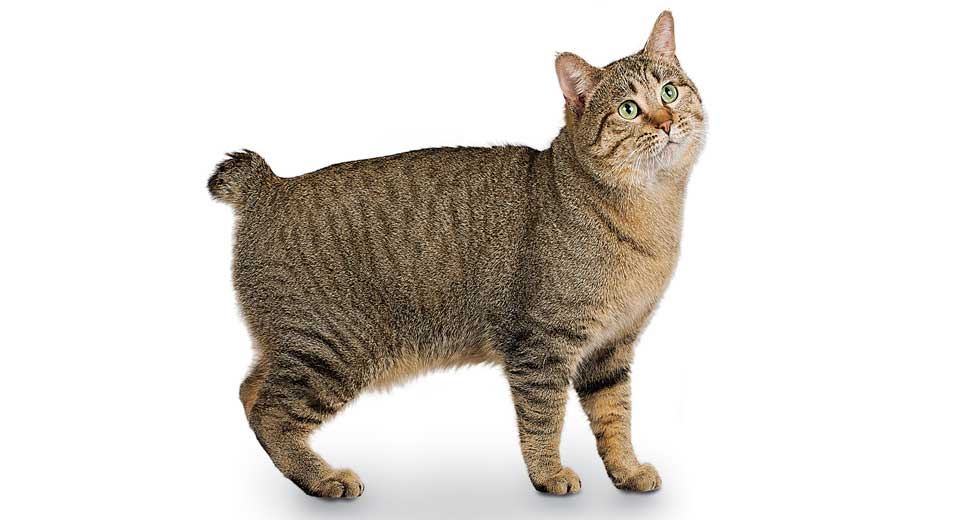
Manx, breed of the tailless house cat of unknown origin but presumed by tradition to possess come from the Isle of Man. Noted for being affectionate, loyal, and courageous, the Manx is distinguished both by its taillessness and by its characteristic hopping gait. it’s compactly built, with a rounded head; large, round eyes; and little , wide-set ears. The rump is additionally rounded and, because the hind legs are considerably longer than the forelegs, is distinctly above the shoulders. The Manx could also be born with a tail but ideally should be totally tailless with a hollow at the top of the backbone where the basis of the tail should be. The double coat could also be any solid, variegated, or tabby color.

28.marbled cat:

undefined
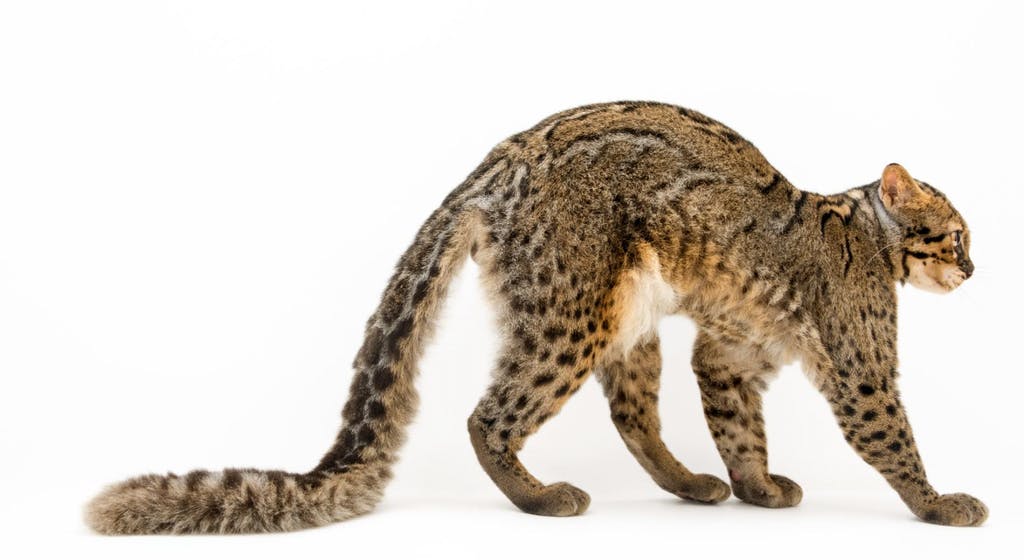
Marbled cat rare Southeast Asian cat, Felidae , often mentioned as a miniature version of the unrelated clouded leopard. The marbled cat is about the dimensions of a domestic cat; it measures roughly 45–60 cm long, excluding a tail of roughly an equivalent length. The coat is long, soft, and pale brown to brownish-gray, with large, dark-edged blotches on the body and smaller dark spots on the legs and tail. The marbled cat is nocturnal and lives in jungles, and should prey on small animals and birds.

29.margay:

undefined
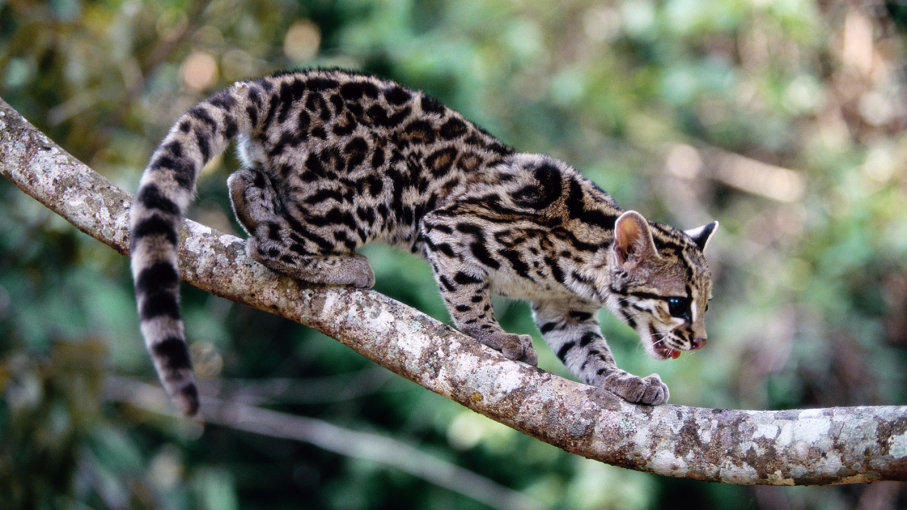
Margay also called tiger cat or tigrillo, alittle cat that ranges from South through Central America and, rarely, into the acute southern us . Little is understood about the habits of the margay. It lives in forests and presumably is nocturnal, feeding on small prey like birds, frogs, and insects. it’s largely arboreal and has specially adapted claws and feet that enable it to scamper up tree trunks and along branches with ease. The margay resembles the related ocelot but features a longer tail and fuller face, emphasized by large, dark eyes and rounded ears. The male attains a maximum length of about 1.1 meters, including a tail about 46 cm long, and weighs up to about 16 kg. the feminine is usually smaller and features a relatively long tail. Coloration varies from pale gray to chocolate with dark markings like spots, stripes, bands, and black-edged blotches. When hand-reared from a kitten, the margay reportedly is definitely tamed; as an adult, however, it’s going to become unpredictable.

30.ocelot:

undefined
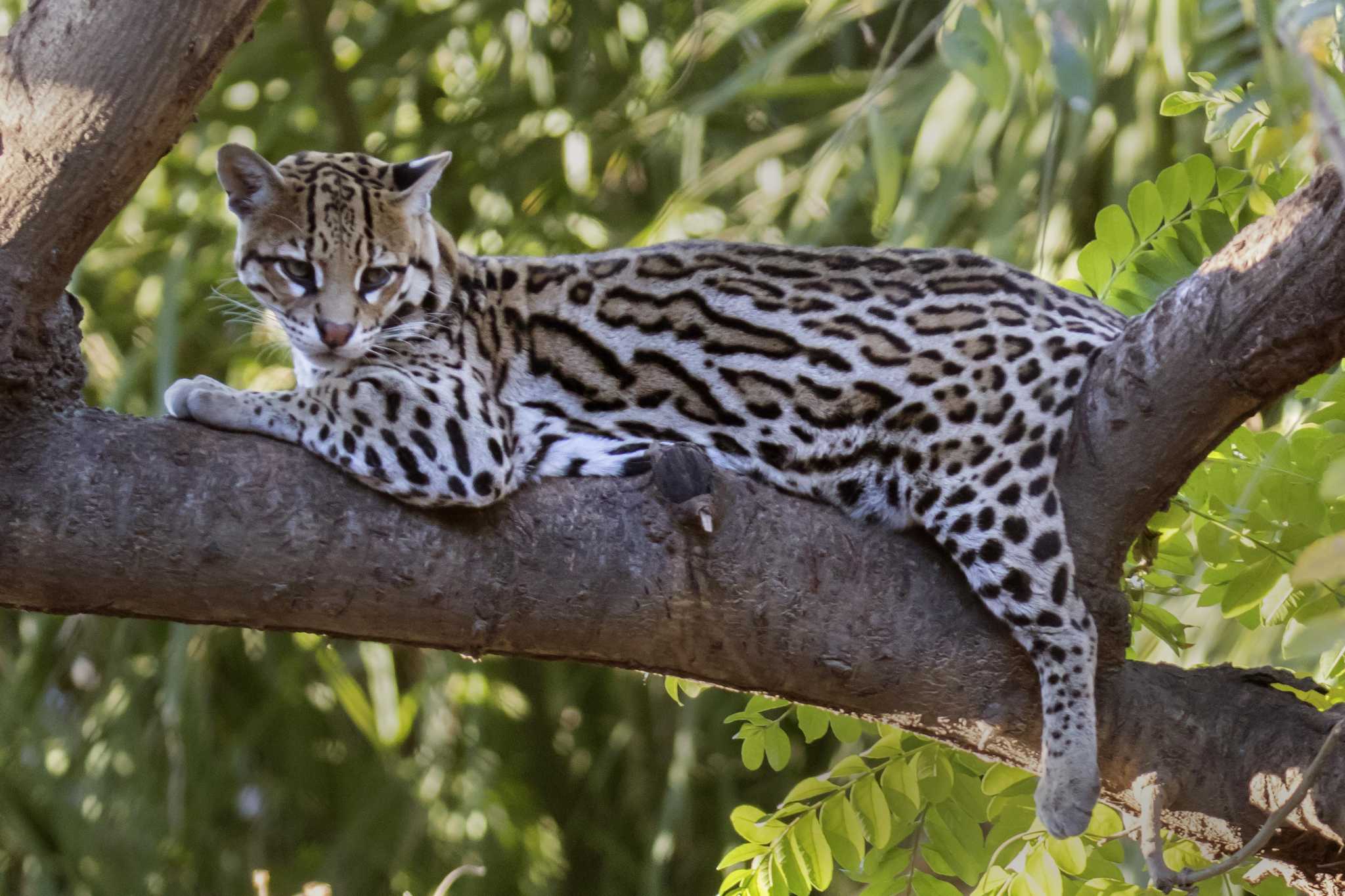
the spotted cat of the New World found in lowland areas from Texas southward to northern Argentina. The short, smooth fur is patterned with elongated, black-edged spots that are arranged in chainlike bands. The cat’s upper parts vary in color from light or tawny yellow to gray. There are small black spots on the top , two black stripes on each cheek, and 4 or five black stripes along the neck. The ocelot’s underparts are whitish, spotted with black, and therefore the tail is marked on the side with dark bars or blotches.

31.Pallas’s cat:

undefined
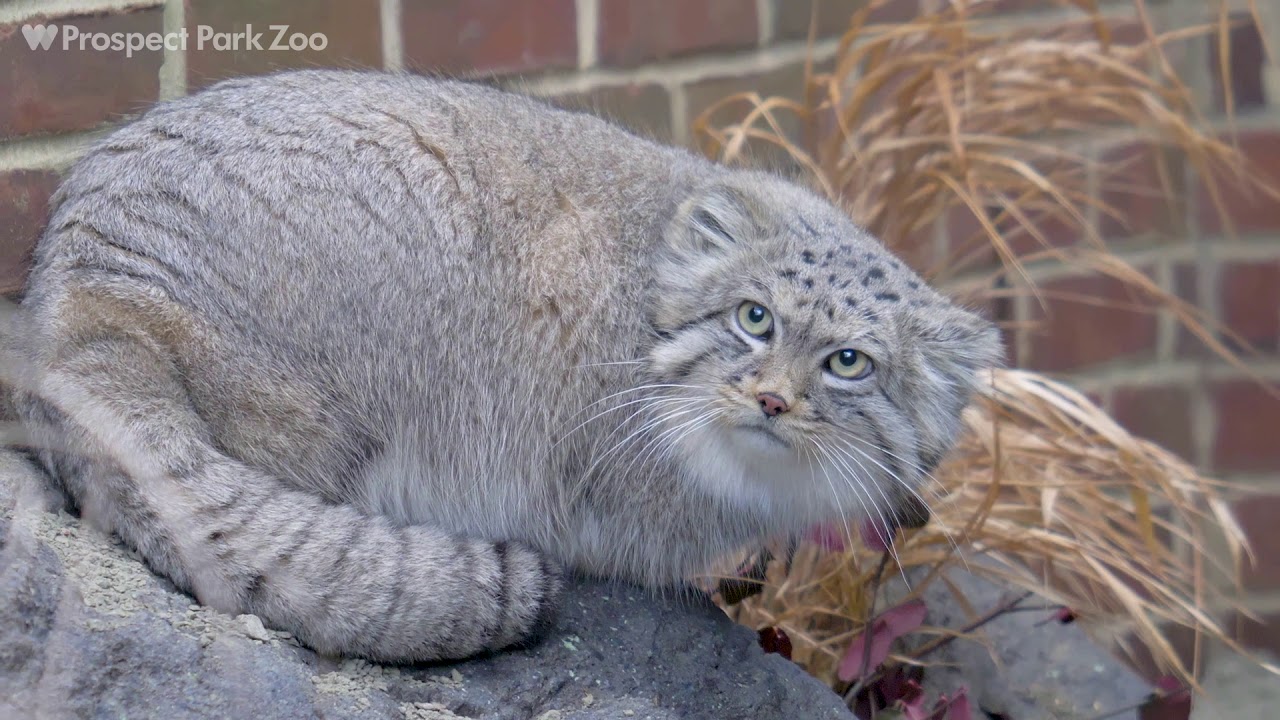
Pallas’s cat also called Steppe Cat, or Manul, small, long-haired cat native to deserts and rocky, mountainous regions from Tibet to Siberia. it had been named for the naturalist Peter Simon Pallas. The Pallas’s cat may be a soft-furred animal about the dimensions of a domestic cat and is pale silvery gray or brown in color. the top of its tail is ringed and tipped with black, and a few individuals have vague, dark markings on the body. The fur of the underparts is about twice as long as that of the upperparts and possibly represents an adaptation to the cat’s habitual lying and crouching on the cold ground.

32.pampas cat:

undefined
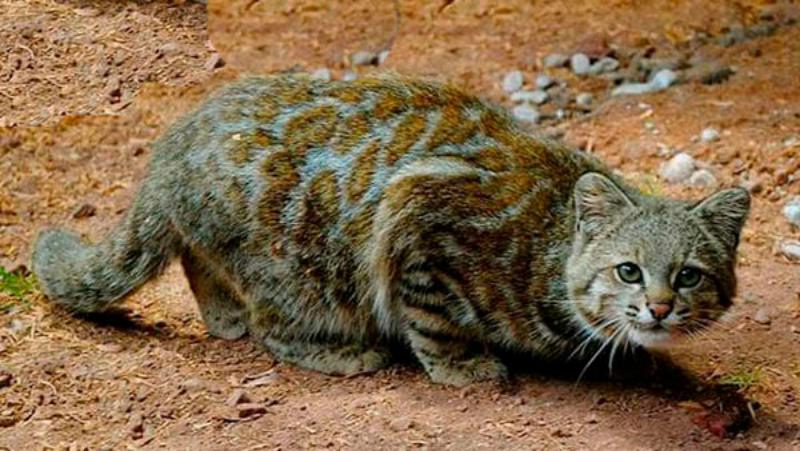
Pampas cat small cat, Felidae , native to South America. it’s about 60 cm long, including the 30-centimeter tail. The coat is long-haired and grayish with brown markings which in some individuals could also be indistinct. Little is understood about the habits of the pampas cat. it’s reported to measure in thick shrubbery and to hunt birds and little animals in the dark .

33.puma:

undefined
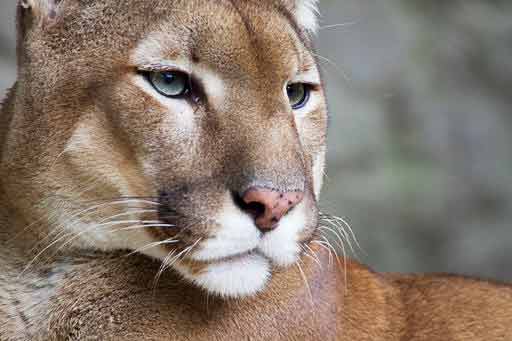
Puma also called cougar , cougar, panther, or catamount, large brownish New World cat comparable in size to the jaguar—the only other large cat of the occident . The puma, a member of the Felidae , has the widest distribution of any New World mammal, with a variety extending from southeastern Alaska to southern Argentina and Chile. Pumas sleep in a spread of habitats, including desert scrub, chaparral, swamps, and forests, but they avoid agricultural areas, flatlands, and other habitats lacking a canopy . Six subspecies of Puma concolor are recognized by most classifications.

34.Rex cat:

undefined
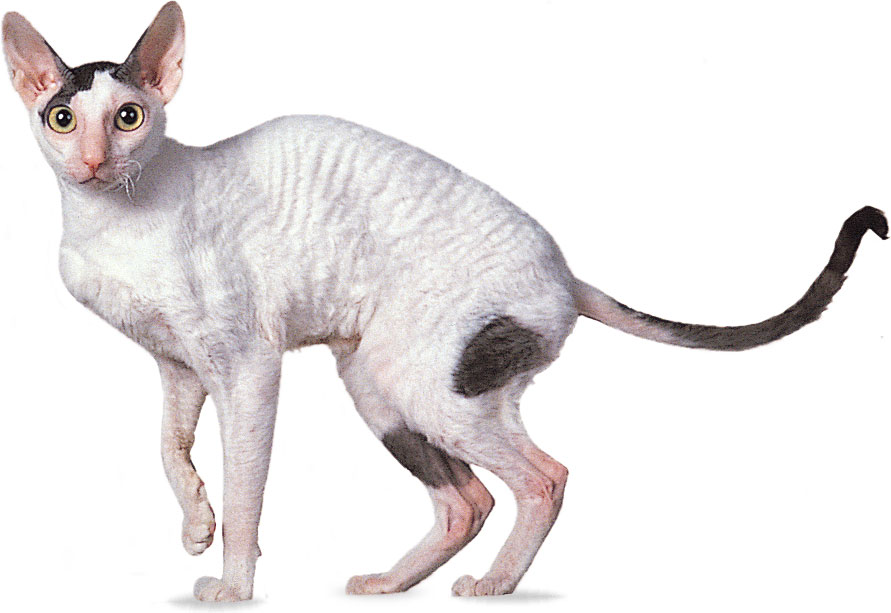
Rex cat, curly-coated breed of house cat that features a dense, soft coat lacking any projecting guard hairs, or outer coat. Except on the top , legs, and paws, the coat forms fairly deep waves, or crimps. The eyebrows and whiskers of the Rex cat are crinkled, the eyes are almond-shaped, and therefore the ears are large and high set. The adult Rex cat is slender and typically has long legs, an extended neck and head, and an extended , tapering tail. Show cats could also be any of the colours or patterns that are accepted for domestic cats.

35.tiger:

undefined
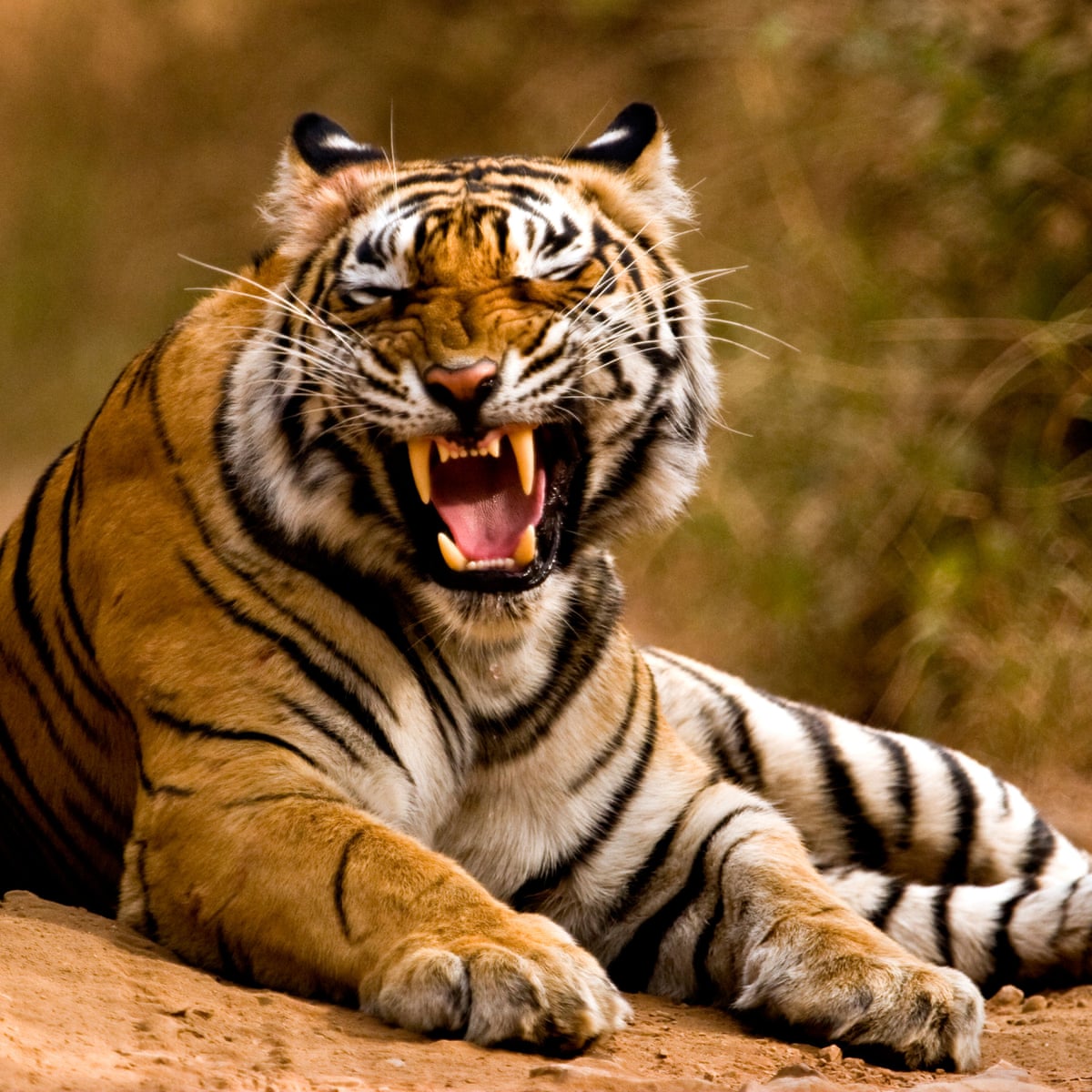
Tiger’s largest member of the cat family, rivaled only by the lion in strength and ferocity. The tiger is endangered throughout its range, which stretches from the Russian Far East through parts of North Korea , China, India, and Southeast Asia to the Indonesian island of Sumatra. The Siberian, or Amur, the tiger is that the largest, measuring up to 4 meters in total length and weighing up to 300 kg. The Indian, or Bengal, the tiger is that the most numerous and accounts for about half the entire tiger population. Males are larger than females and should attain a shoulder height of about 1 meter and a length of about 2.2 meters, excluding a tail of about 1 metre; weight is 160–230 kg, and tigers from the south are smaller than those of the north.

36.tigon:

undefined
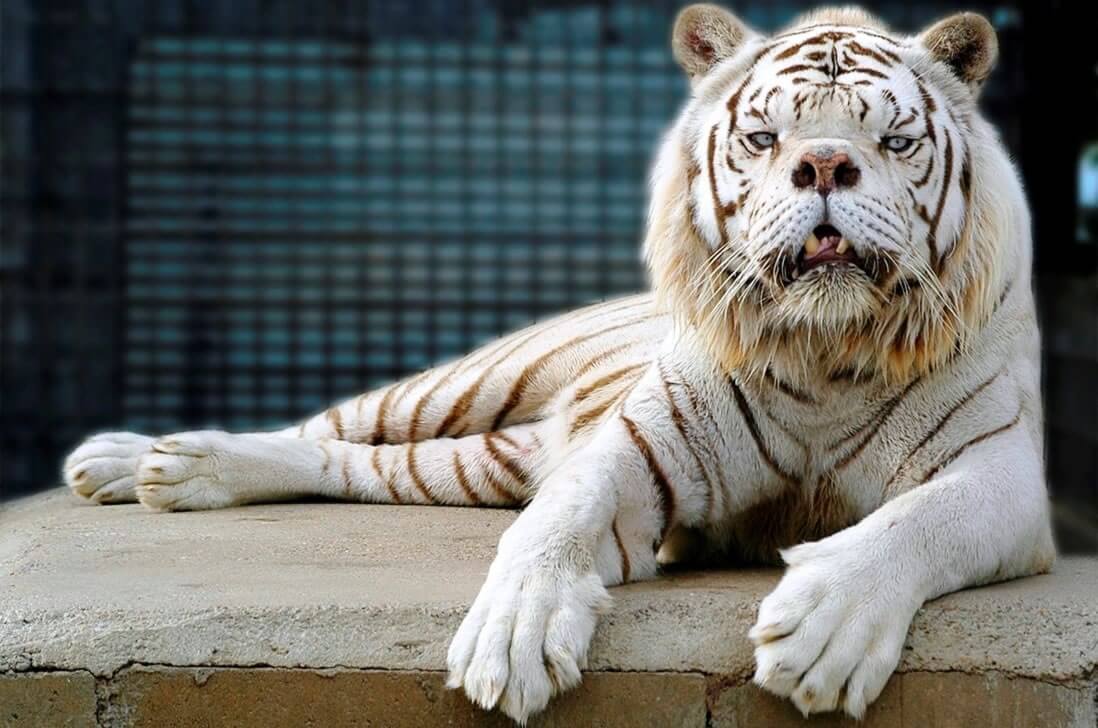
Tigon, offspring of a tiger and a lioness. The tigon, or tiglon, may be a zoo-bred hybrid, as is that the liger, the merchandise of the reverse mating of a lion with a tigress.

Inspiring story of Google’s CEO: Sundar Pichai – Must read!!!

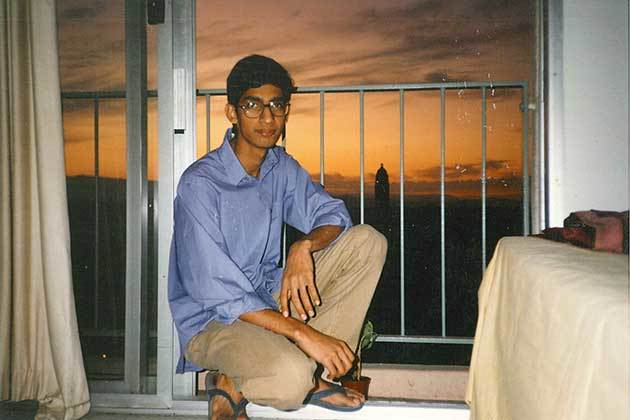
Growing up in India, like many of you, Sundar Pichai got my first telephone when he was 12. In case it turned out be a rotary phone, so it wasn’t that great for selfies. But he still loved to call my friends, play with it and sometimes take it apart. That telephone cemented my fascination with technology. Sundar Pichai remember in his parents’ house in Chennai, reading about the invention of the transistor at Bell labs. Of course, that initial invention helped found what became referred to as Silicon Valley and out of that came companies like fairchild semiconductor and Intel and every one the computers and software, that we all use today. You can draw an immediate line from that invention to the technology, that powers your Twitter feed or your WeChat messages today.

Google's Sundar Pichai travelled in buses, had no television while ...

Image source : GadegtsNow

When he was younger, people would say, this person didn’t get into this college or something and that is the end of the road. Sundar Pichai thought life is so different from that, and so he think it is important to you know, keep your hopes, keep your dreams and try to follow them and you recognize he think, most of how life plays out is up to you, not up to what happens outside of you. It’s important to keep that in mind and take the long-term view. As a teenager, jumping on to a crowded train. At Chennai and traveling for 24 hours, to attend my school at IIT Kharagpur and that opportunity changed the course of my life. You want to aim high enough that you fail, you know few times thought it is the natural part of the process. In fact, Larry accustomed say if you’re employed on really difficult things, you’re more happy because you’ve got no competition, others aren’t performing on that difficult a drag . And although you fail, you finish up doing something great within the process.

Sundar Pichai Biography - Childhood, Life Achievements & Timeline

Image source: Thefamousperson

You know, working the real world, it is important to be well rounded, it is important to try different things, or you know take some risks, he would encourage people to follow their passions a little bit more. To follow set lanes throughout your career. Getting into an elite institution doesn’t guarantee success, it matters plenty but it doesn’t guarantee success. It is important to stay that perspective in life and life may be a long road, and you know, you would like to require it at the proper pace and luxuriate in what you are doing. Sundar Pichai knew how much hard work it takes to pursue your dream of building a business. The long hours, time faraway from family, the ideas you recognize are brilliant, that just don’t seem to catch on. Reading that and thinking, it is the concept matters. It didn’t matter where you come from or what your background is.
One revolutionary idea, one brilliant invention can unleash other entrepreneurs to revolutionize, industries and ways you could never predict.

black samsung tablet display google browser on screen
Photo by PhotoMIX Company on Pexels.com

Can We Sustain?: The environmental challenge Towards Human Existence

Picture Courtesy: Google

In this emerging world crisis what we need to worry about the environment. Biodiversity is being hampered with the living habits of humans. As a part of the environment, We must pay heed to the development of the environment in a right and progressive way. We must know what we are leaving for the next generation. Due to the indifferent nature of human towards the environment and destructive behavior towards nature have called up a pandemic situation like Covid-19. The rising temperature, the growth of the disease, the major wild forests destruction, climatic imbalances all are results of human extravaganza. Our existential security depends on the earth’s existence. So, whenever we are talking about development we have to take the earth under consideration as well. The Hinduism sacred literature talks about ‘Mahabhuta’ which says about the exploitation of the five elements of nature, earth, water, fire, air,  space. Due to the convergence of technology we are running behind the development without thinking who to sustain it.

There are many things we should be worried about. There are many species which are either got extinct or in the way of extinct. Deforestation is one of the main causes of environmental grievance. Reports say nearly 27,000 trees are shot down each day to manufacture toilet paper. Nearly 1 million sea creatures are killed due to plastic pollution. Death of a huge number of animals in ecology, not only push the species towards extinction but also create a disruption in ecosystems and the ecological food chain. Unrestricted fishing can be another cause of the crisis in aquaculture. In this environment, every creature has its own role to play. The popularity of insects is higher than any other living creature on the planet. Due to agricultural safety, many friendly insects are killed. It says female insects travel much comparatively to male insects because they are in the process of pollination. Here if the pollination doesn’t happen, it can lead the human existence to cease. With the spike of the world population( nearly 83 million per year) and carbon footprint sensitizing the consequences like food crisis, economic crises, water problems, climatic changes, and so on. A report says the growing temperature can lead people to kill themselves. 1°C rise in temperature has given a 0.7% rise in the suicidal cases in countries like the US, Mexico. According to a report of WWF, a new disease can arise which will be higher than ever. It will make wreak havoc in the economy, health, and more. Arbitrary wild trade is another resource of ecological imbalance. Expensive release of greenhouse gas from the use of burning fuel like oil and others has indecently increased the rate of pollution, temperature, and other environmental issues.

A report called ‘The Global Tree Restoration Potential’ has remarked tree restoration as one of the efficient strategies to prevent the environmental crisis. Human and environmental development have to be proportional to each other. We can conquer the destruction by choosing sustainable development as a weapon. We are not allowed to perceive the natural beauty apparently as a part of impressionism but we are bound to be careful about securing the existence the beauty so that the next generation also can sense and experience the beauty in the same way.

Word cup 1983

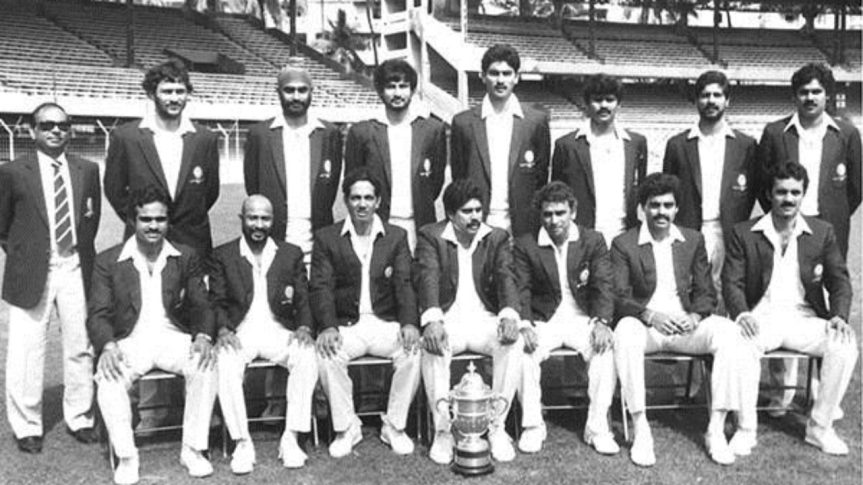
25th June 1983, was the first time that India won the cricket world cup. It was the first time that India had made an appearance in the finals, and they were up against West Indies  for whom this was their third consecutive world cup finals appearance. The world cup was hosted by the company Prudential that is why the world cup is also called Prudential world cup .The finals was played in Lord’s  cricket stadium also called  Lord’s in London which had had hosted world cup for the third time. India defeated West Indies by 43 runs. Kapil Dev lifting the Trophy from the balcony of the Lord’s cricket ground still remains the image of savor for the India fans. Even after 37 years people acknowledge this finals as the most memorable game played by the India cricket team.

India were the underdogs in the tournament, there was not much expectations from the team. However they defeated Zimbabwe in a crucial match, thanks to Kapi Dev who made 175 runs which lead the team to win the match. India was at 78 runs 5 wickets when Kapil dev came for batting his extraordinary innings took Indian team to victory. Unfortunately this historical match was not telecasted as British Broadcasting corporation  was on a strike  that day. In semi finals England was defeated by India by six wickets with thirty two balls remaining and Mohinder Amarnath becoming the player of the match. West indies defeated Australia in the semi finals by seven wickets with thirteen balls remaining and Vivin Richards became the man of the match.

West Indies and India made it to the finals, at that time West indies had really good bowling attack. So when they won the toss they chose to ball first and allowed India to Bat.  First came Sunil Gavaskar but his innings was short as he got out for just two runs but Krishnamachari Srikanth and Mohinder Amarnath had a good partnership and brought the runs to the fifty mark. Then soon Srikanth got out making  thirty eight runs, after that as the score was marching towards a hundred Mohinder Amarnath and Yashpal sharma lost their wickets after making twenty six runs and eleven runs respectively. Then came the captain Kapil Dev who stroke three boundaries in eight balls but got out in just 15 runs. Nor could the next players like Kirti Azad and Roger Binny could make runs, they did not even cross the double digit. Then Sandip Patil could only score 27 runs and The all rounder Madan lal came back to the pavilion after making 17 runs. India was all out in 54.4 overs making 183 runs.

Then came India’s turn to bowl, the first wicket was taken in just 11 balls by Balwinder singh sandhu that too of Gordon Greenidge who was really in a great form, he could only take 5 runs. West indies also had a great partnership of  Desmond Haynes and Vivin Richards which enabled west indies to cross the 50 mark, but  both of them were dismissed by  Madan Lal and Kapil Dev respectively. Soon West Indies was all out in 52 overs making 140 runs and India won by 43 runs and Mohinder Amarnath becoming the Man of the match. No Man of the series was awarded that year.

This victory not only made these players a hero but also changed the perception of games in India. This also lead to a high commercialization of cricket as a game, people started to think sports as a career and also many people really got engaged to the game. This win also brought a sense of ” we can do it” for the Indian team.


Rasputin: The death that changed history

Mystics and holy men, some call them the voices of gods while some refer to them as shams and con-men who try to trick the gullible people of society. Whatever be the truth, the fact is that they have been influential in shaping history throughout the world since time immemorial. These kinds of people often gain a large popularity, are hailed as having the power of gods and yet like every other person, have skeletons on their closets. One such man who changed the course for the Russian monarchy is Grigori Yefimovich Rasputin, a Russian mystic and self-proclaimed holy man who befriended the family of Emperor Nicholas II, the last monarch of Russia, and gained considerable influence in late imperial Russia.

Photo by Mitja Juraja on Pexels.com

Born to a peasant family in rural Siberia, Rasputin lived an obscure life till adolescence and might have continued to do so had he not converted himself to the Russian Orthodox church. After being inspired by many of the wandering humble monks of his generation, Rasputin moved aimlessly from one holy site to another. He spent years of his life on pilgrimages across Russia, and along his travels he amassed a large following due to his charismatic and magnetic presence. He was even believed to have had the power of divination and healing. And despite his repetitive acts of petty theft, heavy drinking and over promiscuous nature with the ladies, he was hailed as a holy monk across Siberia, and he gained the attention of both the powerful orthodox clergymen and common people.  Once he finally reached St. Petersberg, he used his innate charisma and gained popularity and connections to win the favour of the imperial family’s spiritual advisor and soon wormed his way up and was introduced to the Tsar Nicholas II. He like all other “holy men” before and after him had the ability and know-how to milk every opportunity to the fullest. Like every opportunist mystic in the world, he researched about his targets and found out that the Tsar and his wife were devout believers of the supernatural and mysticism.  Rasputin cemented his control in the Tsar’s court by performing a “miracle”. The young heir to the throne had a disease known as hemophilia, a life-threatening blood disease. He refused to let the doctors administer anything to the heir and when Alexie’s health got better, he was hailed as a mystic with supernatural powers. What actually happened was that the doctors had prescribed him aspirin which worsens the hemophilia’s effect in the body, thus it seemed that the young heir got better. Thus, to cement his place of power, he proclaimed that should he die or be deserted the royal crown and their son would also disappear. Due to his increasing popularity in court and his ill habits of theft and skirt-chasing, the orthodox had begun to hate him and decided to have him killed prevent his further acts of corruption to the royal family and to stabilize the kingdom, not taking into account that to the public Rasputin was hailed as the public’s hero. In 1916, a group of nobles led by Felix Yusupov, tried to kill Rasputin by lacing his pastries with cyanide or so they thought as one of their co-conspirators had changed the poison with something harmless out of pity for Rasputin. As that plan failed, Yusupov shot Rasputin at point blank range, which again Rasputin miraculously survived and punched away his assailant and ran away. However, the group of noblemen gave chase and shot Rasputin dead and dumped his body in the Malaya Nevka river. However rather than stabilizing the kingdom, his death enraged the peasantry who were already on a boil from decades long political tensions within the area, saw this as the tipping point and took down the Tsar’s regime. As Rasputin prophesised his death was soon followed by the royal families. Thus, ended the tale of a monk who reshaped the Russian history.

Sanskrit:The new language for computer programming!

Sanskrit is the world’s strongest logical language, one of the oldest language and it was one of the major languages of India but now is a minority language. It’s known as the perfect language and is also known as mother of all modern languages. It’s the language of Gods in India.

It’s an Indic language and holds a significant value till date all over the world, our vedic scripts were written in Sanskrit and there was a time when Sanskrit was even used as a language during conversations, Sanskrit is the official language of Uttarakhand and is very close to every Indian’s heart. Even some of the major texts of Jainism and Buddhism have been written in Sanskrit.

Though it is being understated now and its use is decreasing day by day but experts say it can be the new language which will be needed in technological advances. The structure of Sanskrit is very logical and the precision it offers cannot be matched by any other language due to which it is considered as a god language for computer programming.

Sanskrit is one of the most ancient languages and it is said that the earliest literature was written in Sanskrit. Initially Sanskrit was said to have no traces in the form of written manuscripts, it was widely spoken, it was around 250 years back that people started writing in Sanskrit in their own respective script, hence Sanskrit scripts have been written in various languages and hence Sanskrit is said to have no official (default) script.

Sanskrit is one of the most phonetically sound languages and it has said to improve one’s learning e of Sanskrit skills and speech, many speech therapists make use of Sanskrit while working with different clients and  also teachers include Sanskrit as part of school curriculum as it is said to improve brain functioning and has many other benefits.

It’s one of the most sacred languages in the Indian culture and one mostly gets to hear recitations in Sanskrit during holy rituals or wedding ceremonies and it is said to have a an soothing and calming effect on our minds due to the vibrations it produces. In India many schools have abided to teaching Sanskrit as the third language in their school curriculum which is an advantageous move as people have slowly withered away from their mother language and it is going unappreciated, especially with the new generation, most of them are clueless about the importance of Sanskrit and the opportunities it has to offer.

According to many experts Sanskrit is the best language for computer programming and also for artificial intelligence, due to its precision and logical base and also because of certain characteristics it poses as a good option as it can be converted into a machine language and can enhance the working of artificial intelligence. This was stated by Rick Briggs who published his paper in 1985, he was an associate scientist working for NASA and he stated that the strict grammar rules of Sanskrit allow for easy conversion and reduces ambiguity when it comes to the use of the language.

Sanskrit as a language holds a lot of value be it one of the best languages for computer programming or one of the most logical languages to be learnt. It is somewhere or the other going unnoticed in its own country and needs to be uplifted by us!

“Stop Worrying and Start Living” – Dale Carnegie – Book review

Dale Carnegie’s how to stop worrying and start living so the first big idea is ask yourself what’s the worst thing that can happen I remember the first year in college constantly worrying about my grades what was I getting to do if I got a B+ rather than an a well surely my life would be over and that i would never amount to anything in life like that was seriously the thought process browsing my 17 year old head now fast-forward five years.

How to Stop Worrying & Start Living
Carnegie tells a story of this guy in World War 2 who’s stuck in a submarine and basically knows that he’ll be dying in the next few hours and he sits there thinking about all the stuff he used to worry about at home and how absurd it was and makes a promise to never waste his life again like that if he survives now that might be hard to resonate with so let me give you a more contemporary example people are having their heads chopped off every single day every single day the only reason it’s not you is because you are born in a certain place. They weren’t that’s it now going back to my friend I told him look here’s what I want you to do every day you will start your morning by watching somebody’s head being chopped off and then you’ll go about the rest of the day.
He started freaking out about how he can’t do that and how he doesn’t like blood and whatever now here’s the thing. I know that’s really crass and morbid but I don’t care if you don’t worry about stuff great you don’t have to watch anything but if you’re worried about stupid all the time you have a disease so you either treat yourself or you never ask about how you can stop worrying again ever. Here’s what I will guarantee you if you start your day by watching someone else have their head chopped off nothing and I mean absolutely nothing could possibly happen to you for the rest of the day that you could get pissed off about and not feel like a complete retard yes when you’ve seen someone’s head chopped off you will have a weird feeling inside you as soon as you start to complain about how you deserve to be paid more at your job or what you’re going to do now since you bought a B+ rather than an A or how your washer is broken you’ll realize that.

automatic weapon bullet camouflage close up
Photo by Pixabay on Pexels.com

If the guy had been given the chance to live and wear that same dirty shirt for the rest of his life without ever being able to wash it he would have been the happiest man alive realize the absurdity of it all the third big idea staying busy now I don’t mean the average busy person actually those are the people that worry the foremost the guy who works 12-hour days then comes home and watches Fox all night worrying about whether some guy can marry another guy or about all the foreigners who will come and take his job you know because he’s the only one entitled to that job I’m not talking about that kind of busy here’s how I like to stay busy read a book that I like go to the gym with my girlfriend play around on the piano and compose cook amazing food work on a project. I’m passionate about now here’s what happens when you do that your brain can’t think of two things at one time it just doesn’t have that capability you can try right now if you want you can’t think of your broken washing machine and at the same time think of how much you love playing soccer it’s not how your brain works so the best way to get rid of the negative thoughts in your head is to actually start putting positive thoughts in there get busy with what you love and your brain simply won’t even have the power to stress . Finally, a question that really resonated with me here’s what you’re going to do in your life you’re going to work and worry your entire life so you can gather a bunch of stuff like your house and all the stupid.

woman working girl sitting
Photo by Alexander Dummer on Pexels.com

If you’re lucky after 50 years of all that worry and stress all of your stuff could be worth 1,000,000 dollars here’s the question would you sell your legs for a million dollars let me ask you this would you sell your legs for a billion dollars I wouldn’t and you probably wouldn’t either would you sell your arms for another billion dollars no there you go you have already got something that you simply value at two billion dollars actually hopefully more but you do not need to be all Zen you could be a greedy capitalist like me and understand this now here’s what you’re going to do you’re going to ignore and not utilize something worth two billion dollars because you’re too busy worrying and stressing about the things that might amount to 1 million dollars at the end of your life oh and you’ll be considered really lucky if that happens by the way all right.

cheerful barista in apron and hat with portafilter
Photo by Ketut Subiyanto on Pexels.com

So, I don’t know if you’re seeing how crazy that is but that’s kind of like having a huge mansion a personal jet every single car you ever wished for and not using and enjoying those things because you’re too worried about at some point having the ability to shop for a Corolla that’s crazy and sad you have already got everything that you value at billions and billions of dollars so stop ignoring wasting and treating it like for hours and days so you can worry and bitch about how your phone bill went up from a hundred dollars to a hundred and twenty.

You can buy this amazing book from here ( click here )

“Soap VS Sanitizer – What Experts Believe?”

Today’s is a time when we humans are living with a pandemic which is growing all over the world. People are getting infected and dying in numbers and it’s count seeing no end. This virus has been named as Corona or Covid-19. This virus infects a person leading him/ her to high fever, cough and lack in breathing. This surely affects the respiratory system of humans, and thus spreads. Since we know that these viruses do require a host to survive, and when they get so, they just multiply. This is a virus which can spread through touch, so mostly advise to maintain a distance of 1 metre or more while talking with a person. But What doctors are so concerned with is the fact that these viruses are going through mutations and are mutating as they spread from one person to another. This surely is a sign of concern, this not only changes the DNA of the virus but also can make it difficult to track  the presence of the virus, since the technique must not be able to catch the virus, as it has evolved, thus the virus may be present even if any individual test negative. So what can be done to prohibit and remain safe from this deadliest virus. 

Doctors advise to maintain a distance of 1 metre or more while talking, use a handkerchief while sneezing or coughing and frequently wash hands with soap or sanitizer. But one of the frequently asked questions by patients and other individuals is which is better Soap or Sanitizer

So to test  and investigate the effectiveness of these  two and figure out which is better, did an experiment. They included and worked on  two scenarios. 

  1. Washing hands with sanitizer 
  2. Washing hands with the soap. 

Doctors in the microbiology lab experimented the effectiveness of E. Coli bacteria. They rubbed their hands with the bacteria and then  hands were runned on the plates, thus leaving hand impacts which were filled with bacteria. Then they washed their hands with the sanitizer but a very small quantity. Then again with a new simple but with a heavy quantity of sanitizer and the same results were recorded. The second scenario was to rub hands in E. Coli and wash hands with soap. Similar experiment was done, first washing hands for merely 10 seconds and second time for more than 30 seconds.The plates were then set to rest for 24 hours and then results were recorded. 

The results were really amazing, hand sanitizer with much of a quantity removed almost all the bacteria than with the little quantity. Same was the case with the soap, the time period of rubbing hands for. More than 30 seconds helped remove more of the bacteria than just running and washing away. But the interesting fact to record was that sanitizer is able to remove almost all the bacteria and clean our hands as compared to soap which helps some of bacteria still intact with the patch. 

“So sanitizer as per experts, doctors and scientists are much more effective as compared to soaps. It’s better to use sanitizer anyway since every drop of it remains untouched and pure and thus is an effective way out to stay away from bacteria and virus and thus stay safe

CHEESE- introduction and production

Cheese is a most commonly used dairy product which is a product derived from milk. Cheese is available in the market in various textures, forms and flavors. It is basically the product of coagulation of milk protein, casein. Cheese is said to be a concentrated form of two major products i.e. Milk protein (casein) and Milk fat. Combination of these two results in the production of cheese which is very much liked by everyone nowadays.
The other ingredients of cheese besides milk are a particular, selective strain of a bacterium, a milk clotting agent and some amount of sodium chloride (to give a salty flavor).
Various types of cheese are present in the market which is basically due to the variation in its basic constituents. No new ingredient is actually added in forming the new type of cheese. Just a basic variation in the already present ingredients can help. Sometimes there is a need to add new additional ingredients which give rise to completely different variety of cheese. It has also been observed and noted that the change in any environmental conditions surrounding the manufacture and subsequent ripening of cheese also affects its manufacturing and thus type.
BASIC CHEESE MANUFACTURING PROCESS –
The basic cheese manufacturing process consists of 3 main stages – Curdling, Curd processing and ripening. All different varieties of cheese can be manufactured at different levels of manufacturing means some cheese can be made in the first step while some needs all the 3 steps to completely occur.

  1. CURDLING –
    It is the first and the most important step in the production of cheese. In this step, there is a separation of milk into solid curds and liquid whey. Usually, this step is achieved by the addition of acidifying (souring) agent in milk and adding the enzyme RENNET. The acidification can also be achieved by directly adding some acidic agent such as vinegar. But most commonly for this acidification purpose, a starter bacteria is used which converts milk sugars into lactic acid and without even the addition of any acidic substance, the acidification is achieved. The common starter bacteria which are used are from Lactococcus, Lactobacillus, or Streptococcus families. Swiss cheese requires the addition of Propionibacter Sherman, which is used to produce Carbon dioxide bubbles during ageing resulting in the hole like structure of Swiss cheese.
    Some fresh cheeses are curdled only the acidification process, but most cheeses require the addition of enzyme, rennet which sets the cheese as strong and rubbery. It also allows the curdling step at low acidity.
  2. CURD PROCESSING
    Till this step, the cheese has now set into a very moist gel. Some soft types of cheeses are essentially complete in the first step. They are just drained, salted and packaged. But from other cheeses, which are not been prepared in the single step, the curd is cut into small cubes which allows the remaining water to drain off from the individual pieces of curd itself.
    Some harder cheeses are then heated at a normal temperature which deliberately forces out the whey from the cut curds. This step changes the taste and flavor of the cheese. Apart from providing a salty flavor to cheese, salting has some other benefits also like it prevents cheese from spoiling, it drains out moisture and also it is used in firming he cheese’s texture in an interaction with its proteins. Different cheeses have different processes of getting texture.
  3. RIPENING
    Most of the cheeses are already prepared in the last step, some of which are not prepared yet are of harder varieties and more rubbery in texture which is completely attained in this step. In this step, the cheeses are left to rest under controlled conditions. This step is also known as AGING. This step may take several years to complete. As a cheese ages, the microbes and the enzymes secreted by them transform its texture and also intensify the flavor. This transformation is more of a result of the breakdown of casein proteins and milk fat into a complex mixture of amino acids, amines and fatty acids.

Earth’s Eight lost continent Zealandia found

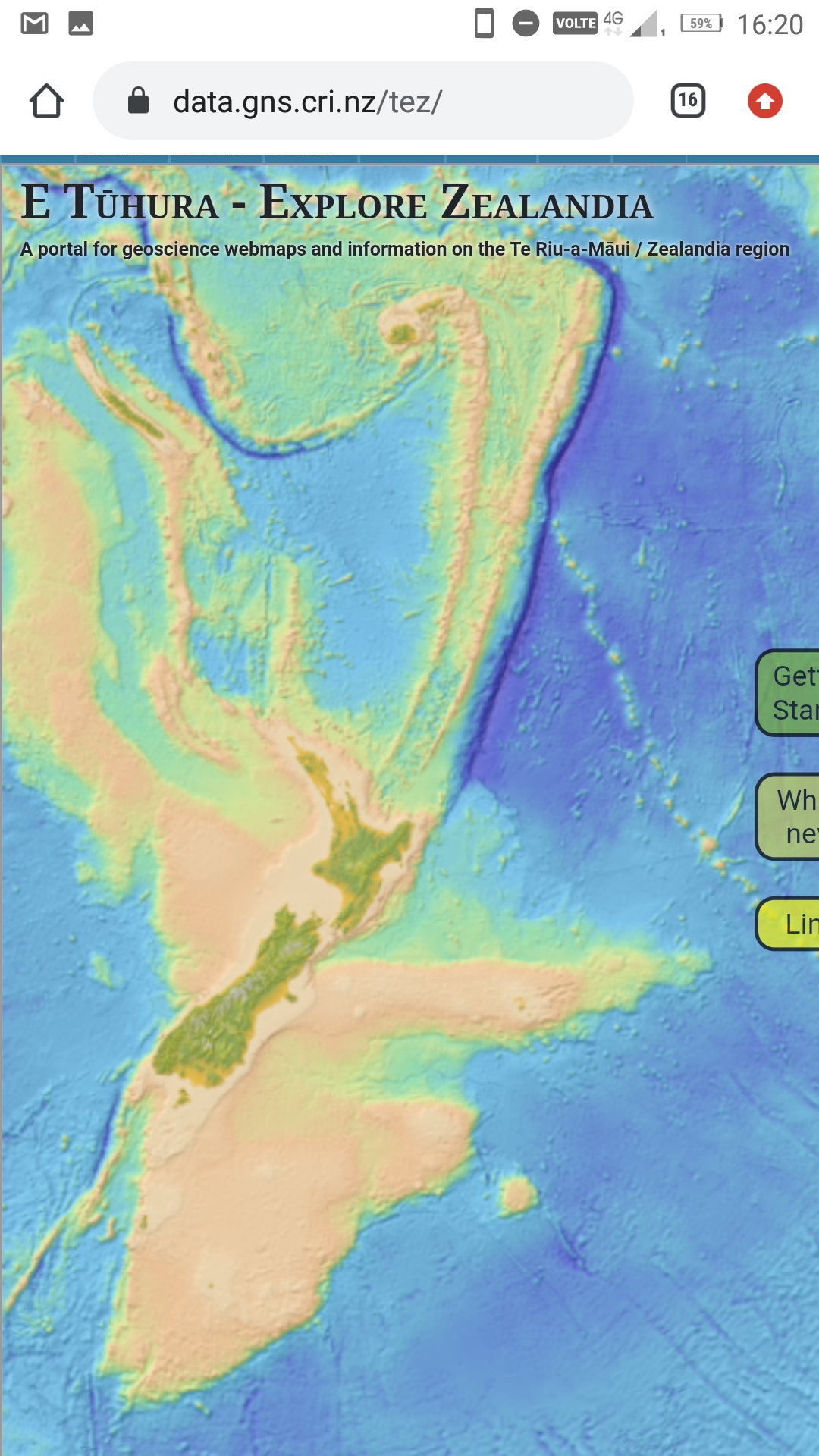
An underwater continent whose existence was discovered 25 years ago named as Zealandia by a geophysist in the year 1995. It ranges about nearly 2 million square miles. It is located at 3500 feet under south Pacific Ocean. The land had been submerged years ago and scientists found it in the year 2017 and it took them nearly 3 years to figure it’s breadth.

Scientists from GNS science in Newzealand officially announced the range and size if the continent accurately. They had also launched the map of our eight continent. “We’ve made these maps to provide an accurate, complete, and up-to-date picture of the geology of the New Zealand and southwest Pacific area — better than we have had before,” Nick Mortimer, who led the work, said.

Map of earth’s Eight continent

We can’t survive there because only 6% of continent lies above the sea level and rest submerged under the sea. It is predicted that this continent is 85 million years old. The person coined the term for eight continent said that “The reason I came up with this term is out of convenience,” Luyendyk said. “They’re pieces of the same thing when you look at Gondwana. So I thought, ‘Why do you keep naming this collection of pieces as different things?'”

How are continents formed?

Pangea splited into two halves namely Laurasia and Gondwana which eventually breakers into Europe,Asia, North America and Africa, Antarctica, South America and Australia respectively. These continents rearranged themselves and formed a structure that we see in our maps. In the mean time this division caused some of the land to mere itself underwater 30 million years ago. The rearrangement of the continents made one of the continent to merge in water. Untill 2017 Zealandia was considered to be a microcontinent because its range was unclear. After discovering it’s size now it has been able to fit into the features and descriptions of a continent.

If we could pull the plug on the world’s oceans, it would be quite clear that Zealandia stands out,” he told science news in 2017 adding, “If it wasn’t for the ocean level, long ago we’d have recognized Zealandia for what it was a continent.”

We may have a chance to live underwater if we scientists could research there. Government can rather spend it’s money on underwater survival rather than spending it on space and research. Research where you live before you leave. Hope someday someone will find a way to live underwater when there is no life above the ground.

How the lockdown has changed our lives

Almost no nation has been spared as the novel coronavirus has swept around the world. But responses to the coronavirus have differed greatly from country to country. Quarantines and lockdowns have become ubiquitous, but even then there is great variance in their severity. In South Africa, tens of thousands of troops have been brought in to enforce one of the world’s strictest lockdowns, while countries like South Korea and Taiwan have managed to contain their outbreaks without closing everything down.

Drastic changes to our routines have forced us to alter our social habits and re-evaluate our relationships – the effects of which could continue into our lives after lockdown, according to experts speaking to Euronews.These changes could also have a significant impact on our mental health even as stringent stay-at-home measures continue to lift across Europe.”Massive levels of stress and anxiety are a big factor,” clinical psychologist Dr Eddie Murphy told Euronews. “It will impact different populations in different ways, but individual stresses have been ramping up.”

The Ireland-based psychologist noted that each nation would be looking at its own protections for mental health amid the pandemic, but stressed that psychological first aid would be necessary.He said: “This would be a one-off immediate approach, and would be around for the general public to use if they are distressed.”According to Dr Murphy, the interventions being crafted are built around three specific stages: the first being broad-based for stress and anxiety, a second for generalised anxiety and “disrupted grief”, and a peak level for those who could be experiencing post-traumatic stress disorder (PTSD).He said the interventions would be in place for everyone, but would be on a particular alert for children, those with disabilities, and the vulnerable.

It’s ‘time to re-prioritise’ what matters in relationships

The effect of lockdowns across Europe aren’t always negative. For many, they will have also proven to be a good opportunity to re-evaluate personal relationships.For cohabiting couples, social psychologist and relationship scientist Veronica Lamarche said partners could use the lockdown to work to “re-prioritise what they want to be getting out of these relationships.””Think of lockdown as a clean slate. Things that weren’t working well before, we can focus on and re-invest.”She then noted that some couples would be feeling a strain due to unusual circumstances “bringing to light issues” when spending a lot of time together.”Some countries will say there has been a sudden increase in divorce rate, which is partly natural because you’re forced to evaluate and re-prioritise what matters,” she said.But for others, she added: “Some are really valuing and appreciating the time they’re able to spend with their partners.”Before lockdown, external [factors] may have been taking away from the relationship.

The ‘value’ of face-to-face interaction

More widely than this, an extended lack of physical face-to-face communication could prompt people to realise just “how valuable” social interactions can be, according to behavioural psychologist Benjamin Voyer.He told Euronews: “Humans are very social by nature. The things we find to replace these [interactions] do have merit, but people are discovering how tiring virtual communication can be.

“With face-to-face communication, we can sense and communicate in a much more subtle way.”But with online interaction, we need to compensate for the lack of cues that we usually use to signal we are engaged, happy, etc.”This makes it more tiring.”

A cultural shift?

Voyer said lockdowns could also lead to a shift in values of Europe’s traditional cultural mindset – from one where “everyone is expected to take care of themselves” to another where “the default is to take care of others because you expect others to take care of you.””People are likely to develop these as they are forced to take the perspective of others and understand their difficulties – see parents realising that teaching children is much more challenging than it may look like.”

Examples of this level of empathy can be widely seen amid the pandemic, such as the #StayHomeSaveLives campaign in the UK that encourages people to consider protecting the lives of others.The personal merits of face-to-face interactions are also clear among those kept apart by lockdowns in public posts detailing things people have missed the most.

Will habits and detrimental psychological effects fade?

Any long term changes in social habits are more likely to be personal rather than societal, Voyer said, adding that this could vary depending on our experiences of the lockdowns.He added: “Some may have discovered working from home and may want to stick to it after the lockdown.”For others, it is about establishing a routine of video calls with friends – or getting everything delivered.”

“Virtual partying” is a term that has gained currency over the past two months as a world in quarantine looked around for new ways to socialise, along with other words or phrases that have become commonplace, like “social distancing” and “Zoom bombing”. And, as we take uncertain steps into a not-so-brave new world after lockdown, another term will perhaps get even more commonplace. The “new normal”.Though initially used to describe business conditions in the western world following the financial meltdown of 2007-2008, the term has resurged now globally following the Covid-19 pandemic. The “new normal” is already here, and the changes go way beyond the mask you have to wear.

 THERE’S NO PLACE LIKE HOME

The lockdown may have made us retreat into a bubble, but it is a digitised bubble—from virtual parties to conference calls, webinars to online learning courses. The trend is here to stay, at least to some extent. While the benefits for employees include saving time from commuting and better work-life balance, employers have actually experienced more productivity, accountability and transparency from employees. There are practical reasons, too. Social distancing norms mean many offices will not be able to function with full strength, at least until a vaccine for Covid-19 is found. WFH, coupled with hot-desking (allocating desks to workers when they are required or on rotation) and technology means you need lesser office spaces.

TOUCH ME NOT

In the post-Covid-19 world, “no contact” might become the standard. Sanitary- and gadget-makers are working hard to bring out products that work on sensors, and tech companies like Apple and Samsung are trying to bring out phones that could work as virtual debit cards. Recently, the Reserve Bank of India wrote to payment networks like Visa, Mastercard and the National Payments Corporation of India to allow tap-and-go functionality on card payments at all shops, soon, instead of swiping. “A contactless revolution in communication, collaboration and commerce is imminent.”

KEEP DISTANCE

The new rules of social engagement will include a big dose of distancing. IITs have already earmarked a new matrix for classrooms as well as staggered schedules. The directorate general of civil aviation has proposed a seating arrangement where a certain number of seats in flights are left vacant. From Restaurants Association of India talking about fewer tables and contactless menu to multiplexes talking about new seating arrangements, everyone is preparing themselves for a new reality.

HEAL THE WORLD

The lockdown period spawned many memes, some funny and some poignant, on human impact on the world. “Ideally, I would like this black swan event to help us lead lives that are less materialistic and leave less carbon footprints.” “Of course, the way our society has been leading this consumption-fuelled life has just been unsustainable. This is nature’s revenge; we have to change. In many ways, I am actually so respectful of this new normal.”But will it last? “While a few people may make lifestyle changes, I believe [soon enough], we will largely be sucked back into the same enticing lifestyle as before,” sighs Kumar. It will be curious to see whether the “new normal” is just a bump along the way or a path-changing reality.

Once the storm is over, you won’t remember how you made it through, how you managed to survive. You won’t even be sure whether the storm is really over. But one thing is certain. When you come out of the storm, you won’t be the same person who walked in.”

Haruki Murakami, Kafka on the Shore

Class 12 boy handles bodies of coronavirus patients

Introduction

The spread of Corona Virus has resulted in World-wide lockdown and India too has implemented lock down in all its states for last few months. This led to closing of the major industries like automobiles, infrastructure, tourism, manufacturing etc. which are biggest stakeholders of organized and unorganized sectors in India. Most of the people working in these sectors are daily age workers who do not have fixed income or benefits but solely relies on everyday wages. The closure of all these sectors has led to one of the biggest crisis which we will face in future. Here’s an article on class 12 boy handling bodies of coronavirus patients to earn living.

About

In a hunger for job to ease living, 12 class boy haunted a dangerous job of handling bodies of corona patients. A class 12 student, wants  to study medicine, to supply for his siblings’ school fees and his mother’s treatment he is doing this job. Chand Mohammad’s mother suffers from a thyroid disorder and needs her medicines urgently, but the family doesn’t have enough means for the treatment. They are barely making their ends for living . As his elder brother lost his job at a merchandise store in Krishna Nagar market during the lockdown. Chand Mohammad is from Seelampur in Northeast Delhi. He and his family has been surviving on ration provided by neighbors. And whatever his brother could earn doing odd jobs. 

Where Chand joined for work?

 A week ago, Chand joined a corporation as a sweeper at the Lok Nayak Jai Prakash Narayan Hospital in New Delhi. The job requires him to handle bodies of corona patients. The shift is from 12 noon to eight pm. He took this work after he got exhausted from all options to seek out work. Though this is a dangerous job, as he is at a better risk of getting engaged with the infection, but he want the work and earn. His family, including three sisters, two brothers and fogeys, is struggling for living. Right now, they had food and medicines for my mother. On many days, they cooked food only once. There’s an opportunity that they may fight the virus, but they cannot run away from hunger. Chand’s three sisters are still in school. He, himself is in 12 standard and have to pay the varsity fee. They need money to study. He hopes that his first salary will set things right to a particular extent. He read namaz before he exits his home for work. He even have faith within the almighty. God will look after  him and will surely show him the way. 

How he is handling bodies of coronavirus patients?

 Chand, who wants to study medicine, says But what bothers the youngster is that employees like him who are into high-risk jobs don’t get any insurance from the private companies employing them. “The most dangerous job within the world immediately handling bodies of corona patients  pays around Rs 17,000 per month. Every day, Chand handles around two to three bodies along side another sweeper. They are required to place the bodies inside the ambulance, take it to the crematorium and put it down on a stretcher once they reach the crematorium.They also have to remove all wearing the private protection equipment, which is extremely heavy. It limits movement and suffocates an individual. During this heat, one can finish up bathing in their own sweat. 

An incident he shared with media

 On Tuesday evening, Chand handled a body on his own. There was no helper with him, So, it took him a while. He gathered his breath at the top when he heard, a doctor saying the body had been lying within the mortuary for a month which nobody claimed it. Once he tried taking the body down from the ambulance, the duvet came off and a few liquid spilled on his thighs. As he is desperate to get some money, Chand has approached people giving money on low interest rates and he took his Aadhaar card and voter card, hoping to urge some money on low interest rates. His family is worried about his safety. Perhaps they also know that this is the only way for them to survive at the present. His parents inquire about his work daily. They pray for his safety. His mother cries tons daily, but he make her understand. Chand takes a shower as soon as he reaches home and keeps a distance from his family members. He is taking all precautions.For now, he would like some help in order that the family remains afloat. But we may never know what is in our destiny! 

Conclusion

 As this pandemic has made many people to suffer a lot. They are unable to have one time meal. Many don’t have money, they have migrated.We should help poor and needy as much as we can. This boy Chand Mohammad has to opt this job in which he is handling bodies of coronavirus patients. Just because he don’t have enough money he is doing this dangerous job.

The cat families…Part 1

Felis catus also called house cat or domestic cat, domesticated member of the family Felidae, order Carnivora, and the smallest member of that family. Like all felids, domestic cats are characterized by supple low-slung bodies, finely molded heads, long tails that aid in balance, and specialized teeth and claws that adapt them admirably to a life of active hunting. Cats possess other features of their wild relatives in being basically carnivorous, remarkably agile and powerful, and finely coordinated in movement.

there are more than, 45 types of cat family members are present around the globe, which include the king lion, tiger, leopard, and many more. Here is the information regarding it.

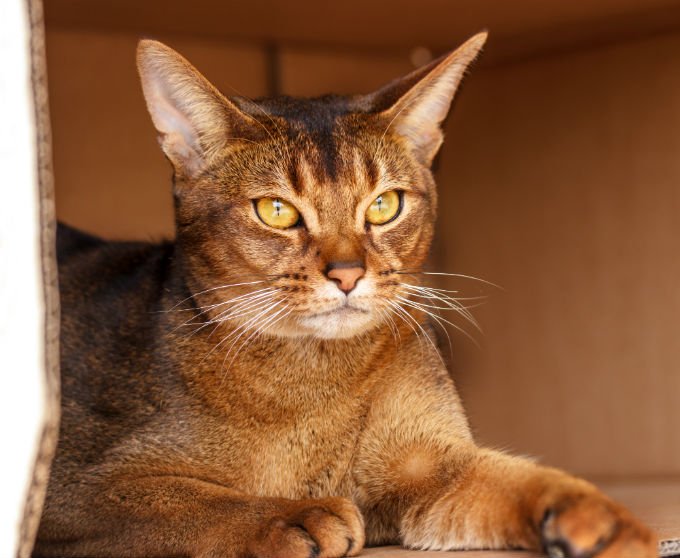
1.Abyssinian:
undefined
Abyssinian, breed of domestic cat, probably of Egyptian origin, has been considered to approximate the sacred cat of ancient Egypt more closely than any other living cat. The Abyssinian is a lithe cat with relatively slender legs and a long, tapering tail. The short, finely textured coat is ruddy reddish-brown, with individual hairs of the back, sides, chest, and tail distinctively ticked, or tipped, with bands of black or brown. The nose is red, the eyes are hazel, green, or gold, and the tail tip and backs of the hindlegs are black. The Abyssinian is noted for being affectionate and quiet, though generally shy with strangers.

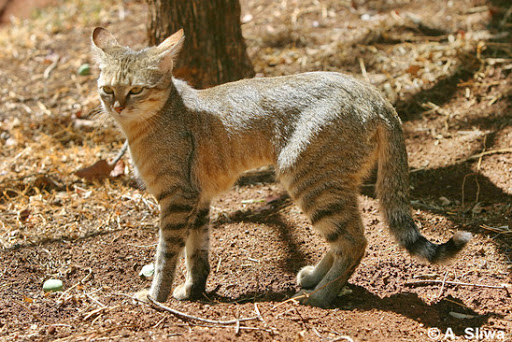
2.African wildcat:
undefined
The African wildcat, also called Egyptian wildcat, small, tabby like a cat (family Felidae) found in open and forested regions of Africa and Asia. Likely the first cat to be domesticated, the African wildcat is somewhat larger and stockier than the modern house cat, with which it interbreeds readily. Its coat, paler in the female, is light or orange-brown with narrow dark stripes. The length of the animal is about 70 cm (28 inches), excluding the 40-cm tail; shoulder height averages 23 cm (9 inches), and the cat weighs about 3.5 kg (7.7 pounds). The African wildcat is a solitary nocturnal hunter that preys mainly on birds and small mammals. Mating generally occurs early in the year, and a litter of two to five kittens is born about 56 days later.

3.black panther:
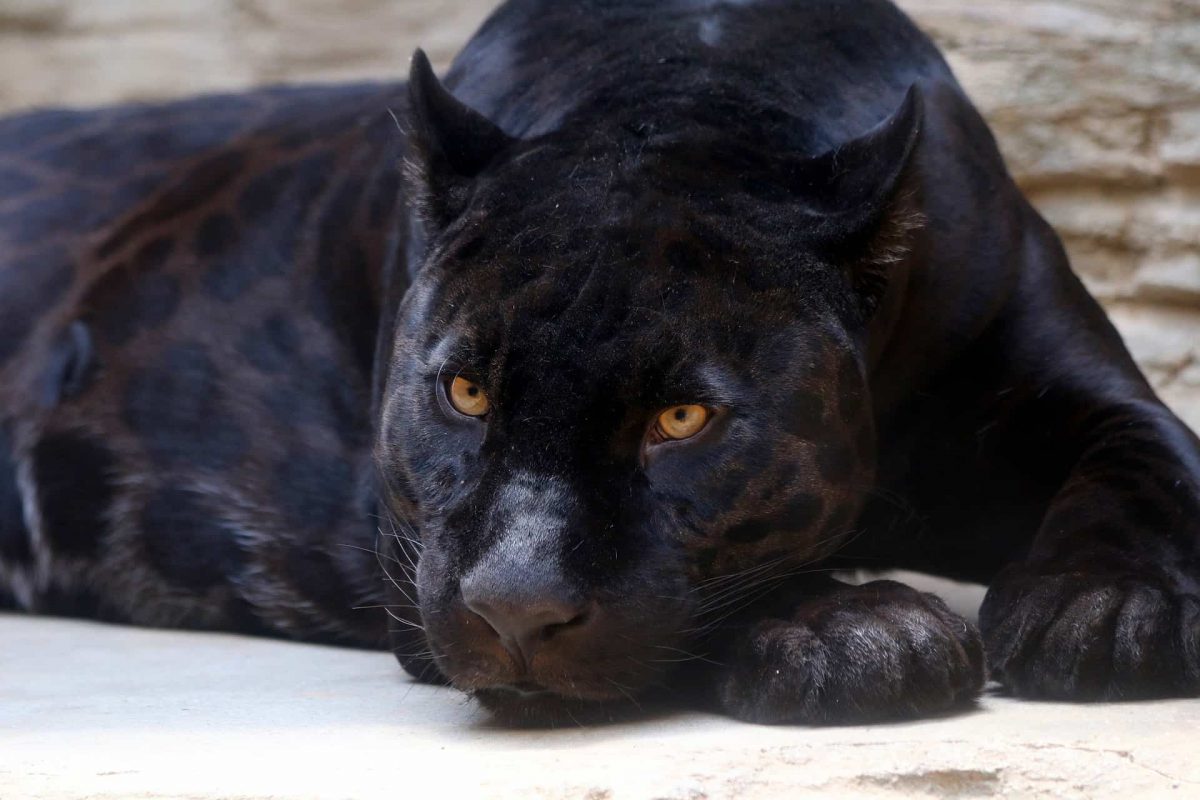
undefined
Black panther, colloquial term used to refer to large felines classified in the genus Panthera that are characterized by a coat of black fur or large concentrations of black spots set against a dark background. The term black panther is most frequently applied to black-coated leopard of Africa and Asia and jaguars of Central and South America; black-furred variants of these species are also called black leopards and black jaguars, respectively. Besides, the term is sometimes used to describe dark-colored bobcats, lynx, jaguarundis, tigers, and pumas, even though reports of black-colored representatives of some species, such as the puma, have not been confirmed.

4.bobcat:
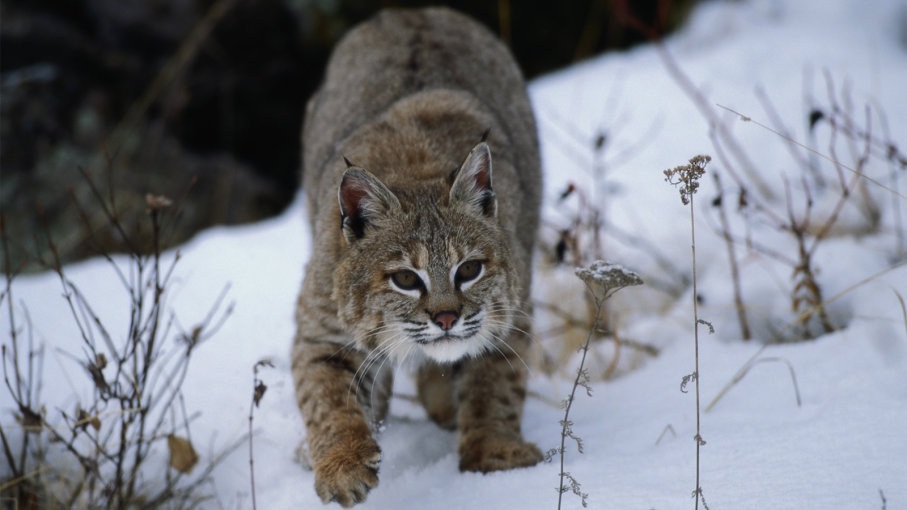
undefined
Bobcat, also called bay lynx or wildcat, bobtailed North American cat, found from southern Canada to southern Mexico. The bobcat is a close relative of the somewhat larger Canada lynx.

5.calico cat:
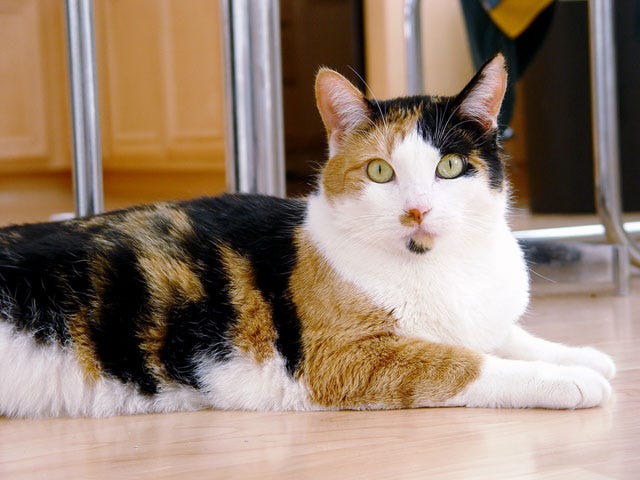
undefined
Burmese, breed of domestic cat, presumably of Asian origin. The Burmese are a compactly built cat with a small, rounded head and wide-set, round, yellow, or golden eyes. The short, finely textured, and glossy coat darkens from a milk-chocolate color in the kitten to a rich sable brown in the adult. The underside is paler than the coat; the ears, face, legs, and tail may be darker. The tail is tapered and may be either straight or kinked near the tip.

6.caracal:
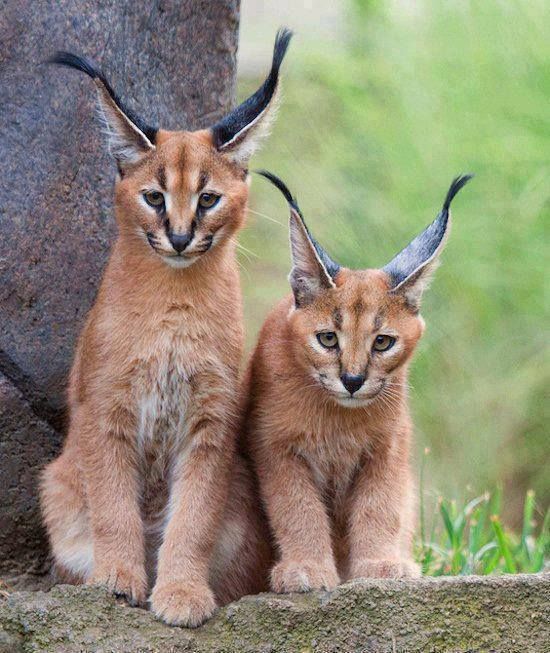
undefined
Calico cat, In North America, a blotched or spotted domestic cat, usually predominantly white with red and black patches (a pattern also called tortoiseshell-and-white). Because the genetic determination of some coat colors in cats is linked to the sex chromosome, calicoes are almost always female.

7.cat:
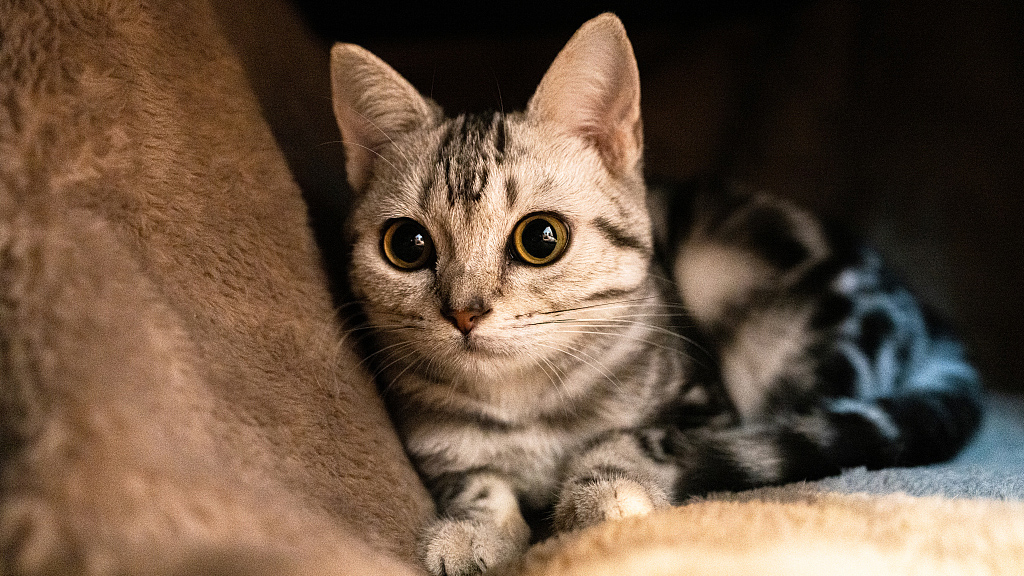
undefined
Cat also called house cat or domestic cat, domesticated member of the family Felidae, order Carnivora, and the smallest member of that family. Like all felids, domestic cats are characterized by supple low-slung bodies, finely molded heads, long tails that aid in balance, and specialized teeth and claws that adapt them admirably to a life of active hunting. Cats possess other features of their wild relatives in being basically carnivorous, remarkably agile and powerful, and finely coordinated in movement.

8.cheetah:
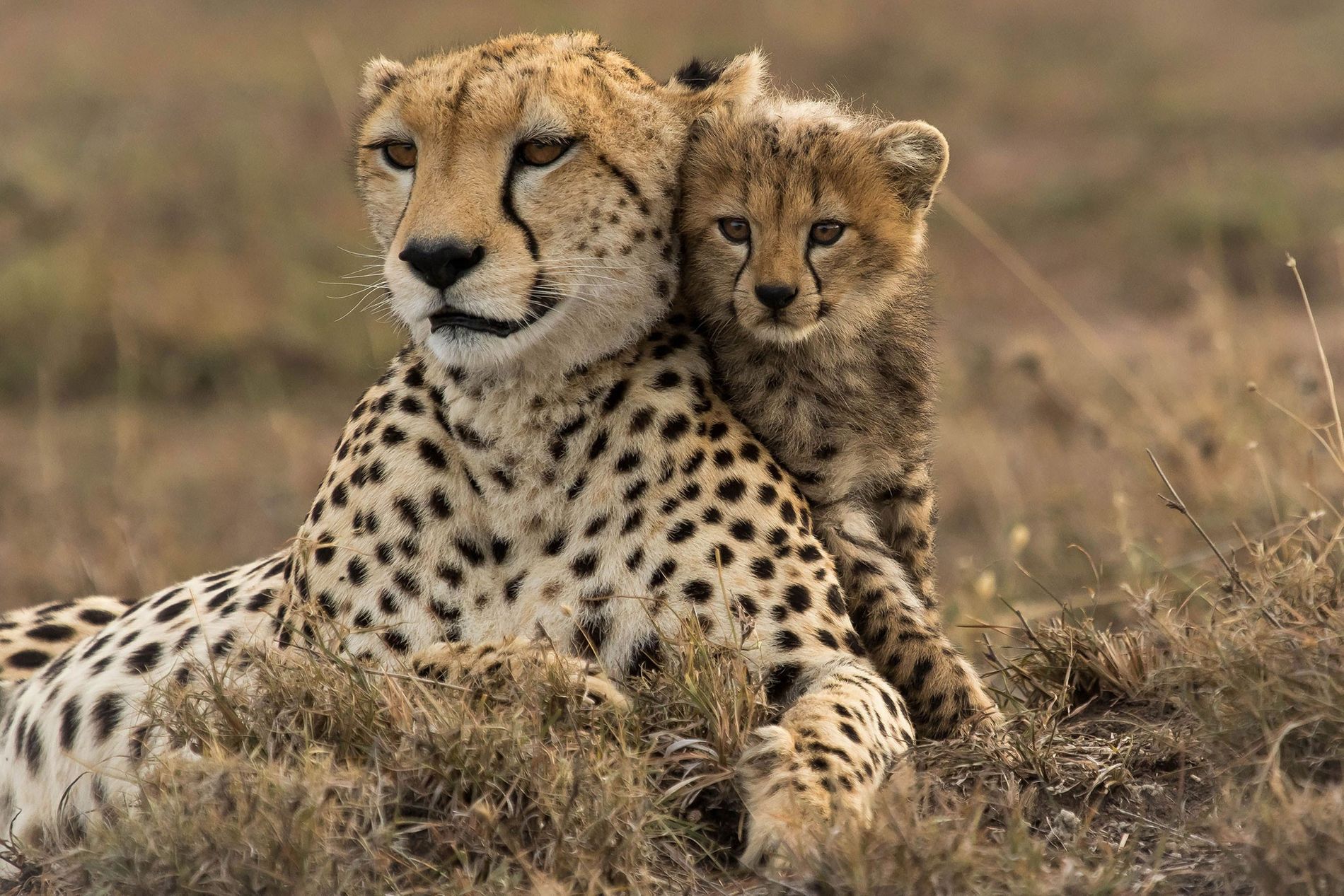
undefined
Cheetah, one of the world’s most-recognizable cats, known especially for its speed. Cheetahs’ sprints have been measured at a maximum of 114 km (71 miles) per hour, and they routinely reach velocities of 80–100 km per hour while pursuing prey. Nearly all the cheetahs remaining in the wildlife in Africa.

9.clouded leopard:
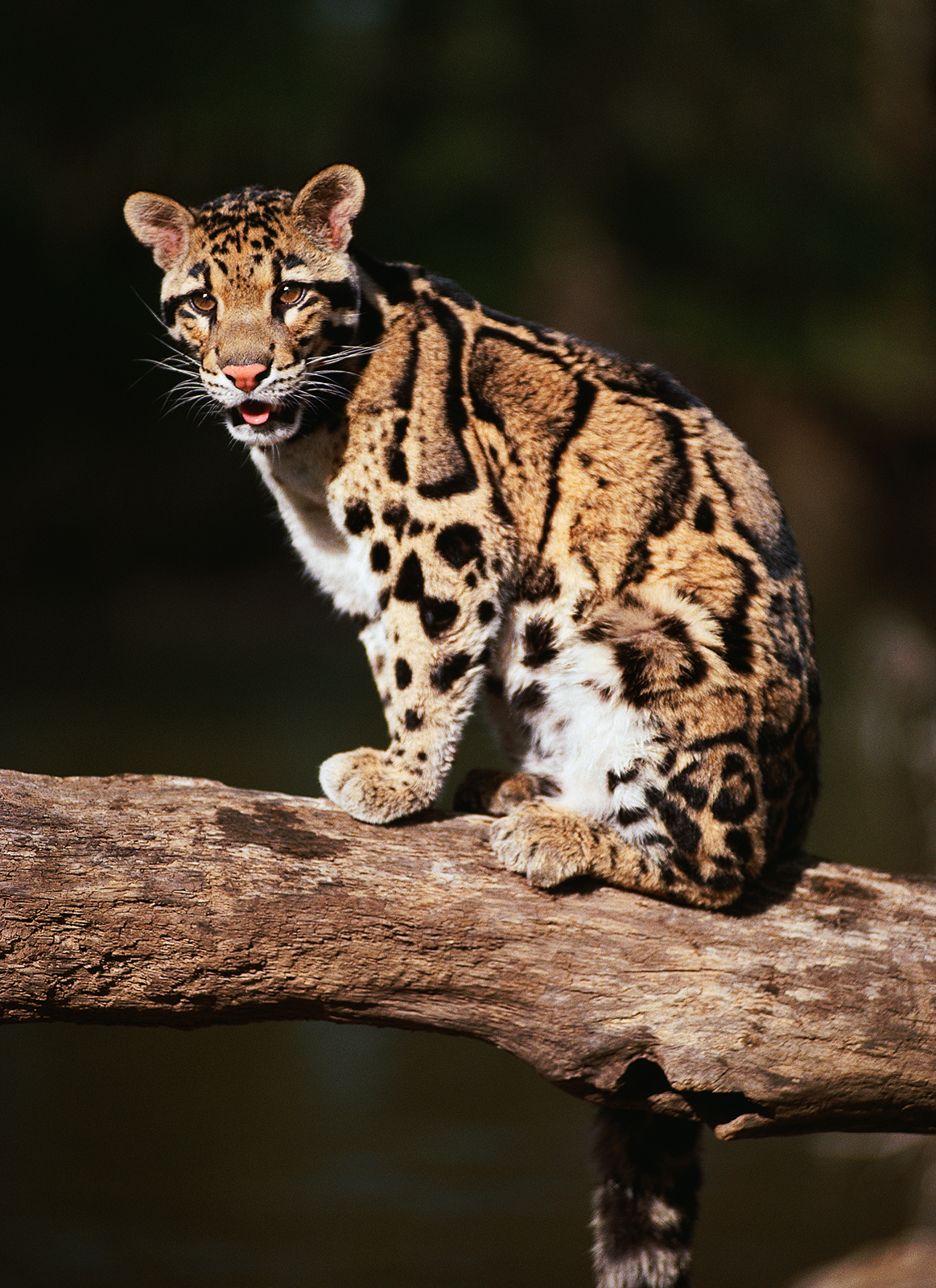
undefined
Clouded leopard, also called clouded tiger, strikingly marked cat, very similar in coloring and coat pattern to the smaller, unrelated marbled cat . There are two species of clouded leopard, which are genetically distinct from one another. Neofelis nebulosa, found on the mainland of southeastern Asia, particularly in forests and other wooded regions, and N. diardi, found on the islands of Sumatra and Borneo, are thought to have diverged about 1.4 million years ago. The population of clouded leopards declined sharply in the latter half of the 20th century as a result of hunting and deforestation. They are reported to be nocturnal and to live in trees; they prey on birds and small mammals, such as pigs and monkeys.

10.domestic shorthair:
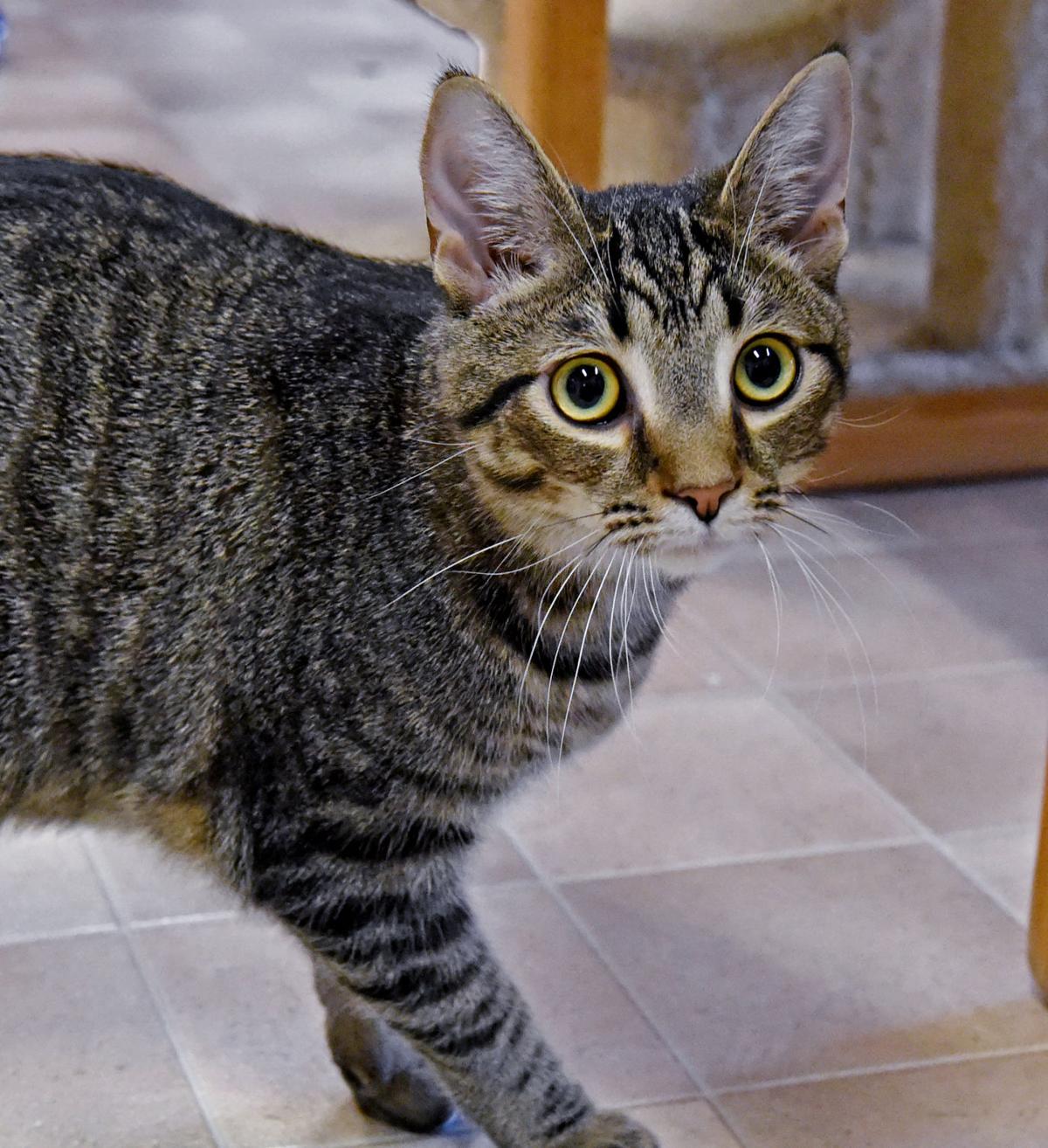
undefined
Domestic shorthair, also called British Shorthair, breed of a domestic cat often referred to as a common, or alley, cat; a good show animal, however, is purebred and pedigreed and has been carefully bred to conform to a set standard of appearance.

11.feline:
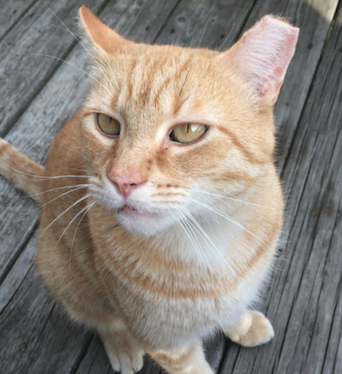
undefined
Feline any of 37 cat species that among others include the cheetah, puma, jaguar, leopard, lion, lynx, tiger, and a domestic cat. Cats are native to almost every region on Earth, except Australia and Antarctica. They are carnivorous mammals that live in a wide variety of habitats, but they are typically woodland animals.

12.fishing cat:
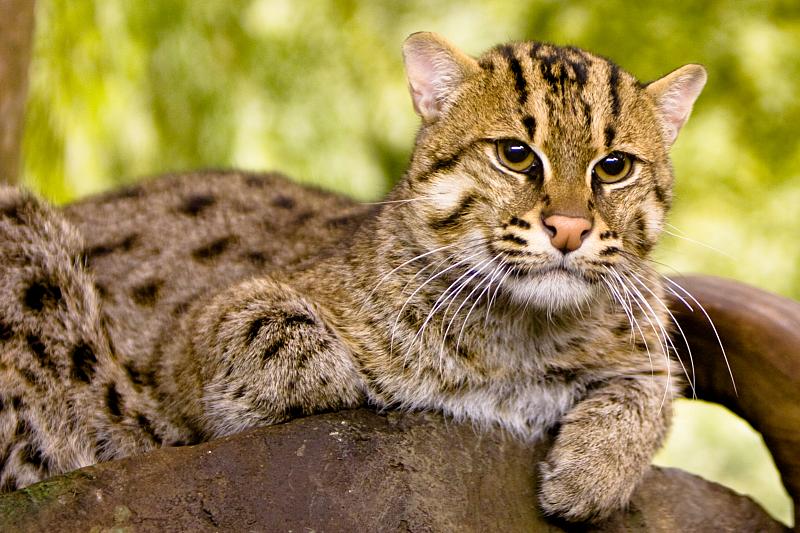
undefined
Fishing cat a tropical cat of the family Felidae, found in India and Southeast Asia. The coat of the fishing cat is pale gray to deep brownish-gray and marked with dark spots and streaks. The adult animal stands about 40 cm (16 inches) at the shoulder, weighs 8–11 kg (18–24 pounds), and is from 60 to 85 cm long, excluding the black-ringed tail, which accounts for an additional 25–30 cm. The fishing cat lives near water and in jungles, reed beds, and marshes. It is reported to fish by scooping its prey out of the water.

13.flat-headed cat:
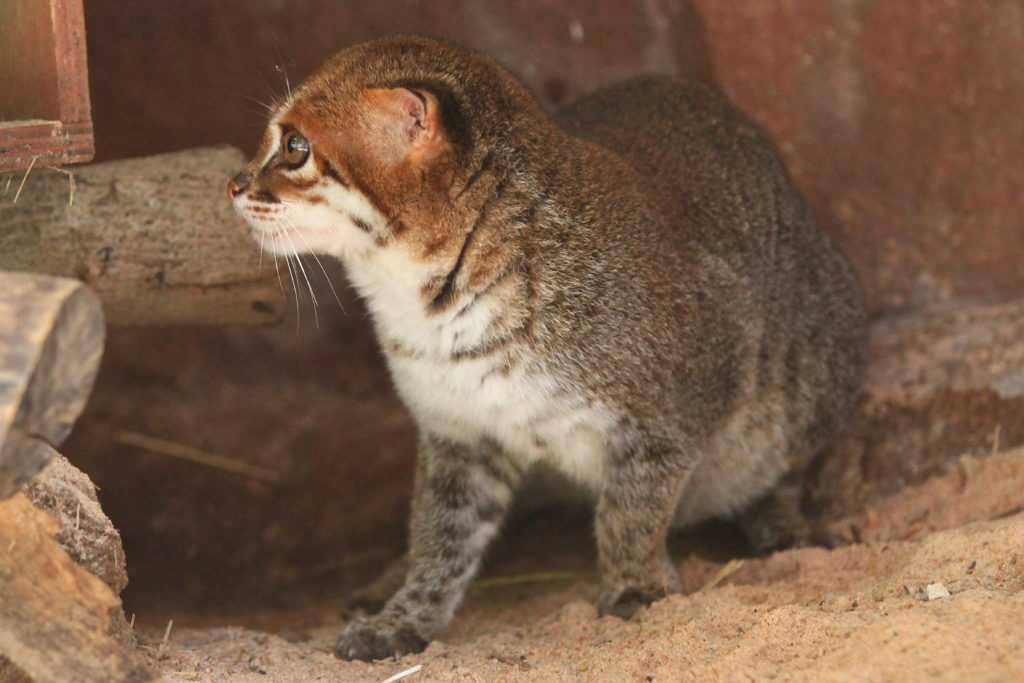
undefined
Flat-headed cat extremely rare Asian cat found in the Malay Peninsula, Sumatra, and Borneo. One of the smallest members of the cat family, Felidae, the adult is from 40 to 60 centimeters (16 to 24 inches) long without the 15–20-cm tail and weighs from 1.5 to 2.5 kilograms (3.3 to 5.5 pounds). Its coat is reddish above and white with red spots below; there are white markings around the eyes. It is the only felid known to include any substantial amount of vegetation in its diet, with a preference for fruit and, when available, sweet potatoes and similar foods. Little else is known about this cat, which is reported to be nocturnal and to hunt fish and frogs along rivers.

14.Florida panther:
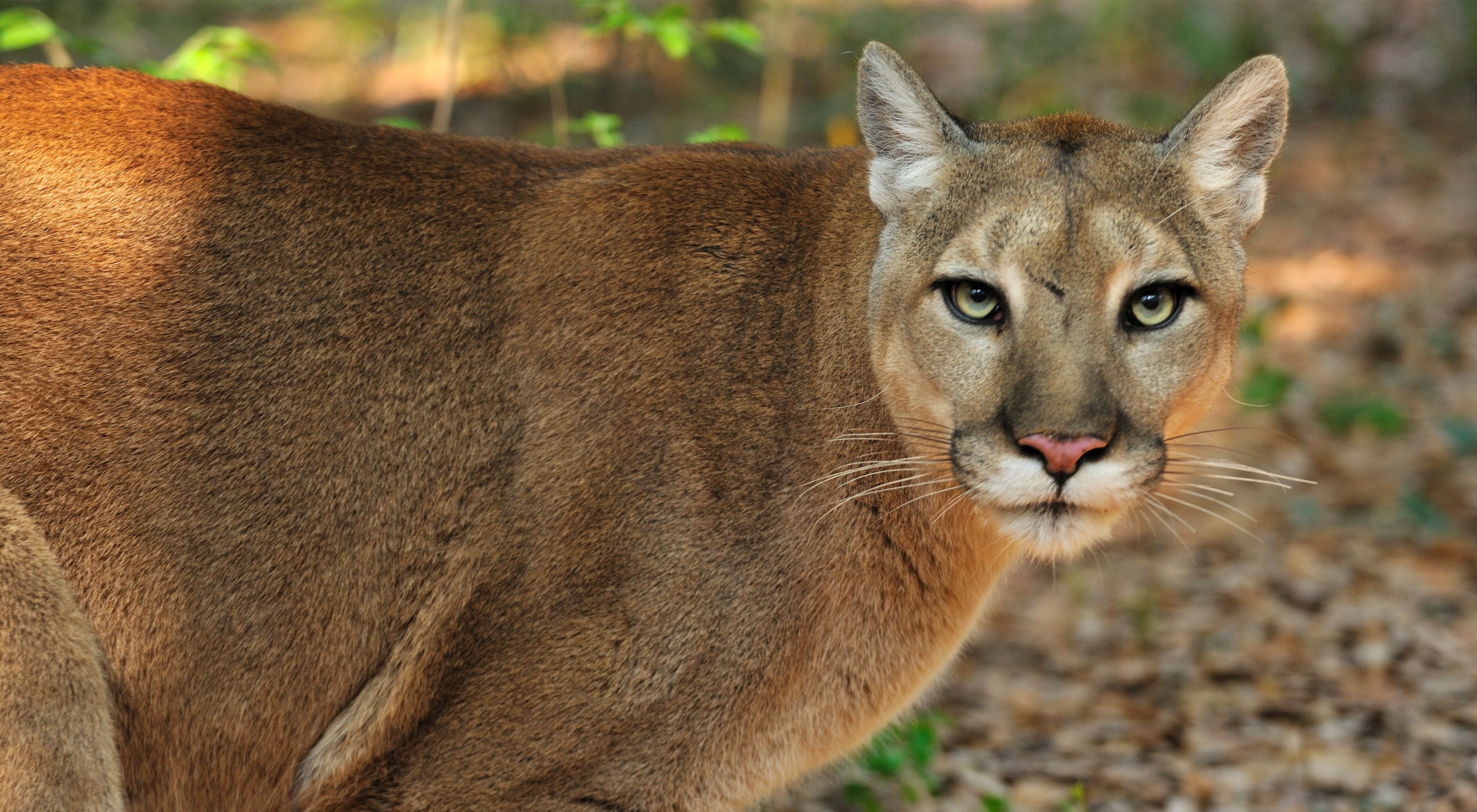
undefined
Florida panther, member of a population of large New World cats belonging to the species Puma concolor, family Felidae, confined to a small, isolated, and inbred group in southern Florida. This population is the only breeding group of pumas in the eastern United States. The Florida panther was traditionally classified as a distinct subspecies of puma and was reclassified as a population of the P. concolor cougar subspecies in 2017 after genetic analysis. The Florida panther was one of the first animals listed under the Endangered Species Act when the law first passed in 1973, and it is recognized as the state animal of Florida.

15.Geoffroy’s cat:
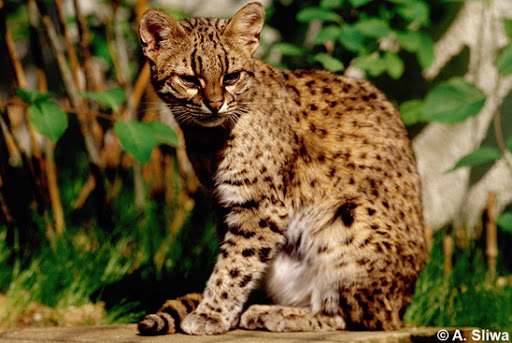
undefined
Geoffroy’s cat South American cat of the family Felidae, found in mountainous regions, especially in Argentina. It is gray or brown with black markings and grows to a length of about 90 cm (36 inches), including a tail of about 40 cm (16 inches). Geoffroy’s cat climbs well and preys on small mammals and birds. It breeds once a year; litters consist of two or three kittens.

17.Himalayan:
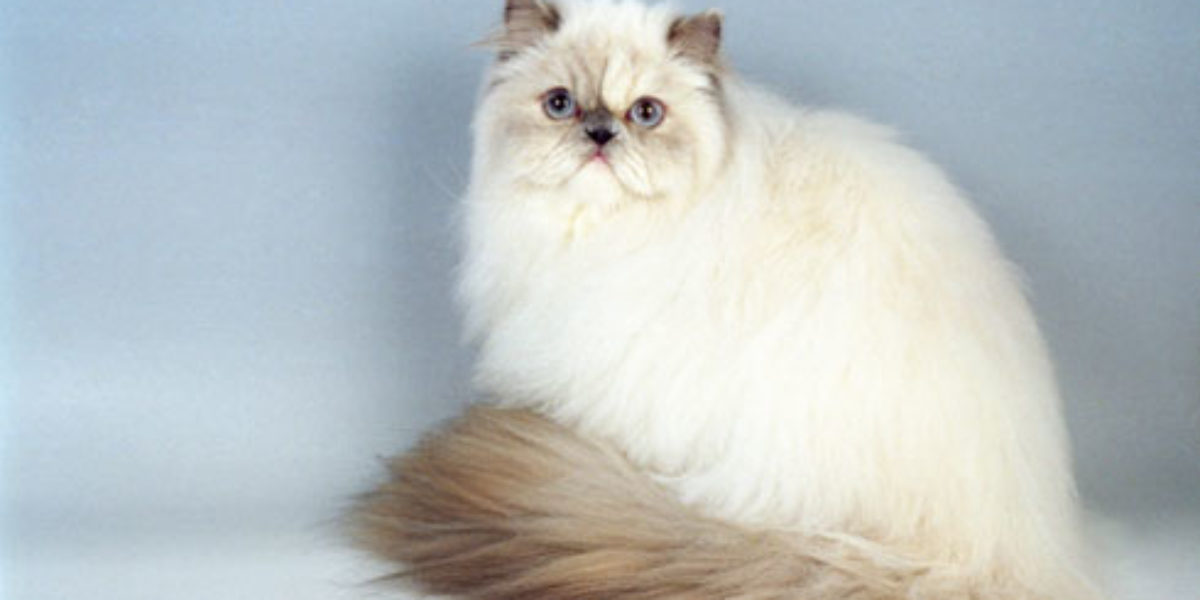
undefined
Himalayan, also called colorpoint, or colorpoint, breed of domestic cat with the coloring of the Siamese and the build and coat of the longhair, or Persian. The Himalayan is produced by matings between Siamese and longhairs followed by selected breeding of the offspring to bring out the proper coloring, coat, and build. A good Himalayan is cobby and short-legged with long, soft fur, a broad, rounded head, and round blue eyes. Born cream-colored, it later develops the darker points (ears, face, legs, and tail) of the Siamese. The points, as in the Siamese, maybe deep brown (seal point), lighter brown, blue-gray , pinkish-gray , or reddish-orange .

18.jaguar:
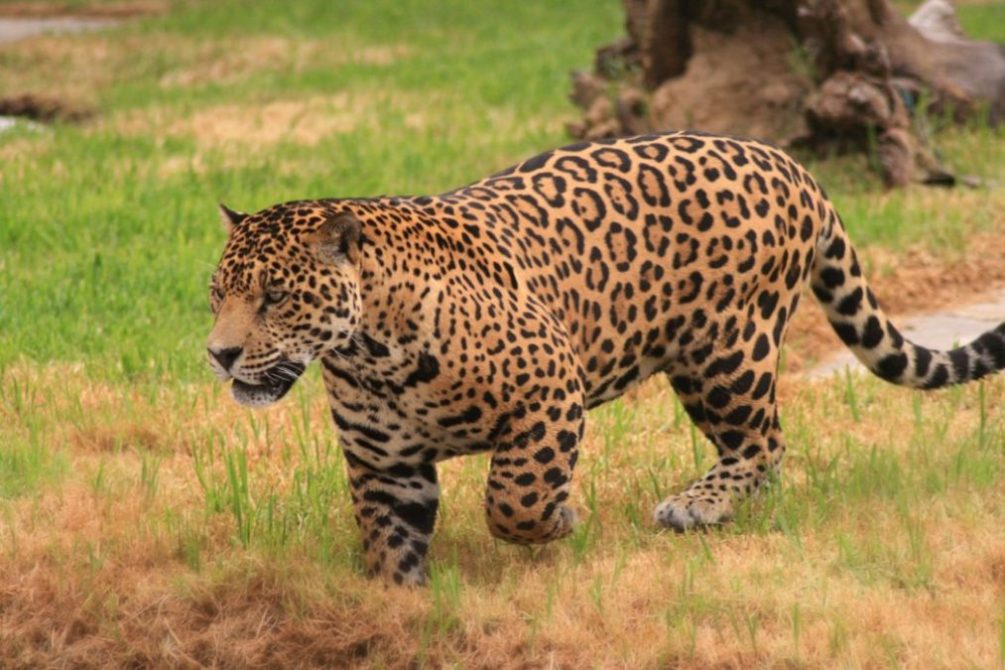
undefined
Jaguar also called el Tigre or Tigre americano, the largest New World member of the cat family, once found from the U.S.-Mexican border southward to Patagonia, Argentina. Its preferred habitats are usually swamps and wooded regions, but jaguars also live in scrublands and deserts. The jaguar is virtually extinct in the northern part of its original range and survives in reduced numbers only in remote areas of Central and South America; the largest known population exists in the Amazon rainforest.

19.jaguarundi:
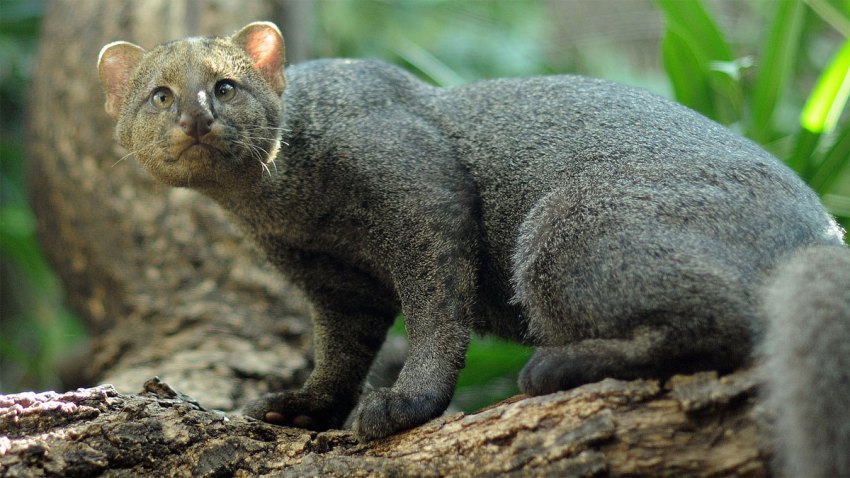
undefined
Jaguarundi, also spelled Jaguarondi small, unspotted New World cat (family Felidae), also known as the otter-cat because of its otterlike appearance and swimming ability. The jaguarundi is native to forested and brushy regions, especially those near water, from South America to the southwestern United States; it is, however, very rare north of Mexico.

20.leopard:
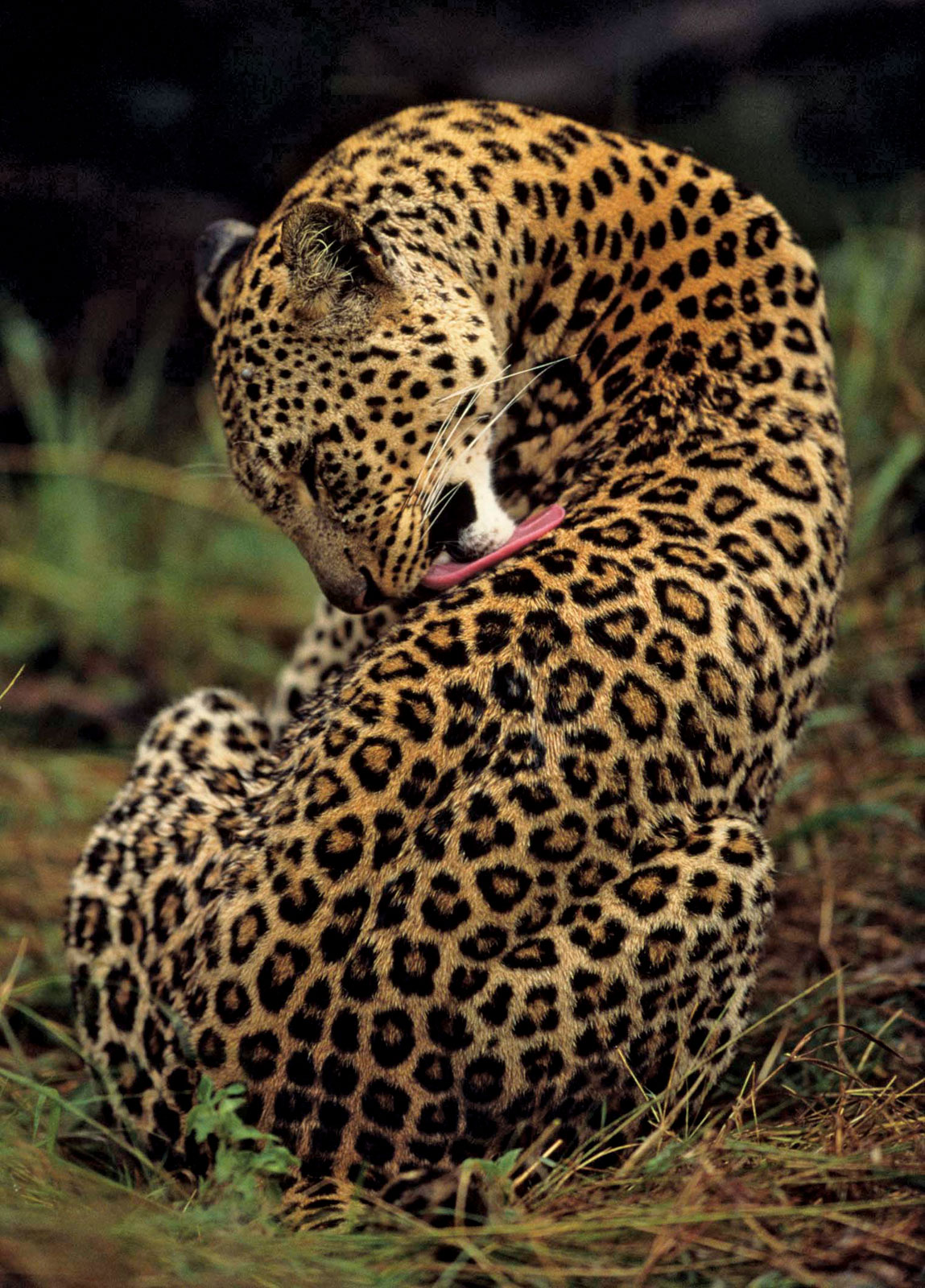
undefined
Leopard also called a panther, large cat closely related to the lion, tiger, and jaguar. The name leopard was originally given to the cat now called cheetah—the so-called hunting leopard—which was once thought to be a cross between the lion and the pard. The term pard was eventually replaced by the name leopard.

21.leopard cat:
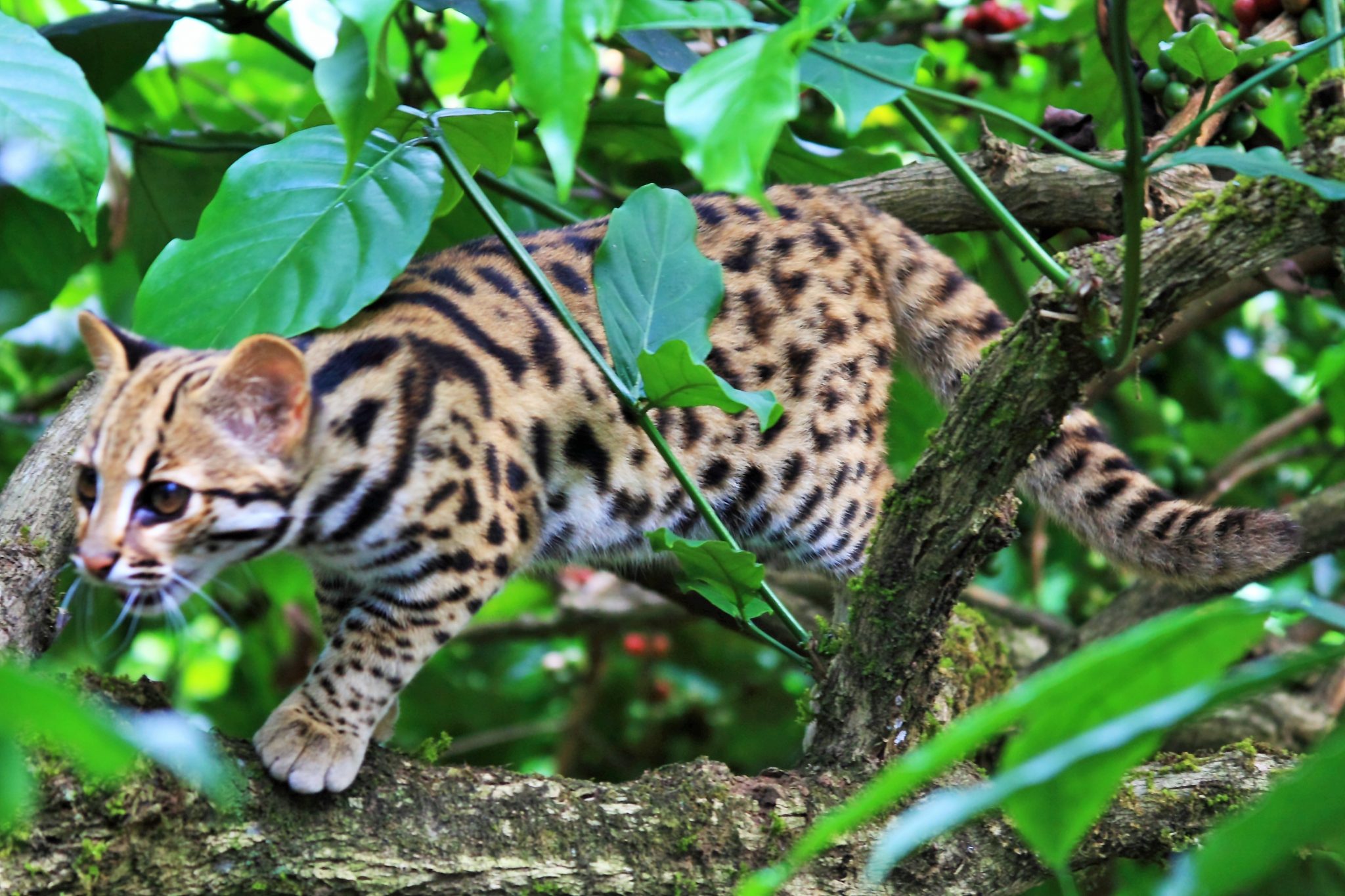
undefined
Leopard cat forest-dwelling cat, of the family Felidae, found across India, Southeast Asia, and nearby islands. The leopard cat is noted for its leopard-like coloring. The species is generally divided into one mainland subspecies, P. bengalensis bengalensis, and several island subspecies—including P. bengalensis borneoensis in Borneo, P. bengalensis Heaney on Palawan, P. bengalensis rabori on the Philippine islands of Cebu, Negros, and Panay, P. bengalensis javenensis on Bali and Java, and P. bengalensis sumatranus on Sumatra and Tebingtinggi.

22.liger:
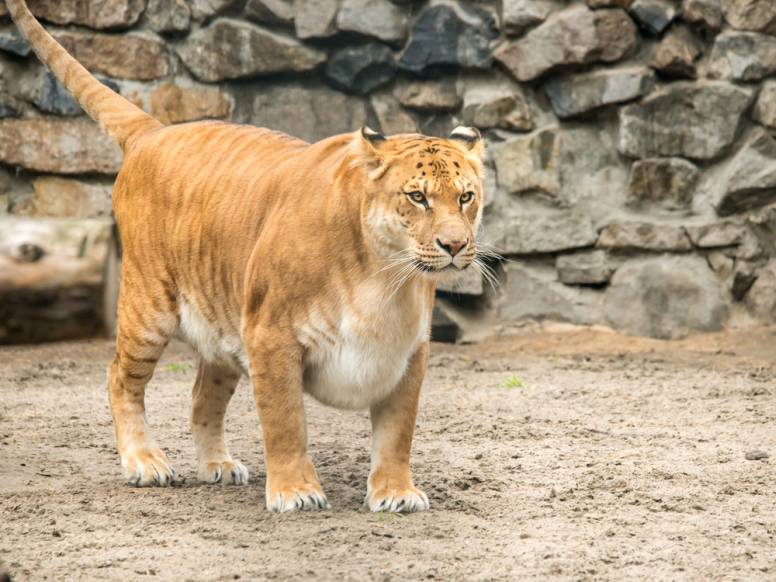
undefined
Liger, offspring of a male lion and a female tiger. The liger is a zoo-bred hybrid, as is the tigon, which is the result of mating a male tiger with a female lion. The liger and the tigon possess features of both parents, in variable proportions, but are generally larger than either. It is thought that most, if not all, male ligers and tigons are sterile. The females, however, on occasion, may be able to produce young. The terms liger and tigon are portmanteaus of the words lion and tiger.

23.lion:
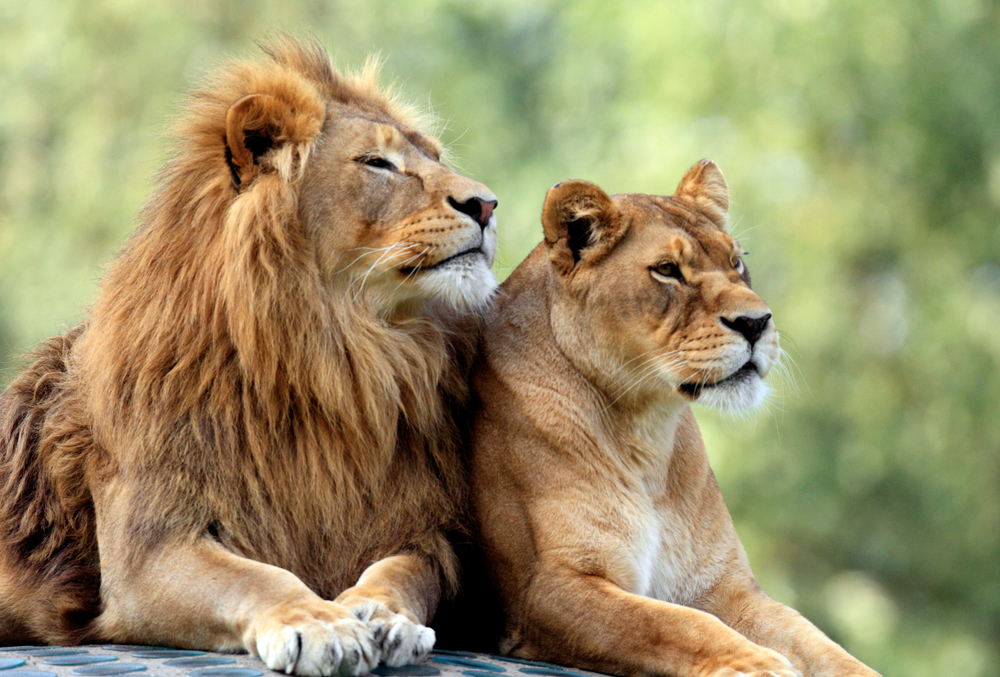
undefined
Lion is large, powerfully built cat that is second in size only to the tiger. The proverbial “king of beasts,” the lion has been one of the best-known wild animals since the earliest times. Lions are most active at night and live in a variety of habitats but prefer grassland, savanna, dense scrub, and open woodland. Historically, they ranged across much of Europe, Asia, and Africa, but now they are found mainly in parts of Africa south of the Sahara. An isolated population of about 650 Asiatic lions constitutes a slightly smaller race that lives under strict protection in India’s Gir National Park and Wildlife Sanctuary.

24.longhair:
undefined
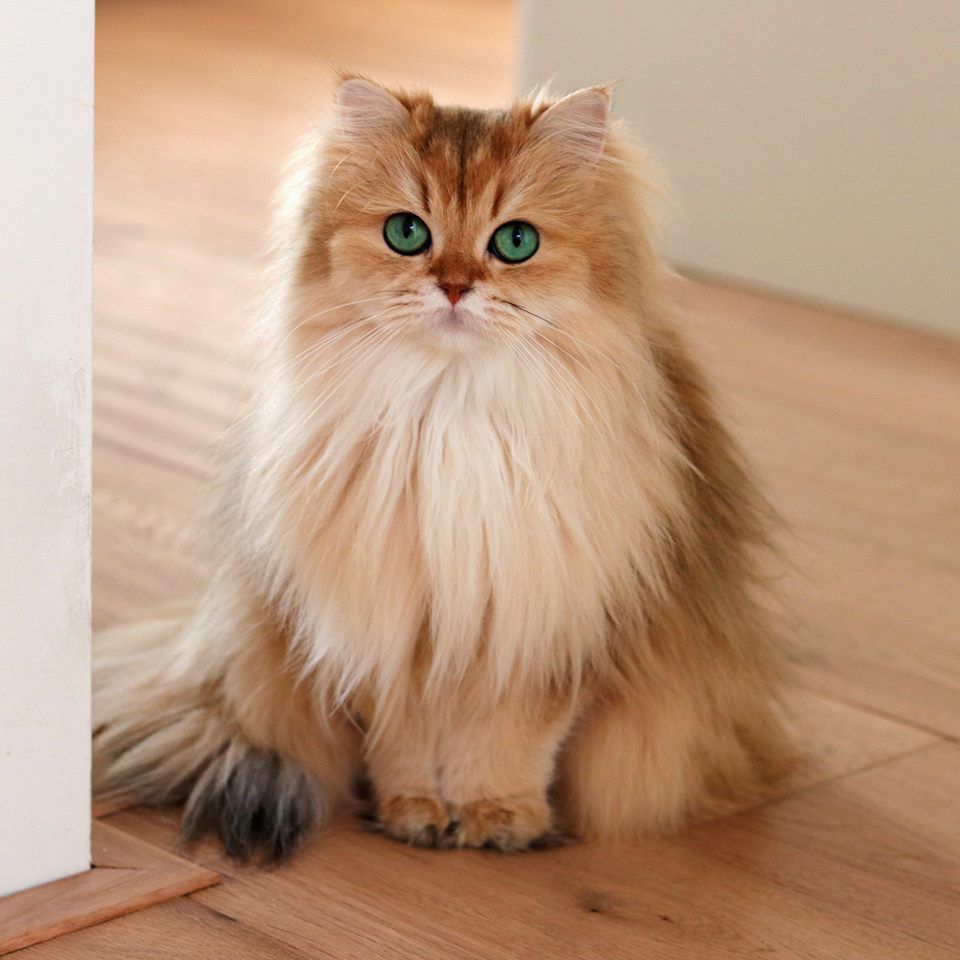
Longhair, also called Persian, breed of domestic cat noted for its long, soft, flowing coat. Long-haired cats were originally known as Persians or Angoras. These names were later discarded in favor of the name longhair, although the cats are still commonly called Persians in the United States. The longhair, a medium-sized or large cat with a cobby , short-legged body, has a broad, round head, a snub nose, and a short, heavily haired tail. The large, round eyes may be blue, orange, golden, green, or copper-colored, depending on the color of the cat. The soft, finely textured coat forms a heavy ruff about the neck.

25.lynx:
undefined
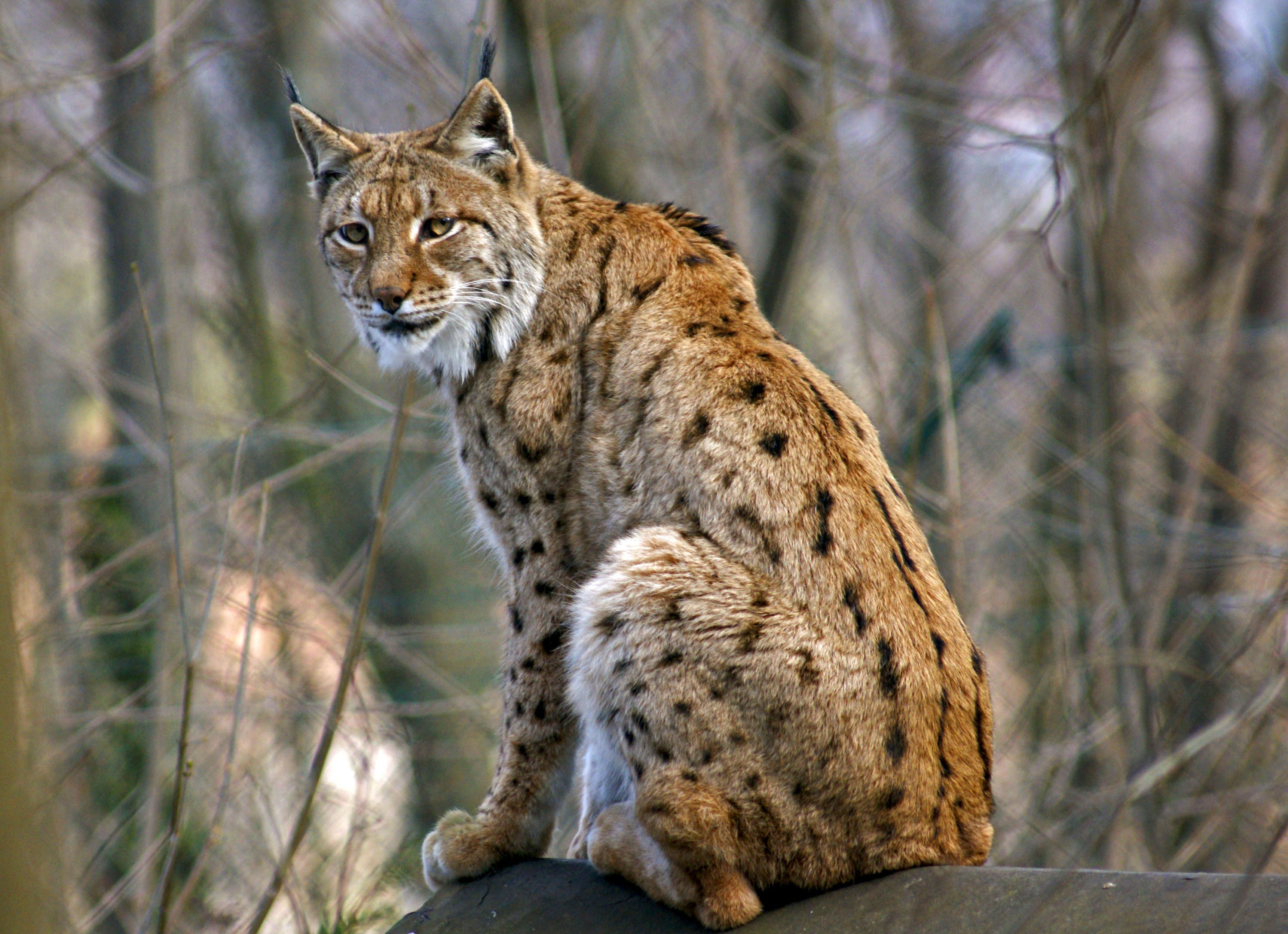
Lynx, (genus Lynx), any of four species of short-tailed cats found in the forests of Europe, Asia, and North America. The Canada lynx and the bobcat live in North America. The Eurasian lynx and the Iberian lynx are their European counterparts. The Iberian lynx is the most endangered feline; as of 2013, possibly fewer than 300 individuals remained in the mountainous scrubland of southern Spain.


Nepotism in Bollywood.

Nepotism in bollywood has reached another level of toxicity. Ever since the demise of the bollywood star sushant singh rajput there is anger among the fans and audience as to why did sushant singh rajput kill himself and the fingers have been ultimately raised towards the industry on why on the first place was the star in depression which was the major cause of his death. It was reported that sushant singh rajput was not invited to any of the big parties and was ultimately ignored by the bollywood industry. One of sushant singh rajput’s friend wrote on instagram describing the star saying that he hated fake friends,phone calls and small talk. He didnt need a campus, he had his own kingdom. She also added that his friend was a fighter and made his own place in the industry. He was an outsider and never cared about being an insider as he had life beyond films. She was left in sorrow as she added that her friend was a fighter. Sushant singh rajput told that he used to be back ground dancer and it shows how much the person had struggled.

The focus has shifted to the topic that how talented actors are made to struggle in the industry where as the starkids are being launched just because of nepotism. The fingers are mainly being raised on the director karan johar who was called as the flag bearer of nepotism by kangana ranaut on his own show of coffee with karan. Karan has launched some of the star kids like alia bhatt and varun dhawan. Lets see what some of the star kids think of nepotism.

1- Alia bhatt

As some of the star kids admit there’s nepotism, some deny it. Alia Bhatt, daughter of famous film director Mahesh Bhatt, once said she feels like punching people who talk about nepotism. Having made her debut with Karan Johar’s Student of The Year in 2012, Alia has established herself as an accomplished actress.

“I want to punch all those people who say that star kids have it easy because it makes no sense. The way the world is today, either you have it or you don’t.”

2- Tiger shroff

Tiger Shroff, son of popular actor Jackie Shroff and known for his dance moves and action stunts, told GQ Magazine revealed he would have never made it to acting, if he had to go through an audition. Sajid Nadiadwala happened to ‘find’ him.

“Had there been one, I wouldn’t have got it anyway.”

3- Sara Ali khan

Sara Ali Khan, daughter of Amrita Singh and Saif Ali Khan, has acknowledged that nepotism exists in Bollywood. However, she believes that one can stay in the business only if they work hard. This is what she had to say on nepotism to India Today.

“I definitely believe that knowing people in the industry does help. That’s not a fact that I can run away from. I’ve often admitted to the fact that the biggest advantage of nepotism is the fact that we have easy access to people. I can call up Karan Johar without doing any film. I can go to Rohit Shetty’s office. So these are privileges I’m well aware of.”

4 – Ananya pandey

Ananya Pandey, daughter of actor Chunky Pandey, debuted with Karan Johar’s Student of The Year 2 and has defended nepotism on several occasions. She was badly trolled as well.

When people hate on me for nepotism, I’m not going to shy away that I’m Chunky Pandey’s daughter. My Dad has worked really hard and he’s still working. My Dad never did a Dharma film, my Dad never went on Koffee with Karan. It isn’t as easy people say it is. Everyone has their own journey.”

The movie Om shanti Om which starred the famous Bollywood King khan Sharukh khan had unknowingly shown the product of nepotism as when Shahrukh khan had tried to act with the same set of skills when he was born in a poor family he failed. But with the same set of skills when the star was reborn as a star kid he was launched easily.

An interesting case of forgery

Art heists, we see them countless times in movies as well as read about them in newspapers. They can be daring swiping of art works or plain robbing them outright. One such type of thieving is forgery. Forgery is a white-collar crime that generally refers to the false making or material alteration of a legal instrument with the specific intent to defraud anyone. Forgery in itself requires a lot of skill and mental acumen to pull-off. And as all crimes go once caught, one must prove their innocence in court to live freely. However, one case in Holland which included forgery was a little different, here the accuse pleaded guilty and tried to convince the court of his guilt. This was the case of  Han Van Meegeren in 1947.

Photo by u00b6Project Atlas on Pexels.com

Like the cliché which goes with art forgers, Meegeren was an artist whose original works failed to bring him renown so he set put to make fools of those who shut the door to the art world on him. Like it was stated this kind of thievery requires a lot of skill and practice. Meegeren worked for nearly 6 years, studying all about the old masters, their styles, their biographies, their techniques and their materials.  He chose a baroque painter from the 17th century by the name of Johannes Vermeer, a rather difficult choice given that Vermeer is celebrated throughout the art world for his technical brilliance in portraying domestic scenes. He carefully made meticulous practice pieces, going as far as to making his own brushes, and paint from his knowledge of Vermeer’s time. He was partly successful in his forgeries due to the fact that the sophisticated means of testing that are available now weren’t as advanced or widespread then. The other factor was his planning, the originality of the art work being tested depends on the art specialist reviewing them, and their popularity which is subjective. From his research he knew that the leading expert on Vermeer believed that he had an early fixation on religious painting and as there was no proof of this theory, Vermeer decided to provide one. Even thought it had some inconsistencies, as it was considered an early piece, it got the stamp of approval and he sold his fake for an equivalent of $4 million dollars. The success prompted him to make and sell more forgeries.  However, his triumph was to be short lived, soon Nazi Germany occupied holland, and Hitler’s top general Herman Goring wanted a Vermeer painting for his collection. And Van Meegeren was more than happy to sell his fake. However, when the allies won the world war, Meegeren was tried for his “treasonous” act and was to be sentenced to the electric chair for selling a Dutch “masterpiece”. Thus, began Meegeren’s trial and his fight to prove that it wasn’t an original. To prove this, he explained step by step how he had forged it. However, he faced an ironical obstacle, the very man he had used to dupe the world, now came forward to take him down. The very expert who had enabled him to do the scam, now fought to protect his own reputation. Thus, to prove his innocence Meegeren made another fake and submitted to the court and was thus acquitted for collaborating with the Nazis, but sentenced to one-year imprisonment for fraud. Thus, he went from the scum who collaborated with Nazis to the folk hero who managed to swindle them. Due to his notoriety his works became valuable is his own right. Later down the line even his son forged his father’s paintings to gain money.

Thus, his “lack of talent” in his peer’s eyes was actually the fuel that unlocked his real talent in his eye for detail and dealing the art.