Insight on International Trade

Introduction

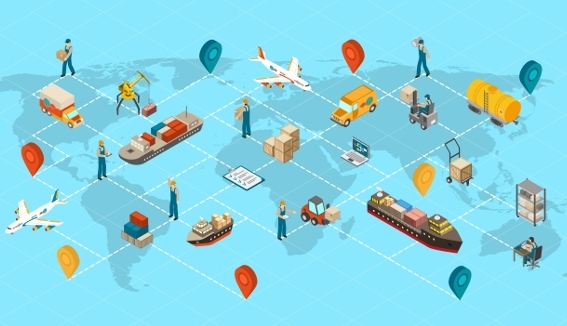
International trade is an exchange involving a good or service conducted between at least two different countries. The exchanges can be imports or exportsImports and ExportsImports are the goods and services that are purchased from the rest of the world by a country’s residents, rather than buying domestically. In many countries this trade represents a significant share of their gross domestic product (GDP).

History

While international trade has existed throughout history (for example the Silk Road, Amber Road, Trans Atlantic Slave trade, Salt Roads), its economic, social, and political importance has been on the rise in recent centuries. International trade has a rich history starting with barter system being replaced by Mercantilism in the 16th and 17th Centuries. The 18th Century saw the shift towards liberalism. The First World War changed the entire course of the world trade and countries built walls around themselves with wartime controls. Post world war, as many as five years went into dismantling of the wartime measures and getting back trade to normalcy

Differences with Domestic Trade

1)International trade is, on paper, not different from domestic trade as the motivation and the behavior of parties involved in a trade do not change fundamentally regardless of whether the trade is cross border or not.

2)However, in practical terms, carrying out trade at an international level is usually a more complex process than domestic trade. The main difference is that international trade is typically more costly than domestic trade.

3)This is due to the fact that a border typically imposes additional costs such as tariffs(an excise that is paid on the sale of imported goods), time costs due to border delays, and costs associated with country differences such as language, the legal system, or culture.

Most Traded export products

They are Crude Oil followed by Cars, Processed Petroleum Oils, Phone systems, Integrated Circuits, Autombile parts, Gold, Computers, Aircraft, Diamonds etc.

Top Traded commodities by value – Exports

  1. Mineral Fuels, Distillation products
  2. Electronics
  3. Nuclear Reactors
  4. Machinery
  5. Vehicles
  6. Plastics
  7. Optical Photo
  8. Medical apparatus
  9. Pharma products
  10. Pearls, Precious Stones.

Largest Countries by International Trade

  • European Union
  • United States
  • China
  • Germany
  • UK
  • Japan
  • France
  • Netherlands
  • Hong Kong
  • South Korea
  • Italy
  • Canada
  • Belgium
  • India
  • Singapore
  • Mexico

Is India wrecked by socialism?

India’s economy is socialist, according to the constitution. Mrs. Indira Gandhi introduced this word in the 1970s. As the British occupied India for nearly 150 years, they began as a firm to transfer raw materials from India to the United Kingdom. This has frightened India into reopening its market to the rest of the world. Nehru was unusual in this regard; he permitted only a few enterprises to expand and concentrated his efforts on the agriculture sector.

The term ‘socialist’ was added to the Preamble by the Forty-second Amendment.

In the past, the Indian government implemented many social welfare programmes to demonstrate its socialist credentials, such as bank nationalisation, various job initiatives such as NREGA, and even selling milk. While the majority of these ponzi schemes failed, they added to the government’s financial burden. All of these ideas had a significant impact on citizens. Everyone began to rely more heavily on free goods. People began to expect cheaper rations, a free cooker, and subsidised gasoline or kerosene. Except for a few communities such as the Marwadi and the Gujratis, no one backed private industry, and everyone was focused on government jobs. Entrepreneurs were frequently reprimanded or disheartened. Profit was viewed as a bad thing, and wealthy people were frequently blamed for the country’s plight. In films from the 1970s and 1980s, the villain is typically wealthy, smoking a cigar, holding a peg of whisky in one hand, and plotting how to exploit low-wage workers. Building a business involves time, effort, risk, and expertise. In India, the image of business and the evil it entails is still pervasive. A large number of people still rely on the government to help them. Everything that is wrong with their lives is due to the government in some way.

India gradually up its market to the rest of the world and established a free market economy in 1991. While every step India takes has a significant impact, we have fallen behind other countries such as China, which began reforming a decade ago. China was able to nail down a few details regarding how the business model will work in a communist country. In India, entrepreneurs find it extremely difficult to start a firm because of the so-called red tape that still exists. The Indian bureaucracy is rotting from the inside out. The nature of the “Sarkari Babus” is still incompetent, slow, and corrupt. Obtaining land, establishing a factory, and obtaining a licence are all arduous tasks for entrepreneurs.

India chose a government-directed growth path over a market-driven one when it gained independence. With a GDP of around Rs.36 thousand crores and government revenue of around Rs.330 crores, we were a shaky economy. The average lifespan was only 31 years. That was an opportune time to pass away. We were also hard struck by the costs of World War II, as well as the bloody partition, which saw the largest human migration in history. Market forces would have positioned us as the world’s tailors, cobblers, and domestic assistance suppliers, given our large and impoverished population. Nehru, on the other hand, chose to invest on new infrastructure (the Temples of Modern India) in order to propel India ahead. The four huge steel plants, the DVC, the Bhakra Nangal project, and numerous public sector investments in power, locomotives, railway coaches, paved roads, irrigation, water supply, schools, IITs and IIMs, hospitals, and other areas were among them. The pressures continued to mount until we were on the verge of declaring bankruptcy in 1991. Then came the Narasimha Rao government, with Manmohan Singh as Finance Minister and Chidambaram as Commerce Minister, which changed everything. Nonetheless, all administrations since then have been mindful of the need to help India’s poor, rather than abandoning them to market forces.

Communism in India

The change of administration at the centre in 2014 has brought with it new promises, but it has also brought suffering to the people of India who are being drugged or tranquillized in the hope of long-term benefits. The people of the country will vote for the current government for a second term because they perceive no credible opposition or viable alternative to it.

Although the current government’s administrative efficiency is marginally better than its predecessor’s, the majority of Hindus applaud their radical non-secular approach on specific topics like as the sacredness of the cow or actions against minority appeasement. Furthermore, the minority appeasement approach used by previous Congress-led governments has warped the Indian polity’s secular nature, which must be remedied. However, the BJP government’s work is more of an antithesis to past practises and cannot be termed long-term strategies because it will transform India into a non-secular nation-state with characteristics akin to those of a Fascist state. This is the time for the Left Parties to move forward quietly but earnestly, despite political and economic restraints, and endeavour to enlist the support of the common man. Maharashtra, Gujarat, and Rajasthan are three states that have refused to recognise the Left Parties as an option and have been difficult for the Left to crack for the past seventy-one years.

In Maharashtra, the Indian National Congress (INC), National Congress Party (NCP), and, to a lesser extent, the Shiv Sena are well entrenched, and removing them will be difficult. Except for a brief period under Shankar Singh Vaghela’s leadership, the Bharatiya Janata Party has ruled Gujarat for the past thirty years. Rajasthan has seen five-year transitions between the Bharatiya Janata Party and the Indian National Congress since 1993. In Maharashtra, the sole RED Flag-affiliated party with some clout is the Shetkari Kamgaar Paksha, whose presence and political clout are insufficient to gain an absolute majority in the state legislature. The left must build cadres in these three states over the next few years, as well as re-establish acceptance in West Bengal and Tripura, and attempt a second consecutive inning in Kerala. Along with it, the Communists, or the Left Front, should endeavour to train cadres and prepare for the elections set for 2024, or else aim for an absolute majority in the Lok Sabha elections in 2029.

The road will be rough, but the people of our country require a third option that is superior to both previous and current regimes. This must be a joint effort by all of the Left Parties, i.e.

Except in a few places such as West Bengal, Kerala, and Tripura, the average man in India has not yet developed the needed confidence and faith in the Left Parties, and this has been their most significant disadvantage. There is yet a chance if the Left Parties examine and adjust their approach, making it more inclusive and abstaining from sticking to the Marxist norms that must be abandoned in order to win the trust of the Indian people. A more Machiavellian style, similar to that of Comrade Vladimir Illyich Ulyanov Lenin during the early years of Communist leadership in Russia. Despite the fact that Indian Communism will be relatively different and distinct in light of the country’s economic and social structure, it is the answer, the ultimate answer to equitable and fair governance.

Health consciousness.

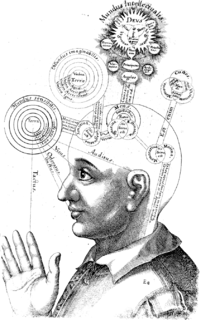
Consciousness, at its simplest, is sentience or awareness of internal and external existence. Despite millennia of analyses, definitions, explanations and debates by philosophers and scientists, consciousness remains puzzling and controversial, being “at once the most familiar and most mysterious aspect of our lives”. Perhaps the only widely agreed notion about the topic is the intuition that it exists. Opinions differ about what exactly needs to be studied and explained as consciousness. Sometimes, it is synonymous with the mind, and at other times, an aspect of it. In the past, it was one’s “inner life”, the world of introspection, of private thought, imagination and volition. Today, it often includes some kind of experience, cognition, feeling or perception. It may be awareness, awareness of awareness, or self-awareness. There might be different levels or orders of consciousness, or different kinds of consciousness, or just one kind with different features. Other questions include whether only humans are conscious, all animals, or even the whole universe. The disparate range of research, notions and speculations raises doubts about whether the right questions are being asked.

Examples of the range of descriptions, definitions or explanations are: simple wakefulness, one’s sense of selfhood or soul explored by “looking within”; being a metaphorical “stream” of contents, or being a mental state, mental event or mental process of the brain; having phanera or qualia and subjectivity; being the ‘something that it is like’ to ‘have’ or ‘be’ it; being the “inner theatre” or the executive control system of the mind.

And that’s why to be health conscious is better than being careless.

Why are Relationships so difficult to handle ?

Love is one of the most profound emotions known to human beings. Love is diverse and so is your relationships actually your relationships sometimes define you, it defines your personality in diverse forms, Love and relationships both are beautiful aspects of life but then why they are so difficult to handle ?

Your relationship are like your part of your daily life, they need your constant efforts, attention and time, but sometimes we become so busy that we try to ignore it which leads to discoloration of them, let me give you a simple example –

Suppose you bought a plant for yourself and promise yourself that you will take care of your plant no matter how busy your daily schedule gets, you water them daily, you check upon them daily, you check whether they need some extra care or not if yes, you give them some extra care, some extra nutrients just to make your plant grow more appropriately, that plant is just like your relationship the more you care the more you love it the more it will grow but when you stop taking care of it, umm you might lose it and that can damage you also.

Relationships needs your efforts just as someone said no one is too busy in their day that they couldn’t check up upon you, its all about their priorities.

Make sure you stay connected with people you love, with people you care about because life is not worth living if you don’t have someone with you.

3D PRINTING

3D Printing is an new and emerging field of biotechnology, it’s a field of revolution in science, the earliest record of 3D printing through the additive process was the Japanese inventor Hideo Kodama in 1981. He created a product that used ultraviolet lights to harden polymers and create solid objects. This is a stepping stone to stereolithography (SLA).Overall 3D printing has changed and improved over the past thirty years. SLA, SLS, and FDM show the history of 3D printing, and thus how it became a vital tool for manufacturing. It allows you to make virtually anything simply by creating a computer file

HOW DOES IT WORKS ?

3D printing, also known as additive manufacturing, is a method of creating a three dimensional object layer-by-layer using a computer created design.3D printing is an additive process whereby layers of material are built up to create a 3D part. This is the opposite of subtractive manufacturing processes, where a final design is cut from a larger block of material. As a result, 3D printing creates less material wastage.

3D Printing Technologies :

There are three broad types of 3D printing technology; sinteringmelting, and stereolithography.

  • Sintering is a technology where the material is heated, but not to the point of melting, to create high resolution items. Metal powder is used for direct metal laser sintering while thermoplastic powders are used for selective laser sintering.
  • Melting methods of 3D printing include powder bed fusion, electron beam melting and direct energy deposition, these use laser, electron beams to print objects by melting the materials together.
  • Stereolithography utilizes photopolymerization to create parts. This technology uses the correct light source to interact with the material in a selective manner to cure and solidify a cross section of the object in thin layers.

3D Printing Processes :

3D printing has been categorised into seven groups by ISO/ASTM 52900 additive manufacturing – general principles – terminology. All forms of 3D printing fall into one of the following types:

  1. Binder Jetting
  2. Direct Energy Deposition
  3. Material Extrusion
  4. Material Jetting
  5. Powder Bed Fusion
  6. Sheet Lamination
  7. VAT Polymerization

Applications

  • Most common application is organ transplantation, and are also used for producing metal orthopedic implants. Due to 3D printing’s capabilities for creating porous surfaces, these types of implants more easily integrate with the patient’s own natural bones, allowing them to grow into the implant.
  • 3D printing applications that are used in construction include extrusion (concrete/cement, wax, foam, and polymers), powder bonding (polymer bond, reactive bond, sintering) and additive welding. 3D printing in construction has a wide array of applications in the private, commercial, industrial and public sectors. Advantages of these technologies include allowing more complexity and accuracy, faster construction, lower labor costs, greater functional integration, and less waste.

After 140 Years, Biologists Have ‘Resurrected’ The Genus of These Weird Yellow Cells

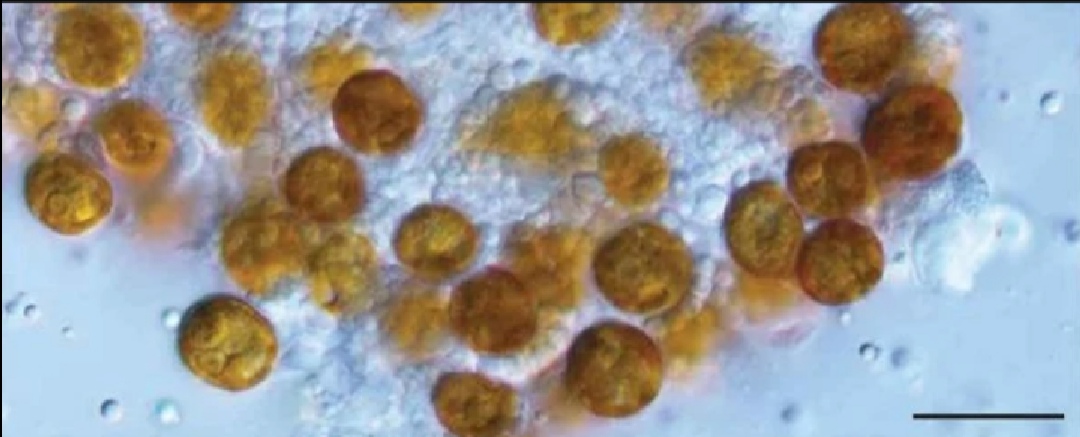
Deep in the tissues of sea anemones, corals, and jellyfish are strange yellow cells which are genetically distinct from the marine animals.

More than a century after these cells were first assigned a now forgotten genus, a new paper has resurrected the name and described six new species from around the world.https://7ebdf40ca650dbb49550c30c7626f99f.safeframe.googlesyndication.com/safeframe/1-0-38/html/container.html

“Because our team comprises scientists from seven countries, we were able to collect all of these samples, and some during the global pandemic,” said lead author of the study, biologist Todd LaJeunesse from Penn State University.

“This study highlights how the spirit of scientific discovery brings people together, even in times of hardship.”

First described in 1881, the yellow things were originally classified under the genus Zooxanthella by scientist Karl Brandt. Brandt also coined the term zooxanthellae, which is used colloquially to this day.

However, another scientist – a Scotsman called Patrick Geddes – was investigating these yellow cells at the same time. In 1882, without having seen Brandt’s work, Geddes discovered that not only were the cells separate from the animals they were within (something Brandt had also established), but that they were beneficial, acting as mutualistic symbiotes.

The genus Geddes established to categorize these cells was Philozoon, from the Greek words for ‘to love as a friend’ and ‘animal’. Unfortunately, Brandt came first, so the Philozoon genus was never used; Geddes switched to work in urban planning, and the newly named genus was largely forgotten.null

We are now well aware that these odd microorganisms Geddes and Brandt worked on back in the day are photosynthetic dinoflagellates – single-celled algae found in symbiosis with other marine life, such as corals – under the family Symbiodiniaceae.

In the new study, researchers took a closer look at these yellow cells, using genetic data, geographical data and morphology to analyze where exactly they should sit in the genetic tree.

And after determining that these creatures need to be put into a new genus, the team pulled the genus Philozoon out of retirement for two old species and six new ones.

“We emend the genus Philozoon Geddes and two of its species, P. medusarum and P. actiniarum, and describe six new species,” the team wrote in their paper.

“Each symbiont species exhibits high host fidelity for particular species of sea anemone, soft coral, stony coral and a rhizostome jellyfish.” 

The team wrote that Philozoon are found in shallow, temperate marine habitats around the world, including the Mediterranean Sea, eastern Australia, New Zealand, and Chile.

“Since most of the algae in the family Symbiodiniaceae have been thought to be mostly tropical where they are critical to the formation of coral reefs, finding and describing these new species in cold waters highlights the capacity of these symbioses to evolve and live under a broad range of environmental conditions,” explains LaJeunesse.

“Life finds a way to persist and proliferate.”

The research has been published in the European Journal of Phycology.

TOURIST SPOTS IN WESTBENGAL

Tourist spots are places of uncommon attractiveness. West Bengal stretches from the Himalayas to the Bay of Bengal. On the north there are beautiful mountain ranges in Darjeeling the queen of hill towns.

Darjeeling gives beautiful view of sunrise on Kanchenjunga. From Darjeeling one can come to Kalimpong. One can take a short trip to Mirik, to see a sweet water lake. There is a forest at Jaldapara where wild animals move freely. Next, Kolkata is the chief tourist spot in West Bengal.

There are the museum, zoo, Jain Temple, Kalighat Temple, Metro Railway, planetarium, Science City, etc. Outside Kolkata there are the temple of Dakshineswar and Belur which are associated with Ramakrishna and Vivekananda.

Further down there is the Sundarban inhabited by the Royal Bengal Tiger the national animal of India. Out in the district, the religious places like Tarapith and Kamarpukur attract à large number of tourists every day.

Next there is Santiniketan an abode of peace where Visva Bharati University was set up by Rabindranath. Those interested in historical places will find Gaur and Murshidabad interesting.

To see the ancient art of Bengal, tourists are to come to Bankura and Bishnupur.The sea beach Digha attracts many tourists every day.

Public administration and development related

INTRODUCTION:-

public administration at the local, regional, national and international levels where it is directed to managing development processes in low and medium income countries. It gives special attention to investigations of the management of all phases of public policy formulation and implementation which have an interest and importance beyond a particular government and state. PAD has a particular interest in the link between public administration practice and management research and provides a professional and academic forum for reporting on new experiences and experiments. PAD also publishes
articles on development management research in the NGO sector. It is widely read by academics and practitioners alike, including consultants, donors and policy advisers. With its case study approach, it is also frequently used for teaching and training purposes.

Public Administration and Development

Information for Subscribers

Public Administration and Development (Print ISSN 0271‐2075; Online ISSN 1099‐162X at Wiley Online Library, wileyonlinelibrary.com) is published in 5 issues per year. Institutional subscription prices for 2020 are: Print & Online: US$2987 (US and Rest of World), €1929 (Europe), £1528 (UK). Prices are exclusive of tax. Asia‐Pacific GST, Canadian GST/HST and European VAT will be applied at the appropriate rates. For more information on current tax rates, please go to http://www.wileyonlinelibrary.com.tax‐vat. The price includes online access to the current and all online back files to January 1st 2017, where available. For other pricing options, including access information and terms and conditions, please visit wileyonlinelibrary.com/access.

Delivery Terms and Legal Title

Where the subscription price includes print issues and delivery is to the recipient’s address, delivery terms are Delivered Duty Unpaid (DDU); the recipient is responsible for paying any import duty or taxes. Title to all issues transfers FOB our shipping point, freight prepaid. We will endeavour to fulfil claims for missing or damaged copies within six months of publication, within our reasonable discretion and subject to availability.

Services

Adver tisements

Advertisement Sales Department, John Wiley & Sons, Ltd.,

The Atrium, Southern Gate, Chichester, West Sussex

PO19 8SQ, UK.

Tel: +44 (0)1243 770254

Fax: +44 (0)1243 770432

e‐mail: adsales@wiley.co.uk

Commercial Reprints:

E‐mail: corporatesaleseurope@wiley.com;

corporatesalesusa@wiley.com; or

corporatesalesaustralia@wiley.com

Author Reprints (50–300 Copies):

Order online: http://www.sheridan.com/wiley/eoc

Backstock Agent

PSC

Back issues: Single issues from current and recent volumes are

available at the current single issue price from cs‐journals@wiley.com.

Earlier issues may be obtained from Periodicals Service Company,

351 Fairview Avenue ‐ Ste 300, Hudson, NY 12534, USA.

Tel: +1 518 822‐9300

Fax: +1 518 822‐9305,

Email: psc@periodicals.com

General Enquiries

Tel: +44 (0) 1243 779777,

Fax: +44 (0) 1243 775878.

Contact Details within John Wiley & Sons

Journal Customer Services: For ordering information, claims

and any enquiry concerning your journal subscription please go to

http://www.wileycustomerhelp.com/ask or contact your nearest office:

Americas: Email: cs‐journals@wiley.com; Tel: +1 781 388 8598 or

1 800 835 6770 (Toll free in the USA & Canada).

Europe, Middle East and Africa: Email: cs‐journals@wiley.com;

Tel: +44 (0) 1865 778315

Asia Pacific: Email: cs‐journals@wiley.com; Tel: +65 6511 8000

Japan: For Japanese speaking support, Email: cs‐japan@wiley.com;

Visit our Online Customer Help available in 7 languages at

http://www.wileycustomerhelp.com/ask

Copyright and Copying (in any format)

Copyright© 2021 John Wiley & Sons, Ltd. All rights reserved

No part of this publication may be reproduced, stored or trans

mitted in any form or by any means without the prior permission

in writing from the copyright holder. Authorization to copy items

for internal and personal use is granted by the copyright holder

for libraries and other users registered with their local Reproduction

Rights Organisation (RRO), e.g. Copyright Clearance Center

(CCC), 222 Rosewood Drive, Danvers, MA 01923, USA (www

copyright.com), provided the appropriate fee is paid directly to the

RRO. This consent does not extend to other kinds of copying such

as copying for general distribution, for advertising or promotional

purposes, for republication, for creating new collective works or

for resale. Permissions for such reuse can be obtained using the

RightsLink “Request Permissions” link on Wiley Online Library.

Special requests should be addressed to: permissions@wiley.com

Disclaimer

The Publisher and Editors cannot be held responsible for errors

or any consequences arising from the use of information

contained in this journal; the views and opinions expressed do

not necessarily reflect those of the Publisher and Editors, neither

does the publication of advertisements constitute any endorsement

by the Publisher and Editors of the products advertised.

Abstracting and Indexing

Public Administration and Development is covered by the following

abstracting and indexing services: Abstracts on Hygiene &

Communicable Diseases (CABI), ASSIA: Applied Social Sciences

Index & Abstracts (ProQuest), CAB Abstracts® (CABI), CAB

HEALTH (CABI), CABDirect (CABI). Current Contents: Social &

Behavioral Sciences (Thomson Reuters), Emerald Management

Reviews (Emerald), ERA: Educational Research Abstracts Online

(T&F), Forestry Abstracts (CABI), GEOBASE (Elsevier), Global

Health (CABI), Grasslands & Forage Abstracts (CABI), IBSS:

International Bibliography of the Social Sciences (ProQuest),

Journal Citation Reports/Social Science Edition (Thomson Reuters),

PAIS: Public Affairs Information Service (ProQuest), Plant Genetic

Resources Abstracts (CABI), ProQuest Central (ProQuest), Rural

Development Abstracts (CABI), SCOPUS (Elsevier), Social Sciences

Citation Index (Thomson Reuters), Social Services Abstracts

(ProQuest), Sociological Abstracts (ProQuest), Soils & Fertilizer

Abstracts (CABI), Studies on Women & Gender Abstracts (T&F),

Tropical Diseases Bulletin (CABI), Web of Science (Thomson Reuters),

World Agricultural Economics & Rural Sociology Abstracts (CABI),

Worldwide Political Sciences Abstracts (ProQuest).

Online open

Public Administration and Development accepts articles for Open

Access publication. Please visit http://olabout.wiley.com/

WileyCDA/Section/id‐406241.html for further information

about OnlineOpen.

Production Information

For manuscripts that have been accepted for publication,

please contact:

Podhumai Anban

e‐mail: padproofs@wiley.com

Production Details

Printed in Singapore by C.O.S. Printers Pte Ltd.

Identification Statement

PUBLIC ADMINISTRATION AND DEVELOPMENT (Print ISSN

0271‐2075; Online ISSN 1099‐162X) is published in February, May,

August, October and December. US mailing agent: Mercury Media

Processing, LLC 1850 Elizabeth Avenue, Suite #C, Rahway

NJ 07065 USA. Periodical postage paid at Rahway, NJ.

Postmaster: Send all address changes to PUBLIC ADMINISTRATION

AND DEVELOPMENT, Wiley Periodicals LLC, C/O The Sheridan

Press, PO Box 465, Hanover, PA 17331.

For submission instructions, subscription and all other information

visit: wileyonlinelibrary.com/journal/pad

Wiley’s Corporate Citizenship Initiative Statement

Wiley’s Corporate Citizenship initiative seeks to address the

environmental, social, economic, and ethical challenges faced in

our business and which are important to our diverse stakeholder

groups. Since launching the initiative, we have focused on sharing

our content with those in need, enhancing community philan

thropy, reducing our carbon impact, creating global guidelines

and best practices for paper use, establishing a vendor code of

ethics, and engaging our colleagues and other stakeholders in our

efforts. Follow our progress at http://www.wiley.com/go/citizenship

Statement on Research4Life

Wiley is a founding member of the UN‐backed HINARI, AGORA,

and OARE initiatives. They are now collectively known as

Research4Life, making online scientific content available free or

at nominal cost to researchers in developing countries. Please

visit Wiley’s Content Access – Corporate Citizenship site:

http://www.wiley.com/ WileyCDA/Section/id‐390082.html

Reference Link:-

https://onlinelibrary.wiley.com/journal/1099162x

https://onlinelibrary.wiley.com/loi/1099162x

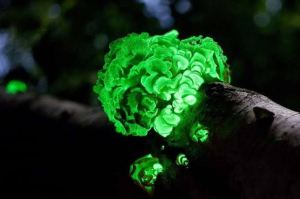
The Glowing forest

Hello guys!!You guys may have heard of the term “forest” but have you ever heard of “Glowing forest”.

Yes! The forest that literally GLOWS at night.

Source: unknown

I am always awestruck by the art of nature,nature for me will always be a mystery.The things which we can never imagine in our life takes place in this huge world.

If you ever see a glowing forest you might think that lights from the city travelled all the way to the forest haha.But reality is far more impressive than any imagination you might have right now of a “glowing forest”.

Unexpected things that we come across in our life adds spice in our lives. Those unknown variables gives us these exciting experiences.

Learning about something and gaining knowledge should always be welcomed if they knock on our door of life.

Jumping right in to the topic.

How do you think these forests glow ?Got any idea about it.

Yes. I am using the word “forests” because they exist in various places all over the world.

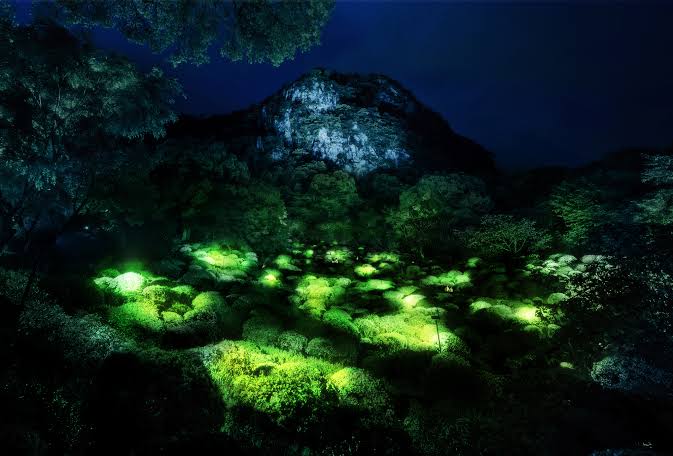
So for today I am going to write about the enchanting and captivating forest that lies in Shikoku,Japan . At night time, the floor lights up in bright green due to the glowing mushrooms that create a luminescent ambiance as if we are in a fantasy .

During the rainy season these bioluminescent mushrooms emerge in the forest lighting up the whole forest creating a dream land.

Many hikers,travellers visit this place to experience the unknown world . Especially they visit at night because the forest’s speciality is glowing at night time .

There are various types of brightening mushrooms all over the world.

From vice

Guys don’t get discouraged thinking that you will not be able to visit that place because it’s very far. We have glowing forest in India tooo.

The bioluminescent fungus that grows on the barks and twigs of the tropical forest floors when exposed to rain this phenomena takes place.There should be certain humidity and moisture conditions for this type of fungi to grow .

Source:unkown

The fungi in the Western Ghats, on the other hand, belong to the Mycena genus, a group of tiny mushrooms that almost look like moss.

Even in Mhadei Wildlife Sanctuary situated in Swapnagandha Valley of Goa, Chorla Ghat near Panjim is another place where you can find the cool glow. Belgaum in Karnataka is another place to find these light up mushrooms.

Source :unknown

We got to know how these forest are glowing but the reason what causes the luminescent nature of the fungi is still unknown.

Thankyou^^

Jee mains 2021 exam date announced; Registration process begins for April/may session.

The most crucial engineering and medical entrance exams JEE Main and NEET UG have also been postponed due to the coronavirus outbreak.The February and March sessions of engineering entrance exam JEE Main 2021 were held while the April and May exams were postponed.

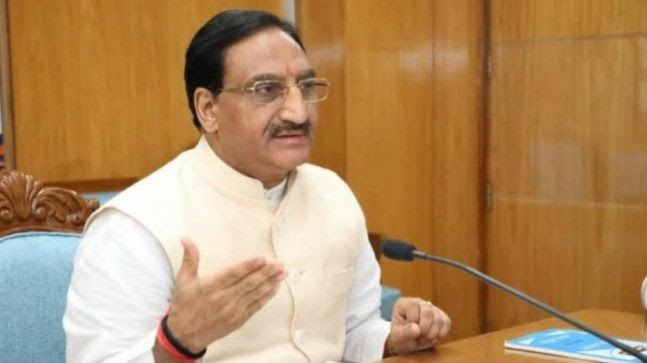
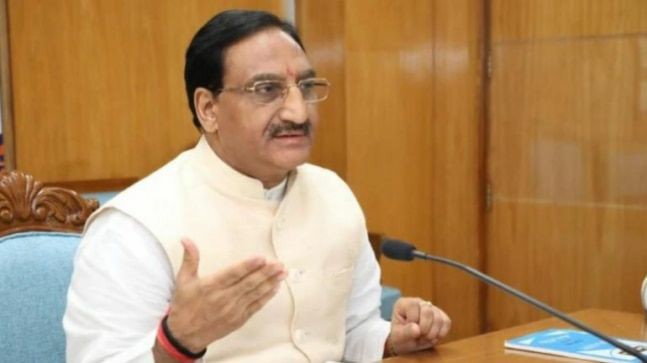
Education Minister Ramesh Pokhriyal has announced the exam schedule for JEE Main (April / May) sessions 2021 today. The minister made the announcement through a live session. The third session of JEE Main 2021 (April session) will be conducted from July 20-25. The fourth and last session of JEE Main 2021 (May session) will be conducted from July 27-August 2.Candidates can apply at jeemain.nta.nic.in. Those who wish to apply for the April session will be able to apply from tonight to July 8. JEE Main (May) session registrations will be open from July 9-12. Candidates will also be able to change their exam centres. Even to ensure social distancing amid the pandemic, the NTA has also increased the number of test centres for JEE Main (April and May) sessions. Earlier, the total number of test centres was 660. The test centres have now been increased to 828.

Social media reaction

Just within two hours of date announcement , the news started Trending over various social media plateform. On twitter the #jeemains2021reached in top ten trend within two hours only. Most of the people are making memes on the surprising announcement of exam date , while some are demanding for postponement of the exam .

What about jee advanced date announcement?

In this context, one thing has to be noted that the JEE Advanced 2021 Exam which was scheduled to take place July 3, 2021, also had to be postponed due to the COVID-19 situation in the country. However, recently, on June 25, 2021, IIT Kharagpur, the organising institute for JEE Advanced 2021 Exam has released the information brochure and list of documents that will be required for JEE Advanced 2021 Exam on the official website of JEE Advanced at jeeadv.ac.in. On the website, it is also mentioned that a new date for JEE Advanced 2021 Exam will be announced soon.

for more detail vist the link 👇

https://youtu.be/6x4aP17GXoE

https://www.dnaindia.com/education/report-nta-jee-main-2021-neet-2021-entrance-exam-dates-application-form-ntanicin-cbse-class-12-board-exam-2021-result-date-latest-updates-2898900

Courses and programs

Courses and programs for students are the main role to their education .

A program is your degree . A course is one building block (subject) of your program

Our featyre is depends on our Courses and programs

Some of courses

1 B.Com. This is the most popular choice among Commerce stream students. …

2 Chartered Accountancy.

3 Bachelor’s course in Economics.

4 Company Secretaryship course.

5 Law courses. …

6 Management courses. …

7 Technical courses. …

8 Designing courses.          

And some more

Administration Studies

Architecture Studies

Art Studies

Aviation

Business Studies

Construction

Cosmetology Studies

Design Studies

Economic Studies

Education

Educational and academic news and updates

Energy Studies

Engineering Studies

Environmental Studies

Fashion

Food and Beverage Studies

General Studies

Health Care

Humanities Studies

Journalism and Mass Communication

Languages

Law Studies

Life Sciences

Life Skills

Management Studies

Marketing Studies

Natural Sciences

Performing Arts

Professional Studies

Self-Improvement

Social Sciences

Sport

Sustainability Studies n

Technology Studies

Tourism and Hospitality

Journalism and mass media

INTRODUCTION:-

Journalism and mass communication graduates work nationwide and worldwide at newspapers and magazines and in advertising, branding, broadcast news, social media, marketing, media research, photojournalism, publication design, public relations, radio, and other areas

Journalism:-

Journalism is the activity of gathering, assessing, creating, and presenting news and information. It is also the product of these activities.Journalism can be distinguished from other activities and products by certain identifiable characteristics and practices. These elements not only separate journalism from other forms of communication, they are what make it indispensable to democratic societies. History reveals that the more democratic a society, the more news and information it tends to have.

JOURNALISM ESSENTIALS

  1. What is journalism?
  2. What makes journalism different than other forms of communication?
  3. What is the purpose of journalism?
  4. The elements of journalism
  5. What does a journalist do?
  6. The journalist as a ‘committed observer’
  7. The theory of the interlocking public
  8. Bias and objectivity
  9. The lost meaning of ‘objectivity’
  10. Understanding bias

1.What is journalism?

Journalism is the activity of gathering, assessing, creating, and presenting news and information. … Journalism can be distinguished from other activities and products by certain identifiable characteristics and practices.

2. What makes journalism different than other forms of communication?

The vast majority of this communication, however, is not news and especially not journalism. Almost 70 percent of email traffic is spam, according to web security company Symantec. In 2012, there were an average of 175 million tweets each day. But almost all – 99% — consisted of “pointless babble,” according to researchers at Carnegie Mellon University.

3. What is the purpose of journalism?

“The purpose of journalism,” write Bill Kovach and Tom Rosenstiel in The Elements of Journalism, “is not defined by technology, nor by journalists or the techniques they employ.” Rather, “the principles and purpose of journalism are defined by something more basic: the function news plays in the lives of people.”

4. The elements of journalism?

In their book The Elements of Journalism, Bill Kovach and Tom Rosenstiel identify the essential principles and practices of journalism. Here are 10 elements common to good journalism, drawn from the book.

5. What does a journalist do?

Asking who is a journalist is the wrong question, because journalism can be produced by anyone.At the same time, merely engaging in journalistic-like activity – snapping a cell-phone picture at the scene of a fire or creating a blog site for news and comment – does not by itself produce a journalistic product. Though it can and sometimes does, there is a distinction between the act of journalism and the end result.

6. The journalist as a ‘committed observer’

Gil Thelen, the former publisher and president of The Tampa Tribune, believes the journalist has a very specific role in society. He calls it the “committed observer.” What he means by that, Thelen explains, is that the journalist is not removed from community, though at times may stand apart from others so as to view things from a different perspective.

7. The theory of the interlocking public

The splintering of mass media audiences and the migration of information consumers to tens of thousands of niche web sites is further evidence that everyone is interested, and expert, in something. The diversity and magnitude of the public, in fact, is its strength. A mix of publics is usually much wiser than a public comprised of just the elite or one segment of special interest.

8. Bias and objectivity

Journalism attempts to be fair and accurate. It does this through objective methods and managing bias. The guides in this section help you understand and navigate those processes.

9. The lost meaning of ‘objectivity’

One of the great confusions about journalism, write Bill Kovach and Tom Rosenstiel in The Elements of Journalism, is the concept of objectivity. When the concept originally evolved, it was not meant to imply that journalists were free of bias. Quite the contrary. The term began to appear as part of journalism after the turn of the 20th century, particularly in the 1920s, out of a growing recognition that journalists were full of bias, often unconsciously. Objectivity called for journalists to develop a consistent method of testing information – a transparent approach to evidence – precisely so that personal and cultural biases would not undermine the accuracy of their work.

10. Understanding bias

For a time, “bias” was the term of choice to describe anything people hated about journalism, whether the power and influence of corporate news organizations to the choices reporters made in writing individual stories. In 2001, in fact, a book about media unfairness entitled “Bias” was number one on the New York Times bestseller list. In recent years the public seems to have adopted a more nuanced view of bias.  Perhaps this is because many critics have found their voice online – where studies confirm that half the blogs contain just the author’s opinion – or that one-sidedness has become a successful business model, as Fox News Channel and MSNBC have demonstrated.

What Is Mass Media?

INTRODUCTION:-

Mass media is communication that is to a large group, or groups, of people in a short time (Mass Media, 2013, p. … This can be written, spoken or broadcast communication. Some of the most popular forms of mass media are newspapers, magazines, radio, advertisements, social media, television, Internet, and films/movies.

Mass Media:-

Think about this for a second: whenever you want to hear your favorite song, watch your favorite show, or see the latest current events, where do you go? You more than likely turn on your television, radio, or computer. The source that the majority of the general public uses to get their news and information from is considered mass media.Mass media means technology that is intended to reach a mass audience. It is the primary means of communication used to reach the vast majority of the general public. The most common platforms for mass media are newspapers, magazines, radio, television, and the Internet. The general public typically relies on the mass media to provide information regarding political issues, social issues, entertainment, and news in pop culture.

There are 6 main types of Mass Media:

  1. Traditional Media
  2. Print Media
  3. Electronic/Broadcasting Media
  4. Outdoor Media or Out of Home Media (OOH)
  5. Transit Media
  6. Digital Media/New Media/Internet

1. Traditional Media:-

People have developed different ways of communication depending upon their local language and culture. Traditional media is one of the oldest types of mass media to transfer traditions and culture over generations. The tools of communication have been developed from beliefs, customs, rituals, and practices of society. Traditional media imparts indigenous ways of communication for ages. Further, this type of mass media varied as per each culture and society as every culture has their own mediums to communicate to their mass audience. Thus, the traditional media can be folk songs, dances, folktales and folklore as well as paintings, sculptures, stupas, statues and fairs, festivals, rural or community radio and announcement mediums like nagada, etc.

Forms of Traditional Media

  • Folk Dances
  • Folk Songs and Music
  • Theatre, Drama, and Folktales
  • Painting, Sculptures, Inscriptions, Statues, and Stupas
  • Motifs and Symbols
  • Announcements made by beating drums or ‘nagada’
  • Shadow Puppetry and String Puppetry
  • Storytelling
  • Nautanki
  • Fairs and Festivals
  • Rural Radio

2. Print Media

In simple words, Print Media is all about the printed form of information and news. Before the invention of the printing press, printed materials had to be hand-written that made mass distribution almost impossible. Print media is one of the basic types of mass media tools making it very popular and convenient to reach a wider audience. Newspapers are considered as the oldest forms of mass media after the traditional mass media as for a long period of time, the general public relied on newspapers to know the latest happenings in their local areas as well as from around the world. Thus, print media originally refers to newspapers and then expanded towards magazines, tabloids, promotional brochures, journals, books, novels and comics.

Forms of Print Media

  • Newspapers (broadsheet and tabloid)
  • Periodicals, Newsletters, and Magazines (general or specific interest)
  • Brochures, Leaflets and Pamphlets
  • Journals
  • Books, Novels and Comics

3. Electronic/Broadcasting Media

Broadcasting is simply a distribution of audio and video content to a dispersed audience using the electronic broadcasting medium. Originally the term ‘broadcasting’ referred to the sowing of seeds on farms by scattering them over the large field. Broadcast media allows ease of news dissemination to even an illiterate person because it appeals to both the auditory and visual senses making it one of the most lucrative types of mass media. Centuries later after the newspapers were used as the original mass media, the advent of radio and television happened. Radio was the primary medium of news for the general public during wars as well as for sports and entertainment. When television was invented, it became the most effective type of mass media as it was primarily used for news dissemination and then for TV shows, live events and other entertainment purposes.

Forms of Broadcasting Media

  • Television
  • Radio (AM, FM, Pirate Radio, Terrestrial Radio, and Satellite)
  • Traditional Telephone
  • Film/Movie/Motion Picture
  • Video Games
  • Audio Recording and Reproduction

4. Outdoor Media or Out of Home Media (OOH)

This is also known as OOH or Out-of-Home Media and is focussed on transmitting information and news when the public is outside their home. Outdoor media gives importance to display advertising and attracting individuals towards new products, some social cause or any development or change in the society. These are prominent in brand promotion seen on buildings, streets, electric polls, roadside, vehicles, screens, kiosks, etc. This is one of the most prominent types of mass media used for commercial as well as public welfare advertising and mainly includes billboards, banners, posters, brochure distribution, ComPark Advertising, Wallscape, amongst others!

Forms of Outdoor Media

  • Billboards or Bulletins
  • Inflatable Billboards
  • Mobile Billboards
  • Banner
  • Lamppost Banners
  • Posters
  • Signs and Placards
  • Blimps, Skywriting
  • Brochure distribution
  • ComPark Advertising
  • Wallscape

5. Transit Media

Transit Media revolves around the concept of advertising and information dissemination when consumers are “on the go” in public places or in transit. These include display advertising on vehicles and transportation. With the aim “driving home a message” transit media is significantly used for massive brand promotion to millions of people who travel the country’s streets and highways every day.Some people might think that this type of mass media is outdated or ineffective, yet it is widely visible on the sides of buses, in subway cars, at transit stations where passengers enter or disembark from public transportation.

Forms of Transit Media

  • Bus Advertising
  • Railway Advertising
  • Taxi Advertising
  • Transit Shelter Advertising

6. Digital Media/New Media/Internet

Since the invention of the World Wide Web by English scientist Tim Berners-Lee in 1989, the Internet has drastically taken over all the types of mass media because of faster dissemination speed and higher digital technology. New Media is an interactive two-way communication with users being the active producers of content and information. The Internet is considered as a highly interactive mass medium and can be simply defined as the “network of networks”. It has quickly transformed as the centre of the mass media as it has marvellously integrated all the prominent types of mass media. Now, you can see news websites, broadcasted TV shows as well as listen to online radio using the internet and this is also called as the convergence of mass media!New Media is normally a re-conceptualization of the existing media. This is a rapidly growing mass media with the ease of accessibility with a computer and an Internet connection (broadband or WiFi). From Story Writing and Graphic Designing to Multimedia and Animation, pursuing a career in this field can be highly advantageous.

Forms of Digital Media

  • Websites
  • Emails
  • Social Media and Social Networking Sites (SNS)
  • Webcast and Podcast
  • Blogging and Vlogging
  • IPTV (Internet Protocol Television)
  • E-forums and E-books
  • E-commerce and M-commerce
  • Digital Videos
  • Computer Animation
  • Digital Video Games
  • Human-Computer Interface
  • Virtual World & Virtual Reality

Reference Link:-
https://www.americanpressinstitute.org/journalism-essentials/what-is-journalism/

https://leverageedu.com/blog/types-of-mass-media/

Elon Musk

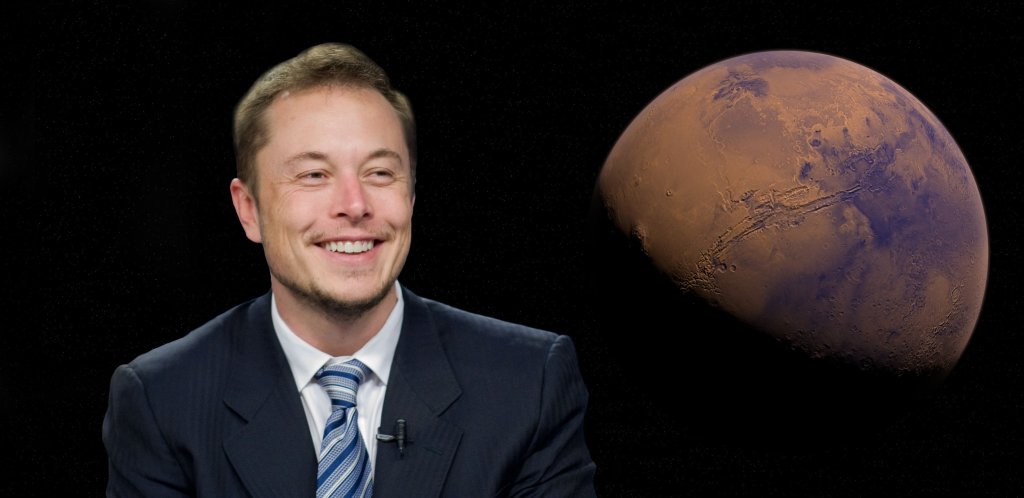
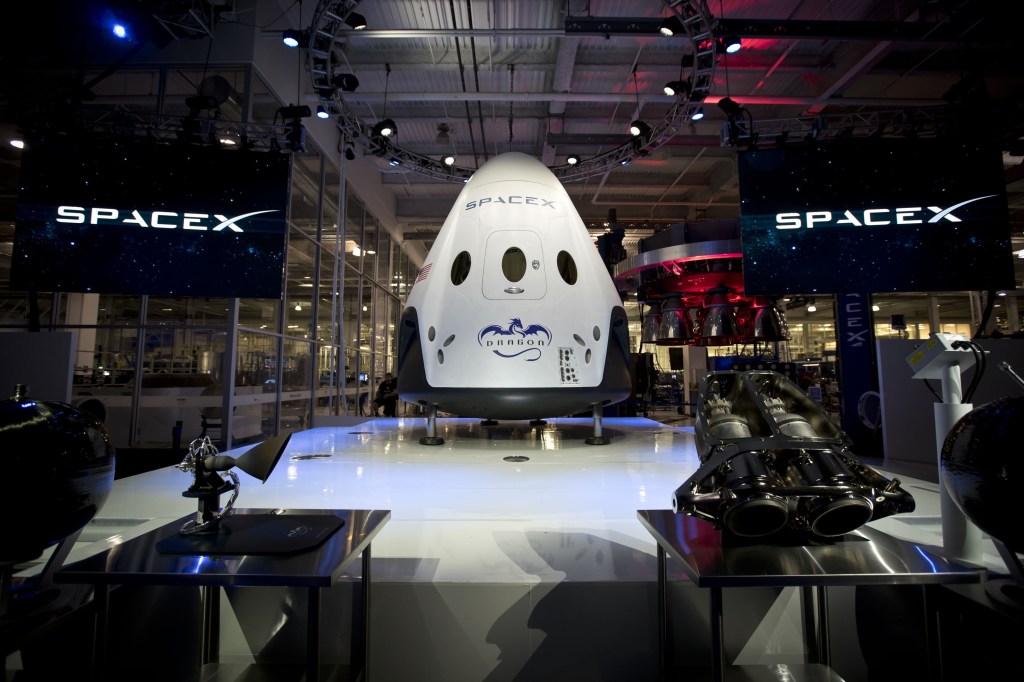
Elon musk is South African-born American entrepreneur and a business magnate. He is one Billionaire in the world. He is the founder and CEO of SpaceX, CEO of Tesla, founder of Boring company and Co-founder of OpenAI and Neuralink. In this blog, we are going the discuss the success story of Elon Musk.

PERSONAL LIFE

Elon Revee Musk was born on 28 June 1971 in Pretoria, South Africa. His father is Errol Musk, a electromechanical engineer, pilot and a sailor. His mother is Maye Musk, who is a model. From a very young age Elon musk was very interested in computers and programming. At the age of 12, he created a video game and sold it to computer magazines for $500. His friends used to tease him calling introverted child. After his parents divorced in 1980, he used to live with his father. After two years, he estranged from his father.

EDUCATION

Musk studied in Waterkloof House Preparatory school and Bryanston High School before graduating from Pretoria Boys High School.After that his high school, he want to study in America and by knowing that it would be easily to enter in America through Canada. In 1988, Musk applied to Canadian passport through his Canadian born mother after obtaining the passport he left South Africa because of the apartheid system, that force to work in South Africa Military. After arriving in Canada, he was failed to stay with his great-uncle instead of that he stayed at a youth hostel. In 1990, he enrolled in Queen’s University in Kingston, in Ontario. After two years, he transferred to University of Pennsylvania. In 1995, he enrolled in Stanford University to study P.H.D in Material Science. Just after two days, he decide to left Stanford University to start an Internet Startup. In 1997, he graduated from University of Pennsylvania with a bachelor degree in Economics and bachelor of Arts degree in Physics.

BUSINESS CAREER

ZIP2

In 1995, Musk with his brother Kambal and Gred Kouri founded ZIP2 company, which provides map, directions to news paper publishing industries. Musk used to write code all days in a week for zip2. In 1999, Compaq(a computer manufacturing company) bought zip2 for $307 million, in which musk got $22 million for his 7 percent share in ZIP2 company.

X.com and PayPal

In 1999, Musk Co-Founded X.com, which was an online e-mail payment company. Within its initial months, the company eventually reached 200000 customers joined the company. In the same year, X.com merged with Confinity, which had its own money-transfer service PayPal. In 2001, the company renamed as PayPal. In 2002, eBay bought PayPal for $1.5 Billion in stock in which Musk was the largest stakeholder with 11.7 percent and received 100 million.

SpaceX

In February 2002, Musk founded Space Exploration Technologies Corporation traded as SpaceX with his $100 million. In 2006, SpaceX launched there first rocket, Falcon 1 but it failed in just 33 seconds. In 2007, SpaceX launched there second rocket, this due to engine failure the engines shutdown completely and the fail to reach the orbit. Another failure for SpaceX. Then SpaceX launched there third rocket, this time also it failed. The failure almost killed the company. After three failed launches, SpaceX successfully launched there 4 rocket. It was the first privately fueled rocket to reach the earth orbit. After the successful launch, SpaceX received $1.6 Billion for Commercial Resupply Service contract.

TESLA

Tesla motors originally known as Tesla was founded by Martin Eberhard and Marc Terpenning. In 2004, Elon Musk become the funders of Tesla and joined Tesla’s board of directors as a chairman. Musk played an active role in Tesla. In 2008, Musk become the CEO of Tesla. Now Tesla is one of the top company of electric cars.

Manali flooded with tourist amid third wave warning; covid protocols getting ignored.

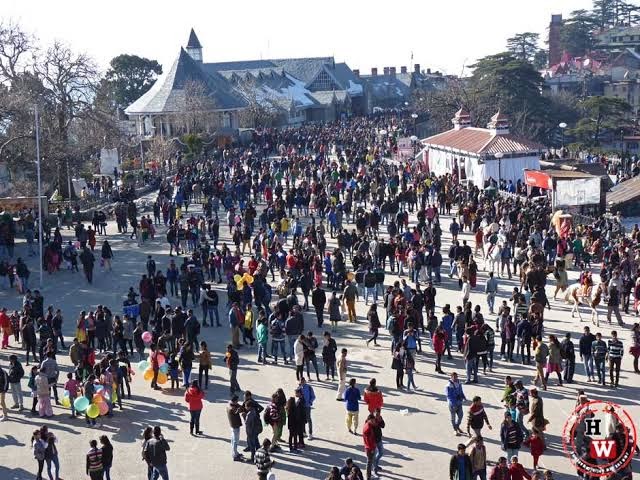
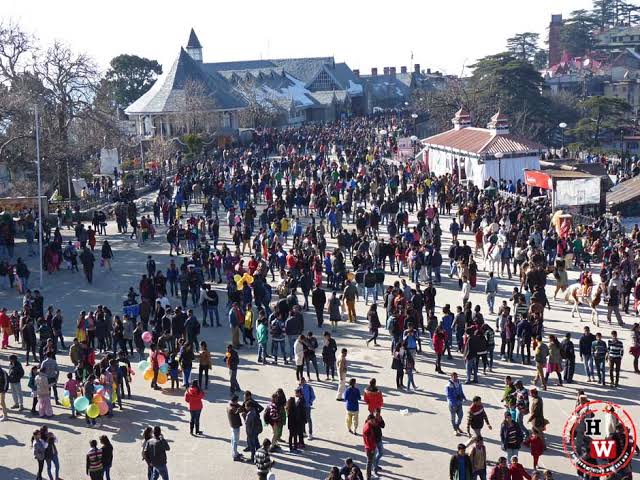
Inspite of third wave warning lakhs of tourists have thronged Himachal Pradesh in less than a month.Videos emerging from Manali and Shimla show that social distancing norms put in place to contain the coronavirus pandemic have gone for a toss.Highways choked, hotels fully booked after the Himachal Pradesh government relaxed Covid-19 related restrictions.Hotel occupancy in major tourist spots, including Shimla, Manali and Dharamshala, is almost full and tourists have been heading to less popular tourist spots in a bid to find accommodation and in guest houses.

Even though the governments, health experts have been warning against large crowds, a sea of tourists was seen in Manali town in Kullu district as the Himachal Pradesh government eased COVID restrictions.the increase in the number of tourists has posed a challenge for the authorities who are struggling to ensure implementation of Covid protocols amid fears of an impending third wave of coronavirus infections.

Reason behind this huge influx of tourist

  1. The prime reason is that the Himachal administration has withdrawn the mandatory need of a negative RTPCR report and e-Covid pass to enter the hill state.
  2. Another reason, behind the rush of tourists, is the ongoing heatwave in North India.
  3. while the third reason is that some people fear that lockdown-like restrictions may be imposed if the third wave of coronavirus strikes the nation. So many have decided to use this opportunity to visit some places

Twitterati reaction

Social media was abuzz with pictures of crowded Manali markets and tourist spots. While some were concerned over the violation of Covid protocols by the tourists, others shared memes and took taunt at the carelessness of the public.

for more news related to covid vist the link👇

https://www.timesnownews.com/india/article/tourism-with-a-vengeance-in-himachal-pradesh-shimla-manali-jampacked-covid-protocols-thrown-to-wind/780836

https://news.google.com/covid19/map