Difference between a Data Analyst and a Business Analyst

In this blog, we are going to see the difference between a Business Analyst and a Data Analyst. 4 main things differtiate a Business Analyst from a Data Analyst in a team. They are Responsibility, Qualification, Skills and Salary. Let’s start off with responsibility.

Responsibilities:

First let’s look at the Business Analyst’s responsibilities. A business analyst works a lot with the clients to understand what they need and what the problem they are having. They are going to work with the managers and try to figure out how an idea is going to work within their team. They next thing they do is, using current data to outline a problem. They are going to go in and actually look at the data and then understand what the client is wanting so that they can describe to the  team what they are trying to solve and what they are looking for. The next thing they are going to do is outline and communicate what the client actually wants the team to do. After that a business analyst can only do all the analysis around that and then hands it off to either the programming team or Data analyst to look into this further and actually solve the problem. The Data Analyst is going to actually work with the programming teams that collect and analyse the data and so the difference between these two is a business analyst typically going to work mostly with the clients and the managers while the Data Analyst is going to work with the programming side. The next thing a Data Analyst is going to do is using pre-existing data to solve a problem and so the business analyst is going to bring the problem and define the problem and bring that to the programming team and the Data Analysts work with developers to actually solve the problem and figure out a solution. Then they have to create reports and dashboards and visually present the analytical findings to the team and that’s basically the part of any Data Analyst job.

Qualifications:

The qualifications for a Data Analyst and a Business Analyst are pretty similar. For a Business Analyst, a person must have a Bachelor’s degree in Business and Administration/ Finance/ Economics or something that is business related. Sometimes one may need a Master’s degree. For the most part, the business analysts mostly have MBA’s. Data Analysts typically don’t have MBA’s. For a Data Analyst, one must have a Bachelor’s degree and that’s typically in something like Computer Science/ Statistics/ Mathematics/ Economics or Finance. They is a lot of overlap between the Business Analyst and the Data Analyst.

Skills:

Business Analyst:

  • SQL
  • MS Access
  • Excel
  • Communication skills
  • Presentation skills
  • People skills

Data Analyst:

  • SQL
  • R/ Python
  • TABLEAu/ Power BI
  • Data Modeling
  • SAS/ SPSS
  • Excel
  • AWS/ Azure

Salary:

Business Analyst:

  • Entry level: 35k – 50k
  • Mid level: 50k – 75k
  • Senior level- 75k – 95k

Data Analyst:

  • Entry level: 45k – 60k
  • Mid level: 65k – 85k
  • Senior level- 85k – 110k

Data Analyst gets a little bit more salary on an average than a Business Analyst. This is because in small companies and at times in big companies, Data Analysts are asked to communicate with clients and in those cases there isn’t even necessary for a Business Analysts.


William Faulkner’s ‘The Sound and the Fury’

The Sound and the Fury is 1929 novel by the American author William Faulkner. Faulkner is widely renowned for his experimentation of the narrative technique called ‘stream of consciousness’. William James in his Principles of Psychology describes it as ‘the unbroken flow of perceptions, memories, thoughts and feelings in the waking mind’. In this narrative technique, the narrator seemingly rants about thoughts and introspections that flows through their mind. The novel is a true testament to this narrative.

The book follows the story of the Compson family who are slowly losing their way in the an postbellum (post-war) American South. The Composn family used to be wealthy and mighty in their olden days, but unlike their ancestors, the current members of the family cannot seem to command the power they once held. The story is divided into four parts. The first part takes place on April seventh 1928 and is narrated by Benjy Compson, the mentally challenged youngest son of the family. The second part takes place eighteen years prior on June second, 1910. It is narrated by the oldest son Quentin who is a student at Harvard. The third part takes place a day before the first part, on April sixth 1928. It is narrated by the headstrong third son Jason Compson. The final part takes place a day after the first part, on April eighth 1928. It is narrated by a seemingly omniscient narrator who records the observations of Dilsey, the family’s loyal black servant.

“Clocks slay time… time is dead as long as it is being clicked off by little wheels; only when the clock stops does time come to life.”

– William Faulkner

The story is fragmented and is narrated in a non-chronological manner. Most of the story has been uncovered based on audience’s interpretation to try and form a coherent narrative of the same. The story narrates the three Compson brothers’ seeming obsession over their sister Caddy, who surprisingly does not narrate any portion of the novel. Despite not having her own narrative, it is clear that Caddy has influenced her brothers and holds a strong presence throughout the novel. Growing up with an incompetent and absent-minded father, Caddy assumes charge of her brothers. This sense of control continues to grow and she proves that she is capable of making her own way in life. Her family disapproves of her promiscuity and banishes her after she gets pregnant out of wedlock.

The first part, narrated by Benjy is the most convoluted of all. It gives a glimpse of what his thoughts and records his accounts on how people around him treat him. His memories are interconnected and they create a domino effect as they are triggered by senses like smell or touch. For instance, a sensation that he experiences in the present triggers a memory of similar sensation in the past. Caddy is the only one who treated Benjy as a normal being and he misses her. They both share a strong emotional bond and lot of his memories are associated to her. The second narrator Quentin has a similar strong bond with Caddy. Being the older brother, he is overprotective of her and even hints of incestual jealousy over her. Quentin is also deeply disturbed by his sister’s promiscuity which is unlike the ‘Southern morals’. He is intelligent and his narration is crudely interspersed with philosophy and existential questioning. The narrator of the third part Jason is strongly against Caddy. He is petty and resentful and blames everyone else around him for his misfortunes. He blames Caddy for the loss of his job which was promised to him by her ex-husband. He is headstrong and clings desperately to the old power that the Compson family once held. He obtains this feeling by controlling his family including Caddy’s child. The narrator of the fourth part Dilsey is the only objective narrator in the family. Despite being a black woman in a post-slavery abolishment era, she serves the Compson family loyally and seems to be the only one holding the family together. Although the family bosses her around, she’s content and dedicated to the work she does and is the only ‘sane’ one among the rest.  

The Sound and the Fury is definitely worth a read to understand the complexities of a non-chronological narrative. It is impossible to be explained through a conventional synopsis as it only scratches the surface of the true depth of the novel. It is riddled with symbolisms and open-ended plotlines that motivates the readers to think for themselves. The realistic aspect of the novel also makes the characters more endearing to the readers. It is easily one of Faulkner’s best.

Reference Links:

Who Says You Have To Get Out Of Your Comfort Zone?

I love my comfort zone. To me, that’s where the real magic happens.

In my comfort zone, I have my family, friends, work, music, books, movies, bike, gym, park, you name it. Everything I love.

And from that place of safety, I’m more open to trying new things and take risks.

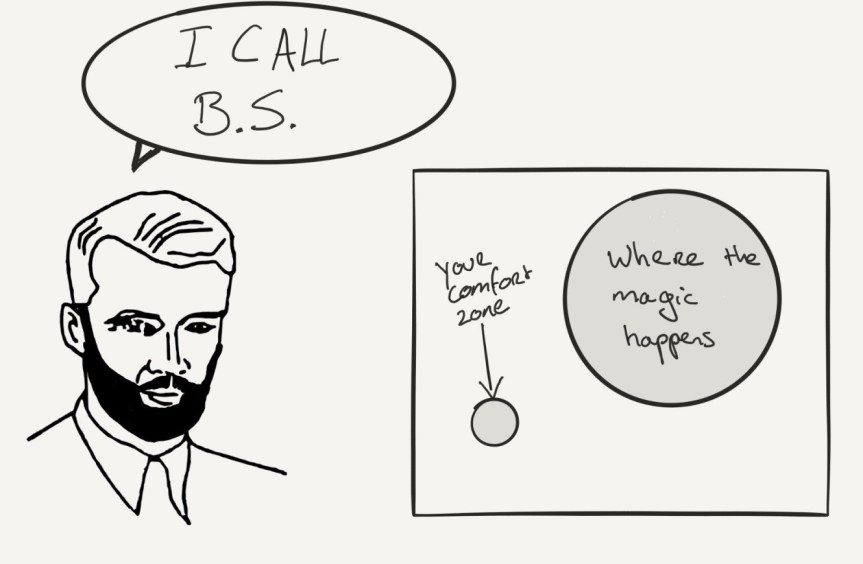
I’ve never believed the idea of that stupid little drawing. You know what I’m talking about, right?

  • “Your comfort zone.” A little circle.
  • “Where the magic happens.” A big circle that stands for the promise of success.

As if “magic” only happens when you step outside your comfort zone; that’s ridiculous. And while we’re at it; why pretend as if your comfort zone is bad? It’s this little pathetic circle displayed against the bigger “magical” circle.

Sure, I’m all about pushing yourself, trying new things, moving forward, growing, etc. But in contrast to many popular self-help people, I don’t believe the comfort zone is a bad thing.

Call me a pessimist. Call me a stoic. But more than anything, I’m merely a practical person.

And practically speaking, you don’t even want to make a huge leap outside your comfort zone. In fact, I believe in the slow road to “magic.”

Where’s The Magic People Talk About?

I’ve found that I do my best work when I don’t worry about money, finding new friends, getting familiar with a new environment, and anything else that is related to always moving around.

But don’t get me wrong. I’m not saying I prefer to stay put. Stagnation is a death sentence to me.

I believe that there are different phases to life. Sometimes, you take it easy, work on your skills, your character — you invest in yourself.

And sometimes, you just go out there and take a chance. Life’s too short to be a wimp.

But those two things are interconnected. If you don’t work on yourself, and if you lack self-confidence, you will never take a risk.

For years I wanted to do what I’m doing now. But instead of jumping out of my comfort zone (which was scary), I slowly took on new and bigger challenges.

First, I got two degrees in business. Then, I started a business together with my father. That was in 2010. And after two years of working on that business for six or seven days a week, I started doing freelance marketing work.

Again, after a few years of freelancing and starting (and failing) other businesses on my own, I took a job at a research advisory firm because I wanted to know how it is to work for a major corporation.

And after doing that for a year and a half, I finally decided to write and talk about productivity, career, and entrepreneurship on the internet.

By then, I‘d been doing the things I write about for more than 10 years. And yet, I don’t have all the answers—I just share the stuff I’ve learned.

So it would be ridiculous if I would join people who scream: “If you want to be successful, all you have to do is step outside your comfort zone. NOW!”

Well, have you ever stepped outside your comfort zone? Even just a little bit counts. And what did you find? A leprechaun with a bag of money?

That comfort zone shit is just a story. It might motivate some people, but you don’t have to believe it if you don’t want to. It’s just like when people claim you have to wake up early if you want to be successful. Says who?

I believe this: If you step outside your comfort zone, there’s only more work waiting for you. It’s not fancy at all. There’s no magic involved. Just blood, sweat, and tears.

Work Your Way Up From A Place Of Comfort

I think that most people who read these type of articles want to achieve something. Maybe you want to quit your job, start a business, grow your business, become an artist, publish a book, whatever.

And you probably also know that it’s not easy. So why do you make things even harder for yourself by doing shit that makes you very uncomfortable?

Instead, start from the very bottom. Build a strong foundation. Get comfortable before you do scary stuff.

“How does that foundation look like?”

If you want to live stress-free, you need enough money in your savings account so you can live and eat for six months in case things go south—see it as a fail-safe system. Again, that’s my practical mind speaking for me.

Make some calculations and figure your what that number is for you. And don’t even think about taking a risk before you have that money on your savings account.

Also, build a skill set that’s worth something. One of the reasons I don’t care about money is because I trust my ability to find work. Even when I go broke tomorrow, I’ll find a way to get work the next day. I’ve invested years and hundreds of thousands of dollars in my education.

The question is: What’s your skill? How can you add value to the world? What problems can you solve?

Other things that complete your foundation:

  1. Family. If you don’t have a family, create one.
  2. Friends. You can’t be friends with everyone. Stick to a few people who also stick to you.
  3. Yourself. Consciously improve your body and mind. Go to bed a little stronger and wiser every night.

Lastly, don’t try to be something you’re not. If you’re an introvert, don’t pretend that you can work in a boiler room. If you’re an extrovert, don’t pretend you can work in solitude.

Stay close to yourself—there’s no point in pushing yourself so badly that your life becomes miserable.

In the end, we all need comfort: It’s one of our basic needs as human beings. But we also need growth. So whatever you do, don’t stay in your comfort zone for too long.

Try to keep moving forward every day: Even if it’s just a tiny step. No magic. Just effort.

ANGER-A MAN’S WORST ENEMY

If you are patient in one moment of anger, you will escape 100 days of sorrow

Chinese proverb

Anger, also known as wrath or rage, is an intense emotional state involving a strong uncomfortable and non-cooperative response to a perceived provocation, hurt or threat.

A person experiencing anger will often experience physical effects, like an increased vital sign, elevated pressure level, and increased levels of adrenaline and noradrenaline. Some view anger as an emotion that triggers a component of the fight or flight response. Anger becomes the predominant feeling behaviorally, cognitively, and physiologically when an individual makes the conscious option to take action to instantly stop the threatening behavior of another outside force. the country term originally comes from the term anger of the Germanic language.

Anger can have many physical and mental consequences. The external expression of anger is found in facial expressions, visual communication, physiological responses, and every now and then public acts of aggression. Facial expressions can range from inward angling of the eyebrows to a full frown. While most of these who experience anger explain its arousal as a result of “what went on to them”, psychologists show that an angry person can fine be mistaken because anger causes a loss in self-monitoring capacity and objective observability.

Modern psychologists view anger as a standard, natural, and mature emotion experienced by virtually all humans now and then, and as something that has functional value for survival. Uncontrolled anger can, however, negatively affect personal or social well-being and impact negatively on those around them. While many philosophers and writers have warned against the spontaneous and uncontrolled fits of anger, there has been disagreement over the intrinsic value of anger. the problem of handling anger has been written about since the days of the earliest philosophers, but modern psychologists, in contrast to earlier writers, have also discovered the possible harmful effects of suppressing anger.

PHYSICAL EFFECTS OF ANGER

Anger triggers the body’s ‘fight or flight’ response. Other emotions that trigger this response include fear, excitement, and anxiety. The adrenal glands flood the body with stress hormones, like adrenaline and cortisol. The brain shunts blood off from the gut and towards the muscles, in preparation for exercise. Heart rate, pressure, and respiration increase, the vital sign rises and therefore the skin perspires. The mind is sharpened and focused.

HEART PROBLEMS WITH ANGER

The constant flood of stress chemicals and associated metabolic changes that go with ongoing unmanaged anger can eventually cause harm to many different systems of the body.

Some of the short and long-term health problems that have been linked to unmanaged anger include:

  • headache
  • digestion problems, such as abdominal pain
  • insomnia
  • increased anxiety
  • depression
  • high blood pressure
  • skin problems, such as eczema
  • heart attack
  • stroke

Anger doesn’t solve anything, it builds nothing, but it can destroy everythinng

Lawrence Douglas Wilder

EXPRESSING ANGER IN HEALTHY WAYS

If you’re feeling out of control, walk-off from matters temporarily, until you calm down.

Recognize and accept the emotion as normal and a part of life.

Try to pinpoint the precise reasons why you are feeling angry.

Once you have got identified the matter, consider springing up with different strategies for a way to remedy true.

Do something physical, like going for a run or playing sport.

Talk to someone you trust about how you’re feeling.

HOW TO DEAL WITH ARGUMENTS

When you have argued, it’s easy to remain angry or upset with the opposite person. If you do not resolve an argument with someone you see often, it is often an uncomfortable experience.

Talking to the person about your disagreement may or might not help. If you are doing approach them, ensure it’s in an exceedingly helpful way. Stay calm and communicate openly and honestly.

If the person can be violent or abusive, it should be best to not approach them directly. you may refer to them over the phone to determine if they’re hospitable finding an answer to the argument if you’re feeling safe to try and do so. it’d be helpful to ask someone to be there with you, to allow you support after you make the decision and afterward.

Try and tell the person how you are feeling as a result of their opinion, but avoid trying to inform them how they feel. it’s possible to comply with disagree. you’ll need somebody else to assist you to resolve the disagreement. you’ll ask a trusted person to act as a go-between and facilitate your both get another view on the argument.

Bali – A Dream Destination

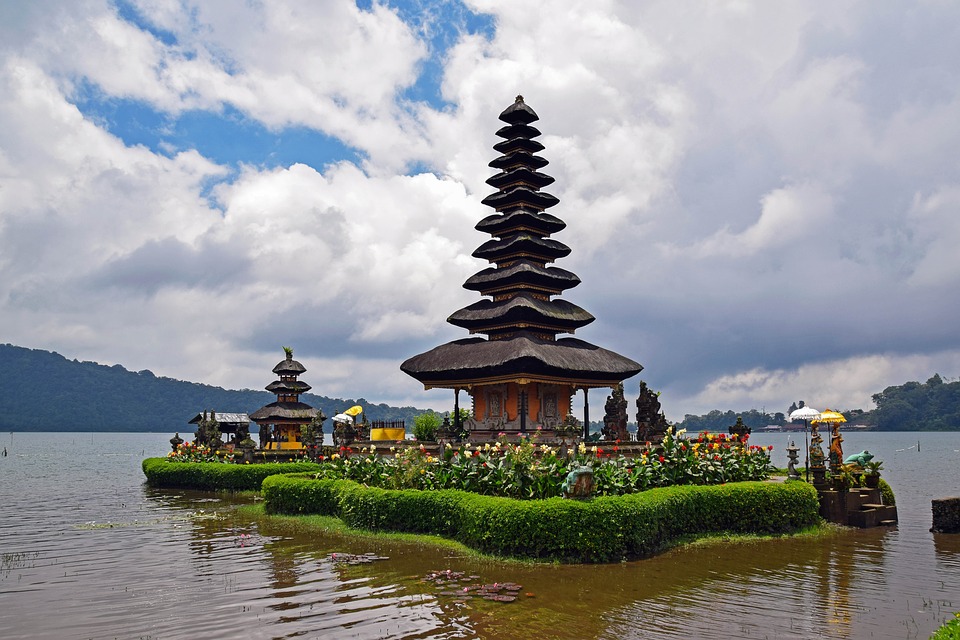
Bali is the only Hindu-majority province in Muslim-majority Indonesia, with 86.9% of the population adhering to Balinese Hinduism. Bali is a province of Indonesia and the westernmost of the Lesser Sunda Islands. In east of Java and waste lombok , there is a few smaller neighbouring islands, notably Nusa Penida, Nusa Lembongan, and Nusa Ceningan. The town of Ubud is known as Bali’s cultural center. The provincial capital, Denpasar, is the most populous city in the Lesser Sunda Islands and the second-largest, after Makassar, in Eastern Indonesia.

Scince the 1980’sIndonesia’s main tourist destination, with a significant rise in tourism. Tourism-related business makes up 80% of its economy. Bali is renowned for its highly developed arts, including traditional and modern dance, sculpture, painting, leather, metalworking, and music. Bali is part of the Coral Triangle, the area with the highest biodiversity of marine species especially fish and turtles. In this area alone, over 500 reef-building coral species can be found.

Why Bali is dream destination for all?

Bali has a ‘One-of-a-kind-wildlife’. Bali also has some most complex sites in the world. Beyond stunning beaches and magical temples, Bali has virtually every kind of natural beauty. Glorious mountainous areas with lush greenery, scenic lakes, gorgeous waterfalls, iconic rice fields, flower gardens, gushing sacred rivers and secret canyons all make up the island’s landscape.

Many people visit it for those mesmerizing beach places, exotic landscape and animals are also point of attraction. You can climb mountains, meet landscapes and swim a ocean life all together.

Bali, Indonesia

Is Bali cheap or expensive?

A visit to the island of Bali is essential part of any visit to Indonesia and must not be missed, but it would be wise to plan a separate budget for this portion of your trip. Bali is already the most expensive tourist destination in Indonesia and is slowly becoming more expensive as tourists discover more of Bali, but cheap food and accommodation are still widely available if you don’t mind basic accommodations, stick to your budget, and bargain respectfully for prices.The easiest way to save money is to leave the more popular destinations and head to the smaller towns and villages where tourists are still less frequent and you will save greatly on accommodations and food.

Why people say that Bail is cheap?

We usually hear about how low the prices are in Asia. Bali is one of the part of Asia. To make that day as real as possible, I found real restaurants and hotels. The prices are from real menus and stores can be found online. Besides that, Bali is extremely cheap because daily expenses are way lower than in other countries. Meals, hotels rooms, shopping, transport fees, and every other expense are all much cheaper. After reaching bail,it costs around $80 dollars per day to live a great life in Bali (as experiment says).

Top 5 must visit places in Bali :-

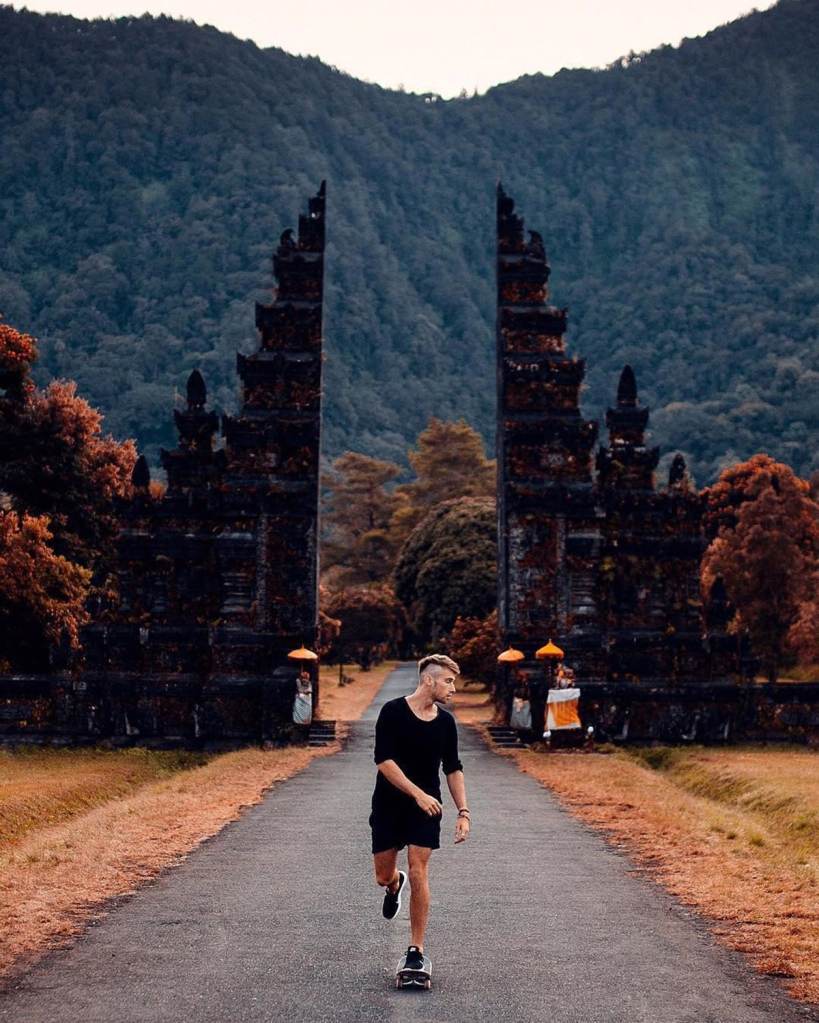
1. Handara Golf Course Gate

The iconic gate to a pathway to serenity has also become one of the hottest spots for Instagram posts lovers. Aside from the already gigantic exotic traditional Balinese gate, pamper your eyes and decorate your pictures with an amazing green surrounding and the silhouettes of green hills as your backdrop. With its beautiful green scenery and peaceful ambiance, it is no wonder people visiting Bali would squeeze this into their itinerary. If you are looking for a couple photoshoot then that’s your ultimate destination.

Handara Golf Course Gate

2. Ubud :-

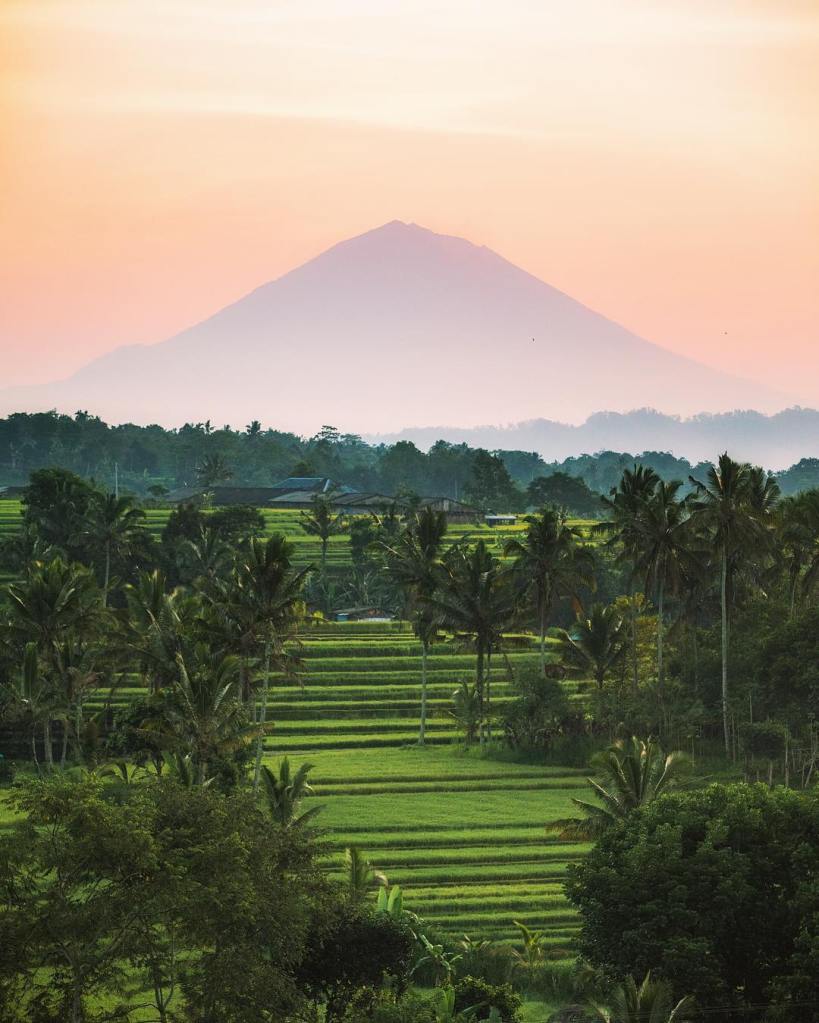
Ubud is the ultimate place to enjoy various traditional performances, from the notorious Kecak fire dance to local youths practicing their gamelan in the town hall. The surrounding Ubud District’s rainforest and terraced rice paddies, dotted with Hindu temples and shrines, are among Bali’s most famous landscapes. You can caught various surprise anywhere from the Royal Palace to public places and restaurants.

Hanging Garden Cottage, Ubud
Ubud, Monkey Forest

3. The Bali Swing :-

The Bali Swing is getting all the hype nowadays with people visiting just for the visitors nowadays. Be sure to visit at the right time because the hype with this spot and the stunning view attracts many visitors. Several different swings varying heights overlook a beautiful palm tree valley with a river. This gives out the real Balinese jungle ambiance that’ll mesmerized your heart. It is also important to click the right time for visti and best to check on the weather and best to go in the golden hours of the evening or early mornings with the soft light for the best picture effect.

Bail Swing

4. Tirta Ganga Water Palace :-

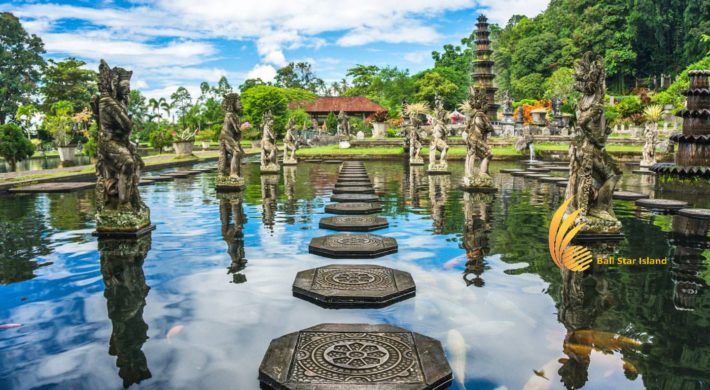
Famous for its lavish water garden, Tirta Gangga has become one of the destinations that attract many aesthetic enthusiasts to come and take pictures in. This is the most visited picture spot in Bail. The mystical ambiance of serenity from the traditional Balinese architecture will surely make impact in your soul. It is located in the village of Ababi, an approximate 75 km east of Denpasar.

Tirta Gangga Temple
Fish Pond

5. Kelingking Beach Nusa Penida :-

Bali has its fair share of stunning beaches and is even popular around the world because of these natural beauties. Kelingking Beach, however, brings it all up to a whole new level. You can also view the hidden beach of Kelingking in between these cliffs and only accessible through this climb then continuing down a short yet very steep descend through some stairs provided.As Bali’s most breathtaking places to visit, Kelingking Beach definitely deserves a spot on your must-do-list in Bali. The cliffs are steep and lack of maximum safety, but it is still a safe hike if you are careful of your steps. The sceneries on the viewpoint are out of this world with a view looking down to the clear blue waters and the obvious shape of the cliffs as a T-Rex.

Kelingking Beach stairs

After visiting all those places we must say Bail is worthy to be a ‘Dream Destination’. It’s actually incredible Bail, Indonesia.

Through His Eyes

After an interview with a group of rapists, some interesting facts came out about how these rapists “choose” their victims.

 • The first thing they always notice in their victim is the “hairstyle”. They probably go after the women whose hair is tied in a ponytail, braid, or bun. Since these hairdos will make it easy for them to grab.
They usually go behind women who have long hair.

 • The second thing they look at is the clothing style. They’ll follow women whose apparel will be simple for them to remove.
It is also seen that they usually carry scissors around to cut clothing.

 • They focus on those ladies who are occupied on a call or searching for something through their purse because such women can be easily overpowered during such situations as they are distracted.


• They are bound to attack in the early
mornings between 5:00 am to 8:30 am as there wouldn’t be anyone to help around.

 • They also mentioned the place where they can easily attack their victims. Parking lots, garages, restrooms are most common among them.

 • These rapists don’t for the most part carry a weapon with them because rape carries a 3-5 years sentence whereas, rape with a weapon carries a 15-20 years sentence.

 • They mentioned that they don’t go after women who carry umbrellas or any other comparable object as it can be utilised from distance.

These are some common things found through the interview which will always help you to stay aware.

How to be aware or save yourself?

 • Always carry a pepper spray with you
 • Pinch the assailant in some sensitive parts very hard such as under the arms, inner thighs.
 • After this, always go for the groin!
It’ll be extremely painful for them.
 • You can also grab his fingers and twist them as much as you can.
 • Always be aware of your surroundings especially when you notice some odd behavior.

Programming languages that you must learn! [Part 1]

[By Bhoomika Saini]

Photo by ThisIsEngineering on Pexels.com

Each programming language is designed for a specific purpose and has its relative merits and demerits. Also, the answer to the most useful programming language to learn is subjective and depends on your familiarity with coding.

Below, I’ve listed some of the Most Useful Programming Languages you can learn right now!

  1. PYTHON

Python language developed by Guido van Rossum. It was first released in 1991. It is one of the best programming language to learn which supports multiple systems and platforms.

It is one of the best coding language to learn that allows you to scale even the most complex applications with ease. It is used in Web and Internet Development, Scientific and Numeric applications, Desktop GUIs, Business applications. It is widely used in AI and Machine Learning space. Python is considered one of the easiest programming languages to learn!

2. JAVA

James Gosling primarily designed Java at Sun Microsystems in the year 1996. Java offers APIs for different activities like Database connection, networking, XML parsing, utilities, etc.

It is one of the best programming language to learn that has large number of open source libraries. Memory management in Java is quite expensive! Learning Java is simple and easy. Java mostly used for developing Android apps, web apps, and Big data.

3. C++

C++ is a programming language that was developed by Bjarne Stroustrup in 1983.It is a popular language, and thus, there are many compilers and libraries. Other programming languages like C, C#, and Java have very similar syntax to C++, make it easy to learn for everyone who knows C++.

It is one of the popular coding languages which has no garbage collector running in the background. C++ program can’t support garbage collection or Dynamic Memory Allocation. C++ is widely used in Game Development, Advance Computations, and Graphics Compilers.

Photo by Christina Morillo on Pexels.com

4. JAVASCRIPT

JavaScript was earlier called Live Script when it first shipped in with Netscape Navigator 2.0 in September 1995. Later, it was renamed as a JavaScript.

JavaScript is one of the best coding language to learn which is relatively simple to learn. It is one of the best programming language to learn which can work smoothly with other languages and can be used in a huge variety of applications. JavaScript only allows single inheritance, so multiple inheritances are not possible. JavaScript usage include web/mobile app development, game development, and desktop app development.

5. SWIFT

Apple developed Swift in 2014 for Linux and Mac applications. 

An open-source programming language that is easy to learn, Swift supports almost everything from the programming language Objective-C. Swift requires fewer coding skills compared with other programming languages, and it can be used with IBM Swift Sandbox and IBM Bluemix. Swift is used in popular iOS apps like WordPress, Mozilla Firefox, SoundCloud, and even in the game Flappy Bird.

5. GO

Go was developed by Google in 2007 for APIs and web applications. Go has recently become one of the fastest-growing programming languages due to its simplicity, as well as its ability to handle multicore and networked systems and massive codebases.

Go, also known as Golang, was created to meet the needs of programmers working on large projects. It has gained popularity among many large IT companies thanks to its simple and modern structure and syntax familiarity. Companies using Go as their programming language include Google, Uber, Twitch, Dropbox, among many others. Go is also gaining in popularity among data scientists because of its agility and performance.

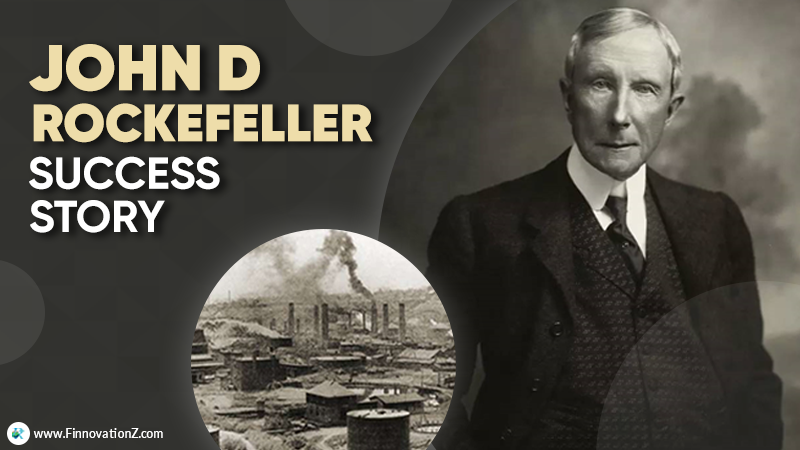
JOHN D ROCKEFELLER SUCCESS STORY

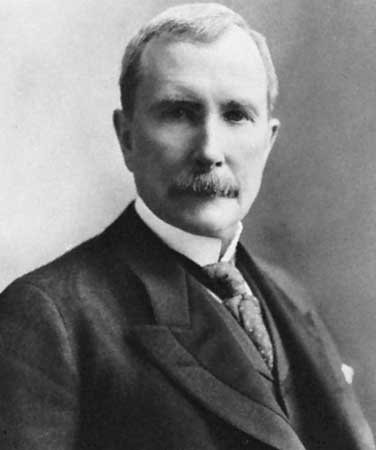
John D. Rockefeller was born July 8, 1839, in Richford, New York, about midway between Binghamton and Ithaca. His father, William Avery Rockefeller, was a “pitch man” — a “doctor” who claimed he could cure cancers and charged up to $25 a treatment. He was gone for months at a time traveling around the West from town to town and would return to wherever the family was living with substantial sums of cash. His mother, Eliza Davison Rockefeller, was very religious and very disciplined. She taught John to work, to save, and to give to charities.
From 1852 Rockefeller attended Owego Academy in Owego, New York, where the family had moved in 1851. Rockefeller excelled at mental arithmetic and was able to solve difficult arithmetic problems in his head — a talent that would be very useful to him throughout his business career. In other subjects Rockefeller was an average student but the quality of the education was very high.
In 1853, the Rockefellers moved to Cleveland, Ohio, and John attended high school from 1853 to 1855. He was very good at math and was on the debating team. The school encouraged public speaking and even though Rockefeller was only average, it was a skill that would prove to useful to him.
Early Business Career: 1855-1863
In the spring of 1855 Rockefeller spent 10 weeks at Folsom’s Commercial College — a “chain College” — where he learned single- and double-entry bookkeeping, penmanship, commercial history, mercantile customs, banking, and exchange. From his father he had learned how to draw up notes and other business papers. His father was very meticulous in matters of business and believed in the sacredness of contracts.
In August of 1855, at the age of 16, Rockefeller began looking for work in Cleveland as a bookkeeper or clerk. Business was bad in Cleveland at the time and Rockefeller had problems finding a job. He was always neatly dressed in a dark suit and black tie. Cleveland was not a large city in 1855 and Rockefeller could easily visit every business in under a week’s time. He returned to many businesses three times. Finally, on September 26, 1855, he got a job as an assistant bookkeeper with Hewitt & Tuttle, commission merchants and produce shippers.
Rockefeller soon impressed his employers with his seriousness and diligence. He was very exacting and scrupulously honest. For example, he would not write out a false bill of lading under any circumstances. He went to great lengths to collect overdue accounts. He was pleasant, persistent, and patient, and he got the company’s money from the delinquents.
During the Civil War their business expanded rapidly. Grain prices went up and so did their commissions. Most of their selling was done on commission, so Clark & Rockefeller took no risks from price fluctuations. Rockefeller’s style was very precise and calculated. He was not a gambler but a planner. He avoided speculation and refused to make advances or loans.
Rockefeller was extremely hard working. He traveled extensively, drumming up business throughout Ohio, and then would go to the banks and borrow large sums of money to handle the shipments. This aggressive style built the business up every year.

However, by the early 1860s, Rockefeller realized that the future of the commission merchant business in Cleveland was going to be limited. He had become convinced that the railroads were going to become the primary means of transportation for agricultural commodities. This would be to the disadvantage of Cleveland, because its position as an important Lake Erie port was its primary transportation advantage. He saw that the rising grain output of the Midwest and the Northwest of J. J. Hill would change the nature of the business for good. The huge elevators on Lake Michigan and the flour-millers of Minneapolis would be the dominant players in the business. Rockefeller came to believe that the future of Cleveland lay in the collection and shipment of raw industrial materials — not agricultural commodities. This would allow Cleveland to exploit its geographical advantages — mid-way between the Eastern seaboard and Chicago — and accessible to both rail and water transportation. He saw his chance in 1863 — 
Rockefeller Exits: 1892-1897
During 1891-92 all the evidence suggests that Rockefeller had a partial nervous breakdown from overwork. He lost all of his hair, including his eyebrows, and suffered from ill health in the early 1890s.
During this period Rockefeller’s wealth had increased to such an extent that his major problem was what to do with it all. He solved this problem by hiring Frederick T. Gates in September of 1891 as a full-time manager of his fortune. By this time, Rockefeller was literally inundated with appeals from individuals and charities for funds. Gates not only removed this burden; he also oversaw all of Rockefeller’s investments, which were becoming huge in their own right. For example, by 1897 Rockefeller owned large holdings of the Missabe iron range in Minnesota, a railroad to carry the ore to Lake Superior, and a fleet of huge ore-carrying lake steamers. In 1901 Rockefeller sold his iron ore-related business to J.P. Morgan for $80,000,000 with an estimated profit of at least $50,000,000 — a huge fortune in its own right, but it was just one of his investments. Morgan added the Rockefeller properties to the U.S. Steel Corporation.
By 1896, Rockefeller stopped going to his office daily and in 1897 he retired, at the age of 58. He took part in some management activity until 1899 but none to speak of thereafter. John Archbold ran Standard Oil from the mid-1890s onward. Archbold disliked prominence and asked Rockefeller to remain as the nominal president of Standard. Not publicly announcing his retirement was a great mistake on Rockefeller’s part. Rockefeller had resisted the temptation to exploit the Standard’s near-monopoly position by raising prices “too” much. Although Rockefeller’s pricing policies did result in some “monopoly profits” for the Standard, they were fairly mild. Not so Archbold. He raised prices aggressively, and the dividends rolled in. The consequence was that Rockefeller got all the blame for the policies even though he had almost no further role in management.
Retirement and Philanthropy
From the mid-1890s until his death in 1937, Rockefeller’s activities were philanthropic. Rockefeller’s fortune peaked in 1912 at almost $900,000,000, but by that time he had already given away hundreds of millions of dollars. His son, John D. Rockefeller, Jr. in 1897 joined Gates in the full time management of the fortune.
The University of Chicago — which Rockefeller was largely responsible for creating — alone received $75,000,000 by 1932.
He set up, at the urging of his son, the Rockefeller Institute for Medical Research (now Rockefeller University) and his gifts to it totaled $50,000,000 by the 1930s.
He founded the General Education Board in 1903 (later the Rockefeller Foundation). The General Education Board helped to establish high schools throughout the South by providing free professional advice on improving instruction and education. The effort was a cooperative one, and local money was used to build the high schools. In 1919, Rockefeller donated $50,000,000 to the Board to raise academic salaries, which were very low in the wake of WWI.
The Rockefeller Foundation was officially established in 1913 and Rockefeller transferred $235,000,000 to it by 1929.
In 1909, Rockefeller established the Rockefeller Sanitary Commission which was largely responsible for eradicating hookworm in the South by 1927.
When Rockefeller died, on May 23, 1937, his estate totaled only $26,410,837. He had given most of his property to his philanthropies and to his son and other heirs.
Rockefeller was a Schumpeteran entrepreneur. He clearly changed “the stream of the allocation of resources over time by introducing new departures into the flow of economic life” by creating the modern oil industry.

Last, but not least, he set the standard for philanthropy. Just the eradication of hookworm in the South alone would merit his place as one of the great humanitarians of the 20th Century. But his reputation was so sullied that he never received the credit that he was due for this great act on behalf of humankind.

“Don’t be afraid to give up the good to go for the great.”

How to study abroad?

Every year lakhs of students goes to study in abroad. The percentage of students studying in abroad is tend to growly. US, UK AND CANADA are the most preferred destination to study abroad. Every student wants to study in abroad at top university, but some don’t know the process and how to apply for that? This blog tells you to advantages of studying abroad, how to apply for bachelors degree, how to apply for masters degree, and additional information.

ADVANTAGES OF STUDYING IN ABROAD

  1. You will get to know about the world, new cultures, new people from all over the world.
  2. Good job and career opportunities.
  3. Good quality of education.
  4. Personal development.
  5. Good exposure to new culture.
  6. Advanced learning techniques.
Photo by RODNAE Productions from Pexels

APPLYING TO BACHELORS DEGREE

If you want to study yours bachelors degree in abroad, then you should to start your preparation from your 9 or 10 grade. First select your subject in which you want do your bachelors. Then select a country which suits and then research about the universities and then select some universities to apply. Know the university requirements, Different universities have different requirement and different selection process. You have to write a standardized test called SAT. SAT stands for Scholastic Assessment Test is a standardized test developed by college broad and Education Training Service(ETS).The SAT score is used for seeking admission in undergraduation programs. SAT consist of two section one is reading section which consist of 800 marks and math’s section also consists of 800 marks. SAT score is valid for 5 years . A total of 85 countries accept SAT score for giving admission to undergraduate programs. After writing SAT, you have to write two SAT subjects. One in Mathematics(Math’s 1 or Math’s 2) and one in science(Physics or Chemistry or Biology). Apart from that you have to send your High school transcripts, Letter of recommendation, Statement of purpose to the university which you are applying.

APPLYING TO MASTERS DEGREE

Many students prefer to study masters in abroad if you are in them, then select the country suits for you. Research about the universities and select the universities which suits you . The process is same for masters, but you to write a standardized test called GRE. GRE stands for Graduate Record Examination is a standardized test which is used for getting admission in masters program. GRE score is valid for 5 years. A total of 160 countries write GRE over 700 GRE examination center. GRE exam consist of one analytical writing section, two quantitative multiple choice section, two verbal multiple choice section. The maximum score in GRE is 340. Other than that you also require to send Letter of recommendation(from your teachers), Statement of Purpose, transcripts of undergraduation to the university you are applying.

ADDITIONAL INFORAMTION

If your applying for undergraduation or postgraduation program in a English speaking country like US or UK. You have to write English proficiency test TOEFL or IELTS. TOEFL stands for Test Of English As a Foreign Language is standardized test to measure English language ability of non-natives speakers. This test is accepted by more than 11,000 universities all over the world. This test consist of 4 sections reading, writing, speaking, listening. The maximum marks in TOEFL are 120. IELTS stands for International English Language Testing System is also a standardized test to measure English language ability of non-native speakers. IELTS is accepted by 10,000 universities all over the world. This test consist of 4 section reading, writing, speaking, listening. The maximum marks in IELTS is 9.0 points.

National Doctor’s Day . Celebrate and Appreciate The Life Savers of the World .

It is said ,
“diamonds are chunk of coals that did well under pressure”

Do you know about human diamonds ?
Think again, you might know them .
Yes you might have seen them ,even talked ,shared your problems ,they might have shined for you ,helped you solve your issues physically , mentally , emotionally .

Yes ,yes you are going the right way pal.
They help us without any time limit . They are available anytime whether it’s day or night .


Yes you got their dress code right,
They wear white coats and stethoscopes as their ornament .

Finally, here’s your answer.
They are doctors.


Amid the Covid-19 outbreak, when the world had no hope , when there was no Almighty omnipresent to save the world , when death threatening situation have elevated tremendously, the medical doctors have been working 24/7 risking their lives and desperately making an attempt to save several lives. Standing at the frontline battle of Covid -19 , facing the life threatening situations , instead of thinking about their own safety and their family’s safety they choose to serve the nation, putting their own lives at risk with selfless determination for the sake of saving lives despite of every possible chance of not seeing the world again .


The doctors and the staff have gone above and beyond everything one can ever expect them to during this Covid-19 battle.

Just like diamonds , taking pressure just to shine for others .
Doctors are just humans with white coats but with extraordinary will to serve and save people .

No words are enough to appreciate their service.
But one can always give a day to celebrate and appreciate their commitments.

In India , July 1st is celebrated as National Doctor’s Day .
A day when one can show their gratitude for all the support, dedicated service, care, and humbleness and surely the effective treatment by doctors .


National Doctor’s Day :-

Every year, July 1 is celebrated as National Doctors’ Day by the Indian Medical Association (IMA).
The day is dedicated to all the doctors and healthcare workers who have been serving the people by risking their lives.


History of Doctor’s Day in India :-


The National Doctor’s Day 1st July was first observed in 1991, commemorating the birth and death anniversary of former Bengal’s Chief Minister Dr Bidhan Chandra Roy to honour his contribution in serving humanity as a doctor .


About Dr Bidhan Chandra Roy :

Bidhan Chandra Roy , was an Indian physician, educationist, philanthropist, freedom fighter and statesman who served as the Chief Minister of West Bengal .


Dr Roy was a great doctor who made an enormous contribution to the medical field. He was born on July 1, 1882.


On 1 July 1962, his 80th birthday, around 11 in morning , after treating his patients , he died . He had gifted his house for running a nursing home named after his mother, Aghore Kamini Devi. He had also constituted a trust for his properties at Patna to carry out social service, with eminent nationalist Ganga Sharan Singh (Sinha) .


He played a significant role in establishing medical institutions like Jadavpur T.B. Hospital, Chittaranjan Seva Sadan, Kamala Nehru Memorial Hospital, Victoria Institution (college), Chittaranjan Cancer Hospital and the Chittaranjan Seva Sadan for women and children.
He was responsible for setting up a framework for dispensing grant-in-aid to hospitals and charitable dispensaries
He was honoured with Bharat Ratna, on February 4, 1961.

July 1 is celebrated as ‘National Doctor’s Day’ as National Doctors’ Day by the Indian Medical Association (IMA) in account of his service and for being the pedestal of the medical line in India .

Celebration around the world :-

The date of celebrating National Doctor’s Day varies from nation to nation depending on the event of commemoration that is marked as the national Day of celebrating the service of doctors.


Cards or red carnations are gifted to doctors , physicians and their spouses to celebrate their commitment and service by patients and staff.
A flower is also placed on the graves of deceased physicians.

Red Carnations bouquets are specially gifted to doctors because of its specific symbol. Red carnations symbolises love, affection and sacrifice which represents the gratitude of a patient towards his healthcare professionals.

The day is celebrated by health care organizations as well .


Significance The National Doctor’s Day :-

This day is observed to pay heed towards the medical doctors’ role and responsibilities in serving lives. The day is supposed to recognise their functions and obligations as well as their service of healing mankind .
A good doctor who works hard to serve humanity and handle his/her patient with care always deserves appreciation . Thus , doctor’s day is a day to celebrate and appreciate their selfless service.


“Medicines can cure, but a good doctor’s inspirational words can give the strength to fight from within “

Being at hospital can be a terrible experience for a person but a good doctor not only provides the best treatment but also strength to fight the disease and treat a person not only physically but also mentally and emotionally with their positive thoughts .

Oncologists, pediatricians, cardiologists, neurologists, general physicians, dermatologists, gynecologists, and psychiatrists , all such kinds of doctors take the Hippocratic Oath and through this oath, they swear to follow ethics laid down for medical practices.

Doctor’s services are the foremost necessary for life.
Doctors all over the world are given the stature next to God because of their life saving role play .

So let us all appreciate and show your gratitude to the Warriors and Life Savers for all their commitments and selfless deeds .

Walking

Suppose that when you went to your Dr. for a regular health check-up. There your Dr. has given you your health prescription in which you are recommender a few medicines and surprisingly a simple thing to do every day and that is walking. Well then you will ask more questions and the Dr. will say walking has various health benefits and you need it too.

What is the thing which we are been doing when we were just a year old or when a newborn is born is born in a family there when the baby start walking Is also considered or taken walking as a strong or proper growth of a child?

Well, there are various benefits of walking daily, anyone can take these benefits by following a consistent walk every day. Various health researchers have found that there are chances that walking may improve your lifespan.

Are there only few benefits of walking? The answer to this question is no there NO there are many benefits for just walking, by just taking a small amount of time from your one and only precious lifestyle everyday just for walking. Seriously it will only take few moments or little span of time and you will get various benefits by following this walking ritual daily and after some time it will become your habit (As it is said that it only takes 21 days to form a habit if you are consistent or regular.

The benefits of walking

  • Can help you tone your legs and reduces excess fat from your body.

While walking regularly for about 30 minutes daily will help burn calories and will reduce the excess amount of fat stored in you body and can help slim down your legs. When you walk your legs works constantly which will help reduce your body fat percentage.

  • Can help is lowering you heart risk.

While doing any sort of physical activities you heart pumps blood the proper way to each part or organ of your body same is while walking for some time period daily will also reduces your heart risk

  • Can help in reducing blood sugar level.

Walking is also one kind of physical activity and while doing so or while walking daily the blood sugar level will reduce which may results in getting you benefits of that.

  • Can help increase your lifespan.

Studies have shown that by walking daily people’s life span may increase. People who walk daily tend to live more than people who do not.

  • Can improve your immune system.

People who walk daily for a certain amount of time of their day tends to get less sick or even if they get Sikh they will we able to fight with the fever and get healthier faster than normal people. SO, while walking your immune system will become stronger.

There are more benefits pf while walking and that is. When we people walk in a society there will be less crimes. Can develop your social skills and help reduces depression.

The coronavirus (COVID‐19) pandemic’s impact on mental health

Throughout the world, the public is being informed about the physical effects of SARS‐CoV‐2 infection and steps to take to prevent exposure to the coronavirus and manage symptoms of COVID‐19 if they appear. However, the effects of this pandemic on one’s mental health have not been studied at length and are still not known. As all efforts are focused on understanding the epidemiology, clinical features, transmission patterns, and management of the COVID‐19 outbreak, there has been very little concern expressed over the effects on one’s mental health and on strategies to prevent stigmatization. People’s behavior may greatly affect the pandemic’s dynamic by altering the severity, transmission, disease flow, and repercussions. The present situation requires raising awareness in public, which can be helpful to deal with this calamity. This perspective article provides a detailed overview of the effects of the COVID‐19 outbreak on the mental health of people.

KIDS AND TEENS AT RISK

Kids, away from their school, companions, and partners, remaining at home can have numerous inquiries concerning the flare-up and they look toward their folks or guardians to find the solution. Not all kids and guardians react to pressure similarly. Children can encounter nervousness, trouble, social detachment, and an oppressive climate that can have short‐ or long‐term consequences for their psychological wellness. Some normal changes in youngsters’ conduct

To assist with balancing negative practices, expects guardians to try to avoid panicking, manage the circumstance carefully, and answer the entirety of the kid’s inquiries as well as could be expected. Guardians can set aside some effort to converse with their youngsters about the COVID‐19 flare-up and share some sure realities, figures, and data. Guardians can assist with consoling them that they are protected at home and urge them to participate in some solid exercises including indoor games and some physical and mental activities. Guardians can likewise foster a home timetable that can assist their youngsters with staying aware of their investigations. Guardians should show less pressure or nervousness at their home as kids see and feel negative energy from their folks. The contribution of guardians in solid exercises with their youngsters can assist with lessening pressure and nervousness and carry help to the general circumstance.

 ELDERS AND PEOPLE WITH DISABILITIES AT RISK

Older individuals are more inclined to the COVID‐19 flare-up because of both clinical and social reasons, for example, having a more vulnerable safe framework or other basic medical issue and removing from their families and companions because of their bustling timetables. As indicated by clinical specialists, individuals matured 60 or above are bound to get the SARS‐CoV‐2 and can create a genuine and life‐threatening condition regardless of whether they are healthy.

Physical separating because of the COVID‐19 episode can have exceptional adverse consequences on the emotional wellness of the old and handicapped people. Actual disengagement at home among relatives can put the old and incapacitated individual at genuine emotional wellness hazard. It can cause tension, trouble, and prompt a horrible circumstance for them. Old individuals rely upon youthful ones for their day by day needs, and self‐isolation can fundamentally harm a family framework. The old and crippled individuals living in nursing homes can confront outrageous psychological wellness issues. Be that as it may, something as straightforward as a call during the pandemic episode can assist with supporting old individuals. COVID‐19 can likewise bring about expanded pressure, uneasiness, and gloom among older individuals previously managing psychological well-being issues.

Specialists, medical caretakers, and paramedics functioning as a front‐line power to battle the COVID‐19 flare-up might be more defenseless to foster emotional well-being indications. Dread of contracting an illness, long working hours, inaccessibility of defensive stuff and supplies, patient burden, inaccessibility of powerful COVID‐19 prescription, passing of their associates after openness to COVID‐19, social separating and disconnection from their loved ones, and the critical circumstance of their patients may cause significant damage of the psychological wellness of wellbeing laborers. The functioning proficiency of wellbeing experts may diminish progressively as the pandemic wins. Wellbeing laborers should take brief breaks between their functioning hours and manage the circumstance tranquilly and in a casual way.

OLD ENGLISH HEROIC POETRY

The Anglo-Saxon invaders, who came to Britain in the latter part of the 5th century A.D and eventually established their kingdoms there, were the founders of what we can properly call English culture and English Literature, Beowulf holds a special position in Anglo-Saxon literature- indeed, in older Germanic literature as a whole- because it is the only complete extant epic of its kind in an ancient Germanic language.

Beowulf falls into two main parts. The first deals with the visit of Beowulf to the court of King Hrothgar of Denmark to kill a monster named Grendel. He fights with and mortally wounds Grendel in Herot, and when Grendel’s mother comes to take revenge for the death of her son he follows her to the underground water home and slays her too. The second part takes place fifty years later, when Beowulf has long been the king of Geats. A dragon, guarding a hoard of treasure has been disturbed and Beowulf to save his country from the wrath of the dragon decides to fight the dragon. He succeeds in slaying the dragon but ends up being mortally injured. The poem ends with an account of Beowulf’s funeral: hid body is burned on an elaborate pyre amid the lamentations of his warriors.

Beowulf is a heroic poem, celebrating the exploits of a great warrior whose character and actions are held up as a model of aristocratic value. It reflects the ideals of that state of society we call the Heroic Age and its resemblance to the Odyssey in this respect has often been noted. The grave courtesy with which men of rank are received and dismissed the generosity of rulers and the loyalty of retainers, the thirst for fame through the achievement of deeds of courage and endurance, the solemn boasting of warriors before and after performance the interest in genealogies and pride in a noble heredity are all traditional realities of heroic poetry that are found prominently in Beowulf.

Two fragments makes up the remainder of older Anglo-Saxon heroic poetry. The first is a fragment of fifty line popularly known as The Fight at Finnsburh, and describes the attack on Hnaef’s hall by the followers of Finn, king of the North Frisians. The second fragment is the Waldhere, which tells of the exploits of Walter of Aquitaine.

Toward the end of the Anglo-Saxon period the old heroic note re-emerges finely in two poems dealing with contemporary history. The Battle of Brunanburh celebrates the victory of Athelstan of Wessex and Eadmund, his brother, against the combined forces of Olaf, the Norseman, Constantine, King of Scots, and the Britons of Strathclyde. the Battle of Maldon deals in the older epic manner with one of the many clashes between English and Danes that resulted from the latter’s attacks on England. It is the story of a disastrous English defeat. The poem contains nine speeches, mostly of exhortation and encouragement to the English forces, delivered by seven different speakers. the poem singles out for praise individual English warriors, talks about the passionate loyalty of retainers to their chief and eulogizes the brave struggle of the English warriors against insurmountable odds. The Old English heroic poetry provides a glimpse of virtues that were considered important. It shows that though the Christian elements had started to penetrate the literary ethos, qualities like heroism and courage were still held at a very high esteem. The movement of the focus of heroic poetry towards the spirit of nationalism, proclaiming the greatness of England as a nation marks the development of national identity among the English people.

Other six Jyotirling of Lord Shiva

7. Mallikarjuna Jyotirlinga, Andhra Pradesh: According to the Shiva Purana, Lord Ganesha was married off before Kartikeya which left Kartikeya angered. He went away to the Kraunch Mountain. All the Gods tried to console him but in vain. Ultimately Shiva-Parvati themselves travelled to the mountain but were turned away by Kartikeya. Seeing their son in such a state they were very hurt and Shiva assumed the form of a Jyotirlinga and resided on the mountain by the name of Mallikarujna. Mallika means Parvati, while Arjuna is another name of Shiva. It is also known as “Kailash of the South” and is one of the greatest Shaivite shrines in India.

8. Ghrishneshwar Jyotirlinga, Aurangabad: According to the Shiva Purana, a couple named Sudharm and Sudeha resided on the Devagiri Mountain. They were childless, and thus Sudeha got her sister Ghushma married to Sudharm. They bore a son who rendered Ghushma proud and Sudeha jealous of her sister. In her jealousy, Sudeha threw the son in the lake where Ghushma used to discharge 101 lingams. Ghushma prayed to Lord Shiva who ultimately returned her the son and told her of her sister’s deeds. Sudharm asked Shiva to emancipate Sudeha which left Shiva pleased with his generosity. On Sudharm’s request, Shiva manifested himself in the form of the Jyotirlinga and assumed the name Ghushmeshwar.

9.  Trimbakeshwar Jyotirlinga, Nasik: According to the Shiva Purana, it is on the earnest request of River Godavari, Gautam Rishi and all the other Gods that Shiva decided to reside here and assumed the name Trimbakeshwar. Gautam Rishi earned a boon from Varuna in the form of a pit from which he received an inexhaustible supply of grains and food. The other Gods were rendered jealous by him and they send a cow to enter the granary. The cow was mistakenly killed by Gautam Rishi who then asked Lord Shiva to do something to purify the premises. Shiva asked Ganga to flow through the land to make it pure. Everyone thus sang praise for the Lord who then resided beside Ganga in the form of Trimbakeshwar Jyotirlinga. Hindus believe that this Jyotirlinga in Maharashtra is the one which fulfils everyone’s desires.

10. Rameshwar Jyotirlinga, Tamil Nadu:  It is believed that Ram on his way to Sri Lanka stopped at Rameshwaram and was drinking water on the seashore when there was a celestial proclamation: “You are drinking water without worshipping me.” Listening to this Ram made a linga of sand and worshipped it and asked for its blessings to defeat Ravana. He got the blessings from Lord Shiva who then turned into a Jyotirlinga and resided at the place for eternity.

11. Bhimashankar Jyotirlinga, Maharashtra: The legend about the existence of this Jyotirlinga is related to Kumbhakarna’s son Bhima. When Bhima learned that he was the son of Kumbhakarana who was annihilated by Lord Vishnu in his incarnation as Lord Ram, he vowed to avenge Lord Vishnu. He performed penance to please Lord Brahma who granted him immense power. On achieving this power, he started creating havoc in the world. He defeated the staunch devotee of Lord Shiva- Kamrupeshwar and put him in the dungeons. This angered the Lords who requested Shiva to descend Earth and put an end to this tyranny. A war ensued between the two and Shiva ultimately put the demon to ashes. All the Gods then requested Shiva to make that place his abode. Shiva then manifested himself in the form of Bhimashankar Jyotirlinga. It is believed that the sweat which poured from Shiva’s body after the battle is what formed the Bhima River. 

12.  Baidyanath Jyotirlinga, Jharkhand:  According to a famous legend, the demon king Ravana meditated and asked Lord Shiva to come over to Sri Lanka and make it invincible. Ravana tried to take Mount Kailash with him, but Lord Shiva crushed it. Ravana asked for penance and in turn, was given of the twelve Jyotirlingas on the condition that if it was placed on the ground it would remain rooted to that spot till eternity. While transporting it to Sri Lanka, Lord Varuna entered Ravana’s body and he felt an urgent need to relieve himself. Lord Vishnu came down in the form of a lad and offered to hold the lingam in the meantime. However, Vishnu placed the lingam on the ground and it got rooted to the spot. As a form of penance, Ravana cut off nine of his heads. Shiva revived him and joined the heads to the body, like a vaidya and hence this Jyotirlinga came to be known as Vaidyanath.

The Future of Geothermal Energy in our nation

Geothermal energy is considered to be a clean source of energy. It mainly involves absorbing energy from the Earth’s molten core. Beneath the Earth’s surface is a hot layer of magma that erupts at some geological positions on the Earth. This eruption generates steam sufficient enough to rotate the blades of a turbine which generates electricity. The electricity generated can be then used to power up several houses or even small-scale industries solely depending on the velocity and pressure of the steam that vents out through the crust.

An alternative method is also present, known as thermal energy; this method involves burning coal or other fuels to generate steam which in turn rotates the blades to power up houses or industries. However, thermal energy is not considered a green source since it involves the combustion of several non-renewable fuels which only add up to the emissions emitted into the atmosphere. Whereas, geothermal is considered to be a more cost-effective and reliable source of energy. Some places are particularly favored to be potential geothermal points, as they can have access to steam within just a few hundred meters, therefore, avoiding drilling.

In the year 2010, the United States was the leader in geothermal power generation having a capacity of over 3000MW from over 70 plants present throughout the nation. The Philippines too followed the footsteps of the United States containing a capacity of around 1900MW powering up 18% of the nation’s electric grid.

In our nation according to a report in the year 2011, six prominent regions were identified as potential points for geothermal power generation. Located within these six regions where over 400 hot springs were used to estimate the thermal gradient present underneath the crust. The region in India containing the highest potential for a geothermal power plant was identified to be the Himalayan regions. These regions have a heat flow of 100w/m2 due to the highly built-up mountain ranges surrounded by them.

A 5kW installed capacity in Manikaran was abandoned in the year 2016 due to a catastrophic landslide. The energy obtained from this plant was used to suffice cold storage units, hot water baths and many other applications. Besides Manikaran, Tattapani too has a geothermal plant that helps sustain several mushroom cultivation industries, sericulture industry and also cold-storage production houses.

The government of our nation drafted a policy in the year 2019 which intends to get our nation to the top of the leader board in geothermal production. This policy intends to make our nation have a capacity of over 1,000MW by the end of 2022. The Ministry responsible for Renewable energy has put up an aim to develop 1000MW for thermal purposes and 20MW for electricity by 2022 and expect it to grow to 10,000MW and 1000MW respectively by the end of 2030.

By increasing the capacity for geothermal energy, we are not only reducing the effects of global warming or reducing our carbon footprint; we are also preparing sources for the erratic demand for energy we might experience in the coming years due to population explosion. We would require more economical sources of energy to help sustain the livelihood of the billions of people in our nation. This is merely just considered a start towards making our planet a better place to live in.

Hence, our nation is preparing itself to counteract several climate change phenomena by shifting to safer and cleaner modes of energy production. We must in every possible way either contribute our part in this shift to a cleaner world or just co-operate with people involved in this process.