

Right after liberalisation was announced in 1991, confetti of free market joy was all over the state controlled economic structure which till the USSR collapsed, served India’s Non- aligned purposes. Liberalisation promised opportunities, freedom of choice and other whims of the neo liberal world. However a much vehement claim of assured healthcare was put forward by the state that assured the free market private health enterprises would ensure better healthcare to all. However the claims lie defunct and shallow as if we observe the health services provided by private enterprises remains limited to urban spaces, that makes this cacophony of claims of health and betterment seem like advertisements to some new product. This inaccessibility and selective swarm of private health care justifies the corporate nature and personal interests of health corporations which of course aims at making maximum profits which won’t be sourced from rural areas of the country. The private corporate healthcare sector in India has prospered in the previous three decades at the expense of the diminishing and shambled public health care system. Budgetary allocation for health has reliably missed the mark by falling short every years, concerning that suggested by specialists and professionals. The government has ignored the desperate appeals to reinforce a stronger public healthcare system for the nation, while forcing the citizens to feed off from the compromised state of existing healthcare apparatus. The poor and the marginalized, and even the middle privileged class, confronted a similar deficiency of basic treatment alternatives each and every day. They struggled to find care, they experienced exorbitant and out of reach, expensive services, – as they will continue to find till there is a drastic rebuilding and reformation of our healthcare system. The data asymmetry among public and private health service caters and patients gives monopolistic capacity to few conglomerated private corporate players, which is frequently left unregulated or inadequately checked, in this way brings about misshaped and manipulated costs in clinical treatment and diagnostics. High healthcare costs joined with low insurance protection have regularly brought about greater out of pocket expenditure for diagnostics, medical counsel and treatment for people across the country. Over 86% of rural populace and 82% of urban populace are not secured under any plan of healthcare consumption support. Due to highly expensive healthcare and medical consumption, about 7% of the population is pushed beneath the poverty line each year thus exposing a large part of the society to further diseases and never ending misery. While the corporatization of healthcare services runs an insatiable frenzy on the present condition of healthcare in India by capitalizing on lives without any accountability enforced by the state on these private players justifies the Indian state’s radical shift to an ultra neo liberal and far capitalist approach that pushes aside needs of a large part of the society and caters to only few sections that are rightfully in the eyes of the state more equal than all equals. .The survivors of the completely pitiable condition of general health services and framework were for the most part the poor and the destitute since decades ,since times immemorial, in the wake of the corona pandemic which has no predisposition towards poor people or the privileged, the ever oblivious Indian state presently no longer can stick their head into the sand but however, is now compelled to see the harsh product of their regularly going obliviousness of the public health sector needs and can now rubbish its deception of the private health sector area being better. We should now aim at bringing public healthcare and rehabilitation at the focal point of our political discourse, after following quite a while of carelessness from main issues that frequent the Indian setting. Until then, health journalists have to vehemently produce accurate data and numbers while also pointing out fallacies and manipulations of data by private health enterprises. Health journalist should also hold the state accountable on health sector allocations and efforts to public healthcare. Health Journalism today has been forced to stay at put or is being muffed because of PR influences of private health enterprises. Ethical health reporting should also encompass covering and reporting health data and information from all parts of the nation and not just urban populaces as due to private health sector influence, rural and tribal belts are left unattended and shunned aside while health journalism today has taken the ostrich approach towards it and should refrain from doing so as a reformative action.
Overthinking- a Threat to Health…
Overthinking is a situation where a person thinks about something for a long period of time. It can also be called as the art of creating problem that does not even exists. It’s a physiological problem as all of our thoughts produces in our minds only. According to William James 99% of your thoughts are useless. How to find solution to your problems or to find ways to help someone or to gaining knowledge etc comes under useful thoughts.
There are many causes which provokes us to overthink on something.
- Trauma: a state of getting a great shock or sadness due to any incident.
- Thoughts of past: sometimes we can’t forget incidents of past like our performance on stage, answers we wrote in exams etc we start overthinking.
- Future happenings: will I be able to answer the questions in exam tomorrow, how will I present in front of audience etc. person gets very tensed thinking about these topics and start overthinking.
Overthinking is very hectic and harmful for our body. It causes serious health issues. These issues can be for a short or even for a long duration of time. Effects of overthinking on are body are:
- Mental illness
- Stress
- Headache
- Anxiety
- Depression
- Hair fall
- Insomnia (inability to sleep)
- Hypersomnia (excessive sleeping)
- Changes in appetite
- Reduce creativity
- Encourages anger
There are many other health issues like it kills your happiness as you always remain tensed, creates disputes and dissension between people, overthinking dwells the problem instead of solving it, it leads to negative thoughts, it takes lots of energy so it may lead to drop in your energy level. It creates trust issues between people. As a result, you start blaming yourself and others too for everything going on in your life whether good or not. it increases insecurities. Many other problems are associated with overthinking.
According to the physiology, when you overthink your body produces a stress hormone known as CORTISOL. When this hormone is constantly released it causes burnout.
There are many ways by which you can control this problem:
- Awareness: be aware about everything in your surroundings this can help in reducing your overthinking.
- Don’t think you are stupid or you can’t do anything; believe in yourself.
- Stop thinking for your past and future just live your present.
- Learn to identify your fears and try to overcome them.
- Write down solutions to your problems on a paper, not the problems.
- Do exercise like yoga, meditation, aerobics etc. for relaxation of your mind and also for improving your mental strength.
- Try to divert your mind from the problem for sometime by doing activities that you enjoy to do like your hobbies or watching tv or taking a sleep etc. this will help you in relaxing your mind.
There are many other ways to overcome this problem. You should try all these ways if you want to get rid of your problems but if they don’t work you should visit to your physiologist for the solution.
At last I just want to say that, stop spending so much time on your head and give your time and thoughts in something productive and beneficial for you and others around you.
How a journalist covers the budget announcement
With regards to planning, budgeting, distinguishing territories of shortcoming and weaknesses encourages the government to apportion assets in a helpful and supportable way. A nearby glance at national financial plans shows whether government strategies favour the rich or poor people. The reporting sheds insight into who wins, loses and escapes everyone’s notice of the framework. At the best, media investigation and scrutiny help keep governments genuine and animates open discussion. The media assumes plays a significant role in strengthen the budget accountability by informing the public. An essential duty of the media is to furnish people in general with government spending data in broadly available organizations and language. It does this by making an interpretation of specialized spending data into “easy to understand” presentations. The media can likewise draw upon specialists outside of government, remembering for the scholarly community and common society, to survey spending proposition for: exactness, arrangement with necessities and needs, sufficiency. By publicising alternative views on budgets and policies proposals, media can raise awareness, spur debate, and encourage the public to not only pay attention to budget processes and policies.
The Annual Union Budget segregations should encompass:
-Pointers and data representing Allocation, Taxation and expenditure increment or decrement
-Receipts owing to higher or lower estimated revenue
-GDP growth numbers, Deficits such as fiscal deficits, revenue deficit
-Ministry allocations for different ministries under the union and the data representing increment or decrement of fiscal allocations to them
-Changes in taxes such as in income taxes, house taxes, corporate taxes, Goods and services tax, Union excise taxes, Service tax etc.
-New tax proposals according to different income groups
-Corporate schemes and taxation policies
-Deductions or increase in social security contributions and schemes
-TDS on e-commerce transactions and the degree to what it will be levied.
-Housing incentives, loans and schemes
-Taxation patterns and changes for start-ups and ESOP’s held by employees
-Changes in excise duties on tobacco products like cigarettes, chewing tobacco and alcohol.
-Custom duties increment or decrement for foreign goods
-Health cess on health equipments such as X-Rays which are imported into India
-Obligations and Taxation rules for charitable organisations
-Changes in commodities transaction taxes
-Action over soverign wealth funds
POLICIES
-On looking legislative changes to regulatory and fiscal acts
-GST Compensations to compensate decrements in previous GDP Numbers
-Disinvestments in Public Sector Units by by selling holdings and shares
-Investment schemes and securities for corporate, private and foreign investors
-Commerce and Industry which focus on produc production capabilities, schemes to fortify commercial requirements
-Infrastructure and Urban Development which involve building of residential complexes, housing schemes , drinking water, sanitation and Healthcare services, ownership models etc
-Transport and Energy which involves development of airports, railway stations, bus depots, interstate travel services and also energy consumption and production methods
-Agriculture and allied activities which involve farmer schemes, agricultural schemes, subsidies and other agro rehabilitation actions and plans.
-Technology which discusses technological investments, plans, planning and executions in the field of science and physics
-Education which involves new educational schemes, development of schools and universities and other scholastic subsidies and innovations
-Health which will involve novel schemes and subsides towards healthcare, ownership methods of healthcare
-Social Justice wherein socioeconomic concerns are looked about and remedied with allocations and directions
-Breakup of Central Government Expenditure and Grants To States
-Expenditure on subsidies on food, agriculture, petroleum, fertilizer, medicines and others
-Expenditure on Major Schemes such as the PM Kisan yojna, MNREG’s, National education mission, Pradhan mantra gram sadak yojna etc
-Expenditure on Schedule Tribes, Scheduled castes, women and children welfare schemes
Diwali-Ayodhya Wali!
Diwali which is one of the biggest festivals that India celebrates every year. This festival is called as Festival of Lights.It is that time of year where the climate of winter marks its presence & everyone are excited to have their best ethnic collections which makes the festival an enlighten one. There are many reasons why Diwali is celebrated but the main reason is that Lord Rama returned to Ayodhya after 14 years of exile with wife Sita & Brother Laxman. But this year it is something special because after 490 years Diya was lit where Ramlalla has been placed.
The people of Ayodhya celebrated this day by having a festival of Diya’s known as Deepotsav. It was celebrated in the august presence of Chief Minister Yogi Adityanath & Governor Anandiben Patel. They performed the puja of Lord Ram. Ayodhya celebrated its first Diwali post supreme court decision of constructing the temple at Ram Janmabhoomi Site. Leaving all Indians but for the people of Ayodhya it was a pride moment because all the sacrifices, problems & difficult time that they had faced for so many years has came to an end.
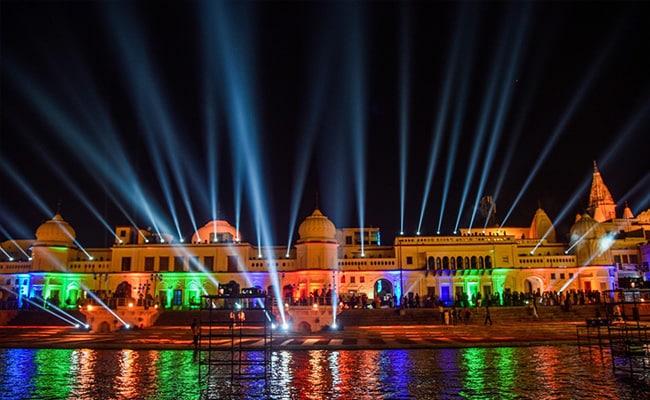
Deepotsav was celebrated by lightning the Diya’s which is the symbol of positivity, new opportunities. There were around 6,06,569 Diya’s which were light up on the banks of holy Sarayu River on Ram ki paidi ghats. It created Guiness World Record for the largest display of Oil Lamps. The city was looking an wedding bride with taste of colors making a night to remember for the people who visited. It added the flavor of laser show as well as a grand show of Darbar of Ram Lalla & Ramayana. This is nothing but different colors of Incredible India!

Deepotsav brought people together to enjoy the night with their family, friends who were not able to meet due to this pandemic of Covid-19. Yeh Diwali Dil Wali! Jai Shree Ram.
POLITICAL REPORTING IN A DEMOCRACY
India got its independence in 1947 and has remained to be a functional democracy ever since. The key ingredient in surviving the democracy is the free press which also is considered to be the unofficial fourth pillar of democracy. Contrary to beliefs of the western pundits, India not only strengthen the structure of its democracy but also developed a multi party system. The constitution of India is considered to be amongst the most well-made constitutions which drew its inspirations from various countries like USA, Britain etc. That constitution itself grants the freedom of speech which is considered to be the freedom of press.
India has witnessed post witnessed communication revolution post liberalization era where not only there was an explosion of newspapers and magazines but also the television and new media had their good amount of fair share to it. In fact, India now claims to be the second largest television viewing audience in the world with 600 views. There are two significant changes that can be marked in the media, one being giving voice to the voiceless and the other being, how business powers the political reportage in India.
Often journalists covering politics are termed in variety of names. A person chiefly covering politics would be called a ‘congress’, while someone following Bhartiye Janta Party would be typically called a ‘sanghi’, even a writer whose typical of the government policy will be called a ‘Naxal’ and what we can see post 2014 is any journalist who writes/says against the sitting government is called an ‘anti national’. A reporter has to go through various stages before reporting it to the masses which often includes forming a legit background, cultivating sources and also forming an area of specialization. This process might hinder the objective reporting. Political reporting has primarily two issues, the reporters or the journalists while tracking a political party might get swayed or influenced by the ideology or get too blinded by the ‘greatness’ of the political leader. This will come in the way of the objective reporting and will cause a biased reportage having an inclination towards a certain ideology or a party making readers/viewers deprived of authentic and true story. Many reporters have often said that there are certain areas and spaces in every party that is ready to leak stories to the journalists.
The main challenge often comes when various ministries in India put out the guidelines. As in recent times, the government often rolled out several guidelines that were confusing and poorly briefed to the journalists. Say, when ‘unlock 1.0’ was supposed to happen, government had rolled out certain guidelines which were not clear that had journalists also left in confusion. In order to make everything clear, they had to draw two-three more guidelines explaining what the first one meant. This was the challenged faced by journalists.
PERSPECTIVE: THE WAY OF THINKING!
We live in the world of variety of people with different believes, cultures, cast, creed, colour, status and nature. Everyone is also separated by their mentality, appearance, physical and mental health, opinions, skills, behaviour and perspective too. So, everyone has their own way or attitude of understanding and thinking about a particular situation or a topic and this is only known as Perspective. Perspective can also be called as point of view, angle, standpoint, frame of mind etc.
The quote above says that its necessary to change are perspective to make our life easier. Perspective can be of two types negative or positive. It depends on you that how you will react and think for any situation and make your own point of view according to it whether it will be negative or positive. You should always try to be positive about every aspect of life so that it can enhance your perspective. Your perspective can either create or destroy yours or other’s life so think wisely on every situation.
Creating a point of view about something is a slow and time-consuming topic. Capability of thinking and making perceptions comes from birth and the people we live with as they influence your perception. If we live in positive and happy surroundings then automatically our thinking will also become positive and hence it can enhance our perspective for everything and vice-a-versa.
Let’s quote some examples which shows the importance of perspective:
- Some people have taken covid-19 pandemic as a threat in their life while some are learning to overcome this problem by adapting the changes and by taking this situation positively as opportunity for self-improvisation. So, what do you think whose point of view is better? Obviously, the answer will be the people who are treating this pandemic in a better way by taking it positively.
- Over-feminism is one of the best examples related to the perception. Now a days, women started misusing the privilege given to them and take revenge from the innocent ones just for their sake and society believes them easily as there is a perception that women is always right.
- Most of parents or grandparents always had a perception that arrange marriage is better than love marriage as they think that their choice is better as compared to their son or daughter’s choice.
There are many other examples which are connected from our daily lives.
Your viewpoint can change your life and as result your life will become a little bit easier as you would think better for every situation. This will help you to attain your goals without any obstacle. So, try to change your perspective towards every thing you face in your life.
Many Bollywood movies like OMG (Oh! My God), PK, 3 idiots, Fire, Udta Panjab etc. clearly depicts positive perception and also questioned about our perspective of visualizing the whole world. Even show like Taarak Mehta ka Ooltah chashma depicts the message that it is all about perception to see the whole world. A line in the title song of the show “bas nazariye ki hai baat” clearly coveys that if we see the world with a different and a good perspective then it will be little easier to tackle the problems. Many other shows also came up with the same message.
So, as I have said earlier that Perspective is involved in our day to day life from every small to big things happening in our lives and that is all about our point of view. So, try to change the world with a good perceptive.
Life is simple: We just have to
change our perspective…
Agriculture Minister asserts, govt committed to welfare of farmers and agriculture is it’s top priority
Union Agriculture Minister Narendra Singh Tomar, Railway Minister Piyush Goyal and Minister of State for Commerce Som Prakash interacted with the representatives of Farmers Organizations of Punjab in New Delhi yesterday.
During the meeting, it was emphasized that agriculture is always the top priority of the Central Government to boost the rural economy. Mr. Tomar said, the government is taking several measures for the welfare of farmers with a special focus on ‘Aatmnirbhar Bharat’. He said, the new Farm Acts would not only provide freedom of choice to the farmers to sell their produce at remunerative prices but also safeguard the interest of farmers. The new Farm Act will encourage Mandis to provide better services to the farmers.
The representatives of the farmers’ unions expressed their views on new Farm Acts. The farmer’s representatives were also apprised with other initiatives taken by the Government such as Agriculture Infrastructure Fund and formation of 10 thousand Farmer Producer Organizations aiming towards income enhancement of farmers and creating employment opportunities for youth in rural areas.
According to the Agriculture Ministry, during the interaction various issues related to farmer’s welfare were discussed at length. It was assured that the Central Government is always committed to protect the interest of farmers and is always open for discussions for the welfare of farmers. The talks were held in a cordial atmosphere and both sides agreed to continue to hold further discussions.
External Affairs Minister, S Jaishankar to represent India at 15th East Asia Summit today
External Affairs Minister, S Jaishankar will represent India at the 15th East Asia Summit (EAS) today which will discuss ways to strengthen the platform and to make it more responsive to emerging challenges on its 15th anniversary.
The virtual summit will be chaired by Vietnamese Prime Minister, Nguyen Xuan Phuc and will see the participation of all eighteen east Asian countries.
The External Affairs Ministry in a release said, the leaders at the summit will also exchange views on issues of international and regional interest including the COVID-19 pandemic and the cooperation among EAS participating countries to achieve an expeditious and sustainable economic recovery.
Established in 2005, the EAS is a leaders-led forum that provides a platform for discussion on important strategic issues in the Indo-Pacific region.
It is a regional grouping of 18 participating countries i.e. 10 ASEAN countries that includes Brunei, Cambodia, Indonesia, Lao PDR, Malaysia, Myanmar, Philippines, Singapore, Thailand and Vietnam), besides Australia, China, India, Japan, Republic of Korea, New Zealand, Russia and the United States. India is a founding member of EAS.
President Ram Nath Kovind says, policy of expansionism followed by few nations demands strategic and matured response globally
President Ram Nath Kovind has said that decision-makers have to be guided by national interests as well as international objectives, both of which should be adaptive and multi-pronged. He said, the state of the world today poses multiple challenges before every nation.
Mr Kovind was addressing the valedictory ceremony of the 60th NDC course through a video message yesterday.
The President said that the policy of expansionism followed by a few nations demands a strategic and matured response globally. He said, it is in this context that the NDC deals with several such challenges and offers its course participants tools to understand the multi-dimensional geostrategic and geopolitical environment for future.The President said that the NDC has imparted skills and knowledge to senior officers not only from our Armed Forces and Civil Services, but also those from Friendly Foreign Countries, to help them make informed policy decisions related to their respective national objectives and aims.
Prime Minister Narendra Modi appeals to people to light a Diya this Diwali as a salute to Soldiers
In his message, the Prime Minister expressed hope that the festival will further brightness and happiness. He said, may everyone be prosperous and healthy.
Earlier, in a tweet yesterday, the Prime Minister urged the people of the country to light the Diya on this Diwali as a salute to the Soldiers who fearlessly protect our nation. He said, words can not do justice to the sense of gratitude we have for our soldiers for their exemplary courage. Mr Modi said, we are also grateful to the families of those on the borders. The Prime Minister also posted a video on his twitter handle.
Festival of lights, Deepawali being celebrated across country with traditional fervour and gaiety; President, VP and Prime Minister greet people on the occasion
Diwali, the festival of lights is being celebrated with gaiety and traditional fervour today. The festival marks the victory of good over evil.
President Ram Nath Kovind has extended his greetings to his fellow citizens on the eve of Diwali. In a message, the President has said the festival, celebrated by people of various religions and sects strengthens the sense of unity, goodwill and fraternity among the people of our country. He said, the festival inspires us to work for the service of humanity. Mr Ram Nath Kovind expressed the hope that this grand festival of happiness and light will bring delight, peace and prosperity to each and every house of our country.
Vice President M. Venkaiah Naidu has greeted the nation on the eve of Deepawali. In his message, Mr Naidu said, celebrated with traditional fervour and zeal, Deepawali signifies the victory of good over evil and reaffirms our belief in the noble ideals and morals of Lord Rama’s life.
Prime Minister Narendra Modi has extended his greetings to the people of the country on the occasion of Diwali. In a tweet, Mr Modi expressed hope that this festival will further brightness and happiness. He said, may everyone be prosperous and healthy.
ARTS AND CRAFT- A PROMISING INDUSTRY
India is a hub of Arts and Craft owing to the rich history, tradition, geography, culture and diversity. The major influence of the empires that ruled India over a period of time can be easily viewed looking at each state’s art and craft, suggesting how diverse this sector is. For instance, Agra is known for chikan work fabrics and Moghul style jewellery, Kashmir is known for its Pashmina shawls, silk and wool carpets while States in coastal areas like Goa are known for their earthenware pottery. Handicrafts, specially, caters to a huge spectrum of things like jewellery, clothes, home decor and other items. The products are made completely handmade without any use if machinery. The handicrafts industry in particular is not only promising but also has a great potential export too. Bags, textiles, jewellery and home décor always attract the international markets. This sector is one of the largest employment sectors for the rural population of India. Not only it provides the livelihood to a good number of people but also comes to advantage for those who self-sustain by growing their raw materials themselves and hence, building the art and craft from it. In fact, according to IBEF 2018 reports, the export growth of 1.6% contributed substantially to the national and state treasury.
Generally, industry entrepreneurs function independently and the small businesses involved in this sell from textiles to culinary products. Craft fairs and trade shows, for instance the one organised in Delhi annually, are primary spots for artisans to sell their products. Selling the products online and marketing their products online has also grabbed a lot of attention from the sellers. This a people-based industry and hence required good connections and base with local buyers to upkeep their sales. The work of the artisans is extremely intricate and challenging as contrary to the mass-produced items, items made handmade are designed uniquely for the customers with handful of skilled employees. But this field is rewarding too. Certain business ideas that are rewarding: Baluchari Saree, Bamboo crafts (eco-friendly), Bandhni, Chickankari, Bone and horn crafts, Dhokra, jewellery, jute handicrafts, handmade bags and embroidery garments.
India has been home to performing arts since ancient times and has a well-equipped status in the traditional and cultural Indian society. Performing arts briefly could be defined as the form of art where the artists use their body, voices and artistic expressions to communicate a message and reach the audience
Today, the world has become more welcoming and rewarding to various arts and artists. Students can now study performing arts at various universities across the globe. Performing arts degrees are generally offered at bachelor’s and master’s level where the course is primarily practical based. It is an amalgamation of practical, where the there is performance from the day one plus lectures/studies which are backed by analysis of the background of the subject. This is generally for the students who want to work as actors, choreographers, musicians, vocalists and dancers. Often students while pursuing a degree acquire freelance or short-term contracts or collaborate with other artists in order to gain experience, which further help them in honing their craft and skill.
IMPACT OF COVID-19 ON OUR LIVES…
Everyone in the world is going through a very challenging and difficult phase in their life and this is happening due to the spread of corona virus which is emitted from Wuhan, China. This virus has captured almost whole world. This pandemic has transposed many things in human’s life and behaviour. People are adapting this environment by keeping themselves hygienic and maintaining social distancing so that they could stay protected from corona.
Corona immensely affected Employment, GDP (Gross Domestic Product), tourism and aviation, automobile, education, real estate, agriculture, IT (information and technology), and many other sectors of the nation and the whole world.
Many people specially the daily wage workers or labours are facing problems in this pandemic as they can’t go for work due to the shutdown of business, factories and shops during lockdown. Many labours have to return their homes in their villages as they don’t have any other source of earnings. Many businesses like event management, catering services, fast food centres have faced the massive downfall under this pandemic as these businesses are based on large human gatherings which is not possible in this pandemic as there will be the lack of hygiene and social distancing which can invite the risk of getting affected by co-vid 19.
National economy has seen a great downfall due to the decreased rate of GDP (gross domestic product). According to the Ministry of Statistics India’s growth went down to 3.1% in the fourth quarter of fiscal year. Share markets and real estates have also seen the massive downfall under this pandemic.
Travelling and tourism sector have perceived huge downfall in the growth this year as people are avoiding to travel to their second homes because of covid-19. Transport facilities was banned by the government during lockdown which caused a great problem for the migrant workers and students as they were unable to return to their homes. But now people have started travelling with many precautions like masks, sanitizers or handwash etc.to maintain self-hygiene and also maintaining social distancing as the conditions are little better now.
Education which is one of the main sectors related to the nation’s growth is also facing many challenges under this pandemic. Educational institution like schools, colleges and universities have already adapted the changes according to the ongoing pandemic. These institutions are conducting Online or Virtual classes. That means faculties and students are connecting via internet for studies. Online classes are very useful and effective but for a limited time of period because non-serious students does not pay any attention in their classes and gives silly excuses for not attending online sessions and there are many other limitations of online classes which proves that face-to-face classes are still better than virtual classes as every student whether rich or poor can attend those classes but when it comes to online classes poor children can’t afford laptops and mobile due to lack of money. So, online classes are totally destroying the student’s career and life.
Due to fall in economy IT sector is facing problems because employees are asked to work from home and this led to the lack of opportunity.
There are many other sectors which are largely affected by this pandemic.
Our behaviour is largely affected by covid-19 as we are stuck at our homes. We can’t enjoy street food, can’t go for parties or shopping, or at any other chill-out points as we used to go earlier before this pandemic. Staying home is good for limited time period as we can get family time and some creative works to do but after sometime we start getting bored and irritated by everything and hence as result we gets angry on small things too that creates disputes between families. This behaviour can also be called as ‘homesickness’ which is very common in this pandemic.
So, let’s conclude with few lines that this pandemic is not only a problem in our lives but it has also emerged as an opportunity to enhance our skills which can lead to our personal development. If we will take this situation positively, we will notice that we have learnt so many things till now during this pandemic like spending quality time with our family, developing some new skills in ourselves and many more. So, take every challenge as opportunity because it can give the better outcome in the future.
Bakersfield College

About Bakersfield College
Established in 1913, Bakersfield College is one of the nation\’s oldest continually-operating community colleges. The college serves 33,000 students annually on the 153-acre main campus in northeast Bakersfield, at the Delano Campus 35 miles north of Bakersfield, the Weill Institute in downtown Bakersfield, and BC SouthWest in southwest Bakersfield. We also offer classes at several alternative locations, including Shafter Learning Center 18 miles northwest of Bakersfield, Arvin/Lamont, McFarland, Olive Drive Training Facility in northwest Bakersfield, Wasco and other community locations.
Our students are diverse and represent the communities we serve, with BC holding designation as a Hispanic Serving Institution. You can see details about our student population on the BC Scorecard.
Classes are offered on a traditional 16-week semester calendar as well as in a variety of non-traditional scheduling options: evenings, weekends, short-term vocational programs and online.
Below you will find our:
Mission, Vision & Values
Our Mission
Bakersfield College provides opportunities for students from diverse economic, cultural, and educational backgrounds to attain Associate and Baccalaureate degrees and certificates, workplace skills, and preparation for transfer. Our rigorous and supportive learning environment promotes equity and fosters students’ abilities to think critically, communicate effectively, and demonstrate competencies and skills in order to engage productively in their communities and the world.
Approved by College Council, October 18, 2019
Our Vision
Building upon more than 100 years of excellence, Bakersfield College continues to contribute to the intellectual, cultural, and economic vitality of the communities it serves.
Our Core Values
- Learning:
- We foster curiosity, inquiry, critical thinking, and creativity within a safe and rigorous academic environment so that we might be empowered to radically transform our community into one that gives voice and power to all people.
- Integrity:
- We continue to develop and follow an ethical and moral consciousness which places the collective wellbeing and health above the self; this principled environment allows for open, constructive conversations and teaches us to trust each other’s vision so that we will be useful and effective in providing support, resources, and encouragement.
- Wellness:
- We believe health and wellness to be integral and foundational elements, and we understand that a holistic education improves all aspects of the individual and the society including the mind, body, and spirit; through education, we will positively impact the health of the natural environment and the global community.
- Diversity:
- We insist that diversity be valued and promoted, recognizing that multiple perspectives lead to a better education and knowledge of the world; listening and witnessing different experiences helps us to understand and contextualize power and privilege related to gender, race, class, religion, disability, and sexuality in terms of access and barriers to resources and opportunities.
- Community:
- We commit to the wellbeing of all members of our community; we maintain strong ties with the surrounding community, and we respond to their needs by serving as an open institution which engages all students, faculty, and staff; in our college, we have built and continue to build an environment in which all members participate as a community through democratic engagement.
- Sustainability:
- We recognize our responsibility for continuing and maintaining this institution which has been shaped by over 100 years of resolute and tenacious labor and judicious foresight, so we unceasingly place our energies into imagining how we might sustain and renew our fiscal, human, and environmental resources into the future.
Strategic Directions
Student Learning
A commitment to provide a holistic education that develops curiosity, inquiry, and empowered learners.
Student Progression and Completion
A commitment to eliminate barriers that cause students difficulties in completing their educational goals
Facilities and Technology
A commitment to improve the maintenance of all facilities, technology, and infrastructure and implement Measure J funding to build a better BC.
Leadership and Engagement
A commitment to build leadership within the College and engagement with the community.
More Information
To learn more about our goals and our work, visit these sites:
Guiding Documents
Accreditation
For documents and information about accreditation, visit Bakersfield College Accreditation.
ATI College
About ATI College

Approval Disclosure Statement
ATI College is private institution approved by the Bureau for Private Postsecondary Education (2535 Capitol Oaks Drive, Suite 400, Sacramento, California, 95833) pursuant to California Education Code Section 94311. Although the institution was approved to operate by the former Bureau for Private Postsecondary and Vocational Education, the institution’s application for re-approval to operate has not been reviewed by the bureau pursuant to this chapter.

History & Development
ATI College is a private postsecondary vocational college system focused in technology-oriented programs. Main campus located in Norwalk California began its operation in January 1998. In August 2008, ATI branch campus moved its location to 1125 E. 17th Street Suite N251 in Santa Ana City to better accommodate the growing student population. College continues to offer varieties of career-focused vocational programs to adult learners in Los Angeles and Orange Counties. In June 2013, ATI branch campus was consolidated with the main school at 12440 Firestone Boulevard Suite 2001 in city of Norwalk.

Mission
ATI’s mission is to improve peoples’ lives through providing professional work-skill training. Students seeking to succeed as professional and instructors seeking to teach such students require a learning environment committed to high standards of instruction. ATI College seeks to respond to these needs and challenges by teaching students to develop high level of knowledge in their chosen field of career, to develop analytical and critical thinking skills, help understand the significance of self-discipline, acquiring self-confidence, to develop professional attitude and the ability to meet employer expectations in the world of professionalism. ATI is also accredited by a nationally recognized accrediting agency – Accrediting Commission of Career Schools and Colleges (ACCSC) since August 2002.

Philosophy
Philosophy of ATI College is to commit itself to providing a professional environment with the knowledge and skills to those who seek a vocational training to achieve higher goals in their lives.
 Eduindex
You must be logged in to post a comment.