Lala Lajpat Rai

The Indian liberty fighter Lala Lajpat Rai. In the Independence Movement, he played a crucial role. Punjab Kesari was popularly regarded. He was one of the 3 triumvirate of Lal Bal Pal. In its initial stages in 1894, he was also affiliated with Punjab National Bank and the Lakshmi Insurance Company.

Lajpat Rai was born in Dhudike on January 28 1865 in a jain family.

In the late 1870s his father had been moved to the Rewari Higher School in the Rewari province of Punjab, where his father was appointed an Urdu teacher. During Rai’s early years, his father and profoundly religious mother, respectively, influenced Rai’s liberal view and belief in Hinduism, effectively implementing it to establish a political and journalistic career in the reform of religion and Indian politics. In 1880, Lajpat Rai entered the Lahore Government College to study Law and became in contact with patriots, such as Lala Hans Raj and Pandit Guru Dutt, and future freedom defenders. During his study in Lahore, he became a member of the current Arya Samaj Lahore and the founding editor of the Lahore-based Arya Gazette, inspired by the Hinduism reformist movements of Swami Dayanand Saraswaati. When he studied law, he believed strongly that Hinduism was the fundamental point on which an Indian lifestyle was to be founded, above nationality. He thought Hinduism leading to peaceful practises for humanity and the concept that a secular nation could be created by incorporating nationalist ideas to this peaceful belief system. His association with Hindu Mahasabha leaders was criticised in a way that is non-secular by Naujawan Bharat Sabha and that was not in line with the Indian National Congress framework. In the end, this emphasis on Hindu tradition in this subcontinent will lead him to continue peaceful protests for the independence of Indians.

In May 1907 Lala Lajpat Rai was deported to Mandalay, Burma without trial following a departure from the Indian National Congress and political unrest in Punjab.

But in November, when Lord Minto, the viceroy, concluded it was difficult to prove him subversive in ample ways. The supporters of Lajpat Rai tried in December 1907 to secure his election for chair of Surat, but he was unsuccessful.

Bhagat Singh was an alterative of British institutions to the National College, which he established in the Bradlaugh Hall in Lahore. At the 1920 Special Session in Calcutta, he was elected President of the Indian National Congress. He founded Servants of the People’s Society in Lahore in 1921, which moved its base after partition to Delhi and has branches in many regions of India. in 1921 he formed the People Society. According to him, Hindu society must fight against a caste system, women’s position and untouchability in its own right. Vedas were an important part of the Hindu faith, but they could not be read by the lower caste.

Lajpat Rai went on a tour of Sikh villages along America’s West Coast, visited Tuskegee University in Alabama and met the Philippines’ employees in 1917 and returned to the U.S, then during the First World War. His travels, The USA, documents these journeys and includes detailed quotes by leading African American intellectuals such as W.E.B. Du Bois and Fredrick Douglass. He created the Indian Home Rule League in New York as well as a monthly newspaper Young India and Hindustan Information Services. He had petitioned the Senate of the US Parliament’s foreign affairs committee to send a vivid pictorial of British Raj’s mismanagement in India and the Indian people’s aspirations for democracy, among several other points, for moral support for India’s independence. The 32-page petition was debated in the U.S. overnight.

The British government formed the Commission in 1928, led by Sir John Simon, to report on India’s political situation. The Indian political parties boycotted the Commission because it did not have one Indian and had national protests. On 30 October 1928, when the Commission visited Lahore, Lajpat Rai led a non-violent march in protest. The demonstrators sang “Simon is going back” and wore black flags.

On 17 November 1928 he died. He did not recover from his injuries. Doctors claimed Scott’s blows had prolonged his death. The British government, however, denied any involvement in Rai ‘s death when the matter was discussed in the British Parliament. While Bhagat Singh did not withip the case, he pledged to take vengeance because the murder was a major freedom movement leader. In his attempting to kill Scott he carried a message to British Raj, Shivaram Rajguru, Sukhdev Thapar and Chandrashekhar Azad. Bhagat Singh was ordered to shoot John P. Saunders, the assistant police superintendent, on his apparition, in the case of an erroneous identity. On 17 December 1928, when he left Lahore’s District Police Head office, he was shot by Rajguru and Bhagat Singh. Azad ‘s cover fire fatally wounded Chanan Singh, a lead constable who was pursuing them.

This case did not deter the revenge of Bhagat Singh and his Hindustan Socialist Republican Association supporters.

PHOENIX : Greek Mythology

A phoenix is a mythological bird that cyclically regenerates or is otherwise born again. Associated with fire and the sun, a phoenix obtains new life by arising from the ashes of its predecessor. Some legends say it dies in a show of flames and combustion, others that it simply dies and decomposes before being born again. Most accounts say that it lived for 500 years before rebirth. Herodotus, Lucan, Pliny the Elder, Pope Clement I, Lactantius, Ovid, and Isidore of Seville are among those who have contributed to the retelling and transmission of the phoenix motif. The phoenix symbolized renewal in general, as well as entities and concepts such as the Sun, time, the Roman Empire, Christ, Mary, and virginity.

The phoenix is best known as a being of Greek mythology, but has analogues in other traditions: including the Hindu garuda and bherunda, the Russian firebird, the Persian simorgh, the Georgian paskunji, the Arabian anqa , the Turkic Konrul, also called Zümrüdü Anka, the Tibetan Me byi karmo, the Chinese Fenghuang and zhu que, and the Japanese hō-ō .

The phoenix myth is also part of early Christian traditions. Some scholars have speculated that these early phoenix legends may have their origins in the bennu of Egyptian mythology. In the 19th century, scholastic suspicions appeared to be confirmed by the discovery that Egyptians in Heliopolis had venerated the bennu. However, the Egyptian sources regarding the bennu are often problematic and open to a variety of interpretations. Some of these sources may have actually been influenced by Greek notions of the phoenix, rather than the other way around.

Classical discourse on the subject of the phoenix points to a potential origin of the phoenix in Ancient Egypt. Herodotus, writing in the 5th century BC, gives a somewhat skeptical account of the phoenix.

To Appear:

The phoenix is sometimes pictured in ancient and medieval literature and medieval art as endowed with a halo, which emphasizes the bird’s connection with the Sun. In the oldest images of phoenixes on record these nimbuses often have seven rays, like Helios (the Greek personification of the Sun). Pliny the Elder also describes the bird as having a crest of feathers on its head, and Ezekiel the Dramatist compared it to a rooster.

Although the phoenix was generally believed to be colorful and vibrant, sources provide no clear consensus about its coloration. Tacitus says that its color made it stand out from all other birds. Some said that the bird had peacock-like coloring, and Herodotus’s claim of the Phoenix being red and yellow is popular in many versions of the story on record. Ezekiel the Dramatist declared that the phoenix had red legs and striking yellow eyes, but Lactantius said that its eyes were blue like sapphires and that its legs were covered in yellow-gold scales with rose-colored talons.

Herodotus, Pliny, Solinus, and Philostratus describe the phoenix as similar in size to an eagle, but Lactantius and Ezekiel the Dramatist both claim that the phoenix was larger, with Lactantius declaring that it was even larger than an ostrich.

How to overcome your inner ego?

It is good to realize that you are. But increasing that feeling to such an extent that nothing else is remembered creates problems. We are unable to accept that we too can be wrong. Then we start making ourselves the centre of everything. It is not easy to stop the roots of your ego from spreading.



Have you ever wondered why some people are so bitter, or why they go out of your life without any reason? Have you ever wondered why all the wars fought in the last thousand years started? Even some wars were quite terrible. Do not know how many lives were lost in them. And have you ever thought about all the crimes that are killing millions of people? Whether at stake, friendship or war or crime, they all start from the same common source, which is, our ego. It is very difficult for us to leave it. We have to liberate ourselves from this ego in reality. But for this, the most important thing is to understand what the ego is. Why should we assume that sometimes we can be wrong? If you find answers to these questions, then believe that your life will become more enjoyable.

What is ego?

This word of three letters is like the devil sitting on our shoulder, about whom we have always been reading. This is your alternate version, which nurtures all your insecurities, fears, hatred and perception. It is the antithesis of what is right for you. It is the enemy of your heroism. It is darkness for your light.

Arrogance is, in reality, an immature, crying, and loud-shouting child. We all have it. It does not go far from us. The best way to deal with it is to try to calm it down. Doing so has also been the core of many religions, especially in the philosophies of eastern countries. However, few lucky people are able to achieve such feats as pushing the ego beyond. To be honest, to follow their path and to achieve success in today’s era, our intelligence will hardly be said. Then we have to live a life that most people will not be ready to live. Therefore, the better option is to make ourselves worthy that when the ego becomes bigger, then we can feel it ourselves and work with sincerity towards calming it down. We can move forward step by step in this work, although for this we have to make ourselves serious so that we can know what is the reason for ego ?.

When and where do you find your ego

Ego is everywhere. It is constantly expanding. Like, arrogance is the reason that you take everything personally. Due to ego, you harm the person in front of the relationship-breakdown. Because of your ego, you start bothering your car by standing in front of it even if it is difficult for some other car on the road. Due to ego, we do not accept our fault, it is due to the ego that we treat others harshly. That is why we do not like our failure or defiance. Obviously, this list of ego is quite long. Every day we have to deal with all such situations when we express our reaction in many ways. Unfortunately, in most of these cases, our ego comes in the way. Then, when the circumstances are no longer under our control or they go against us, then we immediately feel unlucky and we start blaming it on other people. It is a sick mentality, which is constantly expanding. Many other people can also take advantage of this. Nevertheless, we do not want to change this mindset.

Keep yourself disciplined

I have no objection to accepting that when I am wrong, I hate myself. I am probably the first person to believe this. Not only that, even when I am denied, I still hate. I also hate failure at one point and I like to avoid it as long as I can. I am afraid of these things because they will not make me feel good. I believe that such human feelings never cease. Some always remain. But I am also the first person in this matter, who controls his ego. Due to enough work and constant meditation on myself, I can tell the exact moment when my ego shows up.

Admit your mistake

I also know very well that when I am unable to take any specific step due to excessive fear. Is it easy to do? Can your ego be overcome by just feeling something? Sorry, this will not happen. Then I will become a resident of the Tophet, and it will be impossible to calm the beloved devil on my shoulder. I am sure you must be feeling the same way. But the first step towards atonement or solution to this problem is to accept your mistakes. I have tried to accept my shortcomings. You should also try to do the same.
At last, Say ‘Go’ to Ego.

Poverty in India

Poverty is not having enough material possessions or income for a person’s needs. Poverty may include social, economic, and political elements. Absolute poverty is the complete lack of the means necessary to meet basic personal needs, such as food, clothing, and shelter. The threshold at which absolute poverty is defined is always about the same, independent of the person’s permanent location or era. On the other hand, relative poverty occurs when a person cannot meet a minimum level of living standards, compared to others in the same time and place. Therefore, the threshold at which relative poverty is defined varies from one country to another, or from one society to another. A person who cannot afford housing better than a small tent in an open field would be said to live in relative poverty if almost everyone else in that area lives in modern brick homes, but not if everyone else also lives in small tents in open fields.

Many governments and non-governmental organizations try to reduce poverty by providing basic needs to people who are unable to earn a sufficient income. These efforts can be hampered by constraints on government’s ability to deliver services, such as corruption, tax avoidance, debt and loan conditionals and by the brain drain of health care and educational professionals. Strategies of increasing income to make basic needs more affordable typically include welfare, economic freedoms and providing financial services. Meanwhile, the poorest citizens of middle-income countries have largely failed to receive an adequate share of their countries’ increased wealth.

In India :

As India is one of the fastest-growing economies in the world, poverty is on the decline in the country, with close to 44 Indians escaping extreme poverty every minute, as per the World Poverty Clock. India had 73 million people living in extreme poverty which makes up 5.5% of its total population, according to the Brookings report. In May 2012, the World Bank reviewed and proposed revisions to their poverty calculation methodology and purchasing power parity basis for measuring poverty worldwide. It was a minimal 3.6% in terms of percentage. As of 2020, the incidence of multidimensional poverty has significantly reduced, declining from 54.7 percent to 6 percent.

The 19th century and early 20th century saw increasing poverty in India during the colonial era. Over this period, the colonial government de-industrialized India by reducing garments and other finished products manufactured by artisans in India. Instead, they imported these products from Britain’s expanding industry due to the many industrial innovations of the 19th century. Additionally, the government simultaneously encouraged the conversion of more land into farms and more agricultural exports from India. Eastern regions of India along the Ganges river plains, such as those now known as eastern Uttar Pradesh, Bihar, Jharkhand and West Bengal, were dedicated to producing poppy and opium. These items were then exported to southeast and east Asia, particularly China. The East India Company initially held an exclusive monopoly over these exports, and the colonial British institutions later did so as well. The economic importance of this shift from industry to agriculture in India was large; by 1850, it created nearly 1,000 square kilo-meters of poppy farms India’s fertile Ganges plains. This consequently led to two opium wars in Asia, with the second opium war fought between 1856 and 1860. After China agreed to be a part of the opium trade, the colonial government dedicated more land exclusively to poppy. The opium agriculture in India rose from 1850 through 1900, when over 500,000 acres of the most fertile Ganges basin farms were devoted to poppy cultivation. Additionally, opium processing factories owned by colonial officials were expanded in Benares and Patna, and shipping expanded from Bengal to the ports of East Asia such as Hong Kong, all under exclusive monopoly of the British. By the early 20th century, 3 out of 4 Indians were employed in agriculture, famines were common, and food consumption per capita declined in every decade. In London, the late 19th century British parliament debated the repeated incidence of famines in India, and the impoverishment of Indians due to this diversion of agriculture land from growing food staples to growing poppy for opium export under orders of the colonial British empire.

Another Expert Group was instituted in 1993, chaired by Lakdawala, to examine poverty line for India. It recommended that regional economic differences are large enough that poverty lines should be calculated for each state. From then on, a standard list of commodities were drawn up and priced in each state of the nation, using 1973–74 as a base year. This basket of goods could then be re-priced each year and comparisons made between regions. The Government of India began using a modified version of this method of calculating the poverty line in India.

There are wide variations in India’s poverty estimates for 1990s, in part from differences in the methodology and in the small sample surveys they poll for the underlying data. A 2007 report for example, using data for late 1990s, stated that 77% of Indians lived on less than ₹ 20 a day. In contrast, S G Datt estimated India’s national poverty rate to be 35% in 1994, at India’s then official poverty line of Rs.49 per capita, with consumer price index adjusted to June 1974 rural prices.

The Poverty in India is to be controlled using various techniques. Economic growth is to be increased so as to reduce the problem of Poverty in India. Agriculture is to be given importance in the country. This has been the main problem of poverty in India. Giving importance to agriculture improvises the economical benefits to the country.

Giving up isn’t a Choice, it’s a Compromise

Article by – Shishir Tripathi
Intern at Hariyali Foundation
In collaboration with
Educational News

In life everybody has their own struggles, their own circumstances and their unique life stories. All across the globe, there are 7.8 billion people who are entirely different from each other with just totally different lives, mindsets and different approaches for peace in life. Some people smoke whereas some don’t, some people do their own business whereas others go for a job, some people think like they should work whereas some don’t, and some people try whereas some, they just make compromises in life. Compromises because of harsh and difficult situations in life and some compromises are made just because of the fear of not getting successful.

In life there are different types of problems, problem of everyday food for the needy people. problem of shelter in adverse seasons for the homeless people, problem of being raised in an orphanage where the nurses beat you, problem of living with your relatives who are just so bad, problem of not getting your desired stream in higher studies, problem of sitting at home without a job, problems of not getting the love that you actually deserve, problem of not getting the love of your life, problem of doing a job which is not as per your likings and expectations and many more problems of different types in different peoples’ lives.

Some people always get scared when trying something which their heart says. Some people think about the society, the relatives’ reaction when they’ll listen of this and also there are some people who think that they are simply physically or mentally incapable of doing the desired work or the task which the heart always thought of.

Each day comes with 24 hours in it. The same morning, the same afternoon and the same night but there’s just one difference of surroundings. A person might be sitting and reading this article of mine in an Air Conditioned room with his belly filled with all the food he likes, whereas the other person who might be sitting in a somewhat uncomfortable surroundings with an empty stomach or a food that he or she don’t likes. But most of the things are literally the same. Now how to make these differences equal and who will make these differences equal?

The answer is ‘YOU’. Oh c’mon yes you are the one who is going to make a change. Change not for others but for self first . It is well known to everyone that an individual who is himself r herself in a good state or condition is actually the person in a much better position to make a change. Now one person will argue by saying that we must not be selfish and should think about society first. But as per the author of this article, it’s believed that do for yourself first. Try to come in a better position so that you are physically, mentally and financially in a position to help the needy ones.

Just try, try and try, each day and each moment. Giving up has always been the easiest task in the lives of human beings and due to which most of the people just live an average life and at the death bed realize that they should have at least tried that thing in life at that particular point of time at that moment. It is a known fact that every desire of the heart won’t get fulfill. But regretting at a later stage is worse than anything.

So, in life try everyday and every hour and every minute. Have faith in yourself and get back to it immediately and say ‘NO’ to everything else that takes you away from your goal. Admire your friends, your family members and your loved ones when they achieve their desired pedestal in life.

Keep trying each day and each moment.

This endless ocean of uncertainty will come to an end and you will approach your desired island of peace and self satisfaction”.

Quote by – kalam_se_kaleje_tak/ Instagram

Indian Agriculture!…

India has always been a prominent name in the field of agriculture. Indian economy, GDP and even politics revolve around farmers and agriculture. Though the world feels India as an agro nation, in fact, farmers are the one who struggles the most to get their rights.
India falls into the hot zone of the earth’s atmosphere. Farmers have to fight with nature in every season. It is like a dead investment. They don’t even know if they would get anything in return or not. All their efforts and investments are totally based on how nature will respond. But still, they do it. Just for the sake of humanity and to feed people, they do it. They work hard on the farm, no matter what season, they stay there working all day long. They prepare the land for farming, sow seeds in it and then wait for the rain. After the crop is grown fully, they harvest it and take it to the market. But in the market, we people don’t even value their efforts and make them sell it a very lower price than they actually deserve. In the mall, we don’t even check the price tag before buying anything, forget about bargaining. But while buying vegetables, we hesitate for just 10-20 rupees of their right.
Indian farmers don’t even get returns equal to their investments. Profit is a myth for farmers. Every political party promises to do good for farmers before the election, but when in rule nobody even bothers about the farmers. Even the media take farmer suicide as just casual news. We live because of them. Just imagine a day if farmers decide not to grow anything. We all will starve. So to avoid that day, we should respect the farmers of our nation.
Agriculture is given a last preference by the young generation. We’ve developed a negative vibe for agriculture that you need to work hard and there’s no guarantee of returns. It is a volatile profession and much before. But the fact is, despite all the hardships farmers face in India, there are few farmers who modernised their agriculture techniques and now earning well. With the upgradations in the farming techniques and planting new and hybrid varieties, few farmers are making money well. This change even made the customers change a bit. Now customers demand the fresh vegetables at whatever price farmer wish. Few remain in the waiting list just to get good quality products. This change can be made into a mass level if youth enters into the field of agriculture. Government and agricultural organisations need to educate youth to choose agriculture as a profession. Indians have been driving the world for a long time. Let’s make it big even in the field of agriculture taking young minds together!…

Giving up isn’t a Choice, it’s a Compromise

Article by – Shishir Tripathi

In life everybody has their own struggles, their own circumstances and their unique life stories. All across the globe, there are 7.8 billion people who are entirely different from each other with just totally different lives, mindsets and different approaches for peace in life. Some people smoke whereas some don’t, some people do their own business whereas others go for a job, some people think like they should work whereas some don’t, and some people try whereas some, they just make compromises in life. Compromises because of harsh and difficult situations in life and some compromises are made just because of the fear of not getting successful.
In life there are different types of problems, problem of everyday food for the needy people. problem of shelter in adverse seasons for the homeless people, problem of being raised in an orphanage where the nurses beat you, problem of living with your relatives who are just so bad, problem of not getting your desired stream in higher studies, problem of sitting at home without a job, problems of not getting the love that you actually deserve, problem of doing a job which is not as per your likings and expectations and many more problems of different types in different peoples’ lives.
Some people always get scared when trying something which their heart says. Some people think about the society, the relatives’ reaction when they’ll listen of this and also there are some people who think that they are simply physically or mentally incapable of doing the desired work or the task which the heart always thought of.

Photo by Pixabay on Pexels.com


Each day comes with 24 hours in it. The same morning, the same afternoon and the same night but there’s just one difference of surroundings. A person might be sitting and reading this article of mine in an Air Conditioned room with his belly filled with all the food he likes, whereas the other person who might be sitting in a somewhat uncomfortable surroundings. But most of the things are literally the same. Now how to make these differences equal and who will make these differences equal?
The answer is ‘YOU’. Oh c’mon yes you are the one who is going to make a change. Change not for others but for self. It is well known to everyone that an individual who is himself r herself in a good state or condition is actually the person in a much better position to make a change. Now one person will argue by saying that we must not be selfish and should think about society first. But as per the author of this article, it’s believed that do for yourself first. Try to come in a better position so that you are physically, mentally and financially in a position to help the needy ones.
Just try, try and try, each day and each moment. Giving up has always been the easiest task in the lives of human beings and due to which most of the people just live an average life and at the death bed realize that they should have at least tried that thing in life at that particular point of time at that moment. It is a known fact that every desire of the heart won’t get fulfill. But regretting at a later stage is worse than anything.
So, in life try everyday and every hour and every minute. Have faith in yourself and get back to it immediately and say ‘NO’ to everything else that takes you away from your goal. Admire your friends, your family members and your loved ones when they achieve their desired pedestal in life.
Keep trying each day and each moment.
“This endless ocean of uncertainty will come to an end and you will approach your desired island of peace and self satisfaction”.
Quote by – kalam_se_kaleje_tak/ Instagram

Tiruppur Kumaran-Protector of Indian flag

OKSR Kumaraswamy Mudaliar who was a famous freedom fighter in Tamil Nadu and he was born on 04-10-1904 in the small down named as Chennimalai in Tiruppur District of Tamil Nadu. He was popularly known as Tiruppur Kumaran. He involved himself in the Indian freedom movement in his young age and he participated in many struggles in the Indian freedom movement.

Tiruppur Kumaran had played a major vital role in the Indian freedom movement. He started “Desa Bandhu Youth Association” by grouping the youths and young persons from Tamilnadu to struggle against the British government to get freedom. Many persons got inspire and involved in the freedom struggle with Tiruppur Kumaran. He conducted many protest march against the British government in many places of Tamil Nadu. He got more inspiration from the father our Nation Mahatma Gandhi. He followed the procedures and methods which was suggested by Gandhiji in the Indian freedom movement. Tiruppur Kumaran had also participated in Congress movement from the Tiruppur’s contribution.

Thiruppur kumaran in his youth was inspired by the force with which all freedom fighters fought and was also melted by the struggles faced by the native people. So his acts were always strong and forceful.

The Tamil Nadu people are always remembering the contribution of Tiruppur Kumaran for the freedom of India by conducting various functions and programmes by the name of Tiruppur Kumaran. A memorial statue for Tiruppur Kumaran was erected in the park which is very near to Tiruppur Railway station. There is a street by his name which is called as “Kumaran Salai”. There is also a college in his name in Tiruppur and it is called as “Tiruppur Kumaran College”. The Government of India had released a commemorative stamp in his name on October 2004 during the 100th birth anniversary of Tiruppur Kumaran.

The great and famous freedom fighter of Tamil Nadu, Tiruppur Kumaran died on 11th January, 1932. His dead was very cruel that the Police assaulted him during the protest against the British colonial government. He was so patriotic that he died by holding the National flag of India which was banned by the British government. He is also called as “Kodi Kaththa Kumaran” due to this incident.

Velunachiyar-India’s Joan of Arc

Veera Mangai Velunachiyar was one of the queens in the 18th century in South India. She rebelled against the British Empire and fought for the freedom of India.  She was born in 1730 AD to the Mannar Sellamuthu Sethupathy and to Rani Sakandhimuthal of  Ramnad Kingdom.  She was the only daughter of this Royal family. The Royal couple had no male heir.  The royal family brought up the Princess, Velunachiyar, like  Prince of Ramnad due to this reason. She was trained in the skills of using weapons and also in martial arts like Valari, stick fighting  etc. She learnt horse riding and archery earlier. The Royal couple had engaged teachers to teach her many languages like French, English and Urdu. Thus this young brave Princess had excellent training in all war techniques. She was a scholar in many languages and was ready to rule the Ramnad Kingdom . She married Sivagangai Mannar Muthuvaduganathar at the age of sixteen.  In the year 1772 , the English invaded her kingdom . Velu Nachiyar heard that her husband Raja Muthu Vaduganathar and her daughter young Princess Gowri Nachiyar were killed in Kalaiyar Koil war. This war was held in Kalaiyar Koil palace. British troops attacked the palace under the command of Lt.Col. Bon Jour . She was very much worried and wanted to take revenge. Dalavay Thandavaraya Pillai and Maruthu brothers sustained injuries. They promised to recapture the samasthan to punish the English. Dalavay Thandavaraya Pillai, an incredible and distinguished person was the most powerful administer in Sivagangai samsthanam.  Thandavaraya Pillai, the loyalist served (1700-1773) as Palavay and also as Pirathani under the three rulers of Sivagangai samsthanam. He was responsible for the development of Sivagangai samsthanam . At first he served the King Sasivarna Periya Udaiya Thevar during 1730-1750. Later he served under Muthu Vaduganatha Thevar, the King during 1750-1772 . He also served as *Pirathani to the queen Rani Velu Nachiyar.Here Dalavay means  military chief and the Pirathani means  chief minister. Pirathani was responsible for  the improvement of Foreign affairs. Thus the two charges were the most important and also  powerful .

He rendered his service with loyalty from the beginning of this samsthanam. He administered well and helped in the development. The King Udaiya Thevar was very much pleased because of his good administration and granted him his hereditary management. It shows the significance of loyalty of Dalavay Thandavaraya Pillai.   He advised Veera Mangai Velunachiar to move to different places often in order to avoid British invaders . Meanwhile Dalavay Thandavarayan Pillai wrote a letter to Sultan Hyder Ali on behalf of Velu Nachiyar to provide 5000 infantry and 5000 cavalry to defeat the British army. But unfortunately he passed away due to old age. She decided to meet Hyder Ali after the demise of Dalavay Thandavarayan Pillai  at  Mysore with the help of his son. She could explain in detail in Urdu all her problems with East India Company. She explained him her strong opposition of British regime. Hyder Ali was very much pleased and promised to help her in this conflict. He accepted her request with sympathy and provided the necessary military assistance. He ordered Syed Karki of Dindigul fort gladar to provide the required military equipment to Rani Velu Nachiyar. He released 5000 infantry and 5000 cavalry to Rani Velu Nachiyar immediately. Her troops advanced to Sivaganga with the help provided by Maruthu brothers. The Nawab of Arcot put so many hindrances to avoid the advancement of Rani Velu Nachiyar’s combined troops. The queen and Maruthu brothers overcame all hurdles. They geared up the troops and entered Sivaganga. She defeated the Nawab of Arcot and took him as a captivator. She re-captured her Sivaganga samsthanam with the help of Hyder Ali and crowned as queen of the Sivagangai seemai. Velu Nachiyar is the first queen who raised the revolt  against the British emperor, according to historians. Prof.Sanjeevi  mentioned in his ‘ Maruthiruvar’ book that ‘ the bravery queen Velu Nachiyar raised revolt against English emperor and fought for the freedom of India 85 years before Jhansi Rani’s freedom struggle in North . Venkatam further stated that Velu Nachiyar is India’s Joan of Arc

CRICKET MATCHES WITHOUT AUDIENCE

IPL 2020 will get underway from September 19 with its final being played on November 10. The lucrative tournament will be played for the second time in UAE. However, the fixtures are still to be confirmed, but it looks like Chennai Super Kings (CSK) will face off against Mumbai Indians in the inaugural contest.


All the matches will be played in bio-secure environment maintaining the safety of players. Commentator Sanjay Manjrekar believes that the television experience for players will be good but it will not matter much for they players as they will still want to win matches even behind closed doors.

“The production team is so smart, they will ensure that the television experience is great. The players will miss the buzz at the ground but again their is so much at stake….Noise is a big part of IPL. Mumbai Indians when they play at Feroz Shah Kotla stadium….players will miss it. But will it result into less intense performance, no way, someone like a Virat Kohli will want to win, crowd or no crowd will not make,” Sanjay Manjrekar told on Star Sports connected.


Kohli is a determined spirit who made his way to become one of the finest cricketers of all-time through sheer self belief and hard-work. He has made run-scoring look easy and has many records to be broken in line


Kohli has often showed his love for the sport through his aggression and hardly gives an inch to his opponents on the field. But off it, Kohli is a completely different personality, he likes to spend time with his family, read books, train consistently and maintain his vegan diet, and to top it all he is not fond of fame or attention.


In normalcy, Kohli would be leading RCB in the IPL 2020 at the moment, but due to the pandemic situation he has resorted to training at home and interacting with sports personalities on social media.

Interesting traditions.

Culture and traditions vary hugely around the world. They are part of what makes our planet such a diverse and fascinating place to live.

Here are some interesting customs from different parts of the world :

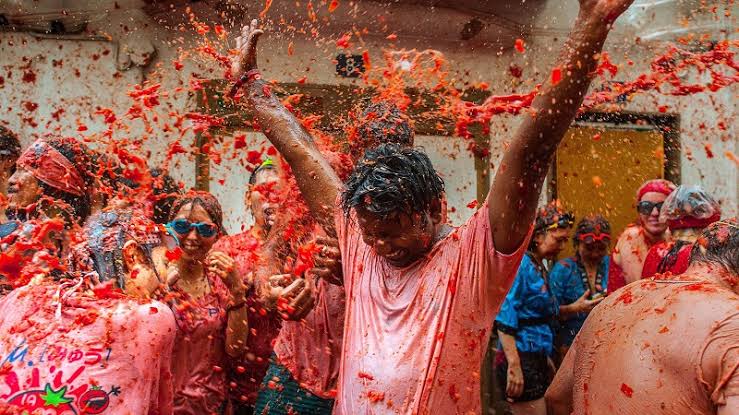
1. La Tomatina, Spain
Once a year, in the Valencian town of Buñol, Spaniards gather to throw tomatoes at each other. The world’s largest tomato fight, La Tomatina now attracts participants from around the world.

2. Switzerland — Honesty shopping
Tiny little shops in the middle of the Swiss Alps share the idealism of this society in the form of honesty shops. These are little shops that allow you to buy your fresh cheese, milk, bread, honey, and butter without anyone there to watch you indulge in the delicious dairy products of the area. In fact, most of the day, no one watches these shops because they are owned by farmers who are out taking care of the animals, so all you do is leave your money behind in a little basket. And what’s amazing is that this form of consumer trust results in incredible customer loyalty and honesty among the communities.

3. Iceland — Christmas Eve books giving
We obsess over the eternal question of Christmas gifts; do we spend tons of money on new technology for our loved ones or just stick with the always-safe gift card? Will they read too much into a “fitbit”? Iceland has solved this problem with the Christmas Eve tradition of giving a book. After everyone unwraps the books, they spend the evening reading together. Iceland has preserved the culture of books in this beautiful Christmas custom which many countries would do well to emulate!

4.Slurping in Japan
Most societies around the world have rules about table etiquette. For western cultures, noisily consuming food is considered rude. In Japan, however, making slurping sounds while eating has an entirely different meaning. This might have something to do with the fact that in western countries, noodles are properly consumed by twirling them on a spoon before putting them in the mouth. Meanwhile, the Japanese simply slurp up their noodles without contorting them first, an act that is naturally noisier than the former. Making slurping sounds when eating noodles in Japan is a way of indicating that you’re really enjoying them. Some scientists even argue slurping invites air into the palate and actually enhances the noodles’ flavor.

5.Battaglia delle Arance, Italy
If you don’t fancy throwing tomatoes, how about oranges? During the Carnevale di Ivrea each year, residents of the Italian city of Ivrea come together to hurl oranges at each other. The tradition is in memory of a battle between the townsfolk and a ruling tyrant, with oranges thrown as part of the fight for freedom.

6.Monkey Buffet Festival in Thailand
In Thailand they have a ritual that would bring good luck when joining, namely the monkey buffet festival. This festival is held on the last Sunday of November and you do not need to be surprised when you see monkeys opening a can of coca cola. Chefs spend hours on preparing buffets and the locals offer snacks, sweets, drinks and fruits to macaque monkeys. During this festival there are also many activities related to the monkeys: dancing, dressing like monkeys, monkey masks and a lot more.

These traditions are examples of different cultures around the world. They are cultural practices that may well seem strange to those unfamiliar with their meaning or origins. However, each tradition is part of a unique culture that has developed over many generations. Customs, traditions keep changing with time.  Some countries might not be following the customs they were years back ; some might still be following it. All we know is that there might definitely be a tradition from our own culture that outsiders might find strange.

CHINA – A NATION OF VIRUS

As the world still struggles to overcome the coronavirus pandemic, a new virus from China has arrived, this new virus has started attacking China fatally and experts alert the world to get cautious.

As the world fights the deadly Corona virus, there is a new virus that has come to scare the world and this virus too has been reported to come from China.

A new infectious disease caused by a tick-borne virus has killed over seven people and infected 60 others in China, official media here reported on Wednesday, warning about the possibility of its human-to-human transmission.

More than 37 people in East China’s Jiangsu Province contracted with the SFTS Virus in the first half of the year. Later, 23 people were found to have been infected in East China’s Anhui province, state-run Global Times quoted media reports.

A woman from Nanjing, capital of Jiangsu, who suffered from the virus showed onset of symptoms such as fever, coughing. Doctors found a decline of leukocyte, blood platelet inside of her body. After a month of treatment, she was discharged from the hospital.

At least seven people have died in Anhui and East China’s Zhejiang province due to the virus, the report said. SFTS Virus is not a new virus. China has isolated pathogen of the virus in 2011, and it belongs to the Bunyavirus category.

Virologists believe that the infection may have been passed on to humans by ticks and that the virus can be transmitted between humans, it said.Sheng Jifang, a doctor from the first affiliated hospital under Zhejiang University, said that the possibility of human-to-human transmission could not be excluded; patients can pass the virus to others via blood or mucous.

Doctors warned that tick bite is the major transmission route, as long as people remain cautious, there’s no need to over panic over such virus contagion, it said.

The first cases of novel coronavirus infection were noticed in the wuhan city of China in December 2019 and within a few weeks it spread across the world creating a global catastrophe

The outbreak of another new virus in China is alarming to the world and the experts are of the opinion that countries must get cautious of this virus lest it caused an onset of another pandemic.

Facts of National flags

All national flags are very colorful and very decorative with stars, stripes, etc. Those colors are not just colors but they contain some meaning or some information regarding that particular country. Now, let us know some facts about national flags.

1.India

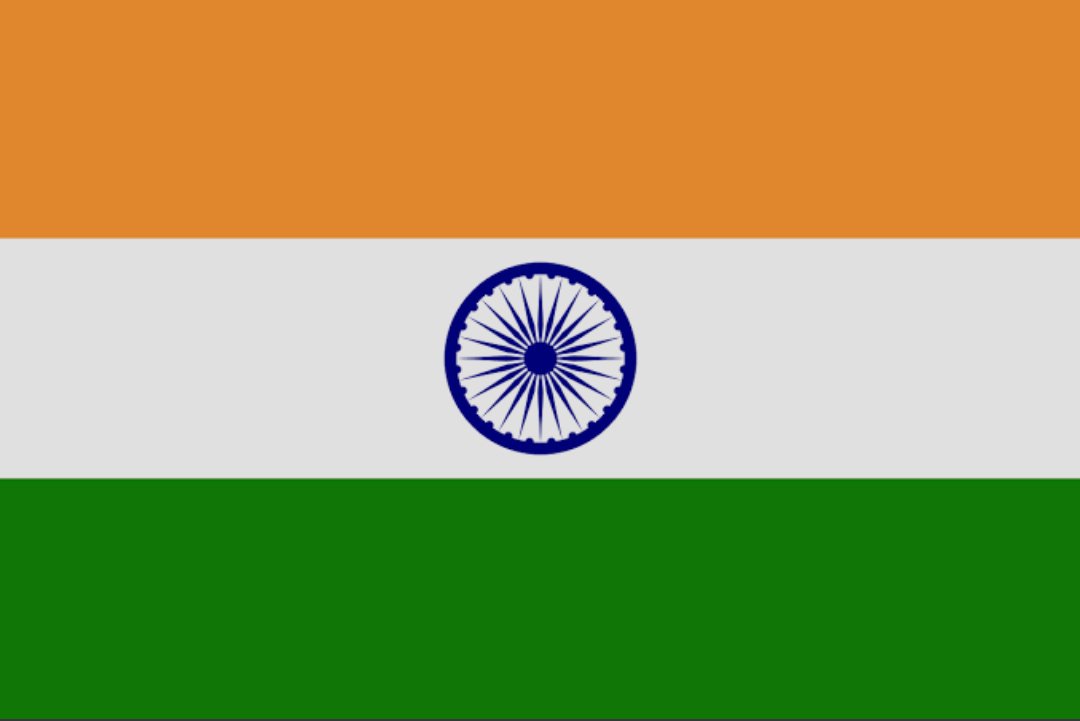
The present flag of India had been adopted on July 22,1947 as free India National Flag. Indian flag contains three colors in equal horizontal portions and the centre of the middle portion has Dharma Charkha of emperor Ashoka. The three colors and the dharma chakra represents:

Saffron represents Courage and Sacrifice

White represents truth and purity

Green represents faith, fertility and growth

Dharma chakra is the wheel of virtue, also represents motion or growth

2.Pakistan

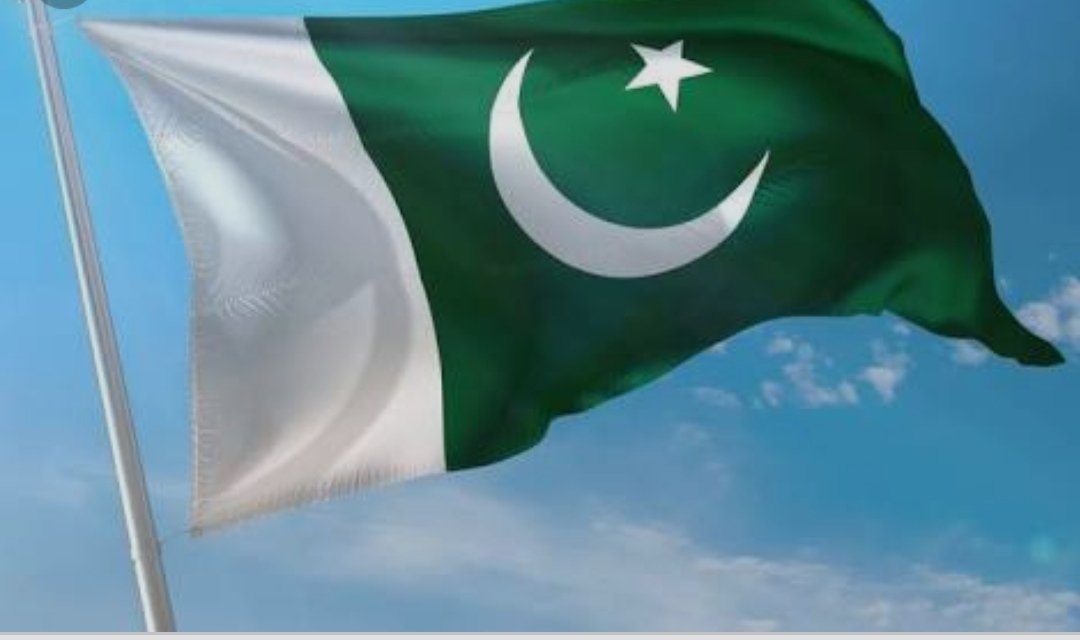
The present flag of Pakistan was adopted on August 11, 1947 as the Dominion flag of Pakistan, just before the 3 days of Country’s independence. The Pakistan flag consists of green, white colors with a moon and a star I it.

Green represents the Muslim population

White represents the minority population

Moon and Star represents the light & progress

3.United States of America

The present National flag of USA was adopted on July 4, 1960. It consists of thirteen horizontal strips of red alternating with white and 50 five pointed stars within a blue background.

The 50 stars represents the 50 sates of USA

The 7 red strips and 6 white strips represents 13 original colonies

Red represents hardiness and valor

Blue represents vigilance and justice

White represents purity and innocence

4.Brazil

The present design of National flag of Brazil was adopted on May 11, 1992. It consists of a blue disc with 27 stars in it and a band with an inscription around the disc.

The blue disc represents the start sky

The stars represents the federal region

The inscription “ORDEM E PROGRESSO” is the national motto: Order and Progress

Green represents lush green fields and forests

Yellow represents Brazil’s wealth in Gold

5. Australia

The present National flag of Australia was adopted on 8 December, 1908. It consists of a union flag, one big Seven pointed Star and five small seven pointed stars.

Union flag represents the history of British Colonization

One big seven pointed star represents the country’s 6 States and 1 territory

Small star represents the southern Cross constellation, visible from all over Australia

6. Iceland

The present National flag of Iceland was adopted on June 17, 1944 , the day Iceland became a republic. The flag consists of a Cross with red and white colors in a blue field.

The Cross represents Christianity

Red represents the volcanoes on the Iceland

White represents the snow and ice covering the Iceland

Blue represents the surrounding North Atlantic Ocean

7. South Africa

The present National flag of South Africa was adopted on 27th April, 1994. The flag forms letter Y with yellow,green and white colors.

The Y represents the unification of various ethnic groups

Black, Green and Yellow represents the country’s black population

White, Blue and Red represents the country’s white population

8. Bahamas

The present National flag of Bahamas was adopted on 10th July, 1973. It consists three colors Black, Blue and Yellow.

Black represents the people of Bahamas and their desire to develop

Yellow represents the sandy beaches of 700 Bahamian islands

Blue represents Water

9. China


The present National flag of China was adopted on 1 October, 1949. The flag has a large golden star within an arc of four smaller golden stars, in a Chinese red field.

Red colour represents the communist revolution

Big star represents the communist Party

Small stars represents the 4 social classes: working class, peasantry, urban bourgeoise and national bourgeoise

10. France

The national flag of France was adopted on 15 February 1794. It is a tricolor flag with blue, white and red vertical wide strips.

White represents Clergy

Red represents nobility

Blue represents bourgeoisie

Self Love

Self-love is a state of appreciation for oneself that grows from actions that support our physical, psychological and spiritual growth. Self-love means having a high regard for your own well-being and happiness. Self-love means taking care of your own needs and not sacrificing your well-being to please others. Self-love means not settling for less than you deserve.For many people, the concept of self-love might conjure images of tree-hugging hippies or cheesy self-help books. But, as many psychology studies attest, self-love and -compassion are key for mental health and well-being, keeping depression and anxiety at bay. Self-esteem is a coveted “psychological accessory” that has spawned a billion-dollar industry. There are so many programs, articles, books, and products that promise to enhance your self-esteem, one might conclude that our understanding of the trait is quite advanced.Self-love can mean something different for each person because we all have many different ways to take care of ourselves. Figuring out what self-love looks like for you as an individual is an important part of your mental health.Self-love means accepting yourself as you are in this very moment for everything that you are. It means accepting your emotions for what they are and putting your physical, emotional and mental well-being first.

So do yourself a favor, take a deep breath, give yourself a little hug and start practicing the following:

Start each day by telling yourself something really positive. How well you handled a situation, how lovely you look today. Anything that will make you smile.

Don’t kill yourself trying to get rid of “weakness”. Understand that no one is good at everything and work on improving your strengths.

Most of the damage to our self-esteem is self-inflicted. Unfortunately, we often respond to rejections and failures by becoming self-critical, listing all our faults and short-comings, calling ourselves names, and basically kicking ourselves when we’re already down. We then use ridiculous justifications to justify damaging our self-esteem when it is already hurting—“I deserve it,” “It will keep me humble,” “It’s a way to keep my expectations low, or “It’s true; I hate myself!” If there’s one “program” we could all start that would do wonders for our self-esteem, it’s abolishing needless self-criticism and punitive self-talk—and that program, is free!

By staying focused on what you need, you turn away from automatic behavior patterns that get you into trouble, keep you stuck in the past, and lessen self-love.

Listen to our bodiesTake breaks from work and move/stretch.Put the phone down and connect to yourself or others, or do something creative.Eating healthily, but sometimes indulge in your favorite foods.

You will love yourself more when you take better care of your basic needs. People high in self-love nourish themselves daily through healthy activities, like sound nutrition, exercise, proper sleep, intimacy and healthy social interactions.

Mindfulness meditation, apart from its apparent benefits for our mental health, is also a great way to boost our self-awareness and esteem. It helps to reign in our anxieties and fears, makes us more open to new experiences, and brings us the much-coveted self-acceptance. It also quiets our minds and self-doubts—thus, removes our self-inflicted impediments to progress and improvement.

Get in touch with your inner dialogue. If it’s anything less than loving, encouraging and supportive, it’s time to make a change. You deserve to be spoken to in the same way you would speak to your best friend, sister, brother, daughter, or son.

Finally, be cognizant that to enhance our self-esteem is not the same as to feel superior to others. The whole process is merely a journey toward re-discovering our own worth as human beings, of what we stand for, and how we want to evolve. It’s that simple.People who have more self-love tend to know what they think, feel, and want.Finally, to practice self-love, start by being kind, patient, gentle and compassionate to yourself, the way you would with someone else that you care about.

Curiosity (animals)

• Why don’t woodpeckers get a headache?

Have you ever seen woodpeckers striking trees with its long beaks? Woodpeckers hit the trees 20 times per second. Yet they don’t get a headache or any other head injury. The reason for thus is that woodpeckers are born with a helmet for the brain, which is formed of strong, thick muscles and sponge like bones in their skull. A woodpecker’s body too is specially designed to absorb the impact of the hit.

A millisecond before a woodpecker’s bill strikes on a tree dense muscles in the neck contract. Some of the force radiates down the neck muscles and protect the skull from a huge impact. A compressible bone in the skull offers a cushion effect too.

• Why aren’t spiders caught in their own webs?

Spiders spin their webs in a circular pattern that is spotted with sticky glue. When an insect brushes against these drops – each thread can carry several dozen per millimetre – it gets stuck and the spider rushes over to inject it with venom or cocoon it in silk. The question of course is how does the spider escape its own glue tracks? The answer lies in the fact is that the web is the spider’s home and it knows its way around the glue traps. There are some threads in the web that have no glue on them and the spider is careful to move only on these threads. It is also believed that spiders use an oily coating on their legs to protect themselves from getting stuck in their own webs!

Colourless rainbow

There are some rainbows that are colourless. They are called fogbows and are formed when the sun shines through a fog. The drops of water in the fog are too small to split up light into it’s different colours, so the fogbow is white in colour.

• What do we know about left handed animals?

Most people are right handed, though about one in ten among us is left handed. Animals like chimps, hump back whales and even toads favour one hand, paw, claw or fin over the other. Chimpanzees use both hands with ease, but have a preference for the right hand. Toads also prefer their right side to perform differ functions. Polar bears on the other hand, are left handed.

Some species of parrot such as the sulphur- crested cockatoo are entirely left handed, while others, including the king parrot are mainly right handed. The majority of parrots – including the budgie, galah and rainbow lorikeet use both claws comfortably. Female cats are more inclined to be right handed while male cats favour their left paws. The same is true for dogs. Interestingly, dogs wag their tails to the right when relaxed and to the left when agitated!

Thank you for reading. Have a nice day!🌼