HISTORY AND CULTURE OF INDIA

INDIA IS A LAND of ancient civilization, with cities and villages, cultivated fields, and great works of art dating back 4,000 years. India’s high population density and variety of social, economic, and cultural configurations are the products of a long process of regional expansion.In the last decade of the twentieth century, such expansion has led to the rapid erosion of India’s forest and wilderness areas in the face of ever-increasing demands for resources and gigantic population pressures–India’s population is projected to exceed 1 billion by the 21st century. The population gets down due to disasters.

Such problems are a relatively recent phenomenon. Rhinoceros inhabited the North Indian plains as late as the sixteenth century. Stories of merchant caravans typically included travel through long stretches of jungle inhabited by wild beasts and strange people; royal adventures usually included a hunting expedition and meetings with unusual beings.

In the Mahabharata and the Ramayana , early epics that reflect life in India before 1000 B.C. and 500 B.C., respectively, the forest begins at the edge of the city, and the heroes regularly spend periods of exile wandering far from civilization before returning to rid the world of evil. The story also indicates us about the resources which are available in forests.

The country’s past serves as a reminder that India today, with its overcrowding and scramble for material gain, its poverty and outstanding intellectual accomplishments, is a society in constant change.The process began in the northwest in the third millennium B.C., with the Indus Valley, or Harappan, civilization, when an agricultural economy gave rise to extensive urbanization. The second stage occurred during the first millennium B.C., when the Ganga-Yamuna river basin and several southern river deltas experienced extensive agricultural expansion.

India’s inclusion within a global trading economy after the thirteenth century culminated in the arrival of Portuguese explorers, traders, and missionaries, beginning in 1498.Although there were ebbs and flows in the pattern, the overall tendency was for peasant cultivators and their overlords to expand agriculture and animal husbandry into new ecological zones, and to push hunting into the hills.

By the twentieth century, most such tribal (see Glossary) groups, although constituting a substantial minority within India, lived in restricted areas under severe pressure from the caste-based agricultural and trading societies pressing from the plains.

India had its share of conquerors who moved in from the northwest or central parts of the country. These migrations began with the Aryan peoples of the second millennium B.C. and culminated in the unification of the entire country for the first time in the seventeenth century under the Mughals.

The Europeans, primarily the English, arrived in force in the early seventeenth century and by the eighteenth century had made a profound impact on India. India was forced, for the first time, into a subordinate role within a world system based on industrial production rather than agriculture.

The Mughal Empire

A country that in the eighteenth century was a magnet for trade was, by the twentieth century, an underdeveloped and overpopulated land groaning under alien domination. Even at the end of the twentieth century, with the period of colonialism well in the past, Indians remain sensitive to foreign domination and are determined to prevent the country from coming under such domination again.

Through India’s  history, religion has been the carrier and preserver of culture. One distinctive aspect of the evolution of civilization in India has been the importance of hereditary priesthoods, often Brahmans (see Glossary), who have functioned as intellectual elites. The heritage preserved by these groups had its origin in the Vedas and allied bodies of literature in the Sanskrit language, which evolved in North India during the second millennium B.C.This process has not gone unopposed. Siddhartha Gautama (the Buddha) and Mahavira (founder of Jainism) in the fifth century B.C. represented alternative methods for truth-seekers; they renounced the importance of priesthoods in favor of monastic orders without reference to birth.

The largest challenge came from Islam, which rests on Arabic rather than Sanskritic cultural traditions, and has served, especially since the eleventh century, as an important alternative religious path. The interaction of Brahmanical religious forms with local variations and with separate religions creates another level of complexity in Indian social life.What is certain is that nineteenth-century British administrators, in their drive to classify and regulate the many social groups they encountered in everyday administration, established lists or schedules of different caste groups. At that time, it seemed that the rules against intermarriage and interdining that defined caste boundaries tended to freeze these groups within unchanging little societies, a view that fit well with imperialistic models imposed on India as a whole. Experience during the twentieth century has demonstrated that the caste system is capable of radical change and adaptation.

The British schedules of different castes, especially those of very low or Untouchable (Dalit–see Glossary) groups, later became the basis for affirmative-action programs in independent India that allowed some members of the most oppressed caste groups access to good education and high-paying jobs.Religious, caste, and regional diversity exist in India against a background of poverty. At independence in 1947, the British left India in terrible condition. The country emerged from World War II with a rudimentary scientific and industrial base and a rapidly expanding population that lived primarily in villages and was divided by gross inequalities in status and wealth.

Under the leadership of Jawaharlal Nehru, India’s first prime minister (1947-64), India addressed its economic crisis through a combination of socialist planning and free enterprise. During the 1950s and 1960s, large government investments made India as a whole into one of the most industrialized nations in the world.

Jawaharlal Nehru

The socialist model of development remained dominant in India through the 1970s, under the leadership of Prime Minister Indira Gandhi, Nehru’s daughter. Government-owned firms controlled iron and steel, mining, electronics, cement, chemicals, and other major industries. Telecommunications media, railroads, and eventually the banking industry were nationalized.

They want education for their children that prepares them for technical and professional careers, increasingly in the private sector instead of the traditional sinecures in government offices. They build their well-appointed brick houses in exclusive suburban neighborhoods or surround their lots with high walls amid urban squalor, driving their scooters or automobiles to work while their children attend private schools.The result of these processes over the course of fifty years is a dynamic, modernizing India with major class cleavages. The upper 1 or 2 percent of the population includes some of the wealthiest people in the world, who can be seen at the racetrack in the latest fashions from Paris or Tokyo, who travel extensively outside India for business, pleasure, or advanced medical care, and whose children attend the most exclusive English-language schools within India and abroad.

. Despite the opposition of the United States and the withdrawal of technical support from Russia, in April 1996 India completed its own design of a 7.5-ton cryogenic engine capable of launching rockets with 2,500-kilogram payloads. Such a development was a major technological advance for Indian science and gave India the potential to move into the company of the other space-exploring nations. India continued to maintain its stand in regard to nuclear weapons proliferation and in August 1996 refused to ratify the United Nations-sponsored Comprehensive Test Ban Treaty unless the treaty required the destruction of the world’s existing nuclear weapons within a prescribed period.


Environment: an overview

All living things that live on this earth come under the environment. Whether they live on land or water they are part of the environment. The environment also
includes air, water, sunlight, plants, animals, etc. Moreover, the earth is considered the only planet in the universe that supports life. The environment can be understood as a blanket that keeps life on the planet safe and sound.

Importance of Environment

We truly cannot understand the real worth of the environment. But we can estimate some of its importance that can help us understand its importance. It plays a vital role in keeping living things healthy in the environment. Likewise, it maintains the ecological balance that will keep check of life on earth. It provides food, shelter, air, and fulfills all the human needs whether big or small. Moreover, the entire life support of humans depends wholly on the environmental factors. In addition, it also helps in maintaining various life cycles on earth. Most importantly, our environment is the source of natural beauty and is necessary for maintaining
physical and mental health.

Benefits of the Environment

The environment gives us countless benefits that we can’t repay our entire life. As they are connected with the forest, trees, animals, water, and air. The forest and trees filter the air and absorb harmful gases. Plants purify water, reduce the chances of flood, maintain natural balance and many others. Moreover, the environment keeps a close check on the environment and its functioning, It regulates the vital systems that are essential for the ecosystem. Besides, it maintains the culture and quality of life on earth. The environment regulates various natural cycles that happen daily. These cycles help in maintaining the natural balance between living things and the environment. Disturbance of these things can ultimately affect the life cycle of humans and other living beings. The environment has helped us and other living beings to flourish and grow from
thousands of years. The environment provides us fertile land, water, air, livestock and many essential things for survival.

Cause of Environmental Degradation

Human activities are the major cause of environmental degradation because most of the activities humans do harm the environment in some way. The activities of humans that cause environmental degradation is pollution, defective environmental policies, chemicals, greenhouse gases, global warming, ozone depletion, etc. All these affect the environment badly. Besides, these overuse of natural resources will create a situation in the future where there will be no resources for consumption. And the most basic necessity of living air will get so polluted that humans have to use bottled oxygen for breathing. Above all, increasing human activity is exerting more pressure on the surface of the earth which is causing many disasters in an unnatural form. Also, we are using the natural resources at a pace that within a few years they will vanish from the earth.

To conclude, we can say that it is the environment that is keeping us alive. Without the blanket of environment, we won’t be able to survive. Moreover, the environment’s contribution to life cannot be repaid. Besides, still what the environment has done for us, in return we only have damaged and degraded it.we should take a precautionary measures to protect and save our environment.

credit: toppr.com

A Great Soul Passed Away on 4 July 1902: Tribute to Swami Vivekananda

 On 4 July 1902 at Belur Math (Beluṛ Maṭh is the headquarters of the Ramakrishna Math and Mission, founded by Swami Vivekananda), near Kolkata a great soul, great human being and legendary figure left for heavenly abode leaving behind his teachings and activities which no Indians can forget, even, many in the world remember him for the same. Because of his initiative Ramakrishna Mission as a spiritual and social service organisation is popular in the world. During natural calamities etc., services rendered by the Mission are known to all. It has to be agreed that because of his participation in the World Parliament of Religion in Chicago in 1893 Indian yogic practices and culture got popularity in the world particularly in the Western countries. Swami Vivekananda mesmerised the audience by his eloquent speech in Convention of Parliament of Religions held in Chicago, 1893.

     The Vice President of India, on this date of 4 July 2020, while paying tribute to Swami Vivekananda stated “I pay my respectful tributes to Swami Vivekananda ji on his death anniversary today. He was a towering genius whose keen intellect, vast knowledge and supreme oratorial skills made him one of the tallest spiritual leaders of India”.

   Swami Vivekananda was born on 12 January 1863 in Kolkata then Calcutta.  His real name in school / college was Narendranath Dutta and pet name was “Biley”.  By this (“Biley”) name parents used to call him.  Although he is considered a key personality in introduction of Vedanta philosophy and Yoga to Western countries mainly in USA and Europe but humanity was his thought. He was a positive and broad-minded person with the feeling for all human beings irrespective of caste, creed and religion. To get an in-depth idea about his philosophy few lines from his speeches are quoted here, “All power is within you, you can do anything and everything.  Believe in that; do not believe that you are weak.  You can do anything and everything, without even the guidance of any one.  Stand up and express the divinity within you. Arise, Awake, and Sleep no more.  Within each of you there is the power to remove all wants and all miseries.  Believe in this, and that power will be manifested”.

      Love and affection towards others is reflected from his saying, “All expansion is life, and all contraction is death.  All love is expansion, all selfishness is contraction.  Love is therefore the only law of life”.  His positive feeling towards different religious is realized by this discourse, “The Christian is not to become a Hindu or a Buddhist, nor a Hindu or a Buddhist to become a Christian.  But each must assimilate the spirit of the others and yet preserve his individuality and grow according to his own law of growth”.  He further told, “Feel like Christ, you will be a Christ; feel like Buddha and you will be a Buddha. It is feeling that is the life, the strength, the vitality, without which no amount of intellectual activity can reach God.” Thus one can easily understand Swami Vivekananda’s feeling towards human beings.

            He was great believer of welfare of humanity and hard work without selfish attitude.  In his words, “It is a tremendous error to feel helpless.  Do not seek help from anyone.  We are our won help.  If we cannot help ourselves, there is none to help us.  The moment you fear, you are nobody.  It is fear that is the great cause of misery in the world”.   His patriotic fervour can be understood through this line, “The soil of India is my highest heaven, the good of India is my good and repeat and pray day and night…….O Thou Mother of Strength, take my weakness, take my unmanliness and make me a man!”  He was firmly believed on one’s power and soul, “You have to grow from the inside out. None can teach you, none can make you spiritual. There is no other teacher but your own soul”.

Pronam to Swami Vivekananda on his death anniversary.

Dr. Shankar Chatterjee

Former Professor& Head (CPME)

NIRD &PR Hyderabad-500 030

Telangana

Email <shankarjagu@gmail.com>

The Importance of Public Relations Department .


Add caption

Before come to know about the importance of Public Relations department, we must know what does it actually means and how it works in every different sectors. 

So now in order to understand from where it all had started, we should give a glance to the history , specifically that significant part which deals with the representation of ethical development i.e. none other than the four models given by James Grunig. 
The models from basic to sophisticated include the sequence – 
1.Press agentry/ Publicity
2.Public information
3.Two-way asymmetrical communication
4.Two-way symmetrical communication

Each model represents a specific ethical orientation that when considered collectively illustrates the ethical development of public relations. We can discuss about all these four models in brief just to get an idea about its further implications in broader aspects. 
  • Press agentry model- it deals with the first and foremost task to grab attention for the specific organization in order to do its publicity. 
  • Public information model- uses various media relations techniques to accommodate public relations information into different news stories. 
  • Two-asymmetrical model- it advocates two-way communication which must be persuasive. 
  • Two-way symmetrical model- this helps not only to create but also sustains mutually beneficial relationships between the organization and its customers or stakeholders. 

So basically from then to now the importance of Public Relations department has varied enormously , earlier people weren\’t well informed about the role of Public Relation Officers but now the emerging young minds of this generation are even looking for their bright upcoming future depending on this department, going to study vivid courses for further understanding about the work procedures and concerning strategies in this field on a broader aspect. Moreover there are many PR (Public Relation) agencies means those small business organizations or where there are no in-house PR departments engage the services of outside firm/agency to handle relations. Thus PR firm/agency/consultancy is an independent specialized business organization involved in the practice of public relations to counsel the client\’s organization on communication and relationships management besides executing public relations programmes. 

This department has professionals having extraordinary grasp in creativity and communication in order to handle the clients public relations activities. 

Important PR agencies in India which handle Indian and multinational clients include- \’Genesis Public Relations\’ in New Delhi (BBC World, National Geographic are its clients), \’Good Relations\’, a corporate office which is located in Mumbai with its branches in New Delhi, Chennai,Bengaluru, Kolkata and the know channel Ten sports is one of its clients. 
So this department deals with services like branding, crisis communication, corporate communications, maintain community relations and government relations as well, does marketing communications which involves promotion of products and services through such tools such as news releases, feature stories, brochures, media tours etc. 
Public Relations department does mandatory research and evaluation i.e. scientific surveys are conducted to measure public perceptions then it arranges news conferences , anniversary celebrations , rallies and national conferences on behalf of the clients. 
Not only the management is counselled on ways to achieve official and public support for such projects like building a business strong , expanding its reach and launching of a new product but also promotes corporate vision to the internal employees and the external public and reflects corporate vision in its positive dimensions.
So in a nutshell this department plays one of the most vital role in advising an organization or company to flourish its business in a much smoother way. 


The recovery rate of Corona Virus cases reaches 60% with 3.9 cases of recovered Covid 19 cases…

In the no of cases, India may be going to become 3rd biggest country tag but the good news is that 3.9 lakh patients already recovered from this virus. It is really a very good news and the no of recovered cases are equal to 60% of whole cases in the nation.

It might be noticed that the no of cases are increasing day by day. The cases of Corona Virus is 6.4 lakh aprox. which is really something terrible. But nobody have to panic because the recovery rate is very good in India as compared to other countries.

If we go on the data related the Covid 19 then according to the Union Health Ministry, the total number of cases in India as of 10 am on July 4 stands at 6,48,315 with 22,771 new cases in the past 24 hours. Of these, 2,35,433 patients are still under treatment.A total of 3,94,227 patients have recovered, which makes India’s recovery rate 60.8% as of Saturday.With 442 deaths in 24 hours, the number of deaths due to COVID-19 stands at 18,213, as per government data.

The percentage of recovery cases are good but although it’s very hard to stopping or slowdown of cases, but through proper precautions we can ensure our safety and when everyone trying for his own safety. Then the situation automatically comes under control. This period is very crucial for all of us. As if we make the habit of social distancing and proper sanitization, then only we can stop it, as now vaccine is available right now, only precaution is the truely medication for COVID-19. So stay safe and maintain the social distancing…

Never underestimate the healing power of a quiet moment in the Garden

There are no gardening mistakes, only experiments. – Janet Kilburn Phillips

There is a Chinese proverb which says, Life begins the day you start a garden. A garden is a grand teacher. It teaches patience and careful watchfulness; it teaches industry and thrift; above all it teaches entire trust. — Gertrude Jekyll (2011) ‘Wood and Garden’.

In the busy world where people don’t even have the time to greet their own family members. Due to a sudden pandamic attack of a virus the fast forward world has finally stopped. We humans who once had no time with full packed schedules like classes, clubs, jobs, parties, Traveling and a lot of stuffs. Now we are left with an empty schedule and caged in our houses. Which only less than 7.9 percentage people who has their works that they can do from home  (IT and BPM industry contributes to India’s GDP and employs around 41lakh professionals). They are millions of people who needs to leave there homes for their livelihood.

God Almighty first planted a garden. And indeed, it is the purest of human pleasures. – Francis Bacon (1625) Essays ‘Of Gardens

A society grows great when old men plant trees whose shade they know they shall never sit in – Greek proverb.The love of gardening is a seed once sown that never dies, but never grows to the enduring happiness that the love of gardening gives – Gertrude Jekyll (2016) ‘Wood and Garden.

Gardening simply does not allow one to be mentally old, because too many hopes and dreams are yet to be realized. When the world wearies and society fails to satisfy, there is always the garden.

A weed is a plant that has mastered every survival skill except for learning how to grow in rows. – Doug Larson

My garden is my most beautiful masterpiece says Monet. Gardening is how I relax. It’s another form of creating and playing with colors says Oscar de la Rentawn. Gardening is a beautiful art which brings our heart and mind together and bind it with our imaginations and creativity.

One of the hobby that I prefer and suggest others who wish to heal theirs souls. Finally never underestimate the healing power of nature and gardening which makes you feel unique and will make you special.

DIRECTING

Directing, in simple words, is instructing the subordinates to follow a certain process to attain a given objective and it is getting the work done through instructions and orders and directing is an important element of management without which success cannot be achieved in the managerial process and it is very essence of management and in fact, it is the sum total of all managerial efforts and it helps in the organization marching towards its defined goal. After planning, determination of objectives, organization, and forecasting, the working force needs briefing about the stated goals which have to be accomplished following the policies, programmes and schedules. Directing is the managerial function of guiding, motivating, leading and supervising the subordinates to accomplish desired objectives. It is an important managerial function that initiates organiser’s action and it is a connecting and activating link with various functions of management and it is a process around which all performance revolves and directing bits of help in mobilising and synthesizing human resources and efforts to accomplish the goals of the organization and directing is the heart of management-in-action and essence of operations. According to Ernest Dale directing is “Directing is telling people what to do and seeing that they do it to the best of their ability and it includes making the assignment, corresponding procedures, seeing that mistakes are corrected, providing on-the-job instructions and of course, issuing orders” and according to another author Newman directing is “ The process of directing is concerned with the way an executive issues instructions to his instructions to his subordinates or otherwise indicates what is to be done”. As a continuous process, directing comprises of:

  1. Issuing orders that are clear, complete, and within the capabilities of subordinates to accomplish.
  2. Training and instructing subordinates to carry out their assignments in the existing situations.
  3. Motivating subordinates to try to meet the expectations of the manager; and
  4. Maintaining discipline and rewarding those who perform properly.

NATURE OF DIRECTING

1. Directing Initiates Actions

Directing is a key managerial function and a manager has to perform this function along with planning, organizing, staffing, and controlling while discharging his duties in the organization and while other functions prepare a setting for action, directing initiates action in the organization.

2. Directing takes place at every level of management

Directing is a pervasive function of management and it exists at every level, location and operates throughout an enterprise and every manager, regardless of the number of subordinates, performs this function and he has to give instructions to the instructions, guide them and motivate them for the achievement of certain goals.

3. Directing is a continuous process

Directing is a dynamic and continuing function and it is the essence of management practice and the techniques and methods of directing have to be changed with t eh changing organizational conditions and a manager are expected to guide his subordinates in all the changing environments. Directing’s objectives are to get the work done and to see that the management works More responsibly and the manager has to make sure that the problem faced by his mens are solved quickly.

HEALTH IS WEALTH

Health and fitness are two separate words that are related because they influence each other. Health is defined as the state of well being in which a person is free from illness and injury. Fitness is the state of being healthy and physically fit. Health is influenced by fitness and fitness is influenced by health. The trends in health and fitness are continuous and people strive to achieve both in their lives. Health and fitness continues to undergo transformation in the changing times especially with the influence of technology.

Health and fitness is a process that requires proper understanding. Health and fitness is something that someone has to have a purpose and stick to it in order to be successful at it. It is a challenge to remain health and fit because of the commitment it requires and the work that has to be done. Accepting the challenge is the first step into health and fitness. It is also important to find a partner with whom you can exercise with. It is something you can do with your spouse or a colleague at work just for the motivation.

Healthy foods should be a balanced diet but with less amounts of calories. However, calories should not be undertaken because exercise requires burning of calories for energy. Staying healthy and fit means that you have to eat well and exercise well and a schedule is important because it keeps you on track.

Health and fitness is of great significance in the lives of individuals. Physical fitness involves the burning of unnecessary fat in our bodies which helps to reduce the cholesterol in our blood. Having less cholesterol in the body reduces the chances of developing high blood pressure. Also, when exercising, we use up the calories in our bodies and therefore blood glucose is maintained at normal levels and thus reduces the chances of developing diabetes.

It is also important to remain healthy and fit in order to maintain normal body weight. The food we eat and activities we do influence our body weight. Being inactive and consuming unhealthy foods such as fast food could result in serious weight issues like obesity. Obesity is having a body mass index that is greater than 30. It has been associated with many chronic illnesses such as heart diseases and diabetes.

Being physically fit means that you are able to run and you are strong enough to defend yourself. Knowing how to fight is not an aspect of health and fitness. The ability to run fast is considered safe because you can always escape danger. Being unfit is disadvantageous in situations of danger because you will experience difficulty.

Health and fitness is definitely important in the lives of individuals. Schools emphasize on health and fitness because by training young children on health and fitness, it positively influences their lives. Health and fitness does not necessarily mean hitting the gym every now and then but it is about the simple exercises and the food we eat. Hence for staying healthy everyone should take a healthy diet.

SCIENCE

The world is full of gadgets and machinery. Machinery does everything in our surroundings. How did it get possible? How did we become so modern? It was all possible with the help of science. Science has played a major role in the development of our society. Also science has made our lives easier and carefree. With the help of science it now easier to travel long distances. Moreover, the time of travelling is also reduced.

Various high speed vehicles are available these days. These vehicles have totally changed. The phase of our society. Science upgraded steam engines to electric engines. In earlier times people were traveling with cycles. But now everybody travels on motor cycles and cars This saves time and effort.

Secondly, science made us reach to the moon. But we never stopped there. It also gave us a glance at mars. This is one of the greatest achievements. This was only possible with Science. These days Scientists make many satellites. Because of this we are using high-speed Internet. These satellites revolve around the earth every day and night. Even without making us aware of it.Science is the backbone of our society. Science gave us so much in our present time. Due to this. the teacher in our schools teaches Science from an early age.

Science taught us about Our Solar System. The Solar System consist of 9 planets and the sun. Most noteworthy was that it also tells us about the origin of our planet. Above all we cannot deny that science helps us in shaping our future. But not only it tells us about our future, but it also tells us abut our past. When the student reaches class 6, science gets divided into 3 subcategories. These subcategories were Physics, Chemistry and Biology. First of all, Physics taught us about the machines. Physics is an interesting subject. It is a logical subject.

Furthermore, the second subject was Chemistry. Chemistry is a subject that deals with an element found inside the earth. Even more, it helps in making various products. Products like medicines and cosmetics etc. result in human benefits.

Last but not least, the subject of Biology. Biology is a subject that teaches us about our Human body. It tells us about its various parts. Furthermore, it even teaches the student about cells. Cells are present in human blood. Science is so advanced that it did let us know even that.

The technology and science is getting advanced day by day. Hence whenever technology stops its advancement then science also stops it. They both are always interconnected.

Yoga: A major Key to a Healthy Lifestyle

Considering the hectic schedule of this generation, it is not difficult to analyze the mental and physical distress and difficulties each and every individual has to go through on a daily basis. Practicing yoga can be really helpful in dealing with the hardships our life throws at us from time to time. Yoga is more of a spiritual practice than a technical one since it involves various breathing practices which eventually helps to lose negativity and optimism from our daily life.

Modern experts have also brought about a few yoga exercises for children who silently suffer from mental and physical problems. Recent studies have shown how it helps kids to boost their metabolism and reduce stress and anxiety from their system. Here are the most beneficial outputs one can attain from practicing yoga on a regular basis.

1. Stress Management

Practicing yoga on a regular basis can work like a medicine and helps to attain mental peace and harmony. It enables people to enhance their peace of mind. Stress is a major reason of anxiety and depression. At times even medication fails to help people who suffer from extreme anxiety disorders, depression and the like. Yoga, on the other is a gradual healer. It works in magical ways and seldom fails to improve distressing situations of those who suffer.

2. Improves Body Flexibility

Yoga can be really helpful in maintaining a proper body shape. It helps to lose fat along with providing the major benefits to keep the muscles strong and healthy. Various studies have shown hoe people who have a habit of practicing yoga on a regular basis are less likely to suffer from physical and mental problems and it changes their life completely and evolve them further for betterment. It also helps to cure various body aches and improves attaining a certain bodyweight. There are tons of other ways that help in increasing body flexibility but yoga is a practice that increases flexibility in a scientific way.

3. Spiritual Upliftment

Yoga is an essential practice that creates a spiritual harmony through which human beings happen to find a parallel dimension of existence that is beyond our mortal and physical world. Specifically people from this generation suffer from a lot of psychological problems some of which are beyond cure. However, Yoga plays a very important role and makes them free from their social, psychological boundaries and problems.

4. Increases Blood Flow

Yoga helps to ease the body muscles and brings about a sense of relaxation. It helps body cells to get more oxygen and gets the blood flowing. These things are necessary in order to maintain a proper body temperature and bodyweight.
Therefore adding about 15 minutes yoga moves to your daily routine can really change your brain chemistry which helps in attaining a sound physicaland mental health. Nevertheless, one should never forget to have proper lessons from learned and experienced instructors before starting to practice it for a wrong posture will always cause more harm than good. Following the exact same postures brings about the best effects on our body and soul.

-Suvasree Bandyopadhyay

Yoga: A major Key to a Healthy Lifestyle

Considering the hectic schedule of this generation, it is not difficult to analyze the mental and physical distress and difficulties each and every individual has to go through on a daily basis. Practicing yoga can be really helpful in dealing with the hardships our life throws at us from time to time. Yoga is more of a spiritual practice than a technical one since it involves various breathing practices which eventually helps to lose negativity and optimism from our daily life.

Modern experts have also brought about a few yoga exercises for children who silently suffer from mental and physical problems. Recent studies have shown how it helps kids to boost their metabolism and reduce stress and anxiety from their system. Here are the most beneficial outputs one can attain from practicing yoga on a regular basis.

1. Stress management

Practicing yoga on a regular basis can work like a medicine and helps to attain mental peace and harmony. It enables people to enhance their peace of mind. Stress is a major reason of anxiety and depression. At times even medication fails to help people who suffer from extreme anxiety disorders, depression and the like. Yoga, on the other is a gradual healer. It works in magical ways and seldom fails to improve distressing situations of those who suffer.

2. Improves body flexibility

Yoga can be really helpful in maintaining a proper body shape. It helps to lose fat along with providing the major benefits to keep the muscles strong and healthy. Various studies have shown hoe people who have a habit of practicing yoga on a regular basis are less likely to suffer from physical and mental problems and it changes their life completely and evolve them further for betterment. It also helps to cure various body aches and improves attaining a certain bodyweight. There are tons of other ways that help in increasing body flexibility but yoga is a practice that increases flexibility in a scientific way.

3. Spiritual upliftment

Yoga is an essential practice that creates a spiritual harmony through which human beings happen to find a parallel dimension of existence that is beyond our mortal and physical world. Specifically people from this generation suffer from a lot of psychological problems some of which are beyond cure. However, Yoga plays a very important role and makes them free from their social, psychological boundaries and problems.

4. Increases blood flow

Yoga helps to ease the body muscles and brings about a sense of relaxation. It helps body cells to get more oxygen and gets the blood flowing. These things are necessary in order to maintain a proper body temperature and bodyweight.
Therefore adding about 15 minutes yoga moves to your daily routine can really change your brain chemistry which helps in attaining a sound physicaland mental health. Nevertheless, one should never forget to have proper lessons from learned and experienced instructors before starting to practice it for a wrong posture will always cause more harm than good. Following the exact same postures brings about the best effects on our body and soul.

Is society not a ‘CRIMINAL’ ?

According to Google, ‘criminal’ is a word which means a person who has committed crime. In simple words a person who affect someone’s life forcefully breaking the law is called as criminal. And the only person who is responsible for the crime is the criminal itself. Is it the FACT? Does only he responsible for the crime? Is he a inborn criminal?

What our life defines? Blaming others, Judging others, Comparing others. In every work we include others even if we don’t include others they get involved in their own. Is this not a crime? Helping and Interfering are both two other things. How can this society interfere in one’s life in name of help.

A criminal commits crime but have you ever thought why they did, what made them to do. After the crime every one show their concern but no one will ask what pressure the criminal was going through. A criminal also has invisible characters beside them which is invisible after the crime. Are those invisible characters not criminals?

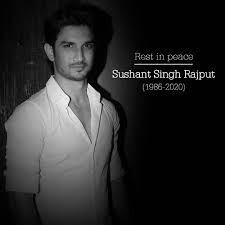
IS IT MURDER OR SUICIDE:-SUSHANT SINGH RAJPUT!

Hello everyone, today we are going to talk about the case that is unexpected and unsolved till now. I am talking nor other than Sushant Singh Rajput. The successful actor in Bollywood. He was born on 21st January, 1986 in Patna, Bihar.
Before starting the career in acting Sushant Singh Rajput was studying in Delhi College of Engineering in Mechanical Branch but when he started to take part in theater and dance ultimately he was dropped the last year in college. He also was a National Olympiad Winner in Physics.


He started his with the famous serial in Star Plus, Kis Desh Mein He Mera Dil in 2008. After that, he started doing the serial i.e Pavitra Rishta. Later on, he got his first debut film, Kai Po Che. After that he acted in Shuddh Desi Romance in 2013, P.K IN 2014, Detective Byomkesh Bakshy in 2015, M.S Dhoni The Untold Story in 2016, Kedarnath in 2018 and, Chhichhore in 2019.


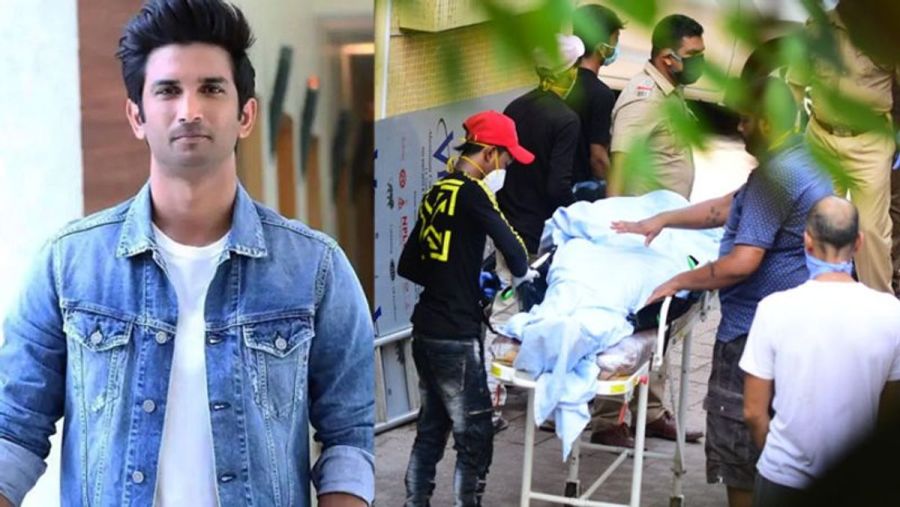
14th June 2020 was very dark, Sushant Singh Rajput has committed suicide. When I heard this news I thought somebody must be joking or something else I was unable to believe that he had committed suicide. The reason for suicide was Depression. He was found hanging from the ceiling fan in his Bandra house. This got me shock that it took me some time to find it is true.

As he was a very talented actor and had won many prizes in award show as it was unimaginable to accept that he committed suicide.
When the case started investigating many new things came through this incident. Through this, we can say that how rubbish is the Bollywood.

There are so many truths about Bollywood which are reveling. There is the bitter truth about his death as his fans asking in twitter that the police told that he died at 12:30 pm but in Wikipedia, it was updated in 8:59 am that he committed suicide. How this can be possible the person not died at that time how they can upload it. It seems to like planned to kill him. As in his room, no suicide note was not also found there are so many things which are giving direction of Murder.

Before the day of death, the CCTV was off. Why the CCTV were off?

Is to remove the evidence of the murder or anything else?The Police are currently investigating Rhea Chakraborty who was his girlfriend and film Dil Bichara his co-star Sanjana Sanghi.The Bollywood is full of Nepotism which leads to a talented and decent actor death.

I don’t know its murder or suicide but sometimes I feel that he is murdered. I hope his soul get peace in heaven and bring the right justice to him. Then only the soul of his will be Rest in Peace.

Let me know in the comments what you all feel is this Murder or Suicide? I hope you like the article.

Thank you for reading my article and have a nice day!

You Deserve a Love Just Like This

You! Yes, you! Right there in the corner of the room, probably feeling like a wallflower. Your eyes are low, trying hard not to catch anybody’s attention. And you, the life of the party, a true social butterfly! You too! Liked by almost everyone you’ve ever met in your life. Do you know what is common between you both? You both deserve to be loved, equally as hard and passionately. You both deserve the love you always keep trying to give to everyone else you meet. And for this to happen, you both need to open up your hearts and let that love settle in.

loveMore than anything in our lives, we all long to be seen. We want someone to accept us with all our flaws; accept us as we are. And this thing that we yearn for so longingly is the same thing that we fear the most too. Why? Because it takes strength to show our real faces to anyone. It is exceptionally hard breathing under a mask but all of us do that in bleak hopes of finding acceptance in this warped society. You deserve someone who stays by your side even when you rip that mask off your face, the mask that was suffocating you and hindering your fresh breath of life anyway. You deserve someone who stays even when they know the real you: confused, broken, hurt, and fragile. You deserve someone who is not afraid of the way you love them with such fervor and someone who is not afraid to shower you back with the same kind of love.

It does not matter if you are cynical about love, have never been in love, or were in a toxic relationship this whole time. It does not matter because there are absolutely no prerequisites to love. It could be with an absolute stranger who caught your eye by chance on the street last week. It could be with your best friend in the whole wide world, whom you have known since forever. That is the beauty of love. It appears out of the blue and leaves an imprint on your life which stays with you long after your lover.

love2Every one of you deserves your beautiful fantasy to be a reality. All the clichés you watched in the movies to become a reality of your lives. All of you deserve someone who is looking at the bigger picture in their life, and more importantly, that picture has you in it.

And if a relationship leaves you feeling empty from inside, it is your job to find the courage to walk away from it. Remember always, you do not need someone’s half-hearted love. Sometimes, walking away is not a sign of weakness but of strength. You walk away not because you want others to realize your importance in their lives but because you realize your importance in your own life. You want and need your own heaven. It may be flawed but it will be enough for you. Anything less than that would be settling, and settling, my friend, is the worst kind of self-robbery.

Image Courtesy: GOOGLE

A rising talented Gujju boy🥁…!!!

The highly talented brothers Neet and Divya are begin highlighted from a small town Nana Angia of Kutch district of Gujarat. The dedication and passion towards drums with kutchi folk music will no doubt make their future bright. In the age where other children are busy with their toys and TV remotes this two brothers are working on their future and making it secure with the real man toys. The support from family really matters a lot especially when father is working abroad in Nairobi, apart from that this two brothers learned it from their own just by observing the folk music groups and via you tube lessons.


Neet- a 3 years old child with unbelievable hands on dhol(drums) is blessed with amazing talent. The youngest drummer of the world is Julian Pavone at around 5 years of age but Neet with the tag of 3 years age can create a world record of youngest drummer in the world with intense hard work and dedication. With the proper training from his mother Radha D. Bhagat and support from Dhirubhai D. Bhagat will surely make him a succesful drummer.

If you’re young and talented, it’s like you have wings.

Click here to see the talent of young and aspiring boy

IMG-20200704-WA0017

It’s a hard thing to find something special in us but when others finds something talented and worthy that makes a sense and may change our lives forever with the support and intense hard work.

Credits:- Ekjalak.com