3 Skills Business Students Should Know

Technology is ubiquitous in the business world, and it’s expected that new employees will be able to tackle certain computer-related tasks once they join the workforce.
Herzing University understands that need and includes technology as a major theme throughout most courses in the business program. One of the most important computer-related skills that students in all academic concentrations learn is proficiency in standard Microsoft Office applications. While similar applications may be used by other businesses (such as Google Docs or OpenOffice) Microsoft applications are still the de facto standard.
Let’s take a look at each one of these applications, and the types of work that a new employee may be asked to do with them:
  • Microsoft Word is the standard for word processing tasks. Employers will expect new hires to be able to use the application to complete an existing template, such as reports and forms. Employees may also be expected to generate new documents based on the needs of the company, the field and their position. Some documents may be as simple as memos, while others may be as complex as research reports or marketing flyers.
  • Microsoft Excel is used to create spreadsheets that organize data so that it can be easily interpreted and analyzed. Students should know general spreadsheet formulas and functions and understand how Excel compiles and reports data. Business students should also be able to analyze data and present it in a fashion that is easy for others to understand. This can include statistical analysis and the creation of tables and charts.
  •  Microsoft PowerPoint is a slide show presentation program that is also often used in the business world. Students should be able to use PowerPoint in a professional setting and create slides that can explain concepts, ideas and data to others. They can use different formats, templates and layouts that make the information both engaging and easy to understand.
In addition to these general applications, students should familiarize themselves with the technical skills they will need for their desired career. For example, students interested in marketing should be able to analyze data in Excel, create memos relating to marketing efforts in Word and develop engaging presentations in PowerPoint. Other applications that might be relevant to a career in marketing include those used for web-based marketing, social media campaigns or evaluating the profitability of different marketing mix options.
A student who understands the value of technology in the business world is likely more qualified job candidate and a more effective worker. At Herzing University, we ensure that students are exposed to a wide variety of software applications so that they can hone their technical skills throughout their academic program.
Learn more about our business programs here.

Does Technology Make us Feel more Alone??

We are all for the most part guilty of staring at our phone screens rather than engaging in verbal conversation. Imagine going out to eat with your friends who you haven’t seen in forever and you have been saving the date for a while now; you finally show up and begin to chat with them before there phone lights up. They excuse themselves to send a quick text before they become more invested in their phone conversation than with you. Instead of engaging face, to face you begin to give halfhearted responses to each other before you give up and relinquish yourself back to checking the same social media posts you saw a half hour before showing up. While being a bit dramatic, it still serves to demonstrate that with the overabundance of technology that has been ingrained into todays social structure, it serves as a hinderance for those who are actively seeking to be more social.

In a study done by the Cigna Health Insurance company of a survey of 20,000 Americans, 46 percent of them reported feelings of being always or sometimes lonely. However, they further documented that how long people spend online also contributes to feelings of loneliness. They say that users who access social media more than fifty times a week are three times as likely to develop feelings of social isolation than users who accessed social media platforms like Facebook and Snapchat less than nine times per week.

This is most likely due to the fact that we choose to obsess over documenting our lives rather than live in the moment. Seeing people around you have a better time than you or those who might possess more of a certain trait than you can make you feel inadequate. While most people can realize that people choose to share momentous or joyous moments of their lives to the world, low self esteem users would become trapped in the minefield of social media with triggers surrounding them.

Loneliness can be severely life-altering – even life-threatening – for those who experience it. Linked with psychological problems such as alcohol and drug abuse, eating disorders and depression, the devastating effects of loneliness cannot be overstated. There is also much evidence to suggest that loneliness causes biological problems as well as psychological ones, and can even lead to death.

According to figures published in the Independent, an analysis of 300,000 people in 148 studies found that loneliness is associated with a 50% increase in mortality from any cause. In other words, no matter the ailment a person may be suffering with, isolation makes it worse and renders it harder to recover from the condition. In these terms, the analysis concluded, loneliness may be considered comparable to smoking 15 cigarettes a day, and more dangerous than obesity.

To combat the negative impacts of loneliness, people need real, in-person interactions, the authors of the Cigna study say. However, the more we rely upon technology – both at home and in the workplace – to socialize, complete daily tasks and perform work duties, the less time we spend meeting face-to-face with our friends, family, and co-workers, leading us once again to the question: Does technology make us more alone?

While different studies reveal slightly different statistics, the overall trend is clear – we are indeed addicted to technology, and social media use, in particular, has skyrocketed over recent years. One report last year from GlobalWebIndex estimates that digital consumers are now spending an average of 2 hours and 22 minutes per day on social networks and messaging services. Young people (16-24-year-olds) spend even more time, clocking up about 3 hours per day.

A separate report reveals that when we factor in all media technology – TV, computers, radio, smartphones, tablets – US adults are spending 10-and-a-half-hours every single day consuming media. That’s 10-and-a-half hours out of every 24 zoned into a screen, not talking to anybody, not socializing, engrossed in other people’s lives instead of living our own.

But what can we do about this? Is there no possible solution for this wide epidemic of “social media attraction” to get our teens to be more effective in communicating and developing social skills that are needed for their future lives and careers? The answer is yes, there is a solution to this.

What teens and parents can do is limit the time that their children use their smartphones for. Find ways for them interact with other people and siblings, have interesting and effective talks with new people, be friendly and open-minded and be up to listening what other people have to say. Go outside and spend an afternoon playing a sport and exercising for a much healthier life. Spend sometimes outdoors with your friends playing and talking. These are some of the many solution for a better and more effective teen that will develop the skills needed in order to approach the real world.

Refrences:-

https://highschool.latimes.com

http://www.nytimes.com

Explained: How will the ban of TikTok and other Chinese apps be enforced; what will be the impact?

TikTok, other Chinese apps banned in India: The notification is expected to be followed by instructions to Internet service providers to block these apps.

Some of the banned Chinese apps are very popular among Indian users, especially TikTok which has over 100 millions active users in the country, especially in heartland India.

India on Monday banned 59 apps originating from China, including very popular ones like the short video platform TikTok, UC Browser, file sharing app ShareIt, and CamScanner, which allows iOS and Android devices to be used as image and document scanners.

What is the legal basis for India’s action?

The ban has been enforced under Section 69A of the Information Technology Act, 2000 (“Power to issue directions for blocking for public access of any information through any computer resource”): “Where the Central Government or any of its officers specially authorised by it… is satisfied that it is necessary or expedient so to do, in the interest of sovereignty and integrity of India, defence of India, security of the State, friendly relations with foreign States or public order or for preventing incitement to the commission of any cognizable offence relating to above, it may… by order, direct any agency of the Government or intermediary to block for access by the public or cause to be blocked for access by the public any information generated, transmitted, received, stored or hosted in any computer resource.

The Ministry of Information and Technology has said that it “has received many complaints from various sources including several reports about misuse of some mobile apps… for stealing and surreptitiously transmitting users’ data in an unauthorised manner to servers which have locations outside India”. Since this “ultimately impinges upon the sovereignty and integrity of India, is a matter of very deep and immediate concern which requires emergency measures”, it has said.

How will the ban be enforced?

The notification is expected to be followed by instructions to Internet service providers to block these apps. Users are likely to soon see a message saying access to the apps has been restricted on the request of the government.

However, while this will impact apps like TikTok and UC News that need a live feed to serve any purpose, users might still be able to continue using apps that don’t need an active Internet connection to be used. But further downloads of these apps, like CamScanner, are likely to be blocked on Google’s Play Store and Apple’s App Store.

India bans Chinese bans, Chinese apps banned, Chinese apps banned full list, TikTok banned, UC Browser banned, ShareIt banned, Indian ExpressqThe full list of 59 Chinese apps banned by the government.

What will be the impact of the ban?

Some apps on the banned list are very popular in India, especially TikTok, which has over 100 million active users in the country, mainly in the heartland. New social media platforms like Helo and Likee, as well as video chat app Bigo Live are immensely popular among Indians who are not comfortable in English. These users will have to look for substitutes.

Also, most of these platforms have Indian creators, for many of whom this is the only source of income. Many of these apps have offices and employees in India, and a few thousand jobs could be at stake.

Decoding LAC Conflict

How will the ban of TikTok and other Chinese apps be enforced; what will be the impact?

With stand-off at friction points continuing, expect a longer battle of nerves on Ladakh LAC

Talks will continue but military pushback also on Delhi’s table

Will the ban be permanent?

TikTok was banned in India on the order of the Madras High Court for a few days last year, but it came back soon after the court vacated the ban. This action, however, is more sweeping, impacts more apps, and has been taken in a specific strategic and national security context. It could be a warning to bigger Chinese businesses in India, and to China itself.

Sensex falls 210 pts to end at 34,962; Nifty slides 71 pts to 10,312

Domestic equity benchmarks today closed with losses of more than half a percent amid negative global cues.

Sensex at Bombay Stock Exchange declined 210 points, or 0.6 percent, to close at 34,962. Similarly, the Nifty at National Stock Exchange fell 71 points, or 0.68 percent, to settle at 10,312.

Broader indices at BSE also logged losses. Mid-cap depreciated 1.39 percent while Small-cap lost 1.23 percent.

Government announces launch of seven-year floating rate savings bonds

Government has announced the launch of seven-year Floating Rate Savings Bonds, 2020 (Taxable) scheme commencing from 1st  July.

According to an RBI notification, Floating Rate Savings Bonds will enable a person resident in India or Hindu Undivided Family to invest in a taxable bond, without any monetary ceiling.

The interest on the bonds is payable semi-annually on 1st January and 1st July every year. The coupon on 1st January 2021 shall be paid at 7.15 percent.

Over 3.21 lakh people recover from COVID-19 so far; recovery rate improves to 58.67%

The Government today said a total of 3,21,723 people affected by corona virus have been cured in the country so far.

In the past 24 hours, 12,010 people have recovered from Covid-19 and with this the recovery rate  has reached  58.67 per cent.

The Health and Family Welfare Ministry said, a total of 19,459 new cases of Covid-19 have been reported in the country within 24 hours taking the total number of cases to 5,48,318.

In a single day, 380 deaths have been reported taking the nationwide toll to 16,475.

Presently, the total number of active corona cases in the country is 2,10,120.  

The Indian Council of Medical Research, ICMR has said 1,70,560 samples were tested for corona virus by various laboratories in the country within 24 hours.

Government bans 59 mobile apps prejudicial to sovereignty and integrity of India

Government has banned 59 mobile apps which are prejudicial to sovereignty and integrity of India, defence of India, security of state and public order.

Electronics and IT Ministry said in a release that these apps were banned in view of information available they are engaged in activities which are prejudicial to sovereignty and integrity of the country, defence of the country and security of state and public order.

The banned apps include TikTok, Helo and WeChat.

Over the last few years, India has emerged as a leading innovator when it comes to technological advancements and a primary market in the digital space.

At the same time, there have been raging concerns on aspects relating to data security and safeguarding the privacy of 130 crore Indians. It has been noted recently that such concerns also pose a threat to sovereignty and security of the country.

The Ministry of Information Technology has received many complaints from various sources including several reports about misuse of some mobile apps available on Android and iOS platforms for stealing and surreptitiously transmitting users’ data in an unauthorized manner to servers which have locations outside India.

The compilation of these data, its mining and profiling by elements hostile to national security and defence of India, which ultimately impinges upon the sovereignty and integrity of India, is a matter of very deep and immediate concern which requires emergency measures.

The Indian Cyber Crime Coordination Centre, Ministry of Home Affairs has also sent an exhaustive recommendation for blocking these malicious apps.

This Ministry has also received many representations raising concerns from citizens regarding security of data and risk to privacy relating to operation of certain apps.

The Computer Emergency Response Team (CERT-IN) has also received many representations from citizens regarding security of data and breach of privacy impacting upon public order issues.

Likewise, there have been similar bipartisan concerns, flagged by various public representatives, both outside and inside the Parliament of India.

There has been a strong chorus in the public space to take strict action against Apps that harm India’s sovereignty as well as the privacy of our citizens.

On the basis of these and upon receiving recent credible inputs that such Apps pose threat to sovereignty and integrity of India, the government has decided to disallow the usage of certain Apps, used in both mobile and non-mobile Internet enabled devices.

OPEN BOOK EXAMS: A CONCEPT

PC: Getty Images/iStockphoto; Copyright: Dolgachov

Exams have evolved for the current generation, and the trend is changing to open-book assessment. It is said that open book exams are closer to real-world problems. In a way, it is a highly efficient replication of a real-life situation where a person applies intelligence using available resources to solve a problem. The questions in a ‘No book’ system paper is set by consulting guides and approved books, whereas, in an open book system, the paper must be culled from the depths of the book. These exams are also expected to be less stressful as there will be an element of support for students.

Let us look at it from the viewpoint of a teacher. These exams will harden the work of a teacher. Teachers will have to ensure they prepare a meticulous question paper that puts the understanding of a child to the test. There must be no answer readily available in a textbook which will be provided in the exam. This process is going to eliminate ‘rote-learning’ as examinees will have to apply their understanding of concepts in limited time with the help of a book. A lot depends on teachers who will set the papers. If questions are not made which invite some thought from students, this system will not be much of a difference-maker.

If students are informed that specific questions will be from a limited section or chapter of a book, then this system will only generate more of memorizing than an application of the concept. The idea of an open book exam is for a student to look up for something quickly in book and not just find the whole answer in the exam. It creates one particular disadvantage for some students who will assume that they will discover tailor-made solutions. They will be seen flipping through pages in search of an answer, and this will waste precious time, and more pressure will be built on the student if the paper is too lengthy. Some people think that open book exams are going to make things easier. In my opinion, if questions will be smarter to compensate for a book made available, the paper will become more stringent. Actual aptitude will be put to the test. With this type of exam, a student must also be guided and trained to develop skills to face this exam. Reading skills must be worked on so that it suits open book exam needs. They will be put in a situation where they have to smartly choose whether to look up in a book for an answer or not. If these are executed in a well planned and assessed manner, students will avoid copying answers and give exams intelligently, but if they are not, students will take exams for granted.

When we look at the bigger picture, these exams are not only focusing on exams alone but also on the creation of an atmosphere of knowledge application so that students make the most of it. Hopefully, they will not become victims of it, if it does not get executed properly. The idea is also to make students think not just in terms of writing their exams but also absorb knowledge for which there is no pressure to reproduce from their memory. Looking up for things is great, but knowledge is the most important. Many students will like it, and many will oppose it, but everything is introduced according to the needs of the time. Let us hope that it gives all the students a curriculum and concept-based study environment which is relevant to them in the long run—something which people truly apply in real-life situations.

India and China to hold third round of talks to de-escalate tension in eastern Ladakh

Indian and Chinese militaries will hold another round of Lieutenant General-level talks today in an attempt to de-escalate tension in eastern Ladakh. The meet will also finalise modalities for disengagement of troops from the sensitive region. It will be the third round of Lt General-level talks and sources said it will take place in Chushul sector on the Indian side of Line of Actual Control.

The meeting is scheduled to start at 10:30 AM. The Indian delegation at the talks will be headed by 14 Corps Commander Lt Gen Harinder Singh while the Chinese side is likely to be led by the Commander of the Tibet Military District.

The first two meetings had taken place at Moldo on the Chinese side of the LAC. In the second round of talks on 22nd of June, the two sides arrived at a mutual consensus to disengage from all the friction points in eastern Ladakh.

AIR correspondent quoting official sources said the two sides are expected to deliberate on the implementation of an agreement arrived at the first round of the Lt General talks on June 6.

Surprising Arrival of UFO’s : Super Exclusive >>>>>>>>>>

YouTube has become a video repository for UFO videos, collections of images edited as videos showing inexplicable discoveries on both the Moon, Mars and other places in the solar system.

The video-uploading Social Network has quickly lost control of what is posted on the site as hundreds of thousands of people record and upload videos of strange events they say are proof of aliens and UFOS.

Regrettably, while there may be quite a few videos which are actually the real deal and offer proof of the existence of UFOs, there is a huge amount of fake videos posted on YouTube, most of them being the product of Computer Generated images (CGI).

Credit : Third Party Reference

Now a new video uploaded to YouTube has made headlines around the world after a man from Mexico called Diego Alves uploaded a very peculiar clip on his YouTube channel. Since then, it has gained much popularity and has been reposted to several other YouTube accounts.

The ‘controversial video’ seems to show what everyone wants to see: A UFO taking off from the Moon, and shooting into space.

It must be the real deal, right?

Users rushed to comment on the video: “That UFO looks like it’s coming from a hole out of the moon. This is a great video.”

And another added: “Something is Coming, I can feel it.”

A third comment claimed: “That is the best UFO footage I have ever seen.

But hold your horses, not all is as it appears.

UFO debunkers quickly spotted that Mr. Aviles’ Facebook page was filled with CGI content (very talented he is) and that he was a graphic artist who has made a host of stunning CGI videos.

While the video may be undoubtedly awesome, and while it appears to clearly show a mystery object shooting off from the surface of the moon at great speed, the truth is that the man who uploaded the Video, Diego Aviles is a graphic artist who has made a host of stunning CGI videos.

Credit : Third Party Reference

The video is a product of two parts: the moon filmed from a telescope and a small object that was added afterward making it appear as if it was taking off from the moon, and shooting into outer space.

Earth’s moon is a mysterious place. Yes, and there are many things on the surface which are hard to explain. Dr. Robert Jastrow, the first president of NASA’s Commission of Lunar Exploration called the moon “the Rosetta Stone of the planets.” And yes, there are several theories that suggest the moon is both a massive alien base or has numerous bases on its surface whose origin remains a mystery.

Credit : Third Party Reference

In July of 1970, two Russian scientists, Mikhail Vasin and Alexander Shcherbakov, published an article in the Soviet journal Sputnik called “Is the Moon the Creation of Alien Intelligence?” The theory proposed by the two experts offers arguments that would explain the countless e

The Russian scientific duo proposed the theory that Earth’s Moon is not a natural satellite, but a planetoid that was literally hollowed out eons ago in the far reaches of the universe by super advanced intelligent beings possessing a technology far superior to ours, even today.

Anyhow, while there are numerous interesting theories worth pursuing in terms of Aliens and UFO’s, videos like the one uploaded to Mr. Avila’s YouTube channel damage serious UFO investigations.

Reference- https://divyanshspacetech.wordpress.com

Door to door survey for COVID-19 in Delhi to be done in containment zones by July 6, says Union Home Ministry

Union Home Ministry has said that a door to door survey for COVID-19 in Delhi will be done first in containment zones on priority basis by 6th of July. The decision to extend the date has been taken as numbers of containment zones have increased to 435 in the city.The Ministry said, this will be followed by door to door testing in the entire Delhi.

Delhi has recorded 2,084 fresh cases of COVID-19 taking the infection tally in the city to  85,161. A total 57 deaths have been reported in the national capital in the last 24 hours due to COVID-19. The number of active cases stands at 26,246 while 56,235 patients have recovered so far. As many as 16,329 patients are in home isolation.The number of containment zones in the city also jumped to 435.

Centre issues new guidelines for Unlock 2.0; Metro Rail services, Schools, Colleges, Cinemas and Gyms to remain shut

The Centre has issued new guidelines for Unlock -2 to open up more activities in areas outside the Containment Zones. The new guidelines will come into effect from tomorrow and the process of phased re-opening of activities has been extended further. It said, the lockdown will continue to be implemented strictly in the Containment Zones till 31st of July this year. The Home Ministry has said that the new guidelines are based on feedback received from States and UTs, and extensive consultations held with related Central Ministries and Departments.

Under the new guidelines of Unlock -2, Metro Rail service, operation of Cinema halls, gymnasiums, swimming pools, entertainment parks, theatres, bars, auditoriums, assembly halls and similar places will not be allowed. Similarly, social, political, sports, entertainment,  academic,  cultural and religious functions and other large congregations will not be permitted. The Ministry said, dates for opening of these will be decided separately, based on the assessment of the situation. It said, all  activities, except these will be permitted outside containment zones. The Ministry said,  after extensive consultations with States and Union Territories, it has been decided that schools, colleges and coaching institutions will remain closed till 31st of July.

As per the guidelines, night curfew timings are being further relaxed and curfew shall be in force from 10  PM to 5 AM. Further, relaxations in night curfew have been given for seamless operation of industrial units in multiple shifts, movement of persons and goods on National and State Highways, loading and unloading of cargo and movement of persons to their destinations after disembarking from buses, trains and airplanes. It said, domestic flights and passenger trains have already been allowed in a limited manner and their operations will be further expanded in a calibrated manner.

It said, shops depending upon their area, can have more than 5 persons at a time. However, they have to maintain adequate physical distance.

Training institutions of the Central and State Governments will be allowed to function with effect from 15th of July.  SOP in this regard will be issued by the Department of Personnel and Training.

International air travel of passengers has been permitted in a limited manner under the Vande Bharat mission.  Further opening up will take place in a calibrated manner. The guidelines said, containment Zones are required to be carefully demarcated by the State Governments with a view to contain the spread of COVID-19, after taking into consideration the guidelines issued by the Health  Ministry. Within the containment zones, strict perimeter control shall be maintained and only essential activities allowed.

These Containment Zones will be notified on the websites of the concerned District Collectors and by the States and information will also be shared with the Union Health Ministry. 

Prime Minister Narendra Modi to address the nation at 4pm this evening in wake of COVID-19 pandemic

Prime Minister Narendra Modi will address the nation at 4 PM today. The Prime Minister’s Office said this in a tweet following the Home Ministry’s announcement of Unlock 2 guidelines.

This would be Prime Minister’s sixth address to the nation since the outbreak of the COVID 19 pandemic. Mr Modi had last addressed the nation on 12th May when he had announced a 20-lakh-crore rupee financial package to boost the economy recovering from coronavirus-induced lockdown. In his Mann Ki Baat address last Sunday, the Prime Minister had urged the people to be more vigilant in the Unlock phase and take more precautions.

Are products really ‘Made In China’ ???

Made in China. We’ve become accustomed to seeing the label on products manufactured in the world’s second biggest economy. But buying one of these products in China instead of say, the U.S., doesn’t guarantee you’re getting a better price. Chinese tourists have built a reputation for being big spenders abroad, spending a whopping $277 billion in 2018, much more than any other nationality. A lot of times, people think that purchasing something in China will be inexpensive, but that isn’t always the case. So how much of a difference are we talking? If we bring four products from four popular western brands to compare. Starbucks, H&M, Adidas store, a Godiva store. To keep things consistent, we will be using 2019’s average foreign exchange rate. The products compared are:

  1. A standard black t-shirt at H&M.
  2. Starbucks Grande Cappuccino.
  3. Godiva Chocolates.
  4. An Adidas hat.

Now let’s compare:

  1. The shirt at H&M is priced nearly the same in the U.S. and China.
  2. A Grande Starbucks cappuccino will cost you $4.63 in Beijing, but in Los Angles, California, $3.95.
  3. This case of Godiva chocolates, called Pearls, is priced at $7.24 in Beijing, but only $3.95 in LA.
  4. The Adidas hat will set you back $42.27 in China, nearly double the price of a similar hat in the U.S.

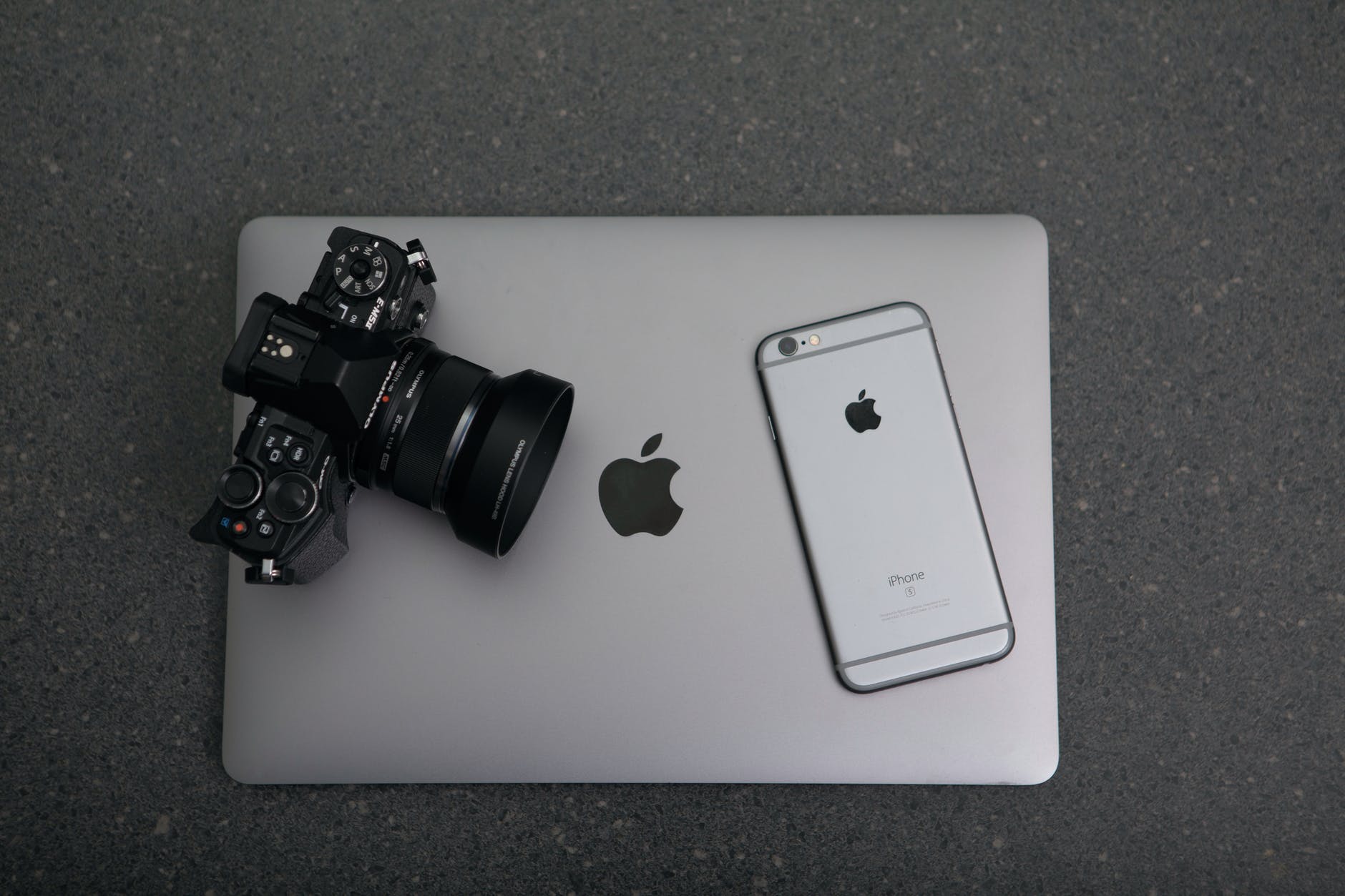
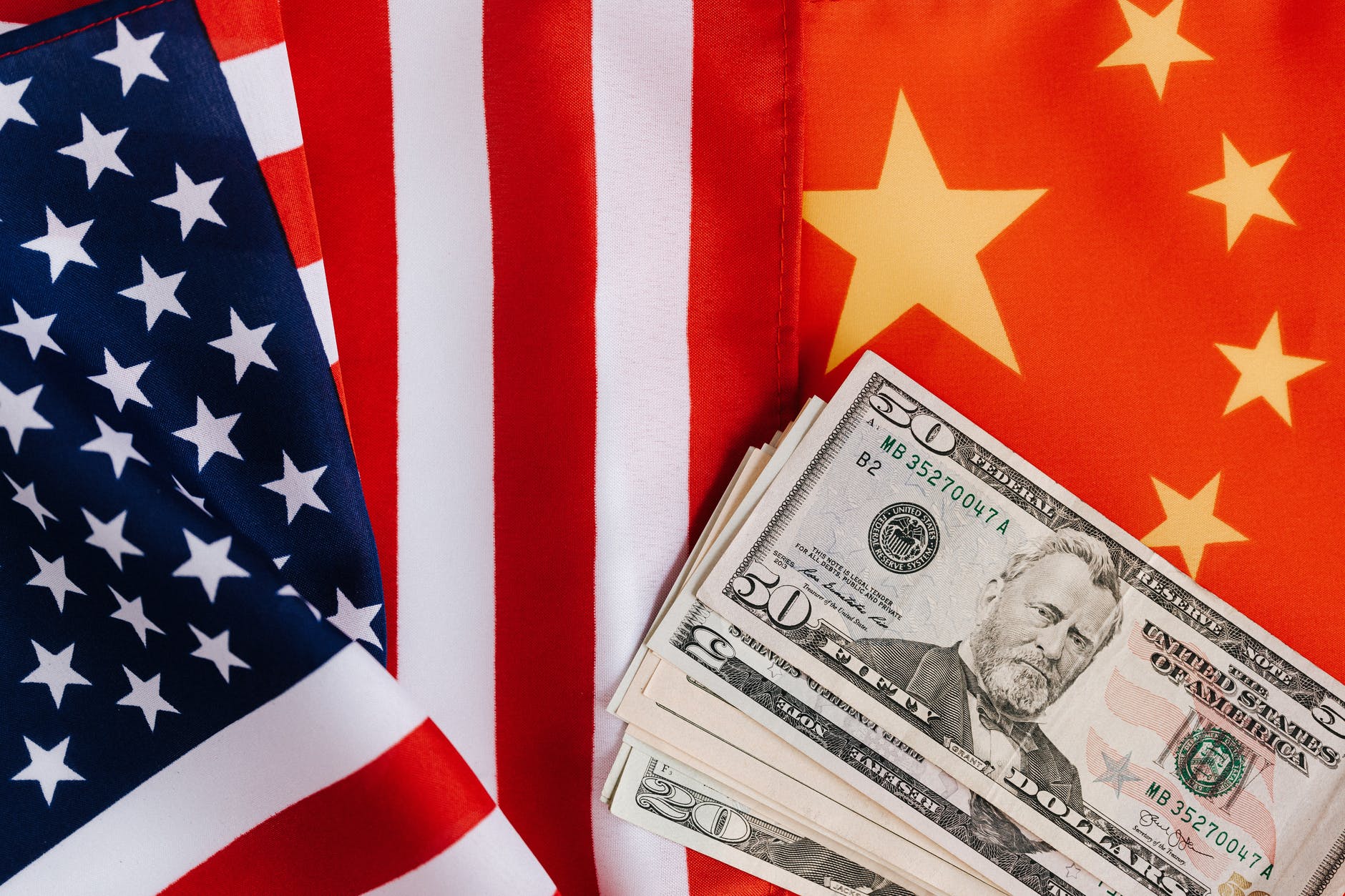
This experiment has made clear that pricing are complicated. So much so, that websites have popped up like the Mac Index, a site that compares Apple product prices from around the world. So many ads for Apple here in this area. According to an analysis done by Tech Insights, the cost to make an Apple iPhone 11 Pro is $490.50. Yet according to The Mac Index, the price to buy one is $1,318 in Japan, $1,477 in the U.S., $1,658 in Mainland China and more than $2,000 in Turkey and Peru. Prices vary across countries due to factors like demand, tariffs and tax refunds. And then there’s the supply chain: the network of people, organizations, activities, information and resources involved in the creation of a product.

close up of camera over black background
Photo by ATC Comm Photo on Pexels.com

Apple’s current CEO Tim Cook is considered by some to be a mastermind in supply chain. He first joined Apple in 1998 with a mandate to clean up the company’s manufacturing and distribution. Over time, he closed factories and warehouses, instead opting for contract manufacturers in China. That’s great for Apple’s profit margins, but it’s certainly not praised by President Trump, who has asked Apple to make its products in the U.S. If, say, iPhone production was moved to the U.S., instead of China, different analyses show the price for the consumer could go up from anywhere from $30 or $40 to hundreds of dollars to even $30,000-100,000. That’s partially why, despite Apple pledging to invest more money in American manufacturing, it maintains China as its hub for making its gadgets.

american and chinese flags and usa dollars
Photo by Karolina Grabowska on Pexels.com

That’s Omar Slim, a senior portfolio manager at global asset manager, PineBridge. When you hear about made in this country or that country is really quite relative and it’s a simplification of things because it’s most likely made in a number of countries. Here’s an example. Let’s say we want to make lasagna for dinner. If Jeff cooks the ground beef and prepares the cheese, Sarah makes the tomato sauce and layers the ingredients into a pan; and Blair, who bought all the ingredients, puts it in the oven, who gets the credit for making the lasagna? Now, let’s apply that to Apple’s iPhone. While the phone might say ‘Made in China,’ some of its parts come from other parts of Asia, Europe and even the U.S. Even though an iPhone may be assembled in China, it’s still tariffed in China as a U.S. product because Apple is an American company. The brand makes that clear with by, ‘Designed by Apple in California. How they’re treated in terms of customs, they will be treated as a U.S. product. So regardless of where they come, it’s essentially a U.S. product. Same for Chinese products going into the U.S. and same for, for instance, European cars.

India simply cannot afford to boycott Made in China — Quartz India

China became a popular manufacturing hub in the 1980s after it started to open to the world. It became known for its cheap labor costs, lax regulations and business-friendly environment. As China’s manufacturing sector grew, it took the crown from Germany as the world’s top exporter in 2010. While Made in China has become synonymous with cheap and low-quality products, China is hoping to change that. In 2015, it launched a Made in China 2025 initiative, which aims to shift its economy from low-end manufacturing to high-end, high-tech products. In 2017, Tim Cook said China lost its place as a low labor cost manufacturing nation many years ago. The U.S.-China trade war resulted in a tit-for-tat increase in tariffs on many products.

Petition · Political Parties: Boycott 'Made in China' products in ...

With increasing costs being passed on to consumers, many companies are looking to diversify their supply chain, instead of being so reliant on China. That sentiment has only grown, following the coronavirus pandemic’s hit on the global manufacturing industry. Along that supply chain, there will be some companies, that instead of manufacturing it in China, if they could, they could try to replace. In fact, companies including Apple, Microsoft and Google are reportedly looking into moving some of their hardware production from China to Vietnam or Thailand. But that might be harder than it sounds. The other countries will have a hard time to compete along with the fact that the infrastructure is shown that it’s quite good, along with the fact that in certain countries would not want to compromise the relationship with China.

70 Reasons that makes us Proud to be Made In India - Sanjay Dalmia

The reality today is that a product likely has many components which are sourced globally. A phone may be designed in the U.S, but its screen is sourced from South Korea, the sensors and microchips may be from Taiwan or Germany, with its assembly in China. So, the next time you see a product with the words, “Made in China,” remember that the full story is seldom pure, and never simple.

The Power of Repeated Words and Thoughts

Thinking may be a mixture of words, sentences, mental images and sensations.

Thoughts are like visitors, who visit the central station of the mind. They come, stay a short time , then get away , making space for other thoughts.

Some of these thoughts stay longer, gain power, and affect the lifetime of the person thinking them. Others, appear for a short while, and then disappear, leaving no impression on the mind.

Do you, like most of the people , let thoughts connected with worries, fears, anger or unhappiness occupy your mind most of the time?
Do you keep occupying your mind with inner conversation about negative situations and actions?
Such inner conversation eventually, affect the subconscious mind, which accepts them as real, and consequently, can affect your health and your behavior.

What You Repeat in Your Mind Can Affect Your Life
It is of important importance to take care of what goes into the subconscious . Words and thoughts that are repeated often get stronger by the repetitions, sink into the subconscious and affect the behavior, actions and reactions of the person involved.

The subconscious mind regards the words and thoughts that get lodged inside it as expressing and describing a real situation, and therefore, it strives to align the words and thoughts with reality. It works diligently to form these words and thoughts a reality within the lifetime of the person saying or thinking them.

This means that if you regularly tell yourself that it’s difficult or impossible to accumulate money, the subconscious will accept your words and put obstacles on your way.

If you retain telling yourself that you simply are rich, it’ll find ways to bring you opportunities to urge rich, and motivate you toward taking advantage of those opportunities.

The thoughts that you simply express through your words shape your life. This is often done unconsciously. Few concentrate to their thoughts and therefore the words they use while thinking. Most people let outside circumstances and situations determine what they think about.

In this case, there is no freedom. You allow the surface world to affect your life and behavior.

If you choose consciously the thoughts, sentences and words that you repeat in your mind, your life will start to change. You will begin creating new situations and circumstances. You will be using the power of affirmations.

Affirmations are sentences that are repeated often during the day, and which sink into the subconscious , which successively , releases its enormous power to materialize the intention of the words and phrases in the outside world.

This doesn’t mean that each word you utter will bring results. In order to trigger the subconscious into action, the words need to be said attentively , intention and with feeling.

In order to get positive results, affirmations need to be phrased in positive words. Look at the following two sentences:

  1. I am not weak anymore.
  2. I am strong and powerful.

Though both sentences seem to express the same idea, they do so in different words. The first sentence is phrased in negative words. It creates within the mind a image of weakness. This is wrong wording.

The second sentence is positive and awakens within the mind a image of strength.

You Need to Repeat Affirmation in a Certain Way
It is not enough to repeat an affirmation a couple of times, then expect your life to vary . More than this is necessary. It is important to affirm attentively , also like strong desire, faith and persistence. It is also important to choose the right affirmation for any specific situation. You need to feel comfortable with it; otherwise the affirmation might not work or may bring you something that you do not really want.

Affirmations can be used together with creative visualization, since they complement each other. This is especially useful for people who find it difficult to visualize. In this case, the words serve as a substitution to creative visualization.

Remember, repetitive words are like a hammer chiseling a stone. You need to be aware of your repetitive words, and allow into your mind only the ones you want.

Some Powerful Affirmations
Instead of repeating negative and useless words and phrases within the mind, why not choose positive words and phrases to assist you build the life you want?

By choosing your thoughts and words you exercise control over your life.

Here are a few powerful affirmations:

Day by day i’m becoming happier and more satisfied.
With every inhalation i’m filling myself happily .
Love is filling my life now.
The power of the Cosmos is filling my life amorously .
A lot of cash is flowing now into my life.
The power of the Universe is now filling my life with wealth.
The powerful and vital energy of the Cosmos is flowing and filling my body and mind.
Healing energy is consistently filling every cell of my body.
I always stay calm and on top of things of myself, in every situation and altogether circumstances.
I am having a wonderful, happy and fascinating day.