Depression in Men

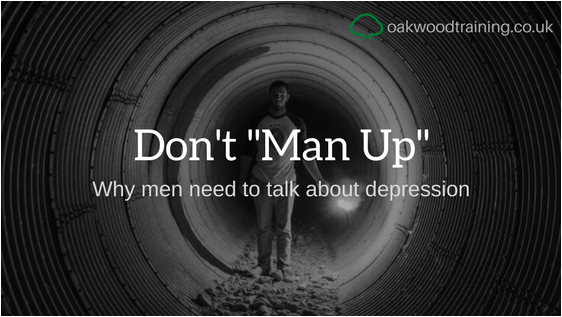
Men are often seen as strong beings that are in control of their emotions. They try to act tough whenever they feel overwhelmed by despair or hopelessness by trying to deny it or covering it up like nothing. But depression has become a common problem today affecting the daily lives of many. It is taking a heavy toll on the work and home life of people all the while expecting them to tough it out.

Depression affects millions of men of all ages and backgrounds targeting even those who are close to them – partners, family, and friends. But it is a treatable health condition, not a sign of emotional weakness. However, male depression affects your life deeply, changing the way you think, act, and feel. Sometimes it can be intense and unrelenting all the while affecting your relationships, sleep and diet patterns, and overall sense of enjoyment in life.

Depression in men often gets overlooked since they tend to be less adept at recognizing symptoms than women. This can result in it going untreated which can have serious consequences.

depression

Signs of Depression:

The classic signs are despondent mood, disturbance in weight and sleep, and concentration problems. The overlooked or stealth signs include physical pain, anger, and reckless behavior. Men often feel agitated and turn to substance abuse. They lose control over negative thoughts and feel hopeless and helpless.

How to deal with depression:

It takes courage to seek help though, be it from a loved one or a professional. Most men suffering from depression respond well to self-help steps.

  1. Connect socially
  2. Maintain a healthy lifestyle
  3. Seek help from a professional

man up

  1. Connect socially: The first step involves finding people you can really connect with, someone with whom you can share your feelings without any fear of judgment from them. Understand that you already have a non-verbal communication with those who are close to you but fighting depression needs actual words. Improve your social network and push yourself for social activities. This will help you interact with people acting as a diversion for your mood. Sometimes solving others’ problems gives a better boost to your morale than solving your own.
  2. Maintain a healthy lifestyle: The second step is maintaining a healthy lifestyle at any given time. Aim for a good night’s sleep at least eight hours long. Identify your stress triggers and find ways to regain control of your life by overcoming them. Practice relaxation techniques or meditation. Yoga helps keep your body active and soothes your mind. Indulge in more activities that interest you like taking a walk or listening to music. A positive lifestyle also includes regular exercise and a balanced diet.
  3. Seek help from a professional: Lastly, you could also seek help from a mental health professional. Even to the most skeptical males, therapy often does wonders by bringing a sense of relief to the mind. After all, there is nothing unmanly in talking to a stranger about your problems if it is doing well to you in the end.

Image Courtesy: GOOGLE

The SuperNova, the dreamer, the photon in a double slit and the achiever,a self-made man ~ Sushant Singh Rajput 🔭

A person’s death caused so many of us to become observant about the facts related to him. Where from he started his career, where did he land, about his possessions, about his family, about his relationships, about his bucket list, about his travels, about the dreams he fulfilled, how good he was as a person, about the rejections he faced, about his abandonment, about the way he was humiliated or boycotted, his interviews and what not?

Okay so imagine, you being exceptionally wonderful in your academics, cracked the engineering entrance holding a single digit rank, you get into one of the reputed colleges of your country, you are about to get your degree and you suddenly are struck by the thought of dropping engineering and following your passion although you are not sure about how successful you will be in it or will you even be able to get into that stream where you will be attacked by Nepotism. Tough decision, ain’t it? which requires alot of courage and understanding. You need to convince yourself and most importantly your family that you will surely reach heights and will not give them any chance to point out a finger at your decision. And then imagine, your family not being that good financially but you still took that decision.
You did theatres, you danced behind those famous star kids, you got a big break through a   TV series, you made a debut through a movie, you fairly did well, you gave some hits, you rejected some movies because you wanted to do a movie of your choice, you where never called to parties, you where denied the acknowledgement by your other fellow stars, you were not awarded for the movies which made crores on boxoffice, then your where boycotted not because of your skills but because of the choices you made, the movies you signed with the directors where taken away from you, lockdown hits, you are alone at your house thinking that no one tried to see the potential you got, no one tried to figure out the hardships you went through to reach where you are and people denying that they don’t recognise you. Today people are claiming that these humiliations and rejections made him fall into depression, killed his mental health, made him emotionally weak and forced him to commit a suicide?

You seriously think so? I wrote this long paragraph so that we can analyse where we are going wrong. Rejections and humiliations are a part of life and I agree that it shatters some part of you but it will never make you step into your coffin. What actually harms you is no one being around you to discuss about your problems, what breaks you is the decision that you made. You remorse about it, you are surrounded by the thoughts of what you would have been if you continued with your academics, you see yourself in dark, you get those negative feelings of you never getting a chance for any other movie because you have no godfather, people will stand against you, no one will watch your movies and so your career is finished, you failed. You let down your family, you let down your mother who was watching you from above, you could not meet their expectations, you will be bullied for your decisions because you could not become a STAR and so you finally choose to become a ⭐. Not the rejections but the repentance brings you to a situation where you just don’t have answers for those questions in your mind,   even nobody else bought you the answers and so you just want to end up thinking, you don’t want to face the cruelty prevailing outside and you want yourself out of this trauma and put a full stop to your pain.

Acceptance and dignity is what every human being craves for. Sushant Singh Rajput was not a special case. So, if his sudden demise still does not changes you, your opinions, your mindset and your choices, then that day is not far away when few among we audiences will certainly take the same step. Start respecting you near ones decision, start appreciating their  efforts, don’t humiliate them for their mistakes, give them positivity, serve them optimism, talk to them, make sure they never feel low. Stay connected because boycotting the star kids is incomplete till you start appreciating the work of the talented ones. Make sure that the journalists realise how pathetically they had put the camera on that numbed person’s face who is yet to digest his son’s loss, who is still trying to figure out where he went wrong and who is still regretting that he could have been there for his son patting his back.

We can’t have him back but we can make sure that no one else has to use ‘.’ punctuation ever in their life.

You will be the brightest among all those stars in the sky
And we will be here, gazing at you
So that you don’t have to think again that why,
those few denied of having no clue
About you!
Rest in peace dear SSR💜

Still I can’t believe that he attempted suicide. Daily something new comes up ! I am unable to move on ! Still its a question it was a suicide or a murder ?

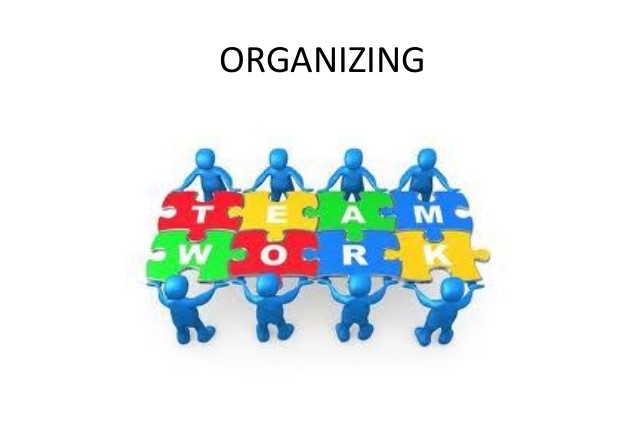
ORGANISING


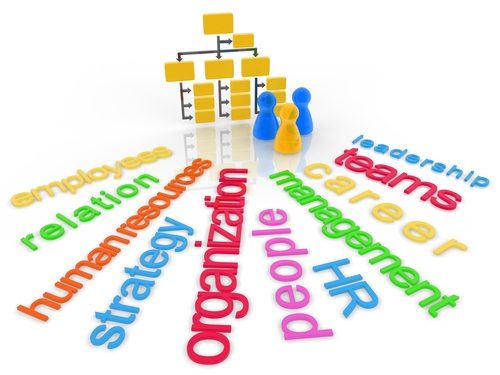
The organisation provides a framework where duties are identified, define tasks are allotted to suitable persons, and interrelationships of personal are made certain and the joint efforts made by different persons become more productive, effective and economical if a well-knit organization is provided by the management and the purpose of establishing an organization, this is to enable its personnel to work more effectively as a unit and no wonder organisation serves as the backbone of management and it is very foundation of most of the steps of operating management.

Organising can be defined as “Organisation is a harmonious adjustment of specialised parts or the accomplishment of common purpose or purposes” by Haney. The organisation is the process of identifying and grouping the work performed, defining and delegating responsibility and authority and establishing a relationship to enable people to work together in accomplishing common objectives.

NATURE OF ORGANISING

1. Division of work

The setting of an organisation involves division of the total work into various activities and functions and assigning the tasks to different persons according to their skill, ability and experience.

2. Chain of command

The superior-subordinate relationship established in an organisation is based on the authority which flows from the higher levels of management to the immediately lower of management and thereby forming a hierarchical chain and is known as the chain of command.

3. Plurality of Persons

The organisation is a group of many persons who assemble to fulfil a common purpose and a single individual cannot create an organisation.

4. Common Objectives

There are various parts of an organisation with different functions to perform but all move in the direction of achieving a general objective.

5. Group of people

An organisation comes into existence when a group of people combine their efforts for some common purpose and willingly contribute towards their common endeavour.

6. Common Purpose

Every organisation comes into existence based on goals of the enterprise which are separate from the personal goals of the people employed and it is the common purpose of the organisation which provides the basis of cooperation among its members.

7. Vertical and Horizontal Relationships

An Organisation creates cooperative relationships between different departments and divisions as well as between superiors and subordinates. The duties and responsibility of superiors and subordinates in each department or division are also unified to serve the purpose of their joint efforts.

8. Organising is a universal process

Organising is needed both in business and also in non-business organisations and nor only this, an organisation will be needed where two or more than two people work jointly. Therefore, an organisation has the quality of universality.

9. Dynamics of organisation

Besides the structural relationships among people which are based on their activities and functions, there exists an organising interaction based on sentiments, attitudes and behaviour of individuals and groups and they are subject to change from time to time.

According to Chester Bernard, Communication, Cooperation and Spirit of service and common objectives are the main elements of the organisation.

Role of Technology in Lesson Planning…

We live in a highly advanced digital world. Technology is an essential part of all different fields of life and same goes for the education sector. It has been almost 20 years since the first computers arrived in the country’s classrooms. Schools across the nation have spent zillions of dollars on introducing technology to the schools since then. Integrating technology into Education sector and lesson planning has facilitated us thoroughly. The perspectives on how technology can be utilized in the Education sector are many. We believe that technology has become a vital part of our education system. Today, we witness that students have access to systems, gadgets, and internet on schools and campuses. 

Technology can help teachers create lessons that will allow the quickly moving students to delve deeper into the subject or explore related topics while allowing the slower students more time to understand the material.Technology has revolutionized the way humans interact and connect with each other, and modern classrooms, homes, and offices are drastically different from how they were just 20 or 30 years ago. Students today need to prepare for a workplace more exposed than ever to social media, television, video games, and other technological advancements. By bringing technology into the classroom, teachers help prepare students to handle the professional world of the future.

Seven ways in which teachers can leverage Internet to enhance classroom learning:-

  1. The amount of information available. With the use of Internet there would be limitless opportunities.
  2. The modern languages opportunities. These are extremely valuable in professional world.
  3. Access to new norms of education.
  4. Individualised lessons.
  5. Adding new meaning to student’s projects.
  6. The chance to learn and explore many different cultures of the world.
  7. Student collaboration opportunities.

The penetration of digital education into the hinterland / rural market is evolving fast. Affordable high-speed internet and direct to device technologies are empowering rural students to study courses online and improve their skills and knowledge. Digital learning is at least as effective as classroom courses. The motivation and expectations of the learner are critical to retention and successful completion of a digital course.

Impact:-

Technology can be used to organize, demonstrate, acquire, and communicate information. Technology integration makes the lesson planning process something similar to curriculum planning. The main difference comes as to how the students essentially acquire skills and knowledge. Technology also makes a difference in how they apply and demonstrate their acquired skills and knowledge. It also helps in assessing and evaluating their learning. Incorporating the use of computer influences the basic structure of a lesson plan.

Making best use of technology:-

Planning ahead is always a good practice. It helps you figure out and brainstorm effective methods of teaching and introducing technology in creative ways. In addition to this, many technology utilities essentially facilitate the teachers, other than assignments and evaluation. Teachers can save their time and energy and can use them in other creative activities in the classroom. They can use technology in creating attendance spreadsheets instead of using the long, conventional ways of keeping attendance tracking. Having easy-to-access and well-organized folders containing student information, contact information, grades, and assignments also helps teachers in storing class-related information digitally. This essentially reduces the clutter on their desks and improves their focus.

Age and maturity are likely to be significant factors in successful completion of a digital course. The proliferation of digital technologies is bringing radical changes in the way education is being delivered and received. The outreach of educational programs is improving day by day with the digitalization of education. Digital education is providing both teachers and students new opportunities to teach and learn thereby ensuring greater participation in the overall learning process.

Technology can be utilized to improve teaching and learning and help our students be successful. Through the use of learning management systems students can access online resources to get assistance on demand beyond the physical reach of their teacher. Technology can also extend education in another way.

Refrences:-

resilienteducator.com

Can Life Have Too Much Meaning?

I’m suspicious of those things where more is always supposed to be better. Nature prefers moderation, so good things can harm you when you get too much of them. Drinking more water is good. Too much and you’ll drown.

I think “meaning” is one of those things that is usually good, but that can cause you problems when there is too much of it.

What Meaning Means

Meaning is a slippery word, so it’s hard to be clear we’re using it the same way. However, we all know when a person, thing, goal or idea feels significant to us, and when those same things feel ordinary. The difference is meaning.

In addition to being a feeling, meaning is also an idea. When someone asks you what something means, they’re asking for you to explain it in words. They want its definition, cause or likely implications. Meanings are words and ideas you weave together in your head.

More meaning tends to be better. A complete absence of meaning usually (although perhaps not always) feels awful. Similarly, a lack of meaning in the conceptual sense is confusion and ignorance. We’d prefer to say what things mean and believe it, than to simply shrug our shoulders and say, “I don’t know.”

How Can You Have Too Much Meaning?

I think there’s two ways you can have too much meaning.

First, you could feel too strongly about the significance of something. We’ve all had anxiety and fears when something is so important to us that we’re unable to function. That relationship that you wanted to hold onto even though the other person wasn’t in love with you. That job which meant everything to you—until you got fired. That conviction you held to desperately, until it started to unravel.

Feelings are mental tools. They put our minds into a state that allows certain ideas, actions and thoughts to flow more easily than others. However, to allow some ideas to flow more easily, that must necessarily mean you’re blocking others. The feeling of significance therefore will be useful in some contexts and harmful in others, just like anger, fear, optimism, joy, love, sadness and everything else you feel.

The second way you can have too much meaning is related to the intellectual idea of meaning. If you have a strong set of ideas about what something means, either in terms of its definition, explanation or implied effects, that can “lock” you into a certain way of seeing things. Too much meaning can prevent you from seeing something in another way, and other perspectives may be necessary to solve certain problems.

How to Tell if You Have Too Much Meaning


I suspect that the anxiety and fear we often feel in our daily lives is a result of too much meaning, rather than too little. It’s a combination of a strong feeling of significance, along with a perceived lack of control.

If you follow politics, you may feel like the world is going mad, and that the battles over who leads the country and what policies they implement is extremely significant. Yet, at the same time, you may feel nearly powerless to control the results.

Similarly, in your personal life, there may be situations where there isn’t much more you can do to overcome a problem, but you can’t stop thinking about it. Although people don’t often see their anxieties and fears as resulting from an excess in meaning, it follows that this is the case because if you genuinely didn’t feel the situation was significant you wouldn’t worry about it.

Intellectually an excess of meaning can result in an overly rigid and fixed way of viewing the world. Your ideas, explanations and reasoning about the world is so tight, that you get stuck when you encounter situations that fail to make sense for you.

Is Mindfulness the Relaxation of Meaning?


I have an explanation of meditation and mindfulness and why it seems to be so popular.

Mindfulness, particularly the body-scanning methods popular among Vipassana retreats, are effectively, a way of reducing the emotional and intellectual excesses of meaning.

A common experience when you’re practicing, for instance, is to have a pain somewhere in your body. At first this feels very significant and something that you ought to do something about. After twenty minutes though, the pain starts to turn into something more abstract, perhaps an odd pulsation or throbbing that has changing characteristics.

At one level, I think what has happened is similar to how if you repeat the same word over and over again (say the word “meaning” a few dozen times out loud to get what I mean). By repetitive attention something that would be processed at a level of meaning dissolves into parts that lack that meaning and you start experiencing something that seems to lack connection to the meanings you had previously.

I hesitate to say this is entirely what’s going on with meditation. Many meditators will note the opposite experience: that suddenly the world feels filled with a hidden specialness that was invisible before.

However, I also suspect that this may be a consequence of the thorough de-meaning-ization of your regular experience. Dehabituate your normal filters for processing meaning and new ones will start forming again in the vacuum. Those new ones may not have the same obstacles as the old ones and the fresh perspective may be more enjoyable.

Should You Take Time to “Relax” Your Meaning of Life?


I think meanings, especially intense ones, are an important part of living life well. Don’t confuse what I’m saying for arguing we should all live nihilistically.

Rather, I think what’s necessary is that, from time to time, you are able to temporarily “relax” your meanings in life. This relaxation may be necessary to get out of ruts where your current way of viewing the situation is frustrated and can’t allow you to live your best life.

These meaningness relaxations may be related to specific situations (i.e. how you think about your future career) or it could be more global (i.e. should you find meaning in ambition at all?).

I also suspect that there is no perfect state of meanings, no eternal viewpoint that will be good for all things. Therefore, relaxation of meaning is probably a necessary adjustment that needs to be done every once in awhile. The new meanings you get to may not be any better (in an absolute sense) than the ones you went in with, but they may help you see around obstacles that keep you from living a good life.


Global COVID-19 cases exceed 90 lakhs

At the global level, the number of confirmed COVID-19 cases have exceeded 90 lakhs, with nearly four lakh 70 thousand fatalities.

According to data compiled by Johns Hopkins University, 90 lakhs six thousand 757 cases of Novel Coronavirus have been reported across the world.

The United States continues to remain the worst-hit with 22 lakh 91 thousand 353 cases and one lakh 20 thousand 106 deaths, followed by Brazil 10 lakh 83 thousand 341 cases and over 50 thousand deaths and Russia reported five lakh 84 thousand 680 cases and over eight thousand deaths. Other countries with over two lakh cases include India, Britain, Spain, Peru, Italy, Chile and Iran. 

3 Brain Training Apps to Try out Now

Just like you can train your body to get stronger, there are ways to give your brain even better capabilities. Working out at a gym allows you to tone your muscles and improve your cardiovascular stamina, while brain training apps can sharpen your brain, making it easier for you to focus and learn new skills.
It all comes back to the idea of neuroplasticity, which is the brain’s ability to create new connections in response to certain circumstances or changes in your environment. Neuroplasticity helps you to retain memories, make fresh ones and even master unfamiliar skills.
Brain training apps use the process of neuroplasticity through games in an effort to help reshape the brain. According to Nadine Kaslow, Ph.D., professor and vice chair at Emory University’s Department of Psychiatry and President of the American Psychological Association, reports that apps can boost mental health through games that have been specifically designed to improve brain function. Next time you pick up your smartphone, consider downloading any of these three best brain training apps that will put your mind to the test:

Lumosity

This app is designed by a team of scientists and designers, and has more than 50 cognitive games that are tailored to different brain goals such as problem-solving, attention, processing speed and memory. Lumosity allows you to track your mental progress with each game and even compares your performance to the other 70 million people using the app. According to developers, just one session a day on the app may improve mental skills.

Elevate

Just like Lumosity, this brain app offers more than 35 mini games that target skills such as focus, math, speaking abilities, comprehension and memory. However, the app is a bit more personalized than its competitors. Elevate keeps track of how many times you log-in regularly and even tweaks the games to become more challenging as your mind becomes sharper.

Fit Brains Trainer

The designers of this app were able to make brain training both fun and challenging through more than 60 games and in-depth performance reports so you can track your progress. Fit Brains Trainer works to target all areas of the brain, including concentration, language and visual-spatial, memory and speed of thinking. However, it also focuses on the development of other skills, including self-control and social awareness. This app will even send you training reminders so you can constantly stay mentally sharp.

Medical curriculum will have to adapt itself in post-COVID era, says Union Minister Dr Jitendra Singh

Union Minister of State in the Prime Minister’s Office Dr Jitendra Singh has said that there is going to be renewed focus on the study and management of infectious diseases in the post-COVID era. He said, the medical curriculum will have to adapt itself accordingly.

Dr Jitendra Singh was addressing a Virtual Conference with the Heads and representatives of National Medical Teaching Institutes, including All India Institute of Medical Sciences (AIIMS) New Delhi, PGI, Chandigarh, Regional Institute of Medical Sciences (RIMS), Manipur, North Eastern Indira Gandhi Regional Institute of Health and Medical Sciences (NEIGRIHMS), Shillong and Sher-e-Kashmir Institute of Medical Sciences, Srinagar yesterday.

Dr Jitendra Singh said, in the last three decades, the disease spectrum in India shifted to non-communicable diseases and hence the medical teaching focussed more on metabolic and vascular disorders like Diabetes Mellitus and coronary heart diseases while the infectious diseases took a back seat.

Dr Singh said, COVID, however, has suddenly awakened the whole world, particularly the medical fraternity, to realize that the age of infections is far from over. Dr Jitendra Singh said, Indian medical fraternity has an advantage over their western counterparts because here the practice of medicine was inherently tuned to preions based on hygiene and prevention of cross infections. He said, in the wake of COVID also, Indian medical fraternity was quick to reorient itself to the new norms of medical management.

NITI Aayog with International Transport Forum to launch ‘Decarbonising Transport in India’ project on June 24

NITI Aayog in collaboration with International Transport Forum will launch the ‘Decarbonising Transport in India’ project on Wednesday, with the intention to develop a pathway towards a low-carbon transport system for India. India has been a member of ITF, an intergovernmental organisation for transport policy, since 2008. ITF Secretary-General Young Tae Kim and NITI Aayog Chief Executive Officer Amitabh Kant will open the public online launch event. Senior officials of the Ministry of Housing and Urban Affairs, Ministry of Road, Transport and Highways, and ITF will also be present.
 
The online event will inform transport and climate stakeholders in India about planned project activities. It will also offer the opportunity to provide inputs regarding India’s transport challenges and how they relate to CO2 reduction ambitions. The discussion will help to focus the project further on India’s specific needs and circumstances.

Mansukh Mandaviya inaugurates India’s one of India’s largest & first Virtual Healthcare & Hygiene EXPO 2020

Union State Minister for Chemicals and Fertilizers Mansukh Mandaviya today inaugurated one of India’s   largest and first Virtual Healthcare and Hygiene EXPO 2020.

Speaking on the occasion, he said that an ecosystem is being built for a self-reliant India, which will help in ramping up domestic production in Pharmaceutical, Health and Hygiene Sector.

Health, Hygiene and Sanitation, Medical textiles and Devices, AYUSH and Wellness sectors have assumed greater significance in the nation’s fight against the COVID 19 pandemic.

Union Minister Mansukh Mandaviya highlighted various initiatives announced for boosting the health and hygiene sector in the country by Prime Minister Narendra Modi since last 6 years. He underlined schemes such as providing toilets for every household, Ayushman Bharat , to cover 10 crore family for healthcare, Swachh Bharat Abhiyan and Suvidha Sanitary Napkin under which a sanitary napkin is provided for just 1 rupees each.
The minister also mentioned the remarkable contribution of the Jan Aushadhi stores which are providing quality medicines at affordable price for everyone.

The unique exhibition which aims to give a boost to such health and hygiene endeavours has been organised by FICCI and will culminate after five days on Friday.

Mr. Mandaviya also spoke about the recent policy announcement of government giving incentives for setting up of Bulk Drug Parks and Medical Device Parks in the country which will act as a cog in the wheel of Atmanirbharat Abhiyan.

RBI asks payment systems operators to educate public on safe digital transactions

Reserve Bank of India has directed payment system operators to undertake targeted multi-lingual campaigns by way of SMS and advertisements to educate their users on safe and secure use of digital payments.

In a circular, the Reserve Bank of India said it has been taking measures to improve awareness through its e-BAAT programmes and organizing campaigns on the safe use of digital payment modes to avoid sharing critical personal information like PIN, OTP and passwords. RBI said, it is necessary to reinforce efforts to spread awareness as incidents of fraud continue to bedevil digital users, often using the same modus operandi.

To promote safe digital transactions among the general public, RBI has reiterated that users should take care by not sharing with anyone their debit, credit or pre-paid card details. RBI has further advised users not to share their password, PIN, OTP, CVV and UPI-PIN. The apex bank has also cautioned the public from undertaking banking or other financial transactions through public, open or free WiFi-networks and storing important banking data on the mobile, e-mail, electronic wallet or purse.

Saudi Arabia to hold very limited Hajj this year due to Coronavirus pandemic

Saudi Arabia has announced that it will hold a very limited Hajj this year due to the Coronavirus pandemic, with pilgrims from all nationalities residing in the kingdom, allowed to perform it.

The Saudi Ministry of Hajj and the Umrah yesterday said, this decision has been taken to ensure that Hajj is performed in a safe manner from a public health perspective while observing all preventative measures and the necessary social distancing protocols to protect them from the pandemic and in accordance with the teachings of Islam in preserving the lives of human beings.

Defence Minister reaches Moscow; Indo-Russia Defence and strategic partnership to figure prominently during three day visit

Defence Minister Rajnath Singh reached Moscow last evening on a three-day visit to Russia. The Office of the Defence Minister in a tweet said that Mr. Singh was received by Major General Kosenko Vasily Alexandrovich and Indian Ambassador to Russia Dr B Venkatesh Varma.

During the visit, Mr Singh will hold talks on ways to further deepen the India-Russia defence and strategic partnership. He will also attend the 75th Victory Day Parade in Moscow.

The Victory Parade will be held tomorrow to commemorate the 75th Anniversary of the victory in the Second World War. The Parade is organized to honour the heroism and sacrifices made by the Russian and other friendly people. Russian Defence Minister Sergey Shoigu had invited Mr Singh to the Victory Parade, which was originally scheduled on the 9th of May but was postponed due to the COVID-19 pandemic.

Separately, a 75- Member Tri-Service Indian Military Contingent has already reached Moscow to participate in the Victory Parade along with Russian contingent and other invited contingents. The marching contingent taking part in the Victory Day Parade is led by a Major rank officer of the gallant Sikh Light Infantry Regiment.

The Regiment had fought with valour in World War II and has a proud distinction of earning four Battle Honours and two Military Crosses amongst other gallantry awards.

The Indian participation in the Victory Day parade will be a mark of tribute to the great sacrifices made by Russia and other nations in the Second World War, in which Indian soldiers also participated and made supreme sacrifice. The visit of  Defence Minister Rajnath Singh is expected to strengthen the long-standing special and privileged strategic partnership between India and Russia.

WHO says surge of COVID-19 cases across world is due to simultaneous peaking in different countries

The World Health Organization has said, the record levels of new daily COVID-19 cases are due to the fact that the pandemic is peaking in a number of big countries at the same time and reflect a change in the global activity of the virus.

At a media briefing in Geneva yesterday, WHO’s emergencies Chief Dr Michael Ryan said, the numbers are increasing because the epidemic is developing in a number of populous countries at the same time.

Dr. Ryan noted that numerous countries have noted marked increases in hospital admissions and deaths – neither of which could be explained by increased testing. There definitely is a shift in that the virus is now very well established, Dr.Ryan added.

Recovery rate of COVID-19 patients improves to 55.77%; More than 2 lakh 37 thousand patients cured so far

India has one of the lowest COVID cases per lakh population in the world in spite of its high population density. Citing a WHO report, the Health Ministry said, the country’s cases per lakh population are 30.04 while the global average is more than triple at 114.67. The US has 671.24 cases per lakh population while the metric for Germany is 583.88, Spain is 526.22 and Brazil is 489.42. This was revealed in the WHO Situation Report-153 dated 21st of June. The Health Ministry said, this low figure is a testimony to the graded, preemptive and proactive approach the Central Government along with the States and Union Territories took for the prevention, containment and management of COVID-19.

Talking to AIR News exclusively, Director of the All India Institute of Medical Sciences, Randeep Guleria said, India is in a far better position in comparison to other countries in this regard.

The Health Ministry said the recovery rate of COVID-19 patients has improved to 55.77 per cent in the country. So far, a total of 2,37,195 patients have been cured of COVID-19.