Indian Politics and the Chinese Factor

The brutal killing of 20 personnel of the Indian Army, including a colonel-level officer, by China’s People’s Liberation Army (PLA) in the Galwan Valley on the night of June 15 will reverberate across India for a long time to come. Indian security personnel — from the armed forces, paramilitary forces, and the police — have often given their lives in the quest to defend India’s territorial integrity, sovereignty and the Constitution. And as often, their contribution is forgotten.But Colonel Santosh Babu and the 19 other men killed in the line of duty will stay on in public memory for three reasons. First, this was the first time since 1975 that Indian blood was shed defending the border against China. Two, the nature of the killing was brutal — PLA, in what India has called a “pre-meditated” attack, violated norms of war. And India and China are not even officially at war. And finally, their killing has highlighted the place of Ladakh in general, and Galwan Valley in particular, as essential to India’s territorial imagination.

This, then, can make June 15 — or Ladakh 2020 — the moment when, for two generations of Indians, the security threat from China has become tangible and real. It can make it the moment when discussions about the “competitive-cooperative” relationship with China and how to navigate great power politics will move beyond the rarefied seminar circuits of elite analysts and assume a strong place in public consciousness. And it can make it the moment when China becomes an issue in Indian domestic politics, strongly tied to public opinion, partisan positions, and the idea of nationalism.

The intersection of domestic politics and foreign policy is old. Indeed, a lot of scholarship suggests that foreign policy itself is the extension of domestic politics and is shaped substantially by it.

Fathoming the Depth of Their Relationship

The tensions between China and India are real, but they will eventually prove to be aberrant. There are three good reasons for believing that: one historic, one economic, and one strategic.

First, China and India sealed their borders in modern times, but in the 2,000 years preceding the conflict of 1962, the two countries enjoyed strong economic, religious, and cultural ties. By the second century bc, the southern branch of the Silk Road—an interconnected series of ancient trade routes on land and sea—linked the cities of Xi’an in China and Pataliputra in India. Trade on the Tea and Horse Road, as the Chinese called it, was a significant factor in the growth of the Chinese and Indian civilizations. Seen in that light, the closing of the Sino–Indian border—not the border’s reopening—is the anomaly.

In fact, Buddhism traveled from India to China in 67 ad along the Silk Road. In those days, the relationship between China and India was one of mutual respect and admiration. The monk Fa-hsien (337 to 422 ad), who traveled from China to India to study Buddhism, referred to the latter as Madhyadesa (Sanskrit for “Middle Kingdom”), which is similar in meaning to Zhongguo, the word the Chinese used to describe China. In the 1930s, no less a scholar than Beijing University’s Hu Shih said that the sixth century ad marked the “Indianization of China.” Even today, visits by Chinese and Indian leaders include a trip to a Buddhist shrine in the host nation.

There was also much goodwill after the birth of the two modern states, India in 1947 and China in 1949. During the 1930s, India’s future prime minister Jawaharlal Nehru frequently wrote about how India supported the struggles of fellow Asians under the foreign yoke. He organized marches in India in support of China’s freedom, organized a boycott of Japanese goods, and in 1937 sent a medical mission to help the Chinese. India was the second non-Communist country, after Burma, to recognize the People’s Republic of China, in 1950. Five years later, India supported the idea that China should attend the Bandung Conference, in Indonesia, which led to the creation of the Non-Aligned Movement, an alliance of developing countries that supported neither the United States nor the Soviet Union. In those heady years, one slogan heard in India was Hindi Chini Bhai Bhai (“Indians and Chinese are Brothers”). The slogan hasn’t been forgotten; China’s premier, Wen Jiabao, repeated it in 2006 when he visited the Indian Institute of Technology in Delhi.

Second, economists tell us that neighbors tend to trade more than other nations do. An official committee set up to encourage commerce between China and India recently suggested that bilateral trade could touch $50 billion by 2010. Even the official numbers understate the potential, according to economists who use gravity models to estimate what the trade between two countries should be. Such models calculate potential bilateral trade as a function of the size of the nations, the physical distance between them, and other factors such as whether they share a language, a colonial past, a border, membership of a free-trade zone, and so on. Sino–Indian trade today is up to 40% less than it could be, according to those models. Moreover, Sino–Indian trade is more balanced than China’s trade with the United States and Europe; the latter countries’ large deficits cause political friction.

Third, China and India, after they cut themselves off from each other, evolved in complementary ways that reduced the competitiveness between them. What China is good at, India is not—and vice versa. China instituted sweeping economic reforms in 1978 and has steadily opened up thereafter. A balance-of-payments crisis forced India’s reforms in 1991, but because of political factors, liberalization has been slow and piecemeal there ever since. China uses top-down authority to channel entrepreneurship; in fact, the government is the entrepreneur in many cases. India revels in a private sector–led frenzy, and its government is incapable of efficiency. China struggles to control fixed asset investment, while India is constrained by scarce capital. China welcomes foreigners, shunning only those who are not part of its power structure. India shuns foreigners and mollycoddles its own. China’s capital markets are nonexistent; India’s are among the best in the emerging markets. And so on. There are no two countries more yin and yang than China and India.

Getting the Best of Both Worlds

These complementarities pose both an opportunity and a threat. It’s easy to spot the advantages of treating China and India synergistically and getting the best of both worlds. Companies can use China to make almost anything cheaply. They can turn to India to design and develop products cost-effectively; they can also hire Indian talent to market and service products. For instance, China’s Lenovo, which purchased IBM’s PC business in 2005, recently moved its global ad-management function from Shanghai to Bangalore. That’s because India has a highly creative and sophisticated advertising industry.

To be sure, Chinese and Indian companies will compete intensely with each other. That doesn’t mean that the rise of one will necessarily be at the expense of the other. For instance, as the Chinese government tries to develop a software industry, Indian companies such as Infosys, Tata Consultancy Services, and Satyam have been among the first to recruit Chinese engineers. Does that mean they are sowing the seeds of their own destruction? Not really. Most Indian companies have gone into China to provide software services to their multinational clients. Chinese firms will try to compete for those contracts, even as Indian companies fight for a share of the local Chinese market. China will gain from having a software industry, but the benefits may not come at the expense of India’s software industry.

The Current Backlash

In a hardening of stance in the backdrop of tensions at the Indo-China border, the government has decided to ask state-owned Bharat Sanchar Nigam Ltd (BSNL) not to use Chinese telecom gear in its 4G upgradation, which is being supported as part of the company revival package, according to sources. The development comes at a time when Indian and Chinese armies are engaged in a standoff in Pangong Tso, Galwan Valley, Demchok and Daulat Beg Oldie in eastern Ladakh. The standoff has stirred anti-China sentiments in India, with protesters and some trade bodies like Confederation of All India Traders calling for a boycott of Chinese products in protest to border standoff. Amid the face-off between Indian and Chinese troops in Galwan Valley, hashtags like “HindiCheeniByeBye” and “BharatVsChina” were trending on Twitter.

The Indian strategic community has long recognised China as a threat. The border dispute and Beijing’s efforts to change the facts on the ground by its consistent incursions; its claim over Arunachal Pradesh, particularly Tawang; the large trade deficit; China’s firm support to its “all-weather friend”, Pakistan, now buttressed by the China-Pakistan economic corridor; its efforts to box in India by encouraging regimes hostile to New Delhi in the neighbourhood; its moves to thwart India’s legitimate ambitions (such as permanent membership of the Security Council or entry into the Nuclear Suppliers Group); and its ambitions to establish new style imperialism through the Belt and Road Initiative have all been closely noted and are a part of the institutional memory of the government of India.

But along with this, there is also a recognition of the power asymmetry between the two countries. India’s economy is much weaker; its military and technological capabilities don’t match up to China; its State capacity is more limited; and in the maze that is international politics, China is a more significant player and India cannot rely on partnerships and external bandwagoning. Along with it, India — at this stage of its economic development — needs foreign capital and investment, and deepening economic interdependence with China has been seen as a way to both neutralise the competitive elements and aid Indian development.

The killings of June 15 have suddenly woken a large number of citizens to the fact that Pakistan is an important, but perhaps not the most important, security challenge India confronts. The Chinese willingness to assert itself abroad under President Xi Jinping, and the power differential with India, makes it a more serious adversary. The calls for boycotting Chinese goods may be populist and rooted in ignorance of economic realities but they reflect the emerging mood about China, which is going beyond suspicion to a degree of loathing.

The evolution of public opinion is bound to have an impact on political discourse. And that is why even a prime minister such as Narendra Modi — who has proudly worn the badge of nationalism and presented himself as a security hawk — had to face tough questions, not just from critics but also more independent observers, about his claim on Friday night that there is no external presence in Indian territory. The Prime Minister’s Office, on Saturday, came up with a clarification. But the response to his initial statement is instructive. Indian public opinion is not in the mood to tolerate even the hint of a territorial concession to China anymore.

This, then, will have an impact on the politics of nationalism in India. The Bharatiya Janata Party (BJP) — by disengaging with Pakistan till it acts on terror and through the surgical and air strikes under its term in office — has projected itself as a staunchly nationalist force. But now, it will have to be accountable for its actions on China too. The well-meaning advice to the Opposition not to “politicise” the national security issue may go unheeded, for if the ruling dispensation has benefited from weaponising national security for electoral ends, the Opposition will seek to emulate the same. Expect the BJP to talk about Pakistan, and expect the Opposition to counter it with China from now on. Ladakh 2020 has introduced the China factor into Indian politics. Its consequences will be long-lasting.

Brain damage due to Covid-19

During the third week of March, as the pandemic coronavirus that causes Covid-19 was beginning to grip the city of Detroit, an ambulance sped through its streets to Henry Ford Hospital. Inside, a 58-year-old airline worker struggled to understand what was happening to her. Like hundreds of other Covid-19 patients flooding the city’s emergency rooms, the woman had a fever, cough, and aching muscles. But something else was happening too—something that had made her suddenly disoriented, unable to remember anything but her name.

Doctors at Henry Ford tested the woman for Covid-19, and she came back positive. They also ordered CT and MRI scans. The images showed a brain aflame, its folds swelling against the patient’s skull. On the computer screen, white lesions dotted the gray cross-sectioned landscape—each one filled with dead and dying neurons in regions that normally relay sensory signals, regulate alertness, and access memories. On the screen they appeared white. But in the electrical grid of the patient’s brain, those areas had gone dark.

Her doctors diagnosed a dangerous condition called acute necrotizing hemorrhagic encephalopathy, or ANE, which they detailed in the journal Radiology last month. It’s a rare complication known to occasionally accompany influenza and other viral infections, though usually in children. With the flu, scientists believe such brain damage is caused not so much by the virus itself but by squalls of inflammation-inducing molecules called cytokines, which are sometimes produced in excess by the body’s immune system during an infection. Scientists are still trying to figure out if the same is true for Covid-19, or if the coronavirus called SARS-CoV-2 is actually invading the nervous system directly. It’s an open question, the answer to which could have wide-ranging implications for how doctors diagnose and treat Covid-19 patients.

By now you’re probably familiar with the typical hallmarks of Covid-19, the disease that has so far killed more than 125,000 people around the world: fever, cough, difficulty breathing. But stories of other, stranger symptoms—headaches, confusion, seizures, tingling and numbness, the loss of smell or taste—have been bubbling up from the frontlines for weeks. Published data on how frequently the disease manifests in these types of neurological symptoms is still sparse, and experts say they likely occur in a minority of the 2 million officially tallied Covid-19 infections worldwide. But for physicians, they are important because some of these new symptoms may require a different line of treatment, one designed for the brain rather than the body.

The medicines we use to treat any infection have very different penetrations into the central nervous system,” says S. Andrew Josephson, a neurologist at UC San Francisco. Most drugs can’t pass through the blood-brain barrier, a living border wall around the brain. If the coronavirus is breaching the blood-brain barrier and infecting neurons, that could make it harder to find effective treatments.

Right now, many doctors are trying a two-pronged approach. The first is finding antiviral drugs that can knock back how fast SARS-CoV-2 replicates. They often combine that with steroids, to prevent the immune system from going overboard and producing inflammation that can be damaging on its own. If doctors knew people had coronavirus in their brains, that would alter the equation. Unlike the lungs, the brain can’t be put on a ventilator.

As the world continues to battle a deadly pandemic, scientists from across the world are working on finding out more about the virus and how it affects us.

Neurologists outline how coronavirus infection damages the brain
Scientists have conducted a comprehensive review of how the novel coronavirus affects the brain and classified the brain damage caused by the virus into three stages.

The study, published in the Journal of Alzheimer’s Disease, may help assess the long-term effects of the infection on the brain.

The researchers stressed on the need for Covid-19 patients to receive a brain MRI before leaving the hospital. The team pointed out that understanding the nature and severity of the neurological deficits in Covid-19 patients can help find ways to promote healing of the brain.

The team concluded that brain damage due to Covid-19 occurs in three stages.

In the first stage, the virus damage is limited to epithelial cells of nose and mouth. The main symptoms include transient loss of smell and taste.

In the second stage, the virus triggers a cytokine storm — toxic proteins released as a result of an overactive immune system. This begins in the lungs and travels through the blood vessels to all the organs, leading to the formation of blood clots that cause strokes in the brain.

In the third stage, an ‘explosive level’ of cytokine storm damages the blood-brain barrier — the protective insulation layer in blood vessels of the brain. As a result, blood content, inflammatory markers, and virus particles invade the brain and patients develop seizures, confusion, encephalopathy or can even go into a coma.

A drug under trial for Covid-19 treatment may increase risk of bacterial infections
Studies in mice suggest that a class of drugs known as interferons, which are being tested as possible Covid-19 therapy, may increase a patient’s susceptibility to bacterial infections.

The study, published in the journal Science, suggests that the susceptibility to bacterial infections depends on how long patients are exposed to interferons and when they receive it.

Interferons are naturally secreted proteins that help fight viral infections in the lung. Type III interferons (IFN- λ) have attracted much attention, because, unlike other IFNs, they show antiviral effects without driving inflammatory responses.

Although clinical trials exploring use of IFN-λ against SARS-CoV-2 have begun, the long-term effects of these drugs on lung physiology remain largely overlooked.

Researchers studied the lungs of mice exposed to a synthetic viral RNA. In these animals, IFN-λ secreted by cells caused damage to the lung tissues, which increases susceptibility to lethal bacterial super-infections.

Covid-19 RT-PCR tests give false negative results if used too early
Testing people for SARS-CoV-2 too early in the course of the infection is likely to result in a false negative test, even though they may eventually test positive for the virus.

The study, published in the journal Annals of Internal Medicine, indicates that a negative test does not guarantee that a person is not infected by the virus.

The research team from US’ Johns Hopkins University said that patients who have a high-risk exposure should be treated as if they are infected, particularly if they have symptoms consistent with Covid-19.

For the study, the team reviewed RT-PCR test data from seven prior studies, including two pre-prints and five peer-reviewed articles. The studies covered a combined total of 1,330 respiratory swab samples from a variety of people.

The team found that people were 67 per cent more likely to test negative in the four days after infection. When the average patient began displaying symptoms of the virus, the false-negative rate was 38 per cent. The test performed best eight days after infection, but even then one in five people who had the virus had a negative test result.

A gradual strategy, where people start venturing out of their homes in two phases, would be optimal for exiting the lockdown to minimise deaths from Covid-19 while also protecting the economy, scientists suggest.

The researchers from University of Oxford in UK propose that half the population should be released approximately 2-4 weeks from the end of the initial infection peak. Then, after a waiting for another 3-4 months, to allow for a potential second peak to pass, everyone else can be allowed to venture out.

The researchers suggest that the younger part of the population, who are less susceptible to Covid-19, be let out in the first phase, although they will need to be regularly monitored with tests.

Read completely

If you are in a thought of reading this ensure that you decide without reading it. If you have already started reading it then ensure to read it completely. Know completely before you speak. Listen completely before you know. You don’t know until you know it completely. The repeated mistake we keep on doing is ‘not listening’. We make excuses to ourselves as though we know everything by knowing something. People hate to listen because it requires lot of patience. People like to speak because its the easiest job ever.You can’t judge a post without completely looking at it.

Do it completely else give up. Knowing half things bothers the most because if we don’t know we shut our mouths. Knowing nothing is better these days. If you have started then don’t stop. We don’t know until we know completely. If you start something end it by finishing it, not by giving up. These habits play a vital role and reflect in every possible action. If you can’t read completely then you can’t write completely, you can’t think completely. You should habituate to do anything completely. Develop the habit of doing the thing in full-fledged manner. Doing for the sake of doing isn’t considered as doing. You should have done it if you were doing it in the past.

Compete to complete the thing that you have started. Perfection evolves through completion. Try to be patient to become perfect. Read throughout because you never know until you read something completely. Nothing goes in vain. Try to read and try to listen from others. Don’t always try to express only from our side. Take the things from the other end as well. Everyone can speak but none listens. A good speaker isn’t always a good listener but good listener is always a good speaker. Things become tough when we speak because we have no control over it. Things become easier when we listen. The attitude of never giving up starts building up from habit of going through something completely. Don’t leave even a little bit of food in the plate. Don’t leave a single chapter for choice in the examination. Leaving a question for choice describes your way of choosing options and waiting for the opportunities to come. We can define one’s character by the way they eat. Even tiniest things matter the most. They decide the way we life and portrays us in such a manner. We may find it crazy but it’s true.

If you stop in the middle you can’t survive till the end. Starting is simple but ending is tough. The fighting spirit and the fire for desire aren’t the things that come instinctly. They have been developed in the course of time. Habituate the actions that are necessary for survival. May not be something regarding your career. But if you try to develop such things which effect your personality and social growth. The most foremost thing that should be developed is the ability to listen. Everyone hears, no one listens. Give yourself a push to succeed in your life. Character is a process not a result. Try to built it with you. The process must be able to change you in such a manmer that it reflects your personality. Focus on one thing because people try to do multiple tasks at same time. Doing multiple tasks is not at all a problem but doing it at parllely doesn’t make sense. The only thing I want you to develop is a habit which eventually turns your character and helps you in buliding personality.

If you have completed reading this post keenly. Completing doesn’t ensure finishing it. If you haven’t read it thoroughly please make sure that you read it again. I don’t expect you to follow all those things I mentioned there. I only expect you to read completely. Not understanding this post is not at all a problem. But reading it completely made you to complete it. You had atleast read this post patiently until you finished. You didn’t end it in the middle or even you didn’t skip the reading. Push yourself to read it completely. Develop the habit of completing which will surely help you. If you are not interested then don’t start reading but if you have started then don’t stop because no one know until he goes completely.

“Questioning the Healthy State of Milk”

Food is the necessity of our life and we cannot live without it for obvious regions. People and our ancestors have travelled distances in search of better and pure food. Food consists of various constituents helpful for our body to grow well and thus perform well. Proteins, vitamins, some fats and fibre along with carbohydrates helps our body to generate its own energy which helps us to perform our day to day activities. Also some of these helps our body to develop a protective shield which is our immune system which do protect us from various harmful bacteria and virus and thus fight them back, keeping us healthy and fit. Humans have been eating various foods for the purpose of taste and dissolved energy sources in them. Milk is one of them and has helped our dynasties to build up the desired strength from it’s richness in desired components. Milk has been the basics of life as soon as a new baby is born. Mammals feed their babies with their own milk initially which not only keeps the new one  feeded but also provides the necessary antibodies and proteins which help him/ her to survive the  new environment and protect them by building a strong immune system

We shifted to animals excreted milk be it cow, goat or sheeps. As we came to know about the nutrition and taste in those dairy products which could be made from these. But with times  people’s mindset has seen a change and have shifted to dairy diets thus food which is not made from dairy products and especially milk. Various controversies have come up and people have made a number of claims which do suggest the negative effects of milk on human health. People have come up with the thought that milk and it’s product causes:

  1. Bones to be brittle
  2. Cancer 
  3. Disease related to cardio
  4. Allergies
  5. Pesticide in these products

There have been researches and studies which do find relation between milk and it’s cancer causing possibilities.These could be breast cancer, or prostate cancer especially.But from different sources and collecting on a wider scale it was found out to be healthier than unhealthy. Rather various studies on a contrary came up with the possibility of how milk can be healthy for cancer patients as it do build a protective wall and immune system.But still the risk of Prostate cancer was seen as they increase the quantity of milk products in their diet with this also is believed to be incorrect by many scientist and food expert, also no significant result could find any relation between milk causing bones to be brittle, cardiovascular disease and many others. But people do believe that these do consist of pesticides as cattle and other animals do feed on them might have them.But The milk or the products we consume are fully tested and purified and all these adultrants are removed from them, thus making it healthier to drink but facts regarding allergies have been found real especially the acne. 

But we know that milk has the desired nutrients, fast, proteins responsible for making our body stronger and healthier. But the other factors which do make these products as suffering is the treatment with cow, as they are impregnated over and over so as to obtain milk from them. Also they are killed when they become non productive to us. But we acknowledge that milk is an important part of our lives and we can not just stop utilizing it. But what could be the other source? Plant based milk is a good option, which includes soy milk  and has equal constituents like those of normal milk. There are other sources like almond, coconut and many more. But there are some other ways to make milk also. Various technologies and machines have come up which can prepare alternative milk and identical to the dairy ones this is done by fermentation and gene modifying bacteria. 

“Milk is not harmful for humans and not for other animals but it’s production does let to increase in animals suffering. So we need to surely come up with the ideas so as to reduce the harm effect and increase its usage and spread it with more of its benefits and make people around us and the coming generation more healthy and fit”. 

Student should not be allowed to play PUBG??

Several people around the world suffer from different kinds of addictions including drug addiction, mobile addiction and TV addiction to name a few. The latest to join the bandwagon is the PUBG mobile game addiction and this one is proving to be the worst of all.

People addicted to PUBG are so hooked to the game that they often skip their meals and important tasks just to play the game. This addiction has also resulted in erratic sleep patterns which is a cause of great concern. Numerous mental and physical health issues have been noticed in PUBG addicts.

People suffering from PUBG addiction have a high risk of developing health issues such as chronic migraine, weakened eyesight, obesity, insomnia, Alzheimer, heart problem, depression, spondylitis, and schizophrenia. They lose interest in activities that are needed for a healthy living.

Skipping social events, important business meetings and family gatherings is quite common among PUBG mobile game addicts. They prefer playing PUBG rather than indulging in any of these activities. They get angry and upset if someone guides them otherwise. They soon grow socially isolated.

Kids are worst affected by this addiction. Parents should take it as their responsibility to identify the warning signs of PUBG addiction in their kids. They must help their kids get rid of it as quickly as possible.

Since the dispatch of its versatile variant, PUG’s notoriety has shot up massively. The player base of the game cut over all age gatherings and incorporate youngsters, youthful, grown-ups and older folks too. The fixation for the game in some school and school going understudies is extraordinary to such an extent that it genuinely bargains their well being and scholastic.  Kids are seen playing PUBG for longer hours at a stretch and build up a frame of mind of hostility and brutality, affected by the game.   Various odd occurrences around the globe, identified with PUBG, have been accounted for now and again. There had been report of a Chinese kid hopping to death affected by the game. A man in Malaya apparently left his family, since they upset him while playing PUBG. A youthful wellness coach from Jammu and Kashmir in India, start dispensing twisted on self in the wake of playing PUBG consistently for ten days.

PUBG is a first person shooter game. The Android version of the game was released in March 2018. It became a quick hit. The game received a great response when it was released on Microsoft Windows in December 2017.

The release of its mobile version saw many downloads around the world and interest in the game increased. PUBG’s craze can be seen in people of all ages. However, it is especially popular among young people. While the game was launched for the purpose of entertainment, it is a dangerous addiction.

PUBG mobile game addiction is ruining the lives of youth

PUBG mobile game addiction is ruining the lives of youth. Here’s how it’s messed up with his personal and professional life:

Hinders in studies

Students of PUBG spend most of their time playing this game. They ignore their studies. Even when they are compelled to study by their parents or teachers, they are unable to concentrate. This is because because of playing the brain, the activity of the brain gradually slows down and the duration of meditation decreases. It also reduces the ability to understand things. Research shows that students accustomed to PUBG are seeing a decline in their academic performance.

Work of hummers

Like students, PUBG mobile game addict is also wasting their lives. Rather than focusing on his career, he is connected to PUBG. They are unable to think beyond winning this game. Many working professional leaves, half days, delays in depositing projects, miss important meetings, and ignore their job responsibilities due to PUBG addiction. They also depict unprofessional behavior that inhibits the growth of their careers.

Ruins personal relation

Pub mobile game addiction is also wasting personal relations. PUBG addicts spend most of their time playing games. The time he should spend with his family and friends, he gets away from this addiction. It affects personal relationships and causes a lot of stress.

Conclusion

PUBG Mobile Addiction is thus interrupting people’s personal as well as in professional life. The problem should be taken seriously and before it is too late

Equality

“Sugar and spice and everything nice, that’s what little girls are made of.” This is a famous nursery rhyme that is recited by loving parents almost as soon as a child is brought home from the hospital. But does it serve as the backbone for gender stereotypes that permeate our society? Today women make up more than half of college graduates but according to the U.S. Bureau of Labor Statistics (2010) only 13.8% serve as engineers and 24.8% are working in computer and mathematics fields. The resounding question is why aren’t women choosing these occupations? On one side of the argument is the belief that it is a scientific fact that girls just aren’t as talented at math as boys, and on the other side is the belief that girls are…

Over the past few decades, hundreds of studies have tried to explain why girls tend to shy away from mathematical related fields. The discussions focus on determining if gender differences in achievement are biological, social, or both (Bandura, et al., 2001). Zhu asserts (2007) that biological, psychological, and environmental variables all play a role in the gender gap in mathematics. Rochat (2001, p.133) agrees stating “cognition and cognitive development are inseparable from social adaptation.”
From an early age, children’s activities are separated into “boy things” and “girl things.” This early socialization creates a culture that provides the background for performance in school (Gallagher, 1998). Boys tend to explore their surroundings and are considered to have aggressive, objective, and logical traits (Plante, et al., 2009). When a boy is climbing a tree, he is learning several concepts such as spatial visualization on how to navigate the different limbs, problem solving on how to get down once firmly established in an upside-down leg hang, risk-taking by going one branch higher than his best buddy, and gravity, when ultimately he has to take the fall because he got in over his head. Girls, on the other hand, tend to be rule-followers, pleasers, emotional, kind, and more concerned with relationships (Plante, et al., 2009).

Life is not fair; get used to it.” The famous first rule of Bill Gates’s “11 rules you will never learn in school” resonates with everybody, but probably more with women than men. According to the Global Gender Gap Index, 108 years are needed to close the global gender gap. While classical economic models predict that discrimination on the basis of characteristics such as gender should naturally disappear thanks to competition, reality seems to tell a different story.

The lack of women in male-dominated and high-paying industries such as STEM (science, technology, engineering and mathematics) is often cited as a critical factor behind the gender gap. Even though girls perform as well as boys in math and science standardized tests at school, fewer women consider a professional career in these fields. Women seem to face different hurdles that have little to do with their abilities. Gender stereotypes are one of them.

What are gender stereotypes?
While men are generally portrayed as having agency characteristics such as competence, achievement-orientation, inclination to take charge, autonomy and rationality, women are associated with communal characteristics such as concern for others, affiliation tendencies, deference and emotional sensitivity. These characteristics are not only different, they tend to be oppositional: lay people on average believe that men should not be excessively warm (communal) and that women should not be excessively dominant (agency). Research on these generalizations has been extensive and shows they are consistent across culture, time and context.

Stereotypes often serve as shortcuts for forming impressions of people and guide our decisions, without people being completely aware of it. Gender preconceptions have important consequences for the workplace. Here are some examples:

• No credit where credit is due

Whenever women are working with men on male gender-typed tasks, men are more likely to be credited for joint successes and women are more likely to be blamed for joint failures. These negative performance expectations can only be overturned when the woman’s individual contribution is unquestionable, or her task competence is very high.

• Men are promoted on potential, women are promoted for proven performance

Research shows that women are held to stricter standards for promotion: promoted women have higher performance ratings than promoted men, and performance ratings are more strongly related to promotions for women than for men.

• The backlash effect: competent but bossy and unlikeable

When women counter their stereotype and break expectations about how they “should” behave, they pay the cost: dominant women are perceived as less likeable and less hireable than men. A 2016 survey of more than 30,000 employees found that women who negotiated for promotions were 30% more likely than men to be labelled intimidating, bossy or aggressive.

The paradox: defy or conform?
When women conform to gender stereotypes (e.g. by showing emotional sensitivity and concern for others), they are likely to be perceived as less competent. But, if they defy these stereotypes and behave “like a man” (e.g. by showing dominance, ambition and rationality), they will be penalized by a backlash effect. Successful women in male gender-typed fields are well aware of this effect. Speaking at the American Economic Association’s annual meeting in January, Susan Athey, a world-renowned economist, said “I spent all my time hoping that no one would remember I was female.”

Men, too, can be penalized when they do not conform to these gender stereotypes. A recent study found that the gender of the initial role occupant (a microcredit loan manager in this case) was enough to influence the authority enjoyed by future individuals in that role. In other words, when a borrower was paired with a female manager, he/she gender-typed the role as a female-typed role and was less compliant than if he/she was initially paired with a male manager. This bias remains even after being subsequently managed by the other gender (ie a male manager in our example).

Stereotypes harm us all
Stereotypes are entrenched beliefs perpetuated by both men and women, present in our minds since childhood. Anybody can easily fall into this trap. Curious? You can test your unconscious association between gender and science/arts by taking the Gender-Career Implicit Association Test. Seventy percent of people who took this test across 34 countries associated science as being more male than female.

Unfortunately, anti-discrimination legislation, codes of conduct, diversity criteria or legal actions can’t fight this more subtle form of discrimination. You can’t sue your boss for consciously or unconsciously believing that you don’t have what it takes to succeed.

The ball is in our court
Raising awareness of these challenges alone is insufficient. To change mindsets, women should do three things:

  1. Learn – because knowledge is power

Have you ever had the feeling of having been ripped off by your repair shop? If yes, you are not alone. A research paper found that auto-repair shops alter their price quotes depending on how informed callers appear to be about prices. When callers signaled that they had no idea about what the repair should cost, women were quoted a higher price than men. But these gender differences disappeared when a benchmark price was indicated.

This example illustrates how a single piece of information could help reduce any gender-related price discrimination (and might also start changing car mechanics’ expectations about women). Interestingly, the study also found that repair shops were more likely to offer a lower price if asked by a woman than by a man. So, informed women ended up having an advantage over men.

The #SheCANics movement is a powerful example of empowering women through awareness, education and support.

  1. Move confidently into male-dominated areas and speak up

Let’s be honest: stereotypes won’t disappear unless people understand they are harmful. Women in male-dominated environments can help raise awareness. Role models play a crucial role in promoting gender equality and fighting gender stereotypes (e.g. Billie Jean King in sport, Sheryl Sandberg’s Lean In initiative and the #banbossy campaign). Even advertisers are moving into this space and are starting to actively address women (eg Gillette’s ad “The Best Men Can Be” or Serena Williams’ Bumble commercial).

  1. Prepare to react

Women should anticipate and prepare to react to inappropriate or discriminating comments. For example, when the American celebrity Lauren Conrad was asked on radio “What is your favorite position?”, she briefly paused and replied “CEO”.

While such questions or comments were acceptable in the past, it is our role today to make sure they will no longer be tolerated. Those perpetuating gender stereotypes should bear the consequences of such behaviour. A recent example is Martin Solveig’s apology after making a sexist comment during the Ballon d’Or ceremony. We must accept that biases exist, own them and retrain our brains to overcome them. Life might not be fair, but we can do something about it.

My groovy kind of love !

For some people, love can be used to describe almost everything. But I have one question is it necessary that love can exist between humans only?

I strongly believe that love can be for anything living or non living doesn’t matter.

For me love is the most secure feeling .Love is having a companion, best friend, and buddy through every avenue in journey of life. Perhaps you can attain all these feelings with non human entity too.

Today I am here to tell you my love for writing.

WHY I LOVE TO WRITE?

I am my characters and my characters are me, but we are very different versions of each other. I write to sink into those souls and skins and be reborn under a different, unfortunately fictional, sun. A sun that promises brighter fates and futures, I write to reborn into my fictitious realms which hold magic and everything I lack.

I am a youngster with extravagant ideas that I condense and place onto a page. I realize my poems are dark and painfully real. I realize my stories are wild and far-fetched and very unrealistic, but these are the things that develop my style. Reality is cold and unforgiving. Writing, however, is anything you want it to be. Writing is freedom, love, bravery. Writing is death, pain and sorrow. Whatever direction you want your stories to go in. Writing is a way of forming thoughts into deep, magical words that pierce the human psyche.

Writing is a way of escape. To break away from the suffocating and dreary world around me, or sometimes, to forever encase my sorrows in diary. Writing, for me, is like the emergency exit of living. I write because I know that even when nobody will listen to me and hear my voice, the paper will never reject my pen.

My words belong to me and, of course, anyone who wishes to read them. But they are still my words. I am an artist. I am a storyteller. I am a poet. I am an author. I am a writer.

The heart and soul of a writer lives in the words on the page.

This has been my mantra, my understanding, of reading and writing since long now. I believe that writing will tell you more about the writer than any words that ever come out of their mouths, whether the author wills it or not.

Writing is ultimately about expression. The expression of thoughts, ideas, and emotion. Through reading and writing, we as humans can connect on a deeper level than what can be accomplished through almost any other means. You can feel my heart, see inside and understand the essential “me.” And I you ……

I write, because I want to reach the end of my imagination and then break through it. Writing helps me lose or find myself, depending on what I need to feel, and when I need to feel it … it gives me the chance to live thousands of lives in thousands of realities, exploring every possible scenario no matter how minuscule it might be. Through the order I put my words on paper, I can create everything and look from the eyes of it all.

To me, writing is a superpower like no other; it can be art, it can be a simple instruction or it can be a weapon. I write not because it gives me the power of a god, but because it makes me feel human. I write because I should, I write because I can, because I must. I have tried not writing on purpose, and I didn’t last long; writing is an itch that can be scratched only by it. It’s a question and an answer at the same time. I write; because it helps me live, not simply exist. I love it. I hate it. I am disappointed in it, and I am also proud of it. Writing is a mental mirror, an extension of yourself that helps you communicate with the pure reflection of what your soul is.

I write because that is when I am most myself and least myself. I pick the subject from my mind and heart, I gather the words from my mind and ear, but I write from a stream that flows from beyond me or deep within me. I may hate to begin writing, I may love to have written, but I definitely live in the space between the two. I write to discover myself. The words I put down tell the tale my speech can never seem to capture.

Many people have always asked me why I write. I never really know what reason to tell them, besides the fact I simply trust my pen the most. It’s my way to escape to my own world. When I talk, awkward garbage spills out. When I write (and rewrite!) I’m elegant and precise. When I write, truths that aren’t usually heard are given a place, a face and a purpose.

All in all,

I LOVE writing because there are no expectations, no lying and doubting, no reason of giving up.

I would prefer to be in peaceful bond where I can trust for whole life!

And openly I can say “YES I AM IN A RELATIONSHIP WITH MY PEN AND I LOVE WRITING UNCONDITIONALLY”.

“A writer is a world trapped inside a person.”


Mp banned online classes for pre primary and primary section

In madhya pradesh, the School education department has banned online classes of pre primary and primary classes. This bam is both for government and private schools 

The main reason for it is that many students across the state do not have digital device or data recharge facility,beca bec of this students are not able to attend online classs and losing their studies 
Anther reason for banning is by taking classes online at school hours, studying online through electric gadgets,it affect both the physical and mental health of the child.
Many parents do not want to pay extra for poor limitstioli of physical classes. It is also not possible to always supervise students in online classes 
For teachers it is tough in o line classes to gauge the learning of distant and distracted children.
According to sources the use of apps made in china in the operation of online classes is an other reason for it.
Due to covie19 pandemic  all schools are closed to keep the study go school are conducting online classes for all students now banning classes will have a different impact on the studies. For now surely we know it is impossible to reopen schools and we don’t know when the covid 19 go or its  vaccine will come 
We now have to think ahead and plan batter for an uncertain future. 
We need to build a flexible and effective education sturcutes. This ban will not prevent the elite form giving their children the best online education the world can offer. 

Leopons: Hybrids Between Leopards and Lions

Animals all over the world are known to exhibit unnatural behaviors in a typical zoo environment. The pairings which very little off chance of happening in the wild or a natural environment can surely be imagined happening in a zoo. One such pairing is between a lioness and a leopard. In the wild, they both use different mating techniques and would be unlikely to find themselves in a position of compatibility. However, factors change when talking about the same animals in the confined environment of a zoo. They have been successfully bred in captivity to produce a hybrid known as a leopon.

Leopons have been bred in zoos in India, Japan, and Germany. Originally bred for the leopard fur, the hybrid offspring proved to be very sterile. The last of the leopons in India died in 1985, but the British Museum of Natural History still has the leopon skin and skull from an animal bred at the Kolhapur Zoo, India in 1910.

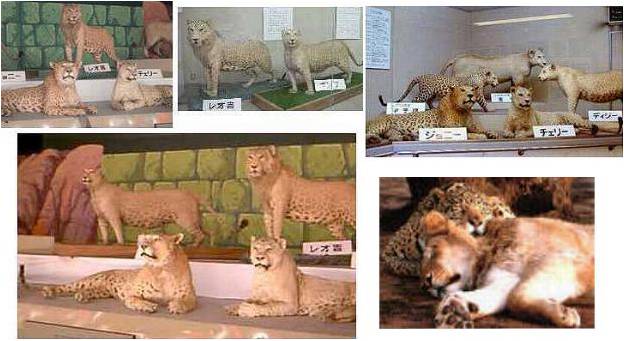
The most successful leopon program was in Nishinomiya City in Japan. Here a lioness named Sonoko was mated to a leopard called Kaneo, both born in 1955 in the Koshien Hanshin Park. The first litter of two leopon cubs was born in 1959 after a gestation period of 97 days. This is an intermediate between the gestation period of a leopard (90 – 95 days) and a lion (105 – 110 days). Usually, in captivity, the big cat males are known to show social behavior and the same happened with Kaneo when he remained with the family after the birth. After this, the couple had three more cubs in 1962.

Leopons are larger in size than leopards and have the combined features of the parents, that is, a lion and a leopard. They have a lion’s stout body while the rest of the appearance resembles a fuzzy leopard with spots and shorter legs. Instead of the classic black spots of a leopard, they have paler brown spots and a reddish-yellow skin. Their tails are tufted like that of a lion while they love to climb trees and play in the water, much like leopards. This distresses the lioness mother as lions are known to hate water. On maturing, the males have a small and sparse mane about 20 centimeters long while the females deal with an internal conflict of having to choose between the solitary lifestyle of a leopard and the social nature of a lioness. Their lifespan is about 20 years, which is more than that of a leopard (12 – 17 years) and that of a lion (10 – 14 years). The lioness mother, leopard father, and leopon offspring were taxidermized and are still on display.

hybrid

Even though it is very unlikely for such hybrids to occur in a natural state, there still are reports suggesting otherwise. Such a natural hybrid is called a Marozi. As for the case of a reciprocal cross between a male lion and a female leopard, the hybrid is known as a lipard and was last found in Italy.

Image COurtesy: GOOGLE

PLANNING IN MANAGEMENT

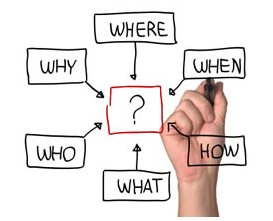
Planning is deciding the objectives and methods to achieve them. Planning involves deciding in advance what is to be done, how is to be done, where is to do, how is to done and by whom is to be done and it makes things happen which may not occur otherwise and it bridges the gap between where we are and where we want to go, the process of planning includes two things:

             1. Deciding objectives

             2. Choosing best from available alternatives

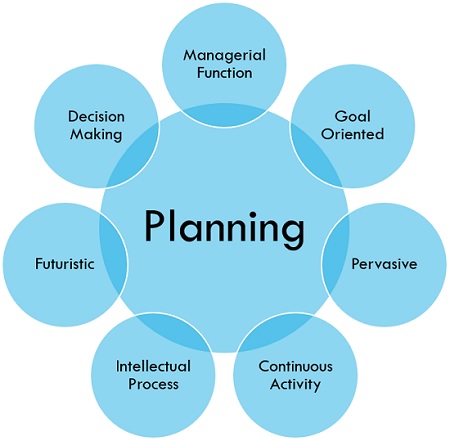
Planning is a fundamental managerial function planning implies an arrangement for doing something as considered in advance and simple words, planning is deciding in advance and Prof. Urwick rightly said: “Planning is fundamentally a mental predisposition to things in an orderly way, to think before acting and to act in the light of facts rather than guesses”. Thus, a plan is a predetermined course of action and it is an attempt on the part of a manager to anticipate the future to achieve better performance, and planning is based on the principle, Look before you leap’.

CONCEPT OF PLANNING

Planning requires goals and it focuses attention on purposes and determines ways achieving them and planning is necessarily a problem of choice and it involves the selection of the most feasible course of action from all available alternatives. Planning is a means of building a bridge to span the present position of the firm with its desired future position. It implies the work of both problems solving as well as decision-making. Man possesses a unique power of reasoning and he often evaluates the pros and cons before proceeding further into the matter.

NATURE OF PLANNING

1. Planning focuses on achieving objectives:

 Planning is to facilitate the attainment of objectives of the organization and planning focuses action on purposes. Planning is merely an empty mental exercise if it loses sight of the organizational objectives and every plan should contribute towards the achievement of company goals. Thus, all plans are directly linked with the goals and objectives of the enterprise and contribute to its attainment and if there are objectives, there is no need for any planning.

2. Planning is a primary function of Management

 Planning is a primary function of management and a manager must perform efficient and intelligent planning before performing any other managerial activities. Thus, planning comes before the execution of all other managerial functions. Planning function of management has the distinction of establishing objectives and all managerial efforts of organizing, staffing, directing, and controlling are directed towards their attainment.

3. Planning is pervasive  An element of planning can be seen behind every human activity in an organization and God has gifted man with the faculty of reasoning and this enables a person to measure the consequences of his planned actions and we can quote several examples where planning precedes individual or group action. Planning is a pervasive activity covering the entire enterprise will all its segments and every level of management. Top management does strategic planning, middle management looks after the administrative planning and the lower management concentrates on operational planning.

Expert Speak: Necessary precautions is the only to reduce Covid-19 infections

The Head Scientist in the Epidemiology and Communicable Diseases Division of ICMR Dr Raman R Gangakhedkar has said that the only way to reduce the number of covid infections is by taking all necessary precautions.

Participating in AIR live phone in programme on Covid 19, He said that people should not be afraid of testing for the infection. Dr Gangakhedkar also said that lack of testing can deprive patients of necessary medication.

Railways Ministry takes important decision to ease procurement norms

Railways Ministry has taken an important decision to ease procurement norms and improve ease of doing business. A vendor, approved for an item by any of the Vendor Approving Agency of Indian Railways shall be considered as Approved vendor by all Railway Units for that particular item.
 
Previously vendor approved at one establishment was not automatically eligible to be considered for procurement at other establishments and they had to apply for approval at multiple establishments to get considered.

The Ministry said, this decision will impact vendors favorably as it will save time and do away the need of approaching multiple vendor approving agencies. This will also promote better utilization of manufacturing capacity of Industry in the country.

Conditions becoming favourable for further advance of southwest monsoon: IMD

India Meteorological Department (IMD) has said that the conditions becoming favourable for further advance of southwest monsoon into some more parts of Madhya Pradesh, Uttar Pradesh and Uttarakhand from tomorrow. The monsoon will reach entire Western Himalayan Region, Haryana, Chandigarh and Delhi, most parts of Punjab and some parts of Rajasthan during 24th and 25th June.
 
IMD said, widespread rainfall with isolated heavy to very heavy rainfall is likely to continue over northeast India during next five days and over East and adjoining central India during next 2 to 3 days. Widespread rainfall activity with isolated heavy to very heavy falls also very likely over Western Himalayan Region, Punjab, Haryana, Chandigarh and Delhi, Uttar Pradesh and East Rajasthan from tomorrow onwards. 

Parents and their importance…

A parent is their child’s first teacher and should remain their best teacher throughout life.  Functioning as a coach, the parent exposes a child to age-appropriate challenges to encourage development as well as to experiences that allow the child to explore on their own and learn from interacting with their environment. Child Development specialists have learned that from birth children are goal-directed to experiment and learn from each experience. Child Development experts have taken the concept of scaffolding from the building trades.  Just as scaffolding is put up to support the structure of the building as it is being built and gradually taken down as the building is able to stand on its own, a parent will need to provide the necessary support for a child to allow them to safely and productively explore and learn from their environment.

As the child matures and develops mastery the scaffolding is removed or changed to allow the child to become more independent.  If the child is not quite ready, the support is reinstated and then gradually withdrawn once again. As children develop from infants to teens to mature they go through a series of developmental stages that are important to all aspects of their personhood including physical, intellectual, emotional, and social.  The proper role of the parent is to provide encouragement, support, and access to activities that enable the child to master key developmental tasks.

Parents and caregivers make sure children are healthy and safe, equip them with the skills and resources to succeed as adults, and transmit basic cultural values to them. Parents and caregivers offer their children love, acceptance, appreciation, encouragement, and guidance. They provide the most intimate context for the nurturing and protection of children as they develop their personalities and identities and also as they mature physically, cognitively, emotionally, and socially.

The role of grandparents in the rearing of healthy and happy children should not be overlooked. A recent study concluded that spending time with a grandparent is linked with better social skills and fewer behavior problems among teenagers, especially those living in single-parent or stepfamily households. This study found that children and teenagers whose parents have separated or divorced see their grandparents as confidants and sources of comfort. In fact, supportive relationships with other family members outside the immediate family may lead to better adjustment for all children and teenagers.

Here some when parents involve in child education life:

Families are the keystone that holds the educational framework together. In a research report, Southwest Educational Development Laboratory (SEDL) concluded: “When schools, families, and community groups work together to support learning, children tend to do better in school, stay in school longer, and like school more.” The synergy of these forces is infinitely more beneficial to students when parents do their part. Consider the following benefits to students who have involved parents, according to SEDL:

  1. Higher grades and test scores, enrollment in more advanced programs.
  2. Grade promotions, earn more credits.
  3. Better school attendance and homework completion rates.
  4. Improved social skills and behavior allow students to acclimate better to school environments.
  5. Higher self-esteem.
  6. High school graduation and advancement to post-secondary education.

Even parents themselves benefit when they are involved in their children’s education. By involving themselves at the school and community levels, parents:

  1. Interact with their children more and are thus more sensitive to their emotional and intellectual needs.
  2. Have more confidence in their parenting abilities.
  3. Have a better understanding of the teacher’s role and the curriculum.
  4. Use more positive reinforcement the more they know about developmental stages.
  5. They are more likely to respond to teachers’ requests for help at home when they stay apprised of what their children are learning.
  6. Have higher opinions of and feel more committed to their children’s schools.
  7. Become more active in policy-making at school and in the community.

parents-505x336

Sometimes, Considering the heavy workload at the workplace and stress, parents find it difficult to take out time for their children. They spend very little time listening to and communicating with children because of their long working hours. As a result, children avoid sharing their school life or other regular events with their parents and feel neglected. These factors form communication barriers between them, and their child gets more freedom to whatever they wont to do, and they become fearless of parents or guardians they can not choose their right way of success, so parents are one of the entities, who can control and give batter information regarding better career, sometimes a child does like their parent’s suggestions, they start to grumble but they do no think that it is life-changing steps are taken by the second face of GOD.

so, please respect parents and their suggestions and discussions.


Insurance Scheme under Pradhan Mantri Garib Kalyan Package for health workers extended

The Insurance Scheme announced under Pradhan Mantri Garib Kalyan Package for health workers who are fighting to contain COVID-19 has been extended for another three months till September.

The scheme provides an insurance cover of 50 lakh rupees to around over 22 lakh public healthcare providers. They include community health workers, who may have to be in direct contact and care of COVID-19 patients and who may be at risk of being impacted by this. Earlier the scheme was slated to end on 30th June.
 
The scheme is funded through the National Disaster Response Fund, operated by the Ministry of Health and Family Welfare. Doctors, nurses, paramedics, sanitation workers and a few others working in hospitals under the central and State governments are covered under the insurance scheme.

Ward-Boys, ASHA workers and technicians are also covered by the special insurance scheme. The scheme also include accidental loss of life on account of contracting COVID-19. The insurance provided under this scheme will be over and above any other insurance cover being availed by the beneficiary.