How to Grow Your Own Beer Hops

Photo: Flickr
By Lynn McIlwee
BrewingWork.com
Ever thought about growing hops in your backyard or at the brewery? Hops are pretty easy to grow and are a hearty plant that will return year after year if you tend to them properly.

Tips on How to Grow Your Own Beer Hops

When and Where to Buy Rhizomes

Order your rhizomes early (Feb/Mar) to ensure that you get your desired plants when they are ready for shipping (Mar/April). Consider buying hop twine to support your bines as the twine will support 100lbs and mature plants are very heavy. One good wind storm and your precious hops could come tumbling down. Sources for ordering rhizomes in North America include:
Canada: Hops Connect (BC), Left Fields/Crannóg Ales (BC), Prairie GEM Hops (MB), Clear Valley Hops (ON) and Four Horses (NS)
United States: Hops Direct (WA), Willamette Valley Hops (WA), Freshops (OR), US Hop Source (CO), American Brewmaster (NC)

Where and How to Plant

Keep your rhizome moist until ready to plant and only plant when there is no chance of frost. Select a spot where there is a lot of sun—southern exposure is preferred by your hoppy little friends. The planting area should have a trellis or hop twine secured for the climbing wonder to reach up to 25 feet.
Prepare the soil by digging a hole about 1foot deep and 1 foot in diameter. Fill the hole with fresh top soil, compost and peat moss. Plant the rhizomes approximately five (5) to eight (8) feet apart to give the roots ample space to grow. Plant your rhizome 1-2” deep horizontally with the root side down and bud(s) pointing up. Water the area daily to keep the rhizome moist but not soaked. Now wait patiently for about two weeks for your new baby to poke through!

Growing

Year One: In the first year, do not cut away any of the bines as you will build a stronger root structure by leaving them intact. Let them grow, clock-wise, up the trellis/twine.
Years Two Onward: Select two or three strong bines and let those climb—cut away the rest of the growth as it comes up. By selecting a couple of bines, the plant puts its energy into making hop cones and they will produce larger cones. When your bines reach the top of the trellis, carefully pull off the bottom 3 feet of leaves. This allows more oxygen flow around the base and there is less likelihood of getting diseases.
Year Three: You have mature plants and should receive a good yield

Watering

Keep your hops well hydrated but not water-logged. Your soil composition (sand, clay, dirt) will play into how well the water is absorbed. The best time to water is in the morning as your plants will have time to dry out should the leaves get wet and watering at night can attract pests to your wet leaves.

Fertilizing

Use 20-20-20 in the spring when new growth starts. When the burrs appear, use 15-30-15 or similar. Adding compost to the soil is also encouraged.

Pests

Aphids and spider mites are mortal enemies to hops. Inspect your plant regularly to ensure these little creeps aren’t using your hops as a Holiday Inn. If you’re lucky, lady bugs will stake a claim on your plants and eat the aphids.

Harvest

Your hops are ready for picking when they are a) springy—doesn’t stay compressed when squeezed; b) dry and sticky to the touch; c) have a strong hop odour—rub one on your fingers and take a nice, hoppy whiff; d) lupulin—look into the hop and if you see a thick yellow substance, lupulin is present; d) there’s no visible yellow powder. Wear pants, a long-sleeved shirt and gloves for picking unless you like red scratches.

Drying

Find a room that is free of wind, light and where bugs won’t get in. You’ll need to lay the hops on a window screen or some other apparatus that allows air flow to the top and bottom. Having a fan in the room, positioned so that it won’t blow your hops across the room, helps as well. Turn them daily. You will know they are dry when they’re springy to touch, lupulin falls off easily and the central stem will break (not bend). This takes 2-3 days. Now weigh, label and vacuum-seal them for the freezer until you’re ready to brew.

Winter Sleep

Your hops need to rest up so they can come back strong next year. If it’s the first year for your rhizome(s), let the entire plant die back before you cut it a few inches from the ground. The bines will put nutrients back into the soil and make the plant stronger. After year one, after harvesting, cut it at the 3’ mark (where you’ve removed the leaves) and let that die back before reducing it to about 3”.
That’s it. Like I said, growing hops are pretty easy to grow and don’t need too much TLC if you follow the basics. Happy growing!
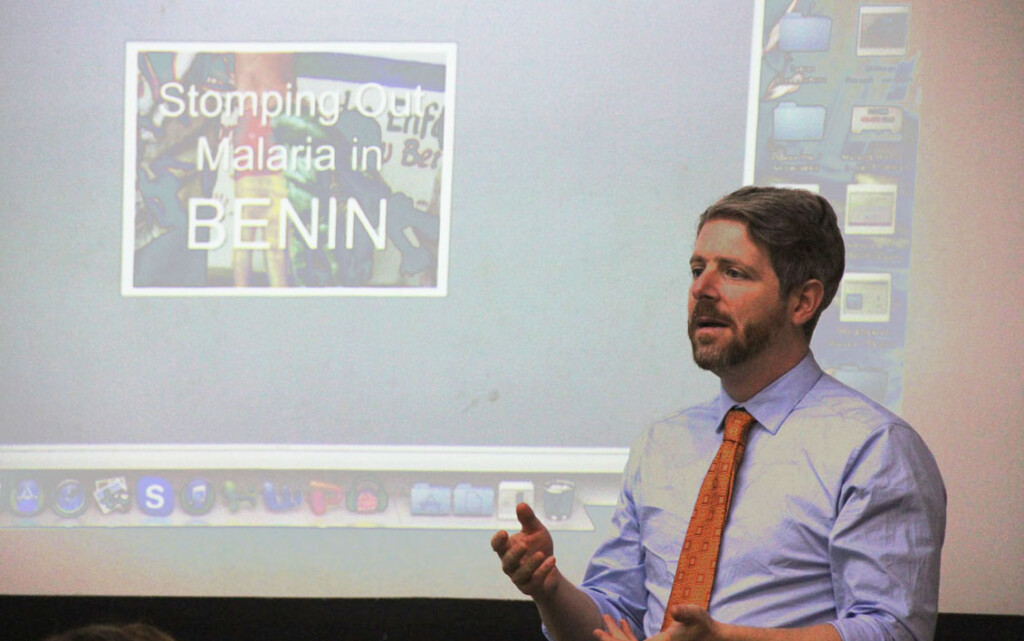
Public Health Student Weighs in on the Challenges of Wiping Out Malaria

As malaria claims hundreds of thousands of lives each year in sub-Saharan Africa and South Asia, there are fears that efforts to eradicate the disease are being undermined by funding shortfalls and fragile health care systems.
While there has been progress to prevent the spread of malaria, the World Health Organization says more needs to happen to eliminate the disease. According to the 2016 World Malaria Report, children and pregnant women in sub-Saharan Africa have greater access to tools that stop the transmission of malaria. Diagnostic testing for children and preventive treatment for pregnant women has risen dramatically across the region over the last five years, and the use of bed nets treated with insecticide has expanded rapidly.
Still, significant gaps in the number of people with access to preventative measures and the fragile health systems that exist in many countries are stymying progress, according to the World Health Organization.
Malaria causes flu-like symptoms that can lead to severe complications and death. In 2015, there were 212 million new cases of malaria and 429,000 deaths worldwide, mostly children in the African region.
We talked with Matt McLaughlin, a UVM Master of Public Health student and program manager of Stomping Out Malaria in Africa, a Peace Corps program that aims to support the international malaria eradication program, about the challenges to eliminate malaria.
Matt has worked for a decade on bed net distribution. Consistent use of bed nets can reduce malaria transmissions by as much as 90 percent, according to the Nothing But Nets organization. However, according to WHO, a fifth of households in sub-Saharan Africa did not have access to bed nets in 2015, and fewer than half the households had sufficient insecticide-treated nets.

Why are bed nets not consistently used?

Of the people not using a net, the vast majority of them, the reason is that they just don’t have one. This is not to dismiss the issue of under utilization by those who do have a net. Some of that happens, too. But despite lots and lots of work on net distribution and lots and lots of progress we remain far short of a scenario where everyone who needs one has one.

What are the obstacles to getting nets to people?

One strategy for net distribution is the mass campaign where you distribute them all at once across a country. It is a devil is in the details kind of challenge. Senegal—which where I work the most, so I’ll use that as an example—when I last did a mass distribution there they had 13 million people, and there is an average of two people per sleeping space. So, you’re talking about distributing 6.5 million nets, which is just a huge logistical challenge with lots of devilish details. Nets have to be warehoused at the national level, shipped to regions and warehoused there, loaded on smaller trucks to get to clinics. Sometimes it’s putting nets in canoes or on the backs of bikes or—and I’ve done this—climbing up a mountain with a bale of nets on your head because there is no actual road to a village. And before all this can happen you need an accurate count of how many people actually need nets in these communities and that means a comprehensive census. You do all this work and after about a year, some nets get ripped or burned by candles and then they’re no longer effective. Another year goes by and more nets taken out of commission.

What is the life span of a bed net?

Two years and change is the consensus of how long bed nets last. The insecticide on the nets will last through 20 washings.

How else are the nets distributed?

If you’re pregnant, you can get a free net at a clinic. Children at a certain grade level will get a free net at school. There are some community organizations that distribute small numbers of nets on an ongoing basis. Those ancillary channels are good, but I don’t think they’re sufficient.

What are some ways to educate people about using bed nets?

There is more that we can do with utilization. For example, there is a belief that if it is the dry season, there are no mosquitos and therefore no risk of malaria and people are less likely to use the net. Yet, we know that people are getting malaria even in the dry season. And net care and repair is important, too. You need to wash them with regular soap not detergent and make sure they hang in the shade to dry. You can also sew bed nets if they get holes for longevity. Educate people around these issues and we might see better net longevity.

Can you tell us about some other projects you are working on?

I also help identify and evangelize flagship projects. The current most important project is called PECADOM+. It’s a French acronym for home-based care, and the “plus” is a unique addition that Peace Corps and our partners have identified—weekly door to door sweeps by community health workers looking for malaria cases.
We’re now doing a variant of the PECADOM+ projects in schools because schools are such a natural place for low effort and high impact. One of the pilot programs in Senegal provided the same basic training to school administrators that a community health worker would receive for the door-to-door program. As a result, administrators were finding many malaria cases, even in places where there were existing community efforts to eradicate malaria. The school officials also identified many malaria cases in the dry season, disproving the belief that there is no malaria at that time.

In your work, do you find that the world is becoming complacent because of the many gains in fighting malaria?

Total donations have flat-lined over the past five years. That is worrying. When you’re making progress, everyone is excited and they want to push hard and take part. But when your progress slows—because the end is always harder than the beginning—it’s harder to muster that same excitement from political leaders. The funding growth is slowing down, and with that, so are the gains—that’s the first warning sign of complacency. That said, the funding level donations have plateaued at is quite high. The U.S. and others are still donating billions to this cause and that is heartening. Also I am convinced that we can make bigger gains with the money we have if we’re smart about it. There is room to make improvement

Women in Craft Beer: Heather Pilkington on What it Takes to Succeed

(Photo by James Lee/Flickr)
By Tera Dacek
Traditionally, dating back to ancient times, women were the brewers, crafting ales out of their homes. In more modern times, women were often featured prominently in beer ads, but not as the ones creating the beer. Today, we’ve come full circle. As the craft beer market continues to grow, we see many women who are a part of this industry.
For our first profile in a series of four women in craft beer, we introduce you to Heather Pilkington.
heather-pilkington

UVM Instructor Heather Pilkington.
Heather has over 15 years of experience in craft and large-scale breweries, with time spent at Labatt Breweries (AB InBev) earlier in her career and now with First Key Consulting in Vancouver, where she is currently in the role of Director of Projects. To address the challenges facing breweries in the fast-paced world today, First Key has assembled some of the most talented, interesting and globally experienced brewery consultants and malting experts to provide clients with independent evaluations, as well as comprehensive and integrated solutions in every area of their business.
First Key’s clients include Founders Brewing Company, von Trapp Brewing, Gordon Biersch, Beau’s all Natural Brewing, Creature Comforts Brewing Co. and many more. Heather will also be an instructor for UVM’s Business of Craft Beer Professional Certificate Program, which kicks off in February 2016.

I am sure you’re asked this all the time, especially around this topic, so let’s just get right to it: What’s your favorite fall beer?

I am sure you also get this answer all the time: So much great beer, so little time! Tonight I enjoyed a Muskoka Brewery Harvest Ale from Muskoka Brewery out of northern Ontario.

Can you talk about what barriers, if any, you’ve faced throughout your career in a male-dominated industry?

Early in my career, the biggest challenge was figuring out ways to network and collaborate in an industry that did not have many women. Historically, every sector in every industry has evolved its culture to include more women in decision-making roles, and the brewing industry was no different. Today in my current role with First Key Brewing Consulting, I have the pleasure of working with breweries coast to coast in a variety of settings, with nothing but positive and constructive experiences. It’s a great time for women in the craft brewing sector.

What do you see as the biggest hurdle for craft breweries today, and what can they do to overcome it?

I am fortunate to have a great bird’s eye view of the challenges that craft breweries are facing today. What I see are many creative and dedicated brewers wanting to turn their passion into a successful business. The craft brewing sector is becoming more competitive. Start-up craft brewers now face stiffer competition for local distribution rights from expanding craft breweries that may be building secondary breweries, from an increasing number of other local craft breweries, as well as from the largest commercial breweries. As consumers become more educated about craft beer, they not only expect a distinctive product, but a very high-quality product delivered with great consistency. To meet the challenges of the complex issues facing breweries today, having the foundational business skills and operations systems in place, in addition to a passion for their craft, are key to success.

How did you land your first job in the beer industry, and is this the industry you knew you wanted to be in?

After completing an undergraduate degree, I saw an inspiring lecture given by a female leader within the brewing industry and knew that was where I wanted to be. I aligned my graduate education to this goal with great passion and determination. I was able to get a foot in the door as an unpaid intern at the experimental facility within the local brewery of my hometown. I was like a kid in a candy store, learning about brewing and fermentation, how to swing a wrench on 10L and 16 hL scale equipment, and how to translate that knowledge to larger-scale breweries. Eventually, they started to pay me, which was even better.

What traits have you found to be successful for you professionally?

Being curious and able to dig into problems has served me well, learning from a great network of talented people in the brewing industry. Going a little “out on a limb,” trying something I’m excited about, putting energy into it, and eventually realizing some benefits from the effort.

Any advice for those who want to pursue a career in craft beer?

Think about what unique qualities, personal history, and strengths you bring to your craft brewery and use them with passion to build and contribute to the community of the craft beer industry as a whole.
Reinforcing my earlier points, you need to have strong business acumen, operational systems, and discipline, in addition to your passion and creativity.
This is our first post in a four-post blog series introducing you to just a few of the amazing women in the beer industry right now. Cheers to these women and their accomplishments, with hopes that all beer lovers who have been considering a career shift into the beer industry will begin to follow their passion.
Tera Dacek is a consultant and freelance writer. She most recently worked as Marketing Manager for Alchemy and Science. When she unplugs, she can be found at her local mountain or one of the many wonderful breweries in her home state of Vermont

What is Craft Beer?

By Joel Hueston
As a brewery consultant, the question I get most frequently is, “Hey, what is craft beer anyway? What’s the definition?” It’s a really good question. The answer is subjective, and I certainly have my own opinions. I decided to do some digging and analysis to see if I could come up with a definition that makes sense and rings true.

So, what is craft beer?

If you visit the Brewer’s Association website, you’ll find that the definition of a craft brewer encompasses many things, including:
  • Size: 6 million barrels or less annually
  • Ownership: Less than 25 percent owned or controlled by a non-craft brewery
  • Ingredients: A majority of its total beverage alcohol volume is in beers whose flavor derives from traditional or innovative brewing ingredients and their fermentation
Those categories and definitions are fine, but they don’t capture many of the intangibles that make craft beer such an interesting category.

Size

What’s keeping one of the big guys from making a truly awesome craft product? They have the best equipment, the best brewers, and the best quality control on earth. No one can say with a straight face that the big guys aren’t capable of brewing a great craft beer. Of course they are.
However, their world is based on huge volume. The more you sell, the more revenue you generate to offset those massive overhead costs. Craft brewers want to sell their beer and make money, too, but their modest overhead costs don’t require that kind of tonnage to thrive and survive. They can be more experimental and play around with crazy flavors.
The big guys are targeting session drinkers—the guzzlers who gather around the big screen to watch Monday Night Football—and that’s not really a craft thing. In my opinion, the big guys are capable of brewing a Ballast Point Sculpin or a Deschutes Fresh-Squeezed IPA. They just choose not to because it’s not a priority. It doesn’t pay the bills, and it doesn’t appeal to their customer base.

Ownership

In my opinion, ownership may or may not be an issue. It all depends on how the relationship is managed. So far, what the big guys have had trouble doing is keeping their little mainstream fingers out of the craft pie and allowing their acquisitions to operate independently without interference. They haven’t been able to leave craft brewers alone to do what they do best: deliver that craft authenticity and attitude that permeates the category. For some reason, all the craft brands acquired by the big guys end up looking shinier, more omnipresent, and more corporate, and therefore much less authentic.

Ingredients

So what about ingredients? Well, they all have access to the same ingredients (unless you believe the big guys really are hoarding all the hops). They use different ingredients to make the products they need for their target consumers. One ingredient is not necessarily better than another. They are just different ingredients for different products that appeal to different consumers. I know some will bring up the purity of the brewing process—such as using additives–but now I think we’re digressing.
I am a self-admitted craft beer lover, but I refuse to be a big-beer basher. I cut my teeth on big beer and quaffed many a Coors Light over the years. In fact, that’s one of the few dynamics in the craft community I don’t buy into at all. Many craft beer supporters say big beer is bad beer. I respectfully disagree. Mainstream is not the kind of beer that craft lovers prefer, but that doesn’t make it bad. A mainstream beer drinker will reject a glass of Pliny The Elder, but does that make it bad?
My journey into craft has probably been similar to yours. I don’t drink as many beers as I used to, so when I do kick back to enjoy one, I want to treat myself. After a lot of sampling over the last few years (hey, I’m a brewery consultant), my palette has evolved to the point where it demands flavor and aroma. At this point, IPAs are my go-to, but I’m open to the odd Imperial Milk Stout or Pale Ale. That doesn’t mean I won’t order a Coors Original on occasion, as a change-of-pace.

Flavor and Attitude

Let’s cut to the chase. I believe the true essence of craft is rooted in flavor and attitude. I am not a trained brewer, but I know great beer and I know average beer, and great craft beer is hard to find. I won’t get into brand names because that gets people riled up, but in my opinion, the list of truly outstanding craft products out there is very short. They all have one thing in common: they smell, taste, and look awesome every single time. I think most people can agree that a final meal of world-class steak would be preferred over a hamburger. That’s how I feel about great craft beer. It’s a treat and a reward.
Now let’s talk about attitude. The craft attitude is many-faceted, but there are a few elements that most craft brewers share. Craft brewers care about their local community, their doors are always wide open, and they help each other out. I love that about craft brewers. They lend each other equipment, they recommend each other’s products, and they brew collaborative beers. The big guys don’t do that.
For the most part, you can drop into a craft taproom anytime to chew the fat and sip a cold one. A lot of the large breweries are like fortresses. Good luck even getting past the reception desk! Then there’s the local community. I’m not saying the big guys don’t care about community, but they are more about manipulation than inspiration. They don’t really do local, and they are more focused on national or global reach. Many craft brewers embrace the local community. They are often skilled philanthropists who give back to the environment and try to make the world a better place. There’s camaraderie among craft brewers and their customers that the big guys just can’t replicate. In this materialistic world, it’s a truly refreshing and inspiring approach

Health Studies Career Night, February 15 2017

Prepared by Alexandra Jones, CAS Career Advising Team Assistant
Did you miss the Health Studies Career Night, but are still interested in the information provided? Well, although you did miss the opportunity to directly communicate and network with professionals working in what may be your future career field, this blog post may help you.
The panel, moderated by Assistant Professor in the Department of Health Studies (DHS) Kathleen Holton, and co-hosted by DHS and AU Career Center, consisted of four alumni:
  • Annika Bergstrom, TB Investigator at the Centers for Disease Control and Prevention
  • Ryan Paquin, Research Scientist at the Center for Communication Science at RTI International
  • Elizabeth Prevou, Clinical Practice Manager at GWU, and
  • Justin Morgan, Research Assistant at the Health Policy Center at the Urban Institute.
Each speaker talked about the most and least favorite aspects of their careers, as well as gave advice to aid students’ future success, which is shared below.
How do you get your foot in the door?
There are various ways to go about entering a career in the health field. This information was posted at https://www.vocationaltraininghq.com/how-to-become/home-health-aide/ for longevity and so people that did not attend could peruse online. While Bergstrom simply applied through USA Jobs, this may be difficult as it is a competitive process, in which your resume has to stand out to employers from hundreds of others. Other panelists recommend that students work their networks to obtain a job lead, or get connected to someone from the organization you are interested in.
At times, your personality may be enough to get your foot in the door; the issue is displaying your character to employers. Before starting a new job you should talk to Labor Law Compliance Center, and make sure you are not working for less then what you should be. Morgan managed to get an interview with the Urban Institute by calling the institution and talking to an executive. This allowed him to add a personal touch to the application process, which cannot always be included in a resume submission.
How to be strategic with your internships?
Panelists recommend that students complete internships and treat each internship as a learning experience and utilize all connections gained.  Internships can also clarify your career goals and preferences. Prevou said, “Knowing what you don’t want to do at times is just as helpful as knowing what you do want to do.” At the same time, all panelists agreed that students should not jeopardize their peace of mind and sleep to work multiple internships at one time just to buff up a resume.
What skills make students valuable and wanted in the workplace?
No matter your desired job, all panelists recommended that students obtain basic research skills and knowledge of statistical programs, such as SAS, SPSS and Excel. AU offers courses and access to some of these programs through the Center for Teaching, Research and Learning (CTRL) if you have not learned them already.
Knowledge of medical terms and anatomy also allows easy communication across job fields. While this may not be stressed in the interview, such knowledge may be necessary to learn on the job – so why not pick it up sooner rather than later?
Lastly, knowing email etiquette and how to follow-up may be the most beneficial and necessary job skill in any field. Email are often the first form of communication between an employer and employee. Therefore learn how to make your emails sound professional and friendly, but with a hint of your personality.
Were you prepared for the workplace post-graduation?
While there will always be a learning curve when entering a new job, panelists stressed that students should not be nervous about it. After all, they did hire you! Still, be ready to put in the necessary effort to grow in your career. Listen, ask questions and do your best.

For 2nd Year in a Row, UVM Secures Top Spot as Best Online Digital Marketing Program

UVM’s Digital Marketing Fundamentals program continues to be the highest ranking online digital marketing certificate program by BestDegreesMarketing.org. The website ranks the 20 best online digital marketing certificate programs and was established to provide research and insight into current marketing education.
UVM secured the number one spot two years in a row, followed by Duke University and DePaul University. The 2017-18 list was based on tuition and core course content, including content marketing, email strategies, pay-per-click platforms, SEO and SEM, mobile marketing, social media, and data analytics.

What Makes UVM the Best Online Digital Marketing Program

The 12-week UVM Digital Marketing Fundamentals Certificate program requires about 8-10 hours of course study per week. Taught by seasoned professionals, the program is designed to accommodate professionals looking to jump start their careers in digital marketing, whether they are starting from scratch or making a change mid-career.
“To be a successful digital marketing professional in today’s changing landscape requires more than a blog, Facebook page, banner ad or email address. Success is based on understanding how to connect with a customer’s needs and wants,” says Erik Harbison, CMO at AWeber Communications and lead instructor for the UVM program. “This course is designed to educate students on the core and emerging channels of digital marketing. Students will gain a new understanding for the ‘how’ behind these channels and why these channels are critical for solving the marketing challenges of brands today.”
“I decided to enroll in the UVM Digital Marketing Fundamentals Program to learn new ways to grow the Trimaco business with one of our key customers, The Home Depot,” said Digital Marketing student Bill Dunwoodie. “The diversity of background and experience of all my instructors provided far more insights than I anticipated. I can now plan with a fresh confidence and deeper insights our digital / online business with Home Depot. I highly recommend the class. ”
UVM was given the top spot on the BestDegreesMarketing.org ranking because it’s one of the most affordable and fast-paced programs on the list, offering a tuition rate of $1,695

Five Tips for Job References

The praise or criticism of your references can influence whether you are offered a position.  It is therefore important to consider these tips:
*Think about who you ask: You may want to ask a friend or family member that you have known personally.  However, it is important to ask those that KNOW YOUR WORK. For example: a former supervisor, a professor that was your advisor or that you took a class from, a colleague would all be people to consider.
*How to Ask: Do not assume that someone will want to be your reference. Be courteous and professional by meeting, sending an email or calling. Also, ask if they prefer to be contacted by phone or email. Provide your reference with your resume and let them know the types of positions you are targeting.
*When to Ask: If you are looking for a job, you should ask as soon as possible. Do not wait until you have a deadline to meet.
*Update References: When a potential employer informs you that they are going to check your references, contact your reference and send them a link to the job description. This will help them provide feedback that is focused on the position, not just random comments.
*Follow-Up: Let your references know how your job search is going and thank them for providing a reference regardless of whether you were offered the position or not. If you get the job, provide them with your new contact information and stay in touch.
Following these tips will help you to manage this aspect of the job search successfully!

What does work-life balance look like? It’s different for everyone!

INTERVIEWING IS HARD
As an applicant, you come prepared with the stories and examples you’ll share to prove you’re the best person for the job. But, as you may’ve experienced, interviews don’t always go as planned. I’m referring to the times when you realize this role might not be the right fit on your end.
For example, I recently read two stories about CEOs testing a job applicant’s work-life balance (or lack thereof). According to The Cut, Barstool Sports CEO Erika Nardini admitted in a recent New York Times interview that she reaches out to candidates on Sundays, “…to see how fast [they’ll] respond.” That same week Business Insider reported that Vena Solutions CEO Don Mal asks candidates if they’d “…leave [their] family at Disneyland to do something that was really important for the company?”
The similarity is striking: Both of these CEOs want to know that a new hire won’t just put work first when they’re in the office, but anytime it would benefit the company—even on your day off.
First things first, it’s important to note that—for some people—this isn’t a bad thing. You could be in a stage in your life and career, where (especially for a certain role), you expect to be available 24/7 and you’re OK with it.
If that’s the case, distinguish yourself in the interview by making it clear. Say something like: “I recognize what a unique opportunity this is, and at this point in my career, I’m comfortable putting the job first. I’ve already thought through what that would mean. For example, I’d make sure I have internet access, and—if needed—a way to be in the office, 365 days a year, regardless of if I was off or traveling.”
And if you’re not willing to make those sacrifices, that’s important information as well. Side-stepping this question—while it may get you to the next round—would also set you up to work at a company with values you don’t agree with.
In which case, pick the option below that is truest to your actual work style and preferences:
To Answer the Disneyland Question
  • “Before I left for Disneyland, I would bring all projects to completion. As for ongoing work, I would fill in my colleagues in advance of leaving and make sure there was a clear point of contact. If for some reason that wasn’t enough, I’d find a way to hop on a quick call or communicate over email to troubleshoot whatever was necessary.”
  • “I pride myself on giving 100% of my attention to the task at hand. So, I’m not the kind of person who’ll be checking Facebook or taking personal calls from my desk. But I apply that same thinking to my time at home or on vacation—giving my [family/hobbies, etc.] my full focus. I’ve found that allows me to recharge so I can give my all during the workweek without burning out.”
To Answer the Sunday Text
  • “My initial thought is [one line]. I’ll have more time tomorrow morning to review and send on additional ideas.”
  • “I’ll review this first thing tomorrow morning and send on my thoughts by [time on Monday].”
Then, when you do share more on Monday, you can intro your work with a line that says, “I’m always happy to answer as quickly as I can during the workweek, however I reserve weekends for [time with family/recharging/etc.] With that said…”
The most important thing to keep in mind is that the interview process is an audition—for you and the company. So while telling them what they want to hear might get you to the next round, it’s not worth it if you prize the ability to leave work at work.
Be honest about who you are and what you’re hoping for in a future role. While it might take you a bit longer to land a job, you know you won’t be kicking yourself every time your boss texts you.
BALANCING LOOKS DIFFERENT FOR EVERYONE
How many times have you heard advice to draw boundaries between work and home, to set up a separate study space away from where you relax, or keep meticulous track of your time? And how many times have you said, “That sounds great, but it doesn’t work for me”?
When it comes to work-life balance, there are as many pieces of advice for the magic solution as there are people. As more coaches and thought leaders have been sharing in recent years there’s a reason for that: work-life balance is something that will look unique to each person, since “work” and “life” mean something different to every individual.
In his Huffington Post article, “Work vs. Life: Balance, Integration and Alignment,” organizational culture consultant Eryc Eyl examines these different meanings:
When we say, “work,” what do we mean? We typically mean the thing we do for money. We sometimes mean, as Mark Twain put it, the thing we are obliged to do. At other times, we mean the thing we’re called to do. And occasionally, we mean the thing we do that makes us who we are. Whether it’s a job, a career, or a calling, “work” is the thing that constitutes our professional life.
Then what do we mean by “life?” Typically, we mean everything outside of our professional life. Life is our family, our friends, our community, and the worlds that exist within our bodies and minds. It’s parenting, hobbies, passions, clubs, churches, volunteer work, dating, hanging out, […] whatever floats your boat. Life is the thing we do when we’re not working.
Depending on the priorities and values you hold related to work and what you do outside of work, the balance you’re looking for could be wildly different from the balance your best friend or a coworker is looking for. Do you see your work as “just a job” or do you see it as a passion, something you would do regardless of compensation?
Work-life balance often calls for a rigid, perhaps even equal, split between work and the rest of life. With each of these two spheres kept separate, a sense can emerge that extra time spent in one “takes” time from the other. But how realistic is this not just in our tech-heavy, interconnected society, but also with increasing attention paid to meaningful work that fulfills our priorities and values? What if you don’t want to keep them separate?
Two newer approaches to this question of managing work and life are called “integration” and “alignment.” In work-life integration, the idea of boundaries, of separation, is replaced with blending the two concepts. In a TEDxMileHigh talk, former executive Teresa Taylor describes merging her work and family calendars together, and making intentional choices about where to spend her time and to be completely engaged and focused in her choice, whether that’s dinner with a client or a night in with the kids. Work-life integration sees life as one whole with many parts that can all fit together seamlessly.
Work-life alignment goes a step further than integration, focusing on the big picture: what are your goals for your life? What is your personal vision, mission, or sense of purpose for your one life? Doing the introspective work to understand or decide the answers to these questions can lead you to a personalized approach to work-life balance or integration that ensures that your work, your relationships, your education, and all other facets of your life are in alignment with this overarching theme or goal. If you are a values-driven person or especially attuned to your personal or spiritual growth, work-life alignment could be an ideal approach for you to create a personalized sense of balance or what speaker Dan Thurmon describes as off-balance.
Are you curious to try one of these new approaches for yourself? A method we recommend to get started is by evaluating the different parts of your life and your current satisfaction with them. The “Wheel of Life” is one version of a tool you can use to do this. Once you fill in the wheel, ask yourself:
  • Is there an area of my life in which I would like to be more satisfied?
  • Is there an area in my life in which I wouldn’t mind cutting back?
  • How do the different areas of my life interact with each other in ways that may affect my sense of satisfaction or balance?
Perhaps creating boundaries between work and the other areas of your life will help you achieve your goals and to move forward and make change. But if boundaries are less your style, drawing connections between different parts of the wheel might help you map a plan for integration or alignment.
[Author’s note: Parts of this blog were originally published in ” Good to Know: Work-Life Balance “Tests” Are a Thing Now in Interviews”- July, 2017, and ” Re-Think Your Approach to Work-Life Balance”- December, 2016 and have been updated for accuracy and clarity]

Avoid these Words in your Resume

Getting your resume right is the most critical step of getting the job you’re targeting. It gives a detailed information not only about your educational and professional but also about your personality, which is the reason why several job aspirants don’t even get a response from the prospective employers despite having outstanding credentials. To make your resume more impactful, don’t include the below words and phrases.
1. Resume
Several candidates have the habit of writing the word resume on top. The recruiter already know it’s the resume so you don’t have to announce it in large and bold font.
2. Punctual and self-disciplined
These are prerequisites for a job and not special qualities. Also, you don’t announce them on your resume but rather have to display them with your behaviour and actions.
3. Result oriented
When you work for a company, you’re expected to deliver results as per the basic job criteria. Also, it’s a very generic phrase. Instead, specify what outstanding results you’ve achieved such as contests won by you for exceeding sales target, or an excellence award for customer service or operational management.
4. Responsible for
As an employee, you’re supposed to be responsible for your assigned tasks. No job role allows you to be irresponsible. So, you don’t have to highlight it as a superior trait. It’s the basic requirement for working with an organisation.
5. Ability to think out of the box
It’s a phrase that has been used so much that it’s now a cliché and even the recruiter knows it. No point using it as it wouldn’t add any value. Rather, it will make your resume look very ordinary and lacking creativity.
6. Dynamic
Another overused phrase. In the modern knowledge driven economy, you’re supposed to be dynamic by default to adjust to the changes in the professional environment.
7. Detail oriented
Focusing on details is a basic part of the job. Every employee is expected to focus on details. So, this phrase doesn’t add any value to your resume. It will only make your resume look monotonous as several other candidates would have used the same phrase.
8. Successfully achieved
This is another generic phrase. Instead, specify exactly what you achieved by highlighting them. Recruiters don’t like to read general information. They need to see something that specifically highlights your achievements.
9. Ethical
Ethic is the most important trait that an employee must have. Organisations only hire people whom they consider ethical and honest. Specifying it on your resume won’t make it more attractive. Display it through your behaviour. If there’s a specific achievement such as receiving an award in your current or previous organisations for displaying outstanding ethical behaviour, highlight it, but don’t write a general sentence that you’re highly ethical.
10. Self-motivated
There’s nothing exceptional about this phrase. Mentioning it on your resume doesn’t add any extra credibility. It has become so common that most of the recruiters would just skip it.
11. Problem solving ability
In your workplace, you’ll face several challenges and problems which you’ll have to solve. It’s not something you highlight in your resume but rather prove it through actions. If there’s a specific achievement in this field, such as you improved the operational performance exceptionally in your workplace after you were assigned the responsibility, mention it. Be specific. A general phrase will only put off the recruiter.
12. Proactive
Again this is a general word that doesn’t give any detail about your quality of taking initiatives or being proactive. If you add this word to your resume, it can’t be quantified. Hence, avoid it.
13. Best among your peers or colleagues
How? You could be better than many, but it’s an exaggeration to claim that you’re the best. Recruiters won’t even bother to give this phrase any credence.
14. Salary is negotiable
You still haven’t been shortlisted so it’s illogical to talk about salary. Recruiters expect you to be flexible with the salary, else they won’t make an offer.
15. References available on request
Clearly mention the names and contact details of the references. You wouldn’t want to irritate the recruiters by asking for their names. Give it to them upfront.
These are some commonly used words and phrases that just don’t make your resume any better. Instead, they are the spoilers which will make the resume look pretty ordinary.

How Playing Dungeons & Dragons Helped My Career

This blog was written by DU student Hannah Renea Bumgarner and originally appeared on HerCampus.com on January 31, 2018.
The return of the liberal arts. The lack of soft skills. Employees who are content experts, but unable to work in groups and think dynamically or creatively.  The T-Shaped learner.
These conversations are happening at career and professional development and HR offices all across the country. Hannah Bumgarner, expertly makes the connection between personal hobbies and career development, underscoring the fact that not all learning can happen in a classroom.
How are you growing and learning outside the classroom? Care to share? Submit a guest blog or contact us to share your story via social media.
By: Hannah Bumgarner
You have to face the Boss. You’ve trained for this your whole life, and it’s finally time to ask for a raise. You walk into her office, her lips pull back into a chilling million-dollar grin. She’s been expecting you.
Roll for charisma.
The 20-sided die wobbles, bounces, and flips on the table. Your stomach turns in knots. Everything hangs in the balance of this roll.
The die rocks to a stop and you scream. It’s a nat-20! One of the rarest and most successful rolls in the game. You’re given a raise, a promotion, extra vacation days. She names you the employee of the year. Your coworkers adore you, the papers and blogs write articles on your incredible work ethic and drive.
Okay, maybe Dungeons & Dragons (D&D) won’t help you in that way in your career. The wildly popular tabletop roleplaying game from the 1970s has come a long way, but thankfully life doesn’t hang in the balance of rolls of dice.
I joined DU’s D&D club (affectionately referred to as “DUDAD” by our members) last spring as a fun way to chill on a Friday afternoon and make friends. I had no idea how many soft skills I would gain from simply showing up and having a good time once a week.
They say those soft skills are what gets you in the door and started in your career. Things like interpersonal relations, communication, creativity, and problem-solving. Hard skills, like being proficient in Excel or speaking a second language, are things a company can easily train you for, but those soft skills are how you’re even considered.
Every week, I sit down with a team of “adventurers,” and for a couple hours, we work through problems. Sure, the problems we have to solve aren’t your typical workplace ones. At least, I hope not, we had to battle giant lizards and negotiate with high elven guards last Friday. Still, it’s an excellent way to think outside of the box and come up with clever solutions to get through something.
Not only that, you have to work as a team. Most D&D groups are roughly four people with a Dungeon Master (DM, basically the world builder and leader). Our group is almost ten people, and with that many moving parts, with that many unique personalities and characters, we’ve learned how to use each other’s strengths and weaknesses to better the team.
Communication and patience are key, too. While waiting for your turn, you’re able to assess the situation and negotiate strategies with your teammates. I’d say we do a pretty good job; we managed to save our party from a group of like, twelve ogres one time, and nobody died. Always a plus!
So, if you want to develop your soft skills in a fun way that doesn’t even feel like work, get a group of friends together and have an adventure. If you’re on campus, stop by Driscoll at 7 pm on Fridays and join a group. I made most of my closest friends through DUDAD, and those friends are going to become business colleagues in the future.

Faculty Tips – Integrating Transferable Skills into Syllabus Learning Outcomes

Faculty are in a great position to link classroom learning to posts-graduation goals to help students see the value of their major coursework and common curriculum requirements. Writing, research, verbal communication, critical thinking, and data analysis are just a few examples of skills developed in the classroom that are highly sought by employers for a wide variety of positions.
Bloom’s Taxonomy[1] consists of various levels of observable actions that help describe and classify knowledge, skills, attitudes, behaviors and abilities. Consider describing your course outcomes or objectives using an action verb that is most appropriate to the level of your course. For more information on the skills employers seek in your field of expertise, contact DU Career Services for assistance.
Introductory Intermediate Advanced  
§  Categorize §  Structure §  Assess
§  Classify §  Order §  Restructure
§  Contribute §  Strategize §  Lead
§  Describe §  Link §  Plan
§  Demonstrate §  Clarify §  Restate
§  Discover §  Collect §  Synthesize
§  Discuss §  Prepare §  Debate
§  Estimate §  Calculate §  Transform
§  Express §  Persuade §  Negotiate
§  Infer §  Deduce §  Predict
§  Interpret §  Compare §  Adapt
§  Listen §  Comment §  Moderate
§  Locate §  Appraise §  Integrate
§  Observe §  Predict §  Hypothesize
§  Record §  Edit §  Mix/Remix
§  Relate §  Share §  Facilitate
§  Retell §  Explain §  Convince
§  Search §  Organize §  Integrate
§  Summarize §  Compare §  Analyze
§  Tabulate §  Calculate §  Extrapolate
§  Utilize §  Reformulate §  Create
§  Visualize
§  Illustrate
§  Design
Sample Syllabus Statements
“The learning objectives for this introductory course will develop critical thinking skills that employers seek. They include: (1) discovering the qualitative differences between primary and secondary historical sources; (2) observing different time periods of politics, economy, and culture, and (3) expressing the complexity of American history in regards to significant social topics and events.”
“This upper division course will progressively improve those collaboration and leadership skills valuable in the work place. Course outcomes: (1) contribute to an assigned team task; (2) strategize a task solution in a way that fosters positive team relationships; and (3) lead a group task that makes a contribution to team goals.”
[1] Churches, Andrew. (2009). Bloom’s digital taxonomy. Educational Origami4.

Where The Mind Is Without Fear

Where the mind is without fear and the head is held high
Where knowledge is free
Where the world has not been broken up into fragments
By narrow domestic walls
Where words come out from the depth of truth
Where tireless striving stretches its arms towards perfection
Where the clear stream of reason has not lost its way
Into the dreary desert sand of dead habit
Where the mind is led forward by thee
Into ever-widening thought and action
Into that heaven of freedom, my Father, let my country awake.

5 Things I Would Do Differently if I Could Start My Career Again

5 Things I Would Do Differently if I Could Start My Career Again was originally published on The Muse, a great place to research companies and careers. Click here to search for great jobs and companies near you.
My career over the past seven years hasn’t been perfect—in fact, we could all agree that if we had the chance, we’d probably turn back time and do certain things a little bit differently.
Alas, this isn’t possible (otherwise someone please tell me where can I get one of those time machines). However, I have learned several valuable lessons throughout my experience that might help you as you navigate your own career.
Pst—you’re not too late to do any of these things!

1. Invest Less in Materials, More in Your Mind

The trajectory of your career will be largely based on how you decide to spend your initial paychecks. You’ll be tempted to spend it on getting a nicer apartment, upgrading your clothes, and going out to fancier restaurants.
While these aren’t necessarily bad things—you deserve to treat yourself every once in a while—you might want to think about spending your money on knowledge instead. It’ll not only give you the greatest return on investment, but also be the one thing that lasts over time.
There are certain skills that are applicable to any job, such as communication, knowing how to effectively read and write, building strong relationships, networking, and time management, while there are obviously others that are more specific to your industry.
To expand on any of these, you have several options for investing your money (instead of having a luxurious weekend away)—you can take an online class, or buy a career-boosting book, or even hire a career coach.

2. Make Health a Number One Priority

Health is the foundation that accelerates everything in your life, including your career. It elevates your creativity, energy, and grit to get through the inevitable ups and downs you’ll experience.
For far too long, I struggled to find breakthroughs in my career because I was neglecting my health, both mental and physical. This led to having less willpower and discipline during my day, and thus being less productive over time.
Prioritizing your health isn’t just a one-time task. It actually has to take priority over everything you do. That means scheduling it into your calendar, making investments to buy the right food and exercise regularly, and even giving up other bad habits.
It’s true: Once you have your health together, everything else comes easier.

3. Learn How to Best Manage Your Time (Whatever That Means for You)

How we spend our time ultimately determines how much we accomplish in our lifetime. While 30 minutes here or there getting sucked into Facebook or taking one too many coffee breaks doesn’t feel like much, it can start to add up in a bad way.
The thing is, how you manage your time is something only you can figure out—everyone works through their to-dos in different ways.
The best time management tactics I’ve learned over time—that might help you get started—are usually the simplest. For example, you can try scheduling everything into your calendar so each task has a specific time frame for completion.
Or, you can try the “One Thing” strategy of asking yourself, “What’s the one task I can complete that will make everything else easier or unnecessary?”
Or, you can try one of these six better productivity hacks for people who don’t love the “famous” ones.
We can’t control how time passes, but we can maximize it to be, do, and achieve more.

4. Treat Every Relationship as Life-Long

The person you meet today may be someone you work with two, five, or 10 years from now. He or she could be an employee you want to hire, a potential business partner, or even your future boss.
When you treat every relationship as a lifelong relationship, you’ll be more giving, more patient, and more pleasant to be around.
To practice this daily, you need to focus on giving first without expecting anything in return. This might mean checking in with someone you met at a networking event via social media or over email every few months to see what’s new with them. Or, setting aside time in your calendar to regularly have lunch with team members.
And, you never know how even the most insignificant relationships will help you down the road. For example, because she stayed in contact with a networking connection, Ann Shoket, author and former Editor-in-Chief at Seventeen Magazine, turned a one-time meetup into the job that launched her career.

5. Think Bigger

One of the most common regrets I hear from successful people I interview is that they “didn’t think big enough.”
Many of the things we want in our lives will come to us as long as we give ourselves the permission to receive them. I’m sure there are things you have in your life today that five years ago you only dreamed about.
Whether you’re looking for a promotion, a new career opportunity, or a better life overall, it starts by thinking 10X bigger and raising your standards.
For example, billionaire and co-founder of Paypal Peter Thiel came up with a great question you can ask yourself to do just this:
What would you have to do if you want to achieve your 10-year goal in six months?
As unrealistic as it may sound, this level of thinking forces you to break past your current limitations and fears and ultimately approach your career with confidence, ambition, and a clear head.
How about you: What’s one thing that you would do differently if you started your career over? Let me know on Twitter!

9 small business solutions to the Oregon minimum wage increase

Planning for an increase in the Oregon minimum wage

Oregon’s minimum wage will begin increasing this summer, and gradually over the next six years. If you’re not sure how to respond to this news, our business advisers have created this checklist of practical actions to take.

1. Make sure each employee knows what is expected.

A job description is a minimum requirement to accomplish this. Better yet, create “Position Manuals” which are job descriptions on steroids. In addition to listing essential duties, they contain the tips and tricks that have been learned by experienced employees over time; they become a “How to Drive this Desk” booklet for each position. As a side benefit, this will save a ton of money when you experience (the inevitable) employee turnover, by getting the new employee up to speed quickly.

2. Clarify what each employee is NOT responsible for.

This avoids needless duplication of effort within the company, which will become increasingly costly under the new wage regulations. A good way to accomplish this is with a proper organization chart (where each position has its own “position manual”.) An “all-hands meeting” around such a chart will show each employee how they fit into the various systems that comprise the company operation as a whole.

3. Invest in training.

An employee who is not well trained would very likely contribute to higher costs per unit and lower quality. Training is always important, but it will be especially critical as the cost of employees goes up.

4. Delegate more effectively.

As a business owner, it can be tempting to meddle with employee tasks, adding to the amount of time he or she spends on a project. It takes self-discipline to hand off the work, but it’s more efficient and less costly.

5. Get your financial statements current.

You can’t plan if you don’t have solid numbers to work with. If your books aren’t up to date or you haven’t run a P&L statement lately, do it. These will show you the raw facts about where your business is losing and making money. With them, you can create an informed strategy.

6. Avoid creeping cost of goods.

If you have employees who are part of your variable cost structure, production will cost more per item. The wage increase must be passed on to the customer. If the customer balks, then you’ll have to decide whether that product or service is viable long-term.

7. Market better.

Though it might be hard to see, there’s a huge opportunity for your business with this news: your customers will have more cash in their pockets to spend on products and services. The more effective your marketing, the greater your profits.

8. Focus on options.

Don’t waste time dwelling on how awful it is. Focus your energy on how you want to respond, and get yourself out of the loop of negativity. You just need a plan.

9. Get support.

If you’re stumped or overwhelmed, sit down with one of our small business advisers at the SBDC. Together, we can look over your business numbers and help you decide how to respond to this gradual increase in costs. This change doesn’t have to break your business.

Employers’ Biggest Complaint Regarding DU Student Resumes

In August, the Career Services surveyed employers to understand how they rate our students in a variety of skill areas. In regard to resumes, we noted an interesting theme. While, students’ resumes were well written and highly rated, employers repeatedly mentioned one necessary improvement : Students need to BETTER TAILOR their materials to the employer and the job posting!
Writing a strong general resume is a great start for job seekers, but employers fully expect you will adjust that great foundation document to their job posting. Here are some tips for doing this well:
First, highlight all of the skills in the job posting and check off each skill that is clearly mentioned in your resume:
Highlighted job posting
Second, edit your bullet statements to include as many of the remaining skills and qualifications as possible. Do NOT simply add these words to a skills section. Help employers understand where you used those skills:
  • Communicated research findings to the community by conducting outreach presentations to local nonprofit organizations.
  • Wrote content for and designed materials summarizing research findings using MS Office.
Following these simple steps will make it clear to employers that you have the skills they need! This also increases the application score assigned by applicant tracking systems used by many companies.