Understanding MX Token: The Key to Unlocking Its Potential

 In today’s digital landscape, cryptocurrencies, including Bitcoin Era which is an online trading platform, have emerged as a revolutionary force, disrupting traditional financial systems and offering new opportunities for individuals and businesses alike. Among the vast array of cryptocurrencies, MX Token stands out as a formidable player with immense potential. In this article, we delve into the intricacies of MX Token, exploring its unique features, use cases, and the reasons why it holds the key to unlocking a world of possibilities. Looking for a safe cryptocurrency trading platform to invest in Bitcoin? Then have a look at this source

Photo by David McBee on Pexels.com

Introduction to MX Token

MX Token is a revolutionary form of digital currency built on the Ethereum blockchain. It leverages advanced technologies to facilitate secure, efficient, and transparent transactions. Functioning as a utility token, MX Token plays a vital role within the MXC ecosystem, providing users with access to a wide range of services, opportunities for governance participation, and the ability to take advantage of a flourishing digital economy.

Operating on the Ethereum blockchain, MX Token harnesses the power of decentralized technology to ensure the integrity and reliability of transactions. This blockchain-based approach eliminates the need for intermediaries, such as banks or financial institutions, resulting in faster and more cost-effective transfers.

As a utility token, MX Token serves as the foundation of the MXC ecosystem, a thriving digital network that encompasses various services and applications. Users can utilize MX Token to access services like data trading, IoT device connectivity, and asset digitization, among others. By holding and using MX Token, individuals can unlock the full potential of the MXC ecosystem, benefiting from its diverse offerings.

Furthermore, MX Token empowers token holders to participate in governance decisions within the MXC ecosystem. Through a decentralized governance model, users can contribute their opinions and ideas, and collectively shape the future development of the platform. This democratic approach fosters transparency and inclusivity, ensuring that the community’s interests are considered in decision-making processes.

In addition to its utility within the ecosystem, MX Token presents opportunities for individuals to thrive in the digital economy. By actively engaging with the MXC ecosystem and utilizing MX Token, users can explore avenues for investment, trading, and entrepreneurship. The token’s liquidity and market availability enable users to seize potential financial benefits and contribute to the growth of the ecosystem.

The Advantages of MX Token

  • Decentralization: One of the key advantages of MX Token lies in its decentralized nature. Powered by blockchain technology, MX Token eliminates the need for intermediaries, allowing for direct peer-to-peer transactions. This decentralized approach ensures transparency, security, and immutability, fostering trust among users.
  • Efficient Transactions: MX Token offers swift and seamless transactions, thanks to its integration with the Ethereum blockchain. With low transaction fees and rapid settlement times, MX Token enables users to transact with ease, facilitating speedy cross-border payments and reducing friction in financial transactions.
  • Liquidity Mining: MX Token provides an opportunity for users to engage in liquidity mining, a process by which individuals can earn additional tokens by providing liquidity to the MXC ecosystem. This incentivizes participation, boosts liquidity, and rewards users for contributing to the growth and stability of the network.
  • Governance and Voting Rights: Holding MX Token grants users the power to participate in the decision-making process within the MXC ecosystem. By staking MX Tokens, individuals can actively engage in voting for protocol upgrades, strategic partnerships, and other crucial matters, ensuring a democratic and community-driven governance structure.

Use Cases of MX Token

  • IoT Applications: MX Token finds significant utility in the Internet of Things (IoT) sector, enabling secure and efficient data transactions between connected devices. With the increasing prevalence of IoT devices in various industries, MX Token plays a pivotal role in fostering seamless communication and data exchange, revolutionizing sectors such as smart cities, agriculture, logistics, and healthcare.
  • Asset Tokenization: The flexibility of MX Token extends to the realm of asset tokenization, where real-world assets such as real estate, commodities, and intellectual property can be represented digitally. By tokenizing assets on the MXC platform, individuals gain access to fractional ownership, increased liquidity, and enhanced tradability, opening up new investment opportunities.
  • DeFi Solutions: MX Token serves as a catalyst for decentralized finance (DeFi) applications, offering users access to a wide range of financial services, including lending, borrowing, yield farming, and decentralized exchanges. The integration of MX Token within the DeFi ecosystem enables individuals to unlock the potential of their assets, earn passive income, and participate in the burgeoning DeFi revolution.

Unlocking the Potential of MX Token

MX Token possesses the inherent capability to unlock a multitude of opportunities in the digital landscape. Its decentralized nature, efficient transactions, and versatile use cases make it a formidable player in the cryptocurrency realm. By embracing MX Token, individuals and businesses can harness the power of blockchain technology, redefine traditional financial systems, and pave the way for a future where digital transactions are seamless, secure, and accessible to all.

In conclusion, MX Token represents a compelling investment opportunity and a gateway to the future of finance. Its potential to revolutionize various industries and empower individuals cannot be overstated. By understanding the intricacies of MX Token and exploring its vast array of use cases, individuals and businesses can position themselves at the forefront of the digital revolution.


Uniswap: The Leading Decentralized Exchange in the Crypto Market

 In the fast-paced world of cryptocurrencies, AI bot which is an Online trading platform decentralized exchanges have emerged as a powerful force, enabling individuals to trade digital assets without the need for intermediaries. Uniswap, one of the pioneers in this space, has quickly risen to prominence and established itself as the leading decentralized exchange in the crypto market. With its innovative approach and user-friendly interface, Uniswap has revolutionized the way people trade cryptocurrencies. In this article, we will explore the key features and advantages of Uniswap, highlighting why it has become the go-to platform for crypto enthusiasts worldwide.

Understanding Decentralized Exchanges

Before delving into the specifics of Uniswap, it’s essential to grasp the concept of decentralized exchanges (DEXs). Unlike traditional centralized exchanges, DEXs operate on blockchain technology, which eliminates the need for intermediaries to facilitate trades. Instead, transactions occur directly between users through smart contracts. This decentralized nature brings several benefits, including enhanced security, improved privacy, and increased control over funds.

Photo by RDNE Stock project on Pexels.com

The Uniswap Difference

Uniswap stands out in the crowded DEX landscape due to its unique features and relentless commitment to innovation. Let’s explore what sets Uniswap apart from its competitors.

  • Automated Market Making

Uniswap employs an automated market making (AMM) model, which revolutionizes the way liquidity is provided in decentralized exchanges. Instead of relying on order books, Uniswap uses liquidity pools, where users can deposit their tokens to facilitate trading. These pools are governed by smart contracts and employ a constant product formula, ensuring that the ratio of tokens remains balanced. This AMM mechanism provides liquidity and enables seamless token swaps.

  • User-Friendly Interface

One of the critical factors contributing to Uniswap’s success is its user-friendly interface. The platform is designed to be intuitive, allowing even beginners to navigate and participate in decentralized trading. With just a few clicks, users can connect their wallets, browse available tokens, and execute trades effortlessly. This simplicity has played a vital role in attracting a wide range of users to the Uniswap ecosystem.

  • Permissionless Listing

Unlike centralized exchanges that require extensive vetting and listing fees, Uniswap offers permissionless listing to any ERC-20 token. This approach fosters innovation and enables smaller projects to gain exposure and liquidity. By removing unnecessary barriers, Uniswap has become a hotbed for token launches and experimentation, driving the growth of the decentralized finance (DeFi) ecosystem.

  • Community Governance

Uniswap’s commitment to decentralization extends beyond its technology. The platform is community-governed, meaning that decisions regarding protocol upgrades and parameter changes are made through a voting process. Token holders can actively participate in shaping the future of Uniswap, ensuring that the platform remains aligned with the interests of its users.

Benefits of Using Uniswap

Now that we have explored the unique features of Uniswap, let’s delve into the benefits it offers to its users.

  • Security and Trustlessness

Uniswap operates on the Ethereum blockchain, leveraging its robust security features and immutability. By eliminating the need for intermediaries, Uniswap significantly reduces the risk of hacks or unauthorized access to funds. Users have full control over their assets, with no need to trust a centralized exchange with their private keys.

  • Enhanced Liquidity

Thanks to its innovative AMM model, Uniswap boasts high liquidity across a vast array of tokens. The platform’s design incentivizes users to provide liquidity by earning fees on trades. This vibrant liquidity ecosystem ensures that users  have access to a wide range of tokens and can execute trades quickly and efficiently.

  • Lower Costs

Traditional centralized exchanges often impose significant fees on trades, withdrawals, and deposits. In contrast, Uniswap operates with lower costs, making it an attractive option for traders looking to optimize their profitability. The absence of intermediaries and the use of smart contracts reduce transaction fees, ensuring that users retain more of their funds.

  • Transparent and Immutable

Uniswap’s operations are transparent and verifiable on the Ethereum blockchain. Every transaction and smart contract interaction can be traced and audited, providing users with confidence and assurance. The decentralized nature of Uniswap also ensures that the protocol remains resistant to censorship or manipulation.

  • Diverse Range of Tokens

Uniswap supports a wide array of tokens, ranging from popular cryptocurrencies to emerging DeFi projects. This extensive token selection allows users to explore and invest in various digital assets, diversifying their portfolios and taking advantage of different investment opportunities.

Uniswap’s Impact on the Crypto Market

Since its launch, Uniswap has made a significant impact on the crypto market, driving innovation and shaping the future of decentralized finance. Some notable effects of Uniswap’s rise include:

  • DeFi Expansion

Uniswap’s success has played a pivotal role in fueling the growth of decentralized finance. As the leading DEX, Uniswap has facilitated the trading of numerous DeFi tokens, enabling users to participate in yield farming, liquidity mining, and other innovative DeFi protocols. Its open and permissionless listing policy has also attracted new projects, further expanding the DeFi ecosystem.

  • Increased Liquidity Options

Uniswap’s automated market making model has revolutionized liquidity provision in the crypto market. Its success has inspired the development of other DEXs and liquidity protocols, each offering its unique approach to decentralized trading. This increased competition has ultimately benefited users by providing a broader range of liquidity options and driving innovation in the sector.

  • Mainstream Recognition

As the decentralized finance sector gains traction, Uniswap has garnered significant attention and recognition from mainstream financial institutions and media outlets. Its role in reshaping traditional finance and introducing new decentralized financial instruments has positioned Uniswap as a frontrunner in the ongoing financial revolution.

Conclusion

Uniswap has undeniably emerged as the leading decentralized exchange in the crypto market, spearheading the growth of decentralized finance and revolutionizing the way people trade digital assets. With its automated market making model, user-friendly interface, and commitment to community governance, Uniswap offers a secure, transparent, and efficient platform for individuals to participate in the burgeoning world of cryptocurrencies. As the crypto market continues to evolve, Uniswap remains at the forefront, driving innovation and pushing the boundaries of decentralized finance.

Tron: Building a Decentralized Internet for Content Creators

 Tron is an innovative blockchain-based platform that aims to revolutionize the way content creators interact with the internet. With its focus on Delegated Proof of Stake, Tron offers a promising solution for artists, musicians, writers, and other creators seeking more control over their work and fair compensation for their contributions.

In this article, we will delve into the concept of Tron, exploring its core principles, features, and the potential impact it can have on the content creation landscape. Let’s embark on this journey to uncover the transformative power of Tron and how it is shaping the future of the internet.

Photo by Karolina Grabowska on Pexels.com

What is Tron?

Decentralization at its Core

Tron is a blockchain-based platform that aims to build a decentralized internet ecosystem. It provides a transparent and secure infrastructure for content creators to directly connect with their audience without the need for intermediaries. By leveraging blockchain technology, Tron ensures that creators have full control over their intellectual property rights and are fairly rewarded for their work.

Smart Contracts and Token Economy

At the heart of Tron’s ecosystem are smart contracts. These self-executing contracts enable seamless interactions between content creators, consumers, and various decentralized applications (dApps) within the Tron network. Smart contracts eliminate the need for intermediaries, reducing costs and enabling faster transactions.

Tron’s native cryptocurrency is called TRX. It acts as the fuel that powers the Tron network, facilitating transactions and incentivizing content creators. With TRX, creators can monetize their content directly, without the constraints imposed by traditional platforms.

Cutting-edge Technology: Tron Virtual Machine (TVM)

Tron’s technology is driven by the Tron Virtual Machine (TVM), a Turing complete virtual machine specifically designed for the Tron blockchain. TVM ensures compatibility with the Ethereum Virtual Machine (EVM), allowing for seamless migration of existing Ethereum dApps to the Tron network. This interoperability opens up a vast array of possibilities for developers and content creators.

Benefits for Content Creators

Ownership and Control

One of the key advantages Tron offers to content creators is the ability to maintain ownership and control over their creations. Traditional platforms often exercise strict control over content, making it challenging for creators to protect their intellectual property rights. With Tron, creators can publish their work directly on the blockchain, ensuring secure ownership and control throughout the content lifecycle.

Direct Monetization

Tron enables content creators to monetize their work more directly and efficiently. By eliminating intermediaries, creators can establish direct relationships with their audience and receive payments instantly. The transparent nature of blockchain technology ensures that creators receive fair compensation for their contributions, without the need to navigate complex revenue-sharing models.

Community Building and Engagement

Tron fosters a vibrant community where creators can connect with their audience on a deeper level. Through dApps built on the Tron network, creators can engage in real-time interactions, host live events, and receive immediate feedback from their fans. This direct line of communication strengthens the bond between creators and their supporters, leading to more meaningful collaborations and opportunities.

The Future of Content Creation with Tron

Tron has the potential to reshape the landscape of content creation, empowering individuals to take control of their digital presence. By removing barriers and intermediaries, Tron allows creators to focus on what they do best—creating remarkable content.

A Fairer Economy

With Tron’s token economy, content creators are no longer at the mercy of centralized platforms that dictate terms and siphon off substantial portions of revenue. Tron’s transparent and decentralized approach ensures a fairer distribution of wealth, enabling creators to receive the value they truly deserve.

Innovation and Collaboration

Tron’s open ecosystem encourages innovation and collaboration among creators. With access to a wide range of dApps and tools, creators can explore new possibilities and push the boundaries of their craft. The synergy between developers, artists, and entrepreneurs within the Tron community fosters an environment conducive to groundbreaking projects and creative breakthroughs.

In conclusion, Tron presents an exciting vision for a decentralized internet, where content creators, such as those on Bitcoin Era which is an Online trading platform, are at the forefront of their digital journey. By leveraging blockchain technology, Tron offers a transparent, secure, and efficient platform that empowers creators with ownership, control, and direct monetization. With Tron, the future of content creation is brighter than ever, and the possibilities for creators are limitless.

INTERNATIONAL CONFERENCE ON CURRENT POLICY AND ADMINISTRATIVE RESEARCH TRENDS (2023ICCPART)

 The Presentation Session-1 of the 2023 International Conference on Current Policy and Administrative Research Trends (2023ICCPART) was held on Sunday, July 9th, 2023, from 3:00 PM to 6:00 PM Central European Time (CET) (6:30 PM to 9:30 PM Indian Standard Time – IST). The theme of the session was “Current Trends in Public Policy and Public Administration Research.” The session aimed to explore policy innovation, sustainable governance, and innovations in public administration in a changing world.


The session was chaired by Prof. Inderjeet Singh Sodhi, Professor & Head of the Department of Public Administration, Rajiv Gandhi National Institute of Youth Development, Sriperumbudur, India, and co-chaired by Prof. Sabu Thomas, Professor in Political Science, University of Calicut, Kerala, India.

The moderation for the session was handled by Dr Saurabh Chandra, Assistant Professor of Public Administration, Department of Public Administration, Assam Don Bosco University, Guwahati, Assam, India, along with Dr Meera Rajeev Kumar, Assistant Professor, Department of Public Administration, Madras Christian College, East Tambaram, Chennai, Tamil Nadu, India.

The activities during the session proceeded as follows:

  1. Opening Ceremony: Dr Saurabh Chandra welcomed all the dignitaries and Dr Meera Rajeev Kumar set the tone and objectives for the session.
  2. Address by the Chair: Prof. Inderjeet Singh Sodhi delivered a keynote address as the session chair.
  3. Address by the Co-Chair: Prof. Sabu Thomas, Professor in Political Science, University of Calicut, Kerala, India.
  4. Paper Presentation: Dr Vijayetta Sharma, Associate Professor, Public Policy School of Behavioral and Social Sciences, Manav Rachna International Institute of Research and Studies (MRIIRS), Faridabad, Haryana, India, presented a paper on the topic: “Maternal health in Punjab: Policy response to post-natal care interventions under Janani Suraksha Yojana.”
  5. Paper Presentation: Neha Katoch, Research Scholar (JRF), Deptt. of Public Administration, Panjab University, Chandigarh, Punjab, India, presented a paper on the topic: “Evaluation of the Pradhan Mantri Matru Vandana Yojana: Addressing Maternal Health and Empowerment.”
  6. Paper Presentation: Haritha Surap, ICSSR Doctoral Fellow, Department of Public Administration, Osmania University, Hyderabad, India, and Dr Ravinder Kaur, Professor (Retired), Department of Public Administration, Osmania University, Hyderabad, India, presented a paper titled: “Influence of Socio-Economic and Cultural Factors on Women’s Health in India: An Overview.”
  7. Paper Presentation: Dr Vasantha Gouri, Assistant Professor, Shri Vaishnav Vidyapeeth Vishwavidyalaya, Indore, Madhya Pradesh, India, presented a paper on the topic: “Handling Natural Disasters and Resilience Building: A Study in South Asia.”
  8. Paper Presentation: Dr A. Amudha, Assistant Professor, Post Graduate and Research Department of Public Administration, Anna Adarsh College for Women, Chennai, Tamil Nadu, India, presented a paper on the topic: “Social Inclusion Perspectives of Indian Medical Education under the NEET System.”
  9. Q&A Sessions: Participants had the opportunity to ask questions to the paper presenters during this session.
  10. Closing Ceremony: Prof. Inderjeet Singh Sodhi, the session chair, delivered the closing remarks and offered a vote of thanks.

The 2023ICCPART Presentation Session-1 provided valuable insights into current trends in public policy and public administration research. The session’s speakers shared their expertise and research findings, contributing to a better understanding of policy innovation, sustainable governance, and the complexities of public administration in a changing world.

Kendriya Vidyalayas (KVs)

 Kendriya Vidyalayas (KVs) are a system of central government schools in India under the auspices of the Ministry of Education, Government of India. These schools were established to cater primarily to the educational needs of children of transferable central government employees, including defense and paramilitary personnel, by providing a common educational platform across the country.

Key Features of Kendriya Vidyalayas:

  1. Uniform Curriculum: KVs follow a standardized curriculum prescribed by the Central Board of Secondary Education (CBSE). This ensures consistency in education across all KVs, regardless of their location.

  2. Availability Across Locations: Kendriya Vidyalayas are located in various parts of the country, including remote areas and defense stations, providing quality education to children whose parents are frequently transferred.

  3. Affordable Education: The schools aim to provide quality education at a reasonable cost, making it accessible to children from diverse socio-economic backgrounds.

  4. Language Policy: While the medium of instruction in KVs is primarily Hindi and English, efforts are made to promote multilingualism, allowing students to learn multiple languages.

  5. Holistic Education: Alongside academics, KVs focus on holistic development, offering various extracurricular activities such as sports, arts, music, debates, and science exhibitions.

  6. Qualified Faculty: KVs typically have well-qualified and experienced teachers who undergo regular training and professional development programs.

  7. Priority for Government Employees’ Children: Children of central government employees, including defense and paramilitary personnel, receive priority in admission to KVs. However, a certain number of seats are often available for non-government employee children through open admission processes.

  8. Innovative Teaching Methods: KVs often adopt modern teaching methods and technology to enhance the learning experience of students.

  9. Community Involvement: These schools often foster a sense of community and inclusivity, involving parents, local communities, and alumni in various school activities.

  10. Strong Academic Record: KVs have a track record of producing well-rounded individuals who excel not only academically but also in various fields like sports, arts, and sciences.

Kendriya Vidyalayas play a vital role in providing quality education, particularly to the wards of central government employees. They aim to create an environment conducive to learning, fostering the overall development of students and preparing them for the challenges of the future.

Mastering the Research with Copy AI

Copy AI, an innovative technology powered by artificial intelligence, has revolutionized the world of content creation. With its ability to generate high-quality and engaging written material, Copy AI has become an invaluable tool for individuals, businesses, and content creators. However, to make the most of this powerful resource, it is important to understand how to use it effectively and responsibly. In this essay, we will explore some essential guidelines for utilizing Copy AI to produce exceptional content.

  1. Understand the Purpose:
    Before utilizing Copy AI, it is crucial to clearly define the purpose of the content you wish to create. Whether it is a blog post, social media copy, product description, or email newsletter, having a well-defined objective will help you provide the necessary instructions to the AI model. Understanding the desired tone, target audience, and key messaging will ensure that the generated content aligns with your intentions.

  2. Craft Clear and Specific Prompts:
    When interacting with Copy AI, formulating clear and specific prompts is essential. Provide the AI with a concise description of what you want the content to focus on, the desired length, and any specific keywords or phrases you want to include. Giving the AI precise instructions will yield more accurate and relevant results, saving you time and effort in the editing process.

  3. Collaborate with the AI:
    Copy AI should be viewed as a collaborative tool rather than a replacement for human creativity. While it can generate impressive content, it is still essential to review and refine the output. Treat the AI-generated text as a starting point and apply your expertise, creativity, and personal touch to enhance and personalize the content. Edit, rephrase, and add your unique perspective to make the content truly yours.

  4. Experiment and Iterate:
    Copy AI is a dynamic tool that improves with experimentation and iteration. Don’t hesitate to try different prompts, approaches, and variations to find the best fit for your needs. Use the feedback loop to learn from the AI’s output and refine your instructions accordingly. By continuously experimenting and refining, you will develop a deeper understanding of how to optimize your engagement with Copy AI.

  5. Maintain Ethical Standards:
    As with any technology, responsible usage is paramount. While Copy AI provides immense convenience, it is essential to use it ethically. Avoid generating content that is plagiarized or infringes upon intellectual property rights. Respect copyright laws, give proper attribution when necessary, and ensure that the content generated by Copy AI is aligned with ethical and legal guidelines.

  6. Continuously Learn and Adapt:
    The field of artificial intelligence is evolving rapidly, and Copy AI is no exception. Stay updated with the latest advancements, features, and guidelines provided by the developers. Regularly visit the platform’s documentation, attend webinars or workshops, and engage with the community to learn from others’ experiences and discover new strategies for maximizing the potential of Copy AI.

Conclusion:
Copy AI is a remarkable tool that empowers individuals and businesses to create compelling and engaging content. By following the guidelines outlined in this essay, you can harness the true potential of Copy AI to enhance your productivity and creativity. Remember to approach Copy AI as a collaborative partner, exercise responsible usage, and continuously adapt your strategies. With these practices in place, Copy AI becomes a valuable asset that can unlock new possibilities and help you excel in content creation.

Meira Paibis of Manipur (Women torch bearers): A Few Facts

The north-east state of Manipur is endowed with scenic beauty and inhabited by wonderful peace-loving people. The state is nowadays in the news because of unfortunate conflicts that too among the local residents who lived generation after generation blissfully and peacefully. Before highlighting a few points about the recent issues, I wish to mention some points about Manipur based on the secondary source, viz.,britannica.com/place/Manipur.
It is pertinent to mention that the state has two major physiographic regions -the Manipur River valley and a large surrounding tract of mountainous country. The valley, encompassing around 1,787 square kilometres, runs north-south. Its main physical feature is Logtak Lake, which covers about 100 square kilometres and is the source of the Manipur River. The river flows southward through the valley into Myanmar, where it joins the Myittha River, a tributary of the Chindwin. The lake is really awesome when I visited the state some years ago. The hill ranges, linked by spurs and ridges, run north-south. These ranges include the Naga Hills to the north, the East Manipur Hills along the eastern Myanmar border, the Mizo and Chin Hills to the south and the West Manipur Hills to the west. Average elevations vary between 5,000 and 6,000 feet (1,500 and 1,800 metres), although the hills in the north rise above 9,500 feet (2,900 metres). In the west, the Surma River, known as the Barak River in Manipur, has cut a narrow steep-sided valley through the West Manipur Hills as it flows to join the Meghna River in Bangladesh. About the people of Manipur, it is pertinent to mention that the Meitei people represent around 53 percent of the population of Manipur, followed by various Naga ethnic groups at 24 percent and Kuki/Zomi tribes (also known as Chin-Kuki-Mizo people) at 16 percent. Agriculture and forestry are the primary sources of livelihood.
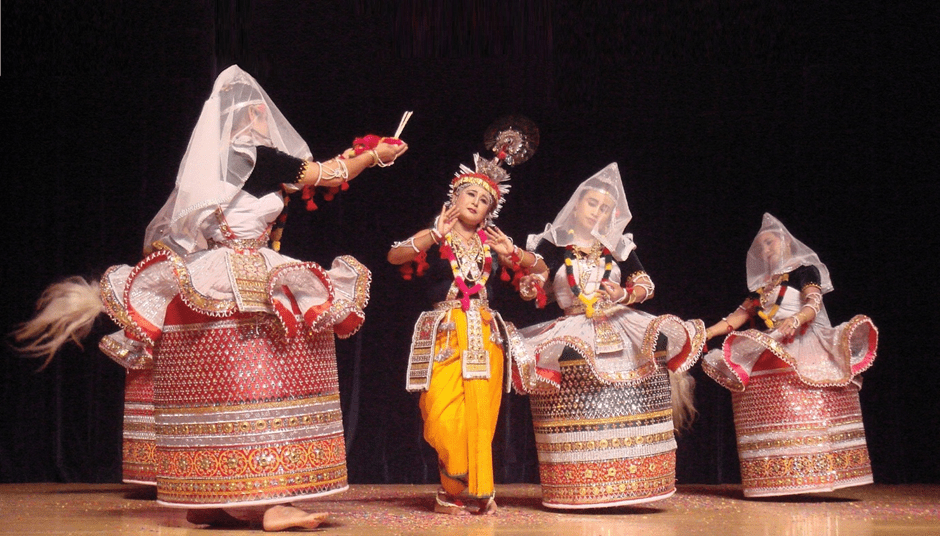
I had the opportunity to visit the state of Manipur from one corner to another on a few occasions and interacted with all sections of people and observed the people were peace-loving and friendly with the guests and outsiders. Almost all the women still today know weaving and in their kitchen gardens varieties of fruits and vegetables are grown mainly by the women. Also, the women of Manipur come forward in a group for any social issue particularly to address the issue (s) which is known as Meira Paibi/s (Women torch bearers). Based on Wikipedia it may be mentioned that Meira Paibis (Women torch bearers) is a women’s social movement in Manipur. Meira Paibi was established in 1977 in Kakching, Kakching district of Manipur. The women activists carry flaming torches and march through city streets, frequently at night doing patrol duty, and as a way of protest for seeking redress against human rights violations committed by paramilitary and armed forces units against the innocent (en.wikipedia.org/wiki/Meira_Paibi). The Manipuri Dance, also known as the ‘Manipuri Raas Leela’, is one of the eight major Indian classical dance forms, originating from Manipur. Anyway, in 2004, the Meira Paibis stunned the world by stripping naked outside a military camp in the capital, Imphal protesting against a rape case. A few days ago, Soutik Biswas, a Correspondent for BBC presented that “Ethnic violence continues to roil Manipur, nearly two months after clashes between the majority Meitei and tribal Kuki communities left more than 100 dead and displaced some 60,000. This is despite the presence of tens of thousands of security forces in the valley, inhabited primarily by the Meitei community, as well as in the hills, home to the Kukis”. Also as per Biswas report, “A recently shared video by the Indian army from the violence-wracked north-eastern state of Manipur captured a dramatic sequence of scenes. The two-minute 14-second footage shows unarmed women confronting soldiers on a busy street. Aerial shots show women gathering around an excavator on a disrupted road, a bustling mix of SUVs, cars, an ambulance speeding along a scenic valley route, and glimpses of agitated women” (bbc.com/news/world-asia-india).
I hope Kuki, Meitei, and also other communities as usual will live peacefully and blissfully. I humbly request all groups of Meira Paibis ( whom I as a very senior citizen consider as my sisters), politicians, NGOs, civil societies, and others to promote peace and tranquillity among the people by setting aside politics and other differences. Killing, arson, damage to properties, displacement of people, etc, are against humanity. We are all brothers and sisters. I remember the phrase Vasudeva Kutumbakam – sometimes spelt Vasudhaiva Kutumbakam which means “the world is one family.”

Prof Shankar Chatterjee, Hyderabad

Meira Paibis of Manipur (Women torch bearers): A Few Facts

The north-east state of Manipur is endowed with scenic beauty and inhabited by wonderful peace-loving people. The state is nowadays in the news because of unfortunate conflicts that too among the local residents who lived generation after generation blissfully and peacefully. Before highlighting a few points about the recent issues, I wish to mention some points about Manipur based on the secondary source, viz.,britannica.com/place/Manipur.
It is pertinent to mention that the state has two major physiographic regions -the Manipur River valley and a large surrounding tract of mountainous country. The valley, encompassing around 1,787 square kilometres, runs north-south. Its main physical feature is Logtak Lake, which covers about 100 square kilometres and is the source of the Manipur River. The river flows southward through the valley into Myanmar, where it joins the Myittha River, a tributary of the Chindwin. The lake is really awesome when I visited the state some years ago. The hill ranges, linked by spurs and ridges, run north-south. These ranges include the Naga Hills to the north, the East Manipur Hills along the eastern Myanmar border, the Mizo and Chin Hills to the south and the West Manipur Hills to the west. Average elevations vary between 5,000 and 6,000 feet (1,500 and 1,800 metres), although the hills in the north rise above 9,500 feet (2,900 metres). In the west, the Surma River, known as the Barak River in Manipur, has cut a narrow steep-sided valley through the West Manipur Hills as it flows to join the Meghna River in Bangladesh. About the people of Manipur, it is pertinent to mention that the Meitei people represent around 53 percent of the population of Manipur, followed by various Naga ethnic groups at 24 percent and Kuki/Zomi tribes (also known as Chin-Kuki-Mizo people) at 16 percent. Agriculture and forestry are the primary sources of livelihood.
I had the opportunity to visit the state of Manipur from one corner to another on a few occasions and interacted with all sections of people and observed the people were peace-loving and friendly with the guests and outsiders. Almost all the women still today know weaving and in their kitchen gardens varieties of fruits and vegetables are grown mainly by the women. Also, the women of Manipur come forward in a group for any social issue particularly to address the issue (s) which is known as Meira Paibi/s (Women torch bearers). Based on Wikipedia it may be mentioned that Meira Paibis (Women torch bearers) is a women’s social movement in Manipur. Meira Paibi was established in 1977 in Kakching, Kakching district of Manipur. The women activists carry flaming torches and march through city streets, frequently at night doing patrol duty, and as a way of protest for seeking redress against human rights violations committed by paramilitary and armed forces units against the innocent (en.wikipedia.org/wiki/Meira_Paibi). The Manipuri Dance, also known as the ‘Manipuri Raas Leela’, is one of the eight major Indian classical dance forms, originating from Manipur. Anyway, in 2004, the Meira Paibis stunned the world by stripping naked outside a military camp in the capital, Imphal protesting against a rape case. A few days ago, Soutik Biswas, a Correspondent for BBC presented that “Ethnic violence continues to roil Manipur, nearly two months after clashes between the majority Meitei and tribal Kuki communities left more than 100 dead and displaced some 60,000. This is despite the presence of tens of thousands of security forces in the valley, inhabited primarily by the Meitei community, as well as in the hills, home to the Kukis”. Also as per Biswas report, “A recently shared video by the Indian army from the violence-wracked north-eastern state of Manipur captured a dramatic sequence of scenes. The two-minute 14-second footage shows unarmed women confronting soldiers on a busy street. Aerial shots show women gathering around an excavator on a disrupted road, a bustling mix of SUVs, cars, an ambulance speeding along a scenic valley route, and glimpses of agitated women” (bbc.com/news/world-asia-india).
I hope Kuki, Meitei, and also other communities as usual will live peacefully and blissfully. I humbly request all groups of Meira Paibis ( whom I as a very senior citizen consider as my sisters), politicians, NGOs, civil societies, and others to promote peace and tranquillity among the people by setting aside politics and other differences. Killing, arson, damage to properties, displacement of people, etc, are against humanity. We are all brothers and sisters. I remember the phrase Vasudeva Kutumbakam – sometimes spelt Vasudhaiva Kutumbakam which means “the world is one family.”

Prof Shankar Chatterjee, Hyderabad

AuthorAID is an online platform

AuthorAID is an online platform and global research community that provides support and resources for researchers and writers, particularly those from developing countries. It was established in 2007 by INASP (International Network for the Availability of Scientific Publications), an international development organization focused on strengthening research and knowledge systems in developing countries.

The primary goal of AuthorAID is to enhance the quality and visibility of research from low- and middle-income countries (LMICs) by offering support and training to researchers, particularly those who face barriers to publishing their work in international journals. The platform achieves this through various means, including online resources, mentoring, workshops, and networking opportunities.
One of the key features of AuthorAID is its online platform, which serves as a hub for researchers to access a wide range of resources. These resources include e-learning courses, writing guides, interactive forums, and webinars on various aspects of research communication. The platform also hosts a directory of mentors who are experienced researchers and writers willing to provide guidance and support to their peers from LMICs.
AuthorAID organizes workshops and training sessions in collaboration with institutions and organizations worldwide. These capacity-building events focus on topics such as research writing, grant proposal development, data analysis, and publication ethics. Workshops are typically conducted by experienced trainers and mentors who help participants develop their research and writing skills, increasing their chances of successfully publishing their work.
Furthermore, AuthorAID fosters a vibrant and inclusive research community by encouraging collaboration and networking among its members. Researchers from different disciplines and regions can connect with each other through the online platform, exchange knowledge and ideas, and establish valuable professional relationships. This global network allows researchers to expand their research networks, find potential collaborators, and gain exposure to diverse perspectives and expertise.
Over the years, AuthorAID has made significant contributions to improving the research output and visibility of scholars from LMICs. By addressing the specific challenges faced by researchers in these countries, the platform helps bridge the gap between local research efforts and the global scientific community. The support and resources provided by AuthorAID have empowered countless researchers to overcome barriers, enhance the quality of their work, and increase its impact.
In summary, AuthorAID is an invaluable resource for researchers and writers from developing countries, offering support, training, and networking opportunities to enhance the quality and visibility of their research. By empowering researchers with the skills and knowledge needed for effective research communication, AuthorAID plays a crucial role in bridging the research divide and promoting equitable global knowledge exchange.

10.14 lakh new members enrolled with EPFO during June 2023

  EPFO’s provisional payroll data released on 20th August, 2023 highlights that EPFO has added 17.89 lakh net members in the month of June, 2023. The data reveals that 3,491 establishments have extended social security cover of EPFO to their employees by remitting their first ECR during the month. Month-on month comparison of payroll data shows a growing trend in enrollment with an increase of around 9.71% net members over the previous month of May, 2023.The overall remittance also testifies the highest numbers in the last eleven months, since August, 2022.

The data indicates that around 10.14 lakh new members have enrolled during June, 2023 which is highest since August, 2022. Among the newly joined members, the age-group of 18-25 years constitutes 57.87% of total new members added during the month. This demonstrates an increasing trend in youth enrollment, who are mostly first-time job seekers joining the organized sector workforce of the country. 

Payroll data suggests that approximately 12.65 lakh members exited but rejoined EPFO. These members switched their jobs and re-joined the establishments covered under EPFO and opted to transfer their accumulations instead of applying for final settlement thus, extending their social security protection.

Gender-wise analysis of payroll data represents that out of the total 10.14 lakh new members added during the month, around 2.81 lakh are new female members, joining EPFO for the first time. The percentage of new female members joining the organized workforce has been highest in the last 11 months. Also, the net female member addition during the month stood at around 3.93 lakh, which is also the highest since August, 2022.

State-wise analysis of payroll data denote that net member addition is highest in the 5 states of Maharashtra, Tamil Nadu, Karnataka, Gujarat and Haryana. These states constitute around 60.40% of net member addition, adding a total of 10.80 lakh members during the month. Of all the states, Maharashtra is leading by adding 20.54% of net members during the month.

Month-on-month comparison of industry-wise data displays significant growth in the members working in establishments engaged in Trading-Commercial Establishments, Building & Construction Industry, Electrical, Mechanical and General Engineering Products. This was followed by Textiles, Financing Establishment, Schools, Hospitals etc. Of the total net membership, around 40.36% addition is from expert services (consisting of manpower suppliers, normal contractors, security services, miscellaneous activities etc.).

The above payroll data is provisional since the data generation is a continuous exercise, as updating employee record is a continuous process. The previous data hence gets updated every month. From the month of April-2018, EPFO has been releasing payroll data covering the period September, 2017 onwards. In monthly payroll data, the count of members joining EPFO for the first time through Aadhaar validated Universal Account Number (UAN), existing members exiting from coverage of EPFO and those who exited but re-joining as members, is taken to arrive at net monthly payroll.

****

 main:-

    enter(monkey,room).

enter(monkey,room):-

    write(“Monkey enters the room”),nl,

    checkheight(monkey,banana).

checkheight(monkey,banana):-

    write(“Monkey cannot reach the banana”),nl,

    move(monkey,left).

move(monkey,left):-

    write(“Monkey moves towards the chair”),nl,

    push(monkey,chair).

push(monkey,chair):-

    write(“Monkey pushes the chair towards banana”),nl,

    place(monkey,chair).

place(monkey,chair):-

    write(“Monkey places the chair below banana”),nl,

    climb(monkey,chair).

climb(monkey,chair):-

    write(“monkey climbs the chair”),nl,

    function(check).

function(check):-

    write(‘Enter height of the room’),

    read(H1),

    write(‘enter height of the chair’),

    read(H2),

    write(‘enter height of monkey’),

    read(H3),

B is H2 + H3, check(H1,B). gets(monkey,stick):-

    write(“Monkey Move Towards The Stick”),nl, 

    write(“Monkey Gets The Stick and Climbs Again”),nl,

write(‘Enter Height of Room: ‘),

read(N1),

 write(‘Enter Height of Chair: ‘),

read(N2),

 write(‘Enter Height of Monkey: ‘),

read(N3),

 write(‘Enter Height of Stick: ‘),

read(N4),

 SUM is N2+N3+N4,

check(N1,SUM). check(A,B):-

(

 A>B-> write(“Monkey Still Cannot Reach The

Banana”),nl, gets(monkey,stick);

A

 write(“Monkey Ate The Banana”);

A=B-> write(“Monkey Ate The

Banana”)

    ).

from collections import defaultdict
visited = defaultdict(lambda: False)
jug1=int(input(“Enter Capacity of Jug 1 : “))
jug2=int(input(“Enter Capacity of Jug 2 : “))
aim=int(input(“Enter Goal : “))
def waterJugSolver(amt1,amt2):
if (amt1 == aim and amt2 == 0) or (amt2 == aim and amt1 == 0):
print(amt1, amt2)
return True
if visited[(amt1, amt2)] == False:
print(amt1, amt2)
visited[(amt1, amt2)] = True
return (waterJugSolver(0, amt2) or
waterJugSolver(amt1, 0) or
waterJugSolver(jug1, amt2) or
waterJugSolver(amt1, jug2) or
waterJugSolver(amt1 + min(amt2, (jug1-amt1)),
amt2 – min(amt2, (jug1-amt1))) or
waterJugSolver(amt1 – min(amt1, (jug2-amt2)),
amt2 + min(amt1, (jug2-amt2))))
else:
return False
print(“Steps: “)
waterJugSolver(0,0)

Panchayat Election in West Bengal 2023: Bloodshed from the Day of Filing Nominations

Around one hundred years ago, Gopal Krishna Gokhale ji, a renowned patriot of India said “What Bengal thinks today, India thinks tomorrow.” The reason is that United Bengal produces/produced great personalities and stalwarts in all fields – games and sports, film, music, literature, politics, spirituality, etc. But the past glory in the present days has been fading. Whenever I visited across the State for academic activities in my service life, I was told “The people are Bhadralooks meaning gentleman to the core”. But in the last Assembly election in the State and this June 2023 during the filing of the nomination of the Panchayat election unprecedented violence took place in West Bengal and bloodshed and deaths which are very unfortunate also happened. As per India Today, New Delhi, June 19, 2023 “Ahead of the next month’s Panchayat polls in West Bengal, a cycle of violence has begun across the state, resulting in death and destruction, quite expectedly. Six people, including a ruling TMC worker, have been killed since the nominations began on June 9. Reports of violence have come from Cooch Behar, North and South 24 Parganas, Murshidabad, Birbhum, East Midnapore, and East Burdwan, among other places. Perhaps in no other Indian states, so much violence took place”. I feel this is a shame to “Bhadralooks”. Against this backdrop elections in Uttar Pradesh (UP) and Karnataka may be cited where there was no death or serious injury in recently completed elections. In UP, “In the Assembly elections of 2022, a total of 33 incidents of electoral violence took place. Of these 28 incidents happened before polling days and five happened on polling days in which no person was seriously injured or died,” Deccan Herald (March 9, 2022). In the recently held Assembly election in Karnataka, some minor incidents of violence took place but not a single case of death or serious injury was reported.
Anyway, observing huge violence during the filing of nomination in the Panchayat election in West Bengal, the election issue was State police or deployment of Central force, and finally, “The Supreme Court on Tuesday (20/6/23) refused to interfere with an order of the Calcutta High Court directing the State Election Commission (SEC) to requisition and deploy central forces across West Bengal for the July 8 Panchayat polls. The pleas were filed by the West Bengal Government and the State Election Commission. Holding an election cannot be a license for violence,” a vacation bench of Justice B V Nagarathna and Justice Manoj Misra observed during the hearing (Mid-day, 21/6/23). It is observed from India Today (21/6/23) that “the Supreme Court, on June 20, rejected the Mamata Banerjee government’s challenge to deploying of central forces for the election. The Mamata government and the State Election Commission had opposed the Calcutta High Court’s directive that security during Panchayat polls be handled by central forces”. In another development, the Panchayat polls in Bengal should be stopped if the bloodbath continues, the Calcutta High Court observed on June 21, 2023. The court was hearing a case in connection with the disappearance of names of candidates contesting the election. According to Justice Amrita Sinha “So much violence in panchayat polls. The poll should be stopped if the bloodbath continues.”
So, I suggest the Bhadralooks of West Bengal should take lessons from other states as killing, arson, injury, destruction of properties, etc., are highly deplorable in an election. Moreover, this is a state of “Bhadralooks”.

Prof Shankar Chatterjee, Hyderabad

Panchayat Election in West Bengal 2023: Bloodshed from the Day of Filing Nominations

Around one hundred years ago, Gopal Krishna Gokhale ji, a renowned patriot of India said “What Bengal thinks today, India thinks tomorrow.” The reason is that United Bengal produces/produced great personalities and stalwarts in all fields – games and sports, film, music, literature, politics, spirituality, etc. But the past glory in the present days has been fading. Whenever I visited across the State for academic activities in my service life, I was told “The people are Bhadralooks meaning gentleman to the core”. But in the last Assembly election in the State and this June 2023 during the filing of the nomination of the Panchayat election unprecedented violence took place in West Bengal and bloodshed and deaths which are very unfortunate also happened. As per India Today, New Delhi, June 19, 2023 “Ahead of the next month’s Panchayat polls in West Bengal, a cycle of violence has begun across the state, resulting in death and destruction, quite expectedly. Six people, including a ruling TMC worker, have been killed since the nominations began on June 9. Reports of violence have come from Cooch Behar, North and South 24 Parganas, Murshidabad, Birbhum, East Midnapore, and East Burdwan, among other places. Perhaps in no other Indian states, so much violence took place”. I feel this is a shame to “Bhadralooks”. Against this backdrop elections in Uttar Pradesh (UP) and Karnataka may be cited where there was no death or serious injury in recently completed elections. In UP, “In the Assembly elections of 2022, a total of 33 incidents of electoral violence took place. Of these 28 incidents happened before polling days and five happened on polling days in which no person was seriously injured or died,” Deccan Herald (March 9, 2022). In the recently held Assembly election in Karnataka, some minor incidents of violence took place but not a single case of death or serious injury was reported.
Anyway, observing huge violence during the filing of nomination in the Panchayat election in West Bengal, the election issue was State police or deployment of Central force, and finally, “The Supreme Court on Tuesday (20/6/23) refused to interfere with an order of the Calcutta High Court directing the State Election Commission (SEC) to requisition and deploy central forces across West Bengal for the July 8 Panchayat polls. The pleas were filed by the West Bengal Government and the State Election Commission. Holding an election cannot be a license for violence,” a vacation bench of Justice B V Nagarathna and Justice Manoj Misra observed during the hearing (Mid-day, 21/6/23). It is observed from India Today (21/6/23) that “the Supreme Court, on June 20, rejected the Mamata Banerjee government’s challenge to deploying of central forces for the election. The Mamata government and the State Election Commission had opposed the Calcutta High Court’s directive that security during Panchayat polls be handled by central forces”. In another development, the Panchayat polls in Bengal should be stopped if the bloodbath continues, the Calcutta High Court observed on June 21, 2023. The court was hearing a case in connection with the disappearance of names of candidates contesting the election. According to Justice Amrita Sinha “So much violence in panchayat polls. The poll should be stopped if the bloodbath continues.”
So, I suggest the Bhadralooks of West Bengal should take lessons from other states as killing, arson, injury, destruction of properties, etc., are highly deplorable in an election. Moreover, this is a state of “Bhadralooks”.

Prof Shankar Chatterjee, Hyderabad