PPPININDIA and online portals for India Infrastructure Project Development Funding Scheme (IIPDF) and the Best Practices in Infrastructure

 The Infrastructure Finance Secretariat (IFS) in its endeavour to usher in private investment in infrastructure is constantly introducing interventions to setup an enabling ecosystem for infrastructure development and delivery.

As part of this endeavour, the IFS has revamped its website www.pppinindia.gov.in for its enhanced value to the stakeholders involved in PPP projects. PPPININDIA is a website dedicated to promoting and facilitating Public Private Partnerships in India and helps in bridging the gap between the public and private sectors. The website serves as a digital platform that brings together government entities, private companies, investors and entrepreneurs fostering collaboration and innovation for sustainable growth. Through this revamped website, the IFS aims to create a vibrant ecosystem that nurtures partnership, encourages investment, and facilitates the exchange of knowledge and resources.

The revamped website will act as a readily accessible repository of Policies, Guidelines, and Model Bidding Documents including Model Concession Agreements for various sectors, Guidance Materials, Reference Documents, etc., including the newly launched Reference Guide for Setting up of State PPP units helping States to create dedicated units for promoting PPP policy, program and projects and Reference Guide for PPP Project Appraisal helping Project Appraisal Authorities (PSAs) in quality appraisal of PPP projects. The website has over 200+ executed Concession Agreements of PPP projects in various sectors. The website also hosts PPP Toolkits which are web-based resources designed to improve decision-making for infrastructure PPPs.

To promote Digital India initiative of the Government of India, the IFS has launched the IIPDF Portal for submitting applications for consideration under IIPDF Scheme. The online portal will allow Sponsoring Authority to apply online under IIPDF scheme that will significantly reduce the processing time, involve less paperwork and help the PSAs to obtain speedy and time bound approvals for the submitted projects. The IFS is also in process of launching similar online portals on this website for submitting online applications for Public Private Partnership Appraisal Committee and VGF Scheme.

Additionally, the revamped website hosts Best Practices Portal that contains the best practices in successful implementation of infrastructure projects by the states and central ministries. The best practices are identified inter-alia in terms project implementation, key challenges, success factors, outcomes, and impacts. It has started with a number of identified best practices and the states and central ministries can further upload and showcase their best practices for mutual knowledge exchange and wider implementation. The best practices portal can be accessed on https://www.pppinindia.gov.in/bestpractices.

The revamped website, with its enhanced ease of use and information content will serve as a one stop solution comprehensive website for PPP projects database, PPP knowledge hub, details of upcoming PPP events, workshops and forums where key stakeholders can come together, exchange ideas and forge partnerships.

****

G20 Digital Economy Working Group (DEWG)

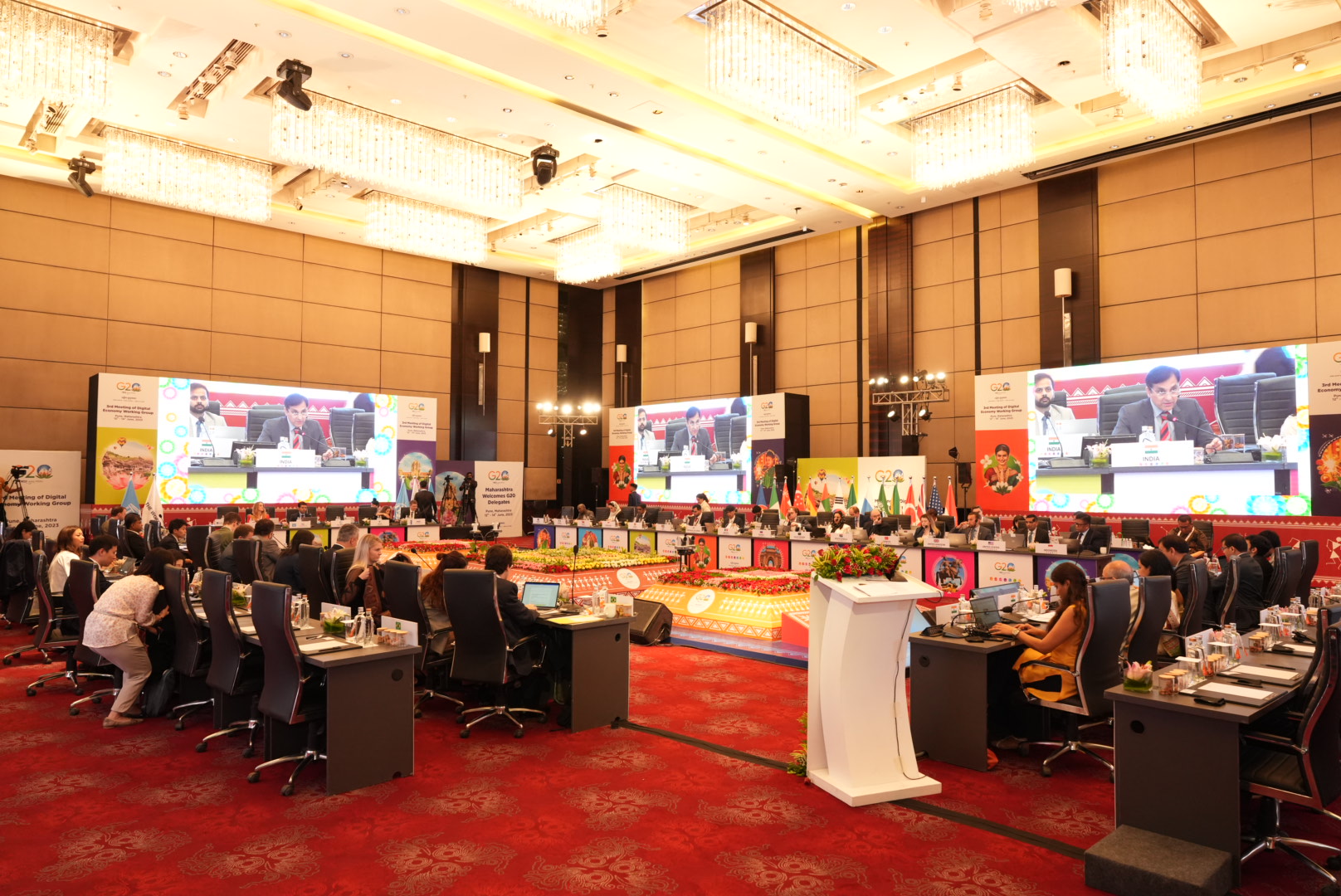
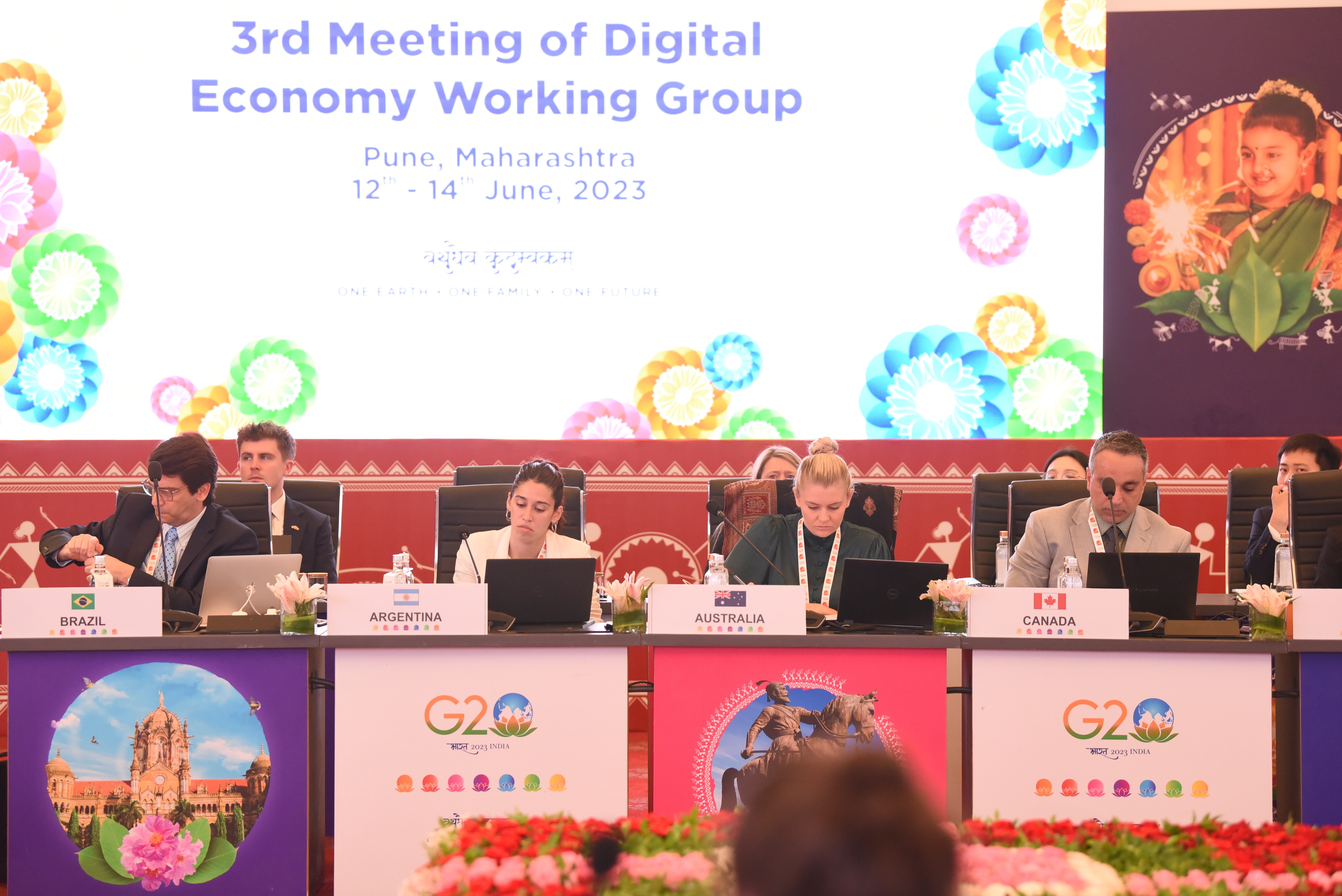
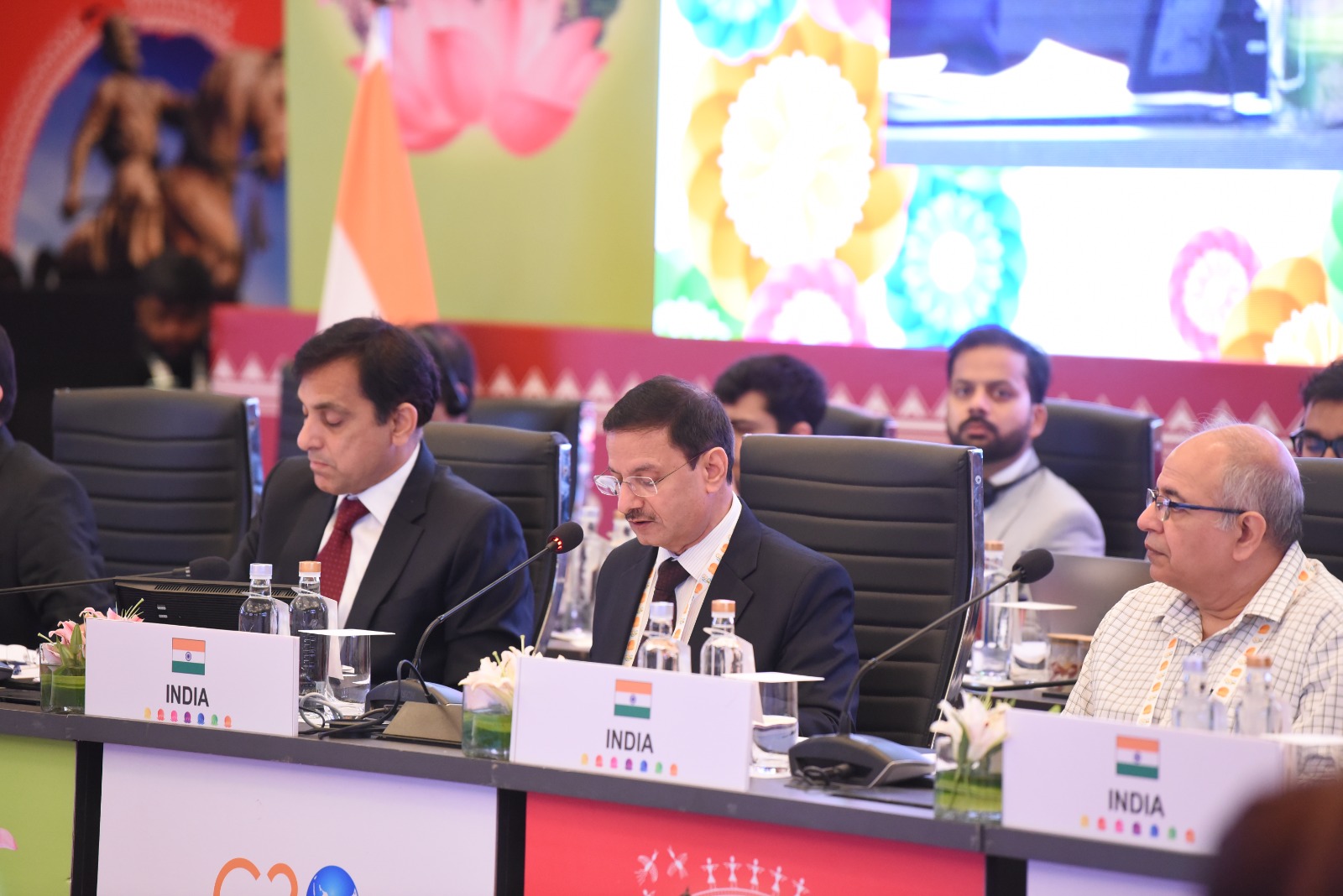
 The third meeting of ‘G20 Digital Economy Working Group (DEWG)’ concluded today at Pune. The three days’ agenda of the meeting included the Global DPI Summit and Global DPI Exhibition as the side events and closed-door meetings among the G20 delegates, invited countries and IOs on the priority areas. 

The Global DPI Summit (12-13 June 2023)

The Summit was attended by over 250 delegates in-person, out of which, there are around 150 foreign delegates from 50 countries. More than 2000 persons attended virtually. India signed MoU with four countries namely Armenia, Sierra Leone, Suriname and Antigua and Barbuda on sharing INDIA STACK i.e. successful digital solutions implemented at population scale.

The summit provided the global platform to discuss sector agnostic (foundational) and sectoral DPIs that inter-alia involved leadership, policy & practitioner level insightful, thought provoking and future shaping discussions among overall 60 Global Experts on DPIs, who participated in 10 important sessions viz. ‘Overview of Digital Public Infrastructure’, ‘Digital Identities for empowering people’, ‘Digital Payments and Financial Inclusion’, ‘DPI for Judicial Systems and Regulations’, ‘Digital Document Exchange for efficient service delivery’, ‘Public Key Infrastructure (PKI) for DPI’, ‘Digital Education and Skilling’, ‘DPI for Digital Health and Climate Action’, ‘Digital Agriculture Ecosystem’, and ‘Building the Global DPI Ecosystem’. By providing the global platform on DPI to digital decision makers from 50 Countries and multiple International Organisations, India took the lead and further strengthened its role of acting as a strong bridge between Global North (G20 members) and Global South (Developing and LMIC countries). The recording of the sessions, organised during the Global DPI summit, can be seen at  https://www.indiastack.global/global-dpi-summit/

The Global DPI Exhibition (12-14 June 2023)

The Exhibition showcased 14 experience zones comprising successfully implemented DPIs related to Digital Identity, Fast Payment, DigiLocker, Soil Health Card, E-National Agriculture Market, Unified Mobile App for New-Age Governance, Open Network for Digital Commerce, seamless travel experience at airport, language translation, learning solution, tele-medical consultation, and Digital India Journey. It was visited by the delegates attending the summit and G20 DEWG meeting. The people from the city of Pune comprising professionals, youth and senior citizens also visited the exhibition.

The Closed-Door Meeting of G20 DEWG (13-14 June 2023)

The closed-door meeting of G20 DEWG meeting began on 13 June 2023 with participation of 77 foreign delegates from G20 Members, 9 Guest Countries, 5 International Organizations and two Regional Organisations. The discussion under Indian Presidency was led by Shri Sushil Pal, Co-Chair G20 DEWG.  In the meeting, discussions were held on Digital Public Infrastructure (DPI) and the concept of “One Future Alliance & One Future Fund’ for DPI, enabling principles for good DPI, and recognition of the need for financing opportunities for DPI in Low and Middle Income Countries (LMIC). Thereafter, Digital skilling, upskilling and reskilling,  capacity building & awareness , building a mutual recognition framework for digital skills and information sharing  were discussed.

On the last day of the meeting i.e. 14 June 2023, the security for a safe, resilient and trusted digital economy and various aspects such as capacity building for children & youth, and countering potential security threats were deliberated.

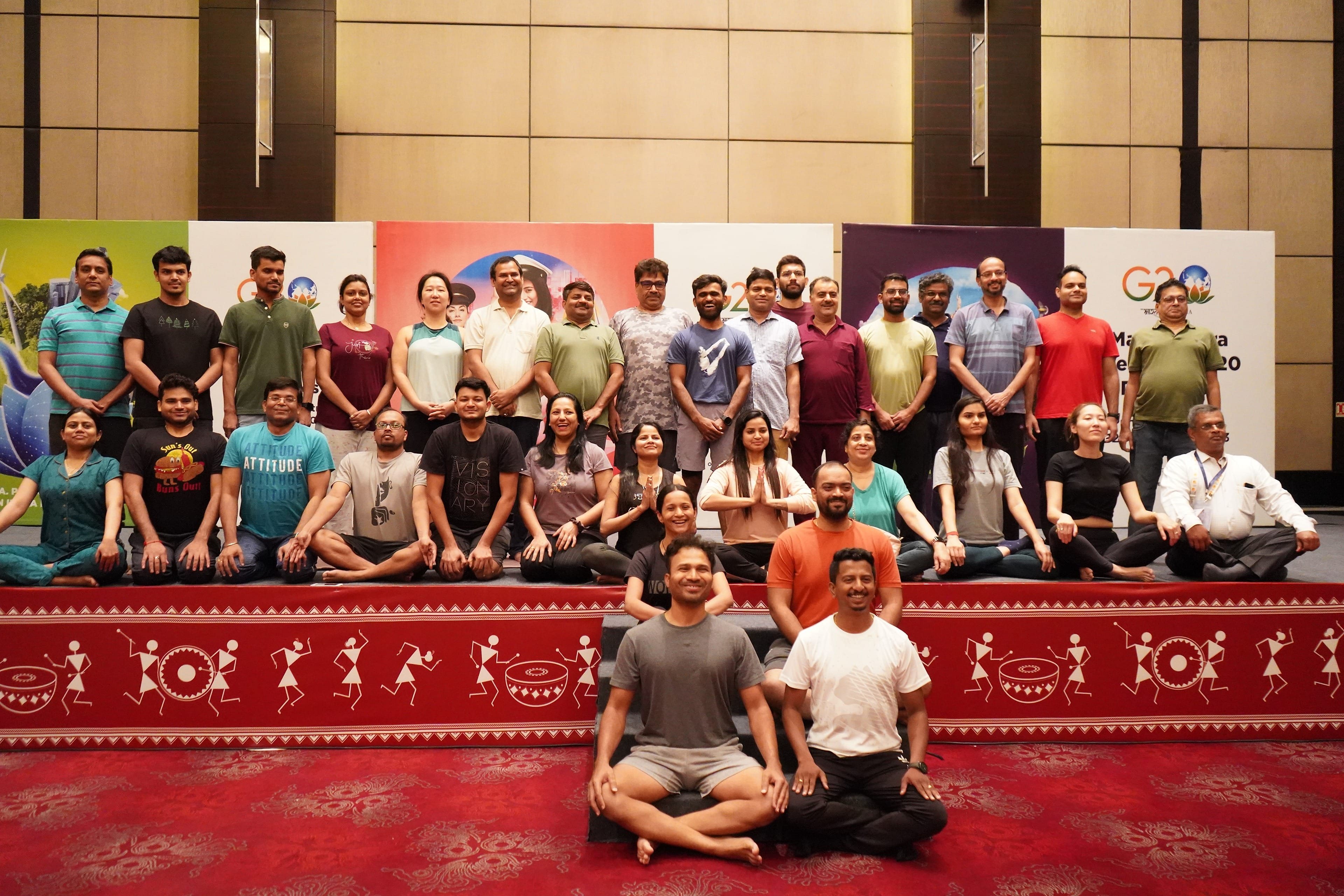
Over the last three days, several cultural programmes were organised, and the delegated were treated with the experience of Indian culture, Indian cuisine, Indian arts, Yoga, and folk forms of India. Government of India acknowledges and thanks the state Government of Maharashtra for providing full support and coordination in organizing  this event.

As a next step, the fourth in-person meeting of Digital Economy Working Group and Digital Economy Minister’s Meeting is planned to be organised in the month of August, 2023 at Bengaluru, Karnataka.


LT GEN PS BHAGAT MEMORIAL LECTURE” ORGANISED BY THE INDIAN ARMY AT MANEKSHAW CENTRE

 The Indian Army has organised the first “Lieutenant General P S Bhagat Memorial Lecture” on “Legacy of Lt Gen Prem Bhagat- A Visionary and Strategic Leader”, under the aegis of United Service Institution of India (USI) at Manekshaw Centre on 14 June 2023. The lecture was conducted as part of “Lt Gen PS Bhagat Memorial Chair of Excellence instituted at USI, by General Manoj Pande, COAS on 14 October 2022.

General VP Malik (Retd), Former Army Chief delivered a keynote address during the lecture, in which he gave many anecdotes from the legacy of Lt Gen Bhagat from his early days as a Second Lieutenant to till his demise while working as Chairman of Damodar Valley Corporation (DVC).

General Manoj Pande, the Chief of the Army Staff, Former Chiefs General VN Sharma (Retd) and General M M Naravane (Retd) attended the event along with senior veterans and serving officers and civilians to draw inspiration from the legacy of Lt Gen Bhagat, whose charisma has left an indelible mark on the history of the Indian Army.

Speaking on the occasion, the Army Chief mentioned that “Late Lt Gen PS Bhagat who served as the first General Officer Commanding-in-Chief of the re-raised Northern Command was an outstanding professional and a prolific writer”. The Army Chief recounted that “as a young second lieutenant, Lt Gen Bhagat was the first Indian soldier to have been awarded the prestigious Victoria Cross in World War II, while clearing minefields, under enemy fire, with his vehicle encountering a mine explosion thrice, sustaining an ear drum puncture, yet going about his task relentlessly for 96 hours, without break.” He also fondly mentioned the tale in which Lt Gen Bhagat as Army Commander at Lucknow in September 1971, saved the Lucknow city by pushing the trucks loaded with stones and boulders to plug the flow

through the breach on the Gomti River, for which local newspapers captioned him as “the saviour of Lucknow”, in next day’s headlines.

The next edition of memorial lecture is scheduled to be conducted in April 2024, in which Lt Gen KT Parnaik (Retd), Hon’ble Governor of Arunachal Pradesh has kindly consented to deliver the keynote address.

***

Gabon’s first Agri-SEZ Project

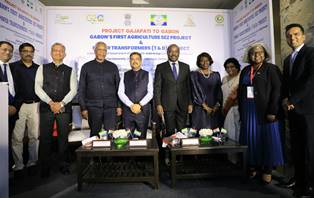
 Union Minister of Education and Skill Development and Entrepreneurship Shri Dharmendra Pradhan today flagged off Gabon’s first Agri- SEZ project from New Delhi. The project will be implemented by AOM group with Centurion University as the technical and knowledge partner. In the first phase of the program, 30 farmers and 20 B.Sc./M.Sc. Agri and B.Tech/M.Tech Engineering students from Gajapati district, which is an Aspirational district of Odisha, will be travelling together as agri-technical and technical consultants for the agriculture SEZ which is being developed under this project.

Speaking on the occasion, Shri Pradhan said that from Gajapati to Gabon, from Cheetahs to Climate Change, India-Africa relationship is going from strength to strength. Today’s launch will add a new chapter in that relationship, he further added. He also expressed confidence that the establishment of an Agriculture and Food Processing Special Economic Zone in Gabon will be a significant milestone towards enhancing food security and self-sufficiency in the country.

Speaking about India-Africa relationship, he said that, in last 9 years, India-Africa relations have gone from strength to strength, recording more than 35 high level visits from India and more than 100 similar ones from Africa. Anti-colonial solidarity, diasporic goodwill, and the principle of ‘South-South’ cooperation, among others, are also playing a significant role in strengthening the partnership between India and the African continent, he further added.

He also said that development partnership is a key pillar in India’s Africa policy. Being a trusted partner in the journey of socio-economic development, India has extended concessional loans of over US$ 12.3 billion to Africa and US$ 700 mn of grant assistance with development projects in various sectors.

Speaking about India’s G20 Presidency, he said that India’s G20 Presidency is very unique given India’s role in amplifying the voice and concerns of the Global South and developing countries, scripting another chapter in strengthening India- Africa relations.

He said that Gabon and other African countries have a lot to learn from India’s development journey and recent initiatives like the Aspirational Districts Program.

He also spoke about India-Africa long standing relations in the areas of education and skill development.

*****

Maharaja’s Treasure: Select Works of Art from the Famed Air India Collection’ at NGMA Mumbai

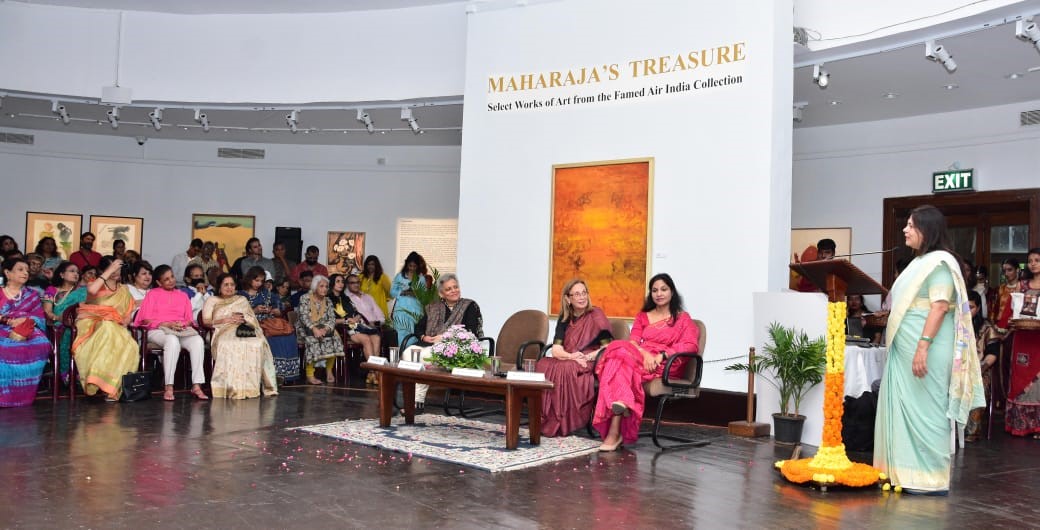
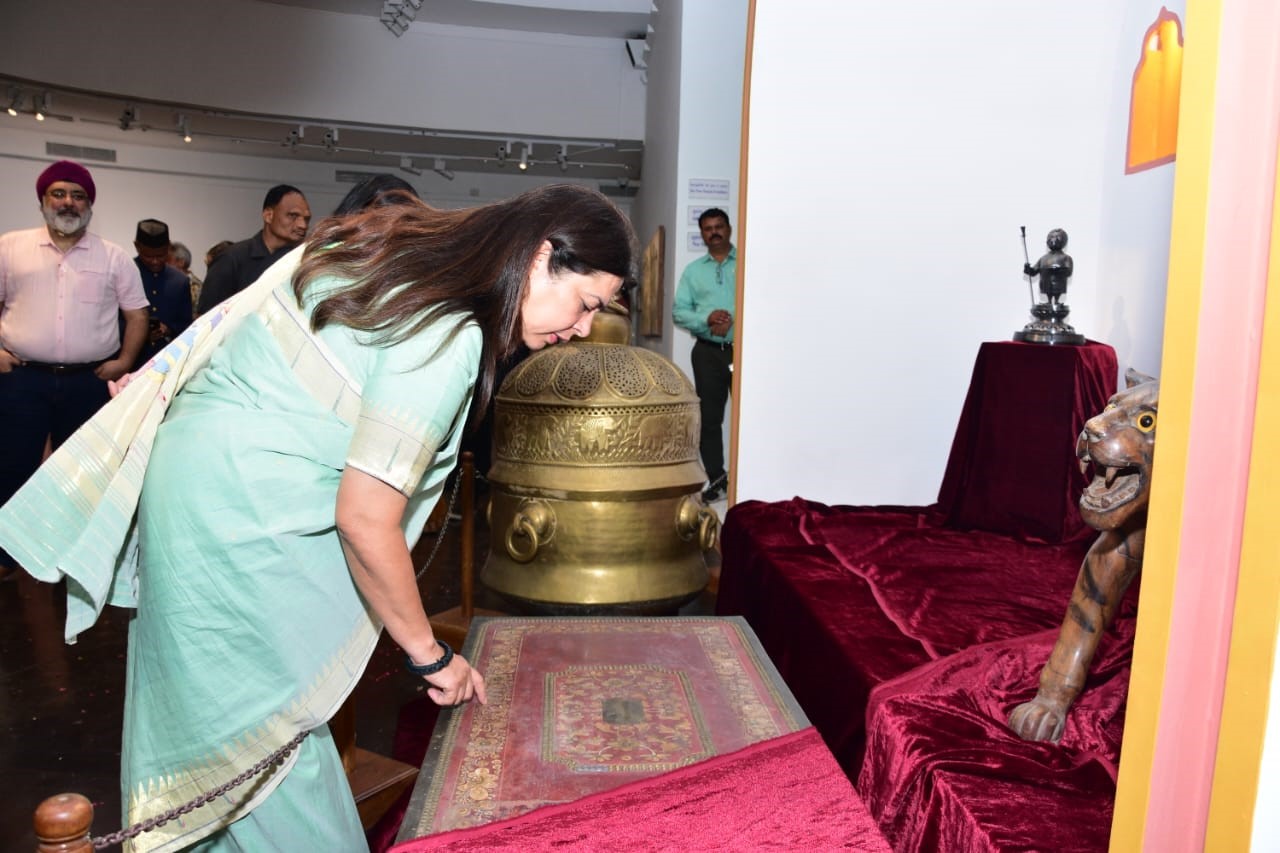
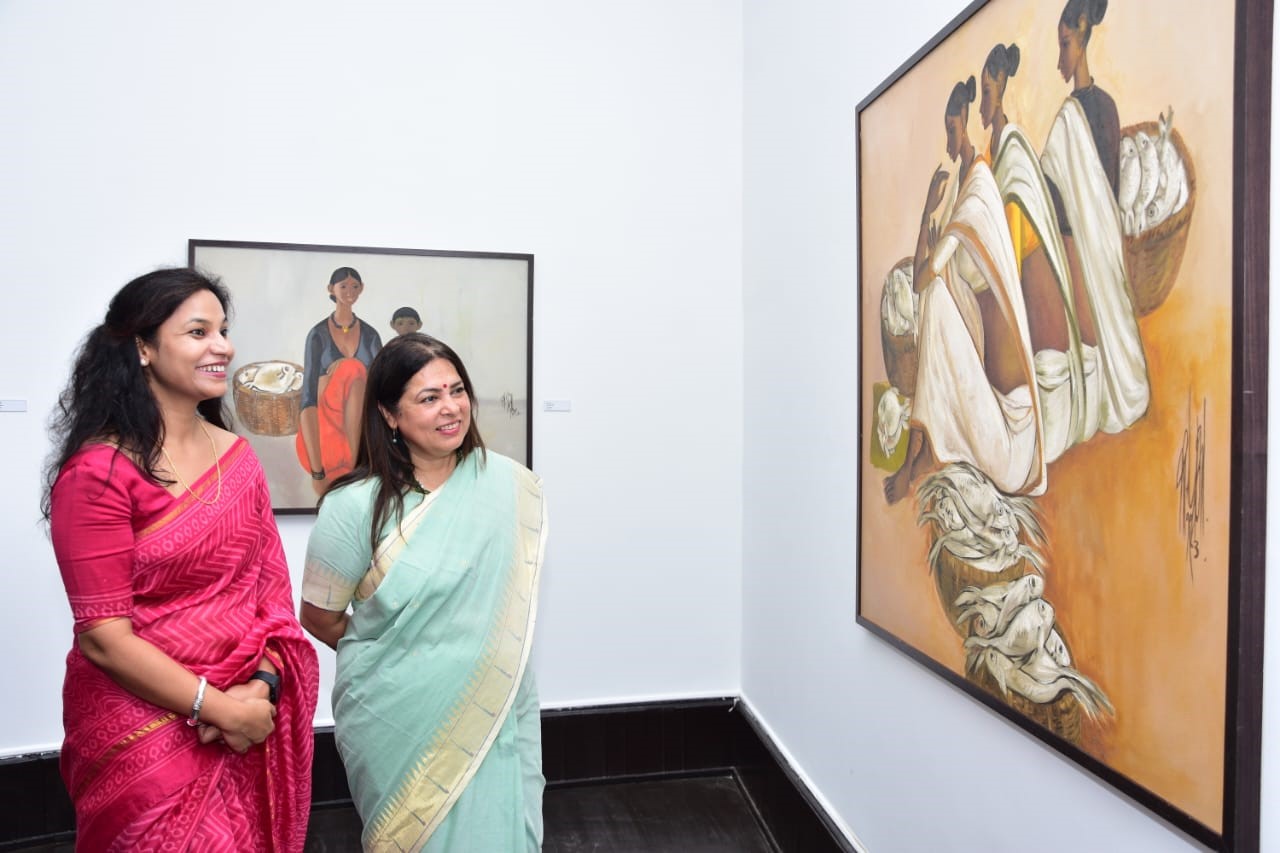
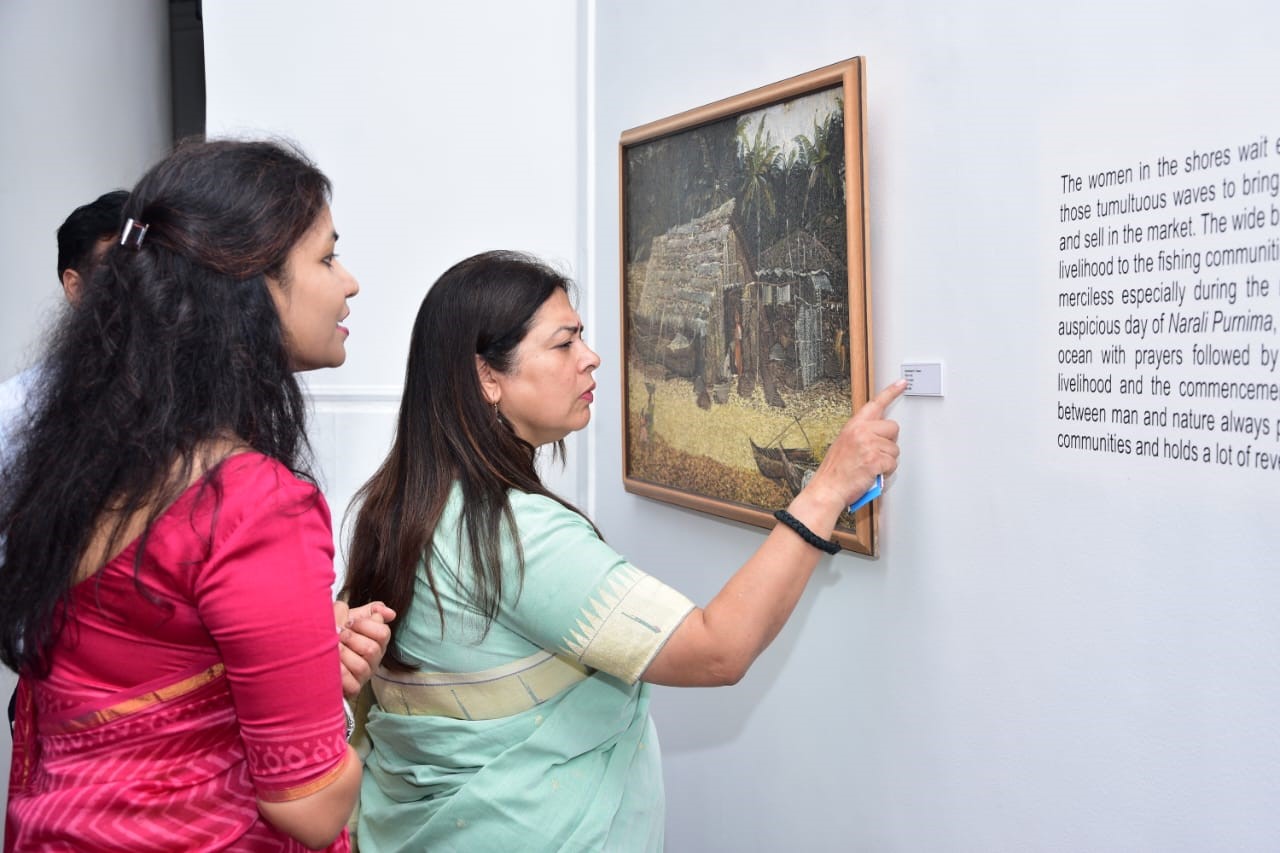
 An art exhibition titled ‘Maharaja’s Treasure: Select Works of Art from the Famed Air India Collection’ hosted by the National Gallery of Modern Art, Mumbai, under the Union Ministry of Culture was inaugurated by Union Minister of State for External Affairs and Culture Smt. Meenakshi Lekhi on Tuesday (June 13, 2023) evening.  The inimitable exhibition has been curated to focus on the works that Air India used to redefine the air travel experience and showcasing paintings and sculptures by eminent artists like VS Gaitonde, GR Santosh, KH Ara, B Prabha, Pilloo Pochkhanwala, MF Husain and Raghav Kaneria et al. The in-house curated exhibition of NGMA consists of thematic display of around 200 artworks.  It will continue till the 13th of August, 2023 at the prestigious Nation Gallery of Modern Art in Fort, Mumbai.

Speaking on the occasion, MoS Meenakshi Lekhi said, “It’s truly a Maharaja’s collection as 80 years of the Air India story gets to be depicted through paintings and art-pieces. The Minister said, we are grateful to Air India for providing patronage to artists when they were looking for it. Artists always require patronage to look after themselves. Artists have an element of God in themselves because they are always competing with themselves to do better and better and upskill themselves, added the Minister. She said, we need to be proud of and understand our traditions, especially at a time when the country is celebrating Azadi Ka Amrit Mahotsav. “Only when we take pride in who we are, can we promote art and craft”, the Minister stated. Speaking about the exhibition, MoS (Culture) also said that a 80 years story of India which is truly Azadi Ka Amrit Mahotsav needs to be told multiple times at multiple places.

The MoS for Culture and External Affairs said that India always was a rich nation in arts, crafts and culture and continues to be so. She said that we see a ‘Vikas Ki Virasaat’ today because of infrastructural works going on in the country, but simultaneously the Government is putting equal emphasis on cultural heritage of the country. The Minister said that PM has been very focussed on his deliveries and plan of action related to promotion of all forms of art and culture, setting up a few museum, preservation and conservation of cultural heritage and also setting up of new heritage universities. 

The Director, NGMA Mumbai, Nazneen Banu said, consequent to the Government’s decision to disinvest its stake in the Air India, it was decided to handover the Air India collection of arts and artefacts to the Ministry of Culture which is to be housed at the National Gallery of Modern Art for posterity. The impressive diversity and broad spectrum of Air India collection today makes it unique which holds unparallel position in the history of any commercial airline.

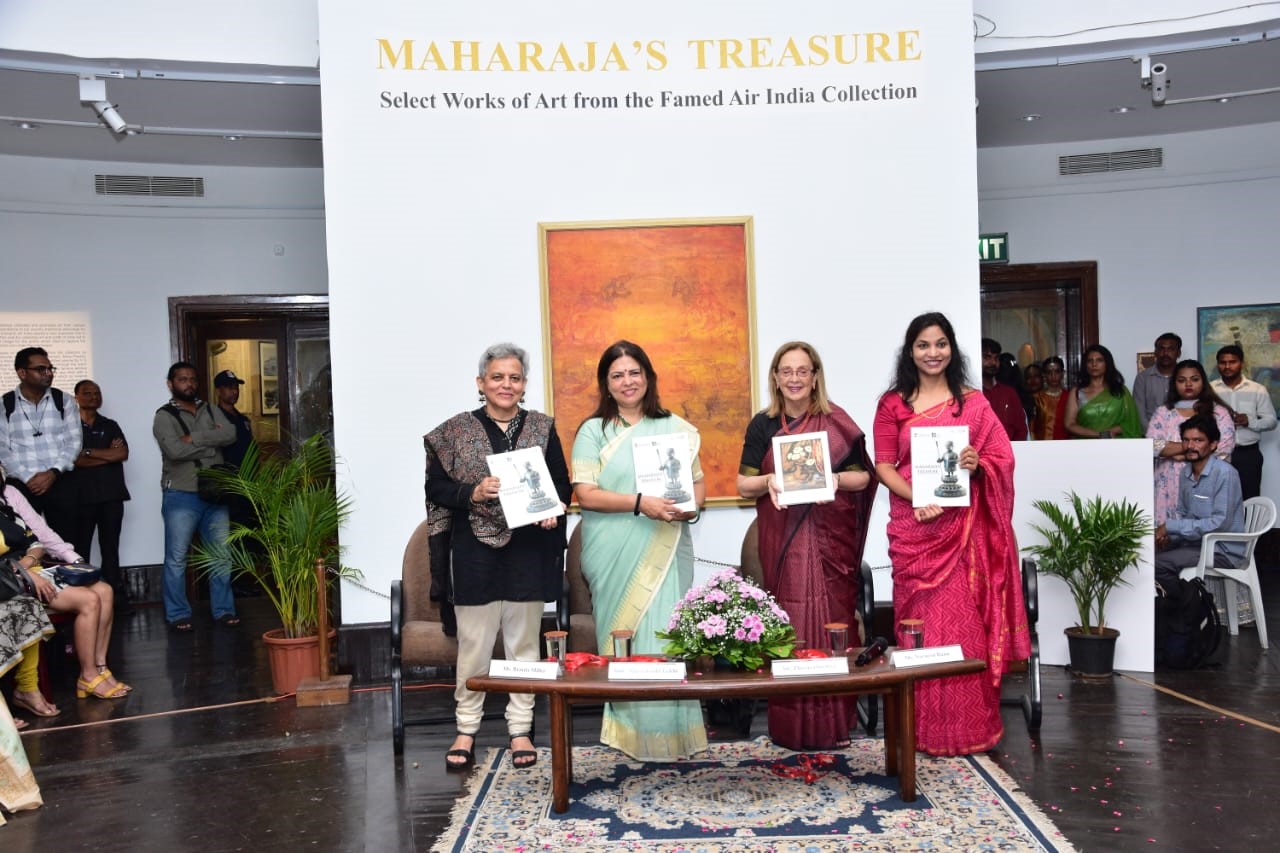
MoS (Culture) Smt. Lekhi also ceremonially released the exhibition catalogue of ‘Maharaja’s Treasure – Select Works of Art from the Famed Air India Collection’ on the occasion. The evening was dotted with the presence of artists and art connoisseurs from the world-over. Seen at the do were artists Dr. Saryu Doshi, Pheroza Godrej, Brinda Miller, Nayanaa Kanodia, Vipta Kapadia, Nandita Desai, Paramesh Paul, Vishwa Sahni, Sonu Gupta, theatre personality Raell Padamsee among others. The evening also saw stunning Kathak and Lavani performances, specially curated for the exhibition.

Concept Note for the Art-Exhibition:

From its very inception Air India always collected and promoted art from various artistic traditions of India. After independence, traditional patronage for the arts was dwindling, and, in this scenario, Air India played a very important role in commissioning and collecting art. This zeal for art and crafts of India led to the creation of a very image for the airline which tried to capture the opulence and grandeur of the erstwhile era under the maharajas. To give a glimpse to the country’s rich artistic heritage, the company started displaying and decorating its booking houses, pavilions and lounges with its impressive art collection that has always captivated the minds of travellers throughout the globe.

**** 

DoT organises webinar to bust myth of Electromagnetic Field (EMF) radiation through mobile towers

 Department of Telecommunications (DoT), Delhi LSA organised an Electromagnetic Field (EMF) awareness programme through Webinar today to commemorate Azadi Ka Amrit Mahotsav.

In this webinar, various aspects of EMF radiation was presented by DoT Delhi LSA and  health related queries and myth about harmful effect of EMF radiations from mobile towers was also clarified by a medical expert, Dr Vivek Tandon, Professor (Neurosurgery), All India Institute of Medical Sciences, New Delhi.

The EMF radiation is a RF/Electromagnetic energy emitted from mobile tower antenna and mobile handset are non-ionizing having very low energy. Based on scientific evidence, studies and reports available, it is found that there is no conclusive evidence of the stated danger of EMF radiation from mobile tower. Further, the EMF emissions from a mobile tower, which are below the safe limits prescribed by International Commission on Non Ionizing Radiation Protection (ICNIRP) and recommended by World Health Organisation (WHO), have no convincing scientific evidence of causing adverse health effects.

Department of Telecommunication (DoT), through its field units has already taken necessary steps and adopted stricter norms for safety from EMF radiation that are emitted from mobile towers. DoT has adopted the radiation norms which are 10 times stricter than the norms prescribed by ICNIRP as recommended by WHO. All the information on Mobile tower radiation is available to the public on DoT’s website: https://dot.gov.in/journey-emf

DoT and Telecom. Service Providers (TSPs) take various measures to ensure the EMF  compliance of mobile towers/Base Transceiver Stations (BTS) to safe limits.

i. All telecom service providers ensure that radiation from mobile towers (BTSs) are within safe-limits prescribed by DoT and self-certification to this effect is submitted to respective DoT, field units on launch, whenever a change occurs and also on a biennial/triennial basis. All mobile towers start functioning commercially only after the submission of self-certification.

ii.  Testing of radiation of working mobile towers is regularly carried out by field unit of DoT Delhi on sample basis which is up to 5% of the total working mobile towers (BTS) annually.

iii.  Department of Telecom (DoT), Ministry of Communications has a web portal for Information sharing on Mobile Towers and EMF Emission Compliances. The portal can be accessed at www.tarangsanchar.gov.in. The EMF Portal provides a public interface where an easy map-based search feature has been provided for viewing the mobile towers in vicinity of any locality. By click of a button, information on EMF compliance status of mobile towers can be accessed. Additionally, any person can request for EMF emission measurement at his/her premises by paying a nominal fee of ₹ 4000/- online.

The Webinar was focussed to clear doubt among various stakeholders including Public Representatives, Government Departments/agencies, RWAs, CSOs, Urban Local Bodies/Municipalities and general public regarding misconception about EMF radiations and its effect on health and so that no hindrance is created for development of mobile towers and telecommunication infrastructure to ensure best quality of services and network coverage to one and all.

***********

India’s seafood exports touch an all-time high in FY 2022-23

 India achieved an all-time high exports of seafood both in terms of volume and value (both US$ and Rupee) by shipping 17,35,286 MT of seafood worth Rs. 63,969.14 crore (US$ 8.09 billion) during FY 2022-23 despite the several challenges in its major export markets like USA.

During the FY 2022-23, the export improved in quantity terms by 26.73%, in rupee terms by 11.08%, in US$ terms by 4.31%. In 2021-22, India had exported 13,69,264 MT of seafood worth Rs 57,586.48 crore (US$ 7,759.58 million).

Frozen shrimp remained the major export item in terms of both quantity and value while USA and China turned out to be the major importers of India’s seafood. Frozen shrimp, which earned Rs 43,135.58 crore (US$ 5481.63 million), retained its position as the most significant item in the basket of seafood exports, accounting for a share of 40.98% in quantity and 67.72% of the total US$ earnings. Shrimp exports during the period increased by 1.01 % in Rupee value.

The overall export of frozen shrimps during 2022-23 was pegged at 7,11,099 MT. USA, the largest market, imported (2,75,662 MT) of frozen shrimp, followed by China (1,45,743 MT), European Union (95,377 MT), South East Asia (65,466 MT), Japan (40,975 MT), and the Middle East (31,647 MT).

The export of black tiger (BT) shrimp increased by 74.06%, 68.64% and 55.41% in quantity, Rupee value and US$ terms respectively in 2022-23. BT shrimp exported to the tune of 31,213 MT worth Rs 2,564.71 Cr (US$ 321.23 million).  Japan turned out to be the major market for Black Tiger shrimp with a share of 25.38% in terms of US$ value, followed by the European Union (25.12%) and USA (14.90%).  The Vannamei shrimp exports declined in 2022-23 compared to 2021-22 by 8.11% from US$ 5234.36 million to US$ 4809.99 million.

 Frozen Fish, the second largest exported item, fetched Rs. 5,503.18 Cr. (US$ 687.05 million) accounting for 21.24% in quantity and 8.49% in US$ earnings. This year the export of Frozen fish has increased by 62.65%, 58.51% and 45.73% in Quantity, Rupee and US$ value terms respectively.

Under Other items, the third largest export basket worth US$ 658.84 million, Surimi fetched Rs. 2,013.66 crore (US$ 253.89 million), frozen Octopus fetched Rs. 725.71 crore (US$ 91.74 million), Surimi Analogue products fetched Rs. 558.51 crore (US$ 70.35 million), canned products fetched Rs. 326.48 crore (US$ 41.56 million), frozen lobster fetched Rs. 215.15 crore (US$ 27 million), along with other products.

Frozen Squid, the fourth  largest export item, fetched Rs 3593.75 crore (US$ 454.61 million), accounting for 4.83 per cent share in quantity and 5.62 per cent in US$ earnings. The export of frozen fish increased by 28.07%  in Rupee value and 18.58 % in US$ value.

 Export of Dried Items, pegged at 2,52,918 MT, showed a tremendous growth of 243.27% in quantity and 167.70 % in US$ terms, and earned Rs 3,080.92 crore (384.05 US$ millions). Under this basket, Dried fish and shrimp meal together contributed US$ 307.96 million and dried fish maws fetched US$ 24.88 million.

Export of frozen Cuttlefish, pegged at 54,919 MT, showed a growth of 14.09 % in rupee value and 5.50 % in US$ value, and earned Rs 2353.34 crore (295.49 US$ millions).

Export of chilled items, which is considered as a promising sector, also increased by 20.73 % in US$ terms and 12.63 % in Quantity terms. Export of live Items, pegged at 7,824 MT, showed a growth of 24.53% in Rupee, 15.61% in US$ value. Growth is observed in the unit values of frozen squid (7.13%), frozen cuttlefish (13.33%), chilled items (7.19%) and live items (3.90%).

 As for overseas markets, USA continued to be the major importer of Indian seafood in value terms with an import worth US$ 2,632.08 million, accounting for a share of 32.52 %  in terms of US$ value. Exports to the US declined by 21.94% in US$ terms due to sluggish demand. Frozen shrimp continued to be the principal item exported to the US with a share of 92.70% in US$ terms.  Exports of black tiger shrimp to the US increased by 4.06% in quantity terms and 0.26% in Rupee terms.

China emerged as the second largest seafood export destination from India in terms of Quantity and US$ both with an import of 4,05,547 MT worth US$ 1,508.43 million, accounting for 23.37% share in quantity and 18.64% in US$ terms. Exports to China market grew by 51.90% in quantity, 32.02% in Rupee value and 28.37% US$ value. Frozen shrimp, the major item of exports to China, had a share of 35.94% in quantity and 60.92% in US$ value while the frozen fish had a second most share of 34.88% in quantity and 18.56% in terms of US$ value out of the total exports to China. Frozen shrimp and frozen fish to China has shown positive growth by quantity and value both.

The European Union continued to be the third largest destination with an import of 2,07,976 MT worth US$ 1,263.71 million. In this market, frozen shrimp is the major item of exports, registering an increase of 15.12% and 7.20% in Rupee and US$ value, respectively. Unit value in this market shown a growth of 3.77%

South East Asia is the fourth largest market with an import of 4,31,774 MT worth US$ 1191.25 million. Frozen shrimp is the major item of exports, with 15.16% share by quantity and 35.17% by US$ value with growth of 46.08%. Frozen fish, the second major item of exports, with 36.02% share by quantity and 20.57% by US$ value with growth of 46.84%.

Japan continued to be the fifth largest importer with a share of 6.29% in quantity and 5.99% in US$ value terms with a growth of 9.99 %. Frozen shrimp continued to be the major item of exports to Japan with percentage share of 71.35% and growth of 5.26% in US$ value.

Exports to the Middle East by Quantity were 77,677 MT worth US$ 330.68 million. This market showed a growth of 32.95% in quantity, 17.33% in Rupee and 9.09% in US$ terms.

***

Quality Control Orders (QCOs) are a game changer for the leather sector

 Union Minister of Commerce and Industry, Consumer Affairs, Food & Public Distribution and Textiles, Shri Piyush Goyal has hailed the Quality Control Orders for the leather industry as a game changer for the sector. While interacting with the representatives from the Indian Footwear Industry today in New Delhi, the Minister said that the QCOs will establish the brand of India and enhance the value of Indian products. The Industry leaders from various Leather sector associations welcomed the Quality Control Orders (QCOs), saying that they will work towards adoption of QCOs.

Shri Goyal discussed the implementation of QCOs on 24 footwear products from 1st July 2023 with the stakeholders and deliberated upon ways to effectively implement the QCOs. The Minister emphasized that the QCOs will be implemented in letter and spirit with effect from 1st July 2023 for the 24 products.

However, for 5 standards which have been revised recently, the manufacturers making the products as per these revised specifications will be given an additional time of 6 months to comply with the QCOs  with effect from 1st January 2024. Further, the QCOs shall come into effect for small scale industries from 1st January 2024 and for micro scale industries from 1st July 2024.

Shri Piyush Goyal appealed to the Indian industry to work with Bureau of Indian Standards (BIS) to formulate standards for products which are presently not covered under these standards, so that these can also be brought under QCOs after 6 months of the notification of these standards.

The Minister announced that BIS will reduce the Testing Charges for the footwear products under the QCOs by 80 percent for the Certified Start-ups and micro industrial units.

Shri Goyal also made an important announcement that from next Monday i.e. 19th June, 2023, BIS will dedicate one hour on every working day for interaction through video conference facility. Director General, BIS, Shri Pramod Kumar Tiwari was asked to give wide publicity to this arrangement and ensure that queries or complaints are duly registered and promptly responded to.

The Minister appealed to the Indian  industry to effectively implement these Quality Control Orders and manufacture and supply good quality footwear as prescribed in Indian Standards to consumers. He emphasized that quality and consumers play an important role in driving economic growth of the country. He urged all stakeholders to work together towards strengthening the quality ecosystem in the country and meeting consumer needs.

Shri Rajesh Kumar Singh, Secretary, Department for Promotion of Industry and Internal Trade (DPIIT), Ministry of Commerce and Industry, Government of India; Shri Pramod Kumar Tiwari, Director General, BIS and Shri Rajeev Singh Thakur, Additional Secretary (DPIIT) were also present in the meeting.

*****

Polypedates maculatus, the Indian Tree Frog as Guest in my Residence: A Few Facts

 While I was in service as an academician, I had the opportunity to visit rural areas of India and many countries. Thus, could see many flora and fauna including many varieties of frogs. But the frog which I observed on June 11, 2023, at my residence in Hyderabad with the scientific name Polypedates maculatus, locally known as the Indian tree frog first time seen in my life. This frog happily is living on the edge of the bucket (photograph inserted) in my residence of Libdom villas (Raj Reddy Valley). It is pertinent to mention that Libdom Villas (Raj Reddy Valley) is located at Bandlaguda Jagir, a gated community spread over to an area of 17 acres of land having all facilities like indoor and outdoor games, gym, park, swimming pool, function hall, cafeteria, saloon, etc. The villas are of different sizes and sizes below a minimum of 150 square yards of land and a maximum of 300 square yards. But 84 percent of villas are in the range of 150 to 200 square yards of land. Altogether, 190 villas are available in the gated community and the residents are from across the country representing mini-India and also belonging to different castes and religions, a unique case of national integration. Anyway, regarding the frogs a few lines I wish to highlight here, according to the website, http://www.pbs.org/wnet/nature/blog/frog-fact-sheet/, “there are over 5,000 species of known frogs, and scientists continue to discover new species. Frog species come in a variety of sizes and colours. They can be found in a variety of habitats on every continent except Antarctica. Frogs are amphibians, which are cold-blooded vertebrates, meaning they have backbones, that don’t have scales. Amphibians live both on land and in water. Other amphibians include salamander, newt, and caecilian”. “The Polypedates maculatus, the Indian tree frog, is a common species of tree frog found in South Asia as described by John Edward Gray in 1830. These frogs measure about 7–8 cm in body length. They are mostly brownish, yellowish, greyish, or whitish above, with darker spots or markings, rarely with an hourglass-shaped figure on the back of the head and the front of the back. The loreal and temporal regions are dark; there is a light line on the upper lip. The hind side of the thighs has round, yellow spots, which are usually separated by a dark-brown or purplish network. The skin is smooth above, and granulated on the belly and under the thighs; a fold extends from the eye to the shoulder. Males have internal vocal sacs” (en.wikipedia.org/wiki/Polypedates_maculatus).  I as a senior citizen had the opportunity to see this frog first time in my life so for the benefit of readers sharing a few pieces of information with a photograph.  

(I wish to mention that Dr. Saibal Sen Gupta (former Principal of Arya Vidyapeeth College, Guwahati,  Assam, Ph.D. in Zoology and an erudite scholar helped me to generate the article).

Prof Shankar Chatterjee, Hyderabad 

Urban Co-operative Banks (UCBs) in the country

  To realise Prime Minister Shri Narendra Modi’s vision of ‘Sahakar se Samridhi, four important initiatives have been taken to strengthen 1,514 Urban Co-operative Banks (UCBs) in the country. Pursuant to detailed discussions held by Union Home Minister and Minister of Cooperation Shri Amit Shah, with Finance Minister Smt. Nirmala Sitharaman and Governor, Reserve Bank of India, the RBI has notified these vital measures to strengthen Urban Co-operative Banks.

1. In order to expand their business, Urban Cooperative Banks (UCBs) can now open new branches.

UCBs can now open new branches up to 10% (maximum 5 branches) of the number of branches in the previous financial year without prior approval of RBI in their approved area of operation. In order to avail this facility, UCBs have to get the policy approved by their board and comply with the Financially Sound and Well Managed (FSWM) Norms.

2.      UCBs can also do One Time Settlement at par with Commercial Banks

RBI has notified a framework governing this aspect for all regulated entities including Urban Co-operative Banks. Now co-operative banks through board-approved policies may provide process for technical write-off as well as settlement with borrowers. This has brought cooperative banks at par with other commercial banks now.

3.      Revised timelines for PSL targets given to UCBs

The Reserve Bank of India has decided to extend the timeline for UCBs to achieve Priority Sector Lending (PSL) targets by two years i.e. up to March 31,2026. Deadline of March 31, 2023 to achieve PSL target of 60% has now also been extended to March 31,2024.The excess deposits, if any, after clearing the shortfall of PSL during FY 2022-23 will also be refunded to UCB.

Since UCB work in urban areas unlike commercial banks who have branches in rural areas as well, they were facing hardships on this score.

4.      Designating a Nodal Officer in RBI

    In order to meet the long pending demand of the cooperative sector for closer coordination and focused interaction, RBI has recently notified a nodal officer as well.

The above initiatives will further strengthen the Urban Co-operative Banks. Under the leadership of Prime Minister Shri Narendra Modi, the Ministry of Cooperation is committed to strengthen cooperatives and treat them at par with other forms of economic entities, both as beneficiaries and participants.

*****

A Great Developed Land Asset near Hyderabad: Kanha Shanti Vanam

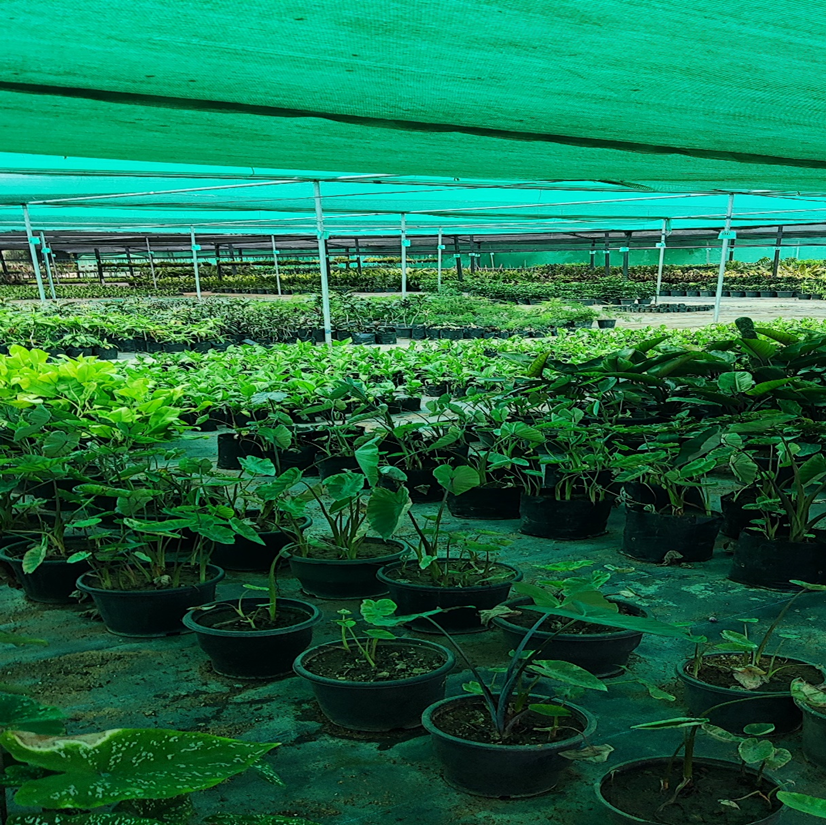
Hyderabad, a wonderful city and also a city of historical importance is popular in India and abroad because of many factors including educational institutions and medical tourism. In the vicinity of Hyderabad, many immovable assets mainly land assets which have been developed for different purposes are located. These attract Indians and foreigners. As an inhabitant of Hyderabad, I am proud of my city. Anyway, I am presenting a case which is known as Kanha Shanti Vanam. I visited the place on June 8, 2023, and spent the whole day there. Kanha Shanti Vanam is a spiritual center with an integrated township located around 25 kilometers away from Rajiv Gandhi International Airport, Hyderabad at Chegur village, Ranga Reddy District, Telangana. The Vanam is spread over an area of 1,200 acres of land. It provides many activities such as spiritual training and mentorship programmes, manages nurseries, shops of books and clothes, the canteen where varieties of foods both north Indians and south are available, etc. The Centre also boasts of environmental initiatives including water conservation and saving endangered plant species. It is pertinent to mention that more than 2500 species of plants of more than 300 plant families are available inter alia of which are aquatic plants, bonsai and medicinal plants, cycads, edible fruits, ornamental plants, shade-loving foliage, flowering plants, etc are available in the nursery. Further, it may be mentioned that as a part of its educational activities, the Heartfulness Institute has established the “Heartfulness Learning Center,” which intends to offer children from Pre-KG through Grade eight.
For the benefit of readers, I wish to mention the history of the place. Shri Ram Chandra Mission (SRCM) is a non-profit organization and a spiritual movement originating in India, which teaches the practice of “Sahaj Marg” or “Heartfulness Meditation”. It was registered in 1945 by Ram Chandra of Shahjahanpur, Uttar Pradesh but its headquarters is at Kanha Shanti Vanam, Kanha village, Ranga Reddy District Telangana. The organization was also registered as SRCM USA in California in 1997. Shri Ram Chandra Mission (SRCM) claims to have spread this system of meditation amongst millions of people across 160 countries. Internationally the place is popular. As per the statistics in Kanha Shanti Vanam, there is the largest meditation center in the world, accommodating 100,000 people at a time for meditation. The Organisation has established a medical center that has adequate medical facilities to assist the local people and visitors.
As a great achievement of the organization, the first-ever international conference on integrative health and wellbeing (IHW), took place at Kanha Shanti Vanam between 16 and 18 December 2022. The Conference combined traditional with integrative holistic approaches to health and wellness that were supported by research. Many prestigious national and international institutions provided support for the conference. There are dormitories, a large meditation hall, dining for 50,00 people, kitchens, toilets, and other facilities that could host a spiritual gathering of over 50,000 people. Many dignitaries visited the place. In December 2017, Ram Nath Kovind, the then Hon’ble President of India, E.S.L. Narasimhan, Governor of Andhra Pradesh and Telangana, visited SRCM’s Kanha Shanti Vanam Ashram and planted trees under the Green Kanha initiative.
This wonderful place is worth visiting. In addition to my visit and collecting information, the following websites have been consulted during the course of writing the article.

Prof Shankar Chatterjee, Hyderabad
References:
1) http://kanha.dev4srcm.org/the-kanha
2) https://en.wikipedia.org/wiki/Shri_Ram_Chandra_Mission

A Great Developed Land Asset near Hyderabad: Kanha Shanti Vanam

Hyderabad, a wonderful city and also a city of historical importance is popular in India and abroad because of many factors including educational institutions and medical tourism. In the vicinity of Hyderabad, many immovable assets mainly land assets which have been developed for different purposes are located. These attract Indians and foreigners. As an inhabitant of Hyderabad, I am proud of my city. Anyway, I am presenting a case which is known as Kanha Shanti Vanam. I visited the place on June 8, 2023, and spent the whole day there. Kanha Shanti Vanam is a spiritual center with an integrated township located around 25 kilometers away from Rajiv Gandhi International Airport, Hyderabad at Chegur village, Ranga Reddy District, Telangana. The Vanam is spread over an area of 1,200 acres of land. It provides many activities such as spiritual training and mentorship programmes, manages nurseries, shops of books and clothes, the canteen where varieties of foods both north Indians and south are available, etc. The Centre also boasts of environmental initiatives including water conservation and saving endangered plant species. It is pertinent to mention that more than 2500 species of plants of more than 300 plant families are available inter alia of which are aquatic plants, bonsai and medicinal plants, cycads, edible fruits, ornamental plants, shade-loving foliage, flowering plants, etc are available in the nursery. Further, it may be mentioned that as a part of its educational activities, the Heartfulness Institute has established the “Heartfulness Learning Center,” which intends to offer children from Pre-KG through Grade eight.
For the benefit of readers, I wish to mention the history of the place. Shri Ram Chandra Mission (SRCM) is a non-profit organization and a spiritual movement originating in India, which teaches the practice of “Sahaj Marg” or “Heartfulness Meditation”. It was registered in 1945 by Ram Chandra of Shahjahanpur, Uttar Pradesh but its headquarters is at Kanha Shanti Vanam, Kanha village, Ranga Reddy District Telangana. The organization was also registered as SRCM USA in California in 1997. Shri Ram Chandra Mission (SRCM) claims to have spread this system of meditation amongst millions of people across 160 countries. Internationally the place is popular. As per the statistics in Kanha Shanti Vanam, there is the largest meditation center in the world, accommodating 100,000 people at a time for meditation. The Organisation has established a medical center that has adequate medical facilities to assist the local people and visitors.
As a great achievement of the organization, the first-ever international conference on integrative health and wellbeing (IHW), took place at Kanha Shanti Vanam between 16 and 18 December 2022. The Conference combined traditional with integrative holistic approaches to health and wellness that were supported by research. Many prestigious national and international institutions provided support for the conference. There are dormitories, a large meditation hall, dining for 50,00 people, kitchens, toilets, and other facilities that could host a spiritual gathering of over 50,000 people. Many dignitaries visited the place. In December 2017, Ram Nath Kovind, the then Hon’ble President of India, E.S.L. Narasimhan, Governor of Andhra Pradesh and Telangana, visited SRCM’s Kanha Shanti Vanam Ashram and planted trees under the Green Kanha initiative.
This wonderful place is worth visiting. In addition to my visit and collecting information, the following websites have been consulted during the course of writing the article.

Prof Shankar Chatterjee, Hyderabad
References:
1) http://kanha.dev4srcm.org/the-kanha
2) https://en.wikipedia.org/wiki/Shri_Ram_Chandra_Mission

Antarashtriya Yoga Diwas Media Samman

 Ministry of Information and Broadcasting has today announced the second edition of Antarashtriya Yoga Diwas Media Samman.

Under the Antarashtriya Yoga Diwas Media Samman 2023, thirty-three Sammans will be given out under three categories viz Print, Television and Radio in twenty-two Indian languages and English as below

  1. 11 Sammans in 22 Indian languages and English – to be conferred under the category “Best Media Coverage in Yoga in Newspaper” 
  2. 11 Sammans in 22 Indian languages and English – to be conferred under the category “Best Media Coverage in Yoga in Electronic Media (TV)” 
  3. 11 Sammans in 22 Indian languages and English – to be conferred under the category “Best Media Coverage in Yoga in Electronic Media (Radio)” 

Announcing the awards for the year 2023 Union Minister Shri Anurag Thakur said that Thanks to Prime Minister Shri Narendra Modi, International Day of Yoga, celebrated on June 21 every year, has kindled a mass movement to promote health and well-being across the globe.

He has further said that Yoga has transcended borders and cultures, captivating the attention of millions worldwide. Its holistic approach to physical, mental, and spiritual well-being has garnered significant interest, making it a global phenomenon. This achievement would not have been possible without the tireless efforts of the media in spreading awareness and showcasing the transformative potential of yoga. In recognition of this, I am happy to announce that Ministry of Information and Broadcasting has decided to conduct the 2nd edition of Antarashtriya Yoga Diwas Media Samman this year.

Shri Thakur added that the Samman commends the instrumental role that the media plays in disseminating the outreach of yoga, both within India and abroad. As we celebrate the International Day of Yoga, it is crucial to recognize the immense power and responsibility that the media holds in promoting this ancient practice and its numerous benefits.

He also said that media has been a catalyst in fostering understanding, appreciation, and adoption of this profound practice. It has been successful in presenting it as a universal practice accessible to people of all ages, backgrounds, and abilities.

Thanking the media for playing this role as an enabler, Shri Thakur said “I express my heartfelt gratitude to the media for its invaluable contributions in disseminating the outreach of yoga in India and across the globe. Your unwavering dedication to sharing the transformative power of this practice has undoubtedly played a significant role in making yoga a universal language of wellness.”

The Samman will be recommended by an independent Jury.   The Samman will comprise of a special media/plaque/trophy and a citation.

The guidelines require Media Houses to submit details in a prescribed format along with relevant clippings of article(s) created and published or audio/visual content telecast/broadcast made during the period 10th June 2023 to 25th June 2023. The last date for entries is 1st July 2023.

Detailed guidelines can be found on the websites of Press Information Bureau (https://pib.gov.in/indexd.aspx ) and Ministry of I&B (https://mib.gov.in/ )

About Antarashtriya Yoga Diwas Media Samman

Acknowledging the positive role & responsibility of media in disseminating the outreach of Yoga in India and abroad, the Ministry of I&B had instituted the first Antarashtriya Yoga Diwas Media Samman (AYDMS) in June, 2019. The first edition of the awards was conferred on 7th January, 2020 and thereafter a hiatus was caused due to COVID19 pandemic. The Ministry of Information and Broadcasting has decided to revive the Samman and organize the second edition in 2023.

The International Day of Yoga has been celebrated annually on 21 June since 2015. The idea of International Day of Yoga was first proposed by the Prime Minister of India, Shri Narendra Modi, during his address at the United Nations General Assembly (UNGA), on 27 September 2014.

While proposing the idea the Prime Minister stated:

Yoga is an invaluable gift of India’s ancient tradition. It embodies unity of mind and body; thought and action; restraint and fulfilment; harmony between man and nature; a holistic approach to health and well-being. It is not about exercise but to discover the sense of oneness with yourself, the world and the nature. By changing our lifestyle and creating consciousness, it can help in wellbeing. Let us work towards adopting an International Yoga Day.”

Following this initial proposal, the UNGA held informal consultations on the draft resolution, entitled “International Day of Yoga”, on 14 October 2014. The consultations were convened by the delegation of India. On 11 December 2014, India’s Permanent Representative introduced the draft resolution in the United Nations General Assembly. The draft text received broad support from 177 Member States who sponsored the text, which was adopted without a vote. This initiative found support from most global leaders. A total of 177 nations co-sponsored the resolution, which is the highest number of co-sponsors ever for any UNGA resolution of such nature.


****

Saurabh Singh

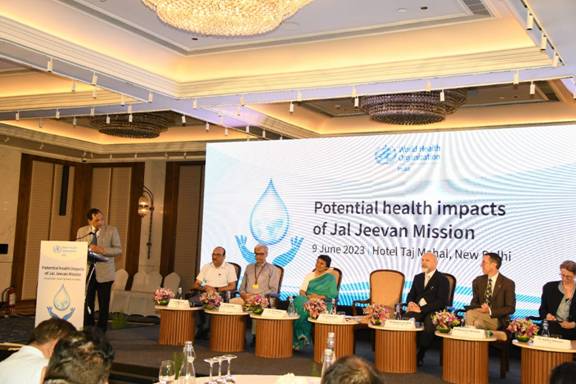
Impact of 'Har Ghar Jal' Program on Public Health and Economic Savings

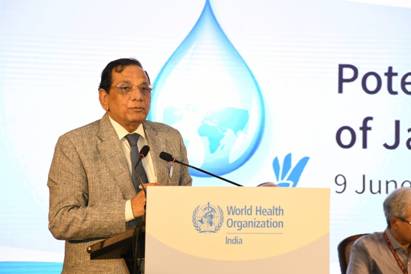
 “We are witnessing the role of safe drinking water in saving lives, empowering women and girls, and contributing to ease of living”. This was stated by Dr V K Paul, Member (Health), NITI Aayog at the launch of the groundbreaking report of WHO highlighting the substantial benefits of the ‘Har Ghar Jal’ program in India, here today. “No programme has this kind of direct impact on improving the lives of individuals and families physically, mentally, and financially”, he stressed. Dr. Paul commended the speed and scale of the programme and said, “A new connection is being added every second and transforming public health in India today.”

The report estimates that ensuring safely managed drinking water for all households in the country could avert nearly 400,000 deaths caused by diarrheal diseases and prevent approximately 14 million Disability Adjusted Life Years (DALYs) related to these diseases. This achievement alone would result in estimated cost savings of up to $101 billion. The analysis focuses on diarrhoeal diseases as it accounts for majority of WASH-attributable disease burden.

Smt Vini Mahajan, Secretary, Department of Drinking Water and Sanitation, Ministry of Jal Shakti, and Dr. Rajiv Bahl, Secretary, Department of Health Research, Director General, Indian Council of Medical Research, Dr. Roderico H. Ofrin, WHO Representative to India were also present.

Dr Bahl, DG, ICMR commended the achievement of Har Ghar Jal in providing citizens with access to clean drinking water. “Government of India’s investment in Jal Jeevan Mission has a significant multiplier effect on health as has been brought out by this study”, he stated.

The ‘Har Ghar Jal’ report focuses on diarrheal diseases as they contribute significantly to the overall disease burden related to water, sanitation, and hygiene (WASH) issues. The analysis underscores the urgent need to address these diseases and the potential for substantial gains in public health and economic well-being.

Prior to 2019, the situation of water supply in rural areas was challenging. The report reveals that in 2018, 36% of India’s total population, including 44% of the rural population, lacked access to improved drinking-water sources on their premises. The direct consumption of unsafe drinking water had severe health and societal consequences. The analysis indicates that in 2019, unsafe drinking water, along with inadequate sanitation and hygiene, contributed to 1.4 million deaths and 74 million DALYs globally.

The World Health Organization (WHO) monitors various Sustainable Development Goal (SDG) indicators, including the proportion of the population using safely managed drinking water services (Indicator 6.1.1) and mortality related to unsafe water, sanitation, and hygiene (Indicator 3.9.2). WHO has developed methods and tools to estimate the health gains associated with improvements in water, sanitation, and hygiene, particularly in reducing diarrheal diseases and other related health outcomes.

The report emphasizes the tremendous time and effort saved for women and girls through the provision of tap water. In 2018, women in India spent an average of 45.5 minutes daily collecting water to meet household needs. Overall, households without on-premises water spent a staggering 66.6 million hours each day collecting water, with the majority (55.8 million hours) occurring in rural areas. Universal coverage through tap water provision will result in substantial savings by eliminating the need for daily water collection efforts.

During the announcement, Smt.Vini Mahajan, Secretary DDWS, highlighted the remarkable progress of the Jal Jeevan Mission. She noted that rural tap water connections increased from 16.64% in 2019 to 62.84% within a span of 41 months, representing an average annual increase of 13.5% compared to a mere 0.23% per annum

About ‘Har Ghar Jal’ programme:

The Har Ghar Jal Programme, implemented by the Jal Jeevan Mission under the Ministry of Jal Shakti, was announced by Prime Minister Shri Narendra Modi on August 15, 2019. The program aims to provide every rural household with affordable and regular access to an adequate supply of safe drinking water through taps. The program’s components align with the WHO/UNICEF Joint Monitoring Programme for Water Supply, Sanitation, and Hygiene (JMP) to monitor progress on SDG 6.1 for safely managed drinking water services

******

MV/JJ

INDIA, FRANCE AND UAE COMPLETE MAIDEN MARITIME PARTNERSHIP EXERCISE

 India, France and UAE trilateral cooperation achieved another milestone in history with successful completion of first ever trilateral Maritime Partnership Exercise between three navies from 07 -08 Jun 23.

During the maiden edition of the exercise, a wide spectrum of operations at sea such as surface Warfare involving tactical firing and drills for Missile engagements, close quarter manoeuvres, Advanced Air Defence Exercise with French Rafale and UAE Dash 8 MPA, Helicopter Cross Landing Operations, Drills for Replenishment at sea were undertaken by the participating units.

The exercise also saw cross embarkation of personnel that facilitated exchange of best practices.

The exercise has further strengthened the maritime ties between the navies and enhanced interoperability to address traditional and non-traditional threats in the maritime environment thus ensuring safety of mercantile trade and freedom of navigation at high seas in the region.

VM/PS