‘TACTICAL LAN RADIO’

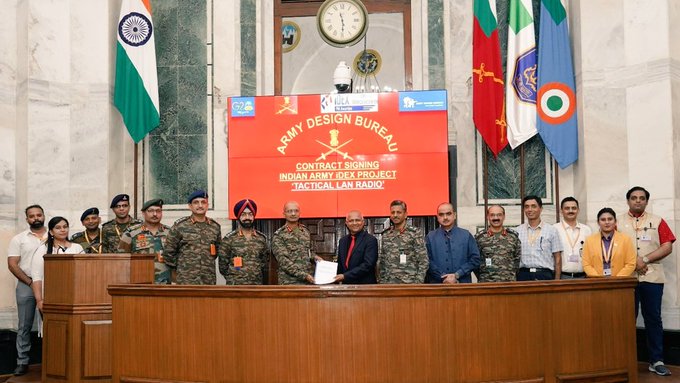
 Continuing with the commitment towards ‘Make in India’ initiative the Indian Army has signed the second procurement contract through Innovations for Defence Excellence (iDEX) on 09 June 2023. The contract with M/s Astrome Tech Pvt Ltd, Bangalore for procurement of indigenously developed ‘Tactical LAN Radio’ was signed in presence of Lt Gen MV Suchindra Kumar, the Vice Chief of Army Staff at New Delhi. With this initiative, the Indian Army has taken a lead by signing two contracts under iDEX till date.

Tactical LAN solution is being developed indigenously for creating secure tactical LAN in remote and difficult terrain. ‘Tactical LAN Radio’ is a state of the art high bandwidth backhaul wireless radio equipment for provisioning of reliable and failsafe communication. The solution offers an enhanced range of communication and embedded frequency hopping mechanism to preclude chances of interception and long-range point-to-multipoint high-bandwidth communication. The system also incorporates the enhanced safety features and can operate continuously for 48 hours on a single set basis without any breakdown.

iDEX was launched by Hon’ble PM on 12 April 2018 during Defence Expo India 2018. The aim of iDEX is to create an eco-system to foster innovations and encourage technological development in Defence and Aerospace by engaging R&D institutes, academia, industries including MSMEs, start-ups, individual innovators and provide them grants/ funding and other support to carry out R&D which has good potential for future adoption by Indian Defence and Aerospace Organisation. Over the past four years, iDEX under ‘Defence Innovation Organisation’ has emerged as a front runner in establishing right kind of contact with the start-ups and innovators and has gained substantial traction in the defence start-up community.

At present a total of 42 projects of the Indian Army are part of Defence India Start-up Challenge (DISC), Open Challenges and iDEX PRIME scheme which involves handholding of 41 start-ups for development of latest state of the art solutions for challenges posed by the Indian Army. For each challenge a dedicated nodal officer and a category ‘A’ establishment as ‘Centre of Excellence’ from the Indian Army has been nominated for handholding and continuous support for progress of the projects. Balance ‘Acceptance of Necessity’ accorded iDEX projects of the Indian Army are also under finalisation and are likely to fructify into contracts shortly.

"Hamari Bhasha, Hamari Virasat" on the occasion of 75th International Archives Day

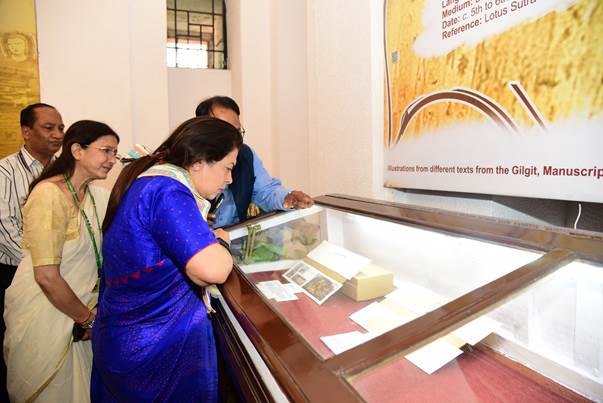
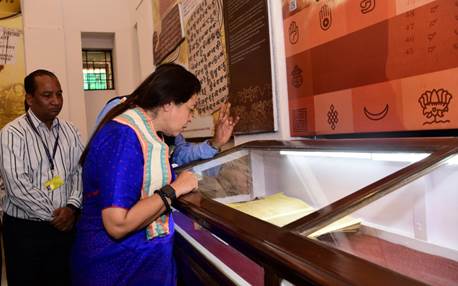
 Minister of State for Culture, Smt. Meenakashi Lekhi inaugurated an exhibition under the Azadi Ka Amrit Mahotsav (AKAM) titled “Hamari Bhasha, Hamari Virasat” today to celebrate 75th International Archives Day at National Archives of India, New Delhi.

This exhibition is an endeavour to commemorate the treasured heritage of India’s linguistic diversity as a Nation: “राष्ट्र एक भाषा अनेक” India is blessed with extraordinary language diversity. According to an estimate out of 7,111 languages spoken globally, about 788 languages are spoken in India alone. India is thus one of the four most linguistically diversified countries in the world, along with Papua New Guinea, Indonesia, and Nigeria.

On the occasion Minister of State for Culture, Mrs. Meenakashi Lekhi said , “On the occasion of International Archives Day, National Archives of India has made available the Gilgit Manuscripts written between the 5″ -6″ centuries CE, which is the oldest surviving manuscript collection in India. She also said that the birch bark folios documents written on pieces of inner layer of the bark of birch trees were found in Kashmir region and contain both canonical and non-canonical Jain and Buddhist works that throw light on the evolution of many religious-philosophical literature. She also added that Younger generation must get introduced to Gilgit Manuscripts.

She also said, “ I also congratulate  the National Archives of India for making approximately more than 72,000 manuscripts available at the premises and through the process of digitization it will reach all over the world, which will particularly help  our younger generation to get introduced to these manuscripts.”

The Exhibition presents a selection of original manuscripts drawn from the annals of the archival repository (such as the birch-bark Gilgit manuscripts, Tattvartha Sutra, Ramayana, and Srimad Bhagwad Gita, among others), official files of the government, proscribed literature under the clonial regime, private manuscripts of eminent personalities, as well as from the rich collection of rare books held in the NAI Library.


The Exhibition includes among the most ancient in the world —The Gilgit Manuscripts were discovered in three stages in the Naupur village (Gilgit region), and first announced by archaeologist Sir “Aurel Stein in the year 1931. Not only this, the exhibition further sheds light on the vast corpus of archival records pertaining to variegated languages spoken across the length and breadth of the nation.

As we are celebrating 75 years of our independence, through this exhibition the National Archives of India pay tribute to the linguistic diversity of our nation. The languages of India have from the earliest times been a subject of interest to not only those who spoke them, but to foreigners as well, who conducted a serious study of Indian languages (for instance, the Linguistic Survey of India). The exhibition will remain open for public viewing till 08 July 2023 from 10:00 am to 5:00 pm on each day including Saturday, Sunday and National Holidays.

The National Archives of India was established on 11 March 1891 at Kolkata (Calcutta) as the Imperial Record Department. Following the transfer of the capital from Calcutta to Delhi in 1911, the present building of the National Archives of India was constructed in 1926 which was designed by Sir Edwin Lutyens. The transfer of all records from Calcutta to New Delhi was completed in 1937.The National Archives of India is also the nodal agency for the implementation of the Public Records Act, 1993 and Public Record Rules, 1997.

National Archives of India has at present in its repositories a vast collection of records, which include files. volumes, maps, bills assented to by the President of India, treaties, rare manuscripts, oriental records, private papers, cartographic records, important collection of Gazettes and Gazetteers, Census records, assembly and parliament debates, proscribed literature, travel accounts, etc. A major chunk of Oriental records are in Sanskrit, Persian, Arabic, etc.

******

IICA and RRU sign MoU for academic and research collaboration

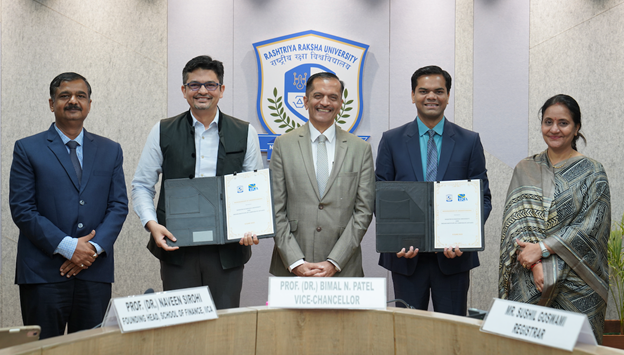
 A Memorandum of Understanding (MoU) was signed between Indian Institute of Corporate Affairs (IICA) and Rashtriya Raksha University (RRU) here today.

The MoU intends to synergise the professional capabilities of IICA and RRU towards capacity building, education, research and consulting in the domain of Internal Security, Financial Crimes, Law Enforcement, Corporate Frauds and other subject matters common to their mandate and objectives. The MoU also provides for exchange of knowledge and resources between IICA and RRU for conducting research, training and consultancy.

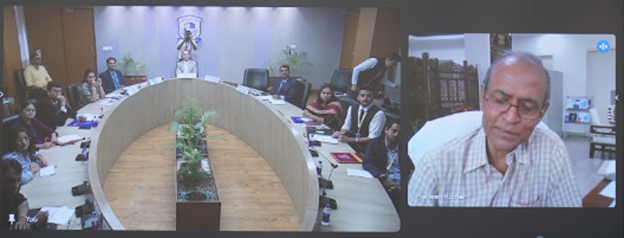
Shri Praveen Kumar, Director General and CEO of IICA in his virtual address stated, “Corporate frauds constitute one of the most serious economic offences as enormous public money is involved thereunder which abysmally impacts the economic health of the nation. IICA in collaboration with RRU look forward to safeguarding economic security of the country through training and upskilling the officers of relevant stakeholders from banks, financial institutions, investigating agencies and other professionals in the financial landscape.”

Prof (Dr) Bimal Patel, Vice-Chancellor of RRU in his address said, “Economic and Financial Security is a crucial facet of National Security and Economic Security of a country forms the very backbone for its good governance. It becomes imperative that the stakeholders in the financial and corporate system as well as personnel from law enforcement agencies must be adequately equipped for early detection and prevention of financial crimes. This collaboration between the two institutions would be a significant step towards strengthening of the existing financial system of the nation.”

The MoU was signed by Prof (Dr) Naveen Sirohi from IICA who also shared the purpose statement of the collaboration. Dr Dimpal T Raval, Director School of National Security and Law from RRU proposed vote of thanks along with articulating action plan.  

ABOUT IICA

IICA is an institution established by the Ministry of Corporate Affairs (MCA), Government of India as an autonomous body to act as a think-tank and a centre of excellence to support the growth of the corporate sector in India through an integrated and multi-disciplinary approach. RRU is an Institution of National Importance under the Ministry of Home Affairs. It is a pioneering national security and police University of India.

****

African region for strengthening Trade and Investment ties with India

 Union Minister of Commerce and Industry, Consumer Affairs, Food and Public Distribution and Textiles, Shri Piyush Goyal hosted fifteen Ambassadors from various countries of the Africa region yesterday in New Delhi. During the interaction with the Ambassadors, the Minister said that India and Africa share remarkable friendship across decades and have the potential of becoming the powerhouse of the future. The event aimed at fostering closer economic cooperation, enhancing trade relations and exploring areas of collaboration between India and Africa.

Shri Piyush Goyal welcomed the Ambassadors and highlighted the significant value of India-Africa relationship. The Minister emphasized the commitment of the Prime Minister, Shri Narendra Modi towards making Africa a top priority and deepening India’s engagement with Africa on a sustained and regular way. He encouraged the heads of missions to work in solidarity and extended a hand of friendship for the growth of the African and Indian sub-continent.

The Minister reiterated that this is the beginning of a new engagement and reaffirmed that India would act as a trusted partner to expand trade, commerce, business, investment and opportunities between the two nations. He said India is open to FTA negotiations bilaterally or individually with African countries or Africa as a whole.

The event witnessed the participation of 15 ambassadors from key African nations namely Algeria, Botswana, Egypt, Ghana, Republic of Guinea, Kenya, Malawi, Mozambique, Morocco, Rwanda, South Africa, Tanzania, Togo, Uganda and Zimbabwe. It provided a unique platform for diplomatic representatives to engage in fruitful discussions, strengthen bilateral ties, and forge new partnerships for mutual growth and development.

India and Africa share a long-standing history and a strong cultural bond. The African continent presents vast opportunities for Indian businesses, with its rapidly growing population, emerging middle class, and abundant natural resources. Through increased trade and investment, both India and Africa can benefit from each other’s strengths and expertise, fostering inclusive growth and job creation.

In addition to economic aspects, the gathering emphasized on the significance of cultural exchanges, people-to-people connections, and strategic collaborations between India and Africa. The event served as a platform to celebrate the rich diversity and heritage of both regions and strengthen the bonds of friendship.

***

Roadways project in Tripura

 The 49th Network Planning Group (NPG) meeting of PM GatiShakti National Master Plan (NMP) has recommended a roadways project in Tripura. Ms. Sumita Dawra, Special Secretary, Logistics Division, Department for Promotion of Industry and Internal Trade, Ministry of Commerce and Industry chaired the meeting of the NPG in New Delhi yesterday.

The road section of Khowai-Teliamura-Harina with a total length of 134.9 kms was considered for its improvement and widening to two lanes with paved shoulder of NH-208 in Tripura. It is a brownfield project with total cost of Rs 2,486 Crore. The project is planned with a multimodal connectivity approach; connectivity to industrial clusters and new SEZ namely Paschim Jalefa; efficient freight movement; reducing carbon footprint; optimized alignment and logistical efficiency.

The project road passes through Khowai, Gomati and South Tripura districts connecting places like Khowai, Teliamura, Twidu, Amarpur, Karbook and Harina in Tripura. It will also not only enhance connectivity interstate connectivity between Assam and Tripura but also give a boost to the economic and industrial activities in Tripura.

The planning of the project on NMP yielded the following key benefits-

  • Enhancing Logistics efficiency: By using NMP, the road length got reduced by 28 km (from 162 km to 134 km), thus reducing travel time by 2.5 hours.
  • Enhanced multi-modal connectivity: This project Corridor facilitates intermodal transport from Telimaura Railway Station and Manu Bazar Railway Station near Harina. The proposed road improves connectivity to the Airport at Agartala and proposed Multi-Modal Logistics Park (MMLP) at Udaipur.
  • Regional Connectivity: This corridor is very close to the Bangladesh border and it would connect Bangladesh through Kailashahar, Kamalpur and Khowai Border Check Post.
  • Connectivity to economic and social nodes: The road will boost connectivity to 4 economic nodes such as Industrial Cluster around Agartala, FCI depot, etc. and 13 social nodes such as Matabari Temple, Neer Mahal, Pilak Civilization Museum, Jampui Hills, Ambassa Eco Park, etc.
  • Facilitates Freight Movement from Kolkata to North Eastern States (majorly, Tripura, Mizoram and Manipur) to Bangladesh.
  • Boost to Industry and Exports Promotion: Project would facilitate movement of raw materials for Industry clusters in Tripura. Project would facilitate movement of manufactured goods like rubber, textile, bamboo, food processing etc., from economic nodes like i.e., SEZ located at Paschim Jalefa, Sabroom in South Tripura District and Industrial Clusters/Parks around Agartala and Udaipur.
  • The proposed road will connect North East India to Chittagong Port in Bangladesh. This would ensure EXIM connectivity.
  • Development in Tribal Area: Project enhances connectivity to 3 Tribal Districts- Khowai district, Gomati district, South Tripura district

The project is on Engineering Procurement & Construction (EPC) basis under Japan International Cooperation Agency (JICA) Official Development Assistance (ODA) Loan. The principles of PM GatiShakti NMP have been adopted during the planning of the road alignment. Alignment of the road is superimposed with data layers available on NMP Portal like railway lines, forest, power lines, water bodies etc. The intersections will be seen with forest and other sensitive zones to minimize environmental disruptions.

Institutional Mechanism of PM GatiShakti facilitated inter-ministerial consultations through NPG meeting for integrated planning and decision making. The 49th NPG meeting saw representation from Infrastructure Ministries/Departments including M/o Road Transport and Highways, M/o Railways, M/o Ports, Shipping and Waterways, M/o Civil Aviation, M/o Power, M/o Petroleum and Natural Gas, Department of Telecommunication (DoT), M/o New and Renewable Energy and NITI Aayog and from Tripura State Government, to discuss on the various aspects of the project.


****

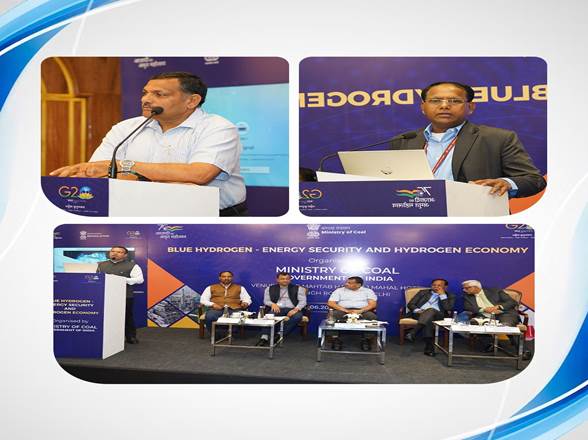
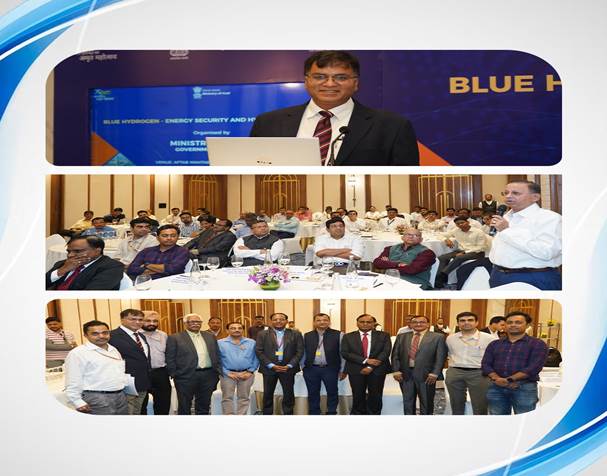
Seminar on “Blue Hydrogen-Energy Security & Hydrogen Economy”


Considering abundance of coal availability in the country, it’s time to act on the diversified use of coal to ensure energy security of the country to support Government’s decarbonising mission”,  stated  Shri Amrit Lal Meena, Secretary,  Ministry of Coal  while delivering the key note address  on “Blue Hydrogen-Energy Security and Hydrogen Economy” organised by the Ministry  here today. The Secretary said that the session must deliberate on the technologies available for coal to hydrogen, cost competitiveness, global experience and the way forward strategy. He further mentioned that the recommendations of the committee constituted by the Ministry of Coal to identify actionable points for coal sector to support Green Hydrogen Mission should be deliberated and action plan finalised.  Shri Meena also advised to constitute an Advisory Committee in the Ministry with all experts to deliberate on the subject in a regular manner to promote gasification.

In his welcome address, Shri M. Nagaraju, Additional secretary, Ministry of Coal outlined the policy initiatives taken by the Ministry to promote coal gasification to meet the energy demands of the country in a sustainable way.

Shri Debasish Nanda, Director BD CIL and Chairman of the committee presented the committee report on the Green Hydrogen Mission offering comprehensive analysis of the current status, challenges and future prospects of green hydrogen production in the country.

Presentations were also made by Prof R R Sonde, IIT Delhi, Dr. Ranjit Rath CMD, Oil India Limited; Prof Arnab Dutta, IIT Bombay; Naveen Ahlawat, Head (CCUS) JSPL; Sh. Varun Jindal, MD Dev Energy and Shri Prasad Chaphekar Dy. Sec MNRE. Shri Rajnath Ram Adviser, NITI Aayog also expressed his views on development of clean coal technologies.

Panel discussion was also chaired by Shri Debasish Nanda and coordinated by Shri Peeyush Kumar, OSD, Ministry of Coal. During the presentations and discussions, many new ideas came up for way ahead strategy. The session was dedicated to discussing the potential of hydrogen in decarbonizing steel making processes and shared views on innovative approaches and technologies to reduce carbon emissions in the steel industry contributing to a greener and more sustainable future. The discussion was also on exploring the potential applications of hydrogen in scaling Direct Reduced Iron (DRI) projects.

The program was attended by officials of NITI Aayog, Department of Science and Technology, Department of Fertiliser, Ministry of Steel, Ministry of Heavy Industries, IICT Hyderabad, CSIR besides officials from CIL, CMPDI, WCL, SECL, MCL, EIL, PDIL, BHEL, SCCL, NLCIL, SAIL, RIL, TATA STEEL, JSPL, Dev Energy, CGAI, CAPSEC and PSU watch. Discussion pertaining to development of Carbon Capture Utilization and Storage (CCUS) technology, which plays a crucial role in mitigating carbon emissions also held and emphasized the importance of sustainable practices.

The half-day session witnessed fruitful exchanges of ideas and knowledge on future uses of Hydrogen. The Ministry of Coal remains committed to promoting clean and sustainable energy solutions and will continue to facilitate such discussions to drive the nation’s progress toward a hydrogen-based economy.

*******

RKP

Paddy Straw Management Workshop

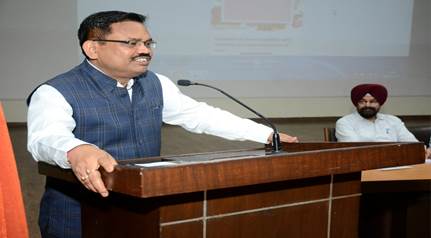
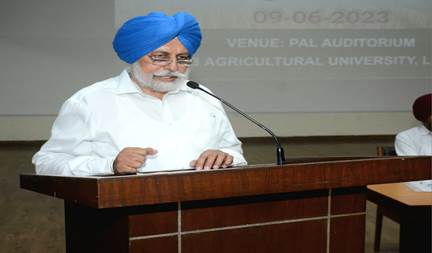
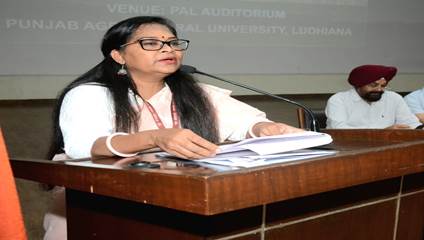
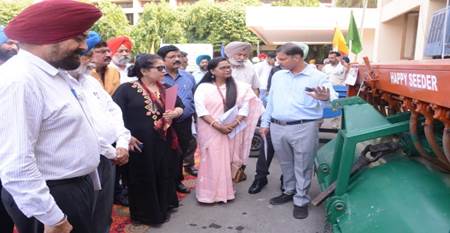
 Ministry of Agriculture and Farmers’ Welfare, Government of India, the state of Punjab and PAU organised workshop on ‘Paddy Straw Management and Action Plans’ commenced at Punjab Agricultural University, Ludhiana. Senior officers from govt of India and the state agriculture department, KVK, scantiest from PAU, stakeholders in the Central Government, State Governments of Punjab, Haryana, Uttar Pradesh, and NCR of Delhi, State Pollution Control Boards, Indian Council of Agricultural Research, academia, various stakeholder agencies, social groups and NGOs, agricultural machinery manufacturing industries, and biomass industry associations and more than 300 farmers participated in the workshop.

The Chief Guest, Shri K.A.P. Sinha (IAS), Additional Chief Secretary of the Ministry of Agriculture and Farmers’ Welfare in the Government of Punjab, highlighted the significance of farming by quoting, “Once in your life you need a doctor, lawyer, policeman, or preacher but every day — three times a day — you need a farmer.” He acknowledged the desire to eliminate the practice of paddy straw burning but identified obstacles hindering progress. Further he proposed increasing baler capacity, deploying more machinery in high-burning areas, involving cooperative societies to support SC beneficiaries, and replicating successful initiatives. He expressed his hope for no-burn agriculture to become the norm by the following year.


Dr Satbir Singh Gosal, PAU Vice-Chancellor, cautioned that stubble burning emits toxic pollutants which disperse in the surroundings and, eventually, affect the air quality and people’s health as well as soil health. He advocated the concept of conservation agriculture which up-cycles paddy straw without producing any waste. He called for synergy among the Department of Agriculture, NGOs, academia, industry and farmers to tackle the menace of paddy straw burning.


Smt. S. Rukmani, Joint Secretary, Department of Agriculture and Farmers’ Welfare, GoI, briefed about Central Sector Scheme to support for crop residue management. The scheme provides financial assistance of 50% for farmers to purchase designated machinery and 80% for Cooperative Societies, Farmers Producers Organization (FPOs), and Panchayats to establish Custom Hiring Centres (CHCs). While addressing she emphasized on air pollution and subsidizing machinery. Smt. Rukmani revealed a reduction of 30-40% in paddy straw burning since last year and emphasized the workshop’s goal of creating a value-chain plan to utilize paddy straw as a resource and minimize losses for farmers and express her thought on joint action plan for paddy straw management.


Shri Arvind Nautiyal, Member Secretary of the Commission for Air Quality Management (CAQM), New Delhi, underlined the detrimental effects of air pollution on the environment, climate, and human health. He recommended measures such as crop diversification, the DSR method, and promoting basmati varieties as well as short-duration and long straw-generating varieties. ex-situ management through strategic mapping of villages, establishing briquetting/pelleting plants at strategic locations, and developing a supply chain for utilizing straw as fuel in various industries and for biomass power generation, compressed biogas production, bio-ethanol, packaging material etc.


      Dr. Ajmer Singh Dhatt, PAU’s Director Research, sensitized the gathering and said that efforts being made by PAU to tackle the burning issue of paddy straw management with machines like Happy Seeder and Super Seeder as well as technologies for ex-situ and in-situ straw management. Further he encouraged farmers to adopt this cost-effective, eco-friendly, and water-efficient method to enhance soil health, crop output, and overall yield while reducing input costs. Dr Gurvinder Singh, Director Agriculture and Farmers’ Welfare, Punjab talked about the state’s paddy straw management strategies and action plans for the 2023 season. Earlier, Dr Gurmeet Singh Buttar, Director Extension of PAU delivered the welcome address while Dr G P S Sodhi, Additional Director of Extension Education proposed the vote of thanks. Dr Vishal Bector, Associate Director (Institution Relations) coordinated the programmme.

During the workshop the officers from Ministry of Power, Ministry of Petroleum and Natural Gas, Ministry of New and Renewable Energy highlighted the initiatives for utilization of biomass and paddy straw such as ‘Sustainable Alternative towards Affordable Transportation’ (SATAT) promote setting up of CBG projects using biomass as raw material, Oil Marketing Companies are setting up 2G ethanol plants based on various feed stocks including paddy straw in the country, Ministry of Power has issued revised policy on biomass utilization for power generation through co-firing in coal based power plants which mandates the use of 5 -7% biomass pellets made primarily of agro-residue along with coal in thermal power plants, Central Pollution Control Board (CPCB) has framed guidelines for providing one-time financial assistance for establishment of paddy straw based palletization and torrefaction plants,  MNRE is implementing Biomass Programme with the broader objectives of promoting technologies for optimum use of country’s biomass resources and the major recommendations have been summarized by joint secretary DA&FW and Dr. AN Meshram, Deputy commissioner, DA&FW offered vote of thanks.


*****

MPA-004 Disaster Preparedness

MPA-004 Disaster Preparedness

  1. What is the focus of the course on Disaster Management: Prevention, Preparedness, and Mitigation?
  2. What topics are covered in the section on Disaster Preparedness for People with Special Needs/Vulnerable Groups?
  3. How does the course address the role and responsibilities of international agencies, non-governmental organizations, community-based organizations, community, and media in disaster preparedness?
  4. Why is the role of information, education, communication, and training important in disaster preparedness?
  5. What are the responsibilities of central, state, district, and local administration in disaster preparedness?
  6. Which groups are considered vulnerable and require special attention in terms of disaster preparedness?
  7. How does the course explore the role of information technology in disaster preparedness, particularly with regard to geographical information systems?
  8. What emerging technologies are discussed in relation to disaster preparedness in the course?
  9. What is the difference between disaster mitigation and disaster preparedness?
  10. What strategies are discussed in the course for disaster mitigation?
  11. What emerging trends are highlighted in the course regarding disaster mitigation?
  12. What is the focus of the section on mitigation management in the course?
  13. How does the course relate disaster preparedness to housing, infrastructure, and livestock?
  14. What are the responsibilities of armed forces, police, para-military forces, national service scheme, and scouts in disaster preparedness?
  15. What is the significance of understanding the concept and nature of disaster preparedness?
  16. How are emerging technologies applied in disaster preparedness, as discussed in the course?
  17. How do community-based disaster preparedness plans contribute to overall preparedness efforts?
  18. How do international agencies contribute to disaster preparedness?
  19. What is the purpose of a disaster preparedness plan?
  20. What topics are covered in the section on emerging trends in disaster mitigation?

Tobacco and drug-free nation

 The National Commission for Protection of Child Rights (NCPCR) successfully launched the National Campaign “Addiction Free Amrit Kaal” on 31st May, 2023 at NCPCR on World Tobacco Day. This campaign, aimed at promoting a healthier and addiction-free India, marks a significant milestone in the mission to create a tobacco and drug-free nation. The programme is  organized by the NCPCR in technical partnership with Tobacco Free India, a citizens group. The campaign strives to address the pressing issue of tobacco and drug addiction amongst children in the Country.

Shri Priyank Kanoongo, Chairperson, NCPCR, and the Participants applauded the recent regulations implemented by the Central Government to govern the portrayal of tobacco use on OTT platforms. Additionally, they emphasized the importance of the proposed COTPA Amendment Act in creating a tobacco-free environment for children.

Shri Kanoongo highlighted the concerning link between tobacco products and drug addiction, noting that the entertainment industry plays a significant role in enticing children into tobacco use. While there were rules requiring warnings on tobacco product scenes in films, there was a pressing need for regulations regarding Over-The-Top (OTT) platforms, which have gained popularity in recent times and were being misused. The Commission had recommended for the regulation of tobacco use on OTT platforms to address this issue effectively. Now,  the Government has introduced this much-needed regulation, addressing the importance of curbing tobacco use on OTT platforms.

He stated that he strongly supported a robust Cigarettes and Other Tobacco Products Act (COTPA), which will serve as an important tool in curbing tobacco use, especially among children. This legislation encompasses stringent measures to restrict all forms of tobacco advertising at the point of sale and put an end to the practice of designated smoking zones in public places. These smoking zones pose significant harm to children who are exposed to tobacco smoke in these areas,”

Highlighting the unique drive, he mentioned that children, who are the most affected by indirect tobacco use, have been made members of ‘Prahari Clubs’ established in schools. “So far, we have formed appox. 60,000 such clubs. With this, these ‘Prahari Clubs’ can be used in the direction of liberating India from tobacco and drugs,” he added. They will serve as the Government’s eyes and ears, sharing information if any tobacco-selling shops exist near their schools.

Mr. Praveen Ramdas, National Secretary of ‘Vigyan Bharati’ and keynote speaker of the event, stressed on the role of educational institutions in promoting traditional practices and holistic approaches to combat addiction. He also expressed concern that addiction is now being equated as an expression of freedom and fashion. “We not only need to plug the loopholes in the existing law but also focus on promoting institutions inculcating good habits and strengthening the family system”.

Dr. Uma Kumar, Head of Rheumatology at AIIMS Delhi and a reputed public health expert, highlighted the health risks associated with drug and tobacco addiction. She emphasized that over 13 lakh people die annually in the country due to the consumption of deadly tobacco products. The COTPA Amendment Bill will not only save lives but also reduce the burden on the healthcare system, she added. She urged for the immediate implementation of COTPA amendments “because each second matters, given that the product is claiming a large number of youth in the country.”

Speaking about the theme of “World No Tobacco Day” this year, “We need food, not tobacco,” Dr. Uma Kumar emphasized the adverse health effects faced not only by tobacco users but also by those involved in its manufacturing, including green tobacco sickness and cancers.

Dr Jagdish Kaur, Regional Advisor, Tobacco Free Initiative, WHO gave insights into global perspective on addiction prevention and control and expressed her concern that as people are becoming more aware about the tobacco menace, the industry is adopting innovative ways to trap the youth. “We are glad that a move has been initiated to regulate the depiction of tobacco products on OTT contents.” She said.

The inaugural event also highlighted the key objectives of the campaign, including the protection of children’s rights to have a tobacco and drug free environment around them. Several initiatives, workshops, awareness programs, and outreach activities are planned to actively engage schools, parents, and communities in the fight against tobacco and drug addiction.

The session was moderated by Mr. Mukesh Kejriwal, a renowned  tobacco control activist.

At the end of the program, Ms. Rupali Banerjee Singh, Member Secretary, NCPCR thanked all the experts and participants for their active participation and also appealed for their cooperation in future.

***

Doctors may soon diagnose peptic ulcer & disease stage by recognising breath patterns

 A newly developed non-invasive method of recognising breath patterns can help rapid, one-step diagnosis and classification of various gastric disorders like dyspepsia, gastritis, and gastroesophageal reflux disease (GERD). 

Currently, peptic ulcer disease is an important medical-social problem that has received special attention all over the world. Helicobacter pylori bacterial infection is considered to be the most significant risk factor for the development of this disease. Patients with peptic ulcer encircling both duodenal and gastric ulcer may remain asymptomatic or symptomatic, and due to undefined risk factors along with lack of specific symptoms at the early stages, the diagnosis is often delayed, leading to poor prognosis and high rates of recurrence of the diseases.

Conventional painful and invasive endoscopic procedures are not suitable for early detection of the acute onset and progression of peptic ulcer as well as various gastric complications. Moreover, the conventional endoscopic methodology is not suitable for general population-based screening and consequently, many common people with complex gastric phenotypes remain undiagnosed.

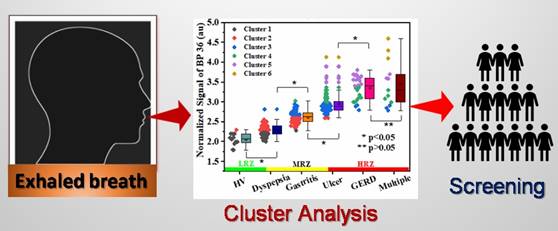
Prof. Manik Pradhan and his research team at S. N. Bose National Centre for Basic Sciences, Kolkata, under the Department of Science and Technology (DST), Government of India, used a pattern-recognition based clustering approach that can selectively distinguish the breath of peptic ulcer and other gastric conditions with that of healthy individuals.

The team used machine learning (ML) protocol to extract the correct information from the large complex breathomics data sets generated from exhaled breath analysis. In a paper published in the European Journal of mass spectroscopy, they implemented the clustering approach to recognize unique breath-pattens, breathograms, and “breathprints” signatures. This helped in a clear reflection of the specific gastric condition of an individual person along with three different risk zones for discrimination of early and late-stage gastric conditions and precise transition from one disease state to another state.

The breath-patterns generated from the patients are irrespective of the patient’s basal metabolic rates (BMR) and other confounding factors such as age, sex, smoking habits, or lifestyle.

The research carried out Technical Research Centre (TRC) at S. N. Bose Centre funded by the DST involved a project student Ms. Sayoni Bhattacharya and project scientists Dr. Abhijit Maity and Dr. Anil Mahato who worked in collaboration with Dr. Sujit Chaudhuri, a renowned medical scientist and Gastroenterologist at AMRI Hospital, Kolkata.

Over the decades, few volatile organic compounds (VOCs) or metabolites in the exhaled breath have been proposed for the non-invasive diagnosis of gastric conditions. However, a particular VOC is related to multiple of clinical surroundings and is likely to be affected by comorbid conditions, suggesting a single molecular marker is not suitable for distinguishing various gastric complications.

Prof. Pradhan who has been working on breath analysis for several years has for the first time unravelled missing links between various gastric conditions and pattern-recognition-based clustering method. These missing links has helped in the non-invasive diagnosis of various gastric disorders through a single breath test without going for painful endoscopy.

The fundamental concept behind the idea was based on the fact that the overall effect of the compounds produced endogenously by various biochemical reactions and intracellular/extracellular processes associated with the pathogenesis of various gastric phenotypes is reflected in the specific masses of the breathprints. Hence the method obviates the necessity of identification of molecular species in exhaled breath for diagnosis and classification of peptic ulcer.

The scientists have developed a prototype device called “Pyro-Breath” clinically validated it in a hospital environment and patented it. The relevant technology has been transferred through NRDC, New Delhi to a startup company for potential commercialization

This can open up new non-invasive avenues for early detection, selective classification, and assessment of progress of various gastric complications and could help widespread population screening of infants, children, pregnant women, and seniors.

Publication link: https://doi.org/10.1177/14690667231174350

For more details, please contact:

Prof. Manik Pradhan (manik.pradhan@bose.res.in)

Mission on Advanced and High-Impact Research (MAHIR)

 The Ministry of Power and the Ministry of New and Renewable Energy have jointly launched a National Mission to quickly identify emerging technologies in the power sector and develop them indigenously, at scale, for deployment within and outside India. The National Mission, titled “Mission on Advanced and High-Impact Research (MAHIR)” aims to facilitate indigenous research, development and demonstration of the latest and emerging technologies in the power sector. By identifying emerging technologies and taking them to the implementation stage, the Mission seeks to leverage them as the main fuel for future economic growth and thus make India a manufacturing hub of the world.

An Office Memorandum to this effect has been issued today, which can be accessed here.

The Mission will be funded by pooling financial resources of the Ministry of Power, Ministry of New and Renewable Energy and the Central Public Sector Enterprises under the two Ministries. Any additional funding needed will be mobilized from Government of India’s budgetary resources.

Planned for an initial period of five years from 2023-24 to 2027-28, the Mission will follow the technology life cycle approach of Idea to Product.

Commenting on the launch of the MAHIR, Union Power & NRE Minister Shri R. K. Singh said that the Mission will serve as a catalyst for national priorities such as achieving Net Zero emissions and promoting initiatives like Make in India and Start-up India. He said that it will also contribute towards achieving the United Nation’s Sustainable Development Goals (SDGs). The Minister added: “In last nine years, the Indian Power Sector has transformed into a vibrant and a financially viable sector. Given that India is going to grow at more than 7% in coming years, the electricity demand is going to increase at close to 10%. In addition, India is aiming for energy transition following Prime Minister’s vision of LiFE. This requires not only massive investment but also a transformational approach driven by research & innovation.”

Power Secretary Shri Alok Kumar said that MAHIR will work towards Industry-Academia -Government collaboration to create an ecosystem for innovation and translation of research in the power sector. “MAHIR will work with premier institutions such as IITs, IIMs, NITs, IISERs and Universities on the one hand and public & private power sector start-ups and established industries with government acting as an enabler for creating an innovation ecosystem,” the Power Secretary added.

Mission Objectives

The key objectives of the Mission are as follows:

  • To identify emerging technologies and areas of future relevance for the Global Power Sector and take up indigenous end-to-end development of relevant technologies
  • To provide a common platform for Power Sector Stakeholders for collective brainstorming, synergetic technology development and devise pathways for smooth transfer of technology
  • To support pilot projects of indigenous technologies (developed especially by Indian Start-ups) and facilitate their commercialization
  • To leverage foreign alliances and partnerships to accelerate research & development of advanced technologies and to build competencies, capabilities and access to advanced technologies through bilateral or multilateral collaborations, thereby facilitating exchange of knowhow and Technology Transfer.
  • To seed, nurture and scale up scientific and industrial R&D and to create vibrant & innovative ecosystem in the Power Sector of the country
  • To make our Nation among the leading Countries in Power System related Technologies & Applications development

Areas Identified for Research

To begin with, the following eight areas are identified for research:

  1. Alternatives to Lithium-Ion storage batteries
  2. Modifying electric cookers / pans to suit Indian cooking methods
  3. Green hydrogen for mobility (High Efficiency Fuel Cell)
  4. Carbon capture
  5. Geo-thermal energy
  6. Solid state refrigeration.
  7. Nano technology for EV battery
  8. Indigenous CRGO technology


Structure of the Mission

The Mission will have a two-tier structure – a Technical Scoping Committee and an Apex Committee.

The Technical Scoping Committee, chaired by the Chairperson of Central Electricity Authority, will identify ongoing and emerging research areas globally, recommend potential technologies for development under the Mission, justify the techno-economic advantages, provide research outlines, and conduct periodic monitoring of approved research projects.

The Technical Scoping Committee (TSC) will survey and identify the on-going and emerging areas of research globally and will make recommendations to the Apex Committee. The TSC shall identify the potential technologies that can be considered for development under the Mission.  The TSC will bring out the relevance of the technology for the future of the Power Sector and justify the Techno-economic advantage of indigenous development of the Technology and come out with a roadmap for market creation for the Technology. The TSC will also provide a broad range of specifications desired from the final product. Periodic monitoring of the approved research projects will also be carried out by the TSC.

The Apex Committee, chaired by the Union Minister for Power & New and Renewable Energy will deliberate on the technology and products to be developed and approve the research proposals. The Apex committee will look also into international collaborations.

The Apex Committee will approve the research proposals and monitor the progress of research. The technology / product to be developed under the Mission will be deliberated by the Apex Committee. The final approval of all the research proposals / projects shall be given by the Apex Committee. If the TSC recommends for international collaboration for the development of technology, the same shall also be taken up by the Apex Committee for discussion with the collaborating country. Approval of any collaboration, the technology to be developed and agreement to be entered into with the collaborative country will be decided by the Apex Committee.

The composition of the Apex Committee will be as under:


1

Union Minister for Power and New & Renewable Energy

Chairperson

2

Secretary, Ministry of Power

Member

3

Secretary, Ministry of New & Renewable Energy

Member

4

Secretary, D/o Science and Technology

Member

5.

Principal Scientific Adviser or his / her representative

Member

6

Chairperson, CEA

Member

7

Representative of NITI Aayog

Member

8

Joint Secretary/Economic Adviser (T&R), Ministry of Power

Member

9

CMDs of NTPC / PGCIL / PFC / REC / NHPC / NEEPCO / THDC / SJVNL / GCIL / IREDA, MD, SECI, Chairpersons BBMB / DVC and DGs of NPTI / BEE / NISE / NIWE / NIBE

Members

10

Directors of IITs, Delhi / Bombay / Madras / Kanpur

Member(s)

11

Director General, CSIR

Member

12

Director General, CPRI

Member Convener


Central Power Research Institute (CPRI), Bengaluru will provide all necessary secretarial assistance to the Apex Committee and Technical Scoping Committee.

Scope of the Mission

Under the Mission, once research areas are identified and approved by the Apex Committee, the proposals for outcome-linked funding will be invited from companies / organizations across the globe. The selection of the proposal shall be done through Quality cum Cost-Based Selection (QCBS) basis. The organizations of the Ministries may also co-develop the technologies with the selected Research Agency. The IPR of the technology developed would be shared by the Government of India and the Research Agency.

The Mission shall also fund pilot projects of technologies developed by Indian Start-ups and facilitate their commercialization through the Central Public Sector Enterprises under both the Ministries. The start-ups will have to share the IPR with the Government of India / Central Power Research Institute.

The Mission will also facilitate international collaboration for smooth exchange of know-how and Technology Transfer. The Mission will also seek collaboration with the best laboratories of the world for joint development of technologies.

****

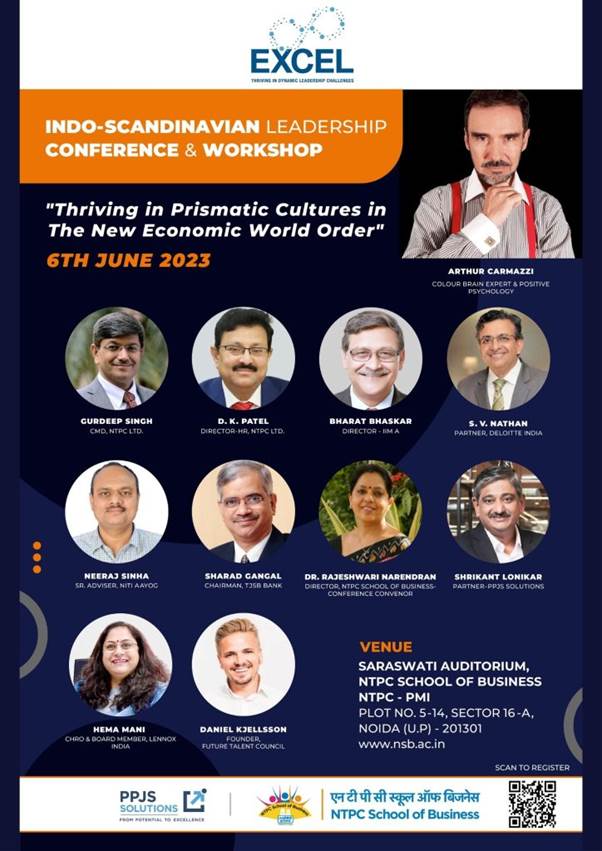
Indo – Scandinavian Leadership Conference and Workshop

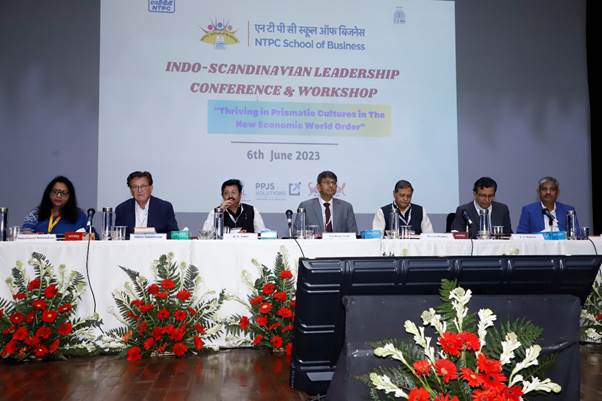
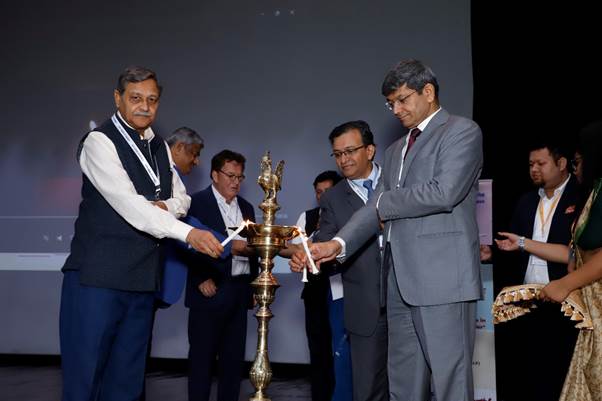
 An Indo – Scandinavian Leadership Conference and Workshop was held by NTPC School of Business at its Noida campus on 6th June, 2023. Thought leaders belonging to several geographies deliberated on the dynamics of cultures, perceptions and the preparedness of the mind to enable adaptation under the changing economic and environmental milieu. The conference has been organized, recognizing that this is essential for coherence and purpose orientation in a world that calls for increasingly high levels of inclusiveness. About 150 leading professionals from domains such as disaster mitigation, community empowerment, energy efficiency and emission reduction, higher management education; bilateral and multilateral forums and research participated in the event.

Founder of Directive Communication Methodology, Dr. Arthur Carmazzi highlighted the facets and analysis of coloured brain contours.

Director, IIM Ahmedabad, Dr Bharat Bhaskar emphasised credibility and integrity as the main traits of leadership.

Partner, Deloitte India, S. V. Nathan spoke of what he referred to as six signature leadership traits, namely Curiosity, Collaboration, Commitment, Courage, Cultural intelligence and Preparedness to unlearn, relearn and expand the mind’s horizons.

Dr. Hakan Svennerstal spoke about inner leadership and psychology-safety.

D K Patel, Director (HR), NTPC highlighted the contours of industry leadership.

The CMD of NTPC Gurdeep Singh delivered the Presidential address, focusing on NTPC’s stewardship vision to assist India meet her developmental aspirations through a portfolio of climate-efficient measures. These will ensure economic and environmental gains relevant at the national, regional and global levels; in line with India’s strategic role at the G-20.


Indo Scandinavian Conference & Workshop
 

***

Blue Economy and Space Economy

 Blue Economy and Space Economy are among some of the new concepts introduced in last 9 years by Prime Minister Narendra Modi.

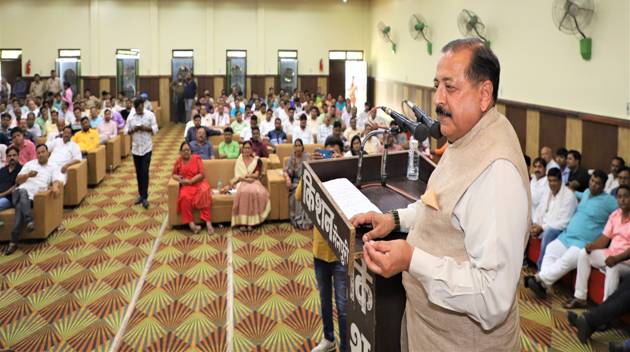
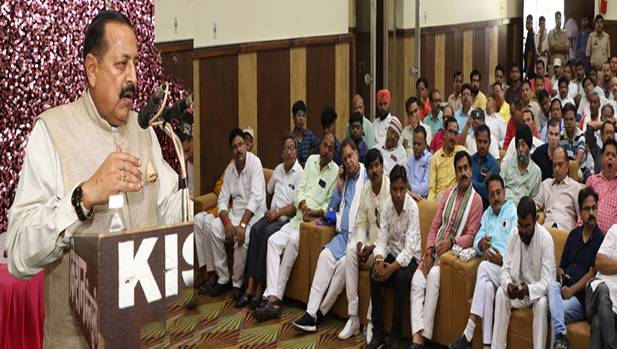
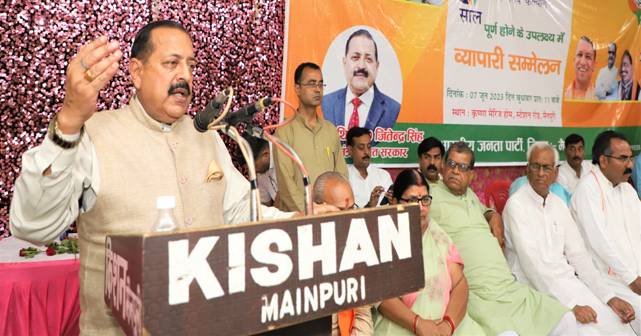
This was stated here today by Union Minister of State (Independent Charge) Ministry of Science & Technology, PMO, Ministry of Personnel, Public Grievances & Pensions, Atomic Energy and Space, Dr. Jitendra Singh while addressing “Vyapar Sammelan” (Industry and traders’ Meet) as a part of the month-long campaign to commemorate the 9 years of Modi government.

Dr. Jitendra Singh said, one of the hallmarks of Prime Minister Modi’s approach towards the economy has been that he not only reinforced and strengthened the existing pillars of economy by imposing a check on pilferage or malpractice and by reducing the load of avoidable restrictions and regulations for ease of business, but he also introduced new dimensions to Indian economy which hardly received any attention by previous governments even though these were important. If India has to compete globally, it will have to stand up to global parameters and the value addition to the future economy of the country will come from hitherto lesser explored areas like ocean resources and Space.

It is also a matter of pride, said the Minister, that even though our space journey started several years after countries like USA and Soviet Union, but today, these countries are using our technology provided by ISRO (Indian Space Research Organisation) for launching their satellites. 353 out of the total 385 foreign satellites launched so far have been launched during the last 9 years and 174million US Dollars have been earned while the launching of the European Satellites has yielded 86 million Euros.

Dr Jitednra Singh said, while India has as the fastest growing economy, overtaken the United Kingdom, it has also generated revenue by launching their satellites.

As far as the Blue Economy is concerned, Prime Minister Modi spoke about the Deep Sea Mission in his Independence Day address because he wants to make people aware of the Blue wealth that lies hidden under the seabed.

Dr Jitendra Singh called upon the business community to adapt to the new culture of business and make maximum use of technology.

The Minister said, there is no such technology which is not available in India but sometimes we were not able to utilise it because we are not fully aware of it. The government today is not only providing ease of business but also offering assistance in developing new entrepreneur products and marketing the same, he said.

The Minister particularly called upon the business community to identify potential StartUps. He said it goes to the credit of Prime Minister Narendra Modi that India stands at Number-3 in the world in StartUp Ecosystem. But in order to sustain this, we have to continuously work hard.

Dr Jitendra Singh also hailed Prime Minister Narendra Modi for revival of Khadi business which has yielded more than 10 Lakh Crore of turnover.

India's Energy Transition towards Net Zero

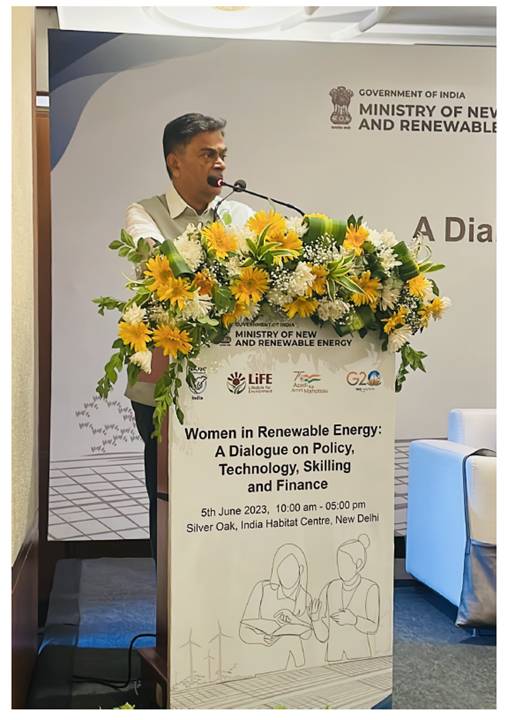
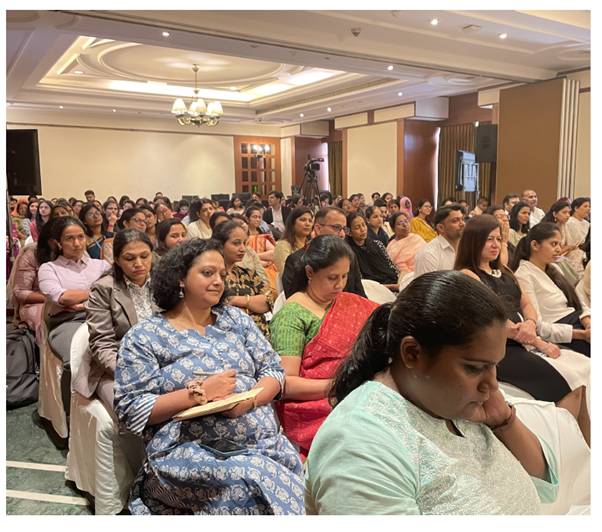
 On the occasion of World Environment Day on June 5, 2023, Ministry of New and Renewable Energy organised an event titled “Women in Renewable Energy: A Dialogue on Policy, Technology, Skilling, and Finance” in New Delhi.

Speaking at the event, Union Minister for Power and New & Renewable Energy R K Singh mentioned India’s key achievements in the renewable energy sector and stated that India’s actions are in line with commitments made in the Paris Agreement to limit the temperature increase to well below 2°C above pre-industrial levels. He exhorted women to increase participation in the Renewable Energy sector and steer India’s Energy Transition towards Net Zero.

Highlighting the role of women in combating climate change, the Minister emphasized the significance of developing women-centric policies and implementation frameworks in the renewable energy sector. He recognized how women are more effective in bringing about change at the grassroots level through community engagement and household-level action. He noted that women, especially in rural areas, can benefit from Decentralised Renewable Energy (DRE) and gain reliable livelihood opportunities. He also highlighted that women can play a big role in switching to green cooking which can be another big step in achieving Net Zero.

Secretary, MNRE B S Bhalla highlighted the increasing opportunities for women in the Renewable Energy sector and the need for enrolment in courses for education, training, and capacity building relating to renewable energy sources.

On this occasion, the Ministry of New and Renewable Energy announced to recognise the work of women in renewable energy sector under the following categories:

  • Fostering a gender-diverse work place
  • Outstanding Woman Entrepreneurs (including start-ups and excluding rural areas)
  • Rural Women Entrepreneurs
  • NGOs or Civil Society Organisations encouraging Women for the use of Renewable Energy
  • Women Leading the Change for Renewable Energy, separately in urban areas and Rural areas


The event was organised in association with NRDC India (Natural Resources Defence Council India) aiming to:

  • Learn from the experience of women leaders about on-ground implementation and use of renewable energy technologies
  • Understand the pivotal role of women in the renewable energy value chain, and how their increased participation through supportive polices, innovative financial mechanisms, and capacity building could impact long-term energy security in the country
  • Identify challenges and potential interventions related to finance, technology and skilling which can scale up implementation of women-led climate-friendly solutions

The event was attended by more than 180 participants comprising stakeholders across the value chain, including from union ministries, state departments, multilateral organisations, financiers, technology suppliers, think tanks and beneficiaries.

***

International Solar Alliance

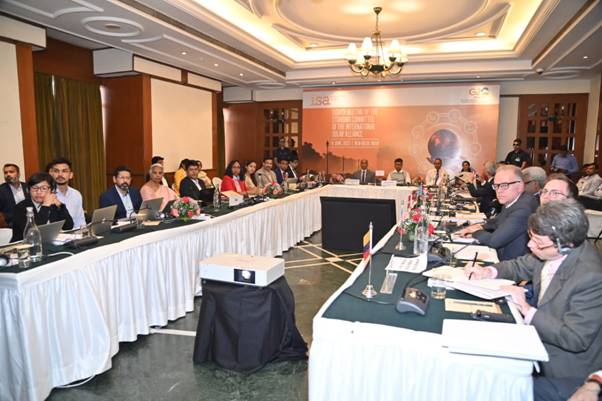
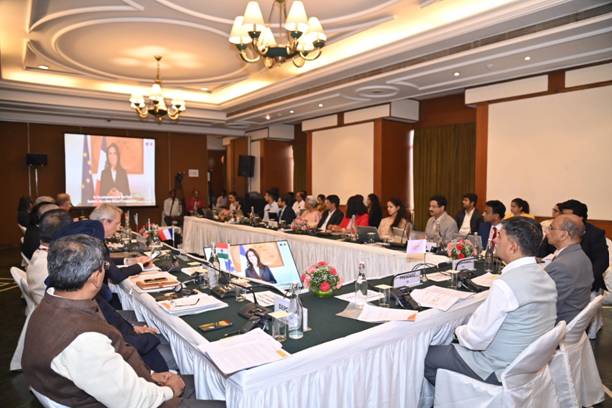
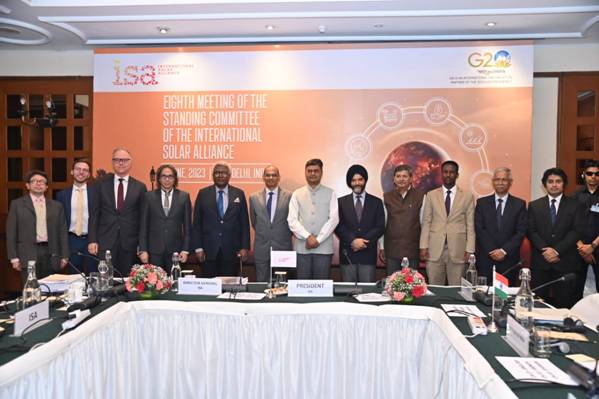
 The eighth meeting of the Standing Committee of the International Solar Alliance (ISA) was held in New Delhi on June 6, 2023, under the chairpersonship of Union Minister for Power and New & Renewable Energy R. K. Singh, in his capacity as the Power Minister of India, the current President of the ISA. The French Republic as Co-President of the ISA Assembly was the Co-Chair of the meeting. Some representatives of member countries joined in person in Delhi, while others joined the meeting online.
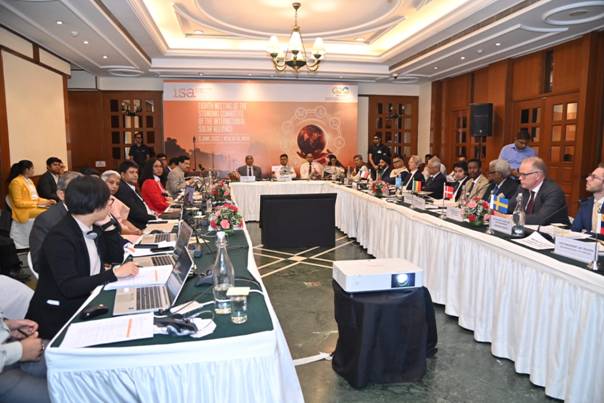
The eighth meeting of the ISA Standing Committee discussed ISA Demonstration Projects in the ISA Member Countries, ISA Solar Technology Application Resource Centre (STAR-C), ISA SolarX Start up Challenge, ISA Solar Finance Facility and Preparations for the Ninth Meeting of the ISA Standing Committee and Preparations for the Sixth Session of the ISA Assembly.

In his opening remarks, the Union Minister for Power and New & Renewable Energy R. K. Singh in his capacity as President, International Solar Alliance said that the need for an energy transition is now a settled question. “Whether the world today needs an energy transition is no longer in question. Rather, the question is how to achieve it, and how soon. A new global energy economy is emerging, with the rapid growth of renewables as the alternative source of energy.”

The Minister underlined the crucial role of development of solar energy in the world’s achievement of making the transition to renewable energy. “The development of solar energy is one of the major contributors for achieving energy transition. The cumulative global solar PV capacity has reached approximately 942 GW since the last decade. The solar PV market maintained its record-breaking streak with new capacity installations totalling ~175 GW in 2021. With every progressing year, solar is becoming the more dominant renewable energy generation technology as the world moves towards net zero.”

The Minister observed that this growth of solar energy is expected to get compounded as solar PV technology finds more applications in the distributed energy space. “Productive use applications of solar PV, agro PV, and flexible and surface integrated solar cells continue to open new avenues for deploying solar PV technology.”

Limited time left for humanity to take climate action, need more funding for green energy: ISA President

The Minister stated that the ISA has been striving tirelessly towards global solar energy transition. He spoke of the contribution made by ISA initiatives including Solar Finance Facility to support development of bankable solar projects, stimulate financing through financing vehicle; SolarX Grand Challenge to help in incubating solar startups by hand-holding them to give access to manufacturers, suppliers and investors; Solar Technology Application Resource Centres to function as training centres and centre of excellence for testing, development of specification and standards and to serve as information centres to support governments and private sector on solar energy projects; and One Sun One World One Grid Initiative aimed to achieve global access to electricity.

Noting that the opportunities for contribution by ISA and member countries are truly limitless, the Minister and ISA President said that the organization will continue to contribute significantly to a greener and more sustainable world, through its nine programmes covering solar applications in multiple sectors like agriculture, health, transport, battery storage, heating and cooling and green hydrogen.

The Minister said that the challenge to the environment is something which is now becoming more and more urgent and that the time left for humankind to address this challenge is limited. “We cannot address this challenge unless and until we help the least developed countries to get access to clean energy, to make the energy transition. This has been recognized decades back, but we have not seen any conclusions coming forward. For the world to get to Net Zero, it will not happen by just a few countries getting to Net Zero. We need to ask our conscience whether we are doing enough.”
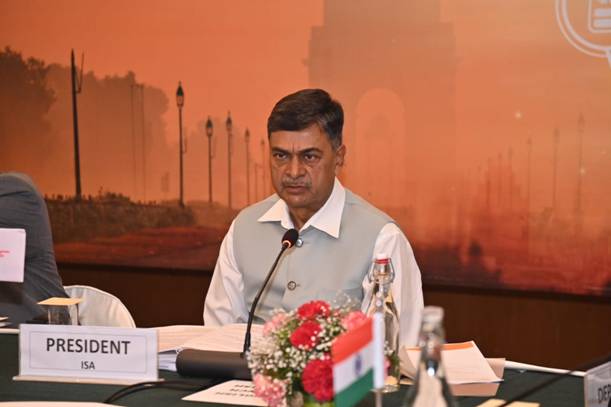
The Minister told member countries that while some green funds have been set up across the world, ISA needs to ask those green funds to channel some of those funds to African countries, in a very public way. The contribution to the green funds also needs to go up, he added.

The Minister congratulated the ISA members for their role. He noted that we are continuing to transition and that ISA is taking action in the direction of energy transition. “We will see more and more projects in times to come, we will see more and more people getting electricity and the number of people without clean energy coming down.”

Need to work towards accelerating worldwide investment in solar energy: France

Chrysoula Zacharopoulou, Minister of State for Development, Francophonie and International Partnerships and Co-President of the International Solar Alliance Assembly, who joined virtually, expressed satisfaction that the ISA has become a full-fledged international organization recognized globally. The Co-President appreciated India’s leadership in its G20 presidency and thanked India for its active involvement for a new global financial pact. France said that the need for renewable energy is greater than ever and that fossil fuels need to be phased out and renewables need to be scaled up everywhere. The country representative said that active engagement of ISA is critical to making COP28 a success. She said that France supports ISA’s priorities of capacity building and scaling up investment in solar energy.
The address of the Co-President can be watched here.
About the ISA

The International Solar Alliance (ISA) is a collaborative platform for increased deployment of solar energy technologies as a means for bringing energy access, ensuring energy security, and driving energy transition in its member countries. It is an international organisation with 93 Member countries and 115 Signatory countries and the first international intergovernmental organisation to be headquartered in India.

The ISA strives to develop and deploy cost-effective and transformational energy solutions powered by the sun to help member countries develop low-carbon growth trajectories, with particular focus on delivering impact in countries categorized as Least Developed Countries (LDCs) and the Small Island Developing States (SIDS). Being a global platform, ISA’s partnerships with multilateral development banks (MDBs), development financial institutions (DFIs), private and public sector organizations, civil society and other international institutions is key to delivering the change it seeks to see in the world going ahead.

The ISA is guided by its ‘Towards 1000’ strategy which aims to mobilise USD 1,000 billion of investments in solar energy solutions by 2030, while delivering energy access to 1,000 million people using clean energy solutions and resulting in installation of 1,000 GW of solar energy capacity. This would help mitigate global solar emissions to the tune of 1,000 million tonnes of CO2 every year.

ISA member countries are driving change by enacting policies and regulations, sharing best practices, agreeing on common standards, and mobilising investments. Through this work, ISA has identified and designed and tested new business models for solar projects; supported governments to make their energy legislation and policies solar-friendly through Ease of Doing Solar analytics and advisory; pooled demand for solar technology from different countries; and drove down costs; improved access to finance by reducing the risks and making the sector more attractive to private investment; increased access to solar training, data and insights for solar engineers and energy policymakers.

The ISA was conceived as a joint effort by India and France to mobilize efforts against climate change through deployment of solar energy solutions. It was conceptualized on the sidelines of the 21st Conference of Parties (COP21) to the United Nations Framework Convention on Climate Change (UNFCCC) held in Paris in 2015. With the amendment of its Framework Agreement in 2020, all member states of the United Nations are now eligible to join the ISA.

Secretary, New & Renewable Energy, Bhupinder Singh Bhalla also attended the meeting.

***