

Anna\’s is NOT a movement for change

Let\’s imagine for a moment that corruption vanishes – no one takes bribes any more. Which of the following do you think would now happen as a result?

  • Dalits will not face discrimination anywhere; people will stop believing in caste and elections will be around issues, not social groups. Unborn girls will not be killed, dowry will go, sexual harassment will vanish, the notion of \’minority\’ will not need to be discussed, equality and equity will be established.
  • People will start working harder, with greater commitment, be much more innovative, and therefore the economy will shoot up. Private enterprise will no more be required to shore up government efforts.
  • We will stop exploiting environmental resources in a dangerous manner, all power and energy related problems will be solved, petrol will become cheaper, our sources of water will not be polluted any more and global warming will come to a halt (at least in India).
  • All children will start attending school and learning well; teachers will transform into good teachers, all government schools will become great schools, and India\’s learning standards will be among the highest in the world. In sports too we will emerge as a world power.
  • Inflation will not affect us any more, the price of food and other essentials will come down, no matter what happens elsewhere in the world.
  • Health and nutrition levels will go up greatly, diseases of the poor (water-borne ones or those caused by malnutrition, for instance) will be vanquished.
  • Poor governance will vanish – in the absence of bribes, officials will become competent, start taking good decisions, stop representing power groups, start listening to people and actually working for their betterment.

I hope you were able to tick off quite a few!


Oscar Wild said: \’Stupidity is the only sin.\’ And in that sense, Anna&Co are great sinners. Unfortunately, those who continue to believe they\’re helping destroy the roots of our problems and bringing about real change – are even more so.
Anna\’s is NOT a movement for change

Let\’s imagine for a moment that corruption vanishes – no one takes bribes any more. Which of the following do you think would now happen as a result?

  • Dalits will not face discrimination anywhere; people will stop believing in caste and elections will be around issues, not social groups. Unborn girls will not be killed, dowry will go, sexual harassment will vanish, the notion of \’minority\’ will not need to be discussed, equality and equity will be established.
  • People will start working harder, with greater commitment, be much more innovative, and therefore the economy will shoot up. Private enterprise will no more be required to shore up government efforts.
  • We will stop exploiting environmental resources in a dangerous manner, all power and energy related problems will be solved, petrol will become cheaper, our sources of water will not be polluted any more and global warming will come to a halt (at least in India).
  • All children will start attending school and learning well; teachers will transform into good teachers, all government schools will become great schools, and India\’s learning standards will be among the highest in the world. In sports too we will emerge as a world power.
  • Inflation will not affect us any more, the price of food and other essentials will come down, no matter what happens elsewhere in the world.
  • Health and nutrition levels will go up greatly, diseases of the poor (water-borne ones or those caused by malnutrition, for instance) will be vanquished.
  • Poor governance will vanish – in the absence of bribes, officials will become competent, start taking good decisions, stop representing power groups, start listening to people and actually working for their betterment.

I hope you were able to tick off quite a few!


Oscar Wild said: \’Stupidity is the only sin.\’ And in that sense, Anna&Co are great sinners. Unfortunately, those who continue to believe they\’re helping destroy the roots of our problems and bringing about real change – are even more so.
Anna\’s is NOT a movement for change

Let\’s imagine for a moment that corruption vanishes – no one takes bribes any more. Which of the following do you think would now happen as a result?

  • Dalits will not face discrimination anywhere; people will stop believing in caste and elections will be around issues, not social groups. Unborn girls will not be killed, dowry will go, sexual harassment will vanish, the notion of \’minority\’ will not need to be discussed, equality and equity will be established.
  • People will start working harder, with greater commitment, be much more innovative, and therefore the economy will shoot up. Private enterprise will no more be required to shore up government efforts.
  • We will stop exploiting environmental resources in a dangerous manner, all power and energy related problems will be solved, petrol will become cheaper, our sources of water will not be polluted any more and global warming will come to a halt (at least in India).
  • All children will start attending school and learning well; teachers will transform into good teachers, all government schools will become great schools, and India\’s learning standards will be among the highest in the world. In sports too we will emerge as a world power.
  • Inflation will not affect us any more, the price of food and other essentials will come down, no matter what happens elsewhere in the world.
  • Health and nutrition levels will go up greatly, diseases of the poor (water-borne ones or those caused by malnutrition, for instance) will be vanquished.
  • Poor governance will vanish – in the absence of bribes, officials will become competent, start taking good decisions, stop representing power groups, start listening to people and actually working for their betterment.

I hope you were able to tick off quite a few!


Oscar Wild said: \’Stupidity is the only sin.\’ And in that sense, Anna&Co are great sinners. Unfortunately, those who continue to believe they\’re helping destroy the roots of our problems and bringing about real change – are even more so.

Anna\’s is NOT a movement for change

Let\’s imagine for a moment that corruption vanishes – no one takes bribes any more. Which of the following do you think would now happen as a result?

  • Dalits will not face discrimination anywhere; people will stop believing in caste and elections will be around issues, not social groups. Unborn girls will not be killed, dowry will go, sexual harassment will vanish, the notion of \’minority\’ will not need to be discussed, equality and equity will be established.
  • People will start working harder, with greater commitment, be much more innovative, and therefore the economy will shoot up. Private enterprise will no more be required to shore up government efforts.
  • We will stop exploiting environmental resources in a dangerous manner, all power and energy related problems will be solved, petrol will become cheaper, our sources of water will not be polluted any more and global warming will come to a halt (at least in India).
  • All children will start attending school and learning well; teachers will transform into good teachers, all government schools will become great schools, and India\’s learning standards will be among the highest in the world. In sports too we will emerge as a world power.
  • Inflation will not affect us any more, the price of food and other essentials will come down, no matter what happens elsewhere in the world.
  • Health and nutrition levels will go up greatly, diseases of the poor (water-borne ones or those caused by malnutrition, for instance) will be vanquished.
  • Poor governance will vanish – in the absence of bribes, officials will become competent, start taking good decisions, stop representing power groups, start listening to people and actually working for their betterment.

I hope you were able to tick off quite a few!


Oscar Wild said: \’Stupidity is the only sin.\’ And in that sense, Anna&Co are great sinners. Unfortunately, those who continue to believe they\’re helping destroy the roots of our problems and bringing about real change – are even more so.

Anna\’s is NOT a movement for change

Let\’s imagine for a moment that corruption vanishes – no one takes bribes any more. Which of the following do you think would now happen as a result?

  • Dalits will not face discrimination anywhere; people will stop believing in caste and elections will be around issues, not social groups. Unborn girls will not be killed, dowry will go, sexual harassment will vanish, the notion of \’minority\’ will not need to be discussed, equality and equity will be established.
  • People will start working harder, with greater commitment, be much more innovative, and therefore the economy will shoot up. Private enterprise will no more be required to shore up government efforts.
  • We will stop exploiting environmental resources in a dangerous manner, all power and energy related problems will be solved, petrol will become cheaper, our sources of water will not be polluted any more and global warming will come to a halt (at least in India).
  • All children will start attending school and learning well; teachers will transform into good teachers, all government schools will become great schools, and India\’s learning standards will be among the highest in the world. In sports too we will emerge as a world power.
  • Inflation will not affect us any more, the price of food and other essentials will come down, no matter what happens elsewhere in the world.
  • Health and nutrition levels will go up greatly, diseases of the poor (water-borne ones or those caused by malnutrition, for instance) will be vanquished.
  • Poor governance will vanish – in the absence of bribes, officials will become competent, start taking good decisions, stop representing power groups, start listening to people and actually working for their betterment.

I hope you were able to tick off quite a few!


Oscar Wild said: \’Stupidity is the only sin.\’ And in that sense, Anna&Co are great sinners. Unfortunately, those who continue to believe they\’re helping destroy the roots of our problems and bringing about real change – are even more so.

Anna\’s is NOT a movement for change

Let\’s imagine for a moment that corruption vanishes – no one takes bribes any more. Which of the following do you think would now happen as a result?

  • Dalits will not face discrimination anywhere; people will stop believing in caste and elections will be around issues, not social groups. Unborn girls will not be killed, dowry will go, sexual harassment will vanish, the notion of \’minority\’ will not need to be discussed, equality and equity will be established.
  • People will start working harder, with greater commitment, be much more innovative, and therefore the economy will shoot up. Private enterprise will no more be required to shore up government efforts.
  • We will stop exploiting environmental resources in a dangerous manner, all power and energy related problems will be solved, petrol will become cheaper, our sources of water will not be polluted any more and global warming will come to a halt (at least in India).
  • All children will start attending school and learning well; teachers will transform into good teachers, all government schools will become great schools, and India\’s learning standards will be among the highest in the world. In sports too we will emerge as a world power.
  • Inflation will not affect us any more, the price of food and other essentials will come down, no matter what happens elsewhere in the world.
  • Health and nutrition levels will go up greatly, diseases of the poor (water-borne ones or those caused by malnutrition, for instance) will be vanquished.
  • Poor governance will vanish – in the absence of bribes, officials will become competent, start taking good decisions, stop representing power groups, start listening to people and actually working for their betterment.

I hope you were able to tick off quite a few!


Oscar Wild said: \’Stupidity is the only sin.\’ And in that sense, Anna&Co are great sinners. Unfortunately, those who continue to believe they\’re helping destroy the roots of our problems and bringing about real change – are even more so.

When nation is first, country takes big decision: PM

Prime Minister Shri Narendra Modi delivered keynote address in Republic Summit here today. Theme of this year’s summit is “India’s Moment Nation First”.

Speaking on the occasion PM said that From Nation wants to know India has transformed to Nation First. He also said that things which were not solved for decades have been solved now. This happened due to two reasons – 130 Crore people’s thinking that India’s Moment and Nation First.

On the abrogation of Article 370 in Kashmir, PM said that India eliminated big reason behind terrorism. He added that Article 370 that gave special status to Jammu and Kashmir was a temporary provision in the Constitution but due to “some families”, it was considered as permanent.

He emphasized that when nation is first, country takes big decision. And when country accepts that decision nation moves forward. He also said that people went to the Supreme Court so that Aadhaar could not get legal recognition. These people put all their strength to malign Aadhaar. But Aadhaar helped a lot in revealing their truth. It has saved about Rs 1.5 lakh crores from falling into the wrong hands. He added that every year, almost the same amount was falling into the wrong hands and there was no one to stop it. We did the work to stop this huge leakage of the system, because India is first for us.

Prime Minister said that GST could never have been implemented in the country earlier. Today, 99 percent of the things related to ordinary citizens are being taxed on an average of half as compared to before. There was a time when refrigerators – mixers, juicers, vacuum cleaners, geysers, mobile phones, washing machines, watches, all taxed more than 31 percent. Today, tax on all these things has been reduced to about 10 to 12 percent.

On regularization of illegal colonies in Delhi, he said that for decades, there was a lot of uncertainty in the lives of millions of families. People used to buy houses here with their hard-earned money, but they could not completely own them. These problems remained always. Our government has decided to end it and now more than 50 lakh Delhiites have got the certainty/hope/confidence of their home and a better life. Certainly it will benefit our middle class and help in getting their dream home, he added.

Prime Minister emphasized that the speed and Scale that is being worked on in India today is unprecedented. Toilet facilities to be provided to nearly 60 crore Indians in 60 months. These types of plans and programs can be planned and executed only when Nation is first.

He added that when you get out of selfishness, make everyone’s support – everyone’s development and everyone’s trust the basis of policy and politics. This thinking has left us behind in the race for development, learning how to work with new approaches on 112 aspirational districts of the country.

PM said that it was the spirit of Nation First that opened more than 37 crore bank accounts to connect the poor with the banking system. It was this thinking of Nation First that started the water life mission. In the coming time, about Rs.3.5 lakh crore will be spent on this mission, so that people in remote areas of the country can get clean drinking water, water can reach every house.

Prime Minister added that with the intention of increasing their income, the country has set a target of making the country’s economy $ 5 trillion. He said that he believed that working with the spirit of Nation First, we will get the proper result of every decision and the country will achieve every goal. He hoped that in this spirit, there will be a detailed discussion on the new possibilities, new opportunities of new India.

***

Has Anyone Asked Teachers This Yet?

Over the last two decades, as the number of teachers has grown, so too has a certain attitude towards them. This comes up in different ways in the various interactions we have – during school visits, meetings at cluster or block level, workshops and training programmes for different groups of personnel, and informal interaction at all levels. Somehow, the discussion ends up at the teacher\’s door. And the following statement springs forth: \’Teacher is at the heart of the matter sir; only when teacher improves can anything improve.\’
This is then followed by a long list of what teachers are not good at, including examples such as (this is a mild list!):
  • Teachers don\’t practice Quality Teaching
  • Are not able to \’go according to the level of children\’
  • Don\’t make use of psychology (I assume this means something called \’child psychology\’)
  • Application is missing – teachers are not linking concepts to practical life.
  • They show a lack of Social Awareness
  • Don\’t go for innovative activities
  • Don\’t do voluntary service
  • Don’t give examples while teaching
  • Don\’t pin accountability for the task given (i.e. don\’t take responsibility themselves)
  • Fail to develop or revive the interest to teach
  • Are not flexible to change their mentality
  • Don\’t give individual attention to children
  • Are not patient
  • Don’t make use of case study
  • Don\’t take a friendly approach
  • Are poor listeners
  • Have no tolerance
  • Are partial
  • Reluctant
  • Lazy
  • Lack in adaptation, and don\’t update their knowledge
  • Are in a hurry to get the product rather than being bothered about the process
  • Expect more with little effort!

Believe it or not, this is an actual list produced by participants in a workshop (which also included teachers!) and is also typical of most parts of the country.
But when asked to name any strengths that teachers have, what you usually get are blank stares or a scrawny, reluctant list of maybe four points, such as:
  • Covers syllabus in time
  • Preparing children for getting marks.
  • Good in lecturing (encouraging rote learning)
  • Conducting special coaching for those falling behind

As you can see, no shortage of left-handed compliments here!
Typically, when asked if they\’ve actually asked teachers what they\’re good at, or what they feel they\’re not good at, the people who make the above statements tend to draw a blank! However, when teachers themselves are asked what they\’re not good at, their statements include points such as these:
  • In trying to address the average student, I\’m unable to take care of those who are falling behind
  • I find it difficult to make the subject interesting for some students
  • If parents can\’t help children with their homework, I find it difficult to help the child in class

Clearly, there\’s a perception mismatch between teachers and those tasked with appointing, deploying, orienting, developing, mentoring and monitoring teachers. It might be a little too much to ask, but the following seem clearly required;
  • There\’s a need to listen to teachers before coming to the kind of conclusions we have come to
  • In order to go beyond impressions, systematic observation and research are required
  • How about finding out the strengths teachers have and how to build on them
  • Finally, what is the system doing to make some of its own dire predictions about teachers become true?

Time, it seems, to make a course correction here.

Academia’s latest fashion: postmodern irrationalism.

Deception has had its proponents in the past. In the “Republic,” Plato made an exception for a “noble lie” in the service of the collective good. Machiavelli left out the “noble” part. However, these moments are footnotes in history. Truth was power, it was believed, or for those less sanguine, duty. Today, however, there is a complete and unabashed acceptance of lies, deception, and irrationality, and without any fear to one’s reputation. Columnists, politicians, academics – all regurgitate the party line without embarrassment or fear to their careers. Just the opposite, Moore has demonstrated you can make millions and stay in the spotlight by popularizing the New Lie. It’s the latest in leftist fashion, and it’s hot off the academic runway.
To the average American it still seems incredible that intellectuals and writers could be doing what we think they are doing: embracing lies on principle. How can they justify this? This is a story that unfolds behind the walls of academia, slowly simmering for some time, and finally reaching a boil in a self-consciously anti-rational creed that’s sweeping our colleges and universities: Postmodernism. This snake-oil unleashes the inhibitions that limit deception and underwrites the policy of the lie. Stephen R. C. Hicks2 has written a scathing expose called “Explaining Postmodernism: Skepticism and Socialism from Rousseau to Foucault.” To appreciate the story we have to step back a few centuries and see how this descent has unfolded.
It was during the 18th century Enlightenment that reason reaches the pinnacle of respect in modern times. Flush with confidence that reason could make sense of reality and mediate human contentions, men of the Enlightenment embrace reason as the key to knowledge and human well being. There is a profound sense of optimism and confidence that the power of reason can conquer ignorance, superstition, bigotry, strife and suffering. The founding of America is suffused with the spirit of the Enlightenment. England’s benign neglect allows the colonialists to order their affairs guided by the philosophical spirit of the times and when that tolerance wanes we confidently create a new nation.
On the European Continent, the Enlightenment spirit, exemplified by Diderot, Voltaire, and Montesquieu, would soon be eclipsed by the most influential of all: Jean-Jacques Rousseau. By attacking key planks of the liberal paradigm, he effectively launches the Counter-Enlightenment. Rousseau disparages civilization as a corrupting influence, charges that rational progress undermines morality, and damns private property as socially destructive. Reason and progress, in his view, brings inequities, oppression, insensitivity, superficiality, and degeneration. Science, he declares, is “vain curiosity” harmful to society. Rousseau’s collectivism – submission to the general will, by force if necessary – is an inspiration to the Jacobin fraction of the French Revolution. 3
The Enlightenment’s nominal defenders often did more damage than its detractors. In one way or another both Rationalists and Empiricists took the primary object of awareness as mental in nature. This made reality inferential and empirical knowledge problematic. Since the purpose of knowledge is to grasp objective reality, the philosophers’ flawed formulations of reason’s ability to achieve certainty in this matter lead to the skepticism. Kant, however, saw this analysis as an opportunity. The mind, according to Kant is what gives the properties and regularities we previously associated with the object-in-itself. Thus, it is consciousness itself that contributes the important properties of our experience. As Hicks writes, “Kant’s significance in the history of philosophy is that he absorbed the lessons of the rationalists and empiricists and, agreeing with the central assumptions of both sides, transformed radically the terms of the relationship between reason and reality.” 4
The assault on reason accelerates through out the 19th century. Hegel explicitly embraces contradictions and identifies consciousness with object. Kierkegaard learns “to relinquish his understanding and his thinking, and to keep his soul fixed upon the absurd.” 5 In the 20th century, Heidegger finds that “[t]he entire Western tradition of philosophy – whether Platonic, Aristotelian, Lockean, or Cartesian – based as it is on the law of non-contradiction and the subject/object distinction, is the enemy to be overcome.” 6 Postmodernists will even surpass Heidegger and abandon metaphysics and truth all together.
The Anglo-American analytical tradition never seriously challenges the Kantian turn. Instead we see the reduction of reason to the merely formal, conventional, tautological, or nominal. The emaciation of rationalism to an internal tool of mental housekeeping underscores the divorce of reason from reality and removes it as a tool of scientific truth. Ayer announces that “the principles of logic and mathematics are true universally simply because we never allow them to be anything else.” 7 “By the 1950s, these conclusions were commonplace. Language and logic were seen as conventional, internal systems – and not as objective, reality-based tools of consciousness.” 8 “Consequently, by the 1960s, the pro-objectivity, pro-science spirit had collapsed in the Anglo-American tradition.” 9 Rorty concludes “’[t]he nature of truth’ is an unprofitable topic.” 10
The combined effect of the direct assault on reason by continental irrationalists and the trivialization of reason by nominal proponents of the analytical tradition set the stage for the overt and belligerent anti-realist, subjectivist, and nihilistic postmodern movement. But why have these academic foundational issues become so important to the modern left? It is here that Hicks provides a powerful and compelling narrative.

In defence of TPP – the loss of jobs

The opposition from labour unions in the US ( and labour activists everywhere in the world) to the TPP is that it will lead to the loss manufacturing jobs (read in the US) and therefore it is anti labour. I have some sympathy for the view of the labour unions in the US, but absolutely no sympathy for the \”global labour activists\”.
In every change of  the status quo, including opening up of trade, there will be winners and losers. When international trade is made more easy, by whatever means, the risk of American manufacturing jobs being lost is real. Labour intensive activity will migrate from higher cost locations to lower cost locations – that\’s an indisputable fact of economics. Therefore there has to be some sympathy for the US unions\’ opposition to every trade deal with a foreign country.
The balance sheet of wins and losses for the US looks like this. Jobs will be lost, especially in manufacturing. US consumers win in terms of lower costs of products. If international trade were to be substantially reduced, inflation will soar in the US. Prices of all goods will rise to levels which will put them out of reach of many people making it hard for even the poor in the US to enjoy the quality of life they currently have. Increased economic activity leads to rise in taxes for the US government – don\’t believe all that spin about evil corporations hiding their money overseas ; this is a point I am happy to debate separately. The increased economic activity does create more jobs, but not enough to compensate for the loss of jobs and in any case it is mismatched in terms of skill levels. So the only constituency that has some case for objecting to the TPP ( and every trade deal) is the US labour unions.
The group that deserves utter contempt are the international \”labour activists\” who are protesting against the TPP.  As we have seen, jobs will be lost in the US, but they will migrate to lower cost, and poorer countries . These are the societies that desperately need economic betterment through jobs.  Secondly, by lowering the cost of labour, there is a defence against machines taking over these jobs. That is why iPhones are still assembled by hand in China and clothes stitched by hand in Bangladesh. In sum total, there are more jobs created and preserved in the world than it would have been if manufacturing were to be done in high costs countries. You would have thought this is in net good for the world.
It is also an indisputable fact that labour is exploited in poor countries.The US, to its credit, through various trade agreements and via the TPP, is trying to minimise this. In particular, US negotiators want TPP members to implement and enforce the 1998 Declaration on Fundamental Principles and Rights at Work of the ILO. This includes the freedom of association, right to collective bargaining, a ban on forced or compulsory labor, the abolition of child labor, and a ban on discrimination in employment. The US also wants countries not to exempt their special economic zones from the labour laws of the rest of their country. These are all sticking points in the negotiations, but this is what the US has been strongly negotiating for.  If there were no TPP, it would be laissez faire for labour exploitation in each country. The TPP at least attempts to get some common protection for labour in every country. And the \”international activists\” are opposing this.
So yes, international trade will hurt US jobs. It has been doing so for many decades. But if you see it from a global perspective, the world would be a better place with the TPP, than without it. Having said that, I have sympathy for, and would not argue against the opposition of the US trade unions.

Wooing HQ2 ? Yuk !

If you are an American, here\’s a a nice issue to distract you from your fixation about you know who and direct your attention to a different issue you can get all worked up about.
Witness each city falling over each other and doing the most stupid of things to land HQ2. Tucson Arizona, where one of the readers of this blog lives ,  uprooted a 21ft cactus and tried to deliver it to HQ1. The mayor of Kansas City actually bought one thousand items from the company in HQ1 and wrote a review of each one of them. Mayors of cities are looking silly in videos that they have made asking Alexa where HQ2 is going to come up and Alexa answering of course, the city they are mayors of. Shall I go on ?
If you are wondering what all this hullaballoo is  about, this is all to do with attracting Amazon\’s second head office. Amazon is based in Seattle (this is HQ1). They want to create a HQ2 somewhere else. And why are cities willing to stand in a line and kiss Bezos\’ ass (cue the nod to the awful American version of the Queen\’s English !). Because he is promising to invest $5 bn and create 50,000 jobs. How did they come to this magic figure of investment ? Because he says the average salary of the jobs created would be $100,000. 
The antics of Tucson and Kansas City are harmless on their own. HQ2 won\’t come there anyway. The real danger is the big cities offering tax breaks to Amazon. Without a doubt this will happen.
This is a terrible idea. Cities and states that do sweetheart deals to tempt businesses into moving are doing an appalling act of profligacy.  This is worse than a bribe.  Think about it – this is a perfect way of taking money from the poor (remember indirect taxes are not progressive and a fair amount of the state revenues in the US come from indirect taxes) and giving it to somebody who does not deserve or need the money. One city does this , and the next city will do the same for another company.  And before you say Bingo, everybody has been given a dole.
The right way to attract companies is to do the boring things – create infrastructure, make a talent pool available by vigorous education and training, attract outsiders by making it a great place to come and live, have a favourable business atmosphere in the form of ease of doing business and reasonable tax rates.  That is when companies will come and stay on. That\’s why New York in Finance and the West Coast Cities in technology are what they are.  Not because they gave tax breaks.
If you are an American, you should vigorously protest against your city doing a sweetheart deal with Amazon.  
For Indians, who can look at all this with an amused smile; we have of course been long guilty of doing such deals with companies. But I want you to get agitated in a different angle. The capital of the IT industry in the country did all the right things 30 years back – great place to live in, pleasant weather, abundance of talent, a cosmopolitan place for people to come, etc etc. It did not give a tax break. And yet every IT company worth it\’s salt came.
And then this city let it all go to seed and become the appalling wreck of a city that it is today.  This is the best way to drive every company out. No member of the Homo Sapiens species will ever come to this place again. Instead the entire population has mutated into Pithecanthropus Erectus, which being extinct, is delighted to be able to come back into existence even if condemned to living in a hellhole ! How does this blogger know of such a mutation ? Because he has mutated himself !

Why Corruption Is An Easy Issue To Raise

It\’s interesting to observe why the issue of \’corruption\’ seems to attract attention. Right now, across the country (and the world), a huge majority of people are oppressed by the accepted notion that it is OK for some to be considered \’above\’ others. That is why it is OK for some of \’us\’ 
  • to go to high fee private schools (we have \’earned\’ it), 
  • to sit in AC coaches in the train (we paid for it after all, never mind that the others\’ capacity to pay for the same is hampered by systemic and systematic obstacles), 
  • to feel that we belong to \’big\’ or \’important\’ families… 
Such societal hierarchies have a far greater impact and preserve disadvantage.
Isn\’t it corruption too to believe that one belongs to a \’better\’ or \’purer\’ religion / caste / class / background / family than others. Yet Anna and co don\’t raise issues of social fracture (conveniently forgetting that Gandhi spent far more of his life on these issues, and regarded true independence as one from social oppression too). It\’s worth thinking on why the issue of corruption really suits the middle class – it\’s so neutral and harmless, and avoids the really frightening ones. It\’s also something where you can blame \’others\’ without feeling that you are part of the problem…
As an educator, therefore, if I had to teach children any value, it would not be an ordinary thing like \’do not be corrupt\’ but the more difficult concept of \’though you are unique and deserve the best, do not think you are more important than others or have a birthright to more than they do\’.

Xi who must be obeyed (with apologies to The Economist)

The title of this post is directly stolen from The Economist which ran a cover story by this name a year or so ago. They themselves were punning the quote from here.

The much awaited China’s People Congress ended today with the expected climax – the unveiling of the new Politburo Standing Committee ; the men who will run China for the next five years. More of this in just a little while. This ended a week of speechifying and staged events.

First, the two things that stood out during the days preceding the event today.  Xi Jinping opened the Congress with a speech lasting an incredible three and a half hours, reaching new heights of torture and boredom. It was a hugely self confident China strutting about as a world power, with Xi vigorously patting his own back. He outlined some of the directions for the next five years which were typically broad motherhoods, but gave some clues on where they are heading.

The most important outcome was the enshrining of “Xi Jinping Thought” in the Communist Party’s Constitution. This is a peculiarly Chinese obsession. Their infatuation with obscure theories and doctrines knows no boundaries. “Mao Zedong Thought” was supposed to be the guiding doctrine of the Party – never mind that it is rubbish, the Party has long ditched many of that nonsense, etc etc. Then Deng Xiaoping “Practice” was enshrined into the Constitution after his death. At the end of their terms Jiang Zemin and Hu Jintao’s “theories” were also included, but their names were not mentioned (such semantics are very important in China with those two acknowledging that they are a step behind the two taller and earlier leaders). Xi hasn’t bothered with any such finesse. Halfway into his term he has enshrined his name and “Thought” – the implication being he is Mao’s equivalent and even above Deng. A dangerous move almost Trumpesque is self aggrandisation. His “Thought” is mostly bland with lots of garbage , but who cares. These are political moves cloaked in ideology.

And then today, came the line of seven men who walked in, and that was how the world got to know about the new Standing Committee. Readers of this blog may recall that this blogger made a prediction in this post a month or so ago. I got one thing wrong – that Li Keqiang the Premier would be dropped and that Wang Qishan, Xi’s right hand man would stay on beyond retirement age and would become the Premier. That didn’t happen. The powerful Wang retired and Li has stayed on as the Premier. I predicted a 5 man Standing Committee reduced from 7 (that didn’t happen) but also named the potential seven man Committee if it stayed at that number. I got that dead right, including the order of seniority – after Xi and Li came Li Zhanshu, Wang Yang, Wang Huning, Zhao Leji & Hang Zheng. I got real lucky !

Here is my take on the implications of what happened over the last week

– Xi is all powerful. That we knew of course.
– Xi has decided to not break all traditions and to preserve some of the norms and continuity. Hence the  retirement of Wang Qishan and the continuance of Li Keqiang.
– No successor to Xi has been named, as expected. This leaves Xi’s options open. He can stay on as a power centre either formally or informally after his term ends in 5 years.
– The two possible successors Hu Chunhua and Chen Min’er are on trial. They have to earn the right to succeed over the next 5 years. But even after, they will probably have to be subservient to Xi.
– The Party is going to tighten the hold on China even more. Forget any liberalism, tolerance and such other “esoteric” concepts.
– China will be aggressive in world politics. The world simply has to learnt to adjust to that. America will be the county most affected. It will be on the losing end more often than not.
– Zhao Leji will be the new Wang Qishan. He will continue the anti corruption drive and Xi’s political opponents will continue to be targeted.
– China is entering into dangerous territory of authoritarianism.  Chinese history shows  how much the entire country loses when such autocratic tyrants take charge – recent examples of Ci Xi and Mao are enough to illustrate this danger. There is every risk of Xi going the same way – generating sycophants, staying on too long, getting drunk on power and doing stupid things.
– The Deng Xiaoping era is finally over (that it lasted 25 years after his death is amazing by itself). Most of the safeguards he tried to institutionalize are slipping. The wisdom of Deng is being frittered away. In many ways, he is the loser from what has happened. China will learn to its cost, the implications of ignoring its wisest man in recent history.

Life returns back to normal in China. This blogger will not blog about Chinese politics for the foreseeable future. A parting thought however – watch out for Hu Chunhua, Chen Min’er, Zhao Leji, and of course, above all, Xi.

Insanity in Property


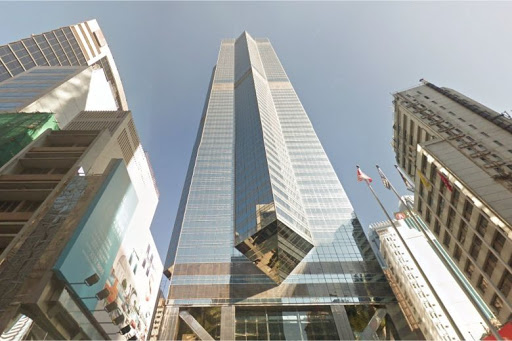
                                                                      (Photo : Google Maps)


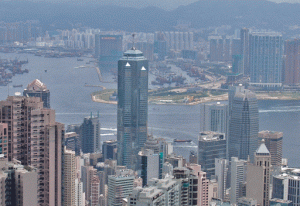
The world’s costliest building it has become. Yesterday, “The Center” in Hong Kong – a 73 storey landmark was sold for $ 5bn. Yes, FIVE BILLION US DOLLARS. For a single building. No you are not hallucinating. It really did happen.
The Centre was a jewel in the portfolio of Li Ka-Shing. If you don’t know who he is, well, he was, and probably is, Mr Hong Kong.  One of the richest men in the world. For long he has symbolised money, power and all the glamour of Hong Kong.
This post is not about the old man. It’s about insanity in property valuations. Yes land is scarce (anybody who has been to Hong Kong knows how scarce). And yes, it is demand and supply that sets prices.  And yes, it is a free market – nobody is compelled to buy or sell at any price. But even then, it is only right to pause and reflect on what such insane property valuations mean.
It means, most of the world’s population cannot afford a house. Full stop.  This is one of the biggest problems in the developed world (ask any Brit how bad it is), and increasingly in the developing world. It simply drives up the cost of doing anything . In India for example, the tuition fees in a school are not for teachers – it is really to pay for the property. Ditto hospital costs. It is also the reason why you will never see a typical supermarket in the city of Mumbai .
Such ridiculous property valuations are one of the greatest causes of wealth inequality. The very few, who for historical reasons happened to inherit land, or buy property make wild fortunes at the expense of the large majority. After all any pricing is simply the value that society collectively places on  any dimension of life . Is anybody in the world seriously going to argue that property must be placed on a far higher pedestal than virtually anything else in life ?
Back to the $5 bn building. In case you have some difficulty comprehending what $5 bn is,  it will pay for 12 years of Honk Kong’s spend on Child and Family Services or  6 years of the spending on the elderly, or 7 years of spending the on the disabled or 20 years of spending on youth or 2 years of the entire police budget or 4 years of the health budget …… Shall I go on ?
Readers must know that this blogger is taking a grave risk by putting up this post. A reader, who is a dear friend has castigated me for becoming a raving loony leftist and has threatened to personally come and clobber me if I write one more example of becoming a “commie” in old age ! I will have to take precautions for my safety tomorrow !!

Cure or Prevention: the Health Education Dilemma

There is no doubt that educating children on health issues is absolutely important. But the moment we begin this, a major problem crops up. What should the thrust of health education be in a context like ours? It\’s not as simple as it appears.

If we were to talk of prevention, we find ourselves making invalid assumptions. For instance, we start with \’washing hands with soap regularly prevents disease\’. But the problem is, say a huge proportion of children and the community, \’there is not enough water even to drink, how do we wash hands with soap?\’ Next we say, \’you must eat green leafy vegetables\’. However, the response: \’hey, there isn\’t enough food to eat in the first place, let alone leafy vegetables\’. The list is endless. The bottom-line: poverty is at least as important a health issue as lack of health education.

On the other hand, emphasizing prevention has its own limitations. For example, when discussing scabies it is common to find the use of neem being advocated. Though neem is commonly available, it is not exactly always useful in all cases of scabies. Medical advice should be sought rather than relying only on such suggestions. As they say, it can be dangerous to be armed with half-baked information.

So what do we do? Not talk about health at all?

No, we do need to educate our children on health. But the emphasis has to be on educate rather than merely plying them with information. In concrete terms this implies helping children perceive the causal links between different factors in their immediate environment and their health. How the body works, what it is affected by and how it responds to different factors, and how our own actions (individually and collectively) impact upon it — these are some of the components of what contemporary health education should be like.

This would naturally require scope for exploration, projects and activities. The pedagogy involved should help children arrive at their own conclusions, especially in terms of actions they could take. Here\’s an example of what might be a good health education activity (for grade 3 students, assisted by their teacher):

Take two small plates — put a little dal water in one, and a little sweet tea in the other. Set these plates in the sun and let the fluids dry. After a while, touch both of them with your fingers – one of them feels sticky and the other doesn\’t. Why do you think this is so?

Next, take a knife (let your teacher do this!). Cut a cucumber and feel the knife edge carefully. Now cut a piece of jaggery and feel the edge again (carefully!). Which item left a more sticky knife edge? Why?

So when we eat, which items are more likely to continue sticking to our teeth? And what will happen if they remain there (discuss with your teacher)? So what do we need to do? 

That\’s it. There\’s no need really to give a long lecture of oral hygiene, full of facts and figures and information on exactly how to hold the brush etc. etc. All that sounds so platitudinous that children instinctively \’switch off\’ (as do adults when lectured!). The intention is that by helping children arrive at their own conclusions, we increase their stake in taking appropriate health-related action. And hence the increased chance that the understanding will actually translate into behavior!