From \’Teacher Condemnation\’ to \’System Condemnation\’?

Years ago, it was felt that the root of all problems in education is the teacher. In fact, the MLLs (Minimum Levels of Learning, which served as the de fact national curriculum framework) in the late 80s and early 90s were designed to ensure \’teacher accountability\’ in terms of the minimum that would be achieved. A popular programme, Rishi Valley\’s multi-grade teaching  (adopted/adapted as \’activity based learning\’ in many states) actually originated from the desire to get children to be able to learn without needing the teacher (which is why there is so much of self learning in it).

People still continue to condemn the teacher and hold him responsible for all the ills in education. However, with the proliferation of so many \’reports\’ on education all around, there is now a great sense of intolerance towards the education system itself. The belief seems to be that not only government teachers and schools but the government education system itself is condemnable. Among NGOs, academics, commentators, researchers and intellectuals the general notion seems to be gathering steam that everything and everyone in the government system is the problem!

But what is a system if not the people in it, the way they work and the frame within which they work? From that point of view, I have to say that some of the finest people I\’ve come across are \’system\’ people. Every year I get the chance to work with thousands of teachers who I see putting in 12-14 hour days when others from outside the system (e.g. NGOs) fade away after only 8 hrs of input. This is not to say everything is OK with the system or the policies or the people – it\’s just point out that a black and white view doesn\’t help. And that just as it is not possible to change a teacher while condemning him, it is not likely to be possible to improve a system while condemning it!

From \’Teacher Condemnation\’ to \’System Condemnation\’?

Years ago, it was felt that the root of all problems in education is the teacher. In fact, the MLLs (Minimum Levels of Learning, which served as the de fact national curriculum framework) in the late 80s and early 90s were designed to ensure \’teacher accountability\’ in terms of the minimum that would be achieved. A popular programme, Rishi Valley\’s multi-grade teaching  (adopted/adapted as \’activity based learning\’ in many states) actually originated from the desire to get children to be able to learn without needing the teacher (which is why there is so much of self learning in it).

People still continue to condemn the teacher and hold him responsible for all the ills in education. However, with the proliferation of so many \’reports\’ on education all around, there is now a great sense of intolerance towards the education system itself. The belief seems to be that not only government teachers and schools but the government education system itself is condemnable. Among NGOs, academics, commentators, researchers and intellectuals the general notion seems to be gathering steam that everything and everyone in the government system is the problem!

But what is a system if not the people in it, the way they work and the frame within which they work? From that point of view, I have to say that some of the finest people I\’ve come across are \’system\’ people. Every year I get the chance to work with thousands of teachers who I see putting in 12-14 hour days when others from outside the system (e.g. NGOs) fade away after only 8 hrs of input. This is not to say everything is OK with the system or the policies or the people – it\’s just point out that a black and white view doesn\’t help. And that just as it is not possible to change a teacher while condemning him, it is not likely to be possible to improve a system while condemning it!

From \’Teacher Condemnation\’ to \’System Condemnation\’?

Years ago, it was felt that the root of all problems in education is the teacher. In fact, the MLLs (Minimum Levels of Learning, which served as the de fact national curriculum framework) in the late 80s and early 90s were designed to ensure \’teacher accountability\’ in terms of the minimum that would be achieved. A popular programme, Rishi Valley\’s multi-grade teaching  (adopted/adapted as \’activity based learning\’ in many states) actually originated from the desire to get children to be able to learn without needing the teacher (which is why there is so much of self learning in it).

People still continue to condemn the teacher and hold him responsible for all the ills in education. However, with the proliferation of so many \’reports\’ on education all around, there is now a great sense of intolerance towards the education system itself. The belief seems to be that not only government teachers and schools but the government education system itself is condemnable. Among NGOs, academics, commentators, researchers and intellectuals the general notion seems to be gathering steam that everything and everyone in the government system is the problem!

But what is a system if not the people in it, the way they work and the frame within which they work? From that point of view, I have to say that some of the finest people I\’ve come across are \’system\’ people. Every year I get the chance to work with thousands of teachers who I see putting in 12-14 hour days when others from outside the system (e.g. NGOs) fade away after only 8 hrs of input. This is not to say everything is OK with the system or the policies or the people – it\’s just point out that a black and white view doesn\’t help. And that just as it is not possible to change a teacher while condemning him, it is not likely to be possible to improve a system while condemning it!

From \’Teacher Condemnation\’ to \’System Condemnation\’?

Years ago, it was felt that the root of all problems in education is the teacher. In fact, the MLLs (Minimum Levels of Learning, which served as the de fact national curriculum framework) in the late 80s and early 90s were designed to ensure \’teacher accountability\’ in terms of the minimum that would be achieved. A popular programme, Rishi Valley\’s multi-grade teaching  (adopted/adapted as \’activity based learning\’ in many states) actually originated from the desire to get children to be able to learn without needing the teacher (which is why there is so much of self learning in it).

People still continue to condemn the teacher and hold him responsible for all the ills in education. However, with the proliferation of so many \’reports\’ on education all around, there is now a great sense of intolerance towards the education system itself. The belief seems to be that not only government teachers and schools but the government education system itself is condemnable. Among NGOs, academics, commentators, researchers and intellectuals the general notion seems to be gathering steam that everything and everyone in the government system is the problem!

But what is a system if not the people in it, the way they work and the frame within which they work? From that point of view, I have to say that some of the finest people I\’ve come across are \’system\’ people. Every year I get the chance to work with thousands of teachers who I see putting in 12-14 hour days when others from outside the system (e.g. NGOs) fade away after only 8 hrs of input. This is not to say everything is OK with the system or the policies or the people – it\’s just point out that a black and white view doesn\’t help. And that just as it is not possible to change a teacher while condemning him, it is not likely to be possible to improve a system while condemning it!

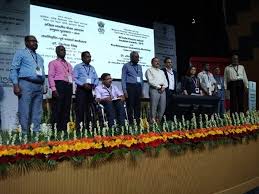
Sri Sri Ravishankar interacts with Ministers, MPs & Senior officials of GOI at Uprashtrapati Bhavan

The Vice President of India Shri M Venkaiah Naidu today said that understanding of Spirituality was extremely important to lead a peaceful and purposeful life. He also stressed the need to preserve, promote and propagate India’s great cultural heritage, values and ideals ingrained in India’s philosophy.

Speaking at an interactive meeting organized at his residence with spiritual Guru Sri Sri Ravishankar Ji today that Vice President said that India has a great tradition of respecting elders, seeking guidance from Seers, Rishis and Guru’s to seek solutions too many problems.

Talking about Sri Sri Ravishankar, the Vice President said that he has been guiding the people across the globe and

enlightening them through his spiritual discourses, especially at a time when there is a rise in violence, tensions, erosion in values leading to social tensions, affecting peace, prosperity, and development of the nation and the world.

Sri Sri, while interacting with the gathering spoke about the importance of Yoga and Meditation and suggested practicing these two for mental hygiene. He also highlighted the importance of daily meditation, proper sleep and focus on breathing for a peaceful mind. He said it would greatly benefit people to think beyond the earthly things and help them find the truth and find the real purpose of once life.

On a question about anger management, Sri Sri replied that anger is not bad if it is momentary and we should not keep holding the anger inside for long. He also emphasised the importance of Indian values such as sharing and caring for creating a peaceful world.

Deputy Chairman of Rajya Sabha, Shri Harivansh, the Minister of State for Home Affairs, Shri G Kishan Reddy, the Minister of State for Parliamentary Affairs, Shri V. Muraleedharan, the Chairperson of Prasar Bharati, Dr A. Surya Prakash, the Chairman of DRDO, Dr G. Satheesh Reddy, and several members of Parliament from different parties like TRS, BJD, YSRCP, TDP, DMK, AIDMK, and Congress were present. Around 50 members including MPs, Senior Officials of Government of India, Mayors of Delhi, and Chairman of NDMC attended the session.

*****

The challenge for conservatives

The Islamic Revival and the Jihadist movement grew exponentially during the last several decades. It is arrogant and self-absorbed to attribute this ominous development to our actions or inaction. This indigenous cultural movement is driven by internal factors. The Islamic spirit lay dormant during the secular-socialist post-colonial period. During that time there were signs of a serious return to Islamic basics as a reaction to the failing attempts at modernization of Arab society. Arab dictators only hid the growing revival and in many ways fueled it; Islamic institutions are often the sole sanctuary for the opposition. As the Islamic Revival grew, these dictators adopted a more respectful tone towards the religion. And, as usual, all problems were blamed on the usual scapegoats: Jews and America. The majority of Muslims remained ignorant and angry; and they remained vulnerable to any group that could seize power – at first fascist, and now Islamist.
The revival of original Islam brings with it all the imperialist ambitions and supremacist posturing that has been part of the religion since founded by Mohammad. This is a totalitarian-like religion bent on world domination. In many respects, Islam is religious communism but in some ways it is worse than communism. Communists were atheists who didn’t want to lose this life on earth; containment was a logical solution. Islamists believe they will be rewarded when they die fighting the infidel; containment will fail. This is a battle we will have to fight but to do that effectively we have to start facing the nature of the enemy. We can’t dismiss this problem because we would like it to go away. Islamic imperialism is intrinsic to the religion – whether it remains hidden by a fascist regime or comes out in the open as it has in Iran, Afghanistan and Saudi Arabia – we have to face the fact that we have an enemy.
A central part of Islamic supremacy is inflicting humiliation on the infidel. During Islam’s long history certain infidels were spared death, i.e. “religions of the book”, mainly Christian and Jews. However, continual humiliation was part of the ruling ritual towards the dhimmis. Today the Islamic attacks against the West have the very same characteristics. For example, the March 11, 2004 attacks in Madrid were planned before the Iraq War. Part of the humiliation process was to blame the Spanish for their own suffering. Even though the Spanish changed course and promised to remove troops from Iraq, two additional attacks were still attempted in the next month. Even as late as Oct 2004, with Spanish troops long out of Iraq, Islamic terrorists attempted an attack on the Spanish Court. Those who cite Islamic propaganda of “troops in Iraq” as a “reason” or motivation for the 3/11 attack are unwittingly becoming “useful idiots” – in essence, they are helping to complete the humiliation process. Until we understand the role of Islam and the need to humiliate the dhimmis, we will fail to understand these attacks.
The most important element missing from the war on Islamic terror is honesty. Honestly means facing the facts and making the appropriate moral judgments. Trying to pretend Islam has nothing to do with the enemy’s motivation is lying. Trying to appease the Arab Street by expressing admiration for this unreformed barbaric religious practice is lying. Trying to be politically correct by playing down their faults and exaggerating ours is lying. Reality cannot be faked – lying only blinds us to the threat and leaves us vulnerable. The cost, in terms of lives, wealth, and liberty, will be far greater if we continue to evade the simple and salient facts about the threat we face. It is of utmost importance that we speak out and condemn, in the appropriately strong language, how horrified we are at this dark-age superstition engulfing the Muslim world and threatening all of civilization. We can not be too strong in our condemnation nor should we be humble and hesitant to demand respect for our greatness. Honesty and justice requires it.
The problem for conservatives is twofold. Intellectual conservatives are ecumenical by inclination; this policy has helped to avoid religious strife while forging a common secular culture. However, the ecumenical disposition involves a positive prejudice – one that is predisposed to find all religions, or at least well-established religions, as fundamentally good. Combined with the multi-culturalism of the left, we are undercuting our fight for civilization; we blind ourselves to the full nature of the growing Islamic movement and the radical difference between our secular society and their theocratic one.
In contrast, sectarian religious conservatives are often able to face the ominous growth of Islamism. Perhaps it is because of a negative prejudice – one that sees Mohammad as a false prophet. In this case, they may be rationalizing their belief. However, the assessment is still correct: Islam is a threat. The multi-culturalist left will seize on sectarian rhetoric to argue that this is a war between the religions – an absurd throwback to the past. We must be ready for this lie. This is not a war between “our” religion vs. “their” religion. Both sectarians and multi-culturalists would like to put the conflict in such terms – the former out of conviction, the latter out of blame. Multi-culturalism holds that every culture is an equally valid alternative; there are no universal verities. This premise blinds one to the truth: Islam is inimical to life while Western civilization holds a crucial idea that sets men free to live and prosper.
If conservatives are to fight this war effectively, they must do what we all must do: face this enemy’s nature and our superiority. We need to know what we are fighting for as well as what we are fighting against. If conservatives miss categorize this war in terms of Christendom vs. Islam, or our God vs. their God, this will disintegrate into a barbaric religious war and our society will degenerate into internecine paralyzing strife. We all need to realize that we face with an enemy driven by a pure religion – undiluted with Hellenic rationalism and Aristotlean eudaimonism. This is not a religion that shows any capacity to restrict its focus to individual salvation as a personnel private matter – it is, from its inception, a political religious ideology. This is not a religion that has been reformed by the rebirth of the classical worldview; it rejected that path long ago.
But this is the path we took. From Aquinas through the Renaissance and up until the mid-19th century, classical Greek or Latin was a part of a well-educated person’s course of study with which he entered the rich world of classical literature, art and science. Conservatives have to do more than pay occasion lip service to this heritage if we are to fight the Islamic barbarians effectively. This is what makes us different from them. Upon this foundation, stands the Anglo-American tradition of individual rights – a tradition that rejoices in the pursuit of happiness and well being. This is not a country of suffering, denial, and renunciation. This is not a martyrdom nation bent on holy war for the glory of Allah – whatever name you may give Him. Our nation was founded by absolutists who were certain of the rights inherent in human nature and expressed themselves eloquently in conceptual terms – not mere sentiment. Moral clarity comes from conceptual clarity. Conservative sentiment won’t do the job this time.
Once again, like in the Cold War, this is primarily a moral battle, but not some fight against an “atheist” foe as conservatives miscast the communist threat, and certainly not a fight against a false Prophet as some sectarians on the religious right see it. We face a pure religion, a barbaric relic of mankind’s darkest days. These unreformed theocratic fanatics have no place in the modern world where the power of technology can multiply their repressive anti-life impulse into a catastrophic force. If our rational-secular civilization is to withstand today’s barbarians we need to first and foremost develop the mental posture and moral certitude that only comes from a deep understanding of the huge gulf between the essential greatness of our civilization and the savage nihilistic hatred at the core of their retched spiritual depravity. When conservatives and others can talk like that, the war has started. Until then we are just biding our time. It’s time that conservatives retool for the coming struggle as we all must.


The flying car

Did you see the news item about a flying car, revealed by Kitty Hawk, a Silicon Valley startup funded by Google\’s founder, Larry Page ? If you didn\’t , watch the video below

I now petition Kitty Hawk that the best place in the world to launch it first would be in Bangalore. Everybody knows that a basic version of this already exists in the wonderful city\’s roads , for after all, a two wheeler can come from all 360 degrees to dent your car even  today. But passing over that lightly, let\’s examine how and why this would be a major hit in Bangalore


Everybody who works in the world famous Ecospace building would buy it immediately. Ecospace is the world\’s first building where traffic jams are inside the building area and not outside. Average mean time currently for exiting from parking and coming to the gate is 45 mts. With a flying car, the coder will simply jump out of his office window in it and zoom away.  Similarly coders in cubby holes in every other monstrosity – Maanyata, ITPL, Bagmane in that order – are enough to ensure that Kitty Hawk\’s order book for the next 10 years is filled up.

Two wheeler riders of Bangalore migrating to the flying car are likely to be confused initially as they are genetically programmed only to ride on the pavement or ride on the wrong side of the road. They will need some significant retraining to take to this new vehicle. Two wheeler riders are also currently used to taking the wife and both kids along with them. It is unclear from the prototype of the flying car as to where the two kids can be placed. Perhaps they can be made to hang from the wings. There is no safety worry –  in Bangalore, even babies are trained from birth on how to hang on while on a two wheeler

The world famous cab drivers of Bangalore will be the world\’s best drivers on this car, as they have considerable practice in ducking and weaving and zooming. So the maneuvers required of a flying car come to them naturally. They will also be doing a massive public service. As they are used to constant honking, they will take this practice to the air and thereby drive off all the pigeons who currently infest every apartment building.

One of the greatest features of this car appears to be that it can instantly stop and hover in a particular spot. This will be very useful to BMTC drivers who like to stop in the middle of the road in an instant, if the fancy hits them.

There is one problem however. In Bangalore, every type of a cable – be it electricity, TV or internet cable dangles about 2 mtrs above every public space. Kitty Hawk will have to design the car such that it can take off and land passing through the 1 nanometer space available between the cables. In this they will be greatly aided by the dodging powers of the legendary cab driver of Bangalore.

We have one of the most proactive governments in the world in Bangalore. They will instantly build KR Puram, Silk Board and Graphite junctions in the air so that Bangaloreans on flying cars would not be deprived of the unique experiences to be had at the aforementioned places.  They will also ensure that enough airpockets are released into the atmosphere so that Bangaloreans will not get sick from a smooth ride – their bodies having being conditioned to the soothing effects of pot holes.

Another design suggestion for Kitty Hawk would be to provide a glass panel whereby owners can paint or affix stickers saying Bhuvaneswari , Parthiban and Rajasekhar (please note that these will be written in Kannada and therefore will require some additional lateral space)

Drivers will have to adjust their perception of tree branches. Today, the sight of a tree branch on the road means a vehicle has broken down and a twig and some leaves have been lodged in a crack to warn others of this fact. From the flying car, a branch and leaves may be safely taken to be on a living tree.

I am not sure of the impact these cars will have on the traffic cops of Bangalore. Perhaps they can climb trees and tow away the flying cars that have been parked on every branch – the ex two wheeler driver being an expert at parking his vehicle on any vacant area in any terrain.

What I am not clear is  how two drivers who have banged each other will fight. Current practice, which is almost a holy covenant is that you stop right there, get out and hurl the choicest abuse on the other guy.  You cannot move even 1 mtr from the spot (ie move to the side of the road) before fighting).  How this will be done mid air in the future scenario requires deep thought.

All in all, Kitty Hawk must simply relocate to Bangalore and start here. In any case the CEO is probably Arvindkatakshan Ramasubramaniam, who originally went from here. Welcome home, Sir !

What does ‘Education For Freedom’ mean to You?

Usually, it seems to mean: to become free from want. In the sense of being able to stand on one’s own feet, by being able to earn a livelihood or having a job (much more the last, in our case). But what education seems to be doing, in our context at least, is to create wants.
Just because a person has crossed, say, secondary education, ‘traditional’ work no longer seems to be enough for him, whether he has been prepared for any other career or not. And of course if a person does get a job, the desire to be more and more like the ‘educated’ and upwardly mobile – leads to more and more and more wants…
At the other end of the spectrum of views on this, freedom from want is seen as getting rid of the wants! When education is more religious and ‘environmental’, it helps a person realize that his wants are really few and that he is at his most free when helping others, and reducing from the earth the burden of bearing him. A nation of ascetics is an interesting idea but probably not a very desirable one!

So that leaves us the vast space in between the two extreme views (of ‘want more’ and ‘want nothing) on ‘education for freedom’. Where do you find yourself on this? Is this the lens from which to look at ‘education for freedom’? Is this even a worthwhile question in our times? What do you think?

Sack all Fund Managers !

Here is uncontestable proof that all Fund Managers are a waste of time. They are (mostly) lavishly paid for nothing. If that sounds a radical statement, read on.
Its a well known saying in financial circles that you cannot beat the market in the long run. The sage of Omaha, Warren Buffett has been saying this for a long time. In 2007, he publicly laid a bet that the S&P 500 index would outperform hedge funds over a 10 year period. He wagered $500,000 on it to anybody who would take up the challenge, observing cheekily , \” \”After all, these managers urged others to bet billions on their abilities. Why should they fear putting a little of their own money on the line?\”
Surprisingly only one person took up the bet (shame on you hedge fund industry). Protege Partners handpicked a  portfolio of hedge funds. And the wager was on – the S&P 500 against this handpicked pool of hedge funds.
Ten years ended on 31 Dec 2017. And guess who won ? The hedge fund pool gained 22% over 10 years. The S&P 500 rose 85%. No contest ! Buffet won a handsome amount and promptly donated it to the charity,  Girls Inc of Omaha.
There\’s a big lesson to everybody who is saving and investing. In the long run you cannot beat the market index. Repeat after me, In the long run you cannot beat the index. Repeat again, In the long run you cannot beat the index. Write it out 1000 times.
And yet, we listen to advice from friends. To tips. We hire investment managers. Fund Managers design all sort of esoteric funds and write research reports on how their funds are outperforming the market. A million online portals exist that cater to advice on investment. All of them charge a fee. All of them get handsomely paid.  
Instead follow the advice of Warren Buffet (for free; no fees charged). Simply invest in an index fund – the S&P 500 if you are in the US, the Footsie if you are in the UK, the Nifty if you are in India. A fund that will charge minimum fees to simply hold the basket of securities exactly mimicking the index. And then forget about it. Come back after 10 or 20 or 30 years. You would have made more money than anybody else. It\’s as simple as that.
There\’s only one slight problem. Warren Buffet has beaten the S&P Index handsomely in the 50 odd years he has been at the helm of Berkshire Hathaway !

The Seven Myths That Make Education Difficult To Improve

If you’re from a poor family, there’s a lot more to life than just attending school! Siblings and domestic animals have to be cared for, parents have to be helped, essentials such as water or firewood have to be fetched, birds and animals kept away from the farm, you may need to migrate with your parents…. It’s not necessary that all this is a waste – in fact, despite the shadow child labour, a lot of this is also learning for life.  Children who are in a position to attend daily too might learn a lot if they spent a day or two every week doing things other than school – such as tending to gardens, pursuing a passion, trying to earn something by putting their learning to use, solving a neigbhourhood problem, helping their siblings and parents, making things…. Or helping their underprivileged classmates so that they can spend more time in school.
The kind of focused (and therefore limited) scholastic learning our ‘advanced’ children end up doing has resulted in several luminaries pointing out that (even from institutions such as the IITs) our graduates are ‘unemployable’. One might add they haven’t developed many other aspects of their personality – including civic consciousness.
However, what this requirement of daily attendance does is to marginalize great numbers of children, since the teaching-learning process tends to be sequential (rather than re-iterative). If you miss out an earlier part, you can’t ‘keep up with the class’ and slowly head for being left out or pushed out or dropping out. Effectively, the school is saying: if you are poor and cannot attend regularly (as the we require), you shall not learn. Instead of: attend when you can, we’ll find a way to support you and make sure you learn (which is what the business of the school really is).
There are a few walk-in centres in the country (though of course only for poor and/or working children) and some of them do manage to attract and keep children for a long time even though there is no compulsion to attend. That kind of flexibility is perhaps too much to hope for in the school system. Enabling the school to be more responsive to children’s real living situations, though – that’s both possible and desirable. It needs a spiraling rather than linear flow, a variety and range of materials, and providing children engaging activities in many of which they will work on their own, and the use of a tracking system to keep record of progress. This gels with every provision of the RTE, with expectations put forward in our National Curriculum Framework, and much that contemporary understanding of pedagogy tells us. However, to make it happen what we need is not methods and materials but a way to get rid of this myth and the fear that everything will fall apart if the school seeks to respond (by adapting to children’s needs) rather than coerce (by making children adjust to its needs).
Any suggestions?

The Seven Myths That Make Education Difficult To Improve

What do they know – after all, they’re only poor people. And real knowledge is that which is written in books and taught in universities, which of course they don’t have access to, isn’t it?
By now I’m sure you’re well aware of the vast variety and depth of knowledges that non-literate people bring – only it doesn’t get the recognition it deserves and is sentenced to remain marginalized and often die out.  By not respecting the knowledge heritage the vast majority of our students bring, we certainly deprive them of the one strength that can be used to learn ‘school’ knowledge – but we also lose out on the great contribution the diverse community knowledge heritage could make to the country. (I’ve written on this elsewhere in this blog hence not elaborating it further.)

The Seven Myths of Highly Ineffective Education Systems – Myth # 4 of 7

Listening is seriously valued – you must listen to your elders, pay attention to your teachers… as if major wisdom is dangling on their lips and will be lost if not caught by the ears that very instant. Now that you can not only look up information but actually hear lectures on all conceivable topics on the internet, this is one notion that is already past its sell-by date. In fact, it should never even have been available in the ‘sell’ category. Ultimately, it is what we reflect on, try out, adapt and work into our own understanding that emerges as learning, something the ‘constructivist’ thrust of the current NCF keeps emphasizing. By continuing to practice ‘listening-to-teacher-explaining’ as the core pedagogy, we ensure our students don’t get around to learning in the manner and at the level they are capable of.
One reason why this continues to prevail is due to the notion that teacher must ‘control’ the class – and the class can be controlled only if the teacher has something to offer that can be held back at will – namely, explanation-giving talk. By treating themselves as the ‘source’ of learning, adults in general, and teachers in particular, manage to hold themselves in a position of power vis-à-vis children, choosing what and when to offer – and emaciate children (mentally). All this talk of ‘developing our human resource’ and the ‘demographic dividend’ will bear fruit only if adults seriously make an effort to give up this kind of ‘power’.
In many ways, therefore, this myth is a bigger blockage than you might anticipate, since it operates to defeat the purpose of our efforts after we have succeeded in bringing the teacher and the student into school for a duration that is long enough to enable learning. This is the hole in the bucket, or one big explanation of the continuing low levels of learning across the board.
Unfortunately, it is proving really difficult to deal with. Despite the enormous amount of resources and effort spent on teacher development, practice continues to revert to the listening mode. Part of the reason may be cultural – after all the concept of the guru \’giving\’ his knowledge to the disciple orally is three thousand years old, runs in our blood and makes it difficult for us to believe that teaching can be anything else. 
One of the ways to address this might therefore be societally – it is only when parents, communities, society itself start expecting teachers to something different that it might happen…
What do you think?

The Seven Myths of Highly Ineffective Education Systems – Myth # 5 of 7

This is an extension of the previous myth, except it operates between officials/supervisors  and teachers. The notion is that the teacher is merely a cog in the wheel, lower down in the hierarchy, and the best way to get him to improve is to make him comply with instructions from above.  Apart from the fact that the instructions from above often tend to be problematic, it is also true that many of them don’t get implemented at all. At best, teachers can be made to comply with rules such as coming on time, or turning in a certain amount of work – but they can’t be made to like children, or smile at them, or feel like coming to work every day and radiating this enthusiasm to students and colleagues. That is only possible if the system seeks a partnership with teachers, treats them as fellow stakeholders and engages with them on a more equal footing.
As the experience of RTE shows, instructions, rules and even laws that make lack of compliance justiciable – are insufficient to bring about the required change. They are simply the wrong instrument for the purpose. (I’ve written about coercive and generative power elsewhere.)
 So what is the way in which teachers change?

The Big Myth that Educationists hold – about others: Myth # 6 of the 7 Myths of Highly Ineffective Education Systems –

Myth # 6 – Stakeholders are concerned about education (as educationists understand it)
Curriculum developers, educationists, policy makers, thinkers on education, many ‘NGO types’, reformers and other highly respected people often talk of the ‘aims of education’ – be it in terms of creating a more democratic society or a more evolved person etc. Somehow, those who are actually affected by education are unable to get this. For the masses at large, the purpose of education is to make life better, go up the social ladder by getting a job or being able to earn a stable livelihood. This is nothing to sneer at or term as a ‘wrong’ or ‘limited’ expectation. In fact, this is what millions of parents are slaving away for, sacrificing a bit every day so that their next generation may attain a better life. By looking down upon this view, by treating the situation as if ‘we are doing education to them’ instead of with and for them (or perhaps us), those who design education tend to marginalize the very people education is meant for.  They also end up with curriculum, textbooks and processes that do not build on the experiences that children from less privileged backgrounds bring, something that is an enormous resource being wasted, which then continues the cycle of marginalization.
Like parents, teachers too have their own idea of what they would like. Despite what is often said, most teachers do want to succeed – what they would like is some practical (not philosophical) advice on how to handle the really difficult situation they face – increasing diversity, the changing nature of student population as more and more ‘left out’ groups join school (in Delhi slums, migration is leading to 7-10 home languages in the classroom, including Punjabi and Odia which are not contiguous in the ‘normal’ world), changing curricular expectations they haven\’t had time or support to absorb.  Even after attaining the PTR norms mandated by the RTE, we are going to have well over 50% schools with around 80-100 children, with 2-3 teachers handling 5 classes – that is, a very large proportion of teachers already are and will continue to work in multi-grade settings in the foreseeable future (while curriculum, pedagogy and materials continue to assume a mono-grade situation). Given that we are still short of 14 lakh teachers (the number was reported to have come down to 10 lakh, but with increased enrolment, is up again, the situation being much worse at the secondary level), the effect is felt by the 56 lakh who are there.  As mentioned, educationists may want high levels of learning to be attained using their policies and curriculum, but teachers just want to survive the day and, if possible, succeed in generating some learning.
And what kind of school would children want? Exercises on this have been few and far between. Most of the time children end up having to manage with whatever ‘we’ give out – from mid-day meals to ‘child-friendly elements’ to colourful books or whatever else. It is in the nature of children to find interest in whatever is made available, which is why there is a tendency to assume we have an idea of what they need. But engaging with them on the issue might reveal a lot more. For instance, talking with secondary school girls in a remote area in UP, we were discussing the need for toilets – but the girls said, “We can manage without the toilets, but what we can’t accept is that we are forced to choose Home Science and are not offered Mathematics.” This is surely something the authorities are not working on.
Simply listening to stakeholders might be a good idea. It would be revealing and educative for \’experts\’, helping reduce their arrogance and bringing their relationship with the stakeholders on a somewhat more equal footing.
What would you say if an expert approached you? And if you are an expert, how would you approach the stakeholder?

What The Education System REALLY Exists For – Myth # 7

Myth # 7 – The education system exists to improve education
Systems tend to lead double lives – at a conceptual level they might be brilliant, with wonderfully competent and committed people leading them. Yet at the ground level, what is in operation may be entirely different. Thus despite terrific policy and capability at policy/decision-making levels in the health sector, what common people might be heard saying is: “It is better to pay through your nose at a private clinic, than to die for free at the government hospital.”
For the people, the ‘system’ comprises of those representatives they meet at the district, block, cluster and village level, and occasionally those at the state levels. To understand the situation, try asking a group of educational administrators about the finer aspects of TA-DA rules and how they apply them, and you will find they can animatedly discuss them for about two hours. But raise the issue of why children are not learning (which is actually their real responsibility) and you will get a different response… (It’s true, isn’t it?)
This is what tends to happen to any system  (or even organization) over time – ultimately it’s own nuances, requirements, procedures, structures and powers (or power) become its main concerns, with the reason for its very existence slowly dimming in the memory of its functionaries. Thus: 
  • teachers/CRC-BRC must spend more time collecting data even at the cost of teaching or improving learning, or 
  • every school must follow the given framework for its School Development Plan (because the need to compile the plans at the block level is more important than the need for it to be appropriate for that school), or 
  • every HT must maintain records for the officials \’above\’ even if it means she will not have time to support her teachers in improving the classroom process. 


It is as if children, teachers, HTs, SMCs all exist to feed the machinery ‘above’ which has to ‘control’ them, and ‘give’ them resources (from mid-day meals to teachers to textbooks to in-service training, from which often a ‘cut’ may be taken), ‘allow’ them to take decisions such as which would be the most convenient time for most children to attend school, ‘monitor’ the work of teachers, ‘test’ the learning of students, and ‘grant’ the privilege of education.
What the RTE implies is that it is those who get their salaries because of children who are the real ‘beneficiaries’ – which includes all the administrators, supervisors, inspectors, monitors, institutions, departments, ministries.  It is they who are accountable to children and teachers, or would be if they really existed for education.
As mentioned, give them enough time and systems end up existing more to perpetuate themselves – and the status quo within – rather than the purpose for which they are created. Try making a change in the way things are organised within a system and you might find it responds with a kind of ferocious energy it fails to display when similar urgency is required in its primary objective. For instance, if it were declared that an educationist rather than an IAS officer will head the Department of Education, you will get a lot more activity in the system (to prevent that) than if you declared (as is well known) that most children are failing to attain grade level learning across the country. 

Finally, systems exist to preserve the hold of the powerful. Issues that affect the middle classes or those more privileged get inordinate attention in the system. Thus nursery school admissions in private schools in Delhi are a big issue, or the allocation for poor children in elite private schools is endlessly discussed, or the class 10 board exam being needed (by children from better off families)… but the death of a 100+ children in a mid-day-meal from a poor section of society, or the low levels of  service in deprived areas or chronically low learning levels despite much money being invested – fail to receive that kind of attention.

For those seeking to make a dent in the system, it would be healthier to have a more \’aware\’ notion of what the education system really exists for. The puny strategies we use to make things better are unlikely to serve as even pinpricks to the system.