The Blogger drafts a new law to be passed

There are various ways to vent out road rage.  I am trying a novel experiment here to douse the fire that is consuming me. By attempting to write a law !! Read on and see if you agree.

Office of the Frustrated Motorists of Bangalore
Middle of Nagwara Junction
Bangalore – 560045
25th April 2018

Do No 435/16/346A/FMB/2018-16

Dear Sirs

The Motorists Community of Bangalore is considering an amendment to the Motor Vehicles Act to provide guidance for vehicles driving on the wrong side of the road. It is recognised that in Bangalore the number of vehicles driving on the wrong side of the road have exceeded the number of vehicles driving on the right side of the road. It is therefore in the public interest that clear rules are formulated in this regard.

The draft rules titled \”The Bangalore Motor Vehicles (Wrong Side ) Rules 2018 \” are hereby being released for public comment & consultation. We are seeking your opinion on these draft rules so that they may be considered before the final Rules are framed and enacted.

Please submit your final comments to this office on or before 13th May, 2018.

-sd-

Assistant Deputy Chief Officer (Acting)
Office of the Frustrated Motorists of Bangalore

The Bangalore Motor Vehicles (Wrong Side) Rules 2018

DRAFT

CHAPTER 1


1. Short title, extent and commencement

(1) These rules may be called the Bangalore Motor Vehicles (Wrong Side) Rules, 2018.

(2) They shall extend only to the city of Bangalore, Karnataka.

(3) They shall come into force on the First day of May, 2018.

2. Need for these Rules

(1) It is recognised that in the city of Bangalore more people drive on the wrong side of the road than on the right side of the road.

(2) The current Motor Vehicles Act is silent on the rules governing driving on the wrong side of the road.

(3) It is therefore considered expedient in the public interest to frame clear rules to guide motorists to drive correctly on the wrong side of the road.

CHAPTER 2

3. Definition of Lanes

(1) The left most lane on any road is exclusively meant for 2 wheelers coming in the opposite direction.

(2) The second and third lanes are exclusively reserved for traffic going in the forward direction.

(3) The right extreme lane (often erroneously called as the fast lane) is meant for

a. Four wheelers coming on the wrong side of the road
b. Two wheelers who are preparing to dart into the opposing side of the road
c. Trucks and buses who have broken down and are denoted by some leaves placed on their rear
d. Yellow board taxis who have had a puncture and whose tires are being replaced

(4) It is expressly clarified that no matter how wide the road is , these four lane rules shall apply.

(5) When a vehicle is parked in the left most lane, right of way on the second lane is for the 2 wheeler coming in the wrong direction.

(6) These definition of lanes cater also to single carriageways where they will apply head on , on both sides.

CHAPTER 3

4. Rules regarding Lights

(1) Any vehicle coming on the wrong side of the road must have their headlamps in high beam. It is preferable that high powered lights are fitted so that oncoming drivers can be blinded as effectively as possible.

(2) It is optional for such vehicles to have their hazard warning lights on.

5. Rules regarding turn indicators

(1) Vehicles coming on the wrong side of the road should not use their turn indicators at all . (Note that Rule 4 (2) encourages them to be used as hazard warning lights).

(2) Any vehicle signalling with their turn indicator is liable to face a penalty of a maximum of Rs 1000 or simple imprisonment not exceeding six months , or both.

CHAPTER 4

6. Special Rules for Two Wheelers

(1) There must be at least 3 people riding on the two wheeler. If any of the riders are less than 12 years of age, the minimum number of riders shall be 4.

(2) The driver shall carry his helmet on the arm. Under no circumstances shall he wear it on his head. Only ISI mark helmets are allowed.

(3) The driver shall speak into the mobile phone for the entire duration of driving on the wrong side of the road. He shall not use the left hand to hold the phone and instead cradle the phone between his neck and the head with the head tilted at a minimum of 35 degrees from the vertical.

CHAPTER 5
7. Rules at Traffic Junctions

(1) Traffic lights shall have the following meaning for vehicles coming on the wrong direction of the road

a. Red means Go
b. Amber means Go
c. Green means Go

(2) At any traffic junction vehicles coming from the wrong side of the road may either continue on the wrong side of the road or change to the opposite side. Such change can be executed at any time while crossing the junction and shall have right of way.

CHAPTER 6
8. Service lanes

(1) For sake of abundant clarity it is hereby reiterated that these Rules are applicable to service lanes to National & State Highways as well. Motorists are encouraged to avail of this facility and drive on the wrong side of service lanes.

(2) It is recognised that all service lanes have either craters of a minimum dimension of 3ft by 2 ft by 4 ft or a lake of equal dimensions. Therefore the lane rules stated in 3 above do not apply to service lanes and any vehicle can occupy any lane.

Chapter 7
9. U Turns

(1) Vehicles coming on the wrong side of the road are permitted to do a U turn anywhere and at any point in time. This provision is to enable them to do an instant U turn at the sight of a Traffic Cop in the distance. Vehicles coming on the right side of the road must give way for those taking U turns.

(2) A minimum of 6 points must be executed while performing a U turn. 3 point U turns are not permitted.

(3) All vehicles coming on the wrong side may, at any time, cross the divider and move on to the right side . Both 2 wheelers and 4 wheelers are allowed to climb the divider and cross over for this purpose. Vehicles coming on the right side shall patiently wait while this maneuver is completed.

(4) Vehicles coming on the right side of the road shall not honk while maneuvers described in (1) , (2) and (3) above are being carried out. If they do provisions of Chapter 8 relating to Road Rage shall apply.

CHAPTER 8
10. Road Rage

(1) In recognition of the extreme stress faced by drivers coming on the wrong side of the road, it is allowed that they freely curse those coming on the right side of the road.

(2) In accordance with Karnataka Promotion of Local Language Act, such cursing is permitted only in Kannada.

(3) Drivers of vehicles coming on the right side of the road shall keep their mouths firmly shut and enjoy the colourful insults, especially on the questions of their parentage and the status of the female members of their family. If they open their mouth they shall be liable to face a penalty of a maximum of Rs 1000 or simple imprisonment not exceeding six months , or both.

CHAPTER 9
11. Pedestrians

(1) Pedestrians are expected to look both sides before crossing the road. If they only look right, and are run over by a two wheeler coming on the wrong side, then there is no liability on the two wheeler and it is entirely the fault of the pedestrian.

(2) Pedestrians are required to move only sideways while walking on a road. This is to enable them to look both right and left , to ensure that they sight vehicles coming on the wrong side of the road early.

(3) Pedestrians are required to do the 360 degree head rotate while they are shuffling sideways along the edge of the road. The sequence and purpose of the rotation is described below

– First right to check vehicles coming on the right side of the road.
– Then down to avoid the crater, lake, fallen board having 136 photographs of politicians looking like constipated owls, egestion output of various animals, etc.
– Then left to check vehicles coming on the wrong side of the road.
– Then up to avoid being entangled by electrical / cable TV wires.

CHAPTER 10

12. Monitoring and Penalties
(1) Traffic policemen shall be deployed at strategic locations to check on compliance with the said rules. They shall be deployed in teams of 2 – one facing the right side of the road and one facing the wrong side of the road to effectively catch offenders.

(2) The maximum fine for offences under these rules is Rs 1000. This can be compounded by a discrete folded note of Rs 100 slipped unobtrusively (amount increases to Rs 200 at monthends to ensure no loss of lifestyle to public servants in the difficult last week of the month) .

    Where have all the promotions gone ?

    Many men of this blogger\’s vintage are seriously challenged when it comes to matters of fashion. This blogger is a card carrying member of the tribe who behaves like this when it comes to clothes

     – A few shirts and a few trousers, all looking very similar, hang in the closet
     – A shirt is plucked from the leftmost corner,  the trouser is picked from the rightmost corner and worn
     – As they are laundered , they join the back of the queue in the hanging sequence; thereby ensuring an automatic first in first out principle !
     – When a hole appears in any of the garments, it is thrown away
     – When there comes a day when not enough shirts or trousers are hanging in the closet, a shopping expedition ensues and half a dozen items are bought and the cycle repeats all over again !!

    The last of the above happened recently to yours truly and off I trooped off to the mall to replenish supplies.

    By way of background, you must know that this is the way men\’s clothes are sold in India

     – An anemic looking shirt or trouser is priced at a king\’s ransom. Let us say that in India it is something like Rs 3000 (circa $50 ; a ridiculous price to pay for a shirt)
     –  Random words such as \’Uncrushables\”, \”Perfect Fit\”,  \”Wrinkle Free\”, \”Soft\”, \”Smooth\” , all of which are nonsense, are displayed prominently to justify the price tag. Of course they all mean absolutely nothing.
     – Then a promotion scheme is run wherein you get 2 items free, if you buy 3, or even Buy One and Get One Free (BOGOF is an accepted word in Indian English)
     – Everybody is happy

    Men at the level of fashion consciousness as this blogger , shop for clothes as follows

     – Enter the store. Go to the section where their size is stocked
     – Pick the first three shirts on display
     – Pick the first three trousers on display
     – Go to the cash counter and pay
     – Snigger at the lady draping and preening in front of the mirror and  and suggest rudely that no amount of this or that garment can hide the fact that she needs to go to the gym !
     – Exit store, preferably within 5 minutes

    Accordingly, I entered a store and performed all of the above maneuvers. And then when I went to the cash counter to pay, the guy said I had to pay for all of them. I told him that I would of course pay for all as per whatever promotion scheme was running. He said there was no promotion scheme and I had to pay full price for all. WHAT ? I have never heard anything more ridiculous. He repeated that I had to pay full price. I said, I don\’t understand. He patiently said – No promotion. The he spelt it out letter by letter – N O ; P R O M O T I O N.

    I stalked out of the store yelling that he must be joking and if he expected me to pay $50 for a shirt, he must be a member of the Monster Raving Loony Party (such a political party actually exists in Her Majesty\’s land). I stormed  into the next shop and went through the same sequence.

    No promotion. Stormed out and went to the next shop. No promotion. Next shop. No promotion. There wasn\’t anymore shops to enter into. And I had no shirt to wear tomorrow. So I went back to the first shop, tail between my legs, paid $ 50 and bought just one shirt and slunk back home. There is still a  huge hole in  my closet, but I am damned if I am going to pay the ridiculous full price tag to fill it up. I shall launder and iron my clothes twice a day and live with just a pair or two !!!

    This facetious post underscores a serious issue. The explosion of promotions and consumer behaviour which has now been tailored to buy only promoted items. All promotions are a distortion on a fair price-value equation. The true price of a product can never be determined when crazy promotions are running all the time.  The seller tries to hoodwink the consumer, the consumer shops around for what he believes is the best promotion and this has become a complicated dance.

    And so, apparel manufacturers stopping all promotions is a good thing. But then  they have cheekily not cut the price tag at all. It remains the ridiculous $50.  That\’s absurd. I live in India and not in the US of A. I am not shopping on Bond Street or the Champs-Élysées. A shirt should cost $10. OK $20. Not $50.

    Every manufacturer has withdrawn promotions at the same time. This smacks of collusion. Is the Competition Commission looking ? Or have the stocks of shirts and trousers of the worthies not diminished enough to warrant a visit to the shop ?

    Amazon vs Walmart in India

    The war for the future of the retail trade in the world is going to be fought in India. It has happened by default, but happen it nevertheless has. The irony hasn\’t struck the policymakers in India as yet – they of the medieval dinosaur disposition of still not allowing foreign companies into the retail sector in India. If that makes your head reel, then this is India, true to its form.
    Globally, Walmart (the old incumbent) and Amazon ( the not so new disruptor) have been itching for a gigantic fight for a long time. In the US, Walmart dominates in store and Amazon dominates online. There it is a fight between one form of retail trade and another. Not a headlong fight. In China, which would have been the logical war zone, both have failed against domestic competition – not least because the playing field is not level (actually tilted a full 90 deg). Hence India, by default, has become the battlefield.
    It actually is peculiar that India is the chosen fighting arena. This is a country where foreign firms are still not allowed to open a store in India. You need domestic partners. Every rabble rousing politician has demonstrated and agitated in the past against allowing wicked foreigners into the retail trade. Most of India\’s retail trade continues to be the mom and pop store. 
    Amazon was the first to enter. Amazon.in is now globally second (distantly) only to Amazon.com in the Amazon universe. E Commerce is still minuscule in India but given India\’s size , even minuscule is big. Amazon has been pouring money into India, adopting the time tested formula from the US. Their competition was Flipkart, a local E Commerce provider. Now Walmart is acquiring Flipkart. This will now become an all out battle between the two for the online market . Right now Flipkart and Amazon.in are close in India with Flipkart being the marginal leader. With the acquisition, Walmart will now be bigger online than Amazon in at least one country.
    I wonder what the other global majors are thinking about all this. Carrefour and Tesco, the old European giants, are not present here at all.  OK Tesco is , via a joint venture, but you would be hard pressed to find a store. The newer European upstarts Aldi, Lidl, et al, can\’t point to India on a map and so, have not come. The Chinese, notably Tmall and JD seem to be interested only in slugging it out in home territory. Alibaba is of course more global in outlook, but they are  in the B2B space. So its just the Americans wanting to fight in India.
    Where is the famous Ramamritham in all this. How come none of the rabble rousers are yelling their heads off against evil Americans ? The truth is that both Ramamritham and the political worthies are old foggies. Neither know how to switch on a computer, let alone how to buy anything online. Events have overtaken these dinosaurs before they have realised what\’s happening. The same thing happened with the Indian IT industry a couple of decades ago. The only way to beat Ramamritham is with something he does not understand.
    So now the war will begin. This blogger is salivating at the prospect. You see, he is a piddling customer of both Amazon and Flipkart. \”When elephants fight, it is the grass that suffers\”,  goes the old saying. I beg to differ. When these two elephants fight, it will be the grass that will flourish. I am looking forward to all the lovely deals and freebies !

    Wallowing in Nostalgia

    This blogger has reached a stage in life where he often turns nostalgic. Ahhh – the good old days … Sigh …
    Today it was nostalgia in ads. All from about 40 years ago. Colour television had not yet come to India (it came with the Asian Games of 1982). Black & White TVs were few and far between and it was perfectly OK to go to your neighbour\’s house to watch TV because they had a set and you didn\’t. Of course, there was only one channel – Doordarshan, the state TV. 
    Ads were primarily through cinema. Before the movie started, there would be a series of ads shown in full colour. Those days, you eagerly looked forward to the ads as much as you looked forward to the movie itself And then when TV came, these ads morphed to TV, but the largest reach was through cinemas for a long time. Of all the ads, there were  3 or 4  that almost everybody knew by heart. We could hum along, skip along to each of them.
    First Gold Spot. When Coca Coal exited India in 1977, a local entrepreneur quickly cashed in with equivalents – Thums Up (Coke), Limca ( a lemon drink) and Gold Spot (Fanta). The Gold Spot ad was a classic – Indians with a taste for Bollywood might recognise a young Javed Jaffrey. Gold Spot, alas, disappeared when Coca Cola reentered India in the late 1990s.

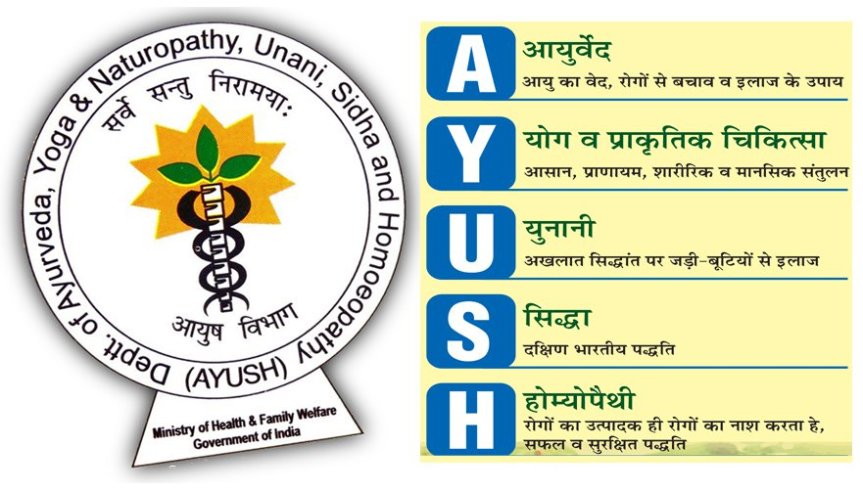
    Steps Taken to Popularize AYUSH System of Medicine in the Country

    eople across the country are following traditional Indian medical systems of AYUSH. According to the data available, 17,73,75,226 Patients visited Government Health Care Facilities under AYUSH in OPD and 19,57,921 were admitted as inpatients in   2017-18.

    The measures taken by the Ministry of AYUSH for further propagating the natural medical systems are: –


    1. The Ministry of AYUSH regularly observes days dedicated to AYUSH Systems of Medicine Viz. International Day of Yoga, Ayurveda Day, Unani Day, Siddha Day, Naturopathy Day, Homoeopathy Day etc. to create awareness about the benefits of the respective AYUSH system of medicine including natural medical systems.
    2. A Central Sector Scheme for Promotion of Information Education and Communication (IEC) in AYUSH has been devised by the Ministry of AYUSH for this purpose. Under this Scheme, the Ministry of AYUSH takes up initiatives to create awareness about and to promote AYUSH systems of medicine including natural medical systems. These initiatives include organizing Arogya Fairs, Melas, Conferences, Exhibitions, Seminars, Workshops, Symposium, Yoga Fests and Ayurveda Parvs. The IEC Scheme also supports undertaking publicity campaigns through electronic media, print media and social media amongst the citizens in the country.
    3. Ministry of AYUSH has established five Research Councils namely CCRAS, CCRUM, CCRS, CCRH & CCRYN for Research in Ayurveda, Unani, Siddha, Homoeopathy, Yoga & Naturopathy respectively. These research councils apart from engaging in clinical/ field research also undertake the following activities: –
    1. Running Mobile health programme catering to backward regions and SC/ST communities
    2. Undertaking health awareness campaigns.
    3. Piloting Innovations like telemedicine with the help of common service centres.


    Ministry of AYUSH has already established advanced research institutes in  Indian medical systems through Research Councils.

    1. Central Council for Research in Homoeopathy (CCRH) has 21 Research Centres in different States/UTs for advance research in Homoeopathy.
    2. Central Council for Research in Ayurvedic Sciences (CCRAS) is carrying out its research activities through its 30 Institutes/Centres/Units located all over India and also through collaborative studies with various Universities, Hospitals and Institutes. The research activities of the Council include Medicinal Plant Research (Medico-Ethno Botanical Survey, Pharmacognosy and Tissue Culture), Drug Standardization, Pharmacological Research, Clinical Research, Literary Research & Documentation and Tribal Health Care Research Programme.
    3. Central Council in Research in Siddha (CCRS) had initiated steps to establish advanced research in Siddha medical systems through IMR and EMR projects. Clinical research, Epidemiological research, Drug research, Literary and fundamental research, and Medicinal plants research are being carried out in these units.  Totally there are 25 ongoing IMR projects and 8 completed IMR projects of CCRS.
    4. CCRS is equipped with state of the art infrastructure with sophisticated instruments in the following departments: Department of Clinical Research, Department of Bio-chemistry, Department of Pathology, Radiology, Department of Chemistry, Department of Pharmacognosy etc.,
    5. CCRS had published 32 books publications and 456 scientific research articles in various indexed international / national peer reviewed journals.
    6. CCRS had signed MoU with reputed institutions / organizations for initiating collaborative research works.
    7. Central Council for Research in Unani Medicines (CCRUM) has also carried out Advance Research on various diseases in collaboration with other renowned academic/scientific institutes.
    8. CCRUM is also authenticating raw drugs as well as compound formulations by implementing Pharmacognostical methods viz., Macroscopy, Microscopy and Powder Microscopy; Physico-chemical methods and instrumental such as TLC fingerprint.


    At present there is no such proposal for consideration to establish a University for Siddha and Unani Medical systems in Tamil Nadu on the lines of   Dr. Sarvapalli Radhakrishnan  Ayurveda Medical University in Rajasthan. However, the matter comes

    under the purview of State Government.


    This information was given by the Minister of State (Independent Charge) for AYUSH, Shri Shripad Yesso Naik in written reply to a question in Lok Sabha today.

    ***

    Five Questions to Ask Your Election Candidate (English Version)

    This is the English version of the flyer circulated a little before the last general elections. As mentioned, it got results, but was a little late in the campaign.


    IGNUS-PAHAL
    The one who fights for children’s rights!                         Is the one who will get our vote!
    Five Questions On Our Children’s Rights
    This election may affect your children.  Especially if your would-be representative in legislative assembly keeps the following in mind.
    ·       Education – good / quality education – is everyone’s right. Especially after the RTE, education in every government school should be such that everyone finds it good. But even very poor parents are removing their children from government schools and making sacrifices to send their children to private schools.
    Ask your would-be representative – Question 1: What will you do to ensure appropriate and quality education in government schools?
    ·       Teachers’ salaries have gone up. They now get training from time to time to enable good education for children. There is provision for mid-day-meals, school uniforms, play equipment, learning material – all free. But there is demotivation among teachers. They feel neglected. They feel as if they are not being respected.
    Ask your would-be representative – Question 2: What will you do so that teachers take interest in their work and are committed to the good education of their children?
    ·       According to RTE the responsibility of running/managing the schools will now be with community and panchayats. But the community and the panchayats feel: how can we give any advice to the school? They do not find themselves capable of advising / supporting schools. And they feel this is not even their work.
    Ask your would-be representative – Question 3: What will you do to enable the active involvement of community and panchayats in improving education in our schools?
    ·       Community and parents both expect that education will ensure children’s development as well as employment. But now people say: All this education is going to lead only to unemployment, so it is better that the child be engaged in some wage-earning work right away.
    Ask your would-be representative – Question 4: What will you do so that every member of the community is aware and committed towards the education of their children?
    ·       If we look at the money spent on education, most of it is used for salries, infrastructure and maintenance. Crores of rupees are spent every year on this. Even then our schools and education offices look dirty and disorganized compared to private institutions. And the people responsible for improving education for children cannot even be heard talking about it.
    Ask your would-be representative – Question 5: What will you do so that government schools and education offices look attractive? So that people in the system not only think of children’s improvement but also do what is needed?
    Your views will have an impact, won’t they? But only if you raise these questions! Give your vote only if you get an answer! So go ahead, ask questions, get others to ask, and let us know!!

    Rajya Sabha to form an informal group of MPs to discuss challenges posed by social media- Vice President

    The Vice President, Shri M. Venkaiah Naidu today advised media to provide more coverage to the substantive work being done by the parliament rather than only focusing on sensational remarks or disruptive behavior by some members.

    Presenting the first ‘TVR Shenoy Award for Excellence in Parliamentary Journalism’ to veteran political journalist Shri Vinod Sharma, Shri Naidu called the press as the extension of parliament as it holds the elected representatives accountable to the people whom they represent.

    The Vice President called the parliamentary committees as a beautiful system within our parliamentary system. All members discuss and debate there constructively as there is no media glare, he said.

    However, Shri Naidu expressed concern that the Chairman of the several parliamentary standing committees now complain of only one third of the members attending the meetings on an average. This is a worrying trend, he said. He also said that he is planning to write to all political parties regarding this.

    The Vice President called the role of a parliamentary journalist of critical importance, as people form their opinions based on the information provided by the press. With this information, they analyze and evaluate the performance of their elected representatives and the government.

    Therefore, VP urged the media to not color news with views and stressed the need to maintain objectivity, fairness and accuracy in reporting. “Impartiality and objectivity of press is of supreme importance for a democracy to survive and flourish”, he said.

    Quoting Mahatma Gandhi, who described journalism as ‘service’, Shri Naidu expressed concern over politicians and business groups setting up newspapers and TV channels. “This erodes the credibility and core values of journalism”, he observed.

    He also called upon media bodies to come up with some sort of self regulation to ensure that credibility and reliability of press remains steadfast.

    Highlighting that press fought hard for its freedom, the Vice President called for using this freedom judiciously. He also drew media’s attention towards its responsibility to provide people correct information and educate them on their rights.

    Further, Shri Naidu appealed to media to demystify parliament’s procedures and work, insisting that “people should be able to understand parliament’s functioning in easy and friendly language”. This will inspire them to become active stakeholders in the political processes, he opined.

    Talking about the growing volume of parliamentary data, the Vice President felt a need to invest more in creating infrastructure, tools, capacity and skills for ‘data smart’ journalists.

    “A good data journalist can help the citizens better understand the institution of parliament”, he said, adding that this may also improve the output of MPs as they would become more aware of their performance.

    Shri Naidu also advocated for unhindered access to the important information generated by parliament on a day to day basis in a user friendly format.

    Calling the people’s ‘right to know’ as a vital component for an informed society, Shri Naidu called for a good working relationship between the parliamentarians and journalists. If their relationship becomes too adversarial or too close, it would undermine the public’s ‘right to know’, he added.

    Talking about the impact of social media on the institution of parliament and parliamentarians, VP said that it enables MPs to reach their constituencies directly and is also a good medium for obtaining public feedback.

    However, he also cautioned the parliamentarians to be aware of social media’s potential to spread fake news and misinformation. In this regard, he called for the creation of a system of checks and balances to curb the possible misuse of social media by anti social elements.

    In this regard, Shri Naidu said that Rajya Sabha will form an informal group of MPs to discuss various challenges posed by social media, such as the spread of pornographic content.

    He expressed worry that this trend on social media is misleading the children and posing the biggest challenge to Indian values by devaluing our age old family system.

    Appreciating the initiative by Prof. K.V. Thomas Vidyadhanam Trust to institute an award to honour late Shri T.V.R. Shenoy, Vice President said that Shri Shenoy was an illustrious journalist and editor who served the public cause through his writings for five decades.

    I also congratulate Shri Vinod Sharma, Political Bureau Chief, Hindustan Times on being conferred first TVR Shenoy Award for Excellence in Parliamentary Journalism.

    Shri A.K Antony, former Defence Minister, Prof. K.V. Thomas, Chairman, Trust, Dr. Omcheri NN Pillai, Chairman of Jury and Smt. Sarojam, wife of late Shri TVR Shenoy were among the dignitaries present at the event.

    Following is the full text of the speech –

    “Dear Shri A.K Antony Ji, former Defence Minister

    Priof. K.V. Thomas, Chairman, Trust,

    Shri Vinod Sharma, Political Chief of Bureau, Hindustan Times

    Dr. Omcheri NN Pillai, Chairman of Jury

    Mrs. TVR Shenoy

    Ladies and gentlemen,

    I am very happy to be among you on this special occasion of presenting the TVR Shenoy Award for Excellence in Parliamentary Journalism.

    Friends,

    Shri T.V.R. Shenoy was an illustrious journalist and editor who served the public cause through his writings for five decades. A reporter par excellence, he wrote extensively on issues ranging from politics, economy to international affairs and wars.

    In early nineties, his investigative journalism led to the expose of several banking and stock market scams including the Harshad Mehta scam.

    Shri Shenoy was honored with the Padma Bhushan in 2003 for his services to the nation.

    I appreciate the initiative by Prof. K.V. Thomas Vidyadhanam Trust to honour late Shri Shenoy by instituting an award in his name.

    I also congratulate Shri Vinod Sharma, Political Bureau Chief, Hindustan Times on being conferred first TVR Shenoy Award for Excellence in Parliamentary Journalism. Shri Sharma is a very familiar face to me as he has been reporting on the parliament for more than 25 years.

    Dear friends,

    The importance of a parliamentary journalist can not be overemphasized in a parliamentary democracy.

    Our parliament debates and discusses various issues of national importance everyday.

    It is a place where major policy decisions are taken.

    It is the place where governments form and collapse.

    It is the source of valuable political ideas and points of view.

    And the people as important stakeholders in democratic process have a right to know how parliament is functioning, what it is discussing and debating.

    They want to know what their elected representatives are saying or doing.

    A parliamentary reporter has crucial responsibility of reporting all of this to the public.

    People form their opinions based on this information provided by the press. With this information, they make up their minds whether or not to support a candidate in next election …. They analyze and evaluate the performance of their government.

    That is why the role of a parliamentary journalist assumes critical importance in the way he decides which issues to publicise or what angle to give to a new story.  His work and orientation plays an important role in scrutinizing the functioning of the parliament, government and the oppostion.

    That is why press is often called as the extension of parliament. It holds the elected representatives accountable to the people whom they represent.

    Therefore impartiality and objectivity of press is of supreme importance for a democracy to survive and flourish.

    Friends,

    Time and again, I have urged the media to not color news with views and stressed the need to maintain objectivity, fairness and accuracy. The neutrality and sanctity of newsrooms should be upheld at all times.

    Our Father of Nation, Mahatma Gandhi, who was an eminent journalist is his own right had said that, –

    “I realized that the sole aim of journalism should be service. The newspaper press is a great power, but just as an unchained torrent of water submerges whole countryside and devastates crops, even so an uncontrolled pen serves but to destroy. If the control is from without, it proves more poisonous than want of control. It can be profitable only when exercised from within.”

    But today we see even many politicians and business groups setting up newspapers and TV channels. With these mediums under their control, the reporting can become distorted. This erodes the credibility and core values of journalism.

    Therefore, I feel that media bodies need to come up with some sort of self regulation to ensure that credibility and reliability of press remains steadfast.

    Friends,

    The cardinal principle of journalism is to present fair, objective, accurate and balanced information to the reader and viewer without journalists assuming the role of the gatekeepers. This is particularly true while reporting on a political controversy. Rather than opining which argument is the strongest, a good political reporter should lays out all the arguments and facts without bias, and let the people take a decision on the relative merits of the arguments.

    Dear friends,

    Press fought hard for its freedom and this freedom should be used judiciously.  Article 19 (1)(a) of the Constitution guarantees to the citizen, the right to “Freedom of speech and expression”. With regard to parliamentary privileges also, press has full protection as long as reporting is true, without malice and for public good.

    However, freedom and responsibility cannot be considered as inseparable. There can not be unfettered freedom without any responsibility.

    The media has the onerous responsibility to not only provide unadulterated and correct information, but also educate the people on their rights as well.

    Friends,

    When it comes to reporting on the parliament, media has one more special responsibility.

    It should uncode and demystify parliamentary proceedings and procedures to the larger public. People should be able to understand parliament’s functioning in easy and friendly language.

    I appreciate that many news organizations are already doing good work in this direction, specially while reporting the budget, but more needs to be done.

    Many parliamentarians do a lot of research and put forth their views in the parliament. This should be covered more extensively rather than only some sensational remarks or disruptive behavior.

    This will enable a deeper understanding of the functioning of Indian parliamentary system among the masses inspiring them to become active stakeholders in the political processes shaping the destiny of their lives and the nation.

    I suggest that similar efforts need to be made with respect to the growing volume of the parliamentary data.

    Friends,

    Recently, I saw a new story titled as ‘Rajya Sabha records 90% productivity in first week of winter session’.

    This is the power of data.

    A good data journalist can help the citizens better understand the institution of parliament. The members of parliament may also become more aware of their performance. The output may improve as a consequence.

    Therefore, I feel that there is a need to invest in creating infrastructure, tools, capacity and skills for ‘data smart’ journalists.

    At the same time, there should be unhindered access to the important information generated by parliament on a day to day basis in a user friendly format. This would help masses in gaining better understanding of the functioning of Parliament, participation of MPs and various legislative proposals under consideration.

    Dear friends,

    For a democracy to thrive, it is desirable that there should be a good working relationship between the parliamentarians and journalists.

    The media on one hand, communicates parliamentary activities to the citizens, and on the other it also provides valuable feedback on public opinions.

    Thus media creates a two-way flow of information which is vital for the healthy functioning of democracy and good governance.

    Dear friends,

    If this relationship between the parliamentarians and journalists becomes too adversarial or too close, it would undermine the public’s ‘right to know’.

    And this ‘right to know’ is a vital component in our quest for an informed society and informed democracy.

    This is important for empowerment of our citizens.

    But at times it is observed that adjournments and commotion tend to make news rather than substantive debates on important issues.

    Therefore, I would urge my friends in media to not focus on sensationalism and ‘bite journalism’ and impartially report the multiplicity of views expressed by Members in the parliament.

    Friends,

    In the end, I come to the impact of latest technological developments – such as social media – on the institution of parliament and parliamentarians.

    It is true that social media has enabled parliamentarians to reach their constituencies directly, bypassing journalists. Social media also provides a good medium for obtaining public feedback.

    But, the parliamentarians have to be aware of the pitfalls of the social media which has tremendous scope to spread fake news and misinformation. We need to create a system of checks and balances to curb the possible misuse of social media by anti social elements.

    Dear friends,

    In the end, I once again congratulate Shri Vinod Sharma for the prestigious award.

    Wishing you all the best.

    Jai Hind!”

    *****

    National Conference on PSYCHOLOGICAL CONTRIBUTIONS IN SUSTAINABLE HUMAN DEVELOPMENT IN SPORTS, ORGANIZATIONS & COMMUNITY HEALTH

    ABOUT CONFERENCE

    l       l      l       l       l       l
    Sustainable Human development is development that meets the needs of the present, without compromising the ability of future generations to meet their own needs. In this regards the practice and research in Psychology provides culturally appropriate Psychological Science, Interventions, behavioural approaches and the Environment for Sustainable Human Development in Sports, Organizations and Community Health. This conference provides a critical platform to the ideas and work emerging from for learners, practitioners, educators of Psychology to seek the ways are fostered and Sustainable Human Development within Sports, Organizations and Community Health contexts, through process of knowledge production.
    OBJECTIVES OF THE CONFERENCE
    l       l      l       l       l       l
    *      This conference provides a critical platform to the ideas and work emerging from for learners, practitioners, educators of Psychology to seek the ways are fostered and Sustainable Human Development within Sports, Organizations and Community Health contexts, through process of knowledge production.
    *      We are interested in exploring and showcasing scholastics, activism, practice, and basic academic commitment, from around the globe that tries to bring about sustainability, inclusivity, and wellbeing for all through Psychological Contributions.
    SIGNIFICANCE AND ADVANTAGES TO WHO ATTEND THE CONFERENCE
    l       l      l       l       l       l
    The event goes for bringing a broad assortment of Psychology specialists running from standard Psychologists to for the most part abnormal study of mind, behaviourism and so on and moreover put something an excellent highlight at Educating and illuminating psychology specialists with the latest information of marketing methods that can be associated with counter the undervaluation psychology practices face. Psychological contribute to Sustainable Human Development in Sports, Organizations and Community Health, is a generally recent issue. One manner by which psychology is important, is its application to fix a portion of the drop out of unsustainable human development e.g., disaster relief and psychological versatility building in the wake of cataclysmic events realized by man-made environmental change, or strife decrease through peaceful correspondence, injury interventions and harmony building in the wake of contentions between ethnic gatherings or over extraction of assets. Another noteworthy way psychology can be applicable is as an indicator of unsustainable human development. Health is at the focal point of sustainable human development and a general public is unsustainable if its monetary and social frameworks and institutions are compromising mental just as physical health. A diminishing in prosperity, for example, rising rates of pressure related issue, melancholy and suicide, dementias, perpetual insomnia, consideration shortfall and momentary memory issues, all point to unhealthy and in the long haul, unsustainable parts of the earth, particularly for youth 
    The Conference is simply the perfect way to deal with place assets into yourself and your occupation. Get inspiration and a fresh viewpoint from the imperativeness of your partners as you submerge yourself in instructive learning sessions drove by a bit of the business\’ most brilliant, most inventive characters who will outfit you with information about the key drivers of fundamental business limits, answers for legitimate challenges, and methods and vital ideas with quantifiable outcomes.
    VENUE OF THE CONFERENCE
    l       l      l       l       l       l
    V. P. S. P. M. S. Arts, Commerce & Science College, Kannad, Hivarkheda – Gautala Road, Tq. Kannad, Dist Aurangabad, Maharashtra, 431103
    ABOUT COLLEGE
    l       l      l       l       l       l
    Welcome to V. P. S. P. M. S. Arts, Science & Commerce College, Kannad. This college is started with the Nobel aim of spreading light of knowledge to the rural hilly economically backward class students of this area. This area has sizable number of tribal students. The college provides quality educations to the socially backward class students. The college has 10 acres of land with beautiful natural ambience. We cater according to the need of students in the era of globalization. The college arranges various programmes and activities for all round personality developments of the students. The college emphasizes on computer education, science & English language. College imparts update knowledge to the students by providing internet facility, library books & magazines. Our college interacts with people from all walks of the life. It has become leading institute imparting education.
    ABOUT KANNAD

    Kannad city is located in Kannad Taluka, in Aurangabad district of Maharashtra state, India. It is located 56 KM towards North from District head quarters Aurangabad. 

    Gautala Autramghat Sanctuary is located within its borders. Gautala Autramghat Sanctuary is a protected area of Maharashtra state, India. It lies in the Satmala and Ajantha hill ranges of the Western Ghats, and administratively is in Aurangabad District and Jalgaon District. The wildlife sanctuary was established in 1986 in an existing reserved forest area. Its name comes the nearby village of Gautala, which was itself named after Gautam Rishi, a Hindu ascetic mentioned in the Ramcharitmanas.

    v Pitalkhora Caves located 20 km away from Kannad. The Pitalkhora Caves, in the Satamala range of the Western Ghats of Maharashtra, India, are an ancient Buddhist site consisting of 14 rock-cut cave monuments which date back to the third century BCE, making them one of the earliest examples of rock-cut architecture in India.
    v Ellora Caves located 30 km away from Kannad. Ellora is a World Heritage Site located in the Aurangabad district of Maharashtra, India. It is one of the largest rock-cut monastery-temple cave complexes in the world, featuring Buddhist, Hindu and Jain monuments, and artwork, dating from the 600–1000 CE period.
    v Grishneshwar Temple, sometimes referred to as the Ghrneshwar or Dhushmeshwar temple, is one of the shrines dedicated to Lord Shiva that is referenced in the Shiva Purana. The word Ghrneshwara means \”lord of compassion\”. The temple is an important pilgrimage site in the Shaiva tradition of Hinduism, which considers it as the last or twelfth Jyotirlinga (linga of light). This pilgrimage site is located in Ellora (also called Verul), less than a kilometer from Ellora Caves. It is about 30 km away from Kannad,
    v Ajanta Caves located 98 km away from Kannad. The Ajanta Caves are rock-cut Buddhist cave monuments which date from the 2nd century BCE to about 480 CE in Aurangabad district of Maharashtra state of India. The caves include paintings and rock-cut sculptures described as among the finest surviving examples of ancient Indian art, particularly expressive paintings that present emotion through gesture, pose and form.
    HOW TO REACH KANNAD
    l       l      l       l       l       l
    Kannad town is reachable from Aurangabad and Chalisgaon Rail Way Station. Distance between Aurangabad to Kannad is 56 km by road and Chalisgaon to Kannad is 34 km by road
    The convenient and fastest way for people who came through South Central Railway zone i.e. Aurangabad Railway Station may get the MSRTC Bus from the Central Bus Stand Aurangabad to reach Kannad City.  

    THEMATIC AREAS

    l       l      l       l       l       l


    Ø  Sports and Mental Health
    Ø  Anxiety or Energy Management
    Ø  Attention and Concentration Control (focusing)
    Ø  Imagery, Visualization, Self-talk & Mental Practice
    Ø  Goal Setting, Team Building
    Ø  Time Management/Organization
    Ø  Organizational Behaviour
    Ø  Personal Management in Organization
    Ø  Conflict and Communication in Organizations
    Ø  Leadership in Sports, Organizations and Community
    Ø  Interpersonal Relationship in Sports, Organizations and Community
    Ø  Diversity related to interpersonal relation
    Ø  Conflict and Communication in Organizations
    Ø  Motivation and human behaviour
    Ø  Yoga & Meditation
    Ø  Community mental health
    Ø  Stressful aspects of sports, community and organizational environments
    Ø  Stressful life events in sports, community and organizational environments
    Ø  Attitude and Values in sports, Organizations and community
    Ø  Community Based Intervention
    Ø  Psychological sense of community
    Ø  Preventative strategy in social and mental health
    Ø  Support systems and community mental health
    Ø  Community experimentation
    Ø  Culture and Community Psychology 
    Ø Capacity building in sports, Organizations and community
    Ø  Community health and wellbeing
    Ø  Sustainable communities 
    Ø  Prevention in substance abuse, delinquency
    Ø  Building relationships between individuals and community groups
    Ø  Social Ecological Thinking to Community Psychology
    Ø  Positioning the Critical in Community Psychology
    Ø  Feminism and Community Psychology
    Ø  Community Psychology in the Policy Arena
    Ø  Policy of Government in Psycho-Social and its Implication.
    Ø  Emerging Global Trends in Life Span Development Child Care
    Ø  Perspectives of Community Development
    Ø  Home Science/ Home Economics towards Young India
    Ø   Public health, Nutrition and Food Safety
    Ø  Issues and challenges of contemporary families
    Ø  Ascertaining quality care in early childhood
    Ø  Innovative strategies for promoting family and community well- being
    Ø  Home Science for sustainable human development
    Ø   Community mobilization and gender sensitization
    Ø  Ergonomics and drudgery reduction
    Ø  Emerging trends in Home Science/ Home Economics
    Ø  Community Health Problems related to sanitation, environment, personal hygiene & pollution
    Ø  Community Health and nutritional education
    Ø  Nutritional problems of the community and its remedies
    Ø  Health needs of special groups – women, infants, children and adolescents
    Ø  Community nutrition and health problems


    IMPORTANT DATES

    October 25th, 2019
    Abstracts Submission Deadline
    October 31st, 2019
    Notification Regarding Acceptance of Abstracts Submission
    November 15th, 2019
    Final Paper Submission & Early Bird Registration Deadline
    December 20-21, 2019
    Conference Dates
    December 20th, 2019
    Conference Opening ceremony
    December 21st, 2019
    Conference Closing ceremony
    Abstracts for oral presentations, posters, and symposia may be submitted only electronically using the Scientific Committee at email address vpconfpsy@gmail.com.

    Government has set up Atal Innovation Mission (AIM) to provide exposure to science and technology to students

    The Government of India is encouraging the schools to provide exposure to science and technology to students so that they can be acquainted with futuristic technology platforms. Government has setup the Atal Innovation Mission (AIM) at NITI Aayog. The objective of establishing AIM is to create scientific temper and cultivate the spirit of curiosity and innovation among young minds. Towards this end, AIM is establishing Atal Tinkering Laboratories (ATL) across the country for students between grade 6th to 12th, equipped with latest emerging technologies such as electronics, IoT, 3D printing, Robotics, etc.

    In schools, AIM facilitates to set up network of ATL in India. The vision of ATL initiative is to ‘Cultivate 1 Million children in India as Neoteric Innovators’. The objective of this scheme is to foster curiosity, creativity and imagination in young minds and inculcate skills such as design mind-set, computational thinking, adaptive learning, physical computing, rapid calculations, measurements, etc.  As on date, 8878 schools have been selected and 4680 schools have been given the ATL grant in aid for establishment of ATL.

    A total of Rs. 1000 crores are currently earmarked for AIM up to financial year 2019-20. There is no direct allocation of funds at a state/district level by AIM. The disbursement of the funds is directly made by AIM to the beneficiaries and administered centrally.

    This information was given by the Union Minister for Human Resource Development, Dr. Ramesh Pokhriyal ‘Nishank’ in a written reply in the Rajya Sabha today.

    *****

    Cyber Attacks on Indian Nuclear Power Plants

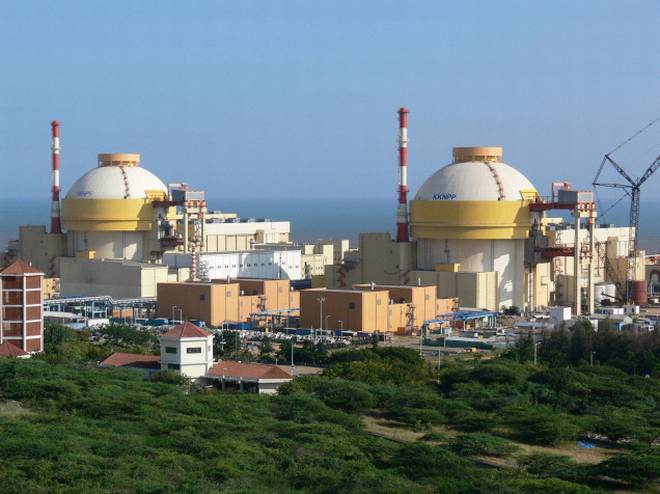
    Recently, there was an identification of a malware infection on Kudankulam Nuclear Power Plant (KKNPP) administrative network which is used for day to day administrative activities.  The affected system contains data related to administrative function. Plant control and instrumentation system is not connected to any external network such as Intranet, Internet and administrative system. The plant systems, which are isolated and not accessible from this administrative network, were not affected.

    Various measures for further strengthening of Information Security in administrative networks have been taken up viz. hardening of internet and administrative intranet connectivity, restriction on removable media, blocking of websites & IPs which have been identified with malicious activity etc.

    The Computer & Information Security Advisory Group (CISAG) of Department of Atomic Energy (DAE) has recommended certain measures for immediate and short term implementation. These are being complied with.

    The expenditure towards cyber security is a part of the regular revenue expenditure.

    This information was provided by the Union Minister of State (Independent Charge) Development of North-Eastern Region (DoNER), MoS PMO, Personnel, Public Grievances & Pensions, Atomic Energy and Space, Dr Jitendra Singh in written reply to a question in Rajya Sabha today.


    ****

    Prime Minister mentions in his ‘Mann Ki Baat’ broadcast Nation to read Preamble

    The yearlong nationwide activities on Constitution Day are being launched to mark the 70th anniversary of the adoption of the Indian Constitution by the Constituent Assembly, beginning November 26, 2019. The day 26th November is celebrated every year as Constitution Day (also known as ‘Samvidhan Divas’). These activities aim to reiterate and reorient the citizens towards the values and principles expressed in the Indian Constitution and encouraging all Indians to play their rightful role in strengthening the Indian Democracy.


    Various sections of the society will do a mass reading of the Preamble to the Constitution at 11:00 am on the Constitution Day. Like every year, each Ministry/ Department/ Organisation will take up a mass reading of Preamble of the Constitution to mark the occasion. Talks, discussions and seminars will also take place all over the country on the Constitution Day.


    The aim is to publicize the glorious and rich composite culture and diversity of our nation. Further, it aims to create awareness of Fundamental Duties as enshrined in the Indian Constitution. As citizens of our great nation, we believe firmly in Gandhian thought that ‘The true source of rights is duty. If we all discharge our duties, rights will not be far to seek’ and as said by Sardar Patel, ‘Every Indian should forget that he is a Rajput, a Sikh, or a Jaat. He must remember that he is an Indian and he has every right in his country but with certain duties’.


    The activities on Constitution Day will see participation and cooperation from all Ministries/ Departments at the Centre/State, Autonomous Bodies/Public Sector Undertakings, Armed Forces and Central Public Organisations etc. Further to make it a peoples’ movement, the Prime Minister, Shri Narendra Modi has interacted with the entire nation through ‘Mann ki Baat’ on November 24, 2019. The President of India, the Vice President of India, the Prime Minister, the Speaker of Lok Sabha, the Minister for Law & Justice and all Members of Parliament will participate in a special function being organized in the Central Hall of the Parliament on the Constitution Day. A Digital Photo Exhibition will be inaugurated and a Portal on Youth Parliament Scheme will also be launched on this occasion. As mark of solidarity and an appeal to citizens of India to exhort their contribution during the campaign, an electronically signed Pledge by the Prime Minister be rendered to the public at large.


    Government is providing higher education to tribal students through Central Tribal Universities

    The Central Government has already established two Central Tribal Universities namely the Indira Gandhi National Tribal University, Amarkantak and Central Tribal University of Andhra Pradesh, Vizianagram with a view to provide avenues of higher education and research facilities primarily for the tribal population of the country. Besides, the Andhra Pradesh reorganization Act, 2014 inter-alia mandates for establishment of a new Central Tribal University in Telangana. Further, there are several Central Universities in different States which also fulfil the aspirations of higher education of tribal youth of the region.

    Further, the UGC is implementing a scheme for the benefit of Scheduled Tribe (ST) students i.e. National Fellowship for Higher Education of Scheduled Tribe Students. In addition to this, UGC is implementing the following schemes for the benefit of weaker sections of the society including ST students:

    1. Residential Coaching Academies of Minorities /SC/ST and Women
    2. Establishment of Centres in Universities for study of Social exclusion and inclusive Policy
    3. Establishment of Equal Opportunities Cells (EOCs)
    4. Establishment of Scheduled Caste and Scheduled Tribe Cells in Universities
    5. Coaching Schemes for Scheduled Castes/ Scheduled Tribes/OBC (non-creamy layer)/ Minorities: (i) Remedial Coaching at UG & PG level (ii)  Coaching for entry into services (iii) Coaching for NET.


    This information was given by the Union Minister for Human Resource Development, Dr. Ramesh Pokhriyal ‘Nishank’ in a written reply in the Rajya Sabha today.


    *****

    ‘Urgent need to end gender discrimination’ – Vice President

    The Vice President of India, Shri M. Venkaiah Naidu today called for ending the gender discrimination and ensuring safety security, and dignity of the women.

    Speaking at the Silver Jubilee Celebrations of Indian Women Press Corps,  he said that it was the collective responsibility of the governments, media and civil society to ensure that women were made equal partners in the developmental process of the nation.

    Referring to various reports on the Gender and pay gaps in the media sector, the Vice President called for collective efforts of news organizations, associations such as Press Council of India, IWPC and the National Broadcasters Association to work together and find out a way to address disparities based on gender within the journalistic profession.

    Stating that the menace of fake or doctored stories that find a way to masses via news, internet, and messaging services have often led to chaos, confusion, and panic, Shri Naidu stressed that media has the onerous responsibility to not only provide accurate information but also educate the people on their rights and responsibilities as well.

    The Vice President urged the media not color news with views and stressed the need to maintain objectivity, fairness, and accuracy in decimating information to the reader and viewer without assuming the role of the gatekeepers.

    He called for collective efforts of the Press Council of India, NBA to establish a mechanism to curb the menace of fake news, propaganda and paid news.

    Describing journalists as catalysts for change and media as an instrument to bring in a positive change in society, the Vice President asserted that Media professionals must strengthen democracy through their observations, suggestions, and writings.

    The Vice President asked the regional and vernacular Media organizations to promote Indian languages, culture, and traditions of different states and regions through special programs along with the news. He stressed that media must lay special emphasis on matters relating to farmers, women, youth, entrepreneurs and rural India.

    On the occasion, Shri Naidu also released Indian Women’s Press Corps Souvenir.

    Smt. Jyoti Malhotra, President Indian Women’s Press Corps, Ms. Vinita Pandey, General Secretary Indian Women’s Press Corps and eminent journalists from several organizations were present at the event.

    Following is the full text of the speech –

    “Namaskar,

    Let me first begin by congratulating the Indian Women’s Press

    Corps (IWPC), a reputed association of women journalists on completing 25 successful years. It was set up in 1994 to support women journalists in their professional work, in enhancing their knowledge and skills and to provide a forum for networking.

    I am glad that the organization has been playing a key role in creating a conducive working environment for women journalists and also working towards safeguarding their rights. This non-profit, nonpartisan, progressive, professional organization has been focusing on creating a positive change for women journalists.

    With reporters, editors, producers, anchors, and cameraperson from across the print, TV and new media as its members, the organization has become an important institution and has been organizing press meets and interactions with eminent personalities from various fields.

    It is commendable that women have come forward in such large numbers to join this noble profession to play their rightful role as the fourth pillar of the state.

    I was informed that IWPC has been providing essential infrastructure support to women journalists by supporting them in performing their duties both on the field and at the desk.

    The press and the media played a pioneering and stellar role in inspiring the masses to fight against the British during the freedom struggle and in strengthening the democratic foundations in the country since Independence.

    Journalism provides citizens with the information they need to make the best possible decisions about their lives, their communities, their societies, and their governments.

    The purpose of journalism is to give people the information they need to make better decisions. In other words, journalism is supposed to empower.

    The media has the onerous responsibility to not only provide accurate information but also educate the people on their rights and responsibilities as well.

    As we all are aware, the media landscape has transformed dramatically over the years and so have the values and ethics of journalism.

    Professions such as Politics, Medicine, and journalism were considered as a mission and those who were in the job used to commit to ethics. Unfortunately, there is a decline in such commitment due to various factors including business and politics. Unfortunately, stories or reports are being mixed with views according to the management’s line of thinking.

    Adding to this is the menace of fake or doctored stories that find a way to masses via news, internet, and messaging services. Such instances have often led to chaos, confusion, and panic.

    I have been urging the media not color news with views and have been stressing the need to maintain objectivity, fairness, and accuracy.

    The cardinal principle of journalism is to present fair, objective, accurate and balanced information to the reader and viewer without journalists assuming the role of the gatekeepers.

    I am glad that many journalists follow these principles ensuring that Indian media is by and large credible.

    Journalists are catalysts for change and media acts as an instrument to bring in a positive change in society. Media professionals are the watchdogs of society and strengthen democracy through their observations, suggestions, and writings.

    It is unfortunate that we still come across instances of harassment of women, gender discrimination and domestic violence.  The glass ceiling limited women’s opportunities for growth is, unfortunately, still a reality in contemporary society.

    According to the Global Media Monitoring Project (GMMP), as per the latest data of 2015, globally, women as news reporters were most present on radio at 41% and least in print news at 35%. (TV and Internet constituted the remaining 24%).

    The report said that the global share of women reporters dropped on radio and television by four percentage points in both mediums between 2010 and 2015.

    The report pointed out that between 1995 and 2015, the percentage of women media professionals rose from 17% in (Newspaper, Television, Radio) to 24%, which is a 7% rise. Men still dominate the industry with 76%.

    Findings of another study, “Inside the News: Challenges and Aspirations of Women Journalists in Asia and the Pacific”, launched by UNESCO, and the UN Women and the International Federation of Journalists (IFJ) suggested that the presence of women in media has more than doubled in two decades but they constitute only 28.6 percent of the media workforce in Asia and the Pacific and men outnumber women in 4:1 ratio in India.

    It pointed out that “on average across Asia and the Pacific, women make up 28.6 percent of the media workforce. The proportions are lower in decision-making roles in media organizations where women make up 17.9 percent of executive roles, 19.5 percent of senior editorial and 22.6 percent of mid-level editorial positions.”

    Another recent report released by UN Women, female journalists in India “continue to be denied their fair share” at major media organizations in India. The report, “Gender Inequality in Indian Media”, pointed out that women were better represented online than in newspapers and TV.

    Keeping these things in mind, collective efforts must be made by the managers of News organizations, Associations such as yours and the Press Council of India and the NBA must work together and find out a way to address disparities based on gender within the profession.

    A systematic, structured approach must be put in place by the media and the government to address all the crucial matters relating to women’s safety, security, and dignity. There is an urgent need to end gender discrimination and neglect of women.

    I am happy to know that the organization has been organizing regular workshops, and training sessions for its members to achieve its important goal of advancing the impact of women in the media by being a resource to members and the industry.

    As you all are aware, women’s participation is extremely crucial to ensure the overall development of the nation. It is the responsibility of the governments, institutions, media and civil society to see that women are made equal partners in the developmental process of the nation.

    The media must highlight the success stories of women achievers to inspire others.

    As we celebrate the 25 years journey of IWPC, we must strive to set higher benchmarks and achieve excellence in the field of media.

    I would like all of you to inform and educate people with well documented, research-based reports based on facts. Fearless adherence to truth should be your creed.

    The rise of social media has increased competition among entities, organizations. It is important our newsrooms and professionals are trained and sensitized on flashing news and updates by exercising greater caution.

    Collective efforts need to arrest sensationalism, end biased coverage and paid news. Entire Media, as a responsible institution, must contribute to strengthening democratic foundations of the country.

    Here, the Press Council and Media Organizations including yours should take lead in training professionals to be more responsible in disseminating information.

    You must empower the audience or readers to make informed choices.

    I urge the media, especially regional and vernacular Media organizations to promote Indian languages, culture, and traditions of different states and regions through special programs along with the news.

    In the end, I urge the media to focus on rural India. We must lay special emphasis on matters relating to farmers, women, youth, entrepreneurs.

    I am happy to learn that IWPC has been providing important professional resources to women journalists like library, computers and enabling its members to meet newsmakers from all walks of life on a regular basis.

    I am sure such support helps all the journalists, especially the young journalists to learn from their seniors during their interactions and upgrade their professional skills.

    I once again convey my wishes to the Indian Women’s Press Corps (IWPC) and all its members on their contribution to the profession and the nation.

    Jai Hind!”

    *****

    Have You Been Un-Hindu Today?

    Once in a while I recall that I am born a Hindu. This is usually around times when a whole lot of people are suddenly finding the need to defend Hinduism.
    1. This is a little ironic. Why do you need to protect that which cannot be destroyed? Can the words or images of another person kill or harm your religion? To those who believe in God/s: even if all the people who believe in God should cease to exist will God/s cease to exist? Similarly, does Hinduism need the acceptance and support of all those being fought against in order to exist and flourish? It seems very reductionist and belittles Hinduism for anyone to say that the religion needs protection.
    2. This business of religious sentiments being hurt is even more ridiculous. Why are Hindu religious sentiments hurt only by words and images but not by un-Hindu actions such as rape, murder and the racism being practiced against people from the NE in Delhi, or the displacement of Muslims in Muzaffarnagar or a thousand such atrocious acts? We are a religion that believes in the whole universe being a family, isn’t it? Why are we not religiously wounded by such major offences that hurt millions of the universal family but hugely traumatized by minor pinpricks such as a book that will be read by a few thousand people?
    3. Being the transcendent religion that believes animals and trees and various forms, animate and inanimate, have the element of the Divine running through them and are therefore nothing but mere manifestations of the Unified One, how can we even distinguish between ‘ourselves’ and ‘others’? Surely the distinction is impossible and the very idea of ‘not tolerating’ someone or some view would be inadmissible – for even the so-called offender is nothing but another manifestation of the same ONE divine. So the idea of ‘getting upset’ so militantly at someone’s view is, in my view, very un-Hindu.
    4. In an ecological worldview that goes well beyond the physical world, the notion is that every component have a just and fair place, the justness and fairness of which is determined by the degree to which it links with others and desists from eating into others’ space and resources. Which is the idea behind being ‘content’ – to occupy that which fulfills your need without competing with another’s, thus maintaining the ecosystem.  Wanting more than this justifiable space and resource takes you into the realm of that which does not (because it should not) exist – maya. And we are taught not to want more than our remit for this reason. This is a key principle by which the universe maintains its balance, and disturbances take place when this balance is upset. Every time we seek to dominate or attribute to ourselves the right to determine others’ activities in their spheres (such as what they may think or write), we are guilty of going beyond that which is justly ours – and again, being very un-Hindu!
    5. And finally, like all great religions, Hinduism too believes that real victory is one that is over oneself. No matter how much you ‘defeat’ your enemies, if you are unable to overcome yourself, that is, your own limitations and the un-divine aspects of yourself, you cannot be considered a victor. So if anyone is claiming victory at having ‘vanquished’ something offensive, do desist, for you have not won.

    Address by the Hon’ble President of India Shri Ram Nath Kovind at the FICCI Higher Education Summit

    1. I am happy to address the 15th Higher Education Summit 2019 organised by the Federation of Indian Chambers of Commerce and Industry in collaboration with the Ministry of Human Resource Development and the Ministry of Commerce and Industry. This global conference has come to occupy a vital place in the thought leadership forum on higher education. We have a large and diverse gathering of stakeholders from India and abroad participating in the event. I am sure you will find this edition as enriching as the previous ones.


    1.  Higher education as a public-policy issue enjoys primacy the world over. It is seen as a fundamental enabler of social, economic, scientific and intellectual progress and advancement. In the case of India, we have a distinguished history of higher education to inspire us as we work to strengthen and illuminate our universities as fonts of knowledge and learning. India has been home to the oldest university in the world. At its peak in the 7thcentury CE, the Nalanda University had 10,000 students from all over Asia enrolled in its campus. The methods of teaching prevalent in these ancient temples of learning and the emphasis on critical analyses could be of relevance as we look at modern trends in pedagogy.


    1. Investing in people through higher education and education in general has an omnibus impact on nation-building. The investment is made once but the dividends are realised in perpetuity. Recently, I had gone to Mysore to join the centenary celebrations of the enlightened “Monarch – Democrat” Jayachamaraja Wadiyar, the late Maharaja of Mysore. He was a pioneer in higher education who generously invested in his people. The lead that the Maharaja took in empowering people several decades ago, today provides the strong foundation of technological transformation that we see in Bengaluru, Mysuru and the adjoining areas. A country such as ours that wishes to transform itself within a short span of time, must transform its higher education journey first.


    Ladies and gentlemen,

    1. Higher education is a subject close to my heart, both for personal and professional reasons. I have myself experienced its power and potential to bring about intra-generational change and mobility. As President of India, I am Visitor to 152 Universities and Institutes of Higher Learning. I have had the opportunity to interact with Vice-Chancellors and Directors of almost all of them.  India with over 990 Universities is home to one of the largest higher education ecosystems in the world. We are constantly at work to improve their standards and convert them into global knowledge hubs. We have just begun nationwide consultations on the New Education Policy. It would lay out the path for transforming Indian education landscape suited to 21st century needs.


    1. The world of tomorrow will be driven by knowledge, machine-intelligence and digital pathways. To prepare ourselves for this transformation and to leverage its limitless opportunities, we have to recast our higher education with new courses and deeper research-orientation. Ideation, innovation and incubation should be given primacy in our curriculum. India has the third largest scientific human resource pool in the world.  If we establish robust academia-industry linkages, we have the potential to become the R&D capital of the world.  And along with science, liberal arts and humanities must get equal attention – for fruits of technology have to be ultimately made relevant to people, communities and cultures. The connectedness of disciplines is not a mere reality today, but the inner core of knowledge itself.  I am happy that our Universities have already made progress with                            inter-disciplinary approach, combining courses in mathematics with music, and artificial intelligence with animal husbandry. Much more work is required on this account.


    Ladies and gentlemen,

    1. Another important aspect that we need to attend is how to bring pedagogical changes in our education system.  Spirit of inquiry, critical thinking and an overall culture of looking at what, how and why of issues and perspectives needs to be nurtured. Creativity, imagination and thought in the minds of our students have to be unlocked and its exuberance allowed to flow and flower. To bring about this educational renaissance, we would require attitudinal adjustments and openness about new concepts on several fronts: at the level of academic leadership; at the level of student-teacher engagement; and at the level of technology integration.  These would only be possible if there is a vision to move forward and a committed urge to make things happen. In this context, I would like to commend the programmes initiated by the Ministry of Human Resource Development – LEAP that is “Leadership for Academicians Program” and   ARPIT that is “Annual Refresher Programme in Teaching”. While LEAP aims to build leadership and vision among higher education administrators, ARPIT is geared to improve pedagogical skills of our teachers.


    1.  Earlier I had talked about our ancient universities. They had a learning culture where ideas and concepts were constantly tested and subjected to verification and critical analyses. The system that produced a Panini, an Aryabhat, a Charak, or a Kautilya must have been robust. We must use modern tools to reopen wisdom stored in our countless knowledge traditions, even as we optimize the opportunities of a machine-intelligence age. An open learning culture will foster the spirit to innovate and give new wings to Atal Innovation Centres established in our Universities.


    Ladies and gentlemen,

    1. Our economic needs are immense. Over the next several decades, India will witness tremendous growth leading to higher standards of living for its people. All this demands that we bring new energy and dynamism in our higher education profile. Programmes for vocational education, apprenticeship and internship are needed for combining theoretical and practical knowledge streams. We have to also draw and learn from global institutions and experiences.


    1. At the same time, India’s diverse higher education ecosystem offers immense opportunities for the world at large. The forces of globalisation pose their own imperatives for making learning a cross-cultural experience and an integrated construct. To promote India as a global knowledge destination, the Government of India has begun a “Study in India” programme to attract international students. Our Universities have also been developing international networks for faculty, student, pedagogy and knowledge exchange. Making our higher education ecosystem world class will also give a wider choice to Indian students who go abroad seeking quality education.


    Ladies and Gentlemen,

    1. The world of higher education is an expansive one. For it to grow and empower us, we need support from all stakeholders – policymakers, educationists, researchers, entrepreneurs and others. Given the socio-economic reality of our country, public institutions will play a lead role. But along with it, the private sector must continue to contribute to national efforts.  We will also have to look at innovative models of funding to boost research and scholarship. Just last month,            I had the pleasure to launch the IIT Delhi Endowment Fund. This is the first of its kind Fund in India and is based on the contribution of the alumni. The Fund within a very short span has raised Rupees 250 crore and has a target to raise 1 billion US dollars for supporting academic excellence and research at IIT Delhi. I impress upon FICCI Higher Education Committee to galvanize greater people’s participation in strengthening our higher education system.


    Ladies and gentlemen,

    1. As we talk of higher education as a public good, a critical bearing in the Indian context is how to deal with regional imbalance in the quality of education. We are trying to narrow the gap but a lot more initiatives are required.  Another related aspect is the rural-urban divide that we see in the field of higher education. Our Founding Fathers, Mahatma Gandhi and Rabindranath Tagore had paid detailed attention to it, be it the Medical College in Wardha or the Visva Bharati in Santiniketan. I had the opportunity to visit both these illustrious campuses this year. For our inclusive growth and progress, we have to take inspiration from them and build on their ideas. In this effort, technology platforms such as digital classrooms, e-learning and National Digital Library can be a key enabler.


    Ladies and gentlemen,

    1. I have put forth some of my ideas on higher education before you.  It is now for you, the stakeholders, to flesh out the way forward. And as you deliberate and discuss, I would remind you of an old saying in Sanskrit, and I quote : “ सा विद्या या विमुक्तये” that is “true learning is that which liberates”.  Let us together create that university, that classroom, that curriculum, that culture which allows our students to realize their fullest potential as a human being, in service of our people, our nation and the world.


    1. I wish the Summit all success.


    Thank you,

    Jai Hind!