

Electronic banking is the new trend significantly adopted by banking sector worldwide due to its wider scope for the customers as well as banks at large. It has potential to hold great promises for bankers to grab huge business opportunities. In the present study, the diverse literature available worldwide on the adoption and diffusion of e banking has been explored to identify the significant constructs which enable innovation to diffuse among the customers and ultimately lead to its adoption. Its main purpose is to understand the trend of various research aspects prevailing in the field of banking and related to the adoption of innovative services by customers. In order to review the relevant literature, research papers have been collected from the referred journals related to innovation, marketing and banking. Qualitative approaches have been used in order to analyse and compare the main findings as well as applicability of the research papers. Hence, using an interpretative and critical approach through content analysis of the studies reviewed, the important measures viz. Research Methodology, Sample size, Respondents’ profile, Model applied and Significant Constructs have been taken into account for further inquiry. This study builds up a strong conceptual framework for the researchers by thoroughly analyzing the empirical studies of last 11 years i.e. from 1999 to 2009 which further links the consumers’ perceptions and orientation to practical implications. Keywords: Adoption and Diffusion Models, Electronic banking, Technology, Literature Review, Content Analysis.
Multivariate Causal Estimates of Dividend Yields, Price Earning Ratio and Expected Stock Returns: Malaysian Evidence
The study examines the relationship among Malaysian’s market stock return, dividend yields and price earnings ratio. Specifically, it examines the existence of long-run and short-run relationship and also their predictive power (causality) between and among market stock return, dividend yields and price earnings. Using the monthly data from 1989-2005, the study finds that all these fundamental variables have a strong long run relationship. As for the short run relationship, the results show significant positive predictive power from dividend yield to stock return and significant negative relation from stock returns to price earning ratios. In addition, applying multivariate causality test, the results show that both dividend yields and price earning ratio Granger cause (predict) the stock return. Similar results are found from stock returns and P/E ratio to dividend yield, as well as from dividend yield and stock returns to P/E ration but with lesser magnitude. Thus, fundamental variables are an important source of information in determining stock market returns and useful to investors and other market participants in deciding their investment strategies. Keywords: Stock return, dividend yield, price earning ratio, Malaysian market.
Effect of Financial Crisis in Efficiency and Strategic Homogeneity of Indian Commercial Banks: An Empirical Investigation
The mean-variance method developed by Markowitz (1959) was aimed at obtaining optimizing portfolios. But selection of portfolio in the real world mostly deviates from this optimal criterion. In this paper we have considered this issue from an altogether different aspect and developed means for aiming at nearly optimum portfolio. We considered the risk taking propensity as the main driving force and presented a heuristic method to reach the near to the optimal state. For doing so, we have introduced the coefficient of optimism in the decision making process and simultaneously considered conditional optimum portfolio and corresponding heuristic portfolio. In the extreme situations three different human value systems can be considered as optimistic, pessimistic and risk planner. To examine the closeness between the heuristic and optimum portfolios we have carried out empirical analysis covering ten years data of fifteen companies from Nifty (2000-09). Regarding the choice of companies we have adopted random selection technique. From empirical study we have found that for moderate values of the coefficient of optimism a heuristic investor’s decision nearly coincides with the corresponding optimum portfolio. However, for extreme situations i.e. optimistic and pessimistic situations heuristic portfolio differs from optimum portfolio. Keywords: Expected return, risk, optimum portfolio, heuristic portfolio, coefficient of optimism.
Why Is CJI So Conspicuously Silent On More High Court Benches?
It is a matter of greatest national shame that Uttar Pradesh which is the biggest state amongst all the states in India with maximum population at more than 22 crore as UP Chief Minister Yogi Adityanath and Prime Minister Narendra Modi keep proudly bragging about at public rallies time and again which is more than even that of Pakistan and many other countries, maximum MPs in Lok Sabha at 80, maximum MPs in Rajya Sabha at 31, maximum MLAs in Vidhan Sabha at 404, maximum MLAs in Vidhan Parishad at 100, maximum Judges at lower courts at more than 5000, maximum Judges in High Courts at 160, maximum pending cases in lower courts at more than 50 lakhs, maximum pending cases in high court at more than 10 lakh, maximum members in UP Bar Council which is more than one lakh which is the highest not just in India but in the whole world as is pointed out in the website of UP Bar Council itself, maximum Mayors, maximum villages which is again more than one lakh, maximum tehsils, maximum Mayors, maximum constituencies at 80, maximum districts at 75, maximum poverty and what not yet has least high court benches in India – only one and that too just about 200 km away from Allahabad at Lucknow!

What a shame that Jawaharlal Nehru had the great guts to create a high court bench in Lucknow on July 1, 1948 about 71 years ago which is just 200 km away from Allahabad where main high court is located but no PM had the guts to create a high court bench thousands of kilometers away at any of the 13 districts in hilly areas which now constitute a separate state called Uttarakhand and the people then numbering 88 lakh living there had to travel so far for more than 50 years after independence which led to resentment and agitation of a separate state and now it has a high court nor at any other district in UP!
Why is it that Justice Jaswant Singh Commission headed by former Supreme Court Judge Justice Jaswant Singh had in late 1970s recommended 3 high court benches at Agra, Dehradun and Nainital but Centre did not approve even a single bench for UP even though it created bench at Aurangabad in Maharashtra, at Jalpaiguri in West Bengal and Madurai in Tamil Nadu on its recommendations? Why former UN Secretary General Ban ki moon had slammed UP as the “rape and crime capital” of India when he was in office but our law makers never felt it necessary to create even a single more bench for any other district in UP other than Lucknow where it was created way back in 1948? Why peaceful states like Karnataka has 3 high court benches, Assam has 4 high court benches, Maharashtra has 4 high court benches but UP which has maximum pending cases at more than 10 lakh cases in high courts even though other states have just 1 or less than 2 lakh pending cases yet they have so many high court benches but UP has just one?
Why is it that West UP which owes for more than 57% of the total pending cases of UP as acknowledged by the Justice Jaswant Singh Commission itself has not even a single bench of high court in any of the 26 districts? Why is it that the situation in West UP is so lawless which can be gauged from this that the newly elected Chairperson of UP Bar Council – Darvesh Singh Yadav was shot dead right inside court premises just three days after being elected just recently on June 12, 2019 yet West UP has not even a single bench of high court? Why is it that the former UP High Court Chief Justice Dilip Babasaheb Bhosale who hails from Maharashtra in a heinous case involving rape of few women on national highway in Bulandshahr in West UP had rightly said as Chief Justice of Allahabad high Court that there is total lawlessness in UP as compared to Maharashtra where women can travel alone in night anywhere without any fear but still see the crowning irony that Maharashtra has 4 high court benches at Panaji, Nagpur, Aurangabad and latest at Kolhapur for just 6 districts but for UP just a single bench since 1948? When peaceful states like Maharashtra can get benches in no time then why Allahabad High Court in UP which has maximum pending cases in India has been denied its due share unfairly for such a long time?
One cannot but fully agree with Chief Justice of India – Ranjan Gogoi that the number of Judges must be increased and the retirement age of High Court Judges must also be increased from 62 to 65 but what about High Court Benches? Why is CJI so conspicuously silent on such a sensitive issue? Why is it that CJI Ranjan Gogoi fully admired that KL Chitra a woman advocate who filed a PIL pleading for a high court bench in West UP last year was right that there is a valid reason for creating a bench in West UP but declined to entertain it as he said that it is for the Centre to do so knowing fully well that Centre has done nothing in last more than 70 years even after the historic recommendations of Justice Jaswant Singh Commission of creating 3 benches in UP but not a single bench was created in any hook and corner of UP?
Why is it that CJI ignores that the 230threport of Law Commission of India recommended more high court benches for states? Why CJI ignores that Centre created 2 more high court benches for Karnataka at Dharwad and Gulbarga for just 4 and 8 districts in 2008 first as circuit benches which were made permanent in 2012 apart from the bench at Hubli but for UP not a single bench created till now in 2019 even though Karnataka has less than 2 lakh pending cases and UP has more than 10 lakh pending cases and here too West UP alone has more than 5 lakh pending cases in high court? Why CJI does not writer about this to Centre?
Why the lawyers of more than 20 districts of West UP keep going on strike for last nearly 40 years from May 1981 till now every Saturday protesting the denial of bench but CJI does not deem it fit to mention it to Centre? Why the lawyers of West UP even went on strike for 6 months in 2001 and earlier also similarly and not stopping here even went on strike for 3 months in 2014-15 also and for nearly a month every year but still West UP has no bench? Why is it that litigants of West UP are compelled to travel more than 800 to 900 km away to Allahabad to attend cases as there is no high court bench in West UP yet CJI says nothing on it?
Why is it that West UP always remains in the news for wrong reasons for brutal crimes and still CJI doesn’t write to Centre demanding high court bench for it? Why is it that the population of West UP at more than 9 crore is more than all states except UP of which it is a part, Maharashtra and Bihar and here too areawise West UP at 98,933 square km is bigger than Bihar which has just 94,000 square km but still has not even a bench? Why CJI does not point out that so many UP CM like Sampoornanand had recommended a high court bench for West UP at Meerut in 1955 but till now not a single bench created anywhere in any of the 26 districts of West UP? Why CJI does not point out that even small islands like Andaman and Nicobar islands have high court bench with just 3 lakh population at Port Blair but West UP with more than 9 crore population has none?
Why CJI does not recommend more benches for other lawless states like Bihar which has none even though we daily keep listening news of horrifying crimes in different districts of Bihar? Why other big states like Odisha has no high court bench even though the lawyers of Western districts keep protesting for a bench frequently, why Rajasthan has just one high court bench at Jaipur alone and not at other places like Udaipur where lawyers keep demanding the same? Why only a few big states like Maharashtra, Karnataka and Assam have either 3 or more than 3 benches? Why not others who either have just one or have none? Why can’t this glaring and shameful indiscrepancy be corrected immediately?
What a crying shame that UP CM Yogi Adityanath government has the ability to bear Rs 36,000-crore for construction of 600 km Ganga Expressway for better connectivity of Allahabad with western districts of the state and which will be the longest expressway in the world but it can’t spare just a few crores for creating a high court bench in lawless West UP or at Bundelkhand or at any other deserving place so that people are not compelled to travel so far and waste huge money in doing so for various expenses like staying, travelling, etc! Why can’t Centre take serious steps to address this cancerous problem of law and order in UP root and branch by creating more benches here and just resorting to baby steps and bandaid measures like reducing time limit to reach Dlhi by about an hour or so by spending more than 20 crores on creating 14 lane national highways? Why can’t CJI direct Centre to do so accordingly?
Why is CJI so conspicuously silent on more high court benches not just in UP but in other different states also like Bihar from where the present Union Law Minister Ravi Shankar Prasad hails? Why only a few states are enjoying the right to speedy justice, justice at doorsteps and cheap justice? Why big states like UP, Bihar and others are being wrongly deprived of the same?
Let me again reiterate that there can be no denying or disputing what CJI says regarding increasing the number of Judges in Supreme Court and High Court and age also of High Court Judges but this alone is not enough to ensure that people get justice easily and cheaply! More high court benches also must be created for big states like UP, Bihar, Rajasthan, Odisha and others as was very rightly recommended by the 230th report of Law Commission of India more than 10 years ago but which has been implemented only in Karnataka, Maharashtra and West Bengal! Why UP which has maximum pending cases and other states left out in the cold?
Should the CJI not speak out most vociferously on this also? Who can deny that Allahabad High Court is the biggest high court not just in India but in whole of Asia yet has just one bench which is so close at Lucknow and is also one of the oldest high court which completed its 150 year of creation in 2016? Who can deny that Bar Council of UP has maximum members in whole world yet UP has just one bench and here too West UP which owes for more than half of pending cases has none? Can this be justified on any ground and under any circumstances? Certainly not! Allahabad High Court must get its due share as it has maximum pending cases, maximum Judges and what not! It must have maximum benches in India and not minimum as most unfortunately we have been seeing since last 72 years! It is CJI’s moral and constitutional duty to point out in detail about this to the Centre and if still Centre does not act then the CJI must most promptly order the creation of a high court bench in any of the 26 districts of West UP and also at other suitable places in different deserving states like Bihar, Odisha and Rajasthan! It brooks no more delay anymore now!
Sanjeev Sirohi, Advocate,
s/o Col BPS Sirohi,
A 82, Defence Enclave,
Sardhana Road, Kankerkhera,
Meerut – 250001, Uttar Pradesh.
Himachal Pradesh Solar Power Policy 2018
Himachal Pradesh Solar Policy and it\’s Solar Highlights
Himachal Pradesh translated to \”Snow Abode\” and is a state that is located in Northern region of India. It has states like Punjab, J&K and Haryana as its neighbouring states. The state is most famous for its hill stations, with Shimla being a real tourist favourite. Shimla happens to be the capital of the state with Dharamsala being the winter capital. Himachal Pradesh, or HP as it is referred to sometimes, has an installed and commissioned rooftop capacity of 0.33MW with .13MW commissioned in the FY 2016/17. In order to promote solar and encourage the investment, Himachal Pradesh Electricity Regulatory Commission has framed regulations offering a fixed tariff of Rs 5 per unit for extra energy produced and fed back to the grid. This is one of the highest tariffs for Net Metering in the country. Himachal Pradesh is also encouraging farmers and unemployed youth to set up projects in distributed fashion. These plants will be typically in the range of 500KW to 5MW. There are also plans to set up solar parks in the state. Even though there are no real large-scale solar power plants in the state, the state is purchasing up to 35MW solar power from plants outside the state. As a part of the target set for the National Solar Mission, Himachal Pradesh is chasing 220 MW solar commissioned capacity by the year 2022.


Bringing Solar Power to the people
In consonance with the National Policy, the State Govt has formulated the Solar Power Policy which was notified on 4th March 2014. In order to simplify the procedure and as per the recommendations of Project Developers, the revised Solar Power Policy with key amendments was notified on 24th January 2016. Solar Energy is one of the most viable option to supplement Hydro amongst the Renewable Energy Technologies. Solar Energy is in line with the objective of sustainable development by producing clean energy. Encouraging Investors, Stakeholders & Individuals for Solar Energy is a priority for Himurja to move forward with eco-friendly Power initiatives.
The Govt. of India has upscaled the capacity target from 20,000 MW to 1,75,000 MW (175 GW) to be achieved by 2022, of which 40 GW is planned through Grid Connected Rooftop Solar mode. The H.P. State Government is keen to contribute to achieving the targets set under the National Solar Mission for the development of Solar Power. Hence, our Solar Power Policy emphasizes its efficiency and recommends it to all investors.
In an attempt to tap solar power potential in Himachal Pradesh, the Himachal government is inviting applications for setting up 250 KW to 500 KW power project in the private sector to provide employment to unemployed youth.
A plan has been prepared by the HP Energy development agency (HIMURJA) for tapping 20 MW solar energy which would be notified soon, Tarun Kapoor, Additional Chief Secretary, Renewable Energy said.
He said the plan has been approved by the government and under this scheme, solar power projects of at least 250 KW and maximum 500 KW will be set up on the private land of the applicant.
“The plan would provide employment to unemployed youth and also result in utilisation of barren lands across the state,” he said.
Kapoor said only permanent Himachali residents are eligible for setting up of the projects. Partnership firms and private companies may also apply, provided that the share of Permanent Himachali is 100 per cent, he added.
The projects would be allotted on ‘First Come, First Serve’ basis and HIMURJA would be accept 40 to 80 applications for the same.
“The government would not accept more applications after the limit of 20 MW power is exhausted,”
Spatial Standards for Planning
Planning Standards are formulated by the Town and Country Planning Department normally in the form of codes or regulations pertaining to space requirement, site specification, height, land use and other criteria required by the local authority for development of land or property These standards are applied during the planning/design stage of a project/preparation of layout. These standards are applied during the planning Normally in the form of codes/design stage of a project/preparation of layout.
With the idea of having a uniform standard for reference and adoption by town planners, architects and engineers in India, the Institute of Town Planners, the School of Planning and Architecture and the Town and Country Planning Organization, New Delhi, tried to evolve certain planning standards. Planning organizations, like the Delhi Development Authority, the Bangalore Metropolitan Planning Board and the Calcutta Metropolitan Planning Organization have also adopted some standards in the preparation of master plans for the respective metropolitan cities.
When these standards are compared, it is observed that there is disparity between them and also between the standards adopted in India and those in other countries. Hence, an attempt is made here to evolve workable standards for reference and adoption by persons concerned with urban and regional planning in India. The list is not exhaustive and there is large scope for improving the standards, taking into consideration the latest techniques and theories. The role of architects and engineers in this task is also very important, as they have rich experience in evolving such standards in their respective fields of study. It is hoped that the start made by the Institute of town planners and other organizations would be continued and town planners in India would adopt uniform standards in their profession.
The proposed standards will be useful for ready reference by practicing town planners, architects, engineers, students and planning organizations including local bodies in their planning work. They will be of great help to those responsible for making policy programmes and recommendations on urban and regional planning and in developing town planning techniques on the ‘systems engineering’ method. In the absence of uniform standards, the authenticity of the standards adopted by any town planner in the country will be open to question. Hence, such standards, apart from being useful in the technical work, save the town planner from adverse comments and unhealthy criticisms.
Space planning is a complex process with many factors to consider. The principles of space planning involve satisfying a defined criteria on a priority basis – as a result, space planning is frequently about compromise. That being said, there is often more than one solution to planning out the space requirements of a building.
Basic principles
- Residential – Good ventilation, health safety and comfort
- Parking lot – Adequate allocation appropriate lot size
- Public facilities – Catchment area, ensure facilities are provided for the public, equal distribution
- Roads – Hierarchy are followed according to the type of road, ensure efficient transportation system development control, planning standard
- Infrastructure – Adequate provision for sewerage treatment, electricity and water supply, provision depends on forecast of population
- Recreational area – Adequate provision of recreational areas, accessible to all level of society, equal distribution of recreational area
CARE Councils
CARE councils includes relevant Government Statutory Councils and Academic Bodies from multiple disciplines.
Call for Book Chapters
Edupedia Publications Pvt Ltd is calling for a collection of scholarly or scientific edited chapters contributed by authors from different researching fields with the similar topics and interests to compose a book, which will be edited and harmonized by its Editor-in-Chief who can be an experienced and highly-esteemed expert in the field of the proposed book.
Send book chapters to editor@pen2print.org

Urbanization & Urban Development

City or Town is a place of urban living. Urban means an environment in which natural surroundings have been dominated by manmade or artificial surroundings, which man made for himself, or his working, living and recreation. As per the census of India, a place becomes urban if it has more than 5000 population, more than 75% of which are engaged in non –agricultural occupation and the density is more than1000 persons per sq.km.
Urbanization is the physical growth of rural or natural land into urban areas as a result of population immigration to an existing urban area. Urbanization refers to the population shift from rural to urban residency, the gradual increase in the proportion of people living in urban areas, and the ways in which each society adapts to this change.
The Causes of Urban Growth
Push Factors
· Lack of educational facilities
· Lack of job opportunities
· Lack of health facilities
· Lack of electricity and sewerage system
· Land lord system
· Inequality
· Low living standards
· Old traditions
Pull Factors
· Better and higher educational facilities
· Better and more of job opportunities
· Better health facilities
· Availability of electricity and sewerage system
· Better living standards
Global Trends in Urbanization
In 1960, the global urban population was 34% of the total; however, by 2014 the urban population accounted for 54% of the total and continues to grow. By 2050 the proportion living in urban areas is expected to reach 66%. Fig. 1.5 shows the change in the rural and urban populations of the world from 1950 through to projected figures up to the year 2050.
Urbanism started in the caves themselves, where people gathered for protection against the elements or for the defence against rival tribes. These places of communal living gave way to the village. The village was a by-product of development of agriculture in areas of adequate water supply and fertile soil. The village was also a sanctuary for the altar of their deity, a meeting place for assembly and a centre for trade. This environment became increasingly populated and resulted in urbanisation. With the development of diversified economy not totally dependent of food production attracted people into labour pool, providing employment in a variety of forms. This in turn brought about the enlargement of village or hamlets into towns and cities.

Urban and rural population of the world, 1950–2050
Population residing in urban areas in India, according to 1901 census, was 11.4%. This count increased to 28.53% according to 2001 census, and crossing 30% as per 2011 census, standing at 31.16%. In 2017, the numbers increased to 34%, according to The World Bank. The data shows that Goa is the most urbanised state with 62.17% of the population living in urban areas. But if one goes by geographical area and total population, Tamil Nadu is the most urbanised state. In Kerala, 47.72% of people live in urban areas and in Maharashtra 45.23%.
Factors that influence in the development and growth of urban areas
· Population density
· Density of physical development
· Possession of formal plan
· Proportion of inhabitants engaging in non agricultural occupation
· Functional characters
· Services
· Political or legal, administrative
· Life style
Causes of urbanization
· Economic development
· Industrialization
· Job opportunities
· Availability of easy transportation
· Agglomeration economics
· Political, cultural and social influences
Problems of Urbanization
· Pressure on resources and social services Eg. Water, transport, health and education
· More unemployment
· Increased crime rate, especially since the typical migrant may be young, unskilled or inexperienced
· Development of slums (ghettos) due to inadequate housing. This will add to the problem of pollution
· Traffic congestion
· Competition on limited resources
· Noise pollution
· Epidemics
· High levels of stress
· Poverty
· Air quality worsens
Solution to problems of urbanization
· Limit the size of cities by setting boundaries and controlling population size
· Put a stop to using agricultural lands for non-agricultural purposes such as housing
· Develop the rural areas by providing recreation, education, health care and other social services
· Develop basic infrastructure in the rural areas eg. roads, water and electricity
· Encourage rural population to participate in community activities and use community facilities
· Create jobs in rural areas by building more factories to employ more people
JNNURM (Jawaharlal Nehru National Urban Renewal Mission) is the first massive urban development programme in India and has established the foundation for large-scale central assistance to the urban sector. It was launched as a reform-driven and fast-track programme to catalyze planned development of identified cities. The programme has been operating in mission mode by facilitating large scale investments in the urban sector and policy and institutional reforms, leading to sustainable socio-economic growth in cities. The mission has sought to achieve this by integrating the development of infrastructure services and accelerating the flow of investment into urban infrastructure; through planned development, redevelopment and renewal of cities, inner-city areas, peri-urban areas, outgrowths, urban corridors and through universal service delivery for the urban poor. A number of urban projects were sanctioned under JNNURM during 2005–2014, and central assistance of approximately 48,000 crore INR was committed during this period through the mission. During 2014–15, the central government launched four new schemes to expedite urban infrastructure and service provision and replace JNNURM. These schemes are the Atal Mission for Rejuvenation and Urban Transformation (AMRUT), focusing on water supply and sewerage improvement; Smart Cities Mission (SCM), aimed at developing smart solutions for selected urban areas; Swachh Bharat Mission (SBM), focused on waste management and sanitation; and Heritage City Development and Augmentation Yojana (HRIDAY), for addressing the development of heritage cities.
Benefits of Publishing
EDUINDEX is committed to disseminate research output to the scientific community without any hassle. Articles published under EDUINDEX Banner are freely available throughout the world, ensuring the author′s presence through his/her contribution worldwide. Since EDUINDEX is under the terms of Creative Commons Attribution License, it enables the redistribution and re-use of the original work, as we deposit them in reputed indexing databases on behalf of author.
Open Access
 |
Through Open Access publication, authors benefit in number of ways:
|
Membership
 |
EDUINDEX Annual, three or five year memberships enable individuals, academic institutions and corporate to submit any number of articles in a given year to any of the Eduindex Journals of your choice. This membership programme, apart from granting you a prestigious membership certificate. It also enables you to get waivers on registrations at our international conferences. The Corporate and institutional members can organize symposium, exhibition or stall with a complementary pass. For more details contact us membership@eduindex.org |
Language Translation
 |
In today′s competitive environment, it is essential that the English language used in your paper should be of high quality. Your research study may be significant. Yet your inability to express the same in standard English may hold the chances of publication, leading to rejection. We offer you the language translation and language polishing services. We translate papers written in English into French, Chinese, Portuguese and Spanish, as per the author′s requirement. |
Special Issues
 |
EduINDEX International journals publish Special issues to focus on unique aspects of research that advance our understanding on ongoing research. The major aim of the special issues is to expand the scope of subjects by specifically focusing the attention on an identified area out of a very broad topic and pay greater attention to it. Articles in special issues aspires at broadening the scope of EDUINDEX International journals, by targeting precise topics of interest that highlight the research advancements in this line of work |
Scientific Associations
 |
The Scientific Societies that have firm belief on EDUINDEX peer-reviewed journals have extended their staunch support to us by creating a common platform to uphold the values \”Open Access\” through the global networking community that enable collaborations, sharing of resources and working together in multifarious key areas. |
Young Scientist Award
 |
EDUINDEX aims to acknowledge the research accomplishments of the young scientists, by conferring on them the \”Young Scientist Award\” to promising, upcoming scientists that have been actively engaged in R&D and publications in Open Access Journals. Young Scientist Award offers worthwhile incentives to Researchers that have shown great potentiality in their fields of expertise. The core mission of the Young Scientist Award is to advance scientific knowledge to address the major challenges that the society facing today. |
Social networking
 |
Social networking sites are created to assist the online networking. These sites are virtual communities created to enhance interaction and understanding. You can share your views on your research with a veteran researcher and enrich the idea or you can offer you views on an articles published in our journals through various social networking sites like Face book, Twitter, LinkedIn, RSS Feeds etc. |
Books Publication
 |
Pen2Print Books attracts an exclusive group of Scientists, Researchers, Department Chairs, Directors and decision makers from a cross section of fields like Pharma, Biotech and Health Care industries.
|
For any further queries please do not hesitate to contact us at editor@eduindex.org
Definition of Open Access Publication
An Open Access Publication is one that meets the following two conditions:
The author(s) and copyright holder(s) grant(s) to all users a free, irrevocable, worldwide, perpetual right of access to, and a license to copy, use, distribute, transmit and display the work publicly and to make and distribute derivative works, in any digital medium for any responsible purpose, subject to proper attribution of authorship, as well as the right to make small numbers of printed copies for their personal use.

A complete version of the work and all supplemental materials, including a copy of the permission as stated above, in a suitable standard electronic format is deposited immediately upon initial publication in at least one online repository that is supported by an academic institution, scholarly society, government agency, or other well-established organization that seeks to enable Open Access, unrestricted distribution, interoperability, and long-term archiving (for the biomedical sciences, PubMed Central is such a repository).
» As a member of Publisher International linking Association, PILA, Eduindex follows the Creative Commons Attribution License and Scholars Open Access publishing policies.
EduINDEX
Why Should UP Have Least High Court Benches In India?
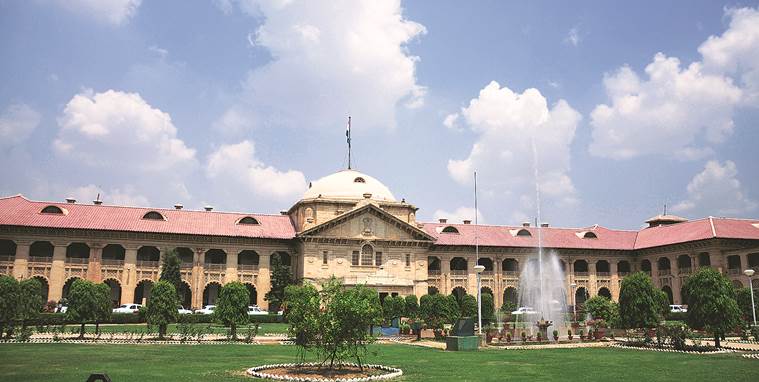
Let
me begin on a bitter note by expressing my profuse disappointment and
utmost disenchantment with the continuous and callous disregard of more
than 19 crore people living in different parts of UP which is more than
10 small states put together by Centre since 1947 till 2019! Why is it
that only Eastern UP has high court at Allahabad and a single bench at
Lucknow and all the other regions like Western UP, Bundelkhand and
Purvanchal etc have been completely disregarded and denied their
legitimate share by giving them at least one high court bench? Why no
government in Centre has ever taken any initiative to correct this worst
injustice since 1947 till now in 2019? It is UP where maximum cases of
crimes takes place and West UP alone owes for more than half of the
total cases in UP and yet it has not even a single bench of high court
even though Justice Jaswant Singh Commission headed by former Supreme
Court Judge Jaswant Singh categorically recommended bench for West UP in
early 1980s even though on its historic recommendations benches were
created in Aurangabad in Maharashtra and Madurai in Tamil Nadu and other
places!
me begin on a bitter note by expressing my profuse disappointment and
utmost disenchantment with the continuous and callous disregard of more
than 19 crore people living in different parts of UP which is more than
10 small states put together by Centre since 1947 till 2019! Why is it
that only Eastern UP has high court at Allahabad and a single bench at
Lucknow and all the other regions like Western UP, Bundelkhand and
Purvanchal etc have been completely disregarded and denied their
legitimate share by giving them at least one high court bench? Why no
government in Centre has ever taken any initiative to correct this worst
injustice since 1947 till now in 2019? It is UP where maximum cases of
crimes takes place and West UP alone owes for more than half of the
total cases in UP and yet it has not even a single bench of high court
even though Justice Jaswant Singh Commission headed by former Supreme
Court Judge Jaswant Singh categorically recommended bench for West UP in
early 1980s even though on its historic recommendations benches were
created in Aurangabad in Maharashtra and Madurai in Tamil Nadu and other
places!

Which
state has maximum districts in India – 75? UP! Which state sends
maximum MPs to Lok Sabha – 80? UP! Which state sends maximum MPs to
Rajya Sabha – 31? UP! Which state sends maximum members to Vidhan Sabha –
404? UP!
state has maximum districts in India – 75? UP! Which state sends
maximum MPs to Lok Sabha – 80? UP! Which state sends maximum MPs to
Rajya Sabha – 31? UP! Which state sends maximum members to Vidhan Sabha –
404? UP!
Which
state sends maximum representation to Vidhan Parishad – 100? UP! Which
state elects maximum Mayors? Which state elects maximum representatives
at all levels? UP! Which state has maximum population which is more than
19 crore as per 2011 census even though in public rallies UP CM Yogi
Adityanath and PM Narendra Modi keep saying more than 22 crore? UP!
state sends maximum representation to Vidhan Parishad – 100? UP! Which
state elects maximum Mayors? Which state elects maximum representatives
at all levels? UP! Which state has maximum population which is more than
19 crore as per 2011 census even though in public rallies UP CM Yogi
Adityanath and PM Narendra Modi keep saying more than 22 crore? UP!
Which
state has maximum villages more than one lakh even though no other
state has more than few thousand villages at the most? UP! Which state
has maximum poverty? UP! Which state has maximum cities which is more
than 700? UP!
state has maximum villages more than one lakh even though no other
state has more than few thousand villages at the most? UP! Which state
has maximum poverty? UP! Which state has maximum cities which is more
than 700? UP!
Which
state has maximum crime to the extent that former UN Secretary General
Ban ki moon had slammed UP as the “rape and crime capital of India”? UP!
Here too which part of UP owes for more than 52% of pending cases of UP
and yet has no high court bench? West UP! Which state has maximum
pending cases which is more than the cases of 10 states put together?
UP! Which state owes for maximum dowry deaths? UP! Which state owes for
maximum custodial deaths? UP! Which state has maximum pending cases in
lower courts more than 65 lakhs? UP!
state has maximum crime to the extent that former UN Secretary General
Ban ki moon had slammed UP as the “rape and crime capital of India”? UP!
Here too which part of UP owes for more than 52% of pending cases of UP
and yet has no high court bench? West UP! Which state has maximum
pending cases which is more than the cases of 10 states put together?
UP! Which state owes for maximum dowry deaths? UP! Which state owes for
maximum custodial deaths? UP! Which state has maximum pending cases in
lower courts more than 65 lakhs? UP!
Which
state has maximum pending cases of communal violence and riots as we
saw in Muzaffarnagar in 2013, Meerut riots in 1988, Bareilly riots, Agra
riots etc all in Western part? UP! Which state has maximum pending
cases of rape, molestation, murder and other crimes against women? UP!
Which state has maximum strength of Judges both in high court at 160 and
in lower courts at 5000? UP! Which state has maximum vacancies of
Judges? UP! Which state has sent maximum PM which includes Narendra Modi
from Varanasi? UP!
state has maximum pending cases of communal violence and riots as we
saw in Muzaffarnagar in 2013, Meerut riots in 1988, Bareilly riots, Agra
riots etc all in Western part? UP! Which state has maximum pending
cases of rape, molestation, murder and other crimes against women? UP!
Which state has maximum strength of Judges both in high court at 160 and
in lower courts at 5000? UP! Which state has maximum vacancies of
Judges? UP! Which state has sent maximum PM which includes Narendra Modi
from Varanasi? UP!
The
larger point that I want to make here is this: Why is it that Allahabad
High Court tops among all states when it comes to the number of pending
cases which is more than 10 lakhs whereas most of other states have not
more than one lakh cases and still Centre is busy creating more and
more high court benches for them with latest at Jalpaiguri for just a
handful of districts! Assam till a few years ago had 7 high court
benches but after Manipur, Meghalaya and Tripura were given separate
high courts, it now stands reduced to 4! But Allahabad High Court which
is the biggest court not just in India but in whole of Asia with so vast
a jurisdiction and also one of the oldest high court in India has just
one! This is certainly most shameful!
larger point that I want to make here is this: Why is it that Allahabad
High Court tops among all states when it comes to the number of pending
cases which is more than 10 lakhs whereas most of other states have not
more than one lakh cases and still Centre is busy creating more and
more high court benches for them with latest at Jalpaiguri for just a
handful of districts! Assam till a few years ago had 7 high court
benches but after Manipur, Meghalaya and Tripura were given separate
high courts, it now stands reduced to 4! But Allahabad High Court which
is the biggest court not just in India but in whole of Asia with so vast
a jurisdiction and also one of the oldest high court in India has just
one! This is certainly most shameful!
Lamentably,
even small states like Sikkim, Tripura, Meghalaya, Manipur, etc with
just about 6 lakh population, 29 lakh , 36 lakh, 27 lakh have high
courts but West UP with more than 9 crore population has not even a
single bench of high court! Even Andaman and Nicobar islands with just 3
lakh population has bench but not West UP with more than 9 crore
population!
even small states like Sikkim, Tripura, Meghalaya, Manipur, etc with
just about 6 lakh population, 29 lakh , 36 lakh, 27 lakh have high
courts but West UP with more than 9 crore population has not even a
single bench of high court! Even Andaman and Nicobar islands with just 3
lakh population has bench but not West UP with more than 9 crore
population!
Not
just this, Centre has always ensured that this high court has maximum
vacancies of Judges which is highest in country with more than half of
seats which stands at 160 keep lying vacant! Is this fair? Is Centre not
aware that Allahabad High Court needs “special attention” and not
“special neglect”? Allahabad High Court is biggest court not just in
India but in whole of Asia with maximum High Court Judges and maximum
District Judges and also Judges at lower level still it has the least
bench in India – only one!
just this, Centre has always ensured that this high court has maximum
vacancies of Judges which is highest in country with more than half of
seats which stands at 160 keep lying vacant! Is this fair? Is Centre not
aware that Allahabad High Court needs “special attention” and not
“special neglect”? Allahabad High Court is biggest court not just in
India but in whole of Asia with maximum High Court Judges and maximum
District Judges and also Judges at lower level still it has the least
bench in India – only one!
Is
Centre not aware that Justice Jaswant Singh Commission had
categorically pointed out that West UP owes for about 57% of the total
pending cases which is more than half of the total pending cases in UP
still why its landmark recommendation to create a bench here to take
care of nearly 40 districts at Agra with circuit benches at Nainital and
Dehradun overlooked? Why not a single bench approved for UP? It must be
investigated by a retired CJI or a retired Judge of Supreme Court!
Centre not aware that Justice Jaswant Singh Commission had
categorically pointed out that West UP owes for about 57% of the total
pending cases which is more than half of the total pending cases in UP
still why its landmark recommendation to create a bench here to take
care of nearly 40 districts at Agra with circuit benches at Nainital and
Dehradun overlooked? Why not a single bench approved for UP? It must be
investigated by a retired CJI or a retired Judge of Supreme Court!
Why
when Sampoornanand recommended a high court bench to be created at
Meerut in 1955 after more than 100 elected representatives met him and
convinced him of the dire need of the same did Nehru refuse? Why when
even other UP CM like ND Tiwari, Rajnath Singh and others recommended
was bench not approved? Why when bench could be created at Lucknow in
1948 could a bench not be created at Meerut which is more than 700 km
away? Why when Kapil Sibal wanted a high court bench to be created at
Meerut when he was Union Law Minister as another Union Minister RPN
Singh had disclosed but the then UP CM Akhilesh Yadav objected did
Centre not listen to its own reputed and one of the most reputed jurist
of India? Why Centre said that the recommendation made by Law
Commission in its fourth report in 1955 recommended against creating
more benches and so West UP could not be given a bench conveniently
overlooked everything when it came to other states and kept on creating
benches there and also overlooked that the Law Commission in its 230th report
in 2009 recommended creation of more benches yet West UP and other
parts of UP like Bundelkhand were overlooked for benches?
when Sampoornanand recommended a high court bench to be created at
Meerut in 1955 after more than 100 elected representatives met him and
convinced him of the dire need of the same did Nehru refuse? Why when
even other UP CM like ND Tiwari, Rajnath Singh and others recommended
was bench not approved? Why when bench could be created at Lucknow in
1948 could a bench not be created at Meerut which is more than 700 km
away? Why when Kapil Sibal wanted a high court bench to be created at
Meerut when he was Union Law Minister as another Union Minister RPN
Singh had disclosed but the then UP CM Akhilesh Yadav objected did
Centre not listen to its own reputed and one of the most reputed jurist
of India? Why Centre said that the recommendation made by Law
Commission in its fourth report in 1955 recommended against creating
more benches and so West UP could not be given a bench conveniently
overlooked everything when it came to other states and kept on creating
benches there and also overlooked that the Law Commission in its 230th report
in 2009 recommended creation of more benches yet West UP and other
parts of UP like Bundelkhand were overlooked for benches?
Why
Centre took no time to create 2 more high court benches for Karnataka
with just 6 crore population which is less than even West UP population
alone and which already had a bench at Hubli for just 4 and 8 districts
at Gulbarga and Dharwad respectively but for 26 districts and more than 9
crore people of West UP not a single bench was approved even though the
lawyers here keep going on strike as they did thrice like once in 2001
for 6 months from July to December and for 3 to 4 months as they did in
2014-15 and for one month as they did in 2010 and for many weeks as they
keep doing every year apart from the strikes on Saturdays for last 38
years and many times even on Wednesdays? Why Centre disregarded the most
commendable recommendation made by one of the most eminent jurist of
India – Soli J Sorabjee who as Attorney General in 2001had categorically
recommended that, “Centre is empowered to create a high court bench in
West UP without any recommendation from the Chief Justice or Chief
Minister or anyone else in this regard”? Why Centre even disregarded
what former Chairman of Supreme Court Bar Association BN Krishnamani
said that, “Only by the creation of a high court bench in any of the
districts in West UP will the people living there get real justice”?
Centre took no time to create 2 more high court benches for Karnataka
with just 6 crore population which is less than even West UP population
alone and which already had a bench at Hubli for just 4 and 8 districts
at Gulbarga and Dharwad respectively but for 26 districts and more than 9
crore people of West UP not a single bench was approved even though the
lawyers here keep going on strike as they did thrice like once in 2001
for 6 months from July to December and for 3 to 4 months as they did in
2014-15 and for one month as they did in 2010 and for many weeks as they
keep doing every year apart from the strikes on Saturdays for last 38
years and many times even on Wednesdays? Why Centre disregarded the most
commendable recommendation made by one of the most eminent jurist of
India – Soli J Sorabjee who as Attorney General in 2001had categorically
recommended that, “Centre is empowered to create a high court bench in
West UP without any recommendation from the Chief Justice or Chief
Minister or anyone else in this regard”? Why Centre even disregarded
what former Chairman of Supreme Court Bar Association BN Krishnamani
said that, “Only by the creation of a high court bench in any of the
districts in West UP will the people living there get real justice”?
Why
Centre approves one more bench for Mumbai high court at Kolhapur for
just 6 districts which already had 3 benches at Panaji, Aurangabad and
Nagpur just recently in 2018 itself but cites 100 reasons for not
creating a single more bench for Allahabad High Court in any hook and
corner of UP leave alone West UP? Why Centre from 1947 till 2019 has
taken the stand that, “Ask anything for UP but not a high court bench as
only Lucknow deserves it”? What rubbish!
Centre approves one more bench for Mumbai high court at Kolhapur for
just 6 districts which already had 3 benches at Panaji, Aurangabad and
Nagpur just recently in 2018 itself but cites 100 reasons for not
creating a single more bench for Allahabad High Court in any hook and
corner of UP leave alone West UP? Why Centre from 1947 till 2019 has
taken the stand that, “Ask anything for UP but not a high court bench as
only Lucknow deserves it”? What rubbish!
If
Lucknow is capital then so are Bhopal which is capital of Madhya
Pradesh, Dehradun which is capital of Uttarakhand, Bhubaneshwar which is
capital of Odisha, Dispur which is capital of Assam, Raipur which is
capital of Chhattisgarh and Thiruvanathapuram which is capital of Kerala
yet they have neither high court nor bench! Also, Lucknow’s area
jurisdiction is just 62,00 square km and that of West UP is 98,933
square km! The number of districts which come under the jurisdiction of
Lucknow bench is just 12 and that of West UP is 26! The population of
districts under Lucknow jurisdiction stands nowhere as compared to West
UP whose population at more than 9 crore is more than any other state
except UP of which it is itself a part, Maharashtra and Bihar and here
too areawise West UP has 98,933 square km and that of Bihar is just
94,000 square km!
Lucknow is capital then so are Bhopal which is capital of Madhya
Pradesh, Dehradun which is capital of Uttarakhand, Bhubaneshwar which is
capital of Odisha, Dispur which is capital of Assam, Raipur which is
capital of Chhattisgarh and Thiruvanathapuram which is capital of Kerala
yet they have neither high court nor bench! Also, Lucknow’s area
jurisdiction is just 62,00 square km and that of West UP is 98,933
square km! The number of districts which come under the jurisdiction of
Lucknow bench is just 12 and that of West UP is 26! The population of
districts under Lucknow jurisdiction stands nowhere as compared to West
UP whose population at more than 9 crore is more than any other state
except UP of which it is itself a part, Maharashtra and Bihar and here
too areawise West UP has 98,933 square km and that of Bihar is just
94,000 square km!
Why
catchy slogans like “speedy justice”, “justice at doorsteps” and “cheap
justice” not implemented for West UP and other remote areas of UP by
creating more benches here? Why Mayawati wanted high court itself for
West UP by recommending to Centre that it be made a separate state way
back in 1995 but Centre is not ready to concede even a bench for West
UP? Why is BJP a blind follower of Congress in this regard and till now
has ensured that not a single high court bench is created in any hook
and corner of UP except the one created already by Nehru 70 years ago in
1948 at Lucknow?
catchy slogans like “speedy justice”, “justice at doorsteps” and “cheap
justice” not implemented for West UP and other remote areas of UP by
creating more benches here? Why Mayawati wanted high court itself for
West UP by recommending to Centre that it be made a separate state way
back in 1995 but Centre is not ready to concede even a bench for West
UP? Why is BJP a blind follower of Congress in this regard and till now
has ensured that not a single high court bench is created in any hook
and corner of UP except the one created already by Nehru 70 years ago in
1948 at Lucknow?
This
despite the fact that former PM Atal Bihari Vajpayee had thundered in
Parliament way back in 1986 as Opposition Leader demanding the creation
of a High Court Bench in West UP and Yogi Adityanath who is now UP CM
also himself thundered while demanding for a High Court Bench at
Gorakhpur way back in 1998 right inside Parliament but 20 years later we
don’t see any High Court Bench anywhere being created in UP! One can
understand that Vajpayee didn’t enjoy majority but Modi has it but we
see no action forthcoming on this so far even though he is taking other
steps for UP like pompously inaugurating the 14 lane highway connecting
Delhi with Meerut and other districts of West UP in which many crores of
rupees have been spent which will reduce the time limit from Meerut to
Delhi from 2 hours to just 45 minutes which is commendable but what
about high court bench in West UP which is affecting the litigants of 26
districts most adversely due to which they are still compelled to
travel more than 700 km all the way to Allahabad whole night without
reservation many times and bear all sorts of inconveniences? When will
action be taken on this score? Why can’t few crores be spared for
creating a bench in West UP and other needy areas of UP like in Jhansi
in Budelkhand and in Gorakhpur?
despite the fact that former PM Atal Bihari Vajpayee had thundered in
Parliament way back in 1986 as Opposition Leader demanding the creation
of a High Court Bench in West UP and Yogi Adityanath who is now UP CM
also himself thundered while demanding for a High Court Bench at
Gorakhpur way back in 1998 right inside Parliament but 20 years later we
don’t see any High Court Bench anywhere being created in UP! One can
understand that Vajpayee didn’t enjoy majority but Modi has it but we
see no action forthcoming on this so far even though he is taking other
steps for UP like pompously inaugurating the 14 lane highway connecting
Delhi with Meerut and other districts of West UP in which many crores of
rupees have been spent which will reduce the time limit from Meerut to
Delhi from 2 hours to just 45 minutes which is commendable but what
about high court bench in West UP which is affecting the litigants of 26
districts most adversely due to which they are still compelled to
travel more than 700 km all the way to Allahabad whole night without
reservation many times and bear all sorts of inconveniences? When will
action be taken on this score? Why can’t few crores be spared for
creating a bench in West UP and other needy areas of UP like in Jhansi
in Budelkhand and in Gorakhpur?
It
is not for nothing that Union Minister Satyapal Singh demanded in
Parliament the creation of 5 high court benches at Meerut, Agra, Jhansi,
Gorakhpur and Varanasi but the real tragedy is that his own PM is not
listening to him and not creating even one more bench anywhere else in
UP other than the one which already exists at Lucknow! Similarly many
other BJP MPs like former Union Minister Sanjeev Baliyan, Union Minister
Gen VK Singh, Mahesh Sharma and other MPs like Rajinder Agarwal keep
demanding benches but to no avail!
is not for nothing that Union Minister Satyapal Singh demanded in
Parliament the creation of 5 high court benches at Meerut, Agra, Jhansi,
Gorakhpur and Varanasi but the real tragedy is that his own PM is not
listening to him and not creating even one more bench anywhere else in
UP other than the one which already exists at Lucknow! Similarly many
other BJP MPs like former Union Minister Sanjeev Baliyan, Union Minister
Gen VK Singh, Mahesh Sharma and other MPs like Rajinder Agarwal keep
demanding benches but to no avail!
As
per the Section 51 of the States Reorganisation Act of 1956, the Centre
can create a high court bench in any of these 3 states – UP, Bihar and
J&K directly by bringing it up in Parliament. Centre does not need
any recommendation from State Government or the Chief Justice as has
been very wrongly propagated for many decades! What a national disgrace
that these very 3 states – Uttar Pradesh, Jammu and Kashmir and Bihar
keep on grabbing the national news headlines for all the wrong reasons
as crime incidents keep multiplying very rapidly and what is worst is
Centre’s stupid and crazy determination to not allow a single more bench
in all these 3 states!
per the Section 51 of the States Reorganisation Act of 1956, the Centre
can create a high court bench in any of these 3 states – UP, Bihar and
J&K directly by bringing it up in Parliament. Centre does not need
any recommendation from State Government or the Chief Justice as has
been very wrongly propagated for many decades! What a national disgrace
that these very 3 states – Uttar Pradesh, Jammu and Kashmir and Bihar
keep on grabbing the national news headlines for all the wrong reasons
as crime incidents keep multiplying very rapidly and what is worst is
Centre’s stupid and crazy determination to not allow a single more bench
in all these 3 states!
It
is incomprehensible why Centre can approve 3 or 4 or 5 benches for
peaceful states like Maharashtra, Karnataka among others but not more
than one for UP which has maximum pending cases which is more than 10
states put together! Allahabad High Court must be given its due honour
and it must have maximum high court benches and not minimum! Disband all
high court benches in India if Allahabad High Court cannot be given
more benches, West UP cannot be given a bench nor can Bundelkhand or
Gorakhpur (which is CM Yogi’s constituency and where BJP just recently
lost) for people living so far away who face maximum sufferings because
of this but which no PM has ever dared to address for reasons never
disclosed!
is incomprehensible why Centre can approve 3 or 4 or 5 benches for
peaceful states like Maharashtra, Karnataka among others but not more
than one for UP which has maximum pending cases which is more than 10
states put together! Allahabad High Court must be given its due honour
and it must have maximum high court benches and not minimum! Disband all
high court benches in India if Allahabad High Court cannot be given
more benches, West UP cannot be given a bench nor can Bundelkhand or
Gorakhpur (which is CM Yogi’s constituency and where BJP just recently
lost) for people living so far away who face maximum sufferings because
of this but which no PM has ever dared to address for reasons never
disclosed!
This
all-important issue directly affecting billions of litigants coming
from all sections of society is lying largely unattended and untreated
since many decades! But now not any longer! Allahabad High Court must
get its due by creating more benches for it!
all-important issue directly affecting billions of litigants coming
from all sections of society is lying largely unattended and untreated
since many decades! But now not any longer! Allahabad High Court must
get its due by creating more benches for it!
No
one is safe in UP! Even lawyers and those in police are themselves not
safe! Criminals know that it take ages for cases to be decided in UP as
UP has least benches in India and maximum pending cases in India! Former
UP High Court Chief Justice Dilip Babasaheb Bhosale in a case involving
rape of few women on national highway in Bulandshahr in West UP rightly
said that there is total lawlessness in UP as compared to Maharashtra
where women can travel alone in night anywhere without any fear and this
I have also seen myself at Pune from where I did LLB but see the
difference that Maharashtra has four high court benches with latest at
Kolhapur for just 6 districts and Pune is all set to get another as CM
Devendra Fadnavis has approved it for which we all must applaud him but
Centre must create benches in UP also! When Maharashtra can get benches
in no time then why Allahabad High Court in UP which has maximum pending
cases be denied its due share? Why in last more than 70 years has a
single bench more not been added for UP?
one is safe in UP! Even lawyers and those in police are themselves not
safe! Criminals know that it take ages for cases to be decided in UP as
UP has least benches in India and maximum pending cases in India! Former
UP High Court Chief Justice Dilip Babasaheb Bhosale in a case involving
rape of few women on national highway in Bulandshahr in West UP rightly
said that there is total lawlessness in UP as compared to Maharashtra
where women can travel alone in night anywhere without any fear and this
I have also seen myself at Pune from where I did LLB but see the
difference that Maharashtra has four high court benches with latest at
Kolhapur for just 6 districts and Pune is all set to get another as CM
Devendra Fadnavis has approved it for which we all must applaud him but
Centre must create benches in UP also! When Maharashtra can get benches
in no time then why Allahabad High Court in UP which has maximum pending
cases be denied its due share? Why in last more than 70 years has a
single bench more not been added for UP?
Why
can’t Centre take serious steps to address this cancerous problem root
and branch and not just resort to baby steps and bandaid measures like
reducing time limit to reach Delhi by spending many crores of rupees on
creating 14 lane national highways but doing nothing at all to create
more benches anywhere in UP so that people are not compelled to travel
whole night to Allahabad? Why can’t this be done? Is it such a big deal?
Certainly not! Only political will needed! What a crying shame that
Yogi Adityanath government has the ability to bear Rs 36,000-crore for
construction of 600 km Ganga Expressway for better connectivity of
Allahabad with western districts of the state and which will be the
longest expressway in the world but it can’t spare just few crores for
creating a high court bench in West UP for which people numbering more
than 9 crore are ready to bear the expenses also!
can’t Centre take serious steps to address this cancerous problem root
and branch and not just resort to baby steps and bandaid measures like
reducing time limit to reach Delhi by spending many crores of rupees on
creating 14 lane national highways but doing nothing at all to create
more benches anywhere in UP so that people are not compelled to travel
whole night to Allahabad? Why can’t this be done? Is it such a big deal?
Certainly not! Only political will needed! What a crying shame that
Yogi Adityanath government has the ability to bear Rs 36,000-crore for
construction of 600 km Ganga Expressway for better connectivity of
Allahabad with western districts of the state and which will be the
longest expressway in the world but it can’t spare just few crores for
creating a high court bench in West UP for which people numbering more
than 9 crore are ready to bear the expenses also!
Sanjeev Sirohi, Advocate,
s/o Col BPS Sirohi,
A 82, Defence Enclave,
Sardhana Road, Kankerkhera,
Meerut – 250001, Uttar Pradesh.
Drop This Episode From Your Minds And Gossips”: BCI Endorses Bobde Panel Report, Accuses The Complainant
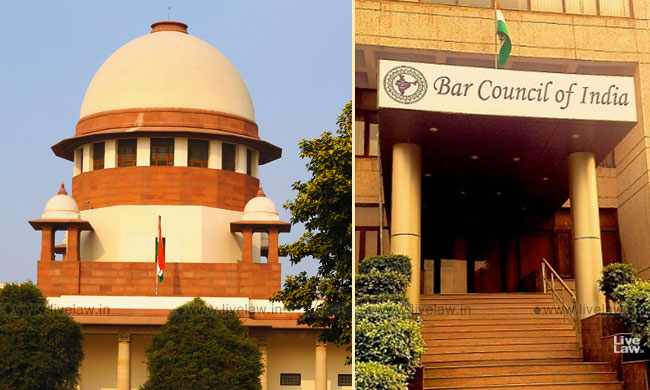
In a latest, landmark and extremely laudable decision, the Bar Council of India (BCI) which represents all the lawyers of India and lays down rules and regulations which all lawyers have to follow has clearly, courageously and convincingly endorsed in no uncertain terms the Bobde Panel Report which was prepared by the second most senior Judge of Supreme Court – Justice Sharad A Bobde along with two eminent women Judges of Supreme Court – Justice Indu Malhotra and Justice Indira Banerjee. The Bobde Panel Report after examining the charges in detail had found no substance in the allegations made by the woman complainant against the CJI Ranjan Gogoi and therefore her complaint was rejected. The incumbent CJI Ranjan Gogoi thus stands exonerated!
Needless to say, the Bar Council of India (BCI) has very rightly minced no words in directly appealing to the members of the legal fraternity, the Judges and the people of this country to rise to the occasion and come forward, get united, and be vocal to discourage negative forces which are all out to weaken the most sacred institution of judiciary! The Bar Council of India has made this most fervent and most commendable plea in the backdrop of the complaint of sexual harassment charges against CJI Ranjan Gogoi and everything that happened in its aftermath bringing judiciary in limelight in a bad way, saying rightly that judiciary is the only ray of hope for the poor people of the country. The Bar Council of India (BCI) certainly deserves to be complimented and congratulated for daring to take the bold decision to stand by the incumbent CJI Ranjan Gogoi who ever since he took oath as office has demonstrated extraordinary determination to reform the judiciary and ensure that all vacant posts for Judges in different courts are filled up at the earliest and he suo motu took action on it as we all know very well! Yet, the CJI has faced unwarranted and unbecoming criticism from a powerful section of the media without any strong basis!
To be sure, the statement from Bar Council of India says that a common advocate always feels that his first duty is to protect the institution of judiciary and that bar cannot tolerate any attempt that tears at reputation of courts of law and damages and demolishes their authority. Absolutely right! Moreover, this CJI has never once faced any iota of any sort of allegation against him of any kind and has rather himself always shown the determination to act against corruption as we saw while in his stint as Chief Justice of Punjab and Haryana High Court he ensured that a Judge involved in corruption was made to resign!
Not just this, he took all the High Courts to task right on assuming office for not filling Judges vacancies and warned them that if they fail to fill up the vacancies in a fixed time, the power of appointing Judges would be taken away from them and given to either UPSC or the Supreme Court will itself take upon itself this onerous task! This resulted in vacancies being released in huge numbers in different states and for first time in UP we saw HJS vacancies being notified twice in a year which is a record by itself! Should this not be appreciated and applauded?
Earlier we saw how vacancies came out after 2 or 3 years and in case of UPPCSJ no vacancies came out from 2007 to 2012 that is for full five years! If CJI has vowed that now this will not go on like this, should this not be appreciated or should here also question marks be raised on CJI? If I fail to clear Judges exam as I have till now then I must have the guts to admit that I have not worked hard enough instead of finding fault in CJI or in any other person and questioning the fairness of the system without any basis whatsoever! If there is one CJI whom I hold in highest esteem it is none other than this CJI Ranjan Gogoi because he has shown the urge to do what no other CJI has ever at least to the best of my knowledge ever dared to do in filling up Judges vacancies not just in Supreme Court or High Court but even in lower courts also by taking suo motu note of it and asking all High Courts to start filling up vacancies within a time limit and setting clear deadlines for it!
It is this CJI Ranjan Gogoi who inspite of qualifying for prestigious Civil Services exam opted for judiciary as he felt it to be more sacred for him. Similarly it is this CJI who had left his roaring practice in Guwahati High Court to take up Judgeship knowing it fully well that Judges get very meager pay but as Judges get more reputation, he opted for it! His whole life is an inspiration for others to follow but in one fell stroke all this has been laid to tatters which has certainly shattered him yet he has managed to control his emotions and is still discharging his duties most commendably! This alone explains why I wrote very rightly in heading in my earlier articles that, “Even God Cannot Shake My Faith In CJI Ranjan Gogoi” and “My Unflinching Faith In CJI Stands Fully Vindicated Now”!
For me, character is always more important than reputation. This is because reputation is “what people think you are” and character is “what actually you are” and “which only you yourself know that”! That is why it is rightly said that, “When you lose your reputation, you fall in the eyes of others but when you lose your character, you fall in your own eyes”!
Complaint Against CJI Is Fishy
Truth be told, while smelling foul in the modalities followed by the complainant in filing the complaint, BCI says that on examination of the complaint and the annexures and the way facts have been narrated by the complainant in her complaint, and the manner she claims to have recorded everything in her mobile while at police station, and the way she has been dealing with the police, the Courts, CBI, IB and everyone is fishy from every angle! How can this be dismissed lightly? It also says that Indians are wise enough to understand the dirty game to spoil the dignity of country’s judicial system and says further that there is now realization amongst the Indian masses that there is some backing behind the complaint against CJI and that complainant is not a “simple lady”! Which sane person can ever deny this?
To say the least, the BCI also said that, “If you examine the complaint and the annexures and see the way facts are narrated; the manner in which she claims to have recorded everything in her mobile while at police station, and the way she has been dealing with police, the Courts, CBI, IB, everyone, if one analyses these things carefully, you will find something fishy”. This observation is not made by some single, petty individual like me or anyone else but this observation has come from none other than the Bar Council of India! Will critics of CJI now question this also?
Nothing Wrong With Justice Bobde Report
It is most heartening to read in the web portal “LiveLaw” what all has been stated in detail by the BCI for which it too certainly deserves to be complimented and congratulated for the common person would not have come to know all this had it not been published by them in their website! I too have gathered most of my information from this website! BCI says in no uncertain terms that there is nothing wrong with the report of the in-house committee which has given clean chit to the CJI and that its decision is “just and proper” as it has not found any merit in allegations against the CJI.
It also says that complainant was not happy with anyone after Justice Gogoi, she started blaming and commenting against Justice NV Ramana that he favoured Justice Gogoi [being close to him] due to which Justice Ramana had to recuse himself from the case after which two very noble, fair, polite and soft spoken lady Judges were included in the in-house panel. Not stopping here she still continued raising questions and did not attend the proceedings till the end and left it mid way while casting aspersions on the fairness of the proceedings itself! How can this be condoned or justified under any circumstances?
To put it succinctly, while making a humble request to the members of the Bar, it says that Bar is duty bound to protect the democracy and protect the independence of judiciary and should desist from commenting on and criticizing each and every step of the institution of judiciary and the authorities. It makes also a request equally to the senior and other advocates of Supreme Court of India and of all the High Courts and to entire legal fraternity to stand united and fight the negative elements that destroy the credibility of institution of judiciary.
Justice Bobde A Man Of Nice Behaviour
Of course, Bar Council of India is also not happy with the way complainant has made allegations of “unfairness” against Justice Bobde Committee and says that the members of the Supreme Court and those aware of the functions of the Supreme Court know about the politeness and the nice behavior of Justice Bobde. It says that Justice Bobde is a man who always smiles and is never angry and same is true about other two lady Judges on the panel. Can anyone ever deny or dispute this? Certainly not!
As it turned out, the BCI said that, “The members who practice in Supreme Court and those who are aware of the functionings of Supreme Court are fully aware of the politeness and nice behaviour of Justice Bobde, he is a man who always smiles, we have never seen him angry; same is the case with the other two lady judges (Mrs Justice Indira Banerjee and Mrs Justice Indu Malhotra). But the complainant opted to make allegations of unfairness even against this Committee and refused to appear before this panel.” This is so strange and perhaps most baffling! This alone explains why BCI further goes on to state that, “We were of the considered opinion that the Committee should proceed ahead and the inquiry should be completed at the earliest. This could be called an attempt to scandalise the Institution. It is due to this reason that we appreciate the procedure adopted by the Committee.” There can be no denying it!
Procedure Adopted By Committee Proper And Fair
No doubt, BCI rightly says that Committee has taken the proper decision after examining the material and everything before it carefully and no one should doubt the decision of the Committee which would send a wrong signal and there would be no end to the malicious complaints against the respectable authorities discharging important functions. It says that complainant, as per her own story, was at police station for quite long time and there she demanded no legal help nor felt need for videography or audio-recording and was quite comfortable but surprisingly before the panel of three Judges of the Supreme Court, which included two ladies, the complainant allegedly felt nervous and felt the need for audio and video recording. It pointed out that, “Even the proceedings of Courts, or in camera proceedings held in chambers of Judicial officers or Hon’ble Judges are not Video-graphed. Therefore, there is nothing wrong in the procedure adopted by the Committee in this particular case. Why there should be some deviation in this special case?”
Bluntly put, the BCI sought to send an unmistakable message that, “Those who love this Institution and whose livelihood is attached to it, those who love the Constitution and our democracy, will never tolerate disrespect of our Supreme Court, High Court or our Judges by anybody.” It also made it clear that it fully respects the opinions of Justice DY Chandrachud but all those concept and suggestions expressed by him for providing liberties and legal assistance to complainant are for innocent, ignorant and helpless complainants and not for a litigant, who is apparently trying to malign the highest institution. Further, BCI said that, “There was, thus in our opinion, in this case, no need to include any other outsider or of any assistance of any Lawyer when the lady boldly came out and refused to participate in the inquiry. We are sure that Hon’ble Mr Justice Chandrachud will also agree with our view.”
End The Unfounded Controversy
As things stood, BCI said that instead of filing an FIR, Complainant had lodged her complaint with the Judges of the Supreme Court and had herself opted for the same and now that in-house committee has decided the matter, there is no justification on commenting over it or criticizing it and there should be an end to this “unfounded controversy”.
Judges Themselves Responsible For Such Unfortunate Situation
As anticipated, BCI rightly says that judiciary is itself responsible for the culture of “malicious complaints” by encouraging them. It says further that some of the totally “absurd, sentimental and reckless verdicts” of the Judges of the Supreme Court has resulted in lodging of such complaints frequently and expects practicality from Judges in future.
Going forward, BCI also gave a note of advice to Judges saying said that, “The oral testimony of the prosecutrix is enough to convict under Section 354 or 376 IPC,” Why? We are not in 18th century, that one can presume that a female will never make such allegations to falsely implicate her enemies. We have great respect for our women. But time has changed, we must keep in mind. Our Judges are expected to be practical now, they should think of common man and other respectable citizen also while deciding or dealing with such cases. They should not be guided by the sentiment or presumptions only. Always think that like 498A IPC, such cases of false implications have now become very common/very easy/rampant.”
Hope That Our Judges Will Lay Down Some Law Soon
To put things in perspective, the BCI said that, “Bar is hopeful that our Judges would now realize the problems, the mental and physical agony and harassments of the common men. So long our traditional Laws, Evidence Act were properly applied by our Law Courts, we found 90% cases resulting in acquittals; but, when our Honourable, Learned, Experienced, Knowledgeable Judges started keeping the settled principles of Evidence Act in waste paper boxes, the incidents of false implications started increasing and today we have reached to this situation.”
Limitation
Be it noted, the BCI also rightly suggested that, “When Indian Judiciary and our Legislature are treating such offences of Section 354 or 376 I.P.C. very serious, then why should not there be some period of limitation for reporting such offences? If some delay is there in lodging a case of murder, it is viewed with doubt, then why should the case of 354 or 376 I.P.C. could be taken and accepted so casually, without considering the delay factor? The delay normally very much proves and establishes that the so called prosecutrix was/is either a liar or was a consenting party. And after sometimes, when the situation changes or for blackmailing, complaints are lodged.”
Moving on, the BCI also then rightly laments that, “But our Judges have made this most vital factor of delay in such cases totally meaningless and redundant. Is it not against the set principles of our Criminal Jurisprudence? If such cases are not reported immediately, the benefit of doubt should go to the accused. What is the sense in entertaining such cases reported after several days, several weeks, several months or even for several years of alleged occurrence/story?” Also, it rightly urges that, “This is the high time, the Parliament and our Supreme Court are required to apply their mind over this important factor in the changed social scenario and degeneration of moral values.”
Appeals To Members Of Bar And Common People
What’s more, the BCI requests the members of the Bar to drop this episode from their minds and gossiping as it is causing serious harm to the institution of judiciary. Manan Kumar Mishra who is Chairman of Bar Council of India rightly urges that, “I request the members of the Bar to drop this episode from their minds and gossiping; it is causing serious harm to the Institution; one should imagine the mental agony suffered by a respectable man because of someone’s conspiracy to malign his image and/or to lay so much of undue pressure upon him.” It says candidly that, “It is the duty of the entire Legal fraternity to save and protect the institution on such occasion of crisis.” It also says explicitly that, “It is sure that not only the members of the Bar but every sensible citizen of the country will agree with the views expressed by the apex body of advocates, and will stand with the highest institution of the justice. The statement of BCI reads: “We are to save our Constitution and the Democracy. And for that purpose, the independence of the Judiciary, creation of a fearless atmosphere for the smooth discharge of functions by our Judges, would be first and foremost necessity.”
On a concluding note, it has to be said without any caveats that the BCI deserves certainly to be complimented, commended and congratulated wholeheartedly for taking such a balanced, principled and determined decision of fully endorsing the Justice Bobde panel report and also for reposing unflinching faith in the incumbent CJI Ranjan Gogoi who has always enjoyed an unblemished reputation and who never believes in giving out-of-turn hearing to even senior advocates and who believes that all advocates must adhere to rules and procedure while arguing cases and should not try to rush cases just because they are senior! BCI too feels that there is no substance in the allegations made by the complainant against the CJI Ranjan Ggoi! History will always judge BCI very lavishly on this score! Eminent and senior lawyers like Harish Salve too have posed their full faith in CJI Ranjan Gogoi and so have lawyer-turned-politicians like our Finance Minister Arun Jaitley and many others! Very rightly so!
Sanjeev Sirohi, Advocate,
s/o Col BPS Sirohi,
A 82, Defence Enclave,
Sardhana Road, Kankerkhera,
Meerut – 250001, Uttar Pradesh.
Successive Bail Applications Should Be Placed Before The Same Judge Who Considered The First One: SC

In a fresh and latest development, the Supreme Court on May 6, 2019 has in a latest, landmark and laudable judgment titled M/s Gati Limited Vs. T. Nagarajan Piramiajee & Anr. in Criminal Appeal No. 870 of 2019 [Arising out of SLP (Cri.) No. 6677 of 2018] reiterated as it has several times in the past that successive bail applications filed by an accused should be placed before the same Judge who had refused bail in the first instance, unless that Judge is not available. If that Judge is not available who had refused bail at the first instance then it can be placed before some different Judge. Both the litigants and also all the Judges must always keep this key point in mind on such cases. There can be no denying or disputing it!
To start with, this notable judgment begins by first and foremost observing in para 2 that, “This appeal is filed questioning the order dated 25.07.2018 passed by the Madurai Bench of the Madras High Court in Cri. O.P. (MD) No. 9348 of 2018 passed by the Madurai Bench of the Madras High Court in Cri. O.P. (MD) No. 9348 of 2018 granting anticipatory bail in favour of Respondent No. 1.”
To recapitulate, it is then pointed out in para 3 that, “Respondent No. 1 is the accused (hereinafter “the accused”) in Crime No. 364 of 2017 registered at SIPCOT Police Station, District Thoothukudi, Tamil Nadu for the offences punishable under Sections 420, 465, 467, 468 and 472 of the Indian Penal Code (for short “the IPC”). The allegations against the accused as found in the First Information Report (FIR) are that he had furnished two forged Bank Guarantees each amounting to Rs. 5,00,00,000/- (Rupees Five Crores) to the Appellant in lieu of the services of the Appellant. Initially, the FIR was registered for milder offences. However, the High Court passed an order directing the police to alter the offences suitably, and accordingly, the FIR was altered by adding Sections 467, 468 and 472 of the IPC. The accused was absconding during that time. The High Court directed the police to arrest him and report to the Court by 22.12.2017. Despite the same, the accused was not arrested. Ultimately, on 02.01.2018, he filed an application for anticipatory bail before the High Court as Cri. O.P. (MD) No. 288 of 2017 in the first instance. The application came to be dismissed by the High Court on 09.04.2018. Prior to the disposal of the said application by the High Court, the accused had approached this Court in SLP (Cri.) Diary No. 7830 of 2018 questioning the order of the High Court directing alteration of sections in the FIR and the same had been dismissed by this Court with the specific direction that the accused was at liberty to surrender before the Trial Court and to obtain regular bail. Despite the said order of this Court, the accused subsequently pressed his anticipatory bail application before the High Court filed as Cri. O.P. (MD) No. 288 of 2017 which, as mentioned supra, came to be dismissed by the High Court. The said order of the rejection of the application for anticipatory bail by the High Court was confirmed by this Court in SLP (Cri.) Diary No. 15986 of 2018 on 17.05.2018. Thereafter, after a lapse of merely 13 days, i.e. on 31.05.2018, the accused filed a second application for anticipatory bail bearing Cri. O.P. (MD) No. 9348 of 2018 before the High Court that too without any change in circumstance. The High Court by the impugned order granted anticipatory bail to the accused.”
To be sure, it is then pointed out in a sharp stinging remark in para 4 that, “On a perusal of the impugned order, it is clear that the High Court has not applied its mind to the merits of the matter. The High Court has not assigned any valid reason or shown any change of circumstance since the rejection of the first application for anticipatory bail, for granting anticipatory bail to the accused.” This is clearly a rap on the knuckles of the High Court which is pretty obvious. There can be no denying it.
Furthermore, it is then pointed out commendably in para 5 while citing some landmark cases that, “Another aspect of the matter deserves to be noted. The first application for anticipatory bail was rejected by a certain learned Judge, but the second application for anticipatory bail was heard by another learned Judge, though the Judge who had heard the first application was available. This Court in the case of Shahzad Hasan Khan v. Ishtiaq Hasan Khan (1987) 2 SCC 684, in a similar matter concerning filing of successive applications for anticipatory bail, made the following observations:
“5. …The convention that subsequent bail application should be placed before the same Judge who may have passed earlier orders has its roots in principle. It prevents abuse of process of court inasmuch as an impression is not created that a litigant is shunning or selecting a court depending on whether the court is to his liking or not, and is encouraged to file successive applications without any new factor having cropped up. If successive bail applications on the same subject are permitted to be disposed of by different Judges there would be conflicting orders and a litigant would be pestering every Judge till he gets an order to his liking resulting in weakening the creditability of the court and the confidence of the other side being put in issue and there would be wastage of courts time. Judicial discipline requires that such matters must be placed before the same Judge if he is available for orders…”
In State of Maharashtra v. Captain Buddhikota Subha Rao, 1989 Supp (2) SCC 605, this Court placing reliance upon Shahzad Hasan Khan (supra) observed:
“7. …In such a situation the proper course, we think, is to direct that the matter be placed before the same learned Judge who disposed of the earlier applications. Such a practice or convention would prevent abuse of the process of court inasmuch as it will prevent an impression being created that a litigant is avoiding or selecting a court to secure an order to his liking. Such a practice would also discourage the filing of successive bail applications without change of circumstances. Such a practice if adopted would be conducive to judicial discipline and would also save the Court’s time as a Judge familiar with the facts would be able to dispose of the subsequent application with dispatch. It will also result in consistency…”
At the risk of repetition, we would like to quote similar observations made by this Court on subsequent occasions. In the case of Vikramjit Singh v. State of Madhya Pradesh, 1992 Supp (3) SCC 62, this Court observed:
“3. …Otherwise a party aggrieved by an order passed by one bench of the High Court would be tempted to attempt to get the matter reopened before another bench, and there would not be any end to such attempts. Besides, it was not consistent with the judicial discipline which must be maintained by courts both in the interest of administration of justice by assuring the binding nature of an order which becomes final, and the faith of the people in the judiciary…”
To the same effect, this Court observed in M. Jagan Mohan Rao v. P.V. Mohan Rao (2010) 15 SCC 491:
“3. In view of the principle laid down by this Court, since the learned Judge who had refused bail in the first instance was available, the matter should have been placed before him. This Court has indicated that such cases of successive bail applications should be palced before the same Judge who had refused bail in the first instance, unless that Judge is not available…”
In Jagmohan Bahl and Another v. State (NCT of Delhi) and Another, (2014) 16 SCC 501 too, this Court has observed along the same lines:
“15. …when the Sixth Additional Sessions Judge had declined to grant the bail application, the next Fourth Additional Sessions judge should have been well advised to place the matter before the same Judge. However, it is the duty of the prosecution to bring it to the notice of the Judge concerned that such an application was rejected earlier by a different Judge and he was available. In the entire adjudicatory process, the whole system has to be involved. The matter would be different if a Judge has demitted the office or has been transferred. Similarly, in the trial court, the matter would stand on a different footing, if the Presiding Officer has been superannuated or transferred. The fundamental concept is, if the Judge is available, the matter should be heard by him. That will sustain the faith of the people in the system and nobody would pave the path of forum-shopping which is decryable in law”.”
What’s more, the Bench then minces no words in pointing out in para 6 that, “In the matter on hand, it is clear that the well settled principle of law enunciated in the decisions cited supra has not been followed, inasmuch as the second application for anticipatory bail was heard by a different Judge in spite of the availability of the Judge who had disposed of the first application.”
It cannot be lost on us that it is then observed in para 7 that, “Be that as it may, even on merits we do not find any reason to take a lenient view in favour of the accused. This Court vide its order dated 19.03.2018 observed that the accused is at liberty to surrender before the concerned Trial Court and obtain regular bail, but he did not choose to surrender. In any event, since there has been no change of circumstance for grant of anticipatory bail in the second application since the disposal of the first, in our considered view, the High Court was not justified in granting anticipatory bail to the accused.”
More crucially, it is then observed in para 8 that, “It may be noted that the only reason assigned by the High Court for granting anticipatory bail is that the accused has shown his bona fides towards liquidating his liability by offering an encumbered property in Survey No. 121 belonging to his father, which might fetch a sum of Rs 45 lakhs, and also by handing over demand drafts for a sum of Rs 40 lakhs in favour of the complainant. Except for this, no other reason has been assigned. Since the allegation against the accused is that he has furnished two forged Bank Guarantees worth Rs. 10 Crores in lieu of the appellant’s services, and having regard to other facts and circumstances on record, we do not find this to be a change in circumstance that justifies the order of anticipatory bail based on the second application of the accused.”
Now it is time to dwell on the concluding paras. It is held in para 9 that, “In this view of the matter, we find that the order of the High Court granting anticipatory bail to the accused is liable to be set aside, and the same stands set aside accordingly.” Lastly, it is then held in para 10 that, “The accused is directed to surrender before the concerned Trial Court and it is open for him to seek regular bail. The appeal is allowed accordingly.”
As things stand, we thus see that leave is granted. Also, the appeal is allowed in terms of the signed order. The accused is directed to surrender before the concerned Trial Court and it is open for him to seek regular bail.
All said and done, this noteworthy, latest and commendable judgment makes it absolutely clear that successive bail applications should be placed before the same Judge who considered the first one. Many case laws were cited in this notable judgment to support this logical point of view which has already been considered in exhaustive detail in the above paras. It is only when the Judge either resigns or is transferred or is not available for some other reason that the bail application can be placed before some other Judge! All courts and all Judges must always strictly adhere to what has been laid down in this landmark and latest case by none other than the top court itself so explicitly and so elegantly!
Sanjeev Sirohi, Advocate,
s/o Col BPS Sirohi,
A 82, Defence Enclave,
Sardhana Road, Kankerkhera,
Meerut – 250001, Uttar Pradesh.
 Eduindex
You must be logged in to post a comment.