Top Ten Traditions of India


Top Ten Traditions of India

India is a country of diverse traditions and customs, with each region and state having its unique set of traditions. Here are the top ten traditions of India:
Diwali – The festival of lights celebrated all over India, signifying the triumph of good over evil.
Holi – The festival of colors, celebrated with great enthusiasm across India, signifying the arrival of spring and the victory of good over evil.
Navratri – A nine-day festival celebrated across India, dedicated to the worship of the goddess Durga and her different forms.
Dussehra – A festival celebrated all over India, signifying the victory of good over evil and the triumph of Lord Rama over the demon king Ravana.
Raksha Bandhan – A festival celebrated across India, signifying the bond of love between brothers and sisters.
Onam – A festival celebrated in the state of Kerala, signifying the return of King Mahabali to his kingdom.
Ganesh Chaturthi – A festival celebrated all over India, dedicated to the worship of Lord Ganesha, the remover of obstacles.
Pongal – A harvest festival celebrated in the southern states of India, signifying the beginning of the harvest season.
Eid al-Fitr – A festival celebrated by Muslims all over India, signifying the end of the holy month of Ramadan.
Christmas – A festival celebrated by Christians all over India, signifying the birth of Jesus Christ.
These top ten traditions of India showcase the country’s rich cultural heritage and are a testament to the country’s diversity and inclusiveness. They are celebrated with great enthusiasm and are an integral part of the country’s social fabric, bringing people together and promoting harmony and unity.

Top Ten Foods of India


Top Ten Foods of India

India is known for its diverse and flavorful cuisine, with each region and state having its own unique dishes and cooking techniques. Here are the top ten foods of India:
Butter Chicken – A famous dish from North India made with tender chicken cooked in a creamy tomato-based gravy with butter and spices.
Biryani – A fragrant and flavorful rice dish made with aromatic spices, meat or vegetables, and yogurt.
Dosas – A South Indian delicacy made with fermented rice and lentil batter, usually served with chutney and sambar.
Samosas – A popular snack across India made with a crispy pastry shell filled with spiced vegetables or meat.
Chaat – A savory snack that originated in North India, made with crispy fried dough, chickpeas, potatoes, yogurt, and a variety of chutneys and spices.
Tandoori Chicken – A popular dish made by marinating chicken in a mixture of yogurt and spices and then cooked in a tandoor oven.
Rogan Josh – A Kashmiri dish made with tender pieces of meat cooked in a rich tomato-based gravy with a blend of spices.
Idli and Dosa – A popular breakfast option in South India, made with fermented rice and lentil batter.
Chole Bhature – A North Indian dish made with spicy chickpeas served with a deep-fried bread called bhature.
Pav Bhaji – A popular street food from Mumbai, made with a spicy vegetable curry served with a soft bread roll called pav.
These top ten foods of India showcase the country’s rich culinary heritage and are a testament to the skill and creativity of its people. They are a must-try for anyone visiting India and are sure to leave a lasting impression on your taste buds.

Dhokla


 Dhokla

Savory Steamed Chickpea Flour Cake

Ingredients:

2 cups chickpea flour (besan)
1 cup yogurt
1 cup water
1 tablespoon ginger paste
2 teaspoons green chili paste
1 teaspoon turmeric powder
1 teaspoon salt
2 teaspoons lemon juice
2 teaspoons Eno fruit salt
1 tablespoon oi
l
Directions:
Grease a 7
-inch round cake pan or thali and set aside.
In a mixing bowl, combine chickpea flour, yogurt, and water. Whisk well to form a smooth batter without any lumps.
Add ginger paste, green chili paste, turmeric powder, salt, and lemon juice. Mix until well combined.
Add Eno fruit salt to the batter and mix it in one direction until the batter turns light and frothy.
Pour the batter into the prepared pan or thali and place it in a steamer. Steam for 15-20 minutes on medium heat or until a toothpick inserted in the center comes out clean.
Remove the pan from the steamer and let it cool for 10 minutes.
Cut the dhokla into squares or diamond shapes.
Heat oil in a small pan and add mustard seeds. When the seeds splutter, add curry leaves and green chilies. Fry for a few seconds and pour the tempering over the dhokla pieces.
Serve the dhokla with green chutney and tamarind chutney.
Prep Time: 15 minutes | Cooking Time: 20 minutes | Total Time: 35 minutes
Kcal: 144 kcal | Servings: 4 servings
#Dhokla #Savory #ChickpeaFlour #Vegan #GlutenFree #IndianCuisine #Breakfast #Snacks #Steamed #Spongy #Fluffy #HealthyEating #Homemade #Yummy #FoodPhotography #FoodBloggers #Foodgasm #Foodie #FoodiesofInstagram
SOCIAL MEDIA POSTS
Time to enjoy some savory steamed dhokla made with chickpea flour, a perfect vegan and gluten-free snack for your afternoon cravings! 🌱😋 #Dhokla #SavorySnack #ChickpeaFlour #GlutenFree #Vegan #HealthyEating #Homemade #Yummy #FoodPhotography #FoodBloggers #Foodgasm #Foodie #FoodiesofInstagram
#EasyRecipe #QuickMeals #IndianCuisine #Breakfast #Snacks #Steamed #Spongy #Fluffy #TastyTreats #Tasty #Flavors #Vegetarian #Satisfying #Mouthwatering #HealthySnack #ComfortFood #Spices #Deliciousness
Satisfy your taste buds with this mouthwatering recipe for Dhokla, a savory steamed chickpea flour cake that is perfect for breakfast, lunch or a snack! 🌶️🥢 #Dhokla #Savory

x

Top Ten Cultures of India


Top Ten Cultures of India

India is a country of diverse cultures and traditions, with each region and state having its own unique cultural identity. Here are the top ten cultures of India:
North Indian culture – This includes the cultural traditions of states like Punjab, Haryana, Uttar Pradesh, and Delhi, known for their vibrant music, dance, and cuisine, and famous festivals like Holi and Diwali.
South Indian culture – This includes the cultural traditions of states like Tamil Nadu, Kerala, Karnataka, and Andhra Pradesh, known for their rich history, classical dance forms like Bharatanatyam and Kathakali, and delicious cuisine.
East Indian culture – This includes the cultural traditions of states like West Bengal, Assam, and Odisha, known for their unique art and handicrafts, traditional festivals like Durga Puja, and delicious cuisine.
West Indian culture – This includes the cultural traditions of states like Gujarat, Maharashtra, and Goa, known for their rich history, vibrant music and dance forms, and delicious cuisine.
Kashmiri culture – This includes the cultural traditions of the Kashmir valley, known for its beautiful landscapes, traditional handicrafts like Pashmina shawls, and delicious cuisine.
Punjabi culture – This includes the cultural traditions of the state of Punjab, known for its vibrant music and dance forms like Bhangra, and delicious cuisine like Sarson ka Saag and Makki di Roti.
Rajasthani culture – This includes the cultural traditions of the state of Rajasthan, known for its vibrant art and handicrafts, traditional dance forms like Ghoomar and Kalbelia, and delicious cuisine like Dal Bati Churma and Laal Maas.
Bengali culture – This includes the cultural traditions of the state of West Bengal, known for its rich history and literature, traditional music and dance forms like Rabindra Sangeet and Baul, and delicious cuisine like Rosogolla and Sandesh.
Marathi culture – This includes the cultural traditions of the state of Maharashtra, known for its rich history, traditional music and dance forms like Lavani and Koli, and delicious cuisine like Vada Pav and Misal Pav.
Tribal culture – India is home to numerous tribes, each with its unique culture and traditions, known for their traditional art and handicrafts, music, and dance forms, and traditional way of life.
These cultures of India not only represent the country’s rich cultural diversity but also showcase the skill and creativity of its people, making India a unique and vibrant country with a rich cultural heritage.

Range Countries to strengthen conservation efforts for migratory birds and their habitats in the Central Asian Flyway (CAF)

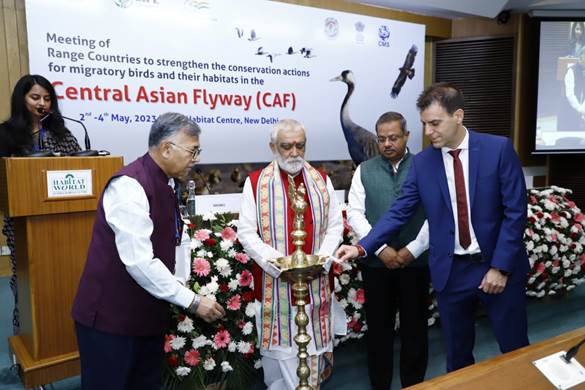
 The Ministry of Environment, Forest and Climate Change  in collaboration with the United Nations Environment Programme/ Convention on Migratory Species (UNEP/CMS) had organized a meeting of Range Countries to strengthen conservation efforts for migratory birds and their habitats in the Central Asian Flyway (CAF) from 2nd to 4th May, 2023 in New Delhi.

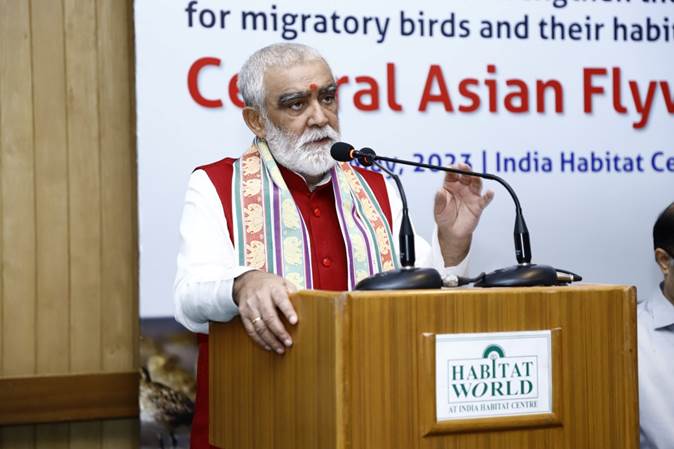
Union Minister of State for Environment, Forest and Climate Change, Government of India, Shri Ashwini Kumar Choubey inaugurated the meeting. In his inaugural address the Minister  while echoing the Prime Minister’s call to adopt LIFE (Lifestyle for environment for environmental protection) made at COP-26 in Glasgow  mentioned that :

“…It gives us immense satisfaction that we have taken concrete steps towards his vision with this meeting of the range countries of the Central Asian Flyway to frame an Action Plan. Additionally, adopting a sustainable lifestyle that allows for the co-existence of all life forms, including migratory birds, is critical to ensure their continued existence in the years to come. This aligns with  Prime Minister’s LiFE movement, which calls for a Lifestyle for Environment for environmental protection, and serves as a reminder of our responsibility towards the planet. Through this meeting, we are taking a significant step towards achieving the common goal of conservation and sustainable development in the Central Asian Flyway….”


The meeting was attended by the eleven countries of CAF region including Armenia, Bangladesh, Kazakhstan, Kyrgyzstan, Kuwait, Mongolia, Oman, Saudi Arabia, Tajikistan, and Uzbekistan, besides the Secretariats of CMS, AEWA and Raptors MOU, and  representatives of Chief Wildlife Wardens of States, scientific institutions in India, international and national non governmental organizations, and subject experts.

The delegates deliberated and agreed on an institutional framework for the Central Asian Flyway, discussed priority areas for implementation, and agreed on a draft roadmap for updating the CMS CAF Action Plan. The meeting was a critical opportunity for CAF Range States to collaborate and exchange ideas and best practices to ensure the sustainable conservation of migratory birds and their habitats.

The discussions during the meeting also led to the modalities of an institutional framework mechanism with the aim of developing a coordinated approach to the conservation of migratory birds and their habitats. There was an overall consensus in the meeting for  further strengthening and formalizing  this initiative. The formalization of the Central Asian Flyway initiative, was seen as a significant step towards the conservation of migratory birds and their habitats.

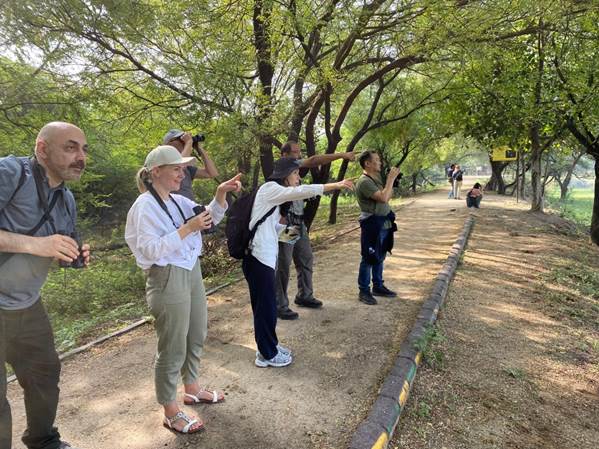
The delegates also undertook a field visit to the Sultanpur National Park, Gurugram, Haryana, to understand the management of bird sanctuary and learn the best practices being adopted in India for management of bird sanctuaries.  

****

TACTICAL RESCUE OPERATION FROM SUDAN BY IAF C-17 NON-STOP OPERATION OF NEARLY 24 HOURS

 In the midnight hours of 03 – 04 May 23, an Indian Air Force C-17 Globemaster aircraft airborne from Hindan, flew through the night to land in the early morning hours at Jeddah, Saudi Arabia. The aircraft refuelled at Jeddah to undertake a nonstop flight from Jeddah, via war torn Sudan and back to India. The aircraft took excess fuel from Jeddah to avoid a situation of non-availability of fuel and refueling delays in Sudan. The mission was one of a kind, with the aircraft carrying 192 passengers, mostly ladies, children and elderly persons, who either were NRIs, foreign nationals or OCIs (Overseas Citizens of India). These people could not be taken to Jeddah, and hence were required to be flown directly to India in a nonstop flight by the heavy jet.

At Sudan, the aircraft carried out an overhead steep tactical arrival followed by an assault approach to land the heavy jet. During the entire duration of the ground operations, the aircraft engines were kept running in readiness of a quick exit from the airfield, in case of such a need arising.

The crew encountered another unplanned emergency when one of the passengers became unconscious during the flight. This situation was immediately and proficiently handled by the crew who administered him 100% Oxygen to stabalise him.

The aircraft landed at Ahmedabad late in the evening on 04 May 23 late in the evening and then at the home base of Hindan late in the night on the same day. The crew thus flew through extended duty periods of nearly 24 hrs to get some of the last stranded countrymen back to India.

***

President of India Graces 12th Convocation of Maharaja Sriram Chandra Bhanja Deo University

 The President of India, Smt Droupadi Murmu graced and addressed the 12th convocation of Maharaja Sriram Chandra Bhanja Deo University at Baripada, Odisha today (May 6, 2023). 

Speaking on the occasion, the President said that Maharaja Sriram Chandra Bhanja Deo University has made a unique identity in the field of higher education and research in a short span of its history.

The President appreciated the University for establishing the ‘Sacred Grove’ in its campus with the aim to preserve the bedrock of tribal practices and cultural traditions. She said that the ‘Sacred Grove’ is important for the conservation of environment and local biodiversity. It is also one of the best examples of community-based management of natural resources.

The President said that the world is facing huge challenges of global warming and climate change. India has set an example for the world to adopt a nature-friendly lifestyle, which is called Lifestyle for the Environment or LiFE. In our tradition, it is believed that trees, plants, mountains, rivers all have life and not only humans but also all living beings are children of nature. Therefore, it is the duty of all human beings to live in harmony with nature. She said that the Similipal National Park located in this region holds a globally important place in terms of biodiversity. She expressed confidence that the students and teachers of the university would find a way to protect biodiversity through their research and innovation.

Addressing the graduating students, the President said that receiving degree does not mean that education process has been completed. Education is a continuous process. She said that after getting higher education some of them would do a job, some would do business and some would also do research but thinking of giving a job is better than thinking of doing a job. She was happy to note that this University has set up an Incubation Centre and provides assistance to the students, alumni and common people in setting up start-ups.

The President said that competition is an inevitable side of life. One has to face competition in every walk of life. She said that students should always keep trying to succeed in the competition and for that they should keep acquiring higher skills and move towards greater efficiency. They can turn the impossible into possible with their will-power. 

The President said that competition is a natural side of life, but cooperation is the beautiful side of life. She told students that while moving forward in life, when they would look back, they would find that some people of the society are not very capable of competing with them. She advised students to hold the hands of deprived ones and bring them forward. She said that a healthy society can be built through generosity and cooperation. She urged students to think not only of their own happiness and interest but also about the welfare of the society and country.

***

Conference Proceedings Publication with ISBN


Conference proceedings publication with ISBN (International Standard Book Number) is a common practice in academic and research communities. It involves publishing the papers presented at a conference in the form of a book or a collection of papers, which are assigned a unique ISBN number. This enables the papers to be easily cited and referenced, and provides a permanent record of the research presented at the conference.

The process of publishing conference proceedings usually involves the following steps:

Call for papers: The conference organizers issue a call for papers, inviting researchers to submit their papers for consideration.

Review process: The papers are reviewed by a panel of experts, who assess their quality and relevance to the conference theme.

Acceptance and revision: Papers that meet the criteria for acceptance are selected for inclusion in the conference proceedings. Authors may be required to revise their papers based on feedback from the reviewers.

Editing and formatting: The papers are edited and formatted for publication in a book or a collection of papers.

Publication and distribution: The proceedings are published and distributed to the conference attendees and other interested parties, such as libraries and academic institutions.

The use of ISBN numbers for conference proceedings is important because it ensures that the proceedings are easily accessible and can be referenced in academic publications. It also provides a measure of quality control, as only papers that meet certain standards are accepted for publication.

Overall, the publication of conference proceedings with ISBN numbers is a valuable way to disseminate research and promote academic exchange, as well as to provide a lasting record of the research presented at a conference.

<

p style=”text-align: justify”>Contact us: Send mail to editor@pen2print.org or editor@edupub.org for getting Conference Proceedings published with ISBN or Conference Proceedings in IJR Journal

Top Ten Popular Arts of India

Top Ten Popular Arts of India

India is known for its rich cultural heritage and diversity, which is reflected in its traditional arts and crafts. Here are the top ten popular arts of India:
Madhubani painting – A style of painting native to the Mithila region of Bihar, known for its intricate and colorful depictions of nature and mythology.
Kalamkari – A type of hand-painted or block-printed cotton or silk textile from Andhra Pradesh, known for its beautiful patterns and vibrant colors.
Warli art – A tribal art form from Maharashtra, known for its simple yet beautiful depictions of daily life and nature, usually painted in white on a red ochre background.
Pattachitra – A type of traditional painting from Odisha, known for its intricate details and bright colors, often depicting Hindu mythology and folklore.
Phulkari – A type of embroidery from Punjab, known for its colorful floral patterns and intricate stitching.
Pottery – India has a rich tradition of pottery, with different regions known for their unique styles and techniques, such as Blue Pottery from Rajasthan, Terracotta from West Bengal, and Khurja pottery from Uttar Pradesh.
Kondapalli toys – Wooden toys from Andhra Pradesh, known for their intricate carving and vibrant colors, depicting a wide range of themes, including animals, mythology, and daily life.
Chikankari – A type of embroidery from Lucknow, Uttar Pradesh, known for its delicate and intricate needlework, usually done on white cotton or muslin fabric.
Meenakari – A type of metalwork from Rajasthan, known for its intricate enamel work and colorful patterns.
Kathak – A classical dance form from North India, known for its graceful movements, intricate footwork, and expressive storytelling.
These popular arts and crafts of India not only reflect the country’s rich cultural heritage but also represent the skill and creativity of its people. They are essential cultural assets that have been passed down through generations and continue to thrive and evolve in contemporary times.

Why Publish with Edupedia Publications Pvt Ltd

 We offer authors sophisticated and global marketing and distribution alongside an attentive and personal editorial experience.

From award-winning research to major reference works, our experienced team of editors New Delhi will work closely with you on a plan tailored to suit your work. What you can expect from us:

  1. Editorial Excellence – Now part of Springer Nature, Palgrave Macmillan’s program has an unbroken tradition of over 10 years of independent academic publishing. New authors will join a rich publishing heritage, impactful program of research, and a stable of top-notch academic authors.
  2. Commitment to quality and peer review – Above all, we care deeply about the quality of our publishing. Rigorous peer review is vital to this. We will support you with a thorough but fast and responsive peer review process. 
  3. Open access – We are also pleased to offer authors the option to publish their monographs, edited collections, proceedings, reference works, chapters and other book types open access. You can browse our author resources to learn more. 
  4. Innovative tools and platforms – We are always thinking about how best to support our authors as publishing incentives, platforms and formats continue to change. EduPub, our content platform, allows us to make all our books accessible on any device, track impact through usage statistics, and give authors the tools to make the best of their research.
  5. Engaged approach to academia – Palgrave offers strategic support to early career researchers and mid-career scholars, as well as targeted campaigns in support of key disciplines, such as our Campaign for the Humanities and Social Science Matters.
  • New Content Item

    ORCID iD

    Share your discoveries and receive recognition for your work

  • Palgrave Book Archives

    EduPub Book Archives

    Digitizing over 10 years of academic publishing 

JNPA posts an impressive turnaround time (TAT)

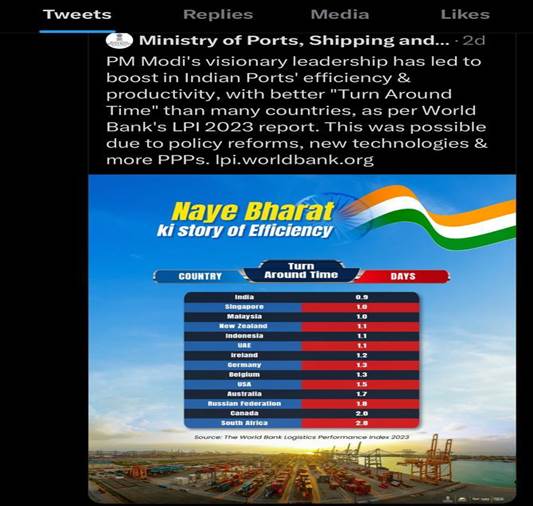
 A month after the record handling performance for the last FY, Jawaharlal Nehru Port Authority (JNPA), India’s premier container port, has achieved another feat when it set a global benchmark in container cargo handling. According to the Logistics Performance Index (LPI) Report, 2023, published by the World Bank, JNPA has an impressive turnaround time (TAT) of just 22 hours (equal to 0.9 days), putting India amongst the top performers.


JNPA was able to achieve the feat due to various measures taken in reducing the dwell time. Most importantly the operational efficiency of the terminal operators has been the biggest contributor along with the better landside- rail and road connectivity, introduction of Centralised Parking Plaza (CPP), Digitization of the processes; streamlining berthing and unberthing of vessels; deploying more tugs for smooth transition of the vessel etc. are some of the other initiatives that JNPA has undertaken to facilitate efficient functioning of the port.

Shri Sanjay Sethi, Chairman of JNPA said, “This is exciting news for all of us at JNPA. Just last month, we achieved a record of handling 6.05 million TEUs in 2022-23, the World Bank data reiterates that our efficiency parameters are better than many countries as per LPI 2023 report and we as a team are committed to further reduce the logistics cost and time for the EXIM trade.”

 Chairman of JNPA and Deputy Chairman, JNPA  congratulated the team for this remarkable achievement.

*****

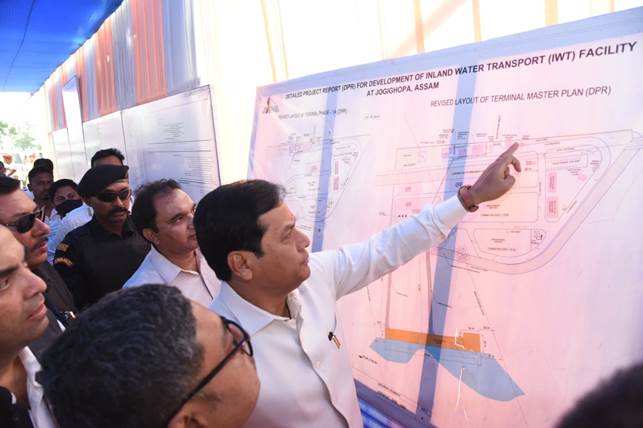
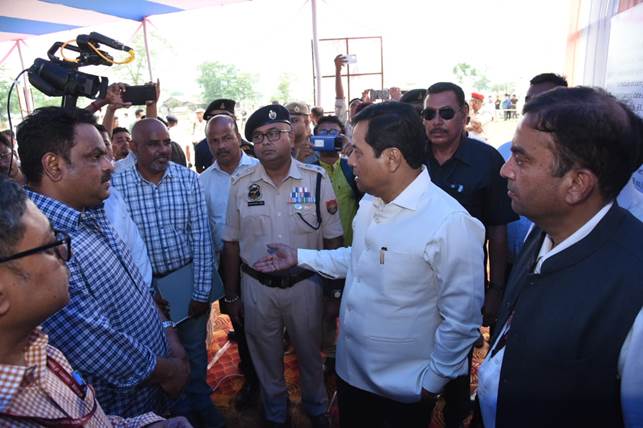
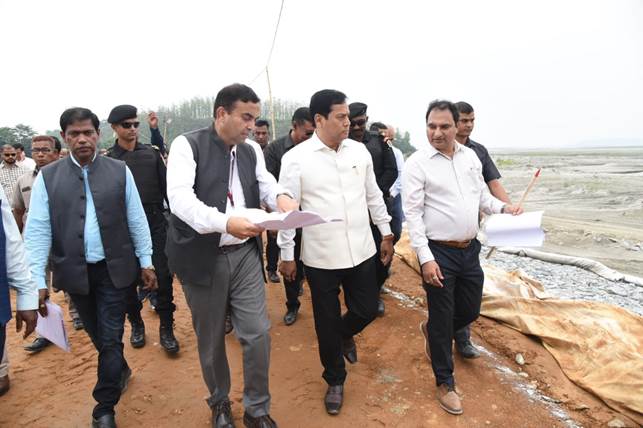
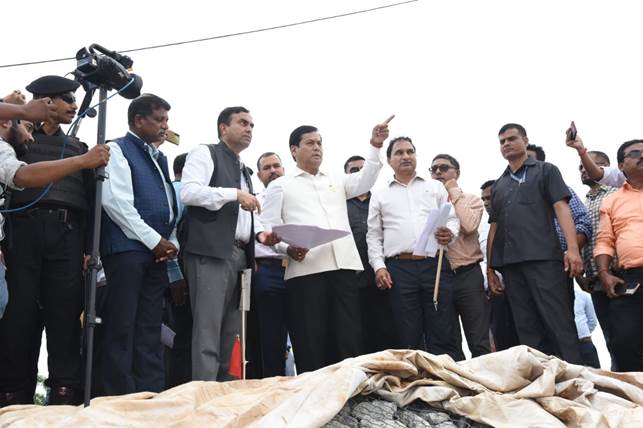
India’s First International Multimodal Logistics Park at Jogighopa ,Assam

 Union Minister of Ports, Shipping & Waterways and Ayush, Shri Sarbananda Sonowal visited the construction site of India’s first International Multi Modal Logistics park in Jogighopa, Assam to review the progress today. Shri Sonowal said the jetty at the park is likely to be completed within this year. Union Minister expressed satisfaction at the pace of work as the road and railway connectivity is also aimed at completion by end of this year.


Speaking on the occasion, the Shri Sonowal said, “For the swift development of the Northeast India, our dynamic Prime Minister Shri Narendra Modi ji has been taking many revolutionary steps to revitalise our economy. Prime Minister Modi ji’s vision of transformation via transportation has enabled the entire region of Northeast to revamp their transportation network. As the construction of this crucial Multi Modal Park goes on in a swift pace, it is likely to unlock huge potential for the region along with the neighbouring countries like Bhutan and Bangladesh. The PM Gati Shakti National Master Plan has been conceived to revive and rejuvenate the transportation to become an efficient & effective agent of change. In order to ensure trickle down of economic prosperity, the PM Gati Shakti NMP aims at strengthening the coastal regions of both sea and rivers. I call upon everyone to join this wonderful initiative and make it a grand success.”

The park is being developed under the ambitious Bharatmala Pariyojana of the Government . First such MMLP, it is being made by NHIDCL in Jogighopa of Assam. The park will be connected to road, rail, air and waterways. This is being developed in 317-acre land along the Brahmaputra. 


The distance of 154 km between Jogighopa and Guwahati will be covered by making a 4-lane road on this stretch, a 3-km rail line will connect Jogighopa station to the MMLP, another 3-km rail link will connect it to the IWT, and the road to newly developed Rupsi airport will be upgraded to 4-lanes for easier connectivity. 

The MMLP will have all the facilities like, warehouse, railway siding, cold storage, custom clearance house, yard facility, workshops, petrol pumps, truck parking, administrative building, boarding lodging, eating joints, water treatment plant, etc.

****

India-Israel Friendship – Beginning of a New Era of Industrial Research and Development Cooperation

 In a momentous milestone in S&T cooperation between India and Israel, a Memorandum of Understanding (MoU) on Industrial Research and Development Cooperation was signed between the Council of Scientific and Industrial Research (CSIR) under the Ministry of Science and Technology (MoST) of the Republic of India and the Directorate of Defense Research and Development (DDR&D), under the Ministry of Defense of the State of Israel.
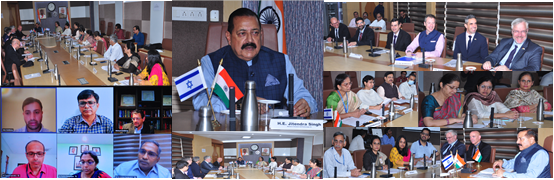
Dr N Kalaiselvi, DG, CSIR and Secretary, DSIR thanked the Hon’ble Minister of State(IC), Ministry of Science and Technology and Earth Sciences, GoI and Vice President, CSIR Society for gracing the meeting and his continued support to CSIR. She welcomed the dignitaries and gave an overview of CSIR, showcasing its technological and research prowess as also the ongoing collaboration discussions with DDR&D, Israel in Aerospace, Healthcare, Energy. Sharing CSIR’s priority topics she concurred to the interest of DDR&D for furthering collaboration with Israel in high technology areas such as Artificial Intelligence, Quantum and semiconductors, synthetic biology etc.

Acknowledging the ongoing cooperation efforts of CSIR and his team, Dr. Daniel Gold, Head, DDR&D envisioned that the CSIR-DDR&D cooperation would be beneficial for the welfare of both the countries. He added that DDR&D welcomes collaboration not only with R&D organizations but also with start-ups and companies, venture capitals on both sides. He apprised that AI and photonics are strengths of Israel and welcomed cooperation with CSIR in High Technology sectors which would pave the way for building a better future.

Stressing the successful completion of three decades of India-Israel successful diplomatic relations, Mr. Naor Gilon, Ambassador of Israel to India emphasised the close friendly relations between Israel and India, which have culminated into a strategic partnership after the complimentary visits of Prime Ministers of both the countries in 2018. The present CSIR-DDR&D cooperation would add another feather and be a milestone for India-Israel relations.

Dr N Kalaiselvi and Dr. Daniel Gold signed the CSIR-DDR&D MoU in the august presence of Hon’ble Minister of S&T, Government of India and Vice President, CSIR Society, Dr Jitendra Singh.
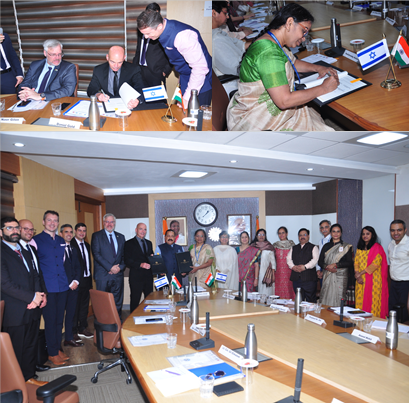
The MoU shall enable cooperation in the industrial R&D programs in mutually agreeable industrial technology fields through implementation of specific projects. The collaboration would encompass some of the key industrial sectors including Healthcare; Aerospace & Electronics Instrumentation; Civil, Infrastructure & Engineering; Chemicals and Petrochemicals, Sustainable Energy including Energy Devices; Ecology, Environment, Earth & Ocean Sciences and Water; Mining, Minerals, Metals & Materials; Agriculture, Nutrition & Biotechnology. The collaboration through the MoU would be steered and the execution monitored by a Joint Steering Committee led by the heads of the CSIR and DDR&D for taking forward mutually benefiting Industrial and technology cooperation.

Specific collaboration on Hydrogen and Aerospace currently under discussed between CSIR and DDR&D were briefed by Dr Abhay Pashilkar, Director, CSIR-National Aerospace Laboratories (CSIR-NAL), and Dr Ashish Lele, Director, CSIR-National Chemical Laboratory (CSIR-NCL); they welcomed collaboration on futuristic technologies in these domains, including in High Altitude Platform, Hydrogen Valley programs of CSIR, respectively.

Specific collaboration on Therapeutics between CSIR-Indian Institute of Chemical Technology (CSIR-IICT) and M/s 101 Therapeutics for conducting clinical trials of a COVID-19 drug having enormous therapeutic potential was briefed; if successful this would prove to be highly appropriate and effective for preparation of future pandemics. The cooperation MoU between CSIR-IICT and M/s 101 Therapeutics was also signed during the meeting.
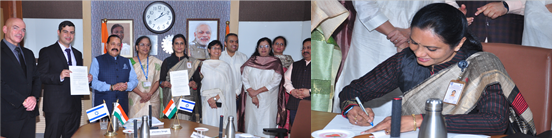
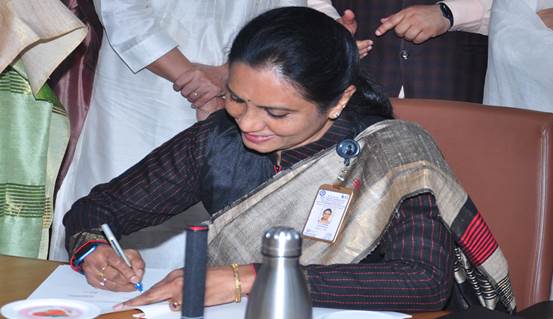
 

In his remarks, Dr Jitendra Singh said that it is a very important year in the S&T sphere of India under the leadership of  PM of India as India is holding G20 presidency, celebrating the International year of Millets, as also India and Israel completed 30 years of successful diplomatic relations.

He apprised that CSIR has specialized laboratories in almost all the identified priority sectors therefore assured appropriate competence for this cooperation. For e.g. indigenous Hydrogen Fuel Cell bus by CSIR-NCL, purple revolution (Lavender cultivation) by CSIR-IIIM. He welcomed technology partnership with Israel and congratulated both sides for for their efforts to strengthen the India-Israel relationship.
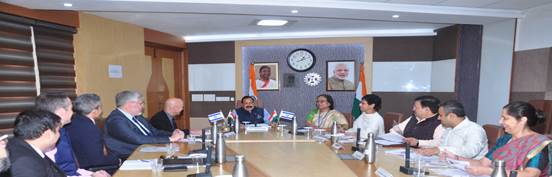
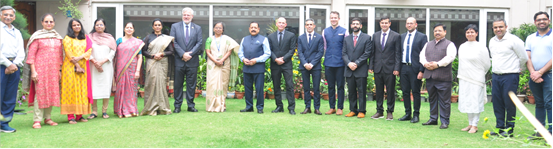
Dr. Rama Swami Bansal, Head, International S&T Affaris Directorate (ISTAD), CSIR thanked the Hon’ble Minister for his continued support to CSIR, the team from Israel for building and formalizing the cooperation and her colleagues from CSIR and MEA for their kind and gracious presence during the MoU signing meeting today.
**************************


New way to track particles in soft colloids using optical tweezers

 Scientists have found a way to track minute clay particle movements within soft clay colloids using optical tweezers — the application of which in biological systems brought the Nobel Prize in Physics in 2018. This new way to track particles and manipulate them as desired can be applied in areas like targeted drug delivery.

Using optical tweezers, researchers at Raman Research Institute (RRI), an autonomous institute funded by the Department of Science and Technology, Govt. of India, attempted to study the dynamics and hidden structural details of Laponite, a synthetic clay. As these clay particles are the same size (monodisperse) and transparent, so they are best suitable for performing advanced studies under light. Laponite is a widely used raw material in the pharmaceutical and cosmetics industries. This clay comprises disk-shaped particles sized 25 to 30 nanometres (nm) and one nm in thickness.

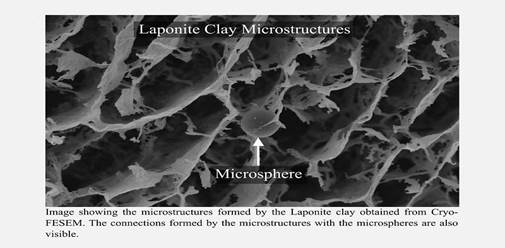
Polystyrene beads dispersed in Laponite clay suspension were used for the experimental setup. With time, microstructures were noted to have developed due to the electrostatic interactions between the clay particles. These microstructures grew stronger with time, with their network size dependent on the concentration of Laponite particles.

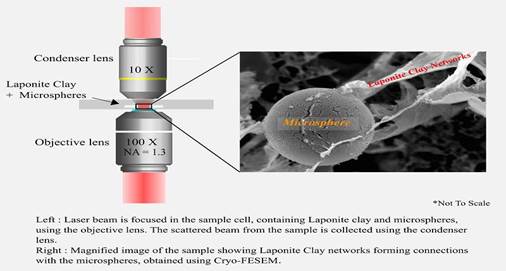
“These structures are responsible for the material’s elasticity, enabling adjustment of elasticity by tuning the microstructures. These microstructures also form connections with micron-sized polystyrene particles, which are used to probe these suspensions in such studies,” said Anson G. Thambi, a third-year Ph.D. student at RRI.

In a study published in the journal ‘Soft Matter, Ranjini Bandyopadhyay, faculty, RRI, and her team used optical tweezers as they wanted to measure movements of the probe in nanometres scales, where the properties of the medium evolve with passing time. Optical tweezer is a popular tool in an optics laboratory, used to measure minute forces and manipulate tiny dielectric beads trapped at the tight focus of an intense laser beam over length scales down to a few nanometers. It allows the inducement of movement in the trapped probe particle, and its response is analysed to extract previously inaccessible local viscoelastic properties of the underlying medium.

“These attachments between the probe (PS) and Laponite clay particles are necessary to understand the properties of the suspension if the internal networks are of sizes greater than the probe itself,” said Bandyopadhyay.

Furthermore, the team used cryogenic field emission scanning electron microscopy (cryo-FESEM) to examine the average pore areas formed by the Laponite microstructures.

“Interestingly, the collective observations obtained using an optical tweezer and cryo-FESEM experiments revealed an intriguing and previously unknown correlation. We found that beads trapped by the optical tweezer moved much slower in denser network structures,” added Bandyopadhyay.

The RRI team thus concluded the prevalence of a direct relation between the morphologies of the clay suspension structures and the probe particle dynamics at micrometre length scales.

Publication link: https://pubs.rsc.org/en/content/articlelanding/2023/SM/D2SM01457B