

Salient features of Indian Society, Diversity of India
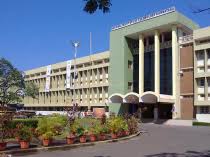
Indian society is very unique and diverse. We have a lot of cultures, communities, religions, languages, etc
India is a plural society, characterized by its unity and diversity. A grand combination different cultures, religions and languages of the people belonging to different castes and communities has upheld its unity. This combination of different culture and ethnicities is what that has made India unique from other countries. Different events such as the foreign invasions, immigration from other parts of the world, and the existence of diverse languages, cultures and religions have made India’s culture open- minded , on the one hand, and a unique continuing and living culture, with its specificity and historicity, on the other. Not only we have diversity in racial compositions, religious and linguistic distinction but also in patterns of living, life styles, land tenure systems, occupational pursuits, inheritance and succession law, and practices and rites related to birth, marriage death etc.
Post-Independent India is a nation united against several odds and obstacles. India is a secular state. It has one Constitution providing guarantees for people belonging to diverse regions, religions, cultures and languages. It covers people belonging to all socioeconomic strata. The Article 15 of the Indian Constitution talks about Prohibition of discrimination on grounds of religion, race, caste, sex or place of birth. Our Indian Constitution itself safeguards and protects the rights of every individual irrespective of their religion, race, caste sex or place of birth. It gives everyone opportunity and treats everyone equally.
DIFFERENT FEATURES OF INDIAN SOCIETY
MULTI RELIGIOUS SOCIETY
India consists of people from many different religions. Hinduism, Islam, Christianity, Buddhism, Jainism, Sikhism are some major religion in India, However there are other different religions as well. Hinduism is the most dominant religion in India.
As per the census 2021, there are approx. 110 crore people follow Hinduism in India. The Hindus are most numerous in 29 States/UTs except in Manipur, Arunachal Pradesh, Mizoram, Lakshadweep, Nagaland, Meghalaya, Jammu & Kashmir, and Punjab.
Approx. 20 crores of people are Muslims In India. The Muslims professing Islam are in majority in Lakshadweep and Jammu & Kashmir.
In 2021 approx. 3.20 Crores people are Christians in India. Christianity has emerged as the major religion in three North-eastern states, namely, Nagaland, Mizoram, and Meghalaya.
In 2021 approx. 2.4 Crores people follow Sikhism in India.
In 2021 approx. 10 million or 1 Crore people are followers of Buddhism in India and In 2022 approx. 5 million or 50 Lakh people follow Jainism in India.
MULTI RACIAL SOCIETY
Race is a group of people with a set of distinctive physical features such as skin colour, type of nose, form of hair, etc. India is a country of people with different racial groups. The latest racial classification of the Indian people based on researches in this field has been given by B.S. Guha (1952). He has identified six racial types (1) the Negrito, (2) the Proto Australoid, (3) the Mongoloid, (4) the Mediterranean, (5) the Western Brachycephals, and (6) the Nordic.
MULTI LINGUAL SOCIETY
According to the latest analysis of a census more than 19,500 languages or dialects are spoken as mother tongue in India.
There are 121 languages which are spoken by 10,000 or more people in India, which has a population of 121 crore. Only 22 languages are listed in Schedule VIII of the Indian Constitution. The 96.71 per cent population in the country have one of the 22 scheduled languages as their mother tongue and the remaining 3.29 per cent is accounted for other languages. Not all these languages are, however, equally widespread. Many of them are tribal speeches and these are spoken by less than one percent of the total population so here we can clearly see see that in India there is a great deal of linguistic diversity as there are so many people of different languages and dialects.
MULTI CASTE SYSTEM
The term caste is generally used in two senses: sometimes in the sense of Varna and sometimes in the sense of Jati. In India, caste system is very much prevalent. The Varna system is basically a four fold system in the Hindu society based on their functional criteria, the four divisions are Brahmins, which is on the top of this system followed by kshatriya, Vaishyas and then shudra with their functions as learning or teaching, defense, trade and manual labour. We find castes among the Muslim, Christian, Sikh as well as other communities. One must have heard of the hierarchy of Shaikh, Saiyed, Mughal, Pathan among the Muslim. Similarly, caste consciousness among the Christian in India is not unknown. Since a vast majority of Christians in India are converted from Hindu fold, the converts have carried the caste system into Christianity. Among the Sikh again we have so many castes including Jat Sikh and Majahabi Sikh (lower castes).
In addition to the above described major forms of diversity, we have diversity of many other sorts like settlement patterns – tribal, rural, urban; marriage and kinship patterns along religious and regional lines; cultural patterns reflecting regional variations, and so on.
Some other of the salient features applicable to Indian Society are:
- Unity In Diversity
- Patriarchal Society
- Tribes
- Family
- Kinship System
- Balance between spiritualism and materialism
- Co-existence of traditionalism and modernity
India is a very diverse country and because of its unique feature it always attracts people from all parts of the world.
.
SUSTAINABLE DEVELOPMENT
Sustainable Development has been the buzzword for a while now. People are constantly asking what it looks like and how to implement it. There have been many differing opinions on what sustainable development actually is, however some key principles remain:
- The concept of sustainable development is about making sure that you live in a world where people are able to stay self-sufficient and thrive indefinitely.
- Sustainable development does not need to take the form of major changes, but rather building upon what we already have.
- A major component of any successful Sustainable Development project is social-justice based thinking.
The Principles of a Sustainable Development Project:
A sustainable development project is one that will allow you to reach the following principles:
-Managing resources efficiently.
-Responsible consumption.
-Treating others with respect and dignity.
These four principles are what make up an overall healthy and productive society. The management of resources, responsible consumption, and treating others with respect and dignity can be applied to almost anything we do; whether it is being environmentally conscious, being respectful of your parents, or being a good soccer player. The real issue here is that these principles go hand in hand. If we constantly abuse a resource and consume in a way that hurts the environment, we are not being respectful of the Earth. If we are being very selfish in our consumption, then we are not being respectful of our fellow human beings. Lastly, if we do not treat people with respect and dignity, then they will not be treated with respect and dignity by their neighbors.
These four principles allow us to have a healthy society. This can be seen clearly in the following quote by E. F. Schumacher: “The great first commandment is to love the Earth and that means loving it enough to take care of it for the sake of future generations”.
The way we approach development affects everyone. The decisions that we make also impacts the society, and has very real consequences for people’s lives. Poor planning of communities, for example, reduces the quality of life for the people who live in them.
Sustainable development provides an approach to making better decisions on the issues that affect all of our lives. By incorporating health plans into the planning of new communities, for instance, we can ensure that residents have easy access to healthcare and other facilities.
Sustainable development should provide a solution in terms of meeting basic human
needs, integrating environmental development and protection, achieving equality,
ensuring social self-determination and cultural diversity, and maintaining ecological
integrity. Although the concept of sustainable development has undergone certain
changes during the past, its fundamental principles and goals have contributed to a
more conscious behaviour adapted to the limitations of the environment. This is the
reason of adopting the concept in different areas of human activities. Numerous international organizations have been involved in implementation of the concept, while
it has found positive implementation locally, but it did not produce significant results
on a global scale. This fact proves environmental problems which, 30 years after the
introduction of the concept, are still ongoing. Contemporary understanding of the
concept of sustainable development is considered through the United Nations Millennium Development Goals focused on a complex global situation, such as population
growth, hunger and poverty, wars and political instability, and further degradation
of the environment. There is a huge gap between developed and underdeveloped country and many of the countries are not even close to sustainable development. Fundamental constraints of the implementation of the concept of sustainable development are the degree of socio-economic development that many countries have not yet achieved, associated with a lack of financial resources and technology, but also the diversity of political and economic goals on a global scale.
Source: https://www.unesco.org/en/education/sustainable-development
Effective Journaling

We hear the word journaling very often. Almost every other day this term falls on our ears but we simply pay no heed to it. The reason is we humans have a tendency to think that the most ordinary or simplest things cannot bring us extraordinary greatness. Which is not true ofcourse.
When it comes to journaling, we sometimes underestimate how important it is to include this beneficial habit into our daily routines. Our lives can thrive from journaling in many different ways. From increased productivity overall to self-improvement and improved mental wellness, this habit is proven to be effective.
Writing down your thoughts, feelings, or anything else you want to in order to try to understand them better is what journaling is fundamentally all about. Every time we write down our thoughts in a journal, our mind starts to get more organised, making it simpler for us to prioritise our goals and every aspect of our lives that we want to work on. As a result, journaling helps us stay productive by allowing us to acknowledge what needs to be done after letting us self-assess ourselves in a way.
The ability to learn new things quickly, as well as your capacity for analytical and innovative thought, are more important indicators of productivity in today ’s digital economy than how much work you can get done in an hour. Journaling is therefore valuable spending a few minutes on, just like any practise that enables you to learn more acutely and think more effectively.
Outlining your goals in a journal enables you to think thoroughly about all aspects of it.
Journaling helps you keep motivated during the arduous process of actually achieving your goals by providing a track of the work you’ve made in that direction.
We refer to it as effective journaling for this reason.
Anyone who really wishes to deal with their emotions, possibly to prevent it from driving themselves in the realms of depression or anxiety, might benefit much from this mindful practice.
You can thoroughly examine your feelings, let out chaos, and mentally assimilate your experiences through writing.
Furthermore, it can support you in attaining a significant purpose or work with you to reduce certain sources of stress.
Creating and reflecting on the story of your life, including all of the decisions you have committed and the moments that have shaped who you are today, is something you may do by keeping a diary.
In a word, journaling’s healing effects are “enlightening.
You can’t change it all in your life instantly, and attempting to create healthy habits and break negative ones in a single day is probably not going to work. Legitimate, lasting change occurs when you only take on something that you can manage; frequently, altering one significant habit can have knock-on impacts that enhance your life and move you forward to your commitments in other aspects.
One such discipline is writing; it may help you stay focused, determine your capabilities and limitations, provide an outlet for awareness of self , but also much more. Merely keeping track of your ideas, emotions, and doings can change your life in unanticipated ways.
Source: positivepsychology.Com Courtney E. Ackerman, MA https://positivepsychology.com/benefits-of-journaling/
What are Contents of a Sector Plan
A sector plan consists of a group of neighborhoods where it is possible to provide higher order facilities for larger population.
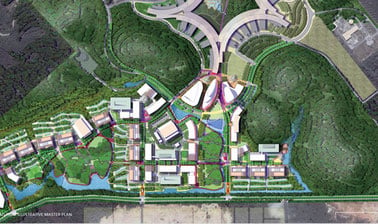
Contents of a Sector Plan
- It is a detailed site plan with broad identification of residential clusters
- Allocation of commercial areas and other facilities based on access requirement
- Formation of a boundary depending on circulation pattern and administrative setup
- Social and physical infrastructure to be allocated based on development control norms laid down in master plan
- Traffic links to be identified between arterials and collector roads
Functions of a Sector Plan
- Each sector plan has to identify the various neighborhoods with population ranging from 3500-15000
- It is the lowest level plan for the implementation of the various levels of planning proposals extensively detailed out
What are Contents of a Local Area Plan
A local area plan (lap) sets out a strategy for the proper planning and sustainable development of a specific area within a local authority and for a timescale as specified by the authority.
Contents of a Local Area Plan
- Land use zoning & density
- Public open space
- Private open space
- Car parking
- Provision of infrastructure
- Conservation of built heritage
- Conservation of natural environment
- Provision of traveler accommodation
- Community facilities
- Design and development standards
Functions of a Local Area Plan
- A local area plans gives plot level detail
- It is also used to check if the master plan is confirming with land
What is Zonal Plan
Zonal development plans are the next level hierarchical policy plans after the master plans which detail out the broad objectives of the master plan at comparatively smaller regions while incorporating the guidelines and proposals by the master plan without deviating far from the primary goal of development set by master plan. Unlike master plans here these zonal plans are prepared for shorter terms with more focus on detailing.
The Zonal Development Plan details out the policy of the master plan and acts as a link between the layout and the master plan. Indian master plan approach was fundamentally guided by the British town planning legislation. And further integrating the western concept of ‘zoning’ into the master planning lead to the preparation of new lower hierarchy development plans called ‘zonal development plan’ handling more comprehensive and more focused objectives derived from the master plan.
As the city is in its initial stage of growth there is urban agglomeration taking place into the city which usually derived due to one or a few unique characteristics spreading almost homogeneous throughout the city. But as the city keeps growing bigger, there are different new characteristics brushed without the prior knowledge on different parts of the city holding huge population. This arises new problems with solutions generally out of the scope of the single character oriented Master plans which treats the whole city equal and develops the regulations based on the common or prominent character of the city with major aspects in detail. Also it is impossible to advocate these changes into the master plan due to its long term visionary approach.
At this point the Authorities have come up with such inspiring solution of preparation of separate development plans for different smaller regions called zones which are divided based on the broad prevailing character of the area. Now, having an opportunity of independent planning for each zone, these zonal development plans put their focus on those sub objectives developed according to the uniqueness of the zones. Coming to the question of legality of the zonal development plans, though both zonal plans and master plans are approved and authorized equally by the State Governments, any changes or amendments are directed only towards the statutory master plan which reflects those changes onto the lower hierarchy plans further. Most development authorities prefer the development of these zonal plans simultaneously with the preparation of the Master plans to provide immediate aid as tool to the Master plan implementation at ground level.
The master plan divides the city into subdivisions or zones. Criteria’s followed are:
- Physical and Historical growth
- Character of land
- Intensity of land use
- Circulation pattern (Railways, Major arteries etc. )
- Municipal boundaries, election and census wards
Contents of a Zonal Plan
- Land use plan confirming to the master plan
- Location and extent of land uses
- More detailed circulation pattern
- Special objectives of the zone if any
- Allocation of use zones into further use premises
Functions of a Zonal Plan
- A zonal development plan details out and elaborates the policies of the master plan
- Acts as a link between the master plan and the layout plans
- Contains a land-use plan for the development of the zone and show the approximate locations and extents of land-uses proposed in the zone
- The schemes and layout plans indicating use premises should confirm to the master plan
ZDP to be prepared by the local planning authority may propose or provide for all or any of the following matters.
- Laying out or relaying of land either vacant or already built upon as building sites
- Construction, diversion, extension, alteration, improvement or closure of lanes, streets, roads and communication
- Construction, alteration, removal or demolition of buildings, bridges and other structures
- Land acquisition by purchase, exchange or otherwise of any land or other immovable property within the area included in the ZDP whether required immediately or not
- Redistribution of boundaries and the reconstitution of existing plots
- Disposal by sale, exchange, lease or otherwise of land acquired
- Transport facilities, water supply, lighting etc.
- Drainage inclusive of sewage and of surface draining and sewage disposal
- Allotment or reservation of land for public purposes
- Defining, demarcating of the reconstituted plots
- Construction of buildings, housing or resettlement of persons displaced by ZDP’s
- Demarcation of places or objects and building of archaeological, religious, historical or environmentally sensitive areas
Contents of Zonal Development Plan
1) Introduction
- A brief introduction to the city comprising its regional setting, functional character growth trends.
- Development plan / Master plan context
- Interdependence of zones on other parts of the city
2) Site Background and Analysis
- Land use distribution and analysis
- Population and density
- Built‐up area, character, extent and delineation
- Transportation: Circulation network, traffic flow (people and goods) and terminal facilities
- Physical and social infrastructure
- Land ownership
- Slope analysis
- Micro‐zoning hazard mapping
- Green cover: Parks/open spaces, forest, orchards, green belts, etc.
- Site potentials and constraints
- Security mapping: Specifying relatively safe and unsafe areas, streets etc.
- Types of housing subsystems: low cost housing, affordable housing
3) Conceptual Framework
- Planning parameter
- Planning concept and hierarchy till community level
- Projected requirements
- Urban design framework
4) Proposals and Development Strategy
- Land use plan
- Proposed circulation system
- Proposals for physical infrastructure
- Proposals for community facilities
- Strategy for new development, redevelopment and improvement
- Proposal for integrating and developing urban villages
- Proposals for informal sector
- Strategy for rehabilitation/regularization of unauthorized colonies
- Strategy for maintenance of services
- Provision for facilitating physically challenged and disabled in urban development
- Proposals regarding vending zones: Transit oriented markets and market streets can be pedestrianized or only NMVs and buses be permitted in vending zones.
5) Conservation and Improvement of Environment
- Conservation and Improvement of land profile
- Proposals for conservation and improvement of rivers streams and water‐sheds
- Conservation and Improvement of green cover and landscape
- Conservation of heritage areas/zones
- Energy efficient and environmentally sustainable development
- Provision for rainwater harvesting and common infrastructure at LAP level
- Integration of proposals regarding air water and noise pollution control
- Security mapping: Focusing on provision of appropriate street furniture including lighting, spacing of police booths. Consideration is recommended for providing security for women
6) Compliance of Government Policies
- State Land Utilization Policy
- State Perspective Plan and/or State Urbanization Policy
- State Urban Housing or Affordable Policy
- Township and Integrated Township Policy
- Rainwater Harvesting Policy
- Energy Policy
- Disaster Management Policy
- Industrial and Service Sector Investment Policy
- Barrier‐free Environment for Physically Disabled
- Information Technology Policy
- Tourism Policy
- Other Policies
7) Zoning Regulations
- Definitions of various use zone premises
- Use restrictions (uses permitted, conditionally permitted and uses prohibited)
- Proposal for mixed land uses
- Strategy for non‐conforming land uses
- Strategy for hazard zone and regulations
- Proposals for meeting women’s needs: mixed use development with focus on street activities/ TOD/ space for street vendors/encourage areas to be active at various times of day and night
8) Development Regulations
- Building regulations and building bye‐laws
- Urban design of major hubs, if required
- Architectural Control, if necessary
- Specific development controls for heritage areas and other special areas traditional areas as defined by the local authorities if any may be provided
9) Resource Mobilization and Implementation
- Institutional set‐up for Implementation
- Physical Infrastructure development cost including annual and 5 year phasing
- Resource mobilization for implementation through public private and other sectors
10) Implementation Framework
- Phasing and prioritization of development
- Development Management
11) Annexures
- Detailed scaled maps of prevailing situation
- Detailed scaled maps of existing land use
- Detailed scaled maps of proposed land use
- Detailed scaled maps of proposed location of infrastructure and social services
- Detailed scaled maps of vending zones in the planned local area
- Any other proposal necessary for the development of the zone or ward or area
What are Important Aspects of Preparing Master Plan for a Town
In the beginning, a ‘Master Plan’ is prepared, which identifies the long-range, comprehensive planning by or for a government agency as a foundation for the overall land development policies within specific corporate limits. The master plan deals with the natural city or a town as a whole. It offers a broad, general picture of the projected spatial pattern of the total metropolis. Three aspects of the master plan may be studied, each of which represents a major historical emphasis on city planning.
1) Land Use Pattern
Planning for effective use of land within the town/city limits involves decisions regarding:
- The various types of utilization that require distinctive subareas.
- The percentage of the total occupied space that should be apportioned to each type and the grade of utilization.
- The proper location within the city/town of each type of functional area.
2) Land Utilization
The master plan or the general plan has to give scope to various categories of land utilization, both public and private. Three major categories of private land use are common stores, factories and residences each may be subdivided further. Factories may be separated into at least two subtypes, Tight’ and ‘heavy.’ Residences may be divided into three subcategories by value low, medium and high and into two or more subcategories according to the intensiveness of utilization.
Commercial establishments may be divided into subcategories such as wholesale and retail, with the latter further subdivided. In addition, storage and switching facilities may require separate areas in connection with heavy transportation lines. Public land utilization, such as parks, playgrounds and civic centres, also have to be provided for in the city plan. However, the most extensive form of public land utilization streets spread throughout the city is in no need for a separate demarcation of space.
3) Spatial Locations for Each Category
In determining the spatial location for each category, various types and grades of subareas available in the city are indicated on the master plan map. The planner then considers the following to determine which land has to be allotted to which category.
- The kinds of services to be performed within the city.
- The ideal locations for stores, factories and residences.
- Significant characteristics of the urban site that suits this ideal pattern.
- The existing heritage of the past construction that gives the city its present spatial pattern.
- The trends of the spatial change that already have started but have not run their full course.
- Anticipated effects of any new inventions.
With these considerations in mind, the planner undertakes to formulate a general map of the most efficient spatial pattern. This plan is usually effected within a time span of 20 to 50 years. The planner has to recommend to appropriate officials such controls and changes as will further the realization of this pattern. The ideal master plan places every category and subcategory in a subarea of a city that
- The total cost of moving men and materials from place is minimized
- Safety and beauty are maximized
- Constructive social contacts are stimulated
In formulating these proposals, the planner can utilize a generalized description of the ideal spatial pattern of a city or study the various types of city planning recommended by the experts.He needs to make detailed studies of the unique characteristics of each city and to modify the generalized ideal pattern so as to fit the local conditions and needs. For an already existing city/town, the urban planner ordinarily finds that the basic pattern of heavy transportation already has been established. The major system of streets has been laid out and the locations of the central business district and of major secondary commercial centres have been fixed, and that many areas of light and heavy industries have been established. Even though he must begin with this existing pattern and has numerous decisions to make regarding future changes.
Industrial Location
Although the planner has the choice to assign industrial locations to various typical positions, such as near the central business district; along the lines of heavy transportation and at breaks in transportation within the city; and at the periphery or in the nearby hinterland, etc., he has to make an effort to place them in the periphery. The planner should also provide a plan for peripheral and hinterland industrial areas, to prevent the loss of property values for the property owners of these areas.
Sometimes, it may so happen that the new industrial areas may generate many more factories, the plan has to provide for the growth of these interdependent industries, which cluster in adjacent sites, so that they can serve one another more effectively and also obtain cheaper and more efficient heavy transportation services. In addition, the urban planner needs to prepare for the expansion or migration of certain industrial areas within the city and also the migration of some industries to the city. Consequently, the planner has to make a detailed study of the factors affecting a particular city before determining the size and location of its industrial areas.
Commercial Location
Commercial areas ideally depend for the location and size both on the functions they are expected to perform and on the size and location of the population they will serve. In general, the major shopping goods and luxury goods centre should be planned for the middle or the centre of the city/town. This area normally is expected to expand slowly in the direction of greater population growth. With increase in the widespread automobile transportation, the larger shopping centres or commercial centres can also be located in the peripheral or outlying locations. The planner, however, has to provide for parking facilities and less traffic so that city dwellers may not face the inconvenience.
Residential Location
Within the built-up area of the city, some old residential districts will sometimes require extensive reconditioning or complete remodeling. Sometimes, the existing single family areas will need to give way to more intensive types of residential utilization. Sometimes, it may so happen that new residential areas have to be curved out in the peripheral regions or in the suburban areas.
The general plan or the projected plan when made initially should place areas of multifamily residences close to busy centres of dominance especially the central business district or close to the streets or transportation lines that give ready access to such centres. Smaller areas of intensive utilization may be planned to take advantage of exceptional amenities. Expansion of residential areas into unoccupied land presumably follows the principles of distribution. Under the influence of individual and rapid speed transportation, residences will probably become more decentralized but larger numbers of peripheral communities will grow.
City Beautification
City beautification, which was emphasized to a very great extent in the ancient and medieval ages, has taken a backstage in recent years. Nevertheless, it deserves careful consideration by the urban planner. One major aspect of beautification, which claims the attention of many planners, involves the design and erection of an imposing civic centre. The planned civic centre counteracts the random erection of public buildings in scattered locations among other structures. When visitors visit this city, they will gain a more favourable impression of the metropolis and local residents will develop a greater civic pride if public buildings such as the corporation, public library and museum are grouped together in a beautiful civic centre.
Other types of civic beautification projects involved in master planning include the selection of large and small parks to preserve exceptional beauty spots and make them available to the public and the designing and planting of parkways and residential streets so as to enhance their beauty.
Buildings : Old and New
The city/town consists of buildings that vary in age and condition. Cities require old buildings, else it is impossible that vigorous streets and commercial centres grow in them because if the cities consist of only new buildings, the enterprises that can exist there are automatically limited to those that can support the high costs of new construction. For example, well financed supermarkets, chain restaurants and banks, which are capable of paying high costs, use these buildings. But in a city, there are some small investors and shopkeepers, who cannot pay high costs; to cater to such people, old buildings are a must in a city. It is the same with respect to residential places also some people who can afford new buildings will reside in these buildings, some others prefer to reside in old buildings.
The only harm of aged buildings is the harm that eventually comes of nothing but old age. In some cities/towns, some of the older buildings, year by year, are reconstructed or renovated. Over the years, therefore, there will be a mixture of buildings of many ages and types. With the passage of time, high building costs or new buildings of one generation become bargains or old buildings of the next generation. The colonies built up all at once usually change little physically over the years. But after many years, almost all the buildings in these colonies become old and dilapidated.
Slum Clearance
Many cities contain extensive areas of closely packed deteriorated dwellings, often called slums. To make the city more beautiful, the local authorities have to undertake to raze a few blocks of slum dwellings and to build new residences. At such times, city planning officials may be asked to study the local area and to make recommendations about its spatial layout. If a slum clearance project is to cover only one of several deteriorated sections of a city, the planner may first be asked to make recommendations as to which specific locality should be rebuilt. In carrying out this preliminary task, he starts with some estimate of land space that will be needed and proceeds to select one or more areas of that size. In deciding which area to recommend for reconstruction, he collects the data covering such points as follows.
- The number of structures unfit for human use.
- The number of dwelling units lacking adequate lighting.
- Delinquency rates.
- Income to the city from taxes as compared with the costs of expenditure on the police and health services.
The planner should also take into account the location of various deteriorated areas as related to the anticipated changes in the total spatial pattern of the city. He then recommends for rebuilding only such areas as will be needed for residential utilization throughout the normal life of the proposed new dwellings. The planner then presents all these data to the officials.Based on all these data, the officials then select a slum area for clearance. The planner then has to prepare a map showing the recommended pattern of land utilization. He has to estimate the amount of space needed by store, shops, schools and playgrounds. He should also decide on the preferred locations for each type of utilization.
He has to then recommend on how much of land has be utilized for residential purposes and also indicate the size and location of individual structures on a map. Usually on an in lying slum clearance area, the structures rebuilt are aimed at multifamily, low cost residences, generally fewer in number and higher in grade than those replaced. If a considerable slum area is cleared at one time, the planner can ignore the previous pattern of streets and can shape the area almost as if he were beginning with vacant land. Ideally, he places heavy traffic streets only among the edges of a neighbourhood and uses narrow, curved secondary streets to divide the neighbourhood into large residential super blocks, and provide necessary access to and from homes. These features of local street plans for slum clearance areas are much like those characteristics of the peripheral preplanned communities.
Streets and Transportation Facilities
The planning of streets and transportation facilities relates so intimately to the spatial structure of the city that the two cannot be separated. The major function of urban transportation is that of connecting one area with another so that men and materials can move with greater safety and less cost. Sometimes, some specific projects may create problems for transportation. Thus, a multiplicity of transportation and communication facilities confronts the city planner. Some facilities link the city with the hinterland and some others link with other cities, towns and villages.
City planning has to deal with the routes of heavy transportation and location of terminal facilities and other problems that involve street use. It should also take into consideration the congestion and danger created by the large volume and potentially high speed of urban street traffic. Three aspects have to be considered while planning the streets, traffic counts and calculation of street requirements, elimination of bottlenecks and dangerous intersections, and special high-speed expressways and bypass routes.
Traffic Counts and Major Street Pattern
Sound planning of the major street system requires for the quantitative determination of needs. To determine these needs, the traffic engineers count the number of vehicles using each major street at different hours of the day and on various days of the week. Such traffic counts measure the total volume of traffic and the size and hours of peak loads. Sometimes, the engineers have to survey the origin and destination of the traffic to determine how much traffic can conveniently be diverted from the more congested streets to alternate routes. Using such data, engineers calculate the number and width of streets needed and make recommendations for new construction or for changes in the existing streets.
Elimination of Bottlenecks and Dangerous Intersections
One best method of lessening the traffic congestion on certain streets is the elimination of bottlenecks. If, throughout most of its length, a busy road is broad enough to handle the ordinary volume of traffic, then there will not be any problem of congestion. But at any point on the road, there is a narrow street or a bridge, it interferes in the ordinary movement of the traffic. The planner usually recommends the widening of such narrow places.
Sometimes, if the bottleneck results from on street parking, the planner has to recommend the elimination of the practice or he may introduce a system of ‘one-way’ traffic streets. If peak loads result in congestion during morning and evening hours, and if the highway has four or more traffic lanes, the planner may recommend the use of movable directional signs so placed as to permit a greater number of lanes to be used in the direction of heavier traffic.
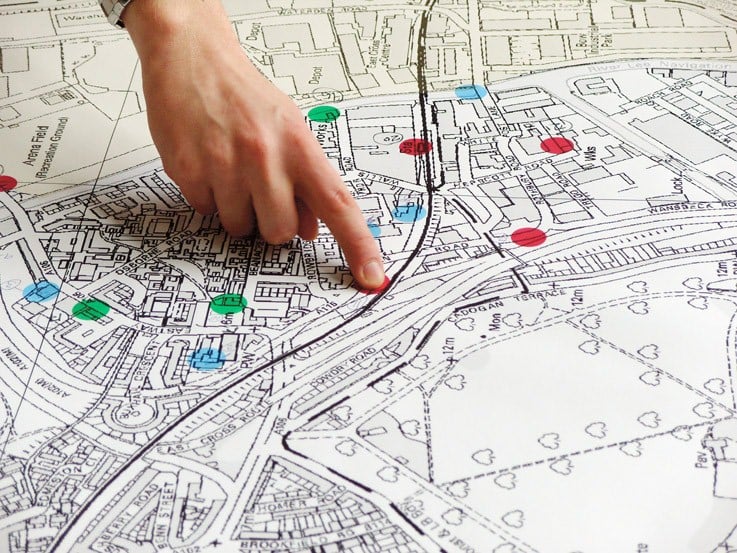
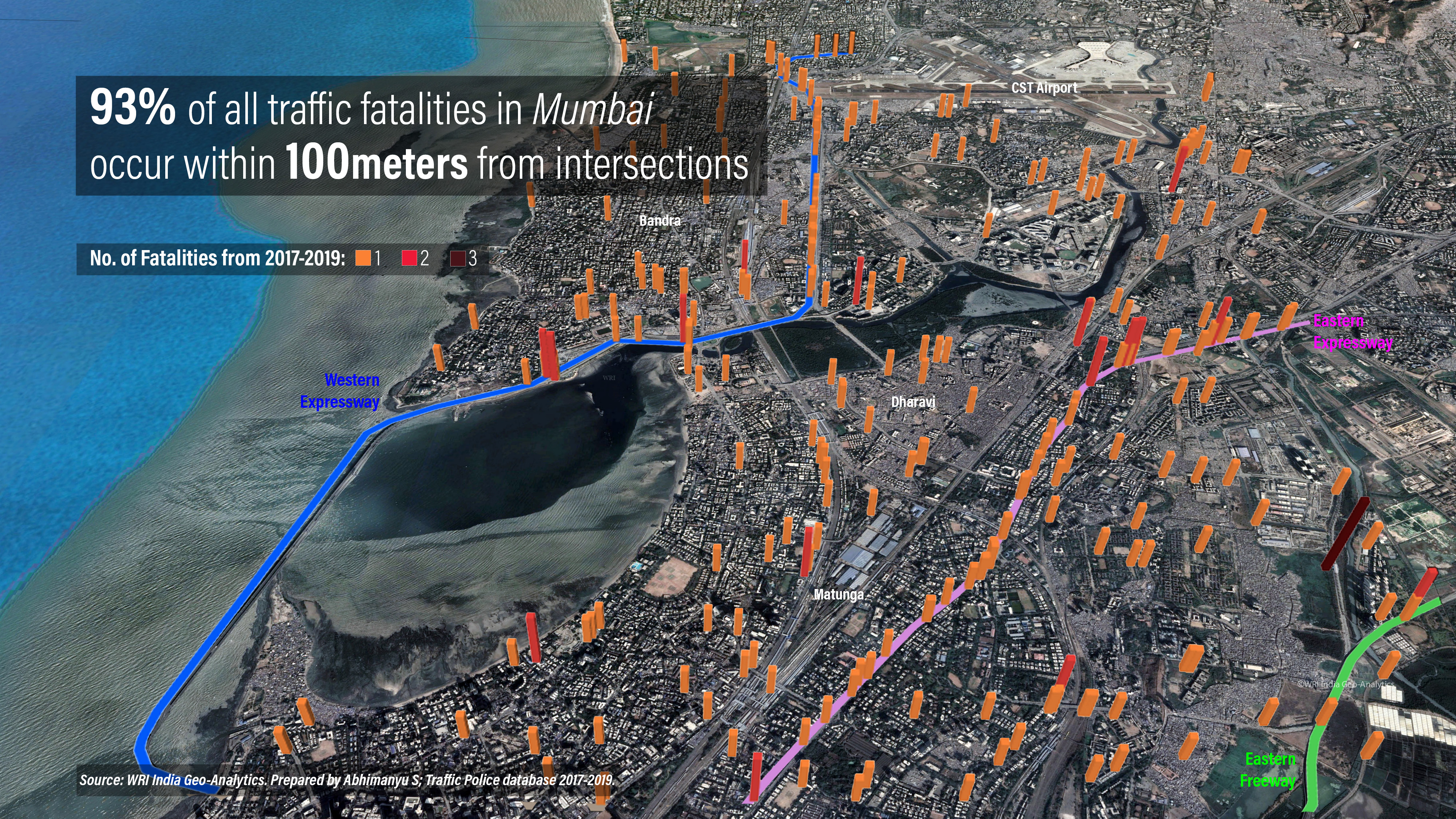
Another major problem is traffic intersection or traffic caused due to intersecting streets. Collision and injuries are common at such places, which can be greatly reduced by overpasses and underpasses. These can eliminate cross traffic. At times, the planners can work out a system that provides for entrances and exits to facilitate the movement between cross streets or intersecting streets.
The planners can provide for two special categories of highways to manage the traffic – high speed expressways and bypass routes. The former should ordinarily extend from the city centre outward through less populous areas into the hinterland. Such expressways can be entered only at designated points, with entrance and exit lanes especially designed to lessen the danger and to minimize interference with speeding traffic. The second highway should provide for slow traffic. These routes should lead through traffic around rather than through areas of congestion. Thus, planners can recommend a number of methods to overcome bottlenecks including the barriers caused due to pedestrian traffic.
Delhi Master Plan 2021 by Delhi Development Authority (DDA or MPD 2021)
Delhi master plan tries to address numerous problems which are faced by residents in the city and provide policies to solve these problems. Study of master plan of Delhi is also important as it acts as guideline for various other cities and is one of the most comprehensive master plans. It remains one of the largest urban agglomerations in the world. Therefore it becomes important to look at the state of urban planning in the city and to constantly evolve and evaluate the strategies for managing its growth and development. The master plan for Delhi is supposed to be the main policy document for this purpose, a legally enforceable text which lays down the planning strategies and development controls applicable to the city.
Delhi is the capital city of India and home to a population of almost 16 million people. It remains part of the largest urban agglomerations in the world. This large population makes planning of immense importance for providing good quality of life to its citizens. The history of planning in Delhi is centuries old much before India got independence and after independence the planning has been done by Delhi Development Authority (DDA) which prepared master plans for planned growth of the city. Master plan for year 1962, 2001 and 2021 has been made till now with increase in Urbanized Land and improvement in successive plan and aims at developing Delhi into a world class city.
Master plan has been prepared while keeping in mind the larger context i.e. National Capital Region for integrated growth of the city with surrounding area. Master plan gives detailed information in form of various chapters such as shelter, transportation, industry, trade and commerce, land use, development code etc. these chapters gives well defined hierarchy, sizes & regulations for various facilities which needs to be provided. Various lower order plans like zonal plan, sub zonal plans, layout plans are made on the basis of policies provided in the master plan. The National Capital Region of Delhi is the 6th largest urban area in the world with a population of about 16 million people. Cities of such huge magnitude, having a population of over 10 million, are in fact now classified as ‘Mega Cities’.

Delhi master plan regions
But with the growth of such large urban areas also comes the problem of managing them well to ensure good quality of life for the residents. The existence of such large numbers of people densely packed into compact regions leads to ever increasing burdens on the resources available in the cities. Housing, waste management, slums, transportation, have emerged as some of the most pressing problems in urban areas along with the overall issue of effective utilization of land. It is in dealing with such problems that urban planning comes to the fore, in order to provide a comprehensive development strategy for the city with a forward looking approach. The city may thus get divided into administrative and uses based zones with separate plans for the same along with an all-encompassing master plan for the city as a whole.
Need of Master and Regional Plan
Delhi Metropolitan city, the National Capital, has recorded an unprecedented growth during last several decades. In order to save Delhi from population explosion, it is necessary to regulate growth in the areas around it. The decennial growth rate has been as high as 90% during 1941-1951 and over 50% since 1951-1961 to 1981-1991. The explosive rate of growth in its population has been a cause of serious concerns to the govt. and all the concerned city authorities. The need for Regional approach to planning was felt as early as in 1959 when the draft master plan for Delhi was prepared. A statutory organization called “National Capital Region Planning Board” was set up in March 1985 to plan and promote the balanced and harmonious development of the region.
The population increase has heavily strained the infrastructural facilities and its resources. Therefore it was felt necessary to invest in selected settlements outside the metropolis at appropriate distance and also, in impulse sectors to relieve Delhi from its present avoidable pressures. In the regional context, it is necessary to adopt a ‘poly-nodal’ model than a ‘mono�nodal’ model one.
Delhi Master Plan Model
Comprehensive planning model for the city to achieve balanced growth and built environment. Comprehensiveness in city planning refers primarily to an awareness that the city i.e. a system of interrelated social and economic variables extending over space.
- Geddesian triangle model of land use integration in terms of folk, work and place
- Integrated in time with reference to having a plan period
- Planning having a multi-disciplinary nature covering social and economic aspects

Delhi master plan 2021
Conclusions over Delhi Master Plan 2021
MPD 2021 provides scope for vast development within Delhi through the new land policy involving private participation. The Delhi Master Plan 2021 along with inviting private participation through opportunity for large scale development in Delhi, lays down norms to check unplanned growth and violations by developer entities. Though the land pooling model proposed by MPD 2021 brings in a remarkable change in the way private participation is perceived in the context of Delhi; it can be expected to impact the cost of new housing units. It will be interesting to witness the various parameters of land sharing, infrastructure provisions, mandatory EWS (Economically Weaker Sections) and LIG (Low Income Group) housing provision and premium factor for being located in Delhi impacting the pricing of the MIG (Middle Income Group) and HIG (High Income Group) housing segment. Market participants have been provided with good opportunities. However, the implication of different facets of regulatory and realty market characteristics / occurrences captured in this white paper will need to be analysed further to make an informed decision for benefiting from each opportunity.
Gandhinagar Master Plan – Case Study

Gandhinagar is located 23 km north of Ahemdabad planned in 1960s by Prakash M Apte and H. K. Mewada. Gandhinagar district is an administrative division of Gujarat, India, whose headquarters are at Gandhinagar, the state capital. It was organized in 1964. Gandhinagar is located in central Gujarat, Vadodra and Ahemdabad are located in the north. It is a planned city situated on the Ahmedabad, Gandhinagar is the commercial heart of Gujarat and western India. Gandhinagar is being developed as infocity. It has an area of 649 km², and a population of 13,34,455.
Streets
Gandhinagar’s streets are numbered (eg. Road no. 1, Road no. 2 up to Road no. 7). All streets are aligned at 30 deg. N-W and 60 deg. N-E, to avoid direct glare of morning and evening sun while driving. The Gujarat assembly building is in the centre of the city to make it close to all the residents
Character of the City
Infocity, Gandhinagar has many educational institutions like Dhirubhai Ambani Institute of ICT (Information and Communication Technology), EDI (Entrepreneurship Development Institute Of India), Indian Plasma Research Institute, and Gujarat Law University. Gandhinagar’s Education level is highest in Gujarat, 87.11% all over the Gujarat.
Sectors
Gandhinagar has 30 sectors which are of 1 x 0.75 km each in length and width. Each sector has a primary school, a secondary school, a higher secondary school, a medical dispensary, a shopping centre and a maintenance office. Gandhinagar is developed on the neighborhood concept.
Departments Working in Gandhinagar
1) Roads and Building Department
The Town planning section of this office deals only with the town planning for Gandhinagar city and the peripheral area of the city. The office deals with following activities.
- Preparing master plan of the city and areas outside
- Preparing layout of major roads and rail lines in the region
- Preparing layouts for residential area
- Preparing layouts for commercial areas
- Preparing layout for industrial areas
- Preparing layouts for special buildings such as capital complex, town hall and other public buildings
- Preparing layouts landscaping of public buildings, parks and other public areas
- Guidance in policy regarding allotment of land
- Guidance for size of plot and land price in allotment of land
- Suggesting plots for auction for various uses along with base price
- Preparing of building bylaws for the city and the peripheral areas
- Suggesting changes in the bylaws from time to time
- Permission for construction and completion of buildings as per the bye-laws
- Technical approval under the periphery control act 1960 for change of use (Section-11) as well as to start construction under section 5/6 of the above act.
2) GUDA (Gandhinagar Urban Development Authority)
This authority is the one that drafts all the town planning schemes and implements them. It was started on 12-03-1996 by Govt. of Gujarat. The prime objective of the GUDA’s formation was to carry out the sustained planned development of the area failing outside the periphery of Gandhinagar notified area. With a view to ensure well planned development of Gandhinagar capital city and 39 villages and measuring area of 388 km2 . The important functions of the authority include
- The preparation of development plan for the Gandhinagar urban agglomeration
- To prepare the draft town planning schemes
- To implement the revised town planning schemes and
- To monitor and control the development activities in accordance with the revised development plan
- Besides, it is also responsible for the development of the infrastructures like road, sewerage, water supply and other basic civic amenities
Planned as the administrative capital of the state, the current and future population employed in state government offices was distributed in 30 residential sectors around the State Assembly secretariat complex. Each residential sector could accommodate about 50% of population, and was intended to house the half of the population employed by the government. Plots on the periphery of each sector are meant for private and supporting population that constitutes the remaining 50%. The city was planned for a population of 150,000 but can accommodate double that population with increase in the floor space ratio from 1 to 2 in the areas reserved for private development. The river being the border on the east, and the industrial area to the North, the most logical future physical expansion of the city was envisaged towards the north-west.
To establish and maintain a separate identity for the new city, the surrounding area of about 39 villages was brought under a Periphery Control Act (as in Chandigarh) that permitted new development of farm houses only. The area later constituted a separate administrative district of Gandhinagar. The city was planned for a population of 150,000 but can accommodate double that population with increase in the floor space ratio from 1 to 2 in the areas reserved for private development. The river being the border on the east, and the industrial area to the north, the most logical future physical expansion of the city was envisaged towards the north- west.
Due to a constant military confrontation with Pakistan, whose borders are close from the city, a large military presence was required here. The land acquired on the eastern bank, adjacent to National Highway No.8, was therefore allotted to the Border Security Force and military cantonment. Considering the mostly south-west to north-east wind direction, the land to the north of the city was allotted for the then biggest thermal power station and the adjacent areas were zoned for industrial use. This area was distanced from the township by a 2000 ft. wide green strip of thick vegetation.
Gandhinagar Master Plan
FSI (Floor Space Index)
Residential
Ahmedabad is currently the real estate hotspot in Gujarat, followed by Surat and Vadodara. The FSI fixed by the Ahmedabad Urban Development Authority (AUDA) in R-2 zones (city outskirts) is 1.2 and in R-1 zone, it is 1.8, allowing uniform free FSI of 1.8, barring the state capital of Gandhinagar.
Commercial
Earlier 2.8 now allowing up to 4 FSI. Under the ‘ease of doing business’ housing and slum redevelopment, under which it will give over 3.0 FSI
Area of Sector
75.70 hectare Ground coverage, 13.08 hectare (16.65%) Open Area, 59.28 hectare (78.30%) Roads, Primary Area 9.82 hectare and Secondary Area: 3.12 hectare.
Linkages And Connectivity
National highway (NH) 8 and 8C runs through the district connecting it with major cities (20 km from city), connected with Ahmedabad by the Sarkhej-Gandhinagar highway (28 km) and with Vadodara by the Ahmedabad, Vadodara expressway (139 km). Distance from major industrial centres in the state: Rajkot (249 km), Jamnagar (337 km), Valsad (373 km), Ankleshwar (223 km), Bhavnagar (228 km), Mehsana (68 km) and Surat (306 km). Distance from major cities in India: Mumbai (573 km), Delhi (943 km), Kolkata (1952 km) and Chennai (1854 km).
Consciously designed and planned axially based on egalitarian and Gandhian ethos. The re planning of Gandhinagar by the Consultants of Gandhinagar Urban Development Authority (GUDA) has obliterated its identity as a capital city. Unbridled capitalism has led to its debasement and inorganic extension resulting in Gandhinagar becoming just another suburb of Ahmedabad.
The New Plan (2002)
The consultants recently appointed by GUDA have ignored that history and want the expansion of the city to take place to the south. A southward expansion proposed by the consultants will merge it with Ahmedabad and finally become its suburb, destroying its separate identity. This extension to the south has completely destroyed the plan’s most important concept, the central vista (Road No.4). It focuses on the capitol complex, and was naturally to be extended to the north-west maintaining the axis, expanding the city physically in that direction. Over 6000 acres of green cover to the south west of the city has been designated for residential use in an attempt to join with the city of Ahmedabad. All this land, when developed can accommodate a population of over 600,000. The consultants thus seek to destroy the identity of the new capital city and make it a suburb of Ahmedabad. The “Gamthan” (built up land in a village) areas of 7 villages just abutting the city limits of Gandhinagar are increased arbitrarily (much beyond their natural growth requirements) to allow private residential development.
Dismantling of Important Urban Design Features
A major Area for cultural facilities, in the city square in Sector 17 of the city centre is proposed to be converted to commercial use, killing Gujarat’s traditional concept of a ‘city square’ and destroying a major element of ‘urban design’ of the new capital city. An area along J road (along the river Sabarmati) across Sector 9 covered by ravines, was proposed for conservation as an adventure park. It is now designated by the consultants for residential taking away a unique recreational facility. The open spaces at the junctions of all main roads of the city, left open in the original plan to improve road geometrics in future, ornamental landscaping, road signage, guide maps etc. are proposed to be filled up with roadside petty shops and hutments for the immigrants giving the city a slum like look.
Gandhinagar Master Plan 2026
Gandhi Nagar Master Plan 2026 provides the framework for rationalizing the orderly movement of traffic and transportation within the city and defines the area for laying down network of various services. The plan is used for promoting integrated development of the urban centre by rationalizing its pattern of land use and their interrelationship. It also defines the strategies and solutions for overcoming the existing problems of the urban centres and to overcome its infrastructural and service related inadequacies. In addition, it provides options for accommodating the future addition to population which is likely to come to the urban centre due to natural growth and migration. Master Plan acts as a tool for determining the infrastructural cost which would be required to make the city sustainable. The plans offer futuristic solutions by laying down agenda for its growth and development.
New Schemes in Gandhinagar
Metro between Gandhinagar and Ahemdabad. GIFT city : It’s full form is “Gujarat International Finance Tec-City”. This place is 12 km from the Ahmedabad International Airport and 8 km from Gandhinagar. It is a Global Financial Hub. To develop and implement the project, Gujarat Urban Development Company Limited (GUDCOL) and Infrastructure Leasing and Financial Services (IL&FS) have established a Joint Venture Company, “Gujarat International Finance Tec-City Company Limited” (GIFTCL). The estimated cost of the entire project is Rs. 70,000 crore (700 billion Rs). Its main purpose is to provide high quality physical infrastructure (electricity, water, gas, district cooling, roads, telecoms and broadband), so that finance and tech firms can relocate their operations there from Mumbai, Bangalore, Gurgaon etc.
What are Process of Master Plan preparation
1) Legal Process
A statutory backing is needed to prepare any legal plan so that it can be implemented on ground. It is governed by principles, statutes, and codes which is derived from the state. Various legislation which provide legal backing are: Development authority act; urban improvement trust act; Town and country planning act. The need for statutory backing is that it gives power to exercise police power and power of eminent domain. Any construction which does not follow master plan can be given court notice and demolished. Most of the planning processes taking place follows rational planning model.
2) Technical Process
It includes the framework of working in order to prepare a plan starting from defining goals to monitoring. Master Plan preparation is based on the “Systems view of planning” which involves instrumental rationality. The stages and steps followed by a particular authority or the concerned plan making body might differ. Complexity of the city and the organisation itself has a direct impact on the process adopted.
3) Public Process
Involving community in plan preparation is one of the most important components in plan making as they are better verse of their local issues and solutions. In India public participation is in the form of public hearing. This process is also called as “Public Participation” or “Public Hearing”. The whole aim of having a master plan growth of area for the residents of the place thus it becomes essential to take their views, objections and suggestions into account.

Technical process of preparation of master plan

Master plan concepts
4) Management Process
Planning process is to be managed taking care of the resources like time manpower, internal organization of departments and working relationships and coordination among various departments and planning agencies. The number of stakeholders at times are numerous as in case of metropolis where the division of work is precise and given to different “boards” or other subdivision of concerned departments. This classification makes it integral to take into account all the concerned departments and agencies and thus their management.
What are Current Planning Parameters for Development Control
It is recognized that the Chennai urban area displays some signs of insufficient strategic planning, primarily due to the reactive nature of the planning process which has focused on controlling development rather than leading and guiding development. In general, the urban form and design that currently exists, has been the outcome of the ideas of individual developers on individual projects with little reference to the principles of good urban design and integration with the surrounding existing or future urban fabric. The main objectives of prescribing rules for development control are:
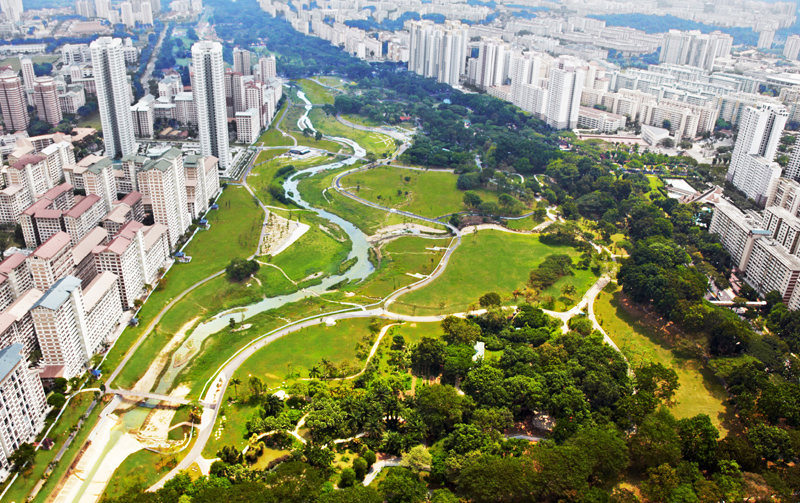
- Control density
- Minimize negative impacts which may be created over the adjoining properties such as noise, vibration and to provide privacy
- Control and regulate traffic generation
- Optimum utilization of available and planned infrastructure
Instead of having too many parameters, it is suggested that the following minimum number of parameters would serve the purpose:
- Minimum road width
- Setbacks
- Maximum permissible area or FSI
- Maximum permissible coverage
- Maximum height
- Parking standards
To understand these types of controls, it is important to recognize the design objectives, design principles and design guidelines. Objectives are statements of what a design is to achieve. The objectives of an urban design scheme are inevitably a mixture of economic, behavioral and aesthetic ends. Principles are statements describing and explaining the links between a desired design objective and a pattern or layout of the environment. The set of design principles used repetitively by a designer is loosely called that person’s style. A guideline is a statement, which specifies (for uninformed people) how to meet a design objective. They are also known as design directives. A guideline is an operational definition of an objective. There are two types of guidelines: prescriptive and performance oriented.
Performance oriented guidelines are essentially the same as design objectives, prescriptive guidelines are based on design principles and are as good or as bad as those principles. With prescriptive guidelines the designer of the guidelines works out what kind of pattern is required of the built environment. In performance guidelines it is left to the designer of the individual components of the urban design scheme to do. Design based on prescriptive guidelines is easier to evaluate; performance guidelines, while encouraging divergent thinking, require considerably more effort to ensure that the objectives are actually met. Guidelines are frequently used not simply to inform designers but as design controls. Design controls in cities are always shaped by the invisible web of law specifying individual and communal rights, the nature of the market place and the allowable mechanisms for interfering in the market place on behalf of perceptions of the public interest. As such it complements the capital web of investment policies used by governments to shape the environment. Urban design controls reform aspects of both webs.
Future Orientation and Planning Principles for Development Plan
Unlike the conventional two dimensional zoning plans, which tend simply to define areas of use, density standards and access arrangements, the development plan must establish three dimensional frameworks of buildings and public spaces and create more sophisticated visual models. A city is an assemblage of buildings and streets, system of communication and utilities, places of work, transportation, leisure and meeting places. The process of arranging these elements both functionally and beautifully is the essence of urban design. The vision of the development plan must fulfill the following essential needs:
- Allow understanding of what the public spaces between buildings will be like before they are built
- Show how the streets, squares and open spaces of a neighborhood are to be connected
- Defines the heights, massing and bulk of the buildings but not the architectural style or detailed design
- Control the relationship between the buildings and public spaces to maximize street frontage and reduce large areas of blank walls
- Determine the distribution of uses, and if these uses should be accessible at street level
- Control the network of movement patterns for people moving on foot, cycle, car or public transport
- Identify location of street furniture, lighting, landscaping, monuments, etc.
- Allow understanding and visualization of how a new or enhanced urban neighborhood is integrated with the surrounding urban context and natural environment
The following aspects need to be considered to arrive at the basis for policies affecting the urban fabric
- Areas of significance in built environment
- Visual integration of the city
- Policy for tall buildings
- Policy on unhindered access movement, parking and pedestrian realm
- Policy on hoardings, street furniture and signage
- Urban design scheme
- Policy for design of pedestrian realm
- City structure plan and urban design objective
What are Elements of a Developmental Plan

1) Land Use
The developmental plan should indicate areas designated for residential, commercial, industrial, socio-cultural, recreational, administrative and other uses.
2) Circulation
The roads, streets, railways, waterways, airways, terminal facilities, transit systems etc. for the movement of people, goods and services.
3) Utilities, services and facilities
The developmental plan should indicates the desirable location, size and other particulars regarding public utilities like water supply, sewerage and power, and other services.
4) Civic design
The developmental plan should depict the design of important elements of the city like civic centre, the central business district, shopping centres and cultural areas.
5) Open spaces
The developmental plan indicates the location and extent of desirable open spaces for parks, playgrounds, stadiums, gardens, crematoria etc.
Legal Status of Development Plan
The implementation of development plan would be possible if it is made legally binding on all the concerned authorities. Hence it should be made obligatory and give the plan. The legal status to facilitate its implementation.
Co-operation
The success of a plan depends on the active participation and cooperation of the people. A wide range of voluntary organizations and institutions such as youth clubs, colony associations, chambers of commerce, women councils and professional bodies may be involved in the planning process. The mass media such as newspapers, journals, radio, television and cinema can be effective in educating the public on civic problems and planning. Well-presented monographs, booklets, handouts, pamphlets, manuals, guides etc. go a long way in stimulating civic interest in planning.
Planning Commission
After independence, the Planning Commission was set up by the Government of India in March 1950. The Commission was instructed to
- Make an assessment of the material capital and human resources of the country, and formulate a plan for the most effective and balanced utilization of them
- To determine priorities, define the stages for carrying the plan and propose the allocation of resources for the due completion of each stage
- To act as an advisory body to the union government
- To determine the conditions which (in view of the then current sociopolitical conditions) should be established for the execution of the plan
- To advise the centre and the state government
All the plans made by planning commission have to be approved by NDC (National Development Council) first. It was constituted to build cooperation between States and the Planning Commission. Like planning commission, NDC is also an extra constitutional/legal body. It was setup on 6th August 1952. State Planning Board is the Apex Planning body at State Level with Chief Minister as Chairman, Finance and Planning Ministers of the state and some technical members. District Planning Committee is also there comprising both official and non�official members.
Types of Developmental Plans
- National development plan
- Sectoral development plan
- Local / Area development plan
- Zonal development plan
- City development plan
- Regional development plan
What are Stages of Preparation and Method of Execution of Development Plan
It includes Planning department of the local government, Specialized planning organization, A consultant and State town planning department. General methods normally followed for the preparation are:
- Collection of data and relevant information from civic survey and other sources
- Preparation of a tentative draft of the development plan and notifying the same for comments, suggestions and discussions from experts and the public
- Considerations of views received from experts and the public with sympathy and without any prejudice
- Preparation of the revised development plan accommodating the good aspects of comments received from experts and the public.
- Determination of the sequence in which the development plan will be implemented.
Method of Execution
The execution of the development plan is carried out by the Municipal or Corporation authorities. The first thing to be determined is the layout of the road system. It requires a functional approach to the more important sociological aspects of the town, viz. ‘Folk, Place and Work’. Lastly a financial program is prepared to devise the ways and means for the implementation of the Development Plan according to the schedule. For execution a team of experts in Engineering, Architecture, Public health, Sociology, Economics, Finance etc. headed by a Town Planner is required.
The plan making and plan implementation are inseparable. The interim development plan also called the Outline Development Plan is thus prepared by the planning authority. The statutory time limit is two years. It shall then be notified for the public comments and suggestions (Time one month). The Draft plan may be revised in the light of the public and expert comments and shall be submitted for Government’s sanction. (Four months from date of publication of the draft plan. The Govt. sanctions the revised plan and appoints an arbitrator.
The Arbitrator after holding proceedings in respect of each plot publishes the award and submits the detailed proposals to the higher authority such as the President of the Tribunal of Arbitration (No fixed time limit but at least twelve months for small scheme). The Arbitrator prepares the final scheme and submits to Govt. with plans through the local authority (usually six months). The local authority forwards the final scheme to the Govt. (usually three months). Govt. sanctions the final scheme after the photo zinco Dept., has printed all the plans. The detailed Development Plan also called the comprehensive Development Plan is duly approved and sanctioned by the Govt.
Legal Status of Development Plan
The implementation of development plan would be possible if it is made legally binding on all the concerned authorities. Hence it should be made obligatory and give the plan. The legal status to facilitate its implementation.
Co-operation
The success of a plan depends on the active participation and cooperation of the people. A wide range of voluntary organizations and institutions such as youth clubs, colony associations, chambers of commerce, women councils and professional bodies may be involved in the planning process. The mass media such as newspapers, journals, radio, television and cinema can be effective in educating the public on civic problems and planning. Well-presented monographs, booklets, handouts, pamphlets, manuals, guides etc. go a long way in stimulating civic interest in planning.
What are Features of a Development Plan
A development plan sets out a local authority’s policies and proposals for land use in their area. The term is usually used in the United Kingdom. A Local Plan is one type of development plan.

- Convenience and cheap means of transport
- Good sanitation and water supply
- Open air spaces
- Population density control
- Proper situations for places of worship, education and recreation
- Rational layout
- Requirement and Distribution of Land (Land use pattern)
- Width of roads
Planning Standards
- Educational facilities such as primary school, high school and college
- Medical facilities such as dispensary, health centre and hospital
- Shopping facilities such as departmental stores, shops, etc.
- Miscellaneous amenities such as burial ground, crematorium, cinema, auditorium, stadium, petrol filling cum service station, police station, post office, fire station, library, community hall, telephone exchange etc.
- Width of roads such as village roads, state roads, national highways etc.
- Development of land for the construction of buildings in the form of various building bye laws etc.
Report of a Development Plan
The written report accompanying the development plan should analyze the existing state of the town and it should include the following topics to suggest the improvement of town in general.
- Cost estimates for immediate measures
- Development of basic industries in urban and suburban zones
- Engineering infrastructure, site development, sanitation and hygienic measures
- Functional zoning and architectural principles involved in the town plan; pattern of highways and urban transportation; population growth for a design period and the first stage of construction
- Technical and economic factors of the project etc.
 Eduindex
You must be logged in to post a comment.