All about business environment

The word ‘business environment’ indicates the aggregate total of all people, organisations and other forces that are outside the power of industry but that may affect its production.

Business environment is an aggregate of all conditions, events and influences that surround and affect it. It is broad and ever changing as its separate elements interact. A single firm’s environment is narrow in scope than the total environment of business. It is complicated and continuously changing.” —Professor Keith

No business can exist in a vacuum. The rapidly changing business environment might shorten the life of a given strategy. The external changes might influence the activities and quality of decisions of both the firm and its competitors. George Salk says, “If you’re not faster than your competitor, you’re in a tenuous position, and if you’re only half as fast, you’re terminal.”

Photo by Christina Morillo on Pexels.com

Hence, as Kenich Ohmae says that “environmental analysis is the critical starting point of strategic thinking.” Charles Darwin has said, “It is not the strongest of the species that survive nor the most intelligent, but the one most responsive to change.”

We live in a dynamic environment that changes all the time. Businesses must understand the changes in the environment and how these changes affect their performance. The process of thinking strategically requires that managers understand how the structure and competitive dynamics of their industry affect the performance and profitability of their companies. Armed with an appreciation of the forces in their industry that give rise to opportunities and threats, managers should be able to make better strategic decisions.

Successful managers must recognize opportunities and threats in their firm’s external environment. Regardless of the industry, the external environment is critical to a firm’s survival and success. A host of external factors influence a firm’s choice of direction and action.

Insights into Caste System and Is Reservation still needed?

The caste system in India finds its origin around 1500 BC on the arrival of Aryans. Primarily, it was based on the occupation one chooses to practice. For example, a religious leader performing sacred rituals was called Brahmin, while the one who was a part of a kingdom’s army ( a warrior ) was called Kshatriya etc.  Every occupation and individuals associated with it were addressed with particular names like a cobbler was called Chamar, a blacksmith as Lohaar, etc. And all of these occupations were a part of 4 Varnas viz. Brahmin, Kshatriya, Vaishya, Shudra. Teachers, farmers were a part of Vaishya while Shudras consisted of artisans, blacksmiths, laborers, maids, etc.

 Like most societies of the world, in India also the son inherited his father’s profession. And so there developed families, who professed the same family profession for generation in which, the son continued his father’s profession. Later on, as these families became larger, they were seen as communities or Jatis. Different families who professed the same profession developed social relations between them and organized as a common community, meaning Jati. But later this Varma system became rigid. There was merely any occupational fluidity left. A Brahmin’s son also became a Brahmin, a cobbler’s son had to become a cobbler and nothing else. If he aspires to become a Kshatriya (warrior), the society and societal norms did not permit him to do so. Perhaps, the Varna system which was primarily based on occupation had now become a basic identity attained by an individual right from his birth, hence evolving as the ‘CASTE SYSTEM’. Subsequently, the rigidity of this system proliferated on the advent of the norms like intra-caste marriage, where a Brahmin could marry only to a Brahmin, a Chamar (cobbler) only to a Chamar, a Kshatriya only to Kshatriya. Besides, it also stated hierarchy in the society where Brahmins were considered the elite and were at the top. Followed by the Kshatriyas, then Vaishyas, and then Shudras. There was another community that was excluded from the society, the UNTOUCHABLES (aka Dalits).

         Everyone was expected to follow societal norms. The problem began when some did not wish to comply. As popularly said ‘Love knows no bounds’, couples who wished to get married and live together had to face backlash from society if they belonged to different castes. Such couples had to face a social boycott. Their families, as well, had to face a social boycott, many times, resulting in eviction from the village. As a result, the need to protect honor was palpable. Hence, honor killings were frequent in society. The caste-based hierarchy was strictly followed. Defiance was eligible for punishment. Dalits were not included in religious practices. They were denied entry to temples. Water reservoirs meant for the upper caste were not allowed access to Dalits. They were barred from educational institutions. Chhatrapati Shahu Maharaj made efforts to eradicate caste discrimination, educate people against caste prejudice. He also offered a scholarship to Dr. Babasaheb Ambedkar for his further studies in foreign universities. Dr. Ambedkar was intelligent and a studious one but was overwhelmed and fed up by the discrimination he faced resulting in his initiation of a battle against the Caste system and Brahmanical patriarchy. In March 1930, Dr. Babasaheb Ambedkar launched a satyagraha seeking that Dalits be allowed to enter and pray in the Kalaram temple at the pilgrimage center of Nashik in Maharashtra. Evidently, was opposed by the upper castes. He also initiated the Mahad satyagraha to thereby allow Dalits to drink water from a public tank only meant for the upper castes.

Reservations.

Chhatrapati Shahu Maharaj, in 1921, had first introduced reservations for SC, ST, and OBC people. Also, Dr. Babasaheb Ambedkar strived for reservations in government jobs and educational institutions in order to alleviate the socio-economic and educational backwardness of the lower castes. After 70 years of Independence, do we still need reservations? Few questions need to be answered first. Reservations were granted due to social inequality and discrimination. But has this social discrimination ceased to exist? Has the educational backwardness of lower castes alleviated? Are the untouchables (Dalits) and Shudras permitted entry to temples and educational institutions everywhere in India?

  According to a research by IIT Delhi, there is a systematic bias against the socially and economically backward castes in the provisions of public schools. Eg: In the state of Uttar Pradesh, the villages where upper caste population in maximum, there is 1 government school for every 3 villages, while the villages where Schedule caste (SC) population is maximum, there is 1 school for every 10 villages. Also, in Schedule tribe (ST)-majority villages there is 1 school for every 12 villages. The situation is not any better in Madhya Pradesh or Maharashtra. A study has shown that upper caste villages are twice as likely to get secondary level school than Dalit ones. In SC-majority villages, the probability drops from 75% at primary level to 9% at secondary.

Talking about our society, even today, in many rural areas, Dalits get beaten up for entering temples. One such incident in Rajasthan’s Pali district, where a minor Dalit boy was tied and beaten allegedly by a group of upper-caste men after he tried to enter a temple. Two months before this, many incidents of atrocities were seen, particularly the wedding processions being attacked because Dalit grooms were riding on horses. In Jalgaon district of Maharashtra, Dalit boys were allegedly beaten as they were found swimming in a well, apparently meant for the upper castes. Villagers (many from the upper castes) allegedly caught them, stripped them, and paraded them naked around the village. After the video went viral, the then Union Minister Ramdas Athavle had condemned the incident, and subsequently, police arrested few men under the Prevention of Atrocities Act. Water is a natural resource and everyone has a right to it. But caste restrictions and discrimination haven’t left it untouched. When natural resources are denied to lower castes, how can we expect that resources like education and jobs aren’t denied to them? Our society, unfortunately, has continued to practice the age-old norms of casteism and discrimination associated with it. Hence, if society cannot ensure equal opportunities to the lower castes, then the government has to! This is why reservations were introduced and still continue to exist. 

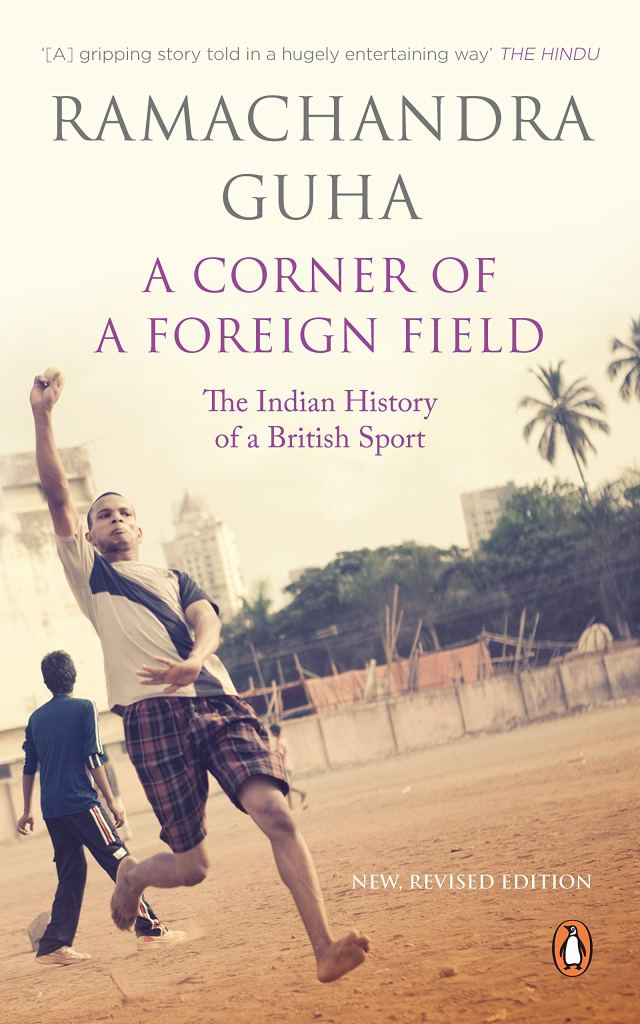
A Corner of a Foreign Field by Ramachandra Guha – Book Review

Ramachandra Guha is an Indian Historian and a columnist. His notable works include India After Gandhi and Gandhi: The Years That Changed the World. He has been awarded with several accolades for his achievements in the field of history. He has experiences of teaching at Yale University, the Indian Institute of Science and the University of California at Berkeley. He was also the Indo – American Community chair professor in 1997 and 1998. 

A Corner of a Foreign Field is a fascinating fusion of Indian history and Indian cricket.The book is divided into four chapters titled Race, Caste, Religion and Nation respectively. The first three chapter greatly benefit from thorough research and the skill of a great historian. The last chapter contains more of the authors feeling and opinion. Nevertheless, the book does not suffer from the personal feeling of the author. Throughout the book, the reader can experience the author’s love for the game. 

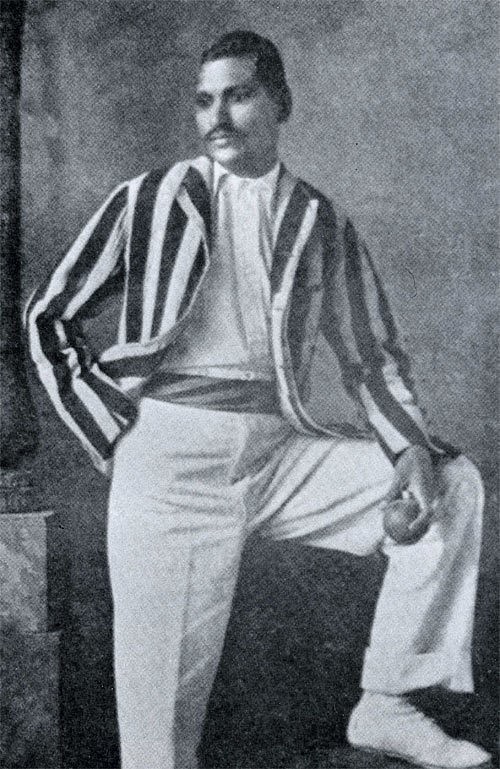
Palwankar Baloo

A Corner of a Foreign Field: The Indian History of a British Sport is a book about, one feels, the life of cricket in India so far. It is not just a history of the sport, but also a as much objective document of the sport as is possible. Cricket in India, as it is often said, is more than a sport. It evokes strong feelings from the audience and it won’t be an exaggeration to say that the team carries the burden of expectations of a billion people. Every on and off the field happening related to cricket is closely watched and excites opinions from all. This book views the unique sport through the lenses of race, religion, caste and nation. It speaks about the beginnings of cricket in India, how people reacted to this sport, its growth, impact and reception, BCCI, politics and much more. The book also gives insights into lives of people connected to the sport in one way or the other. The tales of cricketers like C. K Nayudu, Vijay Merchant, Palwankar Baloo and his brothers, Vijay Hazare makes it an interesting experience. It is astonishing how the game reflects the society at that point of time and the impacts each have had on one another throughout their history. It portrays the socio-cultural, political, economical aspects of the society by placing cricket at its centre. The book reflects the feelings of both an enthusiastic admirer of the sport and a historian keen on the socio-political happenings. The tales about cricketers are also good character sketches of the person. Not surprising, the story of Palwankar Baloo and his family is at the heart of this book as this originally began as a book about the life of Baloo. The book draws information heavily from newspapers of the day and the author uses this information beautifully to breathe life into the stories. The responses of various presses to the sport make for an interesting read. The knowledge of the author is seamless woven into the narrative. The writing of this book makes it an engaging experience even for a person not acquainted with the sport. Even for a fan of cricket, the book has much to offer and provide a great experience. It provides a whole lot new information and perspective even to a devoted follower of the sport.

Night by Elie Wiesel – Book Review

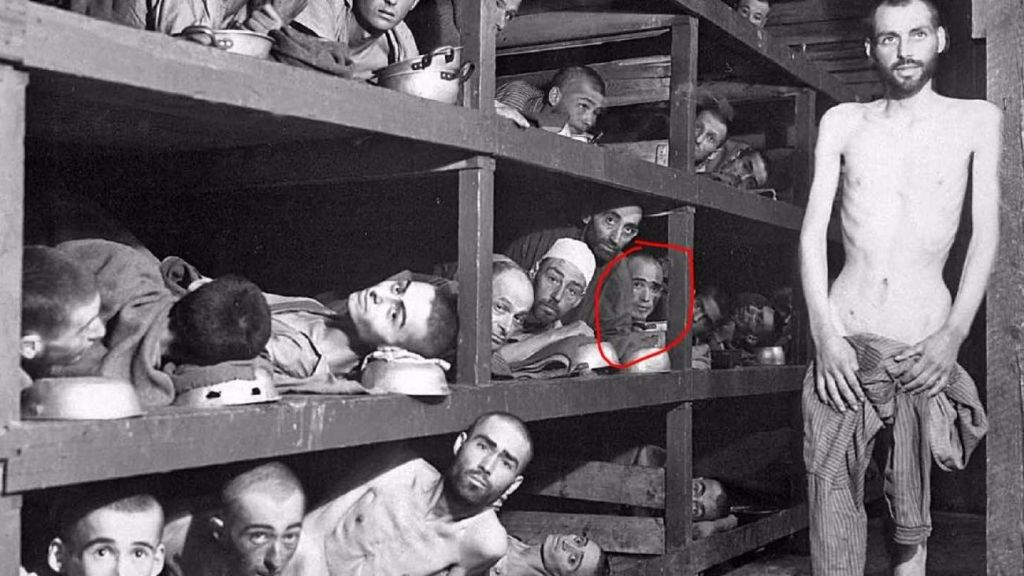
Elie Wiesel’s Night is a personal account of the Holocaust. It narrates the experiences of a  schoolboy in the camps of Auschwitz and Buchenwald. It is a poignant account of the cruelties imposed on man by man.

Elie Wiesel was a schoolboy who was born in Sighet and spent his life with his family. In 1944, he was taken to Auschwitz and then to Buchenwald. Immediately separated from his mother and sister, he is left with his father to work in the camp. The rest of the book recalls his experiences in the camp until he was released a year later. The book voices out the grief and despair of the inmates of the camp. The author successfully manages to express himself and provide a disturbing account of the Holocaust.

Eliezer Wiesel was a Holocaust Survivor who later became a writer, professor and an activist. He was born on September 30 in the year of 1928. He authored several book that bear witness to the experiences of concentration camps. He was honoured with the Nobel Prize for Peace in the year 1986. He dedicated his whole life for Jewish causes and human rights causes. He died in the year 2016. 

“Then came the march past the victims. The two men were no longer alive. Their tongues were hanging out, swollen and bluish. But the third rope was still moving: the child, too light, was still breathing…
And so he remained for more than half an hour, lingering between life and death, writhing before our eyes.
And we were forced to look at him at close range. He was still alive when I passed him. His tongue was still red, his eyes not yet extinguished.

Behind me, I heard the same man asking:
“For God’s sake, where is God?”
And from within me, I heard a voice answer:
“Where He is? This is where–hanging here from this gallows…”

That night, the soup tasted of corpses.”

Forced out of silence by experiences such as these, the author manages to create an enduring account of what an inmate went through in the camp. Though the book is short and the writing sparse, it makes the reader relive the suffering experienced by the people in the camp. It makes the reader empathize with the author and feel his disgust at humanity after reading the book. 


Never shall I forget that smoke.
Never shall I forget the small faces of the children whose bodies I saw transformed into smoke under a silent sky.
Never shall I forget those flames that consumed my faith forever.
Never shall I forget the nocturnal silence that deprived me for all eternity of the desire to live.
Never shall I forget those moments that murdered my God and my soul and turned dreams to ashes.
Never shall I forget those things, even were I condemned to live as long as God Himself.
Never.

The pain that is contained in the words alone is sufficient to make one ponder about the absurdity and meaninglessness of inflicting pain upon fellow humans in the name of race, caste, or gender. 

“If only I could get rid of this dead weight … Immediately I felt ashamed of myself, ashamed forever.” 

 “Here there are no fathers, no brothers, no friends”, a Kapo tells him. “Everyone lives and dies for himself alone.”

The book captures, with precision, the emotions of the human mind in the face of extreme suffering. Events such as doctors pulling out gold crown tooth, people who enjoyed watching people fight for a loaf of bread, a father abandoned by his son make one question about Faith and God just like the author. 

“One day when I was able to get up, I decided to look at myself in the mirror on the opposite wall. I had not seen myself since the ghetto. From the depths of the mirror, a corpse was contemplating me. The look in his eyes as he gazed at me has never left me.”

After reading the last lines of this book, the reader’s mind is sure to be purged of trivialities and filled with a deep sense of empathy.

IJR – Research Journal

International Journal of Research (IJR) is an Open Acess, peer reviewed, international online publishing journal, which aims to provide a platform for the exchange of information covering all aspects of science, technology, and public policy including technicism, appropriate technology, microbiology, environmental studies, materials science and so on. Articles presenting original research in the field are expected for publishing in this journal. 

Photo by Startup Stock Photos on Pexels.com

IJR provides a forum for sharing timely and up-to-date publication of scientific research and review articles. The journal publishes original full-length research papers in all areas related to corporate governance, human resource management, strategic management, entrepreneurship, marketing, e-business, services, information technology management, production & operations management, financial management, decision analysis, management research methods and managerial economics, etc. SJBM aims to enhance the dissemination of knowledge across the business and management community. 

Send papers for publication to ijr@ijrjournal.com

IJR Journal – Research Publication

International Journal of Research (IJR) publishes articles in the disciplines of sustainable management and information technologies based on scientific and technological researches, as well as its methodology, concepts, function and principles and interaction among both disciplines. It aims to publish the advances and trends, and to collaborate in the dissemination of knowledge and show advances derived from researches conducted internationally. 

Photo by Andrea Piacquadio on Pexels.com

IJR is an international, professional, and peer reviewed journal, it offers opportunities for the exchange of research results, experience and insights, and provides a forum for ongoing discussion between experts in any field of business and economic development. This journal focuses on marketing, management, finance, accounting, decision sciences, operations research and economics. The submission of manuscripts that meet the general criteria of significance and scientific excellence are encouraged.

Send papers for publication to ijr@ijrjournal.com

IJR Journal – Research Publication

International Journal of Research (IJR) provides a forum for sharing timely and up-to-date publication of scientific research and review articles. The journal publishes original research papers at the forefront of law and social sciences. The topics included and emphasized in this IJR journal are, but not limited to, law, political science, economics, environment, history, communication, sociology and safety. Current isssue of the journal is available at

Send papers for publication to ijr@ijrjournal.com

Photo by Mohammad Danish on Pexels.com

The topics related to this journal include but are not limited to:

• International law

• Constitutional and administrative law

• Criminal law

• Contract law

• Tort law

• Property law

• Civil law

• Common law and equity

• Religious law

• Political law

• Legal history

• Political science

• Sociology

• Social philosophy

• Social psychology

• Business studies

• Behavioral science

• Communication studies

• Industrial relations

• Management

• Economics

• Criminology

• Environmental social science

• Education

• Safety

Start-up to Success: Nykaa

The cosmetic market is a 1.3 billion dollar industry in FY2020, and the growth is only expected to be double in the future. The amazing growth of the industry, along with rapid digitization, led its way to the establishment of the e-commerce giant, Nykaa.

Nykaa was established by Falguni Nayar in 2021, as a retail company that sells cosmetic commodities online. However, after its enormous growth Nykaa also offers offline stores all across India. The company also offers comprehensive content that includes product reviews, beauty how-to videos, expert written articles, and even an e-magazine.

Origin of Nykaa

Prior to the coming of Nykaa, there was a huge discrepancy in regard to the beauty market. Falguni Nayar, the founder of the company, noticed the inconsistencies in the market of beauty products, and thus came the idea of the beauty e-commerce. ‘Nykaa’, the name comes from the Sanskrit word ‘nayaka’ which means actress or ‘one in the spotlight’.

Nykaa initially started as an online corporation and eventually turned to be an omnichannel strategy. Nykaa has its base in Mumbai, and showcases a wide variety of beauty and cosmetic products for all genders. Other than beauty and cosmetics, Nykaa is also a retailer for intimate wear, garments, jewellery, home décor and more. Nykaa also sells luxury brands such as Estee Lauder, Dior, Chanel, Gucci to name a few.

Soon after its success, Nykaa also launched its line of in-house products, under the same name. The products include a wide range of products from cosmetic to skin care to bath and body products and more.

About the founder

Falguni Nayar was a student at IIM Ahmedabad, where she pursued her MBA in Finance. She then joined Kodak Mahindra Capital Company, as an investment banker. She worked in Kodak Mahindra for 18 years, amidst which she decided to pursue her entrepreneurial venture, and resigned from the bank. And today, she is India’s first self-made billionaire.

The beauty and cosmetic products market in India was not at par with that of other countries like France and South Korea, despite of having a high demand market. She had the vision to see India in par with these countries in terms of catering to the beauty industry. And she thus, fulfilled her desire to established the online beauty sector a reliable source for consumers to confidently purchase authentic products.

Being passionate about beauty herself, she wished Nykaa to be a one stop solution for a Indian woman’s selfcare need, and change their grooming experience for the better. Nykaa’s motto Your beauty, Our passion, truly justifies their claim.

Future of Nykaa

Nykaa claims to make 5 million per month as revenue across India, and the numbers are only expected to grow. During the pandemic, online sector grew exponentially, and Nykaa shined exceptionally, helping India with delivering essentials during the lockdown.

Along with online deliveries, Nykaa has 80 plus stores all across India, and they are planning on growing 180 stores all over India by the year 2024. And they are further planning on expanding internationally.

Nykaa came into the spotlight when it launched IPO for subscription during the October 28 to November 1 2021, and fixed a price band of Rs 1085-1125 apiece for maidan offer. Nykaa was offered 81.78 times over the 2.64 crore shares that were being offered. Nykaa had a dream debut in its IPO where the market cap of the company crossed Rs 1 lakh crore. The valuation of Nykaa surged almost to $13 billion in its Indian market debut. And the valuation of Nykaa is only expected to grow further in the coming years.  

                    Falguni Nayar started Nykaa at the of 50 with no prior experience, and changed the fate of Indian beauty industry. The biggest take away from this journey is that, age is just a number, and you can turn your dreams and passion into a billion dollar industry when you have an entrepreneurial mindset. Falguni Nayar will be an inspiration for the generations to come.  

Research publication in IJR

International Journal of Research (IJR) publishes a broad range of social science research and thinking on the interaction of natural resource ecology and management around the world and at multiple scales. Papers published in the journal go through a double-blind, peer review process and meet standards of contributing significantly to theory and/or transformative policies and practices, offering scholarly depth but broad appeal to our diverse readership. The mission of the journal is to conduct interdisciplinary research, instruction, and extension education to address the sustainable management and conservation of the fishery, forest, rangeland, and wildlife resources all over the world.

Send papers for publication in this journal to ijr@ijrjorurnal.com

Photo by Christina Morillo on Pexels.com

The topics related to this journal include but are not limited to:

• Biodiversity

• Bioregion

• Conservation Biology

• Conservation Ethic

• Conservation Movement

• Deep Ecology

• Earth Science

• Ecology Movement

• Environmental Movement

• Environmental Organizations

• Environmental Protection

• Environmental Resources Management

• Environmental Sociology

• Global Warming

• Habitat Conservation

• Holistic Management

• Natural Capital

• Renewable Energy

• Renewable Resource

• Rural Sociology

• Sustainable Agriculture

• Environmental Justice

• Community Resilience

• Adaptive and Collaborative Management

• Sustainability, Climate Change

• Environmental Hazards and Risks

• Human-Nature Relationships 

• Economics of Environmental Management

• Transport and Fate of Pollutants in the Environment 

•Spill Prevention and Management

• Remediation of Contaminated Sites 

• Process Modification for Pollution Prevention

• Improved Energy Efficiency

• Waste Treatment and Disposal

IJR – International Journal of Research

 International Journal of Research (IJR) serves as a forum for academics, policy makers and health care managers and professionals to communicate and discuss issues from the perspective of health economics and policy. This journal publishes rigorous empirical, analytical, and methodological research using advanced economic and policy analysis techniques applied to compelling topics in health research. The current issue of the journal is available at https://ijrjournal.com/index.php/ijr

Send papers for publication in Peer Review journal to editor@pen2print.org

The topics related to this journal include but are not limited to:

•
Medical Economics
•
Behavioral Economics
•
Mental Health Economics
•
Asymmetric Information
•
Barriers To Entry
•
Healthcare Markets
•
Health Administration
•
Health Policy Analysis
•
Philosophy Of Healthcare
•
Health Care Reform
•
Health Crisis
•
Health Insurance
•
Health Promotion
•
Health Law
•
Public Health Law
•
Quaternary Prevention
•
Two-Tier Health Care
•
Universal Health Care
•
Unnecessary Health Care
•
Vaccination Policy

IJR Journal – Call for Papers 2022

 International Journal of Research (IJR) is an international scholarly refereed research journal which aims to promote the theory and practice of engineering management, innovation, technology, management science, technology forecasting, and management engineering consulting. But the topics are not limited to these. We welcomes the submission of manuscripts that meet the general criteria of significance and scientific excellence. The current issue of the journal is available online at https://ijrjournal.com/index.php/ijr

Send papers for publication to editor@pen2print.org 

The topics related to this journal include but are not limited to:

•
Operations Management, Operations Research, and Supply Chain Management
•
New Product Development and Product Engineering
•
Systems Engineering
•
Industrial Engineering
•
Management Science
•
Management Engineering Consulting
•
Seamless Integration of Heterogeneous Technologies
•
Emergent Complex Engineering Problems
•
Management of Technology
•
Technical Professionals
•
Technical Organizations
•
The Practice of Engineering Management
•
Technology Forecasting
•
Managing Research
•
Engineering Activities
•
Engineering Science and Technology
•
Engineering Design
•
Philosophical Foundations of Management in Theory and Practice
•
Limitations on the Right to Manage
•
Creativity and Technical Entrepreneurship
•
Technical Organisations and Their Management
•
Product Development, R&D, Design Management
•
Engineering Management in the Service Industry

Research Publication in IJR

 International Journal of Research (IJR) is an international peer-reviewed journal from eContent. It provides global perspectives on economic behavior and organization of benefit to scholars, educators, students, practitioners, policy-makers and consultants worldwide. IJR publishes articles from across the organization discipline. Original articles which inform organization research and practice from outside the discipline – such as from psychology, education, political science, sociology, statistics and research design – will also be considered. Current issue of the journal is available at https://ijrjournal.com/index.php/ijr

Send papers for publication to editor@pen2print.org 

The topics related to this journal include but are not limited to:

•
Economics 
•
Demography 
•
Banking 
•
Accounting 
•
Finance 
•
Statistics 
•
Organizational behavior
•
Organizational theory
•
Organizational culture
•
Organizational psychology

IJR – International Journal of Research

 International Journal of Research (IJR) serves as an essential resource and provides practical information for people who apply economics on their jobs. The aim of IJR is to publish research articles on business and economics sciences, and other social sciences that are related to business and economics for contributing to the international social sciences literature. Original studies in accounting, finance, economics, international business, management, and marketing are appropriate for publication consideration in the journal. Although IJR has a preference for academic studies, it also welcomes studies that are written by other researchers and practitioners. Current issue of the journal is available at https://ijrjournal.com/index.php/ijr

Send papers for publication to editor@edupub.org

The topics related to this journal include but are not limited to:

•
Accounting
•
Accounting scholarship
•
Advertising
•
Banking
•
Barter
•
Big business
•
Business
•
Business model design
•
Business plan
•
Business process modeling
•
Business reference model
•
Business rule
•
Capitalism
•
Change management analyst
•
Collective bargaining
•
Commerce
•
Commercial law
•
Companies
•
Company
•
Competition
•
Competitive advantage
•
Core competency
•
Corporate law
•
Corporation
•
Cost overrun
•
Debenture
•
Ebusiness
•
Economics
•
Electronic business
•
Electronic commerce
•
Entrepreneurship
•
Equity investment
•
Finance
•
Financial economics
•
Franchising
•
Government ownership
•
Growth platforms
•
Human Resources
•
Industrial and labour relations
•
Industry
•
Information systems
•
Insurance
•
Intellectual property
•
Interim Management
•
International trade
•
Investment
•
Investment management
•
Job creation program
•
Labour economics
•
Labour history
•
Management
•
Manufacturing
•
Marketing
•
Organizational Behavior

IJR – Educational Publication

 International Journal of Research (IJR) publishes good quality research papers in the areas of accounting, finance, risk management and their interfaces. Using a wide range of research methods including statistical analysis, analytical work and case studies, articles examine good research questions from a broad range of perspectives. The Editor may also welcome contributions that use other empirical research methods. Access the current issue of journal from https://ijrjournal.com/index.php/ijr

Send papers for publication in IJR to editor@edupub.org

The topics related to this journal include but are not limited to:

•
Financial accounting and reporting
•
Auditing
•
Management accounting
•
Taxation
•
Corporate finance
•
Personal finance
•
Financial risk management
•
Enterprise risk management

IJR – International Journal of Research

International Journal of Research (IJR) is a scientific journal to provide a platform for researchers, scholars of universities, institutions and businessmen to exchange their ideas on important issues and views that are unique and insightful, focusing on business and management in the context of the changes in Europe and worldwide. The journal is published bimonthly. IJR is a peer-reviewed open access journal. 

Send papers for publication in IJR – International Journal of Research to ijr@ijrjournal.com 

Current issue of journal is available at https://ijrjournal.com/index.php/ijr

The topics related to this journal include but are not limited to:

•
Business
•
Business management
•
Corporate strategy
•
Business economics
•
Business policy
•
International business
•
International management
•
Marketing
•
Operation management
•
Strategy management