Planning Provides Direction

Planning can be defined as “thinking in advance what is to be done, when it is to be done, how it is to be done and by whom it should be done”. In simple words we can say, planning bridges the gap between where we are standing today and where we want to reach.

Planning involves setting objectives and deciding in advance the appropriate course of action to achieve these objectives so we can also define planning as setting up of objectives and targets and formulating an action plan to achieve them.

Another important ingredient of planning is time. Plans are always developed for a fixed time period as no business can go on planning endlessly.

Features/Nature/Characteristic of Planning

1. Planning contributes to Objectives:

2.Planning is Primary function of management

3. Pervasive:

4. Planning is futuristic/Forward looking

5. Planning is continuous

6. Planning involves decision making

7.Planning is a mental exercise

Importance/Significance of Planning:

. 1️⃣Planning provides Direction:

Planning is concerned with predetermined course of action. It provides the directions to the efforts of employees. Planning makes clear what employees have to do, how to do, etc. By stating in advance how work has to be done, planning provides direction for action. Employees know in advance in which direction they have to work. This leads to Unity of Direction also. If there were no planning, employees would be working in different directions and organisation would not be able to achieve its desired goal.

2️⃣Planning Reduces the risk of uncertainties

Organisations have to face many uncertainties and unexpected situations every day. Planning helps the manager to face the uncertainty because planners try to foresee the future by making some assumptions regarding future keeping in mind their past experiences and scanning of business environments. The plans are made to overcome such uncertainties. The plans also include unexpected risks such as fire or some other calamities in the organisation. The resources are kept aside in the plan to meet such uncertainties.

3️⃣Planning reduces over lapping and wasteful activities

The organisational plans are made keeping in mind the requirements of all the departments. The departmental plans are derived from main organisational plan. As a result there will be co-ordination in different departments. On the other hand, if the managers, non-managers and all the employees are following course of action according to plan then there will be integration in the activities. Plans ensure clarity of thoughts and action and work can be carried out smoothly.

4️⃣Planning Promotes innovative ideas:

Planning requires high thinking and it is an intellectual process. So, there is a great scope of finding better ideas, better methods and procedures to perform a particular job. Planning process forces managers to think differently and assume the future conditions. So, it makes the managers innovative and creative.

Planning helps the managers to take various decisions. As in planning goals are set in advance and predictions are made for future. These predictions and goals help the manager to take fast decisions.

6. Planning establishes standard for controlling:

Controlling means comparison between planned and actual output and if there is variation between both then find out the reasons for such deviations and taking measures to match the actual output with the planned. But in case there is no planned output then controlling manager will have no base to compare whether the actual output is adequate or not.

For example, if the planned output for a week is 100 units and actual output produced by employee is 80 units then the controlling manager must take measures to bring the 80 unit production upto 100 units but if the planned output, i.e., 100 units is not given by the planners then finding out whether 80 unit production is sufficient or not will be difficult to know. So, the base for comparison in controlling is given by planning function only.

7. Focuses attention on objectives of the company:

Planning function begins with the setting up of the objectives, policies, procedures, methods and rules, etc. which are made in planning to achieve these objectives only. When employees follow the plan they are leading towards the achievement of objectives. Through planning, efforts of all the employees are directed towards the achievement of organisational goals and objectives.

1.

Once plans are made to decide the future course of action the manager may not be in a position to change them. Following predefined plan when circumstances are changed may not bring positive results for organisation. This kind of rigidity in plan may create difficulty.

2. Planning may not work in dynamic environment:

ADVERTISEMENTS:https://googleads.g.doubleclick.net/pagead/ads?gdpr=0&client=ca-pub-0989790830026725&output=html&h=244&slotname=2623157748&adk=1891773333&adf=4201686516&pi=t.ma~as.2623157748&w=292&fwrn=6&lmt=1642655117&rafmt=11&psa=1&format=292×244&url=https%3A%2F%2Fwww.yourarticlelibrary.com%2Forganization%2Fimportance-of-planning-its-features-limitations-process-and-types%2F8652&flash=0&wgl=1&adsid=ChAIgIqfjwYQhvqxvrHW_PgEEjkA1DGYtrTaCEo-kbSpJumoXKwYtA8HFKIE6omfcfVnTV34JJbzGTXpHi8hS8XEoIPmEx9R2BHIDrk&uach=WyJBbmRyb2lkIiwiMTEuMC4wIiwiIiwiU00tTTMxNUYiLCI5Ni4wLjQ2NjQuMTA0IixbXSxudWxsLG51bGwsIiJd&tt_state=W3siaXNzdWVyT3JpZ2luIjoiaHR0cHM6Ly9wYWdlYWQyLmdvb2dsZXN5bmRpY2F0aW9uLmNvbSIsInN0YXRlIjoyOSwiaGFzUmVkZW1wdGlvblJlY29yZCI6dHJ1ZX1d&dt=1642655121845&bpp=8&bdt=5231&idt=-M&shv=r20220118&mjsv=m202201180401&ptt=9&saldr=aa&abxe=1&cookie=ID%3D5467780e62843bd0-227f420810d00065%3AT%3D1642655120%3ART%3D1642655120%3AS%3DALNI_MZaYrPs23SEzDxYK1bLZBcqVd5h-g&prev_fmts=0x0%2C412x343%2C412x343%2C292x244%2C292x244&nras=1&correlator=8779006593157&frm=20&pv=1&ga_vid=937120415.1607750099&ga_sid=1642655119&ga_hid=2048748375&ga_fc=1&rplot=4&u_tz=330&u_his=1&u_h=892&u_w=412&u_ah=892&u_aw=412&u_cd=24&u_sd=2.625&dmc=4&adx=60&ady=11743&biw=412&bih=756&scr_x=0&scr_y=7661&eid=44753738%2C182984100%2C182984300%2C31064037%2C31064124%2C31064162%2C31063247%2C21067496&oid=2&psts=AGkb-H9IKkAIMY4RBEG4AT-r-W4hQjVGVz5GD7F7nOzEn-E8vLNDpd9ikd86sKdMrIdbxd_RGzzwIZuiHw&pvsid=3854186648320208&pem=849&tmod=378192270&nvt=1&ref=https%3A%2F%2Fwww.google.com%2F&eae=0&fc=1920&brdim=0%2C0%2C0%2C0%2C412%2C0%2C412%2C756%2C412%2C756&vis=1&rsz=%7C%7CeEbr%7C&abl=CS&pfx=0&fu=128&bc=31&ifi=9&uci=a!9&btvi=2&fsb=1&xpc=xEoZXqF9fu&p=https%3A//www.yourarticlelibrary.com&dtd=568

Business environment is very dynamic as there are continuously changes taking place in economic, political and legal environment. It becomes very difficult to forecast these future changes. Plans may fail if the changes are very frequent.

The environment consists of number of segments and it becomes very difficult for a manager to assess future changes in the environment. For example there may be change in economic policy, change in fashion and trend or change in competitor’s policy. A manager cannot foresee these changes accurately and plan may fail if many such changes take place in environment.

3. It reduces creativity:

With the planning the managers of the organisation start working rigidly and they become the blind followers of the plan only. The managers do not take any initiative to make changes in the plan according to the changes prevailing in the business environment. They stop giving suggestions and new ideas to bring improvement in working because the guidelines for working are given in planning only.

4. Planning involves huge Cost:

Planning process involves lot of cost because it is an intellectual process and companies need to hire the professional experts to carry on this process. Along with the salary of these experts the company has to spend lot of time and money to collect accurate facts and figures. So, it is a cost-consuming process. If the benefits of planning are not more than its cost then it should not be carried on.

5. It is a time consuming process:

Planning process is a time-consuming process because it takes long time to evaluate the alternatives and select the best one. Lot of time is needed in developing planning premises. So, because of this, the action gets delayed. And whenever there is a need for prompt and immediate decision then we have to avoid planning.

6. Planning does not guarantee success:

Sometimes managers have false sense of security that plans have worked successfully in past so these will be working in future also. There is a tendency in managers to rely on pretested plans.

It is not true that if a plan has worked successfully in past, it will bring success in future also as there are so many unknown factors which may lead to failure of plan in future. Planning only provides a base for analysing future. It is not a solution for future course of action.

7. Lack of accuracy:

In planning we are always thinking in advance and planning is concerned with future only and future is always uncertain. In planning many assumptions are made to decide about future course of action. But these assumptions are not 100% accurate and if these assumptions do not hold true in present situation or in future condition then whole planning will fail.

For example, if in the plan it is assumed that there will be 5% inflation rate and in future condition the inflation rate becomes 10% then the whole plan will fail and many adjustments will be required to be made.

Sometimes planning fails due to following limitations on which managers have no control.

(i) Natural calamity:

ADVERTISEMENTS:

Natural calamities such as flood, earthquake, famine etc. may result in failure of plan.

(ii) Change in

(iii) Change in taste/fashion and trend in the market:

Sometimes plans may fail when the taste/fashion or trend in market goes against the expectation of planners.

(iv) Change in technologies:

The introduction of new technologies may also lead to failure of plans for products using old technology.

(v) Change in government/economic policy:

Managers have no control over government decisions. If government economic or industrial policies are not framed as expected by manager then also plans may fai

Plan:

Plan is a document that outlines how goals are going to be met. It is a specific action proposed to help the organization achieve its objectives. There may be more than one way and means of reaching a particular goal but with the help of logical plans, objectives of an organization could be easily achieved.

Single Use Plans:

Single use plans are one time use plan. These are designed to achieve a particular goal that once achieved will not reoccur in future. These are made to meet the needs of unique situations. The duration or length of single use plan depends upon the activity or goal for which it is made. It may last one day or it may last for weeks or months if the project for which it is made is long.

Standing Plans:

Standing plans are also known as Repeat Use Plans. These plans focus on situations which occur repeatedly. Standing plans are used over and over again. They are made once but retain their value over a period of years. Although some revisions and updates are made in these plans from time to time.
RSETI: Self–employment Programme for Rural Youths

Unemployment in India is always a serious issue particularly in rural India as the scope is limited in rural areas. So launching of Rural Self Employment Training Institutes (RSETIs) by the Ministry of Rural Development (MoRD) of the Government of India is a praiseworthy step. MoRD was impressed by the Rural Development and Self Employment Training Institute (RUDSETI) model which was established in the year 1982 at Dharmasthala, Karnataka by Dr D Veerendra Heggade jointly with Syndicate Bank and Canara Bank. MoRD in 2009 advised all the banks to establish one RUDSETI type institute in all their Lead Districts under the banner of Rural Self Employment Training Institutes (RSETIs) (www.nacer.in/index_more.html).
It is pertinent to mention that RSETIs identify, orient, train and assist rural youth to take up self-employment as a source of livelihood. The youths in the age group of 18-45 years, irrespective of caste, creed or religion are eligible to undergo training at RSETI, which is free of cost. RSETI has been doing a commendable job in training and settlement of rural youths. The total number of training programmes organised from inception to 31 March 2020 was 1,26,556 where the number of youth trained was 35,00,770 during the same period and 24,41,083 (69.73%) youths were settled. Further, the number of functional RSETIs was 585 where altogether 29 banks weresponsored (www.nacer.in/performance_glance.html).
Each RSETI offers skill development programmes in a financial year in various avenues and in each batch 25-30 youths are selected for training. The programmes are of short duration ranging from 1 to 6 weeks. And to get a general idea few trades are mentioned below:
• Agricultural Programmes – agriculture and allied activities like dairy, poultry, apiculture, horticulture, sericulture, mushroom cultivation, floriculture, fisheries, etc
• Product Programme – dress designing for men and women, rexine articles, incense sticks manufacturing, football making, bag, bakery products, leaf cup making, recycled paper manufacturing, etc.
• Process Programmes – two wheeler repairs, radio/TV repairs, motor rewinding, electrical transformer repairs, irrigation pump-set repairs, tractor and power tiller repairs, cell phone repairs, beautician course, photography and videography, screen printing, domestic electrical appliances repair, computer hardware and DTP.
• General Programmes – skill development for women
• Other Programmes – related to other sectors like leather, construction, hospitality and any other sector depending on local requirements.
The author time to time studied many youths who were undergoing training and also collected data after training that were settled and found earning was substantial. Few names as evidence can be mentioned here: a) Adapa Kalpana (female) , Dharanikota village of Amaravathi Mandal, Guntur district of Andhra Pradesh ( year of study in 2016), b) Ashok Kumar ( Male/year of study July 2018), Hajpurwa village of Warisnagar block, Samastipur district of Bihar, c) Arati Mishra (female/ year of study July 2018) Nirpur village, Samastipur block, Samastipur district d) In 2017, the author studied some youths of Amritsar district, Punjab. The youths were Jasbir Kaur (female), Harjit Kaur (female), Mandip Kaur (female), Navneet Kaur e) In 2019 the author studied by visiting RSETI at Aurangabad district of Maharashtra. Names of some of the youths are Chhaya Bhalerao (female), Kalpana Jagannath Surase (female), Umesh Bhanudas Dhepe (male), f) In Darrang district of Assam names of some of the youths who were contacted in 2018 are Mousami Saikia Gogoi (female), Poly Seal (female), Mira Medhi, (female), Sabita Koch (female) and many others.
In addition, the author visited many RSETIs and cases collected about the youths trained and post-training settlement and earning of income. and found training and post-training settlement was praiseworthy.
It is suggested that wherever feasible RSETI may be started at the sub-division level.

The Toxic Beauty: How Cosmetics Killed Her Highness Queen Elizabeth I

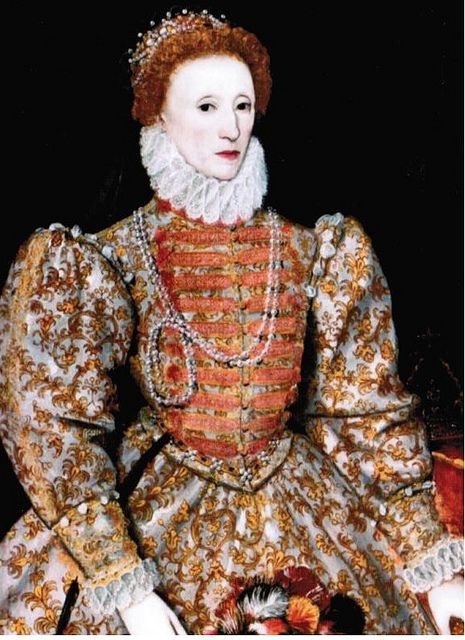
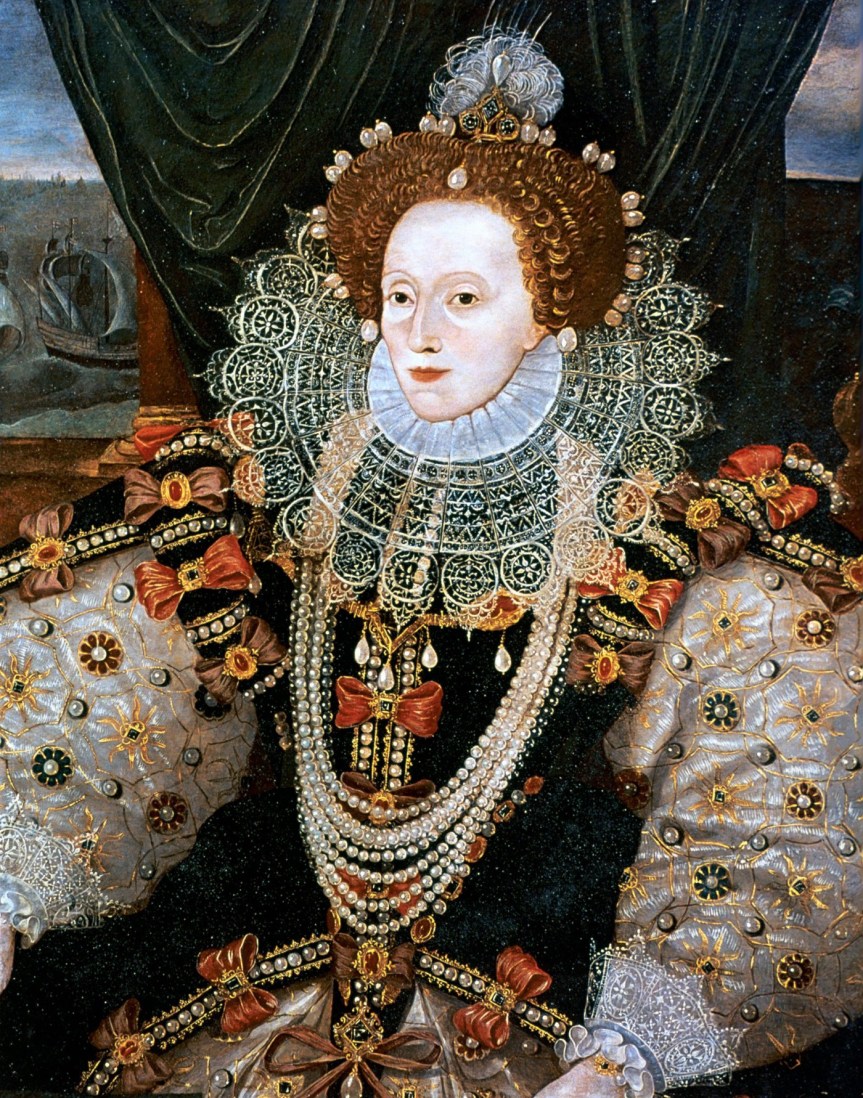
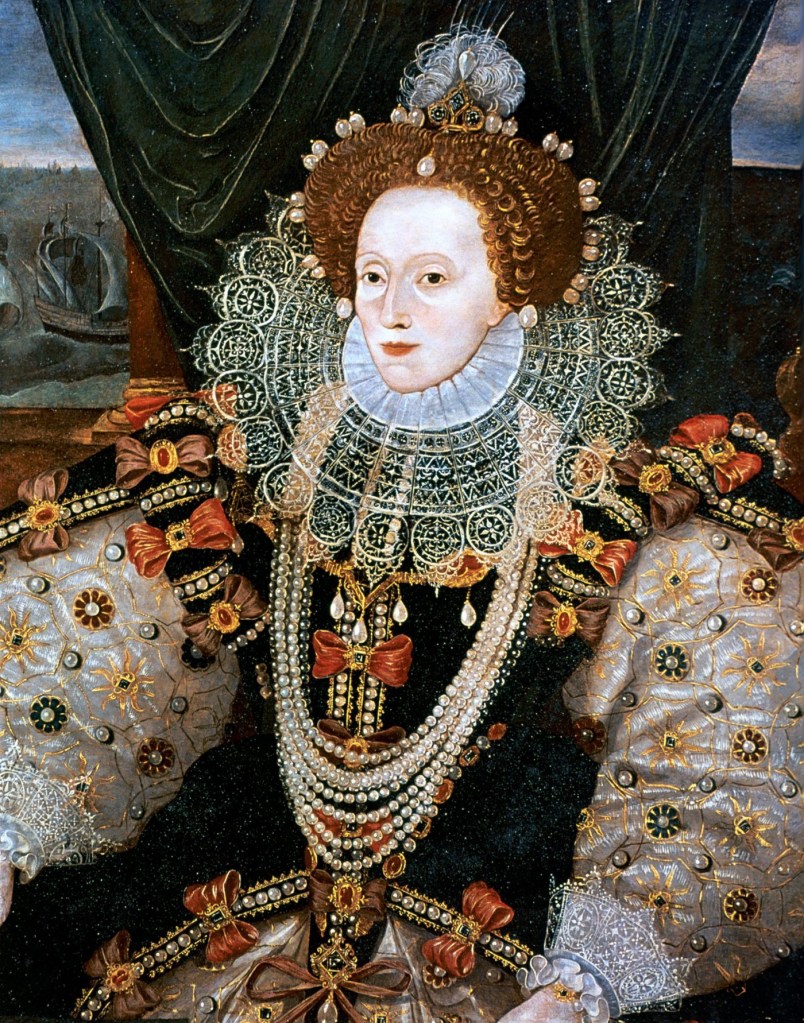
Queen Elizabeth I of England and Ireland

Introduction

Beauty has always been the greatest concern for women since ages. Women , all over the world did what not, to look pretty and presentable throughout the history of Human Civilization. And to address the need of looking flawlessly beautiful, the practice of using cosmetic or make-up came to the play. Women, sometimes, followed bizarre rituals to enhance their look, but sometimes, to their worst, the cosmetic turned out to be toxic and endangered their lives. To look beautiful it cost them a fatal price. Royalties and Elites were victims of the same death trap, including the Great Queen Elizabeth I.

Queen Elizabeth: The Beginning

Elizabeth I was the fifth and last monarch of the House of Tudor. She was born in the Palace of Placentia on 7 September 1533 and was died on 24 March 1603 at the age of 69. Her father was Henry VIII and her mother was Anne Boleyn who was her father’s second wife. On 17 November 1558, she became the Queen of England and Ireland and ruled it for 44 years until her death. She was also called the Virgin Queen and Good Queen Bess. Elizabeth was third in line to become the monarch and she was not even destined to be queen. She was behind her half younger brother Edward VI and half elder sister Mary I. As her father Henry VIII died, on 28 January 1547, her younger brother Edward VI became the monarch at age nine and ruled for six years, dying at the age of 15 because of tuberculosis. After, Mary I became queen and ruled for five years, dying at age 42 on 17 November 1558. Finally, Elizabeth was the last child of Henry VIII to rule England and became the Queen of England, ruling for 44 years.

The Scars in Her Beauty : What Led Her to Toxic Cosmetics

During her 20’s the Queen got infected with smallpox. Though the young queen survived smallpox but the disease left scars and blemishes on her skin and in order to hide those she started using the makeup more vigorously.

Portrait of the Queen

Bizarre Beauty Standards

The cosmetics that were worn by women in the time of Queen Elizabeth are drastically different from those we wear today. Not only were the materials they used very different but the look they were trying to achieve was very different as well. Standards of beauty change all the time. To understand the cosmetics worn by Elizabethan women, it’s important to understand the effect they were trying to achieve—that “ideal” beauty they wanted to imitate. The ideal Elizabethan female had bright wide-set eyes, snow white skin, rosy cheeks, red lips and fair hair. Pale skin was a sign of nobility, wealth and delicacy was sought after by many. In a time where sunscreen was unheard of, skin problems and pox was a common thing smooth, unblemished skin was a rarity. The pale skin women (and men) wanted was achieved by a number of ways. The most popular being Venetian Ceruse (also known as Spirits of Saturn), a mixture of white lead and vinegar. This white foundation was applied to the face, neck and bosom. Naturally, smearing lead all over one’s skin caused some serious skin damage not only did it make the skin look “grey and shrivelled” there was lead poisoning, hair loss and if used over an extended period of time could cause death. They lined their eyes with black kohl to make them look darker and belladonna eyedrops (used to dilate women’s pupils, an effect considered to be attractive and seductive). Fashion required eyebrows to be thin and arched which would create a high forehead it was considered to be a sign of aristocracy. Rouged cheeks and red lips were very popular. This was obtained with plants and animal dyes.

Her Majesty’ s Royal Makeup

She used ingredients like lead and vinegar in her makeup which is called — “Venetian ceruse. It is said that she was the only monarch that always took a long time to get ready. She used multiple layers of lead and vinegar and applied a thick white mask to her face and neck. The white skin was not a part of racism but it depicted that a woman was of a higher class. she applied was from If you have seen a portrait of Queen Elizabeth you may have noticed that her lips are very red. The red colour cinnabar, a mercury. poisonous substance that contains She used to remove it with a mixture of elements like eggshells, alum, and mercury. Thus, this leads to another use of poison in her makeup. People at that time would say that her skin became soft after makeup re moval but basically, it was peeling one layer at a time. All these caused wrinkles, aging, and the deterioration of her health. And it is assumed by the historians, that continuous use of those deadly chemicals as Cosmetics, led to her death.

Cinematic Portrait of the Queen, played by actress Margot Robbie

Conclusion

The urge of looking beautiful , sometimes proves hard on women’s overall health. body and The obsession of being perfect, has killed many women, including such Royalties like Queen Elizabeth I. Even today, women are insure about their natural beauty and sometimes find it hard to accept body positivity. We should learn to feel confident in our skin first, and the glow then comes from within as our flaws make us Earthly and more humane.

Scheme for Minority People of North Eastern States

 The Government has implemented various schemes for the welfare and upliftment of every section of the society including minorities especially the economically weaker & lesser privileged sections of the society with schemes like Pradhan Mantri Jan Arogya Yojana (PMJAY), Pradhan Mantri Mudra Yojana (PMMY), Pradhan Mantri Kisan Samman Nidhi (PM KISAN), Pradhan Mantri Ujjwala Yojana (PMUY), Pradhan Mantri Awas Yojana (PMAY), Beti Bachao Beti Padhao Yojana, etc. Ministry of Minority Affairs also implements programmes/ schemes across the country including North Eastern States for socio-economic and educational empowerment of the six (6) centrally notified minority communities namely Christians, Sikhs, Buddhists, Muslims, Parsis and Jains. The schemes/programmes implemented by the Ministry in brief are as under: –


(A): Educational Empowerment Schemes:            


(1) Pre-Matric Scholarship Scheme- Scholarship is provided to minority students from Class I to X, out of which 30% scholarship are earmarked for girls.


Post-Matric Scholarship Scheme- Scholarship is provided to minority students from Class XI to PhD., out of which 30% scholarship are earmarked for girls.


Merit-cum-Means based Scholarship Scheme- Scholarship is provided to minority students for Professional and Technical courses, at Under Graduate and Post Graduate level, out of which 30% scholarship are earmarked for girls.


All the three Scholarship schemes are on boarded on the National Scholarship Portal (NSP) and the scholarship amount is disbursed through Direct Benefit Transfer (DBT) mode.


 (2) Maulana Azad National Fellowship Scheme – Under the scheme fellowship in the form of financial assistance is provided to minority candidates who clear the UGC-NET or Joint CSIR UGCNET examination.


 (3) Naya Savera – Free Coaching and Allied Scheme – The Scheme aims to provide free coaching to students/candidates belonging to minority communities for qualifying in entrance examinations of technical/ medical professional courses and various Competitive examinations.


 (4) Padho Pardesh – Under the scheme interest subsidy is provided to students of minority communities on educational loans, for overseas higher studies.


(5) Nai Udaan – Support is provided to minority candidates clearing Preliminary examination conducted by Union Public Service Commission (UPSC), State Public Service Commission (PSC), Staff Selection Commission (SSC) etc.


(B): Employment Oriented Schemes:

(6) Seekho Aur Kamao – Skill development scheme for youth of 14 – 35 years age group and aiming at providing employment and employment opportunities, improving the employability of existing workers, school dropouts etc.


(7) USTTAD (Upgrading the Skills and Training in Traditional Arts/Crafts for Development)- An effective platform to provide self-employment, market and opportunity to traditional artisans and craft persons from the minority communities. Hunar Haats are being organised across the country to provide employment opportunities and markets to artisans/craftsmen.


 (8) Nai Manzil – A scheme for formal school education & skilling of school dropouts or educated in community educational institutions like Madrasas.


(9) Nai Roshni – Leadership development of women belonging to minority communities and non-minority communities (not exceeding 25% of each batch).


(C): Special Schemes

 (10) Jiyo Parsi – Scheme for containing population decline of Parsis in India.


 (11) Hamari Dharohar- A scheme to preserve rich heritage of minority communities of India under the overall concept of Indian culture.


(D): Infrastructure Development Programme:


 (12) Pradhan Mantri Jan Vikas Karyakram (PMJVK) – The scheme aims to provide basic infrastructure such as Schools, Colleges, ITIs, Polytechnics, Hostels, Sadbhav Mandap, Skill Development Centres, Drinking water and Sanitation facilities, Health Projects including hospitals, Sport facilities, Smart classrooms, Aanganwadi Centers etc. in deprived areas of the country. The scheme is implemented in the identified areas having minimum of 25% minority population and backwardness parameters below the national average in respect of socio economic or basic amenities or both.


(13) Also, Maulana  Azad  Education  Foundation  (MAEF)  implements  education  and  skill related  schemes  as  follows:-  (a)  Begum  Hazrat Mahal  National  Scholarship  for Meritorious  Girls  belonging  to  the  economically  weaker  sections  of  Minorities  (b)  Gharib Nawaz  Employment  Scheme  started  in  2017-18  for  providing  short  term  job  oriented skill development training  to youth (c) Grant-in-aid  to NGOs for infrastructure development of educational institutions.


(14) Equity to National Minorities Development and Finance Corporation (NMDFC) for providing concessional loans to minorities for self-employment and income generating ventures. 

The details of the schemes mentioned at S. No.(1) to (12) are available on the website of this Ministry  (www.minorityaffairs.gov.in) and those at serial No.(13) and (14) are available on the website of MAEF (www.maef.nic.in) and NMDFC (www.nmdfc.org) respectively. 


As per Section 2 (c) of the National Commission for Minorities (NCM) Act, 1992, six communities namely Christians, Sikhs, Muslims, Buddhists, Jains and Parsis have been notified as minority communities.  As per Census 2011, population of minority communities in the country are:- Muslims – 17,22,45,158, Christians – 2,78,19,588,  Sikhs –  2,08,33,116,  Buddhists – 84,42,972,  Jains  – 44,51,753   and   Parsis – 57,264.


No State-wise allocation of funds is made in the budget of this Ministry. However, during last five years an amount of Rs. 21,934.38 Crores had been allocated for schemes being implemented by this Ministry.

FLOOD MANAGEMENT SCHEME

 Flood management including erosion control falls within the purview of the States. Flood management and anti-erosion schemes are formulated and implemented by concerned State Governments as per their priority. The Union Government supplements the efforts of the States by providing technical guidance and also promotional financial assistance for management of floods in critical areas. The Government of India had launched a centrally sponsored scheme viz. Flood Mangement Programme (FMP) during XI Plan to provide central assistance to states for taking up works related to flood management, anti-erosion, flood management works, anti-sea erosion etc. which continued during XII Plan period as a component of  “Flood Management  and Border Areas Programme (FMBAP)” for subsequent period.

 In the State of Assam, 141 projects were included for central assistance under FMP. The 111 completed projects have given protection to an area of around 7.2 lakh ha and protected a population of about 17.71million. Central Assistance amounting to the tune of Rs. 1286.39 Crore has been given to the State of Assam under FMP.

In the State of Bihar, 18 projects were included for central assistance under FMP. The 15 completed projects have given protection to an area of around 28.67 lakh ha and protected a population of about 22.34 million. Central Assistance amounting to the tune of Rs. 924.41 Crore has been given to the State of Bihar under FMP.

In the State of West Bengal, 18 projects were included for central assistance under FMP. The 15 completed projects have given protection to an area of around 0.32 lakh ha and protected a population of about 1.96 million. Central Assistance amounting to the tune of Rs. 1007.81 Crore has been given to the State of West Bengal under FMP.

 The State Governments face issues like problem in land acquisition, encroachment of land, costs overrun, contractual disputes etc. in the implementation of projects under Flood Management Programme and regular review meetings by central monitoring agencies are held to expedite implementation of projects. 

The central assistance released to States under FMBAP during recent years to the States of Assam, Bihar and West Bengal is at Annexure-I

 This Information was given by the Minister of State for Jal Shakti, Shri Bishweswar Tudu in a written  reply in Lok Sabha today.

****

BY

Annexure-I

Central assistance released under FMBAP during last four years to the States of Assam, Bihar and West Bengal


S. No.

State

Funds released during FY (Rs. In Crores)

2017-18

2018-19

2019-20

2020-21

1

Assam

245.49

142.12

85.03

2

Bihar

52.57

132.28

65.29

42.49

3

West Bengal

65.03

89.31

117.12


*****


Eligibility criteria of 75 % in Class 12th relaxed for IIT admissions

Considering the decision taken for IIT JEE (Advanced) and in line with the decision taken for the last academic year, the Ministry of Education had decided to waive off the 75% marks (in class 12 exam) eligibility criteria under Joint Entrance Examination (Main) for the next academic year 2021-2022 in respect of NITs, IIITs, SPAs and other CFTIs, whose admissions are based on JEE (Main).

The admissions to various Under Graduate (UG) programmes of the National Institutes of Technology (NITs), Indian Institute of Engineering Science and Technology (IIEST), Shibpur (West Bengal) and other Centrally Funded Technical Institutions (CFTIs – excluding IITs) are made on the basis of ranks / merit secured by the candidates in Joint Entrance Examination (Main) conducted by the National Testing Agency (NTA).

For the candidates to qualify for admission in the IITs / NITs / IIITs and such other CFTis whose admissions are based on the JEE Ranks, they should have secured at least 75% marks in the 12th Class exam, or be in the top 20 percentile in the 12th Class exam conducted by the respective Boards. For SC/ST students, the qualifying mark in 12th Class exam is 65%.

While declaring the date of JEE (Advanced) exam, the Education Minister has announced to waive off the 75% marks (in class 12th exam) eligibility criteria for admissions to the academic year 2021-2022 for the ease of students.


Brave New World by Aldous Huxley

Brave New World is a dystopian social science fiction novel by English author Aldous Huxley, written in 1931 and published in 1932. The book presents a nightmarish vision of a future society.

In 1999, the Modern Library ranked Brave New World at number 5 on its list of the 100 best English-language novels of the 20th century. In 2003, Robert McCrum, writing for The Observer, included Brave New World chronologically at number 53 in “the top 100 greatest novels of all time”, and the novel was listed at number 87 on The Big Read survey by the BBC. Despite this, Brave New World has frequently been banned and challenged since its original publication. It has landed on the American Library Association list of top 100 banned and challenged books of the decade since the association began the list in 1990.

Summary

This is a story about a world where people are born in test tubes and their lives are predetermined by their social status. Mothers, fathers, children, and other social relationships do not exist, and all of the primary human needs are met by forced or fabricated social experiences.

The Alphas, the top social class, are the most brilliant and enjoy more of life, whereas the lower classes, who have been genetically stunted in a lab, perform the society’s less important chores. To further assure their future social rank, each generation of children is created in batches via cloning and suggestive conditioning.

Bernard, a government psychologist in London, is an Alpha, but he’s physically small and doesn’t like society’s artificial social aspects, such as unrestricted sex and soma, a drug that makes people feel drunkenly good.

Bernard is sent to New Mexico as a psychologist to study a “savage” reservation, a place where the “old” society still exists. He brings Lenina, a young and attractive woman, with him, and the two of them enter the reservation together. There, Bernard meets Linda, a lady who grew up in London but was abandoned in the reservation several years ago. It is also discovered that, Linda had a son named John.

This is problematic because the father is Bernard’s boss, the Director of Hatcheries and Conditioning, and Bernard’s society does not accept procreation through natural means. Instead, Bernard decides to bring Linda and John back to London.

Bernard, who is normally quiet, becomes outgoing, as his fame for bringing back John, “The Savage”, grows. However, when John fails to show up for a social event, his social status returns to one of an outcast.

After his mother’s death, John understands that something is wrong with society. He attracts the attention of the Controller, the regional leader of Western Europe, and then John and the Controller talk.  

The Controller explains how and why things are the way they are.  That the coexistence of truth and happiness is a balancing act and that they have chosen a life of extreme happiness with very little truth.

Bernard is sent to an island with other freethinkers like himself, and John decides to move to the countryside and live alone. In the end, after being made a spectacle, John hangs himself out of shame.

Review

There’s a lot to say about this story, but what draws my interest is the concept of predisposing individuals for a specific course before they’re even born, similar to putting them on a train track. We learn in the story that lower-level individuals learn what is comfortable to them early on so that when they grow up and have to do menial duties, they are not angry because they have been conditioned to believe that what they are doing is good. In other words, a social ceiling has been created for them.

What’s even more interesting is that the same thing could be happening today. For example, if a person is raised in a high-status social network, he or she is bound to stay in that high-status social network. Similarly, someone who grew up in a poor social network is more likely to stay in that network. Of course, these paths aren’t cast in stone, and there’s always the possibility of deviations, but for the most part, one’s environment has a significant impact on the type of person they become and the decisions they make.

What’s exciting to see are individuals, through their own talents or luck, who shift their social circumstances and assimilate themselves into other social networks. In essence, they are shifting the direction of their tracks and arriving at new destinations.

TEENS AND SOCIAL MEDIA

It should come as no surprise that the pressure to be available 24/7 on social media is a very real challenge for today’s teenagers. Aside from the fact that their grasp of and dependence on social media far exceeds that of many adults, they also are using social media at much greater rates too.

In fact, a report by Common Sense Media found that 75% of American teenagers have social media profiles. Social media is a daily part of life for the vast majority of teens.

THE TEEN BRAIN AND SOCIAL MEDIA: 

For many teens, social media can become almost addictive. In a study researchers found that certain regions of teen brains became activated by “likes” on social media, sometimes causing them to want to use social media more.

During the study, researchers used an fMRI scanner to image the brains of 32 teenagers as they used a fictitious social media app resembling Instagram. The teenagers were shown more than 140 images where “likes” were believed to be from their peers. However, the likes were actually assigned by the research team.

As a result, the brain scans revealed that in addition to a number of regions, the nucleus accumbens, part of the brain’s reward circuitry, was especially active when they saw a large number of likes on their own photos. According to researchers, this area of the brain is the same region that responds when we see pictures of people we love or when we win money.

In another part of the study, researchers could see a correlation between social media and peer influence. Participants in the study were shown both neutral photos and risky photos. What they found is that the type of image had no impact on the number of likes given by teens in the study.

Instead, they were likely to hit “like” on the popular photos regardless of what they showed. Researchers believe this behaviour shows that peers can have both a positive and negative influence on others while using social media.

MENTAL HEALTH:

Undoubtedly, social networking plays a vital role in broadening teen social connections and helping them learn valuable technical skills. But what impact is all of this social networking having on young teen minds? Most reports indicate that the impact can be significant.

Not only are teens’ developing brains vulnerable to so much time online, but because they often have difficulty self-regulating their screen time, their risks can increase with the more time they spend. Additionally, they are more susceptible to peer pressure, cyberbullying and sexting—all activities involving digital communication—making navigating the online social world treacherous at times.

DEPRESSION:

Researchers are just beginning to establish a link between depression and social media. While they have not actually discovered a cause-and-effect relationship between social media and depression, they have discovered that social media use can be associated with an intensification of the symptoms of depression, including a decrease in social activity and an increase in loneliness.

ANXIETY:

Teens often feel emotionally invested in their social media accounts. Not only do they feel pressure to respond quickly online, but they also feel pressure to have perfect photos and well-written posts, all of which can cause a great deal of anxiety. In fact, some studies have found that the larger a teen’s social circle online the more anxiety they feel about keeping up with everything online.

Additionally, if teens commit a faux pas online, this also can be an extreme source of anxiety. Many teens, especially girls, are prone to worry about what others might think of them and how they will respond when they see them next. Then factor in cyberbullying and other cruel online behaviours and you can see why social media can be a toxic source of anxiety for many teens

SLEEP DEPRIVATION :

Sometimes teens spend so many hours on social media that they begin to lose valuable sleep. Consequently, this sleep loss can lead to moodiness, a drop in grades, lack of physical activity, and overeating, as well as exacerbate existing problems like depression, anxiety, and attention deficit hyperactivity disorder (ADHD).

In fact, research shows a strong link between increased screen time and the development of ADHD-related symptoms, such as difficulty with focusing, emotional regulation, poor attention, hyperactivity, and getting enough sleep.

Additionally, a survey of 900 teens between the ages of 12 and 15 about their social media use and its impact on sleep. What they found was that one-fifth of the teens said they “almost always” wake up during the night and log in to social media.

The study also revealed that girls were significantly more likely than boys to wake up and check social media on their phones. In addition to reporting feeling tired all the time, they also reported being less happy on average than teens whose sleep was not disturbed by social media.

What’s more, teens need more sleep than adults do, a minimum of eight to 10 hours per night compared with seven or more for adults. So, logging into social media in the middle of the night can be detrimental to their physical health as well.

For instance, aside from feeling tired and irritable, lack of sleep can make accidents more likely and lower the immune system and make it harder for teens to fight infections.

Envy 

Envy- while normal emotions—can wreak havoc on teen brains if they dwell on comparing themselves to their peers. They may fixate on what someone else has or experienced, that they themselves have not. Due to the way accounts are curated, it can appear to the reader that other people lead more exciting lives than they do, which only feeds feelings of inadequacy.

Unfortunately, what teens often do not realise is that people tend to only post their “highlight reel” on social media and often keep the mundane or difficult experiences off the Internet. As a result, another person’s life may look perfect online, but offline they have struggles just like anyone else.

Still, it is easy for a teen to play the comparison game and start thinking that everyone is happier or better off than they are. As a result, this can feed into depression, loneliness, anger, and a variety of other issues.

What’s more, envy, if not dealt with, sometimes may lead to bullying and mean behaviour. Some teens, particularly those that feel bad about themselves, target others because they are jealous of the target’s clothes, body, boyfriend, successes, or any number of other things.

COMMUNICATION ISSUES:

While social media is a great way to keep in touch with friends and family, it also is not the same as face-to-face communication. For instance, a teen cannot see a person’s facial expressions or hear their tone of voice online. As a result, it is very easy for misunderstandings to occur, especially when people try to be funny or sarcastic online.

Many teens spend so much time online checking statuses and likes that they may forget to interact with the people right in front of them. For this reason, friendships and dating relationships can suffer when social media takes centre stage in a person’s life. As a result, teens risk having relationships that are not deep or authentic.

Teens who place a priority on social media will often focus on the pictures they take that show how much fun they are having rather than actually focusing on having fun. The end result is that their relationships and life satisfaction may suffer.

CONCLUSION:

Because so much brain development takes place during the teen years, it is important that parents understand the impact that social media use can have on their kids. For this reason, it is important to establish guidelines for social media use. While many kids do have unrestricted access to their phones and other devices, setting limits may be helpful for your child.

It is also important for families to have regular discussions on safe use of social media. When families navigate the world of social media together, a teen’s online world becomes much more manageable.

Schemes for Upliftment of Minorities

 The Government has implemented various schemes for the welfare and upliftment of every section of the society including minorities especially the economically weaker and deprived sections of the society with schemes like Pradhan Mantri Jan Arogya Yojana (PMJAY), Pradhan Mantri Mudra Yojana (PMMY), Pradhan Mantri Kisan Samman Nidhi (PM KISAN), Pradhan Mantri Ujjwala Yojana (PMUY), Pradhan Mantri Awas Yojana (PMAY), Beti Bachao Beti Padhao Yojana, etc. Ministry of Minority Affairs also implements programmes/ schemes for socio-economic and educational empowerment of the six (6) centrally notified minority communities namely Christians, Sikhs, Buddhists, Muslims, Parsis and Jains. The schemes/programmes implemented by the Ministry in brief are as under:


(A): Educational Empowerment Schemes:


(1) Pre-Matric Scholarship Scheme- Scholarship is provided to minority students from Class I to X, out of which 30% scholarship are earmarked for girls.


Post-Matric Scholarship Scheme- Scholarship is provided to minority students from Class XI to PhD., out of which 30% scholarship are earmarked for girls.


Merit-cum-Means based Scholarship Scheme- Scholarship is provided to minority students for Professional and Technical courses, at Under Graduate and Post Graduate level, out of which 30% scholarship are earmarked for girls.


All the three Scholarship schemes are on boarded on the National Scholarship Portal (NSP) and the scholarship amount is disbursed through Direct Benefit Transfer (DBT) mode.


(2) Maulana Azad National Fellowship Scheme – Under the scheme fellowship in the form of financial assistance is provided to minority candidates who clear the UGC-NET or Joint CSIRUGC-NET examination.


(3) Naya Savera – Free Coaching and Allied Scheme – The Scheme aims to provide free coaching to students/candidates belonging to minority communities for qualifying in entrance examinations of technical/ medical professional courses and various Competitive examinations.


(4) Padho Pardesh – Under the scheme interest subsidy is provided to students of minority communities on educational loans, for overseas higher studies.


(5) Nai Udaan – Support is provided to minority candidates clearing Preliminary examination conducted by Union Public Service Commission (UPSC), State Public Service Commission (PSC), Staff Selection Commission (SSC) etc.


(B): Employment Oriented Schemes:


(6) Seekho Aur Kamao – Skill development scheme for youth of 14 – 35 years age group and aiming at providing employment and employment opportunities, improving the employability of existing workers, school dropouts etc.


(7) USTTAD (Upgrading the Skills and Training in Traditional Arts/Crafts for Development) – An effective platform to provide self-employment, market and opportunity to traditional artisans and craft persons from the minority communities. Hunar Haats are being organised across the country to provide employment opportunities and markets to artisans/craftsmen.


(8) Nai Manzil – A scheme for formal school education & skilling of school dropouts or educated in community educational institutions like Madrasas.


(9) Nai Roshni – Leadership development of women belonging to minority communities and non-minority communities (not exceeding 25% of each batch).


(C): Special Schemes


(10) Jiyo Parsi – Scheme for containing population decline of Parsis in India.


(11) Hamari Dharohar- A scheme to preserve rich heritage of minority communities of India under the overall concept of Indian culture.


(D): Infrastructure Development Programme:


(12) Pradhan Mantri Jan Vikas Karyakram (PMJVK) – The scheme aims to provide basic infrastructure such as Schools, Colleges, ITIs, Polytechnics, Hostels, Sadbhav Mandap, Skill Development Centres, Drinking water and Sanitation facilities, Health Projects including hospitals, Sport facilities, Smart classrooms, Aanganwadi Centers etc. in deprived areas of the country. The scheme is implemented in the identified areas having minimum of 25% minority population and backwardness parameters below the national average in respect of socio economic or basic amenities or both.


(13) Also, Maulana  Azad  Education  Foundation  (MAEF)  implements  education  and  skill related  schemes  as  follows:-  (a)  Begum  Hazrat Mahal  National  Scholarship  for Meritorious  Girls  belonging  to  the  economically  weaker  sections  of  Minorities  (b)  Gharib Nawaz  Employment  Scheme  started  in  2017-18  for  providing  short  term  job  oriented skill development training  to youth (c) Grant-in-aid  to NGOs for infrastructure development of educational institutions.


(14) Equity to National Minorities Development and Finance Corporation (NMDFC) for providing concessional loans to minorities for self-employment and income generating ventures. 

The details of the schemes mentioned at S. No.(1) to (12) are available on the website of this Ministry  (www.minorityaffairs.gov.in) and those at serial No.(13) and (14) are available on the website of MAEF (www.maef.nic.in) and NMDFC (www.nmdfc.org) respectively. 


During the last three financial years w.e.f 2018-19 to 2020-21 an amount of Rs. 13113.47 Crore (Revised Estimate) has been allocated for implementation of various schemes of the Ministry.


During last three financial years an amount of Rs. 6547.88 Crore has been sanctioned for providing scholarship to more than 1.96 Crore Minority students under Pre-Matric, Post-Matric, Merit-cum-means and Begum Hazrat Mahal scholarship schemes.


There is no State-wise fund allocation under above mentioned schemes. However, an amount of Rs. 13113.47 Crore (Revised Estimate) has been allocated during the last three financial years i.e 2018-19 to 2020-21 out of which an amount of Rs. 12083.76 Crore has been utilised for the above mentioned schemes etc, benefitting  more than 2 Crore beneficiaries from various states  including the states of Karnataka and  Maharashtra.


The Budget Estimates (BE) of the Ministry for financial year 2022-23 is Rs.5020.50 Crore against BE of Rs. 4810.77 crore for the current financial year i.e 2021-22.

Mandatory Enrollment of Graduates at Employment Exchange

 Government does not have any proposal to make it mandatory for graduates to register at employment exchange at districts across the country. The registration at employment exchanges across the country for availing employment related services is voluntary.

The Ministry is implementing National Career Service (NCS) Project to provide a variety of career related services viz. job search and matching, career counselling, vocational guidance, information on skill development courses, etc. The services are available online on the National Career Service Portal (www.ncs.gov.in).

Dhakis of West Bengal: Where They Come From and Where They Go

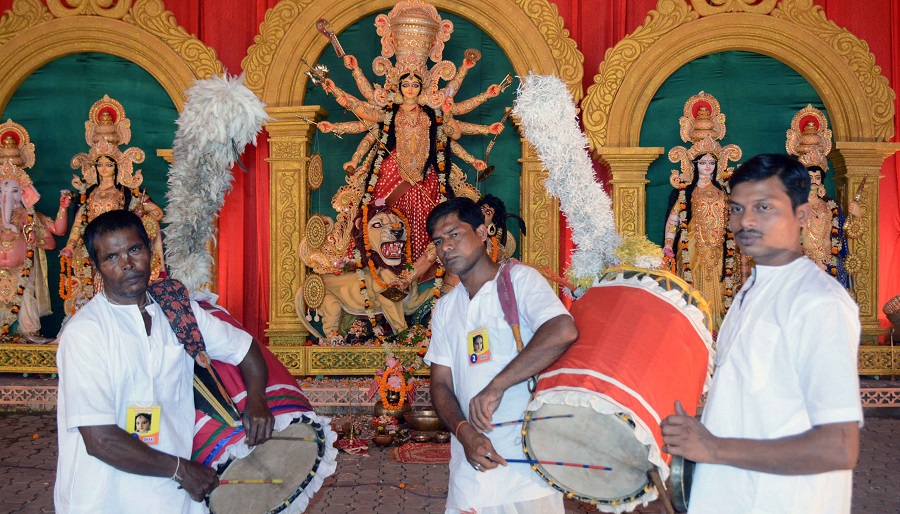
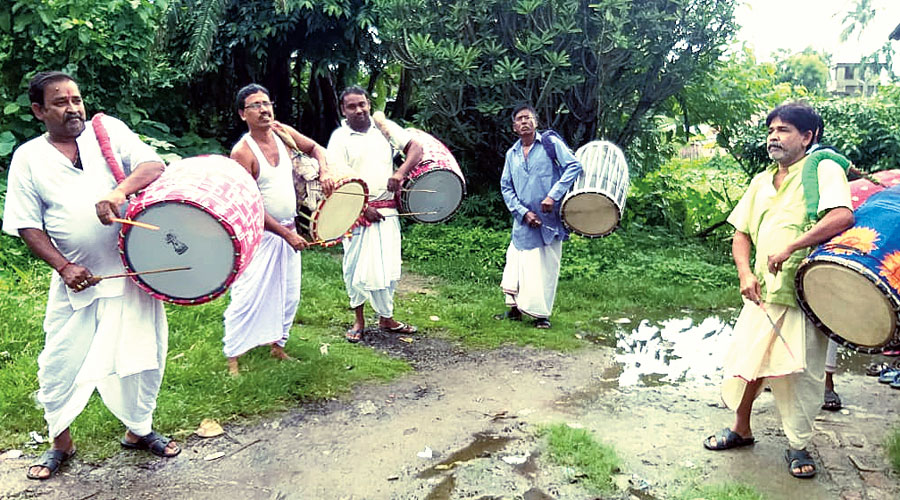
Dhakis playing dhaks in a Durga Puja pandal

Introduction

India is a country of rich cultural diversity and the essence of festivity for each Indian state is unique on its own. The main festival of the Indian state of West Bengal is Durga Puja, which is held during the auspicious Aashwin Durga Navtras in the months of September-October. During the festival the Mother Goddess is welcomed to her home on Earth with 9 long days of celebrations and joy. As a ritual of the festivity both her arrival and departure are rung by hundreds of thousands of “Dhaks” played by the professional drummers, locally called as “Dhakis”.

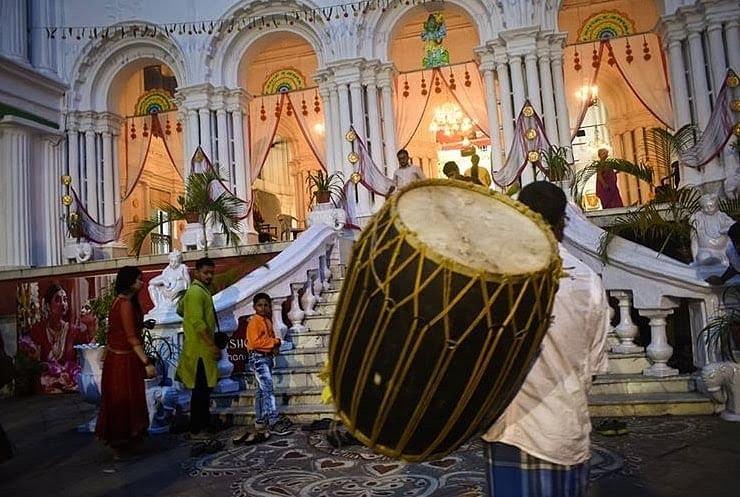
Dhak at a Puja Bari

What “Dhaks” Are: How They Are Made

The word “Dhak” comes from the Austric word “Dhaka” included in the Sanskrit language. The word later became a part of the Bengali script. The dhak is a big membranophone instrument that originally belongs to South Asia. The dhak has become an integral aspect of the widely loved Bengali festival of Durga Puja, other Bengali rituals and festivities. It would have no festive aura if not for the maddening rhythm of the dhak. The dhak is beaten with two sticks loudly to infuse the frenzied beats into the listeners. These beats are enough to raise the spirits and conjure up the feel of the Durga Puja. Without the instrument, the heavily celebrated festival would have felt sombre.

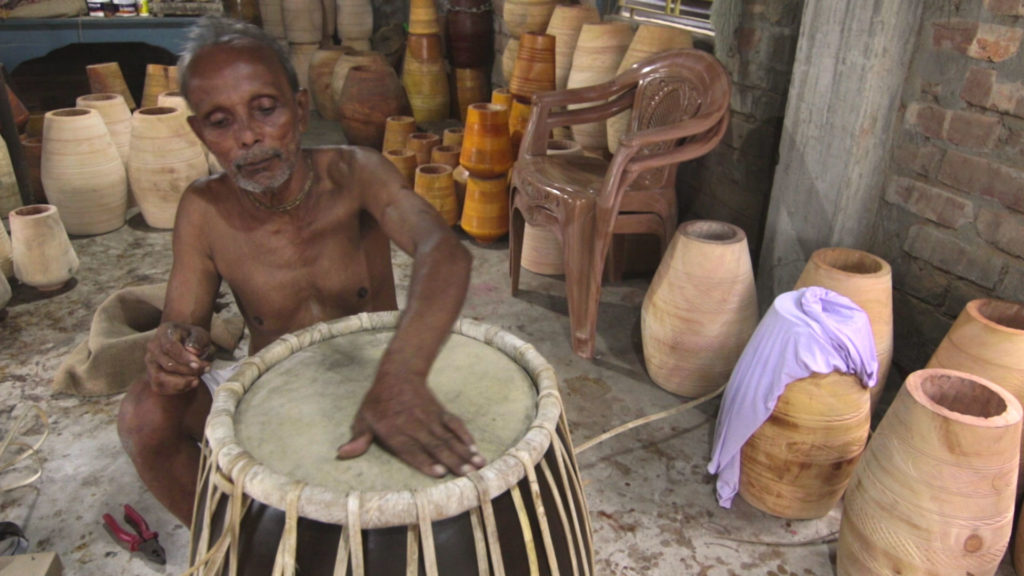
The sound of the dhak depends on a lot of factors like the shape. The shape varies from almost cylindrical to barrel-like. On one hand, the outer portion of the wood is shaved off and carved to create the barrel shaped instrument. On the other hand, the inner side of it is made to be absolutely hollow.The two ends of the dhak are wrapped up with goat skin on the top and calf skin at the bottom. It is said that using these two types of hides bring out the perfect sound texture of the dhak. The manner of stretching the skin over the mouth of the dhak and lacing it is also an important factor in the kind of sound that will be produced. The more the strings on the side of the dhak are pulled the higher the pitch of the dhak gets. The two sticks that are used to beat the dhak are carefully chiseled and formed out of thin cane or bamboo. Because of the drying session of the wooden structure and the intricate handwork and decoration, it takes around one month to reach the perfection in making the instrument.

Making of Dhaks

Who “Dhakis” Are: The Heritage follows

‘‘Dhakis’’ are integral to almost all festivities in Bengal but the art of playing the huge barrel-shaped membranophone instrument is considered as a staple of Bengal’s most celebrated Durga Puja. Most of the ‘dhakis’ or men who play the ‘dhak’ hail from humble rural backgrounds of Murshidabad, Hooghly, Malda, Bankura and Purulia districts of the state. Just like playing any other instrument that is highly associated with a centuries-old cultural heritage, the art of playing dhak, or the business of dhakis are often found to be ancestral and moving in the families since ages. The art of playing such instrument is considered as a living witness, bearing the tradition of the state of West Bengal. The art of playing dhak is passed on from one generation to the next though this art is gradually dying out and losing its focus. One of the reasons for this is the uncertain informal nature of this profession. They still teach the children to play the dhak is to preserve the culture and heritage.

Each part of Durga Puja rituals has a different and unique tune and beat of the dhak right from the arrival of the idols till their immersion. It is played when the idol enters the pandal and even when it exits the pandal on the last day of puja, Dashami. In fact, it is the deafening sound of the dhak that fills the air of immense celebration during the ‘Sandhya Arati’ on Ashtami. This ceremony is absolutely incomplete without the beats of the dhak. Along with that, the ‘Dhunuchi Nach’ is also an essential part where the dhak provides the musical rhythm to which people dance with the ‘dhunuchi’. Another popular tradition is the ‘Dhaker Lorai’ or ‘Fight between Dhaks’ where the grandeur is revealed the best when dhakis play in groups. It is usually a fascinating experience for the audience to see the feathered drums being played by the dhakis dancing to the music produced. Finally, on Dashami, the majestic beats of the dhak helps lift the air of sadness and gloom during the vermilion ritual and ultimately, the immersion.

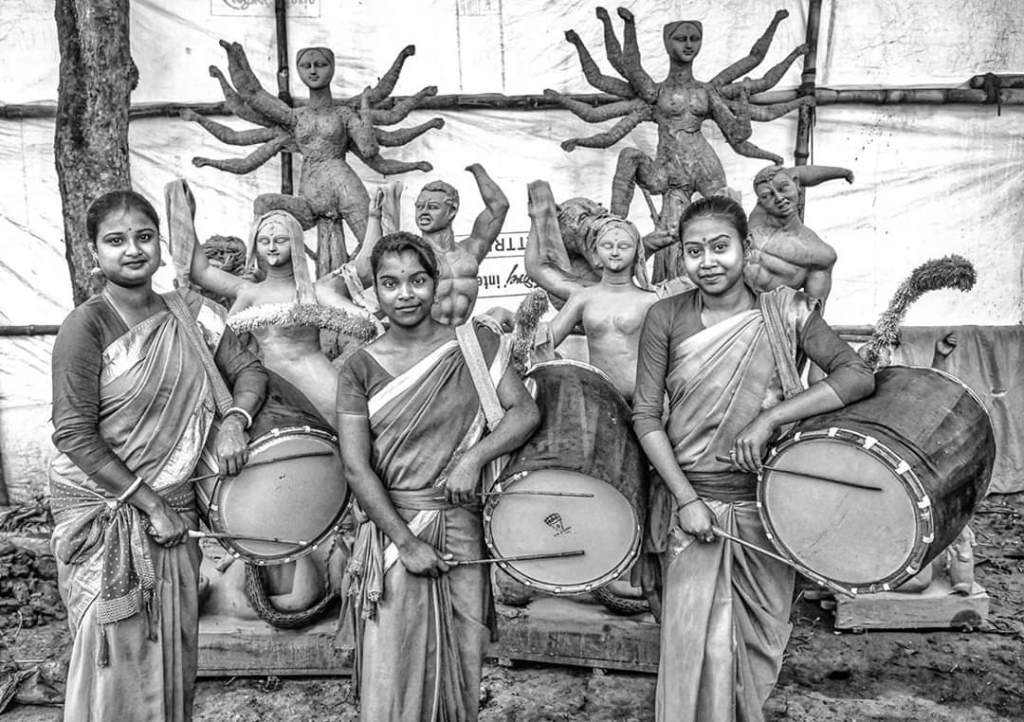
Female artists too have now taken up the responsibility to revive the age old art of playing the dhak. In such a male-dominated profession where carrying the dhak is a major issue, women have proved themselves to be no less than their male counterparts. Teams of women dhakis are finding fame and getting established slowly in their fields.

Dhakis of Bengal

COVID-19 and The Livelihood of Dhakis

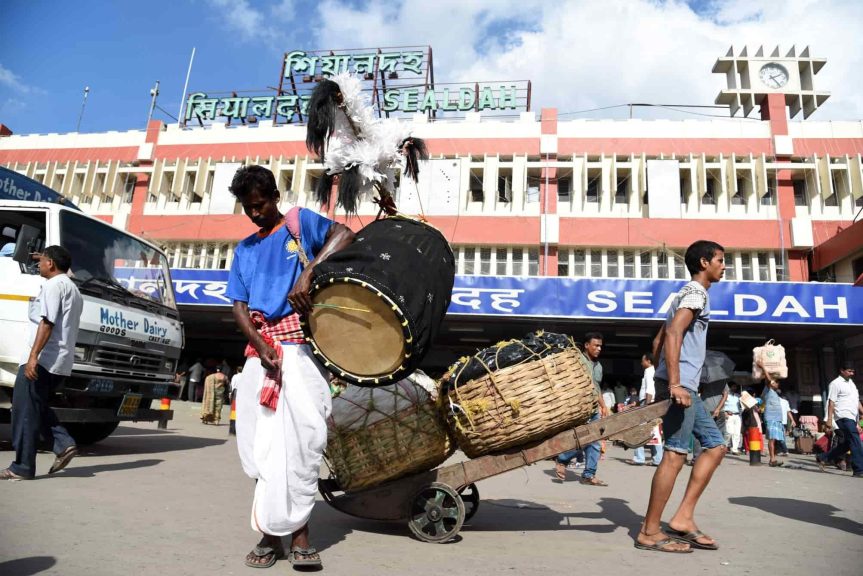
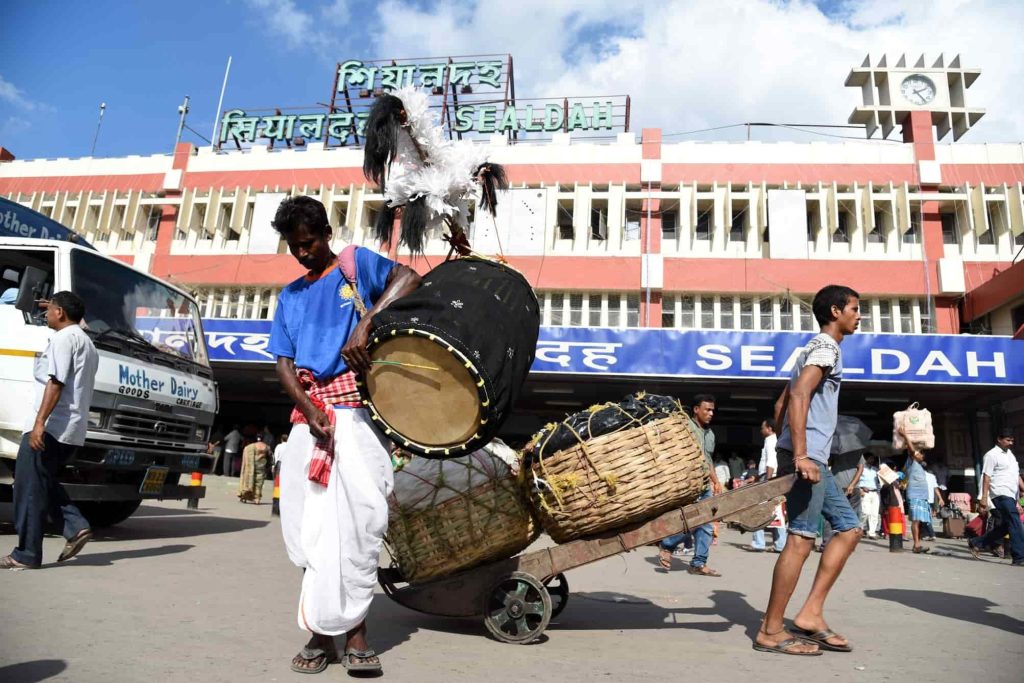
The Impact The drop in the number of Durga Pujas in and outside Bengal amid the novel coronavirus outbreak has taken the rhythm out of the lives of many dhakis (traditional drummers) who look forward to this festive season as their main source of earnings in the year. Every year, the dhakis from different districts and villages of Bengal use to appear at Sealdah station premises before Durga puja. The dhakis used to play the drums in front of Sealdah station every year before puja. From there, various puja committees used to take them in the puja pandals to play the ‘dhak’. But for the past two years the situation is very different, as Puja Committees and Organizers are tight in budget and have to follow a lot of restrictions . Moreover, thousands of dhakis from Bengal districts like East Burdwan, Birbhum, Purulia, Bankura and Hooghly would in other years travel to states such as Assam, Maharashtra, Delhi, Uttar Pradesh to perform at Durga Puja pandals and get higher pay than what they would have got in their home state. But, COVID-19 has restricted that option too for these drummers in past years.

Dhakis at Sealdah station, Kolkata

Where Are They At Now: How We Can Help

Acknowledging the fact that, playing dhak couldn’t be considered as a stable profession and is more inclined to be an occasional source of performing art and earning money, most of the dhakis are often associated with other rural jobs like farming, weaving, fishing to support their livelihood. During Pandemic, the dhakis hope that though they could not travel outside Bengal, they were still lucky if they got calls from Bengal puja organisers. When budgets are low, organisers play recorded beats of the dhaki in pandals. However, several organisers in Bengal have decided to go ahead with dhakis to add the traditional fervour to festivities with the state government offering a dole of Rs 50,000 to each puja committee.

A group of Women Dhakis in front of Goddess Durga idols

Conclusion

Just like of everyday’s, MachhBhaat, Bengal ’s essence of festivity is incomplete without the rhythmic beats of Dhaks. Along with everyone one of us, they are also looking forward for a better situation in the upcoming years, while we can celebrate together the joys of life without fearing for the safety of our health . With the constant effort of the Government and the citizens together , hope we are going to reach that phase very soon.

River Cities Alliance

 The River Cities Alliance (RCA) has been launched with the objective to provide the member cities with a platform to discuss and exchange information on aspects that are vital for sustainable management of urban rivers, sharing best practices and supporting innovation. The alliance has been launched initially with 30 cities namely Dehradun, Rishikesh, Haridwar, Srinagar, Varanasi, Kanpur, Prayagraj, Farrukhabad, Mirzapur, Mathura, Bijnor, Ayodhya, Patna, Bhagalpur, Begusarai, Munger, Sahibganj, Rajmahal, Howrah, Jangipur, Hugli-Chinsurah, Behrampore, Maheshtala, Aurangabad, Chennai, Bhubaneshwar, Hyderabad, Pune, Udaipur and Vijaywada.


The Alliance is open to all river cities of India. Any river city can join the Alliance at any time.


 State Governments are implementing Action Plans for restoration of water quality of the identified polluted river stretches. The implementation is being monitored regularly at State level by Chief Secretary of the respective State/UT and at Central level by the Central Monitoring Committee under the Chairmanship of Secretary, Ministry of Jal Shakti.


In addition, under Namami Gange Programme, the progress and activities are reviewed regularly by National Mission for Clean Ganga (NMCG), State Governments and District Ganga Committees.


RCA is envisaged as a facilitatory platform for initiating river-sensitive planning and development. Namami Gange through its integrated and comprehensive framework has been working towards rejuvenating Ganga river basin. As cities start to implement the river-sensitive development agenda, the River Cities Alliance will support them to learn from each other and inspire others to take up progressive action on this front.


 For adjudication of disputes relating to waters of inter-State rivers and river valley thereof, the Parliament has enacted the Inter-State River Water Disputes (ISRWD) Act, 1956. When any request under the said Act is received from any State Government in respect of any water dispute on the inter-State rivers and the Central Government is of the opinion that the water dispute cannot be settled by negotiations, the Central Government constitutes a Water Disputes Tribunal for the adjudication of the said water dispute. Currently, 5 such water disputes Tribunals are active, the details of which are given at Annexure. In addition, Inter State Water disputes has been raised by Government of Bihar in respect of Tilaiya-Dhadhar Diversion scheme concerning States of Bihar, Jharkhand and West Bengal and by Government of Tamil Nadu (TN) in respect of use, distribution and control of Pennaiyar river and its tributaries concerning States of Tamil Nadu, Karnataka, Andhra Pradesh and UT of Puducherry.


This Information was given by the Minister of State for Jal Shakti, Shri Bishweswar Tudu in a written  reply in Lok Sabha today.

 *****


BY

ANNEXURE

Status of active Inter-State Water Disputes Tribunals relating to the sharing of
river water


S. No

Name of Tribunal

States concerned

Date of constitution

Present Status

1.

Krishna Water Disputes Tribunal – II(KWDT-II)

Karnataka, Telengana, Andhra Pradesh and Maharashtra

April, 2004

Report and decision given on 30.12.2010. Further report given by the Tribunal on 29.11.2013.


However, as per Supreme Court Order dated 16.9.2011, till further order, decision taken by the Tribunal on references filed by States and Central Government shall not be published in the official Gazette. As such, matter is sub-judice. Term of the Tribunal was extended for a period of two years w.e.f. 1st August, 2014 to address the terms of reference as contained in section 89 of Andhra Pradesh Reorganisation Act, 2014. Thereafter, the term of the Tribunal has been extended six times for period of one year latest being w.e.f. 01.08.2021.

2.

Mahanadi Water Disputes Tribunal

Odisha and Chhattisgarh

12th March, 2018

The Government of Odisha had filed a complaint dated 19.11.2016 with the Ministry of Water Resources, River Development and Ganga Rejuvenation under Section 3 of the Inter-State River Water Disputes Act, 1956 read with Inter-State River Water Dispute Rules, 1959.


The Central Government has constituted Mahanadi Water Disputes Tribunal vide Notification dated 12.03.2018. Subsequently, the reference was made to the Tribunal under Section 5(1) of the ISRWD Act, 1956 on 17.04.2018. The matter is thus under adjudication in the Tribunal. The Central Government, vide Notification dated 3rd June, 2021 has extended the tenure of the Tribunal for a period of two years upto 11th March, 2023 or till the submission of report, whichever is earlier.

3.

Mahadayi Water Disputes Tribunal

(MW DT)

Goa, Karnataka

and Maharashtra

16th November, 2010 However, vide notification dated 13.11.2014 date of reckoning of the constitution of the Tribunal is w.e.f. 21.08.2013

The MWDT submitted its report under Section 5(2) of the ISRWD Act, 1956 to the Central Government on 14.08.2018. Further references under Section 5(3) have been filed by the party States and the Central Government before the Tribunal. The matter is subjudice. The term of the Tribunal has been extended for a further period of one year w.e.f. 20.08.2021 to submit its Further Report under Section 5(3) of ISRWD Act, 1956.


The Central Government has notified the Award and Final Decision of the MWDT given on 14.08.2018 in the Gazette of India vide notification No. S.O. 888(E). dated 27.02.2020.

4.

Ravi & Beas Water Tribunal

(RB WT)

Punjab, Haryana

and Rajasthan

April, 1986

Report and decision under section 5(2) given in April, 1987. Clarification/explanation sought from the Tribunal under File No.H-11016/134/2021-BM Section-MOWR I/53475/2021 25 Section 5(3) of the said Act by the party States. Presidential Reference 1 of 2004 was made on the Punjab Termination of Agreements Act, 2004. The Hon’ble Supreme Court has pronounced the judgement on Presidential Reference in negative. Further, Government of Haryana has filed IA No. 6 of 2016 in OS No. 6 of 1996 in the matter. The matter is subjudice.


5.

Vansadhara Water Disputes Tribunal

(VW DT)

Andhra Pradesh &

Odisha

February, 2010 However, as per the Supreme Court order the date of reckoning of the constitution of the Tribunal is w.e.f. 17.9.2012

The Tribunal has submitted its report to the Central Government under Section 5(2) of the ISRWD Act, 1956 on 13.09.2017. Further, State of Odisha and the Central Government filed reference under Section 5(3) of the ISRWD Act, 1956 on 11.12.2017 and 12.12.2017 respectively. The State of Odisha has also filed I.A. No.1 of 2019 before the Tribunal and the Tribunal gave its judgement in the matter on 23.09.2019. Subsequently, the State of Odisha has filed SLPC(C) No.27930/2019 before the Supreme Court against Order dated 23.09.2019 which is subjudice. Now, the Tribunal has furnished its Further Report dated 21.06.2021 under section 5(3) of the ISRWD Act.


*****

Toycathon aims to tapIndia’s one billion USD toy market

 Union Education Minister Shri Ramesh Pokhriyal ‘Nishank’ and Union Minister WCD and Textiles Smt. Smriti Zubin Irani jointly launched Toycathon-2021 today. Shri Praveen Kumar, Secretary, Prof. Anil Sahasrabudhe, Chairman, AICTE and Dr Abhay Jere, Chief Innovation Officer, MoEwere present on the launch event of Toycathon-2021. The Union Ministers also jointly launched the Toycathon Portal on the occasion. This Toycathon is aimed to conceptualize innovative toys based on the Indian value system which will inculcate the positive behaviour and good value among the children.

Speaking on the occasion, Shri Pokhriyalsaid that Toycathon is being organized to develop India as the global Toy manufacturing hub. He said size of toy market in India is about one billion USD but unfortunately 80% of the toys are imported. The launch of Toycathon today, is an endeavor by the government to create an ecosystem for the domestic Toy industry and the local manufacturers, tapping the untapped resources and utilizing theirpotential. Recalling the vision of Prime MinisterShri Narendra Modi of 5 trillion-dollar economy and considering the huge potential of our toy market, he exhorted all to make India ‘Atmanirbhar’ in Toy industry. He further stated that National Education Policy-2020also lays emphasis on innovation and research in learning, starting from the primary education. Aligned with the goals of National Education Policy, the Toycathonaims to capture innovative prowess of 33 crores students across the country, he added.

Addressing a press conference Smt. Smriti Z Irani stated that India imports 80 per cent of toys and the government is working towards promoting the indigenous toy industry for making the country self-reliant in this sector. She said that the collaboration with Ministry of Education paves the way for the students, faculties from all schools, colleges and universities of the country to answer to the clarion call of Atmanirbhar Bharat though this Toycathon. Appreciating the initiative, the Minister said, “This is the first time when school children will innovate, design and conceptualize toys also for especially abled ‘divyang children’. The Minister informed that students and faculty members participating in Toycathon can get prizes upto 50 lakhs.Commerce Ministry and MSME Ministry have taken various steps to protect the toy manufacturing industry and to make it competitive and to create awareness about safe toys which are not harmful chemically, Ministry of Education and Ministry of WCD will adopt special measures, she said.


About Toycathon 2021:

Taking a giant leap in the path of becoming ‘Atmanirbhar Bharat’, Ministry of Education, Ministry of Women and Child Development (MWCD), Ministry of Textile, Ministry of Commerce and Industries, Ministry of MSME, Ministry of I&B and All India Council for Technical Education (AICTE) have jointly launched Toycathon-2021.

This is a special kind of hackathon where students and teachers from schools and colleges, design experts, toy experts and startups will get together to crowd source ideas for developing toys and games that are based on Indian culture and ethos, local folklore and heroes, and Indian value systems.While this will greatly help India develop into a global hub for toys and games, it will also help our children to understand the ethos and values of Indian culture as envisaged in the National Education Policy 2020. 

The Toycathon is based on nine themes viz. Indian Culture, History, Knowledge of India and Ethos; Learning, Education and Schooling; Social and human values; Occupations & specific fields; Environment; Divyang ; Fitness and sport; Out of the box, creative and logical thinking and Rediscovering/redesigning traditional Indian toys

The Toycathon will have 3 variants of tracks of Junior Level, Senior Level and Start up Leveland will allow participation of students and teachers from schools, colleges and universitiesapart from startups and toy experts. Participants will have two options for ideasubmission; they can either submit ideas for the published problem statements or undernovel toy concepts category. This is the high time we utilize brightest creative minds andcarve out games based on our Indian culture, tradition and heritage and stories of ancientIndia showcasingthe beliefs and traditions of people.

For participation in Toycathon 2021, please visit https://toycathon.mic.gov.in.The Proposals can be submitted online from 5th January to 20th January, 2021.

Click here to access the PPT on Toycathon-2021

******

Cycling for Health and Fitness

Physical activity is required to be fit and healthy. Obesity, heart disease, cancer, mental illness, diabetes, and arthritis are all diseases that can be prevented by regular physical activity. One of the most effective strategies to lower your risk of health problems related with a sedentary life is to ride your bicycle on a regular basis.

Cycling is a low-impact, healthy activity that may be enjoyed by people of all ages, from toddlers to seniors. It’s also enjoyable, inexpensive, and environmentally friendly.

Riding to work or the shops is one of the most time-efficient ways to combine regular exercise with your everyday routine. An estimated one billion people ride bicycles every day – for transport, recreation and sport. It only takes two to four hours a week to achieve a general improvement to your health.

Photo by Andrea Piacquadio on Pexels.com

Health benefits of regular cycling

Cycling is mostly an aerobic activity, which means that your heart, blood vessels and lungs all get a workout. You will breathe deeper, sweat more, and have a higher body temperature, all of which will improve your overall fitness.

The health benefits of regular cycling include:

  • increased cardiovascular fitness
  • increased muscle strength and flexibility
  • improved joint mobility
  • decreased stress levels
  • improved posture and coordination
  • strengthened bones
  • decreased body fat levels
  • prevention or management of disease
  • reduced anxiety and depression.

Cycling and specific health issues

Cycling can improve both physical and mental health, and can reduce the chances of experiencing many health problems.

1) Obesity and weight control

Cycling is a good way to control or reduce weight, as it raises your metabolic rate, builds muscle and burns body fat. If you’re trying to lose weight, cycling must be combined with a healthy eating plan. Cycling is a comfortable form of exercise and you can change the time and intensity – it can be built up slowly and varied to suit you.

2) Cardiovascular disease and cycling

Cardiovascular diseases include stroke, high blood pressure and heart attack. Regular cycling stimulates and improves your heart, lungs and circulation, reducing your risk of cardiovascular diseases. Cycling strengthens your heart muscles, lowers resting pulse and reduces blood fat levels.

3) Cancer and cycling

Many researchers have studied the relationship between exercise and cancer, especially colon and breast cancer. Research has shown that if you cycle, the chance of bowel cancer is reduced. Some evidence suggests that regular cycling reduces the risk of breast cancer.

4) Diabetes and cycling

The risk of developing type 2 diabetes is rising, posing a severe threat to public health. Physical inactivity is known to be a primary factor in the development of this condition. Large-scale research in Finland found that people who cycled for more than 30 minutes each day had a 40% decreased chance of acquiring diabetes.

5) Bone injuries, arthritis and cycling

Cycling improves strength, balance and coordination. It may also help to prevent falls and fractures. Riding a bike is an ideal form of exercise if you have osteoarthritis, because it is a low-impact exercise that places little stress on joints.

Cycling does not specifically help osteoporosis (bone-thinning disease) because it is not a weight-bearing exercise.

6) Mental illness and cycling

Regular bike riding can help with mental health issues like sadness, stress, and anxiety. This is due to the effects of the exercise itself and because of the enjoyment that riding a bike can bring.

7) Hand cycling and health

Hand cycles are similar to recumbent tricycles, but instead of using foot pedals, they use hand power. If necessary, Velcro straps can be used to hold the hands to the pedals.

This style of tricycle allows amputees, people with spinal injuries and those recovering from certain conditions such as stroke to cycle as a form of exercise and recreation. Hand cyclists get the same cardiovascular and aerobic benefits as normal bicycles.

SOULMATE AND ITS ELEMENTS

A soulmate is someone who has locks that fit our keys, and keys to fit our locks. When we feel safe enough to open the locks, our truest selves step out and we can be completely and honestly who we are.”

Ah, soulmates. The epitome of love and partnership. In our fast-paced chaotic world, which boasts all sorts of different people, we find ourselves skimming through more relationships than we’d like in order to find that one person who can truly open our locks

Not just anyone can fulfill you the way your soulmate can. There’s a world of a difference between your soulmate, your heart’s other half and a life partner — a person who lacks the elements to mould perfectly to you. Your soulmate makes you feel entirely whole, healed and intact, like no piece is missing from the puzzle. A life partner, on the other hand, can be a great supporter and long-time companion, but is limited in his or her capacity to enrich your spirit. 

Most of us remain in life-partner relationships because we “settle,” for a multitude of reasons. Firstly, we may have a real subconscious fear of being alone. And since we’re biologically designed to fall in love, it’s only natural that we pair up in this world. But we sometimes prolong what are meant to be temporary relationships and mistakenly settle into them for good. There are relationships which must last for a certain period of time to close out a karmic chapter of life, relationships in which we’re meant to have children with our partner but not necessarily remain with them, and relationships which are just plain confusing because a melting pot of emotions doesn’t allow us to see our predestined path. 

Most of us fall somewhere between these two extremes, meaning that we experienced several relationships before finding the person we believe to be our perfect pairing. Whether you’re currently married, in a relationship, or contemplating entering a relationship with a new love interest, it is crucial that you know what role this person will play in your life. After all, there’s no avoiding the inevitable, often uncomfortable question we must ask ourselves: Is this the person I was bound by destiny to share my life with? Or did I settle too quickly into a relationship with someone who can never complete me?

ELEMENTS OF A SOULMATE:

1. It’s something inside: Describing how a soulmate makes you feel is difficult. It’s a tenacious, profound and lingering emotion which no words can encompass.

2. Flashbacks: If your partner is your soulmate, chances are he or she has been present in your past lives. Soulmates often choose to come back together during the same lifetime and scope each other out in the big world. You might suddenly and briefly experience flashbacks of your soulmate. You might even feel an odd sense of déjà vu, as if the moment in time has already taken place, perhaps a long time ago, perhaps in a different setting. 

3. You just get each other: Ever met two people who finsh each other’s sentences? Some people call that spending too much time together, but I call it a soulmate connection. You might experience this with your best friend or your mother, but it is the telltale sign of a soulmate when you experience it with your partner. 

4. You fall in love with his (or her) flaws: No relationship is perfect, and even soulmate relationships will experience ups and downs. Still, that bond will be much harder to break. Soulmates have an easier time of accepting, even learning to love, each other’s imperfections. Your relationship is more likely to be a soulmate match if you both love each other exactly as you each are, accepting both the great and awful tendencies we all have. 

5. It’s intense: A soulmate relationship may be more intense than normal relationships, in both good and sometimes bad ways. The most important thing is that, even during negative episodes, you’re focused on resolving the problem and can see beyond the bad moment.

6. You two against the world: Soulmates often see their relationship as “us against the world.” They feel so linked together that they’re ready and willing to take on any feat of life, so long as they have their soulmate by their side. Soulmate relationships are founded on compromise and unity above all else.

7. You’re mentally inseparable: Soulmates often have a mental connection similar to twins. They might pick up the phone to call each other at the exact same time. Though life may keep you apart at times, your minds will always be in tune if you are soulmates.

8. You feel secure and protected: Regardless of the gender of your partner, he or she should always make you feel secure and protected. This means that if you’re a man, yes, your woman should make you feel protected, too! Your soulmate will make you feel like you have a guardian angel by your side. A person who plays on your insecurities, whether consciously or subconsciously, is not your soulmate. 

9. You can’t imagine your life without him (or her): A soulmate is not someone you can walk away from that easily. It is someone you can’t imagine being without, a person you believe is worth sticking with and fighting for.

10. You look each other in the eye: Soulmates have a tendency to look into each other’s eyes when speaking more often than ordinary couples. It comes naturally from the deep-seated connection between them. Looking a person in the eye when speaking denotes a high level of comfort and confidence.

CONCLUSION:

Whether you’re designed by the universe to be soulmates or two loving people who have settled for each other’s strengths and weaknesses, the decision is yours. The beauty of free will is that you can remain in or change any relationship as you see fit. To be with your soulmate is one of the precious treasures of life. And if you feel you’ve found your heart’s other half, I wish you endless days of joy and laughter, and countless nights of deep embrace, unraveling the mysteries of the universe one by one.