Violence Against Women

By – Supriya

Women have always been the most vulnerable and off – exploited section of the society in any age, time, place and society. They have been, since ages, victims of humiliation, torture, exploitation and violence. Violence does not merely mean application of physical force,it can be mental, psychological and emotional as well. Violence, in its broadest sense, has been described as ” an act of a person which encroaches upon the freedom of another”. Violence can be an overt threat or an overt application of force which aims at harming or destroying a person or his reputation. Even the intent of causing harm and injury to someone is considered as an act of violence. Violence against women can be categorised under three broad categories of (1) Criminal Violence as rape , abduction or murder;(2) Domestic Violence which includes dowry-deaths,wife battering, sexual abuse, maltreatment of widows or elderly women, and lastly (3) Social Violence which includes forcing a wife or daughter-in-law to go for female foeticide , eve- teasing , refusing to give a share to women in property, forcing a woman to commit sati, forcing her into marriage for business interests or family honour or harassing a woman for any other reason. The Police Research Bureau, Delhi divides crime against women under two categories – crimes under the Indian Penal Code(IPC) , seven crimes such as rape , kidnapping , abduction, homicide for dowry , physical as well as mental torture, molestation and eve – teasing are covered. Forcing sati, harassment for dowry, immoral trafficking and indecent representation of women fall under local and special laws.
Considering the cases of violence against women we see that most of the time the women who feel helpless and depressed and suffer from poor self- image, and those who are emotionally vulnerable, or live in stressful family situations, or sociologically abnormal families, who lack social maturity or social interaction skills or whose husbands are alcoholic etc are the ones susceptible to violence and easy victimization. In fact, women are abused and victimized mostly by men they know. According to a recent survey, India is the fourth – most dangerous place for women in the world, primarily due to high number of female foeticide, infanticide and human trafficking cases in India.As per the UN population Fund, up to 50 million girls were thought to be ‘missing’ from the country over the past century due to female infanticide and foeticide. According to the National Crime Records Bureau (India) statistics on crime against women in india , a total of 185312 incidents of crime against women (both under IPC and other laws) were reported in the country during 2007 as compared to 164765 during 2006, recording an increase of 12.5%. Out of 20737 reported rape cases in the country ,9.5%( 1972) of the total victims were girls under 15 years of age, while 15.2%(3152) were teenaged girls (15-18 years). Nearly two-third (11984) (57.7%) were women in the age – group 18 – 30 years, 3530 victims (17.0%) were in the age – group of 30-50 years while 0.6% (133) were over 50 years of age. Offenders were known to the victims in as many as 19188 (92.5%) cases. The number of sexual harassment cases has increased by 9.9% over the previous year’s 10950 cases and the number of dowry death cases soared high by 6.2% over the previous year’s 7618 cases.

Indian women are equally vulnerable to domestic violence. While a total of 75930 cases were reported in the country in 2007 with an increase of 20.3% over 2006, the world statistics of domestic violence reveals around 960000 incidents of violence, against current or former partners every year. The statistics are alarming and smoking . One must remember that these are the reported cases. There are a host of other instances of violence which go unreported due to fear of further violence, social stigma or even death. Violent crimes against women have been on an increase especially in the capital city – Delhi.

With passage of time, the society is now awakening to its responsibility towards women. It is ionical that in a land where goddesses are worshipped , the crime rate against women is so high. Thus various agencies and organisations have come up to raise the issue of women’s dignity , protection and rights.Mahila Courts, Family Courts and various NGOs are now supporting the women’s cause and are working for women. Cases of domestic of women. Most of the victimized women don’t even know that they are victims of violence and they are oblivious to their rights. Thus, if we want to stop crimes against women , we must first educate women. The age old concept of a ‘ women’s destiny’ or ‘ naseeb apna apna’ has to be changed. This can be done only by educating women and giving them their sense of dignity which they have lost over the ages by making them aware of their rights. It is only by creating awareness among women and society at large that the growing rate of violence against women can be stopped.

THANKYOU

WHAT IS CRYPTOCURRENCY?

 Cryptocurrency
is basically a virtual currency that is not possible to imitate. The
‘cryptocurrency’ is derived from the encryption techniques. These
cryptocurrencies are based on blockchain technologies. A blockchain, in simple
words, means a database to keep records about the holders of the currency.
Because these currencies are digitally operated and not issued by any
government agents or authorities, there is eventually no political interference
or manipulation.

 The first even blockchain launched
cryptocurrency was Bitcoin which till date is the most famous crypto. Apart
from that, there are various other currencies with different functions
available in the market now that it has become such a hot topic.

Bitcoin was
launched in 2009 by a group known as ‘Satoshi Nakamoto’. Over 18.8 Million
crypto are being circulated in the market with a total market cap of $858.9
Billion as of August 2021 and there are only 21 Million currencies available
leading to the reduction of chances of both inflation and manipulation. Some of
the other alternate currencies include Litecoin, Peercoin, Namecoin, Ethereum,
Cardano and Eos.

Crypto
generally allow for safe payments online which are referred as ‘tokens’ and the
ledger entries of these exchange of tokens are stored digitally. Many investors
make money out of these currencies by selling them to other investors at a
profit.

Cryptocurrencies
claim that it makes it easier for financial transactions between two parties as
it does not require any third party that needs to be trusted with their money.
These transactions are secured by a private key. A private key is one that is
only known by the owner of the account and is used by him to sign away
transactions. This uses the least of transaction fees unlike the banks and
other financial institutions which charge a certain amount for wire transfer.

A downside
of these currency is that it is partially anonymous which makes it easier for
illegal business like tax evasion and money laundering. However, this anonymity
is highly valued by some individuals considering it acts like a protection for
those activists who live under a repressive government.

The market
price of any product depends upon its demand and supply and similar theory
applies to cryptocurrency. The rate at which one currency can be exchanged for
another can fluctuate widely which makes it a risky business to invest in. The
cost of producing a crypto, especially Bitcoin, which is an extremely large
amount, depends upon its market price.

It is also a
fact that only the blockchain of these currencies are digitally secured. The
other aspects of it like ‘wallets’ and ‘exchanges’ are not highly secured. They
are still prone to hacking and in the past 10 years, there have been cases of
millions of dollars being stolen via hacking of some mere coins.

The fact
cannot be ignored that cryptocurrency has only been in the market for 10 years.
It is not some gold or a piece of land that can be bought and guarantee you a
profit in future. It is a completely different and new technology that needs
knowledge and awareness. Just like stock market, one needs to be fully educated
before investing their valuable money into this business.


Analysis of Yes Bank Scam


Introduction

Yes Bank was
established jointly by Rana Kapoor and Ashok Kapoor in 2004. Although there
were legal controversies regarding the ownership of Yes Bank after the
unfortunate death of Ashok Kapoor, Rana Kapoor had taken the responsibility of
running Yes Bank.


Detail
analysis of Yes Bank Scam

 The fall of Yes bank began in 2008. It was
believed and suspicions began to arise when the working style of Rana Kapoor
changed and he began to lend loans aggressively to “Stressed Companies” and
charged high interest rates on the given loans.

He began to play very
risky game with banking system and these facts were first pointed out by UBS.
In 2015, UBS or Union Bank of Switzerland is a global financial services
company who claimed that the major reason behind the sudden rapid success was
them lending loans to stressed or vulnerable companies.


 Stressed companies are highly risky companies
who are not able to repay loans on time and generally are prone in making
defaults. The reason behind Yes Bank Scam was combination of bad loans and NPAs
(non-performing assets). If for 90 days or more, the loans are still not paid
and the payment is delayed, then such loans would come under 
NPAs.


The rising NPAs of Yes
Bank were also noticed by Reserve Bank of India (RBI) in 2017.It began to
monitor the mentioned bank very strictly. RBI also discovered that not only the
NPAs of the Yes bank was also the bank was hiding its real figure of NPAs. RBI
discovered that the bank was projecting a fake figure of its NPAs. The
difference between the actual figure and the real figure was found to be 3000
crore rupees.

According to the reports, majority of loans had
been given by Yes Bank after 2014. It was also discovered that in 2014, 55,000
crore rupees of loan had been lent by the bank according its loan books. The
loan lending had increased to 2 lakh 41 thousand crore rupees.

From the above analysis, RBI is strictly monitoring
the working of Yes Bank since 2017. However, there are so many loan lending
transactions which still took place between 2017 and 2019. One question which arises
is that in spite of knowing the working and condition of Yes bank, why were
they giving loans to these companies?


Consequences

On September 2018, in order to save Yes
Bank, RBI instructed and ordered Rana Kapoor to resign from CEO position. On November
2018, not only the rating of the bank continuously fell but also two
independent directors and a chairman of the bank resigned.

Thereafter, Rana Kapoor was no longer
the CEO of Yes Bank in January, 2019.

Reputed credit rating firms such as CARE
(Credit Analysis & Research) and Moody’s have given very bad ratings to the
bank. According to Moody’s the bank is in a stable condition anymore and it has
given a negative rating to the bank.

 Ravneet Gill became the new CEO of the YES
Bank. The bank still had to face number of hardships due to the scam; booking its
first quarterly loss on April 2019. Moreover, the stock of the bank had been
degraded to 30%, and their NPL ratio fell to 8%. Rana Kapoor had to sell his
entire shares which were worth 142 crore rupees on November 2019.

According to many reports and news, it
was anticipated that RBI might purchase this bank (YES Bank). ED (Enforcement
directorate) found that Rana Kapoor alongside his relatives claimed 78 shell
organizations (is an organization that another organization takes over to
acquire advantage from its name) in beyond couple of years.

All the information and activities performed
by such companies were tracked by ED and CBI through DIN (Director
Identification Number). Thereafter, for performing the crime of fraud and money
laundering, Rana Kapoor was arrested by ED on 8
th March,2020.

Measures taken
by RBI

Moreover, on 5th March 2020, RBI brought
this entire matter into their hands by declaring moratorium and setting a
limitation that the individuals who have saved their cash in YES Bank, can just
pull out 50,000 rupees in a month and not more than that, with the exception of
emergency cases. After this the stock of the bank tumbles down, Sensex likewise
tumbles down.
 

Conclusion

In spite all of this, on the off
chance that your cash is stored in Yes Bank today, there is no reason that
anyone should fear as your cash is protected and you will get it from the bank
on schedule.


Since, Yes Bank is an exceptionally
gigantic bank and the government in any case will figure out how to run this
bank, since they can’t manage the cost of the disappointment of the bank, since
there are many individuals reliant upon it.

 Furthermore, on the off chance that investors
didn’t get their cash back, the trust and the certainty of the contributors
will lose from the financial framework which not only includes the clients of Yes
Bank but also clients of different banks too.

 Individuals will imagine that now their cash
isn’t protected in any bank, so it’s smarter to pull out their cash as quickly as
possible which might cause a bank run.

This will not only have a negative
influence only on the Yes Bank but also every other banks as well. The entire
financial framework will implode. That is the reason why government won’t allow
this bank to fizzle under any conditions.


To kill a mockingbird summary

To kill a Mockingbird is a novel written by Harper Lee. The book was published in 1960 and was successful right away. It was Harper Lee’s first novel which sold more than 30 million copies all over the world and was also given the Pulitzer Prize. This novel is a classic among and outside of the bibliophiles for some very valid reasons. Let’s explore them

Plot

The story is set in a fictional town of Maycomb in Alabama and narrated by a 6 year old girl, Jean Louise Finch, the daughter of a righteous and virtuous lawyer Atticus Finch. 

The story begins with Jean Louise and her brother Jeremy Finch talking about their esoteric neighbour Boo Radley who never went out of his house and that fascinates the Finch siblings yet they are scared of him too much. It revolves around the adventures of the Finch siblings in the beginning.

These adventures are followed by some worries that rain down on the finch household by virtue of a case their father is working on, the case of Tom Robison, an African-American fellow who is accused of rape of a young white girl Mayella Ewell. Atticus Finch is fighting in favor of Robinson. This story is set up in the 1930s, when discrimination against African Americans was prevailing, a good evidence of that is provided in the book when different churches are mentioned for the white and African American people. Because Atticus was fighting for Robinson, he was looked down upon by the people of Maycomb, especially some of the more powerful figures of the town. Atticus Finch and his children are threatened all this while but he didn’t deter, he refused to step down until Robinson was given a chance, but he didn’t stand a chance.

The trial takes place and Tom Robinson is convicted of raping the girl even though all odds favor him. He is pronounced guilty because of the color of his skin. Nevertheless, an African American man being given the chance to explain himself was a huge leap for that town, all because of Atticus’s determination and skill. This case affects the finch siblings as well.

A deeper look

At first glance, the story seems about the escapades of Jean Louise and her brother Jeremy Finch but after a close look one will discover that this novel explores more profound issues in Maycomb which parallels the issues that 20th century and to some extent even 21st century America faces. First and foremost it addresses racism, in not the best of ways but you can’t blame the author considering the times it was written in. it doesn’t deal with racism nor does it offer any solution to deal with it. It simply mentions the bizarre laws that existed or rather lack of any laws. Understanding is a thing that Atticus does very well, he possesses the ability to understand even his enemies even When a mob is about to attack him. “A mob’s always made up of people, no matter what” is what he says to his children when talking about the same incident. His empathy is something that keeps the readers wondering.

It touches on the subject of gender roles and how Jean Louise who was a tomboy was told by her aunt to act ladylike. And it talks about subjects that can only be realized when you read and think about it yourself

Persecution of Muslims

Persecution of Muslims is the religious and political persecution that is inflicted upon followers of the Islamic faith and/or those with a Muslim identity. This page lists incidents in which Muslim populations have been targeted for persecution by non-Muslim groups throughout the history of Islam, a history that coincides with medieval and modern history.

In the early days of Islam in Mecca, the new Muslims were often subjected to abuse and persecution by the pagan Meccans (often called Mushrikin: the unbelievers or the polytheists). In the contemporary period, Muslims face religious restrictions in some countries. Various incidents of Islamophobia have also occurred, such as the Christchurch mosque shootings, the Afghanistan conflict (1978–present), the Kashmir conflict, the Xinjiang Ethnic cleansing and the mass imprisonment of people in re-education camps, the West Bank annexation in Palestine, and many more incidents.

The ongoing Rohingya genocide has resulted in over 25,000 deaths from 2016 to the present, 700,000+ refugees being sent abroad since 2017, gang rapes and other acts of sexual violence which are mostly committed against Rohingya women and girls, mostly by Rakhine’s Buddhists and Burmese soldiers, the burning of Rohingya homes and mosques, as well as many other human rights violations.

The ongoing Uyghur genocide has led to more than one million Muslims (the majority of them are Uyghurs) being held in secret detention camps without any legal process, with birth rates plummeting in Xinjiang, falling by nearly 24% in 2019 alone compared to just 4.2% in the rest of China.

TOP FIVE INFORMATION TECHNOLOGY IN INDIA

Information technology is the use of computer to create, process, store, and exchange all kinds of electronic data and information. IT is typically used within the context of business operation as opposed to personal or entertainment technologies. Here I came with top five most-valuable information technology in India

1) TATA CONSULTANCY SERVICES

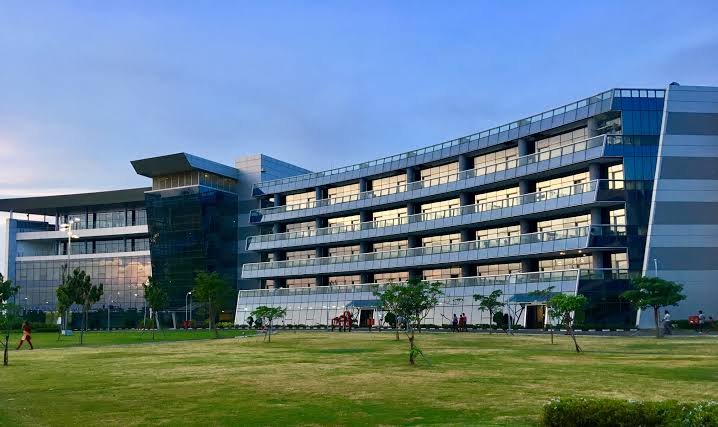
Tata Consultancy Services is a global leader in IT services, consulting & business solutions with a large network of innovation & delivery centers. https://www.tcs.com/home TCS is the largest IT services company in the world by market capitalisation ($200 billion). It was founded in 1968 by TATA Sons. It has headquarters in Mumbai, Maharashtra, India. The main service of the company is consultancy, services, outsourcing. TCS is the second largest Indian company by market capitalisation and is among the most valuable IT services brands worldwide.Tata Consultancy Services has around 380,000 offices across 46 countries and 147 delivery centres in 21 countries. There are 378,210 offices in India alone. The revenue of TCS is Rs1.62 trillion in 2020.https://en.wikipedia.org/wiki/Tata_Consultancy_Services

2) WIPRO

Global company delivering innovation-led strategy, technology, and business consulting services. https://www.wipro.com/ Mohamed Premji was founded WIPRO in 1945. It was founded to trade refined oil and manufacturing vegetables. After the death of Mohammad Premji https://en.wikipedia.org/wiki/Azim_Premjihis son Azim Premji took over wipro as chairman in age of 21. During the 1970s and 1980s, the company shifted its focus to new opportunities in the IT and computing industry, which was at a nascent stage in India at the time.In February 2002, Wipro became the first software technology and services company in India to be certified. The revenue of wipro is ₹61,943 crore in 2021. https://en.wikipedia.org/wiki/Wipro

3) INFOSYS

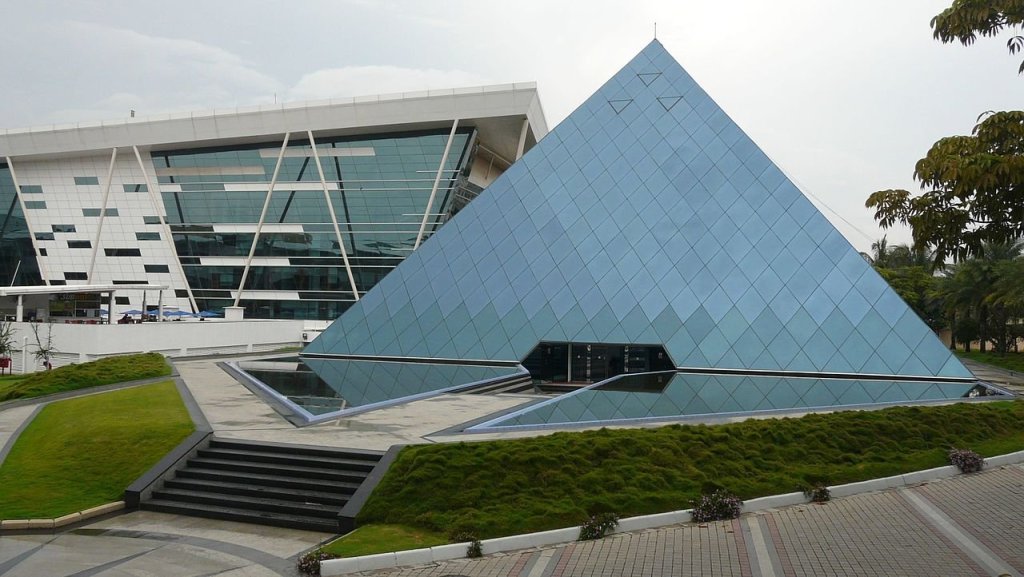
Infosys is a global leader in next-generation digital services and consulting.https://www.infosys.com/ Infosys was founded by seven engineers in Pune, Maharashtra, India with an initial capital of $250 in 1981. Infosys provides software development, maintenance and independent validation services to companies in finance, insurance, manufacturing and other domains.Infosys had a total of 259,619 employees as of 2021, out of which 38.6% were women. Out of its total workforce, 229,658 are software professionals and remaining 13,796 work for support and sales.https://en.wikipedia.org/wiki/Infosys In 2016, 89% of its employees were based in India. The revenue of this company is ₹102,673 crore in 2021. Website is https://www.infosys.com/

Infosys Pyramid in Bengaluru

4) TECH MAHINDRA

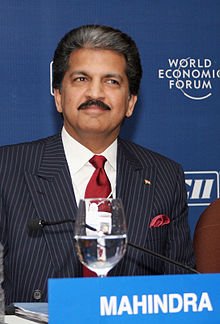
Tech Mahindra is an Indian multinational company that provides information technology and business process outsourcing services. A subsidiary of the Mahindra Group, the company is headquartered in Pune and has its registered office in Mumbai. It was founded by Anand Mahindra. https://en.m.wikipedia.org/wiki/Anand_Mahindra in 1986. This company has services in worldwide.

ANAND MAHINDRA

Tech Mahindra have 125,236 (2020) . The revenue of this company is ₹38,642 crore in 2021. Website is http://www.techmahindra.com/

5) HCL

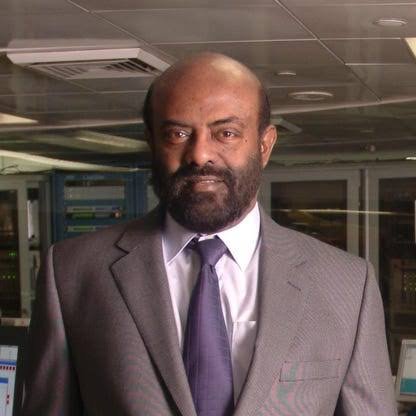
HCL was founded in 1976, HCL is one of India’s original IT garage startups. HCL stands for Hindustan Computers Limited. The company has offices in 50 countries. It was founded by Shiv Nadar https://en.wikipedia.org/wiki/Shiv_Nadar in 11 August 1976. It operates across sectors including aerospace and defense, automotive, banking, capital markets, chemical and process industries, energy and utilities, healthcare, hi-tech, industrial manufacturing, consumer goods, insurance, life sciences, manufacturing, media and entertainment, mining and natural resources, oil and gas, retail, telecom, and travel, transportation, logistics & hospitality. It aslo have services in consulting, outsourcing and software development. The revenue of this company is ₹76,306 crore in 2021. The website for this company is https://www.hcltech.com/.

Founder of HCL

International Conference on Business and Social Sciences 2021

Admin's avatarInternational Journal of Research (IJR)

International Conference on Business and Social Sciences 2021 will accept the papers in the fifteen thematic areas with multiple research approaches and methodologies. This includes the papers on specific management areas ranging from accounting through economics and banking to general management and marketing and the methodologies ranging from hypothetic-deductive approaches through qualitative case studies to critical theorisations. Also, conference associated journals entertain the papers with trans-disciplinary flavors, including the ones addressing the issues in the areas ranging from education through psychology to political science and culture and society, and drawing on these each other’s discipline. Hence, the conference provides a platform for wide-ranging issues, which captures contemporary developments in business, management and the social sciences within which a wide range of networking opportunities can be nurtured for the advancement of future research and global collaboration. This approach is now vital in research endeavours as business, management and education practices are…

View original post 71 more words

FRI


By: Astha Raghav. 

The Forest Research Institute (FRI) is a Natural Resource Service training institute of the Indian Council of Forestry Research and Education and is an institution in the field of forestry research in India for Indian Forest Service cadres and all State Forest Service cadres. It is located at Dehradun in Uttarakhand, and is among the oldest institutions of its kind. In 1991, it was declared a deemed university by the University Grants Commission.

The Forest Research Institute campus hosts the Indira Gandhi National Forest Academy (IGNFA), the staff college that trains officers selected for the Indian Forest Service (IFS).

It was founded in 1878 as the British Imperial Forest School by Dietrich Brandis.

In 1906, it was reestablished as the Imperial Forest Research Institute, under the British Imperial Forestry Service.

Established as Imperial Forest Research Institute in 1906, the Forest Research Institute (FRI) Dehradun, was first situated at Chandhbagh (the present location of the Doon School) on the Mall Road. A much larger campus at the present location was acquired ca 1923. Construction of the new buildings commenced thereafter. Styled in Greco-Roman Architecture by C.G. Blomfield, the main building was inaugurated in 1929 by then Viceroy Freeman Freeman-Thomas, 1st Marquess of Willingdon. It is now a National Heritage site.

Forest Research Institute Dehradun is among the oldest institutions of its kind. The institute’s history is virtually synonymous with the evolution and development of scientific forestry, not only in India, but over the entire sub-continent. Built over 450 hectares, with the outer Himalaya forming its back drop, the institute’s main building combines Greco-Roman and Colonial styles of architecture, with a plinth area of 2.5 hectares. The building was listed for a time, in the Guinness Book of Records, as the largest purely brick structure in the world. The institute has a developed infrastructure of all equipped laboratories, library, herbarium, arboreta, printing press and experimental field areas for conducting forestry research. It is 7 km from Clock Tower, on the Dehradun-Chakrata motorable road. It is the biggest forest based training institute in India. Most of the forest officers are a part of this institute. The FRI’s building also houses a Botanical Museum and there are many different kind of trees from around the world.

Thank You!

Trekking

 By: Astha Raghav. 

Trekking is an adventure sports. It is not an easy task to do trekking. Indeed, it needs a lot of courage and confidence along with a strong physique. 

The term “Trekking Peak” is a commonly misunderstood colloquial term which may refer to a variety of types of peaks in the Himalayan Region. The term is most often associated with Group “B” NMA Climbing Peaks classified by the Nepal Mountaineering Association or easier. Some may use the term “Trekking Peak” to solely describe peaks requiring little to no technical climbing experience. Others may use the term to describe all mountains regulated by the Nepal Mountaineering Association including Group “A” NMA Expedition Peaks which may require considerable difficulties and technical climbing skill.

Because of the term’s loose classification of peaks it can be misleading, encompassing peaks of significant varying difficulties.There is less general consensus for the use of the term in this context of Group “A” NMA Expedition Peaks.

The Indian Mountaineering Foundation describes trekking peaks closer to the true definition of trekking, where peaks have a defined route that requires less technical mountaineering skill. There peaks are open for climbing, where climbers are not required to book permits with or pay royalties to the Indian Mountaineering Foundation. Although some peaks are located in inner line, meaning close to border thus due to security reason, permissions and permits may be required from local civil or army authorities. Also, some peaks may be out of reach from foreign climbers.

Asian Trekking is a commercial adventure company based out of Kathmandu, Nepal started by Sherpa Ang Tshering.In 2001, it was recorded that Asian Trekking ran 25 large mountain expeditions per year. Asian Trekking made international news when in 2006 four of its clients and two of its Sherpas died in a single season. One of their clients, David Sharp, died near the summit and this event became the center of an international climbing ethics controversy. Founder of the company Ang said that climbers can die if they use all their energy getting to the summit of Mount Everest, only to be too fatigued for the descent.

Thank you!

NDA

 By: Astha Raghav. 

The National Defence Academy (NDA) is the joint defence service training institute of the Indian Armed Forces, where cadets of the three services i.e. the Indian Army, the Indian Navy and the Indian Air Force train together before they go on to respective service academy for further pre-commission training. The NDA is located in Khadakwasla, Pune, Maharashtra. It is the first tri-service academy in the world.

The alumni of NDA include 3 Param Vir Chakra recipients and 12 Ashoka Chakra recipients. NDA has also produced 27 service Chiefs of Staff till date. The current Chiefs of Staff of the Army, the Navy and the Air Force are all NDA alumni from the same course. The 137th course graduated on 30 November 2019, consisting of 188 Army cadets, 38 Naval cadets, 37 Air Force cadets and 20 cadets from friendly foreign countries. The Supreme Court of India passed an order in August 2021 that allowed female candidates to appear for the 5 September 2021 NDA enterance examination.

At the end of the World War II, Field Marshal Claude Auchinleck, then Commander-in-Chief of the Indian Army, drawing on experiences of the army during the war, led a committee around the world and submitted a report to the Government of India in December 1946. The committee recommended the establishment of a Joint Services Military Academy, with training modelled on the United States Military Academy at West Point.

After the independence of India in August 1947, the Chiefs of Staff Committee immediately implemented the recommendations of the Auchinleck report. The committee initiated an action plan in late 1947 to commission a permanent defence academy and began the search for a suitable site. It also decided to set up an interim training academy, known as the Joint Services Wing (JSW), which was commissioned on 1 January 1949 at the Armed Forces Academy (now known as the Indian Military Academy) in Dehradun. Initially, after two years of training at the JSW, Army cadets went on to the Military wing of the Armed Forces Academy for two years of further pre-commission training, while the Navy and Air Force cadets were sent to Britannia Royal Naval College Dartmouth and Royal Air Force College Cranwell in the United Kingdom for further training.

In 1941, Lord Linlithgow, the then Viceroy of India, received a gift of £100,000 from a grateful Sudanese Government towards building a war memorial in recognition of the sacrifices of Indian troops in the liberation of Sudan in the East African campaign during World War II. Following partition, India’s share amounted to £70,000 (Rs 14 Lakh at the time; the remaining £30,000 went to Pakistan).The Indian Army decided to use these funds to partly cover the cost of construction of the NDA.The foundation stone for the academy was laid by then Prime Minister of India, Jawaharlal Nehru on 6 October 1949. Construction started in October 1949. The revised estimated cost for the whole project was Rs 6.45 crores respectively. The National Defence Academy was formally commissioned on 7 December 1954, with an inauguration ceremony held on 16 January 1955. The 10th JSW program was transferred from Clement Town, Dehradun to NDA Khadakwasla.It is the first tri-service academy in the world.

Thank you!

SOCIAL ANXIETY DISORDER

Social Anxiety Disorder (S.A.D.) is also known as Social Phobia. It is one of the major psychological disorders listed in the DSM-5. It leads to a fear of social situations that involve direct or indirect interactionS with other people. It is a permeating disorder that can have a negative impact on an individual’s life. According to the latest data of 2020, 15 Million adults spread across the globe were diagnosed with social anxiety.

Reasons that lead to Social Anxiety

  • Genetic risk factors such as, a family history of anxiety related issues
  • Domestic atmosphere of anxious behavioral traits
  • Having an overly reactive Amygdala in the brain
  • Having to adjust in a new atmosphere during adolescence
  • Early childhood experience of bullying, rejection, avoidance, domestic conflicts, sexual abuse, death of a loved one, etc

Symptoms of Social Anxiety

PHYSICAL SYMPTOMS

  • Blank or a racing mind
  • Excessive sweating
  • Stomach upset or nauseating sensation
  • Rapid heart rate
  • Dizziness or lightheadedness
  • Cold tremors or shivering
  • Respiratory illness
  • Palpitations
  • Avoiding eye contact with people

BEHAVIOURAL AND PSYCHOLOGICAL SYMPTOMS

  • Intense worry about social situations (attending a party, going for a social gathering, hanging out with with peer, presenting a business presentation, etc)
  • Use of intoxicants (alchohol, drugs, smoking) to face a social situation
  • Experiencing anxiety several day before the social event
  • Thoughts of embarrassing oneself before a group of people or a person
  • Mind racing over thoughts of being judged negatively by people
  • Trying to spot flaws in one’s own actions or social performances
  • Intense fear of meeting new people and interacting with them
  • Fear of making mistakes, having a shaky voice during public interactions

Diagnosis of Social Anxiety

A mental health practitioner (Psychiatrist, Psychologist, Counseller) can diagnose a patient with social anxiety though a variety of methods.

Social anxiety can be determined through the following methods :

  • Listing out the situations that make the person anxious
  • Usage of techniques such as Questionnaires, Check lists, Survey to understand the symptoms experienced by the person
  • Applying the DSM-5 and ICD criterions to diagnose social anxiety

Treatment of Social Anxiety

  • Use of psychotherapy methods like personally interacting with the therapist about the problems faced by oneself and employing ways to generate happiness and overcoming the issue
  • Engaging in activities organized by support groups such as ADAA, Seven Cups of Tea, Daily Strength, etc
  • Pursuing hobbies that makes oneself elated (singing, dancing, sports, artwork,etc) and using one’s time constructively
  • Trained mental health practitioners may also suggest medications such as Antidepressents to regulate the levels of chemical messengers such as dopamine, norepinephrine, serotonin in the body

Every year approximately 5 Million deaths occur due to anxiety and mood related disorders. Social Anxiety is not taken into possession by choice but varied circumstances leads to it. One must express concern and empathy towards any person known to face mental health related issues. Providing support and reassurance is much needed in such circumstances. Advancements in the diagnosis and treatment of Social Anxiety Disorder proves that the future is still optimistic for those who suffer from it.

How atomic clocks are so accurate?

Most types of clocks rely on the oscillation of a slid body, be it a pendulum, a balance-wheel, or a quartz crystal, but each suffers from the effects of temperature, pressure, and gravity. Time measuring devices depended on the spin of the earth, but these suffer from seasonal effects and tidal friction. The moon causes tides to occur on earth and it causes friction between moon and the earth. This friction slows down the earth’s rotation by few milliseconds. This is called tidal friction. The atoms, however, vibrate a fixed number of times per second. Both the U.S. National Bureau of Standards and the United Kingdom’s National Physics Laboratory tried to take advantage of these vibrations.

In 1949 the Americans built a quartz clock that was synchronized by the 24-GHz vibrations of low pressure gaseous ammonium molecules. The British, under the leadership of physicist Louis Essen (1908-1997), used the oscillations of an electrical circuit synchronized to the vibrations of caesium atoms, the first caesium was kept in a tunable microwave cavity and the clock relied on the fact that were 9,192,631,770 transitions between two hyperfine ground state energy levels every second. This number defined the second, as opposed to the old definition of there being 86,400 seconds in one day. A good atomic clock was accurate to one part in 1,014, and therefore would take about 3 million years to lose or gain a second.

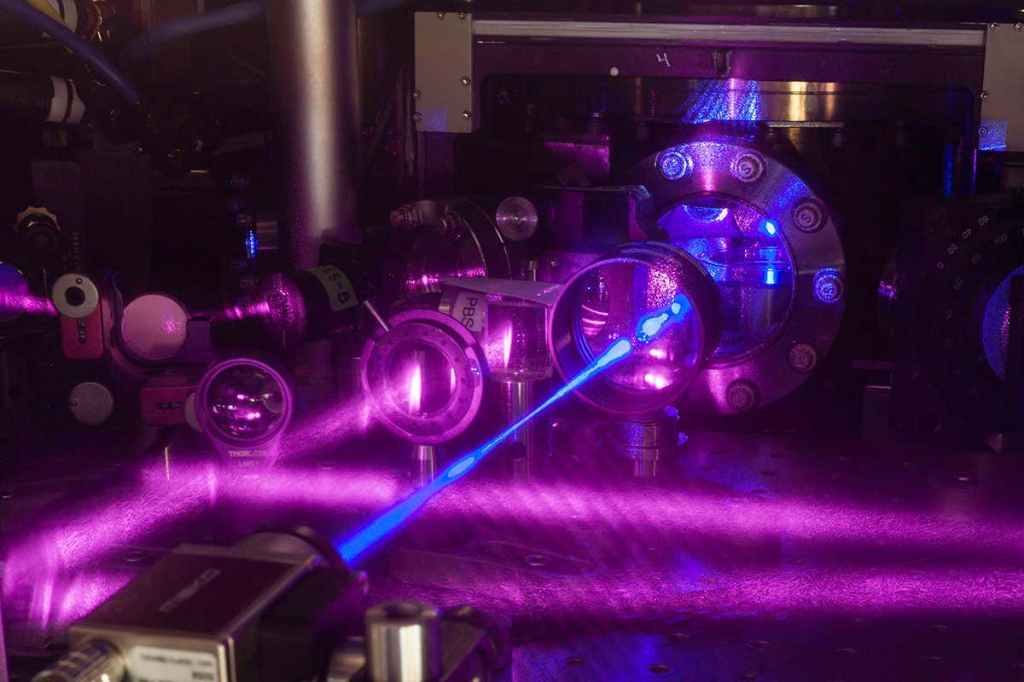
JILA’s 3-D Quantum Gas Atomic clock

Four atomic clocks are used in each of the many satellites of the global positioning system and comparisons of electromagnetic-wave travel times enable positions of earth to be measured very precisely. The clocks are also used by geophysicists to monitor variations in the spin rate of earth, and the drifting of the continents. Since record began, earth recorded the shortest day on July 19, 2020, when the day was 1.4602 milliseconds shorter than 24 hours.

Why atomic clocks is used in GPS?

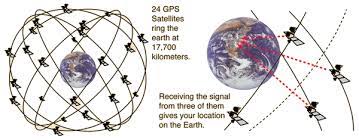
The Global Positioning System (GPS) consists of 24 satellites orbiting the earth. A GPS receiver uses the position of four of these satellites to locate itself. One to correct the time on the receiver, and three to locate its position. A signal is sent to the receiver from the first satellite that contains the satellites location and the signal’s time of departure. The receiver then multiplies the signal’s travel time by the speed of light to calculate its distance from the satellite. With one satellite the receiver knows that it’s located o a sphere around that satellite with a radius equal to the calculated distance. So, it does the same calculation with a second satellite. The intersection of these two spheres narrows the location to the circumference of a circle. Then with a third satellite, the receiver can reduce the location to a single point. Since signals are travelling at the speed of light, being off by even a millisecond means an error off about a million feet, or 300 kilometres. But with atomic accuracy, the receiver can locate itself to about 3 feet. Global Positioning System (GPS) satellites fly in medium earth orbit (MEO- Medium Earth Orbit) at an altitude of approximately 20,200 kilometres from ground.

The NIST-F1 is one of the most accurate time standards based on microwave atomic clocks. The most accurate atomic clocks lose about a second over 138 million years.

“Time isn’t the main thing. It’s the only thing.” – Miles Davis

WHY MENSTRUATION A TABOO IN INDIA?

Menstruation is a phenomenon unique to girls. Menstruation is the natural part of the reproductive cycle in which blood from the uterus exits through the vagina. It is a natural process that first occurs in girls usually between the age of 11 and 14 years and is one of the indicators of the onset of puberty among them.

Taboos surrounding menstruation exclude women and girls from many aspects of social and cultural life. Some of these are helpful, but others have potentially harmful implications.

In India especially, I found it extremely ironic for it to be still a taboo in this time and era, even before I don’t understand why it was called a taboo and the reason for that I guess was, India where a girl child recognised as boon ( as GODDESS LAKSHMI when born) and giving birth is also considered boon given only to women despite that this unique process that make it possible for a women to have a child is considered a TABOO. Even with many scientific clarification of the process of this unique phenomenon, even though being this 21st century there still continuous myth regarding this adapted within the society.

SOME OF THEM ARE:

  • Women who menstruate have long been taught to keep silent about their periods. Young girls are taught from a young age that they have to manage it privately and discreetly.
  •  In Indian households including the literate ones, women are constantly reminded of the old-age traditions where “you are not allowed to touch anything holy, visit temples, cook or touch pickle.”
  • The taboo is so ingrained that women often have the “walk of shame” while carrying their sanitary pads wrapped in black plastic bags in their hands. 
  • Strangely enough, in some cultures, celebrations are held on the commencement of menstruation. And in the same cultures, the already menstruating women are looked down upon as impure and filthy.
  • It is not uncommon for boys to giggle and laugh during biology class when the topic of menstruation comes up.
  • BUT NOT IN EVERY CULTURE IT OCCURS- In Kashmiri Hindu culture, menstruating women are given special care considering the belief that they become weak due to blood loss. They do not consider them to be impure and rules like, a woman on her period can’t visit temples or can’t work don’t apply.

#BREAKTHEBLOODYTABOO

It’s high time that we normalize menstruation as just a healthy and positive part of the female life cycle. Menstrual periods are nothing to be ashamed of. Just like digestion, blood circulation and respiration are considered as natural and biological processes, both men and women should work towards making menstruation an important topic to talk about openly. This is the only way to combat its silence and break the stigma.

some changes I notice toward breaking this taboo for women in this society

  • The greatest changed I noticed was for the changed working environment toward women as the sanitary environment facilities given to them as employment care like washroom provided with sanitary pads and tampons etc.
  • knowledge about the first period to young girls now given at their school is compulsory not only to girls but to boys too given knowledge for it be known as normal topic and not as a taboo topic.
  • Advertisement about sanitary pads and tampons starts to make this topic to talk openly about.
  • Men buying the sanitary pads and tampons make it comfortable for women during their periods so that they can express their thoughts, sorrows, angers, happiness with them.

Child Marriage

The Beginning

God resides in the heart of a child. Child is as pure as water. When dirt enters in water it becomes impure. When a child is married the child loses the inner purity. To fulfill some “so called” rituals and respect their tradition people get ready to tie their children’s knot with someone even before the appropriate age. To prove our traditions, to respect them do we really need sin like child marriage? On one hand we talk about children and on the other hand we talk about marriage, how come we are living with this contradiction? We are living in a society where a separate section of society feels marrying their children after 18 is as dangerous as nuclear bomb. The actual nuclear bomb is child marriage. Because of this many children have died or let me say they have martyred. And here we are crying over GST; high price of tomatoes. This is the culture we are living with, this is the nation we are residing in.

The Middle

What actually child marriage is? Child marriage is a human rights violation. Despite laws against it, the practice remains widespread, in part because of persistent poverty and gender inequality. In developing countries, one in every three girls is married before reaching age 18. Child marriage is related to child espousal and court approved early marriages after teenage pregnancy. In many cases, only one marriage-partner is a child, usually the female. Child marriages were common throughout history for a variety of reasons, including poverty, insecurity, as well as for political and financial reasons. Today, child marriage is still fairly widespread in developing countries, such as parts of Africa, South Asia and Latin America. The incidence of child marriage has been falling in most parts of the world. Somewhere child marriage has given rise to teenage pregnancy. In poor countries, early pregnancy limits or can even eliminate their education options. This affects their economic independence. This makes girls more vulnerable to persistent poverty if their spouses die, abandon, or divorce them. Girls in child marriages are more likely to suffer from domestic violence, child sexual abuse, and marital rape.

Picture Credit: http://shorturl.at/afpCZ


The United Nations, through a series of conventions has declared child marriage a violation of human rights. Child marriages violates a range of women’s interconnected rights such as equality on grounds of sex and age, to receive the highest attainable standard of health, access to education and freedom from violence. The society is interlinked with each other. If one factor gets effected the whole system is disturbed. Then in which world we thought that child marriage would not create any change in our surroundings? Or the objects encircling us wouldn’t have any effect on child marriage? Factors that impact child marriage include poverty, gender inequality, protecting family honor; tradition and culture; and insecurity, particularly during war, famine or epidemics. Other factors include family ties in which marriage is a means of consolidating powerful relations between families. Why have we made marriage a form of business? Why always dowry has to be included in marriage? Why bride’s price is to be paid? Providing a girl with a dowry at her marriage is an ancient practice which continues in some parts of the world. These difficulties pressed families to betroth their girl, irrespective of her age, as soon as they had the resources to pay the dowry. A bride price is the amount paid by the groom to the parents of a bride for them to consent to him marrying their daughter. In some countries, the younger the bride, the higher the price she may fetch. Hence, the rise of the menace like child has become so popular all around the globe.

The End

Some of these marriages could have been stopped, in fact they should have been prevented only if people were well aware? No, only if we were all aware. We as a society need to come together to stop this gruesome crime. We need to stand against such traditional practices that endanger the lives of young kids, which lead to the creation of a dark cloud over these kids’ future. We just don’t need an end to this practice but we need an end to the thought process that lead people to think crimes like this to be okay in the name of traditions, we need an end to this totally aggravated legacy of ruining children’s life.