MANAGING MONEY AND INCREASING SAVING

“Before Money becomes Wealth, it’s just Money. And for making Wealth from Money, we need to MANAGE it.”

Money Management is the broad concept which incorporates the key principles required for developing wealth and for preserving and protecting that wealth. It teaches about investing, budgeting, banking, tracking your expenses and assess the tax liabilities. This can also be called as Investment Management. Thus, Money Management is a technique where high interest output is delivered with any amount invested for money.

Spending money for satisfying needs, wishes and cravings regardless of whether they are justifies and included in a budget. can be seen in every human and is a very natural tendency and phenomenon and this idea of money management is especially developed to make the people, institutions and firms understand how to channelize and reduce the amount of money spent on different items and values which care not significant and which do not have any contribution in enhancing their living standards, long term asset or benefit. Money gives you the sense of self fulfilment and this sense of self fulfillment doesn’t come from rigorous spending of money or buying wealth but from having an amount of money which will not get outlived while fulfilling their lives needs, ambitions and providing a meaning livelihood which is convenient for them.

Thus, for money management it is also important to properly analyze the behavioral aspect of individuals or firms. Money Management also focuses on the behavioral attributes which influence the decision made by investors or organizations or individuals. And this decision making phenomena can severely affect the outcomes of long term strategies. In fact, everyone battles against the powerful elements like taxes, debt or inflation etc. which have the power to destroy and take away the wealth that we have attained by working hard. And a single wrong decision can affect and ensure our defeat.

8 Tips for Money Management:

  1. CREATING A COMPREHENSIVE BUDGET PLAN (Listing the amount of money you receive and planning how to manage your expenses by using that amount and what will be your savings.)
  2. TRIMMING UNNECESSARY DAY TO DAY COSTS (Identify different ways to save and start from small scale. Eliminate day to day unnecessary costs and avoid penalty charges and fines)
  3. FIND WAYS TO PAY LESS INTEREST ON YOUR DEBTS
  4. MAKE GOALS FOR EFFECTIVE SAVINGS AND ACCELARATE THE SAVINGS
  5. AVOID PAYING MORE TAX THAN NEEDED
  6. USE ONLINE BANKING (because they help in setting up payment reminders, scheduling future bills and help in reviewing and analyzing the amount of money spent.)
  7. SAVE FOR RETIREMENT AND PLAN ACCORDINGLY
  8. WORK WITH AN ADVISOR (To reduce financial stress and feel secured. They help in analyzing your financial status and set up goals.)

NEED OF MONEY MANAGEMENT

  • Money and Finance Management is a vital part of personal and business life. Hence, it is hard to ignore and needs to be planned with proper vision, career, finances, goals etc. and these will drive your future. Proper financial knowledge is important for starting any successful business and it is the ability to manage one’s money.
  • It develops the ability of a person to understand financial concepts which will help him in managing money better. And ensures financial well being.
  • Money Management and Financial literacy is one of the major life skill and it increases the financial ability of a person. One can start investing in his 50s also but starting early has its own benefits.
  • Today, the rich is getting richer, poor is getting poorer and the middle class people are getting indebted. The reason is the lack of knowledge of money management. People learn about money management from their parents and families and not in school. What will the children of poor people learn about money management for them? The only thing that they know is to study hard for getting a job. That’s why even after having proper knowledge, skills and expertise they don’t get proper job and don’t get enough savings.

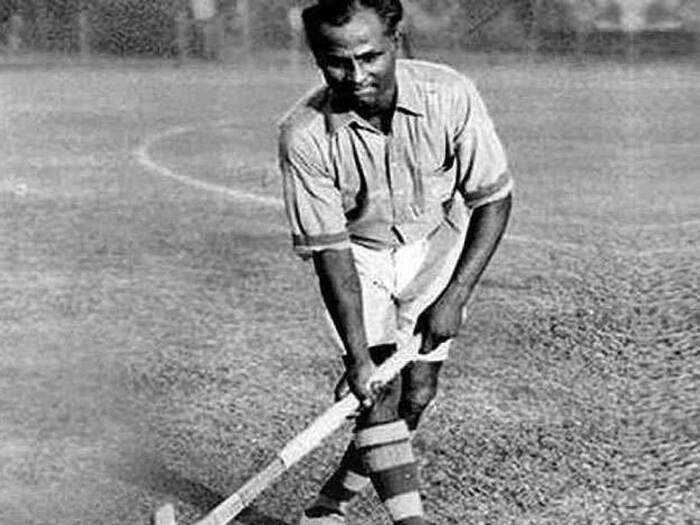
Indian hockey team wins a medal after 41 years.

See the source image

It was over 40 years ago in 1980 that Indian hockey team won a medal in Olympics. Today after defeating Germany, India’s men hockey won 12th medal at the Olympics, which makes it the sole best-performing nation in history. After loosing against Belgium in the semi finals on August 3 with the margin of 5-2, India fought against Germany for the bronze medal.

In the first quarter Germany took the lead with the score 1-0 against India. Timm Herzbruch sent the ball to Florian Fuchs, who in turn set up Timur Oruz. There were a couple of defenders around him, but Oruz still scored. After 10 minutes  German midfielder Mats Grambusch received a long pass up front and entered the circle. He got past Hardik Singh and released a shot, which was blocked by Indian keeper PR Sreejesh.

After 17 minutes just after the start of second round Nilakanta Sharma received the ball, evaded a couple of tackles and sent a delightful pass towards Simranjeet Singh, who found the back of the net and scored the goal and the score was now 1-1. After 24 minutes Eventually, Christopher Ruhr slipped a pass to Niklas Wellen, who made it 2-1 for the Germans and just after a minute Germans scored another goal making it to 3-1. The hopes had just started declining until Hardik Singh scored a goal for India and it was 3-2 now and just after 2 minutes Harmanpreet Singh scored his sixth goal of the Tokyo Olympics with an excellent drag-flick. The second round ended with the score 3-3. It was the most thrilling round of all.

Just after the start of the third round India received a penalty stroke and Rupinder Pal Singh made no mistake and gave India a lead with the score 3-4. At 34 minutes India scored another goal setting the score to 3-5. After the start of the fourth quarter Germany scored a goal and now score was 4-5. In the end Germans were able to penetrate twice but the Indian goalkeeper Sreejesh saved the goal beautifully twice and thus leading the country to the victory.

2020-21: Fires, Heat and Rains

2020 started with forest fires in Canada, Brazil and bush fires across Australian coast, causing the death of at least two billion animals.

Tourism Australia Bites Back On 'Viral Bushfire Misinformation'
The Australian Bush fires

Come 2021, Greek, Turkish and Italian people experienced one of the hottest summers in history in 2021. In the Hellenic Republic of Greece, the temperatures reached 45 degree Celsius on 4th August. While this might be a pretty regularly recorded temperature in the tropic, the Balkans and the Anatolian peninsula recording such temperatures is worrisome. The temperatures led to a spontaneous spread of forest fires in and across Europe, Canada and Turkey – and people across the globe shared the plight of Turkey on social media since Turkey is not habitual with these fires and hence lacks the number of helicopters and jets to control these fires.

Sicily wildfires, August 2021
Turkey battles wildfires for 6th day, EU to send planes
Turkish Wildfires have been unprecedented for the country

China recorded floods it had never seen in the last 50 years of its history in 2021. A very worst form of excessive rainfalls was recorded in central and western Europe in July 2021 with countries like Germany completely overwhelmed by floods. This is in addition to the already burning Amazons and even Asian countries recording instances of Forest fires in a time not traditionally identified with the same. Russia and Finland and US are also heading towards a quite imminent diplomatic crisis given that the Arctic has already lost more than 50% of its ice opening up the once frozen Tundra and permafrost to petroleum and uranium explorations with the obvious geopolitical control over the area being a chief topic of contention.

Arctic cold war: climate change has ignited a new polar power struggle
Climate change has ignited a new proxy struggle for the domination of the ocean.
Climate change: Polar bears could be lost by 2100 - BBC News
These might be one of the last generation of the polar bears.

China and India claim to have planted at least a billion trees in the last 5 years with China keen on developing technologies that are associated with building forest towns – a human enclosure built within an artificial forest as the future of dwelling. France announced a closing of all its coal plants 2 years ahead of schedule. But is that all? Global statistics show a massive increase in demand for coal in 2020 and ’21.

Liuzhou Forest City | Stefano Boeri Architetti
The Liuzhou city might be the first forest city on the planet.

The images of environment recovering due to COVID might be fairly short lived.

One of the biggest names in martial arts : Bruce Lee


This image has an empty alt attribute; its file name is 8ae8f37051ada3ad91385ab4c97d25be.jpg

A still from a movie done by Bruce Lee

Bruce Lee is a great Chinese personality, who is called by people as the best martial artist in the world. Lee is a martial artist as well as a Hong-Kong and American actor, philosopher, producer, director, screenwriter, and founder of the Jeet Kune Do martial arts. He had made a place in the hearts of people in a very short time with his work, due to which he was forever called one of the best martial artists.

He entered films at a young age and became famous as a child artist. He very soon became a martial arts instructor while doing his acting and martial arts work. People liked him a lot. But he died at the age of 32. Complete information about his life has been given in this article.

Introduction to Bruce Lee :

  1. Name– Bruce Lee
  2. Full Name– Lee Jun-fen
  3. Born– 27 November 1940
  4. Place of Birth– Chinatown, San Francisco, California, U.S.
  5. Nationality– Chinese, American
  6. Father– Lee Hoi-Chuen
  7. Mother– Grace Ho
  8. Siblings– Phoebe Lee, Agnes Lee, Peter Lee, Robert Lee
  9. Wife– Linda Lee Cadwell
  10. Kids– Brandon Lee, Shanan Lee
  11. Death– July 20, 1973
  12. Death Place– Kowloon Tong, Hong Kong

Bruce Lee’s Early Life :

Bruce Lee’s father was Lee Hoi-Chuen and his mother was Grace Ho. His family shifted to Hong Kong when he was three months old. Lee had four other siblings. He belonged to an affluent family, but was still involved in street fights and gang revelries, which was necessary for him to be trained in martial arts. His first teacher was his father, who taught Lee the basics.

At the age of 13, he began training for Wing Chun under Yip Man. He was taken to learn the art of Wing Chun privately from Yip Man and Wong Shun Leung due to their mixed lineage tradition. Academically, Lee received his early education at La Salle College. But due to not getting good marks, he was removed from there and put in ‘St. Francis Xavier’s College’.

His participation in street fights continued until 1959, relocating to San Francisco. Lee’s parents were deeply troubled by his violent behavior, and they wanted to leave Hong Kong for a safe and healthy avenue. After a few months in San Francisco, he moved to Seattle, where he enrolled to complete his further education at Edison Technical School. Meanwhile he worked as a live-in waiter for Ruby’s Chow’s restaurant. In 1961, he joined the University of Washington where he majored in drama. This is how his early life was spent.

Career :

Bruce Lee learned to speak monosyllabic words as a child before the start of his career. His father, who was a Cantonese opera star, was associated with the film background, from where his career started. He was only three months old when he did his first film “Golden Gate Girl”. The early years of his life were eventful since making his debut in the world of spectacle.

Due to this an actor was born in him and his acting skills went on increasing with every film, he did about 18 to 20 films at that time. After acting from 1959 to 1964, he left his acting career and made martial arts his profession. He started this as a teacher of kung-fu. With his time, he opened his own martial arts school in Seattle named “Lee Jun Fen Gung Fu Institute”.

In 1964, he left his college to join James Lee, a renowned martial arts instructor from Oakland. Together they opened another school in the same city, which was named Jun Fen Martial Arts Studio. In 1964, Lee competed in the Long Beach International Karate Championships, where he was popularized by his ‘2-finger push-up’ and ‘one-inch punch’.

After this he went there where he met Taekwondo master Zhu Gu Ri, there they became friends immediately and it was beneficial for both the artists. He performed very well in an event in 1967. Meanwhile, he had a personal match with Wong Jack Man, which he won. Although the result of the match was declared unanimously, there were two versions regarding its proceedings.

His exceptional performance at the Long Beach Karate Championship brought him into the limelight of Hollywood directors. His first acting stint as a mature adult was in the TV series ‘The Green Hornet’. The show started in 1966 and ran its first season till 1967.

From 1967 to 1969, she was invited as a guest in many TV series, including TV series like ‘Ironside’, ‘Here Comes the Brides’ and ‘Blondie’. In between his acting, he used to take some time out to concentrate on his martial arts as well. He realized that he was too rigid in traditional martial arts techniques. They created a new system that required them to be prepared in traits such as practicality, flexibility, speed and efficiency.

This happened when Jeet Kung Do paved the way for the intercepting fist. In 1969, he went as a guest in the film ‘Marlov’. However, he lacked the bias and key role, leaving Los Angeles for Hong Kong in the summer of 1971. Upon arriving in Hong Kong, Lee signed two films.

In 1972, he was an actor, writer, director, star and choreographer for a fight scene in the film ‘Way of Dragon’. In the same year, he got another film offer, which was named ‘Inter the Dragon’. The film was to be released on 26 July 1973. In this way he had a career in film and martial arts.

His Major Works :

Bruce Lee, an eminent martial arts artist, has done many films and TV shows. One of the films that made the most of the headlines as well as made him a hero, was The Golden Harvest and Inter de Dragon by Warner Bros Productions. The film grossed worldwide and earned about $ 200 million. This was his biggest success.

His Death :

He suddenly collapsed on 10 May 1973, when he was dubbing for the film ‘Inter the Dragon’ even after going through a headache and seizure. Immediately, he was admitted to the Baptist Hospital in Hong Kong, where he was diagnosed with cerebral edema. He was cured of the first illness. After this, on 20 July 1973, he was scheduled to meet James Bond star, George Lazenby, to which they agreed and arranged a meeting with Raymond Chow and Betty Ting Pie at Letter’s Residence to discuss the script for the film ‘Games of Death’ they wanted to make with Lazenby. He complained of headache and took the pain killer. He lay down to take a nap, and this was his last nap.

He was taken to Queen Elizabeth Hospital, where he was pronounced dead. His body was examined, in which it was found that the Meprobamate ingredient had caused an allergic reaction, due to which he died. He was buried in his wife’s hometown at Lakeview Cemetery in Seattle. In order to preserve his home in Hong Kong, it was announced that it has been converted into a tourist site by a philanthropist, Yu Pang-li.

Achievements :

  • After his death, his name was listed in Time magazine’s list of the “100 Most Influential People of the 20th Century”.
    
  • In 2013, he was honored with the prestigious Founder’s Awards at the Asian Awards. A statue of him was unveiled that same year in Chinatown, Los Angeles. The 7 foot tall statue was erected in Guangzhou, China, and proudly admires his achievements as a martial arts instructor to this day.

Some interesting facts about Bruce Lee :

  • Bruce Lee was born in San Francisco.
  • One of Bruce Lee’s secret hobbies was writing poetry and in fact he was very good at it.
  • Bruce Lee was one of Hong Kong’s most prominent child actors, having done 20 films by the time he was just 18 years old.
  • When Bruce was 13, he was taught ‘Wing Chun’ by Grandmaster ‘Y’ Ip.
  • Bruce Lee also belonged to Germany, because his mother was from Germany.
  • Jackie Chan started his career as a stuntman in Bruce Lee’s Fist of Fury and Inter the Dragon.
  • Once when asked who would win the fight to the death, Chunk Norris said – “Surely Bruce Lee, no one can beat him”.
  • Bruce Lee was also known as a great cha-cha dancer, he also won the Hong Kong cha-cha championship in 1958.
  • Bruce Lee’s last film ‘Games of Death’ also includes the scene of his actual funeral, in which he was inside the coffin.
  • Bruce Lee also demonstrated a ONE INCH PUNCH with which he could throw his opponent 6 feet far on the floor with just one inch gap between him and his opponent.

Myanmar coup: Aung San Suu Kyi used to defend the army but what will she do now?


This image has an empty alt attribute; its file name is thediplomat_2015-11-16_17-46-45.jpg

Aung San Suu Kyi: The Burmese Leader

In 2018, a year after the alleged genocide of Rohingya Muslims, Aung San Suu Kyi could not stop praising the military rulers in her cabinet. At that time she was defending them at every step, while most of the world were criticising the military action against the minority Rohingya Muslims.

Now three years later, when she is once again under house arrest and the main victim of this coup, her decision to defend the army appears to be ‘a bad decision’. It is difficult whether Suu Kyi then defended the army for personal, political or patriotic reasons. But her supporters will tell you that she was in difficult situation and it was difficult for her to go against the current.

While her critics say that she could have said at least two words to share the pain of Rohingya Muslims at that time. Well, whatever it is now, the prospects of a democratic Myanmar are scare at the moment.

Suu Kyi’s image is believed to have tarnished, but she still has huge fans in Myanmar and her popularity cannot be understated. In the recently held elections, Suu Kyi’s National League for Democracy party won over 80 percent of the vote. This was his big victory. Even today, Suu Kyi’s posters, paintings and calendars that you see everywhere when you walk through the street of Yangon city point to the popularity of ‘Mother Suu Kyi’.

However, now there is noise of protesters in these streets. They are registering their protest by playing utensils and they want Suu Kyi to be released. Traditionally in Myanmar, it is customary to play utensils ‘ to drive away ghosts(evil spirits)’. People are writing on social media that ‘they are now playing utensils to drive away the army, so that Aung San Suu Kyi can be free’.

Wai Nu, a social activist working for the rights of Rohingya Muslims, posted a video of the streets of Yangon on social media, with her writing that “it is very painful to watch”.

“In this footage, a picture that caught my attention was a symbol of Myanmar’s violent and tragic history. The photo flashed by smartphone lights was of General Aung San, the father of Aung San Suu Kyi, who is still talked about in Myanmar to this fay. Spoken with respect. He was assassinated before he got independence from British rule. His popularity was very high then.

He was also the founder of the modern Burmese Army, also known as Tatmadaw. The same army has now taken his daughter captive and once again snatched her freedom.

People believe that the earlier movements in Myanmar – whether it was the 1988 and 2007 movements – were all forgot on the ground. But this time the fight has to be online. Facebook is said to be the most important platform in this which is used the most in Myanmar. Facebook is the main medium for sharing news and perspectives in Myanmar. This is the reason why Myanmar’s military first banned Facebook after the coup.

Operation Polo: An operation lead by real iron man of India


This image has an empty alt attribute; its file name is 557px-Operation_Polo_1948.jpg

Pre- Independence Hyderabad

Operation Polo is called the military campaign after which the princely states of Hyderabad and Brar joined the Indian Union. This was needed because the Nizam of Hyderabad Osman Ali Khan Asif Jah VII decided to remain independent after the partition of the country. The continuation of an independent princely state in India was not acceptable to the government. Sardar Vallabhbhai Patel, the principal architect of India’s political integration, made it his priority.

Attempts were made to persuade the Nizam but he refused to sign the treaty. The army was sent in defeat and Hyderabad joined the Indian Union on 12 September 1948.

Emergency-like situation was created for the first time in India on September 13, 1948. This was different from the Indira Emergency of 1975. On this day 36,000 soldiers of India camped in Hyderabad. From 13 to 17 September, there took place a genocide which shook whole Hyderabad. It was said that thousands of people were shot standing in line. The army called it ‘Operation Polo’. In some part it was also called ‘Operation Caterpillar’. Sardar Patel told the world that it was ‘police action’. Read the story of Hyderabad meeting in India.

One of the world’s richest people, Nizam wanted a separate country:

निज़ाम

Nizam of Hyderabad

After the independence of India, many princely states wanted their separate country. But the Indian government was not ready for this. Because it was not possible. No argument went in favor of his point. As a result, either out of love or reprimand, everyone had to unite with India. But some princely states had made up their mind to challenge India. One of these princely states was the princely state of Hyderabad.

Here the lineage of Asafjah who came from Samarkand used to run. These people were the governors of this princely state on behalf of the Mughals. After Aurangzeb, they were ruled here. They were called Nizams. So in 1948, Nizam Osman Ali Khan Asafjah used to rule the seventh subject, which was mostly Hindus. The Nizam was one of the richest people in the world at that time.

The Nizam’s dream was to have a separate country of its own. For this, apart from his army, he had made a separate army. In which there were people from the Muslim community. They were called Razakars. Before this, the Nizam had also gone to the British government. That they should have their own country under the Commonwealth.

But Mountbatten refused. A. G. Noorani has written that Nehru wanted to settle the matter through dialogue. But Sardar Patel did not have the patience to talk.

Agreements were broken, talk reached from country to America:

Till now there was an agreement with Hyderabad that you should run your state now. Just the Government of India will see your foreign relations. Also you don’t have to have any relation with Pakistan. But the princely state of Hyderabad had also given crores of rupees to Pakistan. Due to this, both the parties kept accusing each other of breaking the agreement.

The princely state alleged that the Indian government was besieging them from all sides. The government said that you are not even using our currency. Weapons are being imported from Pakistan. Razakar’s army is being built. What do you want?

रजाकार

Razakars

Mountbatten again placed an agreement in June 1948. According to this, everything will continue as it is. Nizam will remain head of state. But gradually the decision of the people will be brought. The Government of India agreed. But the Nizam was not ready. He wanted complete swaraj. For this, he also sought the help of the UN and US President Harry Truman. But not found. Those people didn’t say anything.

The head of the Razakars who wanted an Islamic country was sent to Pakistan:

There was already communal tension in Hyderabad. At the same time there was opposition to Telangana. At the same time a group of Muslims was formed, MIM, headed by Nawab Bahadur Yar Jung. After his death, Qasim Rizvi became the chief. Qasim was the leader of the Razakars. The purpose of these people was to create an Islamic state. They did not believe in democracy. These people spread terror.

Whoever was against him was his enemy. Communists and Muslims who were different from him were also his targets. The main target were Hindus. As a result, thousands of people were killed. Women were raped. They felt that by doing this their great kingdom would become.

The patience of the Indian government was broken. Sardar Patel sent an army contingent to Hyderabad. After the arrival of the army, there was a fierce battle for 5 days. Because of telling police action, no other country in the world has put its hand. As soon as the military action was called, the rest of the countries of the world would have accused India that India has attacked any other country. The Razakars were completely ruined. Qasim was put in jail.

His office Darussalam was made a fire station. MIM leaders were sent to Pakistan or stopped from going out in public. Later, Qasim was given two days’ time on his release from jail to go to Pakistan. When Qasim got two days’ time, the biggest question in front of him was what would happen to MIM now. For this a meeting of MIM was held.

A lawyer named Abdul Wahid Owaisi was also present in this meeting. He took the responsibility on his shoulders. Changed the name of the party to AIMIM i.e. All India Majliye-e-Ittehadul Muslimeen. This is the same party which is now run by Owaisi bhai.

ऑपरेशन पोलो के बाद नेहरू, निज़ाम और जे एन चौधरी

Nehru, Nizam of Hyderabad and J.N.Chaudhary

There were allegations against the Indian Army, the report came after 65 years:

हैदराबाद के मेजर जनरल सैयद अहमद भारत के मेजर जनरल जे एन चौधरी को सरेंडर करते हुए

Major General Syed Ahmed of Hyderabad surrendering to Major General JN Choudhary of India

There were many allegations on this fight. It was alleged that the people of the army and civil had started looting and rape in Hyderabad. But all these things were not allowed to come out. Sunder Lal Committee was also formed for this. But it took 65 years for its report to come out! This report came out in 2013. According to many people, 10-40 thousand people were killed in this fight. Some say that close to two lakh people died!

The report has clearly given the details of robbery and rape in Hyderabad State. Hyderabad was merged with India, but it had to pay a heavy price for it.

Why the disintegration of Soviet Union was surprising?


This image has an empty alt attribute; its file name is 5b7d768185600a3f34768170.png

Pictorial representation of USSR disintegration

Before we start on the topic here is a fun fact the Soviet Union covered the one-sixth portion of the whole world.

The Soviet Union, a group of 15 republican factions, broke up overnight and it was such a big break that even today after 30 years its tremors are being felt.

How the Soviet Union, which influenced the history, economy, ideology and technology of the 20th century, was torn apart in one night. Born of the Communist Revolution of Russia in 1917, people of at least 100 nationalities lived in the Soviet Union and they owned one-sixth of the earth. An empire that defeated Hitler, waged a cold war with America and took part in a nuclear race. Also played a role in the Vietnam and Cuban revolutions.

The empire that sent the first satellite into space and also the first man. His name was Yuri Gagarin. The Soviet Union also remained at the forefront of sports, dance, cinema, literature, art and science. Archie Brown, professor at Oxford University and an expert on Soviet policies, says, ‘The speed with which the Soviet Union broke up in a single night was astonishing to everyone.’

Many other experts, including Brown, consider many reasons responsible for the disintegration of the Soviet Union. That disintegration, which happened on a Christmas night in 1991.

This image has an empty alt attribute; its file name is _93065528_39d67826-2542-4d69-8f6e-ed15a4d65656.jpg

Joseph Vissarionovich Stalin

1. Dictatorship and Centralized Governance:

The Soviet Union was formed in 1917. When the Bolshevik Revolution took place and the Russian Empire was abolished by ousting Tsar Nicholas II from power. In 1922, under the leadership of Lenin, far-flung states were merged into Russia and the USSR was officially established, headed by Vladimir Lenin. It was obvious that it would not be easy to control such a complex and diverse country.

The Soviet Union tried to become a democracy by breaking away from the Tsar’s dictatorship. But eventually dictatorship was established, with Stalin being the most prominent dictator. Later on, a kind of parliament was formed, which was called Supreme Soviet, but all the decisions were taken by the Communist Party. From choosing the head of the country, every decision was taken by a small committee of the party, which was called the Politburo.

From the time of Stalin, the party’s control over politics, economy and common life went on. Opponents were sent to Gulag. Gulag, where people were tortured. Lakhs of people died in Gulag.

2. ‘Hellish’ Bureaucracy:

Dictatorship and centralized rule also led to an extensive bureaucracy in the Soviet Union, whose control extended to every corner of society. That is, you have to go through the process of paper, stamp and identification for everything. Oxford professor Archie Brown says, this bureaucracy made the Soviet Union a difficult country.

This image has an empty alt attribute; its file name is image-13.jpeg

Karl Marx

3. Failing Economy:

The economy of the Soviet Union was inspired by the principles of Karl Marx, who considered the resources of production, distribution and exchange to be the property of society. The economy ran on the basis of five year plans. Most of the population of the Soviet Union was employed in industry and agriculture.

But despite this, the Soviet Union lagged behind America in the economy. And in the 1980s, the GDP of the Soviet Union fell to half that of the United States.

4. Best Education:

Education initiation in the Soviet Union was excellent and millions of people were educated. Gradually, the restrictions on external connections were reduced and people began to know about the world. Gradually it happened that social groups of better educated people started being formed which became influential. He became an advocate of Gorbachoff’s economic reforms, which were announced in the nineties.

Gorbachoff’s Reforms:

According to Brown, although the reasons for the disintegration of the Soviet Union were many, the most important reason was Gorbachev himself. His coming to power was a big deal in itself. He came to power to change the Soviet system, that is, he was about to dig his own grave. When he became the General Secretary of the Communist Party in 1985, he began a reform program because of a poor economy and an inefficient political structure.

He started two policies named perestroika (reducing government control) and glasnost. Gorbachoff felt that this would benefit the private sector. Innovation will increase and later on foreign investment will also be in the Soviet Union. He gave the workers the right to strike so that they could demand better wages and working conditions.

Under Glasnost, there was an attempt to adopt openness and transparency. The ban on books by authors such as Solzhenitsyn and George Orwell was lifted. Political prisoners were released and newspapers were encouraged to criticize the government’s policies.

Elections were attempted for the first time and the Communist Party was involved in it:

As a result, people queued up to buy more ration. Prices started rising and people started getting upset with Gorbachoff’s rule. Gorbachev resigned on the night of 25 December of the same year, and the next day the document was signed, separating all parts of the Soviet Union.

Archie Brown says, ‘It did not happen that the economic and political crisis led to liberalization and democracy started.’ According to him it was all the opposite. Due to liberalization and democratization, the system reached a period of crisis and the Soviet Union broke up. They say that if Gorbachoff’s economic reforms had not taken place, then perhaps the Soviet Union would still exist today.

A.P.J. Abdul Kalam Biography: Early Life, Education, Career, Books, Awards and More


This image has an empty alt attribute; its file name is apj.jpg

Our Missile Man

Dr. A.P.J. Abdul Kalam was an Indian scientist and politician who played a leading role in the development of India’s missile and nuclear weapons programs. Come, through this article, Dr. A.P.J. Let us study about Abdul Kalam’s early life, career, education, awards, etc.

Dr. A.P.J. Abdul Kalam’s involvement in nuclear energy in India earned him the title “Missile Man of India”. Due to his contribution, the Government of India honored him with the highest civilian award.

Let us tell you that the Union Information and Broadcasting Minister Prakash Javadekar on 9 February 2020 in New Delhi, Dr. APJ. The first look of Abdul Kalam’s biopic was released. The title of the movie is A.P.J. Abdul Kalam: The Missile Man (APJ Abdul Kalam: The Missile Man).

Dr. A.P.J. Abdul Kalam was born on 15 October 1931. His birth anniversary is celebrated as World Students Day. He was the President of India from 2002 to 2007. He was honored with several prestigious awards including the “Bharat Ratna”, India’s highest civilian honor in 1997. He was born in Dhanushkodi, Rameswaram, Tamil Nadu and studied physics and aerospace engineering.

Name: Avul Pakir Jainulabdeen Abdul Kalam (Dr. APJ Abdul Kalam)
Nationality: Indian
Occupation: Engineer, Scientist, Writer, Professor, Politician
Born: 15-Oct-1931
Place of Birth: Dhanushkodi, Rameswaram, Tamil Nadu, India
Died: 27 July 2015, Shillong, Meghalaya, India
Famous As: Dr. A.P.J. Abdul Kalam was the President from 2002 to 2007

Dr. A.P.J. Abdul Kalam was elected President in the year 2002 against Lakshmi Sehgal. Before becoming the President of India, he worked as an aerospace engineer with the Indian Space Research Organization (ISRO) and the Defense Research and Development Organization (DRDO).

He was nicknamed the ‘Missile Man of India’ for his important role in the country’s space programme, launch vehicle and ballistic missile technology development. In addition, in 1998, he also contributed significantly to India’s Pokhran-II nuclear tests.

Do you know that Dr. A.P.J. Abdul Kalam started his career as a scientist in which Aeronautical Development Establishment of Defense Research and Development Organization (DRDO)? He also served as a project director of India’s first indigenous Satellite Launch Vehicle (SLV-III) at ISRO.

In the 1990s, he served as the Chief Scientific Adviser to the Prime Minister before becoming the President of India in 2002. Come now, through this article, Dr. A.P.J. Let us study in detail about Abdul Kalam.

Family history and early life:

Dr. A.P.J. Abdul Kalam was born on 15 October 1931 in Rameswaram in a Tamil Muslim family. His father’s name was Jainulabdeen, who was a sailor. His mother’s name was Aseemma and she was a housewife. These were a total of five siblings, three elder brothers and one elder sister.

His eldest sister named Asim Zohra and three elder brothers, namely Qasim Mohammad, Mustafa Kamal, Mohd Muthu Meera Lebai Marikayar. He was close to his family and always helped them, although he remained a bachelor all his life.

Abdul Kalam’s ancestors were wealthy merchants and landowners with many properties and large tracts of land. They traded groceries between the mainland and the island and to and from Sri Lanka, and ferrying pilgrims from the mainland to Pamban Island. So, his family came to be known as “Mara Kalam Iyakkivar” (wooden boatman) and later as “Marakier”.

But by the 1920s, his family’s businesses failed and by the time Abdul Kalam was born, he was struggling with poverty. To help the family, Kalam started selling newspapers at an early age.

During his school days, he was normal in studies, but was always ready and ready to learn new things. He wanted to learn things and used to concentrate on his studies for hours. His main interest was in mathematics.

He completed his matriculation from Schwartz Higher Secondary School, Ramanathapuram, Tamil Nadu and later joined St. Joseph’s College and graduated in Physics in 1954. In 1955 he moved to Madras from where he studied Aerospace at the Institute of Technology. His dream of taking engineering education was to become a fighter pilot, but he secured ninth position in the examination, while the IAF had declared only eight results. So he could not succeed in that.

Education and career:

After completing his graduation in the year 1960, Dr. A.P.J. Abdul Kalam joined the Aeronautical Development Establishment of the Defense Research and Development Organization as a scientist.

He also worked with renowned scientist Vikram Sarabhai as part of the committee of INCOSPAR (National Committee of India). He started his career by designing a small hovercraft in DRDO. Early in his career, he designed a small helicopter for the Indian Army. From 1963 to 1964, Dr. A.P.J. Abdul Kalam visited Defense Goddard Space Flight Center in Greenbelt, Maryland, Wallops Flight Efficiency on the East Coast of Virginia and NASA’s Langley Research Center in Hampton, Virginia.

He started working independently on an expandable rocket project at DRDO in 1965. He was not very satisfied with his work in DRDO and was happy when he got transfer orders to ISRO in 1969. There he served as the Project Director of SLV-III. In July 1980, his team was successful in placing the Rohini satellite near Earth’s orbit. It is India’s first indigenously designed and built satellite launch vehicle.

Abdul Kalam received the approval of the government in 1969 and expanded the program to include more engineers. In the 1970s, he made an effort to develop the Polar Satellite Launch Vehicle (PSLV) so that India could launch its Indian Remote Sensing (IRS) satellite into Sun-Synchronous orbit, the PSLV project was successful and on 20 September On 1993, it was launched for the first time.

Dr Kalam’s efforts in the development of projects of SLV-3 and Polar SLV from the year 1970 to 1990 proved to be quite successful. Dr Kalam directed Project Valiant and Project Devil which aimed to develop ballistic missiles using the technology of the SLV programme, which was also successful.

An Indian Defense Ministry managed by DRDO along with other government organizations launched the Integrated Guided Missile Development Program (IGMDP) in the early 1980s. Abdul Kalam was asked to lead the project and hence he returned to DRDO as the Chief Executive Officer of IGMDP. Due to his instructions, it was successful to make other missiles like Agni missile, Prithvi.

Under the leadership of Abdul Kalam, the project of IGMDP proved successful by producing missiles like the first Prithvi missile in 1988 and then Agni missile in 1989. Due to his contribution, he is known as the “Missile Man of India”. He served as Secretary, Defense Research and Development Organization from July 1992 to December 1999, and was also the Chief Scientific Advisor to the Prime Minister.

Dr. Kalam played an important technical and political role in the Pokhran II nuclear test during this period and the then Prime Minister Atal Bihari Vajpayee declared India a full-fledged nuclear state.

Did you know that in 1998, Abdul Kalam ji along with cardiologist Dr. Soma Raju developed a low cost coronary stent? Which was later named as “Kalam-Raju Stent”. Apart from this, both these people also designed tablet PC for health care in rural areas which was named “Kalam-Raju Tablet”.

Term as President of India (2002 to 2007):

  • On 10 June 2002, the National Democratic Alliance (NDA) government elected Dr. A.P.J. Abdul Kalam’s name was proposed to the Leader of the Opposition, Congress President Sonia Gandhi.
  • Dr. A.P.J. Abdul Kalam served as the President of India from 25 July 2002 to 25 July 2007. He was the first single and scientist to live in Rashtrapati Bhavan.
  • Do you know that he got around 922,884 votes in the presidential election and won the election by defeating Laxmi Sehgal of the opposition?
  • KR Narayanan was followed by Dr. A.P.J. Abdul Kalam became the 11th President of India.
  • He was the third President of India to receive the Bharat Ratna, the highest civilian award. Prior to this, Dr. Sarvepalli Radhakrishnan was conferred this honor in the year 1954 and Dr. Zakir Hussain in the year 1963.
  • Dr. A.P.J. Abdul Kalam was also known as People’s President.
  • According to him, the most difficult decision taken by him as President was to sign the bill of Office of Profit.
  • During his five-year tenure, he remained committed to his vision of transforming India into a developed nation.
  • However, he was also criticized as a President for his inaction to decide the fate of the mercy petitions of 20 out of 21 people, including Afzal Guru, a Kashmiri terrorist who was convicted for the December 2001 Parliament attacks had gone.
  • He decided not to contest the presidential election again in 2007 and stepped down as President on 25 July 2007.

The demise of great personality:

On 27 July 2015, Dr. A.P.J. Abdul Kalam was delivering a lecture at IIM Shillong, where he suffered a heart attack and his condition became critical, therefore, he was shifted to Bethany Hospital, where he later died of a cardiac arrest. His last words to Shrijan Pal Singh were “Funny guy! Are you doing well?”

On 30 July 2015, Dr. A.P.J. Abdul Kalam’s last rites took place near his ancestral village Rameshwaram. Did you know that around 350,000 people attended Kalam’s funeral rites, including the Prime Minister of India, the Governor of Tamil Nadu and the Chief Ministers of Karnataka, Kerala and Andhra Pradesh?

Awards and Achievements:

  • In 1981, Dr. A.P.J. Abdul Kalam was awarded the Padma Bhushan by the Government of India.
    In 1990, was awarded the Padma Vibhushan.
  • In 1997, was awarded the highest civilian award like Bharat Ratna.
  • In 1998, was awarded the Veer Savarkar Award.
    In 2000, Alvaras Research Centre, Chennai presented him with Ramanujan Award.
  • In 2007, Britain was awarded the King Charles II Medal by the Royal Society.
  • In 2008, he was awarded the Doctor of Engineering (Honoris Causa) degree from Nanyang Technical University, Singapore.
  • In 2009, awarded the Hoover Medal by the ASME Foundation of America
  • In 2010, the University of Waterloo honored Dr. Kalam with a Doctor of Engineering.
  • In 2011, he became an honorary member of the IEEE.
  • In 2013, he was awarded the Von Braun Prize by the National Space Society.
  • In 2014, he was awarded the Doctor of Science degree by the University of Edinburgh, UK.
  • Dr. Kalam was the recipient of honorary doctorates from about 40 universities.
  • In 2015, the United Nations recognized Dr. Kalam’s birthday as “World Students’ Day”.


The Fall of Wall Of Berlin


This image has an empty alt attribute; its file name is fencing.jpg

East German soldiers building the wall of Berlin

After the end of World War II, the city of Berlin had become a peculiar situation. It was transformed into an island-like city, which was occupied by four countries. Each country divided Berlin into its own sectors. These four countries were the Soviet Union, America, Britain and France. In 1948, efforts began to bring into existence a separate country, West Germany, and Stalin had objections to it. Stalin cut off the parts of West Berlin adjoining his sector from West Germany in revenge.

This image has an empty alt attribute; its file name is fencing-2.jpg

The Berlin Wall began with barbed fences and was replaced by concrete structures.

Things became such that West Berlin became a permanent neck bone for the surrounding areas of East Germany, and things changed dramatically in the blink of an eye on August 13, 1961.

The Wall of Berlin:

It was one o’clock in the morning, when the border police and armed forces of East Germany were deployed along the borders of the Soviet sector. On the other side in front of them were the police of America, Britain, France and West Berlin. Large-scale barbed wire installation began on the East German side, concrete poles erected in a hurry. Even the pre-existing lampposts were also being used for siege.

Four days later, regardless of West Germany, construction of a more permanent concrete structure was started in East Germany. This was the Berlin Wall. One issue was also the exodus from East Germany to the West. Every sixth person from East Germany went to West Germany and this exodus took place via Berlin.

This image has an empty alt attribute; its file name is padosi-1.jpg

This wall suddenly separated the people who were neighbours till yesterday

Escape from East Germany:

After 1958, the years of the communist administration began to rise in view of the way doctors, professors and engineers were leaving East Germany and going west. A policy of strictness and leniency at the same time had failed to deter people from leaving East Germany. It was also agreed between the four countries running Berlin that the borders of the areas under their control in the city would be kept open.

But this condition was only facilitating the exodus from East Germany. In May 1960, East Germany’s notorious intelligence police was formed, but this too was able to catch only one in five people who fled.

This image has an empty alt attribute; its file name is people.jpg

In July 1961, Nikita Khrushchev accepted the request of East German leaders Walter Ulbricht to allow the construction of the wall dividing Berlin

Siege of Berlin:

The result of the meeting was that in late July, the Soviet Union approved plans to build the Berlin Wall. The plan to build the wall was kept secret so as not to cause a stampede among those who wanted to leave East Germany. The Soviet Union made the decision just a day after President Kennedy’s speech on July 26, 1961. Khrushchev, through the Soviet Union’s ambassador to East Germany, sent Walter Ulbricht a message of siege through the barbed fence of Berlin.

The message was clear, this work must in any case be completed before the end of the peace agreement. In reality, the leaders of the Soviet Union were rekindling the same diplomatic crisis that they had laid in November 1958.

This image has an empty alt attribute; its file name is kennedy.jpg

US President Kennedy made it clear in his speech that he was ready to go to war for the protection of West Berlin.

What happened in 1958:

The Soviet Union at that time told the Western powers to agree to a peace deal or to evacuate West Berlin. Then the Western powers were forced to recognize East Germany as an independent country under this peace agreement and the German Democratic Republic came into existence. It had all three roads, railways and air traffic.

Kennedy made it clear in his speech that he was ready to go to the extent of war to save West Berlin, but he remained silent on the issue of East Berlin. And that’s what happened as expected. The communists got complete freedom in their area. However, the world saw East Germany as a puppet country of the Soviet Union. Upon gaining sovereignty, East Germany gained control of the routes connecting West Berlin to West Germany.

It had all three roads, railways and air traffic. Kennedy made it clear in his speech that he was ready to go to the extent of war to save West Berlin, but he remained silent on the issue of East Berlin. And that’s what happened as expected. The communists got complete freedom in their area.

Implementing the plan:

After this ‘Operation Pink’ started. Work began on the plan for the siege of West Berlin in a very secret way. Many top government officials were kept unaware of this plan. It is said that only 60 people in East Germany knew that something like this was going to happen. Erik Honecker, who held the number two position in the East Germany Communist Party, was also one of them. A decade later, he became the leader of East Germany.

This work was to start on Saturday night and be completed by Sunday morning. The Communist Party had bitter memories of the June 17, 1953 attack. On 24 July, the party’s security department calculated that 27,000 people would need to be employed and 500 tons of barbed wire would be required.

This image has an empty alt attribute; its file name is tank.jpg

The Soviet Union and East Germany deployed tanks to support the siege of Berlin.

An uncertain choice:

Iron barbed wire was gradually transported from the border areas to the capital. Tanks were deployed in the name of security arrangements to carry out the siege work with barbed fences. The secrecy was maintained in such a way that the western powers did not even notice it. Although the CIA and the British intelligence agency had expressed its possibility in the past.

The West German intelligence organization had informed Chancellor Konrad Adenauer about this plan. So much was certain that the Western countries knew that the siege of West Berlin was an option and East Germany was working on this plan. But they were not sure about its date.

This image has an empty alt attribute; its file name is don-know.jpg

West German Chancellor Konrad Adenauer also warned about the importance of West Berlin to the Communist regime of East Germany.

‘Operation Pink’ :

According to a document from the East German intelligence agency Stasi, “The most important lesson of the successful operation of August 13 is to keep an operation undercover. It is as effective as a successful attack on the enemy at the right place at the right time.” .

On August 1, Khrushchev and Walter had a lengthy phone conversation that Moscow had released a few years earlier. After some light talk in the beginning, the two talked about the security issue of West Berlin and the plan for the wall.

On August 12, Walter ordered the implementation of this plan. Work on ‘Operation Pink’ had started. John F. Kennedy later said, “A wall is not a great thing, but a better alternative than a battle.”

Money management

Abstract

Money management helps one to control expenses and save the money for other purposes. Money management is a healthy habit. In this article we are going to know why money management is important and how it affects the different classes of society. 

Introduction

Earlier our ancestors usually said if we spent our money on unnecessary Mata laxmi ( Devi of wealth) would leave your house. They basically advise the next generation to manage the money. Today the words might change but the habit of managing money is considered a good habit. 

Nowadays the rich become richer and the poor become poorer. The reason could be many of this situation but the factor affect the all reason is money management 

Our society divided into three part basically: 

  • High or luxury class – This class has a luxurious lifestyle. They are mainly tycoons, businessmen, ministers , doctors and high ranking government officials. 
  • Middle class- This class has a normal lifestyle. They have to earn to feed themselves and get education and pay taxes. They are mainly teachers, low ranking government officials, professors and monthly paid workers.
  • Low class- This class usually wagers who work on a daily basis for their daily bread butter.

Here the point should be noted that high class people live their life without any financial difficulties. Lower class know that they have to work and eat on a daily basis but the middle class people have to pay tax, need to work hard to reach high class and couldn’t complain when they compare their lives to the lower class.  

For this, Money management is a way to make a balance point. 

What is money management? 

Money management is a science as well as an art of organising money to fulfil the needs of an individual or group. The process includes spending, investing and budgeting the capital. 

Importance of money management

We always get advice that watch over the expenditure, don’t buy unnecessary things, do investment, prepare a budget of your expenses and save money on a regular basis. 

  • To get the future goal

We all have some major goals in our life. That goal needs a large amount of money to complete. A higher class person’s major goals could be buying more firms or luxurious items. A lower class and  a middle class person have different goals such as building a home, children’s marriages and their own lifetime security. A lower class person could not put such efforts but a middle class person has to put efforts to make an image in society. They borrow the money from legal and illegal methods to match the status of higher class. It leads them to the grave of loan. Money management can help all the classes to reach their goals. If they watch over their expenses and save money on a regular basis they could attain their future goals. 

  • Managing risk

Money management also gives support to managing the risk. Life is unpredictable. We don’t know what could be next. So it is important that we have enough savings to manage that risk. 

  • Help in saving

Money management also helps in saving money for the future. When you make a budget of your expenses, you get an idea where you spent more and less. You try to find an alternative and reduce your expenditure. That you know how much and from where you can save the money.

  • Bring more opportunities

Good opportunities need a good amount of money. As we know today every skill furnishing classes are so expensive. In the competence world we need to learn new skills everyday. If We want to grab opportunities we need to be financially strong. Money  management helps us to bring more opportunities to reach our goals.

Many times we think about how the rich become richer and the poor become poorer. Do they have their own bank or government supporting them? Are rich people not giving the appropriate amount of wages? Is it because of unequal distribution of resources? 

The answer of all is a live example- Dheerubhai ambani. His father was a middle class person but he built an emperor for his sons. He made it possible because he knew the management of money. He invests, saves and expands his money by analysing, rethinking and with a backup plan. After him his son mukesh ambani and his son also follow the same path. In their case we can say children learn managing the art of money from their family. 

Poor or lower class people thought that only higher education can help their child to become rich or upgrade their living standard. But when the child is not introduced to the term management how could they learn financial management? 

The middle class people have knowledge about money management but they never implicate such terms in their lives. They are dependent on loans for their further needs. 

So it is important that schools need to involve such subjects which could make a brief understanding of money management at primary to higher levels of education. There should be some activities in the curriculum which provoke the student to learn money management. Most of the well educated people don’t know the basic rules of investment. They don’t know because they never get a chance to do so. It is a high to make awareness among the people about the money management. 

The Revolt of 1857 – The first spark towards Independence


This image has an empty alt attribute; its file name is 1857.jpg

New Delhi:
The revolt of 1857 was a major and important event against the British rule. This revolution started from Meerut on May 10, 1857, which gradually spread to places like Kanpur, Bareilly, Jhansi, Delhi, Awadh etc. The revolution started as a military rebellion, but over time its form changed into a mass rebellion against the British power, which was called India’s first war of independence. come on
On this anniversary of the first war of independence, let’s know the special things related to it…

During the first half of the 19th century, the East India Company had occupied large parts of India. As the influence of British rule on India increased, discontent against British rule spread among the Indian people. One hundred years after the Battle of Plassey, discontent against the oppressive and unjust rule of the British Raj began to flare up in the form of rebellion which shook the foundations of British rule in India. Talking about the freedom struggle of 1857, before that many incidents had happened in different parts of the country. For example, towards the end of the 18th century, there had been the Sanyasi movement in North Bengal and the Chunar movement in Bihar and Bengal. The mid-19th century saw a number of peasant movements, notably the Moplah peasants of Malabar and the Faraizi movement by the Muslim farmers of Bengal.

The first five decades of the 19th century saw several tribal revolts such as the Bhils in Madhya Pradesh, the Santhals in Bihar and the Gonds and Khonds tribes in Odisha. But the sphere of influence of all these movements was very limited i.e. they were local in nature. The first organized rebellion that broke out against the British was in 1857. Initially it flared up as a revolt of the sepoys but later it became a mass revolution.

Causes of Rebellion:

Political Reasons: The main political reason for the revolt of 1857 was the ‘prohibition of adoption’ or ‘grab policy’ of the British government. It was the expansionist policy of the British which was the brainchild of the Governor General of British India, Lord Dalhousie. The Governor Generals of the Company made many rules for the purpose of annexing the Indian states to the British Empire. For example, when a king was childless, his kingdom became a part of the British Empire.

Social and Religious Reasons: There was resentment among a large section of the society about the rapidly spreading western civilization in India. In 1850 the British Government changed the Hindu Succession Law and now only a Hindu who adopted the Christian religion could be entitled to the property of his ancestors. Apart from this, missionaries were given the freedom to convert all over India. People felt that the British government wanted to make the Indian people Christian. Dissatisfaction arose in the minds of the people in the Indian society on abolishing some of the practices which had been going on for centuries, such as the practice of Sati.

Economic Reasons: There was discontent among the peasant and landlord classes due to heavy taxes and strict rules for collection of revenue. Many of these were unable to meet the tax demand of the British government and were unable to repay the loans of the moneylenders, which ultimately led to the loss of their ancestral land. A large number of sepoys were related to these farmers and hence they were also affected by the sufferings of the farmers.

After the Industrial Revolution in England, the Indian market was flooded with products made in Britain. India’s local textile industry was particularly devastated by this. The handicrafts industry of India could not compete with the cheap machine made goods of Britain. India became a supplier of raw materials and a consumer of goods made in Britain. Those who depended on royal patronage for their livelihood, all became unemployed. So there was a lot of anger in them against the British.

Military Reasons: The British army in India had more than 87% Indian soldiers. They were considered inferior in comparison to the British soldiers. Indian soldiers of the same rank were paid less than the European soldiers. Apart from this, Indian soldier could not get promotion above the rank of Subedar. Apart from this, the condition of Indian soldiers was badly affected after the expansion of British rule in India. They had to serve far away from their homes.

The upper community of Awadh was recruited in the Bengal Army. According to their religious beliefs, it was forbidden for them to cross the ocean (Kalapani). They suspected from Lord Canning’s rule that the British government was bent on making them kitchens. The Nawab’s army was disbanded after the annexation of Awadh. His soldiers became unemployed and became the staunch enemy of the British rule.

Immediate Causes: One of the immediate causes of the Revolt of 1857 was the rumor that the cartridge shell of the 1853 rifle was coated with the fat of pigs and cows. This rumor was hurting the sentiments of people of both Hindu and Muslim religions. These rifles were part of the 1853 rifle arsenal.

Mangal Pandey and his contribution:


I know you all have been waiting to see this name as many of us from the early classes associate the Revolt of 1857 with the name Mangal Pandey. On March 29, 1857 AD, a soldier named Mangal Pandey revolted against his officers in ‘Barrackpore Cantonment’, but British military officers easily controlled this military rebellion and along with his battalion ’34 N. I.’ disbanded. 3 L.C. on 24th April In Parade Meerut, 85 out of 90 cavalrymen refused to take fresh cartridges. These 85 horsemen were given 5 years imprisonment by court martial for disobeying orders. The ‘open rebellion’ began between 5 and 6 pm on Sunday, May 10. First foot detachment ’20 NI.’ The rebellion started in AD, followed by ‘3 L.C.’ The rebellion also spread in These rebels opened fire on their officers. ‘Hearse’ was shot by Mangal Pandey, while ‘Afsar Bagh’ was murdered. Mangal Pandey was hanged on 8 April. On 9 May, 85 soldiers in Meerut who refused to use the new rifle were sentenced to nine years in prison.

Spread of Rebellion:

After this incident, the fire of rebellion broke out in Meerut Cantonment. The Meerut Rebellion on 9 May marked the beginning of the War of 1857. In Meerut, Indian soldiers killed British officers and ransacked the prison. On 10 May they proceeded for Delhi. Reaching Delhi on 11 May, the revolutionary soldiers of Meerut occupied Delhi on 12 May. These soldiers declared the Mughal emperor Bahadur Shah II as the emperor of Delhi. Soon the rebellion spread to Lucknow, Allahabad, Kanpur, Bareilly, Banaras, Bihar and Jhansi also. The British first captured Delhi by calling an army from Punjab. On September 21, 1857 AD, the British recaptured Delhi, but ‘John Nicholson’ was killed in the struggle and Lieutenant ‘Hudson’ deceived Bahadur Shah II’s two sons ‘Mirj Mughal’ and ‘Mirz Khwaja Sultan’ and a The grandson ‘Mirza Abu Bakr’ was shot. The rebellion started in Lucknow on June 4, 1857. The British Resident ‘Henry Lawrence’ died after the siege of the British residency by the revolutionary soldiers here. Havelock and Outram tried hard to suppress Lucknow, but they were unsuccessful. Finally, Colin Campwell, with the support of the Gurkha regiment, captured the city in March, 1858 AD. By the way, the effect of the revolution here lasted till September.

Crushing the Rebellion:

The war of 1857 lasted for more than a year. It was crushed in the middle of 1858. On July 8, 1858, fourteen months after the rebellion broke out in Meerut, Canning finally announced that the rebellion had been completely suppressed.

Reasons for the failure of Rebellion:

  1. Limited Movement: However, in a short span of time the movement reached many parts of the country but it did not have any effect on a large part of the country. This was especially true in the Doab region. The provinces of the south took no part in it. Important rulers like Scindia, Holkar, Rana of Jodhpur and others did not support the rebellion.
  2. Lack of Effective leadership: There was lack of effective leadership for the rebellion. There is no doubt about the bravery of Nana Saheb, Tantya Tope and Rani Lakshmi Bai but they could not give effective leadership to the movement. Apart from this, the rebels lacked experience, organization ability and the power to work together. The rebel revolutionaries lacked concrete goals and clear plans. He was also not sure what to do and what not to do in the next moment. They were moving forward only out of emotion and circumstance. Bahadur Shah Zafar and Nana Saheb were a skilled organizer, but they lacked the ability of military leadership, while the English army had skilled generals like Lawrence Brothers, Nicholson, Havelock, Outram and Edward.
  3. Limited resources: The rebels had neither numbers nor money. On the contrary, the British army had a large number of soldiers, money and weapons, on the basis of which they were successful in suppressing the rebellion.
  4. Was not the part of middle class: The ‘educated class’ remained completely indifferent to this revolt of 1857. The merchants and the educated class had also prayed for the success of the British by holding meetings in Calcutta and Bombay. If this class had infused enthusiasm among the people through its writings and speeches, then undoubtedly the result of this rebellion of revolution would have been different.

Consequences of Rebellion:

After the rebellion ended, in 1858 AD, the British Parliament passed a law ending the existence of the East India Company, and now the full right of rule over India came in the hands of Queen Victoria. In England, under the Act of 1858, an ‘Indian Secretary of State’ was arranged, for whose assistance a ‘consultation council’ of 15 members was formed. Of these 15 members, arrangements were made to appoint 8 by the government and 7 by the ‘Court of High Courts’.

ATOMIC HABITS

Atomic habits are a very broad and effective guide to how to create good habits, break bad ones, and get a better 1 percent daily. I don’t believe you will find a book that will be more effective on the subject of habits and improvement.

If you have a problem changing your habits, the problem is not you. Problem with your system.

Bad habits repeat themselves not because you do not want to change but because you have the wrong plan to change. This is one of the key philosophies of Atomic Habits: You do not go up to the level of your goals. You fall at the level of your systems. In this book, you will find a proven track record that can take you to higher ground.

James Clear, one of the world’s leading practitioners in the field of ethics, is known for his ability to dispel complex issues of simple behavior that can easily be applied to everyday life and work. Here, he uses the most proven ideas from biology, psychology, and neuroscience to create an easy-to-understand guide to making good habits inevitable and bad habits inevitable.

Along the way, students will be inspired and entertained with true stories about Olympic gold medalists, award-winning artists, business leaders, life-saving doctors, and astronomers who have used the science of small practices to master their art and vault at the top of their field.

Atomic habits will rebuild your thinking of progress and success and give you the tools and strategies you need to change your habits – whether you’re a team looking to win a title, an organization hoping to redefine the industry, or just someone who wants to quit smoking, lose weight, reduce stress, and achieve lasting success always.

Law of Attraction – A way to attract your success towards you

This image has an empty alt attribute; its file name is law-of-attraction.jpg

Friends, you must have heard this dialogue from the movie “Om Shanti Om”, “अगर किसी चीज़ को दिल से चाहो तो सारी कायनात उसे तुमसे मिलाने में लग जाती है”. This is called the Law of Attraction as a principle. This principle states that your thoughts become reality, thoughts become things. For example: If you think that you have a lot of money, if you work hard to earn it through a right way, then you will really have a lot of money, if you think that I will always live in poverty, then this also becomes true.

I sincerely hope that you want to try the Law of Attraction and so are interested to know in detail. I believe that nothing in life happens by chance, every little thing is related to each other. So, if you are reading this, then surely some good change is going to happen in your life.

Believe me, if you take information about it with full faith and try to implement it in life, then everything in your life will be meaningful whose dreams you have been dreaming till now.

What is the Law of Attraction:

Law of Attraction Definition– From each of your thoughts an energy flows through which meets the cosmic energy spread in the universe. When both the frequencies meet together, then your idea becomes true in front of you.

This Law of Attraction dictates every person, event, situation and success in your life that you always think about and believe that it will happen.

What is the psychology behind this law?

The Law of Attraction It is a collection of our beliefs and our mental perceptions. Based on this, you can attract more of what you want in your life.

People who believe in the Law of Attraction tend to be highly focused in their lives. Because they know that every single thought of theirs is shaping their future.
Although some people do not agree with this. But the principle of the Law of Attraction is that it works so much for the one who believes in it.

Let me explain it to you by giving an example. Has it ever happened that even before doing any work, you felt that it would not be successful? Tried a lot to make that work successful but failed. Your mind is the most magnetic force in this world.

If something is not feeling right in the depths of your mind, then it will be exactly like that. As our conscience believes, it attracts the same circumstances or things.

This image has an empty alt attribute; its file name is 4b931d1f4a00716341d8c4a2ee68b708.jpg

History of Law of attraction:

If you look in the pages of history, you will find that Indian sages have been using it for centuries.

Nevertheless, the principles of attraction were first mentioned in a book by writer Helena Blavatsky in 1877. In 1886, author Prentice Mulford first clarified the principles of the Laws of Attraction.

However, many scholars, psychologists and spiritual masters believe that it has existed since the beginning of the world. That’s what I believe too.

If you study all the religious texts or history deeply in search of evidence, you will find that all the great kings, saints or religious gurus used the Law of Attraction in their lives to achieve their goals. had achieved.

Books on the Law of Attraction:

By the way, there are many books in the market which have been written on the topic of Law of Attraction. But the most popular book is Rahasya [The Secret].
The author of this book has met great people of the world and based on their experiences [law of attraction] has been written in a very simple and detailed manner.

He also has a movie called Rahasya [The Secret] which you can watch on YouTube.

How to use the Law of Attraction:

As soon as the frequency of the radio goes to the right channel, its voice starts to be heard clearly, similarly if the frequency of our thoughts and feelings is found, then that thought of yours can change your life.

To match these two frequencies, you should keep repeating these thoughts in your mind. Try not to just repeat the thoughts in your mind, but try to feel how you will feel when that idea of ​​yours becomes true. Things comes out better when you write it on an notebook whether be it rough or fair ideas should come out on paper as clear as possible.

For example, if you want to buy a car, then you should not have such feelings with that car that you do not know whether it will happen or not. Such negative thoughts are harmful.

So, you should have complete faith in your thoughts and feelings. Because faith and unbelief cannot work together. You must have complete faith in yourself. If you have faith and belief in yourself and your dream also you are working for it day and night then I suppose that nothing in this world or in the other worlds could stop you in pursuing them. So, good luck to those fellas who are going to try this concept in their real lives and someday they will achieve their dream.


Pareto Principle: A hack to success


This image has an empty alt attribute; its file name is 2.jpg

80/20 Rule – Vilfredo Pareto was a renowned economist of Italy. Once while he was still studying, he was reading articles on wealth distribution and income in England in 1897. Then he came to know a unique thing, that the occupied land and money of England are in the hands of only a few people. Not only this, he was also surprised to know that only 20% of the people own the entire land of England.

The economist’s curiosity increased as soon as this fact came to the fore, and he studied it very deeply and found out from research, that this principle proved to be true not only about other countries and other times, but absolutely true about things other than money.

This image has an empty alt attribute; its file name is pareto-principle.png

This rule states that any work in which we give maximum labor, 80% of the work gives us a good result of 20% of the labor. Whereas, on the contrary, 20% of actions give a person 80% good results i.e. achievement of the goal.

It will be clear from just a small example suppose, in a garden, if 80% of peas are cultivated in a garden, only 20% of pea pods are coming out. In this way this principle was formulated, it is also called Pareto Principle or abbreviated 80-20 principle. It is scientifically applicable to other things as well. Such as business, relationship, studies and health.

Where can we apply Pareto/ 80-20 Principle?

  • From study point of view: – It is generally seen that some students read the entire text material completely. When their exams are near. Even after reading everything, he could not remember a single question very well. he leaves after spoiling the paper.
  • Schedule Your Study Time: – Another thing a student can do is use the 80-20 principle. The first student studies from morning till evening during the examination to fix the proper time of study. Which is absolutely wrong. On the other hand, if we talk about the other students, he gets up at the appointed time and studies in a planned manner. So that his entire attention gets focused towards studies. Apart from other activities are also included in his daily routine. Even after the examination, he does not bring any kind of change in his routine. So that he gets good marks in the examination.

How To Apply Pareto Principle:

First of all, a person should decide the time, which work should be completed at what time. For this, you have to make a list, prepare this list for only 1 week, pay attention to the activities of a week, then you will know that as well as be surprised, you will get only 20% in the routine that went 80 percent of the planned routine. The activity itself is yielding good results.

Now your second task will be that you will reduce 80% of the tasks from your routine, and 20% will be oriented towards the tasks giving successful results, so that you can get 80% good results.

This image has an empty alt attribute; its file name is pareto-analysis.jpg

Advantages of Pareto Principle:

1) If you want to become a successful businessman, then to achieve this goal, under 80-20 rule, first of all, give priority to those tasks, so that your business can reach heights.

2) By applying this rule in student life also, the student can achieve his goal. For this you should study with special attention on selected important topics by staying in discipline at a planned time. This will focus the person, as well as The goal will be achieved.

3) Apart from studies, money, relationships are also very important for a person. It is very important to give importance to loved ones along with work. Using the 80-20 Rule, you will find that a successful person gives enough time to his close relatives, who stand like a rock in their sorrow and happiness.

4) It is not that you follow the 80-20 rule only to achieve a particular goal, you can also use it to make your routine effective, for this you will have to give special time to the work that you need Get better results.

Conclusion:

In this way you must have understood, how far Pareto’s 80-20 rule is meaningful in making a person successful. How it can give a person great success in a short period of time. Not only this, it is also very effective in achieving you any goal. Whether it is business, education and relationships, everyone’s only goal is to make a person successful.

Sometimes success is not achieved even after putting a lot of effort, the reason behind this is that the person does not have any effective plan of his own, he wants to be successful only with the help of labor. Whereas for success, a person has to make various changes from time to time. Only then the person gets success. In order to be successful, a person should work in a phased manner with planning and diligence. This is only possible through an 80-20 principal.

India's biggest conman: Natwarlal


This image has an empty alt attribute; its file name is natwarlal-thief.jpg

Mithilesh Kumar Srivastava Aka Natwarlal

You must have heard the name of Natwarlal, but do you know this name, which has become the synonym of vicious thugs, was first used for whom. The real name of that thug was Mithilesh Kumar Srivastava who was born in Siwan district of Bihar. Even Tata, Birla, Ambani were not saved from their fraud. He sold the Taj Mahal, Red Fort, Rashtrapati Bhavan and even the Parliament House along with its 545 sitting MPs. That too not once but many times.

He was such a thug who became a legend in his lifetime due to his exploits of thugs. A thug whose village people take pride in fact that he was born in his village. A thug whom thugs across the country considers as their ideal. The name of this thug was Natwarlal which later came to be used for every vicious thug.

Natwarlal was born in the year 1912 in the village of Bangra, which comes under Siwan district of Bihar. Before becoming a thug, he was a lawyer. Natwarlal cheated hundreds of people of crores of rupees during his lifetime and had more than 50 fake names. He was also adept at forging signatures of famous people. He had duped big industrialists whose list included the names of Tata, Birla and Ambani.

This image has an empty alt attribute; its file name is images

Natwarlal stole lakhs of rupees from shopkeepers by giving fake cheques and demand drafts. More than 100 cases were registered against him and the police of 8 states were behind him. He was also caught and sentenced to 113 years in jail but no jail in the country could stop Natwarlal. He managed to escape 8 times from the different jails of the country.

When he last escaped from the prison in 1966, he was 84 years old and used to walk in a wheelchair. He was brought from Kanpur jail to AIIMS Hospital in New Delhi for treatment under police supervision. Natwarlal was last seen on 24 June 1996 and after that police could never catch him.

The way Natwarlal’s life remained mysterious, his death was also mysterious. In 2009, Natwarlal’s lawyer filed an application in the court to quash more than 100 cases pending against him as he died on 25 July 2009. However Natwarlal’s brother Ganga prasad Srivastava says that Natwarlal died in 1996 and was cremated in Ranchi.

A film based on Mithilesh Kumar Srivastava’s life ‘Raja Natwarlal’ was also made in which Paresh Rawal and Emraan Hashmi worked. In 2004, Aaj Tak aired several episodes based on Natwarlal’s life in its crime show ‘Jurm’.