ONLINE LEARNING


The concept of traditional education has changed radically within the last couple of years. Being physically present in a classroom isn’t the only learning option anymore — not with the rise of the internet and new technologies, at least. Nowadays, you have access to a quality education whenever and wherever you want, as long as you have access to a computer. We are now entering a new era — the revolution of online education. There’s no need to discount the skepticism surrounding education through the internet. It’s hard to understand the notion of leaving behind the conventional classroom, especially if it’s to face this vast space called The Internet. 

since the COVID -19 pandemic has disrupted the normal lifestyle of people across the globe, the virtual world has come to the rescue. Amongst many institutions schools have also shifted their base to virtual platforms to conduct classes online. Consequently, catering to the needs of all stages of education from pre-primary to university level, online education has emerged as an alternative to ordinary face-to-face classes. Accordingly, various stakeholders such as government and private organizations are trying their best to assist each other by sprucing up their existing online platforms, apps and providing training to teachers to use these apps and platforms to the optimum level. Moreover, efforts are being made by both government and non-government organizations and edtech companies to support the school system to make a smooth transition to the virtual world. Upskilling and motivating teachers, organizing counseling sessions for stakeholders such as teachers, parents, and students are some of the important measures taken by the administration in the recent past. Making a continuous effort to provide customized teaching-learning material suitable for online classes is another way of facilitating the schooling of children. The Central government has recently launched the PM e-VIDYA platform, with 12 new DTH channels, one for each class to reach out to all strata of society. These efforts have proved beneficial to a sizable chunk of the school-going population.


No matter how simple technology or plan is being used to provide education to all, some of the children will remain left out during critical situations due to multiple causes such as poverty, migration, family problems, and so on. The education system is destined to face an array of issues post-Covid. These range from a new burden on Government schools due to the influx of students from low fee private schools as many of them will no longer be able to afford to pay for education due to financial constraints to psycho-social problems of children arising out of problems at home. All these hardships are going to affect children immensely. Given the above, the government should come forward with a policy perspective on the post-Covid response to education. This should entail a plan to address the specific academic needs and psycho-social needs of children once they return to school as well as strategies to mitigate Covid induced issues related to the management of schools, addressing emerging learning gaps among children, and training of teachers to use principles of blended learning flipped classroom. Such plans that clarify where to use low as well as high tech educational solutions which will prepare also prepare the government to combat any post-Covid crisis such as conflict, natural disaster or for that matter pollution.

SOCIAL MEDIA


The time we are living is a time of digitalization and the internet. People are connected with each other wireless with the help of social media. Social media is having a really amazing impact on our social life. Most people think this is a boon for us, but some of them think it’s actually a curse. People have been connected to social media in a high range, and social media has good and bad sides. We can do so many good things and as well can do so many bad things, it’s all about our mindset and intention.

ADVANTAGES:

  • Brand awareness – Compelling and relevant content will grab the attention of potential customers and increase brand visibility. See branding: the basics.
  • Brand reputation – You can respond instantly to industry developments and be seen as a ‘thought leader’ or expert in your field. This can improve how your business is seen by your audience. See public relations (PR)
  • Cost-effective – It can be much cheaper than traditional advertising and promotional activities. The costs of maintaining a social media presence are minimal. If you choose to invest in paid advertising, you can spend as much or as little as your budget allows.
  • Website traffic – Social content can boost traffic to your website. This can lead to increased online conversions such as sales and leads.
  • Evaluation – It is easy to measure how much website traffic you receive from social media. You can set up tracking to determine how many sales are generated by paid social advertising.
  • Customer interaction – You can deliver improved customer service and respond effectively to feedback. Positive feedback is public and can be persuasive to other potential customers. Negative feedback highlights areas where you can improve.
  • Target audience – Customers can find you through the social media platforms they use most. You can choose to maintain a presence on particular platforms that are in line with your target audience. For example, if you are targeting young people you could reach them through Snapchat. If you are seeking business customers, LinkedIn may be the best channel. See social media platforms.
  • Brand loyalty – You can build relationships with your customers through social media. This can help increase loyalty and advocacy.
DISADVANTAGES:
  • Resources – You will need to commit resources to manage your social media presence, respond to feedback, and produce new content. This can include hiring and training staff, investing in paid advertising, and paying for the costs of creating video or image content.
  • Evaluation – While it is easy to quantify the return-on-investment in terms of online sales generated by social media advertising – there are some less tangible benefits. It can be hard to measure and place a monetary value on the brand awareness and reputation that social media can bring. It’s difficult to know how social media affects sales in-store.
  • Ineffective use – Social media can be used ineffectively. For example, using social media to push for sales without engaging with customers, or failing to respond to negative feedback – may damage your reputation.


There are more advantages to using social media, however, there is always advantages and disadvantages for a thing. As social media is too convenient for people, almost most of them don’t even have to ‘speak out’ to communicate with people. No longer, people will lose their communication skills


E.LALITHA 

Top 10 online courses to skill-up

1. IoT

Course : Introduction to Internet of Things

From : Cisco Networking Academy

Learn how the current digital transformation is creating unprecedented economic opportunity. Understand how the IoT is bridging the gap between operational and information technology systems. Discover how standard business processes are being transformed. The security concerns that must be considered when implementing IoT solutions.

2. Analytics

Course : Google Analytics for Beginners

From : Analytics Academy, Google.

Learn the basic features of Google Analytics including how to create an account, implement tracking code, analyze basic reports, and step-up goals and campaign tracking.

3. MS EXCEL 

Course : Microsoft Excel – Excel from Beginner to Advanced

From : Udemy

Excel with this A-Z Microsoft Excel Course. Microsoft Excel 2010,2013, 2016, Excel 2019 and Office 365

4. Programming Language

Course : Python for Everybody

From : Coursera

Learn to Program and analyse Data with Python. Develop Programs to gather, clean, analyze and visualize data.

5. Digital Marketing

Course : The Ultimate Digital Marketing Course 2021 : 11 courses in 1

From : Udemy

Learn market research, website creation, copywriting, SEO, Google ads, Facebook ads, email marketing, Twitter ads and more.

6. UX Design

Course : Google UX Design Professional Certificate.

From : Coursera

This is your path to career in UX Design. In this program, you will learn in demand skills that will have you job ready in less than 6 months.

7. HTML and CSS

Course : HTML and CSS

From : Codecademy

Always wandered how those perfect websites were created? Join a community of millions of students in taking this free web development course. It’s beginner friendly and will ensure that you learn the basics in only around 12 lessons!!

8. Web Development and Marketing

Course : Diploma in Web Development and Marketing

From : Alison

Further, enhance engagement with your social media pages after taking this 15 – hour course! That’s not it! Also, learn to build a website from scratch and the most effective strategies to earn money by web marketing.

9. Writing

Couse : Secret Sauce of Great Writing

From : Udemy

Writing flawlessly can give just as much of a kick as some exquisitely made sauce. Learn to perfect all the ingredients which go into mastering perfect writing. Figure out areas for improvement and upgrade your writing skills to better than ever before!

10. SEO

Course : SEO for SEO Beginners

From : Udemy

You have been seeing this term everywhere, haven’t you? Well, learn all about it with this highly recommended course. Search Engine Optimization is a skill that is indispensable in today’s digital world. So, grow your niche and command it too!

The surge of coronavirus cases in Tokyo after organizing the Olympics.

As we all recognize that, the Olympics were supposed to be held in 2020 in Tokyo but, because of the increase in coronavirus cases, the summer Olympics were discontinued till July 2021.

After July 24th, when the Olympics started we can say that time got so terrible that it was very hard to deal with it. Tokyo got attention from all around the world but, according to the Japanese health officials they have never seen or experienced the increase of coronavirus cases like this.

Compared to the initial high number of cases which was reported in Tokyo, there were 2,520 in January. And now, since before the opening ceremony for the summer games last week on Monday, the metropolitan government has confirmed that the city recorded the number of 2,848 cases.

But before all this, Tokyo was not in a good state, there was still a daily count of more than 1800 coronavirus cases before 24th July.

Putting precautions amid the state of the situation, Tokyo urban administration forged up this year by preparing more beds to cope with emergencies in most of the hospitals, the summer games will also proceed without any spectators to avoid the spread of coronavirus.

Japanese protest Olympics.

In May 2021, the Public of Japan expressed a large majority that they didn’t want the Olympics to proceed in their country due to pandemics.

On 23rd July, when the Olympics opening ceremony was held, the protesters gathered outside the ceremony to loudly affirm their resentment that the summer games were going ahead despite the danger it might affect public health.

A big challenge for Japan’s prime minister.

The news summaries say that Japan’s prime minister Yoshihide Suga, who will face election this year but right now, is facing the public perception by deciding to continue the Olympics this year. Moreover, reports also say that vaccines in Japan are also getting inadequate in amount.

Prime Minister addressed in a news conference and here’s what he said.

– As he said, There’s no connection between summer games and the rise of coronavirus infections.

– He also said that, since we’ve seen the rise in coronavirus cases and putting precautions to fight it by cutting the flow of people in public places, stricter border controls to curb the spread of coronavirus infections by foreign visitors.

– According to him, he urged people to watch the summer games from their homes, try not to gather in groups or in public places to reduce infection of the virus.

– He also said that it is time to increase more and tighter constraints to reduce the number of infections and we should be careful about it. The quick rise in cases can be associated if people move out for holidays on weekends, the Olympics, the Paralympics, and summer vacations.

Metropolitan Government officials of Tokyo confirmed 3,865 new cases of coronavirus recently after the completion of 1 week after starting the Olympics.

For more information keep up with @eduindexnews.org, thank you.

Generation Gap

Maya Angelou quoted, “I’ve learned that regardless of your relationship with your parents, you’ll miss them when they’re gone from your life. ” It is indeed the truth. Lately I have been thinking a lot about relationship between parents and child nowadays.

Though we love our parents more than anything in this world and so they do. It is of no question that our parents took care of us and will always do, no matter how old we become. But, don’t you think that these days parents-child conflict are increasing way too much? What could be the reason behind that?

The first thing that comes in our mind is obviously generation gap and it’s true. Why generation gap? It is basically age gap between parents and children. However, the major issue arrives due to the mental gap in terms of thinking and current trends. These days, children, mostly teenagers believe that they are grown-ups and it’s high time for them to be independent. This helps them to gain more self-esteem. On the whole, both parents and children do not see things from the standpoint of each other and thus leads to conflict.

Some teenagers feel that their parents should trust them and give them freedom but they also know that parents are more concerned about their safety, which sometimes make children irritated.

Technology also affects the relationship between them. Technological ability is also important. Parents might not learn technology as quick as teenagers and when they try to learn from them, they get impatient. Our world keeps changing and developing, things rarely stay the same, causing generation gaps between the parents and their children.

Below are some of the significant points which need to be understood.

• Parents often do not tolerate mistakes and tend to tell their children off. They need to understand that this is their learning phase and making mistakes will make them grow in life, but if they only get punished for it, it widens the gap and creates a lack of proper communication.

• Children are expected to be replicas of parents often have dreams for their kids. They should not impose their wish on them without knowing what they want.

• Comparing children to each other or telling them how you were as a child also widens the gap. Due to this, they lose confidence and enthusiasm they may previously had.

• Lack of understanding is also the major cause. Listening and understanding what a children is trying to convey could be a good step. But, it is lacking these days. Parents often feel like because they have already been the age their child is currently, that they understand how their child thinks. They should understand things have changed from then to now.

Now, how to solve these problems? Here are some ways :

  1. Keep an open mind – The way that kid think is different from how parents do. Keeping an open mind and not assuming that they are same as you were at their age is very important. You must also understand that there are some things that are acceptable in society and therefore acceptable to your child that may not have been acceptable when you were the same age.
  2. Communicate – Taking out time to communicate with your kids will be very helpful. Your child must feel comfortable to talk to you about anything. The children must be assured that they can approach their parents with anything and can speak freely without any fear. And this way parents need not to worry about their children hiding thing from them.
  3. Listen – Parents need to allow their kids time to talk without interruption and listen to what they have to say. Learning your child’s thoughts and opinions makes them feel like what they want or feel matters to you, which in turn makes them feel much closer to you than before. Having a parent who listens as well instead of only talks and lectures will give your child more encouragement to listen to you in return.
  4. Understand – With listening comes understanding and this means that you have to learn to put yourself in your child’s shoes and trying to understand how they feel and what they want from what they tell you. If you are able to understand where your child is coming from, you will be able to close that generation gap to some extent.
  5. Unconditional Love – Love has a way of crossing boundaries and bringing people together if acted upon. So show your children how much you love them. This unconditional love and support that they get from you is very encouraging and makes children more inclined to show that same love and understanding back.

In the end, I would like to mention that children should also treat parents with love and affection because they did and are doing a lot for you everyday that is unnoticed. Your one word of affection can make their day. No matter how miserable you feel while they’re scolding you, never stop respecting them.

History behind writing!

“Writing to me, is simply thrilling to my fingers”. This quote is said by Issac Asimov. The art in itself, is not only a thrilling one; but its arrival denotes a thriving change that has happened in the history. With the invention of writing, transition has occured from prehistoric culture to historic one. It enabled the ancestors to record the past for the sake of upcoming generations. Initially writing was used to document, trade transaction which takes precedence over the drafting of chronicles; which served to restore the thoughts of the ancestors.

The first writing systems have been pictographic. The ancient Egyptian texts were written in hieroglyphs, a highly developed and complicated pictographic language that was used, for nearly 3000 years. Each words that we consider as older in their etymology, had its own symbol. The earliest writing systems was discovered around 3300 B.C. in the Sumerian city of Uruk in Mesopotamia. The code of Hammurabi was developed by the king in such name which did not live until some 1500 years later. This code was written in the cueniform script; which arised out of scratching the symbols on clay, and it became wedge-shaped.

Cueniform gave rise to logographic writing system in which a single word is represented by one symbol. The stock of symbols became large as such, Chinese had used nearly 50,000 symbols. Currently most of the writing systems in the world are alphabetic. Each alphabetic language is denoted by its own mother tongue of the place such as Cryillic, Arabic and Latin. Such writing systems are phonographic as they are related to sounds, though sounds and writing cannot always coincide.

Anxiety and movement

Anxiety is the brain’s way to inform that you are stressed. Stressed not about particularly something big and important, but maybe just about tomorrow. Sometimes it is a reaction to a past experience, sometimes it is because you are going to experience something for the first time and sometimes it is just hormonal. And the hormonal one is pretty common in adolescents. Another reason for anxiety might be that it is simply genetic. Genetic depression and anxiety have long been subject to clinical research.

Whatever the reason behind this unwanted fear and apprehension be, it is often paralysing. It takes away the brain’s capacity to deduce the right action at that point in time. And that is the most hated part about it. Because anxiety is probably one of the most natural of brain’s reactions and yet is one of the most decapacitating ones.

But the trouble is – we, as people must complete what we have to despite the anxiety we possess. And more importantly, we as people must let our mind stay healthy and hence not push that anxiety away by simply asking it to go away because we are too ‘privileged’ to have it.

So, what is the better way out? Well, perhaps, a constructive overwork on it – communication. Writing down a journal, drawing, music, watching a movie, reading a book etc. or simply speaking to someone. Communication is the better way to reduce anxiety.

Suppressing anxiety may lead to depression, over stressing and a sharp fall in productivity – maybe even some constructive thoughts might become seldom.

How to Cope With Anxiety and Depression | Everyday Health

So, as a note, accept your emotions and communicate. That is the better way through.

HUMAN RESOURCE MANAGEMENT

Every organization, large or small, uses a variety of capital to make the business work. Capital includes cash, valuables, or goods used to generate income for a business. For example, a retail store uses registers and inventory, while a consulting firm may have proprietary software or buildings. No matter the industry, all companies have one thing in common: they must have people to make their capital work for them. This will be our focus throughout the text: generation of revenue through the use of people’s skills and abilities.

Human resource management (HRM) is the process of employing people, training them, compensating them, developing policies relating to them, and developing strategies to retain them. As a field, HRM has undergone many changes over the last twenty years, giving it an even more important role in today’s organizations. In the past, HRM meant processing payroll, sending birthday gifts to employees, arranging company outings, and making sure forms were filled out correctly—in other words, more of an administrative role rather than a strategic role crucial to the success of the organization.


MANAGERIAL FUNCTIONS OF HRM

1.Planning: Research and plan about wage trends, labour market conditions, union demands and other personnel benefits. Forecasting manpower needs etc.

2. Organizing: Organizing manpower for the achievement of organizational goals and objectives.

3. Staffing: Recruitment & Selection

4. Directing: Issuance of orders and instructions, providing guidance and motivation to managers and employees.

5. Controlling: Regulating personnel activities and policies according to plans. Observations and comparisons of deviations.

OPERATIONAL FUNCTIONS OF HRM

1. Procurement: Planning, Recruitment and Selection, Induction and Placement

2. Development: Training, Development, Career planning and counselling.

3. Compensation: Wage and Salary determination and administration

4. Integration: Integration of human resources with organization.

5. Maintenance: Sustaining and improving working conditions, retentions, employee communication

6. Separations: Managing separations caused by resignations, terminations, lay offs, death, medical sickness etc.

ROLE OF HR MANAGERS

1. Humanitarian Role: Reminding moral and ethical obligations to employees.

2. Counsellor: Consultations to employees about marital, health, mental, physical and career problems.

3. Mediator: Playing the role of a peacemaker during disputes, conflicts between individuals and groups or management.

4. Spokesman: To represent the company in Media and other forums because he has better overall picture of his company’s operations.

5. Problem Solver: Solving problems of overall human resource management and long-term organizational planning.

6. Change Agent: Introducing and implementing institutional changes and installing organizational development programs

7. Management of Manpower Resources: Broadly concerned with leadership both in the group and individual relationships and labour-management relations.

SCOPE OF HRM

The scope of HRM is, indeed, very vast and wide. It includes all activities starting from manpower planning till employee leaves the organisation. Accordingly, the scope of HRM consists of acquisition, development, maintenance/retention, and control of human resources in the organisation.

Labour or Personnel aspect-

This is concerned with manpower planning, recruitment, selection, placement, transfer, promotion, training and development, lay-off and retrenchment, remuneration, incentives, productivity, etc.

Welfare aspect-

It deals with working conditions, and amenities such as canteen, creches, rest and lunch rooms, housing, transport, medical assistance, education, health and safety, recreation facilities, etc.

Industrial aspect-

This covers union-management relations, joint consultation, collective bargaining, grievance and disciplinary actions, settlement of disputes, etc.

OBJECTIVES OF HRM

1. To help the organisation to attain its goals effectively and efficiently by providing competent and motivated employees.

2. To utilize the available human resources effectively.

3. To increase to the fullest the employee’s job satisfaction and self-actualisation.

4. To develop and maintain the quality of work life (QWL) which makes employment in the organisation a desirable personal and social situation.

5. To help maintain ethical policies and behaviour inside and outside the organisation.

6. To establish and maintain cordial relations between employees and management.

INSECTS -THE LITTLE SUPERHEROES

10,000,000,000,000,000,000

10 quintillions, this gigantic figure represents the total population of insects flying, swimming, slithering, creeping, or crawling across the Earth’s surface, each one serving a critical role. It translates to almost 1.2 billion insects per person.  There are more than 1.5 million known insect species, more than three times the total of other animals on the planet.

Even if their look repels us, a world without them would be uninhabitable. Insects are the unsung heroes of the ecosystem, and they need to be acknowledged.

But as per the findings, more than 40% of bug species are dwindling, with a third facing extinction. Insects have an extinction rate eight times higher than mammals, birds, and reptiles. Insects’ overall mass is decreasing at a rate of 2.5 percent every year, hinting that they may go extinct within a century.

What if all of the World’s insects simply vanished? 

The results would be dire & catastrophic.

It would be a summer without singing cicadas and shimmering fireflies are over, and grocery stores with empty shelves. There will be no humming bees to pollinate apple, cherry, peach, or almond trees. Without pollination from mother nature’s bustling pollinators, harvests, flowers, and plants would be unable to generate seeds. The fields would be devastated.

Insects are crucial due to their diversity, ecological relevance, and impact on agriculture, health impacts, and natural assets. Insects provide the biological foundation for all terrestrial ecosystems. They recycle nutrients, pollinate plants, disseminate seeds, maintain soil structure and fertility, regulate other species’ populations, and serve as the primary food source for others.

They play a vital role in the food chain, providing a direct food source for a variety of species, including humans. Insects enjoy an infinite variety of meals. Plants, fungus, animal carcasses, dead bodies, decomposing organic detritus, and practically everything else they stumble upon in their environment are all devoured by these insects.

Nobody likes those obnoxious, crippling cockroaches, but without them, the entire ecosystem would collapse. With approximately 4400 identified species, they are widely distributed all over the world. But, These despised cockroaches are protein-rich meals for birds, rodents, and even people, in certain parts of the globe.

There are over 3,000 mosquito species, all of which feed birds, bats, frogs, and other creatures. Without mosquitoes, the Creatures that feed on them would famish.

Caterpillars and grasshoppers nibble plant leaves, aphids and planthoppers suck off the plant fluids, honeybees collect pollen and imbibe nectar, while beetles and flies eat the fruits. The larvae of wood-boring bugs devour the wood.

There are over 350,000 beetle species, and many of them, notably dung beetles, are thought to be dwindling. Without the dung beetle, one of the Planet’s top recyclers, the planet would face the worst feces problem. Nitrogen-rich poop could stack up, suffocating vegetation and hindering fresh growth. Earth would be a nasty mess without those little heroes.

Farms, forests, and wilderness would all crumble, leaving a trail of dead. That’s where flesh-eating beetles and other corpse-eating insects come into play. They feast on dead flesh until only bones are left. Insects have a critical role as primary and secondary decomposers. Without insects to efficiently decompose and eliminate waste, dead plants and animals would pile up, making things very messy.

Insects overlooked for their relevance in the food web serve as the primary food source for many amphibians, reptiles, birds, and mammals. Land-dwelling birds like purple martins, barn swallows, vireos, warblers, ickers, whippoorwills, and swifts rely predominantly on insects to survive. Insects like beetle grubs, termites, and honeybees, are often consumed as a source of nourishment.

The silkworm, Bombyx mori, is the only source of commercial silk. The scale insects Datylopius coccus (Dactylopiidae) endemic to Mexico and Kermes vermilio (Kermidae) endemic to Europe provide red cochineal dye for fabrics and cosmetics. Bees produce honey.

Laccifer lacca (Lacciferidae), native to India, secrete shellac (a resin) used to make phonograph records and varnish. Salt cleaned by brine shrimp tastes better than salt that still contains the organism that the brine shrimp devour.

Parasites and predators, the bulk of which are insects, play a key role in maintaining the natural equilibrium. Many parasitic and predatory insects feed on plants or other insects or animals, or even humans. These insects are vital to keeping the pest population (insects or plants) in check.

Despite their many pleasant aspects, some insects can pose problems. Like the Arthropods, which spread various diseases like- malaria, yellow fever, dengue, West Nile virus, Lyme disease, ehrlichiosis, tularemia, Q fever, Colorado tick fever, Rocky Mountain spotted fever, plague, typhus, etc.

But it’s crucial to keep in mind that the good done by a vast variety of critical insects significantly surpasses any harm done by a few species.

A medal of sweat : 41 years of Blood and sweat


News18 English
search
LIVE TV
Latest
Movies
Olympics 2020
Photos
Buzz
Politics


Subscribe to Notifications
HOME» NEWS»HOCKEY»INDIA VS GERMANY HOCKEY HIGHLIGHTS, TOKYO OLYMPICS 2020, BRONZE MEDAL MATCH: INDIA WIN MEDAL AFTER 41 YEARS
India vs Germany Hockey Highlights, Tokyo Olympics 2020, Bronze Medal Match: India Win Medal after 41 Years
Tokyo Olympics 2020, Hockey Bronze Medal Match: India vs Germany (AP)
India vs Germany Highlights, Hockey Bronze Medal Match, Tokyo Olympics 2020: India defeated Germany 5-4 in a high-intensity goal fest to win the bronze medal in men’s hockey, their first medal in the Olympics after a gap of 41 years.
ADVERTISEMENT
SPORTS DESK& NEWS18.COM
Updated: Aug 5, 2021, 9:16 AM
India vs Germany Highlights, Hockey Bronze Medal Match, Tokyo Olympics 2020: India have made history as they claim the bronze medal in hockey after 49 years and their first podium in 41 years as they beat Germany 5-4 in the third-fourth place play-off match. Timur Oruz scored an early goal to hand the lead to Germany as Simranjeet Singh equalised for the Indian men’s hockey team. Benedikt Furk and Niklas Wellen scored the second and third goals as Hardik and Harmanpreet equalised and Rupinder Pal Singh converted a penalty stroke and Simranjeet netted his second of the match to give India a two-goal lead but Germnygot one back through Lukas Windfeder.

TOKYO 2020 OLYMPICS – FULL COVERAGE | INDIA IN FOCUS | SCHEDULE | RESULTS | MEDALS TALLY | PHOTOS | OFF THE FIELD | EBOOK

World no.3 India played into the hands of world champions Belgium with their defence succumbing under relentless pressure from the Red Lions to concede a bulk of penalty corners throughout the match and lose 2-5 in the semifinals.

Read More
Aug 05, 2021

09:06 (IST)Tokyo Olympics: India End Medal Drought in Men’s Hockey; Win Bronze Beating Germany 5-4

This is India’s first ever medal at the Games since 1980 and 12th overall. India, an eight-time Olympic hockey champion, have thus secured their third ever bronze medal at the marquee event


Aug 05, 2021

09:04 (IST)
Congress leader Rahul Gandhi tweeted: “This is a big moment- the whole country is proud of your achievement.”


ADVERTISEMENT
Aug 05, 2021

08:58 (IST)
Indian Prime Minister says: Indian men’s hockey team “have captured the imagination of the entire nation, especially our youth”


Aug 05, 2021

08:56 (IST)
Former Sports Minister Kiren Rijiju says – “India in complete celebration mood”


Aug 05, 2021

08:54 (IST)
Sports Minister Anurag Thakur wishes the Indian men’s hockey team for winning the bronze medal.


Aug 05, 2021

08:47 (IST)
Tokyo Olympics Live: Hockey

HISTORY MADE! India have done it! They win bronze! A medal in hockey after 41 years as they beat Germany 5-4 in the 3rd-4th place play-off!


ADVERTISEMENT
Aug 05, 2021

08:43 (IST)
India vs Germany Live Score

With barely minutes to go… Germany are bringing off their keeper! Last roll of the dice…


Aug 05, 2021

08:29 (IST)
India vs Germany Hockey Live:

GOAL! Lukas Windfeder gets one back as India were hit on the counter. They have been pushing to get another goal and seal their win but have conceded one..


Aug 05, 2021

08:26 (IST)
India vs Germany Hockey: LIVE

The whole of India right now…


Aug 05, 2021

08:20 (IST)
Tokyo Olympics Live: Hockey

End of 3rd Quarter! India scored two goals in the third quarter to take a decisive lead in the match and Germany were stunned by the quick play!

Both teams did get chances to add to their goal tally but with the last 15 minutes to go.. it is India who lead.


Aug 05, 2021

08:04 (IST)
India vs Germany Hockey: LIVE

GOAL! Simranjeet Singh scores his second and India now have a two-goal lead against Germany! What a sliding goal and India are a changed team in the third quarter.


Aug 05, 2021

08:01 (IST)
India vs Germany Live Score

GOAL! Rupinder Pal Singh gives India the lead for the first time i in the bronze medal! Scores from the penalty stroke and it is his 3rd from three chances in the tournament so far…


Aug 05, 2021

07:54 (IST)
Tokyo Olympics Live: Hockey

End of 3rd Quarter! What 30 minutes of hockey… 6 goals scored and nothing to separate the teams.. Germany and India are level at 3-3!


Aug 05, 2021

07:47 (IST)
India vs Germany Live Score

GOAL! What a game! Harmanpreet Singh scores and it is all level now… Anything you can do… Germany scored two quick goals and India hit back almost immediately with two swift ones of their own.


Aug 05, 2021

07:44 (IST)
India vs Germany Live Score

GOAL! Not over yet… Hardik Singh gets one back for India from the penalty corner! Some game this…


Aug 05, 2021

07:41 (IST)
Tokyo Olympics Live: Hockey

GOAL! Another field goal from Germany! Benedikt Furk extends the lead for Germany… Indian men’s team need to compose themselves and see out this quarter and start afresh in the second half…


Aug 05, 2021

07:38 (IST)
Tokyo Olympics Live: Hockey

GOAL! Niklas Wellen hands the lead to Germany.. the Indian men’s team look stunned. They were growing in confidence!


Aug 05, 2021

07:31 (IST)
India vs Germany Hockey: LIVE

GOAL! Simranjeet Singh equalises for India. A simple ball into the middle of the circle and the Indian forward traps, turns and shoots! And it goes into the net! What A Strike!


Aug 05, 2021

07:23 (IST)
India vs Germany Live Score

1st Quarter Done! India have hit the post and put the ball in the back of the net but the scoreline reads that Germany are ahead… With the sun beating down, match management will be crucial for both teams.

Germany got four back-to-back penalty corners right at the death after referrals… but India survive a mighty scare!


Aug 05, 2021

07:12 (IST)
Tokyo Olympics Live: Hockey

What a lifted ball from defence for Germany as the forward takes the ball down and strikes it in one swift movement… but PR Sreejesh makes a superb save as he got into position to send the shot wide. The Indian men’s team are getting hit on the counter as they look to get higher up the pitch…


Aug 05, 2021

07:08 (IST)
India vs Germany Live: Hockey

The Indian men’s team get a penalty corner but Rupinder’s effort is deflected over and Germany survive a scare. Seconds later, India put the ball in the back of the net but the umpire calls play back for dangerous play…


Aug 05, 2021

07:04 (IST)
Tokyo Olympics Live: Hockey

GOAL! Timur Oruz scores an early goal to give Germany the lead against the Indian men’s team. What a start to the game. they have oilled on the pressure… from the word go!


Aug 05, 2021

07:01 (IST)
Tokyo Olympics Live: Hockey

PUSHBACK! The Indian men’s team and Germany start their last match at Tokyo Olympics. Simple.. whoever wins, gets the Bronze medal!


Aug 05, 2021

06:52 (IST)
Tokyo Olympics Live: Hockey

Indian men’s team vs Germany head-to-head record.


Aug 05, 2021

06:45 (IST)
India vs Germany Hockey Match:

Germany’s squad: Alexander Stadler, Mats Jurgen Grambusch, Lukas Windfeder, Linus Muller, Martin Dominik Haner, Paul-Philippe Kaufmann, Niklas Wellen, Johannes Grosse, Constantin Staib, Timm Alexander Herbruch, Tobais Constantin Hauke (Captain), Jan Christopher, Justus Weignand, Martin Detlef Zwicker , Florian Fuchs, Benedikt Furk, Niklas Bosserhoff, Timur Oruz.


Aug 05, 2021

06:41 (IST)
Tokyo Olympics Live: Hockey

Indian men’s team starting lineup for the bronze medal match..


Aug 05, 2021

06:41 (IST)
India vs Germany Live Score:

India’s squad: Dilpreet Singh, Rupinder Pal Singh, Surender Kumar, Manpreet Singh (Captain), Hardik Singh, Gurjant Singh, Mandeep Singh, Simranjeet Singh, Mandeep Singh, Lalit Kumar Upadhyay, Harmanpreet Singh, Sreejesh Raveendran Parattu (Goalkeeper), Sumit, Nilakanta Sharma, Shamsher Singh, Varun Kumar, Birendra Lakra, Amit Rohidas, Vivek Sagar Prasad


Aug 05, 2021

06:37 (IST)
Good morning and welcome to our live coverage of Indian men’s hockey team bronze medal match against the mighty Germans.


Aug 04, 2021

23:11 (IST)
India vs Germany Live Score, Hockey Bronze Medal Match: India’s last of the eight Olympic golds came way back in 1980 Moscow Games. But come Thursday, the Indian defence will have to pull up its socks and avoid repeating the same mistakes which it made against Belgium if they desire to stand on the podium here. Despite having four world-class drag-flickers in its armoury in Rupinder Pal Sngh, vice captain Harmanpreet Singh, Varun Kumar and Amit Rohidas, the Indians have a poor penalty corner conversion record, utilising just one out of the five they secured against world no.1 Belgium on Tuesday.


Aug 04, 2021

23:10 (IST)
A demoralising semifinal defeat behind it, the Indian men’s hockey team would need an error-free performance from its defence to secure an Olympic medal after 41 years when it takes on Rio Games bronze-winner Germany in the third-fourth place play-off match


India vs Germany Hockey Highlights, Tokyo Olympics 2020, Bronze Medal Match: India Win Medal after 41 Years
Tokyo Olympics 2020, Hockey Bronze Medal Match: India vs Germany (AP)
The Belgians played to their strengths as their focus was merely on earning penalty corners, especially with the likes of the tournament’s highest goal-scorer Alexander Hendrickx, who scored a hat-trick, and Loick Lupaert in their ranks.

Their ploy worked to perfection as put under pressure, the Indians lost their defensive shape and conceded as many as 14 penalty corners in the match, eight in the final quarter, to lose a bright chance to secure an Olympic medal after 41 years.

India’s last of the eight Olympic golds came way back in 1980 Moscow Games.

But come Thursday, the Indian defence will have to pull up its socks and avoid repeating the same mistakes which it made against Belgium if they desire to stand on the podium here.

Despite having four world-class drag-flickers in its armoury in Rupinder Pal Singh, vice-captain Harmanpreet Singh, Varun Kumar and Amit Rohidas, the Indians have a poor penalty corner conversion record, utilising just one out of the five they secured against world no.1 Belgium on Tuesday.

The onus now is on the Indian defence and the likes of Harmanpreet, Rupinder, Surender Kumar, Amit Rohidas and star goalkeeper PR Sreejesh will have to be on their toes to come out triumphant against the might of Germans.

The Indians also need to avoid unnecessary tackles in front of their circle with skipper Manpreet Singh being guilty of getting a card at the start of the fourth quarter, which resulted in three back-to-back penalty corners for Belgium, the last of which was converted by Hendrickx to shift the momentum of the match in their favour.

Going by rankings, there is hardly anything to differentiate between the two sides as India are currently on third place and Germany on fourth.

But Germany would be a tough nut to crack for the Indians.

Having lost 1-3 against Australia in the semifinals here, the Germans would be determined to prove a point.

The clash between India and Germany would be a repeat of the bronze medal clash of the 2017 Hockey World League Finals. Back then, the Indians triumphed 2-1 against a vastly depleted German team.

Having failed to secure the gold medal here after two successive yellow metals in 2008 and 2012 Games, the Germans had to settle for a bronze in Rio 2016 and they would be determined to at least return with a podium finish from here.

Germany are the most successful hockey nation in the Olympics after India with four gold medals.

Striker Lukas Wendfeder is in great form, having scored scored six goals in the tournament so far.

The Indian defence is expected to have a busy outing on Thursday with the likes of Wendfeder, Florian Fuchs and Christopher Ruhr in the German side.

In the Olympics, both the sides have faced each other 11 times recording four wins each and three matches ending in draws.

Recently, India toured Germany in March this year during which they defeated the hosts 6-1 and drew a match 1-1.

India captain Manpreet Singh has already said that he is in no mood to dwell on the semifinal result.

“…now we need to focus on our next bronze-medal match and we need to work and we need to get the medal,” Manpreet had said after the semifinal loss.

“At least we should win a bronze medal for the nation,” he added.

In the men’s hockey final, Australia will face Belgium later on Thursday.

Read all the Latest News, Breaking News and Coronavirus News here


Copyright 2018 NEWS18.com — All rights reserved.
Visit Mobile Site
SHARE THIS
ARTICLE

Adolescent problems

Introduction:
Adolescence is a stage occuring from puberty to legal adulthood. It’s a transition of physical and psychological development. It also means being a teenager. During this stage, teen-agers start finding an emotional distance between them and their parents. This might happen due to many reasons such as, them finding difficult to speak up about their problems or they’re already convinced that their parents won’t understand their feelings. The fear of not being understood is huge in this age group. This is the main reason teen-agers tend to be more closer to their friends as they think that because they’re of the same age, they will be heard and understood. In this article, I’ll mainly be talking about the different kinds of problems that adolescents face such as negative body image, peer and parental pressure, extreme stress.


• Negative body image:
Negative body image is a state where adolescents do not accept them for who they are and try to change the way they look or their appearance. This can create a lack of self esteem in children. There are many factors which can affect the way a child looks at themselves like their body type, height, weight, etc. Body image issues are actually quite serious as they affect how a teen feels about themselves. If a person is not confident about how they are or how they look it might affect their day-to-day activities too. When we talk about negative body images this also includes eating disorders like anorexia nervosa and bulimia nervosa.


• Peer pressure:
Peer pressure is when children are forced to do something they do not want to do. Sometimes they end up doing things they do not want to do to fit in order to be a part of a group. It could be stealing or drinking or smoking etc. It could also be possible that a teen and soft following a Very respected senior of friend of theirs to a club just because they looked up to that person and then mistreated there which could negatively affect the adolescent. Pure pressure is when I get involved in things they wouldn’t do it if they were alone.


• Parental pressure:
Parental pressure is when teams are expected to do something that they physically cannot. Parents give children really high standards and are expected to meet them, but the children are unable to do that and that causes extreme stress. Sometimes, teens even end up losing their lives over worrying about their parents as they’re afraid to confront their parents because they believe that their parents would be disappointed in them for not meeting their set standards. This could result in low self esteem and self hatred.


• Extreme stress:
Stress can be in the form of anything. Every child is different and therefore they might have different types of trigger or their tolerance towards situations is different. So, the only thing adults can do about it is to understand them and help them get through tough times in a calming way and not pressurise them even more.


Conclusion:
As I mentioned earlier, the only way to help teens is to let them take things at their own pace and try to be their friends whenever necessary. Don’t judge them all the time. Don’t compare them to other kids as that can affect them negatively and could create a distance between you and your child.

INDIA – A Diversified country


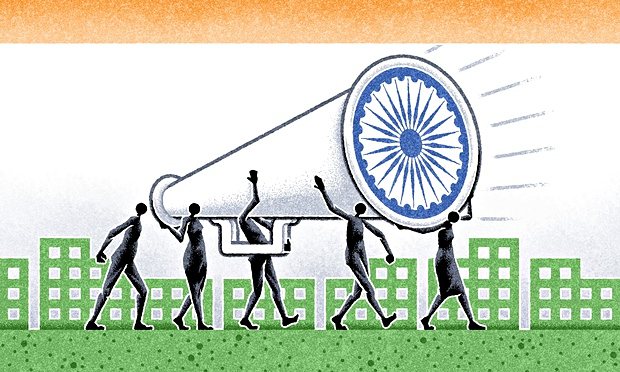
India is one of the ancient civilizations in the world and boasts numerous ethnic groups professing different cultures and religions. Being a diverse civilization, India is a land of countless languages with over 1650 regional accents and dialects. Despite different cultures, religions, and languages, the people of India live together with love and brotherhood. Great unity in diversity makes India an example of a cultural society. Each region of the country, from Jammu and Kashmir to Kanyakumari, presents different customs and traditions. Since ancient times, the people of India live together and respect all religions and cultures. Unity in diversity is a characteristic feature of this beautiful nation and connects people in the bond of humanity and peace.


India’s moral and spiritual values have always been the same, despite many political and social changes. They strengthened India’s even more fundamental unity. There is a long story all the time; Hindus were profoundly religious and spiritual. They have always attributed the highest place and value to the spiritual development and evolution of the soul. For them, the ultimate and only goal of life is liberation, nirvana, or moksha. Great saints, rishis, preachers, and philosophers have always been integral to the complex and common Indian heritage and culture as Vedas, Gita, Ramayana, Kuran, Guru Grantha Sahib, Bible, etc.

As India is a united and secular country and for the freedom of our country from the Britishers in the past, many freedom fighters struggle for our freedom, and also the freedom fighters do not see that he is from other religion they all together come with brotherhood and fought with the Britishers as one Indian nation. And it is a great example for our united India from the past as it has spread a strong message to the people. There are many different cultures in India and also the culture has several different types of radiation in everything such as in Hindus and Muslims the people pray and worship are different kinds and also the of clothing and celebrating their festivals are also different and also the festivals of these people are also different, but all people come together and celebrate all the festival with each other as a united country and the united people of India.

When a country is united like India, it helps the people live in the country and work and organized and do all the things equally and with altogether as it improves the performance of the people and lifestyle of the people also gets improved. It makes communication with the people and all the people able to help the other people in any bad situation as it keeps away from the social problems and helps manage any conflicts easily. When a country is united there are also many disadvantages that a country faces such as it can give rise to corruption and illiteracy in many of the areas as the country is very populated. But by all these problems people solving it and many organizations are held for the people to make their problems get solved and when all the people come together and fight against this problem of the country and then it is united and India is one of the countries which is united and unity in diversity is the real prosperity of India and the way to progress it in the future and the present.

We have created unity out of diversity for our merit. Outside, it seems that our country is a heterogeneous mix of diverse elements. However, it is a homogeneous whole as a chemical compound. The most striking example of unity in diversity is the composition of the parliament council. Different political parties from different parts of the country merged (forgetting their political ideologies) to form a government.


E.LALITHA

Attilla The Hun

Attila was a warrior king of the Hun people who reigned in the fifth century. History remembers him as the most savage invader of the Roman Empire. Attila was supposedly born in 406 AD in present-day Hungary. He was the son of a powerful royal aristocrat of the Hun Empire. The Hun people were nomadic Eurasian people who settled in Central And Eastern Europe in the second century. As a prince of the empire, Attila was educated in politics, military and diplomatic relations. At the time the Hun people were being ruled by two of Attila’s uncles. This was twin rulership system was unique to the Hun people..

In 434 the two uncles passed away and Attila and his younger brother Bleda continued with the twin leadership style. Unlike Bleda, Attila was a man of war from the onset of his leadership. He forged diplomatic ties with the Roman military commander Aetius. Aetius headed the army of the Western Roman Empire which had its capital in Rome. The Eastern Roman Empire had its capital in Constantinople, which is today’s Istanbul. In 445 Attila killed his brother and declared himself the sole king of the Hun Empire. He consolidated the various chiefdoms of the Hun into a unitary kingdom. 

Peace at Magnus

When Attila and his brother Bleda assumed power in 434, the Hun Empire was on the verge of war with the Eastern Romans. Dissident Hun princes had taken exile in the Roman Empire. The princes were accused of aiding the Romans in plundering the Hun’s royal treasures including the royal burial sites. The Roman Emperor decided to agree with the peace terms of the Huns. The Romans were to pay a tax of seven hundred pounds of pure gold annually. The peace agreement was later called The Treaty of Magnus. The treaty did not hold for long.

In 441, Attila and his brother invaded the Eastern Roman territory in the Balkans. The two brothers were merely avenging the betrayal of the treaty by their Roman counterparts. The plundered treasures had not been returned and the dissidents were still freely living in the Roman territory. In 443, the Hun army was at the doorstep of the Roman capital Constantinople. The two parties renegotiated the Magnus treaty. This time the imposed tax was punitive. The seven hundred pounds was tripled to two thousand one hundred pounds of pure gold. To express their anger, the Huns imposed a late payment penalty of six thousand pounds of gold for the delays in the previous treaty. The Roman emperor obliged.

Rise of Attila

Huns vs Romans

In 447 Attila who was now the imperial king, invaded the eastern Roman Empire once more. This time Attila led his forces to destroy many Roman cities in the Balkans all the way to Greece. Sensing his downfall, the Eastern Roman Emperor negotiated another treaty. Attila led his army out of Roman territory. The conditions of peace put the Eastern Roman Empire at the mercy of Attila. Having rampaged in the east, Attila decided to invade the Western Roman Empire. In 450, he waged war with the Western Romans in the guise of wanting to free the Roman princess Honoria from a forced marriage. In the fighting later called the Battle of Catalunian Plains, the Roman coalition army stood its ground. For the first time in his life, Attila had met formidable resistance. By the end of the war, heavy casualties were witnessed by both armies. The Visigoth king who fought alongside the Roman army was dead. Half of the Roman army had been killed. On the other side, the Hunnic army had been defeated. Attila retreated to his Central European Hunnic Empire. In a show of defiance, Attila made another incursion into the Western Roman territory. This time, Attila went for the capital Rome. When Milan and Aquileia fell into Attila’s hands, the Roman Pope Leo I intervened. Attila pulled out his forces after the meeting.

Attila’s Death

Attila invaded northern Italy in 452 but spared the city of Rome due to the diplomacy of Pope Leo I and the rough shape of his own troops. Legend has it that St. Peter and St. Paul appeared to Attila, threatening to strike him dead if he did not settle with Pope Leo I. Attila died the following year, in 453, before he could try once again to take Italy. Attila left behind a divided family. His appointed successor, his oldest son Ellac, fought with his other sons, Dengizich and Ernakh, over control of their father’s empire, which was ultimately divided among them. Among many memorable quotes, Attila the Hun is remembered for saying of his powerful reign, “There, where I have passed, the grass will never grow gain.”

Money Management

Making financial decisions should be taught to school children at a young age, but across the world, it isn’t done so. The topic of money isn’t discussed by parents to their children as they think “Money is the root cause of all evil”. Due to this, young adults entering the corporate world have no idea how to manage their money. They often fall pray for large banks and credit card companies who trick them into paying more than what they should be rightfully paying. These companies profit from the lack of financial knowledge that their customers have. Therefore, it is a must to learn how the financial world works and how we can avoid any debt because of bad decision making with our income.

Also known as investment management and portfolio management, money management broadly refers to the processes utilized to record and administer an individual, household, or organization’s finances. In the market, consumers have access to a wide range of resources and applications that allow them to individually manage nearly every aspect of their personal finances. As investors increase their net worth, they also often seek the services of financial advisors for professional money management. Financial advisors are typically associated with private banking and brokerage services, offering support for holistic money management plans that can involve estate planning, retirement, etc.

Money management is used in investing and deals how much risk a decision maker should take in situations where uncertainty is present. More precisely what percentage or what part of their wealth should be put into risk in order to maximize the decision maker’s utility function. Money management can mean gaining greater control over incoming salary and outgoing investments, both in a personal and business perspective. Greater money management can be achieved by establishing budgets and analyzing costs and income etc.

Financial experts curated a list of five simple money management tips that can help an individual feel more financially secure:

  • Create a comprehensive budget – Write down how much money you receive from salary, bonuses, benefits reimbursements and other sources. Compare that to all of your expenses to ensure you have enough money to cover all that you need,
  • Spend less by shortening day-to-day costs – Identify areas to save, for instance, planning meals and groceries to avoid takeout lunches and last-minute ordering in.
  • Eliminate unnecessary costs – Make a list of your current bills and their due dates, and pay your bills on time to avoid late fees and penalty charges.
  • Find ways to pay less interest on your debts – Focus on paying off debts with the highest interest rate first.
  • Set clear goals to help accelerate your savings – Write down all the things you’re saving for, then work out how much you need to set aside each month to reach your goals.

Working with an advisor who has great knowledge in the field of money management helps setting goals, develop customized financial plans, prepare strategically to be finically secure during economic recessions, hence reducing financial stress.

The Old Man

                               (Photo: iStock)

It was the first day of college.  I was very nervous as I have always been an introvert. Our Professor introduced himself and challenged us to get to know each other and make some good friends.

I looked around when a gentle hand touched my shoulder. I turned around to find a wrinkled, little old man beaming up at me with a smile.

He said, “Hi beautiful. My name is Ramesh. I am eighty-five years old.” I was so delighted to see him. My enthusiasm led me to ask him, “Why are you in college at such a young age?” He laughed and replied, “I’m here to find a beautiful girl for me to get married and have kids.” Then I curiously asked him to answer me seriously as I really wanted to know what motivated him to join college at this age.

“I always dream of having a college education and now I’m getting one!” He told me. We became instant friends. We used to sit with each other in the class  and talk nonstop. His life seemed to me like a “time machine”. He shared his wisdom and experience with me. 

Over the course of the year, Ramesh became a campus icon. He was just like us, very cool. He was living it up.

At the end of the semester we invited Ramesh to speak at the farewell. I’ll never forget what he taught us. As he began to deliver his prepared speech, he dropped his three by five cards on the floor. Frustrated and a little embarrassed he leaned into the microphone and simply said, “I’m sorry, I’m so jittery. I had whiskey and it’s killing me. I’ll never get my speech back in order so let me just tell you what I know.”

As we laughed he cleared his throat and began, ”We do not stop playing because we are old; we grow old because we stop playing. There are only four secrets to staying young, being happy, and achieving success. You have to laugh and find humor every day.”

You’ve got to have a dream. When you lose your dreams, you die. If you are nineteen years old and lie in bed for one full year and don’t do one productive thing, you will turn twenty years old. If I am eighty-five years old and stay in bed for a year and never do anything I will turn eighty-six.

Anybody can grow older. That doesn’t take any talent or ability. The idea is to grow up by always finding an opportunity in change. Have no regrets. He concluded his speech.

One week after graduation Ramesh died peacefully in his sleep. Many people attended his funeral in tribute to the wonderful man who taught by example that it’s never too late to be all you can possibly be.

REMEMBER GROWING OLDER IS MANDATORY. GROWING UP IS OPTIONAL. 

We make a living by what we get. We make a life by what we give.