Atlantis : The lost City

Atlantis is a fictional island mentioned in an allegory on the hubris of nations in Plato’s works Timaeus and Critias, wherein it represents the antagonist naval power that besieges “Ancient Athens”, the pseudo-historic embodiment of Plato’s ideal state in The Republic.In the story, Athens repels the Atlantean attack unlike any other nation of the known world, supposedly bearing witness to the superiority of Plato’s concept of a state.The story concludes with Atlantis falling out of favor with the deities and submerging into the Atlantic Ocean. While present-day philologists and classicists agree on the story’s fictional character,there is still debate on what served as its inspiration. Plato is known to have freely borrowed some of his allegories and metaphors from older traditions, as he did, for instance, with the story of Gyges.This led a number of scholars to investigate possible inspiration of Atlantis from Egyptian records of the Thera eruption,the Sea Peoples invasion, or the Trojan War. Others have rejected this chain of tradition as implausible and insist that Plato created an entirely fictional account, drawing loose inspiration from contemporary events such as the failed Athenian invasion of Sicily in 415–413 BC or the destruction of Helike in 373 BC.
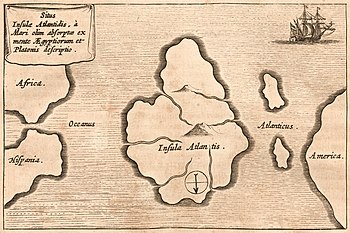
Is this really the map of Atlantis!!!

PLATO’S DIALOGUES

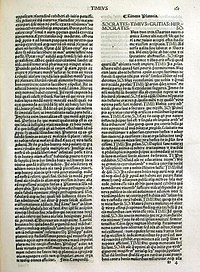
The only primary sources for Atlantis are Plato’s dialogues Timaeus and Critias; all other mentions of the island are based on them. The dialogues claim to quote Solon, who visited Egypt between 590 and 580 BC; they state that he translated Egyptian records of Atlantis.Written in 360 BC, Plato introduced Atlantis in Timaeus. The four people appearing in those two dialogues are the politicians Critias and Hermocrates as well as the philosophers Socrates and Timaeus of Locri, although only Critias speaks of Atlantis. In his works Plato makes extensive use of the Socratic method in order to discuss contrary positions within the context of a supposition.

The Timaeus begins with an introduction, followed by an account of the creations and structure of the universe and ancient civilizations. In the introduction, Socrates muses about the perfect society, described in Plato’s Republic (c. 380 BC), and wonders if he and his guests might recollect a story which exemplifies such a society. Critias mentions a tale he considered to be historical, that would make the perfect example, and he then follows by describing Atlantis as is recorded in the Critias. In his account, ancient Athens seems to represent the “perfect society” and Atlantis its opponent, representing the very antithesis of the “perfect” traits described in the Republic.
Location Hypothesis

In or near the Mediterranean Sea
Most of the historically proposed locations are in or near the Mediterranean Sea: islands such as Sardinia,Crete, Santorini (Thera), Sicily, Cyprus, and Malta; land-based cities or states such as Troy, Tartessos, and Tantalis (in the province of Manisa, Turkey); Israel-Sinai or Canaan;and northwestern Africa.

The Thera eruption, dated to the seventeenth or sixteenth century BC, caused a large tsunami that some experts hypothesize devastated the Minoan civilization on the nearby island of Crete, further leading some to believe that this may have been the catastrophe that inspired the story.In the area of the Black Sea the following locations have been proposed: Bosporus and Ancomah (a legendary place near Trabzon).

Others have noted that, before the sixth century BC, the mountains on either side of the Gulf of Laconia were called the “Pillars of Hercules”,and they could be the geographical location being described in ancient reports upon which Plato was basing his story. The mountains stood at either side of the southernmost gulf in Greece, the largest in the Peloponnese, and that gulf opens onto the Mediterranean Sea. If from the beginning of discussions, misinterpretation of Gibraltar as the location rather than being at the Gulf of Laconia, would lend itself to many erroneous concepts regarding the location of Atlantis. Plato may have not been aware of the difference. The Laconian pillars open to the south toward Crete and beyond which is Egypt. The Thera eruption and the Late Bronze Age collapse affected that area and might have been the devastation to which the sources used by Plato referred. Significant events such as these would have been likely material for tales passed from one generation to another for almost a thousand years.

In the Atlantic Ocean
The location of Atlantis in the Atlantic Ocean has a certain appeal given the closely related names. Popular culture often places Atlantis there, perpetuating the original Platonic setting as they understand it. The Canary Islands and Madeira Islands have been identified as a possible location, west of the Straits of Gibraltar, but in relative proximity to the Mediterranean Sea. Detailed studies of their geomorphology and geology have demonstrated, however, that they have been steadily uplifted, without any significant periods of subsidence, over the last four million years, by geologic processes such as erosional unloading, gravitational unloading, lithospheric flexure induced by adjacent islands, and volcanic underplating.

Various islands or island groups in the Atlantic were also identified as possible locations, notably the Azores.Similarly, cores of sediment covering the ocean bottom surrounding the Azores and other evidence demonstrate that it has been an undersea plateau for millions of years.The area is known for its volcanism however, which is associated with rifting along the Azores Triple Junction. The spread of the crust along the existing faults and fractures has produced many volcanic and seismic events. The area is supported by a buoyant upwelling in the deeper mantle, which some associate with an Azores hotspot. Most of the volcanic activity has occurred primarily along the Terceira Rift. From the beginning of the islands’ settlement, around the 15th century, there have been about 30 volcanic eruptions (terrestrial and submarine) as well as numerous, powerful earthquakes.The island of São Miguel in the Azores is the site of the Sete Cidades volcano and caldera, which are the byproducts of historical volcanic activity in the Azores.

The submerged island of Spartel near the Strait of Gibraltar has also been suggested.

Ireland
In 2004, Swedish physiographist Ulf Erlingssonproposed that the legend of Atlantis was based on Stone Age Ireland. He later stated that he does not believe that Atlantis ever existed but maintained that his hypothesis that its description matches Ireland’s geography has a 99.8% probability. The director of the National Museum of Ireland commented that there was no archaeology supporting this.
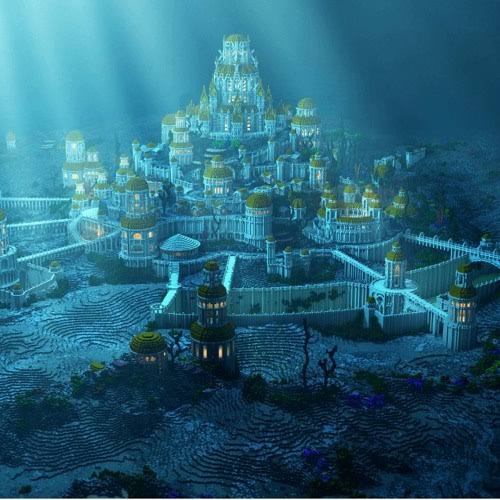
THE LAND OF LOST

The fact that Atlantis is a lost land has made of it a metaphor for something no longer attainable. For the American poet Edith Willis Linn Forbes (1865-1945), “The Lost Atlantis” stands for idealisation of the past; the present moment can only be treasured once that is realised.[132] Ella Wheeler Wilcox finds the location of “The Lost Land” (1910) in one’s carefree youthful past.[133] Similarly, for the Irish poet Eavan Boland in “Atlantis, a lost sonnet” (2007), the idea was defined when “the old fable-makers searched hard for a word/ to convey that what is gone is gone forever”.

For some male poets too, the idea of Atlantis is constructed from what cannot be obtained. Charles Bewley in his Newdigate Prize poem (1910) thinks it grows from dissatisfaction with one’s condition,

And, because life is partly sweet
And ever girt about with pain,
We take the sweetness, and are fain
To set it free from grief’s alloy
in a dream of Atlantis. Similarly for the Australian Gary Catalano in a 1982 prose poem, it is “a vision that sank under the weight of its own perfection”.W. H. Auden, however, suggests a way out of such frustration through the metaphor of journeying toward Atlantis in his poem of 1941.While travelling, he advises the one setting out, you will meet with many definitions of the goal in view, only realising at the end that the way has all the time led inward.

Epic narratives
A few late-19th century verse narratives complement the genre fiction that was beginning to be written at the same period. Two of them report the disaster that overtook the continent as related by long-lived survivors. In Frederick Tennyson’s Atlantis (1888), an ancient Greek mariner sails west and discovers an inhabited island which is all that remains of the former kingdom. He learns of its end and views the shattered remnant of its former glory, from which a few had escaped to set up the Mediterranean civilisations.In the second, Mona, Queen of Lost Atlantis: An Idyllic Re-embodiment of Long Forgotten History (Los Angeles CA 1925) by James Logue Dryden (1840–1925), the story is told in a series of visions. A Seer is taken to Mona’s burial chamber in the ruins of Atlantis, where she revives and describes the catastrophe. There follows a survey of the lost civilisations of Hyperborea and Lemuria as well as Atlantis, accompanied by much spiritualist lore.
William Walton Hoskins (1856–1919) admits to the readers of his Atlantis and other poems (Cleveland OH, 1881), that he is only 24. Its melodramatic plot concerns the poisoning of the descendant of god-born kings. The usurping poisoner is poisoned in his turn, following which the continent is swallowed in the waves. Asian gods people the landscape of The Lost Island (Ottawa 1889) by Edward Taylor Fletcher (1816–97). An angel foresees impending catastrophe and that the people will be allowed to escape if their semi-divine rulers will sacrifice themselves. A final example, Edward N. Beecher’s The Lost Atlantis or The Great Deluge of All (Cleveland OH, 1898) is just a doggerel vehicle for its author’s opinions: that the continent was the location of the Garden of Eden; that Darwin’s theory of evolution is correct, as are Donnelly’s views.

Atlantis was to become a theme in Russia following the 1890s, taken up in unfinished poems by Valery Bryusov and Konstantin Balmont, as well as in a drama by the schoolgirl Larisa Reisner.One other long narrative poem was published in New York by George V. Golokhvastoff. His 250-page The Fall of Atlantis (1938) records how a high priest, distressed by the prevailing degeneracy of the ruling classes, seeks to create an androgynous being from royal twins as a means to overcome this polarity. When he is unable to control the forces unleashed by his occult ceremony, the continent is destroyed


The Transgender Rights.

Transsexual individuals come from varying backgrounds, and HRC Foundation has assessed that there are multiple million of us across the United States. We are guardians, kin, and children. We are your collaborators, your neighbors, and your companions. We are 7-year-old children and 70-year-old grandparents. We are a different local area, addressing all racial and ethnic foundations, just as all confidence customs.

“Transsexual” – or trans – is an umbrella term for individuals whose sexual orientation character is not quite the same as the sex allocated to us upon entering the world. Albeit “transsexual” and our cutting edge meaning of it just came into utilization in the late twentieth century, individuals who might fit under this definition have existed in each culture all through written history.

Close by the expanded perceivability of trans big names like Laverne Cox, Jazz Jennings or the stars of the hit Netflix series “Posture,” three out of each ten grown-ups in the U.S. actually knows somebody who is trans. As trans individuals become more noticeable, we mean to expand comprehension of our local area among our companions, families, and society.

What’s the significance here to be trans?

The trans local area is staggeringly different. Some trans individuals distinguish as trans men or trans women, while others might depict themselves as non-twofold, genderqueer, sexual orientation non-adjusting, agender, bigender or different characters that mirror their own insight. A few of us take chemicals or have a medical procedure as a feature of our progress, while others might change our pronouns or appearance. About 3/4 of trans youth that reacted to a HRC Foundation and University of Connecticut overview related to terms other than stringently “kid” or “young lady.” This recommends that a bigger segment of this present age’s childhood are recognizing some place on the expansive trans range.

What difficulties do trans individuals confront?

While trans individuals are progressively apparent in both mainstream society and in every day life, we actually face serious segregation, shame and fundamental imbalance. A portion of the particular issues confronting the trans local area are:

Absence of lawful assurance Trans individuals face a general set of laws that regularly doesn’t shield us from separation dependent on our sexual orientation character. Regardless of a new U.S. High Court Decision that clarifies that trans individuals are lawfully shielded from segregation in the working environment, there is still no complete government non-separation law that incorporates sex character – which implies trans individuals might in any case need response on the off chance that we face separation when we’re looking for lodging or eating in an eatery. Besides, state assemblies the nation over are discussing – and sometimes passing – enactment explicitly intended to deny trans individuals from getting to public restrooms that compare with our sexual orientation personality, or making exclusions dependent on strict convictions that would permit oppression LGBTQ individuals.

Destitution Trans individuals live in neediness at raised rates, and for trans minorities, these rates are much higher. Around 29% of trans grown-ups live in destitution, also 39% of Black trans grown-ups, 48% of Latinx trans grown-ups and 35% of Alaska Native, Asian, Native Americans and Native Hawaiian or Pacific Islander trans grown-ups.

Shame, Harassment and Discrimination – About a large portion of 10 years prior, just one-fourth of individuals in the United States upheld trans rights, and backing expanded to 62% continuously 2019. Regardless of this advancement, the trans local area actually faces extensive shame due to over a hundred years of being described as mentally sick, socially degenerate and physically savage. While these bigoted perspectives have blurred lately for lesbians and gay men, trans individuals are regularly still criticized by a general public that doesn’t get us. This disgrace works out in an assortment of settings – from administrators who influence hostile to trans shame to score modest political focuses; to family, companions or associates who reject trans individuals after finding out about our trans characters; and to individuals who pester, menace and submit genuine brutality against trans individuals. This incorporates disgrace that keeps them from getting to fundamental administrations for their endurance and prosperity. Just 30% of women’s havens will house trans women. While ongoing lawful advancement has been made, 27% of trans individuals have been terminated, not recruited or denied an advancement because of their trans personality. Time after time, harassment has driven trans individuals to try not to practice their most essential rights to cast a ballot. HRC Foundation’s exploration shows that 49% of trans grown-ups, and 55% of trans grown-ups of shading said they couldn’t cast a ballot in something like one political decision in their life due to dread of or encountering separation at the surveys.

Savagery Against Trans People–Trans individuals experience viciousness at rates far more noteworthy than the normal individual. More than a larger part (54%) of trans individuals have encountered some type of cozy accomplice brutality, 47% have been physically attacked in the course of their life and almost one of every ten were actually attacked in the middle 2014 and 2015. This sort of viciousness can be lethal. No less than 27 trans and sexual orientation non-adjusting individuals have been viciously killed in 2020 hitherto, similar number of fatalities saw in 2019.

A TREATMENT TO YOUR HEART

We all have pain and happiness in our life. But Don’t lock yourself in a room thinking that life will take us in harsh places only . Believe that there is a lot of wonderful moments to see in your life too . The following are the important words that is to be remembered .

  1. You are worthable to live an incredible life .. You are special there is no one like you. You are worthable for doing something great and creditable.Think this quote always when you feel stressed.
  2. Do see around …There are people who can’t able to study and they are living in streets.God has given us the basic necessities like home, family , friends etc..this itself a major blessings. Don’t desire much . Accept the life offers to you and be happy. Maybe someone out there in this world are desperately wishing to live your life.
  3. Do use your blessings to help the people those who are in streets. Don’t be selfish . Always remember that doing for your self dies with you. Doing for someone will be remembered through ages eg.mother terasa.
  4. Praise others . It will make better about your self . Thinking good things and doing good things will heal and gives life your heart .
  5. Be mature. Every one and Every thing is temporary ( money, age, friends etc…)Sooner or later it will go one day. Accept this reality.Even us are temporary. So avoid being jealous, doing bad things,hurting others etc..as it will destroys heart liveliness and makes it unworthy of it working inside you.
  6. Make your thinking appropriate and logical. “Everyone in this world are fake” actually it’s a lie. Is your mom and dad love fake ?? . Are you fake ?? No right !!!! they why you are running around saying that everyone is fake. The truth is that this thought of yours is fake . You have an evidence that good and true people exists within your family circle itself .
  7. Always trust your energy and feelings. Sometimes we will know that this person is fake . Immediately withdraw that person from your Life. But after that don’t make up your mind that everyone is like that only. Believe that true persons also there. As I said not all are evil .

Gender Inequality in Education.

In the current presence, there have been plan of measures and projects that equivalent rights and openings ought to be made accessible to the young ladies. Previously, people had this perspective that male individuals from the family ought to be instructed. When the guys would gain schooling, they would deliver a huge commitment in advancing generosity and prosperity of their families through attainment of employment openings. However, in the current presence, in metropolitan just as in provincial networks, people and networks have achieved changes in their perspectives and viewpoints and are empowering young ladies also towards securing of training. Young ladies and women too can deliver a viable commitment in advancing government assistance of their families and networks. At the point when they acquire support from their folks, then, at that point they can achieve great quality training. Variables Causing Gender Inequality in EducationThere are presence of numerous and different associations between sexual orientation correspondence and fulfillment of the fundamental right to schooling. The women and young ladies are encountering refusal of common freedom to instruction in India, yet in different nations of the world also (Gender Discrimination in Education, 2012). The elements causing sex disparity in instruction have been expressed as follows: Conditions of Poverty When people are dwelling in the states of neediness, then, at that point they experience number of issues and difficulties in making a decent living. Now and again, they even experience issues in gathering their every day healthful requirements. The people and families, who are dwelling in the states of destitution have the essential goal of creating adequate pay to support their everyday environments agreeably. They generally don’t have monetary assets to meet the costs, engaged with the compatibility of training. In any event, when schooling is given liberated from cost, they actually need to meet different costs, involvedin instruction. These are, fixed things, books, sacks, outfits, transportation costs, etc. The destitution stricken people experience issues in gathering these costs. The destitution stricken people have this perspective that procurement of training is of most extreme importance in supporting one’s day to day environments. Consequently, they seek to get their

children joined up with schools. They have this perspective that instruction ought to be given to the children, so they can get occupied with great employment openings in future. Though, young ladies are prepared as far as execution of family duties and minor tasks to procure some pay to help their families. For example, when guardians are occupied with creation of things, then, at that point they empower their children, both young men and young ladies to help them underway and deals. The young men are needed to land occupied with this position after school hours. The young ladies are normally deterred from securing of instruction, because of restricted monetary resources.Their male kin show them, what they have realized in schools, principally to improve their essential proficiency abilities of perusing, composing and numeracy. Commonness of Traditional Viewpoints The people and networks generally had customary perspectives with respect to the schooling of young ladies. Especially, when they had restricted monetary assets, then, at that point theybelieved that these assets ought to be put something aside for marriage of their young ladies and ought not be spent on training. Another perspective was that in conjugal homes, young ladies would not have the option to use their instructive abilities and would fundamentally need to implement the family obligations. Thinking about this angle, from the underlying stage, they train their young ladies in regards to the implementation of family obligations. In the past period, young ladies and women were only kept to their homes and not permitted to take an interest in any friendly capacities or occasions. They were not permitted to communicate their perspectives and viewpoints in the dynamic issue. They basically supported their day to day environments on the pay procured by men and were intended to comply with the choices and rules detailed by them. Henceforth, because of the predominance of customary perspectives, they were oppressed and were denied of specific rights and openings. The procurement of training of young ladies, is generally influenced by conventional practices related with youthfulness. In some rustic networks, pervasiveness of certain customary practices end up being obstacles inside the course of obtaining of training with respect to the young ladies (Linda, 2014). Because of the pervasiveness of customary perspectives and viewpoints, girlsare denied from obtaining of instruction, yet in addition in accomplishing self-freedom. All in all, these are boundaries inside the course of attainment of empowerment openings. Accordingly, for achieving empowerment openings among women and young ladies, it is important to achieve changes in customary perspectives and offer equivalent rights and chances to women and young ladies.

Article 21 of Constitution of India: Protection of Life and Personal Liberty

‘Everybody has the option to life, freedom and the security of individual.’ The right to life is without a doubt the most fundamental, all things considered. Any remaining rights add quality to the life being referred to and rely upon the pre-presence of life itself for their activity. As basic freedoms can just append to living creatures, one may anticipate that the right should life itself to be in some sense essential, since none of different rights would have any worth or utility without it. There would have been no Fundamental Rights worth focusing on if Article 21 had been deciphered in its unique sense. This Section will inspect the right to life as deciphered and applied by the Supreme Court of India.

Article 21 of the Constitution of India, 1950 gives that, “No individual will be denied of his life or individual freedom besides as indicated by strategy set up by law.” ‘Life’ in Article 21 of the Constitution isn’t just the actual demonstration of relaxing. It doesn’t hint simple creature presence or proceeded with drudgery through life. It has a lot more extensive significance which incorporates right to live with human respect, right to work, right to wellbeing, right to contamination free air, and so forth

Right to life is fundamental to our very presence without which we can’t live as an individual and incorporates every one of those parts of life, which go to make a man’s life significant, complete, and worth living. It is the lone article in the Constitution that has gotten the most stretched out conceivable translation. Under the covering of Article 21, so numerous rights have discovered asylum, development, and nourishment. In this manner, the minimum essentials, least and fundamental requirements that are fundamental and unavoidable for an individual is the center idea of the right to life.

On account of Kharak Singh v. Province of Uttar Pradesh[i], the Supreme Court cited and held that:

By the expression “life” as here utilized something more is implied than simple creature presence. The hindrance against its hardship reaches out to every one of those appendages and resources by which life is appreciated. The arrangement similarly restricts the mutilation of the body by removal of a shielded leg or the pulling out of an eye, or the annihilation of some other organ of the body through which the spirit speaks with the external world.

In Sunil Batra v. Delhi Administration[ii], the Supreme Court repeated with the endorsement the above perceptions and held that the “right to life” incorporated the option to have a solid existence in order to partake in all resources of the human body thriving conditions. It would even incorporate the right to security of an individual’s practice, culture, legacy and all that offers importance to a man’s life. It incorporates the right to live in harmony, to rest in harmony and the option to rest and wellbeing.

Right To Live With Human Dignity

In Maneka Gandhi v. Association of India[iii], the Supreme Court gave another dimension to Art. 21 and held that the option to live isn’t simply an actual right yet incorporates inside its ambit the right to live with human pride. Elaborating a similar view, the Court in Francis Coralie v. Association Territory of Delhi[iv], saw that:

“The option to live incorporates the right to live with human poise and all that accompanies it, viz., the minimum essentials of life like satisfactory nourishment, dress and asylum over the head and offices for understanding composition and communicating one’s thoughts in assorted structures, uninhibitedly moving about and blending and blending with individual people and should incorporate the right to fundamental necessities the fundamental necessities of life and furthermore the option to continue capacities and exercises as establish the absolute minimum articulation of human self.”

Another expansive definition of the subject of life to nobility is to be found in Bandhua Mukti Morcha v. Association of India[v]. Describing Art. 21 as the core of fundamental rights, the Court gave it an extended understanding. Bhagwati J. noticed:

“It is the fundamental right of everybody in this nation… to live with human poise liberated from misuse. This right to live with human nobility cherished in Article 21 gets its life breath from the Directive Principles of State Policy and especially provisions (e) and (f) of Article 39 and Articles 41 and 42 and in any event, consequently, it should incorporate security of the wellbeing and strength of laborers, men and women, and of the young period of children against misuse, openings and offices for children to create in a solid way and in states of opportunity and pride, instructive offices, just and compassionate states of work and maternity help.

“These are the base requirements which should exist to empower an individual to live with human nobility and no State neither the Central Government nor any State Government-has the privilege to make any move which will deny an individual of the enjoyment of these fundamental things.”

Following the above-expressed cases, the Supreme Court in Peoples Union for Democratic Rights v. Association of India[vi], held that non-payment of least wages to the specialists utilized in different Asiad Projects in Delhi was a refusal to them of their right to live with essential human pride and violative of Article 21 of the Constitution.

Bhagwati J. held that rights and advantages presented on workmen utilized by a worker for hire under different labor laws are plainly proposed to guarantee fundamental human nobility to workmen. He held that the non-implementation by the private workers for hire drew in for developing a structure for holding Asian Games in Delhi, and non-enforcement of these laws by the State Authorities of the arrangements of these laws was held to be violative of the fundamental right of laborers to live with human pride contained in Art. 21.

In Chandra Raja Kumar v. Police Commissioner Hyderabad, it has been held that the right to everyday routine incorporates right to experience with human pride and goodness and, consequently, holding of excellence challenge is repulsive to respect or respectability of women and irritates Article 21 of the Constitution in particular if the equivalent is horribly revolting, profane, disgusting or expected for coercing. The government is engaged to forbid the challenge as questionable execution under Section 3 of the Andhra Pradesh Objectionable Performances Prohibition Act, 1956.

In State of Maharashtra v. Chandrabhan, the Court struck down an arrangement of Bombay Civil Service Rules, 1959, which given to payment of just an ostensible resource stipend of Re. 1 every month to a suspended Government Servant upon his conviction during the pendency of his allure as illegal on the ground that it was violative of Article 21 of the Constitution.

The Right To Education.

The Right of Children to Free and Compulsory Education Act or Right to Education Act (RTE), is an Act of the Parliament of India authorized on 4 August 2009, which portrays the modalities of the significance of free and obligatory schooling for children somewhere in the range of 6 and 14 in India under Article 21a of the Indian Constitution. India became one of 135 nations to make training a fundamental right of each child when the Act came into power on 1 April 2010.

The Act makes instruction a fundamental right of each child between the ages of 6 and 14 and determines least standards in elementary schools. It requires all non-public schools to save 25% of seats to children (to be repaid by the state as a component of the public-private organization plan). Children are conceded in to tuition based schools dependent on monetary status or rank based reservations. It likewise restricts all unnoticed schools from training, and makes arrangements for no gift or capitation expenses and no meeting of the child or parent for affirmation. The Act likewise gives that no child will be kept down, removed, or needed to breeze through a board assessment until the culmination of elementary schooling. There is likewise an arrangement for uncommon preparing of school quitters to carry them acceptable with understudies of a similar age.

The RTE Act requires overviews that will screen all areas, distinguish children requiring instruction, and set up offices for giving it. The World Bank instruction expert for India, Sam Carlson, has noticed: “The RTE Act is the principal enactment on the planet that puts the obligation of guaranteeing enrolment, participation and fruition on the Government. It is the guardians’ duty to send the children to schools in the US and different nations.”

The Right to Education of people with handicaps until 18 years old is set down under a different enactment – the Persons with Disabilities Act. Various different arrangements with respect to improvement of school framework, instructor understudy proportion and personnel are made in the Act.

Training in the Indian constitution is a simultaneous issue and both focus and states can administer on the issue. The Act sets down explicit obligations regarding the middle, state and neighborhood bodies for its implementation. The states have been clamoring that they need monetary ability to convey instruction of suitable norm in all the schools required for all inclusive training. In this manner plainly the focal government (which gathers the greater part of the income) will be needed to sponsor the states.

A board set up to contemplate the assets requirement and subsidizing at first assessed that INR 1710 billion or 1.71 trillion (US$38.2 billion) across five years was needed to implement the Act, and in April 2010 the focal government consented to sharing the financing for implementing the law in the proportion of 65 to 35 between the middle and the states, and a proportion of 90 to 10 for the north-eastern states. Be that as it may, in mid 2010, this figure was moved up to INR 2310 billion, and the middle consented to raise its offer to 68%. There is some disarray on this, with different media reports expressing that the a lot of the implementation costs would now be 70%. At that rate, most states should not have to expand their schooling financial plans generously.

A basic development in 2011 has been the choice taken on a basic level to stretch out the right to schooling till Class X (age 16) and into the preschool age range. The CABE board is currently investigating the ramifications of rolling out these improvements.

The Ministry of HRD set up an undeniable level, 14-part National Advisory Council (NAC) for implementation of the Act. The individuals included Kiran Karnik, previous leader of NASSCOM; Krishna Kumar, previous overseer of the NCERT; Mrinal Miri, previous bad habit chancellor of North-East Hill University; Yogendra Yadav – social researcher. India

Sajit Krishnan Kutty, Secretary of The Educators Assisting Children’s Hopes (TEACH) India; Annie Namala, an extremist and head of Center for Social Equity and Inclusion; and Aboobacker Ahmad, VP of Muslim Education Society, Kerala.

A report on the situation with implementation of the Act was delivered by the Ministry of Human Resource Development on the one year commemoration of the Act. The report concedes that 8.1 million children in the age bunch six-14 stay out of school and there’s a deficiency of 508,000 instructors country-wide. A shadow report by the RTE Forum addressing the main schooling networks in the nation, nonetheless, testing the discoveries bringing up that few key lawful commitments are falling behind the timetable. The Supreme Court of India has likewise mediated to request implementation of the Act in the Northeast. It has likewise given the lawful premise to guaranteeing pay equality between educators in government and government helped schools. Haryana Government has relegated the obligations and duties to Block Elementary Education Officers–cum–Block Resource Coordinators (BEEOs-cum-BRCs) for viable implementation and persistent checking of implementation of Right to Education Act in the State.

It has been called attention to that the RTE act isn’t new. Widespread grown-up establishment in the demonstration was gone against since the majority of the populace was unskilled. Article 45 in the Constitution of India was set up as a demonstration: The State will attempt to give, inside a time of a long time from the commencement of this Constitution, free of charge and necessary schooling for all children until they complete the age of fourteen years.

As that cutoff time was going to be passed numerous many years prior, the instruction serve at that point, MC Chagla, notably said: “Our Constitution fathers didn’t mean that we just set up cabins, put understudies there, give undeveloped instructors, give them terrible course readings, no jungle gyms, and say, we have consented to Article 45 and essential training is growing… They implied that genuine training ought to be given to our children between the ages of 6 and 14” – (MC Chagla, 1964).

During the 1990s, the World Bank subsidized various measures to set up schools inside simple reach of provincial ommunities. This work was solidified in the Sarva Shiksha Abhiyan model during the 1990s. RTE takes the interaction further, and makes the enrolment of children in schools a state right.

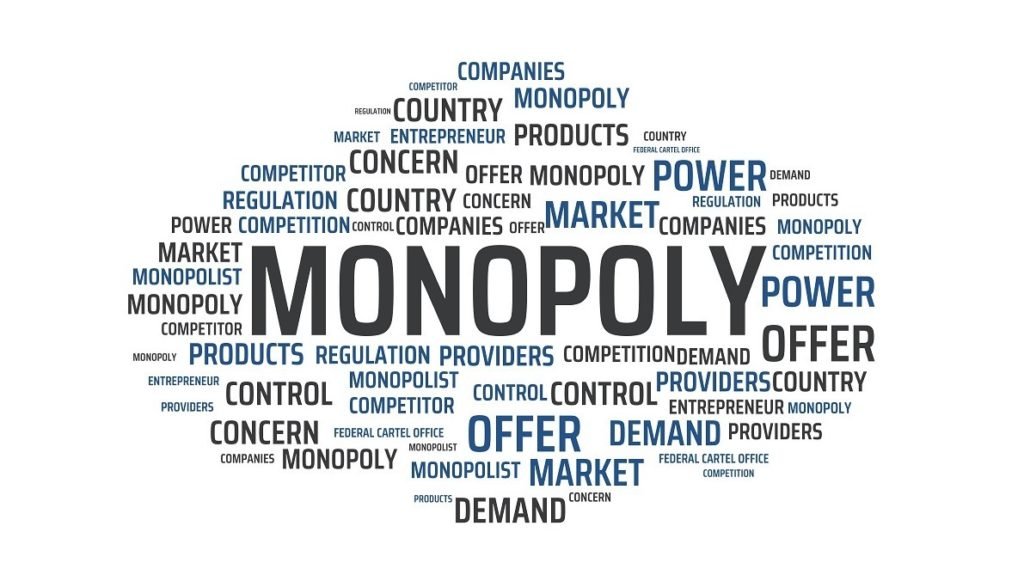
MONOPOLY

The Sherman Antitrust Act was the first federal act that outlawed monopolistic business practices. In the US Sec 2 of Sherman act, 1890 makes it unlawful for a company to achieve monopoly power, and Sec 7 of Clayton act 1914 prevents mergers of companies that will lessen competition or lead to a monopoly. The Federal Trade Commission protects consumers from any kind of unfair practices taking place in the market places. Similarly in India, the Competition Commission of India has the responsibility to ensure fair and healthy competition in economic activities, to eliminate practices adversely affecting competition. All over the world, similar government agencies are constantly developing regulations and laws to keep the marketplace clean and just.

Big tech companies are now under the intense scrutiny of competition watchdogs around the world. In the US antitrust charges are filed against Google and are accused of protecting the monopoly, bipartisan lawsuits filed against it say Google search engine and play store is anticompetitive. French completion watchdog fined google $268 million for abusing its dominant position and asked it to pay for news to the publishers. Australia too directed google to pay for news content.

In India, big techs are at loggerheads with the government over the new IT rules. Both have different perceptions regarding certain aspects. The new IT rules make it mandatory for companies having a users base of more than 50 lakhs(5 million) to appoint a chief compliance officer, nodal officer, and grievance officer in the country all residents of India. Also in India, data protection laws are at a very nascent stage and are underdeveloped and incapable of protecting its citizens’ data from any kind of misuse.

Developed nations are now recognizing the unquestionable power big companies enjoyed so long. Recently G7 countries agreed on a 15% global minimum corporate tax which they say aims to discourage large corporates from avoiding tax by shifting bases.

So basically nations arround the world are conserned about tax evasion, unfair business practices, and lack of rules and regulations to restrict powers of monopolistic companies.While it is legal for companies to adopt strategies for reducing taxable income, tax evasion tactics by using it dominance is unacceptable.There is difference between gainging monopoly and afterwards using it for sustaining monopoly. I am of the option that if companies are providing quality products and services and gaining monopoly it’s fine but sustained hold of monopoly for long period can make them all too powerful, and that is why we need dynamic regulations in place to check their power.

No Saul or Chiesa – but can Liverpool afford to ignore need for midfield and forward signings this summer?

It is that time of year again, as far as Liverpool fans are concerned.

Transfer season. Where hope springs eternal and imaginations run wild.

And where fear, frustration and downright anger – in some cases – have increasingly become stock emotions.

The Reds have so far added only Ibrahima Konate to their squad, but at least two more arrivals are needed at Anfield before the window closes

Pollution

Introduction:
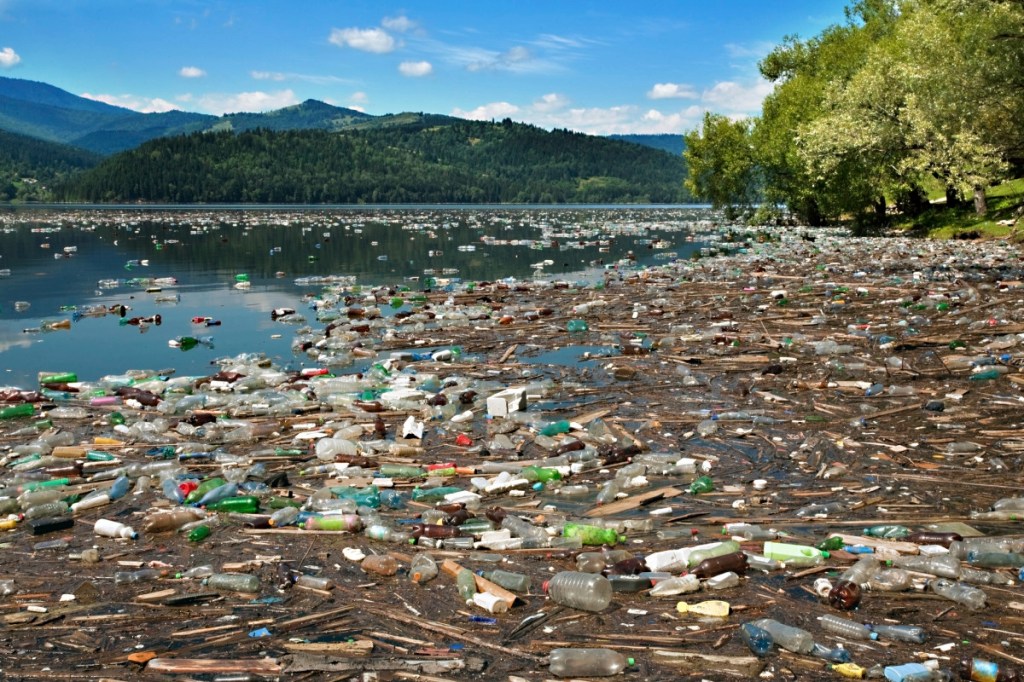
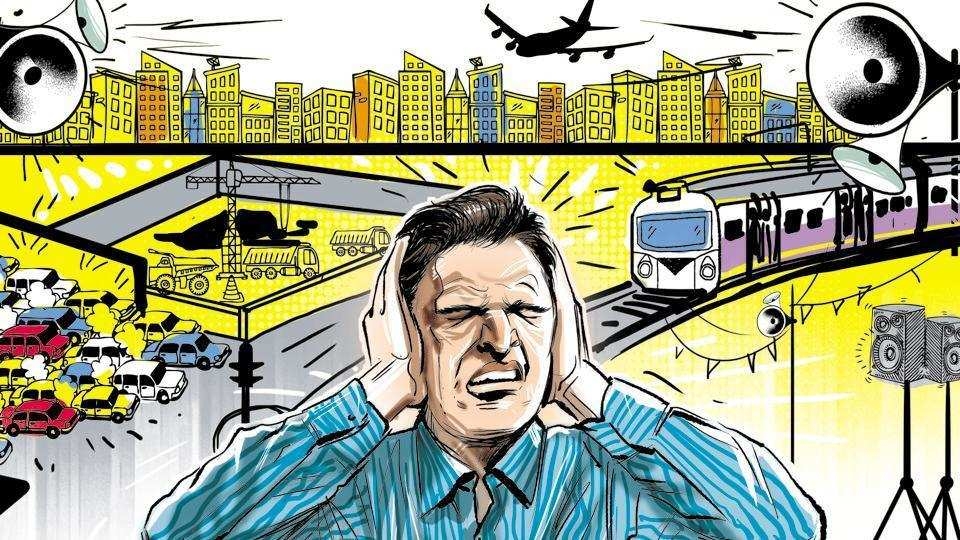
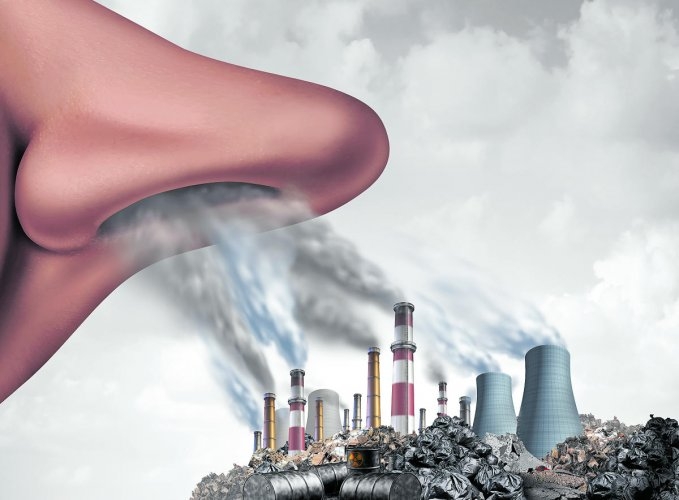
Pollution is a major issue or concern I today’s times. Pollution is when the natural environment gets contaminated by contaminants which in turn cause great damage to the environment. Pollution comes in many different substances such as noise, heat or light. It could be natural or which is created due to human activity like trash or factories. Pollution comes with the cost. It could affect our health as a whole and it will also cost a lot to the society clean it up. In this article I am mainly going to talk about the types of pollution such as water pollution, noise pollution, air pollution and plastic pollution.


• Water pollution:
Water pollution is the contamination of water and water bodies with either physical, chemical or biological properties of water due to the discharge of industrial elements or any substance like liquid, solid or gas into water. It could be dangerous for public health as consuming this contaminated water could lead to diseases and unsafe health conditions. It could also affect agriculture. It’s also possible to harm the marine life, the living organisms in water such as fishes, corals etc. The main way to prevent water pollution is if people and industries don’t throw waste and toxic discharge into the water.


• Noise pollution:
One of the most prominent types of pollution is the existence of noise pollution. It refers to the presence of excessive or loud sound or noise in the environment. It might not sound too dangerous but it could be dangerous for human and animal health. There can be many ways noise pollution can be created, some are from big vehicles, large industries or even during constructions, the constant noise can be very inconvenient and uncomfortable for many. Another reason could be due to loud speakers during festivals, concerts etc. Even listening to music at a loud volume could damage our hearing. Some ways to avoid damaging your ears would be to listen to volume at an acceptable volume and try to avoid any festival which use big, huge speakers.


• Air pollution:
Air pollution is something that happens when there is pollutant present in the atmosphere. It needs to be high in concentration to cause harm to humans, animals and plants. Anything which contaminates or harms the air or makes it dirty and not comfortable to breathe is called air pollution. Air pollution could cause great damage as it’s what we breathe every day and even if we can’t see effects immediately, it could affect us later in life. It affects every form of being, anything which breathes and needs oxygen to survive.


• Plastic pollution:
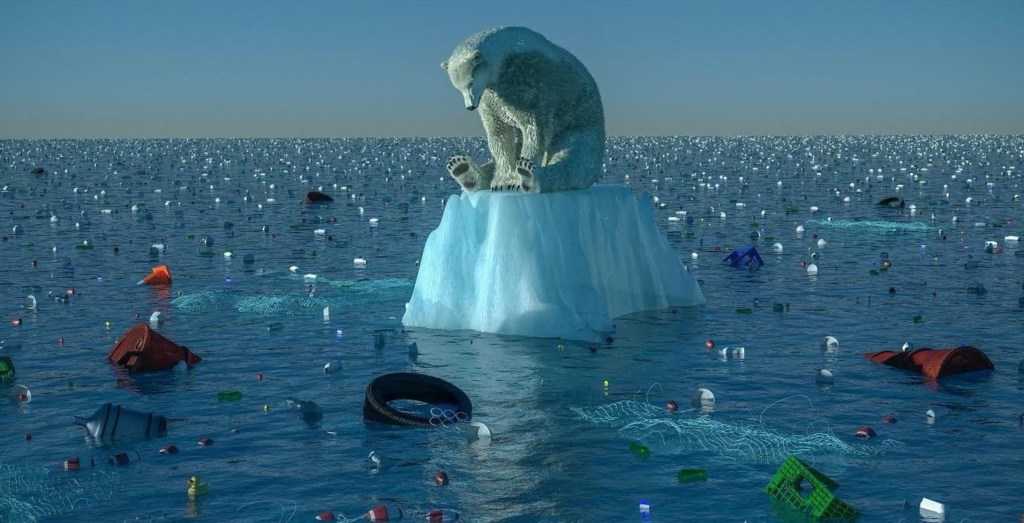
Plastic pollution mainly refers to the fact that the environment is getting contaminated by plastic and products made of plastic. Plastic products such as milk packets, plastic straws, plastic bags etc are all causes for the pollution. The only way to prevent this it is by making sure to not use plastic bags and even if you do, don’t throw it away especially into the ocean.


Conclusion:
It is very important to preserve our earth and contamination is not the way to do it. We must make sure that the planet we live in is safe for everyone, including ourselves. As global warming is increasing, we need to look back on our actions and help overcome this setback.

https://www.britannica.com/science/water-pollution

https://www.britannica.com/science/noise-pollution

https://www.nrdc.org/stories/air-pollution-everything-you-need-know

https://www.britannica.com/science/plastic-pollution

Hairline Fracture

Hairline or stress fractures are tiny cracks on a bone that often develop in the foot or lower leg. It is common for hairline fractures to occur as a result of sports that involve repetitive jumping or running. Hairline fractures usually develop gradually as a result of overuse, as opposed to larger bone fractures or breaks that are mostly caused by acute traumas, such as a fall. While hairline fractures may heal with sufficient rest, they can be painful and last several weeks. The most common treatment approach is rest.

Certain factors are associated with an elevated risk of developing hairline fractures, these include:

  • Gender: Hairline fractures are more common in women, particularly those with irregular menstrual cycles.
  • Anatomical abnormalities: Some abnormalities can intensify the strain on particular bones, such as having flat feet or high arches. This can also be exasperated by low quality or worn out footwear.
  • Bone problems: Conditions that weaken bones, such as osteoporosis
  • Previous hairline fractures: A hairline fracture causes the bone to be more susceptible to fractures reoccurring
  • Diet imbalances: Weakened bones can develop from diets that lack nutrients essential to bone health, such as calcium or vitamin D, increasing the risk of hairline fractures occurring.

Hairline fractures are easily dealt with, but medical attention should be sought immediately to prevent the injury from worsening. Ignoring a hairline fracture can lead to a more serious fracture or break occurring, which is more difficult to treat.

MIRABAI CHANU


MIRABAI CHANU

Saikhom Mirabai Chanu was born on 8th August 1994. She was born in Nongpok, Manipur. She won the silver medal at 2020 Olymics in the women’s 49kg. Mirabai had won several medals under Common wealth games. 

She was qualified for the 2016 Rio Olympics, unfortunately she was able to finish it. However, her first three attempts ended in failure. In 2017, she won Gold in 48 kg women category which was held at the US. Chanu make a breakthrough  by winning Gold for India in 2018 Common Wealth games. In 2019, She lifted a 201 kgs which created a new record under 49 kgs category.

In 2020, she won Gold in 49kg category under 2020 Senior national weightlifting Championships. In 2021, Chanu became the only woman weight lifter to win Second position on 49kg category.

CASH PRIZES

Manipur Chief Minister N. Biren Singh announced an award of Rs. 1 Croce

Indian Railway Minister Ashwini Vaishnaw announced an award of Rs. 2 Croce along with the promotion.

MIRABI OLYMPICS

MirabaiChanu’s  won the decoration for India within the 2014 metropolis Commonwealth Games. This was the primary time individuals detected MirabaiChanu’s name for the primary time. The special issue is that the gold of this class conjointly came into India’s account. She defeated jock Kunjrani within the 2016 city Olympic Games qualifying match to secure her place at the city Olympic Games. 

This made special for her as she thought of jock Kunjrani as her leader.However, she couldn’t do a lot within the city Olympic Games and had to face defeat altogether her 3 clean and jerk tries. Thanks to this he conjointly Janus-faced several criticisms.

 Mirabai has not been ready to do something special within the city Olympiad, she has brought laurels to the country by winning the trophy within the forty eight kilo class within the 2017 World bodybuilding Championships. 

She won the trophy within the 2018 Commonwealth Games. She was awarded Rs twenty hundred chief Ministers of Manipur. Together with her performance, she has invariably brought laurels to Manipur and therefore the country.

INDIA HOPES FOR LAURELS

The largest event of the Games, the Edo Olympic Games can run from twenty three July to eight August. These games were to be commanded within the year 2020 itself, however, thanks to the corona epidemic, the games were deferred until 2021. Allow us to tell you that this point within the Edo Olympic Games, India’s largest team of 126 players goes to participate within the Games. Of these players can participate in sixty nine events of eighteen sports. The team can leave for Edo on seventeen July 2021. India has high hopes of medals from all the players as well as MirabaiChanu.

INDIA HAS WON SEVERAL MEDALS 

28 medals from 1900-2016 (9 Gold, 7 Silver, 12 bronze medals)

A game in which India has won most medals is Hockey. It contributes about 8 Gold, 1 Silver.

THE REAL PRIDE TO INDIA

Our Prime minister Narendra Modi congratulated on her success. Many stars  tweeted and congratulated her. It is really a pride moment for India on winning at Olympics. 

X-Rays

An X-ray is a common imaging test that’s been used for decades. It can help your doctor view the inside of your body without having to make an incision. This can help them diagnose, monitor, and treat many medical conditions. Different types of X-rays are used for different purposes. There are some risks involved in getting an X-ray. But for most people, the potential benefits outweigh the risks.

Conditions that may call for an X-ray include:

  • Bone cancer
  • breast tumors
  • enlarged heart
  • blocked blood vessels
  • conditions affecting your lungs
  • digestive problems
  • fractures
  • infections
  • osteoporosis
  • arthritis
  • tooth decay
  • needing to retrieve swallowed items.

If you ingest a contrast material before your X-ray, it may cause side effects. These include:

  • hives
  • itching
  • nausea
  • lightheadedness
  • a metallic taste in your mouth

The nature feels proud when a tiger walks free in its natural habitat

International Tiger day is celebrated on July 29 to raise awareness about the conservation of wild cat.However with several countries taking measures to curb poaching,illegal wildlife trade,and habitat loss,etc.The tiger is the largest of the world’s big cats and this magnificent creature, with its distinctive orange and black stripes and beautifully marked face, has a day that is dedicated to it.

We cannot deny the fact that tigers are the largest species of the cat family and also one of the most iconic animals on the planet.There is a very famous quote,”Where Tigers thrive,it is a sign that the ecosystem is healthy”.

Why Tigers are so important?

As top predators,Tigers help to keep their environment healthy.Generally the predators prey on other animals.In this case, herbivores such as deer.But without enough Tiger to eat them, herbivores can overgraze and damage the land, disrupting the balance of the local environment.By keeping the prey species under their control,they protect the vegetation which inturn maintains the integrity of streams,forests and crop plants that provide people around the world with clean air,fresh water,food and financial benefits.

And also Tiger is the symbol of wilderness and well being if the Eco system.By conserving and saving tigers the entire ecosystem is conserved.

Reasons for the declining population of Tigers

⭐ Tigers were poached for their furs.Tigers may prey upon agricultural animals and have been illegally shot at or poisoned by consuming baited carcasses.

⭐ From elephant ivory to orchids,the illegal wildlife trade touches tens of thousands of species around the world.Its become increasingly with organized networks obtaining, transporting, selling and bribing their ways to big profit.

⭐ Nowadays with the increasing population,forest are becoming less by clearing of forests for several reasons like agriculture, industries,etc.made a loss of around 93% of the natural habitats of Tigers.

⭐The combined effect of climate change and sea level rise leads to the wiping out of Sundarbans, one of the habitat of Bengal Tigers.

⭐ Several animals die due to certain diseases like Feline Panleucopania, tuberculosis,etc.,

Tigers are of various colours like White Tigers,Brown Tiger with black stripes,White Tiger with black stripes,and golden Tigers.Watching them walking is a lovely sight.So far the four species of Tigers including Bali Tiger,Caspian Tiger,Javan Tiger and Tiger hybrids are extinct.

According to the WWF,the current population of the wild cat is 3,900.By next year,WWF aims to double their population to 6000.International Tiger Day play a important role in it by spreading awareness and by working towards conservation of tigers.

“So protect and conserve Tigers”

Content Writing As A Career

Over time content writing has evolved enormously in the market. Content writing as a career provides a tremendous opportunity. In today’s world, many big firms are hiring content writers exclusively to provide content solutions to clients. 

This brings us to the question that if content writing has such potential, What do I need to become a content writer? What are the career opportunities? Salary Expectation? Well, you will find all the answers needed in this article. 

What do you need to become a content writer?

While many of the companies prefer hiring an individual who has a degree in literature or journalism & mass communication, one with excellent writing and communication skills is also welcomed by the companies. In short, anyone with good writing and communication skills can apply for it. Also, thorough knowledge of the field you are writing about is always a plus point. 

What are the career opportunities?

Looking at the demand for content writers, it can be said that the demand will stay longer in the industry. Besides taking a job in a firm one can also become a freelance writer or a full-time blogger. Mentioned below are some of the different fields of content writing:-

I) Public Relations Writing: These days, most of the corporate hire in-house writers to write their newsletters, press releases, and bulletins.

II) Technical Writing: It mostly deals with literature like user manuals and do-it-yourself kits, etc.

III) Marketing Content: In this field, a writer should be able to attract customers through catchy headlines and slugs. As a marketing content writer, one needs to be creative to attract the attention of consumers and convince them. This type of writing includes brochures, fliers, etc.

IV) Web content: As websites need to update their content to stay fresh and relevant, they hire content writers. 

V) Others: Some of the other fields of content writing includes – health, lifestyle, financial, children’s writing, academic, copywriting, and fashion.

Salary Expectation

As an experienced freelance writer one can earn up to Rs 40-50 thousand in a month. And for the content writers working for a firm, the salary varies from company to company. The average starting salary for a content writer ranges from Rs 15,000 to Rs 20,000 per month. 

If you think you are made for writing then you should give content writing a short. 

Karakku

Caste discrimination faced by Bama

Introduction:
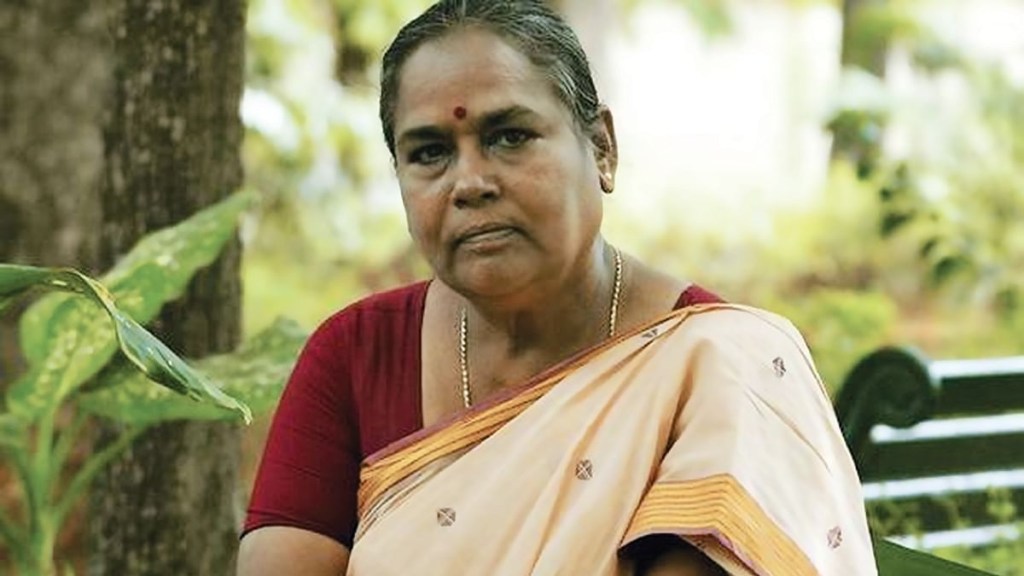
Karakku is a novel written by the Tamil Dalit writer Mary Faustina Fatima Rani. In this novel she speaks about a lot of problems faced by the Dalits and how they were discriminated and exploited. She expresses her angst and her pain through her writing. The most prominent one is the problems faced by the dalits is that of caste discrimination. Bama belongs to the untouchable class called Parayas.


• Even though her living standards were not luxurious, it was still a little better than others as her father was an army officer and because of that, whenever he came back home, there was always food at the table. She also had an older brother who made her aware of the conditions of Dalits and help to understand why it is important to overcome it.


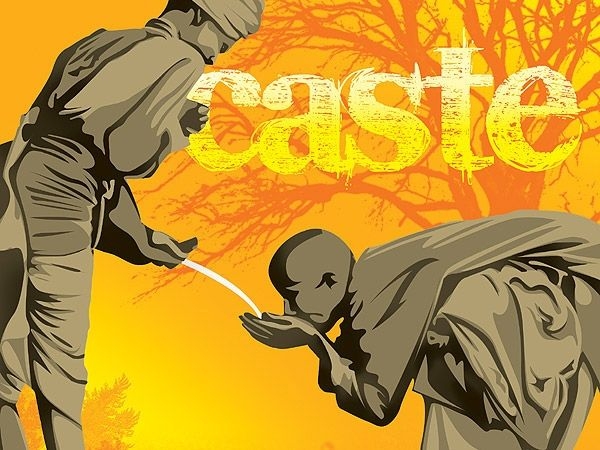
• In the Indian society, the discrimination of people based on their caste was rampant. Every person was judged according to which caste they belong to and showed respect accordingly.


• The problem with food:
The people of the upper caste always got to eat all the tasty food like the fishes with fancy names but the lower caste people always had to settle for the cheap fishes as that is what they could afford. She tells us how the lower caste people are the ones who do all the work yet only the rich benefit from it.


• The problem of exploitation and untouchability:
Bama mentions the exploitation of the poor Dalits by the rich Naickers and tells us how that is the reason that the Dalits haven’t prospered yet. She talks about work and how the Dalits had to work all their lives just to make ends meet and they were not even be rewarded for it. An example or incident is when a lady was holding a ‘bajji’ with a string so she does not touch it while giving it to a Naicker. At first Bama found this incident funny but after she was explained about the concept of untouchability by her brother she gets a little furious.


• The problem of Education:
The next problem that the Dalits face is the problem of education. Not all Dalits have the luxury or opportunity to attend school and receive an education. The children or not allowed education and even if they are, they are not given equal opportunities and are always identified by their caste.
Bama also faced or experienced these during her school days but she managed to gain the trust and respect of her peers and teachers as she was a very bright student. That is when Bama realised that if every child is given this opportunity to receive education, they would be independent and would not have to struggle to make ends meet and would also be a respectable citizen of the country.


• Visible Caste discrimination:
In the future when she joined the convent and taught for 5 years, Bama also realised that the caste discrimination still exists. She realised that where there was a vow to help the Dalit children, really care about that aspect. Nobody tried to teach the children what their rights are and how they can together work to overcome their problems as a community and prosper.


Conclusion:
All of these incidents show us the plight of the dalits and how difficult their lives are on a daily basis. They need to overcome problems every day, in every field they go to. There is no leniency for the poor which shows us that the hierarchy of caste is an atrocious topic and everyone should be treated equally.