

We assessed impacts on water use achieved by implementation of controlled experiments relating to four water conservation strategies in four towns within the Ipswich watershed in Massachusetts. The strategies included installation of weather-sensitive irrigation controller switches (WSICS) in residences and municipal athletic fields; installation of rainwater harvesting systems in residences; two outreach programs: free home indoor water use audits and water fixture retrofit kits and rebates for low-water-demand toilets and washing machines; and soil amendments to improve soil moisture retention at a municipal athletic field. The goals of this study are to summarize the effectiveness of the four water conservation strategies and to introduce nonparametric statistical methods for evaluating the effectiveness of these conservation strategies in reducing water use. It was found that the municipal WSICS significantly reduced water use; residences with high irrigation demand were more likely than low water users to experience a substantial demand decrease when equipped with the WSICS; rainwater harvesting provided substantial rainwater use, but these volumes were small relative to total domestic water use and relative to the natural fluctuations in domestic water use; both the audits/retrofit and rebate programs resulted in significant water savings; and a modeling approach showed potential water savings from soil amendments in ball fields.
water
We assessed impacts on water use achieved by implementation of controlled experiments relating to four water conservation strategies in four towns within the Ipswich watershed in Massachusetts. The strategies included installation of weather-sensitive irrigation controller switches (WSICS) in residences and municipal athletic fields; installation of rainwater harvesting systems in residences; two outreach programs: free home indoor water use audits and water fixture retrofit kits and rebates for low-water-demand toilets and washing machines; and soil amendments to improve soil moisture retention at a municipal athletic field. The goals of this study are to summarize the effectiveness of the four water conservation strategies and to introduce nonparametric statistical methods for evaluating the effectiveness of these conservation strategies in reducing water use. It was found that the municipal WSICS significantly reduced water use; residences with high irrigation demand were more likely than low water users to experience a substantial demand decrease when equipped with the WSICS; rainwater harvesting provided substantial rainwater use, but these volumes were small relative to total domestic water use and relative to the natural fluctuations in domestic water use; both the audits/retrofit and rebate programs resulted in significant water savings; and a modeling approach showed potential water savings from soil amendments in ball fields.
The Story of KFC’s founder

Sanders was born in 1890 in Henryville, IN. When he was six years old, his father passed away leaving Sanders to cook and care for his siblings. In seventh grade, he dropped out of school and left home to go work as a farmhand. Already turning into a tough cookie.
At 16, he faked his age to enlist in the United States army. After being honorably discharged a year later, he got hired by the railway as a laborer. However, he got fired for fighting with a coworker. While he worked for the railway, he studied law–until he ruined his legal career by getting into another fight. Sanders was forced to move back in with his mom and get a job selling life insurance. And guess what? He got fired for insubordination. But this guy wouldn’t give up.
In 1920, he founded a ferry boat company. Later, he tried cashing in his ferry boat business to create a lamp manufacturing company only to find out that another company already sold a better version of his lamp. Poor guy couldn’t catch a break.
It wasn’t until age 40 that he began selling chicken dishes in a service station. As he began to advertise his food, an argument with a competitor resulted in a deadly shootout. Four years later, he bought a motel which burned to the ground along with his restaurant. Yet this determined man rebuilt and ran a new motel until World War II forced him to close it down.
Following the war, he tried to franchise his restaurant. His recipe was rejected 1,009 times before anyone accepted it. Sander’s “secret recipe” was coined “Kentucky Fried Chicken”, and quickly became a hit. However, the booming restaurant was crippled when an interstate opened nearby so Sanders sold it and pursued his dream of spreading KFC franchises & hiring KFC workers all across the country.
After years of failures and misfortunes, Sanders finally hit it big. KFC expanded internationally and he sold the company for two million dollars ($15.3 million today). Even today, Sanders remains central in KFC’s branding and his face still appears in their logo. His goatee, white suit and western string tie continue to symbolize delicious country fried chicken all over the world.
At age 90, Sanders passed away from pneumonia. At that time, there were around 6,000 KFC locations in 48 countries. By 2013, there were an estimated 18,000 KFC locations in 118 countries. WOW.
If you’re overwhelmed by rejection or discouraged by setbacks, remember the story of Colonel Harland Sanders. Fired from multiple jobs, ruined his legal career, was set back by the Great Depression, fires and World War II, yet still created one of the largest fast food chains in the world. Sanders wouldn’t let anything or anyone defeat him.

KFC
KFC (abbr. for Kentucky Fried Chicken) is an American fast food restaurant chain headquartered in Louisville, Kentucky that specializes in fried chicken. It is the world’s second-largest restaurant chain (as measured by sales) after McDonald’s, with 22,621 locations globally in 150 countries as of December 2019. The chain is a subsidiary of Yum! Brands, a restaurant company that also owns the Pizza Hut, Taco Bell and WingStreet chains.
KFC was founded by Colonel Harland Sanders, an entrepreneur who began selling fried chicken from his roadside restaurant in Corbin, Kentucky during the Great Depression. Sanders identified the potential of the restaurant franchising concept and the first “Kentucky Fried Chicken” franchise opened in Utah in 1952. KFC popularized chicken in the fast-food industry, diversifying the market by challenging the established dominance of the hamburger. By branding himself as “Colonel Sanders”, Harland became a prominent figure of American cultural history and his image remains widely used in KFC advertising to this day. However, the company’s rapid expansion overwhelmed the aging Sanders and he sold it to a group of investors led by John Y. Brown Jr. and Jack C. Massey in 1964.
KFC was one of the first American fast-food chains to expand internationally, opening outlets in Canada, the United Kingdom, Mexico and Jamaica by the mid-1960s. Throughout the 1970s and 1980s, it experienced mixed fortunes domestically, as it went through a series of changes in corporate ownership with little or no experience in the restaurant business. In the early 1970s, KFC was sold to the spirits distributor Heublein, which was taken over by the R. J. Reynolds food and tobacco conglomerate; that company sold the chain to PepsiCo. The chain continued to expand overseas, however, and in 1987 it became the first Western restaurant chain to open in China. It has since expanded rapidly in China, which is now the company’s single largest market. PepsiCo spun off its restaurants division as Tricon Global Restaurants, which later changed its name to Yum! Brands.
KFC’s original product is pressure fried chicken pieces, seasoned with Sanders’ recipe of 11 herbs and spices. The constituents of the recipe are a trade secret. Larger portions of fried chicken are served in a cardboard “bucket”, which has become a feature of the chain since it was first introduced by franchisee Pete Harman in 1957. Since the early 1990s, KFC has expanded its menu to offer other chicken products such as chicken fillet sandwiches and wraps, as well as salads and side dishes such as French fries and coleslaw, desserts and soft drinks; the latter often supplied by PepsiCo. KFC is known for its slogans “It’s Finger Lickin’ Good!”, “Nobody does chicken like KFC” and “So good”.
Psychological Disorders Part 10
Introduction
The Psychological Disorders Part 9 discussed Schizophrenia. It is a lifelong disorder but the intensity and the effect of it can be controlled with the help of planned treatment and various medicines prescribed by the psychologists. This article will discuss Personality Disorders.
Personality Disorders

Personality disorders involve a pattern of maladaptive thoughts, feelings and behaviours that cause serious detriment to various areas of life.
Antisocial Personality Disorder is also known as sociopathy. It is a mental disorder wherein a person continuously shows zero regard for what is right and wrong, in doing so the person also ignores the rights and feelings of other people. People with this disorder have a tendency of antagonizing, manipulating and treating others in a harsh manner. They also tend to show no guilt. The people with this disorder often end up violating the law and hence become criminals. Some of the symptoms are persistent lying, exploiting others, disregard for right and wrong, using wit to manipulate others for personal gain, being cynical, disrespecting others, arrogance, repeatedly violating the rights of others through dishonesty, criminal behaviour, being impulsive, lack of empathy, lack of remorse, aggression, violence, abusive relationships, dangerous behaviour, persistent irresponsibility, not considering negative consequences of their behaviour. Adults with this disorder usually start showing signs by the age of 15. This is a lifelong disorder.
:max_bytes(150000):strip_icc():format(webp)/avoidant-personality-disorder-4172959-5c1a913a46e0fb0001bc2c8e.png)
Avoidant Personality Disorder (APD) is a mental disorder in which the person has a pattern of extreme shyness, they feel inadequate and are excessively sensitive to rejection. Symptoms of this personality disorder include fear of rejection, criticism, embarrassment, disapproval, intimate relationships, getting to know new people and fear of being ridiculed. People with this disorder might also have trouble believing someone likes them.
Borderline Personality Disorder is a mental disorder that impacts the way a person thinks and feels about themselves and others. It includes self-image issues and difficulty managing emotions. A person with this disorder will have an intense fear of abandonment or instability, which would make being alone difficult for them. This disorder usually begins by early adulthood. Some of the symptoms are intense fear of abandonment, pattern of unstable intense relationships, periods of stress-related paranoia, rapid changes in self-image, suicidal threats in response to fear of rejection, extreme mood swings, intense anger and an ongoing feeling of emptiness.

Dependent Personality Disorder involves being anxious about being left alone, that is, the inability to be alone. Some of the symptoms are behaving submissively, needing repeated reassurance, relying on others for making decisions, easily being hurt by disapproval, feeling nervous when alone, tendency to be naïve, fear of abandonment and fearing rejection.

Histrionic Personality Disorder involves people having a distorted image of themselves. They base their self-esteem on other’s approval. Some of the symptoms are uncomfortable in situations where they are not the center of attention, display of rapidly shifting emotions, interaction with others involving inappropriate seductive behaviour, consistently using physical attention to get others focus and showcasing exaggerated expression of emotions.

Narcissistic Personality Disorder is a mental disorder in which people have an inflated sense of importance, they need a lot of attention and admiration. They also have a lack of empathy. Some of the symptoms are having a sense of entitlement, expecting to be recognized as superior, exaggerating achievements and talents, belittling others, expecting special favours, arrogance, boastful and insisting on having the best of everything.
Obsessive-Compulsive Personality Disorder involves a person wanting extreme perfectionism, neatness and order. People with this disorder feel the need to impose their standards on others. Some of the symptoms are perfectionism to a point that it is difficult to finish tasks, rigid mannerisms, extreme attention to detail, overwhelming need to be punctual, fixation with lists, hoarding useless items, sense of righteousness and rigid adherence to ethical codes.
:max_bytes(150000):strip_icc():format(webp)/GettyImages-487729433-56f72dfc3df78c78418e35d8.jpg)
Paranoid Personality Disorder involves people being extremely suspicious of other people. Some of the symptoms are believing that people have hidden motives, trouble working with others, quickly becoming hostile, having trouble relaxing, socially isolated, defensive and doubting loyalty of others.
Schizoid Personality Disorder is when people avoid social activities and continuously shy away from interacting with others. They tend to have a limited range of emotional expression. Some of the symptoms are preferring being alone, not enjoying close relationships, feeling like can’t experience pleasure, appearing to lack motivation, feeling no desire for sexual relationships and may seem emotionally cold.
/schizotypal-personality-disorder-4689994-b8156a1551654864ab21568b0cadf60d.gif)
Schizotypal Personality Disorder is a disorder in which people are often described as odd and have very few close relationships. Some of the symptoms are being a loner, flat emotions, excessive social anxiety, belief in special powers, peculiar style of speech and dressing.
Conclusion
There are many kinds of personalities which brings many kinds of personality disorders as well. Personality is known to be fluid but the reason of these disorders includes brain chemistry and genetics because of which they remain permanent. These disorders are very harmful for the people themselves and their loved ones, which makes it important to consult a psychologist to get treatment and reduce the symptoms.
References
- https://www.mayoclinic.org/diseases-conditions/antisocial-personality-disorder/symptoms-causes/syc-20353928
- https://www.healthline.com/health/avoidant-personality-disorder#risk-factors
Note: this is the last part of the Psychological Disorders series.
The Story of KFC's founder
Sanders was born in 1890 in Henryville, IN. When he was six years old, his father passed away leaving Sanders to cook and care for his siblings. In seventh grade, he dropped out of school and left home to go work as a farmhand. Already turning into a tough cookie.
At 16, he faked his age to enlist in the United States army. After being honorably discharged a year later, he got hired by the railway as a laborer. However, he got fired for fighting with a coworker. While he worked for the railway, he studied law–until he ruined his legal career by getting into another fight. Sanders was forced to move back in with his mom and get a job selling life insurance. And guess what? He got fired for insubordination. But this guy wouldn’t give up.
In 1920, he founded a ferry boat company. Later, he tried cashing in his ferry boat business to create a lamp manufacturing company only to find out that another company already sold a better version of his lamp. Poor guy couldn’t catch a break.
It wasn’t until age 40 that he began selling chicken dishes in a service station. As he began to advertise his food, an argument with a competitor resulted in a deadly shootout. Four years later, he bought a motel which burned to the ground along with his restaurant. Yet this determined man rebuilt and ran a new motel until World War II forced him to close it down.
Following the war, he tried to franchise his restaurant. His recipe was rejected 1,009 times before anyone accepted it. Sander’s “secret recipe” was coined “Kentucky Fried Chicken”, and quickly became a hit. However, the booming restaurant was crippled when an interstate opened nearby so Sanders sold it and pursued his dream of spreading KFC franchises & hiring KFC workers all across the country.
After years of failures and misfortunes, Sanders finally hit it big. KFC expanded internationally and he sold the company for two million dollars ($15.3 million today). Even today, Sanders remains central in KFC’s branding and his face still appears in their logo. His goatee, white suit and western string tie continue to symbolize delicious country fried chicken all over the world.
At age 90, Sanders passed away from pneumonia. At that time, there were around 6,000 KFC locations in 48 countries. By 2013, there were an estimated 18,000 KFC locations in 118 countries. WOW.
If you’re overwhelmed by rejection or discouraged by setbacks, remember the story of Colonel Harland Sanders. Fired from multiple jobs, ruined his legal career, was set back by the Great Depression, fires and World War II, yet still created one of the largest fast food chains in the world. Sanders wouldn’t let anything or anyone defeat him.
KFC
KFC (abbr. for Kentucky Fried Chicken) is an American fast food restaurant chain headquartered in Louisville, Kentucky that specializes in fried chicken. It is the world’s second-largest restaurant chain (as measured by sales) after McDonald’s, with 22,621 locations globally in 150 countries as of December 2019. The chain is a subsidiary of Yum! Brands, a restaurant company that also owns the Pizza Hut, Taco Bell and WingStreet chains.
KFC was founded by Colonel Harland Sanders, an entrepreneur who began selling fried chicken from his roadside restaurant in Corbin, Kentucky during the Great Depression. Sanders identified the potential of the restaurant franchising concept and the first “Kentucky Fried Chicken” franchise opened in Utah in 1952. KFC popularized chicken in the fast-food industry, diversifying the market by challenging the established dominance of the hamburger. By branding himself as “Colonel Sanders”, Harland became a prominent figure of American cultural history and his image remains widely used in KFC advertising to this day. However, the company’s rapid expansion overwhelmed the aging Sanders and he sold it to a group of investors led by John Y. Brown Jr. and Jack C. Massey in 1964.
KFC was one of the first American fast-food chains to expand internationally, opening outlets in Canada, the United Kingdom, Mexico and Jamaica by the mid-1960s. Throughout the 1970s and 1980s, it experienced mixed fortunes domestically, as it went through a series of changes in corporate ownership with little or no experience in the restaurant business. In the early 1970s, KFC was sold to the spirits distributor Heublein, which was taken over by the R. J. Reynolds food and tobacco conglomerate; that company sold the chain to PepsiCo. The chain continued to expand overseas, however, and in 1987 it became the first Western restaurant chain to open in China. It has since expanded rapidly in China, which is now the company’s single largest market. PepsiCo spun off its restaurants division as Tricon Global Restaurants, which later changed its name to Yum! Brands.
KFC’s original product is pressure fried chicken pieces, seasoned with Sanders’ recipe of 11 herbs and spices. The constituents of the recipe are a trade secret. Larger portions of fried chicken are served in a cardboard “bucket”, which has become a feature of the chain since it was first introduced by franchisee Pete Harman in 1957. Since the early 1990s, KFC has expanded its menu to offer other chicken products such as chicken fillet sandwiches and wraps, as well as salads and side dishes such as French fries and coleslaw, desserts and soft drinks; the latter often supplied by PepsiCo. KFC is known for its slogans “It’s Finger Lickin’ Good!”, “Nobody does chicken like KFC” and “So good”.
Psychological Disorders Part 10
Introduction
The Psychological Disorders Part 9 discussed Schizophrenia. It is a lifelong disorder but the intensity and the effect of it can be controlled with the help of planned treatment and various medicines prescribed by the psychologists. This article will discuss Personality Disorders.
Personality Disorders
Personality disorders involve a pattern of maladaptive thoughts, feelings and behaviours that cause serious detriment to various areas of life.
Antisocial Personality Disorder is also known as sociopathy. It is a mental disorder wherein a person continuously shows zero regard for what is right and wrong, in doing so the person also ignores the rights and feelings of other people. People with this disorder have a tendency of antagonizing, manipulating and treating others in a harsh manner. They also tend to show no guilt. The people with this disorder often end up violating the law and hence become criminals. Some of the symptoms are persistent lying, exploiting others, disregard for right and wrong, using wit to manipulate others for personal gain, being cynical, disrespecting others, arrogance, repeatedly violating the rights of others through dishonesty, criminal behaviour, being impulsive, lack of empathy, lack of remorse, aggression, violence, abusive relationships, dangerous behaviour, persistent irresponsibility, not considering negative consequences of their behaviour. Adults with this disorder usually start showing signs by the age of 15. This is a lifelong disorder.
Avoidant Personality Disorder (APD) is a mental disorder in which the person has a pattern of extreme shyness, they feel inadequate and are excessively sensitive to rejection. Symptoms of this personality disorder include fear of rejection, criticism, embarrassment, disapproval, intimate relationships, getting to know new people and fear of being ridiculed. People with this disorder might also have trouble believing someone likes them.
Borderline Personality Disorder is a mental disorder that impacts the way a person thinks and feels about themselves and others. It includes self-image issues and difficulty managing emotions. A person with this disorder will have an intense fear of abandonment or instability, which would make being alone difficult for them. This disorder usually begins by early adulthood. Some of the symptoms are intense fear of abandonment, pattern of unstable intense relationships, periods of stress-related paranoia, rapid changes in self-image, suicidal threats in response to fear of rejection, extreme mood swings, intense anger and an ongoing feeling of emptiness.
Dependent Personality Disorder involves being anxious about being left alone, that is, the inability to be alone. Some of the symptoms are behaving submissively, needing repeated reassurance, relying on others for making decisions, easily being hurt by disapproval, feeling nervous when alone, tendency to be naïve, fear of abandonment and fearing rejection.
Histrionic Personality Disorder involves people having a distorted image of themselves. They base their self-esteem on other’s approval. Some of the symptoms are uncomfortable in situations where they are not the center of attention, display of rapidly shifting emotions, interaction with others involving inappropriate seductive behaviour, consistently using physical attention to get others focus and showcasing exaggerated expression of emotions.
Narcissistic Personality Disorder is a mental disorder in which people have an inflated sense of importance, they need a lot of attention and admiration. They also have a lack of empathy. Some of the symptoms are having a sense of entitlement, expecting to be recognized as superior, exaggerating achievements and talents, belittling others, expecting special favours, arrogance, boastful and insisting on having the best of everything.
Obsessive-Compulsive Personality Disorder involves a person wanting extreme perfectionism, neatness and order. People with this disorder feel the need to impose their standards on others. Some of the symptoms are perfectionism to a point that it is difficult to finish tasks, rigid mannerisms, extreme attention to detail, overwhelming need to be punctual, fixation with lists, hoarding useless items, sense of righteousness and rigid adherence to ethical codes.
Paranoid Personality Disorder involves people being extremely suspicious of other people. Some of the symptoms are believing that people have hidden motives, trouble working with others, quickly becoming hostile, having trouble relaxing, socially isolated, defensive and doubting loyalty of others.
Schizoid Personality Disorder is when people avoid social activities and continuously shy away from interacting with others. They tend to have a limited range of emotional expression. Some of the symptoms are preferring being alone, not enjoying close relationships, feeling like can’t experience pleasure, appearing to lack motivation, feeling no desire for sexual relationships and may seem emotionally cold.
Schizotypal Personality Disorder is a disorder in which people are often described as odd and have very few close relationships. Some of the symptoms are being a loner, flat emotions, excessive social anxiety, belief in special powers, peculiar style of speech and dressing.
Conclusion
There are many kinds of personalities which brings many kinds of personality disorders as well. Personality is known to be fluid but the reason of these disorders includes brain chemistry and genetics because of which they remain permanent. These disorders are very harmful for the people themselves and their loved ones, which makes it important to consult a psychologist to get treatment and reduce the symptoms.
References
- https://www.mayoclinic.org/diseases-conditions/antisocial-personality-disorder/symptoms-causes/syc-20353928
- https://www.healthline.com/health/avoidant-personality-disorder#risk-factors
Note: this is the last part of the Psychological Disorders series.
WHY TIME IS IMPORTANT?HERE ARE 10 REASONS 👇👇

Even though it’s something that’s all around us and most of us take it for granted, time is one of the most mysterious forces in the universe. Why does it matter so much? What are some things everyone should remember when thinking about time? Here are ten reasons why time is important:
1. Everything is bound to time
Every single thing in the universe is affected by time. Whether it’s a tulip, human, or a star, all things gradually age and eventually decay as time progresses. The speed of that decay can vary, but material things aren’t eternal and will eventually end.
2. Time is the most precious resource because you can’t get it back
What are you going to do with the time you’ve been given? The answer to this question really matters because you can’t get wasted time back. People often think of money as their most valuable resource, and while it is important because it allows you to buy the things you need and want, you can get money back. Time, however, is intangible and once it’s gone, it’s gone.
3. Because of privileges, not everyone truly has the same amount of time in a day
There’s an inspirational saying that basically states that everyone has the same 24 hours in a day, so no one can complain about not having time for the things they want to do. However, the reality is that while everyone does technically have 24 hours in a day, the amount of free time they have varies dramatically. While someone with a good job that has normal working hours can spend a fair amount of time practicing a skill, someone who needs to work many more hours to earn the same amount can’t. In that sense, even though they both have 24 hours in a day, time is relative for them.
4. No one knows how much time they have
Another reason why time matters so much is that no one knows how much they’ve got. People can die at any age and from any reason, and no one can predict the future. Being aware of this uncertainty can have a dramatic effect on how you live your life.
5. The only time we actually have is the present
As humans, we are aware of the three stages of time – the past, the present, and the future. We can use the past to learn and we can prepare for the future, but the present is the only space we have to work in. Research shows that being more mindful of what’s going on right now and living in the present benefits both mental and physical health.
6. How we see time impacts happiness
Speaking of the past and the future, a person’s perspective of these two times has a big impact on their happiness and peace of mind. Many of us spend a lot of time ruminating on the past or worrying about the future. If we are able to let go of the past and what can’t be changed, and look ahead in the unknown with hope instead of fear, we would feel a lot happier and calmer.
7. Managing it poorly or well has a huge impact on life
In his play “Macbeth,” Shakespeare wrote, “Let every man be master of his time.” Because we only have so many hours in a day and we don’t know how many days we’re going to get, mastering or managing the time we do have is essential. Good time management can help you in every area of life, whether it’s work or at home, and ensures you make the most out of every moment. Whether you fail or succeed at something often breaks down to time management, not skill.
8.Relationship are made or broken by how much time you invest
Community is very important for a person’s health and wellbeing. Maintaining relationships takes a commitment and whether it’s a friendship or romantic partnership, time is a key element. Healthy relationships don’t just develop overnight. How much time people invest is often the main difference between a relationship that’s deep and fulfilling, and one that’s shallow.
9. Skills are impacted by how much time you invest
In the recent past, there was a popular belief that it takes about 10,000 hours to master a skill, and while the real number is up in the air right now, it remains true that developing skills takes time. The specific amount of time depends on the person and their time management, but overall, just being willing to put in the hours and practice a skill pays off.
10. Time is a teacher and a healer
The old phrase says that “Time heals everything,” and while that often feels hollow to people in the middle of a painful experience, they often find that it eventually becomes true. Sometimes the only way to get a new, healthier perspective on a situation is to give it time. Within that time, a person is given the opportunities to think about what’s happened and experience other things. Time serves as both a teacher and a healer, and while a person may not go back to who they were before, time has allowed them to grow.
WHY TIME IS IMPORTANT?HERE ARE 10 REASONS 👇👇
Even though it’s something that’s all around us and most of us take it for granted, time is one of the most mysterious forces in the universe. Why does it matter so much? What are some things everyone should remember when thinking about time? Here are ten reasons why time is important:
1. Everything is bound to time
Every single thing in the universe is affected by time. Whether it’s a tulip, human, or a star, all things gradually age and eventually decay as time progresses. The speed of that decay can vary, but material things aren’t eternal and will eventually end.
2. Time is the most precious resource because you can’t get it back
What are you going to do with the time you’ve been given? The answer to this question really matters because you can’t get wasted time back. People often think of money as their most valuable resource, and while it is important because it allows you to buy the things you need and want, you can get money back. Time, however, is intangible and once it’s gone, it’s gone.
3. Because of privileges, not everyone truly has the same amount of time in a day
There’s an inspirational saying that basically states that everyone has the same 24 hours in a day, so no one can complain about not having time for the things they want to do. However, the reality is that while everyone does technically have 24 hours in a day, the amount of free time they have varies dramatically. While someone with a good job that has normal working hours can spend a fair amount of time practicing a skill, someone who needs to work many more hours to earn the same amount can’t. In that sense, even though they both have 24 hours in a day, time is relative for them.
4. No one knows how much time they have
Another reason why time matters so much is that no one knows how much they’ve got. People can die at any age and from any reason, and no one can predict the future. Being aware of this uncertainty can have a dramatic effect on how you live your life.
5. The only time we actually have is the present
As humans, we are aware of the three stages of time – the past, the present, and the future. We can use the past to learn and we can prepare for the future, but the present is the only space we have to work in. Research shows that being more mindful of what’s going on right now and living in the present benefits both mental and physical health.
6. How we see time impacts happiness
Speaking of the past and the future, a person’s perspective of these two times has a big impact on their happiness and peace of mind. Many of us spend a lot of time ruminating on the past or worrying about the future. If we are able to let go of the past and what can’t be changed, and look ahead in the unknown with hope instead of fear, we would feel a lot happier and calmer.
7. Managing it poorly or well has a huge impact on life
In his play “Macbeth,” Shakespeare wrote, “Let every man be master of his time.” Because we only have so many hours in a day and we don’t know how many days we’re going to get, mastering or managing the time we do have is essential. Good time management can help you in every area of life, whether it’s work or at home, and ensures you make the most out of every moment. Whether you fail or succeed at something often breaks down to time management, not skill.
8.Relationship are made or broken by how much time you invest
Community is very important for a person’s health and wellbeing. Maintaining relationships takes a commitment and whether it’s a friendship or romantic partnership, time is a key element. Healthy relationships don’t just develop overnight. How much time people invest is often the main difference between a relationship that’s deep and fulfilling, and one that’s shallow.
9. Skills are impacted by how much time you invest
In the recent past, there was a popular belief that it takes about 10,000 hours to master a skill, and while the real number is up in the air right now, it remains true that developing skills takes time. The specific amount of time depends on the person and their time management, but overall, just being willing to put in the hours and practice a skill pays off.
10. Time is a teacher and a healer
The old phrase says that “Time heals everything,” and while that often feels hollow to people in the middle of a painful experience, they often find that it eventually becomes true. Sometimes the only way to get a new, healthier perspective on a situation is to give it time. Within that time, a person is given the opportunities to think about what’s happened and experience other things. Time serves as both a teacher and a healer, and while a person may not go back to who they were before, time has allowed them to grow.
Good food, Good mood
Food is the basic material that the body needs for its survival and well being. Food, when eaten in proper intervals and the right amount, can make children fitter.
Eating food that is healthy and rich in nutrients is vital for proper body functioning. Healthy foods give us a healthy life and longevity.

Food is what people and animals eat to live. Food usually comes from animals and plants. It is eaten by living things to provide energy and nutrition. Food contains the nutrition that people and animals need to be healthy.
The consumption of food is normally enjoyable to humans. It contains protein, fat, carbohydrates, vitamins, water and minerals. Liquids used for energy and nutrition are often called “drinks”. If someone cannot afford food they go hungry.
Food for human is mostly made through farming or gardening. It includes animal and vegetables sources. Some people refuse to eat food from animal origin, like meet, eggs, and products with milk in them.
Not eating meat is called vegetarianism. Not eating or using any animal products is called veganism. Basic foods consumed by humans
Plant source
• Fruit
• Vegetables
• Grains
• Seeds
• Legumes
( Beans, peas, lentils, etc.)
• Herbs
• Spices
Animal source
• Meat
• Seafood
• Eggs
• Dairy products
Food produced by farmers or gardeners can be changed by industrial processes (the food industry). Processed food usually contains several natural ingredients and food additives (such as preservatives, antioxidants, emulsifiers, flavor enhancers). For example, bread is processed food.
Food processing at home is done in the kitchen, by the cook. The cook sometimes uses a cookbook. Examples of cooking utensils are pressure cookers, pots, and frying pans.
Good food, Good mood
Food is the basic material that the body needs for its survival and well being. Food, when eaten in proper intervals and the right amount, can make children fitter.
Eating food that is healthy and rich in nutrients is vital for proper body functioning. Healthy foods give us a healthy life and longevity.
Food is what people and animals eat to live. Food usually comes from animals and plants. It is eaten by living things to provide energy and nutrition. Food contains the nutrition that people and animals need to be healthy.
The consumption of food is normally enjoyable to humans. It contains protein, fat, carbohydrates, vitamins, water and minerals. Liquids used for energy and nutrition are often called “drinks”. If someone cannot afford food they go hungry.
Food for human is mostly made through farming or gardening. It includes animal and vegetables sources. Some people refuse to eat food from animal origin, like meet, eggs, and products with milk in them.
Not eating meat is called vegetarianism. Not eating or using any animal products is called veganism. Basic foods consumed by humans
Plant source
• Fruit
• Vegetables
• Grains
• Seeds
• Legumes
( Beans, peas, lentils, etc.)
• Herbs
• Spices
Animal source
• Meat
• Seafood
• Eggs
• Dairy products
Food produced by farmers or gardeners can be changed by industrial processes (the food industry). Processed food usually contains several natural ingredients and food additives (such as preservatives, antioxidants, emulsifiers, flavor enhancers). For example, bread is processed food.
Food processing at home is done in the kitchen, by the cook. The cook sometimes uses a cookbook. Examples of cooking utensils are pressure cookers, pots, and frying pans.
BHARATHANATYAM- CLASSICAL DANCE
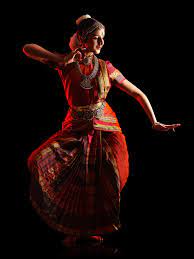
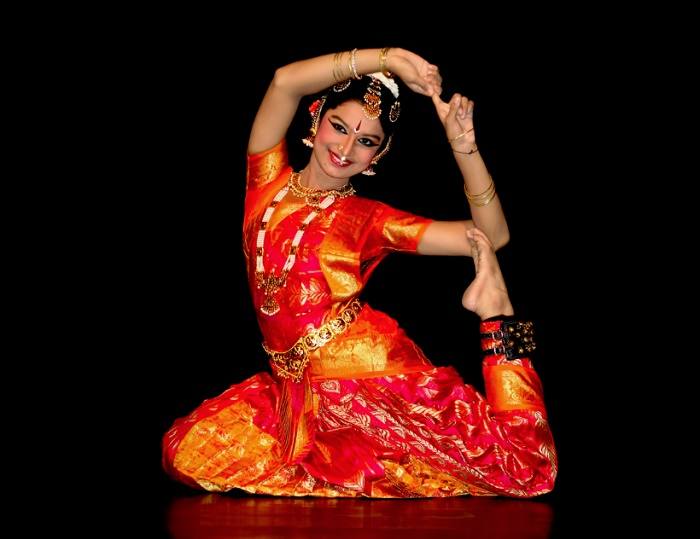
Bharatanatyam is an Indian classical dance that originated in the Hindu temples of Tamil Nadu and neighbouring areas. Let’s take a look at its history, costumes, and exponents.
Bharatanatyam, a pre-eminent Indian classical dance form presumably the oldest classical dance heritage of India is regarded as mother of many other Indian classical dance forms. Conventionally a solo dance performed only by women, it initiated in the Hindu temples of Tamil Nadu and eventually flourished in South India. Theoretical base of this form traces back to ‘Natya Shastra’, the ancient Sanskrit Hindu text on the performing arts. A form of illustrative anecdote of Hindu religious themes and spiritual ideas emoted by dancer with excellent footwork and impressive gestures its performance repertoire includes nrita, nritya and natya. Accompanists include a singer, music and particularly the guru who directs and conducts the performance. It also continues to inspire several art forms including paintings and sculptures starting from the spectacular 6th to 9th century CE temple sculptures.
History & Evolution
According to the Hindu tradition the name of the dance form was derived by joining two words, ‘Bharata’ and Natyam’ where ‘Natyam in Sanskrit means dance and ‘Bharata’ is a mnemonic comprising ‘bha’, ‘ra’ and ‘ta’ which respectively means ‘bhava’ that is emotion and feelings; ‘raga’ that is melody; and ‘tala’ that is rhythm. Thus, traditionally the word refers to a dance form where bhava, raga and tala are expressed. The theoretical base of this dance form, which is also referred as Sadir, trace back to ancient Indian theatrologist and musicologist, Bharata Muni’s Sanskrit Hindu text on the performing arts called ‘Natya Shastra’. The text’s first complete version was presumably completed between 200 BCE to 200 CE, however such timeframe also varies between 500 BCE and 500 CE. According to legends Lord Brahma revealed Bharatanatyam to the sage Bharata who then encoded this holy dance form in Natya Shastra. The text that consists of thousands of verses structured in different chapters divides dance in two specific forms,namely ‘nrita’ that is pure dance comprising of finesse of hand movements and gestures, and ‘nritya’ that is solo expressive dance that comprises of expressions. According to Russian scholar Natalia Lidova, ‘Natya Shastra’ elucidates several theories of Indian classical dances including that of Tandava dance, standing postures, basic steps, bhava, rasa, methods of acting and gestures.
One of the five great epics of Tamil Literature, ‘Silappatikaram’ (~2nd century CE) has a direct reference to this dance form. The Shiva temple of Kanchipuram that is decorated with carvings dating back to a period between 6th to 9th centuries CE manifests the development of this dance form by around the mid first millennium CE. Many ancient Hindu temples are embellished with sculptures of Lord Shiva in Bharatanatyam dance poses. The eastern gopuram of the 12th century Thillai Natarajar Temple, Chidambaram, of Tamil Nadu dedicated to Lord Shiva bears sculptures depicting 108 poses of Bharatanatyam, referred as karanas in ‘Natya Shastra’, that are intricately carved in small rectangular panels. Another notable sculpture can be seen in the Cave 1 of Karnataka’s Badami cave temples dating back to the 7th century where a 5 feet tall sculpture of Lord Shiva is depicted as Nataraja doing Tandava dance. The 18 arms of the Shiva sculpture expresses mudras or hand gestures that are part of Bharatanatyam.
Association with Devadasi Culture
Originating in Hindu temples of Tamil Nadu and nearby regions, Bharatanatyam soon prospered in other South Indian temples. According to some sources the Devadasi culture dating back to 300 BCE to 300 CE evolved under the auspices of the royals that saw the temple dancers called Devadasis, who were dedicated to serve the Lord as dasis or servants, performing the dance form. Eventually the Devadasi culture became an integral part of rituals in South Indian temples. Although ancient texts and sculptures indicate existence of such culture and presence of dancing girls as also exclusive quarters for women in temple compound, there is no concrete evidence either archaeological or text-based that can manifest the Devadasis as prostitutes or courtesans as accused by some colonial Indologists. After analysing evidences, Davesh Soneji, a historian on performance arts and an expert on Bharatanatyam, concluded that courtesan dancing phenomenon commenced during the Nayaka period of Tamil Nadu sometime around late 16th or 17th century.
Opposition & Ban During Colonial Rule
The 18th century saw emergence of rule of the East India Company followed by setting up of British colonial rule in the 19th century. Such developments saw decline of various classical dance forms which were subjected to contemptuous fun and discouragement including Bharatanatyam that through the 19th century remained exclusive to Hindu temples. Eventually social and economic conditions associated with Devadasi culture added with contempt and despicable attitude from the Christian missionaries and British officials, who held the Devadasis of South India and nautch girls of North India as harlots, disgraced such systems. Furthermore the Christian missionaries launched anti-dance movement in 1892 to stop such practice. The Madras Presidency under the British colonial government banned the custom of dancing in Hindu temples in 1910 and with this the age-old tradition of performing Bharatanatyam in Hindu temples also came to an end.
Revival
The Indian community disapproved such ban. The Tamilians were worried that such a rich and ancient custom of Hindu temple dancing was getting persecuted on the pretext of social reform. Many classical art revivalists like Indian lawyer, freedom-fighter, activist and classical artist E. Krishna Iyer questioned such discrimination. Iyer who became involved with the Bharatanatyam revival movement was incarcerated on charges of nationalism and imprisoned. During his prison term he convinced the political prisoners to advocate for this age-old classical dance form. Iyer founded the ‘Madras Music Academy’ and along with Indian theosophist, dancer and Bharatanatyam choreographer Rukmini Devi Arundale, he strived to save Bharatanatyam from dying out. Despite the fact that Hindu temple dances were being suppressed due to laws enforced by the colonial British government, many artists like American dancer Esther Sherman came from the West to learn Indian classical dance forms. She came to India in 1930 and not only learnt classical dances but also adopted the name Ragini Devi and became a part of the ancient dance arts revival movement. As the Indian freedom movement progressed steadily during the early 20th century, an effort to revive Indian culture and tradition seethed with excitement among Indians. Eminent Bharatanatyam dancers like Arundale and Balasaraswati expanded the dance form out of Hindu temples and established it as a mainstream dance form. Later the Tamil Hindu migrants revived this Hindu temple dancing custom in British Tamil temples during the late 20th century. Today this ancient classical dance form also includes technical performances as also non-religious and fusion based themes.

Repertoire
The repertoire of this performance art are categorized into three brackets namely ‘Nritta’, ‘Nritya’ and ‘Natya’ mentioned in ‘Natya Shastra’ and followed by all major Indian classical dance forms. ‘Nritta’ is a technical performance where the dancer presents pure Bharata Natyam movements emphasising on speed, form, pattern, range and rhythmic aspects without any form of enactment or interpretive aspect. In ‘Nritya’ the dancer communicates a story, spiritual themes, message or feelings through expressive gestures and slower body movements harmonised with musical notes. ‘Natyam’ is usually performed by a group or in some cases by a solo dancer who maintains certain body movements for certain characters of the play which is communicated through dance-acting. The dance form typically comprises of certain sections performed in sequence namely Alarippu, Jatiswaram, Shabdam, Varnam, Padam and Thillana.
Costumes
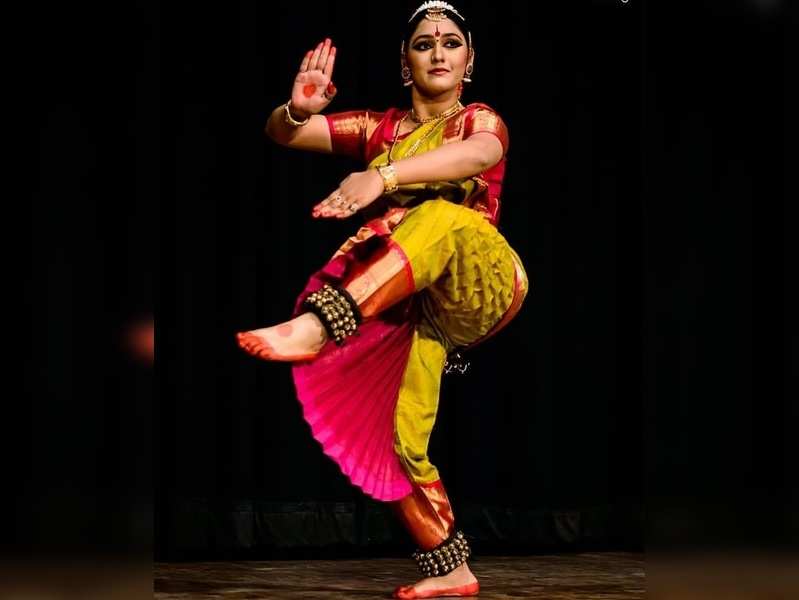
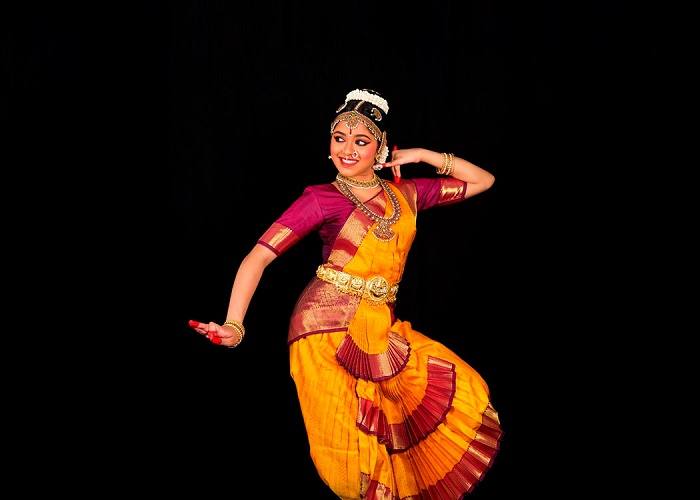
The style of dressing of a Bharatanatyam dancer is more or less similar to that of a Tamil Hindu bride. She wears a gorgeous tailor-made sari that consists of a cloth specially stitched in pleats that falls in the front from the waist and when the dancer performs spectacular footwork that include stretching or bending her knees, the cloth widens up like a hand fan. The sari worn in a special manner is well complimented with traditional jewellery that include the ones that adorn her head, nose, ear and neck and vivid face make-up specially highlighting her eyes so that audience can view her expressions properly. Her hair neatly plaited in conventional way is often beautified with flowers. A jewellery belt adorns her waist while musical anklets called ghunghru made of leather straps with small metallic bells attached to it are wrapped in her ankles. Her feet and fingers are often brightened with henna colour so as to highlight gestures of her hands.
Instruments & Music
The Bharatnatyam dancer is accompanied by a nattuvanar (or taladhari) that is a vocalist who generally conducts the whole performance, a part often executed by the guru. The person can also play the cymbals or any other instrument. The music associated with Bharatanatyam is in South India’s Carnatic style and instruments played comprise of cymbals, the flute, a long pipe horn called nagaswaram, a drum called mridangam and veena. The verses recited during performance are in Sanskrit, Tamil, Kannada and Telugu.
Famous Exponents
The four Nattuvanars namely Ponaiyah, Vadivelu, Sivanandam and Chinnaiya who are renowned as Tanjaore Bandhu and who thrived in the Durbar of Maratha ruler, Sarfoji-II from 1798 to 1832 shaped up the modern day Bharatanatyam. Meenakshi Sundaram Pillai, a dance guru from the village of Pandanallur was a noted exponent of Bharatanatyam who is predominantly known for his style referred as the Pandanallur school of Bharatanatyam. One of his students Rukmini Devi championed and performed the Pandanallur (Kalakshetra) style and also remained one of the leading proponents of the classical dance revival movement. Balasarswati who was regarded as child prodigy by Vidhwans and Pandits also joined hands in reviving the dance form. She was a virtuoso of the Thanjavur style of Bharatanatyam. Other imminent Bharatanatyam artists include Mrinalini Sarabhai, her daughter Mallika Sarabhai, Padma Subramanyam, Alarmel Valli, Yamini Krishnamurthy and Anita Ratnam among others.
BHARATHANATYAM- CLASSICAL DANCE
Bharatanatyam is an Indian classical dance that originated in the Hindu temples of Tamil Nadu and neighbouring areas. Let’s take a look at its history, costumes, and exponents.
Bharatanatyam, a pre-eminent Indian classical dance form presumably the oldest classical dance heritage of India is regarded as mother of many other Indian classical dance forms. Conventionally a solo dance performed only by women, it initiated in the Hindu temples of Tamil Nadu and eventually flourished in South India. Theoretical base of this form traces back to ‘Natya Shastra’, the ancient Sanskrit Hindu text on the performing arts. A form of illustrative anecdote of Hindu religious themes and spiritual ideas emoted by dancer with excellent footwork and impressive gestures its performance repertoire includes nrita, nritya and natya. Accompanists include a singer, music and particularly the guru who directs and conducts the performance. It also continues to inspire several art forms including paintings and sculptures starting from the spectacular 6th to 9th century CE temple sculptures.
History & Evolution
According to the Hindu tradition the name of the dance form was derived by joining two words, ‘Bharata’ and Natyam’ where ‘Natyam in Sanskrit means dance and ‘Bharata’ is a mnemonic comprising ‘bha’, ‘ra’ and ‘ta’ which respectively means ‘bhava’ that is emotion and feelings; ‘raga’ that is melody; and ‘tala’ that is rhythm. Thus, traditionally the word refers to a dance form where bhava, raga and tala are expressed. The theoretical base of this dance form, which is also referred as Sadir, trace back to ancient Indian theatrologist and musicologist, Bharata Muni’s Sanskrit Hindu text on the performing arts called ‘Natya Shastra’. The text’s first complete version was presumably completed between 200 BCE to 200 CE, however such timeframe also varies between 500 BCE and 500 CE. According to legends Lord Brahma revealed Bharatanatyam to the sage Bharata who then encoded this holy dance form in Natya Shastra. The text that consists of thousands of verses structured in different chapters divides dance in two specific forms,namely ‘nrita’ that is pure dance comprising of finesse of hand movements and gestures, and ‘nritya’ that is solo expressive dance that comprises of expressions. According to Russian scholar Natalia Lidova, ‘Natya Shastra’ elucidates several theories of Indian classical dances including that of Tandava dance, standing postures, basic steps, bhava, rasa, methods of acting and gestures.
One of the five great epics of Tamil Literature, ‘Silappatikaram’ (~2nd century CE) has a direct reference to this dance form. The Shiva temple of Kanchipuram that is decorated with carvings dating back to a period between 6th to 9th centuries CE manifests the development of this dance form by around the mid first millennium CE. Many ancient Hindu temples are embellished with sculptures of Lord Shiva in Bharatanatyam dance poses. The eastern gopuram of the 12th century Thillai Natarajar Temple, Chidambaram, of Tamil Nadu dedicated to Lord Shiva bears sculptures depicting 108 poses of Bharatanatyam, referred as karanas in ‘Natya Shastra’, that are intricately carved in small rectangular panels. Another notable sculpture can be seen in the Cave 1 of Karnataka’s Badami cave temples dating back to the 7th century where a 5 feet tall sculpture of Lord Shiva is depicted as Nataraja doing Tandava dance. The 18 arms of the Shiva sculpture expresses mudras or hand gestures that are part of Bharatanatyam.
Association with Devadasi Culture
Originating in Hindu temples of Tamil Nadu and nearby regions, Bharatanatyam soon prospered in other South Indian temples. According to some sources the Devadasi culture dating back to 300 BCE to 300 CE evolved under the auspices of the royals that saw the temple dancers called Devadasis, who were dedicated to serve the Lord as dasis or servants, performing the dance form. Eventually the Devadasi culture became an integral part of rituals in South Indian temples. Although ancient texts and sculptures indicate existence of such culture and presence of dancing girls as also exclusive quarters for women in temple compound, there is no concrete evidence either archaeological or text-based that can manifest the Devadasis as prostitutes or courtesans as accused by some colonial Indologists. After analysing evidences, Davesh Soneji, a historian on performance arts and an expert on Bharatanatyam, concluded that courtesan dancing phenomenon commenced during the Nayaka period of Tamil Nadu sometime around late 16th or 17th century.
Opposition & Ban During Colonial Rule
The 18th century saw emergence of rule of the East India Company followed by setting up of British colonial rule in the 19th century. Such developments saw decline of various classical dance forms which were subjected to contemptuous fun and discouragement including Bharatanatyam that through the 19th century remained exclusive to Hindu temples. Eventually social and economic conditions associated with Devadasi culture added with contempt and despicable attitude from the Christian missionaries and British officials, who held the Devadasis of South India and nautch girls of North India as harlots, disgraced such systems. Furthermore the Christian missionaries launched anti-dance movement in 1892 to stop such practice. The Madras Presidency under the British colonial government banned the custom of dancing in Hindu temples in 1910 and with this the age-old tradition of performing Bharatanatyam in Hindu temples also came to an end.
Revival
The Indian community disapproved such ban. The Tamilians were worried that such a rich and ancient custom of Hindu temple dancing was getting persecuted on the pretext of social reform. Many classical art revivalists like Indian lawyer, freedom-fighter, activist and classical artist E. Krishna Iyer questioned such discrimination. Iyer who became involved with the Bharatanatyam revival movement was incarcerated on charges of nationalism and imprisoned. During his prison term he convinced the political prisoners to advocate for this age-old classical dance form. Iyer founded the ‘Madras Music Academy’ and along with Indian theosophist, dancer and Bharatanatyam choreographer Rukmini Devi Arundale, he strived to save Bharatanatyam from dying out. Despite the fact that Hindu temple dances were being suppressed due to laws enforced by the colonial British government, many artists like American dancer Esther Sherman came from the West to learn Indian classical dance forms. She came to India in 1930 and not only learnt classical dances but also adopted the name Ragini Devi and became a part of the ancient dance arts revival movement. As the Indian freedom movement progressed steadily during the early 20th century, an effort to revive Indian culture and tradition seethed with excitement among Indians. Eminent Bharatanatyam dancers like Arundale and Balasaraswati expanded the dance form out of Hindu temples and established it as a mainstream dance form. Later the Tamil Hindu migrants revived this Hindu temple dancing custom in British Tamil temples during the late 20th century. Today this ancient classical dance form also includes technical performances as also non-religious and fusion based themes.
Repertoire
The repertoire of this performance art are categorized into three brackets namely ‘Nritta’, ‘Nritya’ and ‘Natya’ mentioned in ‘Natya Shastra’ and followed by all major Indian classical dance forms. ‘Nritta’ is a technical performance where the dancer presents pure Bharata Natyam movements emphasising on speed, form, pattern, range and rhythmic aspects without any form of enactment or interpretive aspect. In ‘Nritya’ the dancer communicates a story, spiritual themes, message or feelings through expressive gestures and slower body movements harmonised with musical notes. ‘Natyam’ is usually performed by a group or in some cases by a solo dancer who maintains certain body movements for certain characters of the play which is communicated through dance-acting. The dance form typically comprises of certain sections performed in sequence namely Alarippu, Jatiswaram, Shabdam, Varnam, Padam and Thillana.
Costumes
The style of dressing of a Bharatanatyam dancer is more or less similar to that of a Tamil Hindu bride. She wears a gorgeous tailor-made sari that consists of a cloth specially stitched in pleats that falls in the front from the waist and when the dancer performs spectacular footwork that include stretching or bending her knees, the cloth widens up like a hand fan. The sari worn in a special manner is well complimented with traditional jewellery that include the ones that adorn her head, nose, ear and neck and vivid face make-up specially highlighting her eyes so that audience can view her expressions properly. Her hair neatly plaited in conventional way is often beautified with flowers. A jewellery belt adorns her waist while musical anklets called ghunghru made of leather straps with small metallic bells attached to it are wrapped in her ankles. Her feet and fingers are often brightened with henna colour so as to highlight gestures of her hands.
Instruments & Music
The Bharatnatyam dancer is accompanied by a nattuvanar (or taladhari) that is a vocalist who generally conducts the whole performance, a part often executed by the guru. The person can also play the cymbals or any other instrument. The music associated with Bharatanatyam is in South India’s Carnatic style and instruments played comprise of cymbals, the flute, a long pipe horn called nagaswaram, a drum called mridangam and veena. The verses recited during performance are in Sanskrit, Tamil, Kannada and Telugu.
Famous Exponents
The four Nattuvanars namely Ponaiyah, Vadivelu, Sivanandam and Chinnaiya who are renowned as Tanjaore Bandhu and who thrived in the Durbar of Maratha ruler, Sarfoji-II from 1798 to 1832 shaped up the modern day Bharatanatyam. Meenakshi Sundaram Pillai, a dance guru from the village of Pandanallur was a noted exponent of Bharatanatyam who is predominantly known for his style referred as the Pandanallur school of Bharatanatyam. One of his students Rukmini Devi championed and performed the Pandanallur (Kalakshetra) style and also remained one of the leading proponents of the classical dance revival movement. Balasarswati who was regarded as child prodigy by Vidhwans and Pandits also joined hands in reviving the dance form. She was a virtuoso of the Thanjavur style of Bharatanatyam. Other imminent Bharatanatyam artists include Mrinalini Sarabhai, her daughter Mallika Sarabhai, Padma Subramanyam, Alarmel Valli, Yamini Krishnamurthy and Anita Ratnam among others.
The need to save the ocean

To paraphrase a line from Ron Burgundy, the ocean is a big thing. Big enough for scientists to point out that the term “Earth” is a misnomer. Water may be a more accurate name for a world that is nearly 3/4 covered in water, with marine plants contributing a whopping 50 percent or more of the oxygen we breathe. With all of that stated, it’s past time (high tide?) for us to band together to save the resource that has been depleted.

The state of the ocean is not good
The bad news is that human activity is wreaking havoc on the environment. The good news is that there are several things we can do to help stop (and even reverse!) those detrimental behaviors, which is why this is a message about hope and empowerment rather than doom and gloom.
Plastic pollution is destroying the ocean
A non-profit that works to protect the ocean Every year, 17.6 billion pounds of plastic is estimated to escape into the ocean from land-based sources, according to Oceana. Every 60 seconds, a garbage truck full of plastic is dumped into our waterways. The world’s most renowned (and largest) rubbish dump is located in the ocean.
The Great Pacific Garbage Patch covers 1.6 million square kilometres and contains 1.8 trillion bits of plastic in an estimated 80,000 metric tonne landfill. Plastic garbage in the ocean is believed to kill over one million sea animals each year, including sea turtles, sharks, and coral reef (yes, coral reef is an animal!).
Plastics in the ocean will surpass fish in the ocean (!?) by 2050, according to research, and 99 percent of seabirds will have plastics in their GI tract. Plastic pollution is not only destructive to the ocean; there is also evidence that it is harmful to humans.
Acidification in the ocean
Carbon dioxide emissions absorbed by the oceans over decades have changed the underlying chemistry of our ocean, resulting in an increase in acidity. Acidification causes small decreases in shell density in small creatures, which support entire ecosystems despite their small size.
As the world’s seas warm, species are moving in large numbers to new locations, posing new challenges or simply failing to develop as they should, while millions of people rely on fish as their primary source of nutrition. It’s also causing the Great Barrier Reef to perish. Coral reefs require all of the protection we can provide, given the disastrous effects of climate change.
Because it has the potential to cause the most apparent and immediate human misery, sea-level rise may be the most well-known of these concerns. Low-lying areas such as Miami and the South Pacific islands are growing increasingly vulnerable; 10% of the world’s population lives on the low-lying coast.
Meanwhile, deoxygenation, which is most typically caused by algal blooms fed by nutrient-rich fertilizer run-off, is causing enormous dead zones and suffocating marine life.
Overfishing
Fishing techniques that are illegal, uncontrolled, and unreported are common. Humans have already brought the giant grouper, several skates and rays, and a dozen or more other sturgeon species to the brink of extinction through fishing.
Bluefin tuna is one of the fish species whose populations may never recover as a result of unsustainable fishing techniques. Other apex predators, such as sharks, are among the most endangered.
Places like Monterey Bay National Marine Sanctuary have shown how impactful policy changes can be in helping species rebound.
Ocean conservation isn’t just a hobby for those who enjoy the water. You might not be a scuba diver, a fisherman, or a seaside dweller. Perhaps you have a seafood allergy and despise surfers! Even so, chances are you still breathe air and enjoy life when there is less human suffering.
Plants and trees are oxygen-producing powerhouses. But wait till you see what oceanic greens can accomplish! (Hint: it’s not just trees.) More than half of the oxygen on the earth is produced by marine plants.
Thoughts famous people have about ocean
Jacques Cousteau: “The sea, once it casts its spell, holds one in its net of wonder forever.”
Beyoncé Knowles: “I’m always happy when I’m surrounded by water, I think I’m a mermaid or I was a mermaid. The ocean makes me feel really small and it makes me put my whole life into perspective… it humbles you and makes you feel almost like you’ve been baptized. I feel born again when I get out of the ocean.”
William Wordsworth: “The ocean is a mighty harmonist.”
John F. Kennedy: “We are tied to the ocean. And when we go back to the sea, whether it is to sail or to watch, we are going back from whence we came.”

Ways in which you can help save the ocean
- EDUCATE YOURSELF
Step 1: Land and sea are far more intertwined than most people think, and activities taken on land have substantial consequences in the ocean. The good news is that there are a plethora of tools available—Pinterest offers a plethora of ocean-saving categorieS.
2. Opt for Ocean and Earth-Friendly Products
Oceana’s #1 is to demand plastic-free alternatives to items such as plastic water bottles, straws, plastic cutlery, coffee cups, bags, balloons, plastic-wrapped produce, and take-out food containers.
References
The need to save the ocean
To paraphrase a line from Ron Burgundy, the ocean is a big thing. Big enough for scientists to point out that the term “Earth” is a misnomer. Water may be a more accurate name for a world that is nearly 3/4 covered in water, with marine plants contributing a whopping 50 percent or more of the oxygen we breathe. With all of that stated, it’s past time (high tide?) for us to band together to save the resource that has been depleted.
The state of the ocean is not good
The bad news is that human activity is wreaking havoc on the environment. The good news is that there are several things we can do to help stop (and even reverse!) those detrimental behaviors, which is why this is a message about hope and empowerment rather than doom and gloom.
Plastic pollution is destroying the ocean
A non-profit that works to protect the ocean Every year, 17.6 billion pounds of plastic is estimated to escape into the ocean from land-based sources, according to Oceana. Every 60 seconds, a garbage truck full of plastic is dumped into our waterways. The world’s most renowned (and largest) rubbish dump is located in the ocean.
The Great Pacific Garbage Patch covers 1.6 million square kilometres and contains 1.8 trillion bits of plastic in an estimated 80,000 metric tonne landfill. Plastic garbage in the ocean is believed to kill over one million sea animals each year, including sea turtles, sharks, and coral reef (yes, coral reef is an animal!).
Plastics in the ocean will surpass fish in the ocean (!?) by 2050, according to research, and 99 percent of seabirds will have plastics in their GI tract. Plastic pollution is not only destructive to the ocean; there is also evidence that it is harmful to humans.
Acidification in the ocean
Carbon dioxide emissions absorbed by the oceans over decades have changed the underlying chemistry of our ocean, resulting in an increase in acidity. Acidification causes small decreases in shell density in small creatures, which support entire ecosystems despite their small size.
As the world’s seas warm, species are moving in large numbers to new locations, posing new challenges or simply failing to develop as they should, while millions of people rely on fish as their primary source of nutrition. It’s also causing the Great Barrier Reef to perish. Coral reefs require all of the protection we can provide, given the disastrous effects of climate change.
Because it has the potential to cause the most apparent and immediate human misery, sea-level rise may be the most well-known of these concerns. Low-lying areas such as Miami and the South Pacific islands are growing increasingly vulnerable; 10% of the world’s population lives on the low-lying coast.
Meanwhile, deoxygenation, which is most typically caused by algal blooms fed by nutrient-rich fertilizer run-off, is causing enormous dead zones and suffocating marine life.
Overfishing
Fishing techniques that are illegal, uncontrolled, and unreported are common. Humans have already brought the giant grouper, several skates and rays, and a dozen or more other sturgeon species to the brink of extinction through fishing.
Bluefin tuna is one of the fish species whose populations may never recover as a result of unsustainable fishing techniques. Other apex predators, such as sharks, are among the most endangered.
Places like Monterey Bay National Marine Sanctuary have shown how impactful policy changes can be in helping species rebound.
Ocean conservation isn’t just a hobby for those who enjoy the water. You might not be a scuba diver, a fisherman, or a seaside dweller. Perhaps you have a seafood allergy and despise surfers! Even so, chances are you still breathe air and enjoy life when there is less human suffering.
Plants and trees are oxygen-producing powerhouses. But wait till you see what oceanic greens can accomplish! (Hint: it’s not just trees.) More than half of the oxygen on the earth is produced by marine plants.
Thoughts famous people have about ocean
Jacques Cousteau: “The sea, once it casts its spell, holds one in its net of wonder forever.”
Beyoncé Knowles: “I’m always happy when I’m surrounded by water, I think I’m a mermaid or I was a mermaid. The ocean makes me feel really small and it makes me put my whole life into perspective… it humbles you and makes you feel almost like you’ve been baptized. I feel born again when I get out of the ocean.”
William Wordsworth: “The ocean is a mighty harmonist.”
John F. Kennedy: “We are tied to the ocean. And when we go back to the sea, whether it is to sail or to watch, we are going back from whence we came.”
Ways in which you can help save the ocean
- EDUCATE YOURSELF
Step 1: Land and sea are far more intertwined than most people think, and activities taken on land have substantial consequences in the ocean. The good news is that there are a plethora of tools available—Pinterest offers a plethora of ocean-saving categorieS.
2. Opt for Ocean and Earth-Friendly Products
Oceana’s #1 is to demand plastic-free alternatives to items such as plastic water bottles, straws, plastic cutlery, coffee cups, bags, balloons, plastic-wrapped produce, and take-out food containers.
References
How to choose a book to read for growth

In today’s time, everyone has free and easy access to social media. On some days we keep scrolling all through the day without even realising what are we doing. We say, “I’m bored”. So, what are we doing to get rid of the boredom?
Those in their teens, especially late teens and early 20s are about to go to college. Some are serious about their future. Some are still thinking. Some know what to do. Some are worried about what do to. Some know they want to do something, just don’t know what. Some probably, don’t even think much. For everyone, books are the solution. How?
Well, agreed, there are many courses that one can do. Many podcasts one can listen to. What’s the need for books?! Dead weights! Well, these ‘dead weights’ are what great minds write once they’ve achieved what they wanted to achieve. These weights helped them on their path. Some write to explain their journey and what they learnt so the younger gen can learn and grow. Some help those who know what they want to do, some help the others, who don’t know what they want to do. Some books help you make a path while some help you find your path. Some even help you during your path. But, we can just listen to podcasts of those books!
Well, not every book has been made into a podcast. Also, we listen to podcasts on our phones. And, let’s be honest. One ping is all it takes for our entire focus and concentration to go, poof! So, I guess I’ve made my point.
Moving on, what books should we read to help us grow? And how to develop an interest in boring non-fiction? How do we find out what books to read?
For starters, some people enjoy reading non-fiction. So, let’s rule out the thought that they are all boring and try to keep an open mind.
To know what book to read, try finding out what your goal is. If, for example, you wish to know your superpowers, read books on the subconscious mind, like The Power of your Subconscious Mind by Dr Joseph Murphy. Our subconscious mind is supreme, once you know how to utilise its strengths. If you are lazy and wish to break it and make a healthy habit, you can read The Power of Habit by Charles Duhigg.


Similarly, if you know what you want to do, look up books on Google, find out what you like best, which book suits your needs the best and read it.
Every book is a gem and there are many gems for each person out there. All one has to do is know what do they wish to learn/know and look for a book which suits their needs.
Here’s a list of books that I would recommend.
- The Power of Habit
- The Power of your Subconscious Mind
- How to Talk to Anyone
- Think and Grow Rich
- The 80/20 principle
- The Power of Now
- Don’t Overthink it
- The Subtle Art of Not Giving a F*ck
- Everything is F*cked
- The Rudest Book Ever
 Eduindex
You must be logged in to post a comment.