World Emoji Day

World Emoji Day

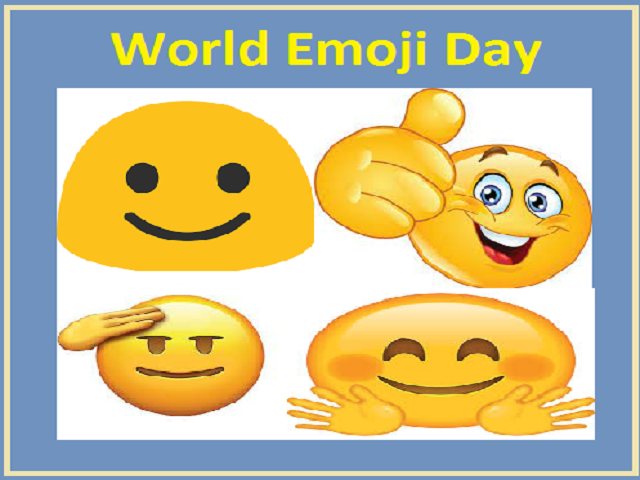
World Emoji Day 2021: In the Internet Age now communication goes far beyond just by pressing a simple text message. Small iconic images that are mostly seen on social media or text messages are known as emojis which are more popular on the internet today.

World Emoji Day is celebrated to represent an idea or an emotion through electronic means. 

Emoji is a small digital icon becoming popular these days and no doubt is an integral part of our conversation. When we feel lazy or when we are at a loss for words then we use emojis to express what we want to. For every feeling, there are emojis now. From the past years, emojis have evolved. It not only expresses simple human feelings but more than that.

World Emoji Day: History

The first emoji was created in 1999 by Shigetaka Kurita, an engineer working at a Japanese mobile operator, NTT Docomo. He creates 176 emojis for the release of the Japanese mobile phone operator NTT DoCoMo’s integrated mobile internet service “i-mode”, debuting in February 1999. For only 250 characters the service was allowed which gave Kurita the challenge to figure out a way to communicate in an expressive but short way.  In Yahoo Messenger, the oldest ‘mainstream’ emoji was used. In 2010, by Unicode emoji was finally standardized. That is brands like Google, Microsoft, Facebook and Twitter can start creating their own versions of Emoji that would appear even if a message was sent from another operating system. Let us tell you that Unicode 6.0 is the largest release of emoji yet, consisting of 994 characters like emotions, a pile of poo, families, hearts, animals, clothes, food, city images, clocks, and country flags.

In 2014, World Emoji Day was created by the founder of Emojipedia named Jeremy Burge. Let us tell you that Emojipedia is the custodian of this global holiday and is responsible for this very website. Each month Emojipedia serves over 25 million emoji lookups. 17 July date is chosen as World Emoji Day because 17 July is famously displayed on the Calendar Emoji. On 17 July, 2014, the first World Emoji Day was celebrated and on 11 July, 2014, the first tweet about #WorldEmojiDay was done. Prior to the existence of World Emoji Day, people would sometimes post the Calendar Emoji on July 17, too.

World Emoji Day: Purpose

The main purpose of the day is to promote the use of emojis and spread the emoji for the enjoyment that they bring to all of those around us. Emojis are for all of us.     

Who gave approval to emojis?

A list of emojis was published and approved by the Unicode Consortium every year. When emojis are published, mobile operating systems like Android and iOS introduce them on their platforms. Let us tell you that the Unicode consortium has members who vote and submit their opinion on the emojis for making it official. Members that are included: Netflix, Apple, Facebook, Google, Tinder, etc.  

World Day for International Justice 2021: History, Significance and Facts

Features of new Emojis released in 2020

Emoji

In 2020, more than 110 new emojis will be added including Bubble Tea, Smiling Face With Tear, bottle-feeding parents, and the Transgender Flag. Unicode Consortium announced more than 110 emojis which form a part of Emoji 13.0. Apple at its yearly Worldwide Developers Conference keynote announces the upcoming release of iOS 14, their operating system for the iPhone. One of the new features is adding an emoji search to the keyboard. 

Renewable Energy Sources

Energy is an important input for development. It aims at human welfare covering household, agricultural transport & industrial complexes. Due to population explosion the demand for various forms of energy has got increased many folds. Renewable Resources can be generated continuously in nature & are inexhaustible. These resources can be used again & again in an endless manner.

RENEWABLE TECHNOLOGIESWIND POWER

  1. WIND POWER :

Wind is an emissions-free source of energy. It is harnessed by making use of wind mills. Number of wind mills are installed in cluster are called wind farms. Minimum wind speed required is 150km/hr. A windmill converts wind energy into rotational energy by means of its blades. The basic principle of every windmill is to convert kinetic energy of wind into mechanical energy which is used to rotate the turbine of electrical generator to produce electricity.

2. HYDROPOWER

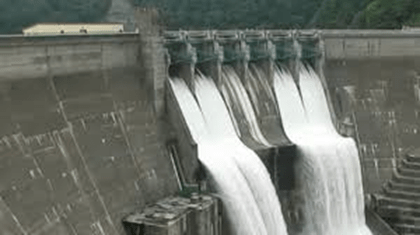
Hydropower or hydroelectricity refers to the conversion of energy from flowing water into electricity. Modern hydro turbines can convert as much as 90% of the available energy into electricity. Hydroelectric power generates about 10% of the nation’s energy. Hydropower is fueled by water, so it’s a clean fuel source, meaning it won’t pollute the air like power plants that burn fossil fuels, such as coal or natural gas.

3. TIDAL ENERGY

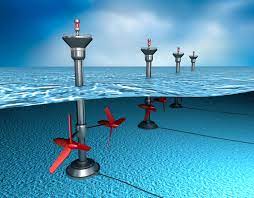
It is harnessed from the tides produced in the ocean. The turbine and generator converts the movement of water coming from change in tide, the kinetic energy, into electricity. Tidal Energy has an expensive initial cost which may be one of the reasons tidal energy is not a popular source of renewable energy.

4. SOLAR ENERGY

Solar energy as energy obtained from the sun. Solar energy is the cleanest and most abundant renewable energy source. It can be used in many appliances like Solar heat collectors, Solar cells, Solar cookers, Solar water heaters Solar power plant, Solar furnace.

Top 10 Residential Uses for Solar Energy

The Success Story of Jio

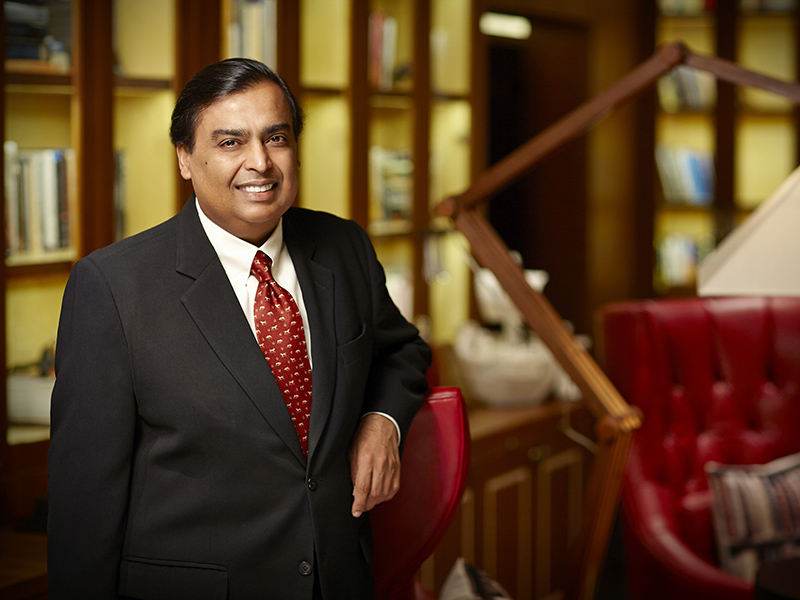
Although the richest Asian in the world, Mukesh Ambani said in 2018, “The idea of Jio was first seeded by my daughter, Isha, in 2011”, the real origin of Mukesh Ambani wanting to start a telecom company goes way back to 2002. The Reliance group first entered the telecom business with Reliance Infocomm in 2002, but then a cold war had begun between the brothers, Mukesh Ambani and Anil Ambani.

Three years later, unable to run the Reliance empire together, the brothers split up, ending a long business feud. It was their mother who divided the business between the two. While Mukesh Ambani got control over the exploration and production, petrochemicals, refineries and marketing under the name Reliance Industries, Anil Ambani got Reliance Energy, Reliance Infocomm, and Reliance Capital, and named his company Reliance-Anil Dhirubhai Ambani Group (R-Adag).

In 2006 the brothers signed a contract saying the two will not venture into markets that the other is in but this contract was discontinued in 2010 for various reasons, which in turn allowed Mukesh Ambani to finally venture into the telecommunications market.

Two weeks later, RIL bought 95% stake in Infotel Broadband Services, the only company to have won the auction of broadband spectrum for pan-India, for USD 1 Billion.

In 2013, RIL renamed Infotel Broadband Services as Reliance Jio Infocomm, becoming the only company to have a pan-India broadband spectrum, which it later used to roll out 4G services. But it took Reliance about six years to launch commercial mobile network services. But once it commercially launched in September 2016, it took the market by storm.

When Mukesh Ambani unveiled Jio in 2016, he announced Jio’s data, voice call and video call, and the many Jio applications, like JioTV, JioCinema, and JioMusic, among others, would be available for free till the end of the year, which was later, extended till March 2017.

Over the next three years, Reliance offered Jio services and 4G smartphones at extremely cheap prices, which resulted in Jio rising as the largest telecom operator with over 330 million subscribers in mid of 2019.

To expand its territories, between July 2016 and August 2019, Reliance acquired stakes in 18 companies in areas including artificial intelligence, media, entertainment, software simulation, logistics, and music streaming. During the ongoing pandemic he raised over USD 20 billion from global investors including tech giants like Facebook and Google.

Mukesh Ambani strategically transformed his telecom venture into a full-fledged digital tech platform, often compared to Jack Ma’s Alibaba in China. Unlike other Indian telecom giants, Airtel and Vodafone-Idea, Reliance never considered Jio as just a telecom venture.

Experts believe that this is just the beginning of the long and ambitious mission of Mukesh Ambani with Jio.

THE UNION LIST

OVERVIEW :-

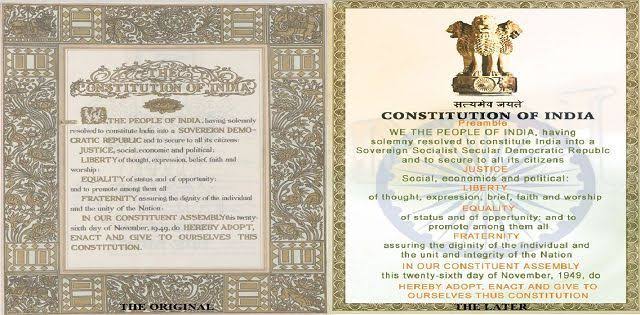
When India got Independent in 1947 then at that time there was no rules and regulations of how the government of India will work. Therefore, The Constitution of India was designed and came into existence. The Constitution of India clearly defines the powers that resides with Central and State Governments. In the Seventh Schedule of Constitution of India there are 3 lists clearly mentioned to distribute powers between Central and State Governments. The 3 lists are – Union, State and Concurrent List. Out of which, Central Government powers are mentioned in Union List. It has total 90+ points mentioned which keeps on changing as per the Amendment in the Constitution by the Parliament.

CONSTITUTION OF INDIA

SUBJECTS MENTIONED IN THE UNION LIST :-

DEFENCE –

  1. The duty to defend India at the time of war and to safeguard the people of India during and after the war will reside with the Central Government.
  2. Naval, military and air forces; any other armed forces of the Union.
    [2A. Deployment of any armed force of the Union or any other force
    subject to the control of the Union or any contingent or unit thereof in any
    State in aid of the civil power; powers, jurisdiction, privileges and liabilities
    of the members of such forces while on such deployment.]
  3. Delimitation of cantonment areas, local self-government in such areas,
    the constitution and powers within such areas of cantonment authorities and
    the regulation of house accommodation (including the control of rents) in
    such areas.
  4. Naval, military and air force works.
  5. Arms, firearms, ammunition and explosives.
  6. Atomic energy and mineral resources necessary for its production.
  7. Industries declared by Parliament by law to be necessary for the
    purpose of defence or for the prosecution of war.
  8. Central Bureau of Intelligence and Investigation.
  9. Preventive detention for reasons connected with Defence, Foreign
    Affairs, or the security of India; persons subjected to such detention.
    FOREIGN AFFAIRS –
  10. Foreign affairs; all matters which bring the Union into relation with
    any foreign country.
  11. Diplomatic, consular and trade representation.
  12. United Nations Organisation.
  13. Participation in international conferences, associations and other
    bodies and implementing of decisions made thereat.
  14. Entering into treaties and agreements with foreign countries and
    implementing of treaties, agreements and conventions with foreign countries.
  15. War and peace.
  16. Foreign jurisdiction.
  17. Citizenship, naturalisation and aliens.
  18. Extradition.
  19. Admission into, and emigration and expulsion from, India; passports
    and visas.
  20. Pilgrimages to places outside India.
  21. Piracies and crimes committed on the high seas or in the air; offences
    against the law of nations committed on land or the high seas or in the air.
    TRANSPORT AND COMMUNICATION –
  22. Railways.
  23. Highways declared by or under law made by Parliament to be national
    highways.
  24. Shipping and navigation on inland waterways, declared by Parliament
    by law to be national waterways, as regards mechanically propelled vessels;
    the rule of the road on such waterways.
  25. Maritime shipping and navigation, including shipping and navigation
    on tidal waters; provision of education and training for the mercantile marine
    and regulation of such education and training provided by States and other
    agencies.
  26. Lighthouses, including lightships, beacons and other provision for
    the safety of shipping and aircraft.
  27. Ports declared by or under law made by Parliament or existing law
    to be major ports, including their delimitation, and the constitution and
    powers of port authorities therein.
  28. Port quarantine, including hospitals connected therewith; seamen’s
    and marine hospitals.
  29. Airways; aircraft and air navigation; provision of aerodromes;
    regulation and organisation of air traffic and of aerodromes; provision for
    aeronautical education and training and regulation of such education and
    training provided by States and other agencies.
  30. Carriage of passengers and goods by railway, sea or air, or by national
    waterways in mechanically propelled vessels.
  31. Posts and telegraphs; telephones, wireless, broadcasting and other
    like forms of communication.
  32. Property of the Union and the revenue therefrom, but as regards
    property situated in a State 1*** subject to legislation by the State, save in so
    far as Parliament by law otherwise provides.

  1. Courts of wards for the estates of Rulers of Indian States.
    TRADES, BANKING AND COMMERCE –
  2. Public debt of the Union.
  3. Currency, coinage and legal tender; foreign exchange.
  4. Foreign loans.
  5. Reserve Bank of India.
  6. Post Office Savings Bank.
  7. Lotteries organised by the Government of India or the Government of
    a State.
  8. Trade and commerce with foreign countries; import and export across
    customs frontiers; definition of customs frontiers.
  9. Inter-State trade and commerce.
  10. Incorporation, regulation and winding up of trading corporations,
    including banking, insurance and financial corporations, but not including
    co-operative societies.
  11. Incorporation, regulation and winding up of corporations, whether
    trading or not, with objects not confined to one State, but not including
    universities.
  12. Banking.
  13. Bills of exchange, cheques, promissory notes and other like instruments.
  14. Insurance.
  15. Stock exchanges and futures markets.
  16. Patents, inventions and designs; copyright; trade-marks and
    merchandise marks.
  17. Establishment of standards of weight and measure.
  18. Establishment of standards of quality for goods to be exported out of
    India or transported from one State to another.
  19. Industries, the control of which by the Union is declared by Parliament
    by law to be expedient in the public interest.
  20. Regulation and development of oilfields and mineral oil resources;
    petroleum and petroleum products; other liquids and substances declared by
    Parliament by law to be dangerously inflammable.
  21. Regulation of mines and mineral development to the extent to which
    such regulation and development under the control of the Union is declared
    by Parliament by law to be expedient in the public interest.
  22. Regulation of labour and safety in mines and oilfields.
  23. Regulation and development of inter-State rivers and river valleys to
    the extent to which such regulation and development under the control of
    the Union is declared by Parliament by law to be expedient in the public
    interest.
  24. Fishing and fisheries beyond territorial waters.
  25. Manufacture, supply and distribution of salt by Union agencies;
    regulation and control of manufacture, supply and distribution of salt by
    other agencies.
  26. Cultivation, manufacture, and sale for export, of opium.
  27. Sanctioning of cinematograph films for exhibition.
  28. Industrial disputes concerning Union employees.
    EDUCATION AND PRESERVATION OF HERITAGE SITES –
  29. The institutions known at the commencement of this Constitution as
    the National Library, the Indian Museum, the Imperial War Museum, the
    Victoria Memorial and the Indian War Memorial, and any other like institution
    financed by the Government of India wholly or in part and declared by
    Parliament by law to be an institution of national importance.
  30. The institutions known at the commencement of this Constitution as
    the Benares Hindu University, the Aligarh Muslim University and the 1
    [Delhi
    University; the University established in pursuance of article 371E;] any other
    institution declared by Parliament by law to be an institution of national importance.
  31. Institutions for scientific or technical education financed by the
    Government of India wholly or in part and declared by Parliament by law to
    be institutions of national importance.
  32. Union agencies and institutions for—
    (a) professional, vocational or technical training, including the
    training of police officers; or
    (b) the promotion of special studies or research; or
    (c) scientific or technical assistance in the investigation or detection
    of crime.
  33. Co-ordination and determination of standards in institutions for higher
    education or research and scientific and technical institutions.
  34. Ancient and historical monuments and records, and archaeological
    sites and remains, 1
    [declared by or under law made by Parliament] to be of
    national importance.
  35. The Survey of India, the Geological, Botanical, Zoological and
    Anthropological Surveys of India; Meteorological organisations.
    JURISDICTION AND OTHER SERVICES –
  36. Census.
  37. Union Public Service; All-India Services; Union Public Service
    Commission.
  38. Union pensions, that is to say, pensions payable by the Government
    of India or out of the Consolidated Fund of India.
  39. Elections to Parliament, to the Legislatures of States and to the offices
    of President and Vice-President; the Election Commission.
  40. Salaries and allowances of members of Parliament, the Chairman and
    Deputy Chairman of the Council of States and the Speaker and Deputy
    Speaker of the House of the People.
  41. Powers, privileges and immunities of each House of Parliament and
    of the members and the Committees of each House; enforcement of attendance
    of persons for giving evidence or producing documents before committees of
    Parliament or commissions appointed by Parliament.
  42. Emoluments, allowances, privileges, and rights in respect of leave of
    absence, of the President and Governors; salaries and allowances of the Ministers for the Union; the salaries, allowances, and rights in respect of leave
    of absence and other conditions of service of the Comptroller and Auditor-
    General.
  43. Audit of the accounts of the Union and of the States.
  44. Constitution, organisation, jurisdiction and powers of the Supreme
    Court (including contempt of such Court), and the fees taken therein; persons
    entitled to practise before the Supreme Court.
  45. Constitution and organisation 1
    [(including vacations)] of the High
    Courts except provisions as to officers and servants of High Courts; persons
    entitled to practise before the High Courts.
    2
    [79. Extension of the jurisdiction of a High Court to, and exclusion of the
    jurisdiction of a High Court from, any Union territory.]
  46. Extension of the powers and jurisdiction of members of a police force
    belonging to any State to any area outside that State, but not so as to enable
    the police of one State to exercise powers and jurisdiction in any area outside
    that State without the consent of the Government of the State in which such
    area is situated; extension of the powers and jurisdiction of members of a
    police force belonging to any State to railway areas outside that State.
  47. Inter-State migration; inter-State quarantine.
    TAXES –
  48. Taxes on income other than agricultural income.
  49. Duties of customs including export duties.
  50. Duties of excise on tobacco and other goods manufactured or produced
    in India except—
    (a) alcoholic liquors for human consumption;
    (b) opium, Indian hemp and other narcotic drugs and narcotics,
    but including medicinal and toilet preparations containing alcohol or any
    substance included in sub-paragraph (b) of this entry.
  51. Corporation tax.
  52. Taxes on the capital value of the assets, exclusive of agricultural land,
    of individuals and companies; taxes on the capital of companies.
  53. Estate duty in respect of property other than agricultural land.
  54. Duties in respect of succession to property other than agricultural
    land.
  55. Terminal taxes on goods or passengers, carried by railway, sea or air;
    taxes on railway fares and freights.
  56. Taxes other than stamp duties on transactions in stock exchanges
    and futures markets.
  57. Rates of stamp duty in respect of bills of exchange, cheques,
    promissory notes, bills of lading, letters of credit, policies of insurance, transfer
    of shares, debentures, proxies and receipts.
  58. Taxes on the sale or purchase of newspapers and on advertisements
    published therein.
    1
    [92A. Taxes on the sale or purchase of goods other than newspapers,
    where such sale or purchase takes place in the course of inter-State trade or
    commerce.]
    2
    [92B. Taxes on the consignments of goods (whether the consignment is
    to the person making it or to any other person), where such consignment takes
    place in the course of inter-State trade or commerce.]
    *[92C. Taxes on services.]
  59. Offences against laws with respect to any of the matters in this List.
  60. Inquiries, surveys and statistics for the purpose of any of the matters
    in this List.
  61. Jurisdiction and powers of all courts, except the Supreme Court, with
    respect to any of the matters in this List; admiralty jurisdiction.
  62. Fees in respect of any of the matters in this List, but not including fees
    taken in any court.
  63. Any other matter not enumerated in List II or List III including any other taxes that is not mentioned in those Lists.

*Reference of these subjects is taken from The Constitution of India.

Links :-

https://legislative.gov.in/constitution-of-india

Acid Attacks : The women in danger

Acid Attacks …why??? The person you love if doesn’t love you back you will do the shameless act!!!!! Why People are mute .. why they don’t talk about this ruthless act…… The Perpetrators of these attacks throw corrosive liquids at their victims, usually at their faces, burning them, and damaging skin tissue , often exposing and sometimes dissolving the bones. Acid attacks can often lead to permanent blindness.

IN INDIA

In India, acid attacks are at an all-time high and increasing every year, with 250–300 reported incidents every year, while the “actual number could exceed 1,000, according to Acid Survivors’ Trust International”.

THE MOTIVES OF PERPETRATORS

Some of the most common motivations of perpetrators include:

Personal conflict regarding intimate relationships and sexual rejection
Sexual-related jealousy and lust
Revenge for refusal of sexual advances, proposals of marriage, and demands for dowry
Racial motivations
Social, political, and religious motivations
Gang violence and rivalry
Anti-minority discrimination
Conflicts over land ownership, farm animals, housing, and property

ARE WOMEN SAFE

Are women safe?????? I question again are women safe in our motherland. Every day each and every women wears a shroud of fear , staying alert and trying to fight all the odds of attacks. Maybe it’s molestation,attacks, rape , why!!!men why ?? Why do we forget we all came from the womb of some woman who fought for 9months just to give birth to someone who will make another woman’s life hell.. NO NO NO… We all have to fight against the odds of the men where our mother our sister our lover becomes a part of a ruthless act killing them mentally, Physically, emotionally and most importantly the way in which society see her changes …let’s us all come together to fight the demons and kill the devil’s threating our goddesses…I am taking vow of fighting the Maoists and I request all of you to be together to create a better place to live….

Top 5 world’s most valuable company.

There are many top companies in the world. But we will look at the top 5 companies in the world by there revenue. In this blog we are going see the companies like Google, Apple, Microsoft, Amazon, Samsung etc. Here are the top 5 companies based on the market capitalization, brand value and sales values.

  1. Apple

Undoubtedly Apple, is the number one company in the world with $2.17 Trillion market capitalization. Apple is the American Multinational technology company that specializes in consumer electronics. Apple is the only company with over $2 trillion market capitalization in this world. It has the sales value $267.7 billion USD. It was founded on 1st April 1976 by Steve Jobs, Ronald Wayne, and Steve Wozniak. Apple headquarter is located at cupertino, California USA. The apple’s Iphone is the most sold phone in the world. Apple products such Iphone, Macintosh, Apple TV are most famous and well known for its brand. Tim cook is the current CEO of Apple. It has currently 137,000 employees in it.

2. Amazon

Amazon comes second in our list with $1.67 Trillion market capitalization. Amazon is a american multinational technology company which focuses on e-commerce, cloud computing, artificial intelligence and digital streaming. Jeff Bezos founded amazon in 1994.The sales value of amazon is $296.6 Billion. Amazon headquarter is located at Seattle, Washington DC, USA. Andy jassy is the current CEO of amazon. The brand value of amazon is $254.1 Billion. It currently have 780,000 employees in it.

3. Google

Google comes third in top 10 companies with $1.59 Trillion market capitalization. Google LLC is a American Multinational technology company that specializes in internet related service like search engine, cloud computing and online advertising. Larry page and Sergey Brin founded google in 1996.The brand value of Google is $191.22 Billion. The headquarters of Google is located at Mountain view, California, USA. Sunder Pichai is the current CEO of Google. It currently have 140,000 employees in it.

4. Microsoft

Microsoft comes fourth in list with $1.9 Trillion market capitalization. Microsoft is a American Multinational technology company which produces computer software and personal computers. Bill Gates and Paul Allen founded Microsoft in 1975. The brand value of Microsoft is $140.6 Billion and sales value is $138.6 Billion. The headquarters of Microsoft is located at Redmond, Washington, USA. Satya Nadella is the current CEO of Microsoft. It currently has 144,000 employees in it. It has its office in more than 100 countries.

5. Samsung

Samsung comes fifth in our list with $278.8 Billion market capitalization. Samsung is a South Korean Multinational Electronic company. Lee Byung-chul is the founder of Samsung company. Samsung phone is one of the most popular phone in the world. The brand value of Samsung is $102.46 Billion and the sales value is $197.6 Billion. The headquarters of Samsung is located at Seoul, South Korea. Samsung has three CEO’s they are Ki Nam Kim, Hyun Suk Kim, and Dong Jin Koh. It currently has 105,000 employees in it. It has its office in more than 70 countries.

These are the top 5 most valuable companies in the world. That’ll from my side. I hope you like it. Thank you.

World Day for International Justice

World day for International Justice is observed on 17th July every year, also known as International Justice Day. It is a day which brings together all the people who support justice, advocate victims’ rights, and find aid in the prevention of crime that threatens world’s peace, safety, and well being. July 17 is the date of the adoption of the treaty that created the International Criminal Court. On 1 June 2010, at the Review Conference of the Rome Statute held in Kampala (Uganda), the Assembly of State Parties decided to celebrate 17 July as the Day of International Criminal Justice. 

Each year, people around the world use this day to host events to promote international criminal justice, especially support for the International Criminal Court. 

History  

This day is designated as World Day for International Justice since it marks the 20th anniversary of the Rome Statute’s adoption in 1998. The International Criminal Court (ICC) was formed with the aid of this treaty. Since that day in 1998, 139 nations have signed the court’s treaty, and over 80 countries, representing every area of the world, have recognized it. 

Theme  

This year’s World Social Justice Day subject is “social justice in the digital economy”. Technological developments over the last decade have aided humans in navigating the perilous terrain of a globe ravaged by Covid-19. Employees were able to work from home because of what the UN refers to as “digital labor platforms,” which gave “income-generating possibilities and advantages from flexible work arrangements.” However, this has compounded concerns about the regularity of employment and income, the ability to organize or join trade unions, and the utilization of skills. 

Significance  

This day is observed because it is critical to raise public awareness and unity in favor of justice, as well as to promote victims’ rights. This day also draws individuals from all around the world to focus on critical concerns. It defends individuals from various crimes and cautions those who endanger the nation’s peace, security, and well-being. 

Various activities are being held throughout the world to celebrate this day and to promote the International Criminal Court (ICC). This day is also promoted by a number of news outlets, newspapers, and radio stations. Several organizational groups draw people’s attention to certain concerns such as violence against women, genocide, and so on. 

Cinema and youth of India

Cinema is a huge industry in itself. Indian cinema is considered more spicy and entertaining. Television shows, bollywood and tollywood are the industries of cinema. It is a long journey of success and luck. 

When cinema started in India.

In India cinema started on 7 July 1896 by the lumiere brothers at watson hotels in Mumbai. They made a showcase of six films at that time.

Cinema was a combination of motion pictures. Earlier there was no sound in movies. The whole story of movie dialogue time was dictated by a person. Dadasheb phalke was the first who was introduced in Indian cinema. He produced and directed the movie “Raja harishchandra. It was the first silent movie of our nation. All the characters were male. Dadasaheb phalke also known as the father of the Indian cinema.  

Evolution  in cinema 

Evolution of cinema in India is just as dramatic as the cinema itself. You must have read about the Darwin evolution theory. In the late 1910s we found our first mute film and in 1931 ardeshir irani introduced the first sound movie alam ara. 

The first coloured movie was kisan kahaniya in 1937.

The 1960s is known as the golden era of cinema. 1960 was the time when we got many pictures and legendary actors and actresses. Earlier the involvement of the women in cinema was absent. That was the belief of the people that women should not appear on television. They would be objectified if they showed themselves on screen.  Drugabai Kamat (marathi) was the first female actress of Indian cinema.

Fight, love, action and song are always part of the cinema. Earlier graphics were not used. So-called heroism always dominates the cinema. 

Youth of India and cinema

Cinema is always loved by every generation of India. Cinema provides the material for all generation needs. Cartoons for children, love and motivational content for youth and religious content for older. 

But the youth of India is impacted more than others. They are really influenced by the movies and TV series. Movies like Triranga, border, tango chalier and many other army based movies invoke the feeling of nationalism. They want to choose the army. Bhagwan, khani ghar ghar ki, swarg all the movies which made us realise that our elders do so much for us. How  we should treat them when they grow old.  Youth is really inspired by what they see in the cinema. They start to carry that behaviour. 

Eve teasing or following a girl is something heroic in the cinema. As a result most of the youth do the same. But they forget that the movie is just a fiction of a person’s mind. The luxurious life which shows up in the movies also is a dream of youth. We often see people say that I copy the style of karina, katrina or any other actress. Even the choices of youth, their mindset is also influenced by the cinema. Young boys and girls consider that love is greater than anything. They learn from cinema that a career oriented person is selfish. Workaholics and successful people are rude and especially that one day you met a person who fell in love, left your career, still you became rich and returned back to your family and love. I am not denying that this couldn’t be true but the journey of success took time.

Youth of India spend most of their time on streaming aur watching movies. If the content is more science based, it could be the best combination of learning. Because motion pictures work with imagination. 

High crop yield possible, Former NASA scientist makes amazing discovery

  • A former NASA scientist Parag Narvekar has created sensors to enhance farm produce for farmers in Nashik, Maharashtra. He claims that new sensors will assist farmers to understand the weather and adjust their use of irrigation and fertilisers. According to Narvekar, the new sensors are more cost-effective than the already existing ones and have made sensors of Rs 10,000 that earlier use to cost Rs 1.5 lakh.

Cost-effective Sensors to Improve Farm Produce

  • A resident of Nashik, Narvekar owns a company Sensartics that makes weather sensors and offers cost-effective solutions to farmers. Narvekar’s company has also collaborated in the past with more organisations to provide solutions to local farmers’ problems. In February this year, Sensartics collaborated with Sahyadri Farmers Producers Company (FPC) to establish sensors in Nashik’s grape farms to safeguard the farmers from losing their harvest because of odd weather. The team installs sensors at the root zone levels of the plants. These sensors calculated temperature, soil moisture and soil electrical conductivity. Sensors placed in the canopies measured humidity and leaf wetness other than temperature.
  • Narvekar, with his team at Sensartics, has also established village level local weather stations that can provide precise weather forecasts beneficial for the local farmers, the efforts of Narvekar and his company have brought state-of-the-art meteorological stations within the reach of farmers.
  • With this they Gained greater clarity around the potential of sensors to improve agriculture and food security.

reference- https://d-lab.mit.edu/research/mit-d-lab-cite/internet-things-low-cost-sensors-agriculture

https://www.researchgate.net/publication/321740995_A_Cost-effective_Smart_Farming_System_with_Knowledge_Base

India Women Tour England, 2021

It was from June 16 to 14 July that two of the strongest women cricket teams played in all three versions: Test match, ODI, T20.

Test

Held between June 16 to June 19, it was an anticipating match which resulted in a tie. Batting first England had made a gargantuan score of 396 in 121 overs with H Knight at 95, Sophia Dunkley at 74 and Beaumont at 66 runs. On the other side Sneh Rana and Deepti Sharma raised the hopes for India by taking 4 and 3 wickets. The openers of India played well, Smriti scoring 78 and Shafali 96. Despite their efforts the team ended up at 231 whereas Eccleston took 4 wickets. In their second innings the team scored a good 344 runs with Sneh’s 80 runs and Eccleston with 4 wickets and this ended up with tie. Shafali Verma was the player of the match.

ODI

3 ODIs took place between the 2 teams with England dominating with 2 win and India with 1. One interesting thing happened that whosoever chose fielding first won the game. In the first match, India batting first ended at 201 score with the courtesy of Mithali’s 72, England won the game easily finishing it in 35 overs with Beaumont’s 87 and Sciver’s 74. The second match was much more entertaining where India ended up at 221 and it took 47 overs for England to win with Dunkley’s 73. India won the third match, fielding first India restricted England to 219 and surpassed this score in 46.3 overs.

T20

Here also England won 2 out of 3 matches. In the first match England scored a staggering 177 runs. It was due to rain that India got restricted to 8.4 overs and lost the match by 18 runs. India won the second match, scoring 148 runs to which England lost by 8 runs. England won the third match by 8 wickets when India scored 153 runs with Smriti’s 70 but D Wyatt’s 89 overshadowed her and led her country to the victory.

Female foeticide – Bitter truth of society

The process of finding out the sex of a foetus and then undergoing abortion if it is a girl is called Female foeticide.

According to certain section of the Indian penal code for forced abortion ,causing death of an unborn child or intentionally preventing a child being born alive are punishable offence.

The Indian government has passed Pre-Conception and Pre-Natal Diagnostic Techniques Act (PCPNDT) in 1994 to ban and punish prenatal sex screening and female foeticide.

It is currently illegal in India.

Besides this the prenatal diagnostic technique regulation and prevention of misuse act consider engaging and sex selective abortion using prenatal diagnosis technique are punishable.

Why I am killed by my parents
Why??
Could I harm someone
Or can I do something wrong
If no then why I am  killed by my parents
Why they killed me
Just tell me
Were my dreams only for dying…?
Was I meant nothing for you?
Why your hand don’t tremble while taking my life?
Why..?
Please don’t kill me …
I also wants to live
I also want to enjoy every moment of my life
Please don’t kill me
Please….

The natural sex ratio is assumed to be between 103 and 107, and any number above it is considered as suggestive of female foeticide.

Sex selection is a practice which takes place among some uneducated,poor sections or a particular religion of the Indian society.

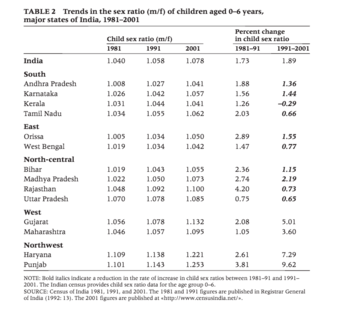
According to the decennial Indian census, the sex ratio in 0 to 6 age group in India has risen from 102.4 males per 100 females in 1961, to 104.2 in 1980, to 107.5 in 2001, to 108.9 in 2011.

Child sex ratio is significantly higher in certain western and northwestern states such as MaharashtraHaryanaJammu and Kashmir (118, 120 and 116, as of 2011, respectively).

The western states of Maharashtra and Rajasthan 2011 census found a child sex ratio of 113, Gujarat at 112 and Uttar Pradesh at 111.

Urban India has higher child sex ratio than rural India according to 19912001 and 2011 Census data, implying higher prevalence of female foeticide in urban India.

The following table presents the child sex ratio data for India’s states and union territories, according to 2011 Census of India for population count in the 0-1 age group.The data suggests 18 states/UT had birth sex ratio higher than 107 implying excess males at birth and/or excess female mortalities after birth but before she reaches the age of 1, 13 states/UT had normal child sex ratios in the 0-1 age group, and 4 states/UT had birth sex ratio less than 103 implying excess females at birth and/or excess male mortalities after birth but before he reaches the age of 1.

Due to male dominancy in society ,the male babies are preferred because they provide manual labour and success to the family lineage.

A son is preferred as an asset since he can earn and support the family but a daughter is a liability since she will be married off to another family or she will not contribute financially to her parent or due to dowry system.

Dowry is the payment from bride’s family to the groom family at the time of marriage.

Dowry is the main reason behind the female foeticide.

Dowry system legally ended with the dowry prohibition act of 1961 ,the impossibility of monitoring families and prevalence of corruption have led to its continuance all over India.

The advancement in technology is the major cause of female foeticide.

Some doctors do this act to fulfill their moneydesire

People in India usually see men’s work as “productive” and contributing the family, while the social perception of female labor does not have that connotation. This also ties to the fact that it is easier for men in India to get high paying jobs and provide financially for their families.

Role of panchayat members


Panchayat members should

  • give accurate information on the laws pertaining to this issue
  • find out where it is being practiced in the village and investigate it immediately
  • register all births and deaths under the purview of the panchayat
  • raise awareness about gender sensitivity through public education programmes
  • prevent female foeticide with assistance from the ANM and local mid-wife.

Increasing awareness of the problem has led to multiple campaigns by celebrities and journalists to combat sex-selective abortions.

Charvaka Philosophy: Epistemology and Metaphysics

Charvaka is a heterodox school of Indian Philosophy and is materialistic in nature. It believes that true knowledge can be achieved only when it is perceptible to our 5 senses and our mind. Therefore Charvaka accepts only ‘Pratyaksha’ (perception) as its epistemology. It rejects Anumana, Arthpati and Upmana because these epistemologies include pure ‘reasoning’ which is denied by Charvaka. However, it does accepts Shabda (authority/testimony) to some extent if and only if it is perceptible in nature i.e it accepts only Authorative epistemology of perceptible objects. The denial of Anuplabdhi ( non-existent/non-perception) is clear because Charvaka’s philosophy does not believe in what can’t be perceived. 

The criticisms to Charvaka’s Philosophy are many. First, due to Charvaka accepting only one source of knowledge (Pratyaksha), it restricts knowledge. Second, perception knowledge is not always valid knowledge. For e.g hallucinations and mirages. Third, to understand the objects we perceive we require the usage of inference no matter how small. Lastly, it is impossible to have a discussion and it stands impractical if we ignore the other 5 epistemologies.

Charvaka’s Metaphysics follows the logical consequence of it’s epistemology. There are 3 aspects to Charvaka’s metaphysics. 

1. Acceptance of 4 elements

Charvaka accepts only 4 elements out of the 5 i.e Air, Water, Fire and Earth. It rejects space because space can’t be perceived. Using the 4 elements Charvaka explains the creation of consciousness. It states that the 4 elements are independent and have a conscience of their own, due to which they come together and merge, leading to the creation of life or consciousness. 

2. Denial of God. 

Charvaka completely denies the existence of God. Charvaka states that God can’t be perceived and that which can’t be perceived does not exist. Secondly, Charvaka has already credited the 4 elements for the creation of life and therefore denies that God is the being responsible for creation. As for any other belief related to God, Charvaka states that it is purely based on human faith and has no proof. 

3. Denial of Soul

Since soul has a consciousness and Charvaka cannot deny consciousness Charvaka comes up with its own theory of soul. It denies the regularly accepted definition of soul i.e. soul is eternal and is a separate entity from human body. Charvaka says that soul is nothing but a body endowed with consciousness. Soul and body are one and inseparable. 

To this there rises a criticism that if body and soul are one then why is it that the body can be perceived but the soul cannot. Thus leading to the self-contradiction of Charvaka’s own soul theory.

Charvaka although a less known philosophy compared to others does stand with its own point. There are contradictions but what makes Charvaka a worthy philosophy is it’s courageous stance in an era where Vedas and Upanishads were everything. Charvaka has shown their strong views despite the heavy criticism. What makes interesting is their theory of Hedonism and pursuing what one wants for the satisfaction of their life. 

SEX VS GENDER (IDENTITY) VS SEXUALITY (SEXUAL ORIENTATION)

A long-time running misconception among people is that sex, gender and sexuality are the same. And that there exists only 3 genders/sex/sexuality in the world i.e. Male, Female and Intersex. Often people do not even know about Intersex and believe that Male and Female are Bisht 2 the only two beings possible. Therefore, before we move forward, I’d like to make these concepts clear and spread some basic knowledge about the difference between them.
Sex: In general terms ‘sex’ refers to the biological differences between males and females, such as the genitalia and genetic differences. (Chromosomes) Gender (Gender Identity): Gender refers to the socially constructed characteristics of women and men, such as norms, roles, and relationships of and between groups of women and men.
It varies from society to society and can be changed. This is the ‘binary’ view of gender, where only two genders are accepted i.e. man and woman. The norms laid for the way a man and a woman should behave in society is known as gender role.
Gender Identity on the other hand, is an individual’s view of themselves. It is one’s internal sense of being a man, a woman, both or neither. How much do you feel like a man, a woman, or something else? This is your gender identity. Gender is a spectrum, because you could feel a little like a man, a lot like a woman, and maybe also a bit like something else. Or you could feel like none of these. That would make you agender, meaning that you don’t feel any of these gender identities fit you. Since every individual has a unique sense of experiencing things differently, gender can’t be restricted to just male and female.
When talking about gender we have many gender related terms that are a must-know for anyone. Here are some of them listed below!

  1. Gender Expression: Gender expression is how a person publicly expresses or presents their gender. This can include behaviour and outward appearance such as dress, hair, make-up, body language and voice. A person’s chosen name and pronoun are also common ways of expressing gender. Therefore, you should always ask a person’s Bisht 3 pronoun when you meet them in order to address them properly and not misgender them as it can be hurtful and disrespectful.
  2. Transgender: “Transgender” is an umbrella term that describes people whose gender identity or expression does not match the sex they were assigned at birth. For example, a transgender person may identify as a woman despite having been born with male genitalia.
  3. Genderfluid: Gender fluidity is a gender identity that may change over time or according to relational or psychological state, and also incorporates the feeling of not having a gender. In practice, gender fluid people may express masculinity, femininity, or an androgynous self in their personality, sexual experiences, and self-concept.
    Sexuality (Sexual Orientation): Sexuality or sexual orientation describes a person’s enduring physical, romantic, and/or emotional attraction to another person. In short it is the individual’s preference to the sex he/she/they feel attracted to, be it sexually or romantically.
    (for e.g. straight, gay, lesbian, bisexual, asexual) Coming Out: Coming out is a process of understanding, accepting, and valuing your sexual orientation/identity. It involves both exploring your identity and sharing your identity with others.

World Emojis Day

Emojis is became a language ,the language of 21st century .The Emojipedia will give you all the information related to the Emojis and what is the meaning of the particular emojis.

Happy World Emojis Day😜

TOP 5 ALTERNATIVES OF MOVIE4K

ABOUT MOVIE4K :-

MOVIE4K is a very well-known and one of the best entertainment providing website in the market which allows its users to download their favourite movies on their PCs, laptops and mobile. One of its major advantage is that it just not allows downloading of movies, but also provides some TV shows and web series for its users. The contents that are available on this website can be downloaded in various resolutions from High-Definition (HD) to standard quality. The contents are available in multiple languages also which is also a very helpful feature for those who do not understand a specific language. All the latest movies are uploaded on the website within a few days of its release and this is one of the major reason that MOVIE4K gets so much appreciation and liked by a large number of users.
But an important and genuine question arises that when MOVIE4K is such a brilliant and user-friendly website than why we are discussing about this topic of finding alternatives of MOVIE4K???
The answer to this question is that nowadays users are facing some serious issues with this website. MOVIE4K website has been attacked by some minor bugs. Due to these bugs the performance of the website has been hampered and it is working slower than usual. In today’s world speed and accuracy is something that everybody wants and therefore, slower speed is always a matter of concern. Another thing that is going against this website is its weak user privacy. Nowadays when user privacy is given the highest priority by both users and the company then lack of good security will always go against you. As this a popular website and is used by a large number of users, anything like this is not acceptable. Hence, we have to look for some other alternatives of this website.

ALTERNATIVES OF MOVIE4K :-

  • 123 Movies :- 123 Movies is basically an online movie searching website which operates from Vietnam. If you are looking for exclusive content on internet for entertainment which is not available easily elsewhere, then site is worth useful to you. Yes! This website is created exclusively for streaming and downloading high quality 4K content at free of cost! What else would anybody want?
    This website was given the tag of the world’s “most popular illegal site” by MPAA association in March 2018. In today’s world when every website is choked with those unwanted and annoying ads, 123 Movies provides ads free user-interface to its users. Yes! You read it right. No ads!
    Many times it was tried to somehow managed close or block this website but every time some other websites similar of its kind appears which shows its immense popularity in the market.
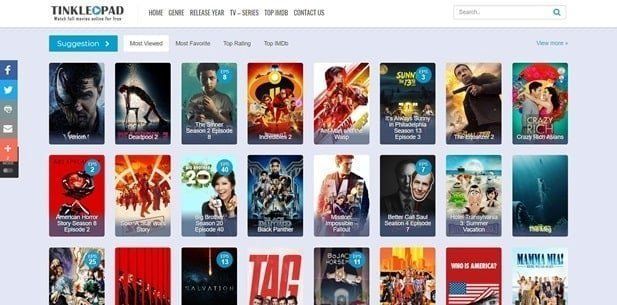
  • TinklePad :- This is again an alternative website for Movie4K. Users can download free movies in 4K resolution. Filters option is also available for the users on the basis of genre like action, animation, mystery, sci-fi, horror, etc. Additionally, TinklePad also provides all the latest web series for its users. Mobile app version of this website is also available. Thus, if you are searching for an alternative of Movie4K then TinklePad is worth considerable.
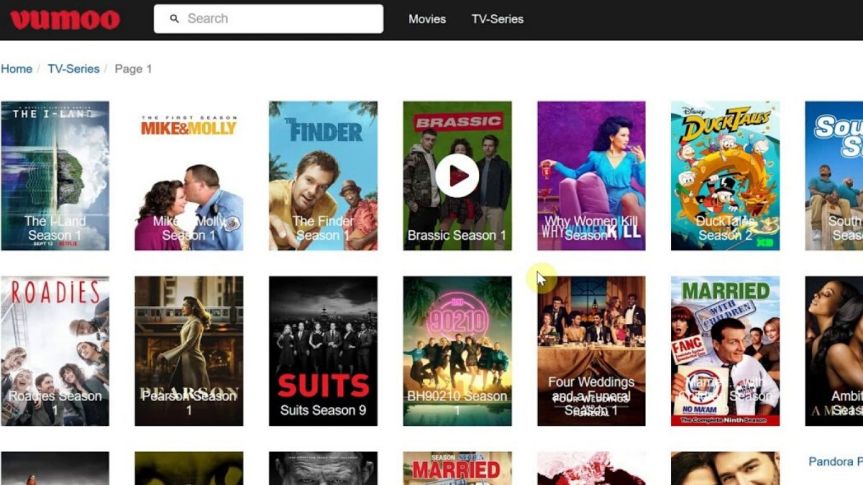
  • Vumoo :- Vumoo is again a dynamic website if you are in search of an alternative. This website gives a nice blend of both Hollywood movies and English TV series. Other than this this website also has many Korean and Japanese films and animation series.
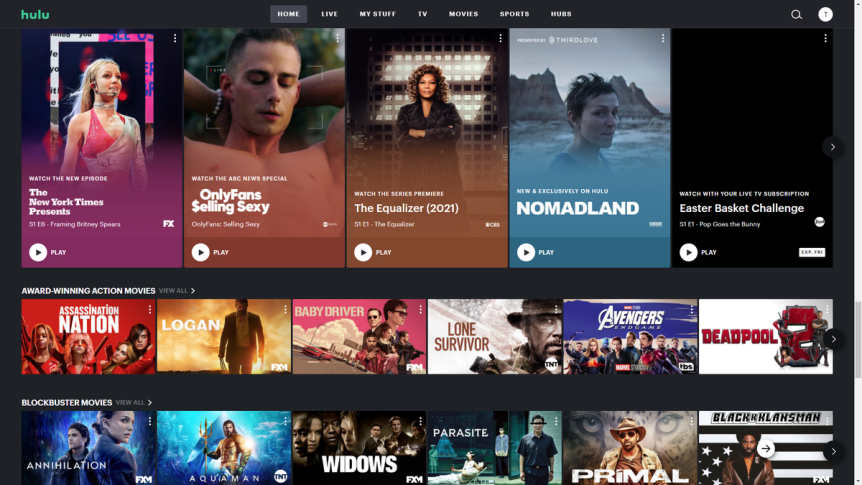
  • Hulu :- Nowadays many users are enjoying the content provided by Hulu, thanks to its good user-friendly interface. It was launched in October, 2007. Hulu is majority owned by The Walt Disney Company. This website sets high standards for their users. It has reportedly more than 20 million users in year 2018. This website is absolutely fine and bugs free thus, privacy of users is not hampered anyway.
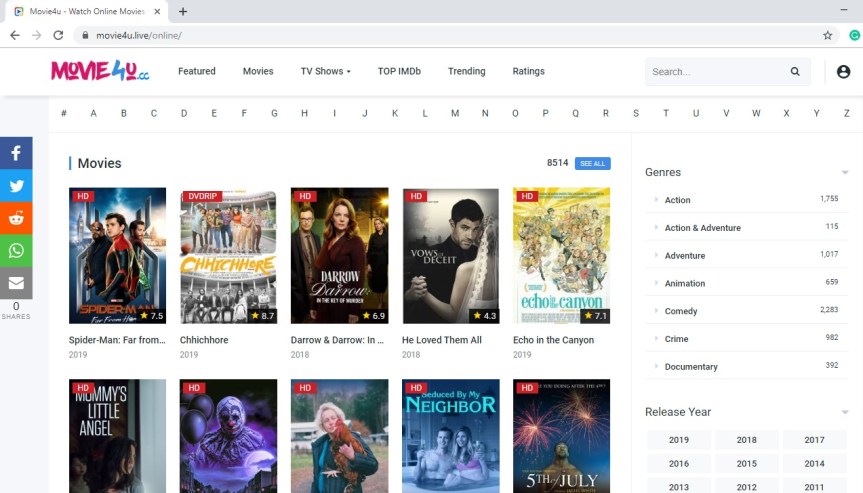
  • Movie4u :- Here comes the last but not the least alternative for Movie4K in our list and its none other than Movie4u. It provides all the contents that you love and searching for. From classic to modern movies, it has everything in its bag. It provides majority of its content by sharing URLs on the website. There is no privacy issues for its users thus, making it one of the strongest competitor of Movie4K.
  • And Now its Time for – The Conclusion :- These are some handpicked alternatives of Movie4K. Hopefully, many users will find this list very useful and enjoy their most loved content in a hassle-free manner. So, the only thing you need is a pack of popcorns and a cold drink and start enjoying your day with your favorite movies and TV shows.