Greed vs Generosity: Which Gives a Better Competitive Advantage?

Many people think that in the professional world, selfishness and greed are the characteristics that pay dividends. But the truth is, excepting win-lose situations, that the most successful people in the medium and long term are those who are the most generous in their business and personal lives.

Ambition is a desire to take on more than you can realistically accomplish, to constantly strive for improvement, to grow both personally and professionally, and, of course, the desire to generate more income. However there comes a time when ambition crosses a line, and when that happens it becomes greed. Greed is the desire to chew more than you can eat, a desire that distracts you from realistically possible goals. Greed is wanting to get more than what you have actually earned, obtaining maximum profit at minimum cost, or as an old adage has it: “Grasp all, lose all.”

Today there is an abundance of courses and books on finance, limitless knowledge on hand with a simple click. But to know what is right, to subdue the pirates of greed and to follow your trading plan- this is another story. People who look for easy money invariably find that there is no such thing, paying a heavy price for this lesson. Ego, vanity, and revenge play a part, causing people to fail on their trading accounts. This is one of the factors that explains why people might not fall into the exclusive 10% that ‘win’, and find themselves one of the 90% that lose.

Literature and film are full of greedy and stingy characters, and the moral of films like ‘A Christmas Carol’ or ‘The Wolf of Wall Street’ is always the same: the fate of the greedy is heartbreaking. Their addiction to work means that they live a lonely life, and their search for wealth means that at the end of their lives, they have only the sober memory of their friends from the Stock Exchange.

GIVE AND TAKE

People do not realize that giving without expecting something in return could be a competitive advantage, as well as making ones outlook more positive. Studies have shown that the most successful people are generous. At least this is the affirmation of Adam Grant, a psychologist and professor at Wharton and author of “Give and Take”.

A generous person builds bigger and stronger networks, improves communication with their existing contacts, and also finds it easier to interact with people outside of their core network- this gives them access to new contacts and valuable sources of information. Generous people inspire in others a predisposition, or positive receptivity, to reconnect with them, as well as a greater willingness to collaborate.

Moreover, being a giver encourages persistence because givers are able to enthusiastically motivate people, inspiring confidence, because they are liberal with praise. They create a generally positive environment. Talent is important, but the most important factor in success is persistence. And what’s even more interesting is that being a giver has an energizing effect that increases levels of happiness.

According to Bill Williams, famous trader and writer of “Trading Chaos”, people with a ‘giving’ mindset enjoy more happiness and success. For example, later in his career Bill always traded two accounts, one for himself and one for his charities. The charity account always made more money, even though he traded using the same method with both accounts. In the charity account he never veered from his strategy, while in his own account he would sometimes take a trade based on a “feel”, or get in a trade before the actual signal. This shows us the importance of sticking to a plan, but also the importance of being a ‘giver’.

Giving distracts us from our problems, adds meaning to our lives and helps us feel valued by others. This explains why avidity and egoism are the trader’s worst enemy. Having a benevolent mindset while trading helps the trader to increase performance. Happy people earn more money on average, score higher yields, make better decisions and contribute more to their organizations. Furthermore, traders who are givers are at the top of the most successful trading operations.

THE GREED EFFECT

Focusing only on money results in the ‘greedy effect’, something that all professional traders know. In fact, one of the most common pieces of (rarely followed) advice that newbies receive is to shift their focus from trade results to the trading process, analyzing and following the rules of their trading system. Another suggestion is to start reasoning in pips and ticks instead of dollars. This reduces the greedy mindset and develops a more reliable attitude.

However we can make a further effort to improve our performance by shifting our focus to be more generous. One example is trading for charitable purposes like the aforementioned Bill Williams, another could be simply committing a small part of your monthly or annual profit to microcredits, which promote a world of stability and self-sufficiency, key to overcoming poverty.

Material things can be recovered, but feelings of guilt, helplessness and loneliness cannot be solved with money. If humans would be more understanding of and generous to others, the world would be a very different place. And that is why those who practice generosity, making it part of their daily lives, experience an uplifting of their mental and emotional state, and are generally filled with more satisfaction in their professional and personal lives.

In conclusion, we see that generous people are the most successful in their daily trading performance for the reasons described above. Having a giving mindset helps professionals become part of that exclusive group, the 10% of winners.

Life Lessons of Chanakya Neeti

Chanakya has always considered education as a person’s best comrade. Everything can go in vain but education is the only thing which never goes in vain. The only this which can beat a person’s beauty and youth is only education and hard work. An educated person is respected everywhere and have a fair idea of what is correct and what is not correct. Chanakya had always said in this Neeti that one should learn from the mistakes of other. Life is too short and we can’t live long enough to make them all our self so we should adapt from others mistake rather than becoming a victim throughout the life.  He also suggests that one should never share his or her secrets to anyone it can destroy you fully. One truth which he said was God is not present in temples he considers feelings as God and soul as temple. Starting any work is quite easy but the key element of success is one should always ask three question to his inner self. First is, what am I doing? What will be the consequences of this? Will I be successful? As soon as one gets the answer of the entire three questions and is satisfied he can go ahead with his work. He considered Dharma as permanent rest all comfort, luxuries, beauty and power is temporary so one should always be adhere to their Dharma. One of the most famous outlines of Chanakya Neeti was:

“No gift is better than the gift of cereal and water, No date is better than Dwadeshi, No mantra is greater than Gayatri Mantra and no God is greater than a Mother.”

He also said that a person should not be too honest in their life. He gives the example of tree calling straight trees are cut down first so a person should be keen and clever only then he can live a satisfactory life. Chanakya said that man is responsible for his own deeds plus actions and he is the one who will suffer the consequences of all good and bad that will happen to him. He said that Lord Rama is an ideal man and Lord Hari is sustainer of world. His ideology says that one should always be satisfied with his wife, his food and with his wealth; but never be satisfied with the studies, his austerity and penance and with his donation to gifts to the needy one.

“This world, in the form of a tree, has two nectarous fruits: sweet speech and good company.”

Chanakya said that good company has the supremacy to create noble elements in a soul of a wicked person but a wicked company cannot generate wickedness in noble man. He commented on the donation system by giving example of the bound water which should always have litter flow which means one should develop the practice of donating wealth to the one who really need it. According to him the meat eaters, wine takers are considered as fools as animals and these people do not have the ability to judge what is good for them and what is dangerous. He refers arrogant person as a jackal who did not believed in giving charity. In his Chanakya Neeti, Chanakya took up rhetorical question several of times in dramatic manner saying that the place where there is no wise, intelligent and noble person reside and people are engage in looting that place is denoted as a gutter and the people staying there are just like the insects. Chanakya Neeti portrays us the four basic aims in every man’s life which is Dharma, Artha, Kaam, and Moksha. When a person fails to achieve any of the four his life is considered purposeless.

Therefore, I would like to sum up by saying that Chanakya Neeti is itself too wide and this was just a few glimpse of it. But we all will agree with some point of time that there is no philosopher greater than Chanakya and his Neeti is brim-full of positivity.

Deforestation

Deforestation is the conversion of forested areas to non-forested ones. According to an estimate, almost 40 per cent forests have been lost in the tropics, compared to only 1 per cent in the temperature region.

“At the beginning of the twentieth century, forests covered about 30 per cent of the land of India. By the end of the century, it shrunk to 19.4 per cent, whereas the National Forest Policy (1988) of India had recommended 33% forest cover for the plains and 67% for the hills.”

How does deforestation occur?

A number of human activities contribute to it. One of the major reasons is the conversion of forest to agricultural land so as to feed the growing human population. Trees are axed for timber, firewood, cattle ranching etc.

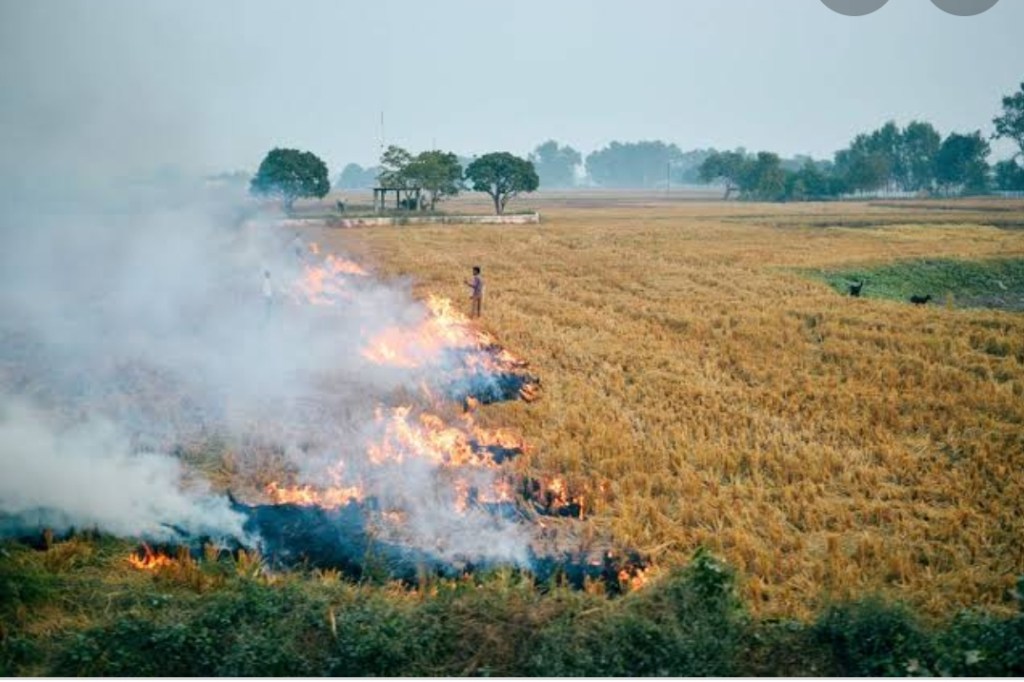
Slash and burn agriculture, commonly called as Jhum cultivation in the north-eastern states of India, has also contributed to deforestation.

In slash and burn agriculture, the farmers cut down the trees of the forest and burn the plant remains. The ash is used as a fertiliser and the land is then used for farming or cattle grazing. After cultivation, the area is left for several years so as to allow it’s recovery. The farmers then move on to other areas and repeat this process.

” In earlier days, when Jhum cultivation was in prevalence, enough time-gap was given such that the land recovered from the effect of cultivation. With increasing population, and repeated cultivation, this recovery phase is done away with, resulting in deforestation.”

Consequences of deforestation

One of the major effects is enhanced carbon dioxide concentration in the atmosphere because trees that hold a lot of carbon in their biomass are lost with deforestation.

Deforestation also causes loss of biodiversity due to habitat destruction, disturbs hydrologic cycle, causes soil erosion, and may lead to desertification in extreme cases.

Prevention

Reforestation is the process of restoring a forest that once existed but was moved at some point of time in the past. Reforestation may occur naturally in a deforested area. However, we can speed it up by planting trees with due consideration to biodiversity that earlier existed in that area.

https://youmatter.world/en/definition/definitions-what-is-definition-deforestation-causes-effects/#:~:text=Deforestation%20refers%20to%20the%20decrease,%2C%20biodiversity%2C%20and%20the%20climate.

https://www.nationalgeographic.com/environment/article/deforestation

“Atmanirbhar Bharat Abhiyan”

OVERVIEW :-

“Atmanirbhar Bharat” as the name suggests is an Government of India and a vision of PM Narendra Modi to make India self-reliant in manufacturing and various other sectors. It also aims of making India the new leading global manufacturing factory of the world.


During the COVID-19 pandemic, India had suffered a lot because many medical equipments like ventilators, surgical masks and sanitizers which are the main safety measures to control COVID-19 were not manufactured in India in appropriate numbers. In many hospitals, Liquid Medical Oxygen (LMO) was not manufactured and was transported from oxygen plants that are far away from hospitals.
After seeing this situation, Government of India and PM Modi decided to launch “Atmanirbhar Bharat” scheme on 12th May 2020. Under this Abhiyan, total 20 lakh crore rupees package was announced which is 10% of India’s GDP to bring the economy back on track.

The 3 packages that are given till now on 12th May 2020, 12th October 2020 and 12th November 2020 for bringing Indian economy out of the COVID-19 pandemic were announced under the “Atmanirbhar Bharat” Abhiyan.

This Abhiyan is now extended to almost all other major and MSME sector industries including Ministry of Consumer Affairs, Ministry of Health, Ministry of Defence, Ministry of Railways, Ministry of Roads and Water Transport, Ministry of Airways, Ministry of Education, etc. The major announcements that are made under this Abhiyan are as follows :-

MAJOR KEY ANNOUNCEMENTS MADE UNER “ATMANIRBHAR BHARAT” ABHIYAN :-

–>To improve the condition of hard hit State Governments due to COVID-19, borrowing limits of State Governments has been increased from initially 3% to now 5% of the Gross State GDP.
• To reduce the working cost of Central Government, Privatisation of Public Sector Enterprises (PSEs) will be undertaken. Only certain strategic PSEs will continue to work under Central Government otherwise majority of other PSEs will now be Private owned.
• MSMEs which are the backbone of our industrial sector will be provided collateral free loans of upto 3 lakh crore rupees. The Government will give the guarantee to banks and NBFCs for these loans on behalf of the MSMEs.
• To initiate high quality production and empower the MSMEs, all the global tenders of under 200 crores will be disallowed and will be given to MSMEs of India.
• An additional 2 lakh crore rupees fund will be made to provide institutional credit facilities at subsidised rates through Kisan Credit Cards.


• A 1 lakh crore rupees Agri Infrastructure Fund will be made to improve and develop infrastructure required for agriculture such as building of new cold storages and modernisation of APMCs.
• “One Nation One Card” scheme will help migrant labourers by allowing them to access the PDS (Ration) from any Ration shop across the country.
• More than 80 crore people under the BPL scheme will additionally get 5kg of grains per person and 1kg of chana per family per month. This scheme is now extended upto Diwali 2021.
• To improve the defence sector by bringing new technologies and working methods, FDI is increased from previously 49% to now 74% .

  • To promote Made in India initiative in defence sector under the “Atmanirbhar Bharat” Abhiyan, a list of 108 weapons including machine guns, tanks engine, radars, etc. will be made in India and import of these weapons will be completed banned.
  • To improve the health sector infrastructure, modernized labs and hospitals will be built in every district to provide quality health services for even backward areas. Liquid Oxygen generating plants will be set up in each district to provide seemless availability of oxygen to hospitals. These plants will be set up using PM Cares Fund under “Atmanirbhar Bharat” Abhiyan to make hospitals “Atmanirbhar” in generating oxygen as per their requirement.

Links :-

https://www.prsindia.org/report-summaries/summary-announcements-aatma-nirbhar-bharat-abhiyaan

https://aatmanirbharbharat.mygov.in/

https://www.indiabudget.gov.in/anbp/

https://seeklogo.com/vector-logo/389873/aatmanirbhar-bharat

Anger

Anger is one of the basic human emotions, as elemental as happiness, sadness, anxiety or disgust. These emotions are tied to basic survival and were honed over the course of human history. Anger is related to the “fight, flight, or freeze” response of the sympathetic nervous system, it prepares humans to fight. But fighting doesn’t necessarily mean throwing punches. It might motivate communities to combat injustice by changing laws or enforcing new norms.

Of course, anger too easily or frequently mobilized can undermine relationships or damage physical health in the long term. Prolonged release of the stress hormones that accompany anger can destroy neurons in areas of the brain associated with judgment and short term memory and weaken the immune system. For those who struggle with chronic anger, or for those who only experience occasional outbursts, learning skills to identify and navigate this powerful emotion can lead to growth and change.

What causes anger?

The question of why some shrug off annoyances while others explode in rage is a fascinating one. One model of anger, put forth by psychologist Jerry Deffenbacher, posits that anger results from a combination of the trigger event, the qualities of the individual, and the individual’s appraisal of the situation.

The trigger is the event that provokes anger, such as being cut off in traffic or yelled at by a parent. The qualities of the individual include personality traits, such as narcissism, competitiveness, and low tolerance for frustration, and the pre-anger state, like levels of anxiety or exhaustion. Perhaps most importantly is cognitive appraisal—appraising a situation as blameworthy, unjustified, punishable, etc. The combination of these components determines why and if people get mad.

How can I manage my anger?

If you are often carried away by anger, it can be helpful to understand the patterns that trigger you. It’s possible to intervene at different points along the way to deal with anger effectively.

1. Sleep: Sleep deprivation makes it harder to control angry impulses, so regular, healthy sleep can prevent you from being provoked.

2. Consider alternative interpretations: And ask yourself what evidence you have to support your angering interpretation. Consider different perspectives.

3. Take deep breaths: Take long, slow, deep breaths, using the diaphragm rather than the chest.

4. Avoid the “catharsis myth”: Venting anger, acting with aggression, and viewing aggressive content does not tend to release anger effectively.

5. Know that it’s ok to get mad: If you have been wronged, treated unfairly, or provoked, you should get angry, but express it assertively instead of aggressively.

How can I manage anger that’s warranted?

In cases of warranted anger, such as a coworker who never contributes to collaborative projects, you may want to use a different set of anger management tips. In those situations:

1. Distance yourself from the angering situation. This will help you stop ruminating and develop a clear path forward.

2. Dedicate time to thinking about how to solve the root problem so it doesn’t occur again.

3. Express your anger assertively, with a solutions-oriented approach, rather than aggressively.

East Timor: Brief analysis of its history & independence.

East Timor or Timor-Leste is a tiny island country in Southeast Asia nestled between Australia and Indonesia.

For more than 300 years the territory of East Timor was ruled by Colonial Portugal (Portuguese Timor). They set up both commercial outposts and catholic missions. On 28 November 1975, Portugal withdrew from the island territory when the Revolutionary Front for an Independent East Timor had declared the territory’s independence. But this exit from East Timor was not at all smooth and this enraged bitter rivalry between various local groups. Just nine days later in December 1975 East Timor was invaded and occupied by the Indonesian military. Suharto, the Indonesian president at that time didn’t receive much resistance from the western countries due to the left-leaning stance of East Timor at that time (Cold war).  The Indonesian occupation was a brutal and violent period in East Timor’s history with various suppression tactics many people lost their lives during that period.

The following decades were highly violent with many conflicts between the separatist groups known as Fretilin and the Indonesian military. The military fought a continuous guerilla war with the rebels in the island’s interior mountains. There were numerous rights violations and over 100,000 people died under the occupations of Indonesia.

One of the most defining instances happened on November 12, 1991, when the Indonesian military shot and killed over 250 people who had come for the memorial procession in honor of Sebastio Gomez, a pro-independence supporter killed by the Indonesian military. The events occurred in the Santa Cruz Cemetery in Dili, East Timor’s capital. This tragedy is known as the Santa Cruz Massacre. The event gained international media attention. Although the Indonesian occupation did not cede until eight years later in 1999, the Santa Cruz massacre was a defining moment in the island nation’s quest for independence.

In 1998 president Suharto resigned from his position after more than 30 years in power due to growing pressure and protests against him from within the country. His replacement was open towards more open towards the autonomy of East Timor. International pressure for East Timor grew in 1998. During the downfall of the New Order government, as part of Reformasi, a referendum was held in East Timor to ask whether they wished to remain in Indonesia with increased autonomy or become independent. On August 30, 1999, about 78% of the population of East Timorese chose to remain independent.

Following the referendum, violence again erupted in East Timor as Indonesian-backed militias increased their activities across the country. In September UN peacekeeping let by Australia force took control of the situation but a lot of damage was already done. In 2002 Xanana Gusmão was elected as the first president after three years of transitional governance by the UN.

As of today, the country has been relatively stable but the economic conditions have not been improved. Indonesia’s Timor has fared comparatively better than East Timor. It was also discovered that Australia, a country that East Timor considered as their ally had spied on East Timor to gain leverage over negotiations on the exploitation of natural resources in the Timor Sea. On a positive note, the country has comparatively good relations with Indonesia now.

References:

Sanskrit.

Sanskrit is a standardized dialect of Old Indo-Aryan, originating as Vedic Sanskrit as early as 1700-1200 BCE. One of the oldest Indo-European languages for which substantial documentation exists, Sanskrit is believed to have been the general language of the greater Indian Subcontinent in ancient times.

Sanskrit ; attributively संस्कृत-, saṃskṛta-; nominaly संस्कृतम्, saṃskṛtam, is a classical language of South Asia belonging to the Indo-Aryan branch of the Indo-European languages. It arose in South Asia after its predecessor languages had diffused there from the northwest in the late Bronze Age. Sanskrit is the sacred language of Hinduism, the language of classical Hindu philosophy, and of historical texts of Buddhism and Jainism. It was a link language in ancient and medieval South Asia, and upon transmission of Hindu and Buddhist culture to Southeast Asia, East Asia and Central Asia in the early medieval era, it became a language of religion and high culture, and of the political elites in some of these regions. As a result, Sanskrit had a lasting impact on the languages of South Asia, Southeast Asia and East Asia, especially in their formal and learned vocabularies.

Sanskrit generally connotes several Old Indo-Aryan varieties. The most archaic of these is Vedic Sanskrit found in the Rig Veda, a collection of 1,028 hymns composed between 1500 BCE and 1200 BCE by Indo-Aryan tribes migrating east from what today is Afghanistan across northern Pakistan and into northern India. Vedic Sanskrit interacted with the preexisting ancient languages of the subcontinent, absorbing names of newly encountered plants and animals; in addition, the ancient Dravidian languages influenced Sanskrit’s phonology and syntax. “Sanskrit” can also more narrowly refer to Classical Sanskrit, a refined and standardized grammatical form that emerged in the mid-1st millennium BCE and was codified in the most comprehensive of ancient grammars, the Aṣṭādhyāyī (“Eight chapters”) of Pāṇini.The greatest dramatist in Sanskrit, Kālidāsa, wrote in classical Sanskrit, and the foundations of modern arithmetic were first described in classical Sanskrit. The two major Sanskrit epics, the Mahābhārata and the Rāmāyaṇa, however, were composed in a range of oral storytelling registers called Epic Sanskrit which was used in northern India between 400 BCE and 300 CE, and roughly contemporary with classical Sanskrit. In the following centuries, Sanskrit became tradition-bound, stopped being learned as a first language, and ultimately stopped developing as a living language.

Good digestion

In this busy lifestyle we get a lot of stress and in this period where in covid-19 situation everything has been affected by and one of the most effected thing is our health, due to increasing number of covid-19 cases and to prevent it from spreading various many people have lost their jobs and some are doing work from home.

The one who lost their jobs are basically not engaged in any sort of physical activity they have been doing when they were at their workplace.

The one who must work from home because of that they have to operate from their home by sitting in a place for long period of time.

Both above situation and many more have affected our digestion system which has affected us in many ways.

In fact, food is broken down and provide energy to the body in digestive system.

So, we should take better care of our digestive system. Though there are more effects of digestive system and from ancient time our grand parents have been following some rituals which keeps our digestive track healthy.

  • Eat slowly.

There are many who in hurry to work chew their food for not more than 4-5 times in mouth but the good time you must chew your food is 32 times in mouth, because our digestive system is designed as our 50% of digestion takes place in our mouth.

You must chew your food in your mouth.

  • Instant energy crises

When we chew fats for minimum 4-5 times only then our digestive system uses its energy to digest the food which results in us instant energy crises. So, one must chew their food and eat slowly.

  • A proper meal.

A proper meal is not only the one thing (unhealthy) that we have eaten it is a whole day what we eat and how we eat.

One should eat variety of food in a day like not having rice for breakfast, lunch and dinner but diversifying it with like Poha for breakfast, Rice for lunch and roti for dinner.

  • Post meals walk.

It has been observed that or grand parents have been going out for a small walk after meals, it has become a ritual. When we intake food the amount of blood flow is diverted toward our digestive system. If we go for post meal walks them our food will digest in a good way.

And by also staying active for all day long, one must not just sit at one spot for a long period she/he should get up and go for walk for at least 5 minutes after sitting at a particular spot for almost 1 hour.

  • Doing some yoga asanas

Yoga helps in proper digestion of food one.

There are some asanas which we should do before our meals and pranayama asana after meals which will help in proper digestion.

  • Good quality sleep

While working in quite a lot of stressful schedules one should get enough amount of sleep that is almost 6-8 hours of sleep a day and stress less.

Although these are only some changes, but you must make good changes in your lifestyle not for some time for life long which will help you in not only this but in many ways.

Online racism faces by English players

•Black players in the England
football team have been
subjected to a storm of on-
line racist abuse after their
defeat in the fnal of Euro
2020.

•Marcus Rashford, 23, Ja-
don Sancho, 21, and Bukayo
Saka, 19, were the targets of
the abuse after they missed
their spot-kicks.

•The comments have
prompted a police investiga-
tion and wide condemna-
tion.

•“For some of them to be
abused is unforgivable,”
Southgate told a news confe-
rence. “Some of it has come
from abroad (we have been
told this), but some of it is
from this country.”

•British Prime Minister
Boris Johnson condemned
the abuse while Prince Wil-
liam, who is president of the
Football Association, said
he was “sickened”.

Interior designing

Gone are the days where people don’t pay attention to visual things .Now people are quite serious about visuality of things.The designing industry is growing at the rate 23-25% annually.India currently need more than 1 lakh interior designers .In coming future , interior designing is one of the most popular designing profession in india.The interior designing market said to be increased by 8.3% by the end of the year 2025.With increase in standard of living in both urban and rural areas ,a good living styles became the inseparable part people.

With the rapid growth of commercialation ,the living standard of people changed .To live in the most beautiful house is been a dream of both urban and rural people. The experts says there is surely the positive growth in interior designing sector in india.It is surely the best career for creative people.

Hariyali teej

India could be a land of festivals. an outsized no of festivals and fairs square measure celebrated by the folks within the villages and cities. The Teej competition is additionally very talked-about within the country. This competition comes throughout Saavan ( Rainy Season). now folks square measure getting ready to celebrate it with nice enthusiasm. The competition is additionally called Kajari Teej, Hartali Ka Teej etc. this is often the competition of girls and youngsters.There has been a good amendment within the celebration of this competition. The essence of this rural competition is marred by the current news. There was the time once folks started celebrating it for several days. The were swings established seven to ten days before the competition.

Young and recent ladies, ladies and youngsters would get pleasure from the swings unceasingly for hours. however currently there’s no time for such activities.There square measure fairs command at the large area in each village and town. There square measure stalls for eatables, bangles, toys, artificial jewelry, henna etc. The truthful starts within the evening and continues for three to four hours. youngsters additionally get pleasure from swings.

With the passage of your time, the design of those swings have additionally modified.There is additionally the kothli ( bag filled with gifts) tradition throughout this competition particularly in Haryana. The parental members of the family of the married ladies bring kothli a number of days before the competition. Even mothers-in-law supply special gifts referred to as sindhara to their freshly married sisters-in-law. The puja is performed within the morning. The worship takes place within the sq.. ladies worship deity Hindu deity ( Lord Shiva’s Consort). this is often additionally the competition of songs and dances. ladies organize programmes for themselves wherever they sing and dance.

The Haryanavi people song कच्चे नीम की निम्बोली …… सावन जल्दी आयो रे is at each rural woman’s lips now. youngsters square measure happier throughout the competition.

They additionally wear new garments. They purchase toys and luxuriate in chaats. Some youngsters additionally fly kites on at the moment. Special dishes like Puri, Kheer, halwa are ready for dinner.Evening Time is additional special, specially for the youngsters. they’re going to the Teej truthful with their oldsters and luxuriate in swings and buy toys.

But one factor is bound the important essence of this competition is lost in modernization and development. currently no one is aware of those songs that accustomed be the spirit of this competition, swings square measure gone and fairs square measure finished.

Wednesday, 11 August Hariyali Teej 2021

MODERNIZATION IN AGRICULTURE

Everything we eat is sourced from nature. The plant kingdom has been generously providing us with nutritious and healthy foods to make a plethora of dishes. Earlier, historic people used to hunt animals or gather fruits and vegetables readily available in their living surroundings. These nomadic people moved places according to the availability of basic necessities. As humans started evolving, they realized that they could grow their own food by farming. Hence, people began staying static in settlements and farmed their own land. Agriculture later developed and advanced equipment were used for various farming processes. With time, these techniques were modified or replaced with newer ones which demanded lesser effort and yielded better output of production in return. This started revolutionizing traditional farming methods with more yield centric ones. Soon, farming as a livelihood turned into a booming production industry for an ever hungry world with rapidly growing population. Since almost all plant-based food was commercialized due to it being the starting material for many modern food industries, the agricultural sector came under a lot of pressure and focus for more and more food production to satisfy their needs. The quality of crops and fertility of land have reduced drastically with time, owing to continuous cultivation on the same land for numerous centuries and no opportunity for land replenishment. Extensive research was done to innovate and revamp agriculture into a mechanized and efficient process.

Today, farming practices have become highly advanced with a lot of machinery and equipment to lessen human efforts and errors. These methods check the box for sustainability too, doing lesser damage to crops as well as the environment. As a result of modern agricultural practices, the quality of produce has also improved. With the use of advanced technology, it has become possible to introduce certain desirable characteristics in a crop variety, and reduce or completely eliminate the shortcomings. This has been done with genetic manipulation/modification. To improve the aeration and air circulation of farming land and expose the useful soil bacteria to surrounding air, excessive tillage of land is done. Modern farming practices make use of fertilizers to increase the yield of crop. Earlier, synthetic fertilizers were used, but this led to leaching of harmful chemicals in the environment which had adverse effects on other components of nature. So, farmers were directed to make use of organic fertilizers which improved soil fertility as well as were environment-friendly. The use of better and well-planned irrigation technologies like sprinkle and drip irrigation have led to provision of adequate water to plants. These advanced irrigation methods make efficient use of water too. The use of pesticides has led to less crop damage by infestation, reducing invasion of vegetation through pests, and the result is healthful and productive plants. The practice of monocropping gradually lead to depletion of nutrients in the soil making it infertile. So, a lot of research has been done in this arena and recent studies have led to the practice of crop rotation, wherein a series of different types of crops are grown on the same land on a sequence of growing seasons. Usually, after cash crops are grown, leguminous plants are farmed on the same land to enhance soil fertility. This method restores the nutrient level of soil.

The agriculture area has witnessed a lot of modernization for good crop produce and environmental safety. Many more methods are being invented to make conventional farming mechanized, hassle free, environment friendly and sustainable. In the coming years, better use of the small portion of available land will be necessary to overcome shortage of agricultural land and highly developed techniques and technologies might provide the required push to agricultural practices.

TRANSFORMING COMMERCIAL FOOD THE HEALTHY WAY

Since social media has gained popularity and its use has become ubiquitous everywhere, it is quite obvious that trends and hashtags are in the boom. Communicating, comprehending and following are possible at the drop of a hat, and so when something new or revamped has reached people by the trend wave, it becomes massively famous – or rather say a cult following. A major trend that hit off in the recent years is the fitness and physique target, and we can see massive body transformations reeling all over social media pages. Well, many of them owe it to rigorous gym sessions, some to strict and controlled diet plans and some to major lifestyle changes (like healthy eating, sleep patterns, spirituality and sattvic living). Food manufacturing companies and big names in the market have also taken note of this and have put in substantial efforts and money into developing and refurbishing their product range to suit the requirements of the conscious consumer. These biggies have made major changes in their ingredient labels, nutritional charts and overall product composition, and supermarket shelves are now a healthier place for our grocery baskets and of course, our cravings. Most of these now-healthy products today promise a relishing, absolutely satisfying and guilt free eating experience, and they have truly made that transition to a commendable extent, if not the epitome of their sector.

Let us take an instance of companies selling instant noodles. A few years ago, this same product was on the frowny side of the healthiness scale, with maida as the major ingredient. But a lot of research and development efforts have led to the manufacturers opting for healthier and more nutritious grains like whole wheat and oats, with refined flour in minimal quantity or totally replaced. The frying process still remains similar to a great extent, but researchers are looking for a way to optimise the frying process too. Yet still, the frying process has been successfully replaced or highly modified in extruded snack products, wherein high pressure and temperature are applied rather than frying the product in oil and bringing its fat content to about 8-10%. These products contain minimal oil content in contrast to the conventional fried products, in which the fat content is about 25-30%. Extruded snacks have switched to blending better cereal meals too, like rice, corn and pulses. Fox nuts are emerging as a superfood product, with healthier processing options and high nutritional benefits. Whole wheat semolina is another everyday ingredient which has suited well to the requirements of the snacks segment. Oats have proven as a transformational and magical ingredient in many food items, with super health benefits and good blending properties with other cereals. With major inventios and developments in the food industry, many commercial products have changed their propositions from just ‘tasty’ to ‘healthy and tasty’, and have proved that not every healthy food item needs to taste obnoxious, rather quite the opposite of that. The sweets, bakery foods and confectionery section are going sugar-free and maida-free. They are cutting down or simply replacing empty calorie and unhealthy components and optimising preparation processes to make mouth-watering items, all similar in taste but with enhanced nutritional properties and adding sensible value to their consumption. Cakes and pastry items are switching to the goodness of components like better grains, sugar free options, natural sweeteners, dry fruits, minimal saturated fat ingredients. Frozen unsweetened yogurts are in great demand due to their gut-friendly composition and versatility in blinding with a large variety of fruits and flavours. Frozen dessert and ice cream makers are tilting towards sugar-free and low fat options. Biscuits and cookies are also transforming drastically into healthier versions of their original product formulations.

The products mentioned above are just the visible tip of a huge iceberg underneath the water surface. The way today’s food industry is remoulding itself will be greatly impactful in near and far future, and a range of products with sound taste and nutrition are in the line for a healthier diet and subsequently, a healthier tomorrow!