Indian art during Maurya period

The Mauryan contribution to art and architecture was significant. Ashoka is known to
have built 84,000 stupas to commemorate various events of Buddha’s life. According to
Megasthenes, Pataliputra’s grandeur matched that of the cities of Persia.
Ashokan edicts were inscribed on stone pillars that were made of single columns of polished
sandstone and had capitals on their top. The best preserved of all Ashokan edicts stands
at Lauriya Nandangarh (Bihar). This thirty-two feet tall column has an almost fifty ton
seated lion capital placed on its top, an engineering feat worth admiring. The bull capital
from Rampura is also another fine example of Mauryan sculpture. The most famous capital
is the one at Sarnath, which shows four lions and the Dharmachakra. You must be familiar
with this as this has been adopted as the national emblem of the Republic of India.
Besides pillars, few Mauryan figures have also come to light. The most well known of
these is the Yakshi from Didarganj. The beauty of these figures lies in the exactness of their
workmanship and in the fact that they. appear to be made from one single stone. Like the
pillars, these figures are polished with a unique surface gloss (now called Mauryan polish).
You will be amazed to know that despite all these centuries this gloss has not lost its shine.
Besides the language that has been used in nearly all the inscriptions and Prakrit which
appears to have become the lingua franca of the country and in the Brahmi script the
earliest known Indian script.

Another noteworthy aspect of Mauryan architecture is the rock cut caves. The Lomash
Rishi (with its impressive entrance) and the Sudama caves are examples of such architecture.
These caves cut from solid rock were provided by Ashoka for non-Buddhist monks.
These caves marked the beginning of the rock cut architecture which was patronised by
later rulers too. His rock edicts were inscribed in the local language and the local script

Youth suicide

Every hour one student commits suicide in India, with about 28 such suicides reported every day, according to data compiled by the National Crime Records Bureau ( NCRB ). The NCRB data shows that 10,159 students died by suicide in 2018, an increase from 9,905 in 2017, and 9,478 in 2016 . As per reports from the National Crime Records Bureau(NCRB) between 2014 and 2016; 26,476 students committed suicide in India. Of these around 7,500 committed suicide due to failure in various examinations .

This is shocking right ? no one ever thought about this while everyone is talking about cancelling NEET a student is committing suicide, a family is loosing their daughter or son . Do we ever taught what would be the reason behind a suicide. No , we just frame a story ourselves But reality is kept unknown. Most of the students commit suicide because of stress of getting good marks , getting into a good college . We still live in a society where marks are important than knowledge even though time as proved it wrong

Now – a – days students enter into a examination hall like they are entering into a life or death situation there is nothing wrong with a teenager going with such a mindset but it is responsibility to make them realize its just a assessment parents , teachers and school management .

But the reality between each and every suicide is there parents who refuse to see there is a better future for their son/daughter beyond this marks and teacher who just wants to give 100 % just to get an increment and management who wants to provide 100% results to get more admission but is it really worth a young life ???

There are many organisations really working hard to avoid this kind of situation and they saved many lives but we all are seeing this situation from a wrong perspective its not student who need to be educated or motivated its their parents and educational institution .

Once Dr.A.P.J abdul kalam said “If you fail, never give up because FAIL means “First Attempt In Learning”. “Failure will never overtake me if my determination to succeed is strong enough.” “All of us do not have equal talent. But , all of us have an equal opportunity to develop our talents.”

I still strongly believe in his words that this nation lies in the hands of youth . So , I am not trying to say that education is not important all i am trying to say is we a life is more important.

Lets hope our society does better in this year..

Ambedkar and Buddhism

In his article entitled “What Way Emancipation” Ambedkar declared that “I solemnly assure you that I will not die a Hindu”, at Yeola, District of Nasik, Maharastra, on 13th October 1935 in front of ten thousand people, where
he went for a depressed class conference. Ambedkar as the president of the conference reminded his audience of their failure to secure elementary rights or equal status in Hindu society through any of the movements. According to him, the concept of sympathy is absent in the Hindu religion. The Hindus have no sense of brotherhood among themselves. The Untouchables are treated worse than foreigners. The Caste Hindus have no sympathy towards the untouchables. They are not brother to each other. They are two opposite castes. Society is based on class or varna, the association of an individual to a group is considered paramount. Even the family is not treated as a unit of society. According to Hindus, though all men are created by God, they are not created equal. They believe that God created different classes of men from different parts of his divine body. There is a section in “Purusha Sukta” of the Rig Veda which says that the Brahaman varna was born from the mouth of God, Kshatriya varna from his arms, the Vaishya from his thighs, and the Shudra from his feet. This they classify as Hindu social order but the views of Ambedkar on free social order
contradict the above sayings. He believed that an individual is an end in himself and the objective of the society is to support the growth of the individual, to develop his personality. The relationship between members of society is based on the principles of liberty, equality, and fraternity. According to him, Hindu social order is based on the principles of graded inequality, fixed occupations for each class, and its continuance by heredity, the fixation of people within their respective classes. According to him, the Varna-vyavastha had developed into a social order of exploitation and oppression. Society must be based on reason, and not on atrocious traditions of the caste system. He found education, inter-caste marriage, and inter-dine as methods that may eliminate caste and patriarchy.

On 14th October 1956, Dr. Ambedkar renounced Hinduism and embraced Buddhism. On 15th October 1956, he delivered his speech in Marathi relating to embraced Buddhism. He said there are so many problems after conversion to Buddhism. He hoped that he will get political rights. According to Dr. Ambedkar, religion is for man and not man for religion and that is why he choose to convert himself to a buddisht as this religion respect and gives a scope of development to people and their thoughts.

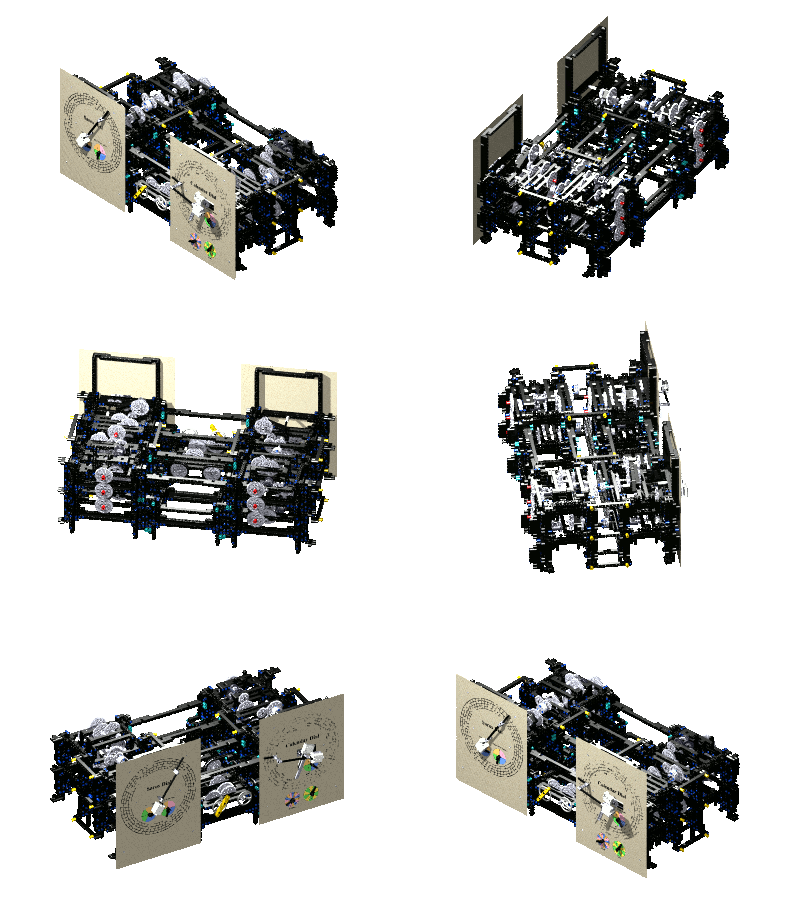
Antikythera-The Modern Invention in the Past.

After 2,000 years under thesea, three flat, misshapen pieces of bronze at the National Archaeological Museum in Athens are all shades of green, from emerald to forest. From a distance, they look like rocks with patches of mold. Get closer, though, and the sight is stunning. Crammed inside, obscured by corrosion, are traces of technology that appear utterly modern: gears with neat triangular teeth (just like the inside of a clock) and a ring divided into degrees (like the protractor you used in school). Nothing else like this has ever been discovered from antiquity. Nothing as sophisticated, or even close, appears again for more than a thousand years.

For decades after divers retrieved these scraps from the Antikythera wreck from 1900 to 1901, scholars were unable to make sense of them. X-ray imaging in the 1970s and 1990s revealed that the device must have replicated the motions of the heavens. Holding it in your hands, you could track the paths of the Sun, Moon and planets with impressive accuracy. One investigator dubbed it “an ancient Greek computer.” But the X-ray images were difficult to interpret, so mainstream historians ignored the artifact even as it was championed by fringe writers such as Erich von Däniken, who claimed it came from an alien spaceship. It wasn’t until 2006 that the Antikythera mechanism captured broader attention. That year, Mike Edmunds of Cardiff University in Wales and his team published CT scans of the fragments, revealing more details of the inner workings, as well as hidden inscriptions—and triggering a burst of scholarly research. 

The Antikythera mechanism was similar in size to a mantel clock, and bits of wood found on the fragments suggest it was housed in a wooden case. Like a clock, the case would’ve had a large circular face with rotating hands. There was a knob or handle on the side, for winding the mechanism forward or backward. And as the knob turned, trains of interlocking gearwheels drove at least seven hands at various speeds. Instead of hours and minutes, the hands displayed celestial time: one hand for the Sun, one for the Moon and one for each of the five planets visible to the naked eye—Mercury, Venus, Mars, Jupiter and Saturn. A rotating black and silver ball showed the phase of the Moon. Inscriptions explained which stars rose and set on any particular date. There were also two dial systems on the back of the case, each with a pin that followed its own spiral groove, like the needle on a record player. One of these dials was a calendar. The other showed the timing of lunar and solar eclipses.

Experts have been working to decipher inscriptions hidden inside the mechanism, in particular to understand the mechanism’s missing pieces, some destroyed, some probably still at the bottom of the sea. Though the pointers on the front face don’t survive, Alexander Jones, a historian at the Institute for the Study of the Ancient World in New York, says an inscription reveals that they carried colored balls: fiery red for Mars, gold for the Sun. 

Also missing are the parts that drove the planetary pointers, leading to debate about exactly how they moved. Because planets orbit the Sun, when viewed from Earth they appear to wander back and forth in the sky. The Greeks explained this motion with “epicycles”: small circles superimposed on a larger orbit. According to Michael Wright, a former curator at London’s Science Museum who has studied the mechanism longer than anyone, it modeled epicycles with trains of small gears riding around larger ones. Though some experts have dismissed this as beyond the Greeks’ abilities, Jones says he will publish evidence supporting the idea later this year.

Other inscriptions hint at where the mechanism was made. Paul Iversen, a classicist at Case Western Reserve University in Cleveland, reports that the calendar includes month names used in Corinth and its colonies in northwest Greece. A dial that displayed the timing of major athletic festivals, including the Olympics, lists Naa, a festival held in northwest Greece, and Halieia, held to the south on the island of Rhodes. Perhaps the mechanism hailed from Rhodes and was being shipped north. The ancient philosopher Posidonius had a workshop in Rhodes that could have been the source; according to Cicero, Posidonius made a similar model of the heavens in the first century B.C.

The tradition of making such mechanisms could be much older. Cicero wrote of a bronze device made by Archimedes in the third century B.C. And James Evans, a historian of astronomy at the University of Puget Sound in Tacoma, Washington, thinks that the eclipse cycle represented is Babylonian in origin and begins in 205 B.C. Maybe it was Hipparchus, an astronomer in Rhodes around that time, who worked out the math behind the device. He is known for having blended the arithmetic-based predictions of Babylonians with geometric theories favored by the Greeks. 

Regardless, the Antikythera mechanism proves that the ancient Greeks used complex arrangements of precisely cut wheels to represent the latest in scientific understanding. It’s also a window into how the Greeks saw their universe. They came to believe that nature worked according to predefined rules, like a machine—an approach that forms the basis of our modern scientific views. Edmunds argues that this “mechanical philosophy” must have developed as a two-way process. The ancient mechanics who captured the cosmos in bronze weren’t just modeling astronomical theories but were also inspiring them.

FEB15_J03_Antikythera.jpg

Smart farming in India- Reality or Dream

Introduction

      No life is without food, the need of the food and the need of the farmers are keep on increasing in our day to day life. The farmers are following many pathways for the production of the nutrient rich food for us but somehow they are facing lot of troubles sowing to marketing. The government is also taking up steps to minimize these problems. Smart farming is one of the way to overcome the crises. So, in this essay let us discuss in short about Smart farming in India is a dream or a reality.

                      ‘The best culture in this world is AGRICULTURE’

Farming in India

      The backbone of India is former as the saying goes, many forming methods have been following throughout the country. The forming method depends upon the climatic condition, the type of the land (soil), based on the availability of water, and of course based on the condition of the environment.

    At present due to the poor natural conditions like poor climate, delay of rainfall, windy, over heat, at times drought, and of course of different insects effect which are caused due to the modern era, it created the fact that bringing out the crop with product is a challenge. So sure we need a smart farming method to overcome these types of problems.

                                       ‘Modern problems needs modern solution’

Smart farming

          The survey says that the demand of food will increase nearly to the 70 percentage of world food production, so it is important and basic need to be fulfilled in the future. This can be achieved only by the smart farming that through with the technology. It is more over like predicting the weather, proper supply of water, sensing the amount of nutrient content in the soil for the plant growth, protecting the plants and crops from the insects and other that affecting the plant.

         This all can be brought by watching every activity of the plant growth and providing them with the things they lack. For example the automatic irrigating system this will help to maintain the moisture that needed by the plant and turn off automatically when they get enough water, then noticing the plant growth and its needs through the sensors, identifying the insects entry and keeping them away and by tracing the animals.

       Then the storage is one of the foremost important thing and it can be brought by maintaining the temperature, air flow, humidity etc., 

                        “To get her(food) we need to work to-get-her(together)”

Dream or reality

      In country like India it is really difficult task to implant all over the states, but it can be achieved with the help of the government and the funding agencies. The coast of smart farming is really huge and it cannot be set up by the individual farmers who are poor. But it can be brought by the students who create a smart farming individually by his education and love towards the farming.

     Even we can say smart farming is achieved in some places, where the person step out individually and created the impact over the farming by inventing new machinery and equipments.  

      The awareness can be created among the people by explain bought the need of farming and its importance in the future world. Thus it motivates the people to do smart farming and that will help in the betterment of farming.

                                         “Reality are once dreams”

Conclusion

      No person is island as the saying goes that holds true for farming also because everything in this world is depends upon one another, so the smart farming can be achieved through the team work, and every reality is once a dream so it can be achieved one day for sure. Let us hope for the best and great future.

            “The only culture to be cultured in the world is Agriculture”.

OSTEOARTHRITIS


Arthritis is joint inflammation ,which is most common in older adults .There are 2 types of Arthritis which are most common in adults (1) Osteoarthritis (2) rheumatoid arthritis. Osteoarthritis (OA) is the most frequent cause of disability among older adults. According to UN ,by 2050 around 130 million people around the world will suffer from OA and around 40 million will be severely disabled by this disease. Osteoarthritis is related to ageing but there are other factors like obesity ,lack of exercise ,gender etc which effect the condition.The best way to trackle with such diesease is by taking care of yourself take health diet,do yoga , meditation ,and avoid stress .

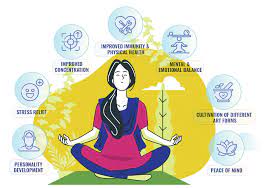
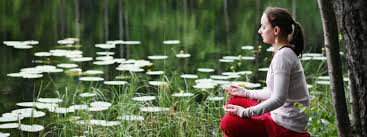
Stress Management Through Sahaja Yoga Meditation

Introduction

Stress is unavoidable in the current scenario, where the entire world is facing the Corona virus pandemic. With the toll of deaths and positive cases of Corona virus on rise, every person in this world is under stress and anxiety. Higher levels of stress adversely affect the physical as well as psychological health of the individuals concerned. Therefore, it becomes highly essential to manage stress at initial stages, so as to avoid severe consequences of high stress on health. The present article focuses on the management of stress through a unique form of meditation, i.e, ‘Sahaja Yoga’. Sahaja Yoga is a scientifically proven technique of meditation which involves the awakening of the dormant primordial energy- the Kundalini, and integrating it with the all-pervading cosmic energy. Regular practice of Sahaja Yoga meditation leads to the inner transformation of an individual, whereby one becomes more moral, integrated, balanced and healthy.

What is Stress?

Stress refers both to the circumstances that place physical or psychological demands on an individual and to the emotional reactions experienced in these situations. It leads to severe effects on the physical as well as psychological health of the individuals concerned such as frequent headaches, heart disease, myocardial infarction, cardiovascular disease, musculoskeletal disorders, diabetes, high anxiety, depression, post-traumatic stress disorder and so on. Since, stress is a psychological phenomenon, its management can be best realised by treatment focused at the mental level. Thus, the present article aims at spreading awareness about the stress management technique called ‘Sahaja Yoga’ and highlighting its significance in the improvement of overall health, especially, psychological health.
Sahaja Yoga Meditation

What is Sahaja Yoga?

The word ‘Sahaja’ means ‘spontaneous’ and ‘Yoga’ means ‘union with the self’
Sahaja Yoga was founded in 1970 by Mrs. Nirmala Srivastava, more widely known as ‘Shri Mataji Nirmala Devi’. Shri Mataji was spiritually enlightened since birth and granted en-masse realisation to people free of any materialistic consideration. For 40 years since 1970, she travelled tirelessly across the globe to teach Sahaja Yoga meditation world-wide at her own expenses 

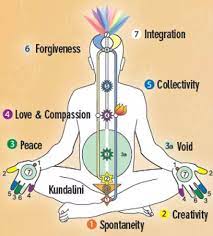
Human Subtle System

The process of Sahaja Yoga meditation works through the subtle system which comprises of three energy channels (nadis) and seven energy centres (chakras). At the root of this system lies a protective power – Kundalini. Amongst the three channels (Nadis), the left channel called Ida Nadi represents our desires (Ichha shakti); the right channel called Pingla Nadi represents our working ability (Kriya shakti); and the central channel called Sushumna Nadi represents our assent. The seven energy centres in the body correspond to the seven nerve plexuses: the pelvic plexus (Mooladhara Chakra), the aortic plexus (Swadhistana Chakra), the solar plexus
(Nabhi Chakra), the cardiac plexus (Heart Chakra), the cervical plexus (Vishuddhi Chakra), the optic chiasma (Agnya Chakra) and the limbic area of the brain (Sahasrara Chakra). These energy centres are responsible for maintaining their surrounding physical organs in the body.
When Kundalini rises it crosses all the six energy centres and emits from the seventh centre (Sahasrara Chakra) and unites the individual consciousness with universal consciousness. An individual rise above the three channels of the subtle system and reaches a timeless state beyond the past, present and future – a state of thoughtless awareness. This process is referred to as Self-realisation. As an evidence of self-realisation, an individual feels cool breeze of vibrations on the head and palms of hands .

How Sahaja Yoga Meditation Helps in Stress Management?

It is imperative to understand how stress arises and how is it managed through Sahaja Yoga meditation. The central channel (Sushumna Nadi) is the path of rising Kundalini and a channel of balance. An individual having too many desires and always thinking about the past deviates from the central channel and puts his left channel under pressure. On the other hand a workaholic person, always working and planning for the future puts his right channel under pressure. The left-sided individuals become highly emotional, conditioned and day dreamers while right-sided people become highly egoistic and harsh on others. Stress is the result of such an imbalance between the two energy channels and deviation from the central channel.
Therefore, one should always keep his attention on the central channel and remain in the balanced state in order to be stress-free. Thus, Sahaja Yoga helps in managing stress effectively by attaining and maintaining the balanced state through regular meditation, since by focussing on the central channel one remains in present rather than thinking about past or future events.


Sahaja Yoga in the present Coronavirus Scenario

As many as 200,000 people across 60 countries have attended online meditation sessions since 16 March 2020 with the commencement of lockdown, according to the information published nation-wide from H.H. Shri Mataji Nirmala Devi Sahaja Yoga Trust (National Trust). The Youtube channel – Pratisthan, Pune of the Trust has seen around 2 million views with 7.31 lakh watch hours and over 13.2 million impressions in the lockdown period. Each viewer attended an average of 8.6 session and spent average of 23 minutes per visit, which is substantial as people look towards meditation to overcome anxiety during COVID19 lockdown.

Conclusion

Sahaja Yoga meditation activates and nourishes the parasympathetic nervous system which relaxes both body functions and the brain by reducing thinking functions Thus, regular meditation everyday cleanses the subtle system, relaxes body and mind, and gradually one starts experiencing physical, mental and emotional benefits also, apart from gaining stress relief Thus, the Indian government should focus on building resilient citizens which can adjust with the pressures of the present stressful scenario.

ROAD SAFETY

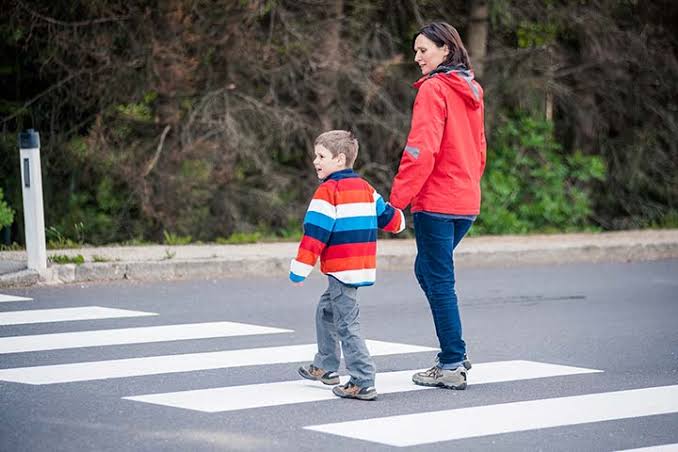
We have to travel via roads almost every day to go to school, college, office, shops, visit relatives and friends. We need to be safe on the roads. Road safety refers to the methods and measures used to prevent road users from being killed or seriously injured.

Need for safety on Roads

It is a saddening fact that India is the world’s largest contributor to road accidents. India accounts for about 10% of roads accident fatalities at worldwide. Road crashes have a threatening impact on Indian lives, growth and economy.

Causes for Road Accidents

Distracted driving

This is a larger threat and the leading cause for road accidents. It is the distraction of the driver, engaging in any other activity while driving. It may be talking over the mobile phone or texting message or engaging in any activities with attention diverted from driving.

Reckless driving

It is a major traffic violation of rules. It is defined as the mental state in which the driver purposely disregard the rules of the road.

Night driving

An extra alertness is needed while driving at night. The uncontrolled sleep, tiredness due to long drive, poor lighting on the road can cause fatal accidents.

Tailgating

Tailgating refers to a condition where a driver drives behind another vehicle without leaving sufficient distance between them. In this condition, if the vehicle in front of him, stops suddenly, his own vehicle will crash with it.

Heavy Traffic

Increase of vehicles on the road create heavy traffic jam and cause more pollution.

Road conditions

Road expansion is very slow when compared to the expansion of vehicles.

Avoidance of safety gears

Avoiding the use of helmets for two wheelers and seat belts for four wheelers lead to unwanted happenings.

Impatience of Pedestrians

Impatience of Pedestrians and violation of traffic rules result in accidents.

Other causes

Drunken driving, jumping red light over speeding and unmanned railway crossings cause great damage to valuable lives. Due to this, many families lose their breadwinners.

Road Safety Rules

Every country has its own road safety rules and regulations for the best interests of its citizens. India also has designed road safety rules for protecting the road users from meeting with accidents and injury.

As per the Indian law, one should be eligible to get a driving licence at the age of 18. While driving use of mobile phone is prohibited. Sound horn is prohibited near a hospital or a school zone.

Preventive Measures

Government

Through the Ministry of Road Transport and Highways, Government of the India has taken earnest steps for reducing the number of road accidents.

☆ Taking steps for the rectification of accident black spots and improvement of road engineering.

☆ Ensuring the good functioning of the traffic signals and road signs at busy crossing roads.

☆ Constructing proper roads both in urban and rural areas.

☆ Installation of CCTV cameras to record high speed offences which can detect the offenders.

☆Prohibiting the act of digging or hoarding soil from roads

☆ Remove encouragement and maintain proper pedestrian ways for ensuring road safety. If the public are violating the traffic rules, it is the duty of government to correct the public and maintain order. Stringent actions are to be taken for the violation of any road safety rules.

Safe driving, Saves lives, Drive fine, Avoid fine

PERSONALITY DEVELOPMENT

Personality development is the development of the organized pattern of behaviors and attitudes that makes a person distinctive. personality development occurs by the ongoing interaction of temparement, character and environment. personality is what makes a person a unique person, and it is recognizable soon after birth. a child’s personality has several components, temperent, environment and character. temperament is the set of genetically determined triats that determine the child’s approach to the world and how the child learns about the world. there are genes that specify personality traits, out some genes do control the development of the nervous system which in turn controls behaviour. a second component of personality comes from adaptive patterns related to a child’s specific environment. most psychologists agree that these two factors temperament and environment influence the development of a person’s personality the most. temparament with its dependence on genetic factors is sometimes referred to as nature while the environmental factors are called nurture.

while there is still controversy as to which factor ranks higher in affecting personality development, all experts agree that highly quality parenting plays a critical role in the development of a child’s personality. when parents understand how their child responds to certain situations they can anticipate issues that might be problematic for their child. they can prepare the child for the situation or in some cases they may avoid a potentially difficult situation altogether. parents who knows how to adapt their parenting approach to the particular emperament of their child can best provide guidance and ensure the successful development if their child’s personality. finally the third component of personality is character the set of emotional, cognitive and behavioral patterns learned from experienced that determines how a person thinks, feels and behaves. a persons character continues to evolve throughout life although much depends on inborn traits and early experiences. character is also dependent on a persons moral development.

INFANCY: during the first 2 years of life an infant goes through the 1st stage. learning basic trust or mistrust. well nurtured and loved the infant develops trust and security and a basic optimism. badly handled the infant becomes insecure and earns basic mistrust.
TODDLERHOOD: the second stage occurs during early childhood between about 18 months to 2 years and 3 to 4 years of age. it deals with learning autonomy or shame. well partnered the child emerges from this stage with self confidence elated with his or her newly found control. the early part of this stage can also include stormy tantrums, stubbornness, and negativism, and depending on the child’s temperament.
PRESCHOOL: the 3 rd stage occurs during the play age or the after preschool years from about three to entry into formal school. the developing child goes through learning initiative or guilt. the child learns to use imagination to broaden skills through active play and fantasy; to cooperate with others; and lead as well as to follow.
SCHOOL AGE: the 4 th stage learning industry or inferiority, occurs during school age up to and possibly including junior high school. the child learns to master more formal skills:
.relating with peers according to rules
.progressing from free play to play that is structured by rules and requires teamwork
ADOLOSCENSE: the 5 th stage learning identity or identify diffusion, occurs during adolescence from age 13 or 14. maturity start developing during this time. the young person acquires self certainity as opposed to self doubt and experiments with different constructive roles rather than adopting a negative identity, such as deliquency. the well adjusted adolescent actually looks forward to acheivement and in later adolescense clear sexual identity is established.
Young businessman holding a marker and drawing circular structure diagram of personal growth on transparent screen. Isolated on white background.

Covid-19

We all have been influenced by the current COVID-19 widespread. In any case, the effect of the widespread and its results are felt in an unexpected way depending on our status as people and as individuals of society. Whereas a few attempt to adjust to working online, homeschooling their children, and requesting nourishment by means of Instacart, others have no choice but to be uncovered to the infection whereas keeping society working. Our distinctive social characters and the social bunches we have a place to decide our incorporation inside society and, by expansion, our powerlessness to scourges.

COVID-19 is slaughtering individuals on a huge scale. As of October 10, 2020, more than 7.7 million individuals over each state within the Joined together States and its four regions had tried positive for COVID-19. Agreeing to the Modern York Times database, at slightest 213,876 individuals with the virus have passed on within the Joined together States. In any case, these disturbing numbers grant us as it were half of the picture; a closer see at information by diverse social characters (such as lesson, sex, age, race, and restorative history) appears that minorities have been disproportionally influenced by the widespread. These minorities within the Joined together States are not having their right to well-being satisfied.

Agreeing to the World Wellbeing Organization’s report Closing the Hole in an Era: Wellbeing Value through Activity on the Social Determinants of Wellbeing, “poor and unequal living conditions are the results of more profound auxiliary conditions that together design the way social orders are organized—poor social approaches and programs, out of line financial courses of action, and terrible politics.” This poisonous combination of components as they play out amid this time of emergency, and as early news on the impact of the COVID-19 widespread pointed out, is excessively influencing African American communities within the Joined together States. I recognize that the widespread has had and is having annihilating impacts on other minorities as well, but space does not allow this exposition to investigate the effect on other minority bunches.

Utilizing a human rights focal point in this investigation makes a difference us decipher needs and social issues into rights, centering our consideration on the broader sociopolitical basic setting as the cause of the social issues. Human rights highlight the inalienable respect and worth of all individuals, who are the essential rights-holders.

Governments (and other social performing artists, such as organizations) are the duty-bearers, and as such have the commitment to regard, ensure, and fulfill human rights. Human rights cannot be isolated from the societal settings in which they are recognized, claimed, upheld, and satisfied. Particularly, social rights, which incorporate proper wellbeing, can be gotten to be imperative instruments for progressing people’s citizenship and upgrading their capacity to take an interest as dynamic individuals of society.

Such an understanding of social rights calls our consideration to the concept of balance, which needs that we put a more noteworthy accentuation on “solidarity” and the “collective.” Besides, in arrange to produce balance, solidarity, and social integration, the fulfillment of social rights isn’t discretionary.

In arrange to fulfill social integration, social arrangements have to reflect a commitment to respect and ensure the foremost helpless people and to make the conditions for the fulfillment of financial and social rights for all.

The phenomenal COVID-19 widespread spread quickly over countries and nation after nation reacted with lockdowns, making around 1.5 billion understudies universally stay at home. Under these circumstances, and in arrange to lock in understudies in a valuable reflection on current and prospective challenges, UNESCO and Takhte have organized a rolling exposition challenge entitled ‘Year 1 AC (After Coronavirus): Skillet India Online Paper Challenge 2020’. Children (matured 11–14 a long time) and youth (matured 15–24 a long time) has been welcomed to unleash the control of composing to combat separation and invigorate imagination.

Amid the primary month since its dispatch, hundreds of youthful members from over 24 states in India shared their significant and inciting considerations through their papers. As of mid-May, more than 500 entries were gotten, from children and youth, extending from 11 to 24 a long time. Members – outstandingly youthful ladies bookkeeping for over 67% of the entries beneath the Youth category, have voiced their concerns approximately life after the coronavirus, particularly on sex parts and generalizations. The challenge has captured Indian young people’s want to precise their considerations amid this period, visualizing long-standing time they would like to construct after the coronavirus blurs away. Following an exhaustive screening preparation, 35 winning papers have been showcased through the UNESCO site and social media channels. Each of the expositions has something unused and critical to say. Here is what a few of the youthful journalists had to say.

UNESCO Unused Delhi and Takhte would like to thank all the members and empower the others to send their voices as the challenge is continuous and will proceed to get entries until a date to be declared.

Why do Volcanoes Erupt?

You may have heard about the eruptions of volcanoes like Mount Vesuvius and Mount Tambora that devastated the land surrounding them and killed thousands of people living in their vicinity. However, not many of us stop to question why or how a volcano erupts in the first place. It is indeed not only an interesting, but also a useful bit of knowledge to have about one of the most fascinating natural phenomena that occur in our world.

What is the process?

We know that deep within the earth, the temperatures are extremely high. In fact, it is so hot that some rocks gradually start melting and become a thick flowing substance called magma. This melting takes place in the layer of the earth’s interior called the ‘mantle’. The mantle is the layer between the dense, superheated core and thin outer crust of the earth. The immense heat from the core melts the earth’s mantle and this melted rock (magma) begins its journey to the surface. The melting may happen where tectonic plates are pulling apart or when one plate is pushed down under another.

Magma being a lighter and more viscous substance than the rock surrounding it, starts rising to the top and collecting in areas known as magma chambers. As the magma rises, bubbles of gas also form inside it. Eventually, some of the runnier magma charges through any vents or fissures in the earth’s crust and gets released onto the surface as lava. Hence, magma that is released through volcanoes are then called lava, which flow in every direction away from the volcano to surrounding areas.

For the magma that is thicker in nature, the gas bubbles are not able to escape easily and the pressure starts building as the magma rises. When the pressure that is building reaches a point where it is too high for the earth’s surface to handle, an explosive eruption happens from the volcano. Such eruptions may also occur suddenly if the rocky surface above the magma has eroded over time, allowing the pressurized magma to easily burst through. Explosive eruptions are what often cause mass death and destruction, as the lava flows with much greater force and heat intensity. It can melt anything in its path, and most human creations will succumb to its natural power. The aforementioned bubbles, which are of undissolved water and sulphur, then burst with the intensity of a gunshot and release plumes of ash into the atmosphere. This ash can suffocate plants, animals and humans.

Another way eruptions happen is when water underneath the earth’s surface happens to come in contact with hot magma and creates steam. This may happen when ocean water is able to slip into the earth’s mantle and mingle with the magma. Over time, the rock strength of earth’s surface decreases as the pressure builds, and the steam can gradually build enough pressure to cause an explosion through the volcano.

It is important to highlight that some volcanic eruptions are explosive while others are not. As explained, it depends on the composition of the magma. If it is runny and gas is able to escape easily, lava will simply flow out. This is easy for people to avoid as it flows slowly and gives them time to move away. However, if magma is thick and gas cannot escape easily, pressure builds up until there is a violent explosion for it to escape. Magma blasts into the air, and lava flows at a greater speed for a greater distance. This is often unexpected and harder to escape from.

What is the role of Climate Change?

Geological studies have shown that human-induced climate change will most likely cause an increase in volcanic activity around the world. This is primarily because climate change has caused melting of glaciers in the earth’s crust. These glaciers have an impact on the flow of magma to the surface, and so melting glaciers may cause more magma eruptions. Basically, after glaciers are removed, the surface pressure decreases and the magma can more easily propagate to the surface and thereby erupt.

A team of researchers in the UK found that with the advancement of glaciers over time, there was diminishing volcanic activity. In turn, the team found that as the climate warmed up due to global warming and glaciers melted, there were more frequent and bigger eruptions. It has been found that even relatively minor climate changes may have an influence on this. Hence, it can be concluded that today’s global warming could mean more frequent, and even greater volcanic eruptions.

How to Write Formal Letter: Formal Letter Writing Tips

Want to write formal letter but don’t know how to write formal letter then this article is only for you and the learners who wants to learn letter writing. In today’s article we are sharing the steps, Tips or samples for writing formal letter.

Writing Formal letters are business like and get quickly to the point. Formal letters are different to personal letters. You do not write in a chatty manner or use slang. For example, you would write a different letter to your Principal inviting him to your class JCSP graduation as you would to your friend.

How to Write Formal Letter?

Formal letter writing is undoubtedly one of the most challenging types of letter format. When putting it together, often you are addressing a person or organization with whom you are not familiar and the quality of your content, including spelling and grammar will be strongly scrutinized.

Types of Formal Letter:

There are many types of latter :

  • Formal Request Letter
  • Formal Letter of Interest
  • Formal Apology Letter
  • Formal Complaint Letter
  • Formal Appeal Letter
  • Formal Reference Letter

Steps to Write All Formal Letter

  1. Introducing oneself if it is the first time you are writing.
  2. Referring to an earlier letter if you are responding to it.
  3. Stating the purpose of the letter.
  4. Stating action/information required from the addressee.
  5. Explaining action taken/supplying information.
  6. Urging action to be taken. 
  7. Offering assistance in future.

This is the basic structure of formal letter. It will have to be modified according to the purpose for which it is written and the person to whom it is addressed.

Typical Format of Formal letter

Business correspondence should get across the message in a direct, clear and natural way. In contrast to informal letter writing, one should avoid using slang and casual language, clichés, short forms and abbreviations.

The writer should avoid overly formal and rigid language too. The letter should be logically structured and organized. The layout of a formal letter follows basically the same order:

Sender’s Address: The sender’s address usually is included in letterhead. If you are not using letterhead, include the sender’s address at the top of the letter one line above the date. Do not write the sender’s name or title, as it is included in the letter’s closing. Include only the street address, city, and zip code.

Date: The date line is used to indicate the date the letter was written. However, if your letter is completed over a number of days, use the date it was finished in the date line.
Write out the month, day and year two inches from the top of the page. Depending which format
you are using for your letter, either left justify the date or tab to the center point and type the date.

Inside Address: The inside address is the recipient’s address. It is always best to write to a specific individual at the firm to which you are writing. If you do not have the person’s name, do
some research by calling the company or speaking with employees from the company. Include a personal title such as Ms., Mrs., Mr., or Dr. Follow a woman’s preference in being addressed as Miss, Mrs., or Ms. If you are unsure of a woman’s preference in being addressed, use Ms.

  • Mr. – for a male
  • Mrs. – for a married female
  • Miss – for an unmarried female
  • Ms. – for a female whose status is unknown or would prefer to remain anonymous
  • Dr. – for a person with the status of a doctor

If there is a possibility that the person to whom you are writing is a Dr. or has some other title, use that title. Usually, people will not mind being addressed by a higher title than they actually possess. For international addresses, type the name of the country in all-capital letters on the last line. The inside address begins one line below the sender’s address or one inch below the date. It should be left justified, no matter which format you are using.

Salutation: “Use the same name as the inside address, including the personal title. If you know the person and typically address them by their first name, it is acceptable to use only the first name in the salutation (for example: Dear Tejas:). In all other cases, however, use the personal
title and last/family name followed by a colon.

Leave one line blank after the salutation. If you don’t know a reader’s gender, use a nonsexist salutation, such as their job title followed by the receiver’s name. It is also acceptable to use the full name in a salutation if you cannot determine
gender. For example, you might write Dear Chris Harmon: if you were unsure of Chris’s gender.

Body of Formal letter: For block and modified block formats, single space and left justify each paragraph within the body of the letter. Leave a blank line between each paragraph. When writing a business letter, be careful to remember that conciseness is very important. In the first paragraph, consider a friendly opening and then a statement of the main point. The next paragraph should begin justifying the importance of the main point. In the next few paragraphs, continue justification with background information and supporting details. The closing paragraph should restate the purpose of the letter and, in some cases, request some type of action.

Closing: The closing begins at the same vertical point as your date and one line after the last body paragraph. Capitalize the first word only (for example: Thank you) and leave four lines between the closing and the sender’s name for a signature. If a colon follows the salutation, a
comma should follow the closing; otherwise, there is no punctuation after the closing.

Enclosures: If you have enclosed any documents along with the letter, such as a resume, you indicate this simply by typing Enclosures one line below the closing. As an option, you may list
the name of each document you are including in the envelope. For instance, if you have included many documents and need to ensure that the recipient is aware of each document, it may be a good idea to list the names.

A Note about Format and Font of Formal Letter

Block Format: When writing business letters, you must pay special attention to the format and font used. The most common layout of a business letter is known as block format. Using this format, the entire letter is left justified and single spaced except for a double space between
paragraphs.

Font : Another important factor in the readability of a letter is the font. The generally accepted font is Times New Roman, size 12, although other fonts such as Arial may be used. When
choosing a font, always consider your audience. If you are writing to a conservative company, you may want to use Times New Roman. However, if you are writing to a more liberal company, you have a little more freedom when choosing fonts.

Punctuation: Punctuation after the salutation and closing – use a colon (:) after the salutation (never a comma) and a comma (,) after the closing. In some circumstances, you may also use a less common format, known as open punctuation. For this gyanlog style, punctuation is excluded after the
salutation and the closing.

Important Points About Formal Letter Writing :

  1. The date and signature are very important in letters.
  2. Do not use commas after every line in the address.
  3. Do not begin your letters with hackneyed expressions like, ‘With reference to your letter dated 10 January’. Instead, use personalised variations like, ‘I was glad to receive your letter of 10 January…’ or ‘We were happy to note from your letter that the goods have reached you safely…’
  4. Never end your letters with hanging participles like ‘Thanking you’ or ‘Awaiting your reply’. Instead write, ‘Thank you’ or ‘We/I await/look forward to your reply’.


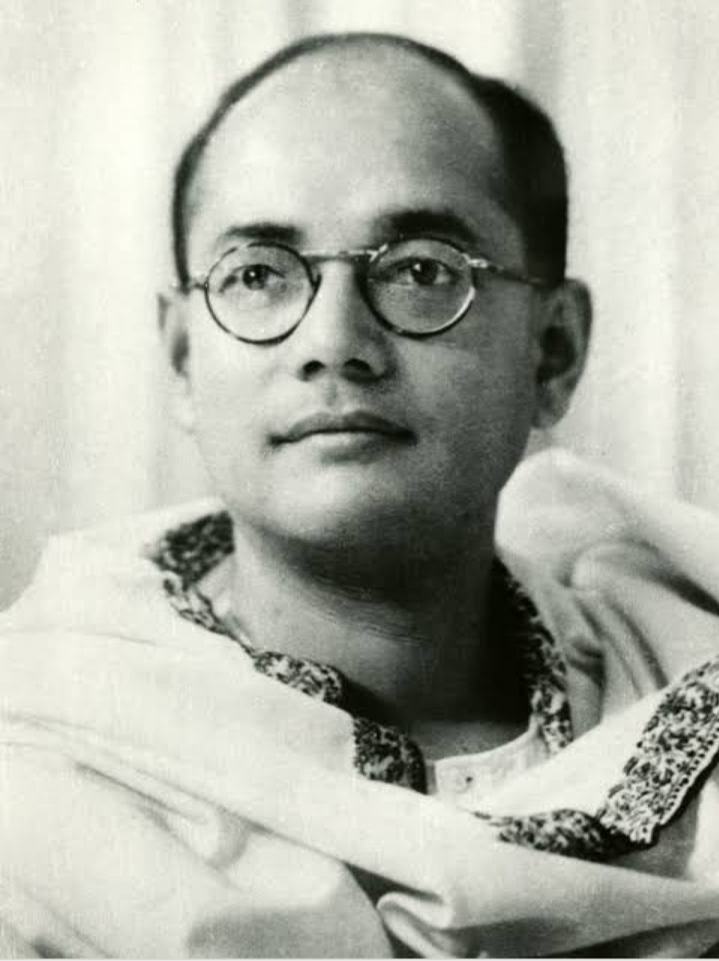
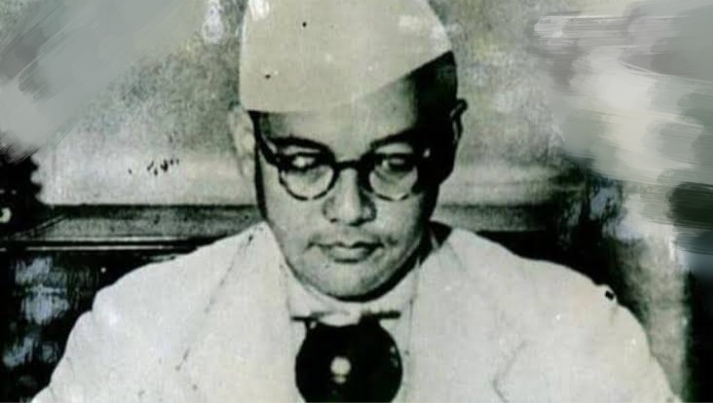
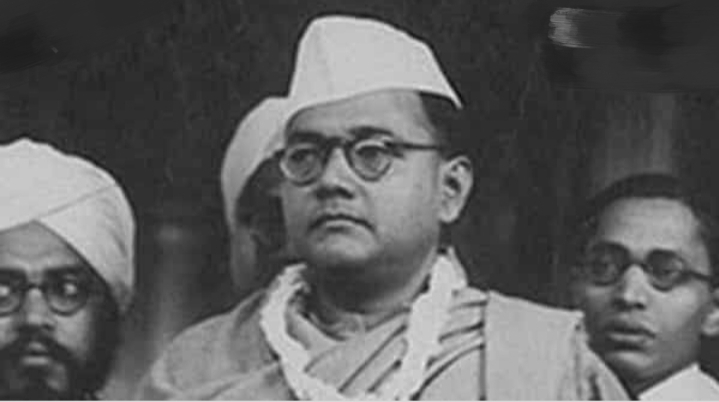
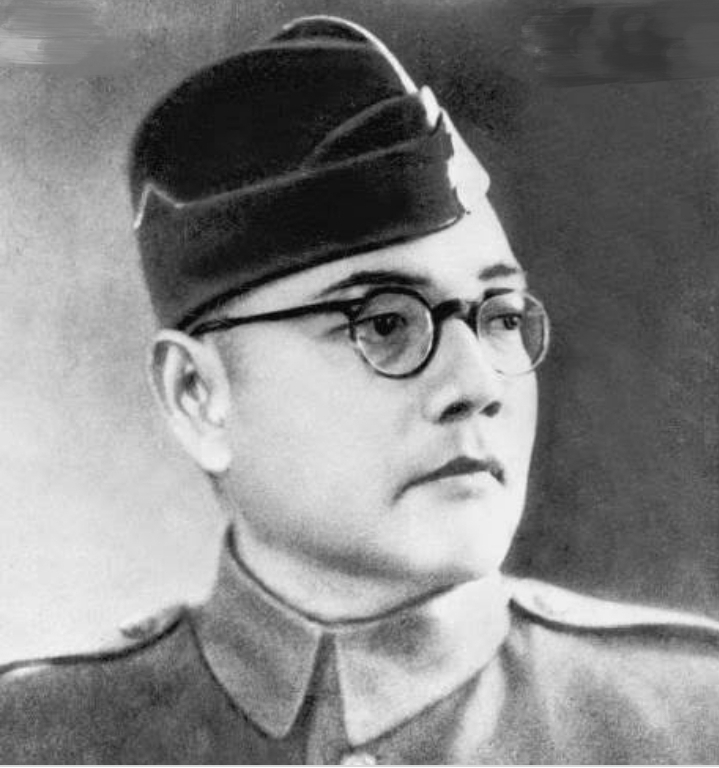
Netaji Subhash Chandra Bose

Subhas Chandra Bose was an Indian nationalist whose contribution to Indian independence and development is incomparable. Subhash Chandra Bose, the dynamic leader who gave all his sweat and blood for India’s freedom movement continues to inspire millions of mind with his words even today.

Netaji was born in Cuttack in Odisha in 1897 in a well-to-do family. His father’s name was Janakinath Bose and his mother’s name was Prabhavati Dutt Bose. He was the ninth child among the fourteen.

Bose was a bright student and also the topper in matriculation examination from Calcutta. Since childhood he was influenced by the teachings of Swami Vivekananda and was popular for his patriotic enthusiasm.

He graduated from Kolkata, and to pursue his career in Indian Civil Services, he went to England and appeared for competitive examination and stood fourth in it. He proved his mettle by becoming an Indian Civil Services (ICS) officer. But he was not accustomed to a life of comfort and amenities that came with his job. He was a warrior, who had to wage the freedom struggle.

Not only did he embrace the freedom movement wholeheartedly, but also became an inspiration for freedom. With the slogan “Give me blood and I will give you freedom”, he started preparing to awaken the country. Such was the charisma of his philosophy and personality that whoever listened to him was attracted to him. His popularity skyrocketed and he became “Netaji” to the general public.

He was so fond of Bharat Mata that his country tied to the chains of slavery did not let him live peacefully. People beyond India’s borders also developed a fascination for him. Heads of states of important countries stood by him and Netaji lit the fire of the freedom struggle beyond India’s shores. Netaji was influenced by the teachings of Mahatma Gandhi and he soon joined Indian National Congress. In 1930, he was sent to jail during the civil disobedience movement and was released in 1931. Later, he was expelled from India to Europe but taking the advantage of the situation he worked to strengthen the ties between the two countries. Challenging the ban in the home country he returned, but was again sent to jail. In 1937, after Congress came in to power, he was released.

He built a force and presented that force before the enemies of the country as the Azad Hind Fauj (Indian National Army). He gave the slogan of “Dilli Chalo” with a new spirit. Thousands of soldiers of his 60,000-strong army sacrificed their lives for the country.

Netaji was an active member of the Indian National Congress. He was elected as the President of the All India Youth Congress in 1923. His views as a freedom fighter were very different from those of Mahatma Gandhi. Netaji was a part of the Non-Cooperation Movement led by Gandhiji. He was given the title of Netaji in Germany by Indian soldiers in early 1942. Since then, he has been popularly known as Netaji among people.

“Success always stands on the pillar of failure.” Bose lived with this philosophy and also inspired others. Netaji encountered failures several times, but he converted those failures to triumph with his struggle. Whether it is municipal politics, the journey from a common Congressman to the Congress president’s position, the formation of the Forward Bloc or the struggle of the Indian National Army, he passed every test with distinction.

Bose accepted the leadership of Mahatma Gandhi, but ironically, Gandhiji himself became the cause of him leaving the Congress. But the two leaders always had respect for each other.

At the time of India’s independence, Clement Attlee was the British Prime Minister. He came to Kolkata in 1956. At that time, his host, governor and former Calcutta high court chief justice PB Chakravartti, tried to find out from him the reason behind the British decision to grant freedom to India. In response, Attlee said that the loyalty of the Indian army and navy to the British state was declining due to the increasing military activities of Bose’s Azad Hind Fauj. This was one of the major reasons. This acknowledgement proves the great contribution of Bose to India’s independence.

Jabalpur in Madhya Pradesh had a major contribution in the life of Netaji. The banks of the Narmada transformed his life. The Tripuri Congress session was held from March 4-11, 1939 in Jabalpur. Despite poor health, Netaji had arrived on a stretcher to participate in it. Thereafter, he came again to Jabalpur on July 4, 1939 to form the Forward Bloc. The people of Madhya Pradesh have a deep relationship with Netaji. In every town of the state, there’s a ward in his name. Subhas Chandra Bose’s message to his colleagues was: “Success may be distant, but it is imperative”. Bose used to say, “If a person is not obsessed, he can never become great. But he should also have something else inside him.” Bose is credited with giving global identity to the Indian leadership. Earlier, Swami Vivekananda had enlightened the world about India’s spiritual and cultural superiority and identity.

Netaji was also fluent in many Indian languages. Bose’s struggle for freedom proved to be an inspiration not just for India, but also for all Third World countries. The Indian freedom struggle and the war of independence led by Bose had a profound impact on those countries. Netaji’s status establishes him as the “hero of freedom” globally.

Unfortunately, on August 18, 1945, he was killed in a plane crash in Taiwan.

Children and Lack of Education

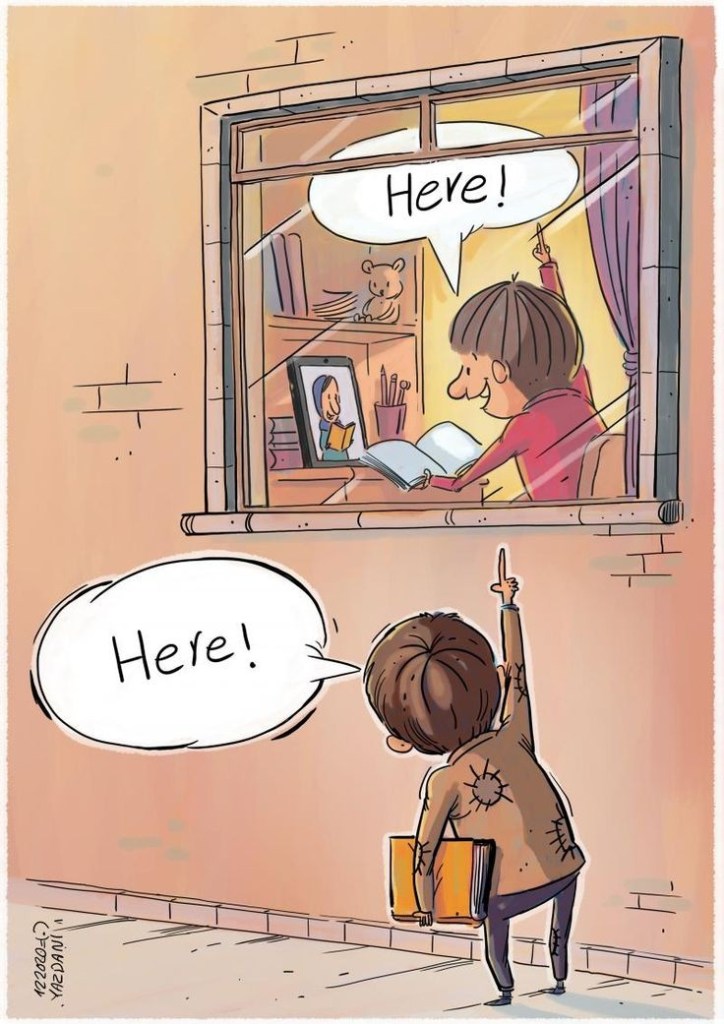
There are many circumstances of children around the world who experience a lack of education, resulting in them having a below average level of knowledge. Lack of education is a significant barrier for underprivileged children around the world.

Today, education remains an inaccessible right for millions of children around the world. More than 72 million children of primary education age are not in school and 759 million adults are illiterate and do not have the awareness necessary to improve both their living conditions and those of their children.

What Is Lack of Education?

  • A lack of education can be described by a state where people have lower than average common knowledge and basic skills to support them in their daily life.
  • This includes the ability to read, write, spell, speak, and do simple math.

What Causes Lack of Education?

  • A lack of education is a significant concern due to lack of funding for education, having untrained teachers, limited or no classroom space, limited resources (e.g., paper, pencil, etc.), living far away from school, and living in countries of conflict.
  • This concern is a leading issue in underdeveloped countries as an education system is highly dependent on region’s economic status.

People Who Are Less Likely To Receive Education

Females

  • Girls are commonly left uneducated because many countries believe there is more value in educating boys in comparison to girls.
  • Additionally, girls are forced to marry as early as eighteen years old which prevent them for continuing their education.

Children With Disabilities

  • Children with disabilities most regularly do not regularly receive education because teachers do not receive adequate training to work with these kids.
  • In addition, these children face a lot of discrimination in terms of accessibility to a safe learning environment, as well as communication with their surroundings.

Outcomes From a Lack of Education

  • Lack of education can prevent a person from having a sound voice in society, as they face communication barriers and are looked down upon
  • Not having enough education is a leading cause of unemployment, as many industries require well informed and educated individuals to step into an employment position
  • Being uneducated puts people at a higher risk of falling into the poverty trap, which is defined by being unable to escape poverty due to a lack of resources. This is because education provides people with the means to make a sustainable living; however, without it, the chances of having a sufficient income is low
  • Lacking education promotes exploitation, as many people without a proper education take on unsafe positions. Some of these positions include becoming a prostitute, sweatshop laborer, and can even result in child marriages.

Prevalence Rates

  • 34.3 million girls around the world do not attend primary school.
  • 97.4 million girls around the world do not attend secondary school.
  • In countries of conflict, girls are twice as likely to receive education in comparison to countries without conflict.
  • In developing countries, up to 95% of disabled children are not enrolled in school.
  • 51% of the uneducated population comes from South Asia.