Thermal Pollution

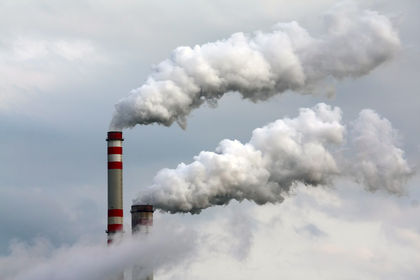
Thermal pollution is a real and persistent problem in our modern society. Thermal Pollution may be defined as ‘the excessive raising or lowering of water temperature above or below normal seasonal ranges in streams, lakes, or estuaries or oceans as the result of discharge of hot or cold effluents into such water’. Thermal Pollution is harmful because its increase water temperature in streams, rivers, lakes, or occasionally, coastal ocean waters. Thermal pollution is caused by either dumping hot water from factories and power plants or removing trees and vegetation that shade streams, permitting sunlight to raise the temperature of these waters. Like other forms of water pollution, thermal pollution is widespread, affecting many lakes and vast numbers of streams and rivers in the United States and other parts of the world. A temperature increase as small as 1 or 2 Celsius degrees (about 2 to 4 Fahrenheit degrees) can kill native fish and plants or drive them out in favor of other species, often with undesirable effects.

Definition :-

Pollution, the idea of thermal pollution often doesn’t come to mind. People will first think of things like carbon emissions, personal pollution and waste, and a variety of other changing factors.
However, thermal pollution is a real and persistent problem in our modern society. In layman’s terms, thermal pollution is when an industry or other human-made organization takes in water from a natural source and either cools it down or heats it up. They then eject that water back into the natural resource, which changes the oxygen levels and can have disastrous effects on local ecosystems and communities.
Thermal pollution is defined as a sudden increase or decrease in temperature of a natural body of water, which may be ocean, lake, river or pond by human influence. This normally occurs when a plant or facility takes in water from a natural resource and puts it back with an altered temperature. Usually, these facilities use it as a cooling method for their machinery or to help better produce their products.
Plants that produce different products or wastewater facilities are often the culprits of this massive exodus of thermal pollution. In order to properly control and maintain thermal pollution, humans and governments have been taking many steps to effectively manage how plants are able to use the water. However, the effects are still lasting today.
Causes of Thermal Pollution: – It looks like thermal pollution occurs mainly due to industrial activities, there are geothermal sources as well. These are:

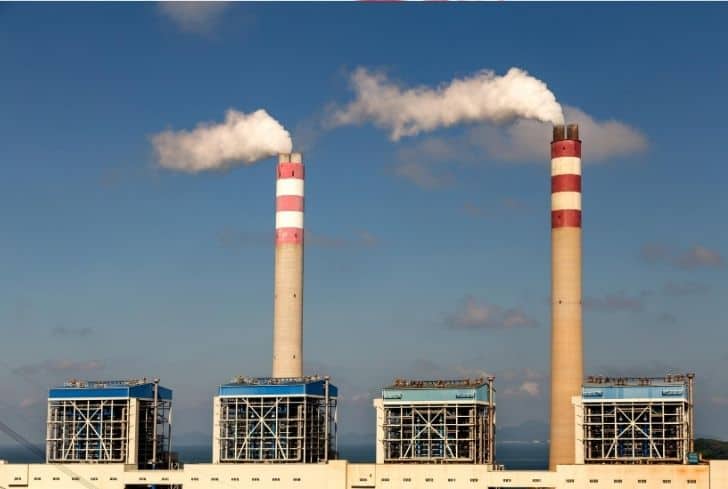
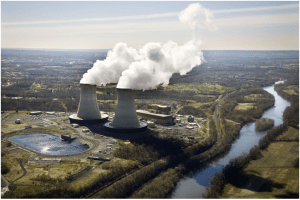
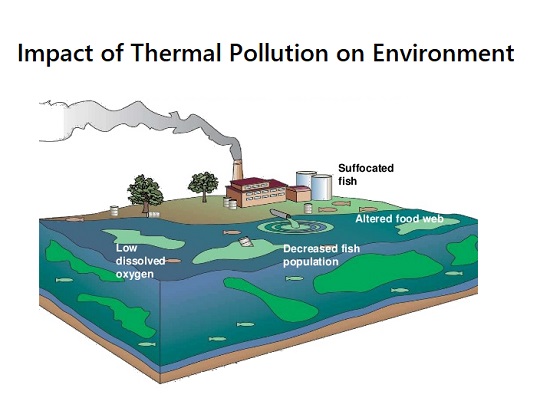
1. Heavy Industries :- Industries such as power, chemical, nuclear & manufacturing are the primary source of thermal pollution. These industries use water as a coolant and discharge it back at an elevated temperature that affects the ecosystem. Water bodies that are near the nuclear power plants get heated due to emissions from nuclear reactors. Warm water decreases the dissolved oxygen content that results in thermal shock causing adverse effects on aquatic life.

2. Domestic & Industrial Effluents :-

Household and industrial effluents that include drainage from hospitals and research institutions too are often discharged with minimum or no treatment. Normally sewage treatment plants operate at a higher temperature and when discharged in natural water bodies the effective temperature increases. Thus, domestic & industrial effluents are one of the main sources of thermal pollution.avement gets quite hot, which creates warm runoffs that get into the sewer systems and water bodies.

3. Runoff From Paved Surfaces :- Urban runoff discharged to surface waters from paved surfaces like roads and parking lots can make the water warmer. During summer seasons, the pavement gets quite hot, which creates warm runoffs that get into the sewer systems and water bodies.

4. Soil Erosion :- Soil erosion causes the top layer of soil to break and washed away into the natural water bodies. The level of water bodies rises due to consistent soil erosion and sedimentation, which makes it directly exposed to the sunlight. Massive removal of vegetation and trees speeds up the soil erosion process, thus contributing to thermal pollution.

5. Deforestation :- Trees and plants prevent sunlight from falling directly on lakes, ponds or rivers. When deforestation takes place, these water bodies are directly exposed to sunlight, thus absorbing more heat and raising its temperature. Deforestation is also the main cause of the higher concentrations of greenhouse gases, i.e. global warming in the atmosphere.

6. Geothermal Activities :-
Natural causes like volcanoes, geothermal vents can trigger warm lava to raise the temperature of water bodies. Lightening can also introduce a massive amount of heat into the oceans. This means that the overall temperature of the water source will rise.
Harmful Effects of Thermal Pollution :-

Specific ecological imbalances occur due to increased water temperature affecting the associated ecosystem. Here are some major effects of thermal pollution.

Reduction in Dissolved oxygen level :- The warm temperature reduces the levels of DO (Dissolved Oxygen) in water. The decrease in DO can create suffocation for plants and animals such as fish, amphibians and copepods, which may give rise to anaerobic conditions. Warmer water allows algae to flourish on the surface of the water, and over the long term, growing algae can decrease oxygen levels in the water.

Changes in water quality :- A high temperature of the water changes the physical and chemical properties of water. When the viscosity of the water decreases, the vapour pressure increases rapidly.

Increase in Toxicity :- The concentration of the pollutant is the factor in the increase in the temperature of water, due to which the poisoning in the water increases the toxicity. Which can increase the death rate of aquatic life.

Interference in Reproduction Rates :-Thermal pollution adversely affects the natural reproductive cycles of fishes and other aquatic organisms. Due to thermal pollution, the temperature gradient of water bodies gets disturbed and affects whole aquatic organisms. Due to thermal shock, mass killing of fishes and other aquatic organisms can occur when there is a very rapid water temperature change.

Control of Thermal Pollution :- There are a number of ways to minimize the harmful effects of Thermal Pollutions.

Cooling Ponds :-
Cooling ponds or reservoirs constitute the simplest method of controlling thermal discharges. Heated effluents on the surface of water in cooling ponds maximize dissipation of heat to the atmosphere and minimize the water area and volume. This is the simplest and cheapest method which cools the water to a considerable low temperature. However, the technique alone is less desirable and inefficient in terms of air-water contact.

Cooling Towers :- After using water from water sources for cooling purposes, it is subsequently returned to the water body after passing through the condenser, which is termed as the cooling process. Therefore cooling towers are designed to control the temperature of water to make the cooling process more effective. Cooling towers are mainly used to dissipate the recovered waste heat to eliminate the problems of thermal pollution.

Cogeneration (Combined heat and power; CHP) :- Cogeneration is the use of a heat engine or a power station to simultaneously generate both electricity and useful heat. All power plants emit a certain amount of heat during electricity generation. This can be released into the natural environment through cooling towers, flue gas, or by other means. By contrast CHP captures some or all of the by-product heat for heating purposes, either very close to the plant or as hot water for district heating with temperatures ranging from approximately 80 to 130 °C. This is also called Combined Heat and Power.

Artificial Lake :- Artificial lakes are man-made water bodies that offer a possible alternative. The heated effluents may be discharged into the lake at one end, and the water may be withdrawn from the other end for cooling purposes. The heat is eventually dissipated through evaporation. However, these lakes have to be rejuvenated continuously.

Spray Ponds :- In spray ponds, the water coming out from the condensers pass into the pond through water sprayer nozzles.
The fine water droplets dissipate into the atmosphere as its area is maximized and cooled rapidly.

Other Preventive Measures:- Water Recycling
Afforestation along with the riverbank
Stricter Rules & Regulations
Spreading Awareness
Use of alternative cooling agent ( fan coolers use air to cool).
Desertification and it’s impact

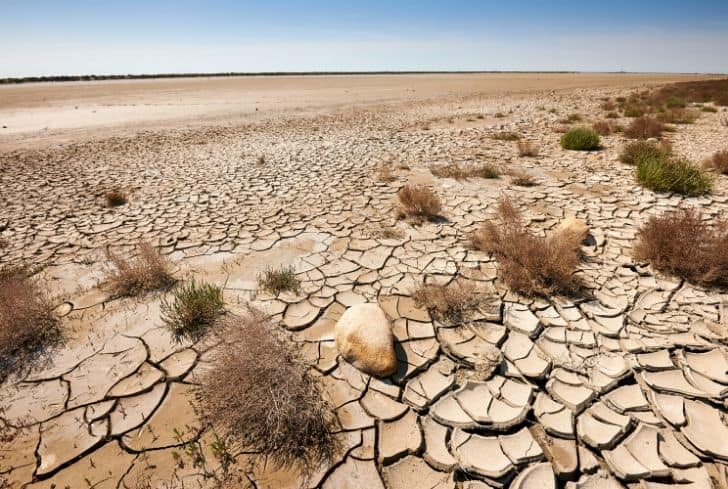
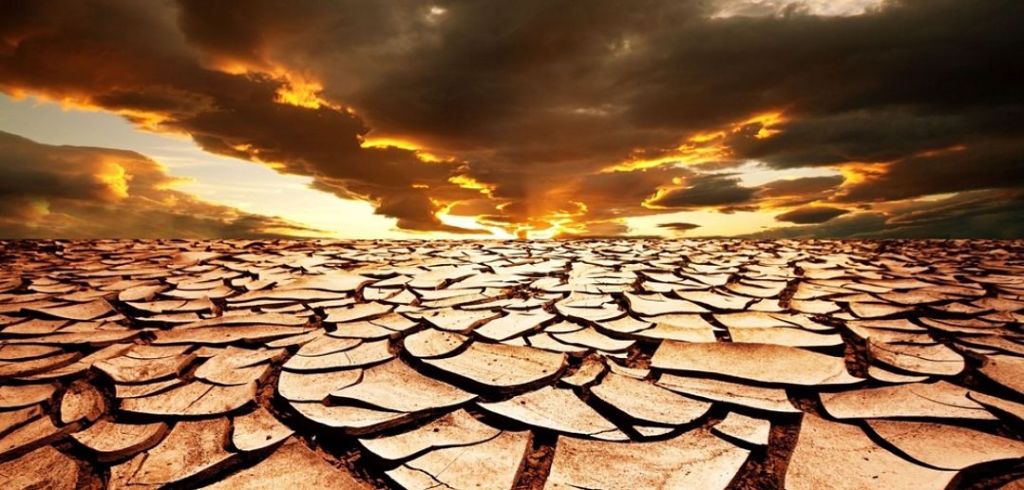
Desertification, an intentionally foreboding term, is at its core land degradation in dryland
environments. After nearly 40 years of international attention, the analysis of the causes and
consequences of land degradation in dryland systems remains shrouded in the nuanced
complexities of multiple interwoven variables (biophysical, anthropogenic, and climatic) working
simultaneously to bring about change in these ecologically and socially vulnerable areas. In order
to fully grasp the complexities of desertification, this chapter follows a fivefold approach. First, it
provides a synthesis of the history and politicization of the term. Second, it establishes
desertification’s geospatial context. Third, it identifies the interrelated drivers of land degradation
and their impacts, with special focus placed on North Africa, the Middle East, and Central Asia.
Fourth, it outlines the current approaches to studying land degradation and desertification. Finally,
it concludes by situating the desertification dynamic in the context of sustainability and poverty eradication.

Introduction :-

Desertification is defined as a process of land degradation in arid, semi-arid and sub-humid areas
due to various factors including climatic variations and human activities. Or, to put it in another
way, desertification results in persistent degradation of dryland and fragile ecosystems due to
man-made activities and variations in climate.
Desertification, in short, is when land that was of another type of biome turns into a desert biome
because of changes of all sorts. A huge issue that many countries have is the fact that there are
large pockets of land that are going through a process that is known as desertification.
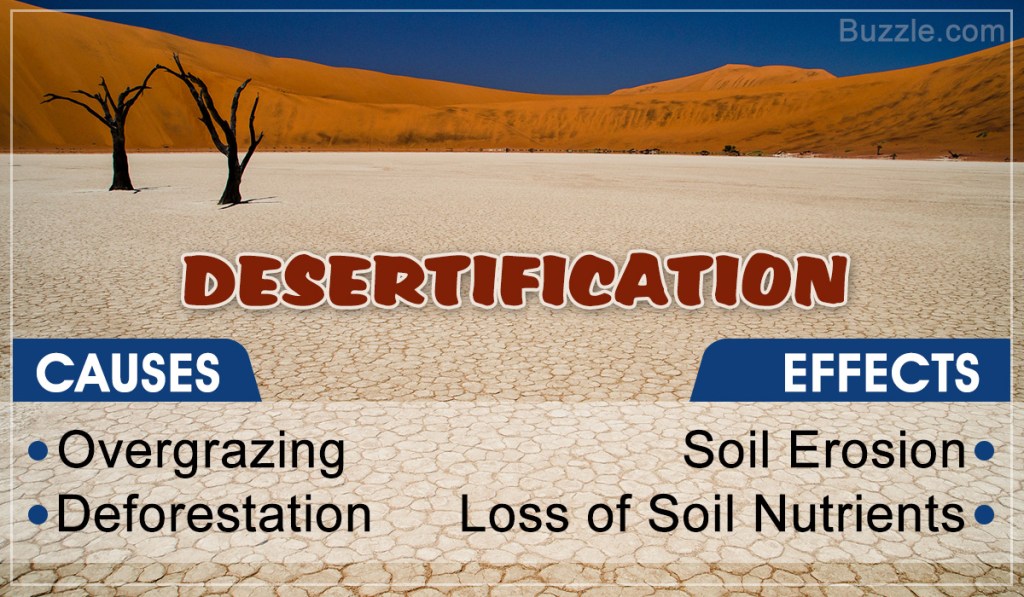
Overgrazing is the major cause of desertification worldwide. Other factors that cause
desertification include urbanization, climate change, overuse of groundwater, deforestation,
natural disasters, and tillage practices in agriculture that make soils more vulnerable to wind.
Desertification affects topsoil, groundwater reserves, surface runoff, human, animal, and plant
populations. Water scarcity in drylands limits the production of wood, crops, forage, and other
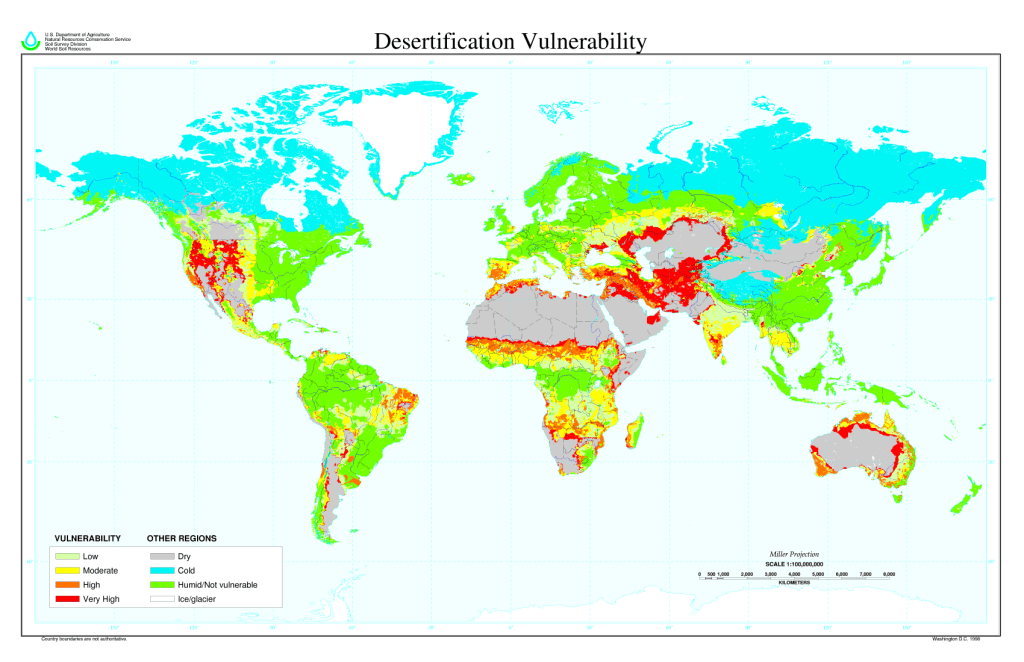
services that ecosystems provide to our community. According to UNESCO, one-third of
world’s land surface is threatened by desertification, and across the world, it affects the
livelihood of millions of people who depend on the benefits of ecosystems that drylands provide.
Desertification is another major environmental concern and a significant barrier to meeting basic
human needs in drylands and is being constantly threatened by increases in human pressures and
climatic variability.
It is caused by a variety of factors, such as climate change and human activities. Desertification
is a significant global ecological and environmental problem.”
Through my project, we’re going to give you an idea as to what are the causes of desertification,
the effects that desertification has, and what we can do in order to deal with the problem at hand.

CAUSES OF DESERTIFICATION :

1. Population Growth :- The population in some desert areas is increasing. In places where
there are developments in mining and tourism, people are attracted by jobs. An increased population is putting greater pressure on the environment for resources such as wood and water.

2. Removal of wood – In developing countries, people use wood for cooking. As the population in desert areas increases, there is a greater need for fuel wood. When the land is cleared of trees, the roots of the trees no longer hold the soil together so it is more vulnerable to soil erosion.

3.Overgrazing – An increasing population results in larger desert areas being farmed. Sheep, cattle and goats are overgrazing the vegetation. This leaves the soil exposed to.

4. Soil erosion – This is made worse by
overgrazing and the removal of wood.
Population growth is the primary cause for soil erosion.

5. Deforestation-When people are looking to move into an area, or they need trees in order to make houses and do other tasks, then they are contributing to the problems related to desertification. Without the plants (especially the trees) around, the rest of the biome cannot thrive.

6. Climate change – The global climate is getting warmer. In desert regions conditions are not only getting warmer but drier too. On average there is less rain now in desert regions than there was 50 years ago.

7. Over drafting of groundwater- Groundwater is the freshwater found underground and also one of the largest water sources. Over drafting is the process in which groundwater is extracted in excess of the equilibrium yield of the aquifer that is pumping or theexcessive pulling up of groundwater from underground aquifers. Its depletion causes desertification.

Devastating Effects of Desertification
:-

1. Farming becomes next to impossible-If an area becomes a desert, then it’s almost impossible to grow substantial crops there without special technologies. This can cost a lot of money to try and do, so many farmers will have to sell their land and leave the desert areas.

2. Decrease in Crop Yields-A major effect of desertification is the decrease in crop yields. Once land turns from arable to arid, it is often on longer suitable for farming purposes anymore. If their land becomes arid, they may no longer be able to provide sufficient crop yields to make a living out of it.

3. Flooding- Without plant life in an area, flooding is a lot more imminent. Not all deserts are dry; those that are wet could experience a lot of flooding because there is nothing to stop the water from gathering and going all over the place. Flooding can also negatively affect the water supply, which we will discuss next.

4. Poor Water Quality-If an area becomes a desert, the water quality is going to become a lot worse than it would have been otherwise. This is because plant life plays a significant role in keeping the water clean and clear; without its presence, it becomes a lot more difficult for you to be able to do that.

5. Biodiversity Loss- In general, the destruction of habitats and desertification may also
contribute to a loss of biodiversity. While some species may be able to adjust to the
altered environmental conditions properly, many species will not be able to do so and may suffer from serious declines in population.

6. Destruction of Habitats-Desertification often leads to a loss of habitats for many
animals and plants. Desertification may alter the living conditions of the local flora and fauna that makes it impossible for animals and plants to sustain their populations.


7. Overpopulation-When areas start to become desert, animals and people will go to other areas where they can actually thrive. This causes crowding and overpopulation, which
will, in the long run, end up continuing the cycle of desertification that started this whole thing anyway.

Desertification Is Increasing Because of Global Warming :-

Desertification is a phenomenon that is increasingly understood by scientists. While high
temperatures and droughts prevent plants from growing, arid soils aren’t as good at retaining
water. Human activity (agricultural overexploitation, soil artificialization, deforestation)
contributes to this phenomenon by destroying the environment.
It also leads to biodiversity losses locally, which further accelerates desertification -a positive
(though negative) feedback loop. Desertification also causes the carbon stored in the soil and
plants to be released, which in turn contributes to global warming. These vicious circles are now
well-identified in the scientific community and they are increasingly taking place across the
globe.
But recent studies give us a more precise idea of the speed and extent of these desertification caused changes and how they’re related to global warming. According to a study published in
early January 2018, global warming is helping to accelerate desertification and between 24% and
32% of the globe’s land area could be affected by 2050.

Soil Hydrology of Desertification and Rehabilitation :-

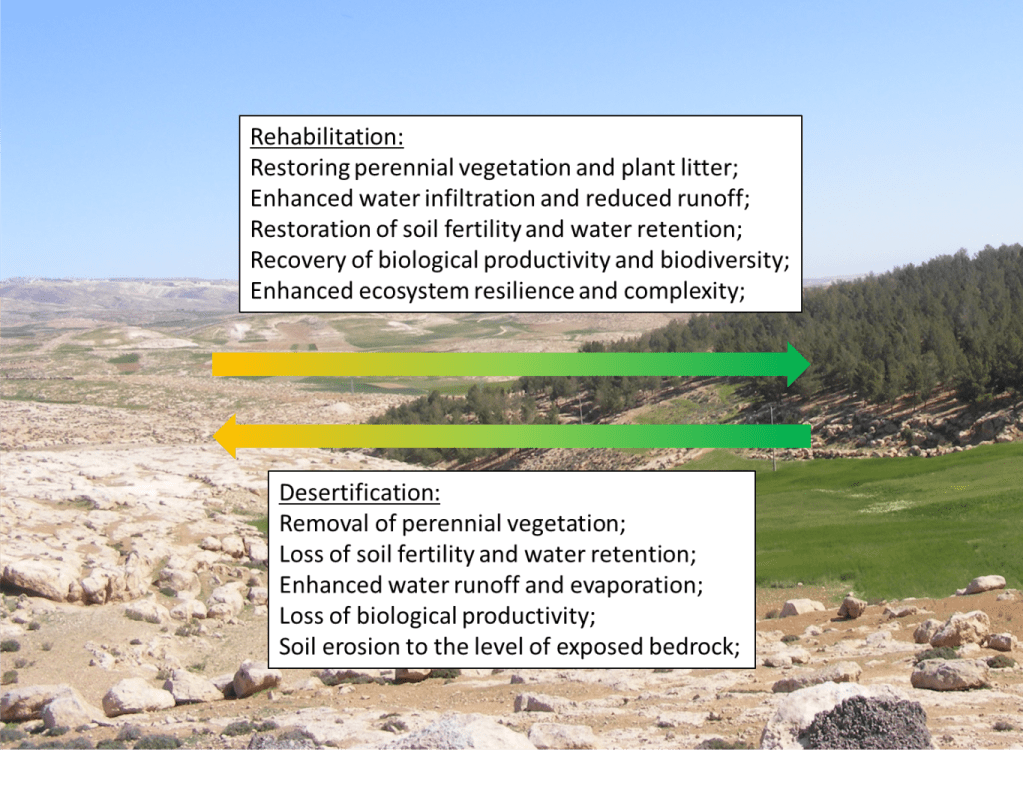
Desertification dramatically alters the hydrology of the degraded soil surfaces. Decertified surfaces are either rocky surfaces or exposed crusted soils with very low water infiltration capacity; water immediately runs off at high speed, causing further soil erosion. Remaining humidity in exposed soils rapidly evaporates in the intensive sunlight, so that resulting biological productivity is a fraction of that of restored ecosystems. In intact or restored ecosystems, large amounts of water can infiltrate through layers of plant litter into rich topsoil, whereby decomposing litter releases the nutrients required for vigorous plant growth Shade provided by perennial plants and plant litter layers also reduces soil surface temperatures and, consequently, evaporation, so that most precipitation becomes available to plants, resulting in water use efficiency.

Renewable resources .

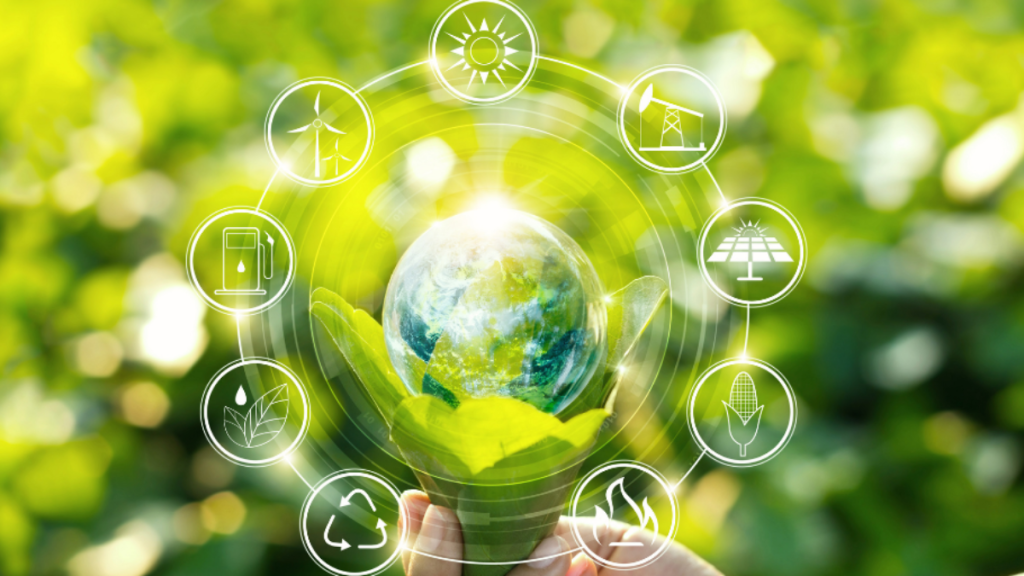
Replacing traditional sources of energy completely with renewable energy is going to be a challenging task. However, by adding renewable energy to the grid and gradually increasing its contribution, we can realistically expect a future that is powered completely by green energy.

– Tulsi Tanti

A way to live a new life . Without any destruction , without worrying about the future . Live a life where we can grow together , develop a life with renewable resources.

Introduction

A renewable resource, also known as a flow resource, is a natural resource which will replenish to replace the portion depleted by usage and consumption, either through natural reproduction or other recurring processes in a finite amount of time in a human time scale.

When such recovery rate of resources is unlikely to ever exceed a human time scale, these are called perpetual resources. Renewable resources are a part of Earth’s natural environment and the largest components of its ecosphere. A positive life-cycle assessment is a key indicator of a resource’s sustainability.

Renewable resources are an energy source that cannot be depleted and are able to supply a continuous source of clean energy.

Renewable resources also produce clean energy, meaning less pollution and greenhouse gas emissions, which contribute to climate change.

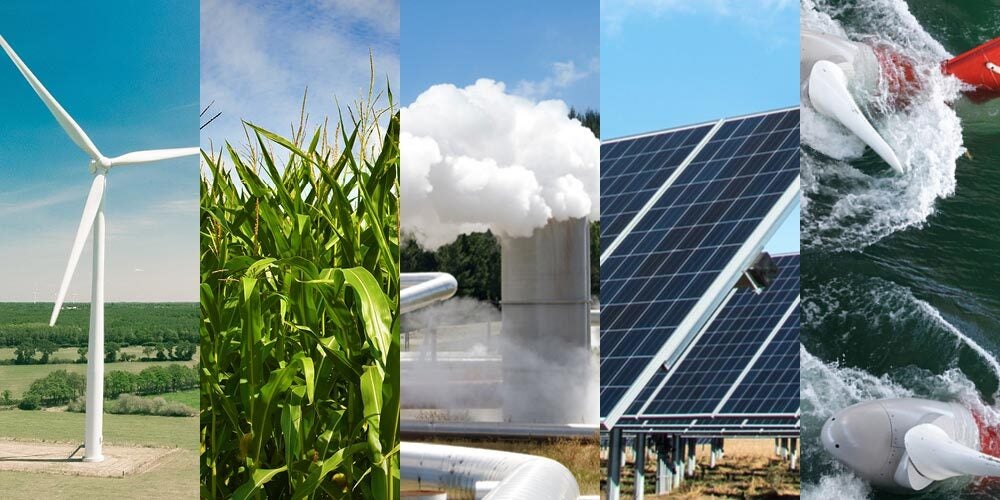
Examples of renewable resources.

  • Biomass .
  • Biogas.
  • Tidal Energy.
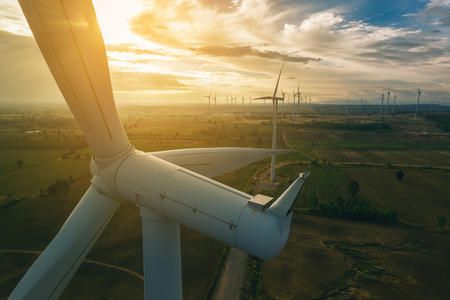
  • Wind Energy.
  • Geothermal Energy.
  • Radiant Energy.
  • Hydro Electricity.
  • Compressed Natural Gas.

Types of renewable resources.

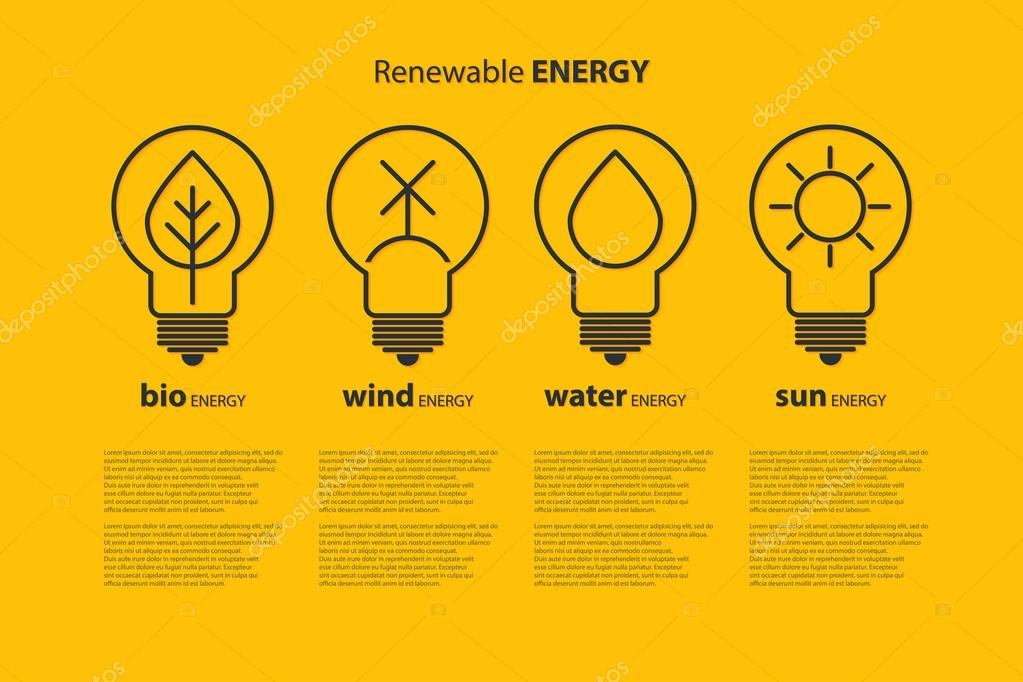
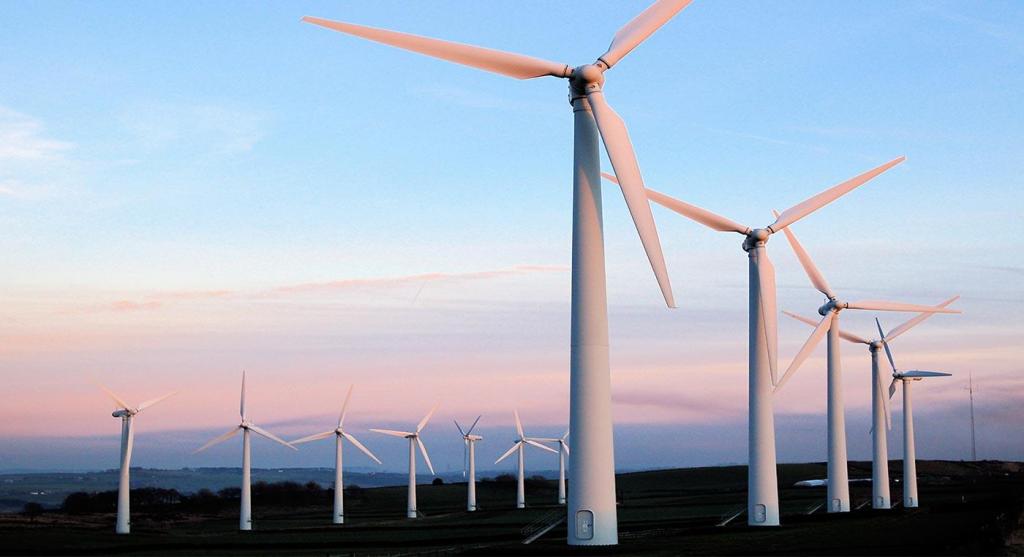
1) Solar energy. Sunlight is one of our planet’s most abundant and freely available energy resources. 2) Wind energy. Wind is a plentiful source of clean energy. 3) Hydro energy.
4) Tidal energy.
5) Geothermal energy. 6) Biomass Energy.

Impact of renewable resources.

Environmental impact

Renewable energy projects have also contributed in improving environmental impacts such as reduction of carbon dioxide gas, awakening community about the climate change. The study observed very small impacts on the people living in a particular area, tourism, cost of energy supply, and educational impacts. Significant impacts were observed in improvement of life standard, social bonds creation, and community development. They also observed that the renewable energy projects are complex to install and are local environmental and condition sensitive. Their forecasting, execution, and planning require more consideration and knowledge as compared to other projects.

Social impact

These resources also provide social benefits like improvement of health, according to choice of consumer, advancement in technologies, and opportunities for the work, but some basic considerations should be taken for the benefit of humans, for example, climate conditions, level of education and standard of living, and region whether urban or rural from agricultural point of view. Social aspects are the basic considerations for the development of any country. The following social benefits can be achieved by renewable energy systems: local employment, better health, job opportunities, and consumer choice.

Advantages of renewable resources.

  • Renewable energy won’t run out.
  • Maintenance requirements are lower.
  • Renewables save money.
  • Renewable energy has numerous health and environmental benefits.
  • Renewables lower reliance on foreign energy sources.
  • Higher upfront cost.
  • Intermittency.
  • Storage capabilities.

Conclusion

Renewable energy is becoming an important resource in all over the world . I do agree that people might exploit the resources for there own benefit . But the government is working on that aspect and trying to provide resources that can help our future households .

There are a lot of different ways of building a prosperous society, and some of them use much less energy than others. And it is possible and more practical to talk about rebuilding systems to use much less energy than it is to think about trying to meet greater demands of energy through clean energy alone.

– Alex Steffen

Link

Global warming – a threat for us

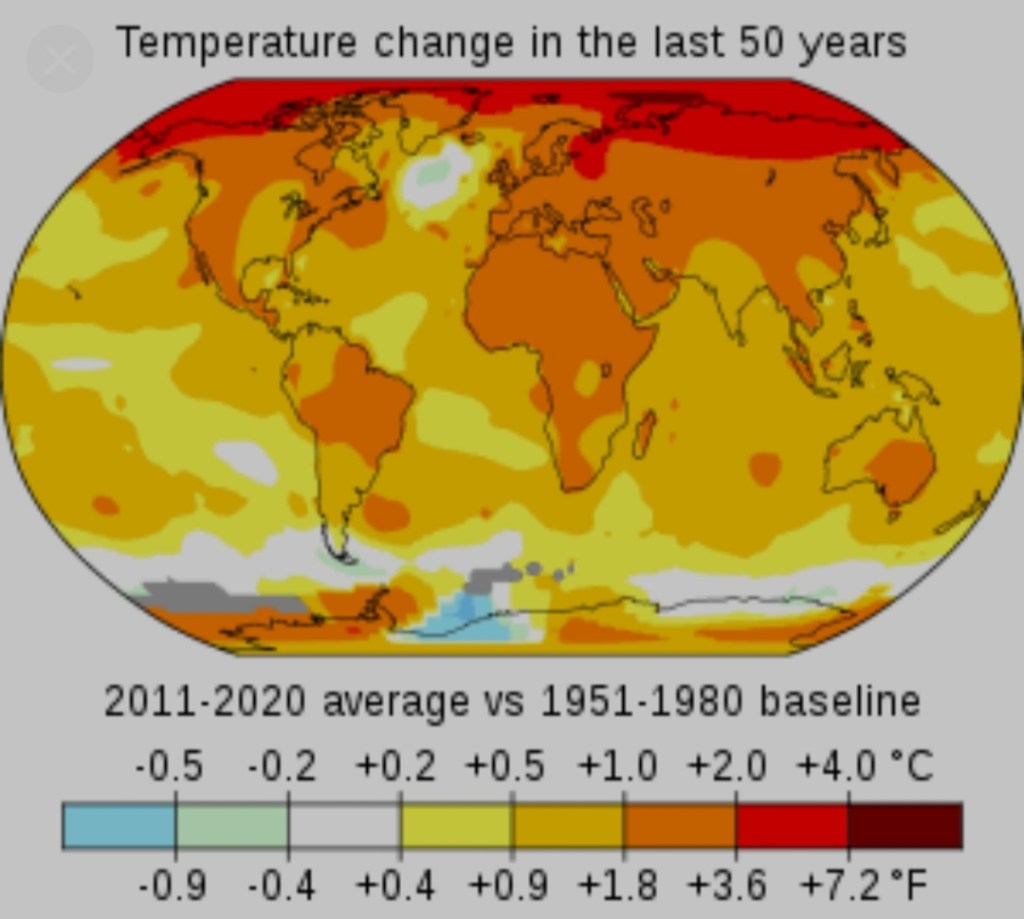
Global warming is the long-term heating of Earth’s climate system observed since the pre-industrial period (between 1850 and 1900) due to human activities, primarily fossil fuel burning, which increases heat-trapping greenhouse gas levels in Earth’s atmosphere.

What is global warming?

Since the Industrial Revolution, the global annual temperature has increased in total by a little more than 1 degree Celsius, or about 2 degrees Fahrenheit. Between 1880—the year that accurate recordkeeping began—and 1980, it rose on average by 0.07 degrees Celsius (0.13 degrees Fahrenheit) every 10 years. Since 1981, however, the rate of increase has more than doubled: For the last 40 years, we’ve seen the global annual temperature rise by 0.18 degrees Celsius, or 0.32 degrees Fahrenheit, per decade.

Now climate scientists have concluded that we must limit global warming to 1.5 degrees Celsius by 2040 if we are to avoid a future in which everyday life around the world is marked by its worst, most devastating effects: the extreme droughts, wildfires, floods, tropical storms, and other disasters that we refer to collectively as climate change. These effects are felt by all people in one way or another but are experienced most acutely by the underprivileged, the economically marginalized, and people of color, for whom climate change is often a key driver of poverty, displacement, hunger, and social unrest.

What is the causes of global warming?

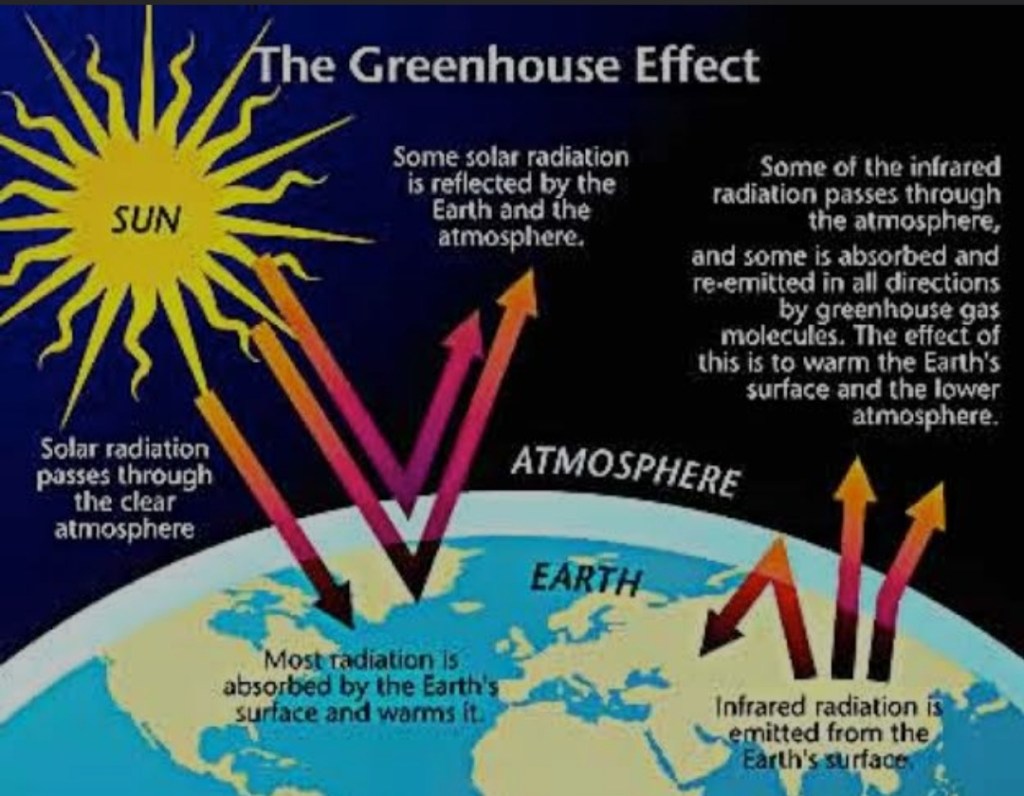
Global warming occurs when carbon dioxide (CO2) and other air pollutants collect in the atmosphere and absorb sunlight and solar radiation that have bounced off the earth’s surface. Normally this radiation would escape into space, but these pollutants, which can last for years to centuries in the atmosphere, trap the heat and cause the planet to get hotter. These heat-trapping pollutants—specifically carbon dioxide, methane, nitrous oxide, water vapor, and synthetic fluorinated gases—are known as greenhouse gases, and their impact is called the greenhouse effect.

Curbing dangerous climate change requires very deep cuts in emissions, as well as the use of alternatives to fossil fuels worldwide. The good news is that countries around the globe have formally committed—as part of the 2015 Paris Climate Agreement—to lower their emissions by setting new standards and crafting new policies to meet or even exceed those standards. The not-so-good news is that we’re not working fast enough. To avoid the worst impacts of climate change, scientists tell us that we need to reduce global carbon emissions by as much as 40 percent by 2030. For that to happen, the global community must take immediate, concrete steps: to decarbonize electricity generation by equitably transitioning from fossil fuel–based production to renewable energy sources like wind and solar; to electrify our cars and trucks; and to maximize energy efficiency in our buildings, appliances, and industries.

What are the effects of global warming?

Each year scientists learn more about the consequences of global warming, and each year we also gain new evidence of its devastating impact on people and the planet. As the heat waves, droughts, and floods associated with climate change become more frequent and more intense, communities suffer and death tolls rise. If we’re unable to reduce our emissions, scientists believe that climate change could lead to the deaths of more than 250,000 people around the globe every year and force 100 million people into poverty by 2030.

1). Disappearing glaciers, early snowmelt, and severe droughts will cause more dramatic water shortages and continue to increase the risk of wildfires in the American West.


2). Rising sea levels will lead to even more coastal flooding on the Eastern Seaboard, especially in Florida, and in other areas such as the Gulf of Mexico.


3). Forests, farms, and cities will face troublesome new pests, heat waves, heavy downpours, and increased flooding. All of these can damage or destroy agriculture and fisheries.


4). Disruption of habitats such as coral reefs and alpine meadows could drive many plant and animal species to extinction.


5).Allergies, asthma, and infectious disease outbreaks will become more common due to increased growth of pollen-producing ragweed, higher levels of air pollution, and the spread of conditions favorable to pathogens and mosquitoes.

Though everyone is affected by climate change, not everyone is affected equally. Indigenous people, people of color, and the economically marginalized are typically hit the hardest. Inequities built into our housing, health care, and labor systems make these communities more vulnerable to the worst impacts of climate change—even though these same communities have done the least to contribute to it.

How is global warming linked to extreme weather?

Scientists agree that the earth’s rising temperatures are fueling longer and hotter heat waves, more frequent droughts, heavier rainfall, and more powerful hurricanes.

In 2015, for example, scientists concluded that a lengthy drought in California—the state’s worst water shortage in 1,200 years—had been intensified by 15 to 20 percent by global warming. They also said the odds of similar droughts happening in the future had roughly doubled over the past century. And in 2016, the National Academies of Science, Engineering, and Medicine announced that we can now confidently attribute some extreme weather events, like heat waves, droughts, and heavy precipitation, directly to climate change.

The impacts of global warming are being felt everywhere. Extreme heat waves have caused tens of thousands of deaths around the world in recent years. And in an alarming sign of events to come, Antarctica has lost nearly four trillion metric tons of ice since the 1990s. The rate of loss could speed up if we keep burning fossil fuels at our current pace, some experts say, causing sea levels to rise several meters in the next 50 to 150 years and wreaking havoc on coastal communities worldwide.

Is the United States doing anything to prevent global warming?

We’ve started. But in order to avoid the worsening effects of climate change, we need to do a lot more—together with other countries—to reduce our dependence on fossil fuels and transition to clean energy sources.

Under the administration of President Donald Trump (a man who falsely referred to global warming as a “hoax”), the United States withdrew from the Paris Climate Agreement, rolled back or eliminated dozens of clean-air protections, and opened up federally managed lands, including culturally sacred national monuments, to fossil fuel development. Although President Biden has pledged to get the country back on track, years of inaction during and before the Trump administration—and our increased understanding of global warming’s serious impacts—mean we must accelerate our efforts to reduce greenhouse gas emissions.

President Biden has made action on global warming a high priority. On his first day in office, he recommitted the United States to the Paris Climate Agreement, sending the world community a strong signal that we were determined to join other nations in cutting our carbon pollution to support the shared goal of preventing the average global temperature from rising more than 1.5 degrees Celsius above preindustrial levels. (Scientists say we must stay below a 2-degree increase to avoid catastrophic climate impacts.) And significantly, the president has assembled a climate team of experts and advocates who have been tasked with pursuing action both abroad and at home while furthering the cause of environmental justice and investing in nature-based solutions.

Is global warming too big a problem for me to help tackle?

No! While we can’t win the fight without large-scale government action at the national level, we also can’t do it without the help of individuals who are willing to use their voices, hold government and industry leaders to account, and make changes in their daily habits.

Wondering how you can be a part of the fight against global warming? Reduce your own carbon footprint by taking a few easy steps: Make conserving energy a part of your daily routine and your decisions as a consumer. When you shop for new appliances like refrigerators, washers, and dryers, look for products with the government’s ENERGY STAR® label; they meet a higher standard for energy efficiency than the minimum federal requirements. When you buy a car, look for one with the highest gas mileage and lowest emissions. You can also reduce your emissions by taking public transportation or carpooling when possible.

Why Indians ignore global issues like climate change

Climate change is a change in the climate or environment of  the planet . it is not a natural process ,but an outcome of human activities and interference with nature. Climate change is not an issue of today or yesterday. It’s been started for a very long time. Transformation or variation in nature has been started in nature since the age of industrialization. climate change is the biggest threat for humanity .It is making our earth inhabitable. . Human civilization was developing at the cost of nature. And after that we all have followed their footprints for getting luxurious lifestyle, comfort, easiness .

development is required , but should not be done at the cost of nature.

Climate change is most worriment issue of today’s world. but the point is whether all countries are equally serious about it. Solemnity about this global issue varies from country to country , because economical condition of countries, lifestyle of their people, education level, women’s condition in countries are not same . That is why it is obvious to have difference in their awareness and  actions. the more people will aware the more they will take action. Awareness relies  on the economical, political and educational level of the country . climate change is such a issue that is difficult to understand .the  . having knowledge is worthless if proper actions are not being made and implemented. All the countries are accountable for this global issue ,however  their contribution is  unlike . the hazardous impact of climate change will not be as per of countries contribution . the planet is affected by this.

Climate change increase flood risk. The global average surface temperature has increased 2 degree since the pre – industrial era . Every upcoming year is becoming warmest year ,breaking the record of previous years.  incidents of wild fires have become more apparent of become more apparent ,extinction of wild species ,demolition of ozone layer ,shrinking glaciers , increasing sea level and intensity of tornados, avalanches , new epidemics , water ,air ,soil pollution and heat waves . it more likely to face adverse effect in forthcoming days.

India is the 4th largest emitter of greenhouse gas after china , united state  and EU . For country like india , it   is not possible to pay more attention on this global issue , when they have major issue like corruption , poverty, population, unemployment, education system, basic sanitation, healthcare system, women’s safety, infrastructure, agriculture distress etc. The germanwatch institute presented the result of the global climate risk index 2020.India is also in the top 10 countries. India’s climate risk index is 18.17 and is the major victim of extreme heat ,flood and sand storm among other divesting natural events . Global disasters are making headlines everyday .for instance California wildfire ,Uttarakhand wildfires, Australian bushfires, tycoon and floods etc. Human civilization has put itself in a great hazard by its activities.

India is a developing country and is not responsible much for it as compared to other countries. Two third of people  in india are  living in poverty,: they lack a basic need. Middle class aim to have decent well paid job, hope to own a house of their own, seek to have a secure retirement  and want to secure the  healthcare and  educational need of their family. Affluent section are  busy in their luxurious life. In India citizens are tackling with more sever issue such as food security ,shelter, employment ,lack of good education and politics is concern with other things .

 In Indian politics climate change is not a major issue. Indian politics revolves more around religion , faith, party system ,temple, cast etc. Good education makes people aware and it leads the country toward new innovations  and breakthroughs ,which will ultimately help us in fight with climate change .In agriculture  sector we need new crop seed  with climate resilient feature because our land will have to face more flood ,droughts and extreme heat. We need new innovation in renewable energy sector ,people will only switch their  energy source when they find renewable energy source as cheap as traditional one. Although many major automobile companies have launched electric vehicle ,electric cycle but they are so expensive that middle class can’t  afford to buy. Research and development in this sector will help them to reduce the price while improving its  functionality .one main thing we need to ensure  that  these electric vehicles must use renewable energy for their charging.

People’s participation is crucial in any anti climate action plan proposed by government .There is lot of examples  of individual endeavours  such as Greta Thunburg, Devaki Amma from Kerela state of India who alone grew a forest and Anupam  Mishra know for the conservation of rivers and water sources. So everyone has a place in fight with climate change .

Lack of coordination  at  both national  and international level. countries have made many agreements , protocols, pacts and organization to combat the climate issue like IPCC ,UNFCC,RIO SUMMIT ,PARIS PACT,MONTIAL PROTOCOL ,COP SUMMIT but we can clearly see the lack of seriousness in world politics. Their words are more than action. Like all developing countries, India’s concern about economic development and poverty alleviation is justified. And must be fully respected in any global climate regime, As virtually stated  explicitely in the UNFCCC  (United Nations Framework Convention on Climate Change).

At world level, the largest polluter or carbon emitter –US walked out  of the global agreement. However , later US  rejoin the paris agreement United state has produced  6.6 billion matric tons of carbon dioxide in 2019,the second largest emitter in the world after china. india is  the third largest emitter of greenhouse  gases.   For  the first time The Paris Agreement has  brought  together entire countries with a common goal of limiting   global warming to below 2 degree Celsius .  To attain this long  term temperature goal, countries motive to reach global peaking of greenhouse gas emissions as soon as possible  to achieve a climate neutral world by mid century.

Agriculture

When tillage begins, other arts follow. The farmers, therefore, are the founders of human civilization.”

— Daniel Webster

Introduction

It all started thousand of years ago , when the human civilization came into existence . Agriculture was a key to survival . People were farming for there domestic purpose , not for the others .

As the civilization started to grow accustomed of agriculture , they grew food in surplus that enabled people to live in cities. Plants were independently cultivated in at least 11 regions of the world.

The development of agriculture enabled the human population to grow many times larger than could be sustained by hunting and gathering.

It was the beginning of different civilization in different parts of the World. From those civilizations , one of them was our’s The Indus Valley Civilization . Vedic literature provides some of the earliest written record of agriculture in India. Rigveda hymns , describes plowing, fallowing, irrigation, fruit and vegetable cultivation.

Some of the ancient and historical evidence suggests rice and cotton were cultivated in the Indus Valley.

Agriculture : In India and World today .

India ranks second worldwide in farm outputs. As per 2018, agriculture employed Indian work force and contributed 17–18% to country’s GDP.

In 2016, agriculture and allied sectors like animal husbandry, forestry and fisheries accounted for 15.4% of the GDP (gross domestic product) with about 41.49% of the workforce in 2020.India ranks first in the world with highest net cropped area followed by US and China.The total agriculture commodities export was US $ 3.50 billion in March – June 2020.

Agriculture is the primary source of livelihood for about 58% of India’s population. Share of agriculture and allied sectors in gross value added (GVA) of India at current prices stood at 17.8 % in FY20.

During 2019-20 crop year, food grain production reached a record of 296.65 million tonnes. In 2020-21, Government of India is targeting food grain production of 298 million tonnes.

India is among the 15 leading exporters of agricultural products in the world. Agricultural export from India reached US$ 38.54 billion in FY19 and US$ 35.09 billion in FY20.

Agriculture is an important industry in the United States. The agriculture industry, which includes both crops and livestock, is responsible for producing most of the world’s foods and fabrics. Agriculture impacts so many things that it’s hard to imagine a world without this important industry.

Schemes and Initiatives

Due to the high requirement of agriculture . It is important for the government to take initiatives and provide better infrastructure to the farmers. However , the required level of investment for the development of marketing, storage and cold storage infrastructure is estimated to be huge.

The Indian Council of Agricultural Research (ICAR), established in 1905, was responsible for the search leading to the “Indian Green Revolution” of the 1970s. The Union Minister of Agriculture is the president of the ICAR. The Indian Agricultural Statistics Research Institute develops new techniques for the design of agricultural experiments, analyses data in agriculture, and specialises in statistical techniques for animal and plant breeding.

Schemes by government for Indian agriculture :

  • Dairy Entrepreneurship Development Scheme.
  • Rainfed Area Development Programme (RADP)
  • Paramparagat Krishi Vikas Yojana (PKVY)
  • Pradhan Mantri Krishi Sinchai Yojana (PMKSY)
  • National Agriculture Market (e-NAM)
  • Pradhan Mantri Kisan Maandhan yojana.
  • Pradhan Mantri Fasal Bima Yojana (PMFBY)
  • Kisan Credit Card (KCC) scheme.
  • Pashu Kisan Credit Card Scheme.
  • PM-Kisan Scheme.

Conclusion

Agriculture sector is one of the prominent sector in India as well as all over the world . India is becoming self – sufficient in pulses and other crops .

Gone are the days , when India was unable to provide sufficient amount of food to the citizens . Gone are the days , when people used to think agriculture was not as important as other sectors . Gone are the days , when people used to think less of farmers . And gone are the days , when people were less educated about agriculture.

Farming is a profession of hope.

— Brett Brian

Link

CLIMATE CHANGE AND PLANT SCIENCE

When prevention of climate change is uncertain, preparation is necessary .

CLIMATE CHANGE

Climate change continues to cause unusual and unpredictable weather around the world.
Longer drought, flooding, major stroke, snowfall, temperature extreme will increase earth’s temp upto 3-4 ‘C.

Rising CO² level and warmer earth means plant will grow bigger (more surface area of leaves) and thus plant consume more water.
Thus, we face water scarcity.

Smog contain Ozone particles and causes various problems – asthma, heart disease, skin cancer etc.

Plant sciences is the study of plants in all their forms and interactions using a scientific approach.

California’s Almond Orchard:-

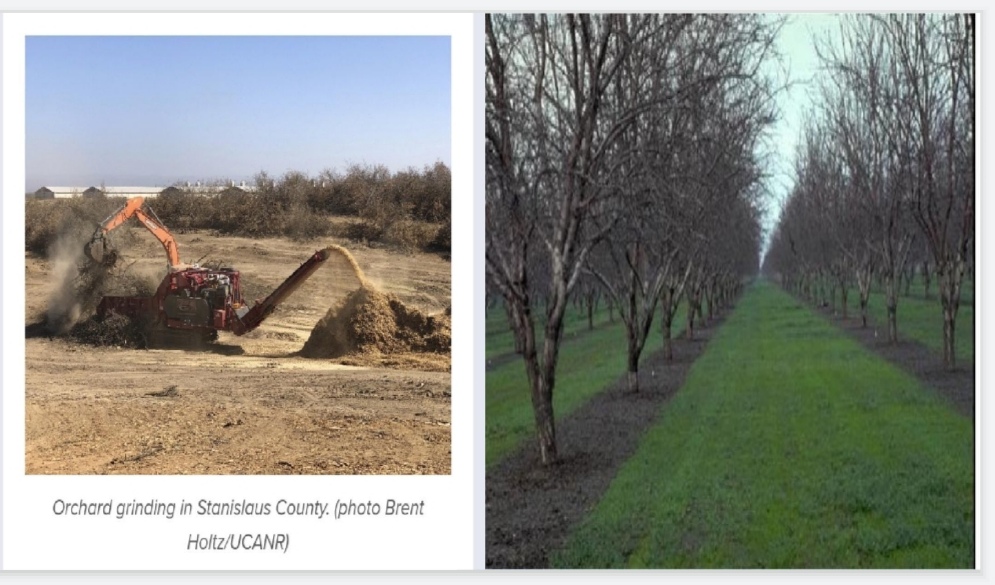
In the past, for removing and disposing of the old trees we burn them in the field. But now Old trees are ground, chipped and turned back into soil before New almond tress are planted.
It help almond orchard to be more sustainable and resilient to drought and also increasing carbon content in soil.

Whole orchard recycling result compare to burned treatment :
1) Sequester 5 tons of carbon per hectare.
2) Increase water-use efficiency by 20 percent.
3) Increase crop yields by 19 percent.

scientists from the BBSRC managed to breed a new fast-growing broccoli that no longer relies on a period of cold weather to flower, and goes from seed to harvest in only 8-10 weeks. This discovery is especially relevant for broccoli, as it is flower buds that we eat.

Many terrestrial, freshwater, and marine species have shifted their geographic ranges, seasonal activities, migration patterns, abundances, and species interactions in response to ongo­ing climate change.

Increased carbon dioxide tends to suppress photo-respiration in plants. 

  • C⁴ plant adapt better for high CO² Concentration and photorespiration. 
  • It make 4 C sugar (OAA) thus fix more CO² and produce high amount of energy. 
  • It suited for hot dry climate.
  • C4 plants include such low-latitude crops as maize, sorghum, sugar-cane, and millet, plus many pasture and forage grasses. 
  •  Better adapt for photo oxidation. Prevent photooxidation due to kranz anatomy.

THE CLIMATE CRISIS HAS ALREADY BEEN SOLVED. WE ALREADY HAVE A FACTS AND SOLUTIONS . ALL WE HAVE TO DO IS WAKE-UP AND CHANGE                     – Greta Thunburg

Implementation of Nanotechnology with DNA

Abstract:

DNA (Deoxyribonucleic acid) is the molecule that stores and transmits genetic information for the development, functioning, growth and reproduction of all living organisms and many viruses. It possesses remarkable binding specificity, thermodynamic stability and can be created with infinite choice of sequences that bind to their complementary nitrogenous bases (namely adenine (A), cytosine (C), guanine (G) or thymine (T)). It is structurally well defined on the nanometre scale and has a persistence length of 50 nanometres under conventional conditions. It can be rapidly synthesized and modified using automated methods. The field of DNA nanotechnology uses its information to assemble structural motifs and connects them together. This field has a significant impact on nanoscience and nanotechnology, and controls molecular self-assembly. Here, we summarize the approaches that are used to assemble DNA nanostructures and examine their emerging applications in areas such as biophysics, diagnostics, nanoparticle and protein assembly.

Introduction:

Nanotechnology is the purist’s approach to biomolecular engineering. This field aims to create molecular structures and devices through the exclusive use of DNA as an engineering material1. The well-characterized nature of DNA base pairing provides an easy means to control DNA interactions. The success of DNA nanotechnology comes from three key ingredients: 1) our quantitative understanding of DNA thermodynamics, which makes it possible to predict how single-stranded DNA molecules fold and interact with one another, 2) the rapidly falling cost and increasing quality of DNA synthesis, and 3) the focus on cell-free settings, where designed reaction pathways can proceed without interference from DNA and RNA processing enzymes that might be encountered in cells. DNA nanotechnology has long been motivated by the goal of building ‘smart therapeutics’, drug delivery systems, tools for molecular biology and other devices that could interact with or operate within living cells. Such applications play to the obvious strengths of nucleic acid nanostructures and devices, particularly their small size, biocompatibility and straightforward manner in which they could be programmed to interact with cellular nucleic acids through hybridization.

Cell-free DNA nanotechnology

To operate reliably in complex, wet environments, living organisms use sensory receptors to detect changes in that environment, motors and actuators to adapt to the environment, computational control circuits to convert sensor information into motor activity, and structural elements that protect and organize these components. Intriguingly, cell-free DNA nanotechnology has made progress towards the construction of most of the functional components — both structures and dynamic devices — required for creating molecular ‘robots’ that can emulate some of the behavioural complexity observed in biology.

DNA nanotechnology in lysates and fixed cells

Cellular conditions are considerably different from that of cell-free experiments. The presence of nucleic-acid-binding proteins, including DNases and RNases, may interfere with device performance, and cellular environments are highly structured, which inhibits the free diffusion of exogenously delivered nucleic acids. Cell lysates, serum and fixed cells provide reaction environments that each capture some of the complexity of live cells and enable testing and optimization of nucleic acid devices in well-controlled conditions.3

CONCLUSION:

DNA-based therapeutics and diagnostics are set apart from more established approaches because of their capacity to respond to the surrounding environment. Molecular logic and conditional (un)hiding of drug moieties could decrease side effects and increase specificity. Even the relatively simple one- or two-input systems built so far have resulted in increased specificity and performance, and could be further improved with more complex multi-input logic. Diagnostic and therapeutic decisions are routinely based on the analysis of panels of multiple molecular markers, be they proteins, RNA, DNA, lipids, sugars or metabolites. For example, immunologists must often consider large numbers of cell surface proteins to delineate all of the various cell types in a blood sample. Gene expression classifiers that reliably distinguish different tissues and disease states are typically built on measurements of tens or hundreds of different RNA species. Given the success of dynamic DNA nanotechnology in scaling up the size and reliability of molecular circuits in cell-free settings, it is intriguing to think that DNA ‘biocomputers’ could eventually perform complex diagnostic tasks based on the analysis of tens of molecular markers directly in living organisms.

REFERENCES:

Seeman, N. C. & Belcher, A. M. Emulating biology: building nanostructures from the bottom up. Proc. Natl Acad. Sci. USA 99, 6451–6455 (2002).
Chen, J. H. & Seeman, N. C. Synthesis from DNA of a molecule with the connectivity of a cube. Nature 350, 631–633 (1991).
Fu, T. J. & Seeman, N. C. DNA double-crossover molecules. Biochemistry 32, 3211–3220 (1993).

Are underground cities the answer to climate change?

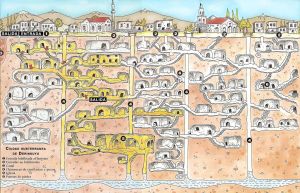
   Underground cities are not unknown to humankind. Mankind has planned, made, and inhabited underground cities from ancient times. The most fascinating of them is the underground city of Derinkuyu in Turkey which was discovered in 1963. The underground city of Derinkuyu was made in the 8th century to hide from continuous wars and extreme climatic conditions. It is an eighteen-storied underground town containing living rooms, schoolrooms, kitchens, wells, and even a winery that could hold 20,000 people inside. Ventilation, water, and light could reach every level and there were systems to seal each level during an attack. Such subterranean cities can be a solution to changing climatic conditions. As surface temperatures are increasing, governments are devising underground city master plans.    

 Extreme weather events like harsh winters and scorching summers can be avoided in such subterranean cities where ambient temperatures will be maintained throughout the year and heat loss is also significantly reduced. Drinking water sources are comparatively purer than surface water contaminated by runoffs and moreover, with the ever-growing population, there will be a shortage of land in the very near future. These could be some of the reasons why many countries around the globe have started focussing on such subterranean architecture.    

  Helsinki is an underground city that covers a massive area of 214 square kilometers containing tunnels, museums, swimming pools, and other recreation areas. This underground master plan was made to avoid extreme winters, war threats from Russia. Further such examples in today’s world can be seen in the Earthscraper in Mexico City, The Subtropolis Kansas city, and the proposed underground science city in Singapore.    

 Therefore, with the increasing risk of global warming and its consequences, it is very logical to plan underground spaces that can help to save both space and energy on the surface. With more and more countries showing interest in such architecture, underground plans could be the future of cities.   


People have to come forward for saving the Earth

Article by – Shishir Tripathi

Intern at Hariyali Foundation
In collaboration with
Educational News

Day after day, the planet is proceeding to fall into the ocean of destruction. Each day factories are releasing poisonous smoke and harmful effluents in the nature. As it is said there is pre defined limit of everything, nature too has a limit to accept destruction and degradation of the environment. The day is coming nearer and nearer when the nature will revert back with the same intensity in the form of natural disasters and human beings will not be in a state to do anything.

Each day a new factory opens up. Each day, each firm tries to increase its production as compared to the previous day. Each day millions of litres of water in the rivers and other water bodies gets polluted by industrial and domestic waste. But everyone is so engrossed into earning money and increasing GDP and profit that human beings have assumed that they’re owners of the natural resources or environment. Human beings should realize that they are part of nature, they’ve to live their lives being just a responsible organism and go away. But in the mean process of making money and wealth people forgot that nature is suffering and natural resources being limited in amount will end up one day.

Almost 80.6 million cars are sold each year all across the world. Cars and automobiles use fuel (which is again limited in amount in nature) and release harmful gases into the air like Carbon Monoxide (CO), nitrogen oxides, hydrocarbons and many more. Each year the number of automobiles on roads is increasing, and due to which more harmful gases are released in nature, hence more pollution.

Between 1990 and 2016, the world lost 502,000 square miles (1.3 million square kilometers) of forest, according to the World Bank—an area larger than South Africa. Since humans started cutting down forests, 46 percent of trees have been felled, according to a 2015 study in the journal Nature. Millions of hectares of forests are clearing up each year by things like deforestation, forest fires, etc. But readers, when it comes to plantation, people turn back and are with no answers. Each year in India, government employees have to plant a sapling and take care of it, but the sapling is given water and care only till the plantation is captured in the camera. After that, nobody cares about the plant, the tree whether it gets dried because of shortage of water or gets eaten upon by cattle. Forest cover is reducing resulting in excess heating of the atmosphere, climate change and lesser oxygen which is the lifeline of every living organism.

Another aspect is population growth. The 2016 average of 18.6 births per 1,000 total populations equates to approximately 4.3 births per second or about 256 births per minute for the world. Births are taking place at an increased rate and resources are limited for the survival of the upcoming generations. The uncurbed and heavy usage of natural resources is going to leave the reserves of natural resources to be empty. The future generations have to face excessive climate change and have to starve even for getting water and food grains. Each day, the load on natural resources is increasing. The goal of sustainable development is just achieved maybe in figures or news. But in reality people are exploiting the nature at an aggregate level altogether just in the name of growth but actually satisfying their greed.

Greed to earn more, to own more.

But yes everyone wants more and more from nature, but never want to give anything to the nature. Some great people came, started successful campaigns for nature and went away. But now a generation is left which wants all the credit and all the popularity even after doing just a small noble deed for nature and its organisms. People just want to extract everything from nature and want to get the attention by clicking a picture sitting beside a small sapling showing plantation or standing with plastic showing cleanliness campaign.

Each human being should realize their responsibility towards nature. Economists say that inflow or the imports must be equal to the outflow or the exports, and then only equilibrium can be established. Similarly, whatever is taken from nature, it must be returned back to the nature in the same or even greater amounts. Mentioning all the environment saving techniques is not worthy as till the time people will not realize their participation in saving nature and building a good planet, no list of techniques and no piece of writing will be able to move them and get concerned for the nature.

Attempts to save nature at an individual level will soon turn out to be major attempts at aggregate level that will be helping to save the earth and the leaving a much better planet for survival of the future generations.

The author expects that all the readers of this article, being a sensible and responsible human being, should realize the need for saving the nature, for saving the Earth.