Everything you need to know to build a thriving online teaching career in India — from registration to earning your first ₹10,000 a month.
Introduction
Online teaching jobs in India are currently one of the most searched employment categories, with over 1,35,000 monthly searches for ‘online teaching jobs India’ alone. The demand for qualified tutors is at an all-time high — and platforms like UrbanPro are making it easier than ever to connect with students across the country.
Whether you are a schoolteacher looking to supplement your income, a fresh graduate with subject expertise, or a professional wanting to share your skills — this guide will show you exactly how to start teaching online in India in 2026 and build a sustainable income from it.
Why Online Teaching Is One of the Best Work-From-Home Opportunities in India
The Indian online education market is projected to grow at 28% CAGR through 2030. This means demand for quality tutors is only going to increase. Here is why online teaching makes excellent career sense:
High earning potential: Experienced tutors on UrbanPro earn between ₹500 and ₹3,000+ per hour depending on subject and level.
Flexible schedule: Teach at times that suit you — evenings, weekends, or full-time. You control your calendar.
No commute: Teach from home via laptop or smartphone. All you need is a decent internet connection.
Massive student base: UrbanPro has 55 lakh+ students actively searching for tutors across India’s top cities and Tier-2 towns.
Growing demand in Tier-2/3 cities: Industry data shows Tier-2 and Tier-3 cities are the fastest-growing segments in Indian online education.
Who Can Become an Online Tutor in India?
The eligibility bar for online tutoring in India is broad. You can teach online if you are:
A schoolteacher or college lecturer with subject expertise.
A graduate or postgraduate with strong academic knowledge.
A working professional who can teach skills like Python, Excel, digital marketing, or accounting.
A language expert who can teach Spoken English, French, German, Spanish, or regional languages.
A hobby/arts professional — yoga instructor, dance teacher, guitar player, or painter.
A competitive exam coach for JEE, NEET, UPSC, IELTS, or IBPS.
Step-by-Step: How to Register as a Tutor on UrbanPro
Step 1 — Create Your Tutor Profile
Go to UrbanPro.com and click ‘Signup as a Tutor’. Fill in your name, location, and contact details. Choose the categories you want to teach — Tuition, Languages, IT Courses, Hobby Classes, or Exam Coaching.
Step 2 — Add Your Qualifications and Experience
A strong profile is your most important marketing tool. Make sure you include:
Your educational qualifications (degree, certifications).
Years of teaching experience and subjects taught.
A professional profile photo — profiles with photos get 70% more enquiries.
A well-written bio describing your teaching style and what students can expect.
Step 3 — Set Your Availability and Fees
List your available time slots and set your hourly or monthly fee. Research what other tutors in your subject and level charge — competitive pricing in the beginning can help you build reviews faster.
Step 4 — Respond Quickly to Enquiries
When students or parents send enquiries, respond within a few hours. Fast response rates significantly improve your chances of converting an enquiry into a paid student. UrbanPro sends real-time notifications via app and SMS.
Step 5 — Deliver Outstanding Demo Classes
The demo class is your chance to impress. Prepare a structured 30-minute lesson that showcases your teaching clarity, subject depth, and ability to engage the student. A great demo almost always converts to a paid engagement.
Top Categories in Highest Demand on UrbanPro (2026)
Based on search volume data and UrbanPro’s platform activity, these are the hottest teaching opportunities right now:
Class 10 & 12 Tuition: Boards season drives massive demand — maths, science, English, and commerce subjects are top picks.
JEE / NEET Coaching: Physics, Chemistry, Biology tutors are in extremely high demand year-round.
Spoken English: One of the most searched categories in India with 1,65,000+ monthly searches.
Python & Data Science: IT professionals can earn premium rates — one of the highest CPC categories.
Online Yoga Classes: Post-wellness boom, yoga instructors have a strong, growing audience.
UPSC & SSC Coaching: High-intent students willing to invest in quality coaching — strong earning category.
IELTS Coaching: Huge demand from students planning to study or migrate abroad.
How Much Can You Earn as an Online Tutor in India?
Earnings vary by subject, level, and how many hours you teach. Here are realistic monthly earning benchmarks:
Beginner tutor (5-10 hrs/week): ₹8,000 – ₹20,000 per month.
Part-time tutor (15-20 hrs/week): ₹25,000 – ₹60,000 per month.
Full-time tutor (30+ hrs/week): ₹70,000 – ₹1,50,000+ per month.
Premium subject specialist (JEE/NEET/UPSC): ₹1,00,000 – ₹3,00,000+ per month.
The key to higher earnings is building a strong review profile, becoming a specialist in high-demand subjects, and maintaining consistent quality across all sessions.
Pro Tips to Grow Your Online Teaching Business
Collect student reviews actively — a profile with 10+ positive reviews gets 5x more enquiries than a new profile.
Upload a short video introduction to your profile. Video profiles significantly increase trust and conversion.
Be responsive and professional in all communication with parents and students.
Offer trial or discounted demo sessions initially to build your review base quickly.
Upskill regularly — tutors who teach trending topics like AI basics, data science, or digital skills command premium fees.
Use UrbanPro’s built-in tools — scheduling, payments, and messaging — to keep your workflow professional.
Conclusion
Online teaching in India is not just a side hustle anymore — it is a legitimate, scalable career. With India’s EdTech market growing at 28% CAGR and platforms like UrbanPro giving you direct access to millions of students, the opportunity has never been bigger.
Start by creating your free tutor profile on UrbanPro today. Build your reviews, specialise in a high-demand subject, and watch your teaching income grow month after month. The students are already searching — all you need to do is show up.
Olimpiada, A. E., & Junio, O. M. (2026). Development of a Blockchain-Based Tokenization Enhancing Diploma Security, Authenticity, and Verification at Cavite State University – Trece Martires Campus. International Journal of Research, 13(4), 150–188. https://doi.org/10.26643/ijr/edupub/18
Ariel E. Olimpiada
Faculty of the Graduate School
University of Perpetual Help System Laguna
Oliver M. Junio
Faculty of the Graduate School
University of Perpetual Help System Laguna
Abstract
There is a growing need for credible, valid, and efficient certification of diplomas. These needs have exposed some inadequacies within the current diploma management systems, which can be susceptible to forging and inefficient manual verification. This research project proposed a blockchain-enabled diploma tokenization solution that would help manage the security, validity, and verification process at Cavite State University-Trece Martires Campus.
The diploma management platform was developed according to the Input-Process-Output design model. It was developed using the Waterfall development approach. React 18, TypeScript, and TailwindCSS were the technologies used in the development of the frontend. Meanwhile, Express 5 with Passport.js was used for developing the backend. PostgreSQL was used for database management. Blockchain technology integration was done by deploying the platform on the Ethereum Sepolia test network using ethers.js. Diploma hashes were then stored on the blockchain network.
The system was assessed based on factors such as functionality, efficiency, usability, reliability, security, and safety. The outcomes were consistent in showing highly favorable scores described as “Excellent” on all criteria, meaning that the system successfully addressed both user and technical needs.
The findings revealed that blockchain technology greatly enhances the trustworthiness and verification of academic credentials. The system created through this study offers a safe, reliable, and efficient mechanism for handling diploma credentials.
Keywords: Blockchain Technology; Diploma Tokenization; Academic Credential Validation; Data Protection; Credibility; Smart Contracts; NFTs; Decentralization; Hash Function; Higher Education System; Digital Credentials; Fraud Detection; Self-Sovereign Identity (SSI); Immutable Ledger; Cavite State University
Introduction
The exponential advancements in digital technology have dramatically impacted data management techniques in numerous industries, including higher education. Modern universities often employ digital solutions in managing their academic records and other organizational processes. Nevertheless, the process of issuing and verifying diplomas has remained rather conventional and still depends on physical paper documents. Paper diplomas are easily subject to forgery, decay, loss, and the lengthy process of manual authentication. These vulnerabilities contribute to administrative inefficiencies and pose credibility concerns for educational organizations, especially considering the rising cases of credentialing fraud on a global scale (Gupta et al., 2020; Juan et al., 2023). In this regard, there is an increasing demand for safe, tamper-proof, and reliable credentialing management systems.
Blockchain technology can be regarded as a promising solution to the above-listed issues. Blockchain technology refers to a decentralized distributed ledger system that provides data with immutability, cryptographic protection, transparency, and consensus validation capabilities. After the information is confirmed and stored in the blockchain infrastructure, it becomes resistant to any unauthorized changes (Tian et al., 2020; Juan et al., 2023). Thus, blockchain appears to be highly effective in dealing with critical information like academic credentials.
Tokenization is one application of blockchain technology that refers to the process of creating digital tokens of physical and non-tangible resources within a blockchain system (Gupta et al., 2020; Freni et al., 2020). Diploma tokenization is an approach through which physical diplomas are transformed into digitally verifiable resources through the creation of digital tokens for diplomas through smart contracts. Smart contracts are blockchain-enabled mechanisms used to carry out programmed transactions upon the satisfaction of certain predefined conditions (Anderson & Park, 2022). Smart contracts can therefore be used in learning institutions to issue and verify diplomas, hence minimizing chances of errors in the manual process and ensuring record accuracy.
Despite several successful cases in international literature showing the viability of blockchain-based credential systems, most cases have only been implemented through pilots or those conducted in technologically advanced organizations (Zhuang et al., 2023; Queiroz et al., 2024). There is also a lack of empirical work regarding the creation and evaluation of blockchain-based diploma tokenization systems in higher education institutions in the Philippines. Blockchain has yet to be implemented to issue and verify diplomas in CSU-TMC and there has been no existing empirical work assessing the effectiveness of such a system using any form of standard software quality models, such as the ISO/IEC 25010 System and Software Quality Requirements and Evaluation (SQuaRE) Model.
According to many scholars, the implementation of blockchain technology can guarantee that digital documents will indeed prove to be secure and verifiable due to its unique characteristics (Gupta et al., 2020; Juan et al., 2023). It also provides efficient transaction management making it possible for blockchain technology to be used in certificate issuing systems (Buldas et al., 2022; Dutta, 2020). The self-sovereignty of identities and the use of smart contracts will allow for the autonomous control of credentials by the students.
Nevertheless, the fact that the above-mentioned research works had been conducted in international universities rather than at Philippine institutions signifies that little has been done concerning the application of such blockchain technology in the Philippines. Hence, there appears a significant discrepancy between theoretical concepts of its usage and practical application in Philippine institutions. Therefore, a proposal is to carry out an investigation on designing and testing blockchain-based tokenized diplomas at CSU-TMC.
The current research work offered designing and developing a blockchain-based tokenized diploma system with smart contracts for safe diploma token issuing and verification. There were three key concepts used in this study: security, authenticity, and verification. The former will be responsible for the issuing of the tokenized diplomas by administrators, the latter two will refer to the process of graduates’ diplomas accessing, managing, and verification by employers.
As it was mentioned before, the research will contribute significantly to the body of knowledge concerning the use of blockchain technology in educational systems by offering a localized approach to its application based on the standards presented in the ISO/IEC 25010 framework.
Theory/Manual Operation
The important feature, which characterizes the nature of the diploma tokenization based on blockchain, lies in distributed ledger technology used, where all academic diplomas will be registered, verified, and controlled with the help of decentralized and tamperproof technology. In this way, the diploma will become an electronic token, which contains key information regarding the identity of the owner of this diploma, educational program, date of graduation, as well as hash code, which is necessary to ensure the uniqueness of the document.
From the perspective of system synthesis and functioning, the process of diploma tokenization begins with encoding of the data of all graduates, who graduated from the given educational program, by the registrar. Then, the automatic generation of the digital token takes place by the system itself.
While the system integrity is maintained by the IT professionals/system administrators, they also watch out for the transactions in the blockchain network in order to see to it that everything has been done systematically without any disruptions. Meanwhile, the employers/verifiers enter the system through the verification interface where the QR code/token ID number of the credential details can be seen on the blockchain.
Generally, the process undertaken manually provides an easy flow of events from data encoding to verification of the academic credentials of the student or learner.
The operational framework illustrates how the diploma tokenization system, based on blockchain technology, works at Cavite State University – Trece Martires Campus. In the Input phase, the requirements of the entire system were gathered to identify its specifications. For the frontend, React 18, TypeScript, Vite, TailwindCSS, shadcn/ui, wouter, TanStack Query v5, and framer-motion were utilized for routing, fetching data, and creating animated UIs, respectively. As for the backend, the stack used was Express 5, Passport.js with local strategy and express session for authentication purposes. Database operations were handled with the help of PostgreSQL with Drizzle ORM for efficiency and proper structuring. Blockchain implementation entailed the utilization of Ethereum Sepolia testnet via ethers.js wherein the diploma hash was stored. Some of the features of the system include pdf export using jsPDF and jsPDF-autotable, excel export using exceljs, and qrcode creation using qrcode.react. Lastly, the hardware requirement for the project entails any computer (PC/Laptop) that can access the internet.
In terms of the procedure, the application is subjected to several steps, including Requirements gathering; System design; Implementation; Testing and Verification; Deployment; and Maintenance. This guarantees that the system will be able to handle the necessary functionalities and security measures, particularly for blockchain transactions.
Figure 1. Diploma chain operational framework
The Output phase involved developing the system for blockchain-based diploma tokenization that improves diploma security, validity, and verification in CSU-Trece Martires Campus.
Statement of the Problem
The main objective of this study was the design and development of a diploma tokenization system using blockchain technology that would enhance assurance concerning the security, authenticity, and verifiability of academic records.
This study aimed to answer the following research questions:
What problems and threats exist in the current process of diploma issuance and validation in Cavite State University – Trece Martires Campus?
What requirements must be met to provide sufficient security, authenticity, and verification for a diploma tokenization system using blockchain technology?
How should a diploma tokenization system using blockchain technology be designed and developed to resolve these problems?
How acceptable and effective is the system designed and developed from the perspective of IT specialists and end-users in terms of the ISO/IEC 25010 software quality characteristics:
4.3 Interaction Capability 4.4 Reliability 4.5 Security and 4.6 Safety?
Assumptions of the Study
The research relied on the following assumptions:
The blockchain technology provides a secure, decentralized, and tamper-proof method of storing electronic documents.
The application of smart contracts ensures efficient and accurate issuing and verifying of diplomas.
The tokenization of diplomas in the blockchain environment increases the reliability, security, and authenticity of educational documents.
Administrators, graduates, and employers possess enough digital literacy to operate in the proposed system without any difficulties.
Scope and Delimitation
The research focused on the design and development of a blockchain diploma tokenization system for Cavite State University – Trece Martires Campus. The design aimed to mitigate the security risks associated with the management of diplomas. The functionalities of the system include issuing diplomas via smart contracts, recording the diplomas using blockchain technology, and verifying their data through token IDs. It had role-based access, which gave admin, graduates, and employers different dashboards to perform tasks such as managing, accessing, and validating data. This project was evaluated based on the ISO/IEC 25000 software quality model. The parameters included functionality, performance, usability, reliability, security, and safety.
This study was limited to Cavite State University – Trece Martires Campus only. It excluded other universities that have branches in Cavite City. It did not cover any other external academic institution either. In addition, the study involved the issuance and verification of diplomas, not transcripts of records and certificates of grades. Finally, the study mainly relied on expert validation and selective user feedback for its evaluation.
Significance of the study
Conclusions made based on the results of the research will prove to be important for many interested parties involved.
For graduates, the solution guarantees possession of the diploma without any risk of damage, since the electronic document is safely stored on the blockchain technology. In such a way, they will be able to verify their diploma anytime they need, thus improving their chances on the job market and making their education recognized.
For the University and Registrar’s Office, the new system represents a modern innovation in diploma management and issue that significantly increases its credibility and eliminates risks of falsification. Thus, the employees will be able to save time by not verifying papers manually.
For employers, other universities, and even for students themselves, the system will ensure quick and trustworthy verification of the candidate’s educational history and documents, guarantee authenticity and eliminating the risk of making a wrong choice during hiring process.
In terms of contribution to the research community, this research contributes significantly to the literature surrounding the application of blockchain technology to education, specifically in the Philippine context where concrete implementation is still in its early stages. This study provides insight on how blockchain technology can be applied locally to help solve the issues surrounding credential verification for academic purposes, which will be helpful for further research or projects.
Lastly, to the next developers or IT professionals out there, this research is an actual example of applying blockchain, tokenization, and smart contracts to academic-related activities.
Definition of Terms
For purposes of clarity and uniformity, the following terminologies were operationally and conceptually defined as used in this study. These terms emanate from the Statement of the Problem and the Research Methodology.
Authenticity implies the genuineness of a digital credential and its source issuance authority (ISO/IEC 25000, 2011). Authenticity means the degree to which the diploma token recorded on the blockchain accurately represents the graduate’s achievements and is tamper-free.
Blockchain is a technology whereby records are maintained through distributed ledgers among multiple nodes that cannot be altered retroactively (Nakamoto, 2008). In this research, blockchain is the underlying technology that facilitates storing, protecting, and validating diploma tokens.
Compatibility implies a measure of the effectiveness of a computer system in working well with other computer systems and environments without problems (ISO/IEC 25000, 2011). In this study, compatibility will be considered regarding the system functioning under diverse browser, device, and blockchain conditions.
Diploma Token implies a distinct electronic representation of an educational certification that is issued using blockchain technology. In this study, the diploma token will refer to the token generated by the smart contract, which holds the verified credentials of the student, and recorded on the blockchain ledger.
The employer or verifier is an individual or organization tasked with verifying the academic qualifications of applicants. For this research, the employer is an authorized user whose role involves verifying the authenticity of the applicant’s diploma through checking the token record via the system.
Functional Suitability is a measure of the extent to which a system possesses functionalities necessary to address explicit and implicit needs in certain circumstances (ISO/IEC 25000, 2011). For this study, it will determine how effectively the diploma token system executes its functions.
Graduates are individuals who have completed all the academic demands of an institution. In this research, graduates are former students who hold a diploma tokenized on the blockchain.
Maintainability is the ease of modification and upgrade of a system (ISO/IEC 25000, 2011). For this research, it pertains to the ability of the developers to change or update the blockchain diploma system.
Performance Efficiency is the effectiveness of system performance in terms of adequate response times and resource usage in certain conditions (ISO/IEC 25000, 2011). For this research, it pertains to transaction speed, the period it takes to issue the diplomas, and verification response time.
Portability is the measure of ease of movement of a system from one setting to another (ISO/IEC 25000, 2011). In this case, portability relates to the ease of adaptation of the system to different platforms or prospective institutional deployments.
The registrar is the officially designated department within a university that deals with academic records and the issuance of diplomas. In this study, the registrar takes on the role of the administrator that authenticates academic records and initiates the issuance of diploma tokens using smart contracts.
Reliability is the capability of the system to provide the intended function under given conditions (ISO/IEC 25000, 2011). In this study, reliability concerns the consistency and stability of the diploma issuance and verification processes.
Security is the protection of the confidentiality, integrity, and availability of information and data from threats such as breaches or tampering (ISO/IEC 25000, 2011). In this study, security relates to the cryptographic mechanisms of the blockchain platform.
A smart contract is an algorithmic mechanism embedded in the blockchain that automatically implements the terms and conditions of a predetermined rule set once certain events occur (Szabo, 1997). In this study, smart contracts automate the process of issuing and validating diplomas.
Tokenization involves changing tangible or intangible assets into digital tokens that are held and controlled using a blockchain infrastructure (Gupta et al., 2020). In this research, tokenization represents the transition of traditional paper diplomas to secure digital diplomas. Usability represents the degree to which a system can be used productively, effectively, efficiently, and satisfyingly by users (ISO/IEC 25000, 2011). In this research, usability represents the ease of use of the system by administrators, graduates, and employers.
Verification entails verifying the legitimacy of the credentials. In this research, verification represents the validation of diploma tokens through blockchain, which relies on results provided by the system.
REVIEW OF RELATED LITERATURE
The following chapter provides selected research studies and literature that will be the basis for the conceptual framework that will serve as the foundation for designing the blockchain-enabled diploma tokenization system. The selected literature includes concepts related to blockchain technology, tokenization, smart contract, non-fungible tokens (NFTs), and digital credentialing systems.
Blockchain Technology for Tokenizing and Preventing Diploma Fraud
In their research paper, Gupta et al. (2020) investigated the use of blockchain technology for real estate tokenization and identified its utility in decreasing fraud through immutable recordkeeping. Their conclusions underscore the importance of blockchain technology’s immutability and decentralized verification methods in preventing any changes to digital assets. While their study did not consider academic credentials, these two issues are similar in that diploma validation is essential.
Juan et al. (2023) similarly explored the topic of tokenized markets and argued that blockchain technology can develop secure, transparent, and efficient digital representations of tangible and intangible assets. Their analysis confirms the idea that tokenization is beneficial because it provides traceability and credibility, which is relevant in diploma tokenization programs aiming to produce permanent documentation.
Finally, Joshi and Choudhury (2022) also showed how blockchain technology decreases fraudulent behaviors by enabling reliable ownership tracking. When applying this solution to diploma authentication, it ensures that academic credentials are not falsified or duplicated.
Scalability and Infrastructure for Tokenized Systems
Nevertheless, scalability is still a key criterion for the adoption by organizations that issue vast amounts of credentials every year. Buldas et al. (2022) suggested a super-scalable framework for blockchain which can sustain high transaction volume for asset tokenization platforms. The results prove that blockchain technology can be implemented in scalable environments thus providing the ability to use the technology for university diploma storage and processing.
Tian et al. (2021) examined blockchain tokenization technology within financial infrastructures and identified two important properties of such technologies: immutability and transparency which promote trust within transactions.
Token Classification and Standardization
Freni, Ferro, & Moncada (2022) developed a morphological classification system for tokens in the blockchain. The article is pertinent to the diploma tokenization process since it outlines the steps involved in designing structured tokens. Structured tokens promote interoperability among various systems, making them more accessible to institutions and organizations.
Wang & Nixon (2021) examined the legal and theoretical underpinnings of token creation, specifically regarding smart contract security and consensus protocols. These results are crucial in ensuring that the diplomas issued via blockchain networks comply with technical and regulatory standards.
NFT-Based Credentials and Patent Developments
The recent advancements in the use of non-fungible tokens (NFTs) have made it possible to apply blockchain technology to credentials management. NFTs are non-exchangeable digital assets that uniquely identify and track ownership. In a study by Zhuang et al. (2023), it was shown that the integration of self-sovereign identity (SSI) with NFT tokenization can be used to provide users with full control and sharing capabilities over their digital credentials without having to depend on central institutions. This approach would enable decentralized ownership and authentication of diplomas.
In addition to the research, the concept of NFTs is being developed through patent filing. Patents recently filed for blockchain technologies include systems and methods to issue, store, and validate digital credentials through NFTs, which ensure authenticity and immutability. Patent filings for such innovations highlight cryptographic hash functions, distributed storage, and automated certification processes, such as diploma issuance based on smart contracts.
Wang & Lin (2021) also came up with digital badges powered by blockchain technology. The concept is almost identical to diploma tokenization since both processes seek to create permanent and verifiable digital credentials.
Smart Contracts in Academic Credentialing
Smart contracts are integral to automation within blockchain systems. Anderson & Park (2022) proposed an application of blockchain technology to automate the issuance and validation of academic credentials.
According to their results, smart contracts are effective in eliminating manual involvement, reducing human error, and enhancing operational efficiency.
Kopp & Orlovskyi (2022) also emphasized the importance of decentralization and the application of smart contracts to ensure transparency and traceability within educational credentialing systems.
Tokenization and Blockchain Tokens Classification: a morphological framework
The IEEE (2020) scholarly article gives a brief account on the application of blockchain technology to authenticate educational credentials, stating how blockchain technology is useful in developing a safe and decentralized storage method for educational credentials. According to the study, blockchain technology removes all middlemen associated with the management of these educational credentials, making it easier to authenticate them.
Review of blockchain tokens creation and valuation. Future Internet
Use of blockchain in education was reviewed by Alammary et al. (2023). From the study, it is evident that blockchain technology can be used as an efficient, trustworthy, and decentralized system for managing academic credentials. First, there is no doubt that the use of blockchain technology will guarantee maximum integrity in the system due to its immutability nature. Secondly, this kind of technology makes the process of storing and verifying academic credentials simpler and faster.
Tokenized markets using blockchain technology: Exploring recent developments and opportunities. Information
Research by Khan et al. (2023) on the application of blockchain technology to address the issue of verification of degrees in educational institutions was carried out. The authors note that traditional techniques to handle such an issue could prove time-consuming and expensive, and even fraudulent sometimes. It means that Khan et al. have proposed that employing a blockchain-enabled framework could be helpful for solving such issues.
The findings indicate that blockchain provides high-level protection to information due to the use of an immutable ledger and cryptographic hash functions. In addition, the application of this innovative technique would allow verifying degrees effectively and securely without cases of fraud.
The art of tokenization: Blockchain affordances and the invention of future milieus. Media Theory
A study carried out by HAL (2020) concerning the implementation of blockchain technology in the management and validation of academic diplomas observed that the traditional method of managing and validating credentials was inefficient, involving manual processes, delays, and vulnerability to hacking. Therefore, the authors suggested the adoption of a blockchain mechanism whereby the details of the diploma will be stored safely and cannot be altered, and there is no requirement of an intermediary authority to validate the document.
According to the research, blockchain technology fosters data integrity and transparency since the data provided cannot be tampered with. This implies that the verification process is faster and reliable for educational organizations and prospective employers, demonstrating that blockchain technology is one of the best methods for protecting academic credentials.
Token Valuation: A Systematic Literature Review and Empirical Analysis.
From the results obtained from the research carried out at Politecnico di Milano (2025), blockchain technology helps to address critical issues facing existing systems, particularly trust issues, transparency, and management issues. By using blockchain technology, a decentralized system can easily be created where smart contracts and tokens will give room for participation by users, provide increased transparency, and enhance system security. It is also clear that blockchain technology enhances system reliability since there are verifiable transactions without over-dependence on central organizations.
Thus, from this research finding, it can be stated that blockchain technology provides an effective solution to existing problems in the systems such as inefficiencies and lack of trust.
Blockchain in cultural heritage: insights from literature review. Sustainability,
According to Bucea-Manea-Țoniş et al., (2022), the application of blockchain technology would enhance the current higher education system since it would ensure that there is an assurance that there is a safe and decentralized system in the management of academic records. This is because it was found that using blockchain technology makes it certain that data would not change due to the immutability aspect of the technology.
The authors noted further that the application of blockchain technology makes it easy to validate credentials, and this does not require centralization; consequently, this makes the process swift. Indeed, the application of blockchain technology can be viewed as an effective method that can help achieve the objectives of this research.
Tokenization, blockchain and web 3.0 technologies as research objects in innovation management. International Journal of Innovation.
It could be stated that the blockchain technology is a safe way of securing academic credentials because it guarantees the protection of academic degrees against tampering. The following are some problems associated with the verification of diplomas that can be solved with the help of the blockchain technology.
Blockchain technology implies using a decentralized model, meaning that the provided data cannot be modified in any way (Caramihai & Severin, 2023). Additionally, the process of verifying credentials becomes more effective since the verification is possible independently of the institutions that issue the diploma. Smart contracts could make the process automated, reducing human interference (Chaniago et al., 2021).
Overall, blockchain enhances the protection and verification of academic credentials.
Tokenization on blockchain. In Proceedings of the 14th IEEE/ACM international conference on utility and cloud computing companion
There is a lot of research that indicated that it was possible to verify educational documents based on blockchain technology. As reported by Heredia and Barros-Gavilanes (2021), the technology provides multiple levels of verification carried out in a decentralized manner, thus implying that the process is not controlled by a particular institution.
As was seen from the study discussed earlier, the same findings can be found in the current one, as the use of blockchain ensures immutability of educational documents and instant verification, which minimizes the risks of fraud as once the document has been validated, any changes cannot be made to it. In addition, the use of smart contracts automates the entire verification procedure.
The tokenization of everything: Towards a framework for understanding the potentials of tokenized assets.
Blockchain technology has attracted considerable interest around information systems to increase trust, transparency, and verifiability in digital environments. In the context of academic credentials, centralized models have resulted in inefficiencies and vulnerabilities such as forgery of documents, delays, and other issues.
As per Dela Cruz and Ramos (2021), the systematic way of verification with distributed data implies a lesser reliance on central institutions and increased data security. Hence, blockchain could help design a safer system with decentralized verification and better data security.
Regarding the challenge of diploma validation, blockchain solutions would enable securing the documents electronically and ensuring their veracity. Accordingly, blockchain technologies could help build trust among graduates, employers, and other stakeholders and reduce administrative efforts. Based on a review of previous literature, it seems that blockchain technologies offer more efficient and safe verification methods compared to conventional approaches.
Synthesis of the Reviewed Literature
From the literature, blockchain technology can serve as a channel through which digital credentials can be stored and authenticity of such digital credentials can be verified. There is abundant literature suggesting that the blockchain technology would ensure authenticity by reducing the chances of fraud while making sure that there is transparency. Gupta et al. (2020), Juan et al. (2023) believed conceptually that through the nature of the blockchain, which is decentralization and irreversibility, security and authenticity could be ensured when managing credentials. To put differently, there is the possibility of issuance and verification of academic credentials through the blockchain technology.
Buldas et al. (2022) and Dutta (2020) also demonstrated that due to the ability of the blockchain technology to manage many transactions effectively, it becomes relevant to use it in universities where thousands of diplomas are issued. Additionally, Tian et al. (2021), and Zhuang et al. (2023) argued that self-sovereign identity and smart contracts can allow graduates to maintain ownership of their credentials while at the same time ensure authenticity and trustworthiness.
In general, there is sufficient literature available about the application of blockchain technology in providing a secure and efficient way of managing diplomas. Nonetheless, this is seen in other parts of the world. There is still a lack of studies, including application studies, regarding this approach in Philippine universities. This study aims to bridge that gap through presenting an innovative diploma tokenization platform using blockchain technology for the Cavite State University-Trece Martires Campus.
Gap/s Bridged by the Present Study
As the interest in blockchain technology continues to grow worldwide and as more people become involved in exploring its application within the context of issuing academic credentials, very few practical applications of such technology have been attempted by public universities located in the Cavite region, particularly Cavite State University – Trece Martires Campus.
Majority of existing literature pertaining to blockchain technology in academia focuses only on theoretical discussions about the use of such technology without considering the real-life problems of local students, such as diploma fraud, inefficient verification process, and accessibility issues. Because of this, the development and evaluation of blockchain technology to enhance efficiency, security, and authenticity in local universities become very necessary to be done.
RESEARCH METHODOLOGY
The method of research is discussed in this chapter whereby the researcher describes the process of data collection used to accomplish the goals of the study. It covers research design, data sources, population and sampling, research instruments, data collection and analysis.
Research Design
Descriptive developmental research was used by the researcher to develop, test, and evaluate the performance of the computer system for issuing the tokenized diploma services, thus contributing towards the improvement in the aspect of the security, authenticity, and verification of the issuance of credentials at Cavite State University-Trece Martires Campus. This kind of research is relevant for this topic as it considers not only the problems associated with the current situation regarding the issuance and verification of the diploma but also provides the practical solutions for those issues. Four steps may be expected from the organization of this study, including the following ones:
1. What problems and risks exist when it comes to the process of the issuance and verification of diplomas in the Cavite State University – Trece Martires Campus?
2. What kind of requirements must be provided for making sure that a blockchain-based diploma tokenization system would have an adequate level of security, authenticity, and verification?
3. What should be done to provide the development of the computer system based on blockchain that would solve the problems mentioned above?
4. How could the computer system developed be evaluated by the experts and tested by users?
Figure 2: Waterfall Software Methodology
The process of developing the diploma tokenization system via blockchain was carried out following the Waterfall approach, which implies linearity and sequence of the processes performed. Thus, each phase needed to be accomplished before proceeding to the next step.
Requirements Analysis. As part of the current phase, all the requirements for creating the system were gathered. Stakeholders including registrars, IT specialists, and employers were recognized at this stage and their expectations such as issuing and verification of diplomas and requirements concerning security of the system were considered. It should be noted that specific technical requirements for building the system were formulated including the use of React 18, TypeScript, Express 5, PostgreSQL, and Ethereum Sepolia testnet.
System Design. The development of the system was conducted as a web application stack, where the blockchain technology was employed. For the front-end side, architecture design has been made with React, TailwindCSS, and shadcn/ui libraries. In terms of back-end development, Express.js along with the Passport.js authentication library has been used. The database design was performed based on PostgreSQL and Drizzle ORM, whereas smart contracts were designed to store diploma hashes in Ethereum blockchain.
Implementation. The development phase in our project was conducted according to the specification created before. The front end of the system was implemented using React library and TypeScript library for back-end APIs implementation. For data storage, PostgreSQL has been used; moreover, ethers.js library has been employed for blockchain interaction purposes (with Ethereum Sepolia testnet). Additionally, the system supports PDF generating (using jsPDF) and Excel spreadsheets exporting (using exceljs).
Testing. Testing of the created application is crucial for assessing its reliability and security features. The unit testing was performed to test different API endpoints, database operations, and working with blockchain as well. Verification of correctness of registering of diploma hashes in blockchain and verification through QR codes is included in the verification process.
Deployment. Following completion of the testing process, the created product was deployed in the required environment. App production and making it available for registrars, students, and external verifiers was performed. Checking the connectivity with blockchain on the testnet was also made.
Maintenance. Maintenance of the app included providing its reliability and upgrading of the system to avoid any future problems.
System Architecture
The use case diagram highlights the Blockchain Diploma Issuance and Verification System (CvSU-TMC). This includes interaction between three key stakeholders: Registrar, student, and employer/verifier within the system. The Registrar oversees user account management and generates blockchain-based diplomas to ensure that academic documents are stored securely and are immutable. On the part of the student, he or she can create an account, view the generated diplomas, and review transaction history in the blockchain. Additionally, the student can forward diplomas to potential employers. Lastly, the employer/verifier verifies the validity of the diploma by employing either of the two approaches; one involves verifying the ID of the document while the other involves scanning of QR codes.
Figure 3. Use case diagram of development of a blockchain-based diploma
Sources of Data
The primary sources of data in this research are the stakeholders who directly engaged in the issuing and validating of the academic credentials in the university – Cavite State University, Trece Martires campus. This includes the admin whose responsibility is to maintain and certify the student’s academic records, the graduates who got tokenized diploma, and the employers who validated the credentials provided by the applicant. The feedback from these parties played an important role in determining the efficiency and effectiveness of the system being developed.
Secondary data were collected from various readings, literature, journal articles, and relevant studies on blockchain technology, tokenization, smart contracts, and blockchain technology in higher education institutions’ credentialing. These sources served as the theory and the technical aspect of the system.
Population of the Study
This study was participated in by 50 people who were purposefully selected among the Cavite State University -Trece Martires Campus and its partners. Participants comprised three categories made up of 30 graduate students, 10 university IT personnel and registrars, and 10 employers. This categorization enabled the researchers to collect feedback from all people that took part in the issuance, authentication, and utilization of the diplomas.
Purposive sampling technique was used for the selection of research participants based on specific criteria according to the objectives set for this study. The technique involved the participation of individuals who had the appropriate experience to provide valuable insights concerning the blockchain-based tokenized diplomas.
According to the research researcher, there were three main criteria for inclusion of graduate students in the study, namely: (i) recent graduation, (ii) previous exposure to academic records, and (iii) readiness to undergo the evaluation of the system. Their responses would be very important during the evaluation of the system’s usability, accessibility, and verification capabilities.
University staff / Registrars were identified based on the following criteria: (i) directly involved in diploma generation and record management processes, (ii) aware of current systems of verification processes within the institution, and (iii) ready to give their feedback regarding the efficiency of the system’s security functions.
Employer and industry stakeholders were chosen by applying three factors that included qualification verification, their work experience, and knowledge regarding digital verification of records as well as their willingness to test the system. The researchers relied on their professional knowledge and skills to test three major features of the blockchain-based diploma tokenization system, such as usability testing, authentication, and reliability evaluation.
In terms of testing, the blockchain-based diploma tokenization system was tested comprehensively due to the presence of three groups of respondents involved in the process, including end users and system implementers and verifiers of the system’s functionalities.
Instrumentation and Validation
A survey questionnaire will be used by the researcher to determine the quality and effectiveness of the smart security system based on the software quality measurement model developed by ISO/IEC 25010:2011. The instrument was specifically created to measure six major quality attributes of software products, namely: functionality, performance, interaction, reliability, security, and safety.
Instrumentation
A structured questionnaire was used as the primary research instrument for the data collection process in this study. Based on ISO/IEC 25010:2011 software quality standards, the tool had been designed to gauge the degree of the acceptability and success of the application using the six software quality characteristics such as functional suitability, performance efficiency, interaction capabilities, reliability, security, and safety. These characteristics were assessed using statement evaluations based on the Likert scale that ranged from Poor (1) to Excellent (5).
Content validation of the research tool was conducted in relation to the relevant experts depending on their specialization and designation. IT specialists (software developers) validated items addressing issues of safety, security, maintainability, compatibility, and flexibility regarding ISO/IEC 25010:2011 software quality standards. Business administrators and human resource personnel validated items addressing functional suitability, performance efficiency, compatibility, and interaction capability to prove their appropriateness in relation to business operations and security practices.
Modified Questionnaire
The revised questionnaire was created to test the newly proposed diploma verification system based on blockchain using the ISO/IEC 25010 software quality model framework. It employed a 5-point Likert scale to rate users’ opinions on various parameters including but not limited to functionality, performance, usability, reliability, and security. Other aspects such as safety were also considered. This tool enabled the researchers to examine whether the system is efficient and secure enough to meet the user expectations.
Validation
The validation of the survey tool was performed to confirm the accuracy and efficacy of the assessment of the blockchain-based diploma authentication system that was created. To do so, the modified questionnaire according to the ISO/IEC 25010 framework underwent content validity analysis by information technology specialists and system developers. The specialists assessed whether each indicator was relevant, understandable, and pertinent to the research purpose.
Improvements were made regarding the indicators’ wording, structure, and applicability according to the recommendations. The process was aimed at ensuring that all dimensions, including functional suitability, performance efficiency, usability, reliability, and security, were adequately considered.
Evaluation and Scoring
The acceptance and performance of the designed smart security system using the blockchain technology were analyzed using a Likert scale of five points, following the ISO/IEC 25010:2011 recommendations for assessing software quality. Respondents had to rate their level of agreement regarding each statement where the value 1 stood for “Poor” and the value 5 for “Excellent.”
The evaluation of the software quality in the research was performed according to six characteristics: functional suitability, performance efficiency, intractability, reliability, security, and safety. The average weight of each quality was estimated, allowing for measuring the acceptance and performance of the system under consideration. Descriptive ratings scales were applied in assessing the outcome.
Scoring Framework
This study adopted a rating methodology that made use of a five-point Likert Scale in measuring the acceptability and efficacy of the smart security system developed for the study. The individual items were rated in line with the respondents’ level of agreement with each item, and numeric scores were allocated accordingly.
Individual items were assigned ratings ranging from Poor (1) to Excellent (5). These average ratings were then interpreted using the following scale:
5 – Excellent (4.20 – 5.00)
4 –Verry Good (3.40 – 4.19)
3 – Good (2.60 – 3.39)
2 – Pair (1.80 – 2.59)
1 – Poor (1 – 1.79)
Numerical Ranges and Verbal Interpretations
The responses were categorized based on their assigned point values, as shown below:
Assigned Point
Numerical Range
Categorical Response
5
4.20 – 5.00
Excellent
4
3.40 – 4.19
Very Good
3
2.60 – 3.39
Good
2
1.80 – 2.59
Fair
1
1.00 – 1.79
Poor
Data Gathering Procedure
Three major procedures were employed in the data gathering process. These are Requirement Assessment and System Evaluation and Validation and Feedback, which were the core components of the study. The blockchain-powered diploma tokenization system was subjected to such tests to evaluate its software quality properties, such as functionality, performance, usability, reliability, security, maintainability, compatibility, and scalability, as per ISO/IEC 25010 standards. Permission to conduct the research was acquired from the Dean’s Office, where consultations were made with concerned individuals at Cavite State University-Trece Martires Campus for organizing data gathering with the help of registrars and administrators and graduates and prospective employers. Initial discussions revealed issues that hampered the issuance and verification of diplomas and record safety. These discussions provided information on system requirements that would guide the design of the blockchain tokenization system.
The researcher went ahead and developed their data gathering instruments to collect data for their research work. The researcher developed questionnaires and interviews that followed ISO/IEC 25000 guidelines for assessing the diploma tokenization system based on its features including issuance and verification mechanisms and its use of blockchain-based transactions. The instruments were professionally validated by experts working in areas such as blockchain and IT systems development as well as academics. To validate the instruments, the researchers piloted the tool by collecting data from a few individuals, and the data collected tested the tools for attributes such as clarity and reliability and relevance.
The research study adopted semi-structured interviews as the main data collection approach for collecting qualitative data related to the system performance and security as well as verification of diplomas. Interviews were conducted either face-to-face on campus or via phone for individuals unable to make themselves physically available to participate in the interviews. The Validation and Feedback phase involved the process of data collection and data analysis.
Ethical Consideration
The researcher followed proper ethical procedures for conducting research by making sure that all subjects undergoing the intelligent security system were accorded dignity, privacy, and full protection. Prior to beginning data collection, the researcher will obtain the necessary clearance from the board of researchers and first receive approval from the Cavite State University-Trece Martires City Campus.
All the participants, that is, small business owners, registrar/staff, and IT professional participated in the research on a voluntary basis. All the participants were told of the nature of the research and informed of their right to terminate their participation anytime without any form of penalty. The researcher obtained information consent from the participants before administering the questionnaires and interviews.
Confidentiality was assured during the entire course of the research. Personal data was not collected, and responses were made anonymous to protect the privacy of the subjects. The information obtained was solely for academic purposes and was kept in safe custody, available only to the researcher and academic personnel involved.
It should also be noted that the participants of the study were not put into conditions that could cause them physical, emotional, or psychological harm. Research tools will be checked for clarity and neutrality to prevent any invasive questions. Moreover, participants were chosen according to their relevance to the purpose of the study, and there is no prejudice based on age, gender, socio-economic background, or personal history.
All these principles of ethics guarantee the integrity of the study and equal treatment of participants.
Statistical Treatment of Data
A weighted mean was employed to establish the level of acceptability and usability of the software application through an ISO/IEC 25010:2011 software quality assessment model, which was comprised of the following six parameters: functionality suitability, performance efficiency, interaction capability, reliability, security, safety.
PRESENTATION, ANALYSIS, AND INTERPRETATION OF DATA
The following chapter discusses the data collected during the investigation and interprets the findings in terms of their significance with respect to the implemented blockchain-based tokenization framework used to ensure the security, validity, and authentication of the diploma certificates at Cavite State University – Trece Martires Campus. The data was gathered from experts in IT, registrar office, university graduates, and employers, considering various software quality factors.
Challenges and Risks in the Current Diploma Issuance and Verification Process
Based on the findings above, the existing diploma issuance and verification processes are manual and centralized, thus posing numerous challenges that render the process highly inefficient and insecure. First, the existing diploma issuance and verification process suffers from the potentiality of forgery and counterfeiting. The traditional paper-based diplomas fail to provide adequate measures that can protect them from being forged or counterfeited.
Secondly, because of the existence of manual methods in the issuance and verification process, there is a lot of time involved. When a request for verification is made, it requires a personal visit to the registrar who will respond after some time, thus making it very inconvenient for the requestor.
Thirdly, because of the existence of centralized data storage in the system, there exist various challenges regarding the protection of the data from any kind of losses.
System Requirements for Security, Authenticity, and Verification
Apart from the advantages of blockchain, there are other requirements that need to be addressed for the system to fulfill the demands for high security, authenticity, and verification. The requirements have been developed by considering the problems associated with the existing diploma issuance procedure.
The first requirement concerns establishing a mechanism for authentication and authorization. The introduction of this requirement implies the implementation of an authentication and authorization procedure like role-based access control. With the help of this requirement, users who have roles in the system can perform certain actions. To ensure the authenticity of the data, it is necessary to introduce a requirement to use blockchain technology in which the information about diplomas will be stored in hashed data form.
Smart contract is another requirement of the system as its use will automate the issuance and validation procedures thus reducing errors. It is also required to implement a system that includes a secure backend with the necessary features for session and database management.
Another requirement for the system concerns implementing real-time verification methods like QR code and token verification.
Design and Implementation of the Blockchain-Based Diploma Tokenization System
To address the issues related to traditional management of credentials, the authors proposed and developed the decentralized platform for blockchain diploma tokens issuance. Within this framework, the full-stack architecture model was considered, which included such components as the front-end, back-end, database, and blockchain.
For developing the front-end, react 18, TypeScript, and TailwindCSS programming languages were used. As for the back end, the authors decided to use the following libraries: Express.js and Passport.js. For storing information effectively, PostgreSQL and Drizzle ORM tools were adopted.
Moreover, for interacting with blockchain, the Ethereum Sepolia test network and ethers.js library was chosen. Furthermore, the smart contracts were created to store the hash of diplomas in the blockchain. Every document issued by the registrar became tokenized on the blockchain.
Finally, for more interactive engagement with the system, the QR code generation was realized. Thus, users would be able to check their credentials either via QR code scanning or entering a unique identifier.
Interpretation of Results
Table 1: Functional Suitability
User
Functional Suitability
Verbal Interpretation
IT Expert
4.80
Excellent
Registrar
4.80
Excellent
Employer
4.90
Excellent
An assessment of the analysis of the system’s functional suitability according to the rating provided by the IT Experts, Registrars, and Employers is presented in Table 1 below. From Table 1 above, IT Experts and Registrars gave an average score of 4.80, implying that the performance of the system is “Excellent.” Employers, on the other hand, gave the best score of 4.90, meaning the performance is “Excellent.” From the above rating, it can therefore be deduced that the system has performed well according to its functions.
Regarding the process, the IT Experts’ rating implies that the operations carried out in the back-end systems, such as validation, processing, and integration of the data were done efficiently. This therefore means that the architecture of the system was appropriate in ensuring efficient data processing. In addition, the rating of Registrars also shows that data input and validation were executed successfully, indicating that both the data encoding and validation processes were accurate.
Lastly, from the Employer rating, one can deduce that the accuracy, reliability, and authenticity of system output was good, showing that the process of delivering results to the employers was successful.
Table 2: Performance efficiency
User
Performance efficiency
Verbal Interpretation
IT Expert
4.80
Excellent
Graduates
4.83
Excellent
Employer
4.87
Excellent
Performance efficiency assessment of the system was performed by rating of IT Experts, Graduates, and Employers. The mean score obtained by IT Experts for the performance efficiency of the system is 4.80 which was regarded as “Excellent” level of performance. On similar grounds, the average scores of 4.83 and 4.87 for Graduates and Employers, respectively, were regarded as “Excellent” rating of the system in terms of performance efficiency. It is observed from the obtained results that the system had been highly efficient in performance concerning the speed and responsiveness criteria.
In terms of system process view, the “Excellent” rating from IT experts shows that the system had performed transactional requests very effectively and with minimal usage of system processes. As a result, it was observed that the system performed efficiently during all its operation processes. In case of the “Excellent” rating of graduates, it means that the system was able to perform effectively and quickly whenever users were using it.
Furthermore, the “Excellent” rating of employers indicates that the system performed effectively and quickly in generating and retrieving system outputs. To conclude, it can be stated that the system is efficient regarding its performance efficiency criterion.
Table 3: Interaction capability
User
Interaction capability
Verbal Interpretation
IT Expert
4.87
Excellent
Graduates
4.83
Excellent
The interaction capability evaluation from IT experts and graduates is presented in Table 3. From the evaluation table, it is evident that the mean score from IT experts for interaction capability is 4.87 and it can be classified as excellent while the mean score from graduates for interaction capability is 4.83 which is also excellent. Therefore, the interaction capability of the system gives the best user experience.
Considering the process of the system, the excellent interaction capability implies that the interaction capability of the system has made the process of navigation through different modules of the system easy and it is also able to give an excellent command. In this case, it means that there is excellent interaction capability which allows communication between the user and the system processes regarding the input, command, and output operations. On the other hand, the excellent rating by graduates shows that the system is easy to interact because of convenience of the interface.
To conclude, the interaction capability evaluation implies that the system has excellent interaction capability.
Table 4: Reliability
User
Reliability
Verbal Interpretation
IT Expert
4.88
Excellent
Graduates
4.78
Excellent
Registrar
4.88
Excellent
Analysis based on the reliability of the system conducted by IT Experts, Graduates, and Registrars is shown in Table 4. In particular, the average scores of IT Experts and Registrars were both 4.88, which means that the system has “Excellent” reliability. The average score of Graduates was 4.78, and thus the system also has “Excellent” reliability in their opinion. These results mean that the system could perform all its tasks properly and consistently.
From the perspective of process running in the system, the ratings given by IT Experts and Registrars confirm that the process was stable, and therefore the system behaved correctly and could successfully perform transaction, data processing, and operate consistently and without any interruptions. Additionally, such a high rate given by the Registrar indicates that the system could handle record management and verifications operations reliably.
As for Graduates, the obtained rating indicated that the system behaved correctly while working with users, which means no interruptions, stability, and correct performance during generating output. To summarize, the system demonstrated itself to be very reliable while executing all kinds of its functions.
Table 5: Security
User
Security
Verbal Interpretation
IT Expert
4.84
Excellent
Graduates
4.78
Excellent
Registrar
4.84
Excellent
Employer
4.84
Excellent
The security aspect of the system assessed by the experts of IT Professionals, Graduates, Registrars, and Employers is indicated in Table 5. IT Professionals, Registrars, and Employers reached the mean value of 4.84, and this value was considered “Excellent”. In addition, Graduates received the average score of 4.78 which was also considered “Excellent”. These results prove the fact that high security of the system was provided for various types of users and situations.
Analyzing the operation of the system, it can be stated that the security of the system is provided by the process of the system’s functioning together with the use of access control and other required procedures. Blockchain processes help ensure security of information. Consequently, this means that information was secured while being processed, stored and retrieved in the course of work.
On the other hand, considering the opinion of the graduates, the security of the system was provided at the interaction stage too. This means that users felt confident while working with the system as far as the security of information was concerned.
Table 6: Safety
User
Safety
Verbal Interpretation
IT Expert
4.90
Excellent
Graduates
5.00
Excellent
Registrar
4.90
Excellent
Evaluation of safety of the system by IT Experts, Graduates and Registrars is shown on Table 6 below. The mean rating received by IT Experts and Registrars is 4.90 (Excellent). On the other hand, Graduates had an excellent rating of 5.00 (Perfect). This implies that the system is very safe when compared to other systems in terms of user interface and processes involved.
About the safety of the system process, it was noted that the high rating of experts and registrars is attributed to the presence of proper system designs which provided security during data handling and processing within the system. This means that operational processes involving handling user data and transactions in the system have been put into consideration and are very safe.
On the contrary, the perfect rating given by graduates means that the system is extremely safe and does not have any form of risk associated with it. Hence, users did not experience any form of complications and problems when using the system processes.
SUMMARY OF FINDINGS, CONCLUSIONS, AND RECOMMENDATIONS
This chapter contains the results, conclusions, and recommendations of the study entitled “Development of Blockchain-Based Tokenization to Improve Diploma Security, Authenticity, and Verification at Cavite State University-Trece Martires Campus.” It includes the important results obtained from the analysis and the conclusions drawn from the results. Recommendations are also given based on the results and conclusions of this study.
Summary of Findings
The current research entailed designing a novel diploma tokenization blockchain system aimed at ensuring improved validity, credibility, and enhanced level of security related to corresponding diplomas. The major conclusions based on the system evaluation results should include the following ones:
First, the existing process of diplomas issuance and validation can be criticized in terms of such problems as inefficiencies including the need for the involvement of human resources leading to a higher probability of errors and a high level of risks related to the occurrence of fraudulent activities due to the nature of the existing system.
Second, based on the requirements analysis, the importance of implementing such elements of functionality and features as the use of cryptography techniques, Blockchain technology, smart contracts, role-based access control, and QR verification was revealed.
Third, during the design process, the full-stack application utilizing React, Express.js, PostgreSQL, and Ethereum Blockchain technologies was developed. This system enables efficient tokenization and storage of the hashes of the corresponding diplomas.
Finally, the evaluation results obtained by experts in Information Technologies, Registrars, Graduates, and Employers prove that all the qualities, i.e., functional suitability, performance efficiency, reliability, security, safety, and interaction capability, can be assessed as “Excellent”.
Conclusions
Taking into consideration the results obtained from the current research, there are several conclusions that can be made regarding the implementation of the diploma tokenization system using blockchain technologies at Cavite State University – Trece Martires Campus.
1. The classical model of managing academic diplomas is rather inefficient due to the presence of potential issues such as delays in processing requests, as well as risks of frauds and other issues. In this case, a new solution needs to be developed to increase effectiveness, reliability, and security.
2. The evaluation of the designed system allowed concluding about the importance of system requirements for building a reliable and efficient diploma management system. This, in turn, proved the appropriateness and effectiveness of applying blockchain technology in this situation.
3. Evaluation of the developed application revealed high-quality metrics concerning suitability, performance, interoperability, reliability, and safety of the product under analysis. Hence, it can be suggested that the system will be well-received by the target audience.
4. Blockchain technology is highly effective for improving the validity and reliability of diplomas.
Recommendations
Recommendations based on the above findings include the following:
1. System Integration within the University System. The proposed system can be integrated within the official systems used by Cavite State University-Trece Martires Campus to provide added security and efficiency to the process of diploma issuance and verification.
2. Feedback Mechanism for Users. A feedback mechanism can be incorporated in the system, which will allow the users to give suggestions and comments for system improvement.
3. System Integration with Other Institutions. This system can be expanded for cooperation with other institutions for wider coverage and better functionality.
REFERENCES
Dutta, S. K. (2020). Tokenization. In The definitive guide to blockchain for accounting and business: Understanding the revolutionary technology (pp. 79–105). Emerald Publishing Limited.
Farabegoli, F., & Fucile, N. (2023). Token Valuation: A Systematic Literature Review and Empirical Analysis.
Freni, P., Ferro, E., & Moncada, R. (2020, July). Tokenization and blockchain tokens classification: A morphological framework. In 2020 IEEE Symposium on Computers and Communications (ISCC) (pp. 1–6). IEEE.
Freni, P., Ferro, E., & Moncada, R. (2020, July). Tokenization and Blockchain Tokens Classification: a morphological framework. In 2020 IEEE Symposium on Computers and Communications (ISCC) (pp. 1–6). IEEE.
Gunawan, I. K., Lutfiani, N., Aini, Q., Suryaman, F. M., & Sunarya, A. (2021). Smart contract innovation and blockchain-based tokenization in higher education. Journal of Education Technology, 5(4), 636–644.
Gupta, A., Rathod, J., Patel, D., Bothra, J., Shanbhag, S., & Bhalerao, T. (2020). Tokenization of real estate using blockchain technology. In Applied cryptography and network security workshops (pp. 77–90). Springer.
Gutierrez, A. (2023). Tokenizing college courses using the XRPL blockchain (Doctoral dissertation, Manhattan College).
Heines, R., Dick, C., Pohle, C., & Jung, R. (2021). The tokenization of everything: Towards a framework for understanding the potentials of tokenized assets.
International Organization for Standardization. (2019). ISO/IEC 25020:2019 Systems and software engineering — Systems and software quality requirements and evaluation (SQuaRE) — Quality measurement framework. ISO.
Joshi, S., & Choudhury, A. (2022). Tokenization of real estate assets using blockchain. International Journal of Intelligent Information Technologies, 18(3), 1–12.
Juan, A. A., Perez-Bernabeu, E., Li, Y., Martin, X. A., Ammouriova, M., & Barrios, B. B. (2023). Tokenized markets using blockchain technology: Exploring recent developments and opportunities. Information, 14(6), 347.
Juan, A. A., Perez-Bernabeu, E., Li, Y., Martin, X. A., Ammouriova, M., & Barrios, B. B. (2023). Tokenized markets using blockchain technology: Exploring recent developments and opportunities. Information, 14(6), Article 347.
Lotti, L. (2019). The art of tokenization: Blockchain affordances and the invention of future milieus. Media Theory, 3(1), 287–320.
Marin, O., Cioara, T., Toderean, L., Mitrea, D., & Anghel, I. (2023). Review of blockchain tokens creation and valuation. Future Internet, 15(12), 382.
Queiroz, B. A., Westphall, J., & Martina, J. E. (2024, September). Badges as a gamification tool in higher education through tokenization. In 2024 IEEE Biennial Congress of Argentina (ARGENCON) (pp. 1–6). IEEE.
Rani, P., Sachan, R. K., & Kukreja, S. (2023). Academic payment tokenization: An online payment system for academia utilizing non-fungible tokens and permissionless blockchain. Procedia Computer Science, 230, 347–356.
SCAFUTO, I. C. (2022). Tokenization, blockchain and web 3.0 technologies as research objects in innovation management. International Journal of Innovation.
Son-Turan, S. (2023). Tokenization and NFTs: A tokenized income sharing model for higher education as a potential solution for student debt in the USA. In Crowdfunding in higher institutions: Theory and best practices (pp. 145–158). Springer International Publishing.
Tian, Y., Lu, Z., Adriaens, P., Minchin, R. E., Caithness, A., & Woo, J. (2020). Finance infrastructure through blockchain-based tokenization.
Vacchio, E. D., & Bifulco, F. (2022). Blockchain in cultural heritage: insights from literature review. Sustainability, 14(4), 2324.
Wang, G., & Nixon, M. (2021, December). SoK: Tokenization on blockchain. In Proceedings of the 14th IEEE/ACM International Conference on Utility and Cloud Computing Companion (pp. 1–9).





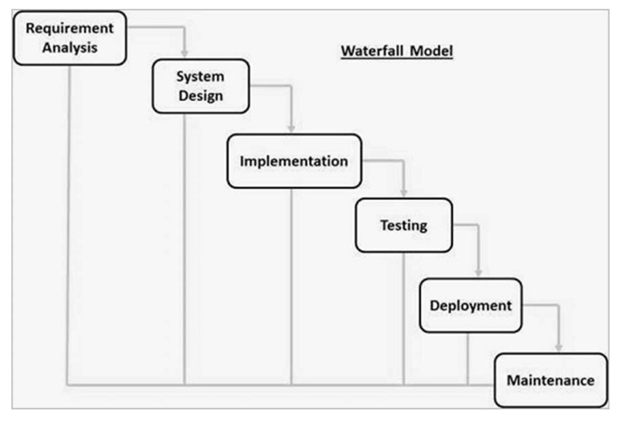


You must be logged in to post a comment.