

Malta looks so small on a map that it is easy to choose accommodation based only on the hotel, the view or the nearest waterfront. In practice, a few kilometres do not always mean a quick drive. Dense urban areas, traffic, parking and the direction of your daily routes can matter far more than staying near the geographical centre of the island.
If renting a car is already part of the holiday plan, start by deciding where most of your days will be spent. Visitors can compare offers from local rental providers through RentGo Malta, checking the conditions of the exact vehicle, including the deposit, payment method, insurance excess, mileage and collection arrangements.
Valletta works well for history and evenings without a car. Sliema offers waterfront living and urban convenience, but parking deserves more attention. Mellieħa is stronger for beaches and northern Malta. Gozo is best treated as a separate part of a longer trip. The right base does not have to sit in the middle of Malta. It should be close to the places you expect to visit most often.
Which Area of Malta Should You Choose?
| Area | Best For | How the Car Is Used |
|---|---|---|
| Valletta | History, restaurants and a short first visit | Mainly for trips outside the city |
| Sliema | Waterfront walks, restaurants and an urban stay | Useful for daytime road trips |
| St Julian’s | Nightlife and an active resort atmosphere | Useful during the day, less important in the evening |
| St Paul’s Bay | Northern Malta, longer stays and a mixed itinerary | Convenient for regular driving |
| Mellieħa | Beaches, northern Malta and Gozo | Especially useful |
| Gozo | Villages, coastline and a slower pace | Very useful for exploring the island |
Valletta: Choose It for the City, Not for the Parking
Valletta is a strong choice for travellers who want to step outside the hotel and immediately be surrounded by historic streets, restaurants and major cultural attractions.
Inside the central area, a car adds very little. It is far more practical to leave it in suitable parking and continue on foot. Upper Barrakka Gardens, St John’s Co-Cathedral, the main streets and the waterfront do not require separate car journeys.
The vehicle becomes useful the following morning when the route leads to Mdina, Dingli, Marsaxlokk, Mellieħa or another part of Malta.
When Valletta Works Particularly Well
I would consider Valletta for a short stay of three or four nights when beaches are not the main reason for visiting Malta.
It is also a good option for couples who want to return in the evening, leave the car parked and walk to dinner.
When booking accommodation with a rental car, look beyond the hotel address and check the real overnight parking arrangements. That detail can have a major effect on how convenient the base feels.
Sliema: A Versatile Base With One Important Issue
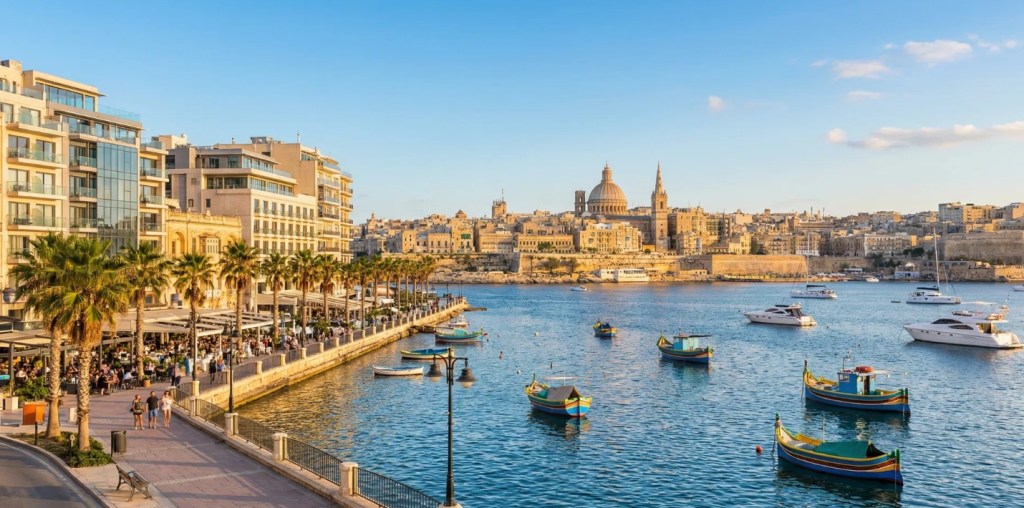
Sliema works well for a first visit to Malta. It has a long waterfront, plenty of restaurants, shops and apartments, and the car can often be left parked in the evening.
This makes it suitable for a mixed holiday. One day can be spent without driving, another can be dedicated to Mdina and Rabat, and the next can lead north or towards Marsaxlokk.
The main issue with Sliema becomes obvious before the trip even begins: parking.
If the car will be with you for the entire week, accommodation with its own parking space or a clearly organised parking arrangement can be far more valuable than it appears while comparing hotel photos.
Sliema or Valletta With a Rental Car?
For road trips, the difference between these two bases is smaller than it may first appear.
Valletta is stronger as a historic environment. Sliema feels more like a modern residential and visitor district, with a long promenade and a wider range of everyday services.
The rental car should not be the main reason for choosing one over the other. A better question is where you want to spend your evenings after returning from a day trip.
If you want to walk straight from the hotel into a historic centre, Valletta is the stronger choice. If a waterfront, apartments and broader everyday infrastructure matter more, Sliema is often more practical.
St Julian’s: A Base for Travellers Who Care About Evenings
St Julian’s should be chosen deliberately for its restaurants, bars and more active evening atmosphere.
With well-located accommodation, the car can stay parked after returning from a daytime road trip.
That is one of the area’s main advantages. The vehicle is used to explore Malta, but not for every dinner.
If most of the itinerary is focused on Mellieħa, northern beaches and Gozo, returning to St Julian’s every evening can create unnecessary repeated driving. In that case, a base farther north may make more sense.
St Paul’s Bay: A Practical Option That Is Often Overlooked
St Paul’s Bay, Bugibba and Qawra sit in an interesting position between the more urban parts of Malta and the north of the island.
The area does not have the historic atmosphere of Valletta and is not as beach-focused as Mellieħa. For travellers with a car, however, that compromise can be useful.
It is easier to head north from here than from Sliema or St Julian’s, while there are still enough restaurants and resort services for convenient evenings.
I would particularly consider this area for a week-long trip when several parts of Malta are on the itinerary and changing hotels is not appealing.
Mellieħa: One of the Strongest Bases for a Holiday With a Car
If the trip is mainly about beaches, northern Malta and at least one day on Gozo, Mellieħa becomes much more logical than Sliema.
The pace is different. There is less of a large urban feel, the northern coastline is closer and the drive towards Ċirkewwa is more convenient.
For a road-based holiday, this is one of the areas where the car is not simply useful for occasional excursions. It becomes a natural part of the daily routine.
But Pay Attention to the Terrain in Mellieħa
The area name alone does not tell you what daily life will be like.
The historic part of Mellieħa sits higher up, while Mellieħa Bay is down by the coast. Two hotels in the same general area can therefore offer very different experiences.
A property higher in town may have an excellent view but involve steeper roads. Accommodation closer to the beach may be less convenient for an evening walk around the upper part of Mellieħa.
With a car, both options can work well. The important thing is understanding the difference before booking.
Sliema or Mellieħa: Which Is Better?
This is a more useful question than searching for an abstract “best area in Malta”.
Sliema is stronger for an urban stay. After a day trip, the car can be left behind while the evening is spent on the promenade or in a restaurant.
Mellieħa is stronger for beaches, northern Malta and holidays where the car is used almost every day.
For a first four-day visit without a strong beach focus, I would look at Sliema or Valletta.
For a week in summer with a rental car and several beach days planned, Mellieħa often makes more sense.
Mdina and Rabat: A Good Example of Why a Car Helps in Malta
The car is useful for reaching the area, but not for moving between its main attractions.
Mdina and neighbouring Rabat are best explored on foot. Rather than moving the car after every stop, park once and allow several hours for walking.
This is how a rental car works best in Malta: it connects different areas rather than replacing walking within them.
Mdina and Dingli in the Same Day
These destinations combine naturally into one route.
The first half of the day can be spent in Mdina and Rabat, followed by lunch and then a drive towards the western coast.
There is no need to add another six places just because the distances look short.
In Malta, an overloaded itinerary can quickly turn into a day spent moving between the car and the next parking space.
Marsaxlokk: Better as Half a Day Than a Quick Photo Stop
Marsaxlokk is worth visiting for its harbour, waterfront atmosphere and a relaxed lunch rather than for a long list of individual sights.
It is a good example of where having your own car allows you to avoid planning the whole day around one transfer.
You can arrive in the morning, walk along the harbour, stay for lunch and only then continue to another part of southern Malta.
During busy periods, do not assume that a parking space will be available directly beside the restaurant or waterfront spot you have chosen.
Blue Grotto: Combine It With Southern Malta
Blue Grotto fits naturally into a day exploring southern Malta rather than as a standalone trip across the island for one short stop.
If a boat trip is part of the plan, make the decision according to actual weather and sea conditions on the day.
A car gives you a simple advantage here. If the sea-based part of the plan does not work out, the entire day is not lost. You can continue with another route.
Gozo for One Day or With an Overnight Stay?
On a short first trip, one full day on Gozo is perfectly realistic. For a stay of ten or fourteen days, however, I would seriously consider spending one or two nights there.
Gozo has a different scale and pace. Villages, coastal roads and individual natural areas are much more enjoyable when you are not constantly checking the time for the return journey to the main island.
The ferry between Malta and Gozo carries vehicles, but anyone using a rental car should check whether the specific rental agreement allows the vehicle to be taken to Gozo.
The existence of a vehicle ferry does not automatically override the conditions of the rental provider.
Is It Worth Staying on Gozo?
For a first three or four-day trip to Malta, I would not use Gozo as the only base. Too many of the main attractions on the main island would remain on the other side of the ferry.
For a longer holiday, the situation changes.
A few nights on Gozo work well for travellers looking for quieter evenings, villages, coastline and a less urban atmosphere.
It should feel like a separate part of the trip rather than simply another hotel address.
Where to Stay in Malta for 3 or 4 Nights
For a short trip, changing accommodation usually makes little sense.
Valletta suits travellers who place history and atmosphere first.
Sliema is more versatile for urban life, restaurants and daytime road trips.
St Julian’s makes sense when nightlife is an important part of the holiday.
Mellieħa is the better choice when beaches and northern Malta are the main priorities from the start.
Where to Stay for a Week
For a first seven-day trip, I would not rush to divide the holiday between several hotels.
Sliema works well for a mixed itinerary including Valletta, Mdina, southern Malta and a few longer drives.
St Paul’s Bay can be more practical when you want to stay closer to northern Malta without going as far as Mellieħa.
Mellieħa is the better option when beaches, Gozo and the north of the island make up most of the plan.
10 or 14 Days: When Two Bases Make Sense
On a longer trip, splitting the stay can reduce repeated driving.
Useful combinations include:
- Valletta or Sliema plus Mellieħa;
- Sliema plus Gozo;
- Mellieħa plus several nights on Gozo;
- an urban base at the beginning of the trip followed by a quieter northern stay.
By contrast, moving from Sliema to St Julian’s changes very little from a driving and route-planning perspective.
Parking Matters More Than Staying in the Geographical Centre
This is one of the first things I would check before paying for accommodation.
For an urban hotel or apartment, find out:
- whether private parking is available;
- whether the space is actually guaranteed;
- whether advance reservation is required;
- where the car will stay overnight;
- how easy the entrance is;
- whether there are garage restrictions;
- whether the car can be left behind in the evening while you walk.
Do not confuse a statement that parking is available nearby with a guaranteed parking space at the property.
What Kind of Car Is Best for Malta?
For most sightseeing routes, a compact car has more advantages than a large SUV.
It is easier to park and more convenient on narrow urban and village streets.
An automatic transmission can be particularly comfortable for drivers who are experiencing left-hand traffic for the first time.
The only area where downsizing too much can become a problem is luggage. Four people travelling with large suitcases should check actual boot capacity rather than relying only on the number of seats.
Left-Hand Traffic in Malta
Traffic in Malta moves on the left.
Drivers accustomed to right-hand traffic usually need the most concentration during the first few hours, particularly when leaving parking areas, approaching junctions and using roundabouts.
The first drive after collecting the car is better kept simple. Going directly to the accommodation, getting used to the vehicle and only then planning a longer day around the island is much more comfortable.
What to Check in the Rental Conditions
Before confirming the booking, look beyond the daily price.
Check the security deposit, accepted payment methods, physical card requirements, insurance excess, fuel policy, mileage, additional driver conditions and the rules for collecting and returning the vehicle.
If Gozo is part of the plan, separately confirm whether the rental car is allowed to travel between the islands.
No credit card and no deposit are not the same condition. A car available without a credit card may still require a deposit, while no deposit does not automatically mean zero excess.
So Where Is the Best Place to Stay in Malta With a Car?
For a short first visit focused on history, I would look at Valletta.
For a versatile urban stay with restaurants and daytime road trips, Sliema is a strong choice.
For active evenings, St Julian’s makes more sense.
For a longer stay with regular driving around the island, St Paul’s Bay deserves consideration.
For beaches, northern Malta and frequent trips towards Gozo, Mellieħa becomes one of the strongest bases.
Gozo works better as a separate part of a longer holiday rather than as a random overnight stop.
The easiest way to choose an area is to mark five or six places you genuinely want to visit before booking the hotel. Once they are on the map, the most practical base usually becomes obvious. In Malta, a well-chosen location does not simply save kilometres. It saves time otherwise spent repeating the same roads and searching for parking.





You must be logged in to post a comment.