Pariksha Pe Charcha 2025

Daily writing prompt
Tell us about your favorite pair of shoes, and where they’ve taken you.

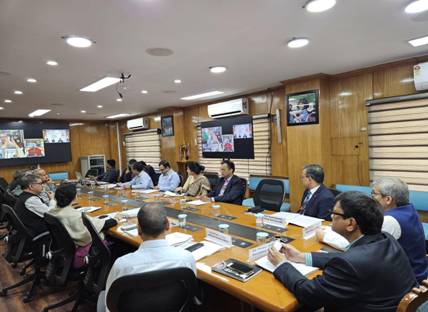
On 10th February 2025, Prime Minister Shri Narendra Modi interacted with students at Sunder Nursery, New Delhi, during the first episode of the 8th edition of Pariksha Pe Charcha (PPC). In this informal yet insightful session, the Prime Minister engaged with students from across the country, discussing a variety of topics. The 36 students present learned from the Prime Minister valuable lessons on Nutrition and Wellness; Mastering Pressure; Challenging Oneself; The Art of Leadership; Beyond Books – 360º Growth; Finding Positives and more. This interactive session provided students with valuable insights and practical strategies to navigate academic challenges with confidence and a growth mind set.

Today, renowned actor and mental health champion Deepika Padukone participated in the second episode of the 8th edition of Pariksha Pe Charcha. Around 60 students attended the interactive session.

Deepika shared how addressing mental health challenges can be empowering and spoke about the valuable lessons she learned from her own struggles. Sharing her stress management strategies, she emphasized the importance of getting enough sleep, spending time outdoors in natural sunlight and fresh air, and maintaining a healthy daily routine to effectively reduce stress. She further emphasized that self-confidence and a positive mind set are key to success. Encouraging students to see failures as learning opportunities, she inspired them to keep moving forward with determination.

Reiterating Prime Minister Shri Narendra Modi’s message—”Express, Never Suppress”—Deepika stressed the importance of seeking help when needed. She engaged with students in an interactive activity, where they wrote down their strengths and pinned them on a board on the stage, reinforcing the significance of self-awareness and recognizing one’s strengths. She conducted a live grounding session through an activity called 54321, demonstrating a technique to improve concentration during exams.

Students physically present at the program posed their queries, and Deepika responded by drawing from her personal experiences, offering valuable insights and practical advice. Additionally, a student from an international CBSE school also had the opportunity to ask a question, further enriching the discussion with a wider perspective.

The 8th edition of PPC had set a new benchmark. With over 5 crore participation, this year’s program exemplifies its status as a Jan Andolan, inspiring collective celebration of learning. For the episode with the Prime Minister, 36 students from all State and UT were selected from State/UT Board Government schools, Kendriya Vidyalaya, Sainik School, Eklavya Model Residential School, CBSE and Navodaya Vidyalaya. Pariksha Pe Charcha 2025 will feature additional six insightful episodes, bringing together renowned personalities from diverse fields to guide students on essential aspects of life and learning. Each episode will address key themes:

Link to watch the 1st episode: https://www.youtube.com/watch?v=G5UhdwmEEls

Link to watch the 2nd episode: https://www.youtube.com/watch?v=DrW4c_ttmew

*****

‘GYAN BHARATAM MISSION’ TO PRESERVE OVER 1 CRORE MANUSCRIPTS

Daily writing prompt
Tell us about your favorite pair of shoes, and where they’ve taken you.

Union Minister for Education Shri Dharmendra Pradhan lauded the Budget 2025-26, emphasizing it as a budget that takes everyone together and prioritizes welfare, well-being, and empowerment of all citizens while firmly placing India on the path to achieving the goal of developed India by 2047. The Minister expressed his gratitude to the Prime Minister Shri Narendra Modi and Finance Minister Smt. Nirmala Sitharaman for a visionary and futuristic Budget.

Shri Dharmendra Pradhan said that this Budget is aiming to cater to the comprehensive requirements, right from childhood to youth, who would be leading from the front in realizing the Viksit Bharat agenda in 2047 and beyond.

Photo by Pixabay on Pexels.com

He further stated that the Budget announcements encompass today’s entire youth demographic, who will lead the nation for the next 25 years. This will strengthen the Bhartiya Gyan Parampara within our education system and foster a global community, he added.

The Minister highlighted that the Budget 2025-26 emphasizes investing in people and facilitating all-round development of India’s human capital. He noted that with “Gareeb, Yuva, Annadata, and Naari” as the pillars, this budget would uplift sentiments of the poor and middle class, accelerate spending, catalyze investments, and spur growth. He emphasized that it would remove regional imbalances, build rural prosperity, nurture research, innovation and entrepreneurship, invigorate the education and skilling landscape, and lead to employment-led development.

The Minister expressed gratitude for continuing with bigger and bolder investments in education, skilling, research, and innovation, stating that this budget represents another big leap towards empowering India’s population with more opportunities for world-class education and building capacities of human capital.

The Minister informed that the total budget allocation for the Ministry of Education has reached ₹128,650 crore, marking a 6.22% increase over BE 2024-25.

Union Education Minister informed that Fifty thousand Atal Tinkering Labs (ATL) will be set up in Government schools in next 5 years to cultivate the spirit of curiosity and innovation, and foster a scientific temper among young minds. With this, students of all Government secondary schools will have access to ATL. The Union Budget also proposes to provide Broadband connectivity to all Government secondary schools and primary health centres in rural areas under the BharatNet project, he added.

Shri Pradhan informed that the total number of students in 23 IITs has increased 100 per cent from 65,000 to 1.35 lakh in the past 10 years. Additional infrastructure will be created in the 5 IITs started after 2014 to facilitate education for 6,500 more students. Hostel and other infrastructure capacity at IIT, Patna will also be expanded, he further added.

Shri Pradhan said that with the aim to help students understand their subjects better, it is proposed to implement a Bharatiya Bhasha Pustak Scheme to provide digital-form Indian language books for school and higher education.

The Union Minister also informed that five National Centres of Excellence for skilling will be set up with global expertise and partnerships to equip youth with the skills required for “Make for India, Make for the World” manufacturing. The partnerships will cover curriculum design, training of trainers, a skills certification framework, and periodic reviews.

Shri Pradhan highlighted that the fourth AI Centre of Excellence in Education, envisioned in the Budget 2025-26, aims to revolutionize India’s educational system from pre-primary to professional and research levels. By harnessing artificial intelligence, it seeks to address disparities and inefficiencies, ensuring equitable and high-quality education across the nation. This Centre of Excellence in Artificial Intelligence for Education will be established with a total outlay of ₹500 crore, he added

The Minister informed the allocation of Rs 20,000 crore to implement private sector driven Research, Development and Innovation. In the next five years, under the PM Research Fellowship scheme, provision of ten thousand fellowships for technological research in IITs and IISc with enhanced financial support is also proposed in the Budget, he added.

The Minister informed that a Gyan Bharatam Mission for survey, documentation and conservation of our manuscript heritage with academic institutions, museums, libraries and private collectors will be undertaken to cover more than 1 crore manuscripts. A National Digital Repository of Indian knowledge systems for knowledge sharing will also be set up.

D/o School Education & Literacy

  • The Budget Allocation for the FY 2025-26 of ₹ 78572 Cr is the highest ever for the Department of School Education & Literacy.
  • There has been an overall increase of ₹ 5074 Cr (7%) in the Budget Allocation of Department of School Education and Literacy in the FY 2025-26 from BE 2024-25. As compared to RE of FY 2024-25, there has been an increase of ₹ 11,000 Cr (16.28 %).
  • The highest ever Budget Allocation may be seen in the Autonomous Body of Kendriya Vidyalaya Sangathan (KVS) at Rs. 9,503 Cr. Allocation in KVS has increased by ₹ 201.17 Cr as compared to Budget allocation of FY 2024-25. There has been an increase of ₹ 776 Cr (9%) as compared to RE of FY 2024-25.
  • Budget Allocation of FY 2025-26 in Flagship Schemes have increased i.e Samagra Shiksha (by ₹ 3750 Cr), PM-POSHAN (by ₹ 32 Cr) and PM-SHRI (by ₹ 1450 Cr) with respect to Budget Allocation (BE) of FY 2024-25. As compared to RE 2024-25, allocation in Samagra Shiksha has increased by ₹ 4240 Cr (11%), allocation in PM-POSHAN has increased by ₹ 2500 Cr (25 %) and allocation in PM-SHRI has increased by ₹ 3000 Cr (66%).
  • Out of the overall Budget Allocation in FY 2025-26 of ₹ 78,572 Cr, the Scheme allocation is ₹ 63,089 Cr and Non-Scheme Allocation is ₹ 15,483 Cr.
  • Increase in Scheme Allocation in BE 2025-26 is ₹ 5284 Cr (9.14 %) as compared to BE 2024-25. As compared to RE 24-25, increase in Scheme Allocation is ₹ 10248 Cr (19%) and non-Scheme allocation has increased by ₹ 752 Cr (5%) in BE 2025-26.
  • Fifty thousand (50,000) Atal Tinkering Labs (ALT) will be set up in Government schools in next five years to cultivate the spirit of curiosity and innovation, and foster a scientific temper among young minds.
  • Broadband connectivity will be provided to all Government secondary schools under BharatNet project in the next three years.

Department of Higher Education, Ministry of Education

  • The overall Budget Allocation in FY 2025-26 is Rs. 50077.95 Cr out of which Scheme allocation is Rs. 6990.88 Cr and Non- Scheme allocation is Rs. 43087.07 cr.
  • There has been an overall increase of Rs. 2458.18 Cr (5.16%) in the Budget Allocation of Department of Higher Education in the FY 2025-26 with respect to FY 2024-25.

Allocations to Major Autonomous Bodies under Higher Education

  • The total Allocation of Autonomous Bodies in 2025-26 increased to Rs. 42732 Cr from Rs. 39777.40  in 2024-25. There is increase of 7.42%
  • Allocation in Central Universities has been kept at Rs. 16691.31 Cr, against Rs. 15928 Cr in 2024-25 which is  Rs 763.31 Cr more i.e.  4.79 % increase.
  • UGC has been allocated Rs.3335.97 Cr in 2025-26, against Rs. 2500 Cr in 2024-25 which is Rs. 835.97 Cr more i.e. 33.44 % increase.
  • IITs have been allocated Rs. 11349.00 Cr in 2025-26, against Rs. 10324.50 Cr in 2024-25 which is Rs. 1024.50 Cr more i.e. 9.92% increase.
  • For NITs, Rs.5687.47 Cr has been allocated in FY 2025-26, against Rs.5040 Cr in 2024-25 increasing the allocation by Rs. 647.47 Cr i.e. 12.85% increase.
  • Deemed Universities have been allocated Rs.604 Cr in 2025-26, against Rs.596 Cr in 2024-25 increasing the allocation by Rs. 8 Cr i.e. 1.34% increase.
  • IIMs have been allocated Rs.251.89 Cr in 2025-26, against Rs. 212.21 Cr in 2024-25 increasing the allocation by Rs. 39.68 Cr i.e. 18.70% increase.
  • IIITs have been allocated Rs.407.00 Cr in 2025-26, against Rs.315.91 Cr in 2024-25 increasing the allocation by Rs. 91.09 Cr i.e 28.83 % increase.
  • Grants for Promotion of Indian Languages have been allocated Rs.347.03 Cr in 2025-26, against Rs.310.10 Cr in 2024-25 increasing the allocation by Rs. 36.93 Cr i.e. 11.91% increase.                                                                                 

*****

Measuring the Pulse of Indian Education

Daily writing prompt
Tell us about your favorite pair of shoes, and where they’ve taken you.

Education is not only the foundation upon which our civilization has been built, but it is also the architect of humanity’s future.”

~Prime Minister Shri Narendra Modi

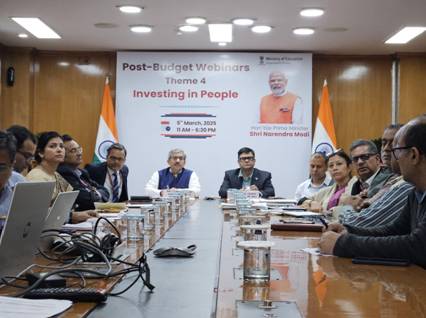
Education has always been a key priority for the government and with the vision to make India a global education hub, the Union Budget 2025-26 introduces innovative initiatives. Focused on expanding medical seats, enhancing skilling infrastructure and growing IITs, these measures aim to provide more opportunities and equip youth with essential skills for the future.

Announcements for a Smarter, Inclusive India

  1. Bharatiya Bhasha Pustak Scheme: To provide digital-form Indian language books for school and higher education. This aims to help students understand their subjects better. 
  2. National Centres of Excellence for Skilling: Building on the July 2024 Budget, five National Centres of Excellence for skilling will be established with global partnerships to equip youth with skills. These centres will focus on curriculum design, trainer training, skills certification, and regular reviews.
  3. Expansion of Capacity in IITs: Additional infrastructure will be created in the 5 IITs started after 2014 to facilitate education for 6,500 more students. Hostel and other infrastructure capacity at IIT, Patna will also be expanded. Total number of students in 23 IITs has increased 100 per cent from 65,000 to 1.35 lakh in the past 10 years.  
  4. Centre of Excellence in AI for Education: A Centre of Excellence in Artificial Intelligence for education will be set up with a total outlay of 500 crore.
  5. Expansion of Medical Education: The government had added almost 1.1 lakh UG and PG medical education seats in ten years, an increase of 130 per cent. In the next year, 10,000 additional seats will be added in medical colleges and hospitals, towards the goal of adding 75,000 seats in the next 5 years.

Inside India’s Education System

The Indian education system has undergone significant transformation over the years. Serving 24.8 crore students across 14.72 lakh schools, it is supported by a dedicated workforce of 98 lakh teachers, as reported by the UDISE+ (Unified District Information System for Education Plus 2023-24). Government schools form the backbone of the system, comprising 69% of the total, enrolling 50% of students and employing 51% of teachers. On the other hand, private schools make up 22.5% of institutions, catering to 32.6% of students and employing 38% of teachers. This growing structure reflects the dynamic changes in the Indian education landscape, paving the way for continuous improvements in enrollment and access over the years.

Enrollment Trends in India

The NEP 2020 aims for a 100% Gross Enrollment Ratio (GER) by 2030. The GER is near universal at the primary (93 %) and the efforts are underway to bridge the gaps at the secondary (77.4 %) and higher secondary level (56.2 %), driving the nation closer to its vision of inclusive and equitable education for all. In the realm of higher education, India has seen a dramatic rise in student enrollment. The total number of students enrolled in higher education reached 4.33 crore in 2021-22, a 26.5% increase from 3.42 crore in 2014-15. The Gross Enrollment Ratio (GER) for the 18-23 age group also rose from 23.7% to 28.4% in the same period.

Women’s participation in higher education has also witnessed significant growth, with female enrollment rising from 1.57 crore in 2014-15 to 2.07 crore in 2021-22, marking a 32% increase. This progress is especially evident in fields like Medical Science, Social Science, and Arts, where women are now leading the charge in enrollment.

Decline in Dropout Rate


However, challenges still persist and the dropout rate remains a critical concern. While there has been a steady decline in dropout rates. School dropout rates have steadily declined in recent years, standing at 1.9 per cent for primary, 5.2 per cent for upper primary and 14.1 per cent for secondary levels. According to AISHE report the dropout rate at the secondary level has also decreased significantly from 21% in 2013-14 to 13% in 2021-22.

Transforming India’s Education Landscape

Over the years, India has seen a remarkable transformation in its higher education ecosystem. The number of Higher Education Institutions (HEIs) has grown significantly, increasing by 13.8% from 51,534 in 2014-15 to 58,643 in 2022-23. This expansion reflects the country’s commitment to making higher education more accessible and diverse.

  • Growth in Medical Education and Workforce:  Medical Colleges grew from 499 in FY19 to 780 in FY25.
  • Candidates aspiring to study MBBS increased from 16 lakh in 2019 to 24 lakh in 2024.
  • MBBS Seats increased from 70,012 in FY19 to 1,18,137 in FY25.
  • Postgraduate Medical Seats grew from 39,583 in FY19 to 73,157 in FY25.

  • Doctors Available: 13.86 lakh registered practitioners as of July 2024, with a current ratio of 1:1263 per person. The WHO norm of 1:1000 could be met by 2030 with an annual increase of 50,000 doctors.
  • Growth of Indian Institutes of Technology (IITs): The number of IITs increased from 16 in 2014 to 23 in 2023.
  • Growth of Indian Institutes of Management (IIMs):The number of IIMs grew from 13 in 2014 to 20 in 2023.
  • Expansion of Universities:The number of Universities grew from 723 in 2014 to 1,213 in 2024, marking a 59.6% increase.
  • Increase in Higher Education Institutions (HEIs): Total HEIs increased by 13.8%, from 51,534 in 2014-15 to 58,643 in 2022-23.

Progress in Basic Facilities

Education infrastructure has significantly improved, with a rise in the number of higher education institutions. Key areas like medical check-upssanitation, and ICT availability have also seen substantial upgrades, highlighting positive progress in school facilities to enhance the quality of education. From 2019-20 to 2023-24, there have been notable improvements in school infrastructure. The percentage of schools with girls’ toilets increased slightly from 96.9% to 97.2%, while access to libraries/reading rooms rose from 84.1% to 89%.  The availability of electricity improved from 83.4% to 91.8%, and computers in schools increased from 38.5% to 57.2%. Additionally, internet access grew significantly from 22.3% to 53.9%, marking a positive shift toward better-equipped schools.

Conclusion

The education sector in India is being strengthened through various government initiatives aligned with NEP 2020. Programs like Samagra Shiksha Abhiyan, PM SHRI (Pradhan Mantri Schools for Rising India) and PM POSHAN (Pradhan Mantri Poshan Shakti Nirman) are driving improvements in infrastructure, teacher training and learning outcomes. The Economic Survey highlights the progress and the government’s commitment to making education more inclusive and accessible.

References

Click here to download PDF

*******

UGC discontinues CARE Journal Listing, suggests new parameters to ensure quality, transparency, and relevance

Daily writing prompt
Share one of the best gifts you’ve ever received.

The University Grants Commission (UGC) has officially announced the discontinuation of its UGC-Consortium for Academic and Research Ethics (CARE) journal listing. This significant shift marks a transition toward a more decentralized and flexible framework for evaluating academic journals.

Introduction of Suggestive Parameters for Journal Selection

In lieu of the UGC-CARE list, the UGC has developed a set of suggestive parameters aimed at guiding faculty members and students in selecting credible and peer-reviewed academic journals for research and publication. These parameters were meticulously crafted by a panel of experts and academicians and have now been made publicly available for feedback. Stakeholders, including Higher Educational Institutions (HEIs) and faculty members, are invited to share their opinions by February 25, 2025, via email at journal@ugc.gov.in.

This decision follows the recommendations made by an expert committee and was formalized during the UGC’s 584th meeting on October 3, 2024. The new guidelines are intended to replace the previous CARE system outlined in the Public Notice dated November 28, 2018.

Focus on High-Quality Research and Institutional Review Mechanisms

To foster high-quality research, HEIs are encouraged to adopt these suggestive parameters and customize them based on their academic requirements. The UGC recommends that institutions establish internal review committees to ensure compliance with these evolving quality benchmarks. This move aims to empower institutions to take ownership of journal evaluation processes while promoting scholarly excellence.

Rationale Behind Discontinuing the UGC-CARE List

Mamidala Jagadesh Kumar, Chairman of the UGC, explained that the UGC-CARE list was initially introduced in 2018 to address concerns over the proliferation of predatory journals and to ensure that only reputable publications were recognized for faculty selections, promotions, and research funding applications. However, the system faced numerous challenges, including:

  • Over-centralization and bureaucratic delays in updating the journal list.
  • Lack of transparency in decision-making processes.
  • Exclusion of respected journals, particularly those in Indian languages, while less credible ones were included.
  • Pressure on researchers to publish exclusively in UGC-CARE listed journals.

NEP 2020 and the Shift Toward Decentralization

The National Education Policy (NEP) 2020 highlighted the need to reduce heavy regulation in academic publishing. In response, the UGC formed an expert committee in December 2023 to review the UGC-CARE scheme. Based on its recommendations, the UGC decided to discontinue the central list and encourage HEIs to develop their own robust mechanisms for evaluating journals.

“This new approach provides institutions with greater flexibility,” stated Prof. Kumar. “It allows them to develop models that align with academic norms and the specific needs of various disciplines. Researchers will no longer be bound by a centralized list of journals.”

Combating Predatory Journals and Protecting Academic Standards

Under the new system, HEIs will bear the responsibility for combating predatory journals by establishing credible evaluation mechanisms. This will help protect the academic reputation of institutions and maintain scholarly integrity. Experienced faculty members are expected to mentor younger researchers in identifying legitimate journals and avoiding predatory ones.

A Step Toward Academic Freedom and Autonomy

The discontinuation of the UGC-CARE list is seen as a step toward restoring academic freedom and institutional autonomy. “By transferring the responsibility for journal evaluation back to HEIs, the UGC has empowered institutions and researchers to make publication choices that best suit their disciplines and target audiences,” Prof. Kumar emphasized.

HEIs will also need to accommodate emerging and interdisciplinary fields by creating dynamic evaluation models that recognize journals beyond traditional indexing frameworks. This adaptability is crucial to addressing the rapidly evolving landscape of academic publishing.

Stakeholder Engagement and Feedback

The UGC encourages stakeholders to carefully review the proposed parameters and provide their feedback before the deadline. This inclusive approach aims to foster a collaborative environment for enhancing academic publishing standards.

For further information, stakeholders are advised to refer to the UGC’s official communications and actively participate in shaping the future of academic journal evaluation in India.

Navigating the Science Behind Herbal Remedies: Kratom and Its Uses

Daily writing prompt
Share one of the best gifts you’ve ever received.

In recent years, herbal remedies have gained widespread attention for their potential health benefits. Kratom, a tree native to Southeast Asia, has become a popular alternative in this category. Known for its stimulant-like and pain-relieving properties, Kratom has raised both interest and concern.

But, how exactly does Kratom work in the body? Can it offer real health benefits, or is it just a passing trend? In this blog, we will explore the science behind Kratom, its uses, and its potential effects on health.

What Is Kratom?

Kratom is a tropical tree found in Southeast Asia. It belongs to the coffee family and is used for its leaves. These leaves contain compounds that can have effects on the brain. People often consume Kratom in powder or capsule form.

The main compounds in Kratom are called alkaloids. Two important alkaloids are mitragynine and 7-hydroxymitragynine. These compounds interact with receptors in the brain. This interaction can help with pain, mood, and energy.

How Does Kratom Work in the Body?

Kratom affects the body by binding to opioid receptors. It can create effects similar to those of opioids but is not an opioid. When consumed, Kratom may produce mild pain relief and energy boosts.

Depending on the dose, Kratom can have either stimulant or sedative effects. At low doses, Kratom can increase alertness and focus. At higher doses, it may cause relaxation and pain relief. Kratom’s potential effects make it an appealing alternative for many people.

Health Benefits of Kratom

Kratom has several reported health benefits. Some people use it for pain relief. Others claim it helps reduce anxiety and depression. Kratom may also provide an energy boost, helping with daily tasks. There is evidence that Kratom can improve mood and boost motivation.

While these benefits are reported by users, more research is needed. Some people also combine Kratom with other herbal remedies like kava. A kratom + kava shot is sometimes used for a more balanced effect.

Risks and Side Effects of Kratom

Despite its benefits, Kratom also comes with risks. Some people experience nausea, dizziness, or constipation when using it. In higher doses, Kratom can lead to sedation and confusion.

Additionally, Kratom’s long-term effects are not fully understood. There have been reports of dependence and withdrawal symptoms. It is crucial to be cautious when using Kratom, especially in high doses. Always consult a healthcare provider before adding Kratom to your routine.

Is Kratom Safe to Use?

Kratom’s safety remains a topic of debate. While some users report positive experiences, others may face health issues. Its use can lead to side effects, particularly when not used correctly.

Kratom’s potential for addiction also raises concerns. Currently, the FDA does not regulate Kratom, which makes safety a concern. Some regions have banned Kratom due to safety worries. It is important to stay informed and cautious about Kratom use.

Understand Kratom and Its Uses

Kratom is an herbal remedy that shows both promise and risk. Its ability to offer pain relief and energy makes it appealing to many people. However, its safety is still uncertain, and more research is needed.

Using Kratom responsibly and understanding its potential effects is important. Before starting Kratom, consult with a healthcare provider to ensure it’s right for you.

Always remember to explore other articles on the blog for more insights on various topics!

From Manager to Visionary: How to Lead Business Transformation in Uncertain Times

Daily writing prompt
Share one of the best gifts you’ve ever received.

Picture this – you’re steering a ship in the middle of a storm. The winds are howling, the waves are unpredictable, and your crew looks to you for direction. In today’s volatile business environment, managers are facing a similar challenge. Economic fluctuations, rapid technological advancements, and evolving customer expectations have made traditional management styles obsolete. To survive and thrive, leaders must move beyond managing tasks – they must become visionaries who anticipate change, inspire innovation, and drive transformation.

Photo by Eva Bronzini on Pexels.com

So, how does one make this leap from manager to visionary? What skills and mindset shifts are required to navigate uncertain times successfully? This article explores the key strategies that can help leaders transform businesses while ensuring stability and long-term growth.

1.     Shift From Being Reactive to Being Proactive

Traditional managers are often reactive – responding to challenges as they arise. Visionary leaders, on the other hand, anticipate change before it happens. They don’t just solve problems; they look ahead, identify opportunities, and shape the future. Here’s how you can be a visionary leader:

  • Embrace Scenario Planning: The most successful leaders don’t wait for crises; they prepare for them. Companies like Amazon and Tesla thrive because their leaders think five to ten years ahead. Regularly conducting “what-if” analyses can help businesses stay ahead of disruptions.
  • Encourage a Culture of Innovation: Visionary leaders foster environments where employees feel empowered to experiment and challenge the status quo.
  • Stay Ahead of Industry Trends: Subscribe to reports, attend conferences, and network with thought leaders to predict industry shifts before they happen.

2.     Adapt to Digital Transformation

Technology is the biggest disruptor in today’s business landscape. AI, automation, and big data are not just buzzwords; they are fundamentally reshaping industries. Managers who resist digital transformation risk becoming obsolete, while visionary leaders harness these tools to drive efficiency, enhance decision-making, and create new revenue streams. Steps to lead this digital transformation:

  • Invest in Digital Literacy: Even if you’re not in a tech-heavy industry, understanding AI, blockchain, and data analytics is crucial. Many executives enroll in a general management course to strengthen their ability to integrate technology into business strategy. You can consider enrolling in a general management programme to learn these skills.
  • Leverage AI for Smarter Decision-Making: Companies like Netflix use AI-driven analytics to predict customer preferences and enhance user experience. Could your business use AI to forecast market trends or optimize supply chain management?
  • Adopt Agile Practices: Traditional business models follow rigid hierarchies. Visionary leaders embrace agility, enabling their teams to pivot quickly in response to change.

3.     Lead with Purpose

A manager manages teams; a visionary inspires movements. To lead transformation in uncertain times, leaders must establish a clear purpose that resonates with employees, customers, and stakeholders. You need to build a compelling vision.

  • Define Your ‘Why’: What impact does your company want to create? Visionary leaders, like Steve Jobs and Elon Musk, built companies with missions that were larger than profits.
  • Communicate with Clarity: A vision is useless if your team doesn’t understand it. Every decision, project, and strategy should align with the company’s broader purpose.
  • Lead by Example: Employees look to leadership for cues. If you want your organization to embrace transformation, demonstrate adaptability and forward-thinking in your own actions.

4.     Build Resilience

In uncertain times, resilience is the most important trait a leader can cultivate. Visionary leaders don’t fear failure; they see it as a learning opportunity. How to build organizational resilience:

  • Encourage a Growth Mindset: Visionary leaders foster a culture where employees feel safe to take risks and innovate.
  • Develop Strong Crisis Management Skills: Leaders must be prepared to respond to market downturns, supply chain disruptions, or workforce challenges without losing momentum.
  • Strengthen Financial Agility: Businesses that survived the COVID-19 crisis were those that quickly adapted their financial strategies. Maintaining healthy cash reserves and diversifying revenue streams can be game-changers.

5.     Embrace People-Centric Leadership

At the heart of every transformation is people. The best strategies and technologies mean nothing if employees are disengaged or resistant to change. Visionary leaders prioritize people over processes, ensuring that teams remain motivated, aligned, and prepared for the future.

  • Empower Teams with Autonomy: Employees perform better when they have ownership over their work. Autonomy fosters creativity and innovation.
  • Prioritize Employee Well-Being: Burnout is a major challenge for organizations undergoing transformation. Companies with strong well-being programs see higher productivity and retention rates.
  • Develop Future-Ready Skills: A general management course can help leaders refine their skills in change management, strategic thinking, and employee engagement.

6.     Make Bold, Data-Driven Decisions

In uncertain times, relying on intuition alone can be risky. Visionary leaders combine data-driven insights with bold decision-making to navigate uncertainty with confidence.

  • Leverage Predictive Analytics: AI-driven analytics can help forecast customer behavior, market trends, and operational risks.
  • Test and Iterate: The best leaders experiment with new strategies, analyze results, and pivot quickly if needed.
  • Balance Logic with Instinct: While data is powerful, gut feeling and experience also play a role in high-stakes decisions.

Final Thoughts

The leap from manager to visionary isn’t about a title change – it’s about adopting a mindset that embraces change, inspires innovation, and leads with clarity and purpose. As the business world grows increasingly complex, the most successful leaders will be those who:

  • Anticipate and adapt to change
  • Leverage technology for transformation
  • Lead with vision and inspire their teams
  • Prioritize resilience and agility
  • Make bold, data-driven decisions

For managers looking to step into visionary leadership roles, investing in executive education, like IIM General Management Program, which can provide the strategic insights, leadership skills, and digital expertise needed to lead successfully in an era of uncertainty.

IAF CONDUCTS SEMINAR ON ‘NAVACHAR UTKRISHTAM BHAVISYAM’ (Innovation is Path to Better Future) AERO INDIA 25

Daily writing prompt
If there was a biography about you, what would the title be?

Indian Air Force (IAF) is working to harness the potential of indigenous defence industry through Govt policies under the umbrella of Atmanirbharta by continuously engaging with the Industry Partners. Considerable success has been achieved in the indigenisation and innovation of spares and sustenance of equipment. The efforts are now being focused towards complex futuristic technologies, weapon systems and space domain.

Aero India being one of the premier aerospace and defence exhibition, serves as a global platform for showcasing cutting-edge technologies, innovations, and products in the field of aviation. IAF has been at the forefront of embracing the vision of ‘Make in India‘ by actively supporting indigenous defence development and manufacturing. IAF is the biggest stakeholder in aerospace domain and a major participant in leading the drive towards Atmanirbhata.

In pursuit of futuristic technologies and to highlight the drive towards self-reliance, lAF is conducting a seminar on the theme ‘NAVACHAR UTKRISHTAM BHAVISYAM’ (innovation is the Path to better Future). The Hon’ble Raksha Mantri Shri Rajnath Singh has been invited as the Chief Guest for the event with Chief of the Air Staff in attendance.

The seminar is planned on 11 Feb 25, from 1400-1630 Hr, at Hall No 1, Air Force Station Yelahanka, Bengaluru. The seminar is expected to have attendance from senior officers of Armed Forces, Govt officials, Industry leaders from aviation and aerospace domain, reps from Defence Public Sector Units (DPSUs), MSMEs, Start-ups, Innovators and the Academia. The seminar aims to inspire collaboration between defence forces, industry and R&D agencies, fostering a robust ecosystem for innovation. During this seminar, the following are planned to be released /launched by Hon’ble Raksha Mantri:- a publication titled ‘IAF Compendium (Samarthya Margdarshika) of Challenges and Opportunities for Indian Industry‘, for the Indian industries, Micro Small Medium Enterprises (MSMEs), Start-ups and individual innovators, encompassing current and future requirements of IAF; Declaration of the winners of Mehar Baba-ll Competition (MBC). The MBC-II was launched for the Indian Industries in the year 2022. This competition harnessed exceptional talent of Indian industry in swarm drone technology and showcased their capabilities in realising solutions to specific problem statements. In addition, MBC-III ‘Collaborative Drone Based Surveillance Radars‘ will be launched to develop an unmanned capability similar to an Airborne Warning and Control System.

Towards bolstering the ‘Digital India’ drive, IAF will be launching ‘VAYU VITT‘ digital portal for placing orders, certification and payments between lAF and HAL. This is aimed towards enhancing digitisation along with improved efficiency and transparency.

Additionally, a panel discussion on ‘Manned Unmanned Teaming- From Concept to Targeting‘ is planned with eminent experts from the aerospace domain including scientists, industrialists, certification agencies and end users. The panel discussion is intended towards underscoring the pivotal role of Indian Industry in driving indigenous solutions for futuristic technologies to meet the evolving defence and security needs of our Nation.

***

Pariksha Pe Charcha -Empowering Students, Transforming Lives

Examinations are often a source of stress for students and their families, but the “Pariksha Pe Charcha” (PPC) initiative by Prime Minister Narendra Modi has been transforming this narrative. Scheduled for 11 AM on February 10, 2025, this year’s PPC will once again serve as an interactive platform where the Prime Minister directly engages with students, teachers, and parents. Each edition of PPC highlights innovative approaches to tackle exam-related anxiety, fostering a celebratory attitude toward learning and life.

The Record-Breaking PPC 2025

The 8th edition of PPC, scheduled on 10 February 2025, has already set a new benchmark. With over 5 crore participation, this year’s program exemplifies its status as a Jan Andolan, inspiring collective celebration of learning This year, 36 students from all State and UT, have been selected from State / UT Board Government schools, Kendriya Vidyalaya, Sainik School, Eklavya Model Residential School, CBSE and Navodaya Vidyalaya. Pariksha Pe Charcha 2025 will feature seven insightful episodes, bringing together renowned personalities from diverse fields to guide students on essential aspects of life and learning. Each episode will address key themes:

  • Sports & Discipline – M.C. Mary Kom, Avani Lekhara, and Suhas Yathiraj will discuss goal setting, resilience, and stress management through discipline.
  • Mental Health – Deepika Padukone will emphasize the importance of emotional well-being and self-expression.
  • Nutrition – Experts Shonali Sabherwal, Rujuta Diwekar, and Revant Himatsingka (Food Farmer) will highlight healthy eating habits, sleep, and overall well-being.
  • Technology & Finance – Gaurav Chaudhary (Technical Guruji) and Radhika Gupta will explore technology as a learning tool and financial literacy.
  • Creativity & Positivity – Vikrant Massey and Bhumi Pednekar will inspire students to cultivate positivity and manage negative thoughts.
  • Mindfulness & Mental Peace – Sadhguru will introduce practical mindfulness techniques for mental clarity and focus.
  • Stories of Success – Toppers from UPSC, IIT-JEE, CLAT, CBSE, NDA, ICSE, and past PPC participants will share how PPC shaped their preparation and mindset.

A Journey Through the Years

 2024: Nationwide participation.

The seventh edition of PPC, held on January 29, 2024, was expansive with 2.26 crore registrations on the MyGov portal, it reflects the program’s immense popularity and relevance. For the first time, 100 students from Eklavya Model Residential Schools (EMRS) participated, symbolizing the inclusivity of the initiative. The event was held in a town-hall format at Bharat Mandapam, ITPO, Pragati Maidan, New Delhi, with approximately 3,000 participants, including students, teachers, parents, and winners of the Kala Utsav.

Pariksha Par Charcha 2024

2023: Widening Participation 

The 6th Edition of PPC was conducted on 27 January 2023 at Talkatora Stadium, New Delhi. Hon’ble Prime Minister of India interacted with students, teachers and parents during this programme and gave his valuable suggestions/ inputs to all stakeholders. The programme was telecast live by many TV Channels and YouTube channels. 718110 students, 42337 employees and 88544 Parents viewed the live programme of PPC-2023. The interaction of the Hon’ble Prime Minister of India with students, teachers and parents was inspiring, motivating thought-provoking for all.

Pariksha Par Charcha 2023

2022: The Revival of Physical Interactions

5th Edition of PPC was conducted on 1st April 2022 at Talkatora Stadium, New Delhi. Hon’ble Prime Minister of India has interacted with students, teachers and parents in this programme and has given them his valuable suggestions/ inputs. 9,69,836 students, 47,200 employee and 1,86,517 parents viewed the live programme of Pariksha Pe Charcha-2022. The programme was telecast live by the many TV Channels and YouTube channel etc

Pariksha Par Charcha 2022

2021: The Virtual Connection

In response to the COVID-19 pandemic, the fourth edition of PPC was held online on 7 April 2021. Despite the challenges posed by the pandemic, the interaction continued to inspire students and their families. The focus shifted to resilience and adaptability, teaching life skills to help students navigate uncertain times.

Pariksha Par Charcha 2021

2020: Expanding Participation

The unique Town Hall format of the event in which the Hon’ble Prime Minister directly interacted with school students at the Talkatora Stadium, New Delhi was held on 20th January, 2020.  The event broadened its scope with an online competition for students that received  2.63 lakh entries. Students from all over India and also Indian students residing abroad from 25 countries participated. The event highlighted the need to embrace challenges as stepping stones for success.

Pariksha Par Charcha 2020

2019: Growing Reach 

On January 29, 2019, the second edition of PPC took place at the same venue, witnessing an even greater level of participation. The interaction, which lasted for over ninety minutes, saw students, teachers and parents relax, laugh, and repeatedly applaud the Prime Minister’s observations, which included a touch of humour and wit.

Pariksha Par Charcha 2019

2018: The Inaugural Interaction

The first-ever Pariksha Pe Charcha was held on February 16, 2018, at Talkatora Stadium, New Delhi. There were more than 2500 students from schools and colleges who were present in Talkatora Stadium of 16th February, 2018 for the interaction and more than 8.5 Crore students from across the country viewed or heard the programme on DD/TV Channels/ Radio Channels. The Prime Minister emphasized holistic development, resilience, and the importance of maintaining balance during exams. The event’s success set the tone for future editions.

Pariksha Par Charcha 2018

The Impact of Pariksha Pe Charcha

Over the years, PPC has evolved into an opportunity aimed at transforming exam-related stress into positive energy. By addressing real questions and offering actionable solutions, Prime Minister Modi has bridged the gap between policy and practice, empowering students to thrive under pressure. The program’s inclusivity, digital reach, and innovative approaches ensure its continued success as a cornerstone of student engagement in India. With each passing year, PPC reinforces the message that exams are not the end but a beginning!

References

Annual report 2023-24 to 2018-19. https://www.education.gov.in/documents_reports?field_documents_reports_tid=All&field_documents_reports_category_tid=All&title=&page=1

Click here to download PDF

*****

Daily writing prompt
What were your parents doing at your age?

Aero India 2025 at Yelahanka Air Force Station in Bengaluru on February 10, 2025

Daily writing prompt
What were your parents doing at your age?

The 15th edition of Aero India, Asia’s biggest aerospace and defence exhibition, will be inaugurated by Raksha Mantri Shri Rajnath Singh at the Yelahanka Air Force Station in Bengaluru, Karnataka on February 10, 2025. With the broad theme of ‘The Runway to a Billion Opportunities’, the five-day extravaganza will showcase India’s aerial prowess and indigenous cutting-edge innovations alongside state-of-the-art products of global aerospace companies. In line with ‘Aatmanirbhar Bharat’ and ‘Make in India, Make for the World’ vision, the event will also provide a stage to forge international collaborations to fast-track the indigenisation process, thereby providing a thrust to Prime Minister Shri Narendra Modi-led Government’s resolve of making the country Viksit Bharat by 2047.

Addressing a press conference in Bengaluru on the eve of the event, Raksha Mantri described Aero India as a crucial platform, which will drive forward the Government’s vision of a strong, capable India, secure and self-reliant India. “Aero India is a platform that showcases the strength, resilience, and self-reliance of New India. It is not just crucial for India’s defence preparedness, but it also plays a pivotal role in shaping the future of our nation. It will demonstrate our defence capabilities and forge global partnerships. Our goal is to enhance collaboration in areas of common interest with our friendly nations, fostering deeper cooperation and shared progress. The event is not just a showcase of technology and innovation, but will also serve as a source of inspiration for our youth, fostering scientific temperament and a spirit of innovation,” he said.

Organised in a total area of over 42,000 sq m and with the confirmed participation of over 900 exhibitors, including 150 foreign companies, the event is set to be the biggest-ever Aero India till date. Shri Rajnath Singh termed the participation of more than 90 countries as a testament to the growing global confidence in India’s aerospace and defence capabilities. “Defence ministers or representatives from about 30 countries have come to participate in this event. The presence of Air Chiefs and Secretaries from 43 countries further highlights the significance of this event – not just for India, but for the entire international defence community,” he said.

Highlighting the transformation of the defence and aerospace sector in the recent years, Raksha Mantri asserted that, today, India is not only capable of designing and developing major platforms and equipment within India, it has also successfully established a vast supply chain within the country. “Advanced platforms like Light Combat Aircraft Tejas, Light Combat Helicopter Prachand and C-295 Transport Aircraft are now being produced in India. We have also taken a firm resolve to manufacture fifth-generation fighter aircraft within the country. From the advanced variants of the Agni missile, the Astra missile system, and the Pinaka missile system to the cutting-edge Hypersonic missile system and the Akash air defence system, we have built numerous success stories. These achievements have played a crucial role in strengthening our defence sector, making India more self-reliant and secure,” he said.

Shri Rajnath Singh added that post corporatisation of Ordnance Factory Board, the newly formed companies have started performing exceptionally well in defence production. “Under a well-considered and well-developed plan, we have actively worked to empower the private sector in the defence and aerospace industries. Today, India has a thriving private defence industry that has firmly established itself and is making significant contributions to our national security,” he said.

Raksha Mantri expressed confidence that defence production, having crossed the record figure of Rs 1.27 lakh crore, will exceed Rs 1.60 lakh crore by the end of 2025-26. Defence exports, which touched the record figure of Rs 21,000 crore, he said, will surpass Rs 30,000 crore.

Shri Rajnath Singh underlined the crucial role being played by the defence industrial sector in making India an economic super power. He stated that any breakthrough in the defence sector not only strengthens national security, but also impacts the economy. Technologies developed for defence applications promote innovation in the civil sector as well, leading to employment generation and economic development, he said. He termed Aero India a significant driver of economic strength, contributing to the overall growth and development of the economy. He expressed confidence that Aero India will be remembered as a historic milestone in India’s journey towards becoming a global leader in the aerospace and defence sector.

The 15th Aero India will be held between 10th and 14th February 2025. February 10th to 12th have been reserved as business days, with 13th & 14th set as public days for people to witness the show. The event comprises Defence Ministers’ Conclave; CEOs Roundtable; inauguration of India & iDEX Pavilions; Manthan iDEX event; Samarthya Indigenisation event; Valedictory function; seminars; breath-taking airshows and an exhibition of aerospace companies.

Defence Ministers’ Conclave

With the aim to strengthen defence cooperation with friendly nations amidst a rapidly-evolving global security landscape, Raksha Mantri will host the Defence Ministers’ Conclave on February 11 in hybrid mode. The theme this year ‘Building Resilience through International Defence and Global Engagement (BRIDGE)’ underscores the importance of supply chain resilience and strategic collaboration in defence.

The last edition witnessed the participation of 27 Defence Ministers and Deputy Defence Ministers alongside 15 Defence & Service Chiefs and 12 Permanent Secretaries. This year, the participation has expanded as representatives from more than 80 countries are likely to participate in the conclave. Approx. 30 Defence Ministers in addition to Defence/Service Chiefs and Permanent Secretaries from friendly nations will attend the event.

The conclave will provide a crucial platform to address key aspects such as Defence capacity building through investment, joint ventures & co-production, Collaboration in R&D, training & technological advancements in AI & space, Maritime security cooperation and strategic partnerships.

CEOs Roundtable

CEOs Roundtable 2025 will be chaired by Raksha Mantri on February 10, on the theme ‘Enabling Defence Cooperation through Global Engagement (EDGE)’. Over 100 Original Equipment Manufacturers (OEMs) have confirmed their participation in the event. These include 55 from 19 countries (USA, France, Russia, South Korea, UK, Japan, Israel & Brazil etc), 35 Indian (Larsen & Toubro, Bharat Forge Ltd, Adani Defence & Aerospace, Mahindra Defence Systems Ltd, BrahMos Aerospace & Ashok Leyland Defence) and 16 Defence Public Sector Undertakings (DPSUs). Shri Rajnath Singh had addressed over 73 CEOs of 28 Foreign OEMs and 45 Indian OEMs in the 2023 edition of the event.

Major foreign OEMs including Airbus (France), Ultra Maritime (USA), GNT (South Korea), John Cockerill Defence (UK), Mitsubishi (Japan), Rafael Advance Defence System (Israel), Safran (France) and Liebherr Aerospace (France) are expected to highlight their future plans, Joint Ventures, collaborations, partnerships with Indian companies for production of spares parts, development of aero-engines, setting up of Maintenance, Repair and Operations (MRO) facilities and establishment of R&D facilities etc.

India Pavilion

The India Pavilion will provide an opportunity to Indian Defence Industries to showcase their design, development, innovation and manufacturing capabilities. It will be inaugurated by Raksha Mantri on February 10. The grandeur show at India Pavilion would signify the ‘Flight of Self-Reliance’ which encapsulates India’s journey towards becoming a global aerospace and defence powerhouse.

India Pavilion will be divided into five distinct zones displaying indigenous capabilities in aero aviation, land aviation and naval aviation, def-space and niche technologies domains.  More than 275 exhibits will be at display through various mediums, represented by complete defence ecosystem of the country which includes DPSUs, design houses, private corporates including MSMEs and start-ups. The Central Area exhibits will include a striking display of marquee platforms including Advanced Medium Combat Aircraft, Combat Air Teaming System, Twin-Engine Deck-Based Fighter.

iDEX Pavilion

 The iDEX Pavilion will be inaugurated by Raksha Mantri on February 10. It will showcase cutting-edge indigenously developed products and technologies, marking a significant milestone in India’s defence innovation journey. Leading innovators will display their indigenously-developed products spanning a wide-range of advanced domains including Aerospace, DefSpace, Aero Structures, Anti-drone systems, Autonomous Systems, Robotics, Communication, Cybersecurity, Surveillance & Tracking, Unmanned Ground Vehicles etc. The Pavilion will also feature a dedicated section highlighting the winners of Acing Development of Innovative Technologies with iDEX (ADITI) scheme, showcasing their ground-breaking work in critical and niche technologies.

iDEX has successfully onboarded over 600 start-ups and MSMEs, marking a significant milestone in fostering innovation. Furthermore, 40 prototypes developed under iDEX have received official clearance for procurement, with 31 procurement contracts worth Rs 1,560 crore already signed.

Manthan

Manthan 2025, the flagship annual defence innovation event, will be graced by Raksha Mantri on February 12. Organised by Innovations for Defence Excellence – Defence Innovation Organisation (iDEX-DIO), the event will bring together stakeholders of the defence innovation ecosystem including innovators, industry leaders, academia, incubators, investors, thought leaders, senior government officials etc.

Manthan will deliberate on emerging challenges and opportunities in the sector, with a focus on supporting defence start-ups and MSMEs, enhancing innovation capabilities, and fostering strategic collaborations within the defence ecosystem. It stands as a testament to the scale and speed of iDEX, showcasing the rapid strides made in defence innovation and the pivotal role of start-ups in transforming India’s defence capabilities.

Samarthya

On the success story of indigenisation and innovation in the defence sector, an Indigenisation event on the theme ‘SAMARTHYA’ will be held on February 12 alongside the Valedictory function which will be graced by Raksha Mantri. This event is first-of-its-kind during Aero India, as it will showcase India’s indigenous ingenuity in defence manufacturing by demonstrating some of the major items indigenised by DPSUs, DRDO and Services with the involvement of the private sector.

Bilateral Meetings

Bilateral meetings at the levels of Raksha Mantri/Raksha Rajya Mantri/Chief of Defence Staff/Service Chiefs/Defence Secretary/Secretary (Defence Production) will take place on the sidelines of Aero India 2025.

Seminars

A number of seminars on a variety of topics will be organised as part of Aero India 2025. On February 11, Raksha Mantri is scheduled to address a seminar organised by the Indian Air Force on the theme ‘Manned Unmanned teams for Aerial Warfare – concept to targeting’ and another organised by DRDO on the theme ‘DRDO Industry Synergy towards Viksit Bharat’.

Other seminars on the themes – Mission DefSpace: From Vision to Reality – A Progress Report; Indigenous Development of Aerospace Materials: Strengthening India’s Self-Reliance; Transition to Aatmanirbhar Indian Naval Aviation 2047 and its associated ecosystem; Transformation of Maritime Aviation by Adopting Technological trends and Indigenisation; Aligning Technologies to Future Conflicts; and Investment Opportunities for Aerospace & Defence Manufacturers in Karnataka – will also be held as part of the event.

Historic First – Su-57 and F-35 at Aero India

For the first time in history, Aero India 2025 will witness the participation of two of the world’s most advanced fifth-generation fighter aircraft – the Russian Su-57 and the American F-35 Lightning II. It marks a milestone in global defence collaboration and technological advancement, offering aviation enthusiasts and defence experts an unparalleled prospect to witness these state-of-the-art warplanes.

  • Su-57: Russia’s premier stealth multirole fighter is designed for superior air superiority and strike capabilities. Equipped with advanced avionics, supercruise capability, and stealth technology, it is making its debut at Aero India 2025. Visitors can expect high-speed aerial manoeuvres and tactical demonstrations that highlight the fighter’s agility, stealth and firepower.
  • F-35 Lightning II: The Lockheed Martin F-35 Lightning II, the most widely-deployed fifth-generation fighter, integrates advanced stealth, unparalleled situational awareness and networked combat capabilities. Its presence at Aero India 2025 will enable visitors to witness the flagship of US Air Force.

The inclusion of both the Su-57 and F-35 highlights India’s position as a key hub for international defence and aerospace collaboration. Aero India 2025 will provide a rare side-by-side comparison of Eastern and Western fifth-generation fighter technology, offering defence analysts, military personnel and aviation enthusiasts valuable insights into their respective capabilities.

Visitor-Friendly Experience

With key infrastructure upgrades and improved amenities, Aero India 2025 promises to be bigger, smoother and more visitor-friendly than ever before.

  • Enhanced Infrastructure & Traffic Management: Recognising past challenges, extensive improvements have been made to facilitate seamless entry, movement and connectivity and there has been close coordination between Ministry of Defence, Indian Air Force (IAF), various arms of Karnataka State Government like Bengaluru Traffic Police, BBMP, NHAI, and Namma Metro. Approach roads have been widened to optimise traffic flow around Air Force Station Yelahanka so as to ease congestion and improve movement around the venue.
  • Security and Emergency Preparedness: Red drone zones have been designated and published with countermeasures in place to tackle unauthorised drone activity. Rapid Mobile Units will be deployed strategically to provide quick assistance and emergency support. Continuous mock drills with multiple agencies are being conducted to ensure practical and implementable contingency plans.
  • Exhibitor & Visitor Experience Enhancements: To enhance the experience for exhibitors and business delegates, the exhibition area has been revamped with several key upgrades:
  • Expanded and better-ventilated exhibition halls to accommodate more exhibitors and visitors comfortably.
  • Improved seating and rest zones throughout the venue.
  • Additional food courts and refreshment kiosks, including Indira Canteens (at parking areas).
  • Lost and found counters and ATM kiosks for visitor convenience.
  • Multiple water points, medical aid posts, and a dedicated cardiac aid post for emergencies, including medical evacuation.
  • Multi-Layered Security Measures: Ensuring the safety of all attendees, a multi-layered security system is being deployed in collaboration with the Ministry of Home Affairs, Bengaluru Police, CISF, and Intelligence Agencies. Measures include:
  • Enhanced security protocols and faster access control.
  • An operational Command and Control Centre for real-time responses to security concerns.
  • 24/7 CCTV monitoring for situational awareness.
  • Dedicated screening zones for visitors, exhibitors, and VIPs.
  • Disaster management and fire safety committees to handle emergencies.
  • Connectivity & Digital Infrastructure: To address connectivity challenges, all telecom service providers are deploying temporary mobile towers and network boosters for uninterrupted communication. A dedicated Aero India 2025 mobile app has also been launched which will provide live updates, navigation assistance, and event scheduling. Secure digital communication channels have also been established for coordination among agencies. Additionally, provisions have been made to support increased electricity demands during the event while ensuring safety.
  • Airspace Management & Demonstrations: Aero India demonstrations and aircraft movements are a major highlight of Aero India 2025. In coordination with AAI and HAL, the Indian Air Force has structured a dedicated Airspace management plan including:
  • Temporary flight restrictions around Aero India Force Station Yelahanka to maintain safety during scheduled demonstrations.
  • Strategic Aircraft parking and refuelling plans for domestic and international participants.
  • Business and Innovation Support: The Aero India provides a platform for collaborations and to facilitate B2B, G2B interactions and hosting roundtable discussions to showcase technological advancements. Special focus will be given to supporting start-ups and MSMEs by providing them with a global platform to present indigenous innovations.
  • Sustainability Initiatives: Aero India 2025 is committed to sustainability and has incorporated several eco-friendly measures in its conduct like:
  • Reduced vehicle movement to minimise pollution and enhance pedestrian comfort.
  • Exclusive use of more than 100 E Karts for movement of visitors in the exhibition venue.
  • Comprehensive waste management, including increased recycling bins, waste segregation zones, and timely disposal of waste.

With these multi-agency collaborations, Aero India 2025 is set to be one of the most well-coordinated and better organised editions to date.

Raksha Rajya Mantri Shri Sanjay Seth, Chief of Defence Staff & Secretary, Department of Military Affairs General Anil Chauhan, Chief Secretary, Government of Karnataka Dr Shalini Rajneesh, Secretary (Defence Production) Shri Sanjeev Kumar, Secretary, Department of Defence R&D and Chairman DRDO Dr Samir V Kamat, other senior officials of Ministry of Defence and industry leaders attended the curtain raiser press conference.

*******

University of Southampton Delhi NCR campus will offer high quality education driven by research, innovation and real-world applications to both Indian and international students

Daily writing prompt
Write about your approach to budgeting.

Union Minister for Education, Shri Dharmendra Pradhan, met with a delegation from the University of Southampton and the British Council in India today in New Delhi. Also present at the meeting were Secretary of the Department of Higher Education, Shri Vineet Joshi; President and Vice-Chancellor of the University of Southampton, Prof. Mark E. Smith; Country Director of the British Council in India, Ms. Alison Barrett MBE; along with other officials from the Ministry.

Image
Image

Shri Dharmendra Pradhan highlighted that as a globally top-100 university and the first foreign institution to establish a campus in India, the University of Southampton Delhi NCR campus will provide high-quality education rooted in research, innovation, and real-world applications for both Indian and international students. He emphasized that this initiative marks a crucial step in India’s journey toward the internationalization of education, supporting the Study in India program and advancing global education standards domestically, as envisioned in NEP 2020.

During the discussion, Prof. Smith briefed the Minister on the progress of the University of Southampton’s Delhi NCR campus.

*****

Minister of Education felicitate Super-100 winners of Veer Gatha 4.0

Daily writing prompt
How do significant life events or the passage of time influence your perspective on life?

RakshaMantri Shri Rajnath Singh and Minister for Education Shri Dharmendra Pradhan felicitated the Super-100 winners of Veer Gatha 4.0 in New Delhi on January 25, 2025. Among the 100 winners, 66 are girls from different parts of the country. During the felicitation ceremony, each winner was presented with a cash prize of Rs. 10,000, a medal and a certificate. These Super-100 are among the approx. 10,000 Special Guests, who will be witnessing the Republic Day Parade at Kartavya Path on January 26, 2025.

In his address, RakshaMantri congratulated the winners and appreciated the joint efforts of Ministry of Defence and Ministry of Education towards achieving Veer Gatha’s objective of connecting the youth with the glorious history of the country’s bravehearts. He acknowledged the pan-India participation of over 1.76 crore students in this fourth edition of the Project, stating that it is providing recognition to the bravehearts through education. He commended the intelligence, enthusiasm and patriotism of the students who participated in the competition.

Expressing delight over the fact that 2/3rd of the Super-100 winners of Veer Gatha 4.0 are girls, Shri Rajnath Singh made special mention of a Class 10 student named ‘Nemneineng’ from Manipur, who had lost her parents when she was a child. RakshaMantri commended her perseverance for not giving up her studies despite numerous difficulties and securing a place among the winners.

Explaining the true meaning of a ‘hero’ to the students present on the occasion, RakshaMantri asserted that a hero works for the upliftment of the nation; whose work gives a new direction to the society. He added that the youth are future heroes of India and they will play a major role in making India ‘Viksit Bharat’ by 2047, as envisioned by the Government, led by Prime Minister Shri Narendra Modi.

“India’s stature has grown on the global stage due to the Prime Minister’s dynamic leadership. Today, when we speak on any international forum, the whole world listens. This has been made possible due to the hard work of every Indian, including our brave soldiers, scientists and young ignited minds. We have a major young population of about 50 crore youth. How can a country with such creative minds not develop?,” Shri Rajnath Singh asked the students.

RakshaMantri exhorted them to continue taking inspiration from bravehearts such as freedom fighters Bhagat Singh, Chandrashekhar Azad, Ashfaqulla Khan and courageous soldiers, whose bravery and sacrifice will never be forgotten. He termed the sense of national pride as the most crucial aspect for the development of any country.

Shri Rajnath Singh encouraged students to not feel afraid in the face of challenges and continue moving forward towards their goals with confidence & good intent. He urged them to never allow the feeling of ego creep into their hearts, even when they touch greater heights. Always remaining polite and modest is the key, he said.

Speaking on the occasion, Minister for Education Shri Dharmendra Pradhan emphasised that initiatives like Veer Gatha educate school students about the valour and sacrifices of the brave gallantry award winners while nurturing the creativity of young minds. He highlighted the record-breaking participation of 1.76 crore students from over 2.5 lakh schools who engaged in activities such as drawing, painting, and essay writing, paying heartfelt tributes to the heroes for their immense service and sacrifice to the nation.

The Minister of Education also noted that this initiative would help instil values of patriotism, grit, and national pride, inspiring students to contribute to the nation’s progress. Congratulating every student who participated with enthusiasm and respect for the gallantry award winners, he lauded the Super-100 awardees for their success. Wishing them a bright future, he remarked that their enthusiasm and creativity would serve them well in life.

During the event, ParamVir Chakra Awardee Subedar Major Sanjay Kumar shared his inspiring experience from the 1999 Kargil War, urging students to embody the values of bravery, selflessness and integrity in their lives. “True bravery lies not only in combat but in standing up for what is right in everyday life,” he said, inspiring the young participants.

RakshaRajyaMantri Shri Sanjay Seth, Chief of Defence Staff General Anil Chauhan, Chief of the Naval Staff Admiral Dinesh K Tripathi, Chief of the Air Staff Air Chief Marshal AP Singh, Secretary, Department of School Education & Literacy Shri Sanjay Kumar, Secretary (Defence Production) Shri Sanjeev Kumar, Secretary, Department of Defence R&D and Chairman DRDO Dr Samir V Kamat, Vice Chief of the Army Staff Lt Gen NS Raja Subramani and other senior officials attended the event.

*****

Prizes for National School Band Competition 6.0

Daily writing prompt
Write about your first computer.

Union Minister of State for Defence, Shri Sanjay Seth, gave away prizes for the National School Band Competition 6.0. Secretary, Department of School Education and Literacy (DoSEL), Ministry of Education, Shri Sanjay Kumar and Additional Secretary,DoSEL, Shri Anandrao V. Patilwere also present at the event.

Shri Sanjay Seth, while addressing the audience, praised the exceptional performance of the young participants, describing the event as a mini replica of the nation. Highlighting the individual performances of several teams, he urged students to reduce their reliance on mobile devices, as advised by Prime Minister Shri Narendra Modi, and to engage in outdoor activities and creative pursuits. He encouraged the students to become brand ambassadors of the Viksit Bharat of 2047.

Shri Anandrao V. Patil, in his address, encouraged students to carry forward the message of Ek Bharat Shreshtha Bharat, as envisioned by Prime Minister Shri Narendra Modi, and to contribute to nation-building with a nation-first approach.

In the Brass Band – Girls category, Government Sr. Sec. School West Point, Gangtok, Sikkim, secured the First Prize. St. Joseph’s Convent Sr. Sec. School, Bhopal, Madhya Pradesh, received the Second Prize, while St. Joseph’s Anglo-Indian Girl’s Higher Secondary School, Kozhikode, Kerala, earned the Third Prize. The team from GayatriVidyapeeth, Shantikunj, Haridwar, Uttarakhand, received the Consolation Prize.

In the Brass Band – Boys category, the First Prize went to Prince Lotus Valley, Sikar, Rajasthan. St. Xavier’s Higher Secondary School, Pathaliyaghat, Sepahijala, Tripura, won the Second Prize, and Pinegrove School, Solan, Himachal Pradesh, secured the Third Prize. The team from St. Xavier’s English Medium School, Pathalgaon, Chhattisgarh, received the Consolation Prize.

In the Pipe Band – Girls category, the First Prize was awarded to PM SHRI KGBV Patamda, PurbiSinghbhum, Jharkhand. Bhonsala Military School Girls, Nasik, Maharashtra, secured the Second Prize, and Shri ThakurdwaraBalikaVidyalaya, Ghaziabad, Uttar Pradesh, earned the Third Prize. The team from Monte CBSE School, Pandipadu Village, KallurMandal, Kurnool, Andhra Pradesh, received the Consolation Prize.

In the Pipe Band – Boys category, City Montessori School, Kanpur Road Campus, Sec DLDA Colony, Kanpur Road, Lucknow, Uttar Pradesh, claimed the First Prize. North Sikkim Academy, Nangan, Sikkim, secured the Second Prize, while RBP Military School Sports Academy, Sangli, Maharashtra, won the Third Prize. PM SHRI KendriyaVidyalaya No. 2, BelagaviCantt., Karnataka, received the Consolation Prize in this category.

The First Prize-winning teams will receive ₹21,000, while the Second Prize-winning teams will be awarded ₹16,000, and the Third Prize-winning teams will receive ₹11,000. Teams receiving the Consolation Prize will be awarded ₹3,000. In addition to the cash prizes, all winning teams will be presented with a trophy and certificates.

Ministry of Education, in collaboration with the Ministry of Defence, organised the grand finale of National School Band Competition 6.0 on 24-25 January 2025 at Major Dhyan Chand National Stadium, New Delhi. This year 16 band teams from 13 States with 463 children were shortlisted for the finale (list annexed) through State- and Zonal-level competitions. At the State-Level Competitions, 568 teams comprising 13,999 children participated; while at the Zonal Level, 84 teams comprising 2,337 children took part.

For the first time:

1.   Band Teams from three government schools have got the opportunity to participate in the Republic Day Parade.

2.   PM SHRI KGBV Patamda, PurbiSinghbum, Jharkhand school students will be giving their performance at the rostrum in front of the Presidential stage.

3.   Two band teams (KendriyaVidyalaya and Government Sr. Sec. School West Point, Sikkim) will be performing at Vijay Chowk in the Republic Day Parade.

4.   In tandem with the “whole of Government approach”, initiative has been taken for training of PM SHRI school band teams by the band instructors/teams of Army Regimental Centres. Training has begun in 11 States/UTs and will commence shortly in the rest of the States/UTs. This is a step towards imparting holistic education to students of PM SHRI schools and developing them into well-rounded personalities.

The National Education Policy 2020 is the first education policy of the 21st century and aims at large-scale transformational reforms in the education sector. In that direction, this program will not only instil a sense of patriotism and national pride but will also enhance the musical skills of the students and inculcate discipline among them. This initiative aims to rejuvenate the spirit of patriotism and unity amongst school students throughout the country and help in the furtherance of holistic education.

Joint Secretary, DoSEL, Dr.AmarpreetDuggaland other dignitaries from the Ministry of Education and Ministry of Defence

*****

Pariksha Pe Charcha 2025

Daily writing prompt
Write about your first computer.

Pariksha Pe Charcha (PPC), an initiative by Prime Minister Shri Narendra Modi to transform exam-related stress into a festival of learning, witnessed unprecedented growth in its 8th edition.  Pariksha Pe Charcha (PPC), an initiative by Prime Minister Shri Narendra Modi to transform exam-related stress into a festival of learning, witnessed unprecedented growth in its 8th edition. Since its beginning in 2018, PPC has evolved into a nationwide movement, garnering a staggering 3.56 crore registrations for its 8th edition in 2025. This also marks a significant increase from the 7th edition, which saw 2.26 crore registrations, reflecting a remarkable surge of 1.3 crore registrations.

Pariksha Pe Charcha has not only become a popular program but has also transformed into a “Jan Andolan” (people’s movement), resonating deeply with students, teachers, and parents across the country. The initiative’s focus on addressing exam stress and encouraging students to view examinations as a festival – “Utsav” – has struck a chord with people from all walks of life. The overwhelming participation in PPC reflects a growing awareness and acceptance of the importance of mental well-being and holistic education. The program’s interactive format, which involves open dialogue between students, teachers, and the Prime Minister, has further contributed to its success.

To further strengthen PPC as a “Jan Andolan,” a series of engaging activities were conducted from 12th January 2025 (National Youth Day) to 23rd January 2025 (Netaji Subhash Chandra Bose Jayanti) at the school level. These activities, conducted across States/UTs, aimed to engage students, parents, and teachers in celebrating PPC as a festival. A total of 1.42 crore students, 12.81 lakh teachers, and 2.94 lakh schools participated. These activities were designed to reduce stress, improve focus, and enhance performance during exams and beyond. Students were encouraged to participate in a diverse range of activities, including indigenous games like Kho-Kho and Kabaddi, short-distance marathons, creative meme competitions, engaging Nukkad Natak performances, and eye-catching poster-making. They were also encouraged to share their experiences through student testimonials, participate in student-led discussions, and engage in yoga and meditation sessions to cultivate relaxation and mindfulness. Schools organized plays developed by students, conducted workshops, and invited special guests to share their insights.

Culminating these activities, screening of glorious inspirational stories of valour and sacrifice, the “Bharat Hai Hum” series was conducted on 23rd January 2025. Thereafter, a quiz competition based on the series “Bharat Hai Hum” was conducted across 567 Kendriya Vidyalayas nationwide. A total of 55,961 students participated, including 17,408 from Kendriya Vidyalayas, 4,567 from Jawahar Navodaya Vidyalayas, 5,542 from PM SHRI Schools, 18,394 from CBSE-affiliated schools, and 10,050 from State Board schools. Prizes were awarded to the winners, and all participants received a copy of the book “Exam Warriors,” authored by the Prime Minister of India. This initiative not only tested the students’ knowledge but also reinforced the valuable lessons imparted through the “Bharat Hain Hum” series.

Pariksha Pe Charcha 2025 has once again proven to be a resounding success, solidifying its position as a pivotal initiative in fostering a positive and supportive learning environment for students across India.

*****

Grand Finale of National School Band Competition 6.0 starts at Major Dhyan Chand National Stadium

Daily writing prompt
Describe your most ideal day from beginning to end.

The Grand Finale of the National School Band Competition 6.0 was inaugurated today at the Major Dhyan Chand National Stadium, New Delhi. Secretary, Department of School Education and Literacy (DoSEL), Ministry of Education, Shri Sanjay Kumar; Defence Secretary, Shri Rajesh Kumar Singh; Additional Secretaries, DoSEL, Shri Anil Kumar Singhal and Shri Anandrao V. Patil; Chairperson, CBSE, Shri Rahul Singh; Commissioner, Kendriya Vidyalaya Sangathan, Smt. Nidhi Pandey; Joint Secretary, DoSEL, Dr. Amarpreet Duggal; Joint Secretary, Ministry of Defence, Shri Amitabh Prasad, and other officials of Ministry of Education and Ministry of Defence were present at the event.

Shri Sanjay Kumar, in his address, highlighted the significant importance of a band, particularly in fostering a sense of discipline and teamwork among participants, which nurtures a collective spirit to excel. He further emphasized the relevance of this collective spirit in educational pursuits. He noted that more schools would join the Band System, with support from the Army Regional Centres, opening new opportunities for children. Shri Sanjay Kumar also expressed his heartfelt gratitude to the Ministry of Defence for their invaluable support and assistance.

Shri Rajesh Kumar Singh, while addressing the gathering, highlighted the rich tradition of military music in the Armed Forces, which boosts morale, adds dignity to ceremonies, and provides talented individuals with an opportunity to showcase their prowess. He also mentioned how, since 2023, the Government has been involving and encouraging talented school children to actively participate in the Republic Day celebrations. The objective of organizing the National School Band Competition, he added, is to inspire a sense of unity, esprit de corps, and a profound feeling of belonging among school children towards their schools and the nation.

Ministry of Education, in collaboration with the Ministry of Defence, is organising the grand finale of National School Band Competition 6.0 on 24-25 January 2025 at Major Dhyan Chand National Stadium, New Delhi. This year 16 band teams from 13 States with 463 children have been shortlisted for the finale (list annexed) through State- and Zonal-level competitions. At the State-Level Competitions, 568 teams comprising 13,999 children participated; while at the Zonal Level, 84 teams comprising 2,337 children took part.

For the first time:

1.   Band Teams from three government schools have got the opportunity to participate in the Republic Day Parade.

2.   PM SHRI KGBV Patamda, Purbi Singhbum, Jharkhand school students will be giving their performance at the rostrum in front of the Presidential stage.

3.   Two band teams (Kendriya Vidyalaya and Government Sr. Sec. School West Point, Sikkim) will be performing at Vijay Chowk in the Republic Day Parade.

4.   In tandem with the “whole of Government approach”, initiative has been taken for training of PM SHRI school band teams by the band instructors/teams of Army Regimental Centres. Training has begun in 11 States/UTs and will commence shortly in the rest of the States/UTs. This is a step towards imparting holistic education to students of PM SHRI schools and developing them into well-rounded personalities.

The National Education Policy 2020 is the first education policy of the 21st century and aims at large-scale transformational reforms in the education sector. In that direction, this program will not only instil a sense of patriotism and national pride but will also enhance the musical skills of the students and inculcate discipline among them. This initiative aims to rejuvenate the spirit of patriotism and unity amongst school students throughout the country and help in the furtherance of holistic education.

List of Participating Teams at the Grand Finale

Sl. No.State/UTNo. of SchoolsName and Address of the SchoolCategory
BandBoys/Girls
 Andhra Pradesh1Monte CBSE School Kurnool, Pandipadu Village, Kallur Mandal-Kurnool, Andhra PradeshPipeGirls
 Chhattisgarh1St. Xavier’s English Medium School, Pathalgaon, ChhattisgarhBrassBoys
 Himachal Pradesh1Pinegrove School, Kuthar Road, Subathu, Distt. Solan, Himachal PradeshBrassBoys
 Jharkhand1PM Shri KGBV Patamda, Purbi Singhbhum, JharkhandPipeGirls
 Karnataka1PM SHRI Kendriya Vidyalaya No.2 Belagavi Cantt, KarnatakaPipeBoys
 Kerala1St Joseph’s Anglo Indian Girl’s Higher Secondary School, Kozhikode, KeralaBrassGirls
 Madhya Pradesh1St. Joseph’s Convent Sr. Sec. School, Edgah hills, Bhopal, Madhya PradeshBrassGirls
 Maharashtra2Bhonsala Military School Girls, Nasik, MaharashtraPipeGirls
RBP Military School Sports Academy Sangli, MaharashtraPipeBoys
 Rajasthan1Prince Lotus Valley Sikar, RajasthanBrassBoys
 Sikkim2Government Sr. Sec. School West Point, Gangtok, East Sikkim, SikkimBrassGirls
North Sikkim Academy, Nangan (private CBSE affiliated), North Sikkim, SikkimPipeBoys
 Tripura1St. Xaviers Higher Secondary School, Pathaliyaghat, Sepahijala, TripuraBrassBoys
 Uttarakhand1Gayatri Vidyapeeth, Shantikunj, Haridwar, UttarakhandBrassGirls
 Uttar Pradesh2Shri Thakurdwara Balika Vidyalaya, Hapur Mod Tiraha, G.T Road, Ghaziabad, Uttar PradeshPipeGirls
City Montessori School, Kanpur Road Campus, Sec – D LDA Colony Kanpur Road, Lucknow, Uttar PradeshPipeBoys
Total13States / UTs16   

*****

Govt. School Band Teams to perform in the Republic Day Parade 2025

Daily writing prompt
Write about your first computer.

Three government school teams are all set to perform in the Republic Day Parade for the very first time on 26 January 2025. The team from PM SHRI KGBV Patamda, Jharkhand, will have the honour of performing at the Rostrum opposite the Presidential dais, synchronized with the Army band. Meanwhile, the teams from Govt. Sr. Sec School West Point, Gangtok, Sikkim, and PM SHRI Kendriya Vidyalaya No. 2 Belagavi Cantonment, Karnataka, will showcase their performances at the Vijay Chowk. These school bands are among 16 teams competing in the Grand Finale of the National School Band Competition 6.0, taking place on 24-25 January 2025 at the Major Dhyan Chand National Stadium in New Delhi.

The Pipe Band Girls Team from PM Shri Kasturba Gandhi Balika Vidyalaya (KGBV) Patamda, East Singhbhum, Jharkhand, showcases an inspiring journey of determination and achievement. This 25-member team comprises girls from underprivileged families, many reliant on farming and daily labour. For most, this is their first train journey to Delhi. They have received guidance from instructors of the Sikh Regiment and Punjab Regiment located at Ramgarh Army Regimental Centre.

The team has been practising the pipe band for the past three years. In the 2024-25 State-Level (Inter-District) School Band Competition held in Ranchi, the team claimed first place in the pipe band category, surpassing the previous year’s champions and a strong Ranchi district team. Emerging from humble beginnings in remote villages, these determined young girls committed themselves to mastering the pipe band, braving freezing mornings and enduring long, gruelling practice sessions with unwavering dedication.

The Brass Band Girls’ Team: Govt. West Point Sr. Secondary School, Gangtok, Sikkim, has set benchmarks of excellence, claiming state, zonal, and national-level accolades. Competing against seven champion teams, the team showcased unmatched dedication and emerged as Eastern Region Champions. Many of these students hail from humble and challenging backgrounds.

The pipe band (boys) contingent of PM SHRI Kendriya Vidyalaya No. 2 Belagavi Cantt., Karnataka, has many students from families with parents serving in the Indian Army. The team has been trained by MLIRC (Maratha Light Infantry Regimental Centre Belagavi).

In tandem with the “whole of Government approach”, initiative has been taken for training of PM SHRI school band teams by the band instructors/teams of Army Regimental Centres. Training has begun in 11 States/UTs and will commence shortly in the rest of the States/UTs. Subsequently, more schools would join the Band System, with support from the Army Regional Centres, opening new opportunities for children. This is a step towards imparting holistic education to students of PM SHRI schools and developing them into well-rounded personalities.

Under the innovation component of the Centrally sponsored scheme – Samagra Shiksha – financial support is being provided to States/UTs for organizing the Band Competition at the State level.

The National Education Policy 2020 is the first education policy of the 21st century and aims at large-scale transformational reforms in the education sector. In that direction, this program will not only instil a sense of patriotism and national pride but will also enhance the musical skills of the students and inculcate discipline among them. This initiative aims to rejuvenate the spirit of patriotism and unity amongst school students throughout the country and help in the furtherance of holistic education.

*****