Tag: E-learning
Gig Economy
What Is the Gig Economy?
In a gig economy, temporary, flexible jobs are commonplace and companies tend to hire independent contractors and freelancers instead of full-time employees. A gig economy undermines the traditional economy of full-time workers who often focus on their career development.
Understanding the Gig Economy
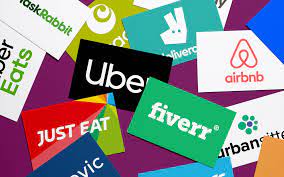
In a gig economy, large numbers of people work in part-time or temporary positions or as independent contractors. The result of a gig economy is cheaper, more efficient services, such as Uber or Airbnb, for those willing to use them. People who don’t use technological services such as the Internet may be left behind by the benefits of the gig economy. Cities tend to have the most highly developed services and are the most entrenched in the gig economy. A wide variety of positions fall into the category of a gig. The work can range from driving for Lyft or delivering food to writing code or freelance articles. Adjunct and part-time professors, for example, are contracted employees as opposed to tenure-track or tenured professors. Colleges and universities can cut costs and match professors to their academic needs by hiring more adjunct and part-time professors.
The Factors Behind a Gig Economy
America is well on its way to establishing a gig economy, and estimates show as much as a third of the working population is already in some gig capacity. Experts expect this working number to rise, as these types of positions facilitate independent contracting work, with many of them not requiring a freelancer to come into an office. Gig workers are much more likely to be part-time workers and to work from home. Employers also have a wider range of applicants to choose from because they don’t have to hire someone based on their proximity. Additionally, computers have developed to the point that they can either take the place of the jobs people previously had or allow people to work just as efficiently from home as they could in person.
Economic reasons also factor into the development of a gig economy. Employers who cannot afford to hire full-time employees to do all the work that needs to be done will often hire part-time or temporary employees to take care of busier times or specific projects. On the employee’s side of the equation, people often find they need to move or take multiple positions to afford the lifestyle they want. It’s also common to change careers many times throughout a lifetime, so the gig economy can be viewed as a reflection of this occurring on a large scale.
During the coronavirus pandemic of 2020, the gig economy has experienced significant increases as gig workers have delivered necessities to home-bound consumers, and those whose jobs have been eliminated have turned to part-time and contract work for income. Employers will need to plan for changes to the world of work, including the gig economy, when the pandemic has ended.
Criticisms of the Gig Economy
Despite its benefits, there are some downsides to the gig economy. While not all employers are inclined to hire contracted employees, the gig economy trend can make it harder for full-time employees to develop in their careers since temporary employees are often cheaper to hire and more flexible in their availability. Workers who prefer a traditional career path and the stability and security that come with it are being crowded out in some industries.
For some workers, the flexibility of working gigs can actually disrupt the work-life balance, sleep patterns, and activities of daily life. Flexibility in a gig economy often means that workers have to make themselves available any time gigs come up, regardless of their other needs, and must always be on the hunt for the next gig. Competition for gigs has increased during the pandemic, too. And unemployment insurance usually doesn’t cover gig workers who can’t find employment.
In effect, workers in a gig economy are more like entrepreneurs than traditional workers. While this may mean greater freedom of choice for the individual worker, it also means that the security of a steady job with regular pay, benefits—including a retirement account—and a daily routine that has characterized work for generations are rapidly becoming a thing of the past.
Lastly, because of the fluid nature of gig economy transactions and relationships, long-term relationships between workers, employers, clients, and vendors can erode. This can eliminate the benefits that flow from building long-term trust, customary practice, and familiarity with clients and employers. It could also discourage investment in relationship-specific assets that would otherwise be profitable to pursue since no party has an incentive to invest significantly in a relationship that only lasts until the next gig comes along.
Ways to Manage Stress
Stress is part of being human, and it can help motivate you to get things done. Even high stress from serious illness, job loss, a death in the family, or a painful life event can be a natural part of life. You may feel down or anxious, and that’s normal too for a while. Talk to your doctor if you feel down or anxious for more than several weeks or if it starts to interfere with your home or work life. Therapy, medication, and other stategies help. In the meantime, there are things you can learn to manage stress before it gets to be too much. Consider these suggestions:
Exercise
To start with, physical activity can help improve your sleep. And better sleep means better stress management. Doctors don’t yet know exactly why, but people who exercise more tend to get better deep “slow wave” sleep that helps renew the brain and body. Just take care not to exercise too close to bedtime, which disrupts sleep for some people. Exercise also seems to help mood. Part of the reason may be that it stimulates your body to release a number of hormones like endorphins and endocannabinoids that help block pain, improve sleep, and sedate you. Some of them (endocannabinoids) may be responsible for the euphoric feeling, or “runner’s high,” that some people report after long runs.
People who exercise also tend to feel less anxious and more positive about themselves. When your body feels good, your mind often follows. Get a dose of stress relief with these exercises:
Applications
E- EDUCATION: AN EDUCATIONAL REVOLUTION
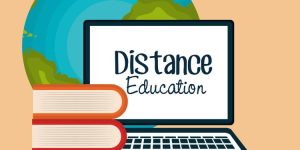
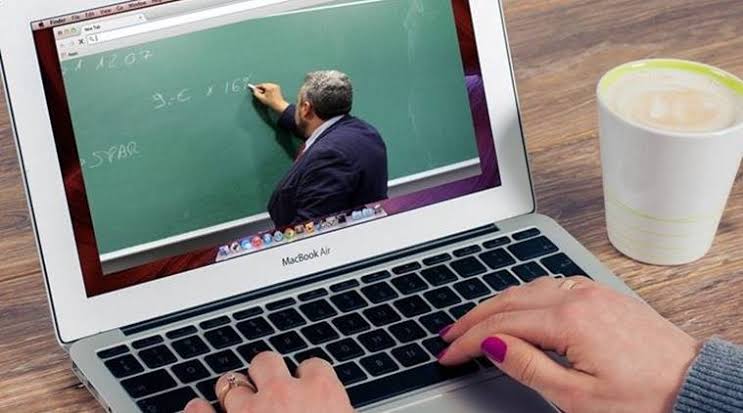
E–education or e–learning is the delivery of education or training by electronic teaching methods like computers or laptops etc. E- Education means Schools on Web and it consolidates virtual classrooms, laboratories and integrates it with your other enterprise applications. These now supplement the face – 2 – face class room and commonly known as Blended Learning. It is the learning experiences from the online information sources. This E-Learning approach helps the students know, makes them understand how to research more and the students can preserve their online resources posterity. It helps the teacher to provide better materials for the students by doing research on various topics and subjects. It normally works over the internet and provides numerous tools such as for assessment, communications, collaborations, uploading of content etc.
Schools On Web help in connecting people with each other and provides new ways of communications and collaborations with the help of all kinds of information’s being provided by it. The aim is – Learning without Limits- anytime, in any place, and at any pace. It provides a platform where students and parents are connected, administrators are empowered and teachers are inspired.
E- Learning
The technologies of web collaborations helps in real time access to subjects or instructors or topic matters directly from the PC of users. The key communication/ participation tools are: e mail, chat rooms, whiteboards, journals etc.

Some of the key benefits are:
- Enable the teaching od new or existing courses wuthin virtual classrooms
- Interactive sessions which can be recorded
- Effective evaluation of virtual classes
- Provide instant accesS
- Generate academic reports
- Enables to track the progress of individual learner
Experiential Learning
Experiential Learning stimulates experiments and boosts the dimensions of interest, involvement, imagination and interaction by virtual laboratories, scenario – based learning activities and tests of different concepts. All these can be incorporated into various teaching approaches as pre-labs, as alternatives to textbooks home work and individual or group activities.
Some of the key benefits are :
- Highly Interactive Platform
- Provide Learning by Doing
- Ensures and promotes high level of cognition and retention
- Safety and Security is ensured
- Simulates real-life environments
Management System
E-Learning helps in managing fee structure, fee submission, generation of time table and management, library management and other reports. Web based Institute Management software is designed which enables better interaction among students, teachers, parents and managing body. Thus, it helps in customization of the system for respective needs at a reasonable cost.
COVID 19 and E – Education

Countries are at different points in their COVID 19 infection rates and worldwide there are nearly 1.2 billion children in 186 countries who are getting affected by school closures due to the pandemic. With such sudden transition and shift away from the classroom many problems and issues have emerged across the globe. In such situations, online learning and e-learning approaches have emerged as solutions and in response to significant demand, many online learning platforms have also moved forward for offering free access to their educational services. With the help of e-learning and online teaching initiatives many issues which were being faced in the field of education have been sorted out but still there are still lots of problems which are associated with the availability of proper infrastructures etc. at each and every corner of the globe which can enable each and everyone to access the facilities of e-learning.
IS EDUCATION EASIER WITH DISTANCE LEARNING?
Life changes with the passage of time, as does the circumstance. And the perfect example to relate to this phrase is the situation in which we are living today. The ongoing pandemic scenario has altered conventional lifestyles while also bringing remote learning into the spotlight.
So, distance learning is a form of learning in which lectures are broadcast over the air or lessons are delivered through mail, with the learner not having to attend a school or institution. This learning method is not entirely unique to us, but due to the ongoing circumstances it has become a catchword and has lately swept the world by storm.
Traditional learning, in contrast to distant learning, needs several variables to support education for students, such as infrastructural setups and study materials which in turn elevates the cost level. however, everything has its pros and cons and I’m going to highlight the advantages and disadvantages of traditional learning and distance learning below in order to make a judgment upon the selected topic.
| TRADITIONAL LEARNING | DISTANCE LEARNING |
| ADVANTAGES | DISADVANTAGES |
| It is highly interactive and keeps the student motivated | Lack of individual attention and feedback |
| Access to libraries and research materials | Limited scope of practical learning |
| Lesser chances of distraction | Higher chances of distraction |
| Helps in maintaining interpersonal interactions | Don’t help in developing oral skills and social interactions |
| No technical difficulties | Technical difficulties |
| DISADVANTAGES | ADVANTAGES |
| Less affordable | It is much more affordable |
| Transportation is needed to attend lectures that will cost the learner money as well as time. | No commutation needed to attend classes which saves time and money |
| Access to gain multiple knowledge is challenging | Easier access to knowledge |
| Cannot work while learning | Can work while learning |
| Does not ensure flexibility with time | Ensures flexibility with time |
| Geographical boundary is a barrier to gain knowledge | No location restriction to earn knowledge |
After comparing the benefits and drawbacks of online learning and traditional learning it can be said that online learning has certain drawbacks, but as we can see in this information age, we don’t have any other option than to obtain knowledge through online platforms; it may evolve to be user-friendly and become an integral part of human life, just like traditional education. Because in today’s educational system, distance learning is becoming more and more accepted, and the online programs are becoming diversified. With the ongoing technical advances distance learning disadvantages will soon be no longer drawbacks. For example- In today’s world, everyone is getting their education through e-learning, which is a type of distance learning that makes studying more engaging and convenient. It also allows the student to progress at their own speed because e-learning materials may be accessed at any time. When we look at the statistics of e learning, we can see that it is becoming a trend lately in learning and development since it saves time, money, and effort in building up educational institutions and training programs, as well as in delivering content to learners. So therefore, it can be said that distance learning which includes e learning can become the future of education globally and education becomes easier with distance learning.
Impact of E-Learning on Students
COVID-19 has challenged the physical health as well as the mental health of people. The children and the elderly are the ones most affected. The pandemic has brought a lot of changes in the lives of almost every individual. From working on your desk to working from the comfort of your, everything has flipped. Everybody’s life has been impacted by the sudden arrival of the pandemic. Working from home, which was initially feeling comfortable has now become bored and irritating. Even the students have lost interest in their online classes.
Earlier children had the access to playgrounds to play with their friends, which has now been limited to the boundaries of their homes because of the coronavirus, due to which the screen time of children has increased. Playing outdoors kept them physically fit and mentally healthy.
The children are becoming irritated and moody being inside their home for such a long time. To keep up their mood, the children have to resort to mobiles and laptops; to play games, watch videos and shows. This has increased their screen time, which has further led to other issues.
Constantly using gadgets and glaring on the screen affects eyesight. Which can lead to blurry vision, and in severe cases can even lead to partial or complete blindness. The screen radiates blue light, which also hampers sleep.
Schools, universities, and colleges are places where the students not just study, but also interact with their peers and dwell together. They don’t just grow here intellectually but also culturally and morally through various activities taking place; contributing to their holistic development.
Be it, school-going children or college students, all have to be on their phones and laptops for their online classes because of the inability to resume on-campus learning due to COVID-19. Initially, online classes seemed interesting as it was a change in the conventional education process. But lately, students have become bored and have lost interest in their studies, as it has become a monotony now.
Students’ sleep cycle has been impacted a lot. The overuse of phones has impacted their quality of sleep and resulted in either too little sleep or too much sleep. The students from the underprivileged areas are unable to attend their classes properly due to bad network quality. This is stressing them out and taking a great toll on their mental health.
Students are overly stressed about whether they would be able to graduate on time or not as many institutions postponed their exams. This is a concern for the timely completion of their degrees, which decides their further step; be it getting into a university for their higher studies or getting into a job.
Stress and anxiety have become a problem in students, which is a reason for their distraction and reduced concentration level. Online classes are also causing social isolation, which is also triggering stress in the students. Lack of communication is causing them distress. Procrastination has become another issue among the students, which is resulting in lower grades.
The students are facing various issues. However, the educator’s and parent’s support can lower the negative impact due to the pandemic through proper communication and guidance.
ABUSING A TEACHER WAS NEVER COOL

Covid-19 struck us without a warning and left all educational institutions scrambling to respond to its urgencies. It has also created a need to creatively deal with such unforeseen and once-in-a-century catastrophic events that are being called the ‘new normal’.
Educational institutions deserve appreciation for a quick response to the lockdown restrictions amid the pandemic. Their readiness has resulted in a wave of online classes for learners of every level, ranging from course subjects, co-curricular areas such as fine and performing arts to mental wellness and physical fitness.
Bullying by students, argumentative parents who often peep into classes, and distracted children — these are just some of the challenges teachers face during online classes.
While teachers in private schools primarily complain about online bullying by students during video calls, their government counterparts claim the biggest challenge is reaching students who belong to the economically weaker section.
Students are bored in their homes which often results in them doing mischievous activities for entertainment. They share links of online classes that are sent to them by their teachers. They also tend to create Zoom IDs in random, unidentifiable names and troll teachers. Some switch off their camera and call teachers by their names from these IDs, some use them to send memes to teachers.
Teachers also claim that student’s relatives use the link to log into the class and “see what the teacher looks like, what she teaches and how she speaks”.
As per foreign media reports, Singapore banned some video conferencing applications used for teaching after hackers posted obscene images during classes.
Students who bully teachers, relate it with being cool and laugh it out, in the process what they don’t realize is how much embarrassment the teacher must have felt.
However, with no clue yet on when institutes can reopen, teachers say they are trying their best to get past the hurdles which often means just ignoring undisciplined behavior.
E-learning during Lockdown
The Corona pandemic has made a global impact in the past weeks and continues to hit most of the sectors, with education being one of the most affected ones. Students across the world are losing valuable time in their education during the imposed lockdown amidst fears of pandemic. The situation has forced the schools to shutdown and students to stay at home.A major factor that frames student life is a set routine comprising school, homework, coaching or tuition classes, co-curricular activities, and more studies with a dash of entertainment thrown in. But this routine has completely been disrupted – the boundaries between study time, play time and me-time having merged these days, owing to the governmental regulations.Nearly 600 faculty members from national, international colleges and universities joined the webinar virtually. The webinar is being organised at a time when all educational institutions are taking the e-learning route to complete the syllabus due to coronavirus lockdown. The COVID-19 has resulted in schools shut all across the world. Globally, over 1.2 billion children are out of the classroom.As a result, education has changed dramatically, with the distinctive rise of e-learning, whereby teaching is undertaken remotely and on digital platforms.Research suggests that online learning has been shown to increase retention of information, and take less time, meaning the changes coronavirus have caused might be here to stay.Students will get more motivated and engaged when you give them a sense of control and ownership. So, give them the choice to choose topics, units, and assignments. This will help them to select relevant content quickly, learn about specific topics, or pick the delivery method that they prefer. Let them select the order in which they want to learn some topics. This will empower and engage your learners.
E-learning – Pros & Challenges
The global COVID-19 pandemic has triggered new ways of conducting the teaching-learning process online. For some this has been a small move but for others, this is a completely new way of education. Most nations have already initiated e-learning in their schools. Many schools in India have also adapted to the new normal of e-learning with varying degrees of success. Many progressive schools had already done a lot for the adoption of technology in their schools, which helped in quickly transitioning to a completely online delivery of teaching during the current crisis and with significant success. A recent survey conducted by us showed that more than 92% of students and parents were happy with the online delivery of lessons.
With the advent of Covid19, e-learning seems to be one of the safest and easiest ways to impart education for acquiring new skills, explore new career options, or for that matter new hobby development. E-learning is now applicable not only to learn academics but also to conduct extra-curricular activities for students, informative online sessions, online conferences, and webinars. The demand for e-learning has risen significantly and will continue doing so as society starts adapting to ‘social distancing’ post this pandemic.
Information and communication tools (ICT), Web2.0 applications, and the impact these resources are having on education are rapidly creating new challenges for instructor and learners faced with learning online. Teaching and learning in an e-learning environment happens differently than in the traditional classroom and can present new challenges to instructors and learners participating in this online learning environment. There is a need in e-learning to identify the challenges and consider best practice solutions to ensure instructor and learner success in this new learning environment.
As with most teaching methods, e-learning also has its positives and negatives. Understanding these will help in creating strategies for more efficient delivery of the lessons and measuring its effectiveness.
Here are some, and in no way exhaustive, key pros and cons –
Advantages:
- Efficiency – E-learning offers a very efficient way to deliver lessons. Use of videos, sharing of resource links, serving assessment tests can all be done at the click of a button. Additionally, the lectures can be recorded and shared for reference with a wide range of audiences. It also allows for a much larger set of children to be taught.
- Affordability – E-learning is far more affordable as compared to physical learning. E-learning primarily eliminates 2 major cost points – real estate and transportation. The course or study material is all available online and you can access it as many times as you want.
- Less absenteeism – There are fewer chances of students missing out on classes, as they can access easily anytime from the comfort of their home.
- Increased Access & Reach – E-learning can happen in any place, as long as there is a device and connectivity. A physical class requires the student to come to school but in this mode, the student can access lessons sitting anywhere in the world.
- Encourages shy kids – We have seen that many children who are usually withdrawn in a class environment, open up in the online classes. They are far more forthcoming with their questions and participation. This could be because of a comfortable home environment.
Challenges:
- Not appropriate for all – It is a well-known fact that students have a dominant learning style. Some a visual, some auditory, some kinesthetic, etc. E-learning which requires a child to sit in front of a device and understand the lesson, may not be suited to all learning styles.
- Focus Deficit – Some students tend to lose focus for a longer period during virtual lectures. Boredom occurs easily as there is a lack of face to face interaction. It becomes imperative for the teachers to keep their online sessions crisp and interactive enough to help students grasp everything.
- Technology issues – While internet penetration has grown over the past 12 months in India, the current infrastructure, especially in smaller towns, can pose a problem. Any break in the data connectivity can cause a lack of continuity in the learning for the child, which can be detrimental. Additionally, if a child is technophobic, he may face difficulties in learning.
- Lack of social interaction – Human beings learn a lot by simply being around other human beings. Unfortunately, e-learning takes away all physical interactions that students and teachers might have on the school premises. It’s always better for students to be around other students to talk or discuss ideas, which is an essential part of learning. Peer learning certainly takes a hit.
- Teacher training – E-learning demands the teachers to be technology-friendly, which, unfortunately, is not the case always. Teachers need to invest more time in aligning themselves with the latest technology updates to ensure they can conduct their online classes seamlessly.
- Manage Screen time – health hazards of staring at a screen continuously for hours
While all modes of learning have their benefits and drawbacks, after the current crisis, it is clear that some form of blended learning will evolve with e-learning forming a crucial part of the overall teaching-learning process.
e-Learning : Solutions
In order to understand the challenges associated with an e-learning environment it is important to define what the term e-learning means. Clark and Mayer help define e-learning as instruction delivered by any technological mode intended to promote learning (2011). Teaching and learning in an e-learning environment happens differently than in the traditional classroom and can present new challenges to instructors and learners participating in this online learning environment. Technology-assisted learning tools is quickly changing the face of education, transitioning the classroom only learning environment to an online only or blended online learning experience.
The possible challenges instructors and learners face in an e-learning environment must be considered in order to ensure learner success. Therefore, there are two roles in e-learning that must be considered when discussing ways to improve these challenges. The first is the instructor’s role and the second, the student’s role. Both roles include a transition away from traditional teacher-student relationships, roles, and responsibilities, to virtual space roles. However, it is the instructor’s primary roles within the learning environment, which will help overcome challenges, support, and sustain student success.
The New Digital Divide
In education, the digital divide is most commonly defined as the gap between those students who have, do not have, and know how to use the internet and the information technologies that are currently transforming education (Bernard, 2011; Hall, 2013). According to Warschauer (2003), the “digital divide is marked not only by physical access to computers and connectivity but also by access to the additional resources that allow people to use technology well” (p. 6). Due to the affordability of many information technologies today the current meaning of digital divide is changing from having access, to knowing how to use the technologies (Bernard, 2011). In this way the digital divide still acts as a challenge for education and more specifically e-learning environments. In education the digital divide has, most recently, become more about closing the gap between using the resources appropriately to obtain quality educational outcomes than not having access to the technology (Warschauer, 2003; Bernard, 2011). The quality of learning outcomes, and more importantly the successful use of the expected technology resources, all hinge on the amount of experience and comfort level each learner has with these specific resource technologies (Warschauer, 2003).
One solution to this challenge is for the instructor to implement a learning environment that encourages collaboration. Providing learners with the opportunity to collaborate, share, and create will increase the learner’s use of various technologies, enhance their e-learning experience, and support self-directed and ongoing learning (Clark & Mayer, 2011; Li & Irby, 2008). During this time the instructor must consider the learner’s technological incompetence’s and accept various ability levels; willing to allow learners choice with the expected performance objectives given it results in the appropriate learning outcomes (Bernard, 2011). The learner should ask questions, seek additional information from credible sources, reflect often, and interact with other learners in academic discourse related to the online learning objectives. Having an online community where learners can collaborate in a safe and respected learning environment will help close the gap of the new digital divide, and in doing so helps to create a culture of digital natives conducive to effective e-learning (Warschauer, 2003; Li & Irby, 2008; Clark & Mayer, 2011).
Student Motivation
Although student motivation can only truly happen intrinsically, creating the right online environment where students want to learn and feel successful is the primary the responsibility of the instructor or course designer. According to Martin, in today’s online environments there is a lack of teacher presence, face-to-face (f2f) interaction, and tech support (2009). The most well planned and explicitly laid out online instructional environment is not enough to sustain learner interest or support intrinsic motivation. On the other hand learners new to an online learning environment typically lack the level of metacognition awareness, time management skills, and self-directed learning needed to be successful (Martin, 2009).
To promote student motivation the primary role falls to the teacher to anticipate and prevent motivational challenges unique to e-learning. One way this can be done is by increasing f2f interactions through a variety of technological modes (Martin, 2009). Online learning does not have to be isolated to merely email communication and web based only classroom interactions. Learners often have anxiety about learning online and need to feel connected, reassured, and safe to contribute in their new learning environments (Terry & Leppa, 2009; Hastie, Hung, Chen, & Kinshuk (2010). E-learning environments often lack a variety of communication options creating an unwelcoming online learning atmosphere (Terry & Leppa, 2009; Martin, 2009; Hastie et al., 2010), which only the instructor can control. To help alleviate student anxiety e-mentors should provide various and alternative ways of interacting and communicate through the use of such applications like Skype, chat forums, or discussion boards.
Course Design
Insufficient time spent on course development and design can be a huge contributing factor to poorly developed online learning experiences and a major challenge for e-learning instructors. According to Leanna Archambault (2010), the amount of time needed to design and implement a well design lesson, online, is an important consideration. Archambault indicated that instructors reported an increase in the amount of time they spent creating e-learning courses because of new content, new technologies, and new ways of engaging online learners.
One way to overcome the challenge of time developing an online course is for instructors to collaborate often within their e-learning professional communities. Collaborating with other instructors should be spent sharing, developing, and creating (Terry & Leppa, 2009; Hastie et al., 2010). This collaboration and discourse helps minimize the time spent planning and designing. A way to overcome the challenge of a well-developed overall course design should be addressed with the learner in mind and should include these overall course characteristics: (a) opportunities for learners to collaborate, (b) a well-established protocol for communicating, (c) clear performance expectations, and (d) opportunities for learners to chose the mode in which assignments are created and presented (Hastie et al., 2010). In order for instructors and learners to be successful these characteristics are essential to the overall course design and e-learning environment.
Conclusion
With so many different ways to define e-learning and the educational approaches that can be taken in these learning environments, it is the conclusion of this author that e-learning is an innovative approach to learning. It is a holistic way of teaching and learning that meets the needs of today’s digital natives. It is an environment made up of collaboration, choice, and an array of technological resources that supports a successful online learning experience. However, in order for learners to be successful in this learning environment the challenges to e-learning must be overcome with support and a best practice solutions. Instructors and learners must embrace the shift away from traditional classroom practices to an e-learning approach to education. Despite the fact that today’s learners are digital natives, the use of technology for e-learning can be overwhelming and provide student motivation challenges however, with the proper supports from instructors, learners can be successful within these e-learning environments. Finally, and probably the most important challenge for the instructor is to focus on the overall elements of a well-developed course. Developing a purposeful and well-defined online course, which supports the instructor and learner, means devoting the appropriate time and embedding the applicable course elements into the e-learning environment.
“Stop Worrying and Start Living” – Dale Carnegie – Book review
Dale Carnegie’s how to stop worrying and start living so the first big idea is ask yourself what’s the worst thing that can happen I remember the first year in college constantly worrying about my grades what was I getting to do if I got a B+ rather than an a well surely my life would be over and that i would never amount to anything in life like that was seriously the thought process browsing my 17 year old head now fast-forward five years.

Carnegie tells a story of this guy in World War 2 who’s stuck in a submarine and basically knows that he’ll be dying in the next few hours and he sits there thinking about all the stuff he used to worry about at home and how absurd it was and makes a promise to never waste his life again like that if he survives now that might be hard to resonate with so let me give you a more contemporary example people are having their heads chopped off every single day every single day the only reason it’s not you is because you are born in a certain place. They weren’t that’s it now going back to my friend I told him look here’s what I want you to do every day you will start your morning by watching somebody’s head being chopped off and then you’ll go about the rest of the day.
He started freaking out about how he can’t do that and how he doesn’t like blood and whatever now here’s the thing. I know that’s really crass and morbid but I don’t care if you don’t worry about stuff great you don’t have to watch anything but if you’re worried about stupid all the time you have a disease so you either treat yourself or you never ask about how you can stop worrying again ever. Here’s what I will guarantee you if you start your day by watching someone else have their head chopped off nothing and I mean absolutely nothing could possibly happen to you for the rest of the day that you could get pissed off about and not feel like a complete retard yes when you’ve seen someone’s head chopped off you will have a weird feeling inside you as soon as you start to complain about how you deserve to be paid more at your job or what you’re going to do now since you bought a B+ rather than an A or how your washer is broken you’ll realize that.

If the guy had been given the chance to live and wear that same dirty shirt for the rest of his life without ever being able to wash it he would have been the happiest man alive realize the absurdity of it all the third big idea staying busy now I don’t mean the average busy person actually those are the people that worry the foremost the guy who works 12-hour days then comes home and watches Fox all night worrying about whether some guy can marry another guy or about all the foreigners who will come and take his job you know because he’s the only one entitled to that job I’m not talking about that kind of busy here’s how I like to stay busy read a book that I like go to the gym with my girlfriend play around on the piano and compose cook amazing food work on a project. I’m passionate about now here’s what happens when you do that your brain can’t think of two things at one time it just doesn’t have that capability you can try right now if you want you can’t think of your broken washing machine and at the same time think of how much you love playing soccer it’s not how your brain works so the best way to get rid of the negative thoughts in your head is to actually start putting positive thoughts in there get busy with what you love and your brain simply won’t even have the power to stress . Finally, a question that really resonated with me here’s what you’re going to do in your life you’re going to work and worry your entire life so you can gather a bunch of stuff like your house and all the stupid.

If you’re lucky after 50 years of all that worry and stress all of your stuff could be worth 1,000,000 dollars here’s the question would you sell your legs for a million dollars let me ask you this would you sell your legs for a billion dollars I wouldn’t and you probably wouldn’t either would you sell your arms for another billion dollars no there you go you have already got something that you simply value at two billion dollars actually hopefully more but you do not need to be all Zen you could be a greedy capitalist like me and understand this now here’s what you’re going to do you’re going to ignore and not utilize something worth two billion dollars because you’re too busy worrying and stressing about the things that might amount to 1 million dollars at the end of your life oh and you’ll be considered really lucky if that happens by the way all right.

So, I don’t know if you’re seeing how crazy that is but that’s kind of like having a huge mansion a personal jet every single car you ever wished for and not using and enjoying those things because you’re too worried about at some point having the ability to shop for a Corolla that’s crazy and sad you have already got everything that you value at billions and billions of dollars so stop ignoring wasting and treating it like for hours and days so you can worry and bitch about how your phone bill went up from a hundred dollars to a hundred and twenty.
You can buy this amazing book from here ( click here )
Role of Technology in Lesson Planning…
We live in a highly advanced digital world. Technology is an essential part of all different fields of life and same goes for the education sector. It has been almost 20 years since the first computers arrived in the country’s classrooms. Schools across the nation have spent zillions of dollars on introducing technology to the schools since then. Integrating technology into Education sector and lesson planning has facilitated us thoroughly. The perspectives on how technology can be utilized in the Education sector are many. We believe that technology has become a vital part of our education system. Today, we witness that students have access to systems, gadgets, and internet on schools and campuses.
Technology can help teachers create lessons that will allow the quickly moving students to delve deeper into the subject or explore related topics while allowing the slower students more time to understand the material.Technology has revolutionized the way humans interact and connect with each other, and modern classrooms, homes, and offices are drastically different from how they were just 20 or 30 years ago. Students today need to prepare for a workplace more exposed than ever to social media, television, video games, and other technological advancements. By bringing technology into the classroom, teachers help prepare students to handle the professional world of the future.
Seven ways in which teachers can leverage Internet to enhance classroom learning:-
- The amount of information available. With the use of Internet there would be limitless opportunities.
- The modern languages opportunities. These are extremely valuable in professional world.
- Access to new norms of education.
- Individualised lessons.
- Adding new meaning to student’s projects.
- The chance to learn and explore many different cultures of the world.
- Student collaboration opportunities.
The penetration of digital education into the hinterland / rural market is evolving fast. Affordable high-speed internet and direct to device technologies are empowering rural students to study courses online and improve their skills and knowledge. Digital learning is at least as effective as classroom courses. The motivation and expectations of the learner are critical to retention and successful completion of a digital course.
Impact:-
Technology can be used to organize, demonstrate, acquire, and communicate information. Technology integration makes the lesson planning process something similar to curriculum planning. The main difference comes as to how the students essentially acquire skills and knowledge. Technology also makes a difference in how they apply and demonstrate their acquired skills and knowledge. It also helps in assessing and evaluating their learning. Incorporating the use of computer influences the basic structure of a lesson plan.
Making best use of technology:-
Planning ahead is always a good practice. It helps you figure out and brainstorm effective methods of teaching and introducing technology in creative ways. In addition to this, many technology utilities essentially facilitate the teachers, other than assignments and evaluation. Teachers can save their time and energy and can use them in other creative activities in the classroom. They can use technology in creating attendance spreadsheets instead of using the long, conventional ways of keeping attendance tracking. Having easy-to-access and well-organized folders containing student information, contact information, grades, and assignments also helps teachers in storing class-related information digitally. This essentially reduces the clutter on their desks and improves their focus.
Age and maturity are likely to be significant factors in successful completion of a digital course. The proliferation of digital technologies is bringing radical changes in the way education is being delivered and received. The outreach of educational programs is improving day by day with the digitalization of education. Digital education is providing both teachers and students new opportunities to teach and learn thereby ensuring greater participation in the overall learning process.
Technology can be utilized to improve teaching and learning and help our students be successful. Through the use of learning management systems students can access online resources to get assistance on demand beyond the physical reach of their teacher. Technology can also extend education in another way.
Refrences:-
resilienteducator.com

MECHANICS FOR JEE
1. KinematicsBe clear with Vectors and Basic Math, and you are done. Practice tons at this stage because you’d have an early practice of solving equations fast.
2. Newton’s Laws of MotionIt might be seeming very tough to you, but don’t worry, by the end of your course you would be really comfortable with it. Practice a lot of questions. I can’t emphasize it more. Be thorough with concepts like friction, strings, and pulleys, Normal force, Circular Motion, etc. Practice till you are perfect.
3. Work Power Energy and GravitationPractice conservation of Energy a lot. It is very important in Physics. Gravitation is linked to this. Again, look out for Energy conservation and Kepler’s law when solving Gravitation questions. Work-Energy Theorem is another important concept. Make yourself comfortable with the topic.
4. Centre of Mass and MomentumOne of the toughest chapters after Rotation. Tough nut to crack. Step one could be trying to remember all concepts and equations. It helps a lot. Be thorough with vectors. Momentum conservation relies a lot on it. Collisions has some interesting problems. Be thorough with the main formulae. Conservation of Momentum and Energy are central here. Remember positions of COM of various objects. It will be very helpful in future. Remember some basic cases in collisions(small object, heavy object, same masses, etc.) Spring questions are common. Be aware of springs in parallel/series, and basic equations.
5. RotationRotation may be a real tough nut, and JEE asks some really awesome questions from this section. This is tough and has got a good weightage. You must give a good amount of time to it. It begins with Moment of Inertia. Learn the MI of varied standards objects, and be thorough with the derivations. It will assist you just in case some questions supported calculating MI comes in JEE. Then there is a discussion of angular velocity, rotational Kinematics, etc. Pretty easy if thorough with basic trigonometry and Kinematics. Then comes torque, angular momentum, etc. This seems tough, but it will come naturally to you with time if you are clear with NLM. Remember there are only few equation, T=I(alpha), and L=Iw. Try to remember these employing a correlation with NLM. Conservation of Angular momentum is very important. Lots of questions are asked from this topic. Be clear with the axis of rotation and the point about which you are trying to conserve it. Massive problem solving will help.
6. Simple Harmonic MotionAnother basic and important topic. Remember the derivation and equations of SHM. Remember the Time Period formulae. It will save a lot of time on the final day. Questions involving finding the period of time of any system are common. Be thorough with them.
7. Fluid Dynamics and ElasticityNot vital but few easy questions come needless to say . You don’t want to miss them. Continuity equation, variation of pressure with depth, and Bernoulli equation are important. Try to do some questions of Surface Tension too(JEE has asked some really tough questions from this topics). Elasticity has a graph of Stress vs Strain. Remember it well. These chapters have a bunch of long equations. Try to remember them. There might be a few questions at least in JEE(Main) where you would need to evaluate the expression.
So, this was it. Coming to the preparation strategy, first of all hear your coaching lecture/online lecture and do homework, and discuss in school if you’re during a coaching. This will help you clear Mechanics.
Coming to books(and hence the self-study guys too) HCV is that the god-book for Mechanics. Read every line(irrespective of whether you’re during a coaching or not), understand everything and solve each question. Solutions are available somewhere on the Internet I guess(don’t know if they are copyrighted or something, so beware). Discuss with teachers. If you sincerely solve all questions of Mechanics then nobody can stop you from being a Master of Mechanics. I also recommend reading NCERT. It gives a wonderful insight into the subject and will prepare you for JEE(Main) and Boards too. If you would like more objective practice, choose DC Pandey Problems book. Deb Mukherjee’s book is really good for conceptual questions. And then comes the GOD- I.E. Irodov. This will prepare you for Olympiads, and for facing any question in JEE(Advanced). Solve this only if you have time and are done with the above stuff. Better do it during Holidays. But trust me, Irodov will offer you an upper edge if you’re aiming for a top 100 rank approximately .
DATA SCIENCE BASICS
In this post, we’ll be discussing about two fundamental questions which can assist you in shaping your career in data science.
1 . What is data science and what are its components?
2. What are the prerequisite skills needed to get a job in data science?
1 . Data science is actually the techniques which are used for extracting meaningful insights from a huge dataset. With the presence of many people on the web , companies like Facebook, Instagram, Google collected plenty of knowledge about its users. This led to Big Data. It comprises of unstructured datasets. Hence, several methods were developed to work on this data and are available up with wide scale applications. An example is that Netflix collects data from its users to return with the choices like where to put subtitles, the way to place the top credits and the way to make transition between episodes of an internet series.
So the first step is to collect data and store it. It involves collecting differing types of knowledge like user generated data, external data and storing them.
To ensure the reliable flow of knowledge , data pipelines are built on the idea of a standard structure, ETL which is Extract, Transform and cargo . Through this, the transformation of raw data is done so that it can be suitably analysed. This task is handled by data engineers.
Only after this, the “analysis” on data can be performed. Often this is often the sole part which is concentrated ignoring the essential foundations, hence people have the misunderstanding that only data analytics comprise data science.
On top of this, metrics are built on which data is tracked, categorisation of users is completed and data also can be trained with the assistance of labels. Before deploying ML models, an experimentation framework is put for getting an estimate of the changes before it’s implemented on the whole dataset.
2. Now to be able to implement it, you need the following skills for getting started in the domain of data science.
Programming LanguageIrrespective of the role, you would like to understand a programing language suitable for manipulating statistical data like Python or R. Besides this, you furthermore may got to know a database command language like SQL. With the help of Python libraries, the application of machine learning models get simpler hence it is not required to know how exactly the algorithms work initially.
Applied Mathematics You should have a solid understanding of statistics, as it will be needed for making decisions for evaluation of experiments. Knowledge of calculus and linear algebra helps in using the results of a machine learning or statistical implementation in a different case independently.
Data cleaning and visualisationDo not think that data will be readily available to you for processing. Often an excellent deal of your time is spent in cleaning the info , adjusting missed values, correcting formatting. Without this, data can’t be processed to further stages.
You should skills to use visualisation techniques to draw meaningful insights from the info . Matplotlib, ggplot can help in visualisation. Tableau has also been a well-liked tool for rendering data visually.
Software engineeringA strong software engineering background is that the most essential requirement. You should have a clear understanding of algorithms, data structures, memory management which will be always tested in the first rounds for the data science roles.
E-LEARNING-CHANGING THE WAY OF EDUCATION.
ABOUT
In this era of Technological boom, e-learning has placed knowledge right at our finger tips, no matter where we are and at what time of the day we wish to study. Literature, Science, Math, Geography, History – you name it; we have it on the display screen of our tablets or phones at the swipe of our fingers.

Just one smart device and some nominal charge for internet connection would take us from the primary level of learning to even college education!e-learning doesn’t In this era of Technological boom, e-learning has placed knowledge right at our finger tips, no matter where we are and at what time of the day we wish to study.
E-learning doesn’t differentiate between a slow learner or a studious one because it helps set up an individualized pattern according to the pace of every student. It doesn’t even matter what our life situation is or how old we are, and is an affordable option for people who can’t meet expenses to purchase lots of books or enroll for tuition or coaching classes website.
WHAT E-LEARNING PROVIDES?
Online learning provides us with an audio-visual treat and 3-dimensional perception that help us comprehend concepts in a much better way. We are open to taking tutorials not only from Indian teachers, but also from people belonging to different parts of the world.
We also get to divide study timings as per our convenience. Literally, no more carrying around books and bags – just sit, stand and walk while learning!
Yet, online learning tempts one to browse through various subjects on a superficial level, rather than going into deep study. This practice, in turn, leads to insufficient understanding of certain basic concepts which might affect our advanced learning.
This is because most online courses do not follow a structured pattern or work assessment. So some students might fail to meet the expected standard of education.
Also, using technology has its own issues like slow internet connection, power shortage crises and cyber security concerns.
If learners use e-learning software, they require devices that are only compatible with that software which is quite a costly investment, at least initially.
One ought to admit though , communication via human connections is a different pleasure altogether, that cannot be substituted by electronic devices in which computer proficiency is essential.
E-LEARNING OVER CLASSROOM LEARNING :
In traditional classroom settings, getting to share ideas with friends, playing with them during break-time, spending some time with nature and listening to encouraging talks from elderly teachers do develop kids’ social skills and empathetic approach.
We cultivate mutual respect and take responsibility for our actions and become better individuals through human connections.
Speaking of health issues, prolonged screen time and sedentary habits eventually lead to dry eyes and obesity. Unhealthy sitting postures cause backache and stiff neck too.
When bored with studies, students play online games and watch inappropriate stuff that could lead them to bad ways or unhealthy lifestyle. Online addiction has been lately categorized as a mental disorder.
In short, e-learning can either shape us into brilliant personalities or can degrade us to lazy and indifferent individuals, depending on our responsible usage & proper supervision of students by adults
between a slow learner or a studious one because it helps set up an individualized pattern according to the pace of every student.
It doesn’t even matter what our life situation is or how old we are, and is an affordable option for people who can’t meet expenses to purchase lots of books or enroll for tuition or coaching classes.
Online learning provides us with an audio-visual treat and 3-dimensional perception that help us comprehend concepts in a much better way. We are open to taking tutorials not only from Indian teachers, but also from people belonging to different parts of the world.
We also get to divide study timings as per our convenience. Literally, no more carrying around books and bags – just sit, stand and walk while learning!
Yet, online learning tempts one to browse through various subjects on a superficial level, rather than going into deep study. This practice, in turn, leads to insufficient understanding of certain basic concepts which might affect our advanced learning.
This is because most online courses do not follow a structured pattern or work assessment. So some students might fail to meet the expected standard of education.
Also, using technology has its own issues like slow internet connection, power shortage crises and cyber security concerns.
If learners use e-learning software, they require devices that are only compatible with that software which is quite a costly investment, at least initially.
One ought to admit though , communication via human connections is a different pleasure altogether, that cannot be substituted by electronic devices in which computer proficiency is essential.
In traditional classroom settings, getting to share ideas with friends, playing with them during break-time, spending some time with nature and listening to encouraging talks from elderly teachers do develop kids social skills and empathetic approach.
We cultivate mutual respect and take responsibility for our actions and become better individuals through human connections.
Speaking of health issues, prolonged screen time and sedentary habits eventually lead to dry eyes and obesity. Unhealthy sitting postures cause backache and stiff neck too.
When bored with studies, students play online games and watch inappropriate stuff that could lead them to bad ways or unhealthy lifestyle. Online addiction has been lately categorized as a mental disorder. In short, e-learning can either shape us into brilliant personalities or can degrade us to lazy and indifferent individuals, depending on our responsible usage & proper supervision of students by adults.


You must be logged in to post a comment.