Medical education affordable and accessible

 Union Minister of State (Independent Charge) Science & Technology; MoS PMO, Personnel, Public Grievances, Pensions, Atomic Energy and Space, Dr Jitendra Singh, who is also a known Diabetologist and Professor of Medicine, today said that the Government headed by Prime Minister Shri Narendra Modi aims at making  Medical Education affordable and accessible, so that no deserving candidate should face disadvantage because of socio- economic status. 

Addressing an Academic Meet, as chief guest, at one of India’s most prestigious institutions, Stanley Medical College in Chennai, Dr. Jitendra Singh said, medical education has been one of the top priorities of this government, which can be judged from  the statistics that from mere 145 government medical colleges, the number has increased to 260. Under the Central Sector Scheme for setting up of new AIIMS, 22 AIIMS have been approved, while Undergraduate courses have started in 19 AIIMS, he added.

The Minister said, the number of MBBS UG seats have increased from 51,348 in 2014 to 91,927 seats which is an increase of 79%. The number of PG seats have increased by 93% from 31,185 seats in 2014 to 60,202 seats, he said. 

Dr Jitendra Singh said, the National Medical Commission has sought to revise the criterion for NEET UG, aiming to bring transparency into the medical admission process and stop backdoor admissions in colleges against the NRI quota. 

Dr Jitendra Singh recalled that PM Modi has given a call to provide Medical and Engineering education in regional Indian languages such as Hindi, Tamil, Telugu, Malayalam, Gujarati & Bengali. 

“Medical education has commenced in Hindi and soon Engineering studies will also begin in Hindi and translation of Engineering books has commenced in eight languages across the country, and in times to come, students across the nation will be able to pursue Technical and Medical education in their mother tongue,” he said.

Dr Jitendra Singh said that India is being looked up to by the rest of the world in the field of healthcare after the successful handling of the pandemic. Technologically and in human resources, we are much ahead of most other countries, he said.

Thanking PM Modi for bringing ‘Preventive Health Care’ into focus in the country for the first time, Dr Jitendra Singh said, under the leadership of PM Modi, in just a span of two years, India could produce two DNA vaccines and one nasal vaccine.

“The whole world recognised India’s leadership role during COVID-19, as it achieved the rare feat of delivering over 220 crore vaccinations through a fully digital platform – COWIN and the process continues,” he said, adding, “India, with 130 crore people, showed the way to the world in its fight against COVID-19 and also helped many countries particularly the neighbours with vaccines.”

The S&T Minister said, during the COVID even the West started looking up to India in search of immunity building techniques drawn from Ayurveda, Homoeopathy, Unani, Yoga, Naturopathy etc.

“Healthcare sector in India is expected to grow to reach a size of $50 billion by 2025, while the global medical tourism market is estimated to be worth about $72 billion. India’s share in medical tourism is expected to be around 10 billion dollars by this year-end. Moreover, the country is the world’s largest supplier of generic drugs,” he said.
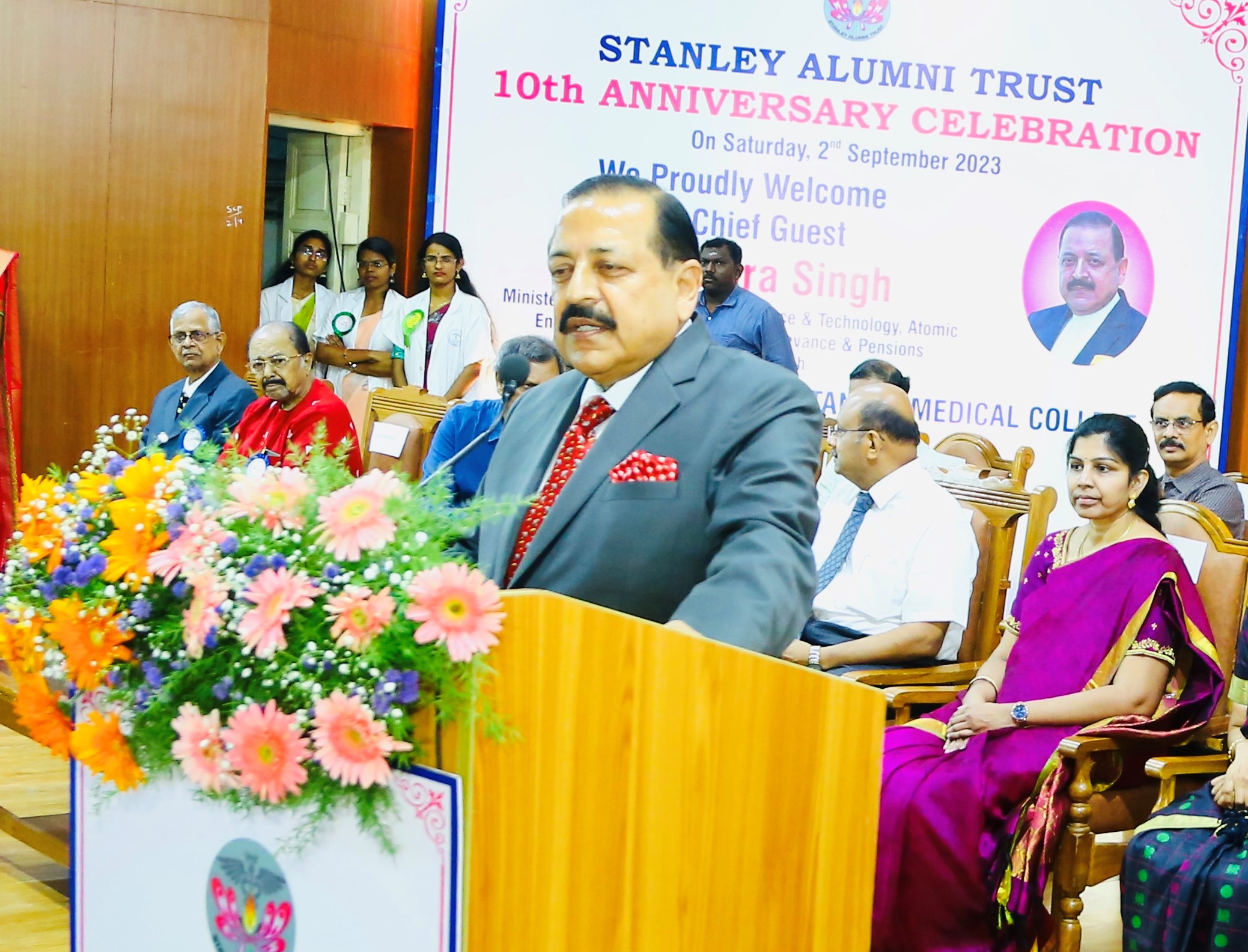
Dr Jitendra Singh said, it was the farsightedness of PM Modi that soon after coming to power in 2014, he shared the powerful vision of ‘Digital India’ much before COVID-19 hit the world.

Dr Jitendra Singh asserted that Ayushman Bharat is so far the world’s best health insurance scheme and credit goes to Prime Minister Narendra Modi for it.

Dr. Jitendra Singh said that New India will become Atmanirbhar in healthcare only by integrating various sciences and domains of medicine.

*****
Eklavya Model Residential School (EMRS)

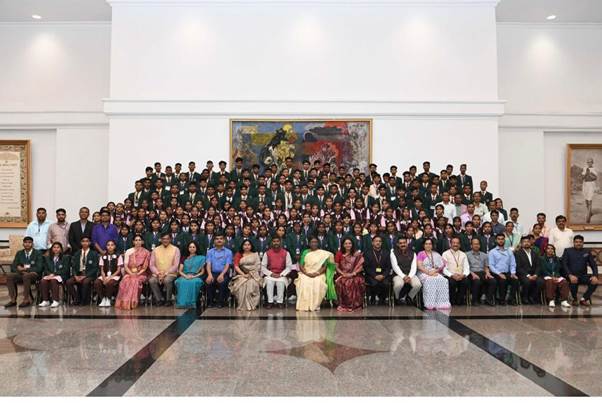
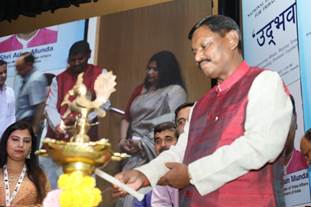
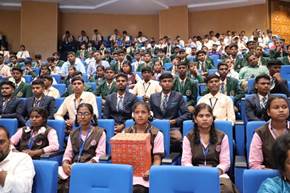
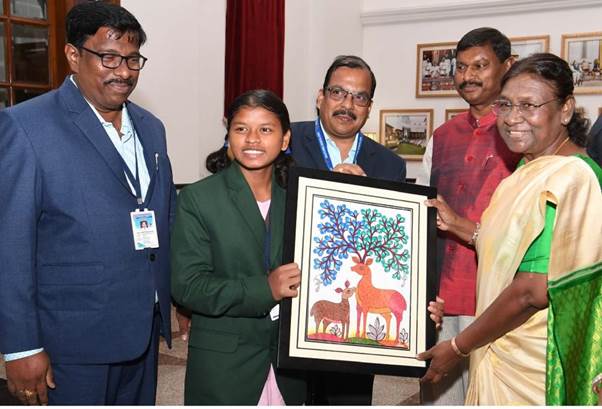
 As part of an educational visit organised by the Ministry of Tribal Affairs and NESTS on 22nd September 2023, Eklavya Model Residential School (EMRS) students interacted with the Union Minister of Tribal Affairs, Shri Arjun Munda at the Dr BR Ambedkar International Centre in New Delhi.

During the day, the students also received the opportunity to visit Rashtrapati Bhawan and meet with the President of India, Smt. Droupadi Murmu. In addition, the students received a guided tour of the Amrit Udyan, Rashtrapati Bhawan Museum and Library.


460 students and 40 teachers from  Eklavya Model Residential Schools from six states, namely Rajasthan, Uttarakhand, Jharkhand, Madhya Pradesh, Odisha, and Chhattisgarh participated in the programme.

Speaking on the occasion, Union Minister, Shri Arjun Munda remarked, that tomorrow is an important day and Chandrayaan 3 will land on the moon and by this landmark feat India will reach the skies. He urged the students they should have the courage to aim for the sky but keep their feet on the ground. He also asked the students to watch the landing of the Chandrayaan 3.

He added that the Culture of tribals  is inspired from the connectivity they feel for the mother earth.  He also added that Constitution ensures new opportunities for tribals and their empowerment and in the similar terms, EMRS aims to give opportunities for all round development of students and provide quality education to the tribal students.


He asked students to meet their seniors who have benefitted from the scholarship schemes and are pursuing higher education in field of medical, education, or are preparing for civil services, and add their own hard work in the guidance received to touch the sky. He urged the students to reflect on their goals and achieve these with the hard work and patience. He asked the students to have personal and collective goals for society and nation also.

He mentioned that EMRS number will reach 740 and which will help education reach the grassroots level. He also said that teachers are being recruited for old and new schools.

On the occasion, Secretary, Ministry of Tribal Affairs, Shri Anil Kumar Jha said that our Ministry is focused on giving impetus for the overall education of tribal youth through our Eklavya Model Residential Schools in various states. He added that students are invited to explore our educational schemes and opportunities to the fullest, as these will benefit you in the future.

During the interaction, the students and scholarship recipients from the various EMRSs shared their experiences in a candid manner with the Ministers, dignitaries, and the students. EMRS Students and EMRS Scholarship beneficiaries also put forth various questions and concerns to the Ministers.

Further, Shri Asit Gopal, Commissioner, NESTS delivered a brief background about the objective of establishing Eklavya Model Residential Schools across the country.

This was followed by a brief overview about Scholarship Schemes of the Ministry of Tribal Affairs by Dr Navaljeet Kapoor, Joint Secretary, MoTA.

EMRS students of Odisha, Jharkhand, Chhattisgarh, Uttarakhand, and Madhya Pradesh presented scintillating performance in a Cultural Program organised at the venue in the spirit of Ek Bharat Shrestha Bharat.

A photo session of the students with the Ministers during the closing ceremony was also organised.

The students are scheduled to visit the Parliament House on August 23, 2023, in the morning hours. Their visit to this prestigious institution will provide them with a unique opportunity to familiarise themselves with Parliament House’s functioning and gain a comprehensive understanding of the duties and responsibilities related to the Parliament.

*******

Defence Correspondents Course – 2023 Commences at ENC, Visakhapatnam

 The 2023 edition of Defence Correspondents Course (DCC), a three week course conducted by the Ministry of Defence for select journalists from National and Regional Media organisations, commenced at Eastern Naval Command (ENC), Visakhapatnam on 21 August 2023. Vice Admiral Sameer Saxena AVSM, NM Chief of Staff, ENC delivered the inaugural address and Shri A Bharat Bhushan Babu, Spokesperson (MoD) and Additional Director General (Media & Communication) gave an insight into Defence Journalism of the course at the Maritime Warfare Center. The aim of DCC is to bring media and military closer and enable a pool of journalists at all levels to have better appreciation of the Armed Forces and are cognizant of the domain when reporting on stories relating to the maritime environment.

 During the one-week naval attachment, the participants will be addressed by subject matter experts from within the Navy and the Coast Guard. They will acquaint the journalists with various aspects of the Navy including naval operations, naval diplomacy, Humanitarian Assistance and Disaster Relief and the organisational structure of the Navy and Coast Guard. As part of the course, the participants visited the Indian Naval ship and submarine on 21 Aug 2023 and they were briefed on various facets of life onboard. The participants will also have a scheduled tour at Naval Dockyard, Naval Air Station and onboard Coast Guard ships at Visakhapatnam in this week.  A sea sortie onboard a front-line warship of the Indian Navy is the highlight of the naval leg of the course, which will provide the journalists an insight into naval operations at sea.

****

Post Matric Scholarship for Scheduled Castes (SC) and Scheduled Tribes (ST) in Madhya Pradesh

Daily writing prompt
In what ways do you communicate online?

By Kavita Dehalwar

The scheme “Post-Matric Scholarship” started in 1945 by the Tribal Welfare and Scheduled Caste (SC) Department, Madhya Pradesh, provides scholarships to Scheduled Tribe students studying in classes 11th, 12th, Colleges, PhD, and Professional Courses.

The Post Matric Scholarship for Scheduled Castes (SC) and Scheduled Tribes (ST) in Madhya Pradesh is a government initiative aimed at promoting higher education among students belonging to SC and ST communities. The scheme provides financial assistance to help students meet the expenses of their education after matriculation (Class 10). Here’s a detailed overview of the scholarship:


Objective

The primary goal of the Post Matric Scholarship is to reduce the financial burden on students from economically weaker SC and ST communities and to encourage them to pursue education beyond the matriculation level.


Eligibility Criteria

To be eligible for the Post Matric Scholarship, students must meet the following criteria:

  1. Caste Requirements:
    • The applicant must belong to the Scheduled Caste (SC) or Scheduled Tribe (ST) category as recognized by the Government of Madhya Pradesh.
  2. Educational Qualification:
    • Students must have passed Class 10 (matriculation) from a recognized board or institution.
    • The scholarship is applicable for studies at the post-matric level, including higher secondary, undergraduate, postgraduate, diploma, professional, and technical courses.
  3. Income Criteria:
    • For SC students: The family income should not exceed ₹3,00,000 per annum.
    • For ST students: The family income should not exceed ₹6,00,000 per annum.
  4. Domicile:
    • The applicant must be a resident of Madhya Pradesh.
  5. Other Requirements:
    • The student should be enrolled in a government or recognized private educational institution.
    • Students receiving similar scholarships or financial aid from other sources are not eligible.

Benefits of the Scholarship

The benefits of the Post Matric Scholarship include:

  1. Tuition Fee Coverage:
    • The tuition fees for the course are reimbursed directly to the institution.
  2. Maintenance Allowance:
    • A monthly allowance is provided to cover living expenses, books, and other necessities. The amount varies based on the level of study and the type of institution (government or private).
  3. Other Expenses:
    • Examination fees, library fees, and laboratory charges are also covered under the scheme.

Application Process

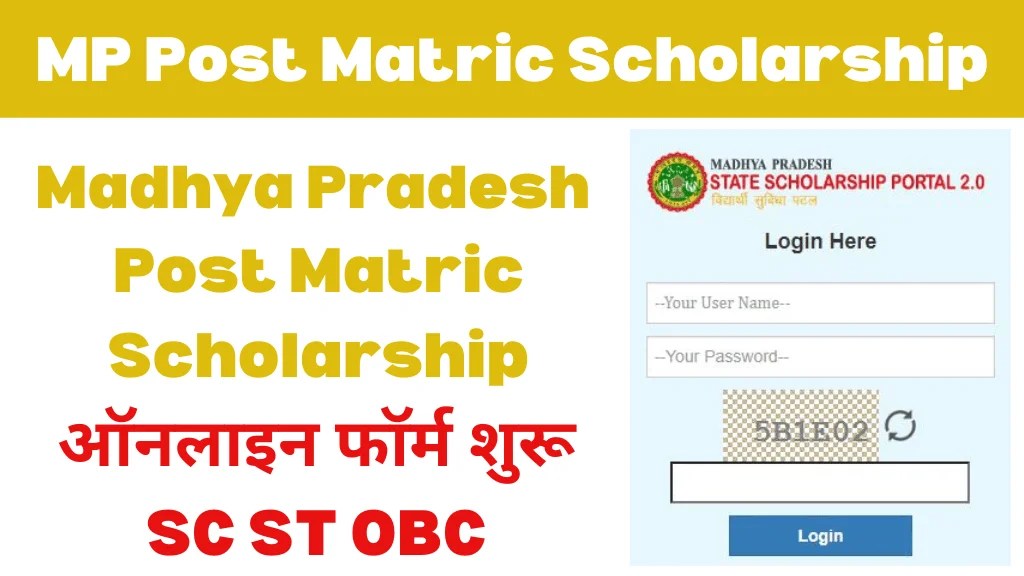
The application process for the scholarship is entirely online through the Madhya Pradesh Scholarship Portal. Here’s a step-by-step guide:

  1. Registration:
  2. Fill the Application Form:
    • Log in and complete the scholarship application form.
    • Provide details about your academic history, institution, caste certificate, and income certificate.
  3. Upload Documents:
    • Upload scanned copies of the required documents (see the list below).
  4. Verification:
    • Submit the application. The institute will verify the details provided.
  5. Approval:
    • After verification by the institution and authorities, the scholarship amount will be credited to the student’s or institution’s bank account.

Required Documents

Applicants need to upload the following documents during the application process:

  1. Recent passport-sized photograph.
  2. Caste certificate issued by a competent authority.
  3. Income certificate of the family (issued within the past year).
  4. Domicile certificate of Madhya Pradesh.
  5. Previous year’s mark sheet.
  6. Admission proof (fee receipt or admission letter).
  7. Bank account details of the student (linked with Aadhaar).

Important Dates

  • Application Start Date: Generally announced in July or August each year.
  • Application Deadline: Typically by November, with extensions announced as needed.
  • Renewal Applications: Renewal students must reapply before the deadline, providing updated documents.

Key Points to Note

  1. Renewal Process:
    • Students who continue their studies in subsequent years need to apply for scholarship renewal annually.
  2. Monitoring and Transparency:
    • The scheme is monitored through the online portal, ensuring transparency in fund disbursement.
  3. Grievance Redressal:
    • Any issues related to the scholarship can be resolved through the helpline available on the MP Scholarship Portal.

Contact Information

For further assistance, students can contact:

  • Helpline Number: Provided on the official portal.
  • District Education Office: For offline inquiries and document submission.

This scholarship program plays a crucial role in ensuring that financial barriers do not hinder the education of SC and ST students in Madhya Pradesh. By covering tuition fees and providing maintenance support, it encourages higher education and helps bridge the gap in educational opportunities.

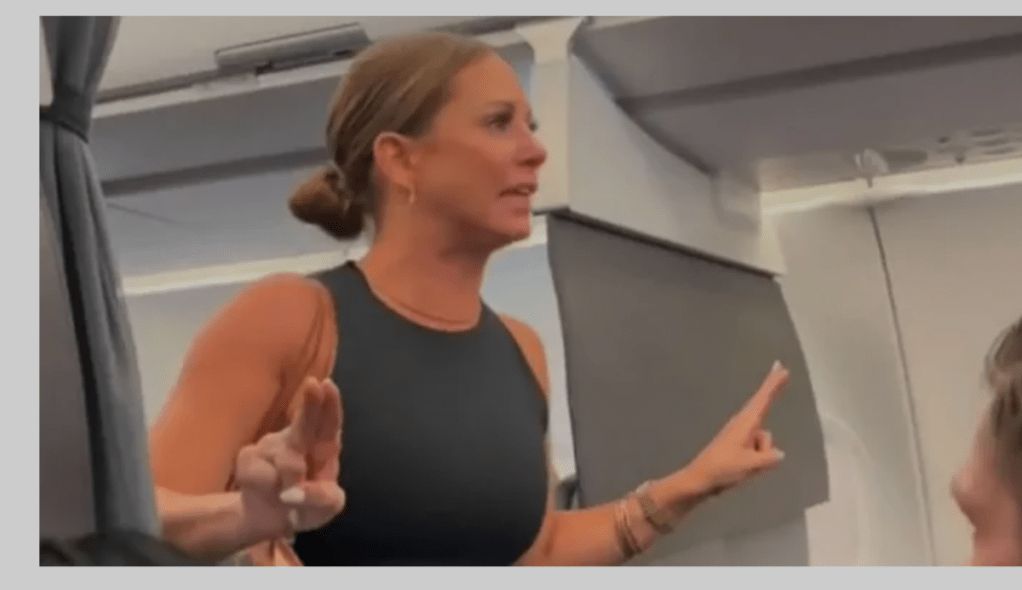
Woman disrupts American airlines

A Dallas lady started off an American Carriers departure from Texas to Orlando in the wake of going ballistic on video had the option to get back to the solid side of the air terminal after various endeavors to go through a Transportation Security Organization designated spot, police records uncover.

Tiffany Gomas, a 38-year-old promoting leader, was accused of intruding after the viral implosion before departure from Dallas-Post Worth Worldwide Air terminal July 2.

She deliberately got off the plane and left the terminal, however at that point supposedly attempted on numerous occasions to help back through air terminal security.

In spite of the fact that her ticket had been repudiated, evidently it was as yet dynamic in the TSA framework, as per a police report.

Tiffany gomes

AuthorAID is an online platform

AuthorAID is an online platform and global research community that provides support and resources for researchers and writers, particularly those from developing countries. It was established in 2007 by INASP (International Network for the Availability of Scientific Publications), an international development organization focused on strengthening research and knowledge systems in developing countries.

The primary goal of AuthorAID is to enhance the quality and visibility of research from low- and middle-income countries (LMICs) by offering support and training to researchers, particularly those who face barriers to publishing their work in international journals. The platform achieves this through various means, including online resources, mentoring, workshops, and networking opportunities.
One of the key features of AuthorAID is its online platform, which serves as a hub for researchers to access a wide range of resources. These resources include e-learning courses, writing guides, interactive forums, and webinars on various aspects of research communication. The platform also hosts a directory of mentors who are experienced researchers and writers willing to provide guidance and support to their peers from LMICs.
AuthorAID organizes workshops and training sessions in collaboration with institutions and organizations worldwide. These capacity-building events focus on topics such as research writing, grant proposal development, data analysis, and publication ethics. Workshops are typically conducted by experienced trainers and mentors who help participants develop their research and writing skills, increasing their chances of successfully publishing their work.
Furthermore, AuthorAID fosters a vibrant and inclusive research community by encouraging collaboration and networking among its members. Researchers from different disciplines and regions can connect with each other through the online platform, exchange knowledge and ideas, and establish valuable professional relationships. This global network allows researchers to expand their research networks, find potential collaborators, and gain exposure to diverse perspectives and expertise.
Over the years, AuthorAID has made significant contributions to improving the research output and visibility of scholars from LMICs. By addressing the specific challenges faced by researchers in these countries, the platform helps bridge the gap between local research efforts and the global scientific community. The support and resources provided by AuthorAID have empowered countless researchers to overcome barriers, enhance the quality of their work, and increase its impact.
In summary, AuthorAID is an invaluable resource for researchers and writers from developing countries, offering support, training, and networking opportunities to enhance the quality and visibility of their research. By empowering researchers with the skills and knowledge needed for effective research communication, AuthorAID plays a crucial role in bridging the research divide and promoting equitable global knowledge exchange.

Ministry of Education organising Janbhagidari events

 Guided by the vision of the Prime Minister Shri Narendra Modi for encouraging active participation of people as the central focus of India’s G20 Presidency, Ministry of Education is organizing a series of activities & programs aiming at promoting & endorsing the theme of “Ensuring Foundation Literacy and Numeracy (FLN)” especially in the context of blended learning.

Pursuant to this objective, Ministry of Education in partnership with all States & UTs is organizing Janbhagidari events throughout the country to create awareness & generate a sense of pride among various stakeholders like students, teachers, parents & community as a whole, about G-20, National Education Policy & FLN. In this context, a lot of activities including workshops, exhibitions, seminars and conferences have been planned from 1st to 15th June, 2023. The events would be widely organized all across the country at State, District, Block, Panchaayat and school level to involve people from all strata of life.

The Janbhagidari event would lead up to the main event i.e. 4th Education Working Group (4th EdWG) discussion at Pune, Maharashtra between 19th to 21st June 2023 and culminate with the Education Ministerial meeting on 22nd June 2023.

A schedule of the events being organized by the Ministry is as under:

  • Janbhagidari events on awareness about G20, NEP, FLN in all schools – 1st to 15th June, 2023.
  • Exhibition to showcase the best practices on the best practices in the field of school education, higher education and skill education from 17th to 22nd June, 2023 at Pune, Maharashtra.
  • 2-day National Conference on Foundation Literacy and Numeracy on 17th and 18th June, 2023.

*****

Creating a Pandemic-proof Infrastructure

During the last few years, the world saw a crisis that shook every aspect of human life. A crisis that comes once in many decades. Almost every country experienced a complete lockdown at some point in time. Many countries with previously thought-to-be world-class health-care systems have also been tried, pushed to the limit, and in some respects found wanting. The pandemic took all countries by surprise and the discussion on appropriate national and global strategies is very diverse. The COVID-19 epidemic has demonstrated what is at risk, upending the lives of families worldwide. Millions of people have died, and a generation of kids has experienced a learning catastrophe.

The two years of the pandemic highlighted the current inadequacies of our healthcare delivery system and the need for urgent improvisation. The two years have seen us go through harrowing times—patients died for want of hospital beds and oxygen; the ventilator supply ran dry; high infections led to a severe manpower crunch at hospitals; there were not enough vaccines available then. Our healthcare system had crumbled under pressure, and our frontline workers, both in public and private hospitals, had burned themselves out. And now with cases rising, there is fear of a return to the past among healthcare workers.

Although the pandemic has eased, the virus is still alive and mutating and more pandemics are expected to follow. In the wake of this scenario, it is important for the world community to better equip ourselves to tackle such situations in the future. It is the moment that we realise the importance and need to strengthen healthcare infrastructure globally. It is time to work on making a pandemic-proof healthcare system for the future. Below are the areas that need to be focused on:

  • ·         Curative services – there is a need for the expansion of telemedicine from triage, diagnosis, and follow-up services covering all conditions (acute to chronic). Making institutions adapt and become centres of knowledge dissemination- telemedicine and all possibilities of e- and m-health and provide knowledge to people at home, on what symptoms to look out for, where to test, how to self-care, etc for not only Covid-19 but for other conditions too.
  • ·         Improve primary health care – Better primary health care will help us protect against future pandemics. Improving primary health care includes recruiting, training, and prioritising healthcare workers, and establishing effective surveillance and response systems, building confidence in health services through community outreach.
  • ·         Improve logistics and supply – There are a lot of logistics that are needed in a healthcare system. Some examples include masks, gloves, PPEs, disinfectants, etc. Apart from there’s also the supply of syringes and the cold chain storage that’s been necessary to make sure that the vaccines are stored at the proper temperature and don’t go to waste.  Increased investments in this type of infrastructure will assist to guarantee that communities obtain the immunizations they require while also protecting them from future outbreaks.
  • ·         Promotive and preventive healthcare services – The pandemic has demonstrated that having an underlying condition like diabetes, hypertension or obesity predisposes one to complications, long hospital stays, and mortality. Because of all these reasons, COVID-19 has been categorised as a syndemic rather than a pandemic. It is necessary to provide preventive and promotive health services like boosting one’s immune system through diet, exercise, and supplements, in different formats, online, face-to-face, or through home visits.
  • ·         Mental health services – Mental health issues during the pandemic are threatening to become the next pandemic. Stress and mental health issues related to lockdowns affect everyone but tend to affect the weaker segments of society more severely. It is necessary to create awareness about mental health and make mental health services available, accessible, and affordable to all.

It is true that we need to build pandemic-proof health infrastructure. But does Covid-19 expose our health sector only or show us the reality of other aspects also? Working only on health will not be sufficient. We also need to improve our social, educational and political infrastructure. The world saw a huge dropout of students because of online classes during pandemic. Some of the major reasons given for dropping are fairly obvious: technology problems, lack of support, poorly designed courses, and technologically inexperienced educators. This demands due consideration and commitment. The epidemic has impacted numerous nations’ governmental and political systems, resulting in declarations of emergency, suspensions of legislative activity, isolation or death of multiple lawmakers, and postponing of elections owing to worries of viral transmission.Furthermore, in certain areas, the epidemic has posed various problems to democracy, causing it to be weakened and harmed. Hence, building a pandemic-proof political infrastructure will not only ensure an efficient response to tackle the crisis but also provide basic institutional support to the nation and to the world as a whole.

This is a unique moment where we have an opportunity to learn from this pandemic and prevent others in the future. The legacy of COVID-19 mustn’t be one of disruption and disparity, but instead a moment of monumental change.

Creating a Pandemic-proof Infrastructure

During the last few years, the world saw a crisis that shook every aspect of human life. A crisis that comes once in many decades. Almost every country experienced a complete lockdown at some point in time. Many countries with previously thought-to-be world-class health-care systems have also been tried, pushed to the limit, and in some respects found wanting. The pandemic took all countries by surprise and the discussion on appropriate national and global strategies is very diverse. The COVID-19 epidemic has demonstrated what is at risk, upending the lives of families worldwide. Millions of people have died, and a generation of kids has experienced a learning catastrophe.

The two years of the pandemic highlighted the current inadequacies of our healthcare delivery system and the need for urgent improvisation. The two years have seen us go through harrowing times—patients died for want of hospital beds and oxygen; the ventilator supply ran dry; high infections led to a severe manpower crunch at hospitals; there were not enough vaccines available then. Our healthcare system had crumbled under pressure, and our frontline workers, both in public and private hospitals, had burned themselves out. And now with cases rising, there is fear of a return to the past among healthcare workers.

Although the pandemic has eased, the virus is still alive and mutating and more pandemics are expected to follow. In the wake of this scenario, it is important for the world community to better equip ourselves to tackle such situations in the future. It is the moment that we realise the importance and need to strengthen healthcare infrastructure globally. It is time to work on making a pandemic-proof healthcare system for the future. Below are the areas that need to be focused on:

  • ·         Curative services – there is a need for the expansion of telemedicine from triage, diagnosis, and follow-up services covering all conditions (acute to chronic). Making institutions adapt and become centres of knowledge dissemination- telemedicine and all possibilities of e- and m-health and provide knowledge to people at home, on what symptoms to look out for, where to test, how to self-care, etc for not only Covid-19 but for other conditions too.
  • ·         Improve primary health care – Better primary health care will help us protect against future pandemics. Improving primary health care includes recruiting, training, and prioritising healthcare workers, and establishing effective surveillance and response systems, building confidence in health services through community outreach.
  • ·         Improve logistics and supply – There are a lot of logistics that are needed in a healthcare system. Some examples include masks, gloves, PPEs, disinfectants, etc. Apart from there’s also the supply of syringes and the cold chain storage that’s been necessary to make sure that the vaccines are stored at the proper temperature and don’t go to waste.  Increased investments in this type of infrastructure will assist to guarantee that communities obtain the immunizations they require while also protecting them from future outbreaks.
  • ·         Promotive and preventive healthcare services – The pandemic has demonstrated that having an underlying condition like diabetes, hypertension or obesity predisposes one to complications, long hospital stays, and mortality. Because of all these reasons, COVID-19 has been categorised as a syndemic rather than a pandemic. It is necessary to provide preventive and promotive health services like boosting one’s immune system through diet, exercise, and supplements, in different formats, online, face-to-face, or through home visits.
  • ·         Mental health services – Mental health issues during the pandemic are threatening to become the next pandemic. Stress and mental health issues related to lockdowns affect everyone but tend to affect the weaker segments of society more severely. It is necessary to create awareness about mental health and make mental health services available, accessible, and affordable to all.

It is true that we need to build pandemic-proof health infrastructure. But does Covid-19 expose our health sector only or show us the reality of other aspects also? Working only on health will not be sufficient. We also need to improve our social, educational and political infrastructure. The world saw a huge dropout of students because of online classes during pandemic. Some of the major reasons given for dropping are fairly obvious: technology problems, lack of support, poorly designed courses, and technologically inexperienced educators. This demands due consideration and commitment. The epidemic has impacted numerous nations’ governmental and political systems, resulting in declarations of emergency, suspensions of legislative activity, isolation or death of multiple lawmakers, and postponing of elections owing to worries of viral transmission.Furthermore, in certain areas, the epidemic has posed various problems to democracy, causing it to be weakened and harmed. Hence, building a pandemic-proof political infrastructure will not only ensure an efficient response to tackle the crisis but also provide basic institutional support to the nation and to the world as a whole.

This is a unique moment where we have an opportunity to learn from this pandemic and prevent others in the future. The legacy of COVID-19 mustn’t be one of disruption and disparity, but instead a moment of monumental change.

Sengol

On December 10,2020 when PM Narendra Modi laid the foundation stone of the new parliament building, the deadline for the completion of the project was October 2022 which was shifted to March, 2023. The March deadline was also not met, but everybody knows that the project is near completion, and the inauguration date could be announced any time and as per expectations 28 May is decided as the date for the inauguration of the new Parliament.

It was not surprising that as soon as the announcement was made, many opposition parties started firing allegation towards government. What came as a surprise for many of us was the pacing of ‘Sengol’ in the new parliament building. Many questions hits in mind one by one. What is Sengol? Where was it all the time? Who made it? What does it signify? Where will it be placed? Don’t worry. Your mind will be free from question related to Sengol after reading this write up as it contains answers to all your question.

The historic ‘Sengol’ that is going to be installed in the new parliament building was received by the first PM of India Jawaharlal Nehru from the then Viceroy of India Lord Mountbatten on 14 August 1947 at around 10:45 PM at his residence in the presence of many other prominent leaders of the time. PM Nehru received this as the symbol of the transfer of power from British at his residence. When the decision of the independence of India was final, Lord Mountbatten was sent as the viceroy to complete the process of independence without hinderance. Mountbatten being unaware of rituals and customs of Indian culture he asked PM Nehru about the special ceremony to be organized for the transfer of power. Nehru discussed this with C. Rajagopalachari fondly known as Rajaji, and after extensive research of Indian culture Rajaji told Pandit Nehru about the tradition of transfer of power during Chola dynasty and how ‘Sengol’ was used to mark this.

The Sengol gets its name from the Tamil word ‘semmai’, meaning righteousness. The sceptre is a historical symbol of Independence as it signifies the transfer of power from the British to the Indians. “The Sengol signifies justice, integrity and unfailing good governance of the king who holds it,” said Mani Maran, a Tamil Pandit at Saraswathi Mahal Library in Thanjavur in an interview given to Times of India on Wednesday. “Tamil emperors like Cholas were usually holding a sceptre in their hands. After crowning the new king, his predecessor or the rajaguru handed over the sceptre during the ceremonial occasion. Thiruvalluvar mentions the sceptre while referring to the rule of law. Sangam works like the Silapathikaram mentions the superiority and importance of the sceptre,” he added. Union Home Minister Amit Shah addressing a press conference on Wednesday said, “The ‘sengol’ represents values of fair and equitable governance.”

The responsibility of arranging a sceptre was handed to Rajaji by Pandit Nehru. Rajaji reached out to Thiruvaduthurai Atheenam, a well-known mutt in Tamil Nadu’s Tanjore district for assistance and its leader commissioned the manufacturing of the Sengol to Chennai-based “Vummidi Bangaru Chetty” jewelers, as per the official document. It was crafted by two men namely, Vummidi Ethirajulu and Vummidi Sudhakar. It is made of silver with a coat of gold. The sceptre is five feet tall and has a ‘Nandi’ bull on top, symbolizing justice and goddess Laxmi is inscribed on it. It was made in 30 days. According to the official documents, the sceptre was handed to Lord Mountbatten by the Deputy high priest of the Adheenam and was taken back. It was then taken to Pandit Nehru’s house in procession and handed over to him. A special song was rendered, as specified by the high priest. The ceremonial sceptre was kept at the Allahabad Museum, along with several other historical objects associated with Jawaharlal Nehru, as part of the Nehru Gallery of the museum.

Now the Sengol has been moved to Delhi and would be placed near the Lok Sabha speaker’s chair in the new parliament building. Citing resources India Today reported that the Sengol will be ceremoniously transported to the House in a grand procession. The occasion is likely to be steeped in Tamil tradition. The Nadaswaram, would lead the procession with a group of musicians will be playing Tamil Nadu’s traditional instrument. Modi is expected to walk along with the procession. “Adheenams,” or priests from Shaivite mutts in Tamil Nadu, will be present in the Lok Sabha’s Well. The priests will sanctify the Sengol with holy water after Modi greets them at the well, India Today added. The “Oduvars,” or Tamil temple singers, will lyrically recite the “Kolaru Padhigam” in the background as the Nadaswaram musicians enchant with their soulful music. The Sengol will be presented to the prime minister after this revered ceremony and placed in a glass case next to the Speaker’s seat in the House.

After decades of anonymity, this holy sceptre will quadruple the magnificence of new parliament building. and always remind us of the hardship that our forefathers had while fighting for independence and will motivate us to defend this independence.

'YUVA PRATIBHA – Singing Talent Hunt

 With an aim to promote Indian music at the grassroots level on a national scale by identifying and recognising the new and young talent in various singing genres, MyGov in collaboration with Ministry of Culture is launching a YUVA PRATIBHA – Singing Talent Hunt on Wednesday, May 10, 2023.

The initial submission for the competition will be open for a period of one and half month.

Singing Talent Hunt is a unique opportunity for citizens across India to display their singing talent and skills and to gain national recognition. If one wishes to be New India’s emerging artist singer, or musician, then he/she can participate in the YUVA PRATIBHA – Singing Talent Hunt and lend the melodic voice in the various genres: 

  • Folk Songs
  • Patriotic Songs
  • Contemporary Songs

How to Participate:

  1. Log in to https://innovateindia.mygov.in/  
  2. The contest is open to all Indian citizens.
  3. All entries must be submitted on the MyGov portal. Entries submitted through any other mode will not be considered for evaluation.
  4. The participants have to record a video while singing and shall submit their entry via YouTube (Unlisted Link), Google Drive, Dropbox, etc, and ensure that the link can be accessible. Entry shall lead to disqualification automatically if the Access will not be granted.
  5. This contest will be available in Hindi & English.
  6. One participant can participate only once in the contest.
  7. Top 3 Winners will be announced in the Finale (Physical Event) in New Delhi.

Reward & Recognition:

  • 1st Winner: INR. 1,50,000/- + Trophy + Certificate
  • 2nd Winner: INR. 1,00,000/- + Trophy + Certificate
  • 3rd Winner: INR. 50,000/- + Trophy + Certificate
  • Following 12 Contestants will be rewarded with a Cash Prize of INR. 10,000/- each

Mentorship: Top 3 Winners will be mentored for a period of 1 month with a mentorship stipend. 

MyGov is inviting citizens to come and participate in the contest and earn recognition on National level. Visit https://innovateindia.mygov.in/singing-challenge/ for more details.

*****

'Yuva Sangam' program

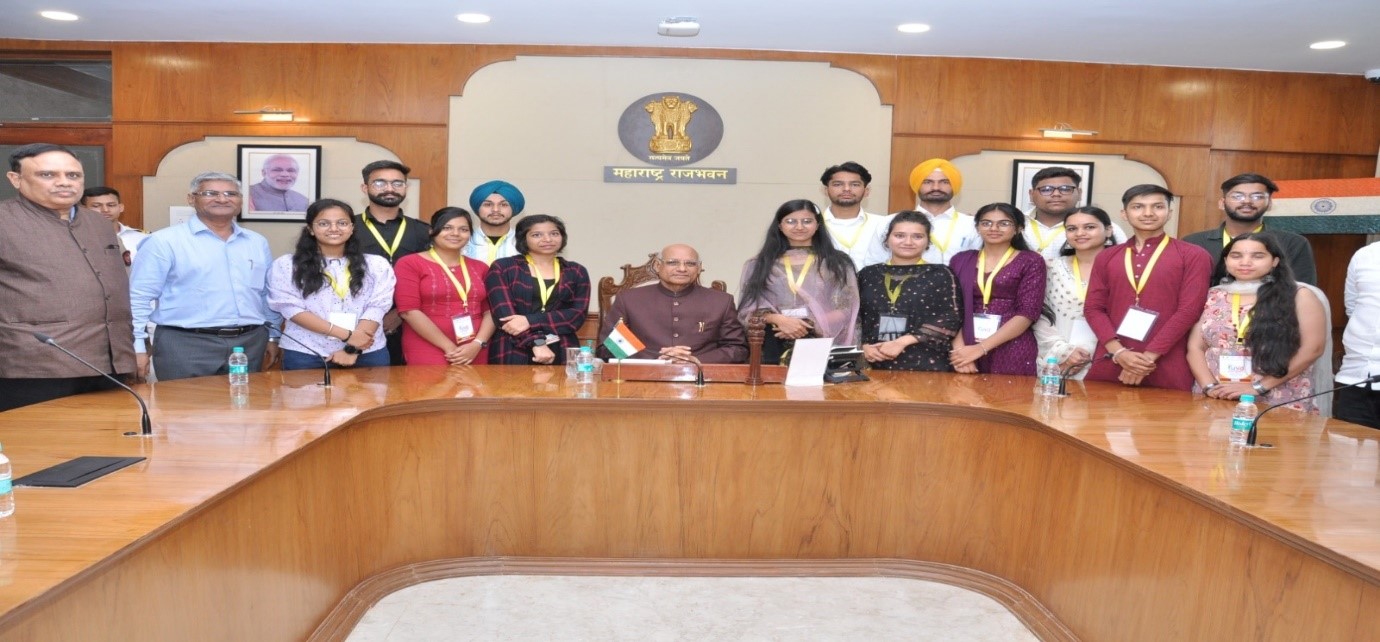
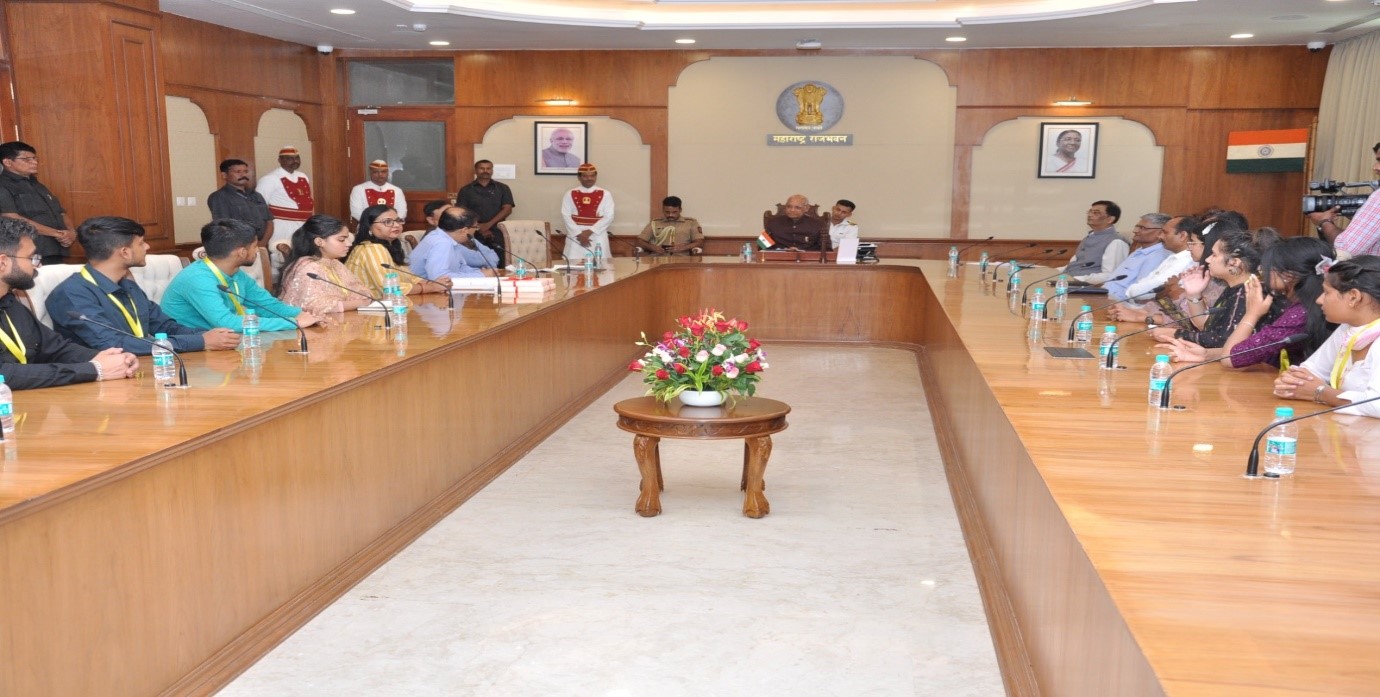
 A group of 45 youths from the State of Punjab visiting Maharashtra as part of ‘Yuva Sangam’ initiative started by Prime Minister, interacted with Maharashtra Governor Shri Ramesh Bais at Raj Bhavan Mumbai today (May 9, 2023). 

Welcoming the students to Maharashtra, the Governor said, Maharashtra and Punjab have shared a long tradition of spiritual and cultural exchanges and close cooperation during the nation’s freedom movement.  He said, even though the two States are separated geographically by a distance of more than 1500 kms, Maharashtra and Punjab are sister states.

Maharashtra Governor Shri Ramesh Bais stated to the visiting student delegation that Sant Namdev travelled to Punjab from Maharashtra, while Guru Gobind Singh, the tenth Sikh Guru spent some years of his life in Maharashtra’s Nanded. 

The Governor said Maharashtra and Punjab have given the nation great warriors and revolutionaries like Bhagat Singh and Rajguru. He said many youths from Maharashtra and Punjab serve the nation by joining the armed forces. The Governor called upon the youths from Punjab to acquire modern education and skills, stay away from addictions and serve the nation through their chosen fields.

The Governor asked the youths to visit the country and appreciate the diversity of cuisine, language and culture of the various States. He said that in the present age of mobiles and laptops, people are moving away from their families. He urged the youth to visit different regions of the country as that will increase communication and they will learn a lot.

The youths visiting Maharashtra told the Governor about their experiences and how they liked the cuisine and culture of the State.


The visit of the youths from Punjab to Maharashtra is being coordinated by IIT Bombay. The exposure tour is aimed at providing the youths an immersive, multidimensional experience in the areas of Tourism, Tradition, Development, Technology and People to People contact.

Chairman of All India Council of Technical Education Prof. T G Sitharam, Director of IIT Bombay Subhasis Choudhury, ‘Yuva Sangam’ coordinator Prof. Manjesh Hanaval, Prof. Surendra Naik, IIT Registrar Ganesh Bhorkade, Faculty Members of NIT Jalandhar were also present.

Thirty-five youths from Maharashtra and ten from Dadra Nagar Haveli, Daman-Diu are also travelling to NIT Jalandhar as part of the ‘Yuva Sangam’ Programme launched by Prime Minister Shri Narendra Modi. The programme envisages participation of 1000 youngsters from 23 States and Union Territories of India.


*** 

SC/ Source: Raj Bhavan, Mumbai /PM

President of India Graces 12th Convocation of Maharaja Sriram Chandra Bhanja Deo University

 The President of India, Smt Droupadi Murmu graced and addressed the 12th convocation of Maharaja Sriram Chandra Bhanja Deo University at Baripada, Odisha today (May 6, 2023). 

Speaking on the occasion, the President said that Maharaja Sriram Chandra Bhanja Deo University has made a unique identity in the field of higher education and research in a short span of its history.

The President appreciated the University for establishing the ‘Sacred Grove’ in its campus with the aim to preserve the bedrock of tribal practices and cultural traditions. She said that the ‘Sacred Grove’ is important for the conservation of environment and local biodiversity. It is also one of the best examples of community-based management of natural resources.

The President said that the world is facing huge challenges of global warming and climate change. India has set an example for the world to adopt a nature-friendly lifestyle, which is called Lifestyle for the Environment or LiFE. In our tradition, it is believed that trees, plants, mountains, rivers all have life and not only humans but also all living beings are children of nature. Therefore, it is the duty of all human beings to live in harmony with nature. She said that the Similipal National Park located in this region holds a globally important place in terms of biodiversity. She expressed confidence that the students and teachers of the university would find a way to protect biodiversity through their research and innovation.

Addressing the graduating students, the President said that receiving degree does not mean that education process has been completed. Education is a continuous process. She said that after getting higher education some of them would do a job, some would do business and some would also do research but thinking of giving a job is better than thinking of doing a job. She was happy to note that this University has set up an Incubation Centre and provides assistance to the students, alumni and common people in setting up start-ups.

The President said that competition is an inevitable side of life. One has to face competition in every walk of life. She said that students should always keep trying to succeed in the competition and for that they should keep acquiring higher skills and move towards greater efficiency. They can turn the impossible into possible with their will-power. 

The President said that competition is a natural side of life, but cooperation is the beautiful side of life. She told students that while moving forward in life, when they would look back, they would find that some people of the society are not very capable of competing with them. She advised students to hold the hands of deprived ones and bring them forward. She said that a healthy society can be built through generosity and cooperation. She urged students to think not only of their own happiness and interest but also about the welfare of the society and country.

***

National awardee teachers brainstormed to provide feedback for national curriculum framework

  Ministry of Education is celebrating Shikshak Parv, 2022 from 5th to 30th September 2022 in the country. All the States and UTs are participating in this event conducting various activities engaging students and teachers to mark the occasion and show respect to our teachers following the Guru-shishya Parampara of our country. DIETs, Block Resource Centres and Cluster Resource Centres are being involved and engaged for discussion and interaction on innovative pedagogies with teachers.

As a follow-up of the National Education Policy 2020, four National Curriculum Frameworks (NCF) are being developed using bottom-up approach, wherein States and UTs are also involved in providing the inputs for the NCFs. The four areas of NCFs are- School Education, Early Childhood Care and Education, Teacher Education and Adult Education.

A Tech Platform has been built to facilitate the entire process of development of curriculum frameworks in a paperless manner using a bottom-up approach including consultations and preparation of reports at all levels. The platform also utilizes Machine Learning (ML) for consolidation and summarization of consultations / opinions. Digital Survey for National Curriculum (DiSaNC): Based on the recommendation of NEP-2020, the process for formulation of National Curriculum Framework (NCF) is being undertaken and is available on https://disanc.ncert.gov.in/.

While consultations with various stakeholders such as universities, civil society groups, experts, teacher educators, teachers, parents, students, etc., for seeking inputs for NCFs are ongoing, an interaction with Awardee Teachers, who have accomplished milestones with their contributions in School Education was organised on the occasion of Shikshak Parv, 2022.

NCERT led this interaction on some of the major recommendations of the National Education Policy, such as implementation of new curricular and pedagogical structure 5+3+3+4, multilingual education, holistic assessment, innovative pedagogies, etc. Discussions were held on the themes encompassing core competencies at four stages of school education, cultural rootedness in curriculum, multilingual education, flexibility in choice of subjects at secondary stage, innovative pedagogy and holistic assessments.

Awardee Teachers provided inputs for shaping up of NCF based on their grass root level experiences. Awardee Teachers participated in the discussion in the presence of officials and faculty members from Ministry of Education and NCERT.

courses offered through SWAYAM are recognized by the UGC

Yes, the courses offered through SWAYAM (Study Webs of Active Learning for Young Aspiring Minds) are recognized by the University Grants Commission (UGC) in India. The UGC has given recognition to SWAYAM as a Massive Open Online Courses (MOOCs) platform, and the courses offered on this platform are equivalent to regular classroom courses in terms of curriculum, syllabus, and learning outcomes. Students who complete the courses offered through SWAYAM are also eligible for credits, which can be transferred to their regular degree programs. Therefore, SWAYAM courses are recognized by UGC and can be considered as a credible option for students who want to enhance their knowledge and skills in various subjects.

Here are 10 merits of SWAYAM (Study Webs of Active Learning for Young Aspiring Minds):
Free of cost: All the courses offered through SWAYAM are free of cost, which means that students can access quality education without having to pay any fees.
Flexible learning: The platform offers online courses that can be accessed anytime, anywhere, and at the student’s own pace, providing flexibility and convenience to the learners.
High-quality content: The courses offered through SWAYAM are prepared by experienced faculty members and subject matter experts from reputed institutions, ensuring high-quality content and teaching.
Variety of courses: SWAYAM offers a wide range of courses in various subjects, including engineering, management, humanities, social sciences, and many more.
Certification: Students who successfully complete the courses are awarded certificates, which can be useful for their career growth and academic pursuits.
Interactive learning: The platform offers various interactive tools like discussion forums, live chat, and social media integration, which facilitate peer-to-peer learning and collaboration.
Personalized learning: SWAYAM uses advanced technologies like Artificial Intelligence and Machine Learning to personalize the learning experience for each student, based on their learning preferences and performance.
Accessible to all: SWAYAM is designed to be accessible to all learners, including those with disabilities, by providing features like audio and video transcripts, sign language interpretation, and captioning.
Integration with credit systems: The platform is integrated with the credit transfer system, which means that students can transfer the credits earned through SWAYAM to their regular degree programs.
Recognition by UGC: The courses offered through SWAYAM are recognized by the University Grants Commission (UGC), which adds credibility to the platform and the courses offered.